เลเซอร์ฟอกฟันขาว” ไฮ-เทคอันตราย…ไล่จับหมอเถื่อนทั่วโลก #ศาสตร์เกษตรดินปุ๋ย

#ศาสตร์เกษตรดินปุ๋ย : ขอบคุณแหล่งข้อมูล : หนังสือพิมพ์คมชัดลึก

https://www.komchadluek.net/news/lifestyle/420691?utm_source=category&utm_medium=internal_referral&utm_campaign=lifestyle

เลเซอร์ฟอกฟันขาว” ไฮ-เทคอันตราย…ไล่จับหมอเถื่อนทั่วโลก

4 มีนาคม 2563 – 21:19 น.
เลเซอร์ฟอกฟันขาว,ไฮเทคอันตราย
เปิดอ่าน 346 ครั้ง

โดยทีมข่าวรายงานพิเศษ หนังสือพิมพ์คมชัดลึก

“ยิ้มฟันขาวเงางาม” กลายเป็นกระแสนิยมของคนดังทั่วโลก ในช่วงไม่กี่ปีที่ผ่านมา ทำให้สินค้าหรือเทคโนโลยีช่วย “ฟอกสีฟันขาวสะอาด” ถูกผลิตวางขายในตลาดมากมายหลายยี่ห้อ เช่นเดียวกับคนไทยบางกลุ่มได้รับอิทธิพลจากเน็ตไอดอลหรือวัยรุ่นดารานักแสดง ที่ยิ้มโชว์ฟันขาวแล้วเชิญชวนให้ซื้อสินค้าตัวนั้นตัวนี้ หรือแนะนำให้จ้างคนมาทำที่บ้าน หลายคนตกเป็นเหยื่อโดยไม่ตัวรู้ว่ากำลังทำอันตรายช่องปากตัวเอง…หลายประเทศทั่วโลกทั้งอังกฤษและอเมริกาก็เจอปัญหานี้เช่นกัน !

 เทคโนโลยีการฟอกสีฟันให้ขาว คือการแก้ปัญหาฟันสีคล้ำสีเหลืองนวล ซึ่งเกิดจาก สาเหตุ “ภายนอกตัวฟัน” เช่น  คราบชา กาแฟ อาหาร บุหรี่ หรือเพราะฟันเสื่อมตามสภาพอายุที่มากขึ้น หรือสาเหตุจาก “ภายในตัวฟัน” เช่น โดนสารเคมีบางอย่าง หรือผลข้างเคียงจากการกินยาบางตัว ทำให้เนื้อฟันเปลี่ยนสีไปถาวร

ที่ผ่านมาใครอยากแก้ไขปัญหาฟันสีคล้ำเหลืองหรือคราบต่างๆ ต้องไปทำที่คลินิกทันตแพทย์เท่านั้น หมอฟันจะใช้สารเคมีที่มีส่วนผสม “เปอร์ออกไซด์” เปอร์เซ็นต์ต่ำ เช่น น้ำยาไฮโดรเจน เพอร์ออกไซด์ (Hydrogen Peroxide)  หรือ คาร์บาไมด์ เพอร์ออกไซด์ (Carbamide Peroxide) ช่วยเร่งปฏิกิริยาให้สีคล้ำที่สะสมในเนื้อฟันค่อย ๆ หลุดออกมาจนสีฟันอ่อนลง

แต่ช่วงไม่กี่ปีนี้ มีบริษัทผลิตยาสีฟันชื่อดังทั่วโลก ออกสินค้าตัวใหม่ที่มีส่วนผสมของ “เปอร์ออกไซด์” วางจำหน่ายในร้านค้าทั่วไป เช่น ยาสีฟันฟอกสีฟันไวท์เทนนิ่ง เส้นไหมขัดฟันฟอกสีฟัน หมากฝรั่งฟอกสีฟัน ฯลณ ทำให้ผู้บริโภคสามารถซื้อไปใช้ฟอกสีฟันเองได้ที่บ้านโดยไม่ต้องไปหาหมอ นอกจากนี้ยังมีการแข่งขันคิดค้น “เทคโนโลยีรังสียูวี” หรือ “เลเซอร์ฟอกสีฟันขาว” ด้วยวิธีการฉายลำแสงให้ฟันแลดูขาวเงางามขึ้น ล่าสุดมีการแข่งขันผลิตเครื่องฉายรังสียูวีขนาดพกพาให้ซื้อไปใช้เองที่บ้านได้ตามสะดวก

     “เลเซอร์ฟอกสีฟันขาว” (Laser Teeth Whitening) เป็นการใช้เทคโนโลยีคลื่นแม่เหล็กไฟฟ้าที่มองเห็นได้ด้วยตาเปล่าคือ รังสีอัลตราไวโอเลต (Ultra Violet: UV) เรียกทั่วไปว่า “รังสียูวี” มาใช้ฟอกสีฟันแทนสารเคมี ทำให้เกิดธุรกิจ “หมอฟันเถื่อน“ รับบริการฟอกฟันขาวที่บ้านส่วนตัว สร้างความวิตกกังวลให้กลุ่มทันตแพทย์สภาและองค์การคุ้มครองผู้บริโภคด้านอาหารแลยาในหลายประเทศ เพราะการใช้เลเซอร์ร่วมกับสารเคมีเข้มข้นสูงอย่างผิดวิธี ทำให้เกิดอันตรายต่อ เนื้อเยื่อในช่องปาก เนื้อเยื่อรอบฟัน เหงือกอักเสบ เคลือบฟันถูกกัดเซาะ เนื้อฟันถูกทำลาย ฟันสึกบางกร่อนและแตกหักง่าย

ยกตัวอย่างที่อังกฤษ สื่อมวลชนรายงานข่าวจับกุมหมอฟันเถื่อนปีละหลายคดี แต่ที่โด่งดังคือ คดีของต้นปี 2018 มีนักข่าวเข้าไปล่อซื้อบริการฟอกฟันขาวหลายแห่งพร้อมกัน เพราะได้รับแจ้งว่ามีกลุ่มนักเสริมสวยในกรุงลอนดอนแอบใช้เลเซอร์ยูวีร่วมกับไฮโดรเจนเปอร์ออกไซด์เข้มข้นถึง “25 เปอร์เซ็นต์” บริการลูกค้า ถือว่าผิดกฎหมายและอันตรายมาก เนื่องจากปกติแล้วความเข้มข้นของน้ำยาฟอกสีฟันถูกกำหนดให้ไม่เกิน 10 เปอร์เซ็นต์เท่านั้น ส่วนใหญ่ทันตแพทย์มักใช้ความเข้มข้นเพียง 3 – 7 เปอร์เซ็นต์

สื่อมวลชนอังกฤษรายงานว่าหมอฟันเถื่อนคิดค่าบริการครั้งละ 75 -100 ปอนด์หรือประมาณ 3 – 4 พันบาท ซึ่งกฎหมายอังกฤษอนุญาติให้เฉพาะทันตแพทย์เท่านั้นที่ทำได้ และใช้ความเข้มข้นได้ไม่เกิน 6 เปอร์เซ็นต์  หากใครทำผิดมีโทษปรับสูงถึง 1 หมื่นปอนด์หรือ 4 แสนบาท

เช่นเดียวกับอเมริกา “ธุรกิจขายสินค้าฟอกสีฟัน” มีมูลค่าหลายพันล้านดอลล่าร์ต่อปี โดยเฉพาะสินค้าประเภทชุดฟอกฟันขาวด้วยตนเอง (Do-it-yourself) ที่วางขายตามร้านขายยาทั่วไปในหลายมลรัฐ ที่น่าสนใจคือคดีต่อสู้กันระหว่าง “ทันตแพทย์” กับ “กลุ่มผู้ให้บริการรับฟอกสีฟัน” เนื่องจากกลุ่มหลังอ้าง “กฎหมายต่อต้านการผูกขาดการค้า” ร้องเรียนว่าการกระทำของรัฐบางแห่งเป็นการปกป้องทำให้ทันตแพทย์ผูกขาดธุรกิจนี้แต่เพียงกลุ่มเดียว ถือว่าผิดรัฐธรรมนูญ ยิ่งไปกว่านั้นบริการของพวกเขาหลายแห่งมีความปลอดภัยไม่น้อยกว่าคลินิกทั่วไป

สำหรับประเทศไทยนั้น ล่าสุด คณะกรรมการอาหารและยา (อย.) ร่วมกับตำรวจกองบังคับการปราบปรามการกระทำความผิดเกี่ยวกับการคุ้มครองผู้บริโภค (บก.ปคบ.)  บุกจับผู้ลักลอบขาย “อุปกรณ์เลเซอร์ฟอกฟันขาว” ผ่านทางสื่อสังคมออนไลน์ ทั้งเฟซบุ๊คและอินสตาแกรม ในชื่อแอคเคาท์ว่า  “lineeteeth” และ “lvi smille” บริเวณเขตมีนบุรี กรุงเทพฯ พบของกลางเป็นอุปกรณ์เครื่องมือแพทย์ผิดกฎหมาย 78 กล่อง แบ่งเป็น อุปกรณ์ฟอกฟันขาว IVISMILE Teeth Whitening Kit จำนวน 68 กล่อง อุปกรณ์ฟอกฟันขาว IVISMILE Wireless Teeth Whitening DEVICE “DUAL LIGHT TECHNOLOGY”จำนวน 10 กล่อง จึงยึดของกลางพร้องเตรียมเอาผิดตาม “พ.ร.บ.เครื่องมือแพทย์ 2551” โทษจำคุกไม่เกิน 1 ปี หรือปรับไม่เกิน 1 แสนบาท

“ภญ.สุภัทรา บุญเสริม” รองเลขาธิการ อย. เตือนผู้บริโภคอย่าหลงเชื่อคำโฆษณาสินค้าฟอกสีฟัน ไม่ควรซื้อมาใช้เองเพราะอาจเป็นอันตรายต่อเหงือกและฟัน หากต้องการฟอกสีฟันควรทำภายใต้การดูแลของแพทย์ผู้เชี่ยวชาญเท่านั้น  พลเมืองดีพบใครเปิดบริการฟอกฟันขาวเถื่อนหรือขายสินค้าที่เกี่ยวข้อง ขอให้แจ้งสายด่วน อย. 1556 หรืออีเมล  “556@fda.moph.go.th”

Microsoft launches an interactive virus tracking website #ศาสตร์เกษตรดินปุ๋ย

#ศาสตร์เกษตรดินปุ๋ย : ขอบคุณแหล่งข้อมูล : หนังสือพิมพ์ The Nation

https://www.nationthailand.com/edandtech/30384241?utm_source=category&utm_medium=internal_referral

Microsoft launches an interactive virus tracking website

Mar 17. 2020
 Bing Covid Tracker's interface

Bing Covid Tracker’s interface
By The Nation

While the world is struggling with the spread of Covid-19, many companies have opened a platform to help people get to know about the latest situation. Microsoft is one such firm that has launched a coronavirus tracking website through its search engine Bing.

Called Bing Covid Tracker, it identifies and tracks the virus situation in Thailand as well as around the world.

Various information is displayed on the tracker website, including the latest number of cases, recovered cases and fatalities, with the latest news and informative videos.

The Web content is referenced from the World Health Organisation, the United States’s Centres for Disease Control and Prevention and the European Centre for Disease Control and Prevention.

You can visit the website at: https://bing.com/covid

Trump promise launched Verily, an Alphabet-owned health science unit, to front lines of pandemic #ศาสตร์เกษตรดินปุ๋ย

#ศาสตร์เกษตรดินปุ๋ย : ขอบคุณแหล่งข้อมูล : หนังสือพิมพ์ The Nation

https://www.nationthailand.com/edandtech/30384213?utm_source=category&utm_medium=internal_referral

Trump promise launched Verily, an Alphabet-owned health science unit, to front lines of pandemic

Mar 17. 2020
By The Washington Post · Douglas MacMillan, Heather Kelly, Elizabeth Dwoskin, Josh Dawsey · TECHNOLOGY

Last week, a team of health science experts within Google parent Alphabet were exploring ways that software could help slow the spread of the coronavirus.

Then came the White House news conference, the California governor’s endorsement, the scramble to build a disease screening website in three days – and on Monday, a crush of publicity around how the site failed to live up to expectations.

In a short period, a relatively obscure subsidiary of Alphabet called Verily has become a front-line player in the fight against a global pandemic. President Donald Trump’s decree, during a Rose Garden briefing Friday, that 1,700 engineers at Google were working on a coronavirus test-finding tool that would be ready in a few days sent executives at Verily into a panic, according to two people briefed on the episode.

He was referring to Verily. And they were nowhere close to launching such a tool.

Verily’s rush to build a screening tool on the fly underscored how tech companies have been forced to improvise to stay in Trump’s good graces, despite the president’s tendency to make false claims about their expansion plans, take credit for their research efforts and mix up the names of their CEOs.

Despite the White House’s insistence on relying on the private sector for solutions, Verily’s effort shows that Silicon Valley has no easy answers to a global health crisis that threatens to overwhelm U.S. hospitals with patients in the coming weeks.

“At the end of the day Google is not a health-care provider,” said Adrian Aoun, a former Google executive who founded the health clinic start-up Forward.

“The work Verily is doing goes beyond establishing a screening and risk assessment tool,” said Kathleen Parkes, a spokeswoman for Verily. “We opened three sample collection sites in the Bay Area today working with local public health authorities and are working really hard to increase testing capacity.”

Since he took office, Trump has had a tenuous relationship with tech, whose executives have tried to balance their opposition to his policies on immigration and climate change with their desire to preserve a working relationship with the leader of the free world. Apple chief executive Tim Cook didn’t correct Trump when the president took credit for opening a Mac factory that predated his presidency or when he mistakenly referred to the executive as “Tim Apple.” Last year, he said wireless providers were investing in 5G networks “at my request” even though they had been building the networks for years.

Tech executives met with Trump last week, part of a series of meetings the president held with industry leaders as the scale of the coronavirus threat in the U.S. became clearer.

Representatives from the tech giant had informally discussed a coronavirus screening project with the White House last week, but had never committed to a timeline on moving forward with the project and were not informed it would be announced publicly by Trump, says a person briefed on the discussions who declined to be identified because the talks were private.

In tweets, blog posts and statements since Trump’s announcement, Google has tried to manage expectations about the project. On Friday evening, after Trump’s announcement, the company put out a statement that for the first time indicated Verily’s involvement. It also brought to light the first discrepancies with what Trump touted: The pilot was only for the Bay Area, and it was in its early stages.

Google, seeking to placate the administration by not contradicting his announcement, scrambled to put out a statement over the weekend that promised a different national website with information about coronavirus symptoms, the person said. Meanwhile, Verily rushed to complete its test screening site for residents of the Bay Area and put out its own statement confirming its involvement in the project.

Verily has a background in remote diagnostics. Three years ago, the Alphabet unit created a software platform called Project Baseline to run clinical trials on a group of volunteers, who agree to share their medical data with a group of researchers at pharmaceutical companies and research hospitals.

Adrian Hernandez – vice dean for clinical research for Duke University’s school of medicine, a participant in Project Baseline – said he met about two weeks ago with Verily’s Chief Medical Officer Jessica Mega, who was already thinking about how the software could be used to assist with the detection of coronavirus.

“The last thing you would want to do is have people who are potentially vulnerable coming into a health-care system and be exposed to the risk of a pandemic,” Hernandez said. “All of our clinical trials are trying to do research at home.”

California Gov. Gavin Newsom, a Democrat, joined the fray when he announced on Sunday that he had been working closely with Verily for over a week on the project. His announcement appeared to be closely coordinated with the company, which put out its first news release about the site ahead of Newsom’s announcement to say it was collaborating with the governor’s office.

“Because it’s Google, or in this case Verily, and because it was mentioned in the president’s speech, everyone is jumping up and down about it,” said Robert Wachter, a professor and chair of the department of medicine at the University of California at San Francisco.

“But at the end of the day, it just links a questionnaire to testing sites. That’s not a particularly challenging thing to do.”

Verily’s news release said the website was in beta mode and would start in two San Francisco Bay Area counties: San Mateo and Santa Clara. The counties constitute the heart of Silicon Valley, where Google is based, and Santa Clara County has been hit particularly hard by the coronavirus.

More limitations became clear once the site launched late Sunday. It was only in English, required people to log in to their Google account and sign an form that gave Verily permission to share users’ data with a range of health-care and technology partners.

Verily’s screening process for covid-19, the disease caused by the novel coronavirus, begins with a yes-no question: Are you experiencing severe symptoms? The site won’t make appointments for people who are experiencing severe symptoms – it recommends that anyone with shortness of breath, a fever or other “concerning symptoms” seek medical care instead. The idea is to take some pressure off hospitals and health departments by directing people with noncritical issues directly to a testing site, the company said.

If someone is well enough to get a test and willing to log in with a Google account, they have to sign an authorization form and answer more questions before being added to a queue. The company says all appointments require a callback to schedule an appointment, and if the schedule is full for the day, users might get a call the following day.

By midday Monday the site said it was “unable to schedule more appointments at this time.”

Tech companies are attempting to help alleviate the problem of screening and monitoring patients with mild cases of the virus so health-care workers can focus their resources on the severe cases. Forward began offering members of its service coronavirus testing last week, and provided several people who tested positive for the virus with sensors to let doctors measure blood pressure and heart rate remotely, Aoun said.

The company is expanding the tests this week to anyone who goes to one of its walk-in clinics in cities across the U.S. and pays a fee.

Verily’s coronavirus screening tool can only be accessed by users who agreed to sign in with a Google account and give the company permission to share their data with a wide range of partners, including health care professionals, public health authorities and tech companies such as Google.

Verily’s biggest challenge is still ahead as the company prepares to set up its own covid-19 test site in the Bay Area. There are not enough drive-through and hospital facilities to handle the demand for coronavirus test requests, though that could change in the coming weeks. Until then, Verily will continue as a small test project.

“Right now, it’s a bridge to nowhere,” Wachter said.

One last party, one last dance, then goodbye: College students decamp in the age of covid-19 #ศาสตร์เกษตรดินปุ๋ย

#ศาสตร์เกษตรดินปุ๋ย : ขอบคุณแหล่งข้อมูล : หนังสือพิมพ์ The Nation

https://www.nationthailand.com/edandtech/30384149?utm_source=category&utm_medium=internal_referral

One last party, one last dance, then goodbye: College students decamp in the age of covid-19

Mar 15. 2020
By The Washington Post · Karen Weintraub, Susan Svrluga · NATIONAL, HEALTH, EDUCATION 
WELLESLEY, Mass. – Hundreds of college seniors wearing graduation gowns stood in a line Saturday morning, then bent over and stuck one arm inside a large hoop – some wooden hoops, some plastic hoops conscripted for the purpose. “Ready. Set. Go!” a junior shouted, and each senior began twirling an arm to set their hoop rolling.

Graduating seniors at Wellesley College have performed this hoop-rolling ritual for most of the school’s 145 years – but not on chilly March mornings at the end of midterms.

Like so many other colleges throughout the country, Wellesley is making drastic changes to protect students and their communities from the covid-19 pandemic. Instead of months to wind down their college years and say goodbye to friends, students have just days to finish, pack up their dorm rooms and move out to finish the semester online.

Rather than going quietly – and following officials’ directives to practice social distancing – many are trying to cram two months of partying, beloved school traditions, bad decisions and bittersweet farewells into their last few days together.

Remain six feet away from others? Avoid large gatherings?

Maybe next week.

Many students, of course, are concerned about the pandemic and are taking precautions. But the reaction of others illustrates how difficult it can be to wrench apart close communities and how rituals of campus life often conflict with public health practices.

At the Massachusetts Institute of Technology, as word leaked out Tuesday that the school’s president would soon urge undergraduates to move out, hundreds of students poured into a courtyard in the shadow of the school’s distinctive dome.

Some brought folding tables for pong and other drinking games, some brought champagne, some brought speakers and formed a dance circle. At one point, students “acquired” a hand-sanitizing station from a hallway and proceeded to dance around it, posing for photos, according to Connor Sweeney, a junior from Delaware.

At Johns Hopkins University, when students in the Peabody Symphony Orchestra learned that a long-planned concert was being canceled along with other large gatherings, they decided to perform one last time – at the cafeteria that night, surprising students and others with some late-night Tchaikovsky.

At Smith College in Northampton, Massachusetts, a social media invitation encouraged people to turn up, share their angst about world events, drink heavily and “kiss your crush.” It was later amended: “Maybe encouraging people to kiss their crush isn’t the best idea under these circumstances.”

And Smith senior Rebecca Grossman noted: “There was someone walking around and dispensing hand sanitizer during this rave-like event.”

With some schools canceling commencement, – including the University of Michigan – many seniors created their own impromptu ceremonies, just in case.

At Smith, a group of seniors started planning a small graduation ceremony for their friends. In the end, nearly the entire senior class turned up, Grossman said.

They paraded in wearing caps and gowns and listened as students who had been chosen to speak at the formal graduation delivered shortened versions of their talks.

One student pretended to be House Speaker Nancy Pelosi, D-Calif., who was scheduled to give their graduation speech May 17.

In a nod to Pelosi’s actions after listening to President Donald Trump’s State of the Union address, the student ended her speech by saying, “I hear you all just got an email that you have to leave.” Then, the student ripped up the paper, Grossman said. “It was all very silly,” she said.

At Wellesley, the mood, while exuberant, was tinged with sorrow. “This is great. It’s awesome,” senior Phoebe Amory said after the hoop-rolling. “It was so lovely to see everyone come together.”

Was it enough to compensate for missing the final two months of her college career, which she will complete online from her home in Albany, New York? “Not even close,” Amory said.

At the University of Dayton, a rowdy crowd gathered on a street near student housing one night last week to celebrate the unexpected last day of classes. Within minutes of the official email, the campus newspaper the Flyer News reported, “Coronafest” was being organized online.

Police used pepper balls to try to disperse the crowd of more than 1,000 people, some of whom were jumping on cars and hurling objects, school officials said.

Students also began to ponder life at home, taking virtual classes.

Students at Harvard’s Lowell House, one of the school’s 12 residential communities, orchestrated a party Thursday evening that wrapped all their spring traditions into one crazy event.

In a nod to the annual Bacchanalia party, a faculty member dressed in a toga and greeted a similarly clad senior who launched the revelry. Others wore tuxedos or gowns to pay homage to the annual Housing Day, when sophomores, juniors and seniors storm the freshman dorms to notify the freshmen which house they’ll be living in for the rest of their college career.

Then, the piñatas came out.

“It was a beautiful mixture of chaotic energy,” said junior Andrew Castillo, 20, of Los Angeles, who planned the last-minute event with junior Ross Simmons, 20, of Higginsville, Missouri, a distant suburb of Kansas City, that he said largely lacks the high-speed internet the math major will need to continue his classes.

The two were concerned that they weren’t able to squeeze in trivia night or poker night – two more springtime traditions – but the Lowell House Opera did get to perform selections from what would have been its upcoming performance.

Some of the pastries prepared for the weekly tea – another house tradition that had to be canceled because of fears of passing on the virus – were individually wrapped and offered on a table. And the entire stockpile of liquor, in reserve for the next two months of events, was offered up, including champagne, pumpkin beer and ale.

“It was a very weird atmosphere. A lot of joy. A lot of sadness. … A lot all at once,” said Castillo, a regenerative biology major who literally had to put his senior research project on ice until at least the summer, before flying home Friday.

“It felt,” Simmons said, “like the party at the end of the world.”

Israel’s Netanyahu turns to anti-terrorism tools in battle against coronavirus #ศาสตร์เกษตรดินปุ๋ย

#ศาสตร์เกษตรดินปุ๋ย : ขอบคุณแหล่งข้อมูล : หนังสือพิมพ์ The Nation

https://www.nationthailand.com/edandtech/30384147?utm_source=category&utm_medium=internal_referral

Israel’s Netanyahu turns to anti-terrorism tools in battle against coronavirus

Mar 15. 2020
By The Washington Post · Steve Hendrix · WORLD, MIDDLE-EAST 

JERUSALEM – Israel plans to deploy electronic counterterrorism measures to track the movements of people who might be infected with the coronavirus, officials said, a confluence of crime fighting and public health that could become more common even as it sparked civil liberty concerns.

Officials did not specify the techniques to be used but hinted they would include monitoring individuals’ cellphone locations, presumably without their consent, as well as the more sophisticated electronic intelligence and data analysis that Israel is known to have in its terror-fighting arsenal.

Prime Minister Benjamin Netanyahu, who announced the initiative in a televised address Saturday night, acknowledged that applying Israel’s vaunted digital surveillance tools could infringe on privacy.

He said it was an acceptable price for slowing the spread of the virus.

“We are one of the few countries with this capability, and we will use it,” he said. “We must do everything, as a government and as citizens, to not become infected and not to infect others.”

Israel, which has reported 200 cases of the virus and no deaths, has already proved willing to take sweeping measures to stave off a wider outbreak.

Netanyahu announced that restaurants, bars and museums across the country would shut down indefinitely. Gatherings of more than 10 people are banned (10 is the minimum number for a minyan, a quorum of adult men required by orthodox Judaism for certain religious obligations).

The country previously closed schools until at least the middle of April and won’t let anyone, citizen or visitor, enter the country without a two-week quarantine.

Israel’s digital surveillance technology systems could prove to be an effective health tool, analysts said, because the question in monitoring coronavirus patients and terrorists is largely the same: Who are their contacts?

“In both cases, you’re trying to track back in history to determine who has been where and who has met whom,” said Zak Doffman, owner of a London-based surveillance firm and a cybersecurity columnist for Forbes magazine. “I can’t imagine there won’t be dozens of countries thinking about doing the same thing.”

Doffman said there’s evidence such techniques have already been employed.

China seems to have utilized its mass surveillance tools, including facial recognition, as it restricted movement in hard-hit areas, he said. Taiwan reportedly used geolocation systems to ping the cellphones of people detected outside of their quarantine locations.

In Iran, Doffman said, the Health Ministry had to disavow an official coronavirus information app after it was found to include tracking software.

Netanyahu said his government is asking Israel’s judicial system to preapprove the repurposing of digital surveillance in the health fight. Attorney General Avichai Mendelblit indicated the move would be legal, given Israel’s state of emergency, and promised proper oversight. He called for the measures to be reviewed by the cabinet and the appropriate parliamentary committees.

But civil liberties advocates condemned the use of digital surveillance against the civilian population.

“We must maintain that we also have a democratic state to live in,” Merav Michaeli, a Labor Party member of the Knesset, said in a tweet.

The Association for Civil Rights in Israel said the move is unnecessary and harmful.

“According to what is known as of now, infected persons are cooperating with the authorities in reporting all of the locations they have visited,” said Avner Pinchuk, a lawyer for the association. “Even if we assume that here and there a person might ‘forget’ of a particular meeting or location, the marginal benefit obtained by technologically tracking locations does not justify the severe infringement of the right to privacy.”

Simon Perry, a former police intelligence operative, said the cyber-techniques bring both benefits and dangers to Israel’s coronavirus fight.

“This a very effective tool to track movement and interactions between people,” said Perry, now a professor at Hebrew University’s Federmann Cyber Security Research Center. “But it also gives tremendous power to the government. We have to be sure we are in a situation where this is necessary.”

As in many countries, Israel is largely relying on an honor system to maintain tens of thousands of people under home quarantine – a population that includes Israelis who have recently returned to the country and those who may have been in proximity to an infected person.

But the government has been willing to enforce the isolation when needed. A video circulating on social media over the weekend showed a man being arrested by a police officer in protective gear, reportedly for leaving quarantine.

Officials Sunday were said to be considering new fines for isolation scofflaws and police announced stepped-up efforts to corral them as the country sought to balance order and patience during the crisis.

Among the cancellations and closures announced over the weekend was the postponement of Netanyahu’s own trial on charges of bribery, fraud and breach of trust. The proceeding was to begin Tuesday in Jerusalem District Court, just as he is jockeying to form a government following a third inconclusive election earlier this month.

It’s now set to begin May 24.

American students rush out of Europe amid covid-19 pandemic #ศาสตร์เกษตรดินปุ๋ย

#ศาสตร์เกษตรดินปุ๋ย : ขอบคุณแหล่งข้อมูล : หนังสือพิมพ์ The Nation

https://www.nationthailand.com/edandtech/30384089?utm_source=category&utm_medium=internal_referral

American students rush out of Europe amid covid-19 pandemic

Mar 14. 2020
File photo by Syndication Washington Post, Bloomberg

File photo by Syndication Washington Post, Bloomberg
By The Washington Post · Susan Svrluga · NATIONAL, WORLD, EDUCATION, EUROPE 

Orly Levy was fast asleep in the middle of the night in her Prague apartment when the building, full of American study-abroad students, erupted. She could hear people screaming and crying, yanking drawers open to throw their belongings into bags. A friend rushed into her room to tell her they couldn’t get back into the United States.

Half the people in the building had already bolted for the airport.

President Donald Trump had just given a speech from the Oval Office announcing that he would ban travel from continental Europe to the United States beginning Friday at midnight. Many students, nervous about the novel coronavirus, had stayed awake into the middle of the night to hear his address – and didn’t hear the clarifications that followed, including that American citizens were not part of the exclusion.

Even the timing was unclear to the students: Did midnight mean the first moments of Friday, or the end of that day? And in what time zone? “It was so vague and there was so much panic,” Levy said. “People were like, ‘I need to leave right now.’ ”

It was a week when the virus hit home for many in the United States. This week, colleges sent students home, cities canceled events, and libraries and museums closed as case counts and death tolls mounted.

For Ofer Levy, who has been racing to combat the virus as director of the Precision Vaccines Program at Boston Children’s Hospital, it was the moment when the pandemic hit him personally, as a father.

It was also the week when covid-19 hammered study-abroad programs. Hundreds of thousands of Americans study abroad every year, and though many students have returned to the United States from their programs, especially in hard-hit areas such as China and Italy, many were still in Europe at the time of the president’s speech. The State Department and the Centers for Disease Control and Prevention issued sharply escalated warnings this week.

That set off a wild scramble among students in Europe – and among universities and other study-abroad programs.

The situation is unprecedented in recent memory, experts said. People from 400 institutions took part in a virtual meeting about the issue Thursday, said Brad Farnsworth, vice president of global engagement with the American Council on Education.

Johns Hopkins University suspended all of its spring undergraduate study-abroad programs worldwide Thursday and advised students to use the university’s travel service for help with limited flight availability. University System of Maryland Chancellor Jay Perman said in a statement Thursday, “In light of President Trump’s new travel restrictions, I’m advising USM universities to recall all students studying abroad, including those not currently in Europe.”

New York University urged its 800 students studying in continental Europe to return and dispatched staff to each location to help with travel plans and other logistics.

Canceling a program launches a host of problems, Farnsworth said, including how to get students home, the question of whether flying exposes them to more risk than staying where they are, where to quarantine them if needed, and how to continue the studies for which they have already paid.

“We understand it’s a complicated situation,” said Ofer Levy, a professor of pediatrics at Harvard Medical School and Orly Levy’s father. “Restricting travel is one way to the reduce the spread. I am an infectious-disease doctor, after all. We’re also parents, and we were worried about our daughter.”

Sharon Levy, who also is a pediatrician and has a master’s degree in public health, said she wasn’t terribly worried that her daughter would become sick. But the president’s speech concerned her. “The idea that your kid is trapped in another country – that feels entirely different,” said Levy, director of the Adolescent Substance Use and Addiction Program at Boston Children’s Hospital.

Orly Levy has always loved traveling, and knew, even when she was a little girl, that she wanted to study abroad in college. “This is something that I had looked forward to, really, almost my entire life,” she said.

As soon as she got to Prague in January, the University of California at Santa Cruz junior began taking classes on the politics and economics of the European Union and the rise of populism, and traveled to Rome and London and Budapest on weekends. She planned to spend the summer in Israel.

As covid-19 spread, her parents kept monitoring risk and weighing that against the richness of the experience their daughter was having.

They knew young people were less likely to become seriously ill with covid-19. Ofer Levy’s lab is working to develop a vaccine targeting older populations, those at greatest risk – and a population with a different immune system from younger adults’. Harvard and the hospital announced the novel effort this week.

After cases surfaced in Milan, when a friend asked whether they could still go to Amalfi for spring break, Orly Levy’s response was, “Of course!”

But as more cases popped up, she began to limit her travel. Still, she was determined not to leave Prague. “This is my one chance to be abroad,” she said she was thinking. “I’m going to do whatever I can to not come home.”

This week, Czech officials took sudden measures to combat the virus. Then Trump spoke.

As Ofer Levy woke at 3 a.m. Thursday for another long day in the lab chasing a vaccine, he saw flashes of light in the bathroom: His phone was lighting up with messages from his daughter.

She told her parents: “‘It’s time for me to come home.'”

Ofer Levy said they set up a command center of sorts at their home in Cambridge and tried to find flights out of Prague.

A travel agent found a flight that could get their daughter to Boston this weekend – but she would have had to leave her dorm within 10 minutes to get to the gate, and she hadn’t begun to pack. The race against the clock was too much, Ofer Levy said, and they chose a flight to London, and then from there to the United States.

“Things can change so fast,” Orly Levy said. “I can’t even process how fast everything has come.” Suddenly, adventure and travel and independence didn’t sound so idyllic. “In times like this when things get so scary and you feel like the world is turning upside down,” she said, “you just want to be home.”

During her flight Friday from Prague to London, she got an email from the airline announcing a new travel restriction and advising her to book a different flight to the United States.

Her parents – who along with working intensely were also trying to figure out what to do with her younger brother, whose school had abruptly shut down – quickly found her another flight.

Orly Levy ran through the airport, lugging her bags, packed for months away, dropping things and then, of course, having to frantically repack because the bags were overweight.

She made it.

“My line to check in to my flight to Boston was literally all American study-abroad students,” she said, “trying to get home.”

The White House says Google is building a coronavirus testing website, but details are fuzzy #ศาสตร์เกษตรดินปุ๋ย

#ศาสตร์เกษตรดินปุ๋ย : ขอบคุณแหล่งข้อมูล : หนังสือพิมพ์ The Nation

https://www.nationthailand.com/edandtech/30384071?utm_source=category&utm_medium=internal_referral

The White House says Google is building a coronavirus testing website, but details are fuzzy

Mar 14. 2020
File photo by Syndication Washington Post, Bloomberg

File photo by Syndication Washington Post, Bloomberg
By The Washington Post · Heather Kelly · NATIONAL, BUSINESS, TECHNOLOGY, HEALTH

SAN FRANCISCO – The White House is turning to Google to build a new screening website for anyone wanting information on how to get tested for the coronavirus, President Donald Trump said on Friday. However, there are some discrepancies between the White House and Google versions of what the site will be able to do, where it will do it, and when.

The site will actually be built by Verily, the life sciences division of Google parent company Alphabet that focuses on research and development around health issues, the company confirmed.

The president said 1,700 engineers were working on the triage website and that it would be done “very quickly.” Dr. Deborah Birx, the White House’s coronavirus response coordinator, said they wanted to bring it “across the continent.” Vice President Mike Pence said they would have more information about when the website would be available starting Sunday evening.

“I want to thank Google, Google is helping to develop a website, it’s going to be very quickly done, unlike websites of the past, to determine whether a test is warranted and to facilitate testing at a nearby convenient location,” said Trump during a news conference to declare the coronavirus a national emergency.

But in a short statement shared on Twitter an hour and a half after the announcement, Verily said the website was only in “the early stages of development.” The tool will start in the San Francisco Bay area first with “the hope of expanding it more broadly over time.”

According to Dr. Birx, who held up a flow chart to illustrate how the site would work, it will start with a survey that asks people about their symptoms and risk factors. If it determines they should get a test, it will direct them to the nearest drive-through testing center.

Verily spokesperson Emily Friedman said that the site would work with several test locations in the Bay Area while it is being tested, and that Verily is working with testing companies Quest Diagnostics and LabCorp on the project. Andrew Conrad, Verily’s CEO, used to be the chief science officer at LabCorp.

As first reported by the Verge, the tool will be built on Verily’s Project Baseline, which collects health data from volunteers. The Verily site wasn’t supposed to be for the general public at first, but the company has changed that plan since the announcement.

“We were intending to start with the highest at-risk populations, which includes health care workers, but were not planning only for them,” said Friedman. “Our aspiration is for the triage tool to be used much more broadly.”

Verily started inside Google X, Google’s wing for experimental projects. It became its own division called Verily in 2015. One of its most high-profile projects was an effort to develop glucose-level sensing contact lenses that the company said it hoped “could someday lead to a new way for people with diabetes to manage their disease.” The project was shuttered in 2018, after researchers couldn’t find a strong correlation between glucose levels in teardrops and those in blood.

Verily did not provide any details on how it would handle any sensitive health data it collects. Google’s handling of health information has raised privacy concerns in the past. In November, 2019, it said it was partnering with health-care provider Ascension to collect and store personal data for millions of patients, including full names, dates of birth and clinical histories, in order to make smarter recommendations to physicians.

It would not be the first time President Trump has misrepresented the work of a tech company. In November, 2019, he took credit for Apple opening a manufacturing plant in Texas. The company had been building computers in a plant belonging to one of its contractors there since 2013, and while it does have plans for a new Austin campus in 2022, it will not build hardware.

Here’s a Thai app for tracking the virus #ศาสตร์เกษตรดินปุ๋ย

#ศาสตร์เกษตรดินปุ๋ย : ขอบคุณแหล่งข้อมูล : หนังสือพิมพ์ The Nation

https://www.nationthailand.com/edandtech/30384021?utm_source=category&utm_medium=internal_referral

Here’s a Thai app for tracking the virus

Mar 13. 2020
By The Nation

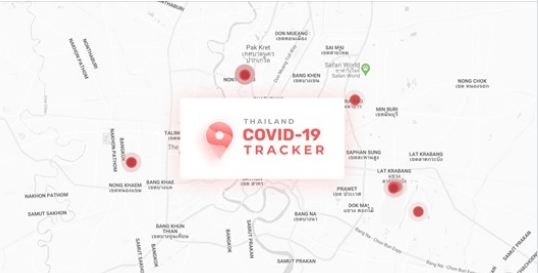
A Thai team known as 5Lab that develops websites, software and applications has introduced a site devoted to tracking the spread of the Covid-19 virus in Thailand.

The site formally launched on Friday (March 13) – https://covidtracker.5lab.co – provides information with real-time updates on people in Thailand confirmed as infected, including location, health status and date and time of confirmation.

All the data have source references to assure reliability, primarily at the Public Health Ministry, said chief executive Nithi Prasanpanich, but he believes the 5Lab site will be more useful than current information sources.

Covidtracker website's interface

Covidtracker website’s interface

“The government’s information should be more accessible rather than just being given out in general statements,” he said.

“It should provide information online, since few people get to see its press releases. And every update should be open-source, use the same format and be stored in a systematic way. Then programmers will be able to upload the data into a program.”

Updates are manually added to CovidTracker after being factually verified.

The team was on Friday in the process of adding another server to meet rising interest in the site, having already experienced crashes.

Maryland legislature advancing $700 million package of taxes to pay for schools #ศาสตร์เกษตรดินปุ๋ย

#ศาสตร์เกษตรดินปุ๋ย : ขอบคุณแหล่งข้อมูล : หนังสือพิมพ์ The Nation

https://www.nationthailand.com/edandtech/30383817?utm_source=category&utm_medium=internal_referral

Maryland legislature advancing $700 million package of taxes to pay for schools

Mar 11. 2020
By The Washington Post · Erin Cox · NATIONAL, BUSINESS, POLITICS, EDUCATION 

Democrats who control the Maryland General Assembly are advancing a roughly $700 million tax package, a multipart plan that includes an array of new taxes on dog grooming, certain corporations, vaping products and streaming services such as Netflix.

The package is on track for approval in the House of Delegates by the end of the week, and leading Democrats have pitched it as a way to pay for a sweeping public education overhaul that is also expected to be passed in the coming days.

These tax proposals have drawn far less public notice – or outrage – than a now-scuttled, $2.9 billion plan to expand the state’s sales tax to include services. Gov. Larry Hogan, a Republican, rallied opposition to the plan to tax services, but the governor has not similarly lobbied against this package.

Proponents say the measures target primarily wealthy residents and multistate corporations.

“It will not hit the pocketbooks of the vast majority of Marylanders, and the kids will get better schools,” House Majority Leader Eric Luedtke, D-Montgomery, said.

Portions of the package are aimed at modernizing the state’s tax code to reflect the digital economy, thereby correcting certain disparities. For instance, a book purchased from a bookstore is subject to state sales tax but a downloaded e-book is not.

The most far-reaching proposal would change that, and apply Maryland’s sales tax to digital goods, including streaming services such as Hulu, mobile phone apps, movie purchases, software downloads and digital video games. It would raise approximately $150 million a year, according to legislative analysts, and the Maryland would join 28 other states in taxing digital downloads.

A new tax on “luxury services” would make things such as pool cleanings, fur coat storage, pet grooming and country club memberships subject to the state’s 6 percent sales tax. That would generate an estimated $35 million a year.

House Minority Whip Kathy Szeliga, R-Baltimore County, called the overall package “pretty terrible” and particularly criticized the idea that the taxes targeted only Maryland’s upper crust.

“You can’t say watching TV is a luxury,” she said. “The ‘luxury’ of having someone groom your dog? I mean, really.”

Services as diverse as fortune telling and hair removal are included in the proposal. “Girls, your waxing is going to be taxed,” Szeliga said.

She said that Republicans, vastly outnumbered by Democrats who hold veto-proof majorities in both chambers, will try to curtail the tax proposals when they’re fully debated on the House floor this week.

The Maryland Senate is similarly working on a package of bills that also would include a novel tax on the targeted digital ads that chase consumers around the Internet. Those proposals are still in the committee process, but leaders in both chambers said they expect the bills to be passed in some form by the end of the month.

Last week, the House approved a top-to-bottom overhaul of public schools, believed to be the largest restructuring of public education since Massachusetts revamped its schools three decades ago.

The changes would provide free public preschool statewide, tougher teacher standards and higher pay for educators, more resources for districts with high concentrations of poverty, and a host of other policy prescriptions that proponents say could make Maryland’s schools the envy of the world. The changes are also expected to cost $4 billion a year when fully implemented a decade from now, a price tag that has prompted Hogan to criticize the plan as “pie-in-the-sky” and too costly. The governor has derided lawmakers’ advancing of the policy changes without a clear means to pay for them.

Hogan’s spokesman, Michael Ricci, did not immediately respond to a request for comment Tuesday on the latest revenue package. But in the past, Ricci has criticized the proposals as “years late and still billions short” of paying for the education overhaul.

The other, less controversial elements of the new tax plan include doubling the excise tax on cigarettes to $4 per pack and applying the excise tax to vaping products and e-cigarettes, which are now excluded from the excise tax.

Another hefty proposal closes what proponents call corporate tax loopholes that let multistate corporations shift their tax burden outside of Maryland. The annual Maryland tax liability of those multistate corporations would rise by roughly $150 million.

One element of the tax package would institute “combined reporting,” which forces corporations to pay state taxes on economic activity within Maryland’s borders and not just shift their entire tax burden to states where they are headquartered. More than half the states in the country use combined reporting for multistate corporations.

Another element would levy sales tax for goods sold by Maryland companies in states that do not have sales taxes. Such a “throwback” provision is used in some form by 28 states and the District of Columbia, according to legislative analysts.

Harvard moves classes online, advises students to stay home after spring break in response to covid-19 #ศาสตร์เกษตรดินปุ๋ย

#ศาสตร์เกษตรดินปุ๋ย : ขอบคุณแหล่งข้อมูล : หนังสือพิมพ์ The Nation

https://www.nationthailand.com/edandtech/30383802?utm_source=category&utm_medium=internal_referral

Harvard moves classes online, advises students to stay home after spring break in response to covid-19

Mar 10. 2020
By The Washington Post · Susan Svrluga · NATIONAL, EDUCATION

Harvard University advised its students not to return to campus after spring break and to expect to complete classwork remotely “until further notice,” in an effort to avoid the further spread of covid-19.

The change marked another sign of the impact of the coronavirus outbreak on even the most iconic institutions, as a growing number of universities known for their intense classroom debates, crowded events and hands-on research are now moving to empty their campuses as much as possible.

Amherst College, Princeton University, Stanford University, New York University, the University of Washington and others have announced dramatic changes in recent days in an effort to prevent infections by limiting the communal gatherings that have been central to campus life and learning at many schools.

Harvard is beginning to transition to virtual classes and hopes that transformation will be complete by March 23, the first day of classes after spring break, the school’s president announced to campus Tuesday.

Graduate students will transition to online work wherever possible, and students who must remain on campus will be taught remotely “and must prepare for severely limited on-campus activities and interactions,” the university’s president, Lawrence Bacow, wrote.

Non-essential gatherings of more than 25 people on campus are strongly discouraged, he wrote.

In his letter, Bacow spoke to the fundamental change about to occur: He acknowledged to students, especially graduating seniors, that this was not how they expected their time at Harvard to end.

“We are doing this not just to protect you but also to protect other members of or community who may be more vulnerable to this disease than you are,” Bacow wrote.

He acknowledged to faculty that they were asking them midway through the semester to completely rethink the way they are teaching.

“I am proud to be a member of a community where people put the greater good above their own self-interest,” Bacow wrote. “Thank you for your patience and your resilience as we all learn to temper increased distance with deeper care for one another.”