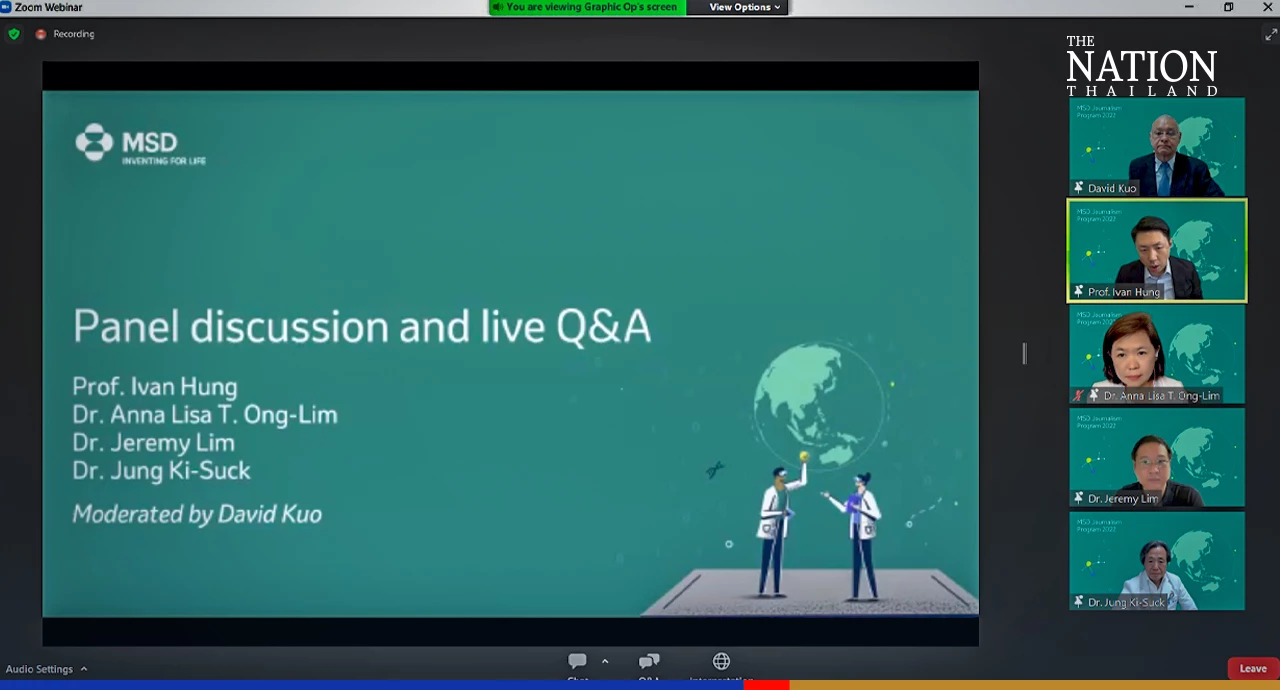
The world is moving towards the post-Covid-19 era after the disease has caused severe damage to global healthcare services, scientific leaders said during the online seminar “Evolving Healthcare Priorities in Asia Pacific – Learnings from Covid-19” on Thursday.
Prof Ivan Hung, chief of the Division of Infectious Disease at the University of Hong Kong’s Li Ka Shing Faculty of Medicine, said Covid-19 cases in Asia Pacific have risen periodically from 1.68 million in 2020 to 53.9 million in 2021 and 164 million in 2022.
“However, Asia-Pacific has basically one of the highest rates of vaccination, such as in Singapore, China and South Korea,” he said.
He also pointed out that the Covid-19 pandemic has disrupted routine treatment for non-communicable diseases, such as cancer, diphtheria, measles and polio.
“The return to routine care is imperative to prevent non-Covid-19-related deaths,” he said.
He added that criteria allowing the world to move from Covid-19 pandemic to endemic are:
Widespread infection and mild disease with Omicron
Good, natural immunity achieved by infection and high vaccination rate
Effective antiviral treatment
Second generation Omicron matched vaccine
He expected trial data on second generation Omicron matched vaccine will be available soon.
Dr Anna Lisa T Ong Lim, chief of University of The Philiipines’s Division of Infectious and Tropical Disease in Paediatrics, said Covid-19 restrictions, such as lockdowns, have been primary intervention to contain disease transmission:
Stringency index, containment and health index show variation across countries
Higher stringency did not necessarily equate to less transmission
The World Health Organisation (WHO) estimates of excess mortality show that best performing countries record the highest income and institutional quality.
She pointed out that many essential health services were also disrupted amid the Covid-19 crisis, especially in the Eastern Mediterranean, followed by Southeast Asia, Africa, Western Pacific and Europe.
“Restrictions have led to limited access to in-person healthcare services,” she said.
She advised that providers and patients need to recognise this important paradigm shift in healthcare delivery as it has evolved.
“In the pandemic, telemedicine has become the norm because it is the only way for healthcare to be delivered in some conditions,” she said, “Telemedicine has also opened the way for wider adoption of platforms.”
Dr Jeremy Lim, Assoc Professor and director of Global Health Programs at National University of Singapore, said the Covid-19 pandemic had caused healthcare issues to become existential among public.
“We were grateful that media could help to challenge us to engage and spread our narratives among the wider public,” he said.
He also advised administrative organisations to listen to the public to meet their expectations, apply professional transformation on their working and maintain platforms for engagement with society to overcome the Covid-19 pandemic’s impact on public.
“We have to recognise that when we open up [the country], the cases will spike. So the public need to understand, while the politicians need to be able to manage this,” he added.
Dr Jung Ki-Suck, Professor of Pulmonary, Allergy and Critical Care Medicine at Halym University Medical Centre, South Korea, said partnerships, networks and information exchange have emerged amid Covid-19 pandemic, such as regional offices of WHO, Centres for Disease Control and Emergency Operations Centres.
He said the next generation of Covid-19 vaccines will be broader rather than specifically targeted, minimising severity and case fatality, and have long-term durability.
Apart from the next generation of vaccines, he added that alternative treatment for Covid-19 will also be available, such as antivirals nucleoside analogues, antiproteases, anti-inflammatory agents, Extracorporeal Membrane Oxygenation and lung transplantation.
“With a variety of treatment options, we will overcome the Covid-19 pandemic era,” he said.
The Public Health Ministry should wait for a while before declaring Covid-19 an endemic disease, Vichaiyut Hospital respiratory specialist Dr Manoon Leechawengwongs advised on Thursday.
The Public Health Ministry is pushing to meet its target of declaring Covid-19 endemic in Thailand on July 1.
Manoon reasoned that many hospitals in Bangkok were dealing with a rising number of Covid-19 patients. For instance, Vichaiyut Hospital in Phaya Thai district had reopened a ward for Covid-19 patients, he added.
However, he confirmed that most patients developed mild symptoms as they had already received Covid-19 vaccine jabs.
Manoon advised people to take precautions, such as wearing a face mask, avoiding crowded or poorly ventilated areas, maintaining social distancing, washing one’s hands regularly and getting another booster shot in time.
The doctor said he had received four Covid-19 jabs – two Sinovac, one AstraZeneca and one Moderna. He added that he would receive the fifth – a Moderna jab – before waiting for a new generation of vaccines.
Manoon expected new Covid-19 vaccines to be rolled out at the end of the year or the beginning of 2023.
“Everyone must know that they could be infected with Covid-19 despite receiving five vaccine jabs,” he said.
However, vaccines can reduce the risk of developing severe symptoms or death, he added.
The Omicron BA.5 subvariant is Thailand’s dominant strain for June, causing the disease to spread further, expert virologist Dr Yong Poovorawan said on Thursday.
He said infections would increase before declining in August and advised people to receive at least three Covid-19 vaccine jabs as well as booster shots periodically.
The number of Covid-19 patients has risen sharply in the past two weeks, especially children, he noted.
Citing Chulalongkorn University’s Centre of Excellence in Clinical Virology that he heads, Yong said each Covid-19 strain became the dominant one for only a short period.
He predicted Omicron BA.5 instead of BA.2 would be the country’s dominant strain this month.
“Once a new strain becomes dominant, the virus will spread further,” he said.
He said BA.5 can escape immunity provided by vaccines, so it is not surprising that vaccinated people can get infected with the virus again. However, he stressed that most patients developed mild symptoms.
Yong expected more than 10,000 people to be infected with Covid-19, more than ten times the figure in a Public Health Ministry report.
Thailand recorded 2,695 Covid-19 cases and 14 deaths on Thursday in the past 24 hours.
He said the death rate among Covid-19 patients is now lower than 0.1 per cent. Vulnerable people, the elderly aged 60 years or above, pregnant women, people with underlying diseases and the unvaccinated accounted for most deaths.
“Vaccines can reduce the severity of Covid-19, enabling many patients to receive treatment at home despite rising infections,” the doctor pointed out.
Vulnerable people should receive Covid-19 antiviral drugs as soon as possible, Yong advised, recommending three drugs approved by the World Health Organisation – Remdesivir, Molnupiravir and Paxlovid.
“Vulnerable people should be given antiviral drugs within five days after developing symptoms,” he added.
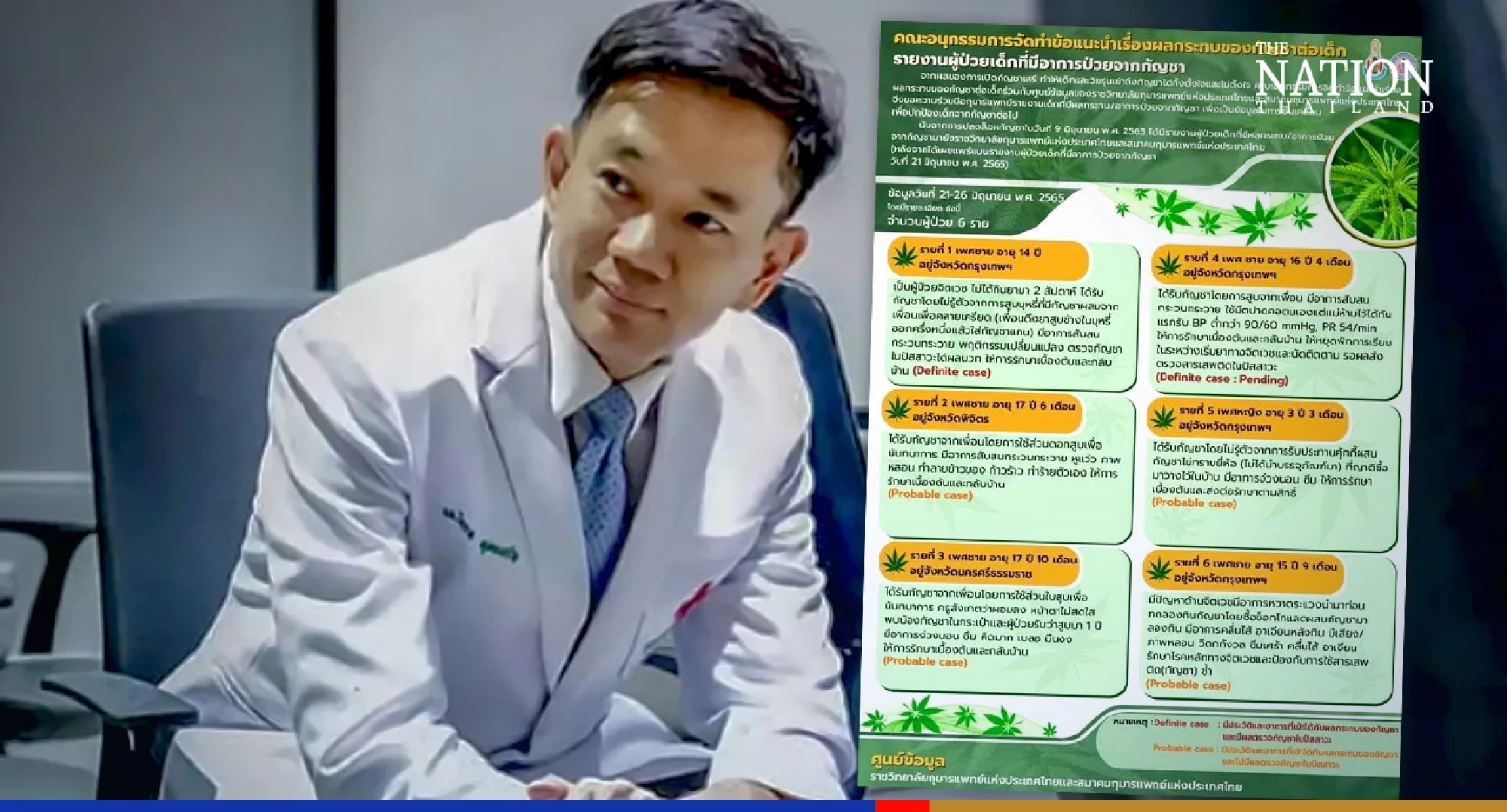
Five teenagers and a child suffered from cannabis side effects between June 21 and 26, Dr Opass Putcharoen, head of Chulalongkorn University’s Emerging Infectious Diseases Clinical Centre, revealed on Wednesday.
Many people have bought food, beverages and products with cannabis as an additive after the plant was legalised for medical and commercial use on June 9, causing dozens to suffer from the decriminalised herb’s side effects.
“The legalisation of cannabis has caused medical staff to work harder, especially psychiatrists and neurosurgeons, as many children and teenagers have begun to suffer from side effects,” Opass said.
Citing the Royal College of Paediatricians of Thailand, the six cases are:
• A 14-year-old male psychiatric patient in Bangkok suffered from “confusion and change in behaviour” after smoking cannabis contained in tobacco without notice.
• A 17-year-old male in Phichit suffered from “confusion and auditory hallucination and became aggressive” after smoking the plant.
• Another 17-year-old male, in Nakhon Si Thammarat, suffered from “weight loss, drowsiness and dizziness” after smoking cannabis.
• A 16-year-old male in Bangkok suffered from “confusion and tried to use a knife to harm himself” after smoking the plant.
• A 3-year-old girl in Bangkok suffered from “dizziness” after consuming cannabis contained in cookies without notice.
• A 15-year-old male psychiatric patient in Bangkok suffered from “nausea, auditory hallucination and depression” after consuming cannabis contained in chocolate.
More than 100 people in Khon Kaen were reportedly hospitalised on June 17 with suspected cannabis allergies or overdose.
On June 15, Bangkok officials reported that four people had been admitted to hospital in the capital with suspected cannabis overdose. One died later of heart failure.
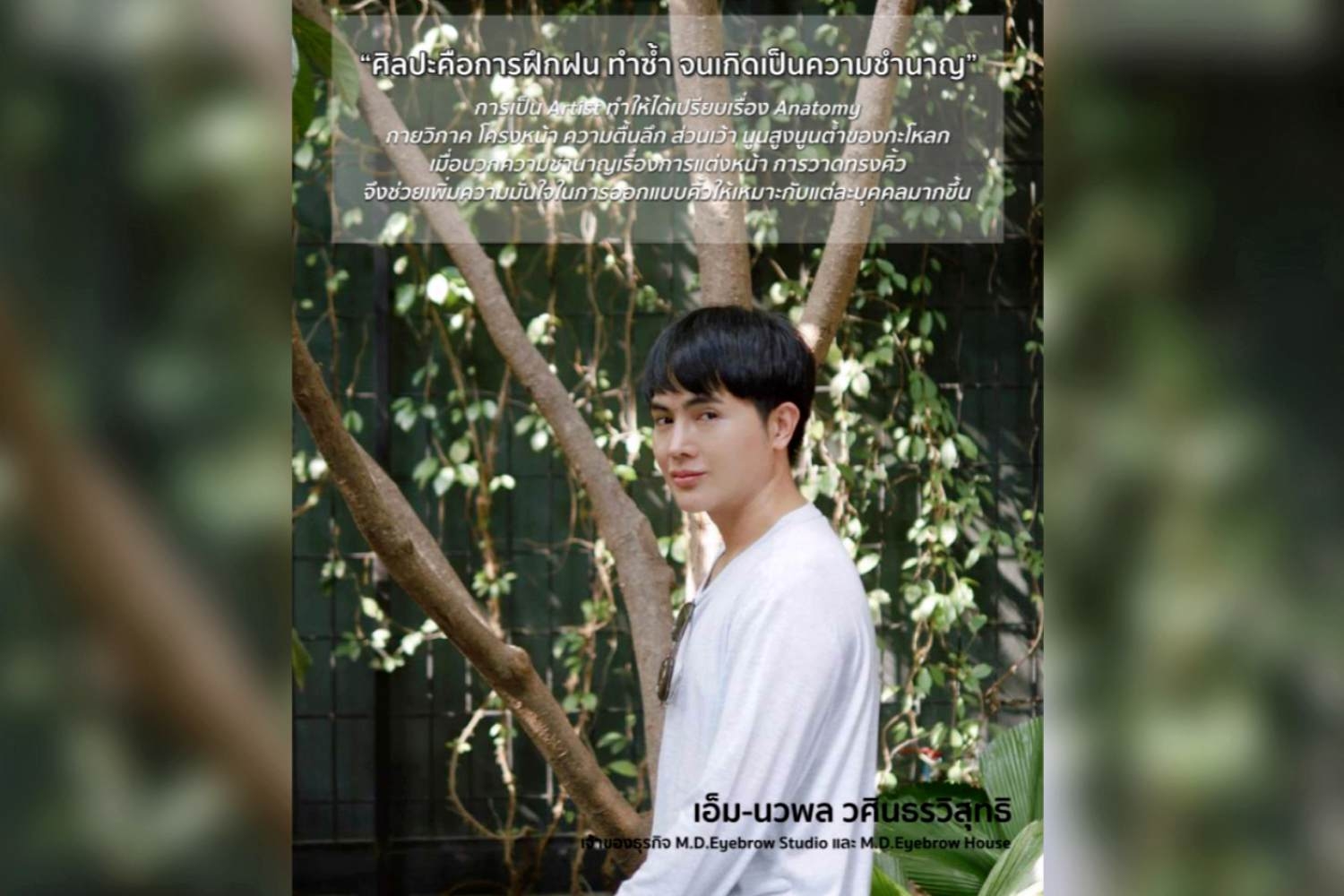
จะเขียนคิ้วอย่างไรให้รับกับใบหน้า…ไม่ใช่ปัญหาของเราต่อไป!! คุยกับกูรูผู้รู้ทุกเรื่องเกี่ยวกับคิ้ว “เอ็ม-นวพล วศินธรวิสุทธิ” เจ้าของร้าน M.D.Eyebrow Studio และ M.D.Eyebrow House
โดย : วารุณี มณีคำ
ถอดรหัสความสำเร็จผ่านแขกรับเชิญคนพิเศษ “เอ็ม-นวพล วศินธรวิสุทธิ” จาก Makeup Artist เครื่องสำอางเคาน์เตอร์แบรนด์ชื่อดัง สู่ผู้ให้คำปรึกษาเรื่อง “คิ้ว” เจ้าของธุรกิจที่ทำด้วยใจรัก M.D.Eyebrow Studio และ M.D.Eyebrow House
ท่องเที่ยวปลอดภัยไปกับสมรรถนะการขับขี่เต็มขุมกำลังจาก The All-New PEUGEOT SUV Range รถยนต์ดีไซน์หรูประวัติยาวนานกว่าสองศตวรรษจากฝรั่งเศส กับ NEW PEUGEOT 2008, 3008 SUV และ 5008 SUV























 SootinClaimon.Com
