By The Washington Post · Katie Shepherd, John Wagner
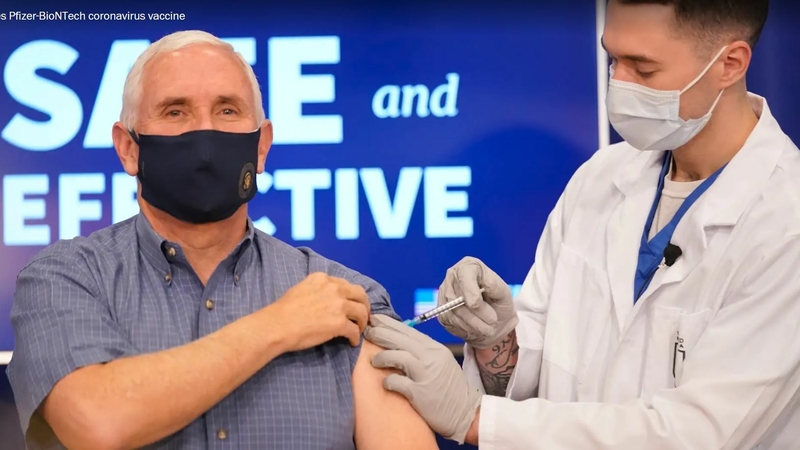
WASHINGTON – Vice President Mike Pence and second lady Karen Pence got the Pfizer-BioNTech vaccine at the White House on Friday, on live TV in an effort to vouch for the vaccine’s safety and efficacy.
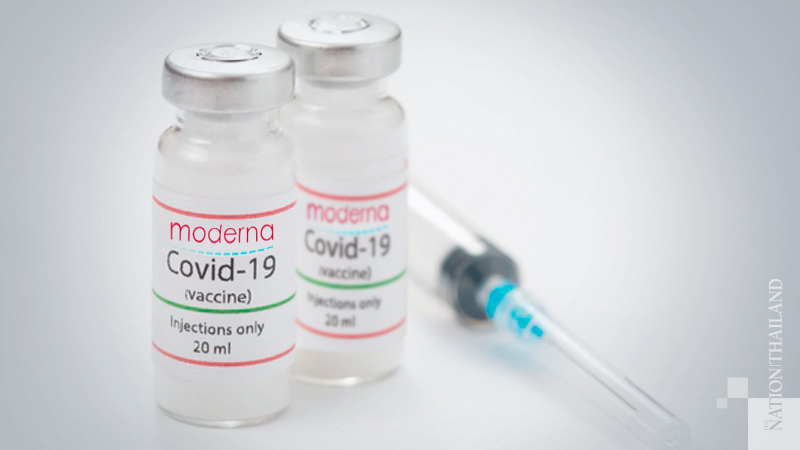
It comes as the Food and Drug Administration prepares to authorize a second coronavirus vaccine, developed by Moderna. An FDA panel deemed that vaccine to be highly effective in clinical trials, clearing the path to approval.
As reporters looked on, the Pences and Surgeon General Jerome Adams received shots of the vaccine in their arms, administered by Walter Reed National Military Medical Center staff, in a room in the White House complex.
“Great job,” a masked Pence said after a small bandage was placed on his arm following the shot.
In remarks afterward, Pence said, “I didn’t feel a thing. Well done.”
“Karen and I were more than happy to step forward,” he said, adding that he wanted to build “confidence in the vaccine.”
Pence touted the Trump administration’s efforts to speed production of coronavirus vaccines, which he touted as a “medical miracle.”
Distribution of vaccines, he said, is “the beginning of the end of the coronavirus pandemic.”
Others on hand for the event included Anthony Fauci, the nation’s top infectious-disease official, and Robert Redfield, director of the Centers for Disease Control and Prevention.
Several screens were set up in the room where the vaccinations took place. They showed messages including: “SAFE and EFFECTIVE” and “PROMISES MADE – OPERATION WARP SPEED – PROMISES KEPT.”
By The Washington Post · Laurie McGinley, Carolyn Y. Johnson
WASHINGTON – The Food and Drug Administration said Thursday night that it will “rapidly work toward” emergency authorization of Moderna’s coronavirus vaccine, just hours after agency advisers endorsed the shot. The announcement appeared to pave the way for another weapon against a pandemic that has killed about 310,000 people in the United States.
The FDA statement came after the agency’s vaccine advisory panel voted almost unanimously – 20 in favor, with one abstention – that the benefits of the highly effective vaccine outweighed its risks for people 18 years of age and older. The FDA intends to authorize the vaccine Friday, according to knowledgeable individuals who spoke on the condition of anonymity because they were not authorized to speak publicly about the schedule.
“I just want to make the point of what a remarkable scientific achievement this is, and pay thanks to all the scientists, present and past, who contributed to this,” James E.K. Hildreth, president of Meharry Medical College and a member of the advisory panel, said at the close of the committee meeting on Thursday. “To go from having a [genetic] sequence of a virus in January, to having two vaccines available in December, is a remarkable achievement.”
Anticipating the authorization decision, Gen. Gustave Perna, who is overseeing the federal effort to distribute vaccines, said Monday that the government was preparing to ship almost 6 million doses of the Moderna vaccine to 3,285 locations in the first week after approval.
“It will be a very similar cadence that was executed this week with Pfizer, where we’re hitting initial sites on Monday, [followed] on Tuesday and Wednesday,” Perna said.
The advisory committee met on the same day the nation set three grim single-day records, for cases (more than 250,000), hospitalized covid-19 patients (more than 114,000) and deaths (more than 3,400). California in the past 48 hours posted more than 100,000 new infections, and the governor has readied a mass fatality plan.
At the same time, questions flared about the availability of the first coronavirus vaccine to receive federal authorization, with officials in multiple states saying they had been told their second shipments of Pfizer-BioNTech’s inoculation had been slashed for next week.
That development sowed confusion, led to dueling statements from Pfizer and federal officials about who was to blame, and raised questions about whether a promise to deliver shots to 20 million people by the end of the year would be kept.
Looming supply issues made clear that even with unprecedented scientific success, the limited availability of vaccines would not prevent a dark winter.
The FDA authorized the Pfizer-BioNTech vaccine last Friday, hours after White House Chief of Staff Mark Meadows warned FDA Commissioner Stephen Hahn he would be asked to submit his resignation if the agency didn’t authorize the shot by the end of that day. The agency had intended to authorize the vaccine on Saturday. The first doses were administered Monday to health-care workers. Questions about the supply have persisted, as Pfizer and the U.S. government have been in negotiations about securing more doses after the first 100 million already purchased for nearly $2 billion.
Moderna developed its vaccine in partnership with the National Institute of Allergy and Infectious Diseases, with the government underwriting the research and development of the vaccine and the advanced purchase of 200 million doses, bringing the government investment to $4.1 billion.
Early in Thursday’s meeting of the advisory committee, the FDA addressed an issue that did not directly involve the Moderna vaccine: reports of allergic reactions to the Pfizer-BioNTech vaccine, including in two health-care workers in Alaska, one of whom was hospitalized. Both are recovering.
“While the totality of data at this time continue to support vaccinations under the Pfizer [emergency use authorization] without new restrictions, these cases underscore the need to remain vigilant during the early phase of the vaccination campaign,” FDA vaccine expert Doran Fink said.
The agency is working with the companies to revise fact sheets provided to patients and health-care professionals, Fink said, and he underscored an existing requirement that facilities administering the vaccine ensure that treatment for a severe allergic reaction is immediately available.
The heightened concern about possible rare allergic reactions will also pertain to the Moderna vaccine, because it uses the same genetic technology as Pfizer-BioNTech. An expert panel convened by the National Institutes of Health on Wednesday tried to discern which of the components of the vaccines might trigger an allergic reaction, Moderna chief medical officer Tal Zaks said, but he added that differences between the two vaccines make it uncertain whether they both could trigger the rare reactions.
During the meeting, he and other Moderna executives explained that they saw no cases of anaphylaxis in their 30,000-person coronavirus vaccine trials. In eight previous trials of a vaccine that uses the same technology against different diseases, there had been a single report of anaphylaxis among a total of about 1,700 participants. That case occurred more than two months after the shot – suggesting there was no link.
The FDA will also closely monitor for cases of Bell’s palsy, a temporary facial paralysis, as the vaccine is rolled out to more people. There were four cases of Bell’s palsy among people that received the Pfizer-BioNTech vaccine in its trial and three in the group that received the Moderna vaccine in its trial. The FDA said there wasn’t a clear causal link but acknowledged that the combined data from the two trials raised questions.
“It’s something we are looking into and thinking much about,” said Rachel Zhang, FDA medical officer.
The Pfizer-BioNTech and Moderna vaccines both use a new genetic vaccine technology, and in addition to the impact the vaccines could have on the pandemic, there is hope the new technology could be used to rapidly create vaccines for other diseases. But the novelty of the technology, which has been tested for years in people but never deployed in an approved medical product, has been used to foster doubt about the vaccines in some social media posts. Moderna executives used Thursday’s advisory committee hearing to address those questions head on.
Melissa Moore, Moderna’s chief scientific officer, explained that a snippet of genetic material, called messenger RNA, is encapsulated in a tiny fat bubble and delivered to the body’s lymph node cells. There, cells’ protein-making machinery follow the genetic instructions to build the coronavirus spike protein. Immune cells interact with the spike to muster a protective response.
Some social media posts have stoked fear that messenger RNA will change people’s DNA. Moore explained that the messenger RNA cannot be integrated into the genome.
Questions have also circulated about the vaccine’s ingredients, especially following the reports of rare allergic reactions. Moore explained that the vaccine contains the synthetic messenger RNA and a fat bubble. It does not contain many ingredients commonly found in other vaccines, such as preservatives or adjuvants, which are used to make vaccines work better – and is not manufactured in human or animal cells.
Moderna’s vaccine was shown to be 94% effective in its large clinical trial; Pfizer-BioNTech’s vaccine was 95% effective. The efficacy was similar across age, gender and racial groups.
Paul Offit, director of the Vaccine Education Center at the Children’s Hospital of Philadelphia and a member of the FDA advisory committee, said Wednesday on CNN that the two vaccines are similar in safety and efficacy. Asked whether people will have a choice of which to get, he replied, “There is not a lot of vaccine out there, so you are going to be asked to get the vaccine that the area has.”
In Moderna’s trial, 30,000 people were randomly assigned to receive either two shots of a vaccine given four weeks apart, or two saline shots. Neither the participants nor the people running the trial knew who was in which group.
Investigators then waited as people were exposed to coronavirus in their daily lives, to see if there were more cases of covid-19 in the group that did not receive the real vaccine. They counted cases starting two weeks after the second dose, to measure how well the vaccine protected participants after the immune system had mustered a full response.
The numbers were decisive: There were 196 cases in the trial, all but 11 of them were in the group that received the placebo shots. There were 30 cases of severe covid-19 and one death from covid-19 in the trial, all in the group that received the placebo.
There was a suggestion that a first dose of vaccine afforded some protection from the virus, but some key information is lacking.
One of the main questions debated by the panel was what to do about the trial once a vaccine is authorized.
Moderna is proposing notifying everyone in the placebo group immediately after the vaccine is cleared and allowing them access to the vaccine, using leftover supply from the clinical trial that will expire soon and can’t be given to people as part of the emergency authorization. That’s different from the Pfizer-BioNTech plan, which will allow individual participants who become eligible for a shot under health agency guidelines to request access to the vaccine. At that point, those participants could opt to find out if they were in the placebo group – and if they were, request the vaccine.
Steven Goodman, professor of medicine at Stanford University, argued that the Moderna plan could erode the ability of the trial to answer key questions about the duration of immunity – and might endanger future trials.
“We have a very strong interest in developing good information for the other vaccines,” Goodman said. “There will be a precedent, as soon as something has been shown to be effective and available, that it’s unethical to ask people to wait any more time to be immunized in any way – and this is a precedent you may not want to set.”
Moderna argued against a plan that was more logistically difficult to implement or that would defer offering the vaccine, in part because of the ethics and because so many trial participants are in high-risk groups who will begin to be offered the vaccine soon and might drop out of the trial otherwise.
Lindsey Baden, the co-principal investigator of the trial at Brigham and Women’s Hospital, said there were two to three severe cases of disease among placebo recipients in the trial each week.
“It’s important we carefully consider the volunteer viewpoint as we navigate fairness, equity, trust, transparency as well as a larger societal interest,” Baden said. “Without them, clinical research cannot function and we have unique obligations to handle the study properly.”
By The Washington Post · Carolyn Y. Johnson, Joel Achenbach
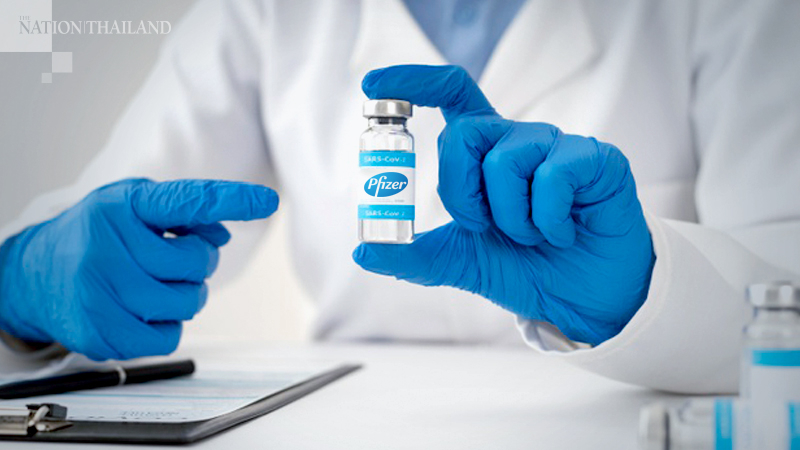
WASHINGTON – The Food and Drug Administration reiterated Thursday that the newly authorized Pfizer-BioNTech coronavirus vaccine should continue to be used with no new restrictions despite several reports of health-care workers who had a severe allergic reaction after receiving the injection.
Two of those incidents happened in the United Kingdom last week, and a third in Alaska on Tuesday. Another Alaska hospital employee had a brief but much less serious reaction on Wednesday.
The FDA said it is closely monitoring these situations and is teaming with the Centers for Disease Control and Prevention to investigate what incited these responses. While that is being investigated, the FDA is working with Pfizer to update fact sheets and prescribing information to reflect the evolving information. The FDA said that would underscore an existing requirement – that facilities administering the vaccine must be capable of immediately treating any severe allergic reaction.
The vaccine developed by the pharmaceutical giant Pfizer and the German company BioNTech passed strict safety reviews during months-long randomized clinical trials involving tens of thousands of people. But three incidents of anaphylaxis – a sudden allergic response that can be reversed quickly with medication – are a complication for officials hoping to gain public acceptance of the vaccine.
They’re also a biochemical mystery. No one knows what component of the vaccine incited the anaphylactic reactions.
“While the totality of data at this time continue to support vaccinations under the Pfizer [emergency use authorization] without new restrictions, these cases underscore the need to remain vigilant during the early phase of the vaccination campaign,” FDA vaccine expert Doran Fink said at the start of an all-day meeting of the FDA advisory committee examining a similar vaccine developed by Moderna, which is poised for emergency authorization in the coming days.
“We learned of these cases through established safety surveillance systems that worked exactly as designed, and FDA is coordinating with the CDC to further investigate the cases in the U.S., and to communicate our findings in a timely manner,” Fink said.
Fink said the totality of data does not suggest new restrictions on use of the Pfizer-BioNTech vaccine are required. Unlike traditional vaccines, these do not include preservatives and do not include ingredients grown in chicken eggs.
Two cases of anaphylaxis occurred last week in the United Kingdom, involving health care workers with a history of severe allergic reactions. They fully recovered after treatment.
A third incident happened Tuesday at Bartlett Regional Hospital in Juneau, Alaska. A health-care worker with no prior history of severe allergic reactions suffered shortness of breath, rapid heartbeat and flushed skin. The first symptoms began 10 minutes after receiving the vaccine injection.
The worker was treated overnight. By the next morning she was stable and not on medication. She then stayed a second night in the hospital “under observation,” according to a hospital statement. “She is still encouraging her colleagues to get the vaccine,” the statement added.
That was the first and, as of Thursday afternoon, only reported case of anaphylaxis since the vaccines began to be administered Monday nationwide.
Another employee at Bartlett Regional Hospital who received the vaccine Wednesday “experienced eye puffiness, lightheadedness, and scratchy throat ten minutes after being injected with the vaccine,” according to a statement from the city of Juneau. He was given a standard treatment of epinephrine, Pepcid and Benadryl and “felt completely back to normal within an hour and was released,” the statement said.
The hospital said that case was not considered anaphylaxis.
Vaccine expert and pediatrician Paul Offit of the Children’s Hospital of Philadelphia said Wednesday that, among all vaccines, about one in a million vaccinations triggers a severe allergic reaction. The guidance for this new vaccine requires people to be monitored for 15 minutes after the injection to see if they have a reaction, or 30 minutes if they have a history of severe allergic responses.
Milder side effects, such as fever, headache, fatigue and pain at the injection site, have also been reported by volunteers in randomized trials, particularly, after the second dose and among younger people who tend to have more robust and reactive immune systems. Those side effects go away in a day or two and are not considered a cause for concern.
Tal Zaks, chief medical officer of Moderna, said at Thursday’s hearing that there are three components of the vaccine that theoretically could cause rare reactions. He said that the National Institutes of Health convened an expert panel Wednesday to discuss the possibilities.
He pointed out that several components of the Moderna vaccine – which has not been linked to any anaphylactic reactions in the randomized trials – are proprietary, and differ from components in the Pfizer-BioNTech vaccine.
“While we all say there’s a [lipid nanoparticle] here delivering mRNA therefore they must be the same . . . I actually think as far as the component that is likely to be the culprit here, I would not necessarily assume that,” Zaks said. “We will be looking very carefully as has been noted, and continue to collaborate with colleagues to understand the mechanism here.”
Moderna executive Jacqueline Miller said Thursday that, after scouring a database from previous use of the same vaccine technology in trials for eight other vaccines with 1,700 people, there was a single case of an anaphylactic event reported, and it was more than two months after the shot was given. The lengthy time delay makes it unlikely that it was directly linked to the shot.
The randomized trials of both the Pfizer-BioNTech and Moderna coronavirus vaccines have not produced cases of anaphylaxis, but those trials did not permit participation by anyone with a known allergy to any component of the vaccine.
States and jurisdictions are continuing to receive deliveries of the first week’s 2.9 million Pfizer dose allocation and provide vaccinations every day. States routinely provide data to the CDC on vaccine coverage, and the CDC is awaiting the first data reports from states about vaccine administration that began Monday.
More than 1.5 million doses had been distributed, but not necessarily administered, by Thursday morning, according to the Department of Health and Human Services.
เป็นคาเฟ่น้องใหม่ที่หยิบยกเสน่ห์และความสนุกสนานของ American Diner มาไว้ที่ย่านเจริญกรุง เมนูเครื่องดื่มช่วงคริสต์มาสที่เราแนะนำคือ Special Decorated Milkshake มันคือมิลค์เชคที่เราชื่นชอบเป็นเครื่องดื่มแบบเย็นและปั่นด้วยไอศรีมระดับพรีเมียมข้นหนาเพิ่มด้วยคุกกี้ครัมเบิล ที่ทําให้นมปั่นของคุณเคี้ยวเพลิน!
จังหวัดอุตรดิตถ์เปิดจวนแถลงข่าว จัดงานพระยาพิชัยดาบหักและงานกาชาดจังหวัดอุตรดิตถ์ประจำปี 2564 เคร่งครัดการท่องเที่ยววิถีใหม่ New Normal ควบคู่กับการจัดงานวันรวมน้ำใจให้กาชาดจังหวัดอุตรดิตถ์ด้วยการระดมน้ำใจจากทุกภาคส่วน