By The Washington Post · Amy Goldstein, Sean Sullivan · NATIONAL, HEALTH, HEALTH-NEWS
WASHINGTON – The director of the Centers for Disease Control and Prevention predicted Wednesday that most of the American public will not have access to a vaccine against the novel coronavirus until late spring or summer of next year – prompting a public rebuke from President Donald Trump, who declared the CDC chief was wrong.
At a Senate hearing on the government’s response to the pandemic, CDC director Robert Redfield adhered to Trump’s oft-stated contention that a safe and effective vaccine will become available in November or December – perhaps just before the presidential election seven weeks away.
But Redfield said the vaccine will be provided first to people most vulnerable to covid-19, the disease caused by the virus, and supplies will increase over time, with Americans who are lower priority for the protection offered the shot more gradually. For it to be “fully available to the American public, so we begin to take advantage of vaccine to get back to our regular life,” he said, “I think we are probably looking at late second quarter, third quarter 2021.”
Hours later, Trump sought to knock down Redfield’s predicted timeline from the White House press briefing room, saying at a news conference, “I think he made a mistake when he said that. . . . We’re ready to distribute immediately to a vast section of the country.”
The president said that, when he heard what the CDC director had told senators, he called him directly. Trump said Redfield “didn’t tell me that,” though the president declined to disclose how Redfield replied.
“It was an incorrect statement. . . . We are ready at a much faster level than he said,” Trump said, reiterating a recent talking point that a vaccine could be ready to begin administering as early as mid-October.
Multiple experts – including top scientists leading the vaccine effort – have said it is very unlikely a vaccine will be available by then.
Speaking alongside the president, Scott Atlas, a recent addition to the White House’s coronavirus advisers, noted that the administration Wednesday circulated a vaccine distribution strategy to states and others. Atlas said the plan anticipates that “no later than January, all the top-priority people will be able to receive the vaccine,” with other Americans receiving it starting soon after.
The CDC director issued his prediction and received the presidential drubbing the same day that Democratic presidential nominee Joe Biden raised questions about the safety of a coronavirus vaccine approved during Trump’s tenure, warning something so complex and vital to the public’s well-being takes time.
“Scientific breakthroughs don’t care about calendars any more than the virus does,” the former vice president said.
Redfield said that though any individual vaccinated should benefit from a vaccine, the progressive widening of its availability means there will be a time lag between when a vaccine is approved and when it could have a measurable effect in controlling the pandemic. That might be six to nine months after the day it is approved by federal drug regulators, Redfield predicted.
Redfield said that lag between when a vaccine is approved and when the public can get it reinforces the importance of safety measures, such as keeping a proper distance, washing hands and wearing masks.
“I might even go so far as to say that this face mask is more guaranteed to protect me against covid than when I take a covid vaccine,” Redfield said, because the vaccine is unlikely to produce the desired immune response in everyone who gets it.
But Trump at his briefing continued to cast doubt on the value of masks, saying, “The mask is a mixed bag.”
Redfield’s comments were the most detailed time frame outlined so far by the leader of the government’s main public health agency. They are consistent with the perspective of Anthony Fauci, director of the National Institute of Allergy and Infectious Diseases, who said in a recent interview with CNN that relatively small amounts of vaccine will be available at first.
“It won’t be until we get into 2021 that you’ll have hundreds of millions of doses, and just the logistics, constraints in vaccinating large numbers of people,” Fauci said. “It’s going to take months to get enough people vaccinated to have an umbrella of immunity over the community so that you don’t have to worry about easy transmission.”
Redfield’s forecast came as Trump has latched onto the prospect of a vaccine as crucial to his prospects for a second term, with low approval ratings among voters for his handling of the worst public health crisis that the country and world have confronted in a century.
A vaccine also is widely regarded as a pivot point for Americans to be unfettered from the constraints the pandemic has imposed on daily life – from recreation such as concerts and movie theaters to workplaces that remain shuttered.
A race is underway internationally among pharmaceutical makers to develop vaccines that are safe and effective against the virus, which has infected nearly 6.6 million people in the United States and killed almost 200,000. Developing a vaccine typically takes years, but researchers are working with unprecedented speed. U.S. researchers in January established the goal of a world-record pace of developing an inoculation against the coronavirus within a year to 18 months.
Now, three experimental vaccines have entered the final stage of testing in the United States – giving each one to thousands of people to check effectiveness and safety – before submission for federal approval. A debate is raging over whether the Food and Drug Administration should hasten a vaccine’s availability by employing emergency authority it has before going through the process of a formal approval.
The CDC told states this month they should be ready to receive a coronavirus vaccine as early as Nov. 1 – two days before the election – prompting allegations from critics that the date was politically motivated. Sen. Patty Murray, D-Wash., the subcommittee’s senior Democrat, accused the administration of “rampant political interference in scientific decision-making.”
Redfield pressed back against such suggestions during an appearance Wednesday before a Senate subcommittee with jurisdiction over the Department of Health and Human Services, of which the CDC is a part. He said the advice to states was based on the pace of the science, not any electoral considerations. And he said his agency was eager to avoid a repetition of a problem that emerged during a pandemic of the H1N1 virus in 2009, when a vaccine became available and states were not ready to receive and distribute it.
“We don’t want to repeat that hiccup,” Redfield told senators.
He also said the government does not have an estimated $6 billion it needs for the distribution of a coronavirus vaccine. Such funds were proposed in pandemic relief legislation that Congress has not adopted, among partisan disputes over how much more aide the government should provide for laid-off workers and a variety of other purposes.
Providing that money, Redfield said, “is as urgent as getting these manufacturing facilities up.”
Biden’s remarks Wednesday show how the pandemic has increasingly become a focal point for both candidates in the final weeks of the race. Biden campaign advisers have regarded the election as a referendum on Trump and his handling of the pandemic. The campaign continues to hold events and run advertisements squarely on this theme.
The former vice president’s comments, extending suspicions Biden has expressed in recent weeks, highlight the extraordinary roughness of this presidential contest. In past election cycles, calling into question whether an incumbent might risk deliberate harm to Americans to forward his political ambitions was not the norm.
But speaking in Wilmington, Del., Biden expressed reservations about whether a covid-19 vaccine approved by the Trump administration would be safe, casting doubt on the incumbent’s willingness to put the health of Americans before politics.
“I trust vaccines. I trust scientists. But I don’t trust Donald Trump,” Biden said. “And at this point, the American people can’t, either.”
Biden raised the possibility of Trump pressuring his administration’s health officials to sign off on a vaccine in which scientists do not yet have full confidence in order to gain an election advantage. The Democratic nominee expressed skepticism about the CDC and FDA, as well as the president.
The former vice president essentially echoed Redfield’s point that vaccinating the nation will happen gradually. “It’s not going to happen overnight,” Biden said. “Once we have it, it’s going to take months to distribute.”
If a vaccine is swiftly approved, it could upend the campaign, and both sides are increasingly bracing for how to deal with the political uncertainty of the coming weeks. Still, experts have questioned whether it is realistic for one to become available before the election.
Biden made his remarks after receiving a briefing Wednesday about the quest for a vaccine from scientific, public health and health policy experts. Creating the drug is only “part of the battle,” said Biden, who likened effective distribution to a complex military operation. He said a vaccine should be free and that priority should go to those who need it most – and that includes Black and Hispanic communities.
The Democrat’s view about the possibility of a vaccine has become a point of contention in the campaign, with Trump accusing Biden and his running mate, Sen. Kamala Harris, D-Calif., of spreading “anti-vaccine rhetoric.”
Biden said he would have no problems endorsing a vaccine – provided it met certain criteria. If the current administration allows a vaccine to be distributed, Biden said, “who will validate it was driven by science? What groups of scientists?”
He added that Americans must be confident “distribution will be safe and cost-free” with a plan for doing so “without a hint of favoritism.”
Biden also lambasted Trump for not aggressively encouraging mask-wearing and alleging that waiters do not like to wear them. The Democrat defended his own calls for a national mask mandate, saying he would seek to implement one by working with governors but that he was not yet completely sure what legal authority he would have to deploy such a rule.
By The Washington Post · Sean Sullivan · NATIONAL, HEALTH, POLITICS, SCIENCE-ENVIRONMENT, HEALTH-NEWS WILMINGTON, Del. – Joe Biden on Wednesday expressed reservations about whether a coronavirus vaccine approved by the Trump administration would be safe, raising doubts about the president’s ability to put the health of Americans before politics.
Biden said Americans should trust a coronavirus vaccine developed under the Trump administration only if the president gives “honest answers” to questions about its safety, effectiveness and equitable distribution. “I trust vaccines. I trust scientists. But I don’t trust Donald Trump,” Biden said. “And at this point, the American people can’t, either.”
Biden also raised the possibility of President Trump pressuring agency officials to sign off on a vaccine that scientists are not yet confident in, to gain an electoral advantage.
The comments, which echo suspicions Biden has expressed in recent weeks, highlight the extraordinary division between the two candidates. Biden’s remarks also show how the pandemic has become a focal point in the final weeks of the race.
Biden campaign advisers have long felt that the election will be a referendum on Trump and his handling of the pandemic, which has stoked widespread anger and received low marks in public polls. They continue to hold events and run advertisements focused on this theme.
Trump has pressed health officials to accelerate the vaccine timeline and deliver one by the end of the year. At a news conference Wednesday, the president said that the vaccine “could be announced in October” and that as soon as it is available it can be distributed “immediately” to the general public. “To the general public immediately – when we go, we go,” he said.
If a vaccine is swiftly approved, it could upend the campaign. However, experts have said it is unlikely that a vaccine could be approved and come into full circulation before the Nov. 3 election.
Centers for Disease Control and Prevention Director Robert Redfield told senators Wednesday that after a safe and effective vaccine becomes available, it probably will take six to nine months for enough Americans to get vaccinated to significantly affect the pandemic.
Redfield said he expected a vaccine to start being available in November or December, with the first people to receive it being those with health problems that make them most vulnerable to a severe case or death if they are infected.
Biden spoke here in his hometown after receiving a briefing from experts about developing and distributing a vaccine. Creating the drug is only “part of the battle,” said Biden, who likened effective distribution to a complex military operation.
The former vice president said that a vaccine should be free and that priority should go to those who need it most – and that includes Black and Brown communities.
Biden received his briefing virtually from experts who appeared on a large screen that was set up inside the downtown theater where he spoke. He sat at a desk and listened to his briefers, which included some boldface names from the Obama administration.
Among the participants were former surgeon general Vivek Murthy; Zeke Emanuel, chair of the Department of Medical Ethics and Health Policy at the University of Pennsylvania; former Chicago health commissioner Julie Morita; and former Food and Drug Administration commissioner Peggy Hamburg.
Biden cast doubt not only on Trump but also on those around him. Asked whether he trusted the CDC and FDA, Biden said he did not trust “people like the fellow that just took a leave of absence.” He appeared to be referring to Michael Caputo, assistant secretary for public affairs at the Department of Health and Human Services, who urged Trump’s supporters to prepare for an armed insurrection and accused scientists in his agency of “sedition.”
As Biden addressed reporters, he attacked Trump’s handling of the pandemic and comments in an ABC town hall defending his administration’s response, despite widely documented problems with it. Biden urged Americans to ask themselves how it made them feel to hear Trump say he would not have done things differently.
Biden said people should not expect results just because the president is talking up the possibility of a vaccine. “Scientific breakthroughs don’t care about calendars any more than the virus does,” he said. He warned that politics should have no place in the production of a vaccine.
The Democrat’s position has become a point of contention in the campaign, with Trump accusing Biden and his running mate, Sen. Kamala Harris, D-Calif., of spreading “anti-vaccine rhetoric.”
At a Wednesday news conference, Trump said Biden’s comments were “anti-vaccine” and “hurting the importance of what we’re doing.” He added, “I know that if they were in this position, they’d be saying how wonderful it is.”
Biden said he would have no problems endorsing a vaccine – provided it met certain criteria. If the administration greenlights a vaccine, Biden said, “who will validate it was driven by science? What groups of scientists?”
He added that Americans must be confident “distribution will be safe and cost-free,” with a plan that is “without a hint of favoritism.”
Polls show Biden leading Trump nationally and in key battleground states. But one area where Trump’s standing has shown strength is his handling of the economy. Asked Wednesday why that is the case, Biden replied, “I’ve been out of office for four years,” arguing that voters do not have an immediate sense of the progress the Obama administration made.
Biden also lambasted Trump for not aggressively encouraging mask-wearing and alleging that waiters do not like to wear them. The Democrat defended his own calls for a national mask mandate, saying he would seek to implement one by working with governors but was not completely sure yet what legal authorities he would have to deploy such a rule. (He said his advisers think they can create a mandate.)
He also sought to rebut attacks Trump has lobbed at him for unrest across the country. “I’m not the president. He’s the president,” Biden said, arguing that his opponent should be held to account for the country’s woes.
Lilly says antibody therapy may lower covid hospitalizations
Health & BeautySep 17. 2020Lab technicians produce covid-19 diagnostic kits in a laboratory at the Newtech Medical Devices facility in Faridabad, Haryana, India, on July 15, 2020. MUST CREDIT: Bloomberg photo by T. Narayan.
By Syndication Washington Post, Bloomberg · Riley Griffin, Cristin Flanagan · BUSINESS, HEALTH, HEALTH-NEWS Eli Lilly and Co.’s experimental antibody treatment for covid-19 reduced the rate at which symptomatic patients were hospitalized compared to a placebo, according to preliminary study results released by the company and its partner.
Indianapolis-based Lilly and AbCellera Biologics Inc., a closely held Canadian biotechnology company, are co-developing neutralizing antibodies derived from one of the earliest patients in the U.S. to contract covid-19. They are among a handful of companies, including Regeneron Pharmaceuticals Inc., AstraZeneca Plc., GlaxoSmithKline Plc and its partner Vir Biotechnology Inc. pursuing antibody therapies to combat the pandemic.
Interim results from a mid-stage trial that evaluated multiple dosages found that Lilly and AbCellera’s treatment, known as LY-Cov555, was associated with a 1.7% rate in hospitalizations and ER visits among those who took the treatment compared with a 6% rate among people on a placebo, a 72% reduction in risk. No patients in the study progressed to mechanical ventilation or died.
Lilly’s shares rose 0.9% to $151.48 at 10:29 a.m. in New York trading on Wednesday. The lack of a response at the highest dose and scant detail on the lower hospitalization rates drew Wall Street analyst scrutiny.
The results were “odd,” Bloomberg Intelligence’s Sam Fazeli wrote in a note, adding “It’s not clear which dose drove the 72% reduction in hospitalizations. Very few patients were hospitalized, raising a risk that the effect is by chance. We need to see more data.”
The early results also showed that one of three doses of the antibody drug tested against covid-19 lowered the amount of virus present 11 days after patients received the treatment compared to the placebo. A 2,800 milligram dose version of the drug reduced the viral load, though the 700 mg and 7,000 mg doses did not achieve that end point. Most patients, including those receiving the placebo, demonstrated near complete viral clearance by the eleventh day.
Lilly said it will soon publish the results of this interim analysis in a peer-reviewed journal and discuss appropriate next steps with regulators.
Regeneron is expected to report results of its own at the end of this month. Jefferies analyst Biren Amin was confident the biotech company’s antibody cocktail approach could prove more effective than Lilly’s, which relies on a single antibody..
On Tuesday, top officials at Operation Warp Speed, the Trump administration’s effort to expedite the development of an inoculation and treatment, identified antibody therapies as one of its foremost R&D priorities to counter covid.
Moncef Slaoui, who is leading the Trump Administration’s Warp Speed initiative, wrote in The New England Journal of Medicine that the U.S. government plans to support manufacturing of the “most potent” monoclonal antibody products “so that hundreds of thousands of doses could be deployed this fall and winter.”
Slaoui touted the potential for monoclonal antibodies not just to serve as treatments for sick patients who’ve become infected, but as a preventive drug for those at high-risk.
In August, Lilly and AbCellera kick-started a trial of its antibody drug in nursing homes, suggesting it may have the potential protect vulnerable groups that vaccines may not cover. Slaoui said it will continued to be tested in nursing homes, as well as “meat-packing plants, and other settings” beginning in October.
The “true utility” of neutralizing antibody treatments will be in the preventing infections in unexposed people — not as a treatment of the virus, as seen in Wednesday’s results, Evercore ISI analyst Umer Raffat said in an email.

 แสงสีฟ้าคืออะไร แล้วจำเป็นแค่ไหนที่จะต้องเพิ่มออปชั่น “เลนส์ตัดแสงสีฟ้า” เวลาไปตัดแว่น


 17 กันยายน 2563 – 09:06 น.


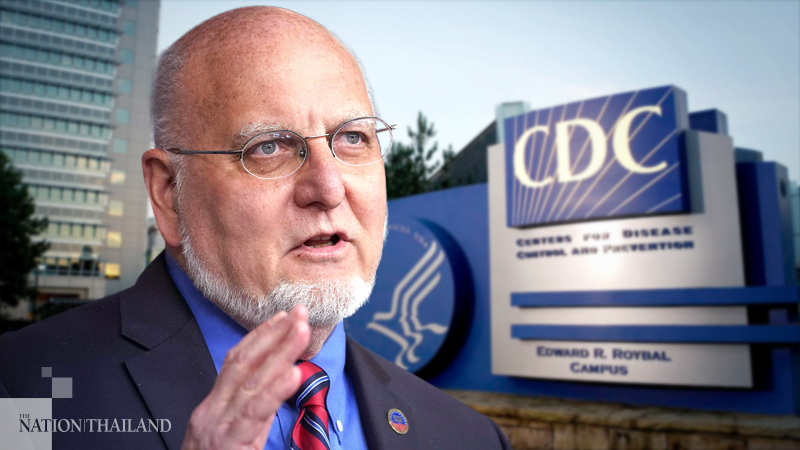 CDC director Robert Redfield
  Joe Biden
  Lab technicians produce covid-19 diagnostic kits in a laboratory at the Newtech Medical Devices facility in Faridabad, Haryana, India, on July 15, 2020. MUST CREDIT: Bloomberg photo by T. Narayan.
  16 กันยายน 2563 – 11:03 น.


 16 กันยายน 2563 – 10:50 น.


 15 กันยายน 2563 – 20:57 น.


 15 กันยายน 2563 – 20:54 น.


 15 กันยายน 2563 – 18:56 น.


