Medicaid rolls swell amid the pandemic’s historic job losses, straining state budgets
Health & BeautySep 15. 2020“We are going to have to make some difficult decisions,” said Howard Baron, a pediatric gastroenterologist, about his medical practice in Las Vegas. MUST CREDIT: Photo by Bridget Bennett for The Washington Post.
By The Washington Post · Amy Goldstein · NATIONAL, HEALTH, HEALTH-NEWS
The unlikely portrait of Medicaid in the time of coronavirus looks like Jonathan Chapin, living with his wife and 11-year-old daughter in a gated community in the Sierra Nevada foothills.
Chapin had a thriving Reno, Nev., production company, We Ain’t Saints, booking bands, managing weddings, hosting 600-strong karaoke nights at the Tahoe Biltmore Lodge & Casino. When the novel coronavirus came, forcing northern Nevada’s entertainment industry to go dark, he said, “everything I knew all disappeared.”
The family’s health insurance gone along with their income, Chapin applied online for Medicaid on April 1, the day after his wife’s job ended and three days before he needed a molar pulled. By the time his mouth was throbbing, Chapin and his family had become early additions to Nevada’s Medicaid rolls – rolls swollen now to record levels while pandemic-inflicted fiscal wounds have damaged the state’s ability to afford the safety-net health coverage.
By the most recent count, the roster of Nevadans on Medicaid has climbed from fewer than 644,000 in February, the month before the state reported its first case of covid-19, the disease caused by the virus, to about 731,000 through August.
That 13.5% increase places Nevada among at least three states, along with Kentucky and Minnesota, where the cadre of people on Medicaid has spiked that much, including families, like the Chapins, who have never before asked for government help. But increases are widespread: Caseloads had risen on average 8.4% through July in 30 states for which researchers have enrollment information. And in 14 states with enrollment data through August, the average is 10%.
If the past is a guide, this is merely the beginning.
During the Great Recession from late 2007 to mid-2009 and previous bad economic spells in the history of Medicaid, Americans have turned to the program more gradually than to unemployment benefits, food stamps and other aid for people sliding out of comfortable lives. Medicaid is insurance for the poor that is a shared responsibility of the federal government and states, begun as a pillar of President Lyndon B. Johnson’s Great Society expansion of government help of the 1960s.
“We believe Nevada has not yet seen the full impact as a result of the covid pandemic,” said the state’s Medicaid director, Suzanne Bierman, echoing expectations elsewhere of experts on the social safety net.
With Nevada’s tourism-fueled economy stalled, the unemployment rate soared to 30.1% in April, the highest ever recorded for any state in any month.
“You can pick just about any adjective you like to describe just how unprecedented the numbers are, and you wouldn’t be exaggerating,” said David Schmidt, chief economist for the Nevada Department of Employment, Training and Rehabilitation.
“When all the casinos had to close all at once by the end of March, 95% of our members were off work, so it was a complete wipeout,” said Bobbette Bond, director of public policy for the Culinary Health Fund, which provides insurance to about half the cooks and dishwashers, porters and housekeepers and other unionized casino workers. The fund is covering unemployed members for another month.
Some casinos’ lights are back on, but fewer than one-third of workers have returned to their jobs, Bond said, and some have too few hours to qualify for their old health benefits. Even Nevada’s most recent reported unemployment rate – 14% for July – is higher than the nationwide rate at the Great Recession’s worst.
With most Americans’ private health insurance tethered to their jobs, this enormous disappearance of work is a central reason Medicaid programs are swelling and strained.
Another reason: Under the Cares Act, a broad set of pandemic relief measures Congress adopted in the spring, states may not remove anyone from their rolls if they accept extra federal Medicaid aid provided by the law. But in Nevada, most of the growth is fueled by people joining, with about two-thirds of the enrollment boom most months attributed to new applicants, according to state estimates.
The spiraling demand for Medicaid is colliding with a diminished ability by the state to pay for it. With Nevada confronting a $1.2 billion deficit and a requirement to balance its budget, the legislature has taken steps to slow the program’s spending – notably, curbing payments to doctors, hospitals and others who care for Medicaid patients to save $53 million through next summer. That 6% rate cut is the largest so far in the nation.
“Nevada is the extreme of what’s happening around the country,” said Aviva Aron-Dine, vice president for health policy at the Center on Budget and Policy Priorities, who has been tracking Medicaid in the pandemic. “The fear is that it’s the leading edge.”
Chapin finally posted on his personal Facebook page July 1 what had been true for months: “It’s with a heavy heart and a lot of fantastic memories, I regret to announce the closing of my business of 19 1/2 years. . . . With covid spiking again. Wedding season cancelled, no bars to do Karaoke, no venues to book bands, and no real return for the music and entertainment industry in sight.”
It had been 2001, months into his sobriety, when he launched We Ain’t Saints, with its logo of a devil holding a beer and its motto straight from Alcoholics Anonymous. Over the years, the weddings he hosted twice made Brides magazine. He counted Google, Instagram and Squaw Valley Ski Resort among his clients for events.
The business earned him $80,000 to $140,000, depending on the year. “My company allowed me to raise a family nicely,” Chapin, 49, said. “This is what we do seriously for years and years and years. Bringing live music for people. . . . Making sure your bar is filled on Friday night. Not only is it something financially but emotionally you have all these ties with all these people.”
His wife’s final day as an administrative assistant for an organization working with children who have autism was March 31. Her health benefits ended at once. He already had stopped paying into Access to Healthcare Network, a nonprofit medical discount program that covered him and their daughter for a monthly fee. Chapin was approved for Medicaid hours after he typed up an application – a contrast to delays often vexing people as they try to get unemployment checks flowing.
For the emergency molar extraction, he had to find a dentist open in the pandemic and willing to accept SilverSummit, a Medicaid managed-care plan. Discovering none in Reno, he drove to Carson City, about 30 miles south. But he could still go to Northern Nevada HOPES, a community health center where he gets some of his care, when he awoke in April with a blood clot in his left calf. Medicaid paid for him to have it removed and is paying for a blood-thinning drug. His daughter, who has entered sixth grade online, has just been approved for braces.
If not for Medicaid, “we would have sold things, or we would have gone into debt,” Chapin said. “I think about it all the time.”
As it is, they are scraping by, using savings for house payments. Even without a job, he is finding a way to give back. Before starting his production company, he was a chef. Now, he is raising money, making beef stroganoff and peach and avocado salad, pork loin with mushroom sauce and grilled asparagus, and giving the meals to families in need. A lot of the people picking up his meals are recent exiles from the middle class.
Looking over his own rise and pandemic fall, Chapin said, “It’s part of being American. I started this business, and I was living the dream.” And now, to get health insurance, “I have to ask” the state.
– – –
Nevada Democratic Gov. Steve Sisolak issued a report just after July 4, laying out the depth of the economic wreckage wrought by the coronavirus. In nearly three years during and after the Great Recession, the governor noted, Nevada lost 180,000 jobs; in the previous three months, the state had hemorrhaged more than 250,000.
The governor said he wanted to go easy on cuts to health services. But with the Nevada Department of Health and Human Services accounting for one-third of the state’s budget through next summer, and Medicaid the department’s biggest expense, the program was a target.
To help carve $233 million from the department, Sisolak urged lawmakers to eliminate a raft of services that Nevada has offered Medicaid patients, beyond what the federal government requires.
A $3.2 million savings by getting rid of optometry for adults. Another $2.1 million by no longer covering adults’ prostheses. Other services would be restricted. No more than a dozen physical therapy sessions. Limited dental care, except for pregnant women and children.
By the time state legislators finished their special session in late July, they had set aside the idea of reducing benefits – for as long as the nationwide public health emergency continues, at least through the end of the year. Other cuts were approved and, if federal health officials accept them, will be retroactive to mid-August.
Beyond lowering doctors’ pay, the state reversed a 2.5% increase that had begun in January in the daily rate for hospitals’ inpatients. It delayed certain payments to HMOs. It reduced payments for treating the sickest newborns. More than $130 million worth of Medicaid cuts in all.
The health-care industry and some consumers are fuming.
“We have real concerns about our ability to continue to provide for Nevada Medicaid patients,” William Ziesmer, chief financial officer for Sunrise Hospital & Medical Center, the state’s largest, said at a public hearing last month on the changes.
Sunrise officials are examining services “to determine which can be saved and which we’ll be forced to reduce,” Ziesmer said. “This is an incredibly difficult position to put hospitals in, when there is so much need in the community.”
Pam Berek, whose 18-year-old son, Carson, has cerebral palsy, epilepsy and autism, implored officials at the hearing to rethink the cuts. “We don’t want to put our children away in an institution,” Berek said, predicting that an undersupply of home therapists and nurses will worsen, costing the state more in the long run. “We are not just numbers on a paper. We are actually families struggling to keep our children at home.”
On the third floor of a medical office building three miles east of the Las Vegas Strip, Howard Baron has been in practice for 27 years. Nevada’s first pediatric gastroenterologist recruited him in 1993. Baron was the second.
He and three partners treat children with growth failure, nutritional deficits, malfunctioning gastrointestinal tracts, liver disease, a need for feeding tubes. Their patients’ families vary from well-off to undocumented, but many live in the poor neighborhoods nearby. Nearly 6 in 10 of the children the practice cares for are on Medicaid.
To avoid the virus, Baron and his partners stopped performing elective procedures for two months. Other patients simply stayed away. He applied for a federal Paycheck Protection Program loan for small businesses, was turned down on the first round, then received nearly $150,000 on the second. It allowed his practice to pay two months’ salaries and health benefits for the nurse practitioner and dietitian who work with the doctors.
The immediate past president of the Nevada State Medical Association, Baron was in his office around the time the loan ran out in early July, before a special session of the legislature began, when he got an email from Jaron Hildebrand, the association’s executive director. The governor, Hildebrand was hearing, wanted to cut doctors’ Medicaid payments by 6%.
Baron’s first thought: “Wow, how are we going to continue to do what we do?”
He does not yet know how he and his partners will cope. But he knows that, even before these cuts, Medicaid reimbursement for their patient visits are slightly less than they usually cost. “We are going to have to make some difficult decisions,” he said. Perhaps letting staff go. Perhaps limiting patients on Medicaid.
And he knows the costs to Nevada’s low-income children and their parents if his practice was to shut its door to Medicaid – and if other doctors reeling from the fresh cuts did the same.
In a state with a scarcity of medical professionals, Hildebrand said, “It’s only going to exacerbate the shortage and lack of access to care,” coinciding with more and more Nevadans depending on Medicaid.
At Nevada HOPES, the Reno community health center where Chapin gets care, executive director Sharon Chamberlain steels for the strain on clinics such as hers as more doctors with private practices may become less welcoming of Medicaid patients.
“We’re bracing for it,” said Chamberlain, who founded Nevada HOPES as a pioneering HIV clinic 23 years ago, eventually turning it into a full-service health center.
The clinic has always helped patients apply for Medicaid. Before the pandemic, it was helping an average of eight households a month get on the program. Since mid-March, the monthly average has been 24. Of the 136 households HOPES has led onto Medicaid during the pandemic, almost half are new to it.
“I just think we are headed into a dark time,” Chamberlain said, with private doctors likely to back away.
Baron broached the subject a couple of weeks ago, at the monthly lunch when he and his partners gather in their small conference room, usually ordering in Thai. The cuts are significant, he said. If Medicaid patients could return more often to their main pediatricians for follow-up care, that might be something to consider.
He hates the idea of treating sick children differently, depending on who is paying the bill. Still, Baron said, “the fact is, we won’t be here for any patient if we continue to absorb the cost of providing the care.”
– – –
In this time of covid, Medicaid offers a broader tent than it did during the Great Recession. The Affordable Care Act, the sprawling health-care law, did not exist then. Now, 38 states and the District have expanded Medicaid as the law allows, enabling people with somewhat more money to sign up.
In Nevada, 4 in 10 of the state’s new enrollees are in that group, according to state estimates.
That does not mean Medicaid is rescuing everyone who needs it. Rechica Ledesma, 48, was an administrative assistant in the conventions and catering department at Caesars’s Rio Hotel and Casino. Her last day in the office was March 18. After working from home, she was furloughed a month later, then laid off in August. Conventions were not viable once the governor banned public gatherings of more than 50 people.
Her husband, Arnulfo Ledesma, lost his commercial roofing job in May, the month he was diagnosed at age 44 with colon cancer. With unemployment checks of about $700 between them and her health insurance ending, she realized last month the price of Cobra coverage – insurance laid-off workers can buy – that the hotel offered was out of reach. She began exploring Nevada’s ACA insurance marketplace, soon turning off her phone, pummeled with marketing calls for health plans she could not afford.
Finally, with a medical appointment looming to decide on treatment for her husband’s Stage 2 cancer, she applied to Medicaid. When she checked the online app Aug. 31 – the last day of her coverage from Caesars – she found a ruling that they are ineligible because they have too much money.
She does not understand the denial. After months of looking for work, she finally had a job interview this month. She does not know how many other out-of-work Nevadans are being interviewed, or how she and her husband will pay for his cancer treatment if she is not hired.
If Nevada’s Medicaid is not rescuing everyone, it is helping many. It is helping Rich Cox, who takes 14 medications, nine of them psychiatric drugs for the chronic PTSD he came home with after Army stints in Somalia, Bosnia, North Africa and Iraq.
Cox, 47, lost his Aetna health plan when he got an email in mid-April, abruptly ending the job he’d held for 15 years with an auto-repair retailer, working his way up to running a store and being sent into stores around the country to train other managers.
He’d been earning $150,000 to $180,000 a year, mostly in commissions and bonuses, said Cox, whose two daughters live with him half the time.
“I was not exactly careful with my money,” he said. “So losing my job meant losing everything – home, car, of course the insurance.”
He gave up a five-bedroom house on a lake in Summerlin, on Las Vegas’s west side, his bedroom the size of the entire first floor of the two-bedroom he found for a cheap rent. He traded his high-horsepower truck for a small car.
Medicaid approved him before his one month of Cobra insurance ran out in May. He discovered that his psychiatrist, primary care doctor and the orthopedic surgeon – for his bad knees and tendon trouble in his arms – he’d been seeing through Aetna do not accept Medicaid. He has found doctors who do.
Still, he said, Medicaid is “the only good thing to come about with this whole lifestyle change that covid forced me into. . . . Instead of feeling like I was thrown off a cliff, I feel like I was thrown off a boat.”
Oregon residents struggle to live with relentless smoke
Health & BeautySep 15. 2020Smoke blankets the tree line Sunday in Troutdale, Ore., east of Portland. MUST CREDIT: Photo by Mason Trinca for The Washington Post.
By The Washington Post · Samantha Schmidt · NATIONAL, HEALTH, HEALTH-NEWS HAPPY VALLEY, Ore. – It’s been a week since Deborah Stratton breathed clean air.
The 54-year-old and her friend evacuated their homes in Estacada, Ore., last week as flames approached. They spent days sleeping in their cars in a Walmart parking lot, using their last $12 on showers at a truck stop. Finally, they found their way here, to a shopping mall about 20 miles away from their town, in a parking lot where a Red Cross volunteer began pitching them a tent.
Portland, Ore., on Sunday. MUST CREDIT: Photo by Mason Trinca for The Washington Post.
But the smoke followed them, hanging heavy in the air, sticking to the back of Stratton’s throat.
“It burns your chest,” Stratton said, eating nachos in the Clackamas Town Center parking lot Sunday afternoon. “It’s gotten thicker and thicker.”
A week after wildfires began ravaging the state and displacing thousands of people, the air quality in many parts of Oregon ranks among the world’s worst, as bad as the pollution “airpocalypse” in Beijing in 2013. As white, thick clouds hover over buildings and highways, a miserable reality is setting in for Oregonians: They can flee from the fires, but they can’t escape the smoke.
Nauseating and suffocating, it lingers – in clothes, on hair, in bedsheets. No shower seems capable of getting rid of it, no air freshener can mask the scent. It seeps inside, even with windows and doors closed. Crack a car door open and it finds its way in. Turn on the air conditioning and the vents spit out even more. Put on your mask and it smothers you in the smell of ash.
“It’s like sticking yourself in a little room with 12 people all around you, smoking cigarettes,” said Lisa Jones, Stratton’s friend. It’s a terrifying reminder that somewhere, nearby, a fire is still burning. “It makes me feel like it’s not over, like it’s still coming.”
The wildfires ripping through Oregon have claimed at least 10 lives and at least 22 people have been reported missing, state officials said Monday. Lower temperatures and higher humidity have allowed firefighters to make progress on the blazes, but many of the state’s fires continue to rage with little containment. A long-awaited rain, originally forecast for Monday, is not expected until Wednesday or Thursday, said Doug Grafe, chief of fire protection at the Oregon Department of Forestry. And with it, the rain could bring thunderstorms and lightning, which could ignite more fires, he said.
“Without question, our state has been pushed to its limits,” said Democractic Gov. Kate Brown. “The smoke blanketing the state is a constant reminder that this tragedy has not yet come to an end.”
In hospitals across the state, health officials already are seeing the impact of the hazardous air. Ten percent of all emergency-room visits in Oregon are for asthma-like symptoms, said Gabriela Goldfarb, a manager in the environmental public health section of the Oregon Health Authority. State officials said they plan to send 250,000 N95 respirator masks to agricultural workers and Native American tribes to protect them from the smoke. And they do not expect to see somewhat clearer skies until late in the week.
“Even in some places where there may be limited improvement at times,” Goldfarb said, “that just means dropping from one bad air category to the next.”
In Portland, the smoke and fog Sunday and Monday covered everything in sight. The waterfront, usually filled with runners and dog-walkers, was empty. On bridges above the Willamette River, nothing but white clouds could be seen on either side.
In the city’s Hawthorne district, known for its boutiques and restaurants, many businesses were dark Sunday. Coffee shops and storefronts that had recently hung up signs with the words “Welcome back!” and “We’re now open” now displayed scrawled-out words on sheets of paper taped to their doors: “Closed due to air.”
Across town, Mark Rohner sat waiting at a bus stop, wearing a neck gaiter over an N95 mask, dampened with water and eucalyptus to help him breathe. He had stayed home for the past three days, hiding from the smoke that had been giving him headaches and making him dizzy. Even a half-hour trip to the grocery store left him feeling nauseated.
He wished he did not need to go out, but he had rent to pay, and he needed to go to his job in property leasing. It felt like the beginning of the pandemic all over again, each trip out of the house bringing risks of exposure.
“It’s like, OK, what next?” he said. “When is it too much? When do you stop?”
Not owning a car, Rohner had no way to escape the city. And even if he could, where would he go? He could take a train to the outskirts of Portland, but “what do you do when you get to the edge of town?”
The smoke was even worse in other parts of the state. He envied one of his friends, who fled to Boise, Idaho.
“It just feels claustrophobic,” he said. Even after being stuck in quarantine in the pandemic, “I feel more trapped than usual.”
In northeast Portland, DeShawn Brown pulled his FedEx truck to the side of the road, its doors and windows open as always. A delivery driver for a private contractor, Brown rolled a cart up to an apartment building and unloaded cardboard boxes.
“It slows me down,” Brown, 45, said of the smoke. “The other guys, too, trying to figure out how to breathe. Because this is how we roll, with the door open.”
Across town, standing outside a church, 60-year-old Teberih Medhanie wore a blue mask and a headscarf as she waited for her son to pick her up from a funeral for a relative. She had been trying to avoid the outside at all costs and was too scared to drive in the heavy smoke.
Her son, Jordan Taylor, worried about how the smoke could affect his mother’s health, and his own. The outdoors had been his way of coping with quarantine. He missed the sunlight, the vitamin D, the long walks outside.
“We can’t be inside with people. Now we’ve got this smoke and we can’t be outside,” Taylor said. “You can’t get a breath of fresh air.”
As darkness fell Sunday over the Clackamas Town Center parking lot, about 10 miles from Portland, Karol Parham’s eyes were swollen and her voice raspy from the smoke. She sat on a lawn chair drinking a beer next to her new friend, Ryan Brault, using an upside-down cardboard box as a makeshift table. After spending days parked next to each other, each living out of a car, they had become neighbors in their community of fire evacuees.
A Red Cross volunteer had given them a tent, but neither wanted to sleep in it. They felt more comfortable in their cars, where they could circulate the air to keep from breathing in the smoke. Brault had figured out a nightly routine: He runs the air in his car for half an hour, turns it off, and turns it back on a few hours later. He knows it is time for more air when he feels his eyes start to burn, he said.
“Every couple of hours you can just feel it,” he said. “It wakes you up.”
The headaches and pain in Parham’s chest always feel worse at night, when the smoke feels thicker, she said.
“Your lips get dry,” Parham said. “You drink water like crazy.”
Yards away, Stratton held her inhaler to her mouth and breathed in. Before, she used the inhaler rarely, only about once a week. Since the smoke arrived, she has used it nearly five times a day, she said.
With a toothbrush, shampoo and towel in her hands, she walked to the Red Cross showers, hoping to finally feel clean after another day smothered in smoke. It made her anxious to always smell like this, she said: “I just feel dirty, all the time.”
Minutes later, she returned with wet hair and clean pajamas, ready to crawl into her tent and watch TV on her phone. She opened up the driver’s door to her Ford Explorer and spritzed some of her favorite body wash, a “Twilight” scent she hoped would mask the smoke.
Pandemic limits on alcohol, indoor dining fuel a restaurant rebellion in Pennsylvania
Health & BeautySep 13. 2020Kristen and Rush Burpee of Michigan relax with drinks outside Pittsburgh’s Wigle Whiskey. Owner Meredith Meyer Grelli doesn’t blame the state, but says, “We are bleeding money like anyone else.” MUST CREDIT: Photo by Jeff Swensen for The Washington Post
By Special to The Washington Post · Christine Spolar · NATIONAL, BUSINESS, FEATURES, HEALTH, POLITICS, FOOD PITTSBURGH – Since 1959, Al’s Cafe has been known for cold beer, hearty hoagies and the occasional coconut shrimp platter. But since the coronavirus outbreak, the Bethel Park eatery has become the staging ground for an unlikely anti-government rebellion.
First came complaints that owner Rod Ambrogi and his patrons were failing to abide by a statewide mask mandate imposed in July by Pennsylvania Gov. Tom Wolf, a Democrat. Ambrogi has since put on a mask, but he refuses to prevent customers from bellying up to the bar in defiance of state rules strictly limiting indoor dining.
Rpd Ambrogi greets patrons at the restaurant his family has run since 1959. CREDIT: Photo by Jeff Swensen for The Washington Post
“I can see [wearing] the mask now. But the rest of it is stupid,” said Ambrogi, 74, who has rallied local tavern owners to defy the rules. “There are people going out of business every day around here.”
Six months into the coronavirus pandemic, restrictions on dining have left restaurants and taverns across the nation struggling to stay afloat. Democratic presidential candidate Joe Biden has blamed President Donald Trump for a bungled pandemic response that has left at least 190,000 dead and millions unemployed. But in Pennsylvania, a crucial swing state Trump carried by just 44,000 votes in 2016, a debate is raging over whether the Republicans in Washington or the Democrats in Harrisburg bear more responsibility for the industry’s economic pain.
Nationally, jobs in food service and drinking places fell 49 percent from February to April, according to Gus Faucher, chief economist for Pittsburgh’s PNC Financial Services Group. In Pennsylvania, the job loss was steeper, at 59 percent. And in the Pittsburgh metropolitan statistical area, which includes seven counties in the state’s southwest corner, those jobs plummeted by 62 percent.
While some have bounced back, July figures show that Pennsylvania bars and restaurants are still hurting. In Pittsburgh, only about a third of lost food and drink jobs have returned, leaving about 33,000 people still unemployed.
“Who are those 33,000 people out of work?” Faucher said. “And who are they going to hold responsible?”
For some, the answer is the governor. After closing restaurants and bars along with other nonessential businesses when the pandemic struck in mid-March, Wolf began permitting them to reopen this spring. But when the number of new infections began rising, the state health commissioner cranked up restrictions on indoor dining, a key vector of infection.
Under the new rules, alcohol could be sold only if customers also ordered food. Sidling up to a bar for a brew was forbidden.
Most infuriating to owners: Eateries that had been preparing to reopen at 50 percent capacity were suddenly told they would have to operate at 25 percent capacity. Pennsylvania is one of just three states to impose such severe limits, according to a database compiled by the National Restaurant Association, though some local jurisdictions have done so.
Many bar and restaurant owners say the state is denying them the right to earn a living. Rui Lucas, 45, who owns three restaurants in suburban Philadelphia, formed a trade association this summer to push for counties, rather than the state, to set coronavirus standards for bars and restaurants.
“Of course, we’re all scared. On many levels,” Lucas said. “We know we are at the fate of the virus. But we are also at the fate of Governor Wolf.”
State health officials defend the decision to keep a tight rein on bars and restaurants, saying it is based on data, including information from people who tested positive after dining out. The number of new cases has fallen, and White House coronavirus response coordinator Deborah Birx praised the state earlier this month, saying only five others have a lower case count.
Still, Sarah Boateng, executive deputy secretary at the Pennsylvania Department of Health, said she understands the blowback. “I hear the frustration of the restaurant owners. I appreciate it,” she said. “We know it’s not been easy.”
In general, state residents give Wolf good marks for his handling of the crisis. According to an August Monmouth University poll, 62 percent of Pennsylvania voters said the governor has done a good job, while more than half the state’s voters – 53 percent – said they disapproved of Trump’s handling of the virus.
But approval for Wolf’s performance slipped from 67 percent in July. And the same survey showed Biden leading Trump by just four points – 49 percent to 45 percent – down from a 13-point advantage a month earlier.
Lara Putnam, a history professor at the University of Pittsburgh who monitors political activity on Facebook and other social media sites, said she sees “an intensity of agitation online, especially farther outside of metropolitan areas, to blame Tom Wolf” for the grim economic situation. The state’s overall unemployment rate was 13.7 percent in July, the most recent available, significantly above the national July average of 10.2 percent.
“If you’re a waitress who has lost all your hours,” Putnam said, “who are you going to blame?”
Ambrogi, who so far has called back only 40 of 60 employees at Al’s Cafe, knows precisely whom he blames. He blasts Wolf’s restrictions on dining as “unconstitutional.”
“Look, I know it’s a bad virus. And no one wants to see anyone get sick,” Ambrogi said. “But it comes to a point: The general public has had enough of this.”
On Tuesday, with new infections down, Wolf granted restaurateurs a reprieve: Starting Sept. 21, they can operate at 50 percent capacity. But they will also have to stop serving alcohol at 10 p.m., an hour earlier.
“We wanted a ham and he gave us a hot dog,” complained Ambrogi, a stalwart Trump supporter. Of the new time for last call, he said, “I don’t know what that will mean” for business.
Since leading a local revolt against the restrictions, Ambrogi has corresponded with restaurant owners across the state. He said he has also written to Wolf and reached out to state lawmakers from both parties. Only Republicans responded, he said.
“Where are the Democrats? Are they waiting to make Trump look bad?” said Phil Catagnus, one of Ambrogi’s brothers in arms and the owner of the Double Visions go-go bar outside Philadelphia. “We are the people stuck in the middle of this.”
Because people can no longer drink without ordering food, Catagnus, 64, joked that he now sells “virus-killing hot dogs.” Still, the restrictions on indoor dining are killing business, he said.
“I’m very grateful for being open. But the margins are so small,” said Catagnus, who plans to vote for Biden despite feeling neglected by Democrats in Harrisburg.
Meredith Meyer Grelli grew up in Pittsburgh’s North Hills, teaches entrepreneurship at Carnegie Mellon University and runs Wigle Whiskey, the first distillery in Pittsburgh since Prohibition. Before the pandemic, nearly 150 customers showed up for Saturday tours. These days, Grelli relies heavily on bottle sales to stay afloat.
“What’s frustrating for bars and restaurants is they have been singled out, but there has been no effort to provide specific support,” said Grelli, 35. “We are fortunate that we have bottle sales. But this capacity issue? No one builds a business to operate at 25 percent or 50 percent.”
Grelli said that she doesn’t blame the state for her problems but that she understands why many bar owners are angry.
The distillery “gave up on profitability a long time ago,” she said. “We are bleeding money like anyone else.”
Lawyer-cum-brewer Peter Kurzweg co-owns the Independent Brewing Company and two other craft beer halls in Pittsburgh. He used to pack 120 people into his hipster beer room in the city’s Squirrel Hill neighborhood on Friday nights. Today, he has no indoor seating because he thinks ventilation is key to controlling the virus.
Kurzweg, too, is unhappy with the statewide restrictions. “I have lost count of the number of good restaurants that have closed,” he said.
But Kurzweg, 38, said he places greater blame on Trump. While countries like Germany kept the virus at bay and largely have returned to normal life, he said, the White House failed to gain control of the outbreak, allowing it to become a national calamity.
“I have mixed feelings about what the state did. They needed to find a happy balance,” Kurzweg said. But “fundamentally, I attribute what we have now to a lack of a strong federal response and strong federal guidance.”
Coronavirus lockdown steals Gazans’ last vestiges of normal life
Health & BeautySep 13. 2020A photo from the top of Al-Wehda Street in Gaza City, considered the area’s busiest street for traffic, is nearly empty on Aug. 25 because of the lockdown. CREDIT: photo for The Washington Post by Loay Ayyoub.
By Special To The Washington Post · Hazem Balousha · WORLD, MIDDLE-EAST GAZA CITY – It was late at night in Gaza. Adam and Karam, my two little sons, were asleep. But the sound of the bombing was very loud as Israeli jets targeted Hamas military sites. My fear, as always, was that the noise would wake and scare them. But when I checked, they were asleep.
There would be nowhere to go if they did wake up. For the first time since the coronavirus pandemic began, all 2 million Gazans are in home quarantine to slow a growing outbreak. Our movements are always restricted within Gaza’s 140 square miles, bound by the Mediterranean on one side, fenced in by the Israeli army on another. But now, as the jets strike outside for the 20th straight night, we cannot even leave our houses.
A woman on Al-Nasr Street in Gaza City brings bread from a bakery back to her family on Sept. 10. CREDIT: photo for The Washington Post by Loay Ayyoub.
We are stuck in a lockdown within a lockdown.
For months, we’d recorded only about 100 coronavirus cases in Gaza, all among residents returning from the outside and who were immediately quarantined. But on Aug. 24, the first cases of unknown origin were reported, in the tightly packed Maghazi refugee camp, and Gaza was placed under a complete lockdown that very same night. Since then, we’ve recorded more than 1,400 local cases.
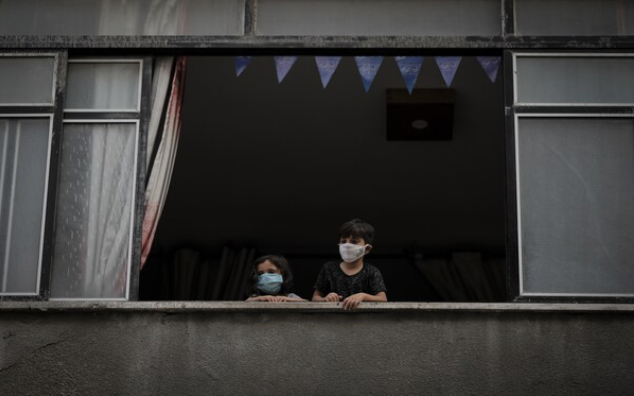
Children look out the window of their house in Gaza City on Sept. 9, amid a lockdown imposed due to the coronavirus. CREDIT: photo for The Washington Post by Loay Ayyoub.
It is beautiful to be a parent. But in Gaza it is also especially difficult. This has been true since Adam was born 10 years ago: It was two months before I even met him because Israel’s blockade of Gaza meant I couldn’t be with his mother, Ruba, when she gave birth in the West Bank, where her family lives.
“Will I be able to shield him and give him a good life in besieged Gaza?” I wondered as I marveled at my tiny boy. In the decade since, the question has never gone away. The constant cycle of escalation between Israel and Hamas, the militant group that governs here, has meant frequent explosive nights and, twice, all-out war. Rockets. More recently, Hamas and other militant groups have launched incendiary balloons that cause fires in nearby Israeli communities and farms. Israel retaliates each night by blowing up Hamas facilities. It is the violent background of our lives.
The boys slept, and I turned on a light to read. We are lucky that we can afford our own solar power system that provides about 70 percent of our household needs. Many of my neighbors in Gaza City, and almost all of the 600,000 people living in Gaza’s eight refugee camps, are spending the lockdown mostly in the dark.
The Israeli army destroyed Gaza’s main power station in the 2006 war. In the best of times, we have only eight hours of electricity a day as blackouts rotate through the neighborhoods. But three weeks ago, as a reprisal against the balloon launches, Israel cut off fuel shipments to Gaza’s last power plant. As the outbreak began to spike in late August, Gaza had only four hours of electricity a day.
– – –
Being locked in the house while also locked in our small coastal enclave is very annoying. One of the ways to stay sane while living under siege is to move around where it’s possible, to gather with your fellow Gazans at cafes, in mosques or on the beach. In the camps, social life centers on families and friends, gathering on sidewalks and apartment stoops. Now, even that connection to a normal society is cut.
Like everywhere, Gaza has been under coronavirus restrictions for months. Restaurants have been closed or limited to takeout. Mosques and churches were shut. But everyone who entered Gaza through the checkpoints was quarantined for three weeks, and the number of infections remained low.
My boys had returned to school in the second week in August, after an absence of five months. The term started early in hopes that the kids could catch up on what they had missed. They were excited to get back to school and see their classmates. They had heroic achievements to share: Karam had won his karate yellow belt and Adam had learned new soccer moves. School is one of the few places where Gazan life feels normal.
Within weeks, classes stopped again due to a sudden outbreak of new cases. The airstrikes hit every night, the pandemic was closing in and our world was shrinking once again.
The kids miss school as much as their parents do. Now most of their play is on PlayStation. Their social life is when the cousins and friends can join them online for a couple of hours of “Fortnite.”
Maybe it’s good they are still too young to understand the layers of conflict and pandemic pressing on them. We are able to keep them busy. When we are free to move around, we give them a life that is rich by Gaza standards, with extended family, friends, school and public places. You want to shield them. But the reality in Gaza makes that feel increasingly like a mission impossible.
– – –
Adam and Karam get lessons every day in how their lives are different from the young people they see on their screens. They ask me when we will travel to see their grandmother in the West Bank, something that can require months to plan. Permits are needed from Israel, and sometimes from Hamas and the Palestinian Authority – all three maintain checkpoints at the one crossing into Israel for individuals. Any of them can say no, and Israel often does.
Now, even that possibility is gone.
Technology is a blessing that opens my kids’ minds and expands their knowledge. But it can also be curse in besieged places like Gaza. So much of what we see, we cannot do. The places brought to us by the Internet are forever out of reach. I think of my friends who won scholarships to study abroad but could not get out of Gaza to attend.
For many Gazans, their farthest travel is the edge of the sea, where we cool ourselves in the Mediterranean breezes and look out to a world all but closed to us.
But this being Gaza, even a day on the beach is complicated by conflict. There is not enough electricity to run the waste treatment plants and we cannot swim because of the untreated sewage that is pumped into the sea.
One evening a few days before the lockdown, I took the boys to the beach. It is always a mix of pain and pleasure to sit with them, watching them play but knowing they will run to the water’s edge and back, asking every five minutes if they can swim. I have to say no.
Soon after the pandemic flared up, Israel and Hamas negotiated another cease-fire, brokered by Qatar. The balloons and bombs have stopped for now; we have four more hours of electricity to light our quarantine.
We know from experience that this quiet will soon cycle back to violence. Of the two lockdowns, the one caused by the virus will be the first to be resolved. We can only pray that we can keep our children safe until it is.
When this quarantine is over, we will go back to the beach to claim one of the pleasures available to us. That is the life of a Gaza parent, a cycle of tension and relief, despair and joy. They will be happy in the sand, and I will say no to swimming, waiting as always for the day I can say yes.
Coronavirus and weddings: Tying the knot in virus times
LivingSep 13. 2020Workers disinfect a wedding venue in Suwon, Gyeonggi Province, on Aug. 19. (Yonhap)
By Korea Herald
Without a doubt, 2020 has not been a great year to hold events. Some events, however, cannot easily be canceled or postponed.
Like most other countries, weddings are big business in Korea, and celebrations are typically planned out at least a year in advance.
People often travel across the country to attend, and guests are tightly packed in during a ceremony, which is followed by a reception that often involves buffet stations.
With the government imposing stringent health measures to curb the spread of COVID-19, wedding ceremonies in Korea are under close scrutiny.
Limits on crowd size and specific guidelines are causing widespread confusion for those preparing for their big day.
A wedding venue in Seoul is empty on Aug. 22, the first weekend after the government strengthened social distancing guidelines in the Greater Seoul area. (Yonhap)Wedding day disasters
Under the Level 2 social distancing rules, gatherings of 50 or more people indoors and of 100 or more people outdoors are restricted, which means weddings cannot be held in the usual way. With the government requiring wedding venues to comply with the guidelines, conflicts between the venue operators and couples are deepening.
Most wedding halls require a certain “minimum guaranteed guests.” The number depends on the venue, time slot and date. This number refers to the minimum number of meals a couple will be required to pay for as part of the wedding reception.
Wedding halls in Seoul often require couples to sign a contract for at least 200 guests. Under the contract, couples have to pay for the meals of those 200 guests, whether all 200 dine at the venue or not. If the number of people who actually dine exceeds the agreed upon number by more than 10 percent, there may not be sufficient food to go around.
Though strengthened social distancing guidelines mandate wedding halls restrict the guests to 50 per wedding, some wedding venues are refusing to reduce the number.
Some couples have taken the issue to the Blue House petition board, pleading that wedding halls be made to drop their minimum guarantee for now.
The Korea Fair Trade Commission has stepped in, suggesting a federation of wedding halls allow the postponement of ceremonies without extra charges for six months, and to temporarily suspend their minimum guaranteed guest policy.
Wedding halls have likewise taken to the Blue House petition board, insisting the minimum guest requirement is needed for them to pay their employees and meet rent.
Confusion walking down aisle
Compounding the confusion of couples are the varying guidelines issued by regional governments.
Though the Level 2 social distancing plan was enforced on Aug. 16, and was strengthened on Aug. 19, the KCDC announced the specific guidelines on wedding ceremonies on Aug. 23.
Before the announcement, each regional government imposed different guidelines on weddings, causing confusion for couples and wedding halls.
According to KCDC guidelines, the bride, groom and their families are counted among the 50 persons allowed, but wedding hall staff are not. Everyone at the wedding venue has to wear masks at all times — except for the bride and groom when they enter or leave the wedding hall and during the photo shoots. Others have to wear masks during the photo shoots. Also, when taking photos each attendee should be 1 meter apart from one another. It is recommended that meals be replaced with gifts. However, if meals have to be served, under 50 people can dine 1 to 2 meters apart from each other.
If the guidelines are not followed, those who were present at the wedding may be fined up to 3 million won ($2,500) each.
“Even for us, everything is so confusing. Direct guidelines are not given, but responsibilities are heavy,” a wedding venue employee said. “We are sorry that weddings have turned into nightmares for brides and grooms.”
Weddings evolve into new forms
Those who are going forward with their wedding plans are coming up with creative ways to cope with the situation.
Some are preparing their weddings in two parts of one hour each. Kim Ji-eun, 29, an office worker in Seoul, is one of them. The first part of her wedding in early September will be held with the presence of extended family, while the second part will be attended by the couple‘s close friends and colleagues.
Kim had to pay more for the wedding venue in central Seoul to make the arrangements. But the additional charge was relatively small compared to the charges that would be incurred if she postponed or canceled the wedding.
Kim already made reservations for her wedding dress, photographers, video recording staff and more, which would all charge her for a change of date. And though her wedding venue was offering to delay her wedding without an additional charge until February, all the “golden times” had already been taken.
“I just want to get it over with. After all, married life is important, not the wedding itself,” Kim said. “Even if we postpone the wedding to winter, we cannot be sure that this would not happen again. I cannot take chances anymore.”
Some are taking their weddings online, livestreaming the ceremony for guests unable to attend the wedding due to the heavy restrictions.
“I livestreamed my wedding via Instagram,” an online user who said she held her wedding over the prior weekend wrote on an online wedding community website. “My friends and my extended family who could not come watched the livestream and left messages congratulating me on my marriage.”
“I felt like an influencer and was surprised that many watched the livestream,” the bride wrote. “Of course, it was sad that we could not have all of our loved ones at the wedding. But at times like this, we cannot compromise anyone’s health.”


 15 กันยายน 2563 – 10:38 น.


 15 กันยายน 2563 – 08:33 น.


 “We are going to have to make some difficult decisions,” said Howard Baron, a pediatric gastroenterologist, about his medical practice in Las Vegas. MUST CREDIT: Photo by Bridget Bennett for The Washington Post.
  Smoke blankets the tree line Sunday in Troutdale, Ore., east of Portland. MUST CREDIT: Photo by Mason Trinca for The Washington Post.


 Kristen and Rush Burpee of Michigan relax with drinks outside Pittsburgh’s Wigle Whiskey. Owner Meredith Meyer Grelli doesn’t blame the state, but says, “We are bleeding money like anyone else.” MUST CREDIT: Photo by Jeff Swensen for The Washington Post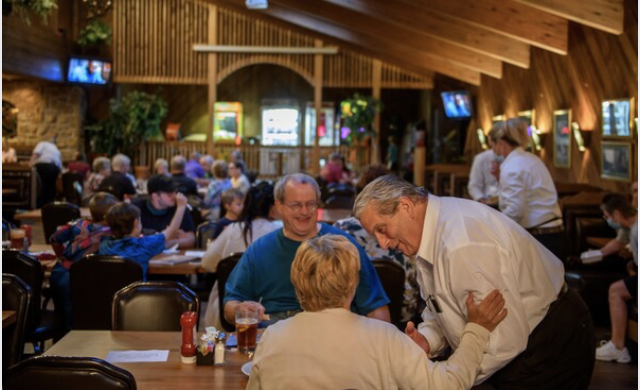
 A photo from the top of Al-Wehda Street in Gaza City, considered the area’s busiest street for traffic, is nearly empty on Aug. 25 because of the lockdown. CREDIT: photo for The Washington Post by Loay Ayyoub.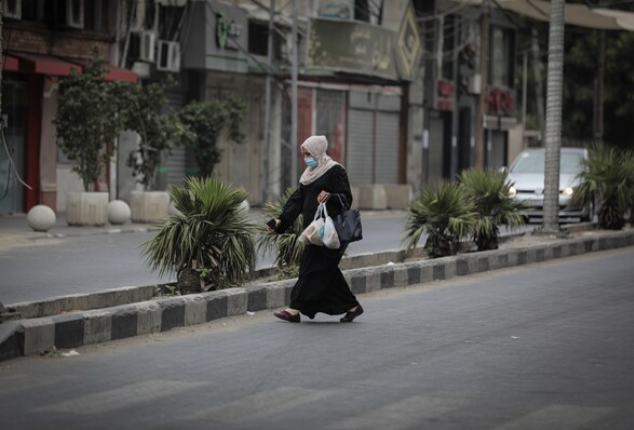
 Workers disinfect a wedding venue in Suwon, Gyeonggi Province, on Aug. 19. (Yonhap)