Over half of older workers want to continue full time: Survey

ศาสตร์เกษตรดินปุ๋ย : ขอบคุณแหล่งข้อมูล : หนังสือพิมพ์ The Nation

https://www.nationthailand.com/lifestyle/30375197

Over half of older workers want to continue full time: Survey

Aug 22. 2019
Senior Parliamentary Secretary for Manpower and Education Low Yen Ling (in pink blazer) observing a LifeWork course for mature workers with Centre for Seniors executive director Lim Sia Hoe (in pale grey, standing).ST PHOTO: TIMOTHY DAVID

Senior Parliamentary Secretary for Manpower and Education Low Yen Ling (in pink blazer) observing a LifeWork course for mature workers with Centre for Seniors executive director Lim Sia Hoe (in pale grey, standing).ST PHOTO: TIMOTHY DAVID
By The Straits Times

245 Viewed

About 25% prefer to stay in current jobs; Centre for Seniors urges more help in career planning

About a quarter of older workers want to work and stay in their current jobs, according to a survey of more than 400 workers released by the Centre for Seniors yesterday.

A separate study of around 300 older workers by the centre also showed that more than half wanted to continue working full time.

With such aspirations, the centre said more measures are needed to help older workers plan their careers, after Prime Minister Lee Hsien Loong announced during the National Day Rally speech on Sunday that the retirement and re-employment ages will be raised.

He announced that the retirement age will go up to 63 in 2022, and eventually to 65 by 2030.

The re-employment age will also go up from 67 now to 68 in 2022, and eventually to 70 by 2030.

Centre executive director Lim Sia Hoe said: “Older people say they want to work longer but they do not know how to and what jobs are open to them. There can be mismatches between jobs and older workers because these staff can have certain requests, such as leaving work early. They require life coaching so they know where to go and what resources are available. They also need to know themselves and adjust their expectations.”

The centre, a non-profit social service agency, is helping to prepare such workers with its LifeWork course. The course, which can last from one to three days, provides a toolkit for older workers to plan and manage their work-life transition, addressing concerns of career, retirement, health and family at different stages of life, especially at critical age junctions of 55, 62 and 67 years old. Around 3,000 workers from about 40 organisations have attended the course since it was piloted in 2016. A small number of workers also signed up for the course on their own.

The centre also launched a job portal for older workers last year called Silverjobs.sg. The portal has around 40 age-friendly employers across industries, such as the food and beverage sector, security, community care, corporate and administrative roles, engineering and delivery services.

It will help to match employers with older workers in suitable roles.

The centre has also developed an employment pathway for mature workers, which includes preparing both workers and employers before allowing for a job trial to ensure the right fit for both sides.

These moves are in line with the recommendation by the Tripartite Workgroup on Older Workers that calls on employers to engage mature workers in structured career planning sessions.

Ms Low Yen Ling, Senior Parliamentary Secretary for Manpower and Education and a member of the workgroup, said: “We hope that employers in the private sector and seniors will also take time to reflect, discuss and talk about how to prepare older Singaporeans to enjoy longer, more productive careers.

“We have to get them talking about re-employment early and not just a year before – 55 is a good age milestone. Such conversations and plans will give employers and seniors time to build up the skills required and help the seniors to build confidence in case he or she is prepared to go into a second career.

“Employers are also generally more aware of the skills needed for the industry, so we hope the employer can guide employees into what courses they should go for, to prepare for career transitions.”

Exotic species get claws into pet market

ศาสตร์เกษตรดินปุ๋ย : ขอบคุณแหล่งข้อมูล : หนังสือพิมพ์ The Nation

https://www.nationthailand.com/lifestyle/30375170

Exotic species get claws into pet market

Aug 22. 2019
By China Daily
Asia News Network

470 Viewed

Higher wages and better living standards mean many Chinese are no longer satisfied with cats and dogs, so they are embracing lizards, snakes, crocodiles and even rare ants. Yang Wanli reports.

Pet ownership is not a new phenomenon in China. For example, for thousands of years, rural dwellers kept dogs to guard their homes while they were busy in the fields.

 

A customer watches a marmot at a pet store in the Laiguangying Pet Market in Beijing this month. WANG JING/CHINA DAILY

A customer watches a marmot at a pet store in the Laiguangying Pet Market in Beijing this month. WANG JING/CHINA DAILY

The relationship between pets and their owners was a working partnership until 30 years ago, when standards of living started to rise as a result of the reform and opening-up policy, and people began owning animals for companionship and pleasure.

A distinct change has been noticed in recent years, with a sharp rise in the ownership of exotic pets, especially among members of the younger generation, who are no longer satisfied with traditional animals such as dogs and cats.

As a result, the country is seeing a rapid rise in the number of nontraditional pets, such as birds of prey, rare frogs, snakes, pygmy sharks, lizards, insects of all sizes and colors, and even crocodiles.


Exotic pets at a store in Beijing:an African hedgehog. WANG JING/CHINA DAILY

Exotic pets at a store in Beijing:an African hedgehog. WANG JING/CHINA DAILY

According to the annual report on China’s pet market published by Goumin, the country’s largest pet website, the market value rose from 14 billion yuan in 2010 to 170 billion yuan ($24 billion) last year.

Although the report didn’t provide specific statistics about the exotic pet market, it showed that 36 percent of China’s 73 million pet owners keep reptiles and rodents.

In 2000, only about 20 shops on Taobao, China’s largest online shopping platform, sold exotic pets. Now, a search using the keywords “exotic pets” brings up details of more than 1,000 retailers.

Also, the number of registered members of pxtx, one of China’s biggest online forums for lovers of turtles, lizards and snakes, has risen from nearly 1,000 in 2002 to more than 400,000.

This year, about 30 pet exhibitions will be held in China, 26 of which will feature lizards and rare birds, according to World Animal Protection, a global nonprofit group.

A report released by the group shows that the global trade in exotic pets has “flourished”, with more than 500 bird species and 500 reptile species traded worldwide, and the Chinese market has seen rapid growth in recent years.

According to the annual report on China’s pet market published by Goumin, the country’s largest pet website, the market value rose from 14 billion yuan in 2010 to 170 billion yuan ($24 billion) last year.

Although the report didn’t provide specific statistics about the exotic pet market, it showed that 36 percent of China’s 73 million pet owners keep reptiles and rodents.

In 2000, only about 20 shops on Taobao, China’s largest online shopping platform, sold exotic pets. Now, a search using the keywords “exotic pets” brings up details of more than 1,000 retailers.

Also, the number of registered members of pxtx, one of China’s biggest online forums for lovers of turtles, lizards and snakes, has risen from nearly 1,000 in 2002 to more than 400,000.

This year, about 30 pet exhibitions will be held in China, 26 of which will feature lizards and rare birds, according to World Animal Protection, a global nonprofit group.

A report released by the group shows that the global trade in exotic pets has “flourished”, with more than 500 bird species and 500 reptile species traded worldwide, and the Chinese market has seen rapid growth in recent years.


Exotic pets at a store in Beijing: a marmot. WANG JING/CHINA DAILY

Exotic pets at a store in Beijing: a marmot. WANG JING/CHINA DAILY

Millennial identities

Many Chinese fans of exotic pets are ages 20 to 35, the so-called millennial generation, who are passionate about exploring new things and seeking a unique identity.

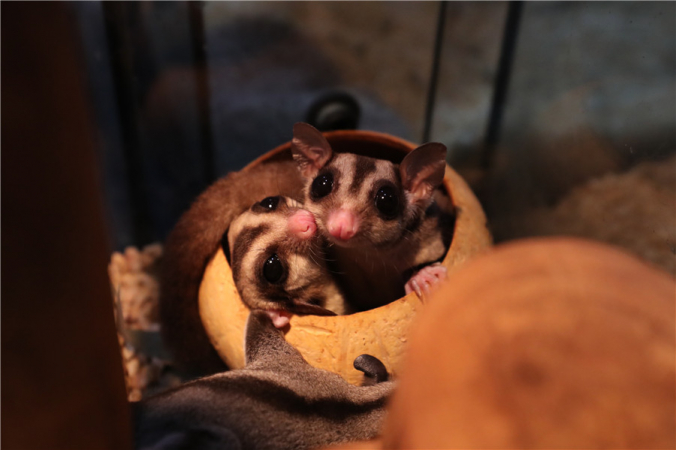
“Young people are our major customers. Instead of raising a traditional pet, they want something special to show off to their friends, especially via social media. Also, many enjoy the experience of learning and knowing more about a certain wild animal by raising it as a pet,” said Liu Yiyan, who owns a store that sells lizards, snakes, African hedgehogs, marmots and flying squirrels.

Liu, 25, loves exotic pets. At age 21, he started raising a central bearded dragon, a lizard native to the woodland and deserts of central Australia.

“It was cool to have a lizard as a pet when most of my friends had cats and dogs. Nowadays, young people want to be different, and having an exotic pet is a good way to stand out,” he said. “When I discovered that many people had a strong interest in exotic pets, it gave me the confidence to start my business.”

Together with his 29-year-old sister, Liu runs his store at the Laiguangying Pet Market near Beijing’s North Fifth Ring Road. In the two years since it opened, the 35-square-meter store has seen a steady rise in customer numbers, earning the siblings a combined monthly income of about 25,000 yuan.

Prices range from 300 to 5,000 yuan for each animal, but those that exhibit rare colors, have great affinity for human contact or are happy to interact with their owners cost more. “Snakes are easiest for beginners, but women prefer flying squirrels because of their cute appearance,” Liu said.

He said many purchasers are novices in the exotic pets market and have barely heard of the animals. “Most brick-and-mortar stores like mine prefer to sell exotic pets that have been popular for several years. That makes it much easier for novices,” he said.

 

Exotic pets at a store in Beijing: a snake. WANG JING/CHINA DAILY

Exotic pets at a store in Beijing: a snake. WANG JING/CHINA DAILY

Internet interest

By contrast, the internet is the major trading platform for people looking for the most unusual pets. For example, a popular retailer called Ant Farm, which opened in 2010, sells the insects on Taobao.

The store, which receives about 2,500 orders a month and has 30,000 registered fans, sells more than 200 kinds of ants. They range from honeypot ants-a queen costs nearly 3,000 yuan-to Messor cephalotes, where a group consisting of a queen and three to five worker ants costs 2,000 yuan.

“Owning ants is still a new thing in the exotic pets market. I was among the first group of ant lovers that emerged about 10 years ago. Back then, the group only had a few hundred members, but now, the number is estimated to be 100,000,” said Yang Yu, 35, Ant Farm’s owner.

A colony of ants usually costs about 10,000 yuan, much less than a single rare tortoise, according to Yang. Some ordinary species, such as bullet ants or the Bornean queenless ant, cost just a few hundred yuan for a small group, meaning they are popular with younger collectors.

Yang said raising ants is a good option for quiet people. He said owners have a lot of fun observing the highly organized insects working collaboratively, and it is considered a tremendous achievement if the group produces the next generation in captivity.

He has established two online ant chat groups, each of which has nearly 2,000 members. Many are high school students, who are still beginners in the field, while others are senior players, though still age 40 or younger.

“They share common ground-a strong interest in ants and great curiosity about the small underground kingdom. Most of them are their family’s only child and they want a pet for companionship,” he said.

“Thanks to increasing social tolerance, you will not be seen as a geek for raising an exotic pet. On the contrary, it has become a cool thing that has attracted more people.”


Exotic pets at a store in Beijing: a lizard. WANG JING/CHINA DAILY

Exotic pets at a store in Beijing: a lizard. WANG JING/CHINA DAILY

Background research

Given the rising popularity of exotic pets, experts are urging owners to conduct research on animals before buying them. Many have warned that some exotic pets may pose health risks because they can carry bacteria and parasites linked to infectious diseases. For example, some reptiles can transmit salmonellosis, whose symptoms include diarrhea, fever, abdominal cramps and vomiting.

“The old, young and people with weakened immune systems are more likely to develop severe illnesses. In some serious cases, people can die from the infection,” said Zou Qiangjun from the Beijing Aquatic Wild Animals Rescue and Care Center.

He said that in recent years, the center has received reports of pets, including snapping turtles and giant salamanders, being bred in captivity and then abandoned.

In 2012 and 2015, the center rescued two 1-meter-long Siamese crocodiles that had been abandoned in a river and on a golf course. When experts examined the crocodiles, they discovered that the reptiles had been bred in captivity.

According to a report by World Animal Protection, nearly 50 percent of first-time buyers “hardly take any time” to learn about their animals.

“They lack enough knowledge and preparation to raise wild species at home. Some young wildlife might be cute and suitable for keeping at home, but things may go beyond people’s expectations,” Zou said.

“Wild animals belong in the wild. The best thing we can do for them is to respect their original conditions and leave them in the wild.”

Architect Tetsuo Kondo shares his insights on the creation of AP Pavilion

ศาสตร์เกษตรดินปุ๋ย : ขอบคุณแหล่งข้อมูล : หนังสือพิมพ์ The Nation

https://www.nationthailand.com/lifestyle/30374811

Architect Tetsuo Kondo shares his insights on the creation of AP Pavilion

Aug 15. 2019
AP Pavillion at Parc Paragon is designed by Japanese architect Tetsuo Kondo.

AP Pavillion at Parc Paragon is designed by Japanese architect Tetsuo Kondo.
By Parinyaporn Pajee
The Nation

169 Viewed

Tetsuo Kondo is a renowned Japanese architect who is visiting Bangkok to talk about his work in designing the AP Pavilion at Parc Paragon, where the AP World event has been organised by the AP Thailand Group as a means of inviting people to experience what the company calls an ideal world.

The concept has three underlining philosophies: Grow, a master plan for sustainable development; Flow, the building of society and experience in every dimension of quality; Joy, the elevation of living standard for happiness and peace of mind. The three elements are embedded in the group’s residential development and service innovation and provide a solid foundation for setting new standards for quality of life in accordance with the AP World vision.

Vittakarn Chandavimol, chief of corporate strategy and creation for AP Thailand Group, says that of the key philosophies for quality of life, Grow is the master plan for sustainable development. It is a design to achieve good physical and mental health from the inside to the outside. It involves developing green areas, conservation of the environment and moving into the future steadily.

“One of our Grow efforts is the saving of big trees on the Rhythm Ekkamai Estate. Another project is a collaboration between AP Academy and BIG Trees Project and Thailand Urban Tree Network to design a special course for tree management in housing projects.

“Meanwhile Joy means the joy of living and involves having peace of mind and family security with Katsan service innovation, which acts as your personal guardian 24 hours a day and Homewiser, which acts as your home expert complete with a maintenance concept and a design of life space for every family member. Flow aims to build a community of sharing and trust through our service innovation. We are looking to build an ecosystem for a quality society and are working with Denmark’s leading furniture brand HAY to offer a sharing community in AP projects.

“The event AP World is our first showcase of the quality of life and we took over five years to prepare it.”

As for the highlights at AP World, AP Thailand Group has collaborated with Kondo, a progressive architect from Japan who is known for a distinguishing design concept that focuses on how human beings live their lives. Kondo connected architecture with surrounding elements, whether it be climate, history, culture or the environment, to make the AP World Pavilion a unique showcase of sustainable living in the future, Vittakarn says.

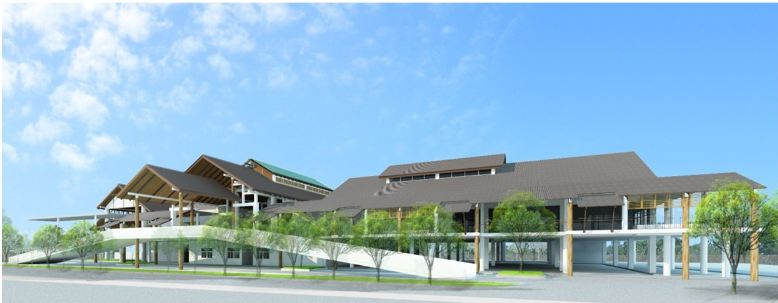
Kondo has designed the marquee to be different from other pavilions or show booths held here, which are exposed to the sunshine and have crowds of visitors walking by from Paragon Shopping Centre and Siam Centre. AP Pavilion is not afraid of the heat, the Pavilion is transparent in four sides of the wall and on the roof. However, visitor inside the Pavilion doesn’t feel hot as would be expected. It is like the indoors with air-conditioned temperatures.

Kondo says that after the AP people told him about the AP World philosophy of Grow, Flow and Joy, it reminded him of the idea of sustainability or sharing community. So he designed the Pavilion to reflects Bangkok’s real hot temperature and at the same time interact with people who visit inside the Pavilion and also passers-by.

The architect also brings an aluminium balloon floating on the ceiling, which is not just for decoration but it’s an item that reflects the sunlight heat. And it also reflects things happening inside.

“Up there it is hot but down here the temperature is normal and it’s a cool breeze with help from air-conditioning,” says the architect.

Tetsuo Kondo, right, talks about his idea in creating AP Pavillion.

Tetsuo Kondo, right, talks about his idea in creating AP Pavillion.

Throughout the seven days of AP World, there are many activities, including the presentation of service innovation and services that improve the quality of life from five AP businesses: BC, Smart, SEAC, Vaari and Claymore.

“These businesses aim to bring about an ideal world of living where every space is designed with a deep understanding of customers together with modern innovation,” Vittakarn says.

“Kondo is distinguished for his experimental approach to art, focusing on making art pieces interact with audiences. His design concepts focus on how humans live their lives. Kondo connected architecture with surrounding elements, whether it be climate, history, culture or the environment, to make AP World Pavilion a unique showcase of sustainable living in the future.

“He wants and hopes to design a future that has no boundary between architecture and human and the environment.”

Cloudscape

Cloudscape

One of his masterpieces was a collaboration with Transsolar, a world-class climate engineering company. Called “Cloudscapes”, it was an installation art that made you feel like you are walking up the stairs and vanishing into a white cloud. The piece was shown at Venice Architecture Biennale 2010.

“We use the real cloud in the air and it was made from water, floating with 1.5-metre thickness and people can feel the feeling differently when they were below the cloud, in the cloud and above the cloud,” says Kondo.

Another of his works that is well known both in Japan and in the international art community is “A Path in the Forest” – the installation in the forest of Estonia 10 years ago. A sequel to his Venice showcase, the work further reinforces the underlining concept that there must be no boundary in his architecture by designing a white steel walkway curvy narrow, thin, fastened to trees in the forest by belts only. Apart from leaving existing threes intact, it gives the most delicate touch to the old natural setting.

A Path in the Forest

A Path in the Forest

Kondo says that the idea is to bring people in harmony with nature, history and the environment, which is his interest in creating art works.

When asking about his idea in quality of living, the Japanese architect says that he doesn’t limit his work to short term happiness.

“There are many things when talking about the quality of living. But one thing you should think about is our life in a longer phase, and not concentrate just in the next in five years. We also have to think one hundred years ahead that we can’t avoid thinking about how to live with nature as for the human being. We should think about the environment and that is what I am trying to do as an architect as well,” he says.

Cloudscape

Cloudscape

As an architect, Kondo’s philosophy in work thus is the connecting of everything from human beings to nature, history and culture.

“For me, the environment doesn’t mean only climate change but it means everything from nature, human beings, temperature, light, culture and history. As an architect I try to find ways to make the architecture in having a good relationship between environment,” he says.

After graduating from the National Institute of Technology in 1999, Kondo began his career as an architect at Kazuyo Sejima and Associates SANAA, a leading architectural firm. He also lectures at Tokyo University of Science and Keto University.

A Path In the Forest

A Path In the Forest

Go on, have a heart

ศาสตร์เกษตรดินปุ๋ย : ขอบคุณแหล่งข้อมูล : หนังสือพิมพ์ The Nation

https://www.nationthailand.com/lifestyle/30374713

Go on, have a heart

Aug 14. 2019
By The Nation

153 Viewed

TMB is once again partnering with ING Bank later this year for the 2019 edition of the “TMB | ING Parkrun”, the popular walk, run, and mini-marathon charity event that raises funds for the Cardiac Children Foundation of Thailand under the royal patronage of HRH Princess Galyani Vadhana.

This year, runners can choose to “make a difference” by joining either the Park Run event or the Virtual Park Run. All proceeds will go to support the cost of surgery for young patients with heart diseases.

“For the last 10 years, TMB has partnered with ING for the Parkrun and for the last 5 years, the objective of this event has been on encouraging runners and donors to support surgery costs through purchasing tickets and donating money to help kids with heart problems. Each year, more than 7,500 children are born with heart conditions and are waiting for surgery. Today, as always, there are many patients waiting for help under the care of the Cardiac Children Foundation of Thailand under the royal patronage of HRH Princess Galyani Vadhana,” said Piti Tantakasem, chief executive of TMB, adding that the event has raised funds to save more than 1,200 youngsters.

“As a representative of ING, I’m proud to be a part of this project and I want to invite everyone to join. The public can join the event in different ways, from buying a ticket to join the Park Run to run at the event, or trying the Virtual Park Run. Donors can also take part in the #GoodForHeart activity,” said Eileen Lau, managing director and head of Corporate Communications, ING Bank Asia.

The Park Run will be held on December 15 and participants will run through three beautiful parks, Chatuchak Park, Queen Sirikit Park, and Vachirabenjatas Park (Suan Rot Fai), in the heart of Bangkok. There are three distances available: 2.6 km, 5.2 km, and 10.5 km.”

The Virtual Park Run allows runners to run at any park and at any time between November 15 and December 15. TMB will donate an additional Bt1 million if the accumulated running distance of the participating Virtual Park Runners exceeds 100,000 km. Participating runners will receive a medal posted to them after the event.

Tickets for both running categories are available from today at https://parkrun.tmbfoundation.or.th for Bt600. All ticket holders will a light-weight, comfortable and ecofriendly zeroH2O running shirt. The shirts will be sent via post. Those who wish to donate money can do so via the website.

Runners and donors will receive a receipt via email which can be used for tax deduction.

For more information, visit https://parkrun.tmbfoundation.or.th, contact (085) 567 389, LINE@ : @tmbingparkrun and Email tmbingparkrun2019@gmail.com.

Project succeeds in developing healthy behaviours for pre-seniors, winds down

ศาสตร์เกษตรดินปุ๋ย : ขอบคุณแหล่งข้อมูล : หนังสือพิมพ์ The Nation

https://www.nationthailand.com/lifestyle/30374629

Project succeeds in developing healthy behaviours for pre-seniors, winds down

Aug 12. 2019
By The Nation

274 Viewed

A three-year proactive health programme that aimed to encourage Thai people over age 45 to adopt health behaviours and so help ensure the country becomes a healthy ageing society has successfully concluded.

The “Pfizer Healthy Ageing Society”, programme successfully improved the physical and mental health of more than 90 per cent of the participants in Bangkok and Ubon Ratchathani and reduced risks associated with non-communicable diseases, according to a joint announcement from the Pfizer Thailand Foundation and Kenan Foundation Asia.

The programme also trained a workforce of 40 expertly trained 40 competent workforces or ‘change agents’ who went on to initiate 27 medium-sized development projects to benefit their communities.

The partners also announced their readiness to further collaborate with government agencies at the national level toward the adoption of the model project in order to build capacity and raise awareness on good health and financial security, reduce health-social-economic impacts, and promote sustainability toward entering a quality ageing society.

Piyabutr Cholvijarn, left, the president of Kenan Foundation Asia and Dr Nirutti Pradubyati, the medical director for Pfizer (Thailand) Limited.

Piyabutr Cholvijarn, left, the president of Kenan Foundation Asia and Dr Nirutti Pradubyati, the medical director for Pfizer (Thailand) Limited.

“After the project ends, we will work on the issue in other aspects by using the data from the project,” said Dr Nirutti Pradubyati, the medical director for Pfizer (Thailand) Limited.

Pfizer and Kenan worked together to develop the “Pfizer Healthy Aging Society”, a knowledge-based project aimed at developing a holistic healthcare approach for pre-senior and elderly citizens. The three-year project (2016–2019), was introduced under the concept “Good Physical Health, Strong Mental Health, and Adequate Savings”. It was rolled out in two key areas – Bangkok (Klong Toei district and Bang Khunthien district), and Ubon Ratchathani province (Muang district and Warin Chamrap district). The programme encompassed collaboration at the national and community levels, to enhance capabilities of pre-senior citizens (45-59 years old) in four primary target groups, including public health volunteers, teachers, public health professionals and officials at district offices.

The prime mission was to develop “change gents” through workshops and educational activities specifically designed to enhance knowledge and essential skills which related to physical health, mental health and financial security. The proactive programme had been driving a deep understanding of essential topics such as non-communicable diseases (NCDs), nutrition, mental health, financial literacy, a supportive environment for elderly citizens, welfare, and community analysis. In term of the outcome, the programme successfully promoted knowledge for 41 change agents, who became a competent workforce and constructively organised 27 development projects to promote sustainable health in their communities.

The programme also published 2,000 handbooks on the Pfizer Healthy Ageing Society to promote good practices for healthy living to ensure benefits for all ages. Also, the project conducted a policy recommendation process built on the data collected through interviews with thought leaders in the public and private sectors as well as civil society and academic organisations. The report provides recommendations touching upon key agendas, including a paradigm shift toward an active ageing society, career opportunities and the promotion of lifelong learning, financial literacy and skills development, promoting good health and changing the environment to facilitate life for all ages. The project aimed to achieve practical results in national policy toward the preparation for an ageing society encompassing health and socio-economic perspectives,” said Dr Nirutti.

Piyabutr Cholvijarn, the president of Kenan Foundation Asia, said the project was launched to encourage the change agents to adopt positive health and financial behaviours and become a holistic model for their communities. Primary objectives included building the capacity of the change agents to prepare for a quality ageing society, to drive positive attitude and behavioural shifts towards healthy ageing in order to reduce the risk of illness from NCDs in pre-elderly and elderly groups, and to create good practices for the preparation of an ageing society which are sustainable and adaptable to the context of Thai society.

The three-year project has been successful in building a strong network at the local and national levels with supports from 14 agencies whose staff have served as steering committees. Specialists and advisors from 21 local stakeholders and more than 12 academic institutions took part in the capacity-building programmes for the target participants. Meanwhile, a total of 181 participants have completed the training. Some of these participants have successfully become change agents and further created 27 development projects to benefit 5,000 residents in their communities. Good samples of the interesting projects include a yoga exercises programme by a group of health lovers who are from Klong Toei Community Flats 1-10, and a project by change agents who are teachers at Rattanakosin Somphot Bang Khunthien School that provides students advice on proper nutrition and encourages overweight students to keep physically active and exercising.

In the project monitoring and evaluation, the survey finds that on the topic of physical health, 90 per cent of the respondents said they have a basic understanding (knowledge) about exercising. They realise that an individual needs to exercise least three times a week, for 30 minutes each time. They also have a basic knowledge about NCDs such as high blood pressure. The participants have a good perception (attitude) towards health care, resulting in the shift of their behaviours (practice). For example, more than 86 per cent of the participants receive an annual physical check-up, while more than 80 per cent perform an easy exercise such as arm swinging during walking or keeping physically active with household chores. For their eating behaviours, the survey found a decline in consumption rates of sugar, fat and organ meats.

On the topic of mental health, participants were basically in good mental health. Evaluated by the Thai Mental Health Indicator (TMHI-15), the survey found that more than 60 per cent of the participants became mentally stronger. The result found no issues associated with depression, while participants have a good ability to control their emotions.

Also more than 80 per cent of the respondents said that they know about saving through banks, insurance and life insurance. They also have a good attitude or recognise the importance of financial planning, financial planning for healthcare, and monthly accounting. Around 60-75 per cent said they want to have an income and expense account and a household financial account. However, only 10-20 per cent of those respondents managed to obtain one. The survey also found that 35-50 per cent of the survey participants make an advance financial plan every month, 49 per cent have a retirement plan, while 25 per cent do not. Meanwhile, up to 61 per cent said they have debts. The change agents, therefore, need time to build awareness and encourage communities to create a good financial plan.

In other aspects, 60 per cent of the respondents were aware that elderly citizens stood at around 15 per cent of the population. Up to 75 per cent do not see elderly citizens as a burden. Meanwhile, 90 per cent are confident that they can manage time for community participation and are able to communicate and campaign encouraging behaviour shifts at the community level.

The working groups in Bangkok and Ubon Ratchathani, along with the change agents, should be developed into a collaboration network to support the social protection system for the elderly citizens, long-term care system for seniors, as well as an integrated system to prepare for an ageing society, the project concluded.

By unifying all efforts from networks at the provincial and district levels, the strategic move could lead to the development of a “collaborative ecosystem for ageing society district”, which could be further developed at the national level. Channelling through the government agencies, the Pfizer Healthy Ageing Society could be implemented as a model to encourage sustainability towards a shift of health behaviour.

The working committee is now aiming to reinforce the exchange of the guidelines over the adoption of a prototype project for the government agencies responsible for the national policies on the elderly. Those agencies include Department of Health under the Ministry of Public Health, Department of Older Persons under the Ministry of Social Development and Human Security, Department of Employment under the Ministry of Labour and Social Welfare, and Department of Local Administration under the Ministry of Interior.

Citi Thailand encourages volunteers to help save the sea

ศาสตร์เกษตรดินปุ๋ย : ขอบคุณแหล่งข้อมูล : หนังสือพิมพ์ The Nation

https://www.nationthailand.com/lifestyle/30374649

Citi Thailand encourages volunteers to help save the sea

Aug 13. 2019
By The Nation

140 Viewed

Citi Thailand, citing His Majesty the King’s interest in the concept of sustainable development championed by his father King Rama IX, has noted that Thailand ranks fifth in the world among countries contributing to garbage in the seas.

It noted a recent survey by Georgia University in the US and pointed out that sea trash not only endangers marine life but hampers the global economy, damages ships and fishing vessels and ruins beaches.

However, Citi Thailand said in a press release this week, young people are increasingly interested in “conservation tourism”, by which travellers can both enjoy their seaside holidays and engage in one or all of three recommended activities to help the environment.

First, they can volunteer to collect plastic trash on the beaches and in the sea. “This activity is popular among youths because it’s is easy and costs nothing,” said Wanvisa Komindr, a senior vice president at Citi Thailand.

“It can promote unity and can be extended to practices that reduce plastic use in favour of materials that are environment-friendly, such as fabric bags for shopping around the beaches and glasses, cups and use food containers that are reusable.”

They can also volunteer to care for aquatic creatures. Catching and even feeding marine animals at sea has to be discouraged because it alters the animals’ habits, Wanvisa noted. Predators have been known to lose their aggressiveness when food is artificially provided, upsetting the natural ecological balance.

Visitors to Thailand are being welcomed to help build nursing farms for marine animals, feeding them and otherwise engaging with them animals under expert supervision.

Divers are encouraged to gather up loose fishing nets. The Marine and Coastal Resources Research and Development Centre estimates that up to 40 per cent of sea creatures die because they get entangled with human debris in the water, such as fishing nets.

“The most important concern is to travel without causing impacts on the environment in the long run,” Wanvisa said. “Citi Thailand’s ‘Save the Ocean – Clean the Sea’ project recently let volunteers collect fishing nets and undersea trash that’s not naturally degradable.”

Royal Project celebrates 50th anniversary with health-giving fair

ศาสตร์เกษตรดินปุ๋ย : ขอบคุณแหล่งข้อมูล : หนังสือพิมพ์ The Nation

https://www.nationthailand.com/lifestyle/30374456

Royal Project celebrates 50th anniversary with health-giving fair

Aug 08. 2019
By The Nation

303 Viewed

Thailand’s Royal Project turns 50 this year and is joining up with Central Pattana to mark the occasion with the “Royal Project 50” event, which gets underway tomorrow (August 9) at CentralWorld’s Eden Zone.

The fair, which continues through August 18, will also pay tribute to His Majesty King Rama X, honour the memory of the late King Rama IX, the founder of the Royal Project, and celebrate the 87th birthday of Her Majesty Queen Sirikit, the Queen Mother on August 12.

It will also serve to publicise the work of the Royal Project Foundation throughout its 50 years and promote products from 20 royal family members’ projects and support units.

The event will be fully decorated with ‘Yellow Star’ flowers, their bright golden colour reflecting the peaceful golden land of Thailand. About 839 crops and products will be available at the event with seven of them under the spotlight for their health properties. One of these is the Peterson avocado, a yellow-green round avocado with a great taste, rich in vitamins and minerals as well as protein. It contains low sugar and unsaturated fats with no cholesterol, and is suitable for diabetics.

Highland Kai-Pa wild rice, known as the hilltribe Pakakayo’s rice, has a long and slender grain similar to Jasmine rice. It contains antioxidants and is high in potassium, which works with sodium to control the balance of water in the body and helps to normalise the heartbeat. The rice also contains vitamin B1, which helps to maintain a healthy nervous system and treat Beriberi.

Highland Yellow wild rice or Pakakayo and Lawa rice has a short and slender grain. It is fragrant and very soft when cooked and contains Gamma Oryzanol, which helps reduce the risk of Alzheimer’s disease. It also has antioxidants and helps to reduce bad cholesterol and blood pressure. It is rich in potassium which helps to control the water balance in the body and is rich in iron. HaaoLeTin brown rice is a short and large grain Lawa rice that is rich in protein, calcium and sodium which helps to normalise the nervous system and muscle functions.

Quinoa is a superfood containing nine amino acids that our body cannot create. It is high in fibre, protein, gluten-free and rich in magnesium, vitamin B, vitamin E, iron, potassium, calcium and phosphorus and anti-oxidants; Perilla seeds are widely grown in northern Thailand and the oil in the seed helps to reduce fat in the blood and reduce cholesterol levels. Perilla seed oil contains both Omega 3 and 6, with 40 times more phosphorus and 20 times more calcium than other plants. It contains vitamin B and sesamol, which helps to prevent cancer and slow down the ageing process; Navy beans are rich in protein and fiber and contain phaseolamin, which has the ability to inhibit the activity of amylase enzymes by up to 66 per cent, preventing carbohydrate being ingested from absorption. It can be used in many different dishes: boiled and eaten as part of a salad, and used for navy bean milk.

Other recommended products include five-flavour tea from the Royal Project, Lingzhi and Jiaogulan mixed herbal tea, herbal toothpaste and exclusive premium gift sets including 380 sets of Royal Project Arabica Coffee Single Origin, 1,000 sets of Chamomile Vetiver and Chamomile Lavender, and 500 sets of Isaria Nourish Skin products.

Shoppers can also visit the exhibition, “Background and Progress of 50 Years”, which showcases the activities of the Royal Project from its first decade of pioneering research to today; an exhibition of the Royal Project Foundation’s new plant innovations at the Central Court area; cooking and handicraft demonstrations using crops and products from the Royal Project; and a wealth of handicrafts that make perfect gifts.

Doi Kham will introduce three new products, namely a Fingerroot extract drink with honey and lemon – which helps to nourish the body and balance the hormones, and is high in calcium thereby helping to prevent osteoporosis; Tri Pha La herbal drink – with the power of ‘three great Thai herbs’ comprising Indian gooseberry (high in vitamin C), Myrobalan (to improve intestinal microbial balance) and Belleric Myrobalan (to help boost the immune system); and low sodium tomato sauce sweetened with stevia instead of sugar.

Thailand faces up to ageing population with new Geriatric Centre

ศาสตร์เกษตรดินปุ๋ย : ขอบคุณแหล่งข้อมูล : หนังสือพิมพ์ The Nation

https://www.nationthailand.com/lifestyle/30374332

Thailand faces up to ageing population with new Geriatric Centre

Aug 06. 2019

The National Academic Centre of Geriatric Medicine at Samut Sakhon by Siriraj Hospital

The National Academic Centre of Geriatric Medicine at Samut Sakhon by Siriraj Hospital
By Parinyarorn Pajee
The Nation
148 Viewed

Thailand faces up to ageing population with new Geriatric Centre

In 2020 – just three years away – Thailand will be classified as a full-blown ageing society with 20 per cent of total population over the age of 60. Among the institutes gearing up for this change is Siriraj Hospital, which has just launched The National Academic Centre of Geriatric Medicine. This will serve as the first knowledge centre for geriatric care as well as undertake research into how this can be improved.

Construction of the centre, which is located on 24-rai (9,600 sqm) of donated land in Samut Sakhon, is scheduled to start this year with an investment of Bt1.8 billion.

The centre is divided into two phases, with the first phase expected to be completed in 2020 and the second to be built between 2020 and 2021.

“The government has approved a budget of Bt600 million for the first phase so we need another Bt1.2 billion. We aim to raise funds to complete the project,” says Assoc Prof Dr Visit Vamvanij, the director of Siriraj Hospital.

The centre will comprise a research centre, an outpatient building, two inpatient buildings, a geriatric rehabilitation centre and related supportive buildings including staff dormitories.

“This facility will offer intermediate care (sub-acute care) not primary care. It is not a hospital where the elderly can come if they are ill. They should be treated at a general hospital like Siriraj or Samut Sakhon hospital first. When they recover but require more rehabilitation, they will be sent here before being discharged,” says Dr Visit.

Intermediate care or sub-acute care refers to the process of helping patients who are no longer sick enough to remain in hospital but too unstable to be treated at home. Training will be provided for caregivers or family members in how to take care of their elders at home and will also include the adjustments that need to be made to dwellings. The training service is designed to facilitate the transition from hospital to home, and from medical dependence to functional independence, where the objectives of care are not primarily medical.

This is seen as particularly important as all too often a spell in hospital will require adjustments to the home so the elderly can live more independently when they are discharged. Thailand has no system in place to advise on such adjustments and the care needed and hospitals are forced to discharge patients as quickly as possible to make room for new admissions. The centre is aiming to fill that gap and make life in a multi-generational family not just safer but also happier.

Dr Visit adds that the centre is totally designed for elderly care and will include special inpatient rooms for those suffering from dementia and will as the standard ramps and rails.

The OPD will provide services for those receiving medication from the hospital but are not yet ready to return home as they need more rehabilitation and preparation, and treatment will be geared to such geriatric syndromes as dementia, delirium, falling and depression. The centre will also have a Geriatric Day Clinic that provides daily rehabilitative care with patients able to return home in the evening. The principle is similar to a daycare centre for kids and allows caregivers to drop off the elderly when they are not available on certain days.

Dr Visit says that the first phase will include the outpatient building, inpatient building and staff dormitory and the research centre and rehab will be in the second stage.

“We will start operating right after its facility is ready. As soon as the outpatient is built, we will start operations. We won’t wait for the whole centre to be complete,” he adds.

 Professor Prasert Assantachai

Professor Prasert Assantachai

“Families are happy when their senior members are healthy both physically and mentally. And nothing makes them happier than knowing that their offspring are taking care of them,” says Prof Dr Prasit Watanapa, dean of Faculty of Medicine, Siriraj Hospital, Mahidol University.

Dr Prasit adds that Siriraj Hospital has been working towards geriatric medicine for 25 years. The faculty started to produce geriatricians as well as medical professionals from nurses to physical therapists. The faculty has also worked with National Center for Geriatric and Gerontology, Japan in preparation for entering the complete aging society in 2022.

“Certainly we have to apply their knowledge to use in Thai context,” says Dr Prasit.

“Why do we have to have geriatric medicine? Because the illnesses of old people are different from patients at a younger age,” says Professor Prasert Assantachai, Deputy Dean and Head of Geriatric Medicine.

Deterioration in physical and mental health starts with the appearance of grey hair and can later develop into delirium, falls, incontinence and frailty. Many elderly are taking multiple medicines and the side effects must be controlled. Dementia will be one of the most prevalent diseases in Thai society in the near future because it is more common with increasing age.

“In the past, those symptoms were diagnosed as senility. The goal of geriatric medicine is to fill in knowledge about the specific needs of the elderly. If we are passive it will be a big problem. The difficulty is expertise in multidisciplinary care and Siriraj has been working on it for years,” says Dr Prasert.

How to make divorce easier on the kids

ศาสตร์เกษตรดินปุ๋ย : ขอบคุณแหล่งข้อมูล : หนังสือพิมพ์ The Nation

https://www.nationthailand.com/lifestyle/30374251

How to make divorce easier on the kids

Aug 05. 2019
By The Nation270 Viewed

With couples in Thailand now divorcing at a rate of 333 per day, a psychiatrist is offering advice on how to ease the blow for any children involved.

Krongkarn Kaewchong, deputy director of patient care at Nakhon Ratchasima Rajanagarindra Psychiatric Hospital, said the divorce rate was on the rise, chiefly in that province and in Bangkok and Chonburi.

The provincial administrative department put the national divorce rate at 24 per cent in 2004 (86,982 among 365,721 marriages), but the figures rocketed last year to 41 per cent (121,617 in 297,501 marriages).

The modern family structure is seen as the primary cause for the rise, given pressure piled on parents in their jobs and social surroundings, as well as financially. The pressure undermines tolerance, Krongkarn said.

Krongkarn Kaewchong

Krongkarn Kaewchong

“Divorce is common, but it’s not ‘someone else’s fault’. Newly divorced couples tend to feel incomplete because of the sentimental loss.

“But, even once married life has ended, they should persist in their parental duties to prevent mental health problems arising in their children, such as becoming easily distracted, aggressive or depressed. And the people around the couple should provide support and avoid expressing opinions about the divorce.”

Krongkarn’s other advice for single parents:

• Assure children that they were not part of the cause of the divorce. Young children haven’t yet developed logical thinking, so some might believe their bad behaviour or poor grades led to their parents splitting up.

• Maintain the children’s same lifestyle as before, as much as possible.

• Treat children the same way as before.

• Tell them the true reasons for the divorce so they can adapt better.

However, he cautioned, parents should avoid talking about their ex-spouse’s bad behaviour if it might stir hatred in the children.

They shouldn’t try and persuade children to choose sides, or “use” children to take revenge on the ex-partner.

Children shouldn’t be forced to live with one parent or the other if it might cause them to feel guilty or become fearful of being abandoned by both parents.

“Divorced parents should be concerned about their children’s potential mental problems as they yearn for parental love,” Krongkarn said. “They have to let the children speak out and express their feelings, which helps relieve their stress. The more confidence they gain, the less they’ll want to talk about it.”

New elevators to aid seniors and disabled

ศาสตร์เกษตรดินปุ๋ย : ขอบคุณแหล่งข้อมูล : หนังสือพิมพ์ The Nation

https://www.nationthailand.com/lifestyle/30374158

New elevators to aid seniors and disabled

Aug 03. 2019
Senior citizens chat at a retirement home in Beijing. [Photo/Xinhua

Senior citizens chat at a retirement home in Beijing. [Photo/Xinhua
By China Daily
Asia News Network

399 Viewed

Older residential buildings make life tough for those with limited mobility

China plans to install more than 20,000 elevators by the end of this year to promote accessibility for the disabled and senior dwellers of old residential buildings that have limited modern equipment.

The program came as the country marks the seventh anniversary of a landmark regulation introduced by the central government to boost physical accessibility in new facilities and buildings.

Launched by the China Commission of Promotion of Publicity for the Undertakings of Chinese Disabled Persons earlier this year, the program has seen 2,000 installations completed in a number of provinces including Jiangsu, Yunnan and Henan, according to the commission’s deputy secretary-general Xu Gang.

Xu, while speaking at a news conference on Friday, said the program is expected to help tens of millions of senior and disabled inhabitants of old residential buildings and is crucial for their equal participation in society.

“The input into an accessible environment … is a major symbol of social progress,” he said.

Xu said China has an estimated 85 million people with disabilities craving for accessible designs. The need was also fueled by the country’s fast-aging population.

The National Statistics Bureau said in January that China had almost 250 million people age 60 and above, accounting for 17.9 percent of its population.

A 2016 survey conducted by the Office of National Working Commission on Aging found more than 40 million seniors had limited or no capacity to take care of themselves.

Chen Zhenhua, head of the office’s information technology department, said Chinese seniors have an average eight years of poor health before they reach a life expectancy of 77 years old, and many are victims of bone and joint diseases.

“That has seriously affected seniors’ mobility and social participation,” he said.

In 2016, the office, alongside the Ministry of Housing and Urban-Rural Development and dozens of other departments, issued a guideline on creating a senior-friendly environment, which kicked off a flurry of programs aimed at renovating old residential buildings with limited accessibility for vulnerable groups.

China had about 170,000 such old communities nationwide, and about 5 million elevators are needed to improve living conditions for more than 42 million families, the vice-minister of housing and rural-urban development Huang Yan said at a news conference early last month.

As of last year, more than 10,000 elevator installations have been finished, and another 11,000 elevators were either under construction or going through the approval process, she said.

In addition, China also renovated almost 3 million homes for families of disabled people between 2016 and last year, according to a white paper released last month by the State Council Information Office.