Rapid strengthening of baht might slow: market strategist
THURSDAY, NOVEMBER 10, 2022
The baht opened at 36.87 to the US dollar on Thursday, weakening from Wednesday’s close of 36.85.
The currency will likely move between 36.75 and 37.05 against the greenback during the day, Krungthai market strategist Poon Panichpibool predicted.
He said the rapid strengthening of the baht might slow down and the currency could weaken after investors returned to a cautious state as they await the results of a US midterm election and consumer price index (CPI) inflation data.
Poon estimated that if the CPI, especially core inflation, rises by more than 0.5 per cent from the previous month, it may lead to market concern that the US Federal Reserve might increase the interest rate and provide support for the dollar to strengthen.
However, if the baht weakens, it might not be severe as some exporters are now waiting to sell the dollar at 37.30 baht, he believed. They had previously targeted a level of 38 or higher.
Furthermore, international transactions are still flowing into the Thai stock market. Poon expects foreign investors to sell their shares for profit in the short term, when the Stock Exchange of Thailand Index almost touches its resistance level of 1,650 points.
He advised investors to use hedging tools such as options to manage risks in a highly volatile currency market.
FTI wants government to continue stimulus packages amid fragile economic situation
WEDNESDAY, NOVEMBER 09, 2022
Nongluck Ajanapanya
Thailand’s industrial community is urging the government to give people a new round of stimulus packages as New Year’s gifts.
Montri Mahaplerkpong, vice president of the Federation of Thai Industries (FTI), said at a press conference on Wednesday that the country is still fragile so the government should support domestic consumption as a buffer against economic slowdown and mild inflation.
However, he believes that for the stimulus package to be effective the minimum spending limit should be raised and the rights expanded to cover more people.
“For example, the ‘Khon La Krueng phase 6’ [co-payment subsidy] should be raised to a minimum of 3,000 baht, while the number of people eligible for the ‘Rao Tiew Duay Gan’ [We Travel Together] scheme should be increased to 2 million,” Montri said.
He also proposed that the government reduce the cost of “float time” (Ft) in the electricity bill from January to April 2023.
The goal is to reduce the cost burden on entrepreneurs in a volatile economy while also keeping Thailand competitive with other countries.
The suggestion was made during the October 2022 release of the Thailand Industry Sentiment Index (TISI). The most recent report demonstrates strong confidence in the country’s industries, as every factor of the index improved, including total orders, total sales volume, production volume, operating costs, and profits.
The TISI was 93.1 in October 2022, up from 91.8 in September and rising for the fifth month in a row. The government’s decision to downgrade Covid-19 from a serious infectious disease to a contagious disease aided the rise.
In addition, the industrial sector expanded in tandem with the recovery of domestic consumption and the tourism industry. In the export sector, trading partners began to pre-order products for delivery at the end of the year, reflecting the previous month’s increase in the orders index and overall sales.
Meanwhile, the cost confidence index improved as a result of the government’s energy measures, and the chip shortage problem began to improve.
However, the month’s negative factors included flooding in many provinces which damaged agricultural areas, reduced farmers’ income, and impeded transport, affecting the construction sector. Furthermore, small and medium-sized entrepreneurs are concerned about rising interest rates on loans, as well as an unstable global economy.
The survey, conducted in October 2022, of 1,310 enterprises from the FTI’s 45 industry sectors, revealed that the most concerning factors for entrepreneurs were fuel prices and loan interest rates.
Other factors, such as the global economy, the domestic economy, the political situation, the exchange rate, and the pandemic situation all contributed to easing enterprises’ concerns.
Montri said that the TISI is expected to fall in the next three months due to concerns about the global economic slowdown and geopolitical threats, particularly the Russian-Ukrainian war, which poses a risk to Thailand’s exports.
Live broadcast of football World Cup ‘would increase money circulation in economy’
WEDNESDAY, NOVEMBER 09, 2022
Nearly 76 billion baht is expected to circulate during the 2022 World Cup, the president of the University of the Thai Chamber of Commerce (UTCC) said on Wednesday.
Thanawat Phonwichai said that 75.815 billion baht would circulate during the World Cup in Qatar beginning this month, slightly lower than the 76.897 billion baht during the 2018 World Cup.
Of the total, 18.561 billion baht will be spent on buying consumer goods, celebrations, electric appliances, or signal receivers, while 57.253 billion baht will be out of the economic system, or gambling, but it will be lower than the previous World Cup due to the current economic situation.
On average, people will spend around 1,416 baht on gambling per match, or 21,580 baht for this tournament.
However, people must follow closely if the National Broadcasting and Telecommunications Commission (NBTC) approves 1.6 billion baht required to purchase broadcasting rights.
If the broadcasting rights are acquired, it would encourage people to spend more by creating a football festival atmosphere because people will buy football kits and eat outside more often at restaurants, entertainment venues, and sport equipment stores, while the media will report the news during the World Cup, which would stimulate the spending.
However, the money in the economic system could decrease by 5 to 10 billion baht if there were no broadcast, he said.
“Live broadcasting will make the atmosphere lively and will cause people to celebrate. It will generate 18.561 billion baht in the economic system.”
He said it would be higher than the 17.901 billion baht generated during the 2018 World Cup.
He forecast that it would stimulate the economy in the fourth quarter to grow by 4 to 4.5%, generating revenue at the end of the year of 35 billion baht, which would help achieve this year’s GDP target of 3% to 3.5%.
Thanawat added that the 1.6 billion baht budget for the broadcast must be approved, as it would help generate revenue back to the government while also making people happy, similar to the welfare card, “Khon La Khrueng” (Let’s Go Halves) scheme, or tourism schemes.
SEC warns the public of risks to investments in crypto-mining businesses
WEDNESDAY, NOVEMBER 09, 2022
The Securities and Exchange Commission on Wednesday urged the public to exercise utmost caution when deciding to invest in crypto-mining businesses, warning that such enterprises are risky and not monitored by the SEC.
The watchdog posted the warning on its website, saying Thai investors must take several risks into account.
The SEC said it had to issue the warning because invitations to Thais to rent or buy equipment or computation processing power for cryptocurrency mining are being publicised via several media channels with promise of high returns.
The SEC said such investments would risk losing money because of fluctuations in cryptocurrency prices, high competition, degrading of equipment over time, and high power bills.
The watchdog also warned Thai investors that their personal information and digital assets could be stolen by hackers.
Worse still, scammers may use the business as front for their scams and misappropriate investors’ money without really investing in cryptocurrency mining.
The SEC said crypto-mining was not one of the businesses it monitored under provisions of the emergency decree on Digital Assets Business Operation, BE 2561 (2018).
The watchdog also noted that if the operators of crypto-mining businesses also sell digital coins or are engaged in the crypto-exchange business, they must first get approval from the SEC as required by the decree.
The SEC is now consulting with other concerned government agencies on how to supervise the digital assets business and provide better protection to Thai investors.
The agency also urged Thai investors to check the list of authorised digital assets exchange businesses on its website or use SEC Check First app to check the companies’ names.
Those who have questions about crypto businesses can call SEC Hotline at 1207 and press 2.
First correctional industrial estate hits roadblock
WEDNESDAY, NOVEMBER 09, 2022
The first planned correctional industrial estate, Supsakorn Industrial Estate based in Samut Sakhon, is facing difficulties as it is located on land earmarked for rural preservation and agriculture.
A project involving a host of such estates was drawn up on an initiative by the Justice Ministry and the Corrections Department to increase the skilled workforce and reduce repeat offences.
A developer in Samut Sakhon had earlier requested to join the project by setting up an industrial estate on a 4,131-rai land plot, according to the Industry Ministry’s report to the Cabinet on Tuesday.
However, the project’s first facility is facing difficulties as it is located on land for rural preservation and agriculture.
“In this regard, IEAT has urged the developer to request an amendment on use of the land to meet the establishment of such an industrial estate,” the Industry Ministry said.
It said the Samut Sakhon Provincial Office of Public Works and Town Planning has been urged to amend rules on land use to facilitate the setting up of Supsakorn Industrial Estate.
“The Samut Sakhon Municipality is revising the town plan,” the Industry Ministry said, citing a statement by the Samut Sakhon Provincial Office of Public Works and Town Planning.
The ministry added that it had already hired a consultant to prepare an Environmental Impact Assessment report on the industrial estate.
The Department of Land Transport (DLT) on Wednesday gave the green light for a draft of new Bangkok taxi fares to put them in line with the current economic situation. The last adjustment was in 2014.
The move to adjust the fares was jointly proposed by the Thai Public Taxi Association, the Suvarnabhumi Taxi Coordination Association, the Public Taxi Drivers Association and the Electric Vehicle Taxi Association.
The DLT’s panel to consider the proposal comprises representatives from the Transport Ministry, the Thailand Development Research Institute and the Consumer Protection Board.
DLT director-general Jirut Wisanjit said the panel on Wednesday approved the draft of new fares for around 80,000 taxis in Bangkok:
• 35 baht for the first kilometre for taxis with 1,600-1,800cc engines (no change from the current rate)
• 40 baht for the first kilometre for taxis with over 2,000cc engines (currently 35 baht)
• 6.5 baht per km for the 2nd-10th km for all taxis (currently 5.5 baht/km)
• 7 baht per km for the 11th-20th km for all taxis (currently 6.5 baht/km)
• 8 baht per km for the 21st-40th km for all taxis (currently 7.5 baht/km)
• 8.5 baht per km for the 41st-60th km for all taxis (currently 8 baht/km)
• 3 baht per minute in case of traffic congestion when the vehicle travels less than 6km/hour (currently 2 baht/minute).
Jirut said the panel would present the draft to Transport Minister Saksayam Chidchob for approval in 1-2 weeks.
Once the new fares are approved and announced in the ministerial regulations, taxi drivers in Bangkok will need to “re-tune” their meters at DLT branch offices according to the new rates, Jirut added.
His Majesty changes Emerald Buddha’s attire for cold season
THURSDAY, NOVEMBER 10, 2022
His Majesty King Maha Vajiralongkorn graciously changed the seasonal attire of the Emerald Buddha for the cold season in a ceremony on Wednesday evening at Wat Phra Si Rattana Satsadaram (Emerald Buddha Temple) in Bangkok’s Phra Nakhon district.
Present at the ceremony was Her Majesty Queen Suthida Bajrasudhabimalalakshana.
The ceremony is conducted by the King three times a year when the seasons change to summer, rainy and cold.
A number of people came to Wat Phra Si Rattana Satsadaram to greet Their Majesties before and after the ceremony. The King sprinkled holy water that was left from the ceremony onto the crowd, before leaving the temple in a royal car.
On Wednesday the Royal Household Bureau announced that the Grand Palace and Wat Phra Si Rattana Satsadaram will be closed for tourists on Thursday (November 10) from 2pm for the rehearsal of a ceremony where Their Majesties will graciously grant an audience to Apec leaders and their spouses attending the Apec Economic Leaders’ Meeting on November 18 and 19.
Thailand all set to host Apec Economic Leaders’ Week
THURSDAY, NOVEMBER 10, 2022
Substantive and logistical preparations are underway to welcome Apec leaders, ministers, delegates and the international media to key meetings and a summit under the theme “Open. Connect. Balance”.
From November 14 to 19, Thailand will host the first in-person Apec Economic Leaders’ Week (AELW) in four years at the Queen Sirikit National Convention Centre in Bangkok.
The AELW programme begins with a Concluding Senior Officials’ Meeting on November 15 and 16 in which top Apec officials will work together to sum up the important work since the beginning of the host year, including negotiations of the AELW draft outcome documents and prepare for the 33rd Apec Ministerial Meeting on November 17 and the 29th Apec Economic Leaders’ Meeting on November 18 and 19.
Prime Minister General Prayuth Chan-o-cha will chair this meeting in which Apec leaders will discuss how to take the Asia-Pacific region forward towards sustainable and inclusive economic recovery from Covid-19 amid ongoing global economic challenges.
International Monetary Fund Managing Director Kristalina Georgieva will also attend the meeting to share her views on the global economic outlook.
Apec leaders will meet with official guests and the business sector represented by the Apec Business Advisory Council. Thailand, as this year’s host economy, has invited special guests, namely the Cambodian prime minister as the chair of Asean, the Saudi Arabian Crown Prince and prime minister and the French president to discuss how Apec and its trading partners can work together to promote sustainable trade and investment amid economic challenges.
Two important activities involving Apec business leaders and youth will be organised in parallel with the AELW, including the Apec CEO Summit from November 16 to 18 and “Apec Voices of the Future 2022” from November 12 to 19.
On the occasion of the AELW in Bangkok this year, Their Majesties King Maha Vajiralongkorn Phra Vajiraklaochaoyuhua and Queen Suthida Bajrasudhabimalalakshana will graciously grant an audience to all Apec leaders or their representatives attending the AELM as well as official guests.
Thai cuisine and delicacies, arts and crafts as well as cultural performances will be showcased throughout the week to highlight Thailand’s cultural identity and unique hospitality.
The AELW will also adhere to the concept of a “green meeting” in line with the Bio-Circular Green Economy model, which is the overarching theme of Apec 2022.
Used Cooking Oil for a Greener Environment and Circular Economy
WEDNESDAY, NOVEMBER 09, 2022
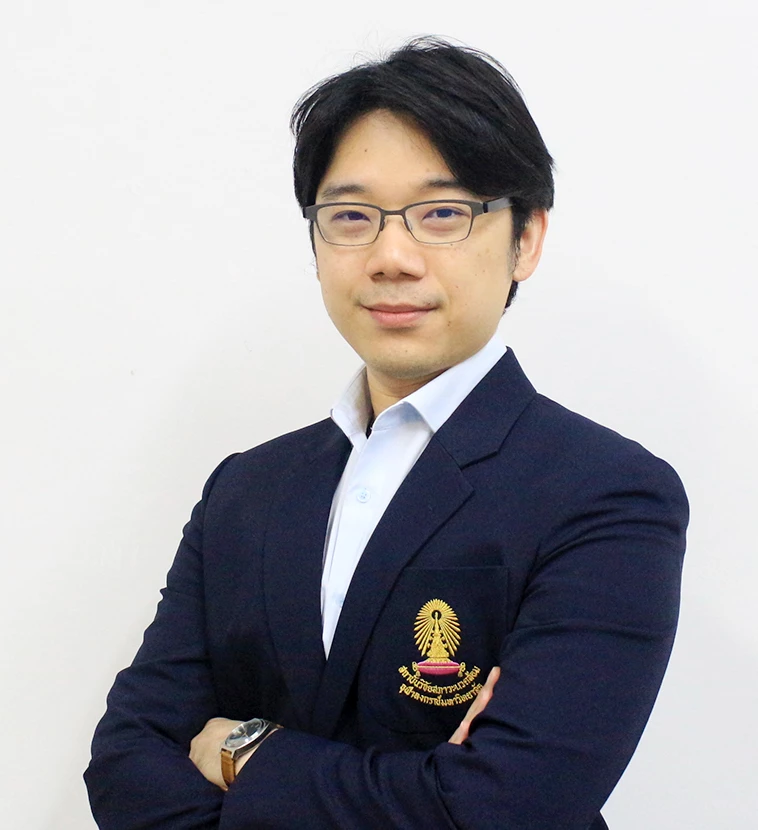
A researcher from Chulalongkorn University’s Institute for Environmental Research has made it possible to transform used vegetable oil into potassium liquid soap that cleanses effectively, is water soluble, 100% biodegradable, and safe for the wastewater treatment system.
The product can be a viable option to add value and increase community potential to handle used cooking oil. The researcher hopes that soon the product can also extend to insect control agents in organic farm plots.
Used cooking oil should not be used repeatedly since it contains carcinogens that are harmful to our health. Moreover, incorrect disposal methods can also bring about adverse public health and environmental effects. Instead, with good management, used cooking oil can become a valuable resource as is the case of vegetable oil from the industrial food sector that has been turned into biodiesel fuels.
There remain, however, large quantities of cooking oils from households and commercial establishments that require proper management. This problem is what led Nattapong Tuntiwiwattanapun, a researcher from the Environmental Research Institute to find a possible solution leading to his research work on the transformation of used vegetable oil into potassium liquid soap that each community could manufacture on their own.
The problem of what to do with used cooking oil
Used cooking oil or UCO is a form of organic waste generated in the cooking process that involves all of us either directly or indirectly. The oil may come from the food industry, restaurants, hotels, and our households which, as the sector, we should be most concerned about since no legal control or enforcement is yet available.
Statistics provided by the Energy Policy and Planning Office of the Ministry of Energy indicate that in 2017, used cooking oil in Thailand amounted to around 74 million litres which means that currently, the numbers should already have increased to around 115 million litres per year in 2022. How is this staggering amount of used oil being managed and what are their impacts?
According to Nattapong, the industrial sector already follows the legal guidelines of the Department of Industrial Works both in terms of wastewater treatment and biodiesel production. There are altogether 15 biodiesel plants in Thailand most of which are scattered around the central, eastern, and southern regions.
“Used cooking oil fetches a high price if they are sourced from areas close to the biodiesel factories. In remote places such as provinces in the north and northeast, the oil fetches a lower price since there are also transportation costs involved. This usually results in the oil being thrown out.” Nattapong enumerated the problem which worsens in the case of households that are not motivated to sell their used oil for biodiesel production. The oil gets thrown into the sewer or mixed with other forms of garbage which causes great damage to the environment.
“If used oil gets mixed with recycled waste it would lead to contamination whereby that waste cannot be used. Used oil comes in liquid form that does not dissolve in water and when mixed with plastics is extremely hard to remove.”
Moreover, when the contaminated oil gets to a landfill, it can lead to anaerobic digestion that generates methane, a greenhouse gas that affects global warming 23 times worse than carbon dioxide!
How the idea of transforming used cooking oil into potassium liquid soap was conceived
When it comes to the sorting of waste, Chula’s canteens follow the Chula Zero waste guidelines with systematic forms of waste management on campus. The remaining challenge concerns the used cooking oil and fat residue.
“Chula’s Office of Physical Resources Management came to us with the task of what to do with fat residue from the canteens on campus. There have been several research projects that mix fat residue for composting purposes. Our experiments with fat residue and used cooking oil which is water-insoluble to compost with fertilizer did not yield very good results. The next step was to make the fat residue water-soluble by turning them into potassium liquid soap that was then composted with the Chamchuree (rain tree) leaves. We were thus able to get rid of the fat residue with the added benefit of enriching the Chamchuree fertilizer with potassium.”
Potassium soap and its outstanding qualities
With its surface-active agents, Potassium or K–Soap is as effective as other cleansers on the market in removing stains on surfaces. What makes K-Soap special is its low toxin for microbes making it 100% biodegradable compared to other sulfate-based cleansers commonly used in households. Potassium soap also has disinfesting abilities at the levels permitted by organic farming standards.
Pioneering the production of K–Soap in local communities
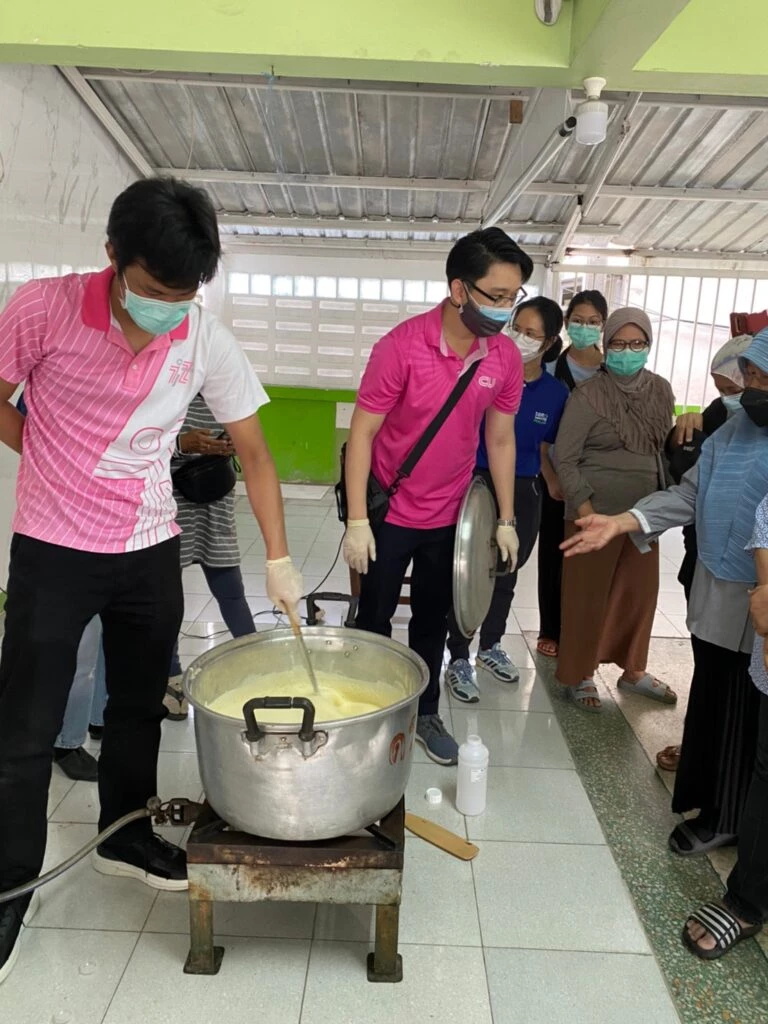
With funding from the National Higher Education, Science, Research and Innovation Policy Council, the research team started its K-Soap production with a community enterprise at Baan Phai Lueang in Nan Province as part of a project to promote environmentally friendly tourism in Nan.
“The idea was to create potassium soap that was safe and easy for members of the community to manufacture. Our main focus was to increase their potential in waste management and to be able to benefit from income-generating projects.”
The process helped create a circular economy with community enterprises purchasing the raw materials from within Nan province and manufacturing them as potassium soap. The soap was tested as a product used to clean garbage trucks belonging to Meaung Nan municipality as well as to clean road surfaces, wash rags, and clean temple restrooms, for example. The reception was good since not only was the product effective and easy to manufacture but the production cost was much lower than the cleaning products that were in use. Aside from Nan, the project has also been implemented in the Pak Lad Community of Samut Prakan Province based on the Zero-Waste concept supported by Dow Thailand Group.
Adding value to K-Soap through organic farming
Aside from its cleansing qualities, Nattapong also realizes there is a chance of a value-added K-Soap in the agricultural sector as well. Working in collaboration with Chula’s School of Agricultural Resources, the project has developed the soap so that it has surfactant qualities to boost the biopharmaceutical ingredients that control plant diseases and pests in safe and organic agriculture farming
In the future, the project hopes to experiment with using potassium liquid soaps for cleaning purposes as well as to wash off pesticide residues in fruits and vegetables from the time they are in the orchards to ensure better safety. K-soap was also given to the PGS (Participatory Guarantee System) group of organic farmers as an alternative to experiment in organic farming and found that it can effectively repel mealybugs, ants, and some worms.
“K-Soap has very low toxic levels and takes only 5 days to biodegrade after which it releases potassium to the plants.”
Chula’s potassium soap production is now based in Nan Province. The soap is ready for production for cleaning purposes and aphid control. To apply the product for agricultural use Nattapong says they need to wait for the test results from the demonstration farms. The product is expected to be ready for the agricultural sector in 2023 or 2024.
The community and waste management and the circular economy
Today, most of the garbage we generate is still scattered and collection remains a problem. Nattapong still sees waste management as an area-based matter that should draw people together to take part in solving the problem, sort their garbage and recycle or upcycle as a way to increase its benefits and generate income for the community. For a large city with a very low level of food security, we need to expand the green areas such as by planting vegetables on rooftops or in urban areas. Waste management measures that take leftover food for composts to make fertilizer or used cooking oil turned into cleaning substances helps not only to reduce garbage but also reduces environmental impact while increasing agricultural urban areas as well.”
Nattapong’s ideas also include adding value to the waste generated in various types of food products such as fat residue that isn’t so widely known, coffee grounds or plastics with oil stains, etc.
“We can eliminate all garbage if there is proper and efficient sorting so that they can be turned into raw materials to be turned into products to benefit the communities based on the circular economy concepts,” he concluded.