The Public Health Ministry reported on Saturday (August 13) that over the past 24 hours, 2,140 Covid-19 patients have been admitted to hospitals, one of whom has arrived in Thailand from abroad.
The death toll has risen by 35, while 1,898 patients have recovered and discharged from hospitals.
The number of cumulative cases in the country since January 1, 2022, stands at 2,395,217 with 10,100 deaths.
The country’s total caseload from Covid-19 stands at 4,618,652 – 4,565,063 of whom have recovered, 21,791 are still in hospitals and 31,798 have died.
Separately, another 6,633 people were given their first Covid-19 shot in the last 24 hours, 11,678 their second shot and 43,609 a booster, bringing the total number of Covid-19 vaccine doses administered nationwide to 142,161,630.
According to Worldometer, confirmed cases globally had risen to 594.3 million on Saturday, 566.47 million of whom have recovered, 21.38 million are active cases (45,767 in severe condition) and 6.45 million have died (up by 1,956).
Thailand ranks 28th in the global list of most cases, which is topped by the US with 94.64 million, followed by India with 44.24 million, Brazil with 34.19 million, France with 34.15 million and Germany with 31.54 million.
The Bureau of the Royal Household on Saturday released photos of Their Majesties the King and Queen visiting Her Majesty Queen Sirikit the Queen Mother on the occasion of her 90th birthday on Friday.
HM King Maha Vajiralongkorn and HM Queen Suthida Bajrasudhabimalalakshana paid the visit at King Chulalongkorn Memorial Hospital in Bangkok’s Pathum Wan district on Friday.
Accompanying Their Majesties were Her Royal Highness Princess Bajrakitiyabha Narendira Debyavati and Her Royal Highness Princess Sirivannavari Nariratana Rajakanya.
The King, Queen and Queen Mother presented alms to Buddhist monks in a religious ceremony to mark the Queen Mother’s birthday.
Her Majesty Queen Sirikit was born on August 12, 1932, and married His Majesty King Bhumibol the Great in 1950. They had one son, who is the current reigning monarch, and three daughters together.
Few photographs of the Queen Mother have appeared since she withdrew from the public gaze in 2012.
Her Majesty’s birthday on August 12 is also celebrated every year as Mother’s Day in Thailand.
Their Majesties King Maha Vajiralongkorn and Queen Suthida Bajrasudhabimalalakshana performed religious ceremonies on Friday evening to mark Her Majesty Queen Sirikit the Queen Mother’s 90th birthday.
The ceremonies were held at Wat Phra Si Rattana Satsadaram and at the Amarin Winitchai Throne Hall of the Grand Palace in Bangkok.
Accompanying Their Majesties were Her Royal Highness Princess Bajrakitiyabha Narendira Debyavati, Princess Rajasarinisiribajra and Her Royal Highness Princess Sirivannavari Nariratana Rajakanya.
The Princess Royal Her Royal Highness Princess Maha Chakri Sirindhorn and Her Royal Highness Princess Chulabhorn were waiting to welcome Their Majesties at the Amarin Wainitchai Throne Hall.
At Wat Phra Si Rattana Satsadaram, Their Majesties lit candles in front of the Emerald Buddha and made offerings before heading to the throne hall to attend prayers chanted by 91 Buddhist monks. Their Majesties then offered alms to the monks and paid respects to the Royal Nine-Tiered Umbrella before leaving.
Despite the rainy weather, a large number of citizens had shown up at the temple to greet Their Majesties and shout “Song Phra Charoen” or Long Live Their Majesties as they walked past.
At noon on Friday, the Army, Navy and Air Force fired 21 cannon shots in different locations in honour of Her Majesty Queen Sirikit the Queen Mother.
In the evening Prime Minister Prayut Chan-o-cha and his wife Naraporn presided over a candle-lighting ceremony in Sanam Luang.
Also attending were the House and Senate speakers, Supreme Court president, chiefs of the armed forces, Royal Thai Police chief, high-ranking government officials and their spouses as well as members of the public.
After placing a tray of flowers at the base of the Queen Mother’s portrait, Prayut delivered a speech thanking Queen Sirikit for her kindness and the work she has done for the Thai people. He then wrapped up the ceremony by leading a rendition of the Royal Anthem and lighting more candles.
Her Majesty Queen Sirikit the Queen Mother’s birthday on August 12 is celebrated every year as Mother’s Day in Thailand.
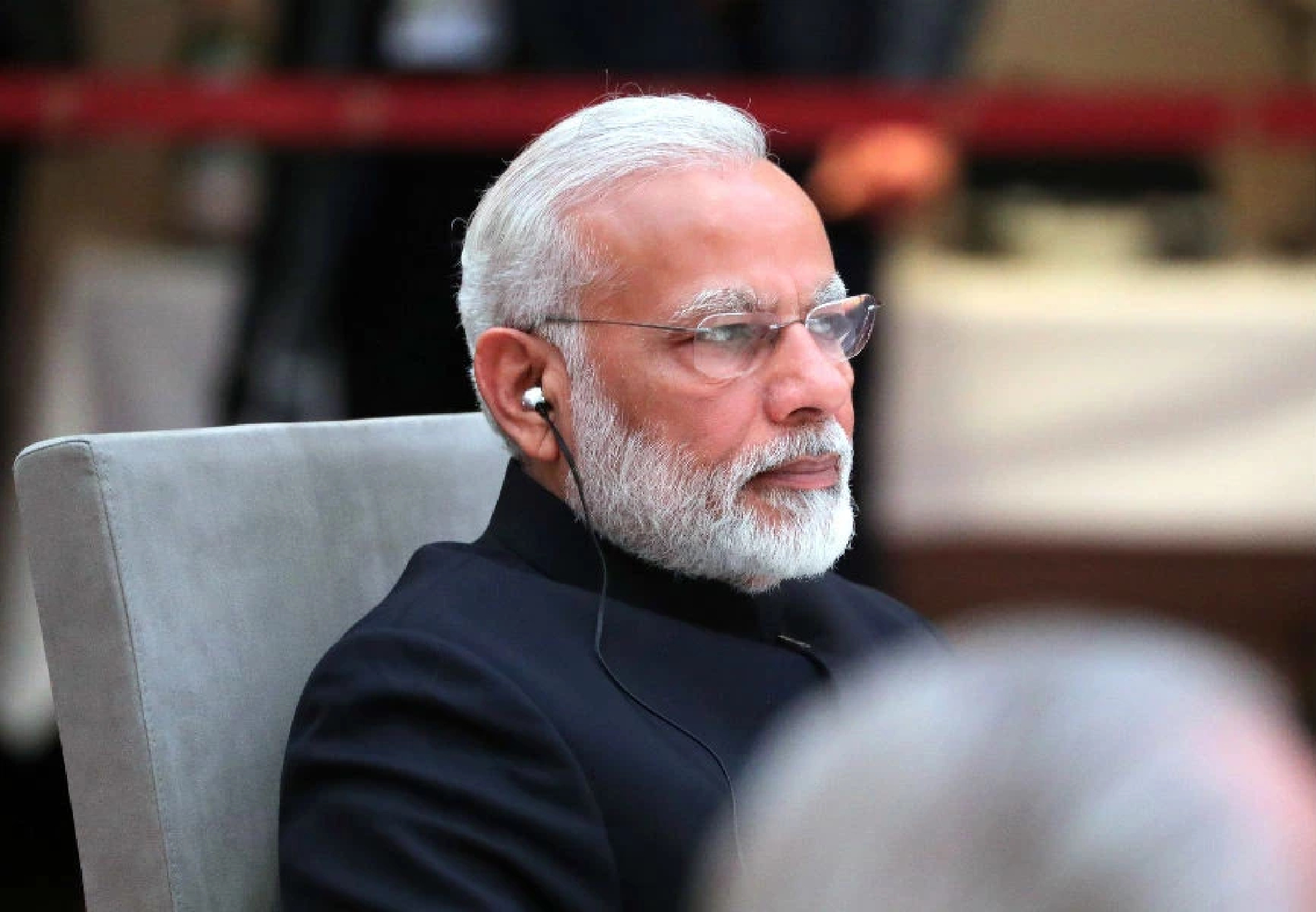
On the occasion of World Elephant Day, Indian Prime Minister Narendra Modi on Friday lauded the efforts of elephant conservationists.
Modi expressed happiness at the rise in the country’s elephant reserves in the last eight years.
In a series of tweets, Modi said, “On #WorldElephantDay, reiterating our commitment to protect the elephant. You would be happy to know that India houses about 60% of all Asian elephants. The number of elephant reserves has risen in the last 8 years. I also laud all those involved in protecting elephants.”
“The successes in elephant conservation must be viewed in context of the larger efforts underway in India to minimise human-animal conflict, and integrating local communities and their traditional wisdom in furthering environmental consciousness,” the premier added.
The Statesman
Asia News Network
Asia News Network: The Nation (Thailand), The Korea Herald, The Straits Times (Singapore), China Daily, The Jakarta Post, The Star and Sin Chew Daily (Malaysia), The Statesman (India), Philippine Daily Inquirer, Yomiuri Shimbun and The Japan News, Gogo Mongolia, Dawn (Pakistan), The Island (Sri Lanka), Kuensel (Bhutan), Kathmandu Post (Nepal), Daily Star (Bangladesh), Eleven Media (Myanmar), The Phnom Penh Post and Rasmei Kampuchea (Cambodia), The Borneo Bulletin (Brunei), Vietnam News, and Vientiane Times (Laos).
Malaysia is clamping down on the lucrative but poorly regulated beauty industry and its growing army of fake medical practitioners.
Medical groups and beauticians have welcomed the move to stamp out the quacks, who are exploiting the beauty boom by offering illegal dental and aesthetic procedures and courses.
“Currently, we don’t have a law to regulate the beauty industry when it is growing rapidly, and people are earning handsomely from it,” said Deputy Trade and Consumer Minister Rosol Wahid.
“We are discussing with the MOH [Ministry of Health] to see what procedures the beauty parlours can offer and what they can’t.”
Rosol said non-invasive beauty procedures will fall under the purview of her ministry but added that ascertaining whether a procedure is invasive or not is not easy.
Public concern in Malaysia is growing over the abundance of beauticians offering aesthetic and dental services such as braces and veneer procedures, whitening drip and platelet-rich plasma therapy.
Botched cases have been reported where patients were either scarred for life or even died as a result of the procedures.
Some beauticians also offer short training courses in these procedures.
In July, The Star reported that for RM1,000 to RM3,000 (8,000-24,000 baht), anyone could take a short course in installing braces and veneers and performing whitening procedures, with a certificate and starter kit at the end of the training.
Rosol confirmed action could be taken against those who provide illegal short medical courses as the certificates issued are invalid.
Meanwhile, Malaysian Medical Association president Dr Koh Kar Chai called for a full investigation into fake practitioners.
“The authorities should come down strongly on these [unqualified] practitioners and trainers,” he said.
Koh said once the regulation is in place, the government should also organise public awareness programmes to educate the public, especially in identifying unlicensed or uncertified beauty centres.
Malaysian Dental Association president Dr Lim Chiew Wooi said going after the trainers of illegal practitioners is crucial in stamping out illegal dental practices.
“When unqualified trainers train people, it’s like the blind leading the blind. We should not allow people to provide training that can harm others,” he said.
Malaysian Society of Aesthetic Medicine president Dr Chin Shih Choon agreed with the regulation move.
“Medical procedures can only be done by medical doctors. Unqualified practitioners cannot administer injections, perform thread lifting, laser treatments and other surgeries,” Dr Chin said.
“During the previous engagement between the stakeholders, some of them portrayed lasers as harmless but we told them no, they are dangerous and could harm others.”
Dr Chin said medical aesthetic practitioners took years to earn the licence needed to perform aesthetic procedures.
Only about 300 doctors in the field of aesthetics and beauty treatment are accredited by the Health Ministry.
The Star
Asia News Network
Asia News Network: The Nation (Thailand), The Korea Herald, The Straits Times (Singapore), China Daily, The Jakarta Post, The Star and Sin Chew Daily (Malaysia), The Statesman (India), Philippine Daily Inquirer, Yomiuri Shimbun and The Japan News, Gogo Mongolia, Dawn (Pakistan), The Island (Sri Lanka), Kuensel (Bhutan), Kathmandu Post (Nepal), Daily Star (Bangladesh), Eleven Media (Myanmar), The Phnom Penh Post and Rasmei Kampuchea (Cambodia), The Borneo Bulletin (Brunei), Vietnam News, and Vientiane Times (Laos).
The Chinese planes cost more money to operate than they brought in, and Nepal Airlines was racking up losses dangerously.
Abatch of Chinese aircraft that Nepal had imported with high hopes of flying on unserved sectors and earning revenue for the ailing Nepal Airlines Corporation have been sitting on the ground for more than two years and gathering rust, just as the Ministry of Finance has started paying back interest on the loans for the planes.
For the national flag carrier which has a hard time balancing its books even in the best of times, the jinxed planes have been like something stuck in its throat that it cannot spit out or swallow, to use a local idiom.
The Chinese planes, the first of which arrived in 2014, cost more money to operate than they brought in, and Nepal Airlines was racking up losses dangerously. In July 2020, the corporation’s board had had enough, and decided to put them in deep storage.
The five condemned planes—three 17-seater Y12e aircraft and two 56-seater MA60 aircraft—are parked at the remote parking bay on the eastern side of Tribhuvan International Airport in Kathmandu. Another one crashed in Nepalgunj and is unflyable.
Photos of the aircraft obtained by the Post show that the tail section of the Y12e is covered in moss. There is corrosion appearing on the metal surfaces and components of the aircraft.
“These planes are susceptible to corrosion,” said a senior Nepal Airlines captain who wished to remain anonymous.
As corrosion weakens the structural integrity of metal aircraft and its parts, it could lead to expensive repairs and significant safety hazards.
“No one has seen what condition the planes are in,” he said. “No one knows for how many years the planes will remain grounded.”
Some private airline officials say that the parked planes have not complied with long-term storage procedures. That ultimately will reduce the value of the planes.
In November 2012, Nepal Airlines signed a commercial agreement with Aviation Industry Corporation of China (AVIC), a Chinese government undertaking, to procure six aircraft—two MA60 and four Y12e.
In order to sweeten the deal, China provided grant and concessional loan assistance worth 408 million Chinese yuan which is equivalent to Rs6.67 billion.
Out of the total aid money, a grant worth 180 million yuan (Rs2.94 billion) went to pay for one MA60 and one Y12e aircraft. The other aircraft were bought for 228 million yuan (Rs3.72 billion) with a soft loan provided by China’s EXIM Bank.
The Y12e is a twin-engine turboprop utility aircraft built by Harbin Aircraft Industry Group, previously Harbin Aircraft Manufacturing Corporation.
The MA60 is a turboprop-powered airliner produced by China’s Xi’an Aircraft Industrial Corporation. Both manufacturers are subsidiaries of AVIC.
The Nepal government has to pay annual interest at the rate of 1.5 percent and a service charge and management expenses amounting to 0.4 percent of the overall loan amount taken by the Ministry of Finance as per the agreement.
The ministry, in turn, would charge Nepal Airlines annual interest at the rate of 1.75 percent on the disbursed loan amount.
As per the November 2012 agreement, China had given a seven-year grace period under which Nepal Airlines would not have to pay interest and instalment payments.
The payback period of the loan is 20 years or by March 21, 2034. The planes have completed the seven-year grace period privilege.
“We have sent two instalments, including the interest on the loans, to China’s EXIM Bank, the lender,” said Hira Neupane, spokesperson for the Public Debt Management Office under the Finance Ministry, which deals with the country’s debt management.
The first quarterly instalment of 10.9 million yuan (Rs205.67 million) was sent in September 2021 while the second instalment was sent in March, said Neupane.
The government has started repaying the lender, but Nepal Airlines has no plans to put the aircraft back in the skies or sell or lease them.
The accumulated losses on the five Chinese planes have already crossed Rs2 billion.
Before the planes were grounded, the total accumulated losses of these planes were Rs1.9 billion, nearly half of the cost of the planes.
With the planes grounded, the operating costs have dropped for Nepal Airlines, but it has to pay insurance premiums for the aircraft and parts.
Cash-strapped Nepal Airlines will have to fork out more to repay the interest for the Chinese planes that it bought in 2014, as the seven-year grace period has ended. The corporation has been defaulting on other loans it had taken to buy Airbus planes for years due to a cash crunch.
“We haven’t paid the instalments nor the interest to the government as we have grounded the Chinese planes,” said Archana Khadka, spokesperson for the national flag carrier.
“As we have been directed by the Finance Ministry to manage the planes, we have decided to lease them all.”
A committee of Nepal Airlines has already prepared the lease rate.
In December 2020, five months after the board of directors unanimously decided to stop flying the Chinese planes, the national flag carrier headed by Dim Prasad Poudel submitted four options to the Civil Aviation Ministry to get rid of the Chinese aircraft in its fleet.
The first option was to ask the aircraft manufacturers to buy back the planes by evaluating their existing worthiness.
The second option presented by the flag carrier was to lease out the planes to interested Nepali operators on a long- or short-term basis.
The third alternative was to auction off the planes through a global competitive bidding process.
The fourth option was to look for Chinese or international companies or banks interested in buying or leasing them.
The third alternative was to auction off the planes through a global competitive bidding process.
The fourth option was to look for Chinese or international companies or banks interested in buying or leasing them.
“We decided to lease them, and we have completed the preparations too,” said Khadka.
But matching words with action is something else. Confusion reigns at Nepal Airlines because of management tussles and frequent changes of the chief, officials say.
“When we were in the final stages of approving the lease rate to lease the Chinese planes, Poudel landed in trouble as the union padlocked the office charging that he intended to privatise Nepal Airlines,” said a senior official at the corporation.
Poudel, who had been appointed by the KP Sharma Oli administration, was sacked by the then tourism minister Prem Ale. But the Supreme Court reinstated Poudel to the post. Ale then appointed Ubaraj Adhikari as executive chairman, reviving the dual executive power system that had plagued Nepal Airlines for the last two decades.
Adhikari was in turn removed from the post by the Cabinet in June, but he was reinstated by the court.
Newly appointed Tourism Minister Jeevan Ram Shrestha sacked Adhikari for a second time.
“It looks like Nepal Airlines is a puppet. Its chief is changing frequently—five changes in a year. That’s a disaster,” said a former captain of Nepal Airlines.
After Adhikari was appointed, he overturned Poudel’s decision to lease the Chinese planes. A committee was formed to put the planes back in the air.
“The committee never presented the report,” said spokesperson Khadka. “Now again, we are expediting the process to lease the planes.”
Nepal Airlines officials say things are so topsy-turvy at the company that there is no environment to work. “Politics had ruined the flag carrier for decades. It’s still on the same track. Nothing can change here.”
The Chinese planes have been a financial disaster for Nepal Airlines right from the beginning.
One Y12e was damaged beyond repair while one of the two MA60 aircraft has been cannibalised for parts.
In 2014, marking the beginning of what was supposed to be a new era for Nepal Airlines after acquiring the planes, it had even changed its classic red and blue stripes livery, opting for a more modern design.
But these planes never brought happiness and money, said officials.
“So far I know, the two MA60s have flown together in the Nepali skies only once,” said a senior captain at the corporation. “The rest is history.”
Sangam Prasain
The Kathmandu Post
Asia News Network
Asia News Network: The Nation (Thailand), The Korea Herald, The Straits Times (Singapore), China Daily, The Jakarta Post, The Star and Sin Chew Daily (Malaysia), The Statesman (India), Philippine Daily Inquirer, Yomiuri Shimbun and The Japan News, Gogo Mongolia, Dawn (Pakistan), The Island (Sri Lanka), Kuensel (Bhutan), Kathmandu Post (Nepal), Daily Star (Bangladesh), Eleven Media (Myanmar), The Phnom Penh Post and Rasmei Kampuchea (Cambodia), The Borneo Bulletin (Brunei), Vietnam News, and Vientiane Times (Laos).
According to statistics, some 95 per cent of the country’s 379,605 basement or semi-basement residences can be found in Seoul.
Seoul is banning subterranean living spaces after a series of deaths due to flooding. Over the last three days of downpour, a child and three adults drowned in their semi-basement homes, known as “banjiha.”
Seoul announced Wednesday that in the next two decades, it would phase out all forms of underground residences that are home to about 5 percent of all families in the city.
Mayor Oh Se-hun said in a press release that banjiha homes were “residential structures that threaten the safety of their occupants” and that they needed to be abolished.
“This is going to be a long-term project for improving the safety of homes across the city,” he said.
But for many of the banjiha dwellers, leaving is not an option.
Sohn Mal-nyeon, 77, has been living in her two-room basement unit in Seoul’s southern central Dongjak since her daughter, now 51, was a toddler. Two months ago, her husband moved to a nursing home in Namyangju, about an hour’s drive away, leaving her to live by herself.
She said that on the first night of the downpour, the local community service center called and asked her to spend the night there with some of her neighbors who had to flee their homes.
“I didn’t go. I was trying to keep the flooding out using a bucket and a mop,” she said.
But the water pouring in from the windows of her kitchen and bathroom — the only windows — eventually filled up to her knees. The murky, blackened water smelled, she said.
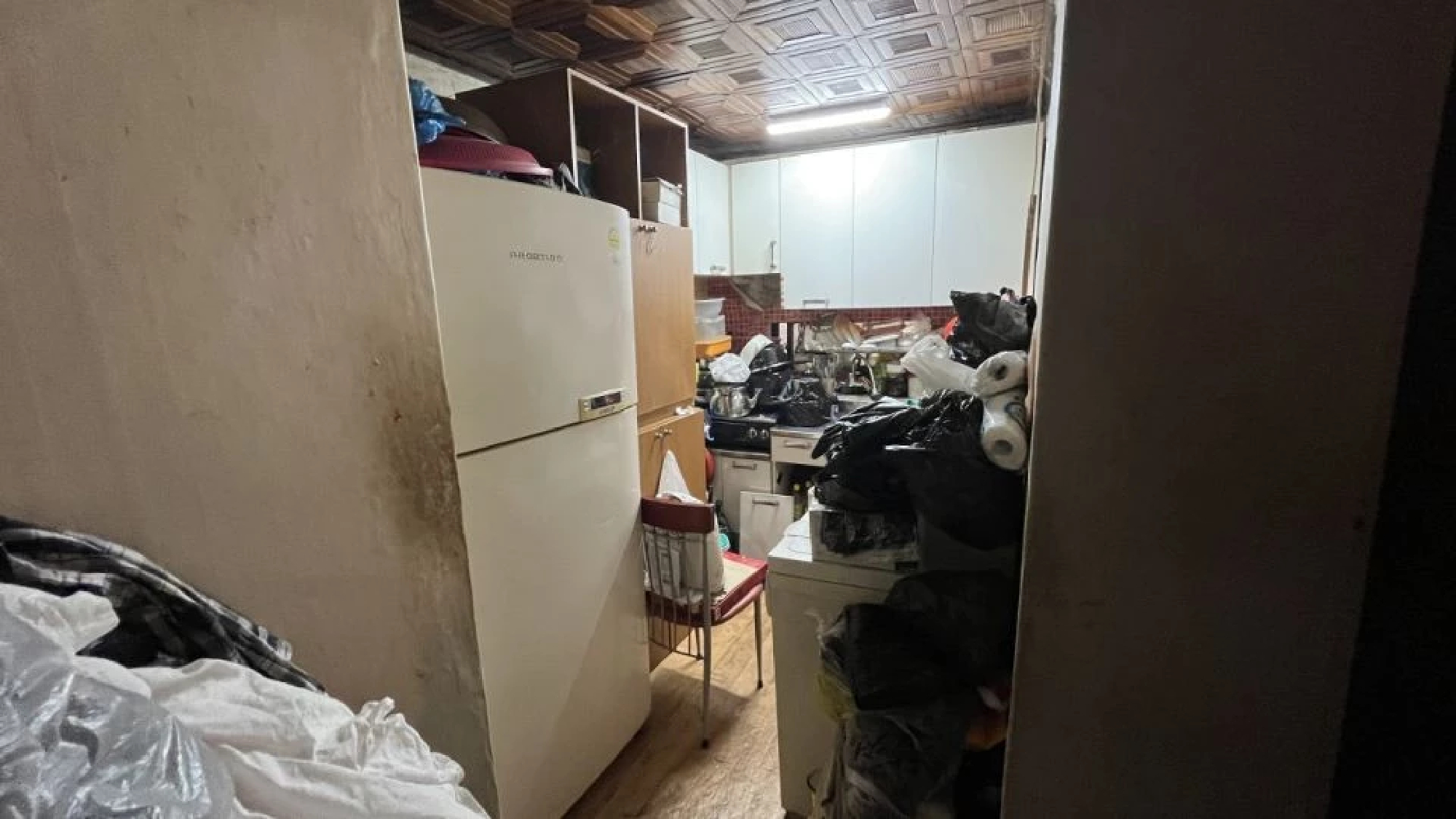
“It’s probably from a sewage overflow. I can’t seem to get the smell out,” she said. “The power is back but my refrigerator broke down. All the food is spoiled. The floor and furniture are still wet. I don’t think I can use them again.”
She said she was staying in the building’s attic for the time being.
On the Seoul mayor’s plan to phase out banjiha homes, like the one she lives in, she said she didn’t think it was going to happen. “Well, what do you expect people to do? They live here because it’s cheaper, you know,” she said.
Sohn goes down the stairs leading to the entrance of her basement home. Piled up against the wall are wet household goods damaged by the rain. (Kim Arin/The Korea Herald)
Another banjiha resident in the same neighbourhood, asking to be quoted only by her family name, Baek, said her “whole life is already here.”
Although she was aware of the dangers, she “wouldn’t know where to go,” she said.
In Dongjak, one of the districts to suffer a heavier blow from the rain, a woman in her 50s with a mental disability was unable to escape her flooding underground home in time and later found dead on Tuesday.
Underground homes are very common in the capital, more than anywhere else. According to statistics, some 95 percent of the country’s 379,605 basement or semi-basement residences can be found in Seoul.
People Power 21, a civic group based in Seoul, pointed out in a statement Thursday that the metrogovernment office’s past attempts to regulate “unlivable” residences, including banjiha, had repeatedly fallen through.
In 2012, after the laws were amended to bar additional construction of banjiha homes, tens of thousands were still newly built due to loopholes in surveillance, the group said.
“The recent flooding deaths were a familiar disaster that could have been prevented if Seoul had taken the steps that it had proposed in the past.”
Sohn said water poured in through the windows of her bathroom and kitchen. At one point, the water was up to her knees, she said. (Kim Arin/The Korea Herald)
Chang Dukjin, a professor of sociology at Seoul National University, told The Korea Herald that doing away with banjiha is “a step in the right direction, in that we are raising the minimum standard of living.”
“But the challenging part would be to figure out the practicalities of budget for helping the residents relocate, providing them with alternative housing options.”
The minor Justice Party on Thursday said the deaths among vulnerable residents make a case for expanding public housing in the country’s expensive capital. “Our government is obligated to come up with more housing that meets the basic standards of safety and prohibit ones that don’t,” the party said.
President Yoon Suk-yeol on Wednesday called for arranging state-owned housing for a 70-something woman who lost her two daughters in their 40s and a school-age granddaughter in banjiha flooding. The family drowned in their home in Gwanak in the early hours of Tuesday as they waited for help. After visiting the family’s flooded home on Tuesday, Yoon told a Cabinet meeting that “never again should we allow preventable tragedies.”
Kim Arin
The Korea Herald
Asia News Network
Asia News Network: The Nation (Thailand), The Korea Herald, The Straits Times (Singapore), China Daily, The Jakarta Post, The Star and Sin Chew Daily (Malaysia), The Statesman (India), Philippine Daily Inquirer, Yomiuri Shimbun and The Japan News, Gogo Mongolia, Dawn (Pakistan), The Island (Sri Lanka), Kuensel (Bhutan), Kathmandu Post (Nepal), Daily Star (Bangladesh), Eleven Media (Myanmar), The Phnom Penh Post and Rasmei Kampuchea (Cambodia), The Borneo Bulletin (Brunei), Vietnam News, and Vientiane Times (Laos).
A power outage in Toronto’s downtown core on Thursday left the offices of Canada’s top businesses in the dark, forced the evacuation of one of the city’s biggest shopping malls, caused some bank branches to be locked and trapped people in elevators.
Hydro One H.TO, Ontario’s biggest electricity distribution company, said in a tweet it was investigating reports that a barge carrying a crane came into contact with high-voltage transmission lines and it was trying to reroute power to Toronto Hydro, which distributes electricity in downtown Toronto.
Toronto Hydro said nearly 10,000 customers were affected.
Toronto is Canada’s biggest city and its financial capital, and the central business district is home to the biggest banks, insurers and stock exchange operators.
The power failure saw workers from downtown towers spill onto the streets, taking to sidewalks and parks, while shutting down many cafes and restaurants during the peak business hours.
Toronto Fire Services said it had responded to “numerous calls” for people trapped in elevators during the power outage.
Branches of the biggest banks, including Royal Bank of Canada RY.TO, Toronto-Dominion Bank TD.TO and Bank of Montreal BMO.TO, in the area were locked, and staff were seen sitting in the dark in some locations, according to a Reuters witness.
Neither of the three banks made any immediate comment.
Underground subway operator TTC said its services were normal though the outage tripped air conditioning. TTC warned that streetcar customers might experience major delays.
The Toronto Stock Exchange said its offices temporarily lost power but its systems did not. University of Toronto said some buildings were impacted.
The outage caused traffic lights to stop working in one area, according to a Reuters witness. Toronto Police told people to treat those intersections as four-way stops.
The outage started around noon EDT (1600 GMT).
The power failure comes just over a month after a system glitch at Rogers Communications Inc RCIb.TO crippled telecom services for the large number of users and services across Canada for nearly 19 hours.
Across the US, old coal plants are living out second lives. The sites, long a source of pollution, are now becoming resources for solar, renewable energy.
“As an organization, we recognize that climate change is impacting our communities and our country and this world,” said Claudia Morrow, senior vice president of corporate development and strategy for Texas-based energy company Vistra Corp. “One way that we can be a leader in the transition is with opportunities or initiatives, like coal-to-solar and the energy storage initiative.”
Morrow says Vistra Corp. already has coal-to-solar projects well underway at plants in Texas and California.
Soon the company will begin work on a $500 million renewable energy initiative at several Illinois coal plants, creating 2,200 full-time equivalent jobs in the process, she added.
“This is welcomed and certainly something that finally brings to fruition what we’ve been asking these companies to do for years,” said Christine Nannicelli, senior campaign representative for the grassroots environmental organization Sierra Club Illinois.
Despite her approval, Nannicelli admits she’s still urging energy companies undergoing renewable energy efforts to also focus resources on the proper cleanup of coal ash pollution and groundwater contaminants.
Vistra Corp. is still working through regulatory hurdles in Illinois.
UN chief Antonio Guterres on Thursday called for military activity around Ukraine’s Zaporizhzhia nuclear power complex to end as Moscow and Kyiv blamed each other for a renewed shelling and the UN Security Council met to discuss the situation.
Russia seized Europe’s largest nuclear power plant in March after invading Ukraine on Feb. 24. The plant is still run by its Ukrainian technicians. Ukraine’s Energoatom said the area was struck five times on Thursday, including near the site where radioactive materials are stored.
Russia’s defence ministry said in a statement that the Ukrainian shelling had partly damaged a thermal power plant and splash pools that form part of the reactors’ cooling systems.
Guterres urged the withdrawal of military personnel and equipment and for no more forces or equipment to be deployed. He called for Russia and Ukraine not to target the facilities or surrounding area.
“The facility must not be used as part of any military operation. Instead, urgent agreement is needed at a technical level on a safe perimeter of demilitarization to ensure the safety of the area,” Guterres said in a statement.
The United States backed the call for a demilitarized zone around the plant, U.S. under-secretary for arms control and international security, Bonnie Jenkins, told the U.N. Security Council on Thursday. She said a visit by the International Atomic Energy Agency (IAEA) “cannot wait any longer.”
‘NUCLEAR CATASTROPHE’
IAEA chief Rafael Grossi briefed the 15-member Security Council on Thursday at the request of Russia. Grossi said that he was ready to lead an IAEA mission to Zaporizhzhia and called on Russia and Ukraine to cooperate so the inspectors could travel as soon as possible.
“The IAEA has been ready to perform such a mission since June when we were ready to go. But unfortunately, due to political factors and other considerations, it was not possible,” Grossi told the council, adding that all military action around the plant needed to stop.
Russia’s U.N. Ambassador Vassily Nebenzia said the trip agreed between Russia and the IAEA in June was cancelled by U.N. security officials.
“We believe it justified for IAEA representatives to go to the Zaporizhzhia nuclear power plant as quickly as possible and possibly even before the end of August,” Nebenzia told the Security Council.
He said the world was being pushed “to the brink of nuclear catastrophe, comparable in scale with Chernobyl.”
U.N. spokesman Stephane Dujarric has said the United Nations was committed to doing everything possible to get the IAEA technicians to Zaporizhzhia.
“There’s a war going on, and we’re talking about a nuclear power plant in the middle of a battlefield,” Dujarric told reporters on Thursday. “I think we can think of at least two or three pages’ worth of hurdles.”
Russia’s Ambassador to International Organizations in Vienna, Mikhail Ulyanov, on Tuesday said that the IAEA was ready to visit Zaporizhzhia in June with Russia’s support.
“Unfortunately, at the very last moment the Department of Security of the UN Secretariat blocked the mission. We hope that the UN Secretary General will not allow this to happen again,” Ulyanov posted on Twitter.
Ukrainian President Volodymyr Zelenskiy spoke on the situation around the Zaporizhzhia Nuclear Power Plant, in an evening address on Thursday, saying there had been ‘new strikes’ in the area and, referring to Russia, called it ‘one of the greatest crimes of the terrorist state.’
The plant was captured by Russian forces in the opening stages of the war following Russia’s Feb. 24 invasion, and new strikes in close proximity of the plant were recorded today.
In the address, Zelenskiy also told government officials to stop talking to reporters about Kyiv’s military tactics against Russia, saying such remarks were “frankly irresponsible.”
In the wake of major blasts that wrecked a Russian air base in Crimea on Tuesday, the New York Times and Washington Post newspapers cited unidentified officials as saying Ukrainian forces were responsible. The government in Kyiv, on the other hand, declined to say whether it had been behind the explosions.
“War is definitely not the time for vanity and loud statements. The fewer details you divulge about our defence plans, the better it will be for the implementation of those defence plans,” Zelenskiy said in the evening address.
On Thursday defence ministers of Ukraine, UK and Denmark host ministers from allied countries in Copenhagen to discuss long-term support for Ukraine, including military training, mine clearance and weapon supplies.
Zelenskiy spoke on the ‘long-term support’ of the 26 partner states of Ukraine, which includes European countries, the United States, Japan, Australia, and New Zealand.
Ukraine’s interior minister said on Thursday that Ukraine had to be ready for any scenario at the Russian-controlled Zaporizhzhia nuclear power plant that has been hit by shelling, including evacuating people from the area.
“The plant is as of today not only in the hands of the enemy, but in the hands of uneducated specialists who could potentially allow for a tragedy to happen,” Interior Minister Denys Monastyrsky told Reuters in an interview.
“Of course, it’s difficult to even imagine the scale of the tragedy which could come into effect if Russians continue their actions there,” he said.
Ukraine has in recent days warned of the risk of a Chornobyl-style nuclear disaster.
“This means for us that … we have to prepare for any scenario. The state emergency services together with the Interior ministry and the Regions Ministry is discussing different scenarios that are needed, including the question of evacuations,” said Monastyrsky.






 Sohn goes down the stairs leading to the entrance of her basement home. Piled up against the wall are wet household goods damaged by the rain. (Kim Arin/The Korea Herald)
 Sohn said water poured in through the windows of her bathroom and kitchen. At one point, the water was up to her knees, she said. (Kim Arin/The Korea Herald)


