SCB CIO suggests five investment tactics to dominate in bull and bear markets 

#SootinClaimon.Com : ขอบคุณแหล่งข้อมูล : หนังสือพิมพ์ The Nation.

https://www.nationthailand.com/business/econ/40018792


Despite deteriorating market conditions, SCB CIO has revealed investment strategies for generating profits in both bull and bear markets
SCB CIO suggests five investment tactics to dominate in bull and bear markets 

1)Investment in long-term sovereign bonds and investment-grade fixed income to generate cash flow; 2) Diversifying risks to new products; 3) Investing in structured notes to generate cash flow; 4) Opting for long-term thematic investment, and 5) Utilizing assets to generate returns through Wealth Lending Products.

SCBS expects the SET index to reach 1,650 points this year and recommends BBL, BJC, CPF, CBG, and MTC for their potential gains and the advantages they will enjoy as a result of the country’s reopening. Meanwhile,  Bank Julius Baer recommends keeping 20 per cent of private equity in a portfolio as a hedge against market volatility and a source of potential long-term rewards.

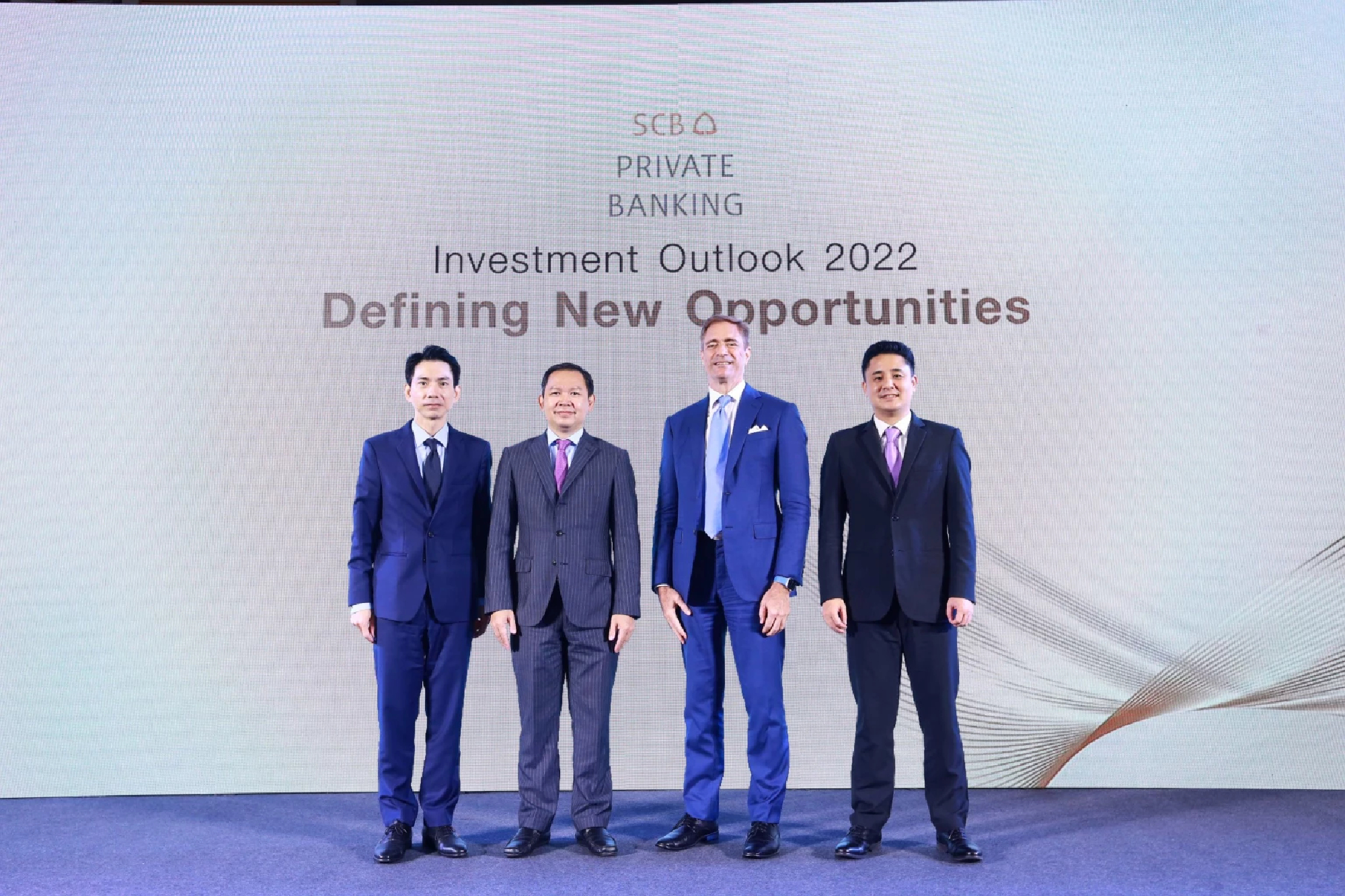
Siam Commercial Bank Chief Investment Office and Product Function Executive Vice President Sornchai Suneta recently spoke at a seminar for SCB PRIVATE BANKING customers titled “Defining News Opportunities: Investment Outlook 2022,” where he revealed that in the United States (US), declining energy and food prices, as well as falling home prices due to the doubling of loan interest rates from their original 30-year rate of around 3% p.a. to an average of 6% p.a., are all indicators that US inflation may have slowed down in July.

Similar to the trend in home prices, rents are expected to decrease. Meanwhile, the hourly cost of labour has already begun to fall. Due to the strengthening dollar and decreasing shipment times, the cost of importing goods into the US has gone down significantly.

Inflation may fall as a result of this pattern because it suggests that prices across the board will fall. It is anticipated that the Federal Reserve (Fed) will raise interest rates by 0.50 percentage points at their upcoming September meeting, followed by two additional rate hikes of 0.25 percentage points each. The [US] economy has shown signs of slowing, so interest rate hikes may end next year.

Oil is another factor to keep an eye on. Despite the fact that oil prices will decrease in the short term, the remaining production reserve capacity of Opec nations is progressively declining.  Even if the price increases, they are unable to significantly increase production capacity since investments in new oil drilling have continuously dropped as the importance of fossil fuels continues to decline. As a result, this constraint prevents energy costs from being significantly reduced. Opec members may produce less than their quota this year due to a lack of supplies. Given that the recent drop in oil prices may be temporary and not the beginning of a new, lower trend, the capacity issues facing the industry are cause for concern.

European countries are experiencing a moderate energy crisis and their inflation rates have not yet passed their peak due to their reliance on natural gas imports primarily from Russia. While importing natural gas from the US could solve this issue, transportation costs are rather significant in comparison to imports from Russia. The GDP of European nations may enter a recession sooner than that of other nations.

Thailand’s inflation rate has not yet reached its high. A probability greater than 7 per cent exists due to price increases of numerous products. This will have an impact on the consumer price index.  The public sector is still in a fragile position, with pay minus inflation resulting in a negative cost of living. As a result, the Monetary Policy Committee (MPC) may not hike interest rates significantly, because doing so would cause widespread financial hardship for families. As the baht depreciation did not result in significant capital outflows, it is unnecessary to hike interest rates as aggressively as the US. However, it is anticipated that the MPC will likely hike interest rates by 0.25 percentage points at its August meeting, and will raise interest rates more three times this year and twice next year.

Sornchai Suneta noted that investors should focus on the following five investment strategies to generate profits in both bull and bear markets amid a volatile environment: 
 
1)    Generate cash flow from investment portfolios by investing in long-term government bonds and investment-grade fixed income. A potential slowdown or recession in the economy means that interest rates are unlikely to rise much more. Investing in REITs to earn dividends is also attractive because the hotel industry has been increasingly active as visitors have resumed travelling and room rates are beginning to revert to pre-pandemic norms.

2)    Diversify risks by investing in new alternative products uncorrelated to market conditions, such as private equity, private debts, and private real estate. This long-term investment in non-listed companies is less volatile than in publicly listed companies and will lower portfolio volatility.

3)    Invest in structured notes that can generate cash flow. For example, by mixing debt securities with futures to create derivatives. Unlike conventional products, innovative structures like Sharkfin and Inverse can guarantee both a high rate of return and the safety of your principle. KIKO (Knock-In Knock-Out) is a type of investment that does not guarantee repayment of principal but offers a high rate of return in the form of regular cash flow.

4)    Long-term thematic investment is an investment strategy that disregards short-term volatility in order to seek opportunities to invest in businesses with strong growth potential in the future, such as healthcare, e-commerce, and green energy in the EV segment.

5)    Take advantage of existing assets to create returns via Wealth Lending Products in the category of property-backed loans or Lombard loans which use debentures or vacant real estate as collateral for special interest rate loans to invest in a variety of assets. Under the guidance of the Bank’s investment advisory teams, investors can find solutions that fit their objectives in terms of risk tolerance and inflation protection. The annual rate of return for medium-risk investments ranges between 7 and 8 per cent.
       
SCB Securities Co., Ltd. Research Chief Research Office  Sukit Udomsirikul revealed that even though the rest of the world is concerned about the current economic downturn, Thailand is currently not at risk of experiencing a downturn. However, the economy is not significantly superior to that of other nations. Based on GDP estimates for this year, Thailand is projected to be in a relatively optimistic group, with a GDP of approximately 2-3 per cent. The International Monetary Fund IMF recently predicted 2.8 per cent GDP growth for Thailand, whereas most local institutions expect growth of 3 per cent or higher. For this reason, Thailand is relatively safe.  The economy and stock market provide independent aspects.  When times are tough, the conventional wisdom among investors is that it is best to stay out of the market. In reality, now is a suitable time to invest because the stock market drives economic growth. SCBS estimates that the SET index will end the year at approximately 1,650 points. The third quarter could see the lowest point for stock markets around the world, including Thailand.

Now is the right timing for investment as there are several solid, reasonably priced stock options available. Investors should look for stocks that are showing signs of recovery since they offer the greatest number of investing opportunities. SCBS picks five outstanding companies, namely BBL, BJC, CPF, CBG, and MTC.  Retailer BJC (BigC) stands to gain from the reopening of the country’s economy. Food company CPF will profit from cheaper raw materials.  With cities now open for business again and the price of packaging raw materials decreasing, CBG energy drinks are entering a period of business recovery.  However, the stock price may fluctuate due to the company’s sales generated by exporting to CLMV nations, which account for around 30% of revenues. Due to a shortage of dollars, some countries may avoid trading their currency for dollars, which may have an effect on its earnings. We consider right now to be a compelling time to buy CBG stocks. The beverage industry as a whole is forecast to grow even further next year.  The combined effects of higher interest rates and worries about bad loans led to a precipitous decrease in MTC’s share price, but MTC’s stock price should benefit from a recovering economy and stable interest rates.

Despite the downturn, the outlook for the Thai stock market is not as pessimistic as compared to the US or Asian stock markets. The Thai stock market is outperforming other markets because of the substantial number of companies in the energy, banking, and commercial sectors linked to the country’s reopening. These shares are favourable for the stock market because of their robust performance and fundamentals, in contrast to those of the economic sector that focuses on consumption and export, and do not represent the majority of shares on the stock market. Investing in the stock market is analyzed from a business perspective, while the economy will be analyzed from the country’s overall picture. This is why the Thai stock market has not plummeted as dramatically as other markets.

Gains this year were seen mostly in the medical, tourism, and transportation sectors, while other sectors saw a moderate loss. The average loss for Thai stocks is less than 10 per cent, with just a handful of sectors seeing losses greater than 10 per cent. This indicates that the Thai stock market declined less, compared to the loss of more than 20 per cent suffered in other markets.  However, the energy, food, banking, and insurance industries—all of which have a bearing on inflation—should be the primary focus of investors. In the event that interest rates go up, these equities will perform well.

Bank Julius Baer Head of Funds Specialist Asia Donald Rice noted that global financial markets were extremely turbulent. The Russian-Ukrainian crisis, volatility from inflation, economic uncertainty, and subsequent interest rate hikes have all contributed to negative treasury yields and stock market sentiments. Because of these considerations, conventional assets are extremely unstable. Private equity investments are becoming increasingly attractive as a means for institutional investors (such as funds, conservative organizations, and wealth management firms catering to high-net-worth individuals) to cushion themselves from the effects of market volatility. An investor may allocate between 5 and 10 per cent of their portfolio to private equity investments, with the option to allocate as much as 20 per cent.

A portfolio should include private equity to diversify risks beyond traditional assets and gain access to companies with solid fundamentals that are not publicly traded. Currently, companies listed on the stock exchange in the US are decreasing due to the existence of many regulations, while the number of private corporations continues to rise.  As a result, investing in these firms which are currently experiencing a time of rapid expansion has the potential to provide big profits.

” These companies will be able to grow rapidly and sustainably based on over two decades of professional experience working in private equity and leveraging our skills to help them expand financially and strategically through private equity financing,” Rice noted.

Investing in private equity entails a number of risks, including 1) Market volatility, although to a lesser extent than investing in traditional assets; 2) Investment regulations that differ from those governing traditional assets, and 3) Unpredictable returns because investors may have to put their money into early-stage companies. Investors will see returns after they begin to generate income; 4) Investment information is not provided routinely and will not be as constant as when investing in listed stocks, and 5) This investment has a long-time horizon with low liquidity.

Published : August 11, 2022

Banks will adjust rate gradually to assist vulnerable customers, SMEs

#SootinClaimon.Com : ขอบคุณแหล่งข้อมูล : หนังสือพิมพ์ The Nation.

https://www.nationthailand.com/business/econ/40018767


The Thai Bankers’ Association vowed to adjust the interest rate gradually in a bid to minimise the impact on vulnerable customers and small and medium enterprises (SMEs) after the Monetary Policy Committee (MPC) decided on Wednesday to raise the policy rate by 25 basis points to 0.75 per cent.

Banks will adjust rate gradually to assist vulnerable customers, SMEs

The MPC decided on the rate rise after believing a loose monetary policy is less necessary to support the economy amid the Covid-19 crisis as the economy is likely to recover thanks to an increase in foreign visitors.

Association chairman Payong Srivanich said on Wednesday evening that banks would proceed with the rate adjustment gradually to ensure vulnerable customers and SMEs who have yet to fully recover from the impact of the pandemic and energy price crisis can continue to operate their businesses smoothly.

Banks will continue rolling out long-term debt-restructuring measures for customers to counter NPLs (non-performing loan) until the end of next year, when the economy is expected to bounce back, Payong said.

Individual customers will not be affected much by the rate adjustment as most have been granted fixed interest rates, including for hire-purchase loans, credit cards, and personal loans, he pointed out.

Banks will adjust rate gradually to assist vulnerable customers, SMEs

Meanwhile, most housing loan customers, who are on floating rates such as MLR (minimum loan rate) or MRR (minimum retail rate), already have fixed monthly payments, so the impact of a rate adjustment would be minimal, he said.

The association and member banks will monitor the situation closely and provide suitable aid to customers to prevent the NPL cliff phenomenon, or a situation where a big amount of debt defaults occur in a very short time, forming a cliff of non-performing loans, Payong said.

The association also reported that as of May 2022, customers who have applied for debt restructuring programmes due to the impact of Covid-19 have dropped to 1.6 million accounts amounting to 2 trillion baht of debts, from 6.1 million accounts or 4.2 trillion baht of debts recorded in July 2020.

Published : August 11, 2022

By : THE NATION

Baht could strengthen with market in risk-on state: strategist

#SootinClaimon.Com : ขอบคุณแหล่งข้อมูล : หนังสือพิมพ์ The Nation.

https://www.nationthailand.com/business/econ/40018764


The baht opened at 35.35 to the US dollar on Thursday, strengthening from Wednesday’s close of 35.56.

Baht could strengthen with market in risk-on state: strategist

The currency is expected to move between 35.20 and 35.45 during the day, Krungthai Bank market strategist Poon Panichpibool predicted.

He said the baht was likely to fluctuate and strengthen as the market was in a risk-on state amid a weakening of the dollar.

Moreover, the baht has also found support after foreign investors purchased Thai stocks.

However, the Thai currency will not weaken past its support level of 35.20 because investors are waiting to purchase the dollar at this level while other foreigners might sell the US currency for profit, Poon felt.

He advised investors to beware of volatility from Emerging Asia assets, which could pressure the baht to weaken as some investors are worried the Chinese government might impose more lockdown measures to control Covid-19 in some areas.

Concern over the situation forced Chinese and Hong Kong stock indexes to head down while the yuan was also seen to weaken, Poon added.

Published : August 11, 2022

By : THE NATION

Chuan calls special meeting Monday to try to save MP election bill

#SootinClaimon.Com : ขอบคุณแหล่งข้อมูล : หนังสือพิมพ์ The Nation.

https://www.nationthailand.com/in-focus/politics/40018791


Parliament President Chuan Leekpai called a special House-Senate meeting on Monday in a last-ditch attempt to save the MP election bill from lapsing.

Chuan calls special meeting Monday to try to save MP election bill

Isara Sereewattanawutthi, an aide of House Speaker Chuan, said the Parliament president scheduled the special meeting on Monday so that the bill could be passed in the final readings within the 180-day deadline, which is August 15.

The organic law governing the election of MPs has been vetted by a special House-Senate committee and sent back to the joint House-Senate meeting on Wednesday for final readings.

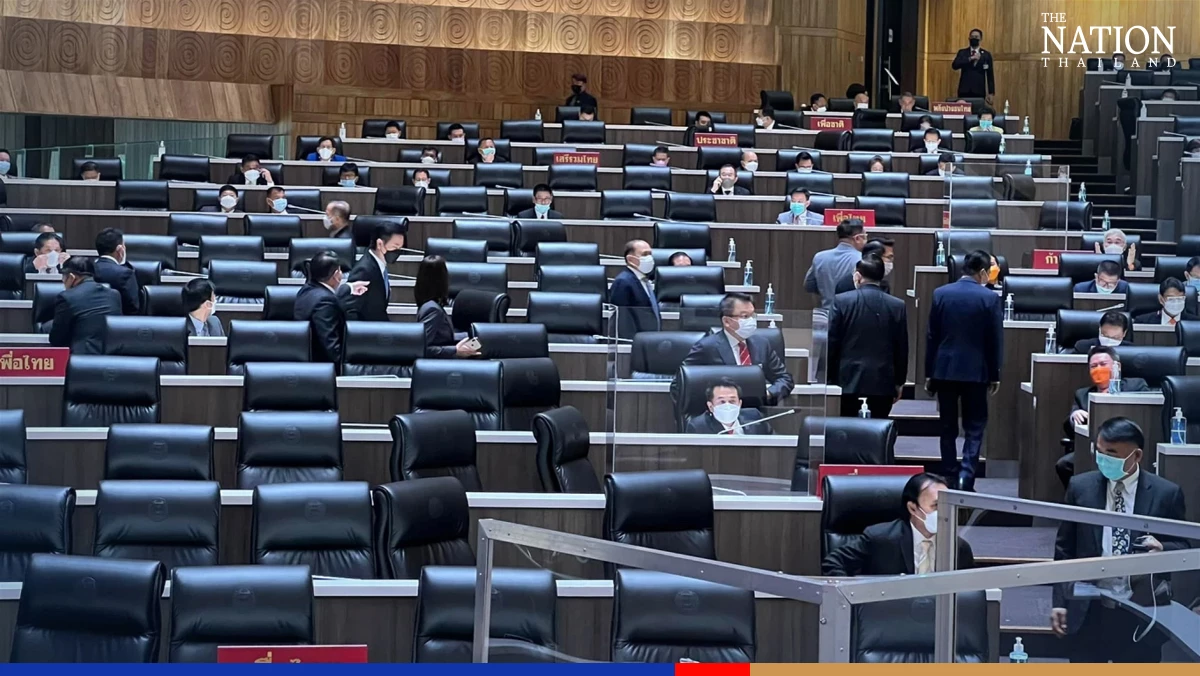
However, the meeting collapsed due to a lack of quorum, a tactic used by the main opposition Pheu Thai Party to reportedly derail passage of the bill.

[Panel spokesman urges tripartite whips to reach an agreement on election bill]

Isara said if the bill fails to clear Parliament by Monday, the Election Commission’s (EC) original version would be used. This version uses the figure of 100 to calculate party-list House seats. But the version vetted by the ad hoc panel uses the figure of 500 instead, the number of constituency MPs and party-list MPs.

Isara said Chuan was worried about the lack of quorum since Tuesday night because he did not want parliamentarians to be criticised for failing to carry out their duty.

The House speaker, Isara said, tried to call in all sides on Tuesday night to ensure that MPs and senators attend the key meeting on Wednesday in full force.

Although the charter allows the EC’s original version to be enacted in case the bill lapses, Chuan wanted parliamentarians “to do their best to try to serve the public”, so he called the meeting on Monday at 12.30pm, Isara said.

A formal invitation to the meeting was issued on Thursday afternoon in line with regulations that MPs and senators have to be informed three days in advance before a special meeting takes place, Isara added.

Published : August 11, 2022

By : THE NATION

House-Senate whips urged to meet on election bill before it lapses

#SootinClaimon.Com : ขอบคุณแหล่งข้อมูล : หนังสือพิมพ์ The Nation.

https://www.nationthailand.com/in-focus/politics/40018777


Tripartite whips were urged on Thursday to reach a solution on an organic law governing MP elections so that the vetted bill can be enacted within the 180-day deadline by August 15.

House-Senate whips urged to meet on election bill before it lapses

House-Senate committee spokesman Somchai Srisutthiyakorn made the call after a joint meeting of MPs and senators to discuss the election bill in its final reading collapsed on Wednesday due to a lack of quorum.

The charter requires Parliament to pass the bill within 180 days after the first reading commences. The deadline is August 15.

Somchai said whips of the coalition, the opposition and the Senate must first hold a meeting and reach a consensus as to whether they want to pass the bill in the final reading.

If they want the bill to pass, Somchai said House Speaker and Parliament President Chuan Leekpai can call a special meeting from Saturday to Monday to have it discussed in the final reading.

If the whips fail to reach an agreement, it will be useless for a special joint meeting to be called to deliberate on the bill again because the opponents would use the same tactic of quorum checking to derail the enactment, Somchai pointed out.

House-Senate whips urged to meet on election bill before it lapsesThe bone of contention is the method to calculate party-list House seats. The original bill, which was drafted by the Election Commission (EC), proposed a figure of 100 or the number of all party-list seats to divide the overall party-list votes cast by voters for allocating MP seats.

However, during the vetting, the coalition and senators flexed their majority muscle to amend the draft to change the divider to 500, which is the number of all MPs – both constituency and party-list MPs.

Micro-parties prefer the 500 divider because it would ensure they win at least one House seat. But major parties, especially opposition leader Pheu Thai, prefer 100 so they could reap a larger share of party-list House seats.

The Pheu Thai cried foul that the 500 divider was aimed at preventing it from winning a landside victory in the next election to be held after the current House completes its four-year tenure in March.

House-Senate whips urged to meet on election bill before it lapsesIt has been reported that the ruling Palang Pracharath Party initially supported the 100-divider method but Prime Minister Prayut Chan-o-cha allegedly changed his stance over fears the Pheu Thai would win a landslide victory. It was also claimed that Prayut supported the 500-divider method in exchange for gaining votes from micro parties during the recent censure debate.

“All sides should review their stance, whether they want the vetted bill to be passed or not. In particular, the coalition must answer this question. It cannot solely blame the opposition for the lack of quorum,” said Somchai, a Seri Ruam Thai Party member and a former EC commissioner.

“The three whips must discuss this or will they leave a shameful heritage behind,” he warned.

In the scenario that the vetted bill fails to meet the deadline, the original draft must be sent to the EC for reconsideration, Somchai said.

If the original draft is considered to be good enough, it will be put on a five-day wait before being sent to the prime minister to forward it for a royal command and enactment.

If the EC sees that certain changes should be made in line with views of the vetting panel, the election watchdog can send it back to Parliament for the changes before it goes to the prime minister, Somchai said.

In the meantime, one tenth of MPs and senators can sign a petition to ask the Constitutional Court to rule whether the EC’s draft is constitutional or not. If the court rules in favour of the original draft, the dispute will be over for good. But if the court rules that the main principle of the bill is against the charter, the draft will lapse, Somchai added.

Published : August 11, 2022

By : THE NATION

Communities warned to brace for possible disaster from flooding, landslides

#SootinClaimon.Com : ขอบคุณแหล่งข้อมูล : หนังสือพิมพ์ The Nation.

https://www.nationthailand.com/in-focus/national/40018787


Communities and a host of government agencies have already been urged to cope with possible flash floods and surface water runoffs due to tropical storm Mulan, Interior Minister Anupong Paochinda said on Thursday.

Communities warned to brace for possible disaster from flooding, landslides

His statement came after the Thailand Meteorological Department announced on Wednesday that the storm would bring isolated heavy to very heavy rains across the North, the Northeast and the East from August 11-13.

Anupong said the Department of Disaster Prevention and Mitigation had warned people and related agencies to be ready for possible disasters, especially those in areas at risk of flooding and landslides.

The department has already checked the condition of warning towers nationwide, he said.

“We don’t want to see anyone suffer. We will assist them as soon as possible if a disaster occurs,” he promised.

Anupong said he also does not want to see Thailand hit by flooding similar to South Korea, which is seeing its worst inundation in 115 years.

The minister hoped Thailand would not see a repeat of the disastrous 2011 floods.

Widespread flooding triggered by tropical storm Nock-ten at the end of July 2011 spread across a majority of northern, northeastern and central Thailand provinces, especially those along the Mekong and Chao Phraya rivers.

In October that year, floodwaters from the North reached the mouth of the Chao Phraya and went on to inundate several parts of the capital.

The floods persisted in some areas even until the middle of January 2012, resulting in 815 deaths, three missing and 13.6 million people affected.

Meanwhile, 65 of 76 provinces were declared flood disaster zones, and more than 20,000 square kilometres of farmland were damaged.

Published : August 11, 2022

By : THE NATION

Two arrested as raid on houses yields fake ATKs and medical products

#SootinClaimon.Com : ขอบคุณแหล่งข้อมูล : หนังสือพิมพ์ The Nation.

https://www.nationthailand.com/in-focus/national/40018786


Police and officials from the Office of Food and Drug Administration (FDA) raided two houses in Nonthaburi and Nakhon Pathom provinces, arrested the house owners and seized fake Covid rapid antigen test kits (ATKs) and an assortment of fake medical products.

Two arrested as raid on houses yields fake ATKs and medical products

The results of the joint operations were announced at a press conference at the Consumer Protection Police Division (CPPD) by Central Investigation Bureau commissioner Pol Lt-General Jirapop Phuridet, CPPD commander Pol Maj-General Anan Nanasombat, Pol Colonel Neti Wongkularp, commander of CPPD Subdivision 4, and FDA secretary-general Paisarn Dunkum.

Jirapop said the CPPD police and FDA officials planned the operations after they received complaints that ATK kits, with fake FDA licences, were sold via Facebook pages.

Neti said police obtained a warrant from the Nakhon Pathom court to search a commercial building in Tambon Naraphirom of Nakhon Pathom’s Bang Len district and found that the place was used as a factory to make fake ATKs.

The owner of the building was arrested. She was identified as Anusara (surname withheld by police).

Neti said over 10,000 pieces of medical items in 14 categories were seized from the place, including ATKs of testsealabs gica, testsealabs nex, and zybio brands.

Neti said police later obtained a warrant from the Nonthaburi court to search a house in Tambon Bang Khen of Nonthaburi’s Muang district and found over 10,000 pieces of several medical items, including ATKs of testsealabs gica, testsealabs nex, greenspring, singclean, seinofy, hip, deepblue, humasis, bioteke, and ustar brands.

The seized items included fever thermometers and finger oxygen-measuring devices.

The suspect in the second raid was identified as Patchayaporn (surname withheld).

Neti said the suspects had been selling fake ATKs via their Facebook pages since April at 40 to 45 baht per kit.

Earlier, police agents bought the fake products from some shops near the alleged factory in Nakhon Pathom and the sellers implicated Anusara.

Neti said police were investigating for more information and evidence to try to arrest four more Chinese businessmen behind the factory making the fake medical items.

Neti said the Chinese businessmen sent the fake items in separate pieces for the factory in Nakhon Pathom to pack them in retail packages for sale.

Paisarn said the oxygen-measuring gadgets and ATK kits were medical tools under control and the distribution of fakes would case severe public risks as they would contribute to spreading the Covid virus.

He said if convicted, the suspects would face a maximum jail term of 10 years and a maximum fine of 1 million baht.

Published : August 11, 2022

By : THE NATION

Tourism minister wants bars, pubs in tourist destinations to be opened until 4am

#SootinClaimon.Com : ขอบคุณแหล่งข้อมูล : หนังสือพิมพ์ The Nation.

https://www.nationthailand.com/in-focus/national/40018782


The tourism minister said on Thursday that he would ask the Centre for Covid-19 Situation Administration to consider allowing pubs and bars in major tourism provinces to remain open until 4am.

Tourism minister wants bars, pubs in tourist destinations to be opened until 4am

Tourism and Sports Minister Phiphat Ratchakitprakarn said he would propose the extension despite strong criticism from some sections of society.

Currently, pubs and bars must close by 2am.

Phiphat said he will not propose that all pubs and bars nationwide be allowed to remain open until 4am: it’s only those in major tourism provinces, he made it clear.

The minister said his proposal was in line with foreign tourist lifestyles, especially those from Europe and the Middle East.

Tourists from these two regions often have dinner from 10pm. The meals take time to arrive and they start drinking only after midnight, he pointed out.

“When they are about to reach the peak of the good time, it would be about time for pubs to close, and the tourists want to drink more. So, the 2am closing does not respond to their needs,” Phiphat said.

The tourism minister noted that entertainment places in foreign countries also close after 2am.

“For example, when Thais make foreign trips, they also want to have a good time to the fullest extent,” Phiphat said.

“So, the public should not be worried about this. And I would like to tell everybody and every agency concerned and NGOs, which are opposed to the idea, that although pubs and bars close at 2am, tourists will still buy alcohol and continue drinking elsewhere anyway.”

He said some might continue drinking in areas that would be hard to monitor and this could lead to crimes.

“If the zoning is set for a 4am closing, I’m confident the government can guarantee the safety of tourists by up to 80 per cent,” he believed.

Phiphat has been one of the rare politicians to dare to openly support what is seen as a “social vice”. Supporters have been stigmatised because they’ve been seen as going against the morality of Thailand’s “Buddhism society”, with their proposals always being shot down by those claiming to be devout Buddhists.

Published : August 11, 2022

By : THE NATION

Thais can enter national parks for free on Mother’s Day tomorrow

#SootinClaimon.Com : ขอบคุณแหล่งข้อมูล : หนังสือพิมพ์ The Nation.

https://www.nationthailand.com/in-focus/national/40018779


Admission to all national parks across the country is free on Friday, August 12 – the 90th birthday of Her Majesty Queen Sirikit the Queen Mother, and also a public holiday.

Thais can enter national parks for free on Mother’s Day tomorrow

Department of National Parks, Wildlife and Plant Conservation director-general Ratchada Suriyakul na Ayutthaya said on Thursday the exemption of entrance fees applies to Thai nationals and their vehicles.

“The move aims to celebrate the birthday of the Queen Mother, who has been working diligently in the conservation of natural resources to increase public awareness in nature and wildlife conservation and to promote domestic tourism,” he said.

Ratchada advised travellers to check the opening hours of national parks at https://shorturl.asia/fA4ku as some parks have been closed for rehabilitation.

He also urged park visitors to maintain social distancing and wash their hands after touching communal surfaces to prevent Covid from spreading.

Published : August 11, 2022

By : THE NATION

Thailand will send skilled, semi-skilled workers to Saudi Arabia to meet demand

#SootinClaimon.Com : ขอบคุณแหล่งข้อมูล : หนังสือพิมพ์ The Nation.

https://www.nationthailand.com/in-focus/national/40018775


Thailand will focus on sending skilled or semi-skilled workers to Saudi Arabia to fulfill the Gulf nation’s demands, Labour Minister Suchart Chomklin said on Wednesday.

Thailand will send skilled, semi-skilled workers to Saudi Arabia to meet demand

He said Thai workers are now able to work in Saudi Arabia, thanks to Prime Minister Prayut Chan-o-cha’s efforts to restore relations between the two countries after three decades of sour ties.

Riyadh cut trade and diplomatic relations with Bangkok after the so-called Blue Diamond affair, in which the theft of jewels by a Thai worker from a Saudi palace in 1989 was followed by the killing of Saudi representatives in Thailand.

“Overseas labour markets will be opportunities for our children to seek experiences and learn new technologies to be applied in Thailand,” Suchart said.

He vowed to complete a memorandum of understanding to send workers to Saudi Arabia within 90 days.

The Saudi Crown Prince has a vision to build a huge city with modern technology as a centre of finance in the Middle East, which would create more than 1 million jobs, Suchart pointed out.

Saudi Arabia has good demand for workers in its tourism, hotel, restaurants and healthcare sectors, he added.

Meanwhile, Department of Employment director-general Pairoj Chotikasathien said seven Saudi Arabian companies have made requests for 2,161 Thai workers from the department, including nurses, drivers, cleaning staff and engineers.

He said 60 Thai workers have applied for jobs there, 45 of who applied as nurses and 15 as engineers.

The department will send eligible workers to Saudi Arabia as soon as possible, he promised.

He added that private employment agencies would also be allowed to send workers to Saudi Arabia in the future.

Pairoj expected more jobs to be available in the Gulf kingdom, especially those in the service sector with monthly salaries of more than 100,000 baht.

He also expected Saudi Arabian demand for Thai workers to increase because of its project to build a smart city on the Red Sea coast.

Published : August 11, 2022

By : THE NATION