The baht opened at 35.36 to the US dollar on Wednesday, strengthening from Tuesday’s close of 35.45.
The currency is expected to move between 35.25 and 35.45 during the day, Krungthai Bank market strategist Poon Panichpibool predicted.
He said the baht was likely to fluctuate and swing in a wide range amid two important factors that could affect the currency market today, Wednesday – the Bank of Thailand’s Monetary Policy Committee (MPC) meeting and US inflation results.
Poon believes the baht might strengthen if some MPC members decide to increase the policy interest rate by 0.5 per cent. The market may feel that the committee might increase the interest rate more in their next meeting, which could lead to foreign investors purchasing Thai stocks and short-term bonds.
However, the baht could fluctuate and weaken, especially if the dollar strengthens. If the US inflation rate is higher than expected, investors might feel the US Federal Reserve would continue to increase the interest rate until it can control the situation, Poon said.
The currency market is in a cautious state as investors await core US inflation data, which would influence market opinion about the Fed’s currency policy direction, he added.
Consumer spending on Mother’s Day (August 12) is expected to increase by 9 per cent over 2020, the highest in 10 years, the University of the Thai Chamber of Commerce (UTCC) has estimated.
Thanawat Polvichai, UTCC president and director of the Economic and Business Forecasting Centre, said that the centre had conducted a survey to study the opinion and spending behaviours on Mother’s Day in 2022.
The survey asked 1,288 people from all over the country from July 28 to August 2.
Based on the responses, the centre estimates that spending on Mother’s Day this year will amount to 10.883 billion baht.
The figure was a 9 per cent increase over 2020. The survey was not conducted in 2021 due to the Covid-19 pandemic.
Of the total spending, 10.012 billion baht will be used for various activities while another 870 million baht will be used for tourism.
The number was a reflection of the public perception that the Covid-19 situation was easing, hence they would spend more, which would facilitate economic recovery.
Thanawat said that the estimated spending would be the highest since 2010. It is a reflection that the economy is recovering but slowly as people will take their mothers for a meal, travel, or do other activities.
Thailand’s National Digital Trade Platform (NDTP) will launch next month, its private sector backers announced on Tuesday.
The NDTP will serve as Thailand’s national single platform for import and export procedures, integrating with counterparts in other countries, said Kobsak Duangdee, secretary-general of the Thai Bankers’ Association.
The platform will offer Thai businesses the flexibility required to compete in the digital era of international business, he added.
Rather than submitting the same document to several different government departments and organisations, businesses can make a single submission to the NDTP – which is already connected to the relevant parties.
This would save time and money for businesses and government while also improving ease of doing business in Thailand, which is a key factor in attracting foreign trade and investors, Kobsak said on Tuesday.
Jumrud Sawangsamud, director-general of the Federation of Thai Industries (FTI), said the NDTP platform would be up and running in September and linked with counterparts in Singapore (NTP) and Japan (TradeWaltz).
Results from the NDTP’s soft launch would be presented at November’s Asia-Pacific Economic Cooperation summit in Bangkok so that APEC leaders understand the need for this type of platform, he added.
Jumrud said that as well as simplifying document processes for businesses, NDTP also serves as a data centre that can be used to explore future trade opportunities.
Current Phase 1 testing of the platform by several Thai companies covers three areas. These are commercial documents such as e-purchase orders, e-invoices, and e-packing List; transport documents; and other government and insurance certificates.
The NDTP’s e-documents will be developed according to Trade Facilitation and E-business (UN/CEFACT) standard, said Jumrud.
Kobsak said the platform will go through five stages of development, each providing use-case lessons to improve features and functionality. The completed version will include all parties, including small and medium-sized businesses (SMEs).
But he cautioned that government support was needed to upgrade the Thai business environment.
“Before connecting with foreign trade partners, Thailand must first strengthen itself. To make the platform a reality, we need the government’s support,” Kobsak said.
The NDTP platform would improve business accountability and transparency by converting paper documents to electronic files that can be verified and traced back, he added. Hence, Thai companies would serve as a model for other countries seeking to establish a unified platform and participate in the global era of digital trade.
CDA Farewell Op-ed by US Embassy Bangkok Chargé d’Affaires Michael Heath
As I conclude my tour as Chargé d’Affaires of the United States of America in Thailand, I am proud of the tremendous progress made in Thai-U.S. relations as we navigated challenges and explored new opportunities. My family and I have grown to love Thailand over our multiple tours here and will miss the warmth of the people, the richness of the culture, and the diversity of the food.
First assigned to Thailand as an entry-level diplomat in 1995, I have had the privilege to represent the United States in a country that I greatly admire. Having traveled from Chiang Rai to Yala, from Mae Sot to Ubon Ratchathani, and many places in between, I have witnessed the extraordinary breadth and depth of the U.S. relationship with Thailand.
In the economic sphere, the United States is Thailand’s largest export market, and our bilateral trade continues to grow rapidly— nearly 23% between 2020 and 2021 – and support the Thai economy during the stresses caused by the Covid-19 pandemic. American firms have long been among the largest foreign investors in Thailand, and, now, more and more Thai firms are investing in the United States, deepening the economic ties between our countries. Our nations signed the Memorandum of Understanding to Promote Supply Chain Resilience in July, which will ensure access to critical goods for both of our peoples in the global marketplace.
Further, our green-oriented economic ties through the Indo-Pacific Economic Framework for Prosperity and our roles as back-to-back hosts for APEC provide an opportunity for expanded climate-centered policies, investment, and leadership in the region. As the first country to join the U.S.-led Clean Energy Demand Initiative, Thailand unlocked billions of dollars of potential U.S. investment and joined a forum that connects climate experts and establishes innovative public-private partnerships. These are all essential components to realizing Thailand’s Bio-Circular-Green Economy Model and our shared goals toward net-zero carbon emissions.
Public health is another area where our bilateral cooperation has global ramifications. The United States and Thailand have worked together for 60 years to address critical public health issues, developing medicines to treat malaria and other infectious diseases. Our partnership has saved countless lives through research, treatment breakthroughs and, most recently, through the public health response to Covid-19. We were proud to have donated 2.5 million doses of safe and effective U.S. Covid-19 vaccines, which the Royal Thai Government distributed to all residents of Thailand on an equal basis.
My time in Thailand has also shown me the critical importance of our security partnership. This year, we reaffirmed the foundations of the U.S.-Thai treaty alliance and marked the 41st iteration of Cobra Gold, the longest-running and one of the largest multinational military exercises in the world. Participants in Cobra Gold and other U.S.-Thai military exercises have been on the frontlines of disaster and humanitarian responses such as the 2004 tsunami and the 2018 Wild Boars cave rescue.
This past year alone we had four U.S. Cabinet-level visits, which culminated with the historic signing of the Thailand-United States Communiqué by Secretary of State Antony Blinken and Deputy Prime Minister and Foreign Minister Don Pramudwinai. Reflecting our mutual interests in an Indo-Pacific region that is free, open, sustainable, and inclusive, the Communiqué outlines the future of our relationship working together to promote free expression and democratic institutions and to cooperate in law enforcement, cybersecurity and technology, the digital economy, and people-to-people exchanges. I am confident that many years from now, the next generation of Americans and Thais will continue to benefit from our special relationship.
The future of the U.S.-Thailand relationship is bright. Thailand is a leader in the region, and I am confident it will continue to model— through action— our shared values of democracy, human rights, freedom of expression and transparency. Together we will resist the threat of authoritarianism in the region and throughout the world.
My wife Michelle and I greatly enjoyed our personal engagements with the Thai people. We look forward to next year’s celebrations of our 190 years of friendship. Looking further ahead to 2027, we also anticipate a grand commemoration of the 100th anniversary of His Majesty King Bhumibol Adulyadej The Great’s birth in the State of Massachusetts.
I am pleased to know that planning for these milestones will be led on our side by the distinguished diplomat Robert Godec, who was confirmed by the U.S. Senate last month as our Ambassador-designate to Thailand.
I leave the bilateral relationship in very good hands and am assured that the United States and Thailand will always remain great friends, partners, and allies.
US Embassy Bangkok Chargé d’Affaires Michael Heath
A special House committee has finished vetting the fiscal 2023 budget bill and has reallocated 7.6 billion baht to new agencies.
The committee spokesman, Banyat Jettanachan (Democrat-Rayong), said the panel held its final meeting on Tuesday and endorsed the changes made to the bill and also endorsed the minutes of the panel and its final report on the 2023 budget.
The budget bill is seeking 3.185 trillion baht for government spending.
Banyat said the ad hoc panel would submit the vetted bill back to the House speaker to put it on the agenda so that the bill would be deliberated in the second and third readings on August 17, 18 and 19.
The bill’s final reading cannot be later than August 19, because the Constitution requires the House to finish its deliberations within 105 days of the bill being sent to the House.
Banyat said the ad hoc panel has trimmed down budget requests of various government agencies with a total value of 7.644 billion baht.
The top three agencies that saw the biggest cuts to their requests were:
— Defence Ministry with a cut of 2.778 billion baht
— Local administration organisations with a budget cut of 742.2 million baht
— Education Ministry with a cut of 737.486 million baht.
Their total of 7.644 billion baht has been redistributed to 10 projects, which the panel saw as needing more budget support:
The Farmers Rehabilitation and Development Fund (500 million baht)
A project to increase services of health clinics of 49 provincial administrative organisations (1.84 billion baht)
A project to provide education subsidy to young students (2.359 billion baht)
Rice Department project for farmers to change to better rice seeds (1.02 billion baht)
Operation cost of the Office of Attorney-General (230 million baht)
Operation cost of the Courts of Justice (192.28 million baht)
Operation cost of the Office of the National Anti-Corruption Commission (154.123 million baht)
Personnel recruitment of the Office of the Election Commission (81.577 million baht)
Fund for development of officials and personnel of the Southern Border Provinces Administration Centre (8.2 million baht).
Banyat said the state agencies whose budget requests were not cut included the Foreign Ministry, the Thai Red Cross Society and the office of personal servants of His Majesty the King.
Banyat said the panel’s report noted that the government’s initial budget projections did not respond with the recovering economy of the country.
The report also recommended that the government seek more revenue channels, including collecting land and heritage taxes, taxes on stock trading and windfall taxes.
In the past, MPs were often criticised by academics for the use of budget trimming method by the budget panel to shell out money to their constituents in the provinces through various projects. Once, a charter even barred MPs from proposing or reallocating budget from the trimmed-down amount.
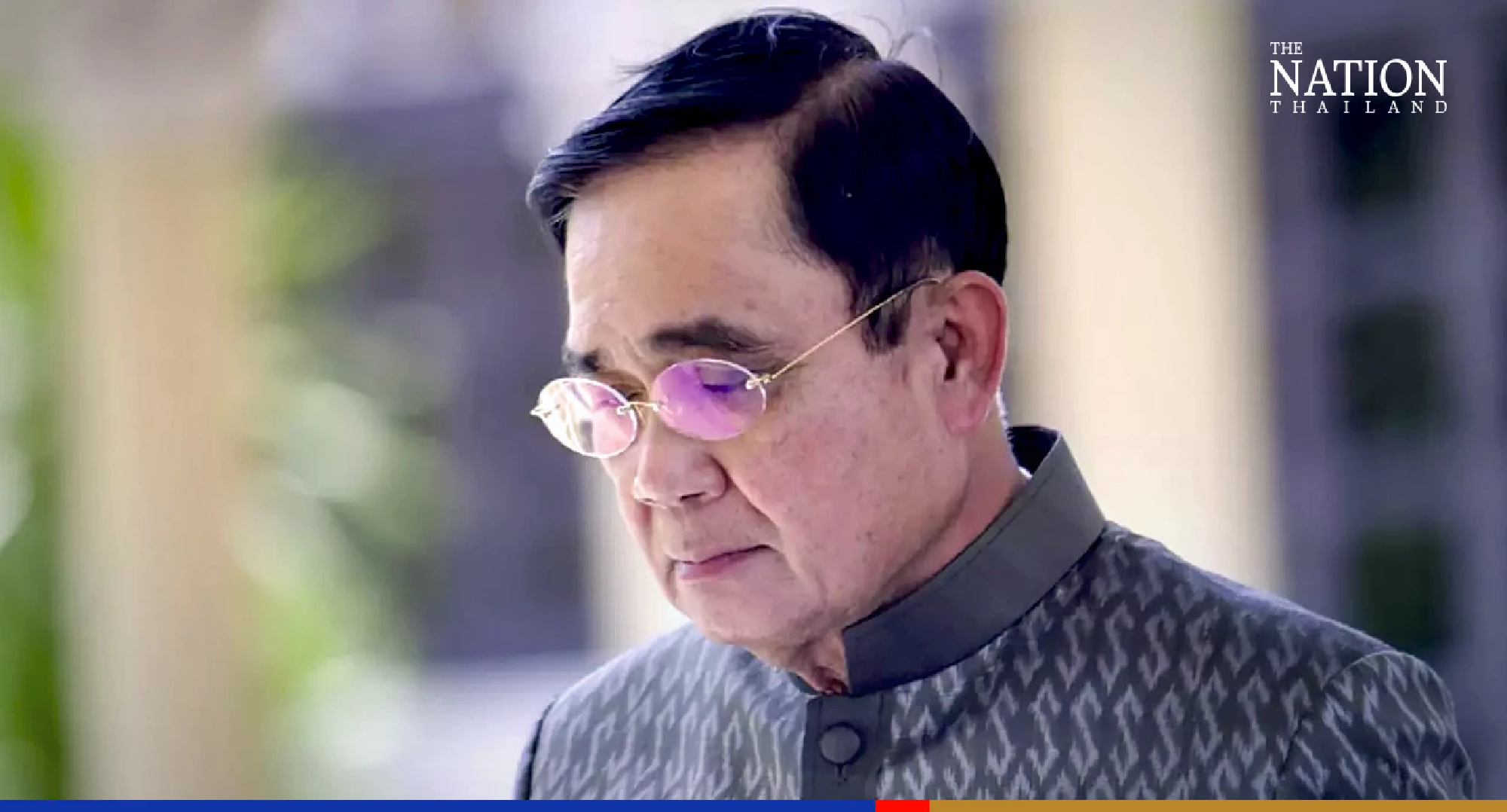
Government spokesman Thanakorn Wangboonkongchana urged the public to wait for a Constitutional Court ruling instead of listening to views of “certain persons” on the dispute surrounding the prime minister’s tenure.
Premier Prayut Chan-o-cha will accept the ruling no matter how it turns out, Thanakorn insisted.
The opposition Pheu Thai Party had threatened to petition the court to rule that Prayut’s premiership would end on August 24 after he reached the eight-year constitutional limit.
The Pheu Thai argued Prayut’s premiership started on the day he became the prime minister of an interim government installed after the coup.
But a House of Representatives legal team believes Prayut’s tenure technically started on June 9, 2019, when he was appointed the prime minister with a royal command under the 2017 charter. The House panel said Prayut’s term would expire in 2027 instead.
Thanakorn was apparently referring to a comment by Dr Pichai Rattanadilok Na Phuket, director of the National Institute of Development Administration’s political and strategic development programme.
Pichai took to Facebook on Tuesday night to back the Pheu Thai’s argument that Prayut’s eight-year limit will be up on August 24.
Pichai backed up his argument with a minute from the meeting of the committee that drafted the current constitution.
Pichai said both the chair and deputy chair of the panel, Meechai Ruchuphan and Supoj Khaimuk, respectively, expressed their opinions in the minute that Prayut’s premiership must be counted from the promulgation of the current charter.
In the minute dated September 7, 2018, Supoj reportedly said the prime minister, who held the post before promulgation of the 2017 constitution, must have his tenure counted from the time he held the post after the promulgation if he was continually in office.
Meechai agreed with Supoj, saying Section 264 in the provisional chapter of the charter clearly stated so.
Section 264 states: “The council of ministers administering state affairs on the day prior to the date of promulgation of this Constitution shall be the council of ministers under the provisions of this Constitution until the new council of ministers appointed subsequent to the first general election under this Constitution assumes its duties.”
But Thanakorn argued on Wednesday that the opinions of Meechai and Supoj were just personal ones and did not represent the panel’s formal stand.
Thanakorn said the meeting was held after the promulgation of the charter for the panel to draft a formal guideline on the intentions of the Constitution.
He said the final draft of the guideline did not include the opinions of Meechai and Supoj.
As a result, the issue should be based on the Constitutional Court ruling instead of being interpreted by certain persons who have no authority and true understanding of the principles of the law on their own, Thanakorn added.
“And the prime minister and defence minister will respect the ruling of the Constitutional Court and will not be above the law,” the spokesman made it clear.
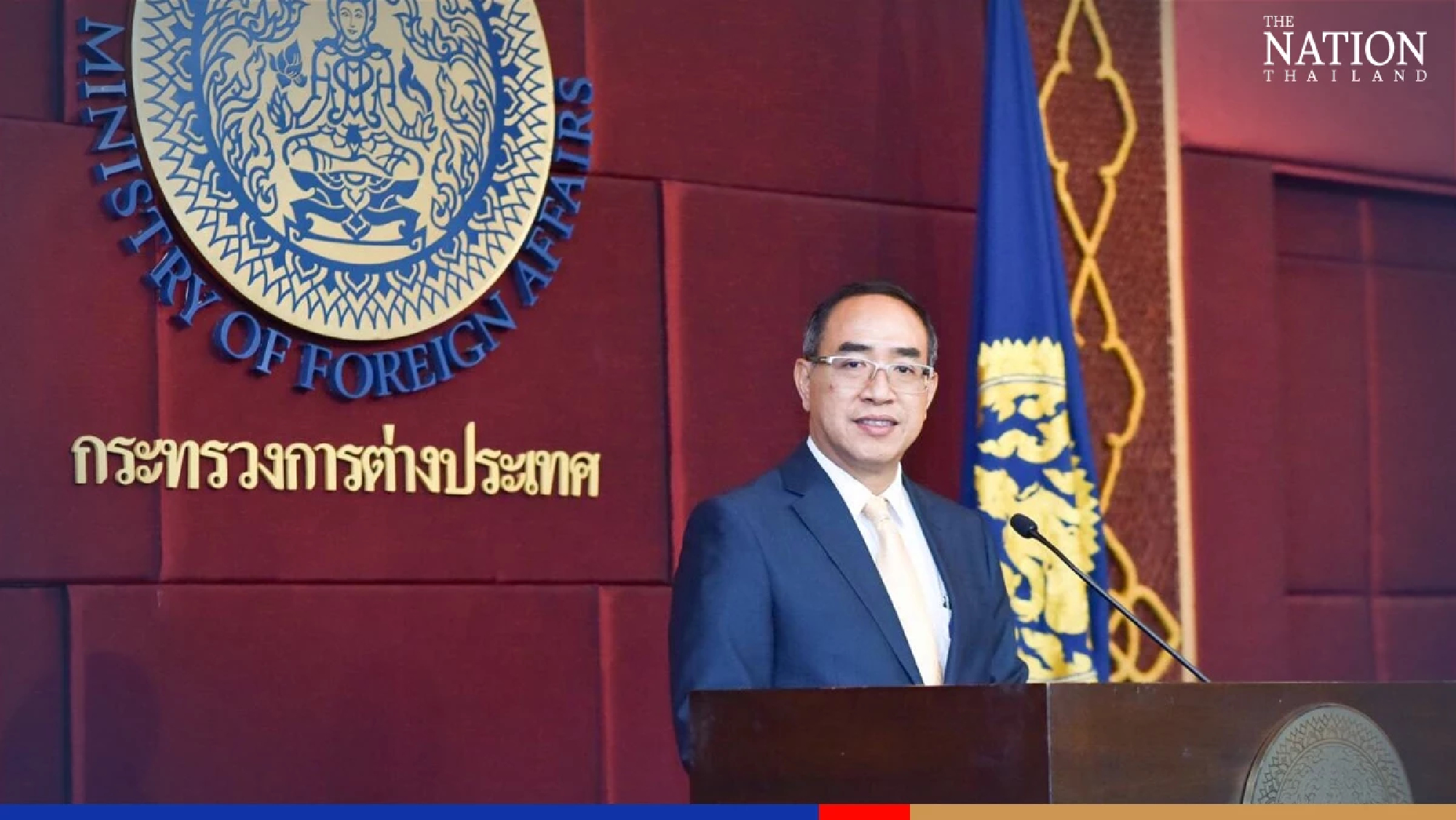
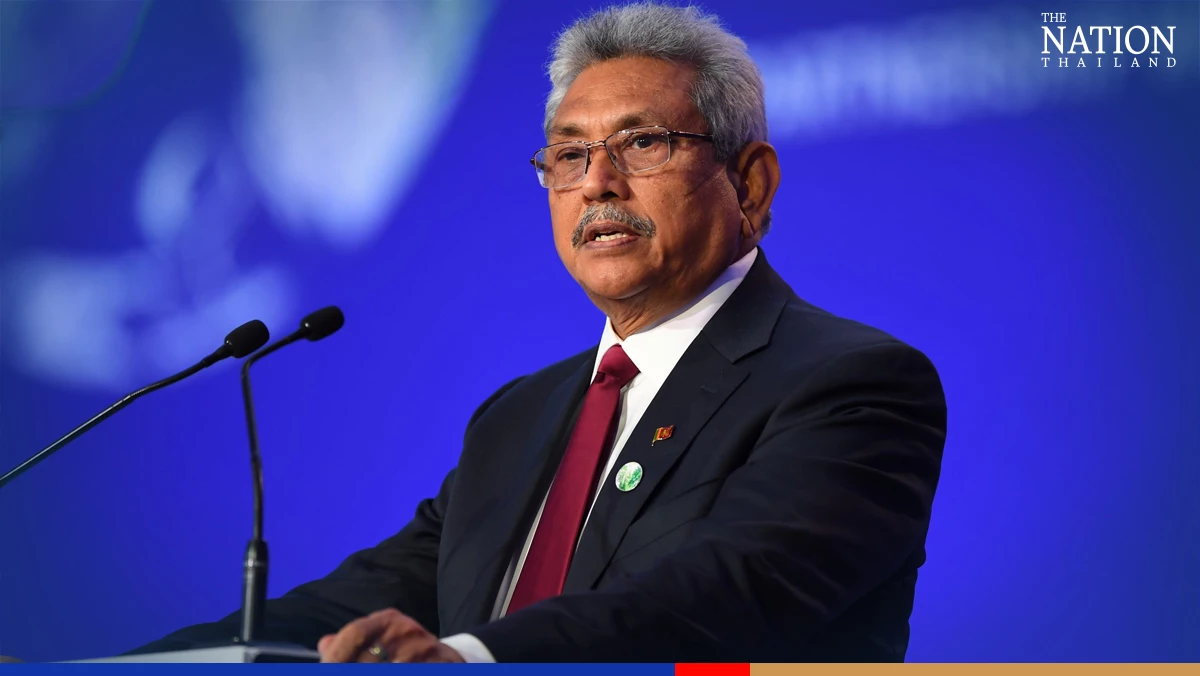
Thailand has received a request from the current Sri Lankan government to allow former president Gotabaya Rajapaksa to enter the Kingdom, Foreign Ministry spokesman Tanee Sangrat said on Wednesday.
He was responding to a news report that Rajapaksa is expected to arrive in Thailand on Thursday. He had fled the country to Singapore after mass protests in July following an economic collapse.
Tanee said Thailand has considered the request based on its relationship with Sri Lanka. He added that Rajapaksa’s move is considered a temporary stay.
“Sri Lanka’s former president does not intend to seek permanent shelter in Thailand, and he will travel to other countries soon,” he said, citing the Sri Lankan government’s remarks.
Meanwhile, Prime Minister Prayut Chan-o-cha said Rajapaksa’s move to enter Thailand is a humanitarian matter. He also confirmed that he would not be meeting the former Sri Lankan president.
Rajapaksa resigned in July after thousands of protesters stormed the president’s official residence and office due to Sri Lanka’s worst economic crisis in seven decades.
Thailand will be Rajapaksa’s second temporary shelter in Southeast Asia after he fled to Singapore on July 14, via the Maldives.
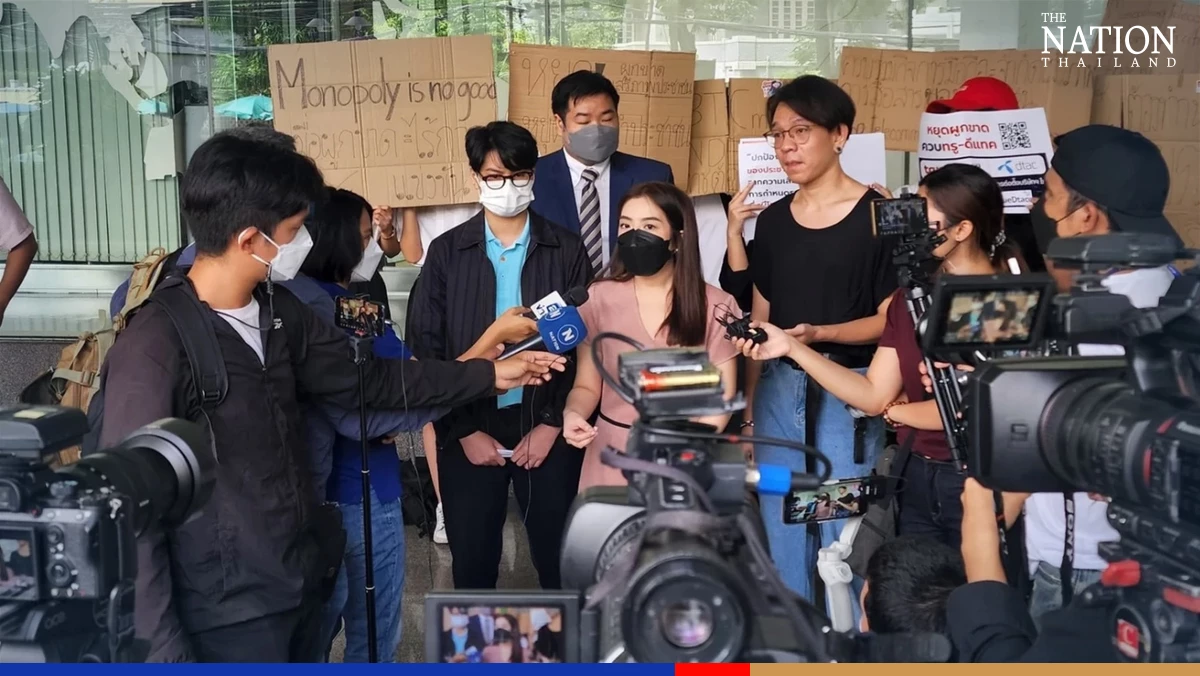
A citizens group has handed over a letter to Norway’s ambassador, asking the envoy to help stop the merger of two giant telecom operators.
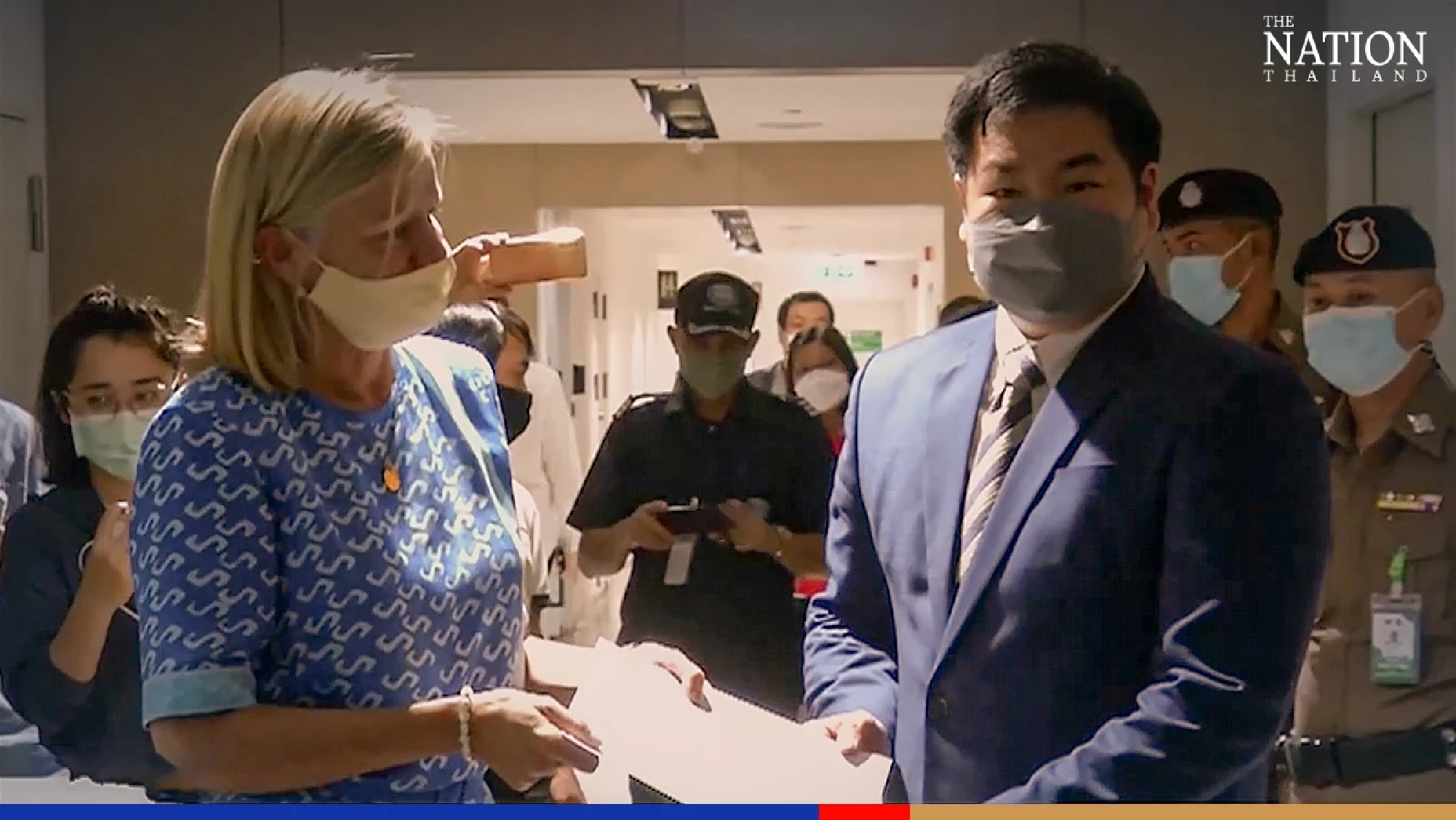
The Citizens’ Group for Freedom of Communication on Wednesday went to the Embassy of Norway in Bangkok to submit a letter to Ambassador Kjersti Rødsmoen.
The letter urged the ambassador to pressure Telenor, a Norwegian company, to stop the merger between its subsidiary, Total Access Communication (DTAC), and True Corporation. They argued that the move would create a monopoly in the Thai mobile services market, affecting consumers and their freedom as their news could be disrupted if the merger were successful.
Rødsmoen said that she understood how the merger would affect consumers and would forward the letter to Telenor and the Norwegian government.
She promised to look into the matter. She said that she would not ignore this matter if the merger was against Norway’s governance practices, because Telenor is the third biggest company in Norway. She added that the embassy would act as a medium in sending the citizens’ letter to Norway.
In the letter, the group said that the merger between these two companies was against Section 21 of the Telecommunications Business Act.
Section 21 of the Telecommunications Business Act, says:
“In the telecommunications business operation, other than being subject to the law on trade competition, the Commission shall prescribe specific measures according to the characteristics of the telecommunications business operation to prevent the licensee from carrying out any act that is monopolistic, or that reduces or limits the competition in the provision of telecommunications service in the following matters: (1) subsidisation of services; (2) holdings in businesses of the same category of service; (3) abuse of market power; (4) anti-competition behaviour; (5) protection of small entrepreneurs.”
The group cited that DTAC currently has 20 per cent of market share with 19.6 million subscribers, while True has 34 per cent with 32.2 million subscribers.
Leader Advanced Info Service has 46 per cent market share with 44.1 million subscribers.
The group is worried that the merger between True and DTAC would affect service quality and pricing, as that would leave only two players. The group explained that if a company has more than half of market share, such a company would be able to dictate to the market.
It will also be an obstacle to the development and competition in the digital economy which Thailand and several countries are focusing on for the future.
The group is also concerned that their freedom of communication could be affected as it could allow intervention by the government or a public company.
If the number of telecommunication operators reduces, it would be easier to intervene, threaten, control, or block news, especially in the current situation where the government had used spyware technology to get information on activists without permission, the group said.
The group added that private companies were also responsible for upholding human rights according to the United Nations Guiding Principles on Business and Human Rights (UNGPs).
The second pillar of UNGPs says that the responsibility of business enterprises to respect human rights applies to all enterprises regardless of their size, sector, operational context, ownership and structure.
The group said that it knew that Telenor respects governance and human rights, as the company has said that telecommunications is important in exchanging opinions and it is a part of freedom of expression including privacy rights.
The group stated that it would be more difficult if the merger was successful in a country where human rights and privacy policies were not in line with Telenor’s standards.
The citizens requested Telenor to stop the merger between DTAC and True and asked the Norwegian government to investigate if the merger met UNGP guidelines.
The Thailand Consumers Council (TCC) on Wednesday opposed the city administration’s move to start collecting fares on the Green Line’s second-phase extensions with variable rates, starting from 14 baht.
Kongsak Chuenkrailart, assistant secretary of TCC’s subcommittee on public transportation, said the announced fares between 14 to 44 baht for the second-phase extension of the Green Line would increase the transportation cost burden on consumers.
Kongsak called on the Bangkok Metropolitan Administration to use one-rate fare of between 10 to 15 baht for each side of the second-phase extension so that it would be affordable to poor commuters.
Kongsak noted that the second-phase extensions from Bearing to Samut Prakan and from Mo Chit to Khu Khot run past areas inhabited by low-income earners. Having to pay up to 44 baht for a Skytrain ride on the extension would be too high for the poor, Koongsak said.
On Monday, Deputy Bangkok governor Wisanu Subsompon said the fare for riding the Green Line train on any of these two sections alone will start from 14 baht and the fare will increase by 2 baht per station with the maximum of 44 baht within the same extension. But if the passengers travel further on the first extension and main Green Line, the entire fare will be capped at 59 baht. Fare collection on the second-phase extensions will start in mid-September, he said.
Wisanu pointed out that the rates would be the same as currently used on the Green Line’s first extensions.
The Green Line has two main routes – Silom and Sukhumvit. On the Silom route, the first extension runs from Wong Wian Yai to Bang Wa and on the Sukhumvit route, the first extension runs from On Nut to Bearing.
The main Green Line is operated by the Bangkok Mass Transit System Plc (BTSC).
Although the fare for the entire route would be capped at 59 baht, the TCC sees the rates of 14 to 44 baht as too high.
“The TCC and Bangkok residents have been placing hope on the new governor to lower the fares of the Green Line to be similar to other lines – especially because all the extensions were invested in by the government,” Kongsak said.
“The fares should be lowered so that all consumers can afford to ride the Green Line, as the governor once promised that he would not extend the concession of the Green Line.”
He said the TCC was disappointed to hear the rates of 14 to 44 baht for the extensions, which, Kongsak said, would raise the cost of transportation per round trip for a commuter to 1,118 baht per month, which would account for 36 per cent of minimum wage.
An office worker, who works in Phra Ram 9 area, said without the new fare on the extensions, he was paying about 148 baht per one-way trip to work, but if the new rates were applied on the extension, he wold have to pay about 194 baht per one-way trip.
He said the BMA should collect only 14 baht from Ku Kot to Mo Chit, which would still be acceptable.
The TCC has surveyed the opinions of some 3,204 people and found that 96 per cent of the respondents said the starting fare of 14 baht, plus 2 baht per station, would be expensive because the segment from Ku Kot to Mo Chit has 21 stations.
The Public Health Ministry is considering scrapping the hospitel and hotel isolation system for treatment of Covid-19 patients as most infected persons are now being treated as outpatient self-isolation (OPSI).
Dr Thares Krainairawiwong, director-general of the Department of Health Service Support, said on Wednesday that they planned to make the suggestion to Public Health Minister Anutin Charnvirakul and expected it to be officially announced by September 1.
Thares said the latest survey revealed that only 11 hospitels and six hotel isolation centres remain open, compared to 76 hospitels and 31 hotel isolation centres available when the outbreak had reached its peak in Thailand last year. These 17 establishments that are still open have a combined capacity of only 4,720 beds.
“Currently most of the infected patients are having mild or no symptoms and can be treated under the OPSI system or via home isolation, therefore the need for these hospitels and hotel isolation is growing smaller,” he added.
Thares added that besides OPSI, patients also have the option to receive Covid-19 treatment via the National Health Security Office (NHSO)’s telemedicine system.
Currently three applications have been commissioned by the NHSO to treat Covid patients. They are Clicknic that focuses on patients in vulnerable groups (those over 60 or suffering from any of eight underlying conditions), Good Doctor Technology, and MorDee, that only accept “green” patients or those with mild conditions.
The NHSO is also working with the Bangkok Metropolitan Administration to establish Covid-19 kiosks in shopping malls or community centres where infected persons can conveniently get diagnosed and receive prescription from doctors.






 Although the fare for the entire route would be capped at 59 baht, the TCC sees the rates of 14 to 44 baht as too high.