Police on Tuesday conducted a security training to ensure its forces are prepared for a key Asia-Pacific Economic Cooperation (Apec) summit from November 16 to 18 in Bangkok.
The training, supervised by National Police chief Pol General Suwat Jangyodsuk, was held at Bangkok Thonburi University in Thawi Watthana district.
Suwat said officers have been instructed to closely follow the police operation handbook in public assembly control and a host of security practices adopted by other countries when they hold an international event.
As part of the arrangements for the summit, a proposal to make November 16 to 18 special holidays in Bangkok and surrounding areas will be submitted to the Cabinet soon in a bid to minimise traffic congestion in the metropolis during the international meeting.
“However, government agencies that provide services to the public, such as hospitals, courts and banks, can consider these holidays as they see fit,” government spokeswoman Traisulee Taisaranakul said on Monday.
Prime Minister Prayut Chan-o-cha also said on Monday that Thailand, as this year’s Apec chair, would use November’s summit to raise issues such as post-Covid economic recovery, trade and investment, global warming, and the BCG (Bio-Circular-Green) economy.
Residents in the North, the Northeast and the East have been warned to beware of possible flash floods and surface water runoffs due to tropical storm Mulan from Thursday to Saturday.
The Thailand Meteorological Department said on Wednesday that Mulan, presently over the upper South China Sea, is expected to move through Hainan Island before making landfall over Vietnam on Thursday.
The department said the storm would bring isolated heavy to very heavy rains in the North, the Northeast and the East from August 11-13.
“People in Thailand should beware of severe conditions that may cause flash floods and surface runoffs,” the department warned.
The affected areas are:
Thursday (August 11)
• North: Chiang Rai, Phayao, Nan, Phrae and Uttaradit.
The department also said the moderate southwest monsoon over the Andaman Sea, the South and the Gulf of Thailand would see waves in the upper Andaman Sea rising to about two metres and more than two metres during thundershowers.
In the lower Andaman Sea and the upper Gulf, the waves would be one to two metres high and about two metres during thundershowers, the department added.
“All ships in the upper Andaman Sea should proceed with caution,” it warned.
A doctor’s prescription is still required to get Covid-19 antiviral drugs after the Public Health Ministry allows public and private hospitals nationwide to procure the drugs themselves from September 1.
The move, which aims to make Covid-19 treatment and medicine more easily and widely available, will include four antiviral drugs approved by Thailand’s Food and Drug Administration (FDA), namely Favipiravir, Remdesivir, Molnupiravir and Paxlovid.
“From September 1, people will still not be allowed to buy Covid-19 antiviral drugs themselves,” said Public Health deputy permanent secretary Dr Thongchai Kirattihatthayakorn on Tuesday.
“Covid-19 patients must be diagnosed by a doctor, who will prescribe suitable drugs based on medical indications, patient’s symptoms and other risk factors to avoid side effects,” he made it clear.
Medical Services Department director-general Dr Somsak Akkasilp said antiviral drugs are approved by the FDA for use in emergency situations, and long-term side effects have yet to be thoroughly studied.
“People should therefore be careful and use these drugs only under doctor’s orders, especially among ‘rebound’ patients who had recovered from Covid-19 and then got reinfected despite having taken antiviral drugs,” he added.
Earlier this week, the National Health Security Office said it would start distributing Molnupiravir to people in vulnerable groups via telemedicine app operator Clicknic Health.
Clicknic CEO Neil Nilwichian insisted that patients would be diagnosed by 40 to 50 doctors via the app to prevent the antiviral drug from being misused or wrongly prescribed.
The Public Health Ministry reported on Wednesday (August 10) that over the past 24 hours, 2,335 Covid-19 patients have been admitted to hospitals.
The death toll has risen by 32, while 2,151 patients have recovered and discharged from hospitals.
The number of cumulative cases in the country since January 1, 2022, stands at 2,388,306 with 9,997 deaths.
The country’s total caseload from Covid-19 stands at 4,611,741 – 4,558,947 of whom have recovered, 21,099 are still in hospitals and 31,695 have died.
Separately, another 5,254 people were given their first Covid-19 shot in the last 24 hours, 8,133 their second shot and 33,441 a booster, bringing the total number of Covid-19 vaccine doses administered nationwide to 142,009,950.
According to Worldometer, confirmed cases globally had risen to 591.41 million on Wednesday, 563.32 million of whom have recovered, 21.64 million are active cases (43,835 in severe condition) and 6.44 million have died (up by 2,060).
Thailand ranks 28th in the global list of most cases, which is topped by the US with 94.13 million, followed by India with 44.19 million, Brazil with 34.12 million, France with 34.07 million and Germany with 31.38 million.
InterContinental Hua Hin Resort in collaboration with Tero Entertainment PCL presents an exclusive concert featuring a true legend among vocal performers, there will be a live concert with the title “The Legendary Engelbert Humperdinck in Hua Hin.”
InterContinental Hua Hin Resort in collaboration with Tero Entertainment PCL presents an exclusive concert featuring a true legend among vocal performers, there will be a live concert with the title “The Legendary Engelbert Humperdinck in Hua Hin.”
This concert will only take place for one night at InterContinental Hua Hin Resort on Saturday, 20 August 2022.
The Cabinet on Tuesday approved a five-year agricultural development plan for provinces inside the Eastern Economic Corridor (EEC).
Government deputy spokeswoman Ratchada Thanadirek said the plan would involve 101 development projects to be carried out from next year to 2027.
The development plan will have a 2.84-billion-baht budget – 1.535 billion baht from the state and 1.31 billion baht from the private sector, Ratchada said.
She said the plan’s overall goal is to increase the income of farmers and farmers’ GDP in the EEC by 2027.
The plan also intends to turn Chachoengsao province into a hub for raising fishes and shrimps for industrial purpose, making Chonburi province a major source of energy plants that can be used to make energy, and making Rayong province a hub for fruits and fresh seafoods.
The spokeswoman said the plan also has five cluster-based goals:
To develop fruit clusters with a goal to increase quality of cash fruits, such as durians, mangosteens, and mangoes, in Rayong and Chachoengsao.
To develop aquaculture clusters with new technologies, such as raising Pacific white shrimps and tilapia fishes in Chachoengsao and Rayong.
To develop clusters of plants for bio industries. For example, tapioca plantations in Chonburi will be developed with new technologies to increase production and quality.
To develop herbal clusters. For example, the growing of fah thalay jone herb, hemps and Chinese ginger would be encouraged in Chachoengsao and Chonburi.
To develop clusters of premium agricultural products, such as premium beef and organic eggs in Chachoengsao, Chonburi and Rayong.
The plan will be carried out under three strategies, the spokeswoman added.
The first strategy to increase production with agricultural and bio technologies would be carried out in 34 projects with a budget of 596.21 million baht.
The second strategy would add value to products with innovation and marketing and it will have 24 projects with a budget of 845.54 million baht.
Under the third strategy, the government will develop human resources for the agricultural sector under 43 projects with a budget of 1.403 billion baht.
The spokeswoman added that the development would serve as a role model for other parts of the country as well.
Children seeking jasmine flowers for Mother’s Day this week could be in for a shock. Short supply coupled with high demand has sent prices for the flowers soaring 400 per cent to 1,200 baht per kilogram.
The flowers are used to make garlands that children place around their mothers’ necks and wrists in ceremonial displays of love and respect on August 12 each year.
Farmers in Khon Kaen said a kilo of their jasmine flowers is now fetching 1,200 baht as garland makers scramble to meet surging demand.
The perfumed flowers are in steady demand all year round as a popular adornment for Buddhist holy days, which happen four times a month.
However, this year the spike in demand ahead of Mother’s Day has coincided with shortages in the North after storms damaged farmers’ fields.
Somboon Ampaiwong, 60, a resident of Tambon Sila in Muang district, said jasmine from his one-rai plot is selling fast at flower shops in downtown Khon Kaen.
Normally, farmers sell the jasmine flowers for only 300 baht per kilo, he added.
He said the flower shops sell jasmine garlands for Bt50 to Bt200 each, depending on the size.
Pattarapong Kanhasuwan, Executive Vice President of Kasikornbank and Nguyen Tran Phuc, Vice Rector of Ho Chi Minh University of Banking, jointly signed a memorandum of understanding (MOU) for collaboration in Human Capital Development and Digital Technology Implementation on August 5, 2022, in Ho Chi Minh City, The Socialist Republic of Vietnam.
This cooperative effort has been undertaken in response to the digital transformation plan of the Ministry of Education and Training.
In alignment with Ho Chi Minh University of Banking(HUB)’s visions and Kasikornbank’s strategic direction, the MoU places emphasis on two areas: 1) HUB’s digital transformation drive, with the aim of creating a seamless digital experience for students and personnel in order to enhance HUB’s operational efficiency, and (2) human resource development by promoting academic activities such as internship programs for students to gain valuable experience in real working environments, and the career development program, which will help students explore potential career paths.
HUB, established in 1976, is a public university under the State Bank of Vietnam. It offers high-standard educational programs, with the vision of becoming a multidisciplinary and interdisciplinary university among the ranks of prestigious universities in Southeast Asia. Focus is also on quality assurance of human resources for society and the banking sector. Additionally, HUB places importance on digital transformation initiatives and the use of digital technology in conducting training programs as well as research.
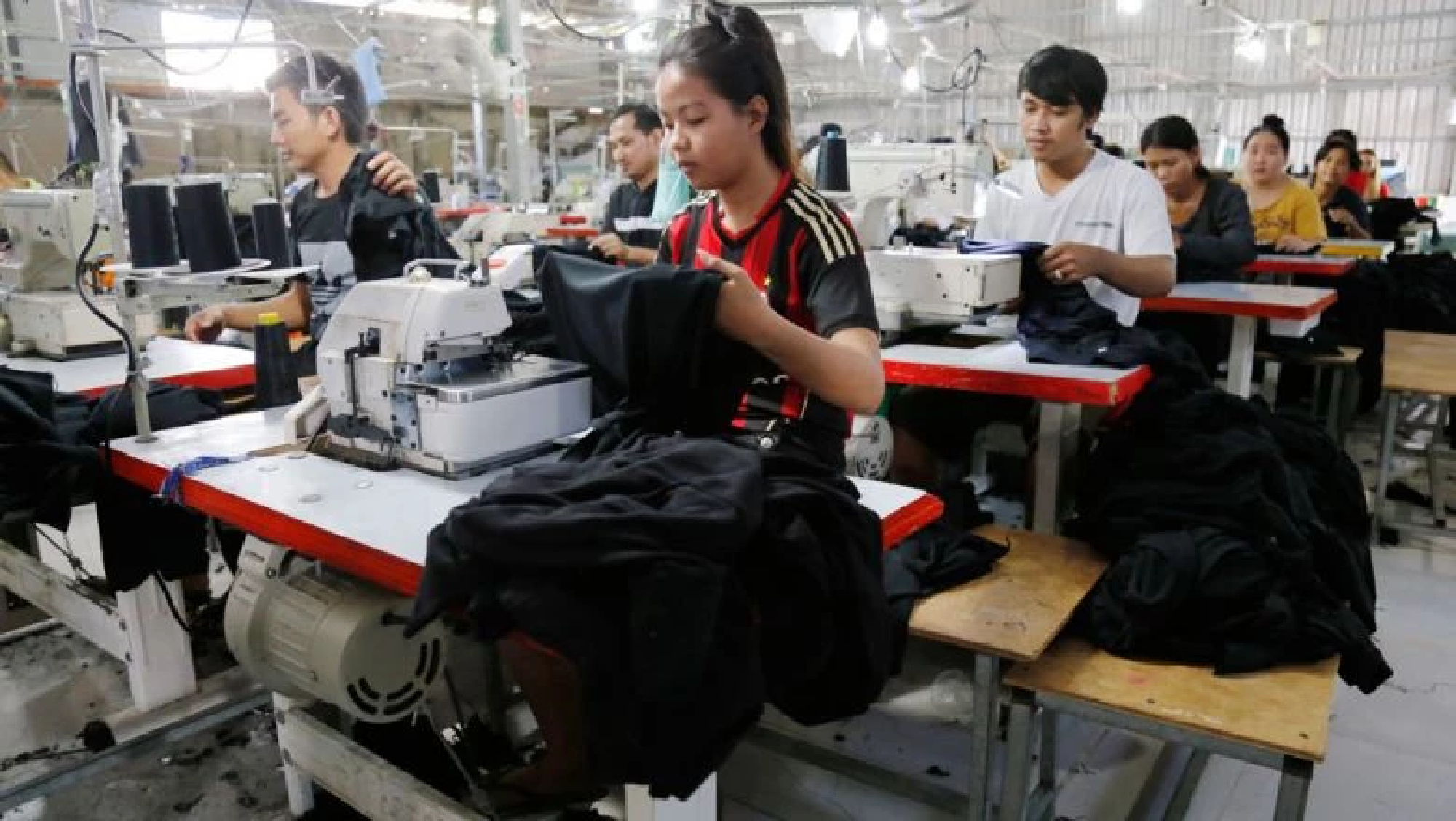
The Cambodian government has expressed concern over a drop in orders from the West after members of the country’s main garment association reported reductions and revisions in contracts.
Garment Manufacturers Association in Cambodia (GMAC) secretary-general Ken Loo said the unstable global environment and increasing likelihood of an economic downturn in western nations, which constitute some of the biggest buyers of Cambodian garments, have sparked “serious concern over the export situation for the second half”.
He said some of the “many” GMAC members that reported reductions and revisions in orders have gone so far as to seek advice from the association’s legal team on the procedures for a partial suspension of production.
Loo affirmed that GMAC is conducting an “extensive survey among all members” to more accurately gauge the situation surrounding the purchase orders.
He pointed out that employers are now “going through a huge jump in labour-related costs”, with contributions to a new pension scheme for private sector workers set to be carried out from October 1 and the to-be-determined sectoral minimum wage to take effect on January 1.
“This double cost increase is serious enough to be worried, not to mention other issues like higher logistics cost and higher cost of compliance which is increasing [yearly],” he said.
He argued that while export growth is typically regarded as positive, figures can be misleading and don’t account for the net incomes of the businesses involved after all costs are deducted.
“Statistically, the sector profit margin is running very low reflecting from the ratio of value-added versus wage plus other labour-related costs,” Loo said.
For example, only 39 per cent of companies in Cambodia made a profit last year, 43 per cent lost money, while 18 merely broke even, he said, citing a study by the Japan External Trade Organisation (JETRO).
Going forward, Cambodia must take a proactive and cautious approach to issues that could put more cost pressure on companies, he suggested.
He added that the Cambodia Garment, Footwear and Travel Goods Sector Development Strategy 2022-2027 launched in March has to be “followed through in a speedy and forceful manner to help cushion the coming downturn, which is very real”.
Commerce Ministry spokesman Penn Sovicheat said the ministry sympathises with GMAC’s concerns over the Ukraine conflict and other issues affecting the West that could jeopardise the flow of purchase orders for Cambodian textile-related products.
Although acknowledging that a protracted struggle in Ukraine could reduce European purchasing power, Sovicheat remarked that Cambodia has undergone similar experiences during the worst of the Covid-19 crisis.
Offering a solution, he called on exporters to look to destinations closer to home, and partners through free trade agreements (FTA), as Covid, the Ukraine crisis and soaring shipping costs hamper trade with more distant markets.
Hong Vanak, a researcher at the Royal Academy of Cambodia, underscored that the problem of dwindling orders from Europe requires public and private stakeholders to work together and explore new markets and recalibrate trade strategies with existing ones to facilitate the export of manufactured goods, thereby avoiding serious repercussions.
“Reduced spending in western countries may be a factor in the decline in orders from this market. Therefore, stakeholders should also reflect on expenditures, such as transportation costs among other things, and make it easier for producers to pump out more,” he said.
According to the General Department of Customs and Excise, Cambodia exported US$6.6 billion worth of garments, footwear and travel goods in the first half of this year, up by 40 per cent from the $4.72 billion logged in the same period last year. “Travel goods” include suitcases, backpacks, handbags, wallets and similar items.
The Phnom Penh Post
Asia News Network
Asia News Network: The Nation (Thailand), The Korea Herald, The Straits Times (Singapore), China Daily, Jakarta Post, The Star and Sin Chew Daily (Malaysia), The Statesman (India), Philippine Daily Inquirer, Yomiuri Shimbun and The Japan News, Gogo Mongolia, Dawn (Pakistan), The Island (Sri Lanka), Kuensel (Bhutan), Kathmandu Post (Nepal), Daily Star (Bangladesh), Eleven Media (Myanmar), The Phnom Penh Post and Rasmei Kampuchea (Cambodia), The Borneo Bulletin (Brunei), Vietnam News, and Vientiane Times (Laos).
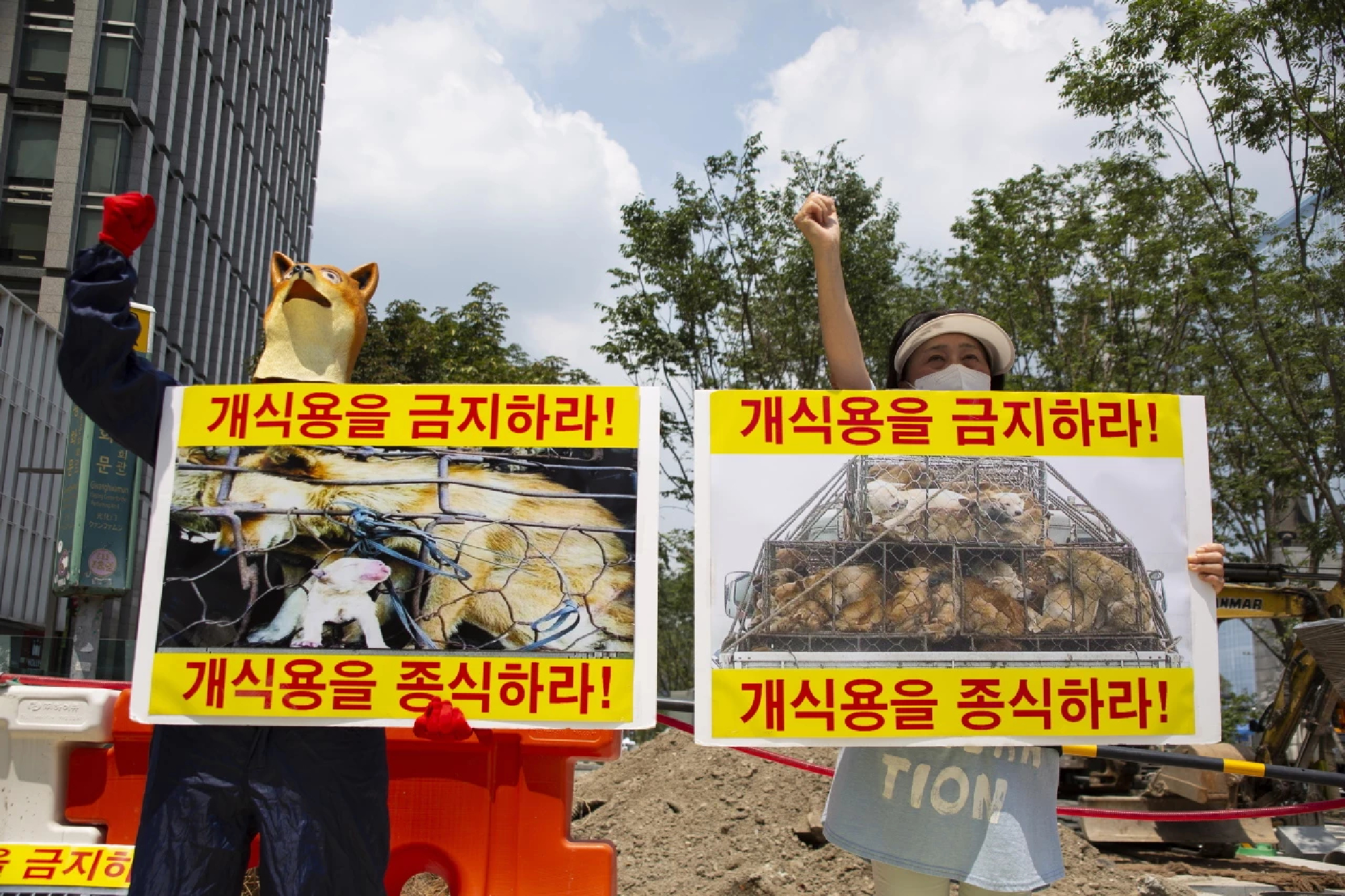
Over 520,000 dogs are being raised for meat in South Korea as of this February, with about 388,000 slaughtered a year, a study revealed Monday.
There are a total of 1,156 dog farms across the country and they each keep an average of 450 animals. The total number of restaurants serving dog meat across the country is 1,666.
These are the findings of a two-month field study conducted by the country’s government-civilian consultative body on dog meat consumption, which was announced Monday.
The panel also revealed the results of its public opinion survey, conducted in May on 1,514 adults here. A total of 55.8 per cent said Korea should stop eating dog meat. Some 28.4 per cent of the respondents said the practice should be preserved.
A slight majority of the people, 52.7 per cent, disagreed with legalizing the dog meat trade, which currently stands in a legal grey area. Close to 40 per cent agreed.
Eighty-eight per cent of the respondents said they don’t eat dog meat.
The dog meat task force, comprised of 21 members, was launched in December to come up with policy recommendations on dog meat consumption in order for the government to take measures to deliver them, including related law revisions.
Its operations, originally set to end in April, have been extended for further discussions on the sensitive issue.
Asia News Network: The Nation (Thailand), The Korea Herald, The Straits Times (Singapore), China Daily, Jakarta Post, The Star and Sin Chew Daily (Malaysia), The Statesman (India), Philippine Daily Inquirer, Yomiuri Shimbun and The Japan News, Gogo Mongolia, Dawn (Pakistan), The Island (Sri Lanka), Kuensel (Bhutan), Kathmandu Post (Nepal), Daily Star (Bangladesh), Eleven Media (Myanmar), The Phnom Penh Post and Rasmei Kampuchea (Cambodia), The Borneo Bulletin (Brunei), Vietnam News, and Vientiane Times (Laos).