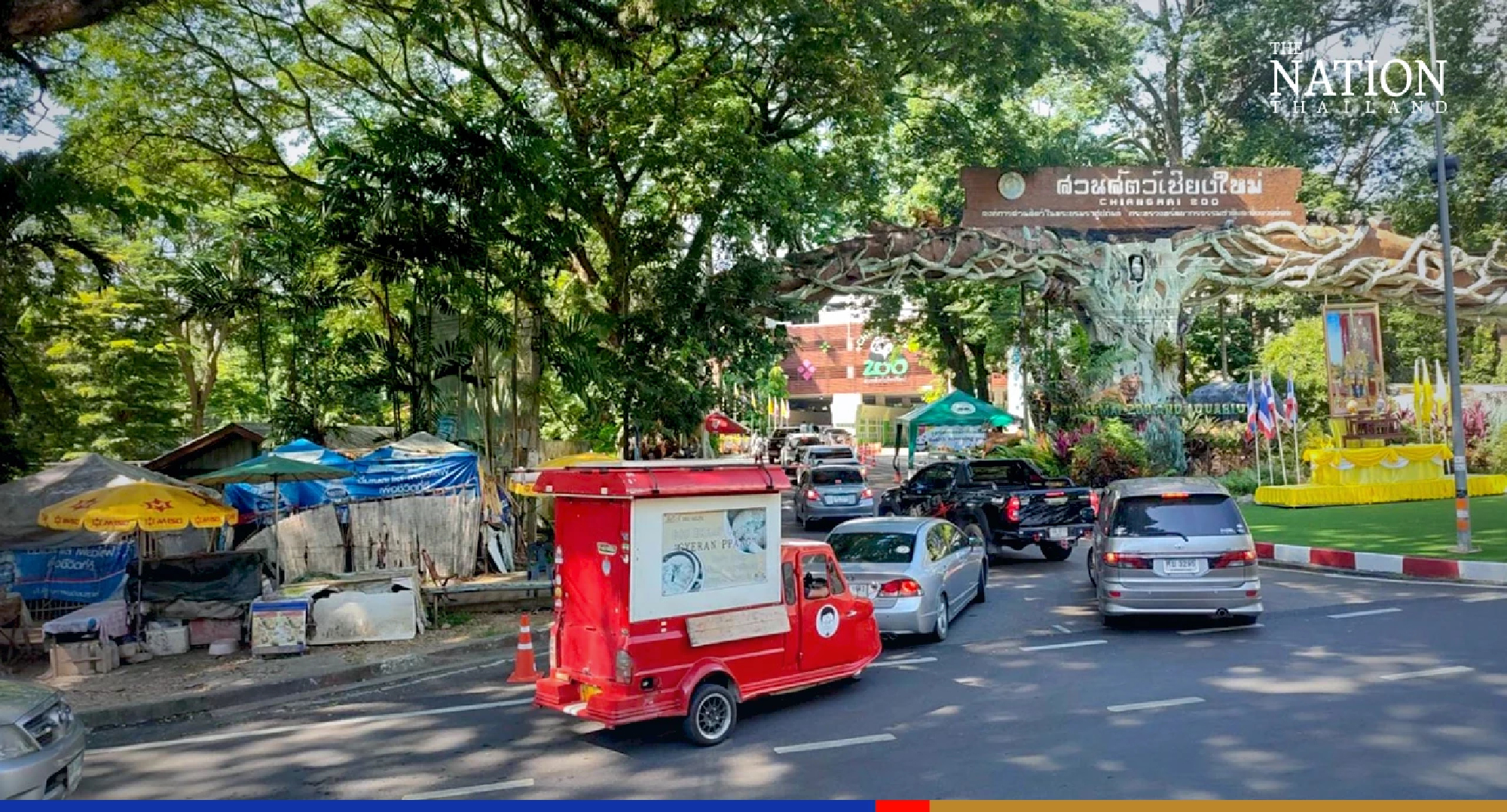
Chiang Mai Zoo recorded its highest number of visitors in 10 years on Friday as about 7,000 people flowed through its gates.
The zoo also collected over 1 million baht in admission fees – despite 3,000 of those visitors entering free of charge, its chief Wuthichai Muangman said.
Thai zoos across the country have made entry for children free during the current four-day public holiday for His Majesty the King’s birthday on Thursday.
The most popular attractions at Chiang Mai Zoo are the aquarium and panda enclosure, which are seeing between 3,000 and 4,000 visitors per day.
The zoo’s car park was crammed with as many as 1,400 vehicles on Friday.
Chiang Mai Zoo is famously home to the giant panda Lin Hui, which is on loan from the Chinese government.
The 20-year-old female panda has been alone at the zoo since her mate Xuang Xuang died of a heart problem in his enclosure at the age of 19 in 2019.
The pair arrived at the zoo in October 2003. Five years later, Lin Hui gave birth to Lin Ping, their first baby, through artificial insemination. The baby panda was shipped to China in 2013.
An online auction of the latest coveted vehicle licence plate numbers will take place next Wednesday (August 3), the Department of Land Transport said on Friday.
As many as 130 “special licence plates” with desired numbers — mostly rare and considered lucky, such as 9999, 8888, and 5555 — will be put under the hammer, the department’s director-general Jirut Wisanjit said.
Along with the coveted numbers, the plates feature auspicious Thai words that mean “lucky”, “beautiful”, “luck”, “best”, “power”, “wealthy”, and “rich”, among others.
The auction for licence plates — the second this year — is scheduled to start at 9am on August 3 at the department’s headquarters in Bangkok’s Chatuchak district.
Prospective bidders may register with the department’s Road Safety Fund or online at the website http://www.tabienrod.com.
Bidders can submit their maximum bids in writing or bid in real-time via the website. The auction will be broadcast on the fund’s Facebook page.
Starting prices range from 500,000 baht for licence plates with double numbers – such as 1122, 3434 and 5665 – to 1.5 million baht for “super premium” numbers, such as 8888 and 9999, according to Jirut.
Proceeds from the auction will go to the Road Safety Fund and partly will be spent on buying equipment for people disabled in road accidents.
Unlike ordinary licence plates, the special plates also have a background with a colourful graphic. Ownership can be transferred or inherited to be used with other registered passenger cars.
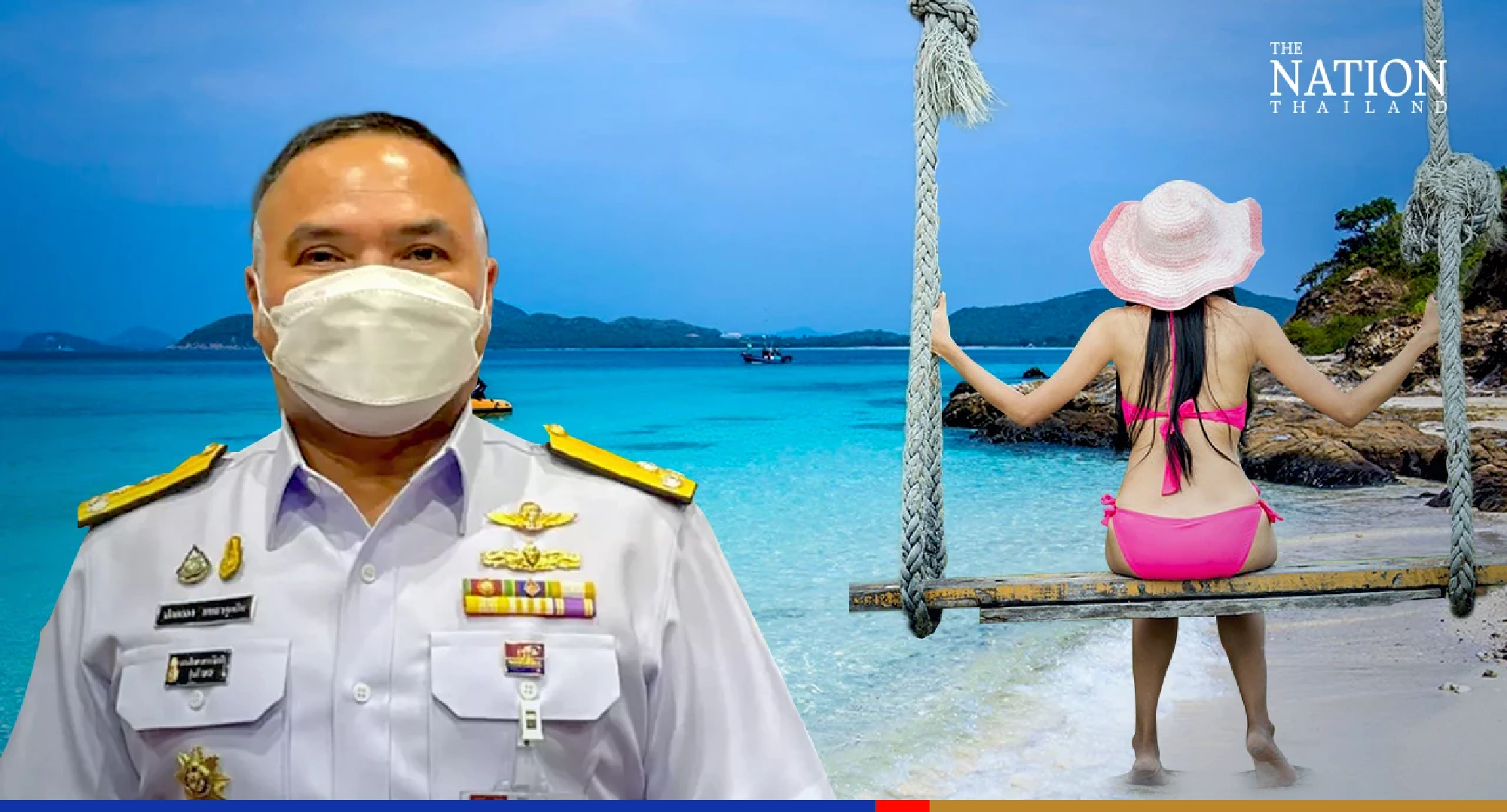
The Royal Thai Navy has removed a sign banning bikinis on Chon Buri’s Samae San Island after it caused a backlash on social media. However, the bikini ban appears to still be in place.
Anew sign would be erected to create a “better understanding among visitors”, Navy spokesman Vice Adm Pokkrong Monthatphalin said on Friday.
He insisted that there was no dress code for tourists visiting the island but said the Navy asked for their cooperation in dressing “properly” according to “Thai tradition”.
“Please avoid wearing bikinis, for the sake of orderliness and respect for Thai culture and tradition,” he said.
The spokesman added that Samae San, which lies 18 kilometres off the Chon Buri coast, is an eco-tourism destination. Visitors are not allowed to stay overnight and must follow rules similar to those in other natural tourist sites, including no loud noise and no alcohol.
Samae San came under the spotlight after photos of the sign reading “No bikini. Please respect our culture” went viral on social media.
The island is mostly undeveloped, with no construction other than a small military building. Tourists visit for snorkelling, cycling and trekking.
There is a 1.2 per cent chance that debris from the falling Chinese rocket booster will hit Thailand, the Geo-Informatics and Space Technology Development Agency (GISTDA) said.
In a Facebook post on Friday, GISTDA said there is still a small chance that some debris may land here because Thailand is in the rocket’s orbit path.
The massive 21-tonne booster, part of the Long March 5B rocket that was launched by China on July 24, may result in masses of debris even after most of it burns in space.
GISTDA said it has been using the Space Traffic Management System or Zircon to analyse the situation and has urged people to monitor updates even though the chance of the debris hitting Thailand is quite low.
This is the third time that a rocket is falling uncontrollably back to Earth. The first was in May 2020, when a massive, out-of-control Chinese rocket fell out of the sky and hit the west coast of Africa.
The Long March 5B module took off last Sunday from China’s Hainan Island to dock at its Tiangong space station.
Foreign embassies in Bangkok marked National Thai Language Day by showing off their linguistic expertise on Friday (July 29).
Embassy Facebook pages were filled with staff members displaying their Thai skills, ranging from reciting poems with difficult-to-pronounce words to tackling tongue-twisting phrases.
Sweden’s embassy declared that Thai is among languages taught in Swedish schools nationwide, as part of the country’s policy of “mother-tongue language education” introduced in the 1960s.
“In fact, one of our Facebook page administrators learnt Thai in Sweden from this [school] programme too,” the embassy added.
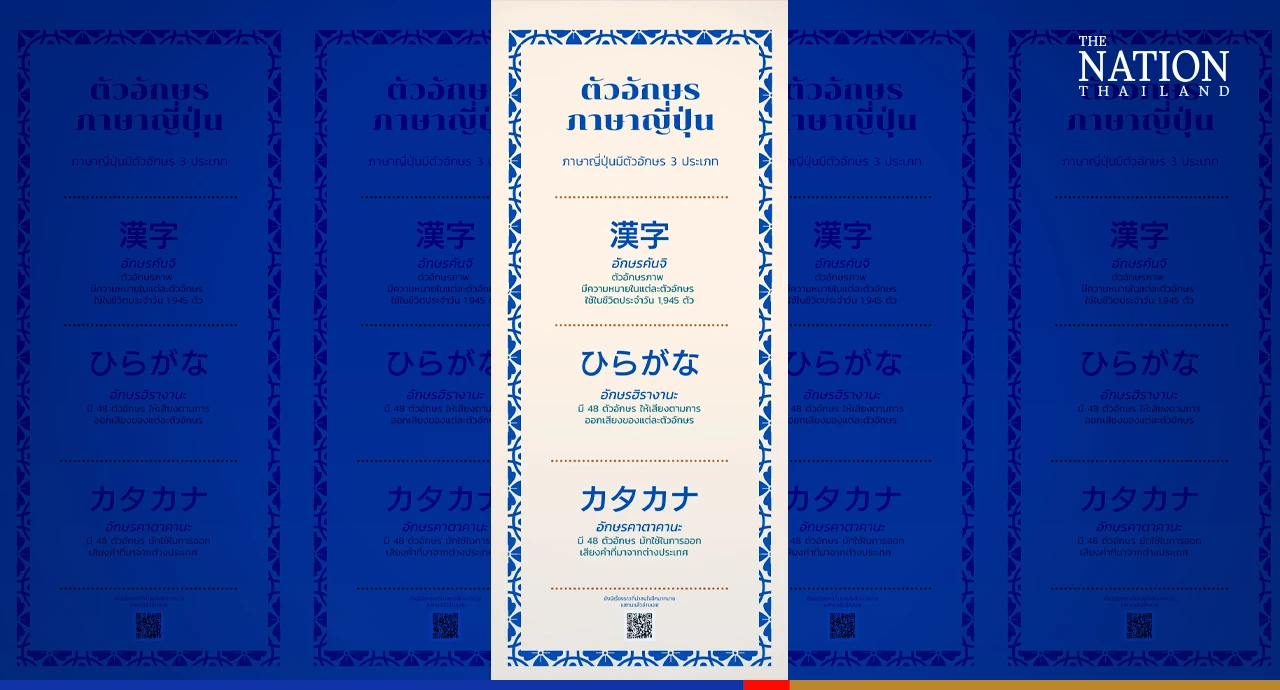
The Japanese embassy’s Facebook page highlighted the birth of the Thai script eight centuries ago under the reign of King Ramkhamhaeng. It made a comparison with the Japanese writing system, which has three sets of alphabets used for different purposes.
The Australian Embassy posted a video featuring three Aussie diplomats taking on “different challenges to prove how good their Thai is”.
One of them tackled a Thai tongue-twister while another recited an eight-line verse containing difficult poetic words.
The Chinese embassy followed suit by grappling with tongue-twisting Thai phrases — most of them difficult even for locals. A video posted on the embassy’s Facebook page also featured Chinese diplomats talking fluently in Thai about how difficult it was for them to learn the language.
The US embassy challenged its American staff to “speak Thai for a day.” In the accompanying video, the staff recited their favourite Thai words and also ones difficult to pronounce.
The British embassy got in on the act with a video displaying the Thai skills of the ambassador and other officials. They were asked to pronounce the official Thai term for the United Kingdom, Thai words for certain animals, and name as many Thai dishes in 30 seconds as they could.
Thais are letting their guard down against Covid-19, according to a Department of Health survey conducted between May and July.
The proportion of people who wear face masks, wash their hands frequently and undergo social distancing dropped from 82 per cent in May to 74.1 per cent in July, the survey showed.
Taking each category separately, social distancing has dropped furthest, to 78.6 per cent, followed by handwashing (88.1 per cent) and mask-wearing (94.6 per cent).
“People of all ages should protect themselves in line with the universal prevention principles to reduce risk of Covid-19 infection,” said department director-general Suwanchai Wattanayingcharoenchai.
He urged venue operators to strictly impose Covid-19 prevention measures during the long holiday, including hand-sanitising points and improving ventilation.
He also asked people to wear face masks in crowdy or confined places, especially the elderly, pregnant women and people with underlying conditions.
On Friday, Thailand recorded 2,480 new Covid-19 cases and 37 deaths in the previous 24 hours.
Search is on for a European man who had reportedly engaged in physical contact with Thailand’s second monkeypox patient.
The Department of Medical Sciences said on Thursday that test results showed a 47-year-old Thai man, who was admitted to Vajira Hospital in Bangkok last week, was positive for monkeypox.
Sopon Iamsirithaworn, Department of Disease Control deputy director, confirmed that the second monkeypox case had engaged in physical contact with a European man.
He added that the second monkeypox case and the European man came to know each other via social media.
“We don’t know where the foreigner lives or whether he has left the country,” he said.
Sopon Iamsirithaworn
The Public Health Ministry’s disease investigation team is trying to track down the man.
He said the disease investigation team will check CCTV camera footage and cooperate with related agencies, such as Tourist Police and embassies, to find the European man.
He feared that this could be the beginning of monkeypox outbreak in Thailand, adding that the disease investigation team would also find other people who had come into contact with the patient.
Earlier on Thursday the department director-general, Opas Karnkawinpong, said they are conducting tests on 10 people who had come in contact with the second monkeypox patient.
Her Royal Highness Princess Maha Chakri Sirindhorn presided over a government gathering held on Friday to mark His Majesty King Maha Vajiralongkorn’s 70th birthday.
The ceremony was held at the Santi Maitree Building in the Government House complex from 7pm.
Princess Sirindhorn was welcomed by Prime Minister Prayut Chan-o-cha, his spouse Naraporn and secretary-general to the PM Distat Hotrakitya.
Also attending the event were Privy Councillors, Cabinet members, presidents of the House and Senate’s committees, opposition leaders, Bangkok governor, ambassadors and other high-ranking officials and their spouses.
The PM delivered a speech on the behalf of the Thai population expressing gratitude to His Majesty for working selflessly to ensure their wellbeing in times of crisis and hardship. He then prayed to the Triple Gems of Buddhism – Buddha, Dhamma and Sangha – as well as previous kings to protect and bless the royal family with good health and fulfilled wishes in the years to come.
The speech was wrapped up with a rendition of the royal anthem and attendees yelling, “Long Live the King”.
The Princess then enjoyed a traditional dance performance by the Culture Ministry’s Bunditpatanasilpa Institute before returning to Sa Pathum Palace.
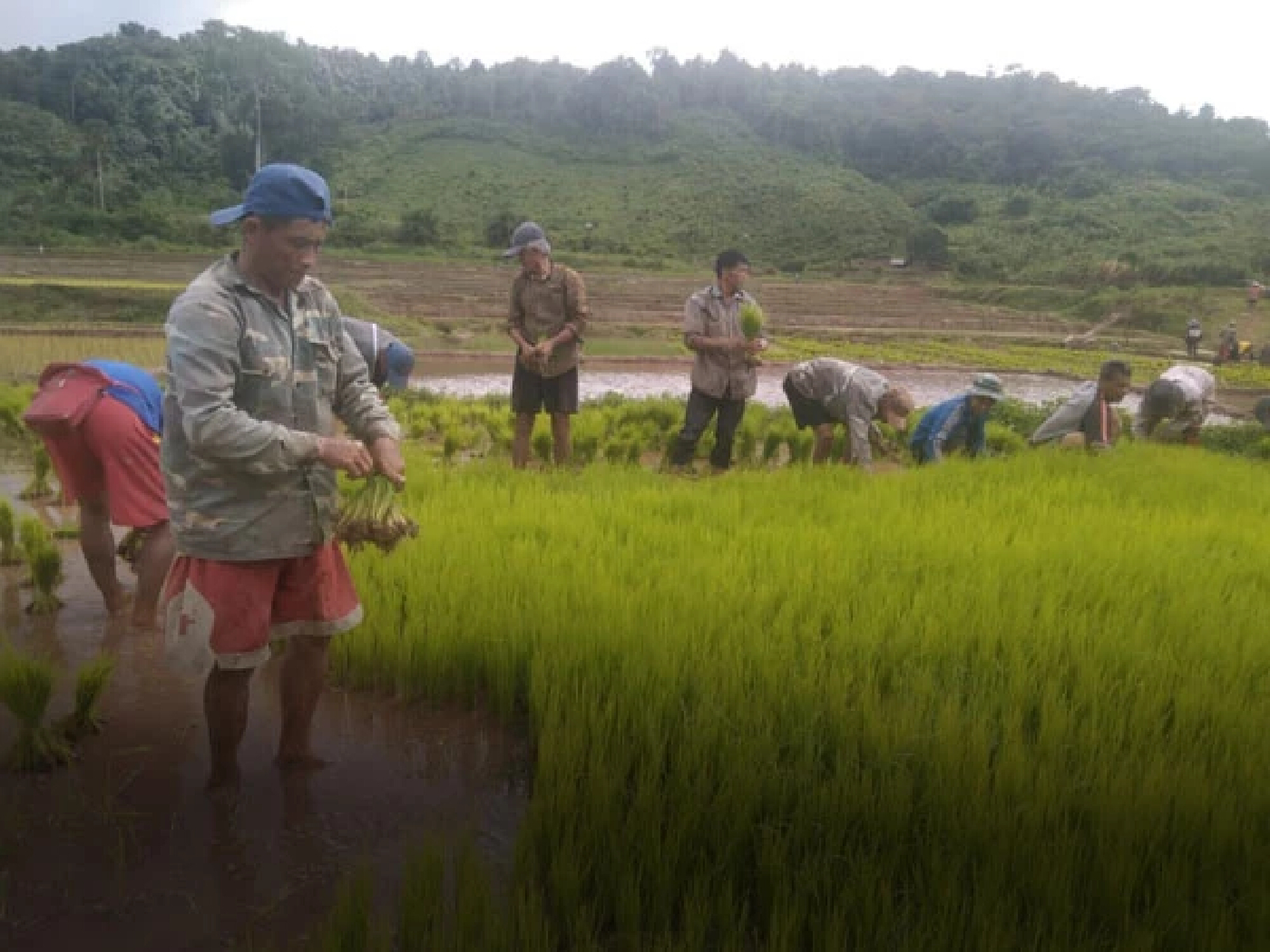
The inflation forecast for Southeast Asia for 2022 has been raised significantly from 3.7 to 4.7 per cent, according to the latest report from the Asian Development Bank.
Laos has one of the highest inflation rates in the region, with the price rise recorded at 23.6 per cent year-on-year in June, according to ADB’s “Asian Development Outlook (ADO) 2022 Supplement”.
Meanwhile, the inflation rate reported in other Asean nations for the same month included Thailand (7.7 per cent), Vietnam (3.4 per cent), Philippines (6.1 per cent) and Indonesia (4.3 per cent).
The ADB also revised up inflation next year from 3.1 per cent to 3.4 per cent.
The higher rates for both years are due to rising energy and food prices and supply chain disruptions. The inflation forecast for Indonesia for 2022 is raised from 3.6 per cent to 4 per cent.
In the meantime, inflation forecasts for Thailand are revised up from 3.3 per cent to 6.3 per cent for 2022 and from 2.2 per cent to 2.7 per cent for 2023.
The raised inflation forecast linked rising energy prices and higher cost pass-throughs, which are expected to affect prices for a wider range of products.
In Laos, the consumer price index jumped sharply above expectations and the ceiling rate of 12 per cent set by the government.
The soaring price of fuel, gas and other imported goods, compounded with the depreciation of the kip, are among the main factors driving inflation, according to the latest report from the Lao Statistics Bureau.
At the government’s recent open meeting, cabinet members and provincial governors agreed to stabilise currency exchange rates, ensure a sufficient supply of fuel, and regulate the price of products on sale at markets.
Nevertheless, Southeast Asia’s economies still face the challenges of higher oil prices, the end of low global interest rates, and continuing trade and supply disruptions, according to the ADB.
These factors have lowered the outlook for some economies in 2022 and 2023. In addition, smaller economies, in particular, are being more heavily affected by supply disruptions and inflation from higher oil prices. Tourist arrivals are picking up in Southeast Asian nations including Laos.
However, economies in the region with high vaccination rates have yet to see meaningful tourism revivals, according to the ADB. Against this backdrop, the economic growth forecast for Southeast Asia is revised up slightly to 5 per cent in 2022 from ADO 2022’s projection of 4.9 per cent. The forecast for 2023 is maintained at 5.2 per cent.
In the smaller economies, rising fuel prices and a significant currency drop against the US dollar are building up pressure on inflation, particularly in Laos and Myanmar. Headline inflation is at double-digit levels in most of the Caucasus and Central Asia, in Mongolia, Pakistan, Sri Lanka, Laos and Myanmar.
Vientiane Times
Asia News Network
Asia News Network: The Nation (Thailand), The Korea Herald, The Straits Times (Singapore), China Daily, Jakarta Post, The Star and Sin Chew Daily (Malaysia), The Statesman (India), Philippine Daily Inquirer, Yomiuri Shimbun and The Japan News, Gogo Mongolia, Dawn (Pakistan), The Island (Sri Lanka), Kuensel (Bhutan), Kathmandu Post (Nepal), Daily Star (Bangladesh), Eleven Media (Myanmar), The Phnom Penh Post and Rasmei Kampuchea (Cambodia), The Borneo Bulletin (Brunei), Vietnam News, and Vientiane Times (Laos).
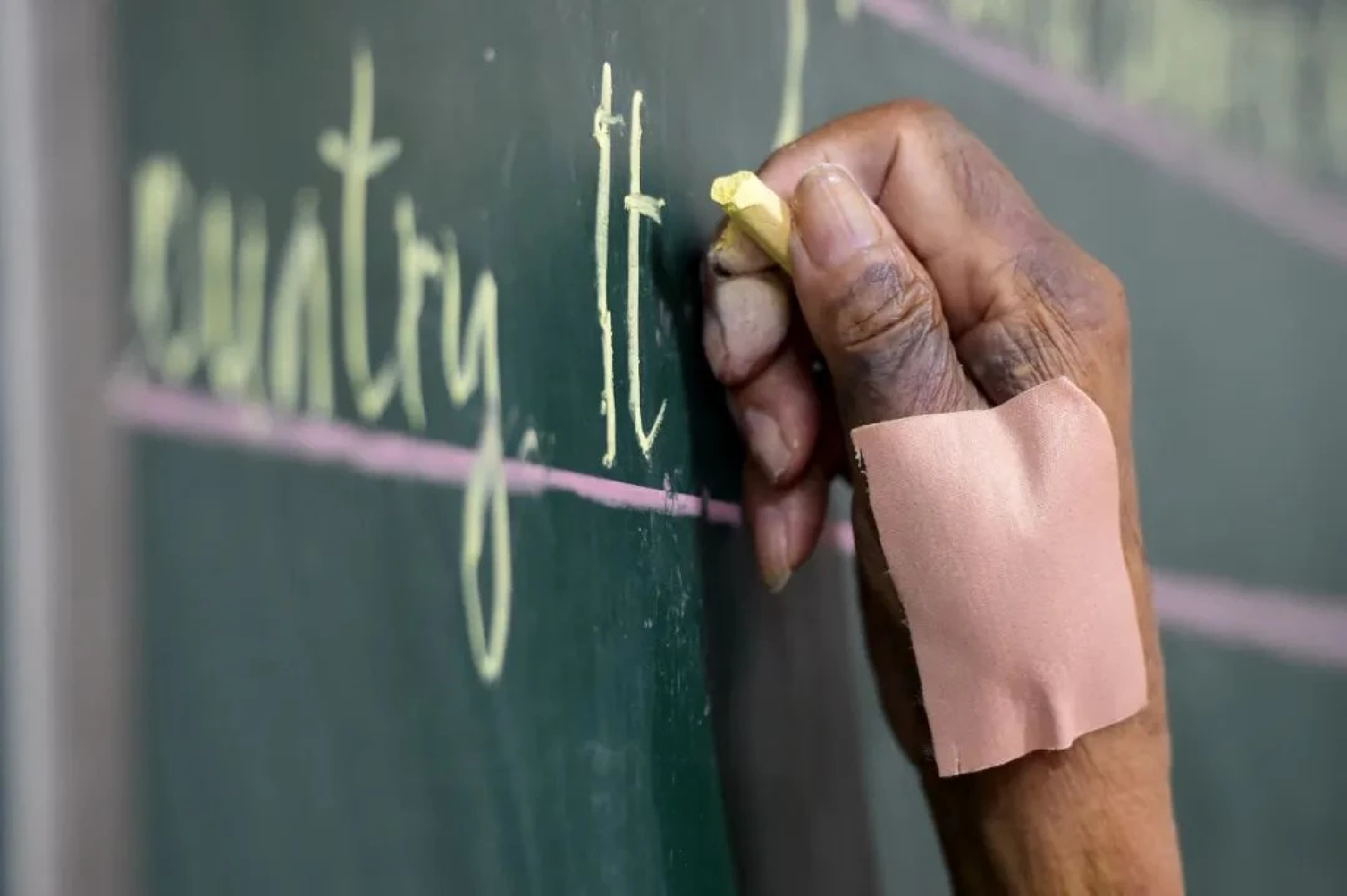
For the past 22 years, Ye Lianping, a 95-year-old retired teacher from Buchen village in East China’s Anhui province, has been teaching left-behind children for free.
Teaching has always been part of Ye’s life. After retirement in 1991, he often went back to school to teach voluntarily.
In 2000, he began offering free English-language classes to those children whose parents work far away. He first set up a classroom – “home for left-behind children” in his own house. Later, the local government transformed a storage area across his house into two classrooms, where more than 2,000 children have benefited from Ye’s tutoring in the past 22 years.
In 2012, he also set up the Ye Lianping Scholarship Fund with almost all his life savings, along with donations from the local government and the school. So far, it has provided financial aid to hundreds of left-behind children.
Despite his generous support for students, Ye lives a very simple life. As he has no children of his own, he lives with his wife in a house built over 30 years ago, where he sometimes provides the children who live far away food and living space. To save money, Ye never wastes a penny on his own, even on a bottle of water. For instance, he has been using the same enamel mug for decades.
Although he is getting older, he’s never tired of teaching. In 2010, Ye was diagnosed with cataracts but went for surgery only when he couldn’t read anything from the students’ papers. In the summer of 2018, Ye got injured while riding a bicycle to buy vegetables for volunteer teachers. Instead of resting in bed for recovery, he returned to class with a stick within a week.
Ye is racing against time to spend as much time as possible he can on rural education. “My time is limited and I hope to draw my last breath on the podium,” he said.
He has been called “the candlelight of the village, burning forever”. But he said, “I’m just a firefly, a little firefly (making little light), not as much light as a candlelight can give.”
China Daily
Asia News Network
Asia News Network: The Nation (Thailand), The Korea Herald, The Straits Times (Singapore), China Daily, Jakarta Post, The Star and Sin Chew Daily (Malaysia), The Statesman (India), Philippine Daily Inquirer, Yomiuri Shimbun and The Japan News, Gogo Mongolia, Dawn (Pakistan), The Island (Sri Lanka), Kuensel (Bhutan), Kathmandu Post (Nepal), Daily Star (Bangladesh), Eleven Media (Myanmar), The Phnom Penh Post and Rasmei Kampuchea (Cambodia), The Borneo Bulletin (Brunei), Vietnam News, and Vientiane Times (Laos).









 Sopon Iamsirithaworn