Houses were engulfed in flames around Mount Penteli in northern Athens on Wednesday as firefighters spent the night trying to contain the blaze.
At least 485 firefighters, including a team from Romania, battled to contain a fire as night fell on Tuesday that ripped across Mount Penteli and came close to homes in the greater Athens region, some 27 kilometres north of the centre.
Four suburbs and a hospital were evacuated after orders were sent by text message and police assisted in the distancing of residents.
Special ground units, the military, and volunteers had joined the fight as 24 aircraft operating in the region ceased water drops after darkness. Firefighters worked amidst fierce winds that continued to propel the flames near homes. Orange flames formed long lines along the hillsides and the glow and smoke from the fire was seen in downtown Athens.
There were no initial reports of injuries or anyone trapped in the blaze, the Greek Fire Service said. It was not clear if any homes had been damaged.
Police closed off roads and redirected traffic, and prepared to patrol through the night and remain on standby if any other evacuations were necessary.
“All the forces in the field will remain active and will be further re-inforced with the aim of containing the fire, while air assets will be ready to begin operations at the first light of day,” said Fire Service spokesman Ioannis Artopios. Hospitals and ambulances had been put on alert, said Artopios.
Thousands of acres of land were scorched and houses burned in fires that lasted for weeks in 2021, after a prolonged heatwave. The fires prompted the government to revamp its civil protection ministry and come up with a pre-emptive readiness program for the summer, which includes bringing in firefighters from other EU nations to assist on the ground, such as the Romanian team. A German team is also stationed in central Greece.
Aerial views taken from an airplane on Tuesday showed the large trail of smoke from a fire burning in a northern suburb of Athens that filled the sky for kilometres.
Authorities ordered the evacuation of neighbourhoods in the area, some 27 kilometres north and northeast from the city centre, as flames reached dangerously close to homes and firefighting aircraft battled to keep the blaze from houses.
Residents in the area were sent phone alerts to pre-emptively evacuate their homes while fire brigade vehicles driving through the area ordered people to evacuate through loudspeakers.
Authorities had issued a fire precaution warning for Tuesday after strong winds were forecast for the country.
Last year, wildfires ravaged about 300,000 acres (121,000 hectares) of forest and bushland in different parts of Greece as the country experienced its worst heatwave in 30 years.
London’s firefighting authority declared a major incident in the British capital on Tuesday in response to the surge in fires amid a record-breaking heatwave in Britain and Europe.
The London Fire Brigade said it had deployed dozens of fire tenders to several blazes in and around the city, including 30 to a grass fire in east London. Television footage showed one blaze engulfing several homes in the village of Wennington to the east of the capital.
Britain recorded its highest ever temperature, breaking 40C (104F) for the first time, as a heatwave gripping Europe intensified, scorching fields and damaging airport runways and train tracks.
London Fire Brigade Assistant Commissioner Jonathan Smith said the past 48 hours had taken its toll on the service with multiple fires breaking out across the capital.
Smith said what was once regarded a once in a generation incident is now becoming far more regular.
London mayor Sadiq Khan voiced concern over the long delays it took fire brigades to respond to some calls, with its typical response time of six minutes being pushed to more than 20 minutes for the first fire trucks to arrive at a scene due to high demand.
“It’s simply not possible for the London Fire Brigade to respond to all these fires if they continue at this pace,” added Khan.
To the east of the capital, a large fire engulfed houses in the village of Wennington, some 18 miles (30km) east of the city centre with flames tearing across about 40 hectares (100 acres) of neighbouring tinder-dry fields.
“It was just completely surreal just how fast it went and how hot it was,” local man John Bishop told the BBC, adding that some pets were still unaccounted for but he believed all his neighbours were well.
A huge cloud of smoke was seen rising over a major road outside London after Britain recorded its highest ever temperature.
Eyewitness video showed thick plumes of smoke rising over the A2 in Dartford, Kent. Earlier footage showed a fire burning on a nearby field.
Elsewhere large grassland areas around the city caught alight, billowing smoke over major roads and nearby areas.
The heatwave gripping Europe intensified on Tuesday, scorching fields, damaging runways and forcing train tracks to buckle under the pressure.
Portugal has reported more than 1,000 deaths due to the heat wave, with the health chief warning on Tuesday that the country must gear up to cope with the effects of climate change as temperatures continued to rise.
“Portugal…is among one of the areas of the globe that could be (more) affected by extreme heat,” Graça Freitas, head of health authority DGS, told Reuters. “We have to be more and more prepared for periods of high temperatures.”
Temperatures across drought-hit Portugal surpassed 40 degrees Celsius (104F) last week and although they have dropped in the last few days Freitas said they remained above normal levels for the time of year.
DGS previously reported 238 excess deaths due to the heat wave from July 7 to 13 but Freitas said the number of fatalities has now increased to 1,063 up to July 18.
High temperatures, the drought and poor forest management have been blamed for several wildfires sweeping across drought-hit Portugal. Firefighters are also combating blazes in other southern European nations, including in neighbouring Spain.
Carlos Antunes, researcher at Lisbon University’s faculty of sciences, said the data showed those most likely to die due to heat waves were elderly people.
He said the number of deaths in the future will depend, among other things, on the preventive measures people adopt to protect themselves, how care homes take care of residents and the adaptation of infrastructures.
“With climate change, it is expected that this increase in mortality will intensify and therefore we have to take measures at the public health level to minimise the impact,” Antunes said in an interview.
As visionary technologists and strategists consider an expanding scope of possible use cases for the metaverse, the board has a role in guiding conversations with a sharp focus on strategy and risk.
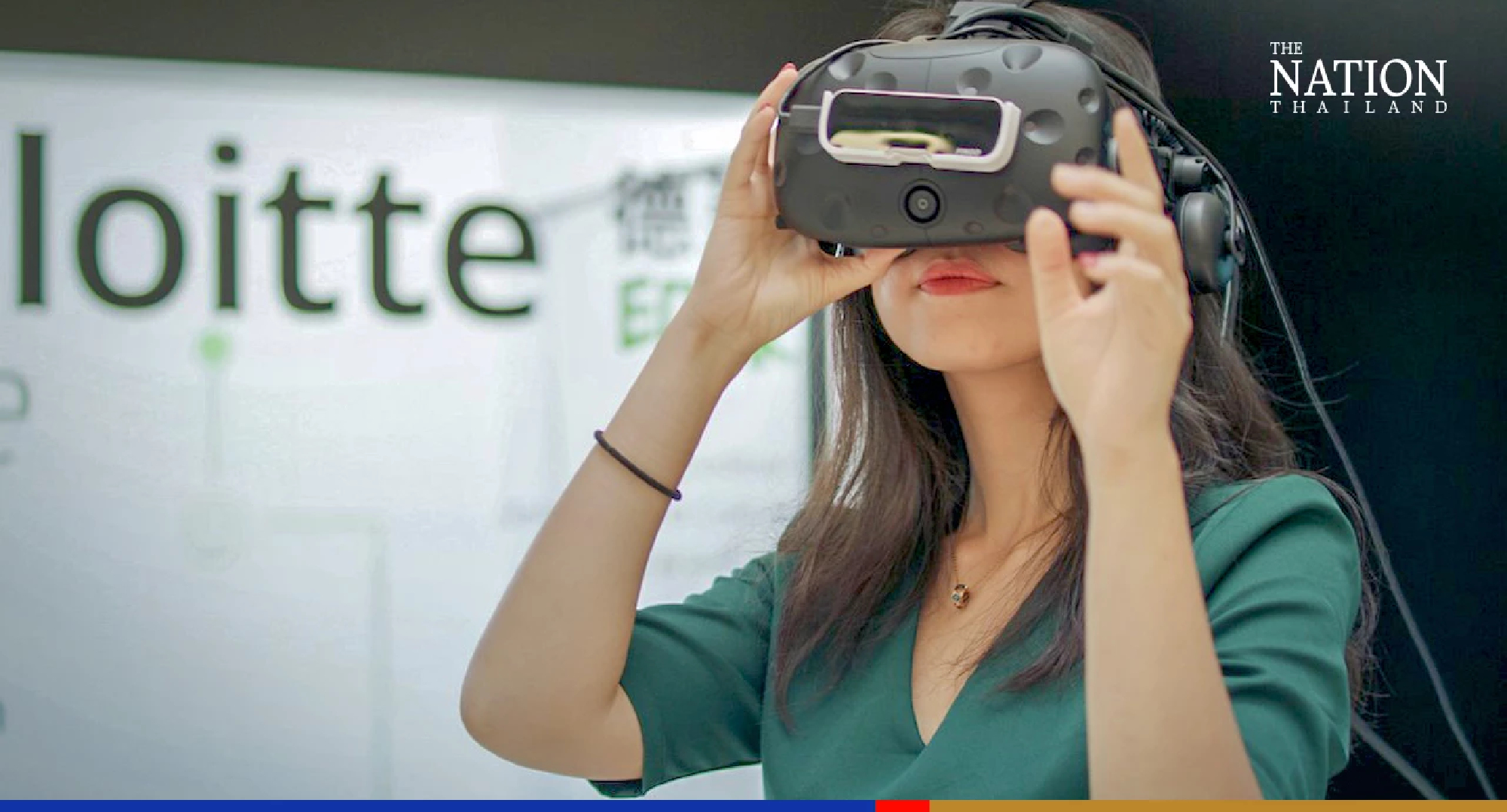
Concepts that were once only found in science fiction and video games are breaking through the boundaries of reality and entering the physical realm, with the potential to change many aspects of business and personal interactions. The metaverse is the next-generation internet, with content that has progressed from text to graphics to video to immersive digital interactions. It is a type of digital interaction in which linked virtual experiences mimic those of the real world.
Two key drivers of the metaverse are advancing technology which promoting connectivity and immersive experiences through high-speed advanced networking, and people are spending more time than ever before interacting with digital systems and socializing in digital environments, especially expedited by the pandemic. For businesses, in order to prepare metaverse adoption, edge computing capabilities, faster connectivity, servers, networking hardware, devices – headsets, gloves, improved cameras, sensors, and other peripherals, are required to power this ecosystem.
The metaverse has the potential to change existing business models in a variety of ways in the near future. Consider the range of possible applications as the metaverse evolves:
Work, collaboration—To improve the transition to hybrid working arrangements by providing people with virtual working environments that enhance interactions. Imagine virtual meetings where people show up via their avatars and engage in conversations that are more lifelike.
Manufacturing, logistics—Companies can use digital twins to emulate manufacturing and logistics processes within the metaverse, which may enable lower-cost predictive planning and maintenance.
Education, training—Online experiences combined with avatars could expand the possibilities for learning and collaboration. A single avatar could move fluidly between spaces, from lecture hall to science laboratory to operating room. Medical students might train on a single avatar before using their skills on live patients.
Consumer—Businesses and consumers could operate in a space where people are living, working, and shopping in a virtual world, which could expand the potential scope of interactions and transactions.
Government, public sector—The metaverse offers a platform for civic engagement and for government officials to be more accessible to their constituents. City meetings and public events can be held virtually. Even city halls and embassies can be virtualized. This could lead to broad questions about how organizations can cost-effectively deliver services and where physical structures are even necessary.
Health, well-being—The current focus on telehealth can evolve to virtual care to recreate the in-person experience. The metaverse could unlock health care innovations, from mental health and pain management to surgery, fitness, physical therapy, and patient care. Home gyms can get another significant upgrade.
The board’s role in metaverse discussion
Boards may even benefit from exploring their possible uses to familiarize themselves with the technology and better understand its applicability to the broader organization. For instance, a board meeting wearing a pair of glasses that overlays physical surroundings with digital information. Wearing these glasses, the meeting agenda could be overlaid on the wall, and board documents could be overlaid with data sources or the recency of information to provide additional context. At a shareholder meeting, a gaze on a specific audience member could produce a biographical sketch of the person—background and context that might be important when the person approaches a microphone to speak.
Even though these ideas might seem far in the future, they are accessible now. The list of uncertainties, potential risks, and opportunities for boards to understand and explore related to the metaverse is considerable:
Business models—Radical new ways of working and interacting may lead to new business models and opportunities, some of which are yet to be defined.
Ecosystem management—Platform and technology selection in the metaverse may be a complex exercise for many companies, especially in the early stages of evolution.
Inclusivity, social policing—Providing an inclusive experience and managing participants’ behaviors is already challenging in some virtual environments, as it can be in physical environments.
Security, privacy—The metaverse likely introduces new cyber vulnerabilities and risks related to digital identity and fraud. Businesses and governments are likely to focus on protecting personal information while also identifying and addressing emerging cyber risks.
Questions for the board to consider asking: 1. What is our company’s business case for pursuing the metaverse? What opportunities does the metaverse present for our company’s growth, innovation, and talent experience? 2. Should our organization pursue metaverse adoption and development on its own, or are there any alliances, partnerships, industry associations, or other enterprise relationships that might be leveraged as we consider opportunities? 3. What controls or processes are in place for our company to explore the opportunities and risks associated with new domains such as the metaverse? 4. Should we consider standing up a technology committee to drill into opportunities and risks associated with emerging technologies underpinning our company’s performance? 5. What policies or processes do we already have in place with respect to digital assets and digital currencies? Do they need to be reconsidered? 6. What risks might ensue from each potential use case, including the ethical implications of new technology and digital experiences? 7. What risks might ensue from becoming an early adopter versus a follower? 8. Who has regulatory authority over the metaverse, and how might that affect our opportunities to leverage or exploit the metaverse? 9. What are our peers doing with respect to leveraging or investing in the metaverse? 10. What processes do we have in place to monitor the evolving metaverse environment and continually reevaluate opportunities and risks? Metaverse might illustrate a tremendous and promising business opportunity and open up new ways to interact and replicate stimulations with less limitation. However, similar to any emerging technology, the benefit comes with risks that businesses must explore in each use case. Therefore, it is vital that the board of directors has a responsibility to help companies remain focused on how this period of transition in the evolution of technology can be leveraged to achieve the company’s strategy and mission, and to collaborate with related parties to drive the company to the next chapter.
Dr. Suphamit Techamontrikul Chairman of Audit & Assurance | Deloitte Thailand
Among the most unique reminders of the global pandemic of 2020 and 2021 were images of peacefully empty traffic arteries in cities around the region and around the world.
Anotorious problem over decades, vehicle congestion and pollution intensified in Southeast Asia’s metro areas with increased economic intensity.
Efforts to boost alternative forms of transport or even rethink the way in which we design cities haven’t produced any visible results in most countries, unfortunately.
In many parts of the region including Bangkok, traffic jams during peak hours are back, as many workers head back to the office after mostly working from home over the last two years. For the longest time, Bangkok has been well known for its traffic snarls as much as its nightlife and food fare.
But there is light at the end of the highway tunnel, with Mobility-as-a-Service (MaaS) as a concept.
Mobility-as-a-Service (MaaS) is an idea that combines the different possibilities with the objective to build a more efficient transportation system for better user experience. This is both in the interest of local governments and its citizens.
Getting public and private entities to work closely together, however, can create something that’s even more powerful, which can be termed as “Beyond MaaS”.
The technological progress, the remarkable speed at which people have adopted the internet and how businesses have digitized are creating opportunities for new mobility concepts.
New services have emerged, from ride-hailing to bike-sharing. Along the way, large amounts of traffic data are being generated and made available to the public via dedicated apps.
Our cities are suffering
Priorities and needs are changing over the years.
Cities have been primarily places to work and do business.
These days, the quality of life, safety and security and entertainment options also play a part in attracting people to a city. A high standard of healthcare also benefits the local population, but hospitals have now also become businesses themselves bringing in a new type of tourists. A basic need of citizens and visitors alike is the air quality, infamously terrible in many of Southeast Asia’s cities.
A study by the Centre for Research on Energy and Clean Air found that the drop in traffic during the lockdowns in Kuala Lumpur, Manila, and Bangkok significantly brought down the levels of NO2, which causes inflammation in the respiratory system, intensifying symptoms of asthma and chronic pulmonary disorders. Annual mean levels of air pollution in many countries in the region often exceed by more than five times the limits set by the World Health Organisation, the report further stated.
Commuters in many cities endure hour-long traffic jams on a daily basis, greatly due to a lack in public infrastructure. Jakarta opened the first 10.5 kilometres of its new Mass Rapid Transit system only in 2019 and still mostly relies on buses and motorcycles.
Malaysia, with a strong car manufacturing sector, has traditionally and still favours individualised means of transport.
Managing the transition
Planning for a more sustainable future doesn’t mean the end of the car industry.
The solution comes with the CASE technologies, which stand for connected, autonomous, shared, and electrified. They represent the profound change the sector is currently undergoing.
The region’s leading car manufacturer Thailand expects 30% of its output to be electric by the end of this decade, according to a roadmap published last year.
Vietnam is creating with VinFast a national electric vehicle (EV) champion that plans to conquer the United States and Europe. Indonesia, the world’s largest producer of nickel, which is a key component in lithium batteries, is also aiming to become an EV production and export hub.
Indonesia is also home to the ride-hailing giant Gojek which boasts over 190 million app downloads according to its website.
The firm is leveraging its vast amounts of traffic data offering a multimodal journey planner called GoTransit. By raising rates for busy times and roads, ride-sharing services are able to reduce congestion.
Specific carpooling apps, such as Singaporean Ryde or the Paris-based BlaBlaCar, allow private car owners to offer empty seats to fellow travelers. In Thailand, there is Haupcar, an advanced self-service car rental, also known as car sharing via smartphone, that allows anyone to drive or share cars at any time.
Connected cars will also boost security. Advanced driver assistance technology – already in use today – keeps vehicles on track when the driver falls asleep.
It can be very beneficial to countries like Indonesia and Malaysia with high rates of traffic accidents. Fully autonomous driving, which is being trialed in designated areas such as university campuses, can be applicable in smart cities and for certain use cases—for example at airports and amusement parks—before they are rolled out to the entire town.
How do we get there
In order to smoothly implement and enjoy the benefits of “Beyond MaaS,” the government sector with its land transport, urban development authorities, and related ministries should take the lead and seek active collaboration with private entities.
Singapore’s public transport provider SMRT trialed autonomous vehicles with local university Nanyang Technological University. The service is integrated with several other modes of transport like shuttle buses, bike sharing, and e-scooters on a single platform. The university also joined forces with automotive parts manufacturer Continental to develop autonomous robots that communicate with food delivery services for last-mile deliveries. NTU also partnered with leading global supplier to automotive sector Schaeffler to accelerate innovation in the areas of future mobility, robotics and Industry 4.0 in the Share@NTU project which refers to a new phase in industrial revolution, focusing heavily on interconnectivity, automation, machine learning and real-time data.
The process requires a long-term vision and roadmap that includes considerations on public transport, investments in road infrastructure, and necessary vehicle taxes.
Key challenges for the governments though will be to keep budgets balanced during this transition. But it also needs to provide support to the domestic automotive industry while creating alternative sectors that can absorb the labour force and guarantee continuous economic growth.
By implementing the concept, Southeast Asian countries are not only upgrading their national infrastructure, but also solving several environmental and social challenges, including public health, people movement, housing, social equality, and national security.
Instead of collapsing our cities, the car becomes a part of the social infrastructure supplementing other forms of transportation. It is no longer “sold” but “used” for a fee.
The new mobility offerings finally achieve what they are expected to do – serving people.
By Yuma Ito, Partner at Arthur D. Little
About the writer
Yuma Ito is a Partner at global management consultants Arthur D. Little and manages the Singapore office. He advises manufacturing companies on growth strategies, business expansion strategy, mergers and acquisitions, change management, and organizational effectiveness.
The legendary rock band Guns N’ Roses will perform at the SCG Stadium in Bangkok on November 9.
Event organiser IMC Live Global revealed that ticket prices will range from 4,000 to 7,000 baht and will be sold on http://www.ticketmelon.com
Nightrain members (band membership) will be able to book the ticket from July 26 from 11am to 11pm, while new Nightrain members will be able to book the ticket from noon to 11pm.
Pre-sales for IMC Live Global fans will start on July 27 at 11am while sale for the public will start on July 28 at 11am.
Fans have waited for around five years. The band last played in Thailand on February 28, 2017, at SCG Stadium.
Many Thai fans welcomed them on the Facebook page while several fans in the Philippines, Indonesia, Taiwan, and even the US requested the band to play in their countries.
An expert on infectious diseases revealed nine facts about “post-Covid conditions”, or “long Covid”.
In a Facebook post on Wednesday, Dr Thiravat Hemachudha, head of Chulalongkorn University’s Information Centre for Emerging Infectious Diseases, noted that long Covid is a syndrome that occurs after a patient is infected with the virus.
He pointed out nine interesting facts:
1. The severity of long Covid is not related to the severity of the disease when infected.
2. Anyone who has been infected can experience it.
3. The syndrome can affect any part of the body or several organs or systems at the same time.
4. It is a symptom experienced by the body even three months after recovery and could be more severe or bring about new symptoms.
5. Myalgic encephalomyelitis, or chronic fatigue syndrome, has been known for some time now but long Covid is severe and could remain longer in the body than other viruses.
6. Brain and psycho-emotional symptoms are found in 30 per cent or more of patients that have recovered. It could cause “brain fog”, slow thinking, short memory, dementia or mood swings, especially in people who are affected or going to suffer with dementia such as Alzheimer’s disease and Parkinson’s.
7. To treat the syndrome, we must make sure if there is any inflammation in the body or brain. If there is, steps must be taken to stop it while considering the side effects of prescribed medicines. Also, factors that might stimulate inflammation must be strictly avoided.
8. This is a warning that people should not be careless and become infected with Covid-19.
9. The best way to prevent long Covid is to treat yourself as quickly as possible.
Some people who have been infected with Covid-19 can experience effects from their infection, known as post-Covid conditions (PCC) or long Covid. Current evidence suggests approximately 10%-20% of people experience a variety of effects after they recover from their initial illness.
This Q&A will help you understand more about long Covid.
Ligue 1’s giant Paris Saint-Germain Football Club (PSG) is all set to lock horns with Kawasaki Frontale, which includes Thai football star Chanathip Songkrasin, on Wednesday evening.
Elgolazo magazine reported the match would be played on Wednesday at 5.30pm (Thailand time) at the Japan National Stadium, Chanathip posted on his Facebook page.
It wasn’t known at press time whether Chanathip would be part of the line-up for the game.
PSG features a host of world-famous footballers, including Lionel Messi, Neymar and Kylian Mbappé.
Chanathip last played against Messi almost a decade ago. The Thai star was part of the national team that took on Barcelona in a friendly at Bangkok’s Rajamangala Stadium in 2013.
PSG is in Japan for the 2022 Japan Tour to compete in exhibition matches against three Japanese teams. Apart from Kawasaki Frontale, Paris Saint-Germain will go head-to-head with Urawa Reds on Saturday and Gamba Osaka on Monday.
The Olympic Council of Asia (OCA) on Tuesday announced the new dates for the 19th Asian Games which will be held in Hangzhou City of east China’s Zhejiang Province, from September 23 to October 8, 2023.
The 19th Asian Games were originally planned to be held from September 10 to 25, 2022, but was postponed by the OCA Executive Board on May 6 due to the COVID-19 pandemic.
A Task Force was set up by the OCA Executive Board to finalize the new dates of the Games.
The Task Force has held various discussions with the Chinese Olympic Committee (COC), the Hangzhou Asian Games Organizing Committee (HAGOC) and other stakeholders over the past two months on the basis of global sporting calendar. The recommended dates by the Task Force were duly approved by the OCA Executive Board.
“We will make concerted efforts with the OCA and the HAGOC in advancing preparatory work to ensure the Games a success,” the COC said in a statement.
“The HAGOC will collaborate with all related parties in preparation for the Games in an all-round manner according to the confirmed dates to stage a spectacular sporting and cultural gala with Chinese Grandeur, Zhejiang Style and Hangzhou Flavor,” read the organizers’ statement.