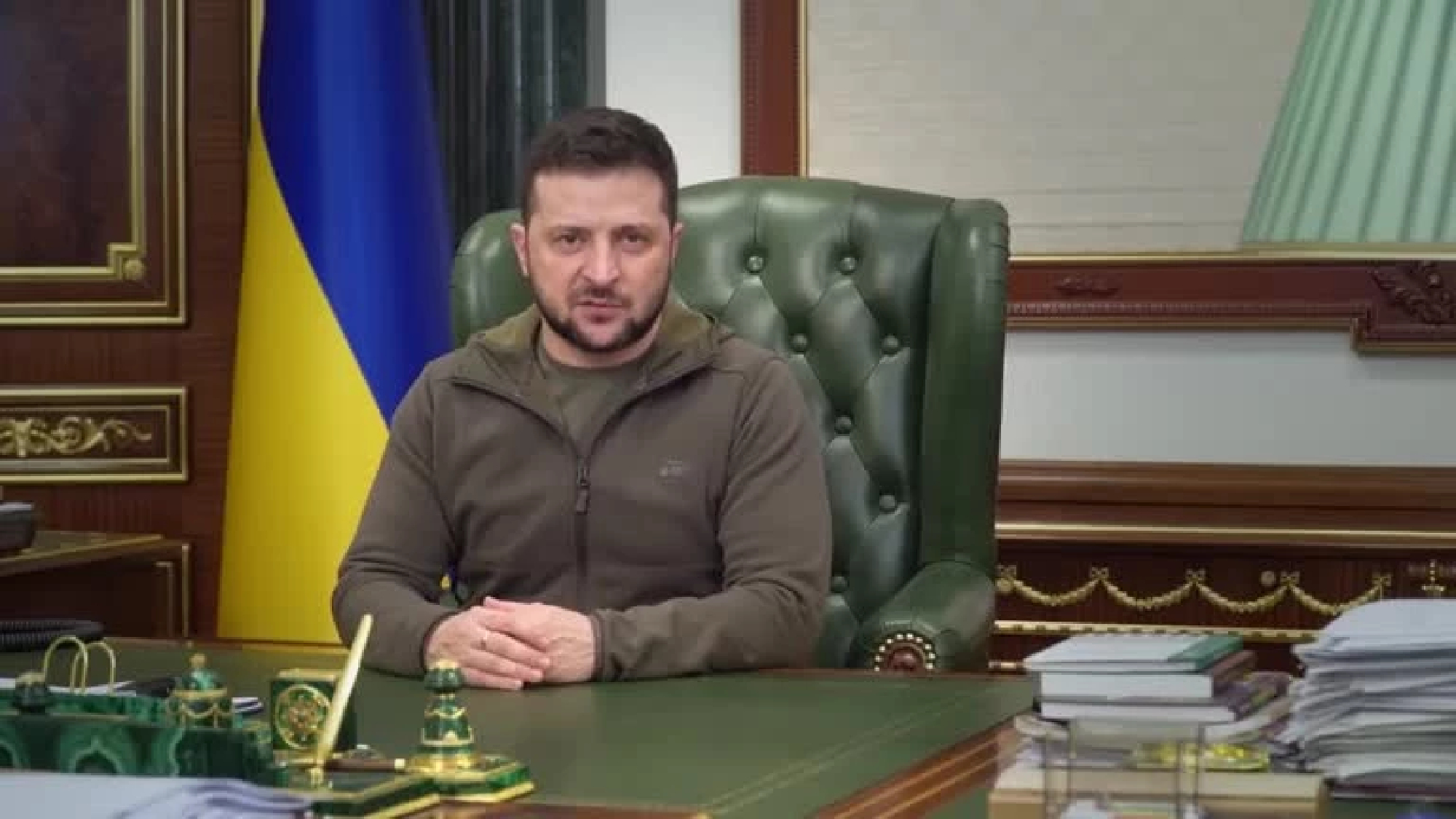
Ukrainian President Volodymyr Zelenskiy said on Monday (March 28) that although Ukrainian forces had regained control over some areas in the Kyiv region, the fighting was ongoing.
The town of Irpin had been retaken by Ukrainian forces who were making advances but Russian troops remained in control of the northern Kyiv region, he said.
Speaking in his nightly video address to Ukrainians, Zelenskiy also urged Western nations to toughen sanctions quickly against Russia, including an oil embargo, to stop Moscow from having a free hand to escalate its measures against his country.
The clearly irritated president said the West had miscalculated last year in delaying sanctions and the invasion had followed.
Russia’s month-old invasion of Ukraine, the biggest European conflict since World War Two, has seen over 3.8 million Ukrainians flee abroad, left thousands dead or injured and isolated Russia’s economy.
Zelenskiy said sanctions had to be “effective and serious” given Russia’s actions to date.
The United States has already introduced an embargo on Russian oil shipments. But Europe, far more dependent on Russian energy, has been more hesitant. Germany, Europe’s largest economy, has said introducing such an embargo would trigger recession and mass unemployment.
Meanwhile, Ukrainian soldiers on Monday patrolled territory recently recaptured from Russian forces in the northeastern part of Kyiv region, passing through a landscape scarred by heavy fighting.
Several wrecked Russian tanks lay scattered throughout the area next to destroyed buildings and the ruins of a church.
The Ukrainian soldiers on patrol paused to bury the charred remains of a dead combatant.
Russia calls its actions in Ukraine a “special military operation” to disarm and “denazify” its neighbour. Kyiv and the West consider this a pretext for an unprovoked invasion to try to topple the elected Ukrainian government.
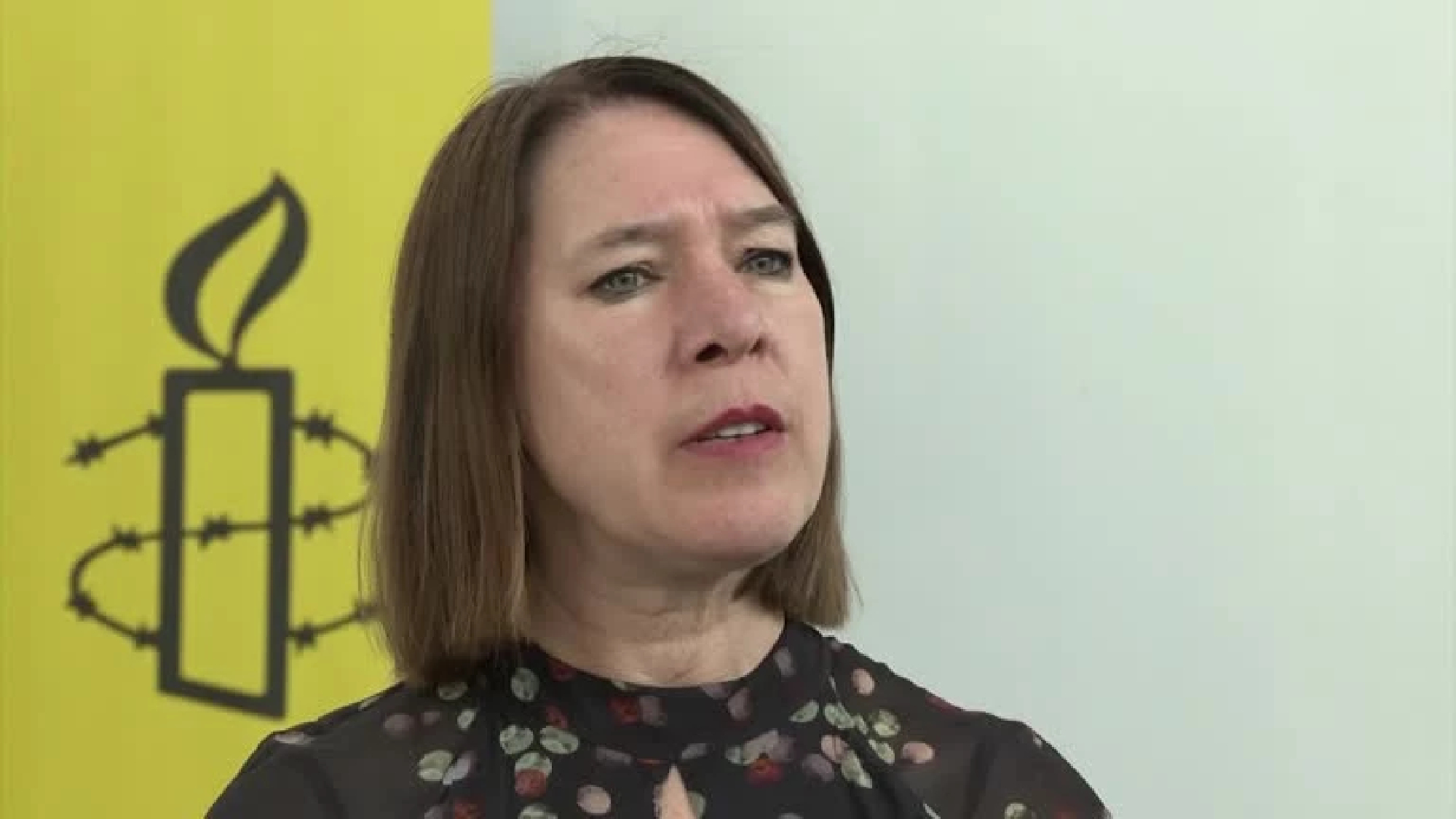
Amnesty International has been documenting attacks against civilians in Ukraine, with the targeting by Russian forces of hospitals and schools, its director for Eastern Europe Marie Struthers said.
The rights group is releasing its annual report on Tuesday (March 29), in the shadow of Russia’s invasion of Ukraine.
Struthers said Russia was repeating siege techniques used in the wars in Syria and Chechnya, where civilians were indiscriminately targeted and where cluster ammunitions banned under international humanitarian law were being used.
“We’re very pleased that at least 39 states acted very quickly to request that the International Criminal Court open an investigation into possible war crimes committed on Ukrainian territory,” she said.
Abductions and forced displacement of Ukrainians to Russia, which the UN Human Rights Office has documented, if proven to be true, “is clearly a war crime and is absolutely prohibited under the Geneva conventions,” Struthers said.
Amnesty International, on the other hand, has urged Ukrainian soldiers to stop documenting Russian soldiers being held as prisoners of war, as it was also a violation of their rights.
Russia’s month-old invasion of Ukraine, the biggest European conflict since World War Two, has seen over 3.8 million Ukrainians flee abroad, left thousands dead or injured and isolated Russia’s economy.
In Russia, Amnesty International has observed the further dwindling of rights, with arrests and fines of civilians who have protested against the war, and new legislation that punishes individuals calling it an “invasion” as opposed to a “special military operation”.
Struthers has warned of total disinformation, with the last of independent media having shut down after warnings or threats of imprisonment.
A Russian court found prominent Kremlin critic, Alexei Navalny, guilty of large-scale fraud last March 22. Russian prosecutors are seeking to move Navalny to a maximum-security penal colony for 13 years on charges of fraud and contempt of court.
Struthers said Navalny was continually exposed to psychological aggression, and moving him to a maximum-security prison had no grounds.
“The international community at large bears responsibility for not having put enough pressure on Russia during all these years of oppression, because it’s been a steady decline for at least 10 years and the world didn’t take it seriously enough, which for us, means in part that this outcome was inescapable,” Struthers said.
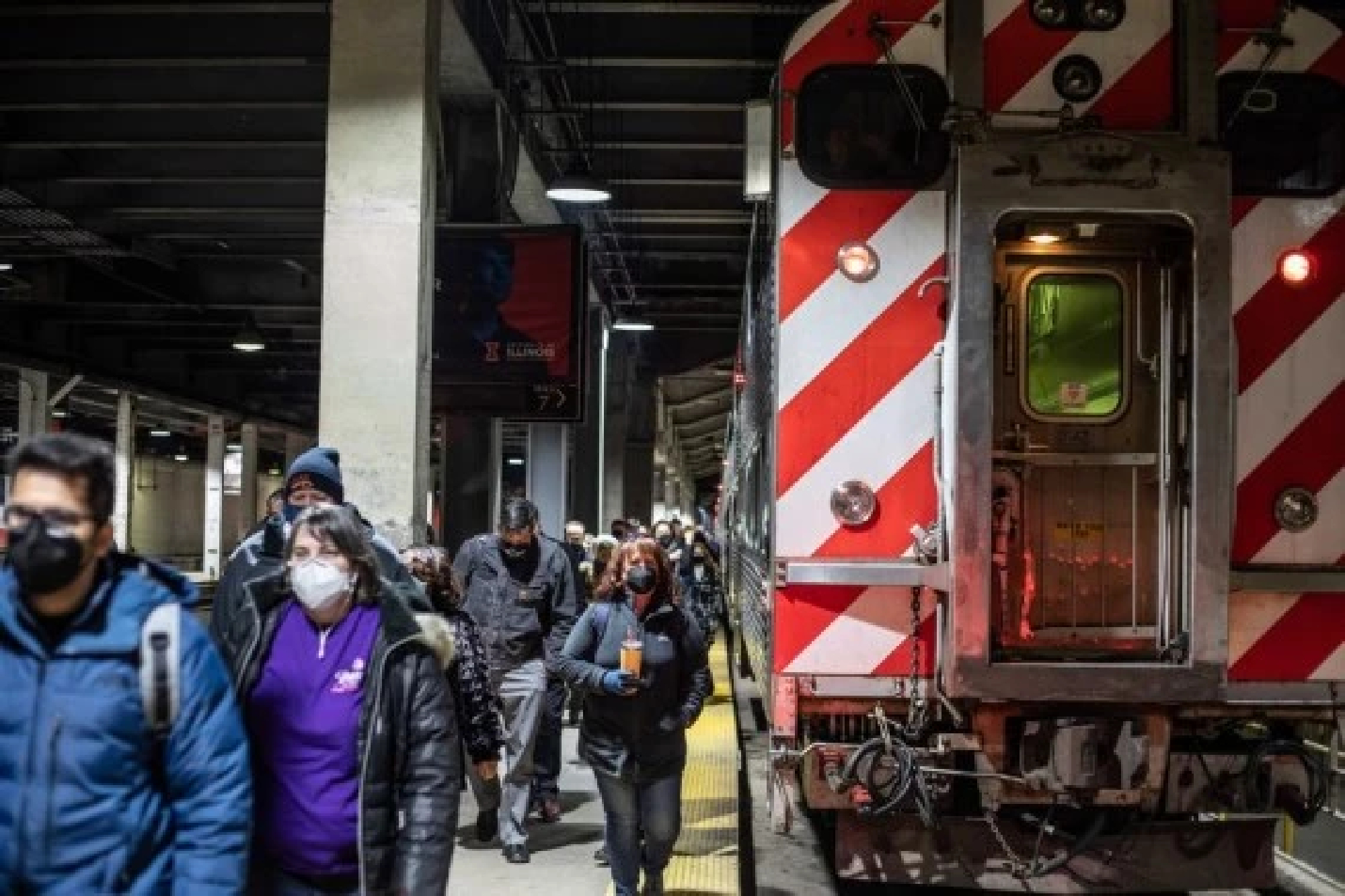
The seven-day average of vaccine doses of all types given in the United States fell to 127,000 per day this week, according to data tracked by The Hill. That marks a steady decline since January, when more than 1 million shots per day were being administered.
The number of COVID-19 vaccinations per day in the United States has fallen to the lowest level since the early days of the inoculation campaign in 2020, while new Omicron subvariant led to rise in infections in country.
The seven-day average of vaccine doses of all types given in the country fell to 127,000 per day this week, according to data tracked by The Hill. That marks a steady decline since January, when more than 1 million shots per day were being administered.
The seven-day average number of administered vaccine doses over the past week was a 27.1 decrease from the previous week, according to data of the U.S. Centers for Disease Control and Prevention (CDC).
As of March 23, about 255 million people, or 76.8 percent of the total U.S. population, have received at least one dose of vaccine. About 217.2 million people, or 65.4 percent of the total U.S. population, have been fully vaccinated, CDC data show.
However, less than half of the total booster-eligible population has not yet received a booster dose.
A woman jogs by the Lincoln Memorial Reflecting Pool in Washington, D.C., the United States, on March 4, 2022. (Photo by Ting Shen/Xinhua)
About 96.9 million booster doses have been reported in people who have been fully vaccinated, according to CDC data.
Experts said booster shots are particularly important in the face of the Omicron variant, which has a greater ability to evade the protection from two doses of the vaccine.
The lagging rates in COVID-19 vaccinations and boosters left the United States more vulnerable to a potential new increase in cases, as is starting to happen in Europe, even with higher booster rates in many countries.
“Periodic reminder that U.S. booster coverage is terrible, especially considering most in this group are not opposed to vaccines in general and many are high risk (age or otherwise),” tweeted Jason Schwartz, a professor at the Yale School of Public Health.
Amid the slowdown in vaccinations, the BA.2 sub-lineage of the Omicron variant is steadily gaining its ground in the country, with infections almost doubling each week in February, CDC data show.
The BA.2 variant now makes up over one third of new COVID-19 infections in the United States. This data is up from 22.3 percent a week prior, and 15.8 percent two weeks before.
In the northeastern part of the country, BA.2’s prevalence has surpassed 50 percent in the latest week.
The rapid spread of the variant coincided with the start of the allergy season, which may complicate symptoms and delay timely distinction.
With COVID-19 cases rising in parts of Europe and Asia due to BA.2’s rapid spread, scientists worry that the variant may soon push cases up in the United States too.
Anthony Fauci, the nation’s top infectious disease expert, said he expects “an uptick in cases” due to BA.2, but not necessarily a massive surge like other variants have caused.
Henry Kissinger once stated: “To be an enemy of America can be dangerous, but to be a friend is fatal.” That is something for Europe to chew on.
The Ukraine crisis has entered its second month. In terms of security, economy, refugees, etc., Europe will pay a heavy price in the crisis.
Since the end of the Cold War, the North Atlantic Treaty Organization (NATO) has pushed for five rounds of eastward expansion up to Russia’s borders. As Russian President Vladimir Putin has said, if the U.S. and NATO missile systems appear in Ukraine, it would take those missiles only minutes to reach Moscow.
It is like shoving the muzzle of cannons to Russia’s doorstep, which is certainly unacceptable to a big power like Russia. However, after instigating Europe and provoking Russia, the United States stood aloof from the conflict and left Europe to clean up the mess.
But don’t forget that the distance between Washington and Moscow is 7,800 km, while Berlin is only 1,600 km away from Moscow. The security framework of Europe has broken into pieces. It may take years to restore the security order in Europe.
Photo taken on March 18, 2022 shows diesel and gasoline prices displayed on a board at a gas station in Frankfurt, Germany. (Photo by Armando Babani/Xinhua)
The European Union (EU) is the largest foreign investor in Russia with total direct investment of 311.4 billion euros (about 341.1 billion U.S. dollars) in 2019. In 2021, the total trade in goods between the EU and Russia amounted to 257.5 billion euros (about 281.9 billion dollars). But the close economic ties were cut off by the continuous and all-encompassing sanctions.
Figures say everything. The European Commission expects the EU’s economic growth rate in 2022 to be lower than 4 percent as predicted earlier before the conflict. Some even forecast that the final growth rate will be less than 3 percent.
According to data from London’s ICE exchange, the price of natural gas in Europe climbed to nearly 3,900 dollars per 1,000 cubic meters on March 7, with an alarming increase rate of 79 percent. The price of wheat in Europe has risen by over 50 percent to a new high unseen in 14 years. Closed airspace between Russia and Europe results in 3.3 percent of EU flights canceled and costs the airlines an extra 10,000 euros (about 10,951.3 dollars) per detoured hour.
A burning ring on a gas cooker is seen in Manchester, Britain, March 17, 2022. (Photo by Jon Super/Xinhua)
The European Central Bank has adjusted the inflation outlook of the euro zone from 3.2 percent to 5.1 percent. And all the losses will be borne by Europeans.
Meanwhile, the influx of over 3 million Ukrainian refugees into Europe poses a severe challenge to European countries with emerging social problems such as food shortages, lack of health care and children’s education.
According to the latest estimates, around 6 million refugees will eventually flood into Europe, costing Europe a stunning 30 to 70 billion euros (about 32.9 to 76.7 billion dollars) on resettlement and even more on their social welfare and access to housing, medical treatment and schools.
The government of Poland, which has received the largest number of refugees so far, has said it will need more money than the EU is currently offering in order to host the refugees arriving there.
History has proven many times that Europe’s interests have never been America’s concern.
Last year, the United States hastily withdrew from Kabul, leaving its European allies stunned and unprepared. The United States also forged the AUKUS with Britain and Australia, blatantly breaking the Australia-France submarine deal. These are typical hegemonic acts of the United States, which treats its allies and partners as mere political tools ready to be abandoned anytime.
Henry Kissinger once stated: “To be an enemy of America can be dangerous, but to be a friend is fatal.” That is something for Europe to chew on.
Ukrainian people move towards a border crossing at the border area between Ukraine and Poland. (Xinhua/Ren Ke)
หนึ่งในนั้นรวมถึง เพียร์ส มอร์แกนพิธีกรชื่อดังชาวอังกฤษที่เขียนคอลัมน์บนเว็บไซต์ The Sun ระบุว่าเข้าใจถึงความรู้สึกของสมิธที่ต้องเจอกับมุกที่น่ารังเกียจและโหดร้ายที่ร็อกล้อเลียนภรรยาของเขาซึ่งกำลังป่วย
อีกประการหนึ่งคือสมิธจะได้ปรากฏตัวบนเวที่ประกาศรางวัลของ Academy อีกหรือไม่ โดย The Economic Times ระบุว่าผู้จัดงาน Academy Awards มีกฎเกณฑ์ที่เข้มงวดมาก ซึ่งบางส่วนได้รับการแก้ไขในปี 2017 โดยมุ่งเน้นไปที่การส่งเสริมสภาพแวดล้อมที่สนับสนุนและเคารพศักดิ์ศรีความเป็นมนุษย์ แต่ทางผู้จัดงานจะดำเนินการอย่างไรต่อสมิธยังคงเป็นเรื่องที่ต้องจับตามอง
Here’s the moment Chris Rock made a “G.I. Jane 2” joke about Jada Pinkett Smith, prompting Will Smith to punch him and yell, “Leave my wife’s name out of your f–king mouth.” #Oscarspic.twitter.com/kHTZXI6kuL— Variety (@Variety) March 28, 2022

 A woman jogs by the Lincoln Memorial Reflecting Pool in Washington, D.C., the United States, on March 4, 2022. (Photo by Ting Shen/Xinhua)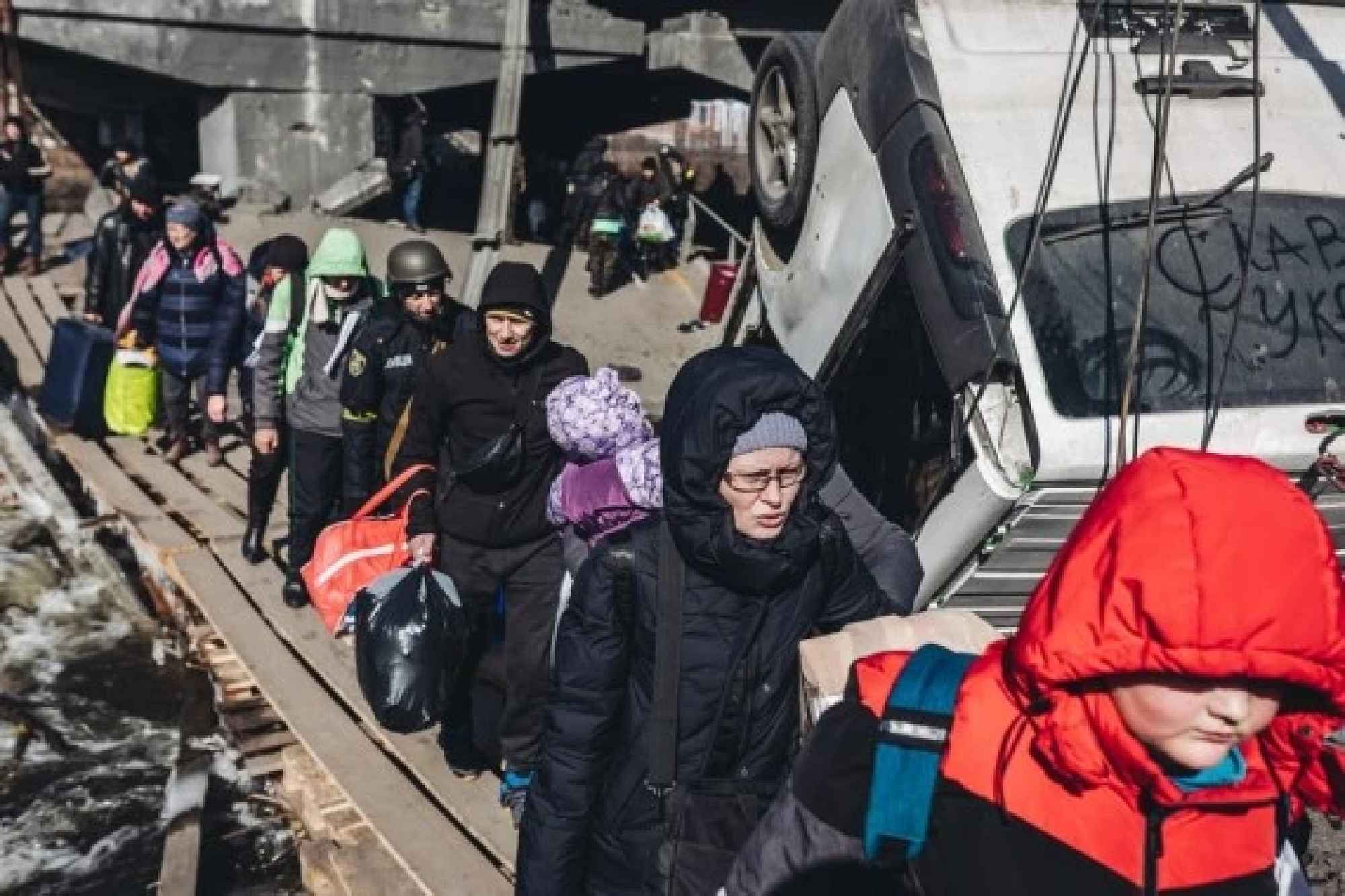
 Photo taken on March 18, 2022 shows diesel and gasoline prices displayed on a board at a gas station in Frankfurt, Germany. (Photo by Armando Babani/Xinhua)
 A burning ring on a gas cooker is seen in Manchester, Britain, March 17, 2022. (Photo by Jon Super/Xinhua)
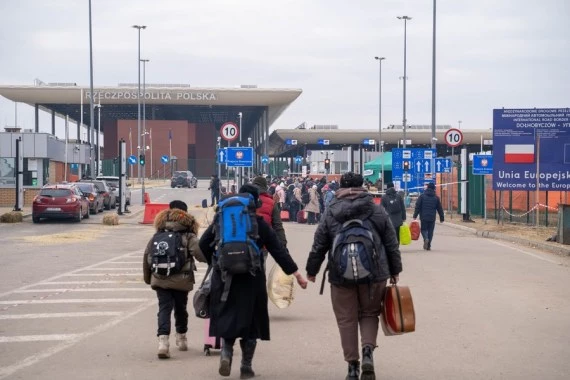 Ukrainian people move towards a border crossing at the border area between Ukraine and Poland. (Xinhua/Ren Ke)


