Stage show in Khon Kaen highlights ‘forced disappearance’ #SootinClaimon.Com

#SootinClaimon.Com : ขอบคุณแหล่งข้อมูล : หนังสือพิมพ์ The Nation.

Stage show in Khon Kaen highlights ‘forced disappearance’ (nationthailand.com)

Stage show in Khon Kaen highlights ‘forced disappearance’

PoliticsDec 19. 2020Photo credit: Thanom Chapakdee's FacebookPhoto credit: Thanom Chapakdee’s Facebook 

By THE NATION

Performers from the B-floor Theatre group and Khon Kaen University’s students on Friday showcased a performance art with a political message, highlighting the controversial issue of forced disappearances.

The performance was staged at Dao Din House in Khon Kaen province, as part of the art festival “Khon Kaen Manifesto”, organised by the artist Thanom Chapakdee.

According to Thanom’s post on Facebook on Saturday, the performance took around one hour, from 7pm to 8pm.

Regarding the issue of “forced disappearances”, observers said that at least nine Thai political dissidents had disappeared since the coup in 2014.

Sunday’s local elections a ‘proxy war’ between national parties #SootinClaimon.Com

#SootinClaimon.Com : ขอบคุณแหล่งข้อมูล : หนังสือพิมพ์ The Nation.

Sunday’s local elections a ‘proxy war’ between national parties (nationthailand.com)

Sunday’s local elections a ‘proxy war’ between national parties

PoliticsDec 19. 2020

By Thai PBS World Syndicate   

Voters around Thailand go to the polls this coming Sunday (December 20) to elect chiefs and other members of provincial administrative organisations (PAOs).

The first local elections since 2012 come after political activities were suspended following the May 2014 military coup.

Chiefs and other members of PAOs who completed their four-year terms while the post-coup junta was in power had their tenures extended, unless they were suspended on corruption or other charges.

All 76 provinces go to the polls on Sunday, excluding Bangkok. A total of 331 candidates will vie for 76 PAO chief’s seats, while 8,070 candidates will contest for PAO member seats, which range from 24 to 48 per province depending on population size.

As usual, candidates from locally influential political families are expected to secure their seats easily – though some will face a fresh challenge.

Incumbents challenged

Local political clans have long dominated provincial politics, thanks mainly to their strong connections with national parties and the powers-that-be.

However, several of their incumbents are facing a serious challenge from candidates affiliated with the Progressive Movement – a popular political group led by tycoon-turned-politician Thanathorn Juangroongruangkit.

The Progressive Movement is making its debut in local politics, fielding candidates for PAO chief in 42 provinces.

The political group is aiming to repeat the success of Thanathorn’s Future Forward Party, which came third in last year’s general election, winning 81 of the 500 MP seats in its first campaign for office.

Analysts say the Progressive Movement, relying on Thanathorn’s popularity, has livened up the PAO elections. And Thanathorn is betting on young voters to build a strong support base for his political future.

Stithorn Thananithichot, director of the Innovation for Democracy Office at King Prajadhipok’s Institute, said the Progressive Movement is catching voters’ attention with its rousing campaign call to “stand up and change your province”.

However, the deciding factor in PAO elections is still the existing support base, he added. “Candidates with a strong network of local support have a better chance of winning,” he said.

Thanathorn and other ex-Future Forward executives formed the Progressive Movement after the party was dissolved by a court ruling in February for violating funding rules. The former party executive members were also banned from politics for 10 years – during which they are not allowed to register, set up, help found or be executives of any political party.

Hence, Thanathorn and his allies have opted to campaign for election candidates affiliated with the Progressive Movement. However, on the campaign trail they have faced protests from local royalist groups, who have branded the movement enemies of the monarchy.

Thanathorn and other key Progressive Movement leaders, namely Piyabutr Saengkanokkul and Pannika Wanich, are accused of pulling the strings of young anti-establishment protesters who are calling for reform of the monarchy.

Another headache emerged for Thanathorn in the run-up to the PAO polls when his younger brother Sakulthorn was linked to a corruption case, in which a Crown Property Bureau official was found guilty of accepting Bt20 million in bribes.

Fierce fights

Certain provinces are experiencing exceptionally fierce election battles. In a “clash of the titans” underway in Chiang Mai, the Shinawatra family is throwing its support behind a challenger to the incumbent PAO chief.

Fugitive former premier Thaksin Shinawatra posted a handwritten message on Facebook to Chiang Mai residents, asking them to vote for his preferred candidate, Pichai Lertpong-adisorn. Thaksin said he had “been abandoned by some politicians” – which observers said was a veiled reference directed at Chiang Mai’s incumbent PAO chief, Boonlert Buranupakorn.

The letter was signed by Thaksin and his sister, fellow ex-PM Yingluck, both of whom hail from the northern city. Pichai has also reportedly won a stamp of approval from Yaowapa Wongsawat, also Thaksin’s sister.

Pichai’s campaigning team boasts senior figures from Thaksin’s proxy Pheu Thai Party, including Chalerm Yoobamrung and Yaowapa’s husband and ex-PM Somchai Wongsawat.

Pichai is among Pheu Thai candidates for the PAO chief’s post in 25 provinces.

Boonlert has been accused of betraying his long-held ties with the Shinawatras and defecting to the ruling Palang Pracharath Party.

The allegations have been dismissed by Pheu Thai politician and red-shirt leader Jatuporn Prompan, who is aiding Boonlert’s campaign for re-election in Chiang Mai.

Jatuporn also accused an unnamed “Big Sister” of “messing up Chiang Mai in the same way she did with the governments of Thaksin and Yingluck”.

Some analysts view Thaksin’s rare plea to Chiang Mai voters as a sign that Pheu Thai is at a serious disadvantage in the local polls.

“There are signs that Pheu Thai candidates are behind their rivals from the government camp. Thaksin had to write a letter to ask for votes in Chiang Mai. That is a sign of political decline,” said political scientist Olarn Thinbangtieo from Burapha University.

Not so independent

Officially, the core coalition Palang Pracharath Party is not fielding any candidates. However, many local politicians are contesting the PAO polls under newly-formed groups with names containing the word “Pracharath”. Analysts say this signals a link with the ruling party.

Among other major coalition parties, Bhumjaithai is not officially fielding any candidates while the Democrats have candidates in two southern provinces – Songkhla and Satun.

Although the 331 candidates in the PAO chief elections are contesting as independents, more than two-thirds are linked to either a coalition or opposition party, according to research company Rocket Media Lab.

The PAOs have been allocated a combined budget of Bt91 billion in fiscal 2021, or 2.8 per cent of the total Bt3.2 trillion national budget.

PAO chiefs are executives responsible for preparing local development plans and annual spending. PAO members act more like the legislature, issuing local regulations, approving development and budget plans, and scrutinising the local administrators.

Thanks to their power over the lives of local residents, PAO chiefs and members serve as a link to large support bases for national politicians.

The nationwide PAO elections are also big test of popularity before the next general election. Results involving candidates linked to political parties or groups are seen as an indication of their performance in the next parliamentary elections.

Royalists want minister to stop politicians’ plotting against monarchy using students #SootinClaimon.Com

#SootinClaimon.Com : ขอบคุณแหล่งข้อมูล : หนังสือพิมพ์ The Nation.

Royalists want minister to stop politicians’ plotting against monarchy using students (nationthailand.com)

Royalists want minister to stop politicians’ plotting against monarchy using students

PoliticsDec 19. 2020

By The Nation

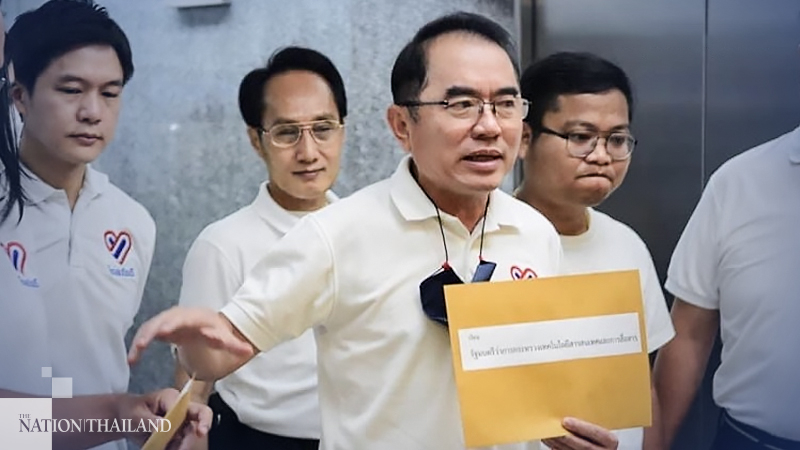
The ultraroyalist Thai Pakdee group will submit a letter to Education Minister on December 23, asking the ministry to set up measures to prevent bad politicians from using students as a tool to encroach on the monarchy.

In a Facebook post on Saturday, the group leader Warong Dechgitvigrom cited the United Nations Commission on Human Rights (UNCHR)’s concerns about at least 35 people, including a 16-year student, facing lese majeste charges.

“We would like to ask the Foreign Affairs Ministry to clarify to the UNCHR that the abovementioned people are aiming to encroach on the monarchy,” he said.

“Meanwhile, parents should take good care of a 16-year student because he has little experience in politics and he may be a victim of bad politicians’ moves to benefit indirectly.”

Trump contradicts Pompeo in bid to downplay massive hack of U.S. government, Russia’s role #SootinClaimon.Com

#SootinClaimon.Com : ขอบคุณแหล่งข้อมูล : หนังสือพิมพ์ The Nation.

Trump contradicts Pompeo in bid to downplay massive hack of U.S. government, Russia’s role (nationthailand.com)

Trump contradicts Pompeo in bid to downplay massive hack of U.S. government, Russia’s role

InternationalDec 20. 2020President TrumpPresident Trump 

By The Washington Post · Ellen Nakashima, Josh Dawsey · NATIONAL, WORLD, TECHNOLOGY, NATIONAL-SECURITY, WHITEHOUSE, EUROPE 

WASHINGTON – President Donald Trump addressed the ongoing cyber hacks of the U.S. government for the first time on Saturday, seeking to turn blame away from Moscow in defiance of mounting evidence while downplaying how devastating the intrusions appear to be.

In a bizarre outburst on Twitter that Trump’s critics condemned for its alarming disconnect from the facts, the president contradicted his top diplomat, Secretary of State Mike Pompeo, who on Friday pinned the breaches that have afflicted at least five major federal agencies “clearly” on Russia. Rather, the president baselessly suggested that the true culprit “may be China (it may!)”

Trump’s aversion to calling out the Kremlin for its malign activities in cyberspace and his deference to Russian President Vladimir Putin has become a hallmark of his presidency. He has repeatedly trusted the word of Putin over the assessments of his own intelligence community, including its conclusion that Russia waged a sophisticated campaign to interfere in the 2016 presidential election – a verdict Trump believes calls into question the legitimacy of his victory four years ago.

His tweets Saturday raise fresh concerns that he will seek to shrug off what may turn out to be a cyber hack of unprecedented scale, and that Russia will not be held to account. The president has complained to advisers, who believe Russia is culpable, that the intrusions are a fake narrative meant to damage him politically.

“The Cyber Hack is far greater in the Fake News Media than in actuality,” Trump tweeted, despite a federal alert in recent days that called the widespread cyber espionage campaign “a grave risk to” government agencies and the private sector. 

“I have been fully briefed and everything is well under control,” he said, while agencies are scrambling to investigate and contain a series of major breaches at agencies including the State, Treasury, Energy, Homeland Security and Commerce departments – an effort that is likely to take months.

He also speculated, with no evidence, that the hacks may also have included “a hit on our ridiculous voting machines during the election, which is now obvious that I won big.” Twitter flagged that assertion, saying that “multiple sources called this election differently.” There is no evidence that November’s election was undermined by significant or widespread fraud, despite Trump’s insistence otherwise.

Trump had, until Saturday, studiously avoided the topic, reluctant to address publicly an issue that has bedeviled him since he took office: Russia’s hacking of U.S. targets. He broke his silence only after he was criticized publicly by lawmakers from both parties for an apparent unwillingness to confront Putin.

White House officials had drafted a statement to be released Friday accusing Moscow of carrying out the cyber intrusions in a months-long campaign, but they were blocked from doing so, said a senior administration official, who like others spoke on the condition of anonymity because of the matter’s sensitivity.

But Pompeo, in an interview on “The Mark Levin Show,” had no qualms about speaking out. “This was a very significant effort,” he said, “and I think it’s the case that now we can say pretty clearly that it was the Russians that engaged in this activity.”

Pompeo did not specify which branch of the Russian government carried out the campaign, but U.S. officials have privately said they believe it is the foreign intelligence service, the SVR, a successor agency to the KGB. None have suggested that China played any role.

Moscow has denied any involvement in the intrusions. Federal agencies were first revealed to have been hacked last weekend.

Pompeo said he could not say much more as the investigations were ongoing. “But suffice it to say, there was a significant effort to use a piece of third-party software to essentially embed code inside of U.S. government systems, and it now appears systems of private companies and companies and governments across the world as well,” he told Levin, a syndicated radio talk show host.

His remarks come as government agencies and affected companies race to figure out the scope of the breaches, how the Russians carried them off without being detected for months and how to prevent future compromises.

The president is intent on turning the conversation to China and its coercive activities in the technology and economic spheres and its human rights abuses, a second official said. He has directed advisers to look for ways in the waning days of his administration to confront Beijing over those issues, the official said.

Trump’s comments Saturday reflect a long-running disregard for the facts and his disinterest in what he calls “the cyber,” analysts and former aides said. “Starting with Trump’s very first meeting with Putin to today’s tweets we’ve seen an almost unbreakable pattern of denying the obvious about Russia’s misdeeds while carrying water for the Kremlin,” said Andrew Weiss, a Russia expert and vice president for studies at the Carnegie Endowment for International Peace. “Trump’s comments are totally divorced from reality.”

Gregory Treverton, a former chairman of the National Intelligence Council, the government’s senior-most provider of intelligence analysis, said that Trump “behaves so much like a paid Russian agent.” 

“If you look at the string of his actions and pronouncement,” Treverton said, “the only consistent interpretation that you can logically draw is that he’s in their thrall.”

Russia’s SVR waged a widespread cyber espionage campaign in 2014-2015 that ensnared the State Department, Pentagon Joint Chiefs of Staff and White House unclassified email networks, among other targets.

The Obama administration saw that campaign, as disturbing as it was, as classic espionage of the sort that states routinely engage in against each other, rather than as a disruptive attack, and so did not retaliate, said Michael Daniel, who was President Barack Obama’s White House cyber coordinator. Officials were not aware of the thousands of other victims in the private sector and other countries at the time, he said. The administration never publicly accused Russia of perpetrating the hacks.

This time, the context is different. There is widespread publicity around the breaches, which could turn out to be unprecedented in scale. The nature of the compromises, involving corruption of software commonly used by thousands of large organizations around the globe, is alarming. And the public is much more attuned to Russia’s malign activity in cyberspace, in the wake of its 2016 election interference.

Thus far, there is no sign that the intrusions have resulted in disruption or destruction, and the SVR is known mostly for conducting espionage. That doesn’t mean, however, the activity is not a precursor to something beyond spying, some analysts said.

In any case, Pompeo’s “attribution is a very important step,” said Tom Bossert, who was Trump’s homeland security adviser until April 2018. “The United States can now direct its focus and unite the world against this outrage.”

He said the Russian government is holding American networks at risk. “We must impose a cost on the Russians,” he said. “Until we start defending digital infrastructure as if commercial and government operations depended on it, we will remain rudderless.”

Microsoft, a major software and cloud provider, alerted several federal agencies last weekend to the fact that they were breached, its president Brad Smith told The Washington Post in an interview this week. 

Smith said so far the company has notified a little more than 40 customers who were breached, and that 80% of them were in the United States. The others were in Canada, Mexico, Belgium, Spain, Britain, Israel and the United Arab Emirates.

Britain so far has seen only a small number of victims, all in the private sector.

A major avenue for breaching victims’ networks was an update for computer software made by a Texas-based company called SolarWinds. The firm said about 18,000 customers that received the patch, for network management software called Orion, were potentially exposed. The Russians covertly added malware to the update, which installed a backdoor on computers that the hackers could use to enter a victim’s system at will. 

But the intruders were selective in choosing who to compromise. Not everyone who downloaded the patch was seen as an attractive target, Microsoft said.

The SolarWinds update was not the only path into victims’ networks, the Department of Homeland Security’s Cybersecurity and Infrastructure Security Agency said in an alert this week. “CISA has evidence of additional initial access vectors, other than the SolarWinds Orion platform; however, these are still being investigated,” the agency said.

Microsoft is itself a SolarWinds customer and acknowledged in a statement this week it had found SolarWinds malware “in our environment,” which it isolated and removed.

In his interview with The Post, Smith said none of Microsoft’s customers had been breached through the software giant. “I think we can give you a blanket answer that affirmatively states, no, we are not aware of any customers being attacked through Microsoft’s cloud services or any of our other services, for that matter, by this hacker.”

He said: “Lots of people have been hacked and a lot of the people that have been hacked happen to be Microsoft customers and Microsoft cloud customers. But that doesn’t mean they were hacked or attacked through the Microsoft cloud.”

Smith in a blog post called for the establishment of a global norm forbidding the type of “broad and reckless activity” used against SolarWinds and its customers, which threatened the integrity of the broader software supply chain. 

A norm against compromising that supply chain would “kneecap intelligence collection” by western democracies, said Thomas Rid, a cyber espionage expert at Johns Hopkins University. Worse, nondemocratic states would not abide by it, he said. “Some of the most successful western intelligence operations were supply chain compromises,” he said, citing a decades-long operation in which rigged encryption machines allowed U.S. intelligence agencies to spy on dozens of countries undetected.

Daniel, the former White House cyber coordinator, said a broad-based supply chain compromise that affects many different organizations indiscriminately “should probably be frowned upon.” But, he said, to argue that a western spy agency is never going to use the supply chain to spy on an adversary is unrealistic. “For a well-defended adversary,” he said, “it’s something you may want to consider.”

Moderna vaccine shipments set to arrive in states on Monday, Operation Warp Speed operations chief says #SootinClaimon.Com

#SootinClaimon.Com : ขอบคุณแหล่งข้อมูล : หนังสือพิมพ์ The Nation.

Moderna vaccine shipments set to arrive in states on Monday, Operation Warp Speed operations chief says (nationthailand.com)

Moderna vaccine shipments set to arrive in states on Monday, Operation Warp Speed operations chief says

InternationalDec 20. 2020

By The Washington Post · Derek Hawkins · NATIONAL, BUSINESS, WORLD, HEALTH, SCIENCE-ENVIRONMENT, HEALTH-NEWS 

WASHINGTON – Shipments of the second coronavirus vaccine approved by health regulators are set to arrive in states Monday, according to the Trump administration’s vaccine operations chief, one week after front-line health workers received the first shots in the U.S. government’s mass vaccination campaign.

Gustave Perna, chief operating officer of Operation Warp Speed, said Saturday that distribution was already underway for the vaccine developed by Massachusetts biotechnology company Moderna in partnership with the National Institute of Allergy and Infectious Diseases, following the Food and Drug Administration’s decision to clear the shot late Friday.

Workers were packing the vials into boxes at distribution centers run by the medical wholesale giant McKesson, Perna said. FedEx and UPS trucks are slated to depart Sunday and carry the freezer-temperature containers to their destinations. The government has also begun shipping ancillary kits including needles, syringes and other supplies to help administer the shots, according to Perna.

Later on Saturday, an independent vaccine advisory panel to the Centers for Disease Control and Prevention voted to recommend Moderna’s coronavirus vaccine for use in people ages 18 and older, paving the way for inoculations to begin as shipments arrive. The move follows Friday’s authorization from the FDA, which permitted the vaccine to be administered; an endorsement by the CDC immunization panel signals that the vaccine should be administered to the populations included in its guidance.

The rollout of the Moderna vaccine caps a week marked by a mix of high hopes and frustration surrounding the administration’s handling of the first coronavirus vaccine, developed by Pfizer and BioNTech and cleared by the FDA on Dec. 12.

Days after doctors, nurses and other Americans received the first injections, officials in multiple states said they were alerted that their second round of shipments had been drastically cut, creating widespread confusion and raising concerns about whether health departments would receive enough doses to meet the administration’s timelines.

Speaking in a Saturday morning news conference, Perna said he took personal responsibility for the error, saying he misunderstood a step in the process that prevents the government from releasing vaccine doses as soon as the manufacturer makes them available. As a result, he said, his forecasts were incorrect and he had to lower the vaccine allocations.

“To the governors to the governors’ staffs, please accept my personal apology if this was disruptive in your decision-making,” Perna said.

Asked to explain the issue in plain terms, Perna declined to elaborate. He called the situation a “miscommunication” and a “planning problem,” not a problem with either of the vaccines themselves.

He added that the administration was on track to allocate “around 20 million doses” of the vaccines by the end of December, but said distribution could extend into early January. The characterization appeared to mark a departure from the administration’s goal of administering 20 million shots by the end of the year.

“We are pushing out millions of doses of vaccines right now, and each week those numbers will continue to grow,” Perna said.

So far, 2.9 million doses of the Pfizer vaccine have been delivered across all 50 states. Between the two vaccines, 7.9 million doses were allocated and ready for distribution this week, according to Perna.

As of Saturday morning, 272,001 doses of the Pfizer vaccine had been administered, according to the CDC.

The approval of Moderna’s vaccine marks a crucial expansion of the government’s vaccination efforts, freeing the country from having to rely on a vaccine from one manufacturer as officials try to meet ambitious goals for getting doses out the door.

One benefit of the vaccine is that it can be stored at the temperature of a normal freezer, making it easier to transport. Pfizer’s vaccine, by contrast, needs ultra-low-temperature freezers regularly refreshed with dry ice.

Perna said workers were packing containers with 100 vials each, a relatively small number that also eases transportation. “This allows jurisdictions ways to reach small and hard-to-reach rural areas,” he said Saturday.

As the first waves of vaccines have reached hospitals and health departments nationwide, local disputes have arisen over who should get the shots first, bringing the logistical challenges of inoculating millions of people into sharp relief at a time when infections and deaths have reached record levels.

In California, where many intensive care units are overwhelmed with patients, nearly all young front-line doctors at Stanford Medical Center were excluded from the initial round of coronavirus vaccinations, prompting outcry from workers who said such workers should be prioritized.

Dozens of the hospital’s residents and fellows staged a raucous protest on the Palo Alto campus Friday, accusing the university of selecting orthopedists, dermatologists and even some faculty who work from home for vaccination before workers who spend long hours treating covid-19 patients.

Stanford officials apologized for the issue, saying a faulty vaccine algorithm left out early-year doctors and promising an immediate fix. “We take complete responsibility for the errors in the execution of our vaccine distribution plan,” Stanford Medicine said in a statement.

Christine Santiago, a 29-year-old resident in internal medicine who treated covid-19 patients during night shifts in the ICU, told The Washington Post that resident physicians “occupy a very unprotected space in the United States.”

“We’re not fully employees of the workforce,” said Santiago, who said she is home quarantining and waiting on a coronavirus test after using a faulty batch of N95 masks. “We fall in this vague, unclear position.”

Nationwide, coronavirus infections continued to surge, with the seven-day average for new daily cases rising 3.1% over the past week, according to data tracked by The Post. The weekly average for daily deaths rose 6.1%, with 2,878 coronavirus fatalities reported Friday. Hospitalizations also climbed more than 6% nationwide.

California reported a record 379 deaths on Thursday, followed by a near-record of 300 on Friday and 279 as of Saturday afternoon. Infections in the state have topped 40,000 for four consecutive days, with at least 43,600 reported Saturday, according to The Post’s tracking.

Although coronavirus vaccine doses have arrived in all 50 states, only about 15 have begun releasing daily vaccination data. About a dozen others have disclosed plans to offer some form of public vaccination tracking, while others have made no mention of it, the Covid Tracking Project noted in an analysis this week.

Convincing large portions of the population to get the vaccine remains a challenge for health officials around the country, who have launched an array of awareness campaigns to inform people of the benefits and dispel misinformation about the shots. In Missouri, the state health department recently posted a detailed fact sheet on the vaccine, answering common questions about safety and side effects, while also offering a “rumor control” section addressing falsehoods about the vaccine altering patient DNA and containing “tracking chips.”

Speaking with CNN late Friday, Anthony Fauci, the country’s leading infectious-disease expert, praised Vice President Mike Pence and other government officials for getting the vaccine publicly, a move he said could help alleviate concerns among some that the injection is unsafe.

“I think that was a good thing, representing to the community, to the people watching, that this is something that we all should do,” he said, “because if we get the majority of people in this country vaccinated we’re going to turn this around for sure.”

Fauci added that President Trump should get the vaccine as well, even though he was infected earlier this year.

“One of the things you have to keep in mind is he received the monoclonal antibody when he was ill, so he still might have a very high level of antibody in his system, which you might want to wait a bit before you actually vaccinate him,” Fauci said. “But ultimately he might want to get vaccinated.”

In more lighthearted CNN appearance Saturday, Fauci offered a message to children who sent questions to the news network asking whether Santa Claus had been vaccinated, too. “I went there and I vaccinated Santa Claus myself,” he said. “He is good to go.”

America’s image has tumbled during Trump’s presidency. Can Biden turn it around? #SootinClaimon.Com

#SootinClaimon.Com : ขอบคุณแหล่งข้อมูล : หนังสือพิมพ์ The Nation.

America’s image has tumbled during Trump’s presidency. Can Biden turn it around? (nationthailand.com)

America’s image has tumbled during Trump’s presidency. Can Biden turn it around?

InternationalDec 20. 2020President-elect Joe BidenPresident-elect Joe Biden 

By The Washington Post · Dan Balz · NATIONAL, POLITICS, CONGRESS
Analysis/WASHINGTON – President-elect Joe Biden has a daunting to-do list as he prepares to take the oath of office next month, much of it focused domestically. But there was a reminder this past week that among the problems dumped in his lap by President Donald Trump is a world that questions whether the United States is willing and prepared to lead abroad.

A tarnishing of America’s international image has been a constant almost from the day Trump was sworn in four years ago. But 2020 could be the worst yet in terms of how people in other countries perceive the United States as a leader in the world.

The Gallup organization conducts annual surveys assessing how others assess U.S. leadership. In 20 of 29 countries where Gallup has completed these surveys, approval ratings “are at new lows or they tie the previous low,” according to the report released last week. Among the countries where approval hit new lows are two of the nation’s staunchest allies, Germany and Britain.

Four years ago, before Trump became president, 43% of Germans had a positive impression of the United States as a leader in the world. Today just 6% approve. In the United Kingdom, 15% say they approve. More Russians – 18% – approve of American leadership internationally than Brits or Germans.

Gallup’s findings square with a Pew Research Center report of a few months ago. Pew’s regular survey asks whether people elsewhere have a favorable or unfavorable view of the United States. Among the nations where favorable impressions hit record lows or roughly tied them this year were a who’s who of traditional friends: the United Kingdom, Germany, France, Japan, Canada and Australia.

Trump’s departure and Biden’s arrival will likely begin to boost the nation’s image. The former chairman of the Senate Foreign Relations Committee has promised to reengage constructively with other nations, as has his designee for secretary of state, Antony Blinken. That will begin with allies in Europe, who have been treated badly by the current president.

Biden knows the world from his travels as a senator and vice president, but he was described by one former diplomat as someone whose first orientation on foreign policy is through Europe. “When he thinks foreign policy, he thinks allies, and when he thinks allies, he thinks Europe,” said Ivo Daalder, former ambassador to NATO and now president of the Chicago Council on Global Affairs. 

Trump has spurned or hectored allies in Europe and questioned the value of transatlantic alliances. Biden will embrace them all.

Showing up and saying the right words will be helpful in changing perceptions of the United States, but that might be only a first step in what could be a more challenging mission.

Biden will look to European allies for help in dealing with some of the most important foreign policy issues that await him, from U.S. posture toward Russia to Biden’s desire to mend relations with Iran after Trump pulled out of the joint nuclear agreement.

China presents perhaps the biggest challenge, given its gains in power and reach over the past four years. Trump departed from the posture of previous administrations, adopting a more aggressive approach in dealing with the Asian giant. Even critics of the presidents concede there can be no return to the past.

“There is a growing consensus across parties that China poses a series of new challenges and that the status quo was not really sustainable,” Blinken said last summer during an event sponsored by the Hudson Institute. He also said that, because of Trump’s approach, “China is in a strong position and we’re in a weaker position.” The solution, he added, will be “to rally our allies and partners, instead of alienating them.”

Biden said the same in a post-election interview with New York Times columnist Thomas L. Friedman. “The best China strategy, I think, is one which gets every one of our – or at least what used to be our – allies on the same page,” he said. “It’s going to be a major priority for me in the opening weeks of presidency to get us back on the same page with our allies.”

Rhetorically that might seem easy; practically it will take time. Biden’s challenge will involve striking a balance between competition and sometimes confrontation with China over economic and defense issues and cooperation on things like pandemics and climate.

“My view of it is that the Biden administration will invest in strengthening the transatlantic relationship as a means to being able to have a thoughtful, tough, but pragmatic line towards China,” said Robin Niblett, director and chief executive of Chatham House, a London-based think tank. “I think they will take the time to try to get Europe on board before they try anything tougher with China.”

Biden has long experience with European allies, but he will be dealing with a changing and sometimes disunited continent. Hungary and Poland have moved in anti-democratic directions. Turkey is an ally and member of NATO, but the source of disagreements. Britain appears on the brink of exiting the European Union as a result of the Brexit vote in the summer of 2016. 

Biden has said he knows world leaders, and he does, but leadership has changed since he was vice president and will continue to do so. He does not have a particularly strong relationship with British Prime Minister Boris Johnson, and in any case the so-called special relationship between the two nations will take on a different hue with Britain no longer a bridge to the E.U. for the United States.

German Chancellor Angela Merkel, the strongest leader in Europe, will step down later this year and there is no clear successor on the horizon. French President Emmanuel Macron was elected to his position after Biden left the vice presidency. Although he will offer a more welcoming approach than the Trump era, Biden will not be able to pick up where he left off as vice president.

From abroad, the United States is seen as a nation that is badly divided and looking inward, a country undergoing a necessary but painful reckoning on race, preoccupied with its own problems and therefore less prepared to embrace the role played for decades during the Cold War and the post-Cold War period. America also has been judged harshly for the way the Trump administration handled the coronavirus pandemic. 

Biden’s willingness to reengage internationally will be an essential step in restoring U.S. leadership and in the process will rebuild America’s tattered image. But what he accomplishes domestically, his record in dealing with the pandemic and the economy and so much else, could be equally important in shaping perceptions around the world of how America sees itself in the post-Trump era.

Henry Haller, longest-serving White House executive chef, dies at 97 #SootinClaimon.Com

#SootinClaimon.Com : ขอบคุณแหล่งข้อมูล : หนังสือพิมพ์ The Nation.

Henry Haller, longest-serving White House executive chef, dies at 97 (nationthailand.com)

Henry Haller, longest-serving White House executive chef, dies at 97

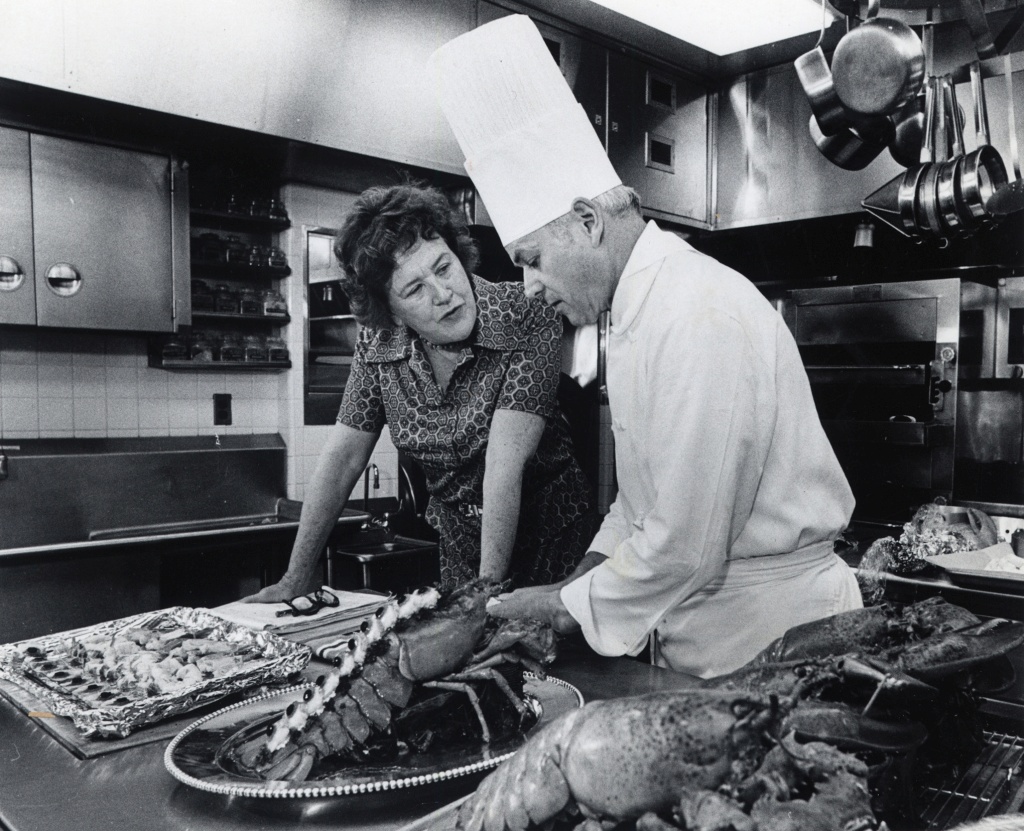
InternationalDec 19. 2020Henry Haller is pictured in 1976 with cook and TV personality Julia Child. MUST CREDIT: Washington Post photo by James A. Parcell
Photo by: James A. Parcell — The Washington PostHenry Haller is pictured in 1976 with cook and TV personality Julia Child. MUST CREDIT: Washington Post photo by James A. Parcell Photo by: James A. Parcell — The Washington Post 
By Special to The Washington Post · Olesia Plokhii 

Henry Haller, the longest-serving White House executive chef in the history of the residence, who planned and executed countless extravagant banquets, three wedding receptions and more than 250 state dinners for five presidents, died Nov. 7 at his home in Gaithersburg, Md. He was 97.

His wife, Carole Haller, confirmed the death and said there was no specific cause.

Haller was a Swiss-born French chef who joined the White House in 1966 after impressing President Lyndon B. Johnson years earlier with his cooking at New York City’s Sheraton-East Hotel. He remained at 1600 Pennsylvania Ave. late into the Reagan administration, mastering the tastes of five first families over a span of 21 years and pulling off impressive culinary feats on short notice.

A consummate professional who was never known to gossip about what he saw or heard at the White House, Haller catered to the tastes of the first families, whether asked to prepare deluxe continental cuisine or simple homestyle American meals.

“It’s quite simple, really,” he told the Albany Times Union in 2002. “You keep your mouth shut. There are no prima donnas at the White House except the president of the United States. . . . Some chefs like to tell the guests what to eat. It’s not like that at the White House. They tell you what they want to eat and you do it.”

For Johnson, that was Texan food and tapioca pudding. For the family of Richard M. Nixon, it was classic French dishes, red snapper and broiled lamb chops. Haller said the Fords enjoyed roast beef cooked with whole onions as well as red cabbage with pork chops; Jimmy and Rosalynn Carter liked fried chicken, ham, okra and string beans; and Ronald and Nancy Reagan valued variety and beautiful presentation.

Trained in classical French cuisine in Switzerland, Haller came to the White House after René Verdon – the French-born chef brought in by the Kennedys in 1961 – quit as executive chef in 1965 in a dispute with Johnson over the president’s food preferences and the sudden arrival of frozen and canned vegetables in the White House pantry.

Deciding on menus often required consultation with the first ladies. The biggest challenge for Haller came from Nancy Reagan, whom he described as the most involved and particular first lady he worked with. She insisted that Haller and his staff cook the planned meal before important functions, and she would suggest changes to the taste and appearance of the foods.

“We take pictures with a Polaroid so the staff knows how they are to be done,” Haller told the New York Times in 1987. “With the Reagans you have to be more creative.”

Haller also admitted to two occasions on which he was reprimanded. The first was when he told the news media that Nixon liked to mix his own martinis before dinner; the second was when he failed to remove the strings from the green beans he served Johnson. That night, after dinner was served, the butler told Haller the president wanted to see him.

“I went in, and he had some strings from the beans in his hand,” Haller told the Philadelphia Inquirer. “He handed them to me and said, ‘I saved these for you.’ “

The rest of his employment, however, was marked by one culinary coup after another. In 1973, he produced a dinner for 1,300 people honoring returned Vietnam prisoners of war. The event was held under a giant tent, with a menu that included supreme of seafood Neptune – an elaborate seafood salad – roast sirloin and strawberry mousse. Because the White House didn’t have enough ovens and stoves, much of the cooking took place at the nearby Mayflower Hotel.

Another success came during the bicentennial in 1976, when Britain’s Queen Elizabeth II visited the White House of Gerald R. Ford. Haller served – just as a first course for 250 people – 25 four-pound lobsters in a 50-gallon steamer. During that year, Haller was responsible for preparing several formal dinners each week and often worked 18-hour days. In 1978, for a celebratory dinner after the signing of the Camp David Accords, Haller had just one week to pull off an event for 1,300 guests of the Carters.

Henry Haller is pictured with Julia Child in 1976. MUST CREDIT: Washington Post photo by James A. Parcell

Photo by: James A. Parcell — The Washington Post

There were also times when demands on the White House kitchen were minimal. When King Faisal bin Abdulaziz of Saudi Arabia visited, for example, he brought his own food in briefcases. “I think he had cottage cheese that night,” Haller said.

One of the chef’s greatest triumphs was a lobster mousse made from his own mold – thanks to a sheet-metal worker on staff – for French Prime Minister Jacques Chirac in 1986.

“I put the lobster mousse on a big china platter and glazed the mousse with aspic,” he told the Chicago Tribune in 1988. “On one side I placed 12 medallions of lobster decorated with truffles. On the other, I made a floral design with carrots, truffles, leeks and cherry tomatoes. It looks like a bouquet. On the outside edge, I had half quail eggs covered with caviar and standing in little cucumber cups. Sounds good, no?”

Born Henri Haller in Altdorf, Switzerland, on Jan. 10, 1923, he was the son of a French mother and a Swiss father who worked in a factory. He helped his mother cook and tend to her vegetable garden, and developed a flair for cooking. When he was 14, his father planted the idea of making his passion a career.

“Why don’t you be a chef,” Haller recalled his father saying. “You can travel all over the world. And you will never have to worry about a job. People everywhere have to eat.”

At 16, he did a culinary apprenticeship at the Park Hotel in Davos, Switzerland, where he learned the art of the mashed potato and studied French, German and Italian cooking.

Over the next decade, he worked at top hotels and restaurants in Bern and Lucerne, Switzerland, and practiced his English. When he was 25, he moved to Montreal to work for the Ritz-Carlton and then arrived in New York City in 1951.

He spent several years at a country club and then at Hampshire House near Central Park. In 1962, he left for the top chef position at the Sheraton-East Hotel, where his food impressed Johnson.

After leaving the White House in 1987, Haller published “The White House Family Cookbook,” filled with dozens of recipes. He later created menus for Norwegian Cruise Lines and an assisted living company, partnered with a supermarket to create a line of gourmet foods and was featured in 1996 in a PBS cooking series called “The Presidential Palate.”

In 1954, he married Carole Itjen. In addition to his wife, of Gaithersburg, survivors include four children, Robert Haller of Palm Harbor, Fla., Richard Haller of Highland, Calif., Susan Capps of Gastonia, N.C., and Nancy Bender of Holly Springs, N.C.; and five grandchildren.

One of Haller’s most vividly remembered days at the White House was when Nixon resigned on Aug. 9, 1974. That morning, Haller said, the president walked into the kitchen barefoot and wearing pajamas and asked for corned beef hash and a poached egg. Nixon then shook Haller’s hand and said, “Chef, I have dined all over the world, but your food is the best.”

Despite bearing witness to an intimate side of American history, Haller said there was very little talk of politics in his kitchen. He said his job was to provide a sense of normalcy amid the tumult of presidential life.

“You’re an escape from all of that in some ways,” he told the Gerald R. Ford Oral History Project in 2010. “I mean, you provide a normal environment. A normal environment to the last day. That was our job.”

Biden gets vaccine Monday, rethinks West Wing setup #SootinClaimon.Com

#SootinClaimon.Com : ขอบคุณแหล่งข้อมูล : หนังสือพิมพ์ The Nation.

Biden gets vaccine Monday, rethinks West Wing setup (nationthailand.com)

Biden gets vaccine Monday, rethinks West Wing setup

InternationalDec 19. 2020President-elect Joe Biden speaks at a President-elect Joe Biden speaks at a “Get Ready to Vote” rally with Georgia Democratic Senate nominees Raphael Warnock and Jon Ossoff on Dec. 15 in Atlanta. His audience was seated in cars. MUST CREDIT: Washington Post photo by Joshua Lott Photo by: Joshua Lott — The Washington Post Location: Atlanta, United States 

By The Washington Post · Annie Linskey

President-elect Joe Biden and his wife, Jill, plan to begin their course of coronavirus vaccinations Monday, after the recent infection of two people in his orbit, including a senior adviser, brought the pandemic closer than before to the former vice president and senior members of his team.

The Biden team also is rethinking how to organize the president-elect’s West Wing staff, which will take office amid what is expected to be a bleak and dangerous winter because of the pandemic. The new administration does not plan to have its full staff work out of the typically cramped White House offices immediately after taking office Jan. 20 because of medical concerns, officials said Friday.

The outgoing Trump administration, which has demonstrated far less adherence to its own medical team’s coronavirus guidance than Biden’s team, has suffered through several outbreaks of the virus, with victims including President Donald Trump, his wife and son, and many senior officials and Cabinet members.

The announcement of the Bidens’ pending inoculation and curbs on attendance at the White House after his inauguration illustrate the extraordinary difficulty that the pandemic has added to planning for a transfer of power and launching a new government, layering significantly more complication and risk to an already fraught process.

During the transition, many of Biden’s meetings have been conducted virtually, with only a few staff members, stationed in his hometown of Wilmington, Del., who regularly see the president-elect in person.

That followed the pattern set in the campaign, during which Biden spent long stretches hunkered down in his Wilmington home to protect against catching the virus as it rampaged across the country. Trump, who was diagnosed with covid-19, the disease caused by the coronavirus, in October, regularly mocked Biden for his preventive behavior and, when he emerged, for routinely wearing a mask. Neither the president nor his senior aides regularly wear masks or demonstrate social distancing practices.

In deciding when to receive the two-shot regimen required for the coronavirus vaccine, Biden has had to weigh his own health risks against the politically tricky image of skipping ahead of some health-care workers to receive an inoculation.

Biden, who at 78 will be the oldest president ever inaugurated, is in a high-risk category because of his age. His incoming medical adviser, Anthony Fauci ,had recommended that he and Vice President-elect Kamala Harris receive vaccinations, along with President Trump and Vice President Mike Pence. Pence and his wife, Karen, received their shots Friday in a televised event.

Biden has set a goal of distributing 100 million vaccinations in his first 100 days in office. He also wants Americans to wear masks during this period as a way to reduce community spread of the virus.

Biden’s brief trip to Georgia on Tuesday – the only time he has boarded an airplane since winning the election – clearly illustrated the risks he’s facing in delaying the shots: Within days of the stop at least two people involved in the visit tested positive for the coronavirus.

One was an unnamed reporter who covered the trip but did not fly on the same plane as Biden, nor come into close contact with the president-elect. Biden did, however, approach the traveling press corps before taking off from Wilmington for Atlanta. Biden and the reporters wore masks as they spoke.

The second was Rep. Cedric Richmond, D-La., who will become a senior adviser to Biden in the White House. Biden’s transition team, in a statement released Thursday, said the president-elect was never in “close contact” with Richmond as defined by the Centers for Disease Control and Prevention. Given the circumstances, Biden did not plan to self-quarantine.

Richmond’s office referred questions to the Biden transition team. Biden’s team declined to provide any additional details Friday about their contact, its duration or whether it occurred indoors or outside.

Biden traveled to Georgia to campaign for two U.S. Senate candidates vying against Republican incumbents in Jan. 5 runoff elections. The outcome of the race will determine control of the Senate, in which Republicans currently hold a 50-to-48 advantage. Two Democratic wins would flip control, as Harris would become the tiebreaker once she is sworn into office.

Biden spoke briefly at an outdoor car rally in Atlanta and did not appear on that stage with Richmond. Richmond traveled to the event separately from Biden.

“We have covid protocols in place that everybody abides by who has any contact or attends any events with the president-elect,” Jen Psaki, a Biden-Harris transition spokeswoman, said during a Friday news briefing.

Biden regularly takes coronavirus tests. His latest results, from a test taken Thursday, were negative.

Psaki said that Richmond’s status did not change the timing of Biden’s vaccination.

But the plans had appeared to have been in flux. CNN reported Wednesday that Biden would receive his vaccination early next week, although Biden’s team told The Washington Post only that it would be “as soon as next week” and would not commit to a specific timeline.

Psaki declined to immediately say when Richmond last had a negative coronavirus test. Richmond’s office also did not respond to multiple requests to explain when he last tested negative.

The reporter who tested positive covered Biden on Monday and Tuesday. Reporters who cover Biden at specific events must show they have tested negative at a transition testing site before they are permitted near him. They also are required to wear masks.

Biden also wears masks to his events, and sometimes has given entire speeches wearing one. But he occasionally pulls his mask down when people have difficulty understanding him. After stepping off the outdoor stage in Atlanta on Tuesday, Biden briefly pulled down his mask to yell something to a supporter and then put it back in place.

Biden’s vaccination will be done in public in Delaware, but his aides declined to provide details about exactly when or where the shots would be given. Biden and his wife will receive the Pfizer-BioNTech vaccine, Psaki said.

Harris and her husband, Doug Emhoff, will start their course of vaccinations after Christmas, Psaki said. Biden and Harris have separate medical teams and Psaki said the quartet was spacing out the inoculations based on advice from their doctors.

Pence and his wife also received the Pfizer-BioNTech vaccine. It was administered by Walter Reed National Military Medical Center staff in a room in the White House complex Friday.

The pandemic has cast a pall over one of the typical moves for any incoming administration: jockeying for valuable West Wing real estate. In the past two administrations, the crowded conditions have led aides at times to share desks.

“We expect that everybody who would traditionally be – and historically be – working out of the West Wing, probably will not be working out of the West Wing on January 20th and January 21st,” Psaki said.

The new administration will “abide by the guidance and direction by our medical experts and doctors” in determining who will be in the building and when, she said.

Biden plans to announce his selection for additional administration posts next week, but Psaki declined to say whether all of the Cabinet slots will be announced by Christmas, which the Biden team had hoped to do.

“It’s all based on when decision-making is made and we want to give him the time and space to do that,” Psaki said. She said that Biden’s team does expect to name the first 100 appointments by the new year.

So far Biden has named 19 members of his Cabinet, but some big slots remain open, including who will lead the departments of Justice, Labor and Education and who will lead the CIA.

On Saturday, he is due to publicly announce members of his climate and energy teams, including his nominee for interior secretary, Rep. Deb Haaland, D-N.M., who if confirmed by the Senate would be the first Native American to serve in the Cabinet.

In addition to Haaland, Biden will introduce North Carolina environmental regulator Michael Regan, who would be the first Black man to head the Environmental Protection Agency, as well as Obama administration veteran Brenda Mallory to serve as the first Black chair of the White House Council on Environmental Quality.

Former Michigan governor Jennifer Granholm will be named by Biden as his nominee for energy secretary.

– – –

The Washington Post’s Matt Viser contributed to this report.

Woman, 78, tests positive for Covid-19 in Bangkok #SootinClaimon.Com

#SootinClaimon.Com : ขอบคุณแหล่งข้อมูล : หนังสือพิมพ์ The Nation.

Woman, 78, tests positive for Covid-19 in Bangkok (nationthailand.com)

Woman, 78, tests positive for Covid-19 in Bangkok

NationalDec 20. 2020

By The Nation

A 78-year-old woman in Bangkok was found to infected with the Covid-19 virus on December 19.

The patient resides in the Prachachuen area of the capital.

Investigation revealed that she had visited Mahachai Market in Samut Sakhon province in early December. The market is at the centre of a major outbreak in the province.

On December 12, she developed nose irritation and in December 15, she had a headache and lost her appetite.

On Dec 18, she went to Kasemrad Hospital in Prachachuen for a checkup and tested positive for Covid-19.

On Dec 19, she was sent to Mongkutwattana Hospital.

The Centre for Covid-19 Situation Administration will reveal more details on Sunday.

Bangkok gets cooler with strong winds, while more showers forecast for South #SootinClaimon.Com

#SootinClaimon.Com : ขอบคุณแหล่งข้อมูล : หนังสือพิมพ์ The Nation.

Bangkok gets cooler with strong winds, while more showers forecast for South (nationthailand.com)

Bangkok gets cooler with strong winds, while more showers forecast for South 

NationalDec 20. 2020Credit: Meteorological Department

Credit: Meteorological Department 

By The Nation

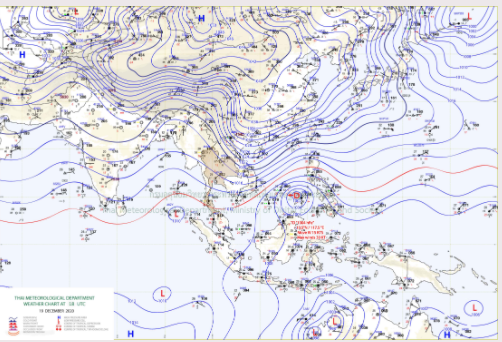
Another strong high-pressure system from China covers upper Thailand, bringing temperatures down by 2-3 degrees Celsius, the Thailand Meteorological Department said on Sunday.

Cool to cold weather and strong winds are forecast for upper Thailand, including Bangkok. Mountaintops remain cold to very cold. People should watch their health due to the variable weather, the department said.

Meanwhile, the strong northeast monsoon prevails over the Gulf and the South. Isolated heavy rain is forecast in the lower South. People in the South should beware of the severe conditions, the department said. 

Strong winds and waves are likely in the upper Gulf, rising about 2-3 metres in the lower Gulf and above three metres during thundershowers. All ships should proceed with caution and small boats in the Gulf should stay ashore until December 23, the department said. 

A tropical depression covers the middle South China Sea. It is expected to downgrade on December 23-24.

The forecast for the next 24 hours:

Bangkok: Cool with strong winds and a 1-2 degrees Celsius drop in temperature; minimum temperature 21-23°C, maximum 30-33°C; northeasterly winds 10-30 kilometres per hour (kph).

North: Cool to cold with 2-3°C drop in temperature; minimum temperature 14-18°C, maximum 28-31°C; cold to very cold on mountaintops with frost in some places and minimum temperature of 3-14°C; northeasterly winds 10-20kph.

Northeast: Cool to cold with strong winds and 2-3°C drop in temperature; minimum temperature 11-16°C, maximum 25-28°C; cold on the mountaintops with minimum temperature 9-14°C; northeasterly winds 10-30kph.

Central: Cool with strong winds and 1-3°C drop in temperature; minimum temperature 17-20°C, maximum 29-30°C; northeasterly winds 10-30kph.

East: Cool mornings with strong winds and 1-3°C drop in temperature; minimum temperature 18-23°C, maximum 30-33°C; northeasterly winds 20-35 kph; waves about two metres high.

South (east coast): Cloudy with scattered thundershowers and isolated heavy rain in Nakhon Si Thammarat, Phatthalung, Songkhla, Pattani, Yala and Narathiwat provinces; minimum temperature 22-24°C, maximum 27-31°C. 

Surat Thani northward: Northeasterly winds 20-35kph; waves about two metres high and above two metres in thundershowers. Nakhon Si Thammarat southwards: Northeasterly winds 20-40kph; waves 2-3 metres high and above three metres in thundershowers.

South (west coast): Cloudy with isolated thundershowers mostly in Krabi, Trang and Satun provinces; minimum temperature 22-24°C, maximum 29-31°C; northeasterly winds 20-35kph; waves about two metres high and above two metres offshore.

Seven-day forecast:

From December 19-23, another strong high pressure cell from China covers upper Thailand and the South China Sea. Cool to cold weather with strong winds and a 2-4°C drop in temperature is likely in the upper country while mountaintops will be cold to very cold. On December 24-25, the high pressure covering upper Thailand will weaken. Temperature will rise by 1-3°C with fog and cool to cold weather in the upper country. A strong northeast monsoon prevails over the Gulf and the South throughout the period, so isolated heavy to very heavy rain is likely. Strong winds and waves are likely over the Gulf of Thailand, about two metres in the upper Gulf and 2-3 metres in the lower Gulf, above three metres in thundershowers. Tropical depression over the middle South China Sea will intensify into a tropical storm. It is expected to downgrade on December 23-24, the department said.

From December 19-23, people in upper Thailand should be careful of their health due to the variable weather, the department said. People in the South should beware of heavy rain. All ships over the Gulf of Thailand should proceed with caution and small boats should stay ashore, the department said.