The Stock Exchange of Thailand (SET) Index rose by 16.74 points, or 1.13 per cent, to 1,503.05 in the morning session on Monday.
An analyst at Krungsri Securities expected the day’s index to hit 1,500 points before falling amid the Thai government’s zoning lockdown, window dressing and mass buy-ups of Super Savings Funds (SSFs) and Retirement Mutual Funds (RMFs) at the end of this year.
“However, the index would be under pressure from the rise in the number of domestic Covid-19 cases, tight SET valuation and the decline in foreign funds flow,” he said.
He recommended that investors buy:
▪︎ PTTEP, PTTGC, TOP and IVL, which benefit from rising oil price.
▪︎ PSL, TTA and RCL, which would benefit from the rise in the Baltic Dry Index.
▪︎ TQM, BLA, STGT, AJ, PTL, SYNEX and COM7, which benefit from the Covid-19 outbreak.
Meanwhile, an analyst at Tisco Securities expected the day’s index to fluctuate due to investors’ short-term speculation, SET’s limited upside and domestic Covid-19 situation.
“However, we do not expect the SET to fall below 1,450 points as we believe that window dressing and mass buy-ups of SSFs and RMFs will help support the index,” he said.
He estimated the index’s support line at between 1,465 and 1,475 and resistance line between 1,495 and 1,500.
He advised investors to sell shares to take profits when the index hits 1,500 and buy back when the index faces volatility.
“Also, we advise investors to stop loss when the SET closes below 1,450 points,” he added.
The SET Index closed at 1,486.31 on Friday, up 34.79 points or 2.40 per cent. Total transactions amounted to Bt88.24 billion with an index high of 1,486.84 and a low of 1,462.77, on the back of news that the European Union and Britain had reached a deal on Brexit.
The price of gold surged by Bt250 per baht weight in morning trade on Monday, the Gold Traders Association reported.
As of 9.27am, the buying price of a gold bar was Bt26,900 per baht weight and selling price Bt27,000, while gold ornaments were priced at Bt26,408.72 and Bt27,500, respectively.
At close on Saturday, the buying price of a gold bar was Bt26,650 per baht weight and selling price Bt26,750, while gold ornaments were Bt26,166.16 and Bt27,250, respectively.
Spot gold price moved to US$1,898 (Bt57,157) per ounce in the morning. However, some important gold markets worldwide were closed for Christmas holidays.
Hong Kong gold price rose by HK$60 to $17,440 (Bt67,750) per tael, the Chinese Gold and Silver Exchange Society reported.
Initial public offerings (IPO) will become more popular with investors next year, experts said recently.
Prasert Tantayawit, managing director of investment banking for Maybank Kim Eng Securities, said investors are paying attention to IPO shares as the stock market is moving into positive territory.
“Businesses related to aviation and retail have postponed plans to launch IPO shares owing to the Covid-19 impact, but we believe they will start raising funds once the pandemic is resolved,” he said.
“Meanwhile, businesses related to healthcare, construction and industrial estate which have been able to escape the Covid-19 fallout are ready to launch their IPO next year.”
He added that many leading Thai firms plan to expand into neighbouring countries next year.
“Recently, Maybank Kim Eng Securities became an adviser for SCG on the acquisition of a Vietnamese company,” he added.
SCB Securities’ director Veena Lertnimitr said companies aiming to launch an IPO next year will attract more investors to the stock market, especially if they are companies related to digital platforms, e-commerce or branding focused food businesses. She added that five such firms will be listed in the stock market next year.
“Most companies that aim to launch an IPO next year have authorised capital of over Bt300 million, while some may need to improve their business plan to deal with the post-Covid-19 era,” she said.
The Thai stock market is expected to face sell-offs in the final week of the year, as new cases of coronavirus infections soar, Anusorn Tamajai, former dean of Rangsit University’s Economics Faculty, has warned.
People who pay respects at the Hindu shrine outside Isetan department store in Bangkok have to stay in the marked space as a precaution against virus infection.
A new round of coronavirus infections globally and the threat of new virus variants may force many countries to impose ban on foreign arrivals, and such restrictions would disrupt recovery of the global economy, he said.
The Stock Exchange of Thailand (SET) may plunge below 1,400 from Friday’s close of 1,486.31, he predicted.
The SET’s new barrier may be at 1,380. The baht will not change much in the final week of the year but it could have a tendency to appreciate in the first quarter of next year due to large contraction in imports, he said.
Investors may shift their funds to more secure asset classes, such as gold and government bonds, as Thailand and other Asian countries are facing a new round of infections which threatens economic recovery. The threat of a US government shutdown could also make global stock markets jittery, as incumbent President Donald Trump has not yet signed the virus relief package into law. That would also adversely affect US stocks and the dollar, said Anusorn.
The Thai government reported 121 new Covid-10 cases on Sunday and authorised partial lockdowns in several provinces.
“The challenge for the government is how to prevent multiple clusters and superspreading events in the next two months,” he said.
If the government can do that, then the virus will be contained as it was in the first round of infection, therefore any large gathering of people must be avoided over the next two months, he noted.
He said the government’s budget of Bt6 billion to buy vaccines is not adequate. The Bt6 billion will buy just 26 million doses of vaccine and only 13 million people will get shots as everyone needs two shots.
Thailand needs to vaccinate at least 53 to 54 million people, including migrant workers, to control the virus and pave the way for reopening of the economy in the third quarter next year, he suggested.
So the government needs Bt18.69 billion more for vaccine sourcing, as the country needs to import at least 107 million vaccine doses, he said.
“If Thailand cannot reopen the economy in the third quarter of next year, more people will lose their jobs, more small businesses will go bankrupt and financial institutions will face serious trouble,” he warned.
The government has to go ahead with its plan to collect land and building tax in order to get more revenue from wealthy people who have the capacity to pay more taxes, he said.
He also urged the government to allow private hospitals to provide vaccinations to high-income groups in order to reduce government spending.
The Bank of Thailand on Wednesday cut its economic growth projection for next year to 3.2 per cent, down from the previous projection of 3.6 per cent, due to the impact of the new round of Covid infections worldwide.
The central bank, however, revised upward its forecast for this year’s growth, predicting a contraction of 6.6 per cent compared with the 7.8 per cent contraction predicted previously.
Just a month after Joe Biden’s victory in the US presidential election, the European Union recently announced that it had adopted the EU Human Rights Global Sanctions Regime to celebrate the world Human Rights Day on the eve of December 10.
The legislation will equip the EU with transnational powers to impose sanctions on those accused of committing crimes that included mass genocide, arbitrary detentions, slavery and other human rights-related issues. While acting on its own, the move has been widely seen as a symbolic gesture by Brussels to re-emphasise its commitment to democracy alongside the US after a tumultuous decade of the world’s right-wing populist turn.
The EU’s new sanctions regime is commonly known as a twin of the Global Magnitsky Act that grants the US the same absolute power to impose travel bans and freeze assets individually of officials from illiberal regimes. Though it does not target the whole country, it essentially aims to cause difficulties and irritations to most human rights abusers from conducting business with EU member states. Put simply, this development is believed, among diplomats and policymakers from both sides of the Atlantic region, to be a mechanism that halts dictators and political strongmen from acts of despotism against their opposition.
Meanwhile, there is not much of a reaction from Bangkok and its foreign policy community. One possibility is that Bangkok might already be familiar with the EU sanctions regime since Thailand was previously attacked by the illegal, unreported and unregulated (IUU) yellow card, a warning against Thailand’s malpractices in fisheries, and that the new sanctions regime is far less threatening than the IUU. On one hand, the worst damage caused by the IUU sanction regime is that Thailand, as the third-largest seafood provider in the world, will be prohibited from exporting its seafood to the EU. On the other hand, the worst damage that can be done by the new regime is as small as individuals having hardship in accessing and locating assets in Europe.
Moreover, such a minor punishment will have little effectiveness in dealing with the global human rights situation, even when both the US and the EU impose it simultaneously. The world already has witnessed what has happened in Hong Kong, Xinjiang and Myanmar where violent abuses by states are not uncommon. To be clear, under the Global Magnitsky Act, outgoing US President Donald Trump had decisively slapped sanctions against many top military and party officials from those countries for alleged abuses and genocide, with asset freezes. The move, however, did not appear to be sufficient to stop those countries’ hawkish leaders from citizen abuses. Since some officials do not even have houses in the US and the targets of the sanctions are also merely not the true decisionmakers, in the realist’s playbook the twin of the Global Magnitsky Act is therefore not that frightening. Even if Bangkok is one of its targets, persons who hold top jobs in the Thai government are surely out of the radar, as the persons who receive punishment maybe some mid-level or other not-that-top officials from the Army that are not deemed as vital to the government. Besides, the strategy of diverging sanctions targets from the countries or states to individuals separately reveal that the EU does not really have an intention to create a wider range of casualties from its sanctions regime. For, there are still some friendly and strategically useful dictator regimes that are important for the EU’s geopolitics.
The new EU sanctions regime was also firmly criticised by EU diplomats and policymakers as for that consensus from EU member-states is required before drawing up the sanctions lists. And there are no independent organisations or civil society bodies that have an ability to recommend sanctions like that in the US. As a result, it is almost near impossible for the EU to effectively impose sanctions on illiberal regimes, especially in a certain circumstance where many of the European leaders are conservative-oriented. Given that Budapest, Warsaw, and Vienna are unwilling to play by the rule, an initiative from Brussels will merely be a failed attempt.
Plus, there is still an unusual belief among the elite and the foreign-policy community in Bangkok that as long as Thailand maintains its cooperation with the EU in other aspects, to be precise a strategic cooperation, it will easily have the EU’s nod no matter how undemocratically it behaves. The Bangkok elite had mistakenly understood that importing arms and giving a long-term security commitment to either the EU or the US will grant it an all-time pass from the sanctions regime. In practical terms, the new tool from Brussels is not going to bother Bangkok even when it is being critically targeted. Particularly not the current government where conservative military leaders have all the say in its decision-making process.
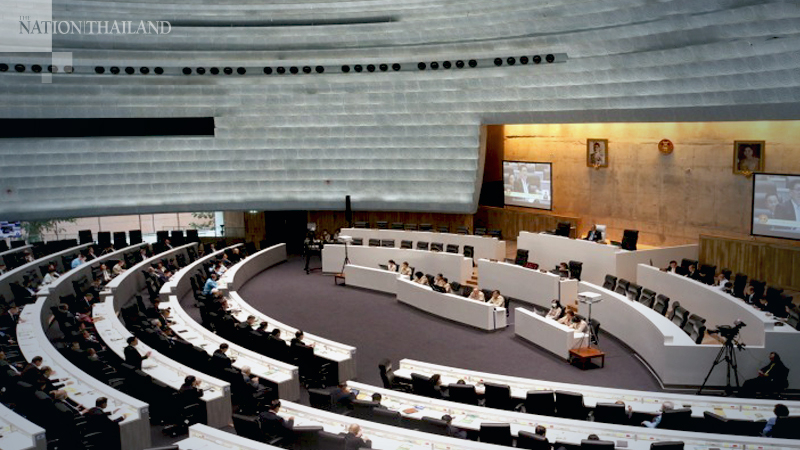
A group of reporters who cover parliamentary news dubbed the Senate, which has 250 senators appointed by the junta, as “parasite” in their year-end ritual of mocking politicians.
“Parasite” senators suck the country’s resources and make no contribution to the country, they said.
The reporters blamed the Senate for using delaying tactics to stall the much-needed amendment of the Constitution, despite being pushed hard by pro-democracy protesters and MPs of opposition parties.
The House of Representatives was dubbed “termites trapped in the mud”, meaning that each termite operated for his or her own benefits and survival, without caring for the people’s interest. Members of Parliament were blamed for not giving priority to House meetings and this undermined democracy, according to the reporters.
House Speaker Chuan Leekpai was mocked as a “principal with a broken cane”, alluding to his inability to make Parliament meetings effective, comparing him with a school principal who fails to bring order to the classroom.
But not everyone was mocked. The reporters picked chief of opposition whip and Pheu Thai Party MP Suthin Khlangsaeng as “star of Parliament”. Suthin’s performance outshone that of opposition leader Sompong Amornwiwat, leader of Pheu Thai Party, they said.
The reporters chose the proposed Constitution amendment as the “event of the year”, as it was the first time a draft of the constitution amendment proposed by the people had landed in Parliament, though it was eventually voted down in November. Pro-democracy protesters also demonstrated outside Parliament in November, leading to violent clashes as police used water canon and tear gas against the youth-led protesters. The government also mobilised ultra-royalists to counter the youth-led protesters, leading to a violent clash between the two groups. The clashes left many people injured.
The reporters picked “it was flour”, as the quote of the year. They were referring to the infamous use of the word “flour” by Deputy Minister of Agriculture and Cooperatives Captain Thamanat Prompow, who had been jailed for smuggling heroin into Australia. Defending himself during a no-confidence debate in February, Thamanat had claimed that it was not heroin but flour.
By The Washington Post · Seung Min Kim, Jeff Stein, Mike DeBonis, Toluse Olorunnipa
WASHINGTON – President Donald Trump late Sunday signed a stimulus and spending bill into law, three people briefed on his decision said, averting a Tuesday government shutdown. His decision to back down and sign the measure will release $900 billion in stimulus funds into the economy that had been held up for nearly a week.
The people spoke on the condition of anonymity because they were not authorized to disclose Trump’s move, which took place while Trump was vacationing in Florida. They said the president had repeatedly changed his mind on the matter.
Trump’s signing came less than a week after he demanded changes to the bill. He had suggested that he would refuse to sign it into law unless those demands were met. On Tuesday, he referred to the bill as a “disgrace.” It was unclear what prompted him to change his mind late Sunday, but he was under tremendous pressure from Republicans to acquiesce.
The government would have shut down on Tuesday if Trump did not act. In addition to containing money to fund government operations, the spending package includes emergency relief money that finances a new round of stimulus checks, unemployment aid, and small business assistance, among other things.
Before the signed the bill, Trump hinted Sunday evening that there had been a development. He tweeted that there was “Good news on Covid Relief Bill. Information to follow!”
Congress overwhelmingly passed the bipartisan bill Monday night, and Treasury Secretary Steven Mnuchin praised it, something congressional leaders in both major political parties interpreted as a sign that Trump was supportive. But the president released a video on Tuesday demanding changes. He said, among other things, that the bill should have authorized stimulus checks of $2,000 per person instead of the $600 payments. Trump also wanted spending cuts to be included in the package, a concern he had not raised until after Congress passed the bill.
Before the video was posted, Mnuchin had said the stimulus checks could be sent as soon as this week. The $600 payments had been Mnuchin’s idea to begin with. It’s unclear whether the roughly week-long delay would push back the issuance of the payments, or whether they could still go out this week.
Trump’s declaration that he wanted changes made to the bill stunned congressional leaders and many White House aides. The spending and stimulus bill had been negotiated with Mnuchin and other White House officials, and the treasury secretary had praised the legislation in a Dec. 21 CNBC appearance.
In recent days, Trump issued a number of tweets appearing to continue his insistence on the $2,000 checks. Authorizing the larger checks, however, did not seem politically feasible in time to avert a shutdown Tuesday. Many Democrats supported the idea of larger stimulus checks, but a number of Republicans opposed it. Approving such a change without unanimous consent in one day is not possible.
The consequences of inaction would have been immense.
Hundreds of thousands of federal employees would have been sent home without pay. The many federal employees who would continue to work because they are deemed “essential,” such as members of the military, would not have be paid until a new funding bill were authorized.
Eviction protections for millions of Americans would lapse later this week, more than 14 million people would lose unemployment benefits, and no stimulus checks would be issued. New money for vaccine distribution, small-business aid, the ailing airline industry, and schools also would have been frozen.
Earlier Sunday, lawmakers expressed a mix of frustration and fury that Trump had not signaled publicly what he planned to do.
“I understand he wants to be remembered for advocating for big checks, but the danger is he’ll be remembered for chaos and misery and erratic behavior if he allows this to expire,” Sen. Pat Toomey, R-Pa., said on Fox News on Sunday. “So I think the best thing to do, as I [said], sign this and then make the case for subsequent legislation.”
Sen. Bernie Sanders, I-Vt., on ABC News said the president was behaving as an “extraordinary narcissist” and was almost “pathologically narcissistic” in his eleventh-hour campaign against the bill.
“It is insane. It is really insane, and this president has got to finally . . . do the right thing for the American people and stop worrying about his ego,” Sanders said.
Millions of American families who have lost their jobs during the pandemic and are still struggling have no choice but to await the president’s decision.
Deseree and Matthew Cox have had little income since August, when Matthew Cox was let go from his management job in pest control. His application for unemployment benefits from Florida has never made it through the system’s queue. The $300 per week Matthew Cox, 38, scrapes together driving for DoorDash hardly makes a dent covering bills, rent and food for themselves and their two children with special needs.
The Coxes have depleted their savings and moved from South Florida to the Indianapolis area for cheaper cost of living and to be near family who could help with child care. But they say they need the extended unemployment benefits, rental assistance, extended eviction moratoriums and direct payments promised by Congress’s stimulus package.
At one point, Deseree Cox, 37, said she could not afford a medication her son needs “just for him to be able to function.”
“People will die without this money,” Deseree Cox said. “People will get evicted. People will not be able to get their medication. To [lawmakers], $600 or $2,000, it seems so little. But to the American people right now, it’s just everything.”
Since the president posted the video on Dec. 22, White House aides have not offered public briefings on his strategy or plans. Instead, Trump has issued tweets reiterating his demand for changes but not saying much more. Vice President Mike Pence is in Vail, Colo., and has been out of sight in recent days.
The White House has provided virtually no information about what its plans are to head off the potential economic calamity of a shutdown and the failure of the relief effort. A White House spokesman declined to comment when asked about the president’s intentions. Negotiations between congressional leaders and the administration were at a standstill on Sunday, and a backup plan had not materialized.
Before Trump signaled that he would sign the bill, people close to the White House described a chaotic scene in which senior officials anxiously await the president’s next move. Republicans have expressed increasing concern that by refusing to sign the bill, Trump could hurt the party’s prospects in the Georgia Senate races on Jan. 5. If Republicans lose those two seats, Democrats will control the chamber.
On Sunday, Trump said he planned to travel to Georgia on Jan. 4 to help campaign for the two Republican candidates.
“Everybody in the White House is trying to figure out what’s in Trump’s head, if this is a bluff or if he’s going to carry this out. He’s been confronted with all the facts and evidence,” said one person briefed by several White House officials over the weekend, speaking on the condition of anonymity to reveal internal discussions. “Nobody knows what Trump is going to do. It’s a bizarre situation.”
One person who interacted with Trump in Palm Beach, Fla., in recent days said the president had not discussed the economic relief bill or the looming government funding deadline. Instead, Trump has been far more focused on his failed effort to reverse the election result, lashing out at Republicans in Congress and members of his own administration for not joining him in the fight.
Trump tweeted several times over the weekend to criticize the aid package, saying: “Increase payments to the people, get rid of the “pork.” He also tweeted: “$2000 + $2000 plus other family members. Not $600. Remember, it was China’s fault!”
Increasing the stimulus payments from $600 per person to $2,000 per adult would add roughly $370 billion to the cost of the bill. In the Cares Act, which passed in March, lawmakers approved stimulus payments of $1,200, which went to more than 100 million Americans.
The 5,593-page bill that Trump now has signaled he will sign was introduced Monday and approved by the House and Senate later that day. It was a fast turnaround, but it was supported by broad majorities in both chambers. The Senate passed the measure 92 to 6.
With Trump and Pence ensconced in resort towns over the weekend, the incoming Biden administration seized on the void to allege that the Trump administration was exhibiting rudderless leadership by delaying an announcement.
On Saturday, Biden accused Trump of an “abdication of responsibility” that would lead to “devastating consequences.”
Biden’s transition team announced Sunday that he would deliver remarks Monday after a briefing by his national security team.
Vice President-elect Kamala Harris also weighed in Sunday, saying American families needed economic support.
“Educators, cafeteria workers, bus drivers, custodians, and the nurses who keep our schools running are being stretched to their limit by this pandemic,” she wrote on Twitter. She added that she and Biden “are committed to ensuring they get the relief they deserve.”
Millions of Americans are days away from losing unemployment payments, housing assistance and other critical coronavirus aid, as federal relief begins to evaporate amid President Donald Trump’s continued refusal to sign a $900 billion congressional stimulus deal into law.
The programs – adopted at the start of the still-worsening pandemic – have helped people purchase groceries, pay their bills, stay current on their rents and mortgages and take sick leave over the past nine months. All are set to expire this week a result of Trump’s last-minute decision to reject a bipartisan aid package that his own administration had helped negotiate.
The economic unraveling is set to take place over several days.
Democratic and Republican lawmakers also sought to use the stimulus deal to plus up some federal safety-net support, enhance vaccine distribution, extend new lifelines to cash-starved businesses and distribute one-time, $600 checks to most Americans. They coupled their new aid with a must-pass measure that would fund the government’s operations through September 2021.
With that agreement now in tatters, however, Washington has found itself scrambling in anticipation of a government shutdown on Tuesday – a halt that threatens to undermine the government’s ability to respond to the coronavirus pandemic and the economic crisis it has wrought.
“I don’t now how to describe it other than traumatic,” said G. William Hoagland, a senior vice president at the Bipartisan Policy Center.
With millions of Americans bracing for sudden, severe financial hardship, Trump spent much of the weekend mounting false attacks against Democrats and tweeting disproven conspiracy theories about the 2020 presidential election. He has held off in signing the stimulus in an attempt to secure larger one-time direct payments to Americans, an idea his own party does not support and moved to block this past week.
The White House did not respond to a request for comment on Sunday as the president decamped to one of his golf courses in Florida.
Here’s what will happen if the bill isn’t signed into law:
– Unemployment benefits lapse:
The economic blow is likely to land hardest on 14 million people who lost their jobs early in the pandemic and still have not been rehired. They have exhausted their benefits, and they are unlikely to see any more aid until Trump signs the stimulus into law.
The day after Christmas marked the last week for which these workers could have applied to receive their weekly unemployment checks. Some of the workers now at greatest risk participate in the so-called “gig economy,” driving for Uber or delivering for GrubHub, as they stand to lose access to the tranche of jobless aid Congress authorized back in March.
Democratic and Republican lawmakers extended unemployment benefits as part of the $900 billion package they adopted last week. But Trump’s newfound opposition to their bipartisan stimulus deal prevented it from being implemented before December 26. The missed deadline means workers now face at least a week, if not likely more, during which they will receive no financial help at all.
Even if Trump had signed the $900 billion deal into law, it might have taken some states weeks to implement the payments given the archaic nature of their computer systems. But the president’s approach threatens even greater delays, keeping checks out of the hands of workers who need it most – with no guarantee they’ll ever receive the payments they missed.
“Fourteen million people not getting paid for a week in this economy is not good,” said Michele Evermore, a senior policy analyst for the National Employment Law Project, which advocates for out-of-work Americans. “That’s an immediate hardship.”
– A looming eviction crisis:
As many as 17 million households are behind on their rent and may face the immediate threat of eviction starting January 1. Out of work – and out of cash – these families have benefited from limited federal eviction protections that are set to expire in four days, further adding to the pressure on the president to act.
“We’re facing the very real possibility of tens of millions of people losing their homes this winter,” said Diane Yentel, the president of the National Low-Income Housing Coalition.
The Trump administration issued a moratorium on evictions this fall out of a belief that a homelessness crisis could worsen in the coronavirus pandemic, forcing people into cramped living conditions. Housing experts praised the policy, even though it caused some headaches – allowing landlords, for example, to start legal proceedings against tenants even if they could not yet remove people from their homes.
Once it expires at midnight Dec. 31, there “may be many families who lose their homes immediately,” said Yentel, adding her organization’s repeated efforts to contact the Trump administration have gone unanswered.
Lawmakers sought to implement an eviction moratorium of their own as part of the $900 billion stimulus that Trump has not yet signed. The package also includes $25 billion to help renters pay back their bills and other costs, including their electricity and water payments, amid growing concerns that Americans are falling far behind on their bills.
– Other new programs put on hold:
Unless the sprawling stimulus package is signed into law, hundreds of billions of dollars in aid for small businesses, households, schools, transportation services, vaccine distribution, internet access and more will fall into limbo. Republican and Democratic lawmakers agreed that the $900 billion relief package would not entirely heal the economy. But there was still hope that their targeted aid could help fill the recovery’s lingering gaps during a brutal winter.
It also set aside stimulus checks up to $600, including for adults and children. Initially, Treasury Secretary Steven Mnuchin said millions of Americans could start receiving payments as soon as this week. But that pledge was thwarted Dec. 22 when Trump demanded Congress revisit the bill and raise the level of stimulus checks to $2,000 (Trump has also demanded reductions in money for foreign aid). Trump has doubled down over the weekend, though it is wildly unclear what his involvement is in new negotiations, or if his insistence on larger payments will derail the entire bill.
Small businesses were supposed to see a lift through $284 billion for first and second forgivable Paycheck Protection Program loans, and $20 billion for targeted grants through the Economic Injury Disaster Loans program. The package provides $15 billion in additional aid for the arts and entertainment industry, including independent movie theaters, entertainment venues, music clubs and cultural institutions.
Billions were tagged for the airline industry, highways, airports, buses and Amtrak, delivering much-needed help to ailing transit systems that have announced massive cuts in staff and service to make ends meet. More than $800 million in relief was specified for public transit in the Washington region in particular.
– A costly government shutdown:
A government shutdown normally causes great disruption, freezing Washington in place and leaving millions of federal workers without a paycheck. But a lapse in funding this week could prove especially harmful in the midst of a global pandemic that already has taxed federal agencies.
Along with stimulus relief, lawmakers last week had approved a measure that keeps the government running after a spending stopgap expires Monday night. That means a shutdown is set to kick in on Tuesday unless Trump signs the bill – or Congress comes up with another solution.
“Not signing the bill also means that the federal government will be closed after Monday, which will idle a large portion of the federal work force at the time when the pandemic is bearing down hardest on the American economy,” said Ernie Tedeschi, an economist and former Treasury Department official during the Obama administration.
Lawmakers could try to quickly pass stopgap funding measures on Monday, as they have for weeks in an attempt to buy more time. But it’s unclear how long such a temporary solution would last, or whether the Senate could even move fast enough to pass it while much of Capitol Hill is away for the holidays.
There is also the open question of whether Trump would sign such a bill into law, as he has often pointed to his demands for larger stimulus checks despite the crucial funding measures in the stalled legislation.
By Syndication Washington Post, Bloomberg · Bailey Lipschultz, Chris Strohm
Current and former U.S. health officials took to the airwaves Sunday to warn Americans of a potential jump in covid-19 cases after the holidays.
“A surge upon a surge” may be on the way after the Christmas and New Year’s period, Anthony Fauci, the government’s top infectious-disease doctor, warned on CNN’s “State of the Union.”
Former U.S. Food and Drug Administration chief Scott Gottlieb said on CBS’s “Face the Nation” that “we have a grim month ahead of us” after a recent increase in cases, with hospitalizations rising on a lag of a few weeks.
The comments came as the number of confirmed cases in the U.S. approach 19 million and deaths are more than 332,000. Fauci, director of the National Institute of Allergy and Infectious Diseases warned that the U.S. is at a “very critical point” in combating the pandemic after many Americans ignored guidance to avoid travel.
Flying has picked up recently while remaining well below year-ago levels. Figures from the Transportation Security Administration show more than 1 million people moved through U.S. airport checkpoints on five of the past nine days heading into and through the holidays.
Admiral Brett Giroir, a member of the White House coronavirus task force, said the risks entailed by traveling depend mostly on what people do once they get to their destinations, as actually being in an airplane is typically safe.
“What we really worry about is the mingling of different bubbles once you get to your destination,” he said on “Fox News Sunday.”
Vaccinations in the U.S. began Dec. 14 with health-care workers and residents of nursing homes. So far almost 2 million doses have been administered in the country, according to a state-by-state tally compiled by Bloomberg. Those numbers are accelerating as a second vaccine by Moderna Inc. is distributed.
Health officials are on alert for a more infectious covid strain that’s emerged in the U.K., Germany, Switzerland, Ireland and Japan, although there’s no clear evidence it results in more severe cases of the disease.
Travelers coming to the U.S. from the U.K. face more restrictions because of the new variant, with the U.S. insisting on testing negative for covid-19 within 72 hours of departing the country.
Gottlieb, a board member of Pfizer Inc., said that he believes the U.K. strain is already in the U.S., and in “a reasonable number at this point.”
He saw signs that U.S. new daily covid-19 cases are starting to plateau, but since hospitalizations and the number of deaths tend to lag by two to three weeks, “we have a very difficult month ahead of us.”
President Donald Trump has remained silent about the new variant and the worsening crisis gripping some parts of the U.S. He took to Twitter on Saturday to criticize Democratic governors for taking emergency steps to contain the outbreak.
“The lockdowns in Democrat run states are absolutely ruining the lives of so many people,” Trump tweeted.
By The Washington Post · Jeff Stein, Toluse Olorunnipa
WASHINGTON – President Donald Trump is rapidly approaching a Monday deadline to avert a government shutdown, but aides and U.S. lawmakers appear flummoxed about his strategy, left to interpret musings from his Twitter feed while he golfs and otherwise remains out of public view.
A large spending bill that Congress passed last week must be signed into law by midnight Monday to prevent many federal agencies from significantly scaling back their operations. After Congress passed the bill, Trump posted a video on Twitter announcing his objections to it, saying that stimulus benefits were too small and that foreign aid was too excessive.
Since he posted the video Tuesday, White House aides have not offered public briefings on Trump’s strategy or plans. Instead, Trump has issued a series of tweets reiterating his demand for changes but not saying much more. Vice President Mike Pence is in Vail, Colo., and has also been out of sight in recent days.
The consequences of inaction are immense.
Starting Tuesday, hundreds of thousands of federal employees would be sent home without pay. And even the many federal employees who continue to work because they are deemed “essential,” such as members of the military, will not be paid until a new funding bill is authorized.
In addition to a government shutdown on Tuesday, eviction protections for millions of Americans would lapse later this week, more than 14 million people could lose access to unemployment benefits, and no stimulus checks would be issued. Without the bill becoming law, no new money would go toward vaccine distribution, small-business aid, the ailing airline industry, schools and more.
“I understand he wants to be remembered for advocating for big checks, but the danger is he’ll be remembered for chaos and misery and erratic behavior if he allows this to expire,” Sen. Pat Toomey, R-Pa., said on “Fox News Sunday.” “So I think the best thing to do, as I said, sign this and then make the case for subsequent legislation.”
Sen. Bernie Sanders, I-Vt., on ABC News said the president was behaving as an “extraordinary narcissist” and almost “pathologically narcissistic” in his eleventh-hour campaign against the bill.
“It is insane. It is really insane, and this president has got to finally get – do the right thing for the American people and stop worrying about his ego,” Sanders said.
Millions of American families who have lost their jobs during the pandemic and are still struggling have no choice but to await the president’s decision.
Deseree and Matthew Cox have had almost zero income since August, when Matthew was terminated from his management job in pest control. His application for unemployment benefits from Florida has never made it through the system’s queue. The $300 per week Matthew, 38, scrapes together driving for DoorDash hardly makes a dent covering bills, rent and food for themselves and their two children who have special needs.
The Coxes have depleted their savings and moved from South Florida to the Indianapolis area for cheaper cost of living and to be near family that could help with child care. But they say they need the extended unemployment benefits, rental assistance, extended eviction moratoriums and direct payments promised by Congress’s $908 billion stimulus package.
At one point, Deseree Cox, 37, said she could not afford a medication her son needs “just for him to be able to function.”
“People will die without this money,” Deseree Cox said. “People will get evicted. People will not be able to get their medication. To [lawmakers], $600 or $2,000, it seems so little. But to the American people right now, it’s just everything.”
When Trump released the video on Tuesday demanding the larger stimulus payments, House Democrats tried to move quickly to approve the measure, but they were blocked by House Republicans on Thursday. They are expected to try again Monday, but their chance of passing the measure with support from Senate Republicans appears small. Their only other option to avoid a government shutdown would be to pass a short-term spending bill, but congressional leaders have not publicly begun discussing that alternative and time is running out.
Trump stunned the nation on Tuesday when he criticized the stimulus legislation previously backed by his own administration as a “disgrace” and called on Congress to significantly amend it. Congress has not met Trump’s demands, and there are no negotiations that could realistically amend the bill for it to be quickly reapproved. Five days after Trump’s video, Congress and the nation are waiting for the president to clarify his intentions about the emergency relief package. So far, he has only tweeted.
“Everybody in the White House is trying to figure out what’s in Trump’s head, if this is a bluff or if he’s going to carry this out. He’s been confronted with all the facts and evidence,” said one person briefed by several White House officials over the weekend, speaking on the condition of anonymity to reveal internal discussions. “Nobody knows what Trump is going to do. It’s a bizarre situation.”
One person who interacted with Trump in Palm Beach, Fla., in recent days said the president had not discussed the economic relief bill or the looming government funding deadline. Instead, Trump has been far more focused on his failed effort to reverse the election result, lashing out at Republicans in Congress and members of his own administration for not joining him in the fight.
If Trump vetoes the bill or does nothing, the federal government will shutdown Tuesday. That raises the prospect of a prolonged government shutdown, until Joe Biden is inaugurated on Jan. 20.
The White House has provided virtually no information about what its plans are to head off the potential economic calamity of a shutdown and the failure of the relief effort. A White House spokesman declined to comment when asked about the president’s intentions. Negotiations between congressional leaders and the White House appear to be at a standstill, and a backup plan had not yet materialized as of Sunday afternoon.
Trump discussed the issue while playing golf in Florida with Sen. Lindsey Graham, R-S.C., and issued several tweets again calling for $2,000 stimulus payments instead of the $600 payments pushed by his own treasury secretary in negotiations.
People close to the White House described a chaotic scene in which senior officials anxiously await the president’s next move. Republicans have expressed increasing concern that the president’s move to blow up a carefully negotiated stimulus deal could hurt the party’s prospects in the Georgia Senate races on Jan. 5. If Republicans lose those two seats, Democrats will control the chamber.
The president in his video called on Congress to approve $2,000 payments instead of $600 payments and strip out numerous provisions for foreign aid. Much of the foreign aid decried by Trump was also requested in the White House’s budget proposal.
House Speaker Nancy Pelosi, D-Calif., is expected to hold a vote Monday on $2,000 stimulus payments to showcase Republican opposition to the larger stimulus measure. Pelosi’s attempt to pass the larger stimulus checks through “unanimous consent” was defeated by House Republicans on Friday.
Trump tweeted several times over the weekend to criticize the aid package, saying: “Increase payments to the people, get rid of the “pork.” He also tweeted: “$2000 + $2000 plus other family members. Not $600. Remember, it was China’s fault!”
The 5,593-page bill that is at the center of Trump’s new demands was introduced and approved Monday by the House and the Senate. It was a fast turnaround, but it was supported by broad majorities in both chambers. The Senate passed the measure 92 to 6.
With Trump and Pence ensconced in resort towns, the incoming Biden administration seized on the void to say the Trump administration was exhibiting rudderless leadership.
On Saturday, Biden accused Trump of an “abdication of responsibility” that would lead to “devastating consequences.”
Biden’s transition team announced Sunday that he would deliver remarks Monday after a briefing by his national security team.
Vice President-elect Kamala Harris weighed in on Sunday, saying American families needed economic support.
“Educators, cafeteria workers, bus drivers, custodians, and the nurses who keep our schools running are being stretched to their limit by this pandemic,” she wrote on Twitter. She added that she and Biden “are committed to ensuring they get the relief they deserve.”




 Anusorn Tamajai

 President Trump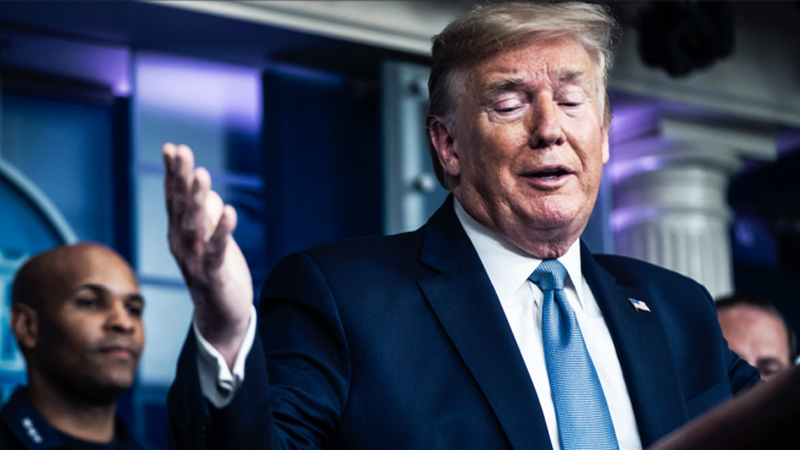
 Anthony Fauci
 SootinClaimon.Com