The Stock Exchange of Thailand (SET) Index fell by 14.93 points, or 0.98 per cent, to 1,513.39 on Monday morning.
The SET Index closed at 1,528.32 on Friday, down 4.39 points or 0.29 per cent. Transactions totalled THB82.02 billion with an index high of 1,541.08 and a low of 1,525.51.
Krungsri Securities predicted the index on Monday would fall to between 1,515 and 1,520 points as many negative sentiments were pressuring the index.
Foreign funds are likely to flow out due to the rising number of Covid-19 cases, both domestic and overseas, the ongoing anti-government protests and the weakening baht, Krungsri Securities said.
ADVERTISEMENTx
It recommended selective buying as investment strategy:
▪︎ HANA, KCE, TU, CPF, GFPT, ASIAN, EPG and NER, which benefit from the weakening baht.
▪︎ PSL and TTA, which would benefit from a rise in the freight rate.
Baht direction to hinge on dollar as delta variant aggravates US Covid situation
The baht opened at 33.33 to the US dollar on Monday, strengthening from last week’s closing rate of 33.37.
The Thai currency was likely to move between 33.30 and 33.45 during the day and between 33.10 and 33.60 this week, Krungthai Bank market strategist Poon Panichpibool said.
The baht’s trend would depend on the dollar’s movement and the Covid-19 situation worldwide, especially in Thailand, he explained.
Poon said that a surge in the delta variant of the Covid virus in the US would affect the dollar in the short term if it impacts the country’s economic numbers.
However, the dollar would receive support if the US Federal Reserve moves to decrease quantitative easing. The statement from the Fed must be closely watched.
ADVERTISEMENT
Meanwhile, he expected the resistance of the baht would be at 33.50 to the US dollar, which is the level that the baht could weaken to in the short term as the situation could worsen, causing foreign investors to offload their assets.
The support level of the baht would be at 32.00, which is the price range that importers are waiting to buy on dips.
Climate change hits sushi supply chain amid California water war
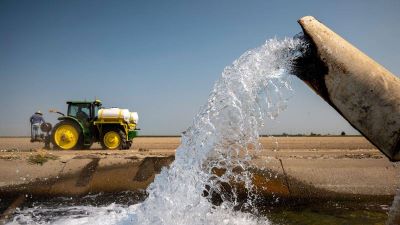
If youve eaten sushi anywhere in the U.S., chances are the rice came from Californias Sacramento Valley. Fritz Durst, a sixth-generation farmer, has grown the grain and other crops there for more than four decades. But this year, amid a historic drought, Durst is planting only half as many acres of rice as usual.
Farmers like Durst would be having an even worse year if it weren’t for water siphoned from the Sacramento River to irrigate fields. Those diversions, though, have dire consequences for another part of the sushi supply chain: The salmon industry. Low water levels and scorching weather have raised river temperatures so much that almost all the juveniles of an endangered salmon species could be cooked to death this fall, state wildlife officials have said.
The drought is so extreme that California regulators earlier this month voted to restrict river diversions for some farmers to protect drinking water supplies. But that’s unlikely to end to water-rights disputes between farms and fisheries, which have tussled in court for decades. As hotter and drier weather drains reservoirs and withers crops, the fight is growing even more fierce, underscoring how climate change is pitting multibillion-dollar industries around the world against one another in a battle for increasingly scarce resources.
“We should be shifting our focus from thinking about drought as an emergency that occurs once in a while, to thinking about it in the context of a long-term shift,” said Jeanine Jones, interstate resources manager at the California Department of Water Resources.
In California, the agriculture industry’s massive water consumption has long been a sticking point for fisheries, environmental groups and other stakeholders. Farms use about 40% of the state’s water on average, according to the nonprofit research group Public Policy Institute of California.
Water rights in California are governed by a complex system that dates back to the Gold-Rush era. Senior rights holders — companies, farmers and cities with claims that were acquired before 1914, and landowners whose property borders a river — are the last to see their supplies curtailed. They wouldn’t be affected by the measures approved earlier this month to restrict flows to some farmers.
Competition for water isn’t unique to California, however. In Brazil, the Parana River Basin is experiencing its worst water crisis in 91 years, leaving farmers dependent on the river to vie with hydropower plants that provide electricity and water to the country’s industrialized south.
Rice, typically cultivated in flooded fields, is among the world’s most water-intensive crops. Government data reveals the toll drought is having on California’s rice growers, which generate more than $5 billion and 25,000 jobs for the state annually, according to the industry-funded California Rice Commission. In a typical year, the state accounts for about two-thirds of U.S. production of medium- and short-grain rice, the kind used in sushi. By late June, California plantings were 19% below year-earlier levels and the smallest in almost three decades, a U.S. Department of Agriculture report showed.
Lower output will likely translate to higher prices consumers. California farmers can expect to get $22 per 100 pounds of of medium- and short-grain rice for 2021-2022, the most in 13 years, the USDA said.
ADVERTISEMENTx
Climate change hits sushi supply chain amid California water war
Tony Gentile, co-owner of Flagship Restaurant Group, which owns 16 sushi bars in six states, said the company has raised menu prices across all of its restaurants in recent weeks as rice and seafood become more expensive and labor costs climb. Though Flagship uses California rice, it’s considering sourcing the grain from Japan or other markets outside the U.S., Gentile said.”Prices now fluctuate day to day more than any other time that I can remember, and I have been in the restaurant business for more than 20 years. It’s scary,” he said.Rice isn’t the only crop decimated by drought, of course. Dry conditions have had a devastating impact across California’s agriculture industry, which supplies over a third of U.S. vegetables and two-thirds of its fruit. After years of what seems like permanent drought, farmers have started ripping out almond trees, which are typically a 25-year investment.
Fisheries and some environmental groups argue that the drought’s impact on salmon has been even more severe, however. Young salmon are typically released from hatcheries into rivers, where they make their way into the Pacific Ocean. But water temperatures in some rivers have climbed so high that state officials are trucking the fish to cooler areas until conditions improve. Commercial and recreational ocean salmon fishing contributes more than $900 million each year to California’s economy, according to the state’s Department of Fish and Wildlife.
Hot weather and water diversion for agriculture is putting commercial fisheries at risk, said Jon Rosenfield, a senior scientist at environmental group San Francisco Baykeeper.
“Cities like San Francisco and Oakland were once major West Coast fishing ports, but as we’ve diverted water from our rivers and destroyed fish nursery habitats in the rivers and the bay, those fisheries have collapsed,” Rosenfield said.
ADVERTISEMENT
A previous collapse of the salmon population in 2008 forced fisheries to close in droves. With her income gone, Sarah Bates, who’s been fishing in the San Francisco Bay Area for 15 years, took a desk job temporarily. Some of her peers went into the construction industry and stayed there, she said.
In a good year, Bates catches 300,000 to 500,000 salmon and sells them at $13 a pound. But the thought of fisheries closing again “keeps me up at night,” she said.
Changes by the Trump administration to limit the scope of protections under the Endangered Species Act could further heighten risks to the salmon population, environmental groups say. The Biden administration is reviewing the revisions.
Environmental groups have argued that the California water rights system unfairly benefits the agricultural industry. They say the damage done to the salmon could have been avoided regardless of the drought, heat waves and climate change if water allocations were better managed. But rice farmers contend that their industry is essential to the state’s economy, and that flooded rice fields provide food and a resting place for millions of migrating birds.
One thing is certain: Worsening drought means competition for water is poised to intensify, forcing regulators to allocate increasingly scarce supplies.
ADVERTISEMENT
“Our society is going to have to decide what it is that’s important to us,” Bates said.
Published : August 16, 2021
By : Syndication Washington Post, Bloomberg · Ximena Del Cerro
Panasonic takes Japans bet on hydrogen power to a new level
Panasonic Corp. is turning a fuel-cell factory in the lakeside city of Kusatsu in central Japan into what could be the worlds first hydrogen-based plant powered entirely by renewable energy.
Prime Minister Yoshihide Suga’s October pledge to make Japan carbon-neutral has been a “tailwind” for Panasonic’s hydrogen-factory project, and the company intends to commercialize the system by fiscal 2023 and sell it globally, said Norihiko Kawamura, manager of Panasonic’s hydrogen business promotion office.
Japan was an early leader in developing hydrogen as an alternative to fossil fuels. The country began investing heavily in the gas in the 1970s when the first of several oil shocks exposed its reliance on imported petroleum. But in recent decades, the efforts of Japan and other countries to exploit the energy source slowed. Despite growing investment, the cost of producing hydrogen has remained stubbornly high, discouraging investment in the infrastructure and technologies needed to make the fuel more widely adopted.
“What’s different today is that cost isn’t the only factor at play,” Kawamura said in an interview at the Kusatsu site. National carbon pledges and targets of major customers such as Apple, which aims to make its supply chain carbon-neutral by 2030, are tipping the balance. The number of inquiries the company received about its factory solution spiked following Suga’s announcement, he said.
Suga sparked a flurry of activity in hydrogen in Japan from other companies too that are keen to meet emissions limits and make money from the technology. Eighty miles east of Kusatsu in Aichi prefecture, hydrogen-powered Mirai cars roll off the lines of a Toyota plant, while a hydrogen charging station hums and clicks as it refuels over a hundred forklifts with the gas.
In December, Toyota banded together with hydrogen producer Iwatani Corp. and Sumitomo Mitsui Financial Group Inc. and other companies to promote the build-out of supply chains and technologies. Toyota later announced it plans to sell modular fuel-cell systems for buses, trains, ships and generators, to “strengthen its initiatives as a fuel-cell system supplier.”
In the push to reduce emissions, many manufacturers have fitted factories with solar panels that charge batteries to produce power. But the solution is weather dependent, making it insufficient for many heavy electricity users that need guaranteed power.
Panasonic’s plant, which makes fuel-cells for homes and condos, would be powered using a mix of solar panels and lithium-ion storage batteries together with bigger fuel cells that convert hydrogen into electricity. The company plans to market the commercial hydrogen system in Japan, China and Europe and expects to earn around 300 billion yen ($2.7 billion) in sales in 2030.
Still, technological challenges remain to make the fuel competitive with rival energy sources such as liquefied natural gas and batteries. So-called green hydrogen, made with renewable energy, costs between $2.50 and $4.50 a kilogram and that price is unlikely to fall to the $1 a kilogram it takes to make the gas using fossil fuels before 2030, according to BloombergNEF. Costs can be even higher in Japan, which may have to ship green hydrogen from countries with cheaper solar power, such as Australia and Saudi Arabia.
Japan’s advantage as an early adopter is also being eroded as other nations jump on the hydrogen bandwagon.
“Nearly everything” from the number of countries creating hydrogen strategies to production of electrolyzers is on track to double this year, according to BNEF. By 2022, shipments of electrolyzers, the systems that break water into hydrogen and oxygen using electricity, are set to quadruple, with China as the biggest and cheapest manufacturer.
Europe aims to increase its renewable hydrogen production sixfold by 2024, and last year unveiled a plan to channel hundreds of billions of euros into hydrogen investment. The French government has earmarked 7 billion euros ($8.2 billion) this decade to support green hydrogen development, while Germany announced an even larger 9 billion-euro plan as part of its green recovery efforts.
Takaya Imai, a special adviser to Japan’s Cabinet on energy and former aide to the previous prime minister, Shinzo Abe, said in a recent interview that Japan’s hydrogen industry development will need more financial backing from the government if the country is to remain a leader in the field.
Last year the government allocated 2 trillion yen for investment in green technologies such as fuel cells and batteries to help meet its 2050 goal. Imai said funding for decarbonization should be as much as 3 trillion yen a year to support efforts like the construction of infrastructure and to help small and medium-sized manufacturers bear the cost of switching to hydrogen.
Panasonic’s Chief Executive Officer Yuki Kusumi said in an interview earlier this year that he’d like to see units that contribute to the environment — such as fuel cell systems and electric vehicle batteries that the company provides to Tesla Inc. — become a core growth area for the company.
It’s a long road, and Kawamura said the company will spend the next two years testing ways of procuring hydrogen and suppressing generation costs.
“This is challenging and won’t immediately bring returns,” Kawamura said. “It’s an investment in the future.”
Published : August 16, 2021
By : Syndication Washington Post, Bloomberg · River Davis, Tsuyoshi Inajima
Industrial estate to come up in EEC for modern auto industry
The Industrial Estate Authority of Thailand (IEAT) has approved the establishment of Chachoengsao Blue Tech City Industrial Estate in the Eastern Economic Corridor (EEC) to support the modern automotive industry.
It is expected to generate THB33.2 billion worth of investment and create employment for approximately 8,300 people.
The Chachoengsao Blue Tech City Industrial Estate will be a joint venture with Double P Land Co Ltd on approximately 1,181 rai (189 hectares) of Khao Din land plot in the Bang Pakong district of Chachoengsao province with an investment of THB4.856 billion. The estate is approximately 44 kilometres from Suvarnabhumi Airport, about 60 kilometres from Laem Chabang Port and 119 kilometres from Map Ta Phut Industrial Port.
It is expected to be operational within two years.
Chachoengsao Blue Tech City Industrial Estate Project is divided into approximately 70 per cent business area and approximately 30 per cent total utility and green area.
The concept of an eco-industrial town has been applied in the design, providing green areas and eco-belt areas around the project area, the IAEA said. The allocation of green areas within the industrial estate is not less than 10 per cent.
ADVERTISEMENTx
Industrial estate to come up in EEC for modern auto industry
“The project has a high market potential as it is located in the EEC area that receives the most benefits under the EEC promotion measures and has attracted interest from industrial operators. At present, there are operators producing high-charge electric energy storage devices, electric vehicles and charging station equipment pay attention to the project area. It is expected that the area will be sold and leased out within four years,” said IEAT governor Veeris Ammarapala.
Over half of SMEs unlikely to survive six months without government support
The Federation of Thai SMEs has warned that small and medium-sized enterprises faced a serious crisis, with 13 per cent at risk of not surviving three months, and 40 per cent likely to close down within six months.
Federation chairman Sangchai Theerakulwanich urged the government to help SMEs by suspending loan principal and interest payments for at least six months.
“Banks must stop charging interest on the principal part, as SME entrepreneurs are severely affected by the lack of income due to the coronavirus crisis,” said Sangchai.
The lockdown measures announced in 29 provinces have affected operators a lot because their economies together make up more than 70-80 per cent of the country’s gross domestic product. He said many businesses suffered from severe liquidity crisis, especially SMEs.
If no additional measures are implemented by the government, there will be many operators in the NPLs list with total debt of THB430 billion, he warned.
Retail sentiment slumps to lowest level in 16 months, recovery expected only in 2023
The 7th Retailer Sentiment Index (RSI) survey for 2021 slumped to 16.4 from the average of 50, the deepest drop in 16 months and below the April 2020 level of 24.3, reflecting the high rate of anxiety.
The retail outlook remains bleak for the coming quarter as well.
The survey was organised by the Thai Retailers Association in collaboration with the Bank of Thailand.
Chatrchai Tuongratanaphan, vice president of the Thai Retailers Association, said the July Retail Sentiment Index was particularly worrying as the Covid delta strain was more severe than the first wave a year ago.
In addition, the lockdown measures and curfews imposed in August, which have now been expanded to 29 provinces, are the most restrictive. It is expected that the retail sector will take a longer time to recover to normal levels, likely by the middle of 2023.
For the first time, consumer spending (spending per bill) or per basket size, and frequency of shopping, both declined. Normally, if the spending decreases, the frequency is high, or if the frequency decreases, the cost per time would be high, Chatrchai said.
Overall retailer confidence in the next three months or the fourth quarter is still low compared to the same period last year, showing that entrepreneurs are still worried about the unclear guidelines for distribution and vaccination, including the purchasing power stimulus measures.
If the pandemic, mainly in Bangkok and its vicinity and the central region, prolongs it will weaken the purchasing power of consumers and affect long-term recovery, Chatrchai said.
The lockdown measures have a huge impact on department stores and restaurants.
More than 70 per cent of sales in shopping centres in Bangkok and its surrounding provinces were lost, while department stores in provinces outside the “dark red” areas lost 40 per cent of sales.
Hypermarket sales dropped by more than 30 per cent.
Meanwhile, convenience stores, which are open from 4am – 9pm have seen a fall in peak hour sales. Convenience stores located in 29 provinces, which account for more than 40 per cent of total stores, lost 20-25 per cent of their sales. However, the outlook for the fourth quarter is expected to remain stable, depending on the positive factors from government measures.
Some 90 per cent expect the retail sector to return to normal in the second half of 2023.
The “Thalu Fah” pro-democracy group on Sunday posted a Facebook message, calling supporters to participate in an anti-government rally at Victory Monument on Monday from 3pm.
The group said they would go to Prime Minister Prayut Chan-o-cha’s house from Phahonyothin Road, turn right at Soi Phahonyothin 2 and turn left at Vibhavadi Rangsit Road.
They added that police would allow them to go to the prime minister’s house if they used this route as they had negotiated with a senior police officer.
Rural doctors slam GPO for buying test kits at double the price
In a Facebook post on Sunday, the Rural Doctors Society announced that the Lepu antigen test kits bought by Thailand were being sold for less than a dollar on Alibaba.
The Government Pharmaceutical Organisation (GPO) and the Food and Drug Administration (FDA) have put in an order for 8.5 million kits with Ostland Capital. Each kit is priced at 70 baht, and Rural Doctors said the price should have been negotiated to less than a dollar (33.32 baht) considering the size of the order.
Two days ago, Rural Doctors also questioned the authorities’ decision to buy Lepu antigen test kits, considering their quality and precision are questionable.
The doctors asked GPO why it did not buy the kits directly from Alibaba for half the price, instead of getting a private company to pocket huge profits.
The Rural Doctors Society has called on the GPO, FDA, Rajavithi Hospital and Public Health Ministry to reveal details of the deal and has urged the government to solve this problem, so it doesn’t become another failure.
Government action needed to control price and supply of antigen test kits
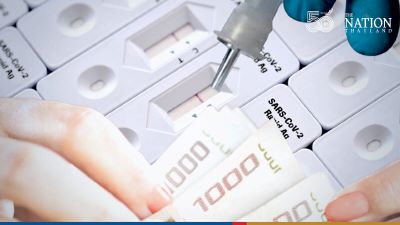
An antigen test kit (ATK) is essential to test for Covid-19 at home, but sadly the selling price in Thailand is high when compared to other countries.
An ATK in Thailand is priced at THB350 to THB400 per kit (for single use). The price is extremely high as some people need to use it many times or even every day.
There are 34 suppliers registered with the Food and Drug Administration (FDA) as of Thursday, offering different types of ATKs They are imported from many countries, such as China, South Korea, Switzerland, and Spain.
The average price of ATK on foreign websites is THB100 per kit/use. The prices as shown on some websites were:
▪︎Alibaba 88 cents (THB60) to US$1.19 (THB100 per kit/use) on average, including transportation and other import costs. ▪︎eBay THB80-180 on average ▪︎Amazon THB165 on average
ADVERTISEMENTx
Information from the Ministry of Commerce revealed that there were 10 brands of ATK in the market. The average price was THB250 to THB350 per kit, while other brands are reconsidering the selling price.
Recently, a meeting of the Central Committee on the Prices of Goods and Services, chaired by Commerce Minister Jurin Laksanawisit, decided to form a subcommittee to monitor and analyse the situation of ATK. The committee will also create guidelines for sale of ATK.
The government could compare the prices with those in foreign countries to find the appropriate price and ensure sufficient stocks of ATK in the market. If the National Health Security Office could distribute 8.5 million ATKs according to the plan, importers will be forced to reconsider their profit margin from selling ATKs.



 Climate change hits sushi supply chain amid California water war

 Industrial estate to come up in EEC for modern auto industry


 Pro-democracy group plans march to PM house today
 Pro-democracy group plans march to PM house today
 SootinClaimon.Com