S. Korea raises travel alert for Ethiopias South Wollo, East Gojjam
South Korea on Thursday raised the travel alert for two areas in Ethiopias northern Amhara region amid escalating armed clashes in the country, recommending citizens cancel or delay plans to travel there.
The foreign ministry issued the Level 3 travel alert for South Wollo and East Gojjam — the second highest in the four-tier system, which asks citizens to cancel their travel plans and those already in the areas to move to safe places.
The ministry said that it would continue to review whether there is a need to readjust the travel alert level as it carefully watches the security conditions in northern Ethiopia. (Yonhap)
World Elephant Day falls on Aug. 12. It is an annual event to raise peoples awareness on elephant conservation. Lets take a look at some African elephants.
File photo taken on November 14, 2017 shows elephants at Mikumi National Park near Morogoro, Tanzania.
ADVERTISEMENTx
An elephant drinks water at the Tsavo National Park in Kenya, Nov. 29, 2018.
An elephant drinks water at the Tsavo National Park in Kenya, Nov. 29, 2018.
File photo taken on Aug. 26, 2016 shows elephants at the Etosha National Park, northwestern Namibia.
File photo taken on Aug. 26, 2016 shows elephants at the Etosha National Park, northwestern Namibia.
An elephant roams at a free-ranging area ahead of an activity to mark World Elephant Day at Uganda Wildlife Education Conservation Center (UWEC) in Entebbe, Uganda, Aug. 10, 2021.
An elephant roams at a free-ranging area ahead of an activity to mark World Elephant Day at Uganda Wildlife Education Conservation Center (UWEC) in Entebbe, Uganda, Aug. 10, 2021.
Biden administration expands COVID-19 vaccination requirement to include HHS employees
By aggressively pushing for vaccination while carefully crafting the plans so as to ensure policies are within the purview of its authority, the Biden administration wants to set an example for state and local governments and the private sector, at a time when the highly transmissible Delta variant continues to wreak havoc across the nation.
The administration of U.S. President Joe Biden on Thursday announced that it requires employees in the Department of Health and Human Services (HHS) who may come in contact with patients to be vaccinated against COVID-19.
ADVERTISEMENTx
“Staff at the Indian Health Service (IHS) and National Institutes of Health (NIH) who serve in federally-operated health care and clinical research facilities and interact with, or have the potential to come into contact with, patients will be required to receive the Covid-19 vaccine,” HHS Secretary Xavier Becerra said in a statement.
According to the secretary, those subject to the new rule are numbered over 25,000, including “employees, contractors, trainees, and volunteers whose duties put them in contact or potential contact with patients at an HHS medical or clinical research facility.”
An HHS official was quoted by CNN as saying the requirement is expected to go into effect by the end of September.
Also included in the more than 25,000 officials are members of the Public Health Service Commissioned Corps, who must also receive vaccinations in accordance with a Thursday announcement by U.S. Surgeon General Vivek Murthy.
The Department of Veterans Affairs (VA) will also expand its previous vaccine mandate for health care workers at Veterans Health Administration facilities on Friday, according to a press release issued by the department Thursday.
After the expansion, workers such as psychologists, pharmacists, social workers, nursing assistants, physical therapists, respiratory therapists, peer specialists, medical support assistants, engineers, housekeepers and other clinical, administrative and infrastructure support employees who come into contact with VA patients and health care workers will be required to administer the jabs, according to the press release.
A man walks past a sign of COVID-19 vaccination at a pharmacy in New York, the United States, Aug. 11, 2021.
The announcements add to a growing list of vaccine requirements recently imposed by an array of federal departments and agencies for their employees.
On Monday, Defense Secretary Lloyd Austin said he would act to require that all active-duty members of the U.S. military be vaccinated against the virus, as Biden last month directed him to do so.
Biden announced in late July that all federal civilian workforce in the executive branch were required to attest to their vaccination status, or subject to regular testing, mask-wearing and social-distancing while on the job, as well as restrictions on official travel.
By aggressively pushing for vaccination while carefully crafting the plans so as to ensure policies are within the purview of its authority, the Biden administration wants to set an example for state and local governments and the private sector, at a time when the highly transmissible Delta variant continues to wreak havoc across the nation.
The hoped-for outcomes are playing out. In addition to private-sector entities such as Amtrak and Citi Bank that have issued vaccine mandates for employees, state governments also followed suit.
Washington Governor Jay Inslee, for example, announced Monday that most state workers, as well as hundreds of thousands of private health care and long-term care employees, would be required to show proof of vaccination or face losing their jobs.
Vaccination proofs are also being required for teachers and school staffs in California, as well as workers and customers in New York City.
U.S. embassy urges Americans to leave Afghanistan immediately
“Given the security conditions and reduced staffing, the Embassys ability to assist U.S. citizens in Afghanistan is extremely limited even within Kabul,” the U.S. Embassy in Kabul said.
The U.S. Embassy in Kabul on Thursday urged Americans to leave Afghanistan immediately as the security situation in the country continues to deteriorate.
ADVERTISEMENTx
“The U.S. Embassy urges U.S. citizens to leave Afghanistan immediately using available commercial flight options,” the embassy said in a statement.
“Given the security conditions and reduced staffing, the Embassy’s ability to assist U.S. citizens in Afghanistan is extremely limited even within Kabul,” it added.
The security alert came days after a similar notice issued by the embassy on Saturday. It also came as Taliban militants captured Ghazni city, the capital of eastern Ghazni province earlier in the day, bringing the number of provincial capitals captured by the insurgent group to 10 in less than a week.
The security situation in the war-torn country has been deteriorating since the withdrawal of U.S.-led troops starting on May 1. Many Afghan cities and about half of the country’s 34 provinces in recent weeks have seen heavy battles and street fighting between Afghan forces and Taliban militants.
President Joe Biden ordered the U.S. military to end its mission in Afghanistan by the end of this month. The U.S. Central Command said over 95 percent of the drawdown had been completed.
Biden said on Tuesday that the United States would continue to provide air support and military equipment to Afghanistan while noting Afghan forces must “fight for themselves, fight for their nation.”
People cool off in fountains in Rome amid high temperatures
People hit fountains to stay cool in Rome, Italy. A heatwave is sweeping across the country this week while wildfires are still raging in its southern regions.
A man refreshes himself with the water of the Barcaccia Fountain in the Piazza di Spagna in Rome, Italy, Aug. 12, 2021.
A man refreshes himself with the water of the Barcaccia Fountain in the Piazza di Spagna in Rome, Italy, Aug. 12, 2021.
ADVERTISEMENTx
People visit the Piazza di Spagna in Rome, Italy, Aug. 12, 2021.
People visit the Piazza di Spagna in Rome, Italy, Aug. 12, 2021.
Tourists fill bottles from a water tap near the Pantheon in Rome, Italy, Aug. 12, 2021.
Tourists fill bottles from a water tap near the Pantheon in Rome, Italy, Aug. 12, 2021.
A tourist cools off by a fountain near the Pantheon in Rome, Italy, Aug. 12, 2021.
ADVERTISEMENT
A tourist cools off by a fountain near the Pantheon in Rome, Italy, Aug. 12, 2021.
A woman takes a selfie near a fountain in Rome, Italy, Aug. 12, 2021.
A woman takes a selfie near a fountain in Rome, Italy, Aug. 12, 2021.
Tourists cool off near a fountain in Rome, Italy, Aug. 12, 2021.
Tourists cool off near a fountain in Rome, Italy, Aug. 12, 2021.
ADVERTISEMENT
A boy refreshes himself with the tap water in Rome, Italy, Aug. 12, 2021.
A boy refreshes himself with the tap water in Rome, Italy, Aug. 12, 2021.
A tourist cools off by a fountain near the Pantheon in Rome, Italy, Aug. 12, 2021.
A tourist cools off by a fountain near the Pantheon in Rome, Italy, Aug. 12, 2021.
A dog drinks water under a water tap near the Pantheon in Rome, Italy, Aug. 12, 2021.
A dog drinks water under a water tap near the Pantheon in Rome, Italy, Aug. 12, 2021.
A couple stand near a fountain in Rome, Italy, Aug. 12, 2021.
A couple stand near a fountain in Rome, Italy, Aug. 12, 2021.
A boy refreshes himself with the water of the Barcaccia Fountain in the Piazza di Spagna in Rome, Italy, Aug. 12, 2021.
A boy refreshes himself with the water of the Barcaccia Fountain in the Piazza di Spagna in Rome, Italy, Aug. 12, 2021.
Asia Album: Rescue team provides flood relief in Indias northern state
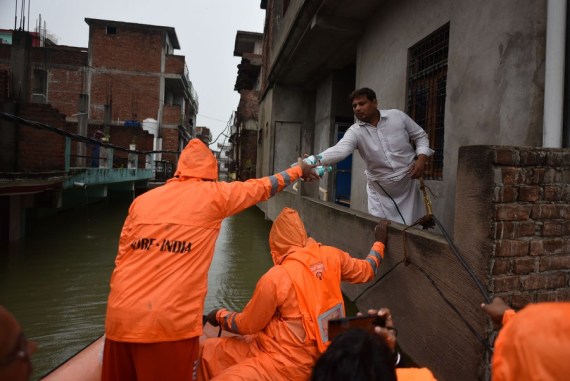
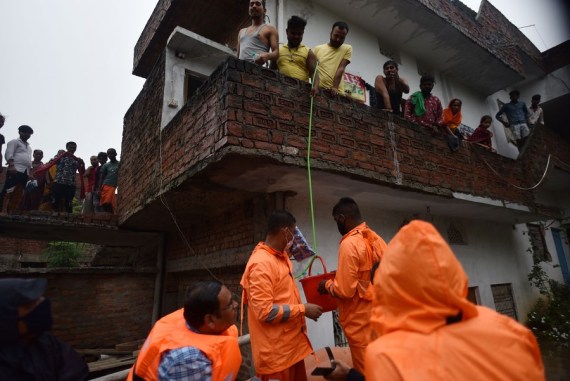
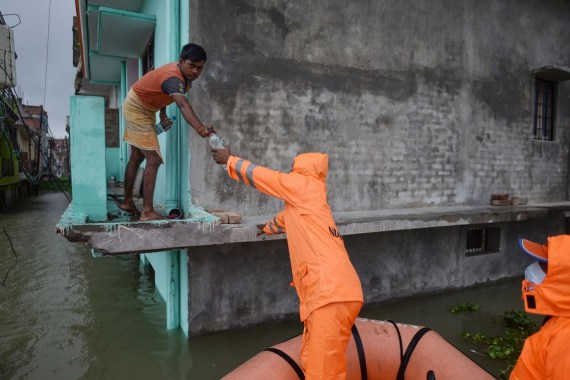
Members of the National Disaster Response Force (NDRF) distributed relief as the houses of people in Prayagraj district in Indias northern state of Uttar Pradesh remained submerged after river Ganga swelled due to monsoon rains.
Members of the National Disaster Response Force (NDRF) distribute relief among flood affected people in Prayagraj district, India’s northern state of Uttar Pradesh
ADVERTISEMENTx
Houses are seen in the flood as the Ganga river swells after monsoon rains in Prayagraj district, India’s northern state of Uttar Pradesh, Aug. 9, 2021.
Members of the National Disaster Response Force (NDRF) distribute relief among flood affected people in Prayagraj district, India’s northern state of Uttar Pradesh, Aug. 11, 2021.
Members of the National Disaster Response Force (NDRF) distribute relief among flood affected people in Prayagraj district, India’s northern state of Uttar Pradesh, Aug. 11, 2021.
Members of the National Disaster Response Force (NDRF) distribute relief supplies among flood-affected people in Prayagraj district in India’s northern state of Uttar Pradesh, Aug. 10, 2021.
Members of the National Disaster Response Force (NDRF) distribute relief supplies among flood-affected people in Prayagraj district in India’s northern state of Uttar Pradesh, Aug. 10, 2021
Southeast Asia reported lower number of new Covid-19 cases and deaths on Thursday, collated data showed.
There were 95,460 new cases on Thursday, lower than Wednesday’s 97,857, while 2,659 patients died, down from Wednesday’s 2,723.
The number of Covid-19 cases crossed 8.4 million in the region and deaths rose to 181,005.
Vietnam reported 9,667 new cases and 326 deaths on Thursday, bringing cumulative cases in the country to 246,568 patients and 4,813 deaths.
Vietnamese police arrested the owner of a printing business in a northern province for allegedly selling fake negative Covid-19 test results via RT-PCR method. He reportedly admitted to selling more than 150 fake documents after the government restricted domestic travel since late April and required all travellers to present a negative test result to the authorities of each province.
Cambodia reported 455 new cases and 20 deaths, bringing cumulative cases in the country to 83,839 and 1,634 deaths. All hospitals in Cambodia have started giving a third jab of the Covid-19 vaccine for frontline medics as a booster shot to increase immunity against the virus. Those who received the first and second jabs as Sinovac or Sinopharm vaccine will get a third jab of AstraZeneca. Those who received AstraZeneca as the first and second jabs will get Sinovac as a booster shot. The government is also planning to give the Johnson & Johnson vaccine, which it received as a donation from the US, to people in remote areas because it requires only one dose per person.
With stress on officers spiking, New York joins wave of police agencies using therapy dogs
NEW YORK – New York Police Department First Deputy Commissioner Benjamin Tucker knows that what an officer sees on the job can have an impact for many years.
He still remembers the deadly gang-related arson when he was a beat cop in Brooklyn in the 1970s, and the unsolved murder of a man he found lying on the pavement, the bullet wound behind his ear not yet visible.
In 2019, when the nation’s largest police department grappled with a record wave of officer suicides, Tucker brought those memories with him as he and other department brass brainstormed how to alleviate job-related stress.
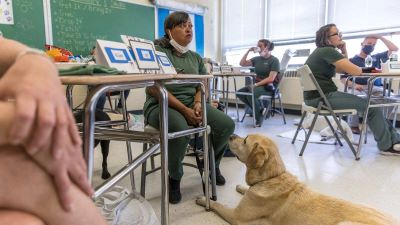
Enter Jenny and Piper – newly-minted yellow Labrador retriever detectives with the NYPD’s Employee Assistance Unit. Their cuteness and caring demeanor will help connect with officers who face growing tension on the streets and may be quietly suffering from work or personal issues.
In the wake of the killing of George Floyd in police custody and the Jan. 6 breach of the U.S. Capitol, anti-police fury is “tremendous” and “exponentially more palpable than it has been in the past, said Tucker, who presided over Jenny and Piper’s swearing-in ceremony at police headquarters earlier this month.
Assaults on officers are increasing, and communities across the country are facing calls to “defund the police.” Beat cops routinely face catcalls – and a wall of cellphone cameras set to “record” – when carrying out daily duties.
Lt. Janna Salisbury, who heads New York’s Employee Assistance Unit, said the dogs and their handlers “will respond to critical incidents involving on and off-duty members of the department . . . breaking down traditional mental health barriers, reducing stigmas that often prevent officers from seeking care.”
Services provided by the EAU are confidential, and the unit will refer troubled cops to counselors outside of the department anonymously if they wish.
Law enforcement agencies around the country increasingly are turning to emotional support dogs – a departure from K-9 programs where animals search for drugs, weapons and explosives, control crowds or track down missing people.
In the month after Jan. 6, four police therapy dogs from two Northern Virginia departments – Fairfax County and Arlington County – spent time with U.S. Capitol Police officers and National Guard soldiers, said Allison Cutright, who runs the Fredericksburg, Va.-based FRK9 that trained those dogs. She estimated that dozens of departments have launched K-9 programs in recent years.
“Law enforcement officers go to work every day and do a job most people wouldn’t do for a million bucks,” said Patrick Yoes, National President of the Fraternal Order of Police, describing how officers on patrol have been villanized over the past 18 months. “To have people turn on us the way that they did . . . I think it took a toll on every officer.”
ADVERTISEMENTx
With stress on officers spiking, New York joins wave of police agencies using therapy dogs
A program called Puppies Behind Bars is responsible for bringing Jenny and Piper to New York’s employee assistance unit. To learn how to handle dogs, four EAU officers recently spent two weeks embedded at the Bedford Hills Correctional Center, a maximum security women’s prison in Westchester County where inmates raise puppies to become therapy and service animals.
The women are housed in their own unit; their K-9 trainees sleep beside them in cells.
Tiffany Richway, 29, is serving an 11-year sentence on a high-level drug conviction in a remote upstate county, near the Canadian border. Richway said the K-9 program has given her purpose as she works through her sentence.
“It makes prison so much easier,” she said. “It gives you something to wake up for.”
ADVERTISEMENT
Richway said she and her colleagues in the program only recently began training therapy dogs for use in police departments. They were already training dogs for other jobs, including to comfort veterans suffering from post-traumatic stress disorder, or PTSD.
At the prison, the NYPD officers were paired with inmates who trained them to become Jenny and Piper’s handlers and backup handlers. The pairing of convict coaches and cops was odd at first, according to some of the inmates and officers. But they quickly saw the importance of their common purpose.
Sgt. Anthony Manza, who is Piper’s backup handler, said the dogs “have an uncanny ability to spot a person in need and offer unconditional compassion.” Some therapy dogs are used to ease the stress of domestic violence and sexual assault victims, often with a tactic called “tell me a story,” in which the therapy dog sits on the lap of an ailing person as they are asked to convey a traumatic event.
“It is our intention to bring techniques like this to cops in crisis, to smash through the wall that stigma behind mental health has built, to get officers to open up in situations where they might not normally open up, including thoughts of suicide,” Manza said.
In Fairfax County, three police dogs make several rounds of random check-ins with officers each week, while also responding to critical incidents and any situation that may be difficult for officers, said Lt. Christopher Sharp, who commands the Incident Support Services unit.
ADVERTISEMENT
The dogs tend to disarm officers who could benefit from help but might not otherwise feel comfortable talking freely with a colleague, Sharp said. They are also used in the community – appearing at National Night Out and other public events.
Patrick Yoes, the national FOP president, said police therapy dogs are “sorely needed,” especially if used in a way that keeps officers from feeling like they will face reprisal for seeking help or counseling. The dogs, he said, are skilled at getting big “manly” cops to “sit on the floor and play with them.”
With stress on officers spiking, New York joins wave of police agencies using therapy dogs
Blue H.E.L.P., an organization devoted to promoting mental health for law enforcement, says at least 89 officers have died by suicide so far this year. That is compared to 239 law enforcement suicides in 2019 – the year 10 New York officers took their own lives – 174 in 2020 and 182 in 2018.
Four officers who were at the Capitol on Jan. 6 have since taken their own lives.
Many officers who survived the attacks at the Capitol continue to suffer from mental as well physical injuries.
Attacks on officers across the country are on the rise, according to statistics complied by the FOP, with 185 officers shot, including 35 killed, through July. The organization said ambush-style attacks are up 126 percent from last year, with 67 cops shot in 52 incidents. Earlier this month, two Chicago police officers were shot, one fatally, during a traffic stop.
Betsy Brantner Smith, a retired police sergeant and longtime dog owner who worked in suburban Chicago, used to supervise her agency’s K-9 unit.
Now a spokeswoman for the National Police Association and a police trainer, Smith often brought Marley, her German shepherd rescue, to courses she teaches with her husband around the country.
Marley, who died recently, had a knack for cozying up to officers in her training sessions who had been in a shooting or who had experienced another kind of trauma, Smith said.
While she was on the job, her pets were always a source of comfort. In her recent eight-month stint of treatment for breast cancer, her pair of terrier mixes were a loving presence that helped her get through.
“That’s one of the reasons I so strongly believe in these programs – is because I have seen with my own personal experiences what dogs mean to people, [and] what dogs have meant to our family,” Smith said.
Military bases near Chesapeake Bay contaminated with forever chemicals, new report warns
Nine military bases near the Chesapeake Bay are contaminated with “forever chemicals” from firefighting foams used by the Defense Department, an environmental advocacy group warned this week.
The new report from the Environmental Working Group, citing tens of thousands of pages of records obtained from the Defense Department, said that the biggest risk is that the chemicals might have flowed out of the groundwater at military sites in Maryland and Virginia and into the Chesapeake, contaminating the region’s wildlife – including its famed shellfish – affecting the food chain and possibly sickening people.
Known as PFAS, the group of man-made chemicals has been around since the 1940s and is found in hundreds of everyday products, including pizza boxes, nonstick cookware, stain-repellent fabric and cleaning products. They do not break down in the environment and can slowly accumulate in the human body, which research has shown could be linked to an increased risk of cancer and birth defects, among other ailments.
ADVERTISEMENTx
The chemicals are also present in “aqueous film-forming foam” that the Defense Department first developed in the 1960s to quickly put out jet-fuel fires, during training exercises and in actual blazes.
When asked to comment on the report, a spokesman for the Defense Department offered links to two websites with news releases about the department’s efforts to clean up the chemicals, its outreach and restoration efforts, and how the “national issue” needed “national solutions.”
Beyond that, the spokesman said in an email, “we have nothing further to provide.”
The nine affected sites include Aberdeen Proving Ground in Aberdeen, Md., the U.S. Naval Academy in Annapolis, Md., and Langley Air Force Base in Hampton, Va., which had the highest concentration of chemicals in its groundwater, at 2.2 million parts per trillion. (The Environmental Protection Agency has said that such chemicals should be at or below 70 parts per trillion in clean drinking water).
Also on the list was Blossom Point, the Martin State air facility, Patuxent River Naval Air Station and the U.S. Naval Research Laboratory Chesapeake Bay Detachment in Maryland, along with Fort Eustis in Newport News, Va., and Naval Weapons Station Yorktown.
An additional seven military sites may also be affected, the report said, though the Defense Department has not yet done testing to confirm the presence of “forever chemicals” in those places. Those are the Navy recreation center in Solomons, Md.; the Weide Army Heliport in Edgewood, Md.; Naval Training Center Bainbridge in Port Deposit, Md.; Fort Monroe in Virginia; the Little Creek Naval Amphibious Base in Virginia Beach; the Williamsburg Fleet and Industrial Supply Center; and the Craney Island naval fuel depot in Portsmouth, Va.
Scott Faber, senior vice president at the nonprofit Environmental Working Group, best known for its guides to sunscreens and produce, said it is unclear whether the crabs, oysters and fish being harvested from affected areas contain high levels of contamination, but he said a “limited sampling” has left his group feeling that there are “reasons to be worried.”
The third-largest estuary in the world, the Chesapeake Bay encompasses about 64,000 square miles, and its watershed spans parts of six states. The chemicals have long posed a challenge to the bay’s health. In a 2020 study, PFAS chemicals were found in crab and oysters from St. Inigoes Creek in Maryland and in striped bass in the Potomac River.
Faber said that people who catch or consume shellfish near the nine spots listed in the report should take precautions.
“Limit your consumption of oysters and crabs from areas near those places,” Faber said. “Don’t eat a lot of them that are harvested offshore from these places.”
And while the Food and Drug Administration has not set consumption thresholds for “forever chemicals” in seafood – nor has Maryland or Virginia – the European Food Safety Authority has set a limit of 4.4 nanograms per kilogram of weight. That’s the equivalent of a 160-pound person eating a portion of an oyster.
Other states, including Alabama, Michigan, New Jersey and Wisconsin, have begun issuing fish advisories for seafood known to have elevated levels of the chemicals.
The Defense Department formed a task force in July 2019 to figure out what to do about “forever chemicals.” By late March of this year, the department had compiled a list of 698 military installations across the country that had probably used or released the firefighting foam, now known to be hazardous. Of those places, 129 have finished a preliminary assessment, with 63 sites being given a clean bill of health and 66 requiring a more detailed investigation.
At a House Appropriations subcommittee hearing in late May, Richard Kidd – the Defense Department’s deputy assistant secretary for environment and energy resilience – said that the department had a “mature” cleanup program but that efforts have been complicated by the $29 billion price tag and how little is still known about the chemicals, including how to remediate them.
Solutions, he said, include pumping out groundwater, filtering it, then pushing it back into the ground.
“Based on what we know today, and known technologies, frankly, it will be years before we fully define the scope of the problem. . . . And after that, probably decades before cleanup is complete,” Kidd said.
Published : August 13, 2021
By : The Washington Post · Lizzie Johnson, Dana Hedgpeth
Chances of this asteroid hitting Earth are tiny, NASA says – but not zero
Its not the plot of another doomsday movie. Yet there is a pending, albeit unlikely threat to life as we know it: an asteroid approaching Earth.
Bennu, a rugged, rock-spewing asteroid with a diameter of about one-third of a mile, is headed in our direction, on track to come very close with Earth in September of 2135.
But not to panic, scientists with NASA said Wednesday. Though Bennu will come within half the distance of the moon, the odds of the asteroid colliding with Earth in the next century and causing Armageddon-type of destruction are still very low.
“Even though there is no possibility whatsoever of in impact during that encounter, Bennu is going to be fairly close to the Earth,” said Davide Farnocchia, a scientist with the Center for Near Earth Object Studies, a NASA center that calculates asteroid and comet orbits and their odds of impact at the Jet Propulsion Laboratory in Southern California.
ADVERTISEMENTx
Although researchers believe it will not impact Earth, they now face the challenge of deciphering how our planet’s gravity will alter the asteroid’s path around the sun, NASA scientists said in a conference call with reporters Wednesday.
Scientists noted there is small possibility that the asteroid could pass through what’s known as a “gravitational keyhole” that could potentially put it in en route to Earth at a later date in the 22nd century. A gravitational keyhole is a tiny region in space where a planet’s gravity can tweak the trajectory of a passing asteroid and put it on a path to collide with it in the future.
Farnocchia said that although recent findings show the odds of impact have slightly increased – from 1-in-2,700 to 1-in-1,750 over the next century – it “does not represent significant change,” or a reason to worry.
Farnocchia explained that scientists now have a much better idea of Bennu’s path thanks to data collected by NASA’s Origins, Spectral Interpretation, Resource Identification, Security-Regolith Explorer (OSIRIS-REx) spacecraft, which orbited and studied the asteroid for over two years.
“Overall the situation has improved,” Farnocchia, the lead author of a study published Wednesday, told reporters in a conference call. “I am not any more concerned about Bennu than I was before; the impact probability remains very small.”
ADVERTISEMENT
In the study, NASA researchers used precision-tracking data from the OSIRIS-REx spacecraft to better understand Bennu’s movements through 2300, improving scientists’ ability to determine the probability of impacting Earth and predict the orbits of other asteroids.
Using NASA’S Deep Space Network of giant radio antennas that support interplanetary spacecraft missions and computer models, scientists were able to determine Bennu’s overall probability of striking is about 1 in 1750 (or 0.057%.)
Looking at it from glass half full perspective, it means there is a 99.94% probability that Bennu will not hit our planet.
Scientists also calculated the day with the highest risk of collision: Sept. 24, 2182, with a probability of 1 in 2,700 (or about 0.037%) – which is still lower that the overall probability of impact through 2300.
The potentially hazardous asteroid was discovered in 1999 by the Lincoln Near-Earth Asteroid Research Team, a program that works on detection and tracking, and has been closely observed with 580 ground-based “astrometric observations,” mainly made by optical and radar telescopes through 2018, according to the study published in Icarus Journal.
ADVERTISEMENT
Since its discovery, Bennu has had three close encounters with Earth, in 1999, 2005 and 2011, during which two radar stations collected data of the asteroid’s measurements.
Although the chances of it colliding with Earth are very low, Bennu remains one of the two most hazardous known asteroids in our solar system, along with another called 1950 DA, NASA said in a news release.
Researchers stated that the most pressing threat for Earth from space objects are hazardous asteroids that are undetected. However, they said they have detected about 60% of those similar to Bennu in size.
In 2016, NASA launched the OSIRIS-REx spacecraft to fly in close proximity to Bennu to gather information about its size, shape, mass, and composition, while monitoring its spin and orbital trajectory to evaluate its potential danger.
After a 27-month-long journey, OSIRIS-REx arrived in the asteroid’s orbit in 2018 and spent two years closely studying the object, before coming back to earth on May 10 of this year.
“The OSIRIS-REx data give us so much more precise information, we can test the limits of our models and calculate the future trajectory of Bennu to a very high degree of certainty through 2135,” said study lead Davide Farnocchia. “We’ve never modeled an asteroid’s trajectory to this precision before.”
The spacecraft also scooped up a sample of rocks and dust from the asteroid’s surface, which it will drop to Earth two years from now, on Sept. 24, 2023, landing at the Utah Test and Training Range, in the Great Salt Lake Desert.
“The orbital data from this mission helped us better appreciate Bennu’s impact chances over the next couple of centuries and our overall understanding of potentially hazardous asteroids – an incredible result,” said Dante Lauretta, OSIRIS-REx principal investigator and professor at the University of Arizona.
“The spacecraft is now returning home, carrying a precious sample from this fascinating ancient object that will help us better understand not only the history of the solar system but also the role of sunlight in altering Bennu’s orbit since we will measure the asteroid’s thermal properties at unprecedented scales in laboratories on Earth,” he said, according to the news release.
A week after the spacecraft entered its first orbit around Bennu, on Dec. 31, 2018, the mission’s team came to the surprise realization that the asteroid was releasing small pieces of rock into space.
Upon arrival at the asteroid, team members also were astonished to find that Bennu is littered with boulders, according to a NASA statement in May.
OSIRIS-REx is not the only spacecraft from Earth exploring an asteroid. Hayabusa2, launched by Japan’s space agency in 2014, began orbiting the near-Earth asteroid Ryugu in 2018 and in 2020 successfully completed its mission to collect samples and return them to Earth – according to the Japan Aerospace Exploration Agency.
Traveling at approximately 600 miles per hour, if Bennu were to crash into Earth it would unleash the energy of more than a billion tons of TNT, according to NASA’s calculations.
The resulting damage depends on a number of factors and specific circumstances, including location and angle of entry into our atmosphere, but it could create a crater three to six miles in diameter, said Lindley Johnson, NASA’s planetary defense officer. The area of devastation would be much bigger: as much as 100 times the size of the crater.
If an object Bennu’s size hit the Eastern Seaboard, it “would pretty much devastate things up and down the coast,” he told reporters.



 File photo taken on November 14, 2017 shows elephants at Mikumi National Park near Morogoro, Tanzania.
 An elephant drinks water at the Tsavo National Park in Kenya, Nov. 29, 2018.
 File photo taken on Aug. 26, 2016 shows elephants at the Etosha National Park, northwestern Namibia.
 An elephant roams at a free-ranging area ahead of an activity to mark World Elephant Day at Uganda Wildlife Education Conservation Center (UWEC) in Entebbe, Uganda, Aug. 10, 2021.
 A man walks past a sign of COVID-19 vaccination at a pharmacy in New York, the United States, Aug. 11, 2021.

 A man refreshes himself with the water of the Barcaccia Fountain in the Piazza di Spagna in Rome, Italy, Aug. 12, 2021.
  People visit the Piazza di Spagna in Rome, Italy, Aug. 12, 2021.
 Tourists fill bottles from a water tap near the Pantheon in Rome, Italy, Aug. 12, 2021.
 A tourist cools off by a fountain near the Pantheon in Rome, Italy, Aug. 12, 2021.
 A woman takes a selfie near a fountain in Rome, Italy, Aug. 12, 2021.
 Tourists cool off near a fountain in Rome, Italy, Aug. 12, 2021.
 A boy refreshes himself with the tap water in Rome, Italy, Aug. 12, 2021.
 A tourist cools off by a fountain near the Pantheon in Rome, Italy, Aug. 12, 2021.
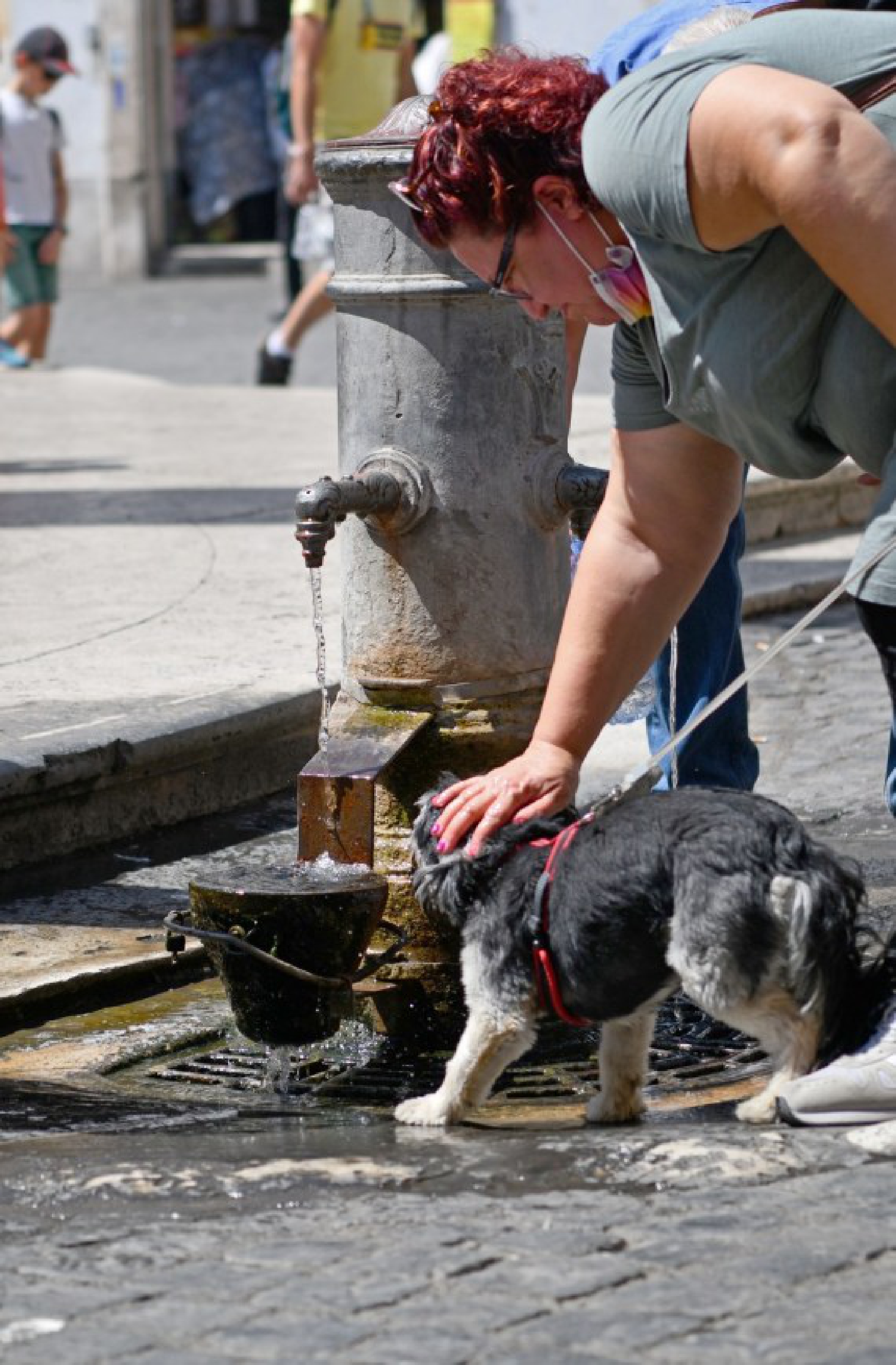 A dog drinks water under a water tap near the Pantheon in Rome, Italy, Aug. 12, 2021.
 A couple stand near a fountain in Rome, Italy, Aug. 12, 2021.
 A boy refreshes himself with the water of the Barcaccia Fountain in the Piazza di Spagna in Rome, Italy, Aug. 12, 2021.



 With stress on officers spiking, New York joins wave of police agencies using therapy dogs
 With stress on officers spiking, New York joins wave of police agencies using therapy dogs

 SootinClaimon.Com