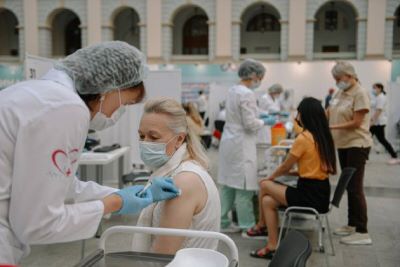
Russia has confirmed 21,571 new COVID-19 cases over the past 24 hours, taking the nationwide tally to 6,512,859, the official monitoring and response center said Wednesday.
The nationwide death toll grew by 799 to 167,241.
During this period, the nationwide death toll grew by 799 to 167,241, while the number of recoveries increased by 20,067 to 5,808,777.
Meanwhile, Moscow, Russia’s worst-hit region, reported 2,076 new cases, taking the city’s total to 1,533,065.
More than 170 million COVID-19 tests have been conducted across the country so far.
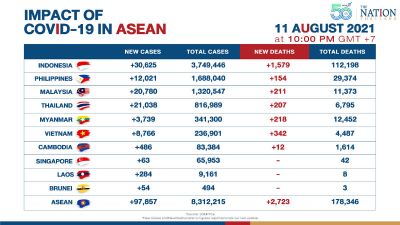
The number of Covid-19 cases in Southeast Asia crossed 8.31 million, with 97,857 new cases reported on Wednesday, higher than Tuesday’s tally of 94,201.
There were 2,723 more deaths, decreasing from Tuesday’s 3,201 and taking total Covid-19 deaths in Asean to 178,346.
The Philippines reported 12,021 new cases and 154 deaths on Wednesday, bringing cumulative cases in that country to 1,688,040 patients and a total 29,374 deaths so far.
The government will give a handout of 1,000 pesos, or THB661, to people who have been affected by the latest lockdown in Manila. About 80 per cent of the city’s 13 million residents are expected to be eligible for the handout.
The Manila lockdown includes nighttime curfew, no dining in at restaurants and a ban on outdoor activities. It is estimated to cost the economy around THB100 billion per week.
Vietnam meanwhile reported 8,766 new cases and 342 deaths, bringing cumulative cases in the country to 236,901 patients and a total 4,487 deaths.
The fourth wave of the pandemic in Vietnam, which started on April 27, is the fastest spreading wave with a total of 228,990 new infections.
Most of the new cases have been found in the country’s economic hub of Ho Chi Minh City, prompting the government to put the city and surrounding southern provinces under maximum control measures until September 1.
Alibaba worker desperate plea for help sparks #metoo reckoning
Few paid much attention when she first turned up at the center of Alibaba Group Holding Ltd.s packed cafeteria on Friday, a stack of leaflets in one hand and a megaphone in the other.
It had been more than a week since she accused her boss of sexual assault, and she was losing patience.
“An Alibaba executive raped his female employee, but the company has taken no action!” she screamed, handing out the leaflets to stunned colleagues until security guards forcibly removed her. “No one is taking responsibility!”
The allegations she printed on those pages, and in a lengthy post over the weekend that went viral on China’s tightly controlled internet, are now reverberating across the upper echelons of Alibaba and in C-suites across much of the country. The accused Alibaba manager has been fired, two senior executives at the e-commerce giant have resigned and Chief Executive Officer Daniel Zhang has issued a remarkable mea culpa, calling the company’s handling of the incident a “humiliation.”
In a nation that’s been slow to absorb lessons from the global #MeToo movement, the episode has triggered what many say is a long overdue examination of the ways Chinese women are too often treated at work: overlooked, objectified, forced to take part in male-dominated rituals like drinking with clients, and brushed aside when reporting abuse. It comes at a time when much of China’s corporate world, particularly the tech industry, is under intense government scrutiny on issues ranging from anti-monopoly violations to the treatment of low-wage workers.
“This weekend will remain in our memories forever,” Zhang wrote in a pre-dawn memo on Monday to employees of Alibaba, China’s second-largest company by market value. “Behind everyone’s deep concern about the incident was not just sympathy and care for the traumatized colleague but also tremendous sadness for the challenges in Alibaba’s culture.”
The scene in Alibaba’s cafeteria, captured on video and corroborated by employees who asked to remain anonymous, is just one part of the accuser’s harrowing story. Much of the account below comes from descriptions of events she posted on Alibaba’s internal employee forum on Saturday. Known publicly only by the nickname she — like most other Alibaba employees — adopted after joining the company, “Xinyue” couldn’t be reached for comment. Nor could the manager she accused.Representatives for Alibaba, which hasn’t addressed many of the specifics of Xinyue’s allegations, echoed many of Zhang’s conclusions in a statement provided to Bloomberg News. Zhang has said the accused manager confessed to “intimate acts” with Xinyue while she was inebriated and that the company is cooperating with local police. A police official in Jinan, the eastern Chinese city where the assault is alleged to have happened, said they couldn’t comment on the investigation when contacted by Bloomberg.
“We are incredibly disappointed with the shortcomings in action by the relevant team leaders who were first notified about this incident,” the company said in a statement. “They did not make timely decisions nor took appropriate actions such as escalation. Their lack of empathy, care and sense of responsibility is unacceptable.”
The following account of the alleged assault is largely based on Xinyue’s post. Alibaba has corroborated several key points and elaborated on others.
ADVERTISEMENTx
– – –
Xinyue was reluctant when her boss broached the idea of a trip to see a client in Jinan. She repeatedly tried to beg off, citing a typhoon raging through Hangzhou and how she could stay in email contact with the customer. But her boss insisted.
After a day of meetings on July 27, Xinyue’s manager — as is customary in China — invited the clients they were visiting to dinner. Her boss told the guests she was good at drinking and offered her alcohol. As a junior employee, she felt compelled to accept. She became drunk and at one point during the dinner was groped by a client who has since been fired by his employer.
The next morning, Xinyue said, she woke with a hangover in her hotel room and grew alarmed when she noticed signs of rape, including an opened condom package. She called her boss but he wasn’t forthcoming. She then called her husband and the police.
According to Xinyue, she watched hotel CCTV footage with the police that showed her boss entering her hotel room four times during the night after getting a key card made at the front desk. The manager was summoned to the local police station that afternoon and briefly detained. He denied wrongdoing.
ADVERTISEMENT
Xinyue said she spent the next few days on the verge of an emotional breakdown. She tried to cut her wrist with a piece of broken glass but her husband — who had joined her by this time in Jinan — stopped her. All the while, her supervisor continued to work as usual.
On Aug. 2, Xinyue said, the couple returned to Alibaba’s hometown of Hangzhou and she reported the case to other managers. She contacted two executives and a human resources manager within her business unit via group chat, but none of them responded in the chat. She then direct messaged them separately.
Eventually, her boss’s manager offered to talk. During the conversation, he stressed several points: what happened was business-related, this job is easier for men than women, and you can’t secure clients if you don’t drink.
That evening, she met with the HR leader and the manager again, demanding her boss be fired. She also requested a long paid leave. They told her to wait three days.
(According to Alibaba, the company set up a task force around this time to handle the matter. The task force decided to refrain from taking action until the police investigation could be completed and allowed Xinyue’s boss to continue working. It was “a major misjudgment that displayed a lack of empathy,” Jiang Fang, the female Alibaba partner who was later appointed to head up an investigation, wrote on the company’s internal forum.)
ADVERTISEMENT
On Aug. 5, according to Xinyue, she and her husband met again with the HR leader and her boss’s manager. They told the couple Alibaba had decided not to terminate her boss, for the sake of her reputation. She again insisted her boss should be fired. The Alibaba managers agreed to do so within a day, according to her account.
The next day, the HR leader and the manager informed Xinyue they couldn’t fire her boss after all. Instead, they asked the couple to provide video evidence of excessive drinking.
Xinyue decided to escalate the matter to Li Yonghe, the newly appointed head of the high-profile local services division where she worked, and Xu Kun, the overseer of HR within the group. Xu called her and delivered two messages during a subsequent 19-minute chat: stay calm, and we can’t fire your manager. Li read Xinyue’s messages but didn’t respond (Alibaba’s CEO Zhang confirmed this point in his subsequent memo to employees).
Later that day, Xinyue printed out her pamphlets and brought a megaphone to the staff canteen. “I had my back to the wall,” she wrote later on the forum. “If civilized manners solve nothing, then I can only deal with it like this.” (According to Jiang, the female Alibaba partner, Xinyue’s appearance in the cafeteria was what first alerted the company’s senior management to her allegations.)
On Saturday, Xinyue posted her 8,000-character account of the entire ordeal to Alibaba’s internal forum. Her post leaked to social media, where it quickly went viral.
Local media began asking questions and picking up the story as the topic started trending on Weibo, China’s equivalent of Twitter. Xinyue’s post was replicated on scores of websites and reposted on dozens of social media platforms, with views soaring rapidly into the hundreds of millions.
That triggered a chain of events in the executive suite. On Sunday, Alibaba’s CEO Zhang issued a memo saying he was “shocked, furious and ashamed.” And a day later, before dawn, he announced Xinyue’s manager had been dismissed and that Li and Xu had resigned. Li and Xu couldn’t be reached for comment.
“As for our colleague Xinyue, this incident has caused tremendous harm to her,” Zhang wrote. “We will do everything we can to take care of her.”
As Xinyue and Alibaba await results of the police investigation, one question looming over all of China Inc. is how far this episode will spread the #MeToo-like reckoning.
There are some tentative signs of broader change afoot. The People’s Daily, a mouthpiece for China’s ruling Communist Party, has highlighted the incident as an example of why companies must pay more attention to culture the larger they grow. The Party’s anti-graft watchdog called for curbs on “under the table rules” like forced drinking and workplace bullying in a Tuesday commentary on the Alibaba incident.
“What we have seen from the #MeToo movement is that this comes in waves,” said Pocket Sun, co-founder of SoGal Ventures, which invests in female entrepreneurs. “More brave women stand up for themselves for what happened in the past that they didn’t have an opportunity to expose. I hope this is a beginning of more women to stand up against this.”
On Monday, one of the top trending items on Alibaba-backed Weibo, with more than 800 million views, was an online declaration from about 6,000 Alibaba staffers that they were banding together to protest and overhaul “systemic inadequacies and a lack of protection for female employees.”
Representatives from the group have joined the company’s task force handling the incident, and have promised to keep everyone posted on their progress, according to several employees who asked to remain anonymous. They named their support group “Brave Calf,” a nod to the cartoon cow Xinyue adopted as her avatar on Alibaba’s DingTalk work app.”I’ll fight till the end!” Xinyue wrote in her post on Saturday. “Never surrender!”
Published : August 12, 2021
By : Syndication Washington Post, Bloomberg · Coco Liu, Zheping Huang
Get vaccines or face punishment, Kenya orders state workers
Kenya will require all government workers to receive at least one dose of coronavirus vaccine before Aug. 23 or face disciplinary action, according to Joseph Kinyua, the head of the nations public service.
Some staff members have opted not to get inoculated so they can continue working from home, which is hurting service delivery, according to a letter sent by Kinyua to senior state officials and verified by Bloomberg News. There has been low uptake by security officers and teachers in particular, he said.
“Vaccination is voluntary — why are civil servants the only ones being punished?” said Tom Odege, secretary general of the Kenya Union of Civil Servants, a union that received the note. “The government should instead encourage civil servants to get vaccinated.”
Kenya’s government spokesman, Cyrus Oguna, didn’t respond to calls and text messages on the authenticity of the letter, which was widely shared on Twitter.
Governments and companies around the world are increasingly starting to use proof of vaccination as a means to reopen economies and borders more than 18 months since the start of the pandemic. Anthony Fauci, the top U.S. infectious disease expert, said state and local governments should require teachers to get doses, while Citigroup Inc. told employees returning to major U.S. offices on Tuesday they’ll need to be vaccinated.
Guinea’s government plans to impose a directive similar to Kenya’s. State workers and visitors will need a health pass to access public offices, President Alpha Conde ordered. The west African nation’s goal is to vaccinate 70% of the population of 12 million people by November.
Kenyan state workers who haven’t complied will be “treated as discipline cases and appropriate action taken against them,” according to the letter from Kinyua.
East Africa’s biggest economy has had a stop-start vaccination rollout, although all those over 18 years old have been eligible since about July. The government has ordered 13 million single-dose Johnson & Johnson vaccines, which are expected to start arriving this month. Only 2.6% of Kenyan adults are fully inoculated, primarily with the two-shot AstraZeneca Plc vaccine, according to the Ministry of Health.
Health authorities have recorded 213,756 covid-19 cases and 4,211 related deaths. President Uhuru Kenyatta vowed to ensure about 10 million people are inoculated by the end of December, and the entire adult population next year.
Published : August 12, 2021
By : Syndication Washington Post, Bloomberg · Helen Nyambura, David Herbling
Wildfires in Algeria kill 42, including two dozen soldiers
Devastating wildfires ripping through Algeria killed 42 people Tuesday, including 25 soldiers working to put out the flames.
Starting Monday in the Kabylie region, east of the capital, the fires grew in number, and the army was deployed to both battle blazes and help evacuate residential areas.
With homes burning around them, families rushed to escape through blinding smoke. Some residents in desperation tried to extinguish nearby fires by smothering them with tree branches and spraying water on them, armed only with plastic buckets. The flames continued to spread.
“We had a horror night. My house is completely burnt,” Mohamed Kaci, who fled alongside his family to a hotel from the village of Azazga, told Reuters.
Tuesday’s fatal wildfires add Algeria to a growing list of countries marred by destructive blazes this summer: Recently, parts of Lebanon, Russia, Greece and Turkey have gone up in flames. The Western United States and Canada have also been plagued by wildfires.
Algerian President Abdelmadjid Tebboune offered his condolences to the families of the soldiers on Twitter: “We bow in reverence before the souls of the righteous sons of the nation.”
“It is with great sadness that I have learned of the martyrdom of 25 soldiers after they were successful in rescuing around 100 citizens from the flames in the mountains of Bejaia and Tizi Ouzou,” the president wrote.
Interior Minister Kamel Beldjoud accused arsonists of the fire outbreak, though he did not provide more details on the allegation.
“Only criminal hands can be behind the simultaneous outbreak of about 50 fires across several localities,” he said, according to Reuters.
He also vowed to compensate people affected by the fires.
Millions of coronavirus vaccine doses around the world face expiration
For months, a refrigerator at a government facility in the Dutch university town of Leiden has housed 90 or so small white boxes that contain thousands of dollars worth of AstraZeneca vaccine doses. But most of them are emblazoned with six small numbers that will soon render them worthless: 08.2021.
For Dennis Mook-Kanamori, a doctor at Leiden University Medical Center who until recently was administering vaccines there, the upcoming expiration of thousands of doses is tragic. What really incenses him, however, is that the Dutch government is set to let the doses expire rather than send them abroad.
“It’s an elitist, decadent attitude,” Mook-Kanamori said.
The situation is mirrored in countless freezers, refrigerators and backrooms around the world as millions of coronavirus vaccine doses, developed at record-breaking speeds, march quietly toward expiration before they can be used. And as demand slows in wealthy nations like the Netherlands, more dust is gathering – and more doses are expiring.
Last month, Mook-Kanamori and his colleagues threw away 600 doses. By the end of August, the number is set climb by another 8,000. Unless something changes, by October, all 10,000 or so doses in the refrigerators in Leiden will have been thrown out. Doctors estimate there may be 200,000 AstraZeneca doses in the Netherlands facing a similar fate.
Much of the world has yet to see enough doses to vaccinate even the most vulnerable. Across Africa, as of late last month, only 2.2 percent of people had received at least one dose, while the Netherlands had vaccinated well over half of its population. The Dutch government, which owns the doses, has said that for legal and logistical reasons they cannot be exported, despite criticism from Dutch doctors.
While vaccination programs always have some waste, even standard levels mean mind-boggling numbers of unused doses at the scale of global coronavirus vaccination. But just how many doses have already expired, or are about to, is unclear.
“There is no one who tracks expired doses systematically,” said Prashant Yadav, an expert on health-care supply chains at the Center for Global Development, a think tank. Instead, information has trickled out in news reports and little-publicized official statements.
ADVERTISEMENTx
In Israel, 80,000 expiring Pfizer-BioNTech doses were set to be tossed at the end of July; 73,000 doses from various manufacturers have been disposed of in Poland; and 160,000 Sputnik V doses nearing expiration were returned from Slovakia to Russia, their final status unknown. In the United States, North Carolina alone is estimated to have 800,000 doses soon to expire.
According to data compiled by the World Health Organization, approximately 469,868 doses from various manufacturers had expired in Africa as of Aug. 9. “Most of the vaccines arriving have a very short expiration date,” said Richard Mihigo, coordinator of immunization and vaccine development for the WHO’s Africa arm.
The lack of global data masks the price tag. In the United States alone, estimates of total expired or close-to-expired doses run in the millions. With some vaccines costing as much as $20 a shot, the cost could run into many tens of millions of dollars, if not more.
The toll for human health may be even graver. “The doses we have aren’t enough,” said Lawrence Gostin, global health law professor at Georgetown University. “They’re expiring, they’re spoiling with electrical shortages, they’re not being delivered to the population. It’s a whole catastrophe.”
Vaccines often degrade at a higher rate than many other drugs that can be stockpiled, such as Tamiflu, which can be stored for years, according to Jesse Goodman, a professor at the Georgetown School of Medicine and former chief scientist of the U.S. Food and Drug Administration.
As doses age, they “might not engender the same immune response,” Goodman said, turning a strong, potentially lifesaving inoculation into a weakened dud. And mRNA vaccines, such as those developed by Pfizer and Moderna, are particularly fragile.
Expiration dates are set by the manufacturer and approved by local regulatory authorities. Many coronavirus vaccines were given initial emergency use authorization when only six months of data was available, resulting in cautiously short expiration dates.
In a statement to The Washington Post, the WHO said that unlike opened-vial wastage, where multi-dose vaccine vials were opened but could not be used before expiration, unopened vial wastage, such as expiry, was “avoidable.” In general, the global health body said, it is recommended to keep all vaccine wastage to below 1 percent.
That may be no easy task. Data compiled by the global vaccine alliance Gavi on non-coronavirus vaccines shows wastage can often hit 10 percent, and sometimes far higher.
Marco Blanker, a doctor in the Dutch town of Zwolle, said he had to throw away 58 doses in one day in the spring due to no-shows amid negative publicity about the AstraZeneca vaccine.
“It was devastating for the team,” he said. “We did all our best in the previous weeks to not have any spillage – we didn’t lose a drop.”
Blanker posted a photograph of the discarded doses on Twitter, sparking a public debate in the Netherlands. Soon other Dutch doctors teamed up to create an app to help redistribute the doses.
Demand in the Netherlands eventually dried up. The country is now 55 percent fully vaccinated and AstraZeneca is only recommended for certain age groups. So Blanker and other doctors such as Mook-Kanamori began looking for other nations that might accept the doses.
Namibia, a West African nation struggling for doses, looked like a good destination. There was even a Dutch doctor who said he was willing to fly them there himself, Mook-Kanamori said. But the Dutch government has stuck to the same position: The doses must be disposed of after they expire.
The Dutch Ministry of Health did not respond to a request for comment. The Netherlands has pledged to donate other vaccine doses, including 75,000 AstraZeneca doses to Namibia.
Even when doses do go to those in need, expiration dates can pose problems. Across Africa, most countries have tailored their rollouts around a three-to-four-month delivery window, Mihigo said. But shipping delays have forced some to contend with shorter periods.
Liberia had 15 days to distribute tens of thousands of AstraZeneca shots from the African Union. About 27,000 expired. “We just didn’t have enough time,” said the country’s health minister, Wilhemina Jallah.
Benin discarded 51,000 doses in July after struggling for three months to deliver them, said Landry Kaucley, the country’s director of vaccine logistics. Fears of the shots lingered after European nations paused rollouts to investigate blood clot risks.
Other countries have gone a step further. In Malawi, the government burned almost 20,000 expired AstraZeneca doses in May, in what local officials said was a move to show the public that they would not receive expired doses. Some health authorities, such as the Palestinian Authority, have refused to accept doses they said were too close to expiration.
Expiration dates can change. The FDA last month extended the expiry for the Johnson & Johnson vaccine in the United States to six months from 4½ months. A representative of the Russian Direct Investment Fund said that they expected the expiration of Sputnik V to be increased from six months to one year. Such moves can help claw back doses.
Some experts hope to see Covax, the U.N.-backed vaccine-sharing mechanism, or bilateral deals help move vaccine doses to where they need to be before they expire. But finding a way to share doses is not really the problem, according to doctors like Mook-Kanamori.
“I can get 8,000 shots into an arm in Namibia next week, if there’s a will,” he explained. “The problem is that there is no will.”
Published : August 12, 2021
By : The Washington Post · Adam Taylor, Danielle Paquette
Samsungs new foldable phones come with a price cut, but theyll still cost you at least $1,000
For years, weve been conditioned to think that our smartphones should look a certain way: slab-like rectangles that seem to get bigger and bigger every year.
But as those screens have expanded, some of us have struggled to fit them into hands and pockets, and others wondered if they could help us become even more productive. To solve both of those issues, companies including Samsung, Huawei and Motorola embraced flexible, bendable screens for smartphones, and after years of tinkering, they might finally be ready for a wider audience.
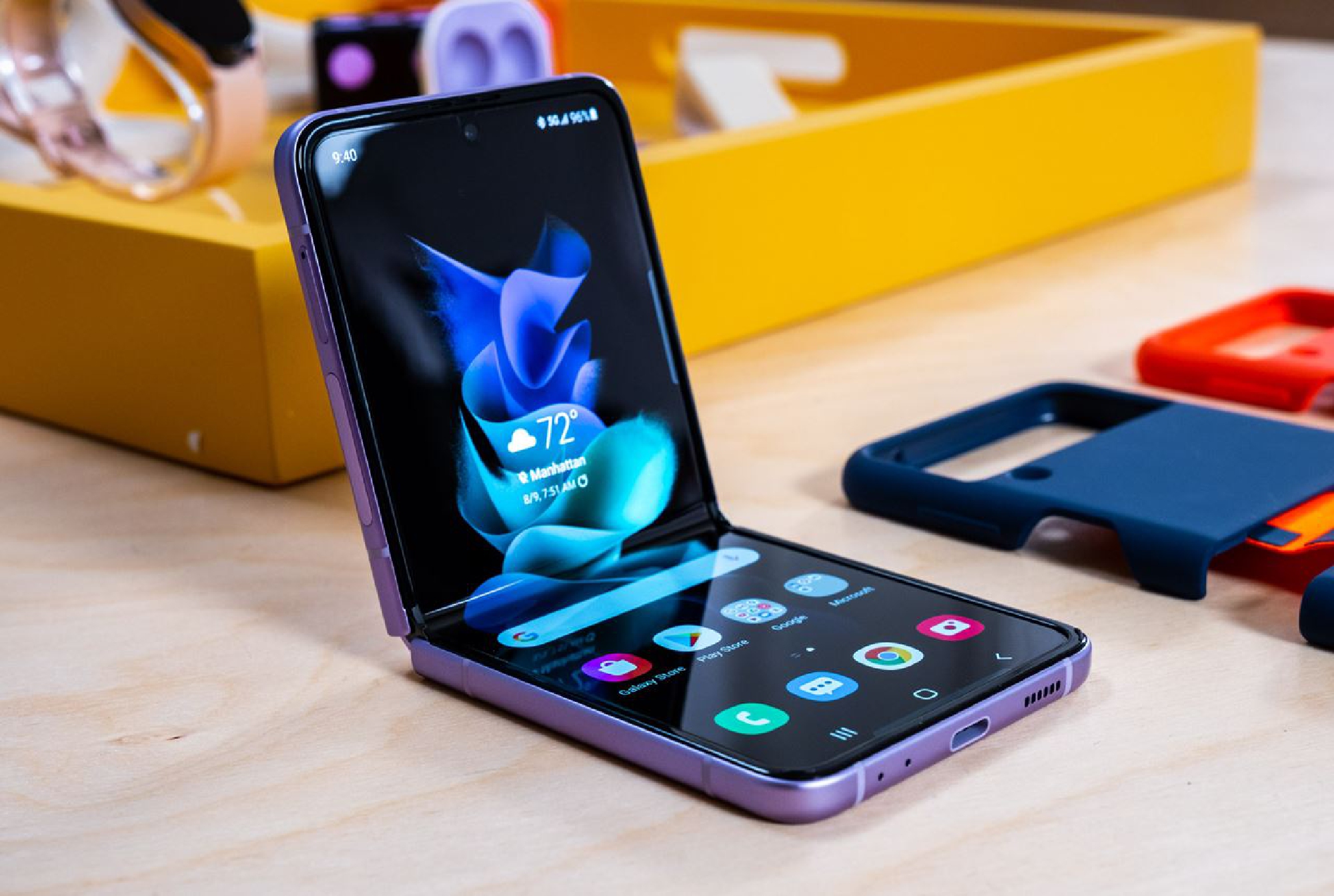
This week, Samsung unveiled a pair of new foldable devices called the Galaxy Z Flip 3 and Galaxy Z Fold 3. Thanks to advances in screen technology, you won’t have to pay an arm and leg – well, maybe just an arm. Samsung cut the price of its entry-level foldable device to $1,000, which means a folding phone could finally compete with Apple and its iPhone 12 Pros.
The first commercially available folding phones emerged in 2019, and in addition to being ludicrously expensive – think $2,000 – they also felt so experimental that few of us bought into the idea. Those who did had to live with lingering concerns over durability and software that wasn’t quite where it needed to be.
Since then, some of the software kinks have been ironed out, and companies have found ways to make these naturally fragile devices more resilient, but they’ve remained too pricey to appeal to a broad market. Samsung, though, hopes its unusual price cuts could help to jump-start a foldable craze around the world.
“We feel like we’re now in the realm of what people expect to pay for more traditional, high-end smartphones,” said Stephen Hawke, Samsung’s senior manager of mobile computing product strategy.
Pretty soon, you’ll have a big choice to make: Should you stick to a traditional smartphone, like an iPhone? Or should you take the plunge on a flippy, foldable device that just might fit into your life a little better? I spent a little time with both of Samsung’s very different folding phones. Here are my initial takeaways.
– Big phones can get smaller
In nearly all of my conversations with other smartphone owners, one complaint almost always came up: Phones are getting too big.
When it’s open, the Z Flip 3 is definitely a big phone: It has a tall 6.7-inch screen that looks and acts the same as a regular smartphone screen. (The only sign that the Z Flip 3 is unusual is the crease that runs midway down the display.) But here’s the fun part: You can channel your mid-2000s, flip-phone-owning self and snap that big screen shut, at which point the Z Flip 3 becomes a small square that slips into pockets and crammed purses without much fuss.
The Z Flip 3 has other qualities going for it, too, like a pair of high-quality 12-megapixel rear cameras and a Qualcomm Snapdragon 888 processor that helps the phone run as fast as some of the most expensive Android devices out there. There’s a 1.9-inch outward-facing screen, too, so you can read incoming messages and control your music without having to open the phone. And it comes with 5G support for the nation’s wireless carriers, though you may still be hard-pressed to see the difference most of the time.
Samsung also reinforced the phone’s flexible screen and the metal housing around it to better withstand wear and tear. It is water-resistant to the point where it should be able to shrug off an accidental dip in your bathtub. (Just be sure to fish it out as soon as you can.)
Fast performance is always helpful, and so is the fact that you probably won’t need to baby this phone as much as earlier models because of Samsung’s design changes. The draw here is that you get basically everything a regular, too-big smartphone has to offer in a package that collapses down to half its usual size.
Samsungs new foldable phones come with a price cut, but theyll still cost you at least $1,000
– Big phones can get even bigger
Samsung’s other new folding phone, the Galaxy Z Fold 3, couldn’t be any more different. If the company’s $1,000 foldable is all about portability, the Z Fold 3 is all about flexibility.
This phone costs $1,800 to start. That’s about $200 less than what last year’s model cost at launch, but it’s still a bitter pill for most people to swallow. Still, it helps that the Z Fold 3 is actually two gadgets in one – a phone and a small tablet.
When it is closed, this phone is absolutely enormous – for readers of a certain age, “chonky” might be the best way to describe it. Still, it has a narrow touch screen that stretches from edge to edge, so you can take phone calls, text your family or waste time on Instagram as you normally would. It’s not always pleasant, but the full smartphone experience is there when you need it.
But when you open the Z Fold 3, it becomes a tiny tablet with a 7.6-inch screen that’s much better for watching videos or reading e-books. Let’s say you need to edit a document – you can prop the Z Fold 3 open like a laptop and type on a large keyboard that takes up half the screen. Samsung’s software doesn’t always make it clear or easy, but you can also run multiple apps side by side on that big screen.
This year’s Z Fold 3 has the same 5G support, high-powered processor and durable design changes as its cheaper sibling, but it does come with two more tricks that add to the phone’s appeal. For one, instead of using an ugly notch or a tiny hole for a camera to peer through, Samsung actually put a camera under that big, folding screen. Your selfies and video calls won’t look any better for it, but it’s a hint at where the future of smartphone design could lead us.
More important, this foldable phone also plays nice with certain versions of Samsung’s S Pen stylus. You’ll have to pay at least $50 extra for a compatible pen, but the additional cost might be worth it if you prefer to jot down notes – it only seems fitting, since the Z Fold 3 already opens up like a notebook.
As polished as these new phones sometimes feel, they still come with caveats. Some apps still aren’t built to work correctly on phone-tablet hybrids like the Z Fold 3, though Samsung is trying to fix this issue with its own software. Meanwhile, relatively few apps offer anything new or different on models like the Z Flip 3, but that also could change if flip-phone foldables become more popular.
For all the work Samsung has done, it can’t resolve these issues by itself. As ever, we’re locked in a waiting game until software developers – and regular smartphone shoppers – decide that folding phones are worth the investment.
What to know about What If…?, the Marvel series that features Chadwick Boseman voice
What if the Marvel Cinematic Universe had an animated alternate reality?
That’s the premise behind the new series “What If. . .?,” which began streaming the first of its nine episodes on Disney Plus on Wednesday. It marks Marvel Studios’ first foray into the world of animation, while taking inspiration from the classic “What If. . .?” comics that began in 1977. Those comics – and the show – use the power of the hypothetical, remixing classic story lines and taking Marvel characters to places even the most well-read fans wouldn’t see coming.
The very first issue of “What If. . .?” imagined Spider-Man joining the Fantastic Four (although that did end up happening in the mainstream comics). “What If . . .?” the series will use similar storytelling tactics but will apply them to the first decade of Marvel Studios on film.
One episode features Agent Peggy Carter, voiced by Hayley Atwell, the actress who portrayed her in the Captain America movies, when she was the love interest to Chris Evans’s Steve Rogers. In “What If. . .?” she’s the soldier who takes the super-serum and is handed a shield, becoming Captain Carter.
The goal of each episode is to reel the viewer in with familiar MCU moments before they realize they have no idea what is going to happen.
“The first question was never what if, the first question is where is the heart in the hero?” head writer A.C. Bradley said. “Where’s the humanity in these iconic characters that we’ve all spent so many years watching on-screen and growing up reading comic books? How do we get beyond the shield? So, with Peggy Carter it was as simple as: She was a woman in the 1940s who says I’m staying in the room and how is that going to change the world?”
When she and director Bryan Andrews brainstormed ideas, Bradley joked about wanting to do an episode where Thor love-interest Jane Foster becomes Thor – but she was told not to pursue it because that’s actually the story line of Taika Waititi’s next Thor movie.
ADVERTISEMENTx
Marvel Studios President Kevin Feige, the architect of its past decade of interconnected storytelling, was a part of the decision-making process. According to Bradley, Feige’s uncanny ability to read the pulse of the MCU fandom was an invaluable asset.
In one episode, T’Challa, the prince of Wakanda, doesn’t grow up to become king and take on the mantle of the Black Panther. Instead, he is whisked to space as a child and grows up to become Star-Lord, leader of the Guardians of the Galaxy.
T’Challa is voiced by the late Chadwick Boseman, who played the Black Panther in the 2018 movie that grossed a billion dollars. Bosman died in 2020 from complications from colon cancer.
Working with Boseman left a lasting impression on “What If. . .?” producers, none of whom knew that the actor was ill or that the vocals he was recording would represent his last MCU performance.
“He was excited about playing a slightly different riff on T’Challa because he cares for T’Challa and all that T’Challa represents so much,” Andrews said. “I think since he knew what he was going through, he saw this as one more opportunity to bring a slightly different color, a different shade, to what we think of [T’Challa]. Here’s T’Challa with a little bit more of a light heart, he’s got more jokes in him. We’re thankful that we have another performance with him.”
ADVERTISEMENT
Bradley says Boseman understood the impact of T’Challa on younger generations who saw the Black Panther stand shoulder to shoulder with MCU icons Iron Man and Captain America in the movies, and he knew such imagery was important to the future of Marvel Studios.
“When [Chadwick] came to record, he didn’t bring his A-game, he brought every damn sport with him. He was the best,” Bradley said. “We didn’t realize at the time that we were in the room with a legend that we were going to lose too quickly.”
The series’ narrator and overseer is the Watcher, who carries over from the original comics. He’s voiced by Jeffrey Wright, who’s no stranger to superhero universes on film. He recently finished filming Matt Reeve’s “The Batman,” playing the new Commissioner Gordon. Filming one superhero movie role in the heart of a pandemic was quite different from voicing one.
“We slogged to make [‘The Batman’] in really challenging conditions,” Wright said. “I enjoy the specificity of voice work. In this case I enjoy joining the MCU from my bedroom closet . . . with or without pants. I like to have that optionality. I recorded some of these episodes during the pandemic, so we had to improvise.”
The Watcher is an alien being who never involves himself in the alternate-reality scenarios that the show presents, only observing and verbally setting the stage for the unexpected. He is an intergalactic cosmic fanboy.
ADVERTISEMENT
Wright used his now 19-year-old son’s encyclopedic knowledge of Marvel – and memories of taking him to see Marvel movies in theaters – as his inspiration for the character.
“He is his own being. He’s described [in comics] as the most dramatic being in the known universe,” Wright said. “He’s got powers that are unique to him . . . but he’s also omnipresent but in some ways quietly. So in a sense, he’s not being introduced now. He’s always been there. He’s always been there watching.”
With the especially contagious delta variant threatening efforts to end the pandemic, a growing number of wealthy countries are planning or considering administering booster shots of Covid-19 vaccines, at least to particularly vulnerable groups.
Officials at the World Health Organization have characterized this course of action as unethical as long as poorer countries still lack supplies to cover significant portions of their populations with initial doses. They argue that the strategy could wind up prolonging the pandemic, as well.
1. What’s a booster shot?
The term traditionally has referred to an additional dose of a vaccine given some time after the initial course of inoculation to bolster protection that may have started to wane. While many vaccines produce long-lasting immunity, the U.S. Centers for Disease Control and Prevention recommends that adults receive boosters of the tetanus vaccine every decade, for example. For Covid-19, a new disease, researchers are working out the optimal schedule and dosage for a wide variety of vaccines on the fly in the midst of an ongoing pandemic. The term booster is being used loosely to refer to additional shots given for a variety of reasons to people who have already received the prescribed course of a Covid vaccine, meaning one dose of Johnson & Johnson’s formulation or two doses of any of the others.
2. What are the reasons?
There’s a small group of people with weakened immune systems, such as transplant recipients, who are likely to need an additional shot sooner rather than later. The extra shot isn’t a traditional booster, as these people likely never get an adequate response to an initial course of Covid vaccine. For the rest of the population, an additional shot (or shots) may prove to be helpful if immunity wanes over time, or alternatively, if new coronavirus variants emerge that evade vaccine protection. In the first scenario, giving another dose of the original vaccine may be sufficient. That’s mostly what is being considered for the immediate future. In the second scenario, shots customized against new variants may be needed.
3. What countries have signed on to extra Covid shots?
Countries that have started or have decided to offer them to especially vulnerable groups, such as the elderly or those who are immunocompromised, include Israel, Germany and France. Offering them more broadly to people months after their last dose are Russia, Hungary and the United Arab Emirates. Some countries plan to give extra shots using a vaccine type that’s different from the one people got initially. For example, Chile announced plans to offer booster shots from AstraZeneca to people 55 and older who earlier received the vaccine from Sinovac Biotech Ltd. This mix-and-match strategy is called a heterologous boost, and there’s some evidence it can provide an advantage over an additional dose of the same formulation.
4. What’s motivated the move to boosters?
The rise of the delta strain combined with some preliminary data suggesting that Covid vaccine effectiveness may decline relatively quickly has intensified the focus on booster shots. In Mesa County, Colorado, where delta took off earlier than in other parts of the state, a study by state health officials found that vaccines were 78% effective in a two-week period ending June 5, versus 89% in other counties. And an observational study from Israel, one of the first countries to vaccinate most of its population, suggested that the efficacy of the Pfizer Inc.-BioNTech shot may fade after about five months; in people over 60, coronavirus infections among the vaccinated were three times more common in those who received shots early on compared with those who got the vaccine more recently, researchers found. A separate analysis of data from the final-stage trial of the Pfizer-BioNTech vaccine showed that efficacy eased to about 84% at the end of a six-month period compared with 96% early on.
ADVERTISEMENTx
5. Is the news all bad?
No. Moderna Inc. said Aug. 5 that data from its final-stage trial showed its vaccine remained 93% effective through six months, just one percentage point less than the initial shorter term results. And a U.K. study published in the New England Journal of Medicine in July found that the Pfizer-BioNTech vaccine was 88% protective against symptomatic cases of the delta variant, while AstraZeneca’s vaccine was 67% effective.
6. How are decisions about boosters made?
Since there is no scientific consensus for when booster shots become necessary, deciding when to employ another dose is a judgment call by public health officials. Accordingly, countries may make different decisions. In the U.S., the Food and Drug Administration official in charge of vaccine regulation, Peter Marks, has said that the U.S. doesn’t have a “predetermined minimum” for how much efficacy must fade before it authorizes booster shots, and will look at the totality of the evidence before making decisions.
7. What are the objections?
For the most part, Covid vaccines seem to be holding up well in achieving their key goals — preventing severe disease, hospitalization and death — even if they aren’t quite as effective at blocking milder cases of symptomatic infection with delta. In the U.S., for example, as of Aug. 2, only about 7,500 patients with Covid vaccine breakthrough infections had been hospitalized or died, a tiny fraction of the total hospitalizations and deaths, according to the CDC. There’s no scientific consensus that additional shots are currently needed for most people.
Drug companies with a financial interest in selling more doses have been some of the loudest voices talking up the need for boosters. Until there is better data, critics of the rush to employ boosters say that existing doses would be better used for people in poorer countries with limited access to vaccines. “It would be unconscionable to offer people already fully vaccinated another dose before protecting people who haven’t been vaccinated at all,” the global nonprofit Doctors Without Borders said in a July 22 statement. Epidemiologists warn that allowing the coronavirus to continue to run rampant in some parts of the world increases the odds that more dangerous variants will arise. Those new variants may make their way across the globe and prolong the pandemic.
8. Is it possible to expand the vaccine supply?
White House spokeswoman Jennifer Psaki has called the WHO’s position that rich countries should put boosters on hold until poor countries vaccinate more of their population a “false choice.” The U.S. can both donate vaccines abroad and provide boosters domestically if regulators recommend them, she said Aug. 4. But in reality, the Covid vaccine supply is limited, and wealthier countries have bought up a hugely disproportionate share of the available shots. The approximately 4.5 billion doses given as of Aug. 10 is only enough to fully vaccinate 29% of the world population, according to the Bloomberg Vaccine Tracker. The least wealthy places account for just 2.5% of these vaccinations. At the current rate of giving shots, it will take six months to cover 75% of the world population, according to the tracker.
Published : August 12, 2021
By : Syndication Washington Post, Bloomberg · Robert Langreth
WHO director predicts 100 million additional coronavirus cases worldwide
World Health Organization Director General Tedros Adhanom Ghebreyesus suggested Wednesday that unless things change, the world could see 100 million more cases of covid-19 by the early months of next year.
“At the current trajectory, we could pass 300 million cases early next year,” he said during a media briefing. “But we can change that. We are all in this together, but the world is not acting like it.”
The number of recorded covid-19 cases had reached 200 million last week, just six months after the world passed 100 million cases, Tedros noted, “and we know that the real number of cases is much higher.”
At the briefing, WHO officials emphasized that more research was being done on treatment for covid-19 in an unprecedented multicountry trial called Solidarity Plus, which will look at the effectiveness of three new drugs in 52 countries.
Officials also said the spread of virulent variants such as delta would change assumptions about herd immunity and vaccination targets.
“There’s no specific number or magic number that needs to be achieved. Its really related to how transmissible the virus is,” said Katherine O’Brien, director of the WHO’s immunization department.
“What’s been happening with coronavirus . . . is that as variants are emerging and are more transmissible, it does mean that a higher fraction of people need to be vaccinated to likely achieve some level of herd immunity,” O’Brien said.
With the delta variant continuing to drive up cases in the United States, some state and local officials weighed mask mandates as President Joe Biden met at the White House Wednesday with business leaders who have actively encouraged vaccinations among their workers.
Oregon Gov. Kate Brown, D, is expected Wednesday to put in place a statewide indoor mask mandate and to require vaccines for state employees, citing concerns over growing coronavirus cases due to the more transmissible delta variant.
The indoor mask mandate will make Oregon the third state – following Louisiana and Hawaii – to apply the measures to both vaccinated and unvaccinated people, as bans on mask and vaccine mandates play out in a number of Republican-run states such as Texas and Florida. Washington, D.C., also requires people to wear masks inside public places, regardless of vaccination status. Nevada Gov. Steve Sisolak, D, last month mandated that face coverings be worn indoors in public settings in counties with “substantial or high transmission.”
“There are two keys to saving lives,” Brown said in a statement. “Vaccination is the best way to protect yourself and your family against severe illness, hospitalization, and death. And, by wearing masks, all of us – vaccinated and unvaccinated – can help ensure that a hospital bed staffed by health professionals is available for our loved ones in their time of need.”
Brown also said stricter measures would ensure the return of children to classrooms with “minimal disruptions in a few weeks” and avoid a repeat of the “darkest days of our winter surge.”
Her decision comes as schools and political leaders battle over masks elsewhere. Florida’s second-largest school system is now threatening legal action to challenge the ban on mask mandates by Gov. Ron DeSantis, R, and voted Tuesday to keep its own requirements in place for students and staff.
ADVERTISEMENTx
The Broward County School Board – which voted 8 to 1 on Tuesday to uphold its mask mandate despite DeSantis’s move to curb such restrictions and subsequent threat to stop paying superintendents and school board members who defy his orders – said in an evening news conference that it told its legal counsel to prepare a challenge.
“We feel that we took an oath to protect and serve the people of Broward County,” said Rosalind Osgood, chair of the school board. “Our decision today to make masks mandatory is our way of doing that.”
Political tensions with the federal government are heating up, too: The Biden administration is looking into whether it can direct unused stimulus funds to support educators in Florida who may defy the governor’s order against mask mandates in schools.
DeSantis recently threatened “financial consequences” for district-level officials who implement mask mandates despite his order banning them. Florida has become a national hot spot for coronavirus cases. The federal government has sent hundreds of ventilators to help Florida respond to the crisis, NBC News reported, citing officials at the Department of Health and Human Services.
White House press secretary Jen Psaki described Biden’s meeting as a “way of lifting up private-sector companies who are taking steps – through carrots and sticks, through incentives, and through mandates in some cases.”
ADVERTISEMENT
The session included leaders of United Airlines, Kaiser Permanente, Howard University and DESA Inc., a professional services firm based in Columbia, S.C. Administration officials said they hoped to spur other companies to follow their lead in prodding employees to get vaccinated.
“I wouldn’t say it was meant to be a decision meeting, as much as a discussion about best practices,” Psaki said. “And hopefully they can be a model for others.”
Asked if Biden believes all companies should impose vaccine mandates on their workers, Psaki demurred.
“The president’s position is that every company should take a look at how to protect their workforces, and there are going to be different carrots and sticks that can be used by different private sector entities,” she said.
Also in D.C., Mayor Muriel Bowser, D, announced Tuesday that all city employees and contractors will be required to be vaccinated or undergo weekly testing for the coronavirus, with vaccination required for new employees.
ADVERTISEMENT
And the nation’s top infectious-disease expert, Anthony Fauci, threw his weight behind vaccine mandates for teachers.
“We are in a critical situation now,” Fauci said on MSNBC’s “Morning Joe” on Tuesday when asked if teachers should be required to get vaccinated against the coronavirus. Acknowledging the polarization, Fauci replied, “I’m going to upset some people on this, but I think we should.”
Some schools are already following his advice. The San Francisco Unified School District announced Tuesday it would require vaccinations for all its approximately 10,000 staff, starting Sept. 7. Employees who are unvaccinated will be required to get tested weekly for the virus.
“Given that we are in the midst of rising cases and new variants in our community, a vaccine requirement is a necessary step to keeping our students, staff and families safe,” Superintendent Vincent Matthews said in a statement.
But about half of parents nationally are holding off on coronavirus vaccinations for their children, taking a wait-and-see attitude or, for many, opposing the shots outright, according to a Kaiser Family Foundation poll released Wednesday.
There was also significant opposition to schools mandating the vaccines for children ages 12 to 17 – a group now eligible for the shots under emergency Food and Drug Administration authorization. Nearly 6 in 10 parents oppose a vaccine mandate to attend in-person classes, the poll found.
Published : August 12, 2021
By : The Washington Post · Brittany Shammas, Adam Taylor, Adela Suliman, Bryan Pietsch







 Samsungs new foldable phones come with a price cut, but theyll still cost you at least $1,000


 SootinClaimon.Com