The role parents play with children attending classes at home #SootinClaimon.Com

#SootinClaimon.Com : ขอบคุณแหล่งข้อมูล : หนังสือพิมพ์ The Nation.

https://www.nationthailand.com/tech/40004090

The role parents play with children attending classes at home


Owing to the Covid-19 pandemic, Thailand’s educational sector has had to transition from classrooms to online learning. As per the Office of the Basic Education Commission (Obec), schools must continue using online learning/teaching methods through the first semester of the 2021 academic year given the surge in infections.
For this new system to be successful, cooperation is required between the Education Ministry, school principals, teachers, students and most importantly, parents, who need to spend more time understanding the change in their children’s needs.

When a child, especially the very young, has to study online, it inevitably becomes the parents’ duty to provide the resources and manage the setup. This in many cases becomes challenging because remote study is still a new concept.

Children also must adapt to the new set up and change in their learning environment. Also, the lack of physical activity may cause additional stress for children. Online learning may not be suitable for young children, but most of us have no chance but to adapt to the “new normal”.

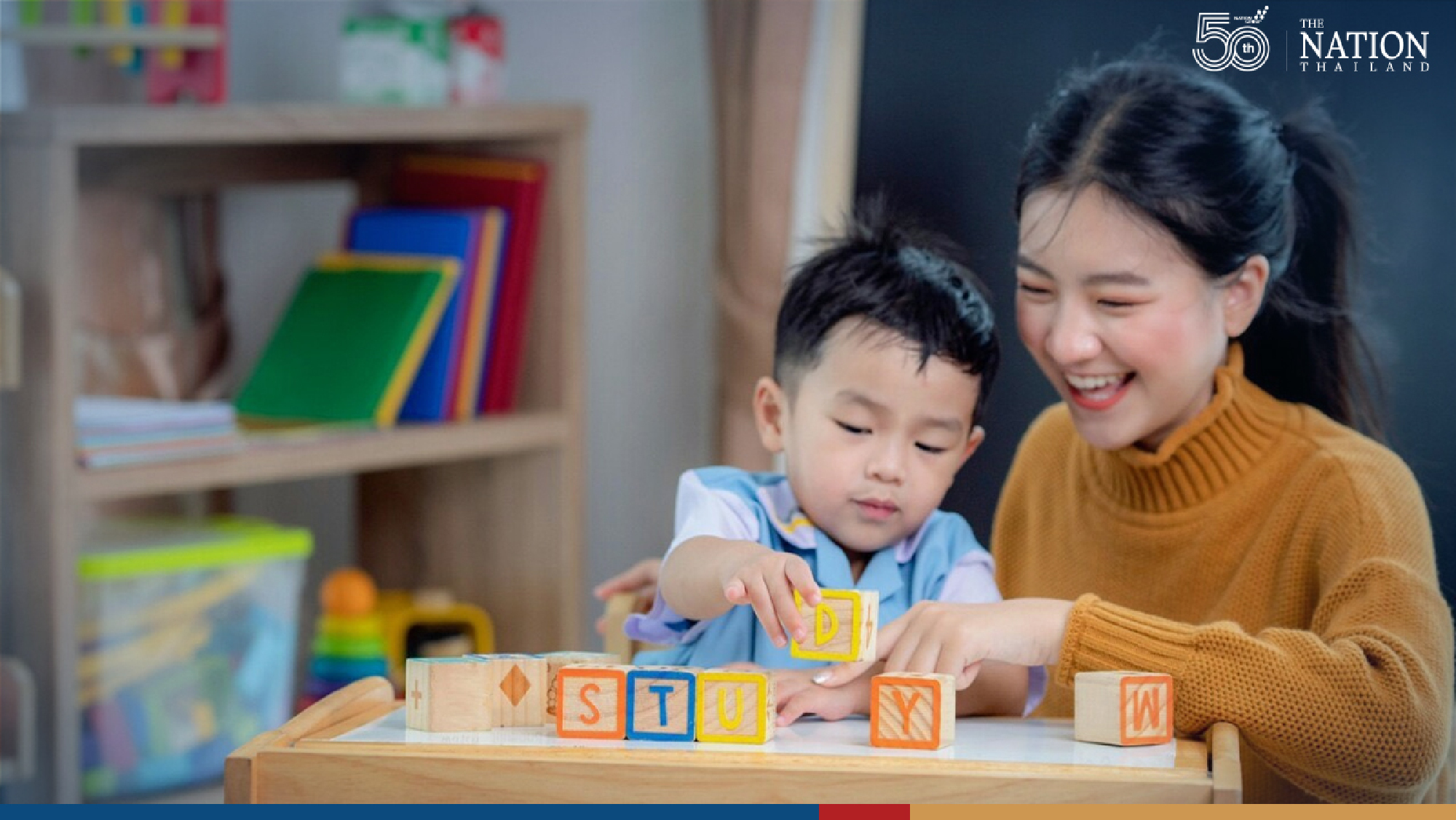
To make online learning effective for young children, parents must develop methods and techniques to get their kids happily involved in learning by doing the following:

ADVERTISEMENTx

The role parents play with children attending classes at homeThe role parents play with children attending classes at home

Start with an open mind

Parents must open their minds to online learning, so they can make adjustments to ensure positive outcomes.

They should encourage their children to practice social skills, albeit virtually, by interacting with their teachers and friends.

Online learning also helps develop children’s IT skills and parents should set up a variety of online activities daily.

ADVERTISEMENT

With the absence of school, children may start losing the discipline of waking up early, getting to school and sitting in their classroom focusing on what the teacher is saying. Parents, however, must be open-minded and accept that learning online can be more difficult, especially when children do not have other classmates sitting with them.
The role parents play with children attending classes at homeThe role parents play with children attending classes at home

Setting up a schedule

Firstly, parents must know and understand their children’s concentration and attention level, as well as ability to learn certain subjects.

Without the need to go to school, a child’s daily life changes completely. They have more free time, and they may become fussy or refuse to pay attention when their class begins. To avoid this, parents should set up a daily “activity schedule” for their children.

ADVERTISEMENT

Getting children involved in setting up a schedule that covers activities like waking up, studying, playing, eating, bathing, resting and going to bed will also give them a sense of purpose.

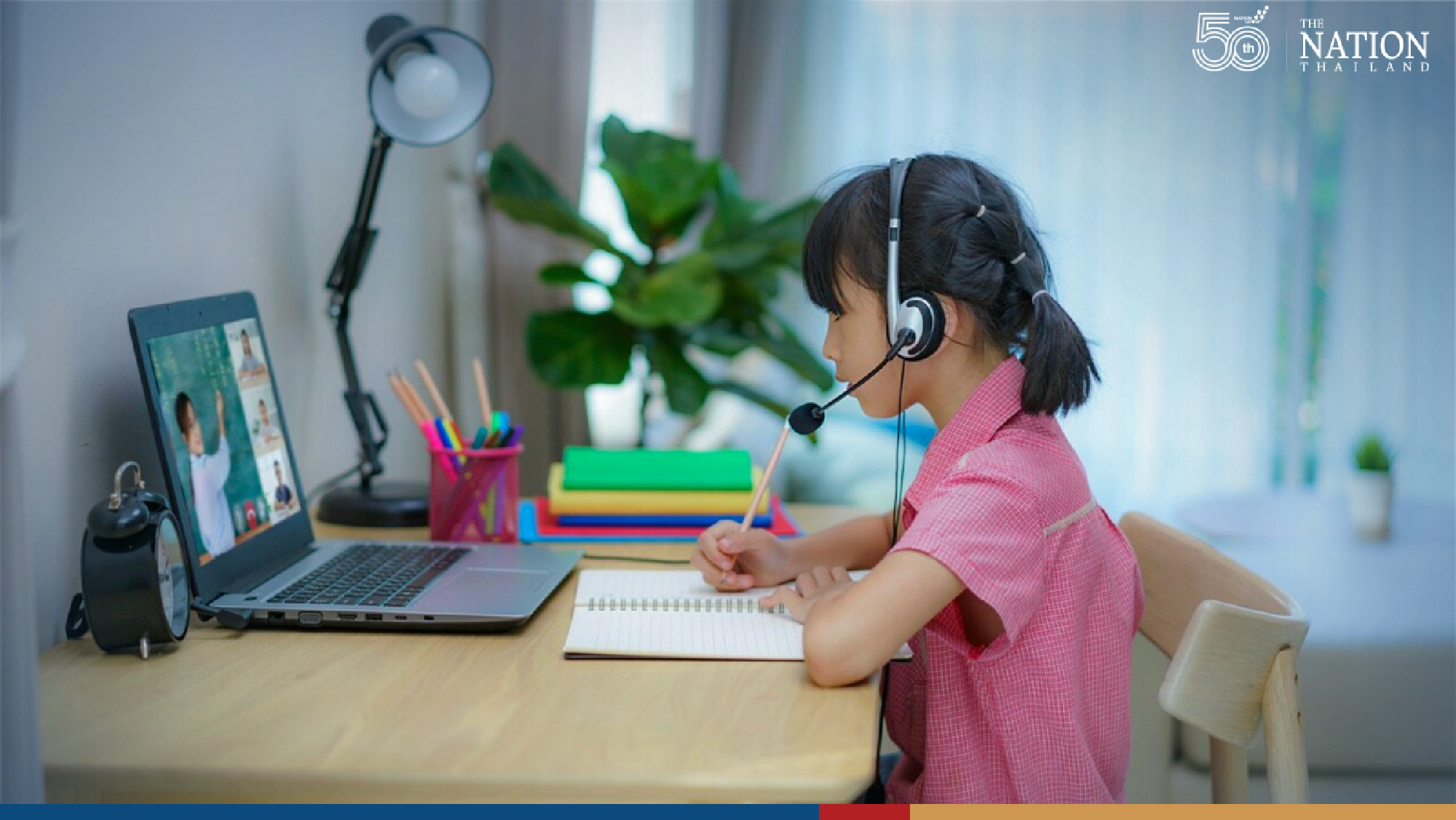
The second factor is setting up the right environment. Parents need to provide a suitable spot for their children to sit and study. The desk and chair should be of the right size to ensure the child has the correct sitting posture. The study area should also be quiet, not crowded or have any stimuli that may distract the child. School supplies should also be available and ready to use.

Parents must also understand teaching styles and coordinate with teachers to learn about their children’s potential, so appropriate arrangements can be made.

Parents also need to understand technology because online learning can be conducted via different devices, including computers, notebooks and tablets.

These devices and learning methods may be new to both parents and children, and it may take time for them to learn about the applications required for distance learning. Parents must also have to learn how to set up parental controls on the internet, but most importantly, they must set up rules for their children to follow.
The role parents play with children attending classes at homeThe role parents play with children attending classes at home

Pay attention

Parents must also explore their own physical and emotional readiness, including their stress levels. Keep in mind that being irritated, stressed or losing your temper can affect your children’s studies. If parents are able to control their emotions, stay calm and cope with situations, children will also learn to do the same.

Pay special attention to preparing your child for online classes. Normally, children have activities before starting classes such as breakfast with friends, playing and doing morning exercise routines.

Parents should also set up similar activities for children to do before they start their online classes, such as doing some cardio exercise.

Spending at least 20 minutes on physical activity, such as running, cycling or kicking a football will help prepare the body and stimulate the brain to release dopamine and norepinephrine, key neurotransmitters associated with attention, concentration and self-control. However, do not do too much heavy exercise or it may make the child tired and sleepy.

Parents must also understand that children cannot be expected to always focus on the screen. In classrooms, children have a lot of distractions, and it is normal sometimes for them to lose interest in what is being taught.

Hence, parents should focus on what will keep their kids engaged as well as whether their children are understanding the lesson and if they can answer questions.

Parents should also do away with negative words like “no, don’t, not or stop” to prevent children from developing a bad attitude towards learning. For instance, sentences like “why don’t you listen to your teacher” or “don’t be silly, baby” will make them anxious and stop them from wanting to learn.

Instead, parents should show appreciation to their children for focusing on their studies and completing their assignments.

The role parents play with children attending classes at homeThe role parents play with children attending classes at home

Many parents think their children get to interact with their teachers and classmates during classes, so no other activities need to be planned.

However, activities are necessary, not just for helping children relax after school but to also help them develop and strengthen familial bonds.

However, the most important thing is caring and realizing that online classes alone cannot help with children’s cognitive development.

For this, parents can invite their children to read, describe the environment around them or practice daily routines. Children should also be given simple household chores.

But the most important job for parents is to be by their children’s side when they are in trouble because for children, their parents are always their “important teachers, friends and toys”.

The role parents play with children attending classes at homeThe role parents play with children attending classes at home

By: Keerathi Oanmun, Occupational Therapist

Faculty of Physical Therapy, Mahidol University

Published : August 02, 2021

By : The Nation

MedPark Hospital offers night vaccination service to foreigners #SootinClaimon.Com

#SootinClaimon.Com : ขอบคุณแหล่งข้อมูล : หนังสือพิมพ์ The Nation.

https://www.nationthailand.com/life/40004131

MedPark Hospital offers night vaccination service to foreigners


A healthcare facility in Bangkok, MedPark Hospital, is offering night-time Covid-19 vaccinations to foreign residents in Thailand to avoid any effects on daily vaccination services as well as on weekends.

The night-time service, named “Going the Extra Mile, Extra Hours”, is available from August 2-9, from 6pm to 10pm.

Dr Pongpat Patanavanich, managing director of MedPark Hospital, said that due to the rapid spread of Covid-19 and the surge in new cases over the past few months in Thailand, especially in Bangkok, MedPark is speeding up vaccine administration for people’s safety.

“It is essential to generate an immune response among people including the hundreds of thousands of expats who live and work with Thais,” Pongpat said.

MedPark is one of three designated hospitals providing pre-registration for foreigners via the Thailandintervac campaign, which is a collaboration between the Ministry of Foreign Affairs and the Department of Disease Control, Ministry of Public Health.

Initially, the vaccination service is only available to foreigners who booked in advance or pre-registered for vaccines.

Pongpat explained that the hospital is providing the vaccination service for expats to support the government’s vaccine allocation plan. In the urgent phase, the Department of Disease Control has prioritised vaccinations for healthcare professionals and frontline workers as their third booster dose.

The other target groups for vaccinations are Thais and foreigners aged 60 and above, people living with seven chronic diseases (interventional pulmonology, coronary artery disease, chronic kidney disease, stroke, cancer, diabetes, and obesity with weight more than 100kg) and foreign women pregnant for 12 weeks or longer.

ADVERTISEMENTx

Earlier, MedPark partnered with the Ministry of Public Health and Bangkok Metropolitan Administration to organise “Save Doctors, Save People, Save Thailand” to accelerate vaccinations for members of the Thai Clinic Association and general public.

MedPark said it has given more than 80,000 doses of coronavirus vaccines so far as of the end of July and expects to deliver more than 100,000 doses to Thais and foreigners by the end of September.

“In the current crisis caused by the rapid spread of coronavirus, particularly the Delta variant, MedPark is dedicated to vaccinate as many people as possible as fast as possible. It is our crucial measure to support the government’s goal of vaccinating 70 per cent of the adult population in Bangkok and neighbouring provinces, including over 300,000 foreign residents in Bangkok. This will create herd immunity and help reduce the drastic impact on the public healthcare system,” Pongpat said.

Published : August 03, 2021

By : The Nation

Wear 2 masks for protection against Delta, says health official #SootinClaimon.Com

#SootinClaimon.Com : ขอบคุณแหล่งข้อมูล : หนังสือพิมพ์ The Nation.

https://www.nationthailand.com/life/40004098

Wear 2 masks for protection against Delta, says health official


The Department of Disease Control (DDC) has asked people to wear face masks both at home and in public while also urging them to use two masks in crowded areas to combat the highly contagious Delta variant of Covid-19.

Dr Sophon Iamsirithavorn, DDC deputy director-general, said on Monday that Delta now accounts for 69.1 per cent of new cases in Thailand while the Alpha variant is responsible for 28.2 per cent.

He added that wearing a mask 100 per cent of the time can be very effective both in reducing transmission from infected people and protecting uninfected people.

For the best results, people should follow three principles when using face masks: the right time, the right way, and the right kind.

Sophon explained that the disease is now spreading among family members, so people should be extra careful and wear masks at all times – both inside and outside the home.

He advised people who had to go to crowded areas such as markets or supermarkets to wear two layers to cover their mouth and nose – a medical mask inside and a cloth mask outside.

Published : August 02, 2021

By : The Nation

Thailand’s caseload will only drop ‘if more people stay indoors’ #SootinClaimon.Com

#SootinClaimon.Com : ขอบคุณแหล่งข้อมูล : หนังสือพิมพ์ The Nation.

https://www.nationthailand.com/life/40004096

Thailand’s caseload will only drop ‘if more people stay indoors’


The daily surge in infections and deaths despite a lockdown proves that the restrictions are only 20 per cent efficient, the Public Health Ministry’s permanent secretary Kiattiphum Wongrajit said on Monday.

He explained that if the lockdown restrictions are upped by even 5 per cent and if everybody at risk, including the elderly, is vaccinated, then the daily caseload and deaths will drop considerably.

However, Kiattiphum said, this can only be achieved if all sectors cooperate to make the lockdown more efficient, such as cutting down on travel and meetings and taking better care of oneself.

Also, he said, about 80 per cent of the country’s 185,417 hospital beds nationwide are occupied by Covid-19 patients in the provinces. In Bangkok, 90 per cent of available hospital beds, or 41,659, are occupied. Hence, he said, people must isolate themselves at home or in community quarantine facilities.

The Department of Disease Control, meanwhile, said that though fewer people are venturing out, the number of pedestrians and vehicles is not as low as last year.

During Thailand’s first lockdown, both pedestrian and vehicle traffic had dropped by 80 per cent in Bangkok and Chonburi, compared to just 60 to 70 per cent this year. The department said if people stop venturing outside their homes, the risk of transmission will drop significantly.

Published : August 02, 2021

By : The Nation

Breastmilk the best protection for babies against infections during Covid-19: Unicef #SootinClaimon.Com

#SootinClaimon.Com : ขอบคุณแหล่งข้อมูล : หนังสือพิมพ์ The Nation.

https://www.nationthailand.com/life/40004086

Breastmilk the best protection for babies against infections during Covid-19: Unicef


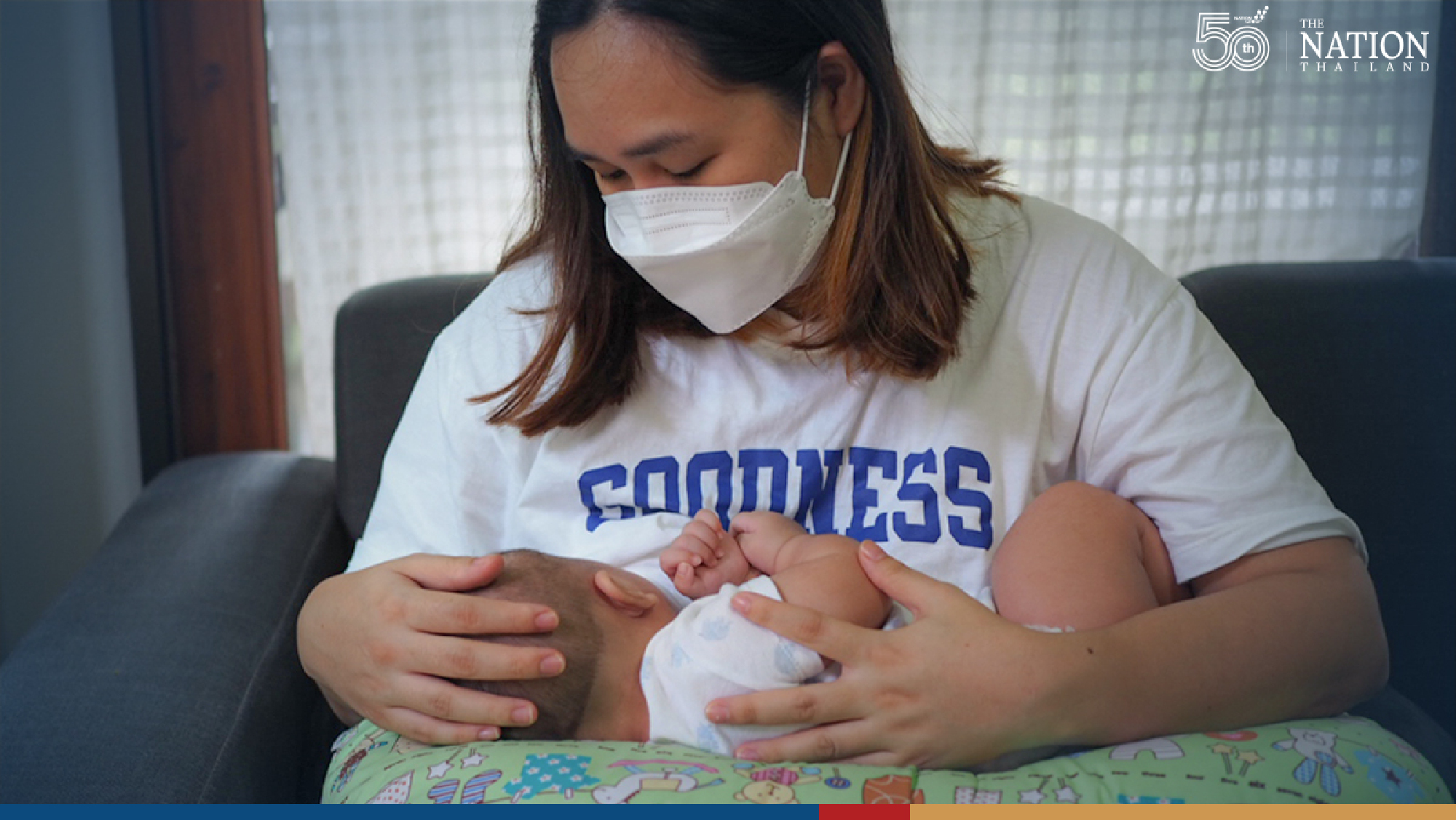
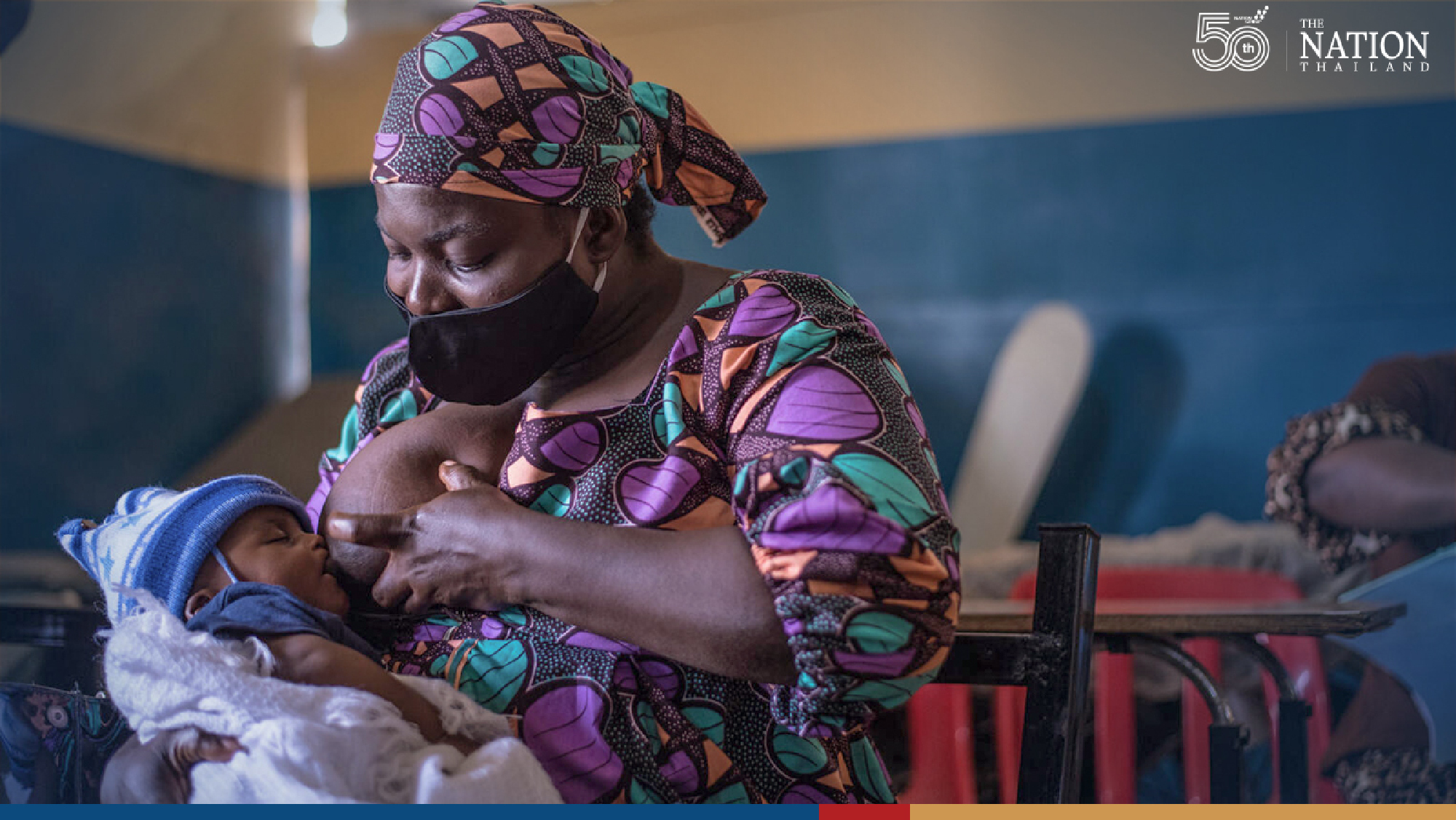
Mothers are advised to initiate or continue breastfeeding while practising good hygiene to help protect their newborns from infections and illness during the Covid-19 pandemic, Unicef said, as the world marks World Breastfeeding Week from August 1-7.

To date, transmission of Covid-19 through breastmilk and breastfeeding has not been detected.

The World Health Organization (WHO) and Unicef recommend breastfeeding and applying skin-to-skin contact during feeding even if the mother is suspected or infected with Covid-19.

Mothers are also advised to wear a mask, wash their hands and disinfect surfaces regularly during breastfeeding to reduce the risk of transmission.

Evidence suggests that the benefits of breastmilk substantially outweigh the potential risks of transmission and that the antibodies found in breastmilk may help may fight against Covid-19 infection, if a baby is exposed, Unicef said.

“Breastfeeding is one of the best ways to ensure child health and survival, especially during the Covid-19 pandemic,” said Kyungsun Kim, Unicef Representative for Thailand.

“Breastmilk is a baby’s first vaccine with all the essential nutrients, antibodies, hormones and antioxidants that help boost their immune system and provide protection against many infections.”

ADVERTISEMENTx

Breastmilk the best protection for babies against infections during Covid-19: UnicefBreastmilk the best protection for babies against infections during Covid-19: Unicef

Breastfeeding is vital to a child’s health and development in infancy and later in life. Studies show that breastfed infants have a lower risk of non-communicable diseases as adults and are more likely to have a higher IQ, spend more time in school and have a higher-paying job, Unicef said.

Breastfeeding also enhances mother-infant bonding and reduces the mother’s risk of obesity, type 2 diabetes, cardiovascular diseases and breast and ovarian cancers.

However, too few children in Thailand are exclusively breastfed within the first six months of life, which is critical for optimal health and development according to the WHO and Unicef.

The 2019 Multiple Indicator Cluster Survey by the National Statistical Office and Unicef found that only 14 per cent of children were exclusively breastfed during the first six months, a significant drop from 23 per cent in 2016.

With the exclusive breastfeeding rate in Thailand remaining one of the lowest in the region, Unicef called for the government and businesses to increase investment in promoting and protecting breastfeeding.

Breastmilk the best protection for babies against infections during Covid-19: UnicefBreastmilk the best protection for babies against infections during Covid-19: Unicef

Health workers have a critical role in educating and counselling new mothers in breastfeeding as well as ensuring that babies are breastfed within the first hour of life. Health authorities should also strictly enforce the Control of Marketing Promotion of Infant and Young Child Food Act which bans marketing breastmilk substitutes, including the distribution of product samples at hospitals and online marketing of infant formula that reaches mothers directly, Unicef said.

In addition, family-friendly policies by government and businesses, including affordable childcare, time and a hygienic space for breastfeeding at work and at least 18 weeks of paid maternity as well as paternity leave, should be adopted to support nursing mothers upon their return to work.

“The low breastfeeding rate in Thailand tells us that too many children here are missing the opportunity to have the healthiest start in life, which is why Unicef will continue to advocate for baby-friendly policies and support mothers to exclusively breastfeed,” Kim added. “This is a wake-up call that mothers need support more than ever before, especially when many services have been disrupted due to the pandemic. To make breastfeeding and its benefits a reality for every mother and child, it will take a firm commitment and effort from her family, employers, healthcare system and the government.”

Published : August 02, 2021

By : The Nation
Boxer Sudaporn guarantees 2nd Olympic medal for Thailand #SootinClaimon.Com

#SootinClaimon.Com : ขอบคุณแหล่งข้อมูล : หนังสือพิมพ์ The Nation.

https://www.nationthailand.com/life/40004143

Boxer Sudaporn guarantees 2nd Olympic medal for Thailand


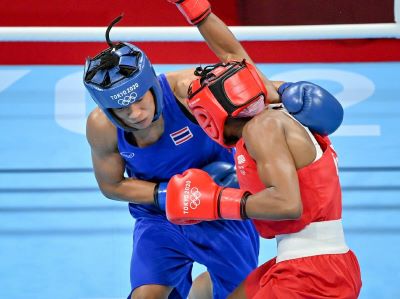
Sudaporn Seesondee became the first Thai female boxer to secure an Olympic medal after she narrowly ousted 2018 Youth Olympics gold medalist Caroline Dubois of Great Britain 3-2 in the women’s 60kg quarter-finals at the Kokugikan Arena on Tuesday.

The Thailand boxing team’s last hope did not let the fans down, producing strategically delivered punches and jabs to edge out the up-and-coming Briton in the third round, after tying at 1-1 in the first two, to reach the semi-finals.

At least a bronze is guaranteed for the 29-year-old Thai, who will go down in history as the first Olympic medalist in women’s boxing from Thailand.

ADVERTISEMENTx

“It was the happiest moment in my life when the referee raised my hand (as the winner),” said the Udon Thani based fighter, who had done her homework on the British southpaw coming into the bout.

“I watched her clips three or four times and had a sparring session with Baison Manikon (team Thailand women’s welterweight) as she is a southpaw. I’m so overwhelmed to finally produce a medal for Thai fans,” added the 2018 World Championships silver medalist.

Sudaporn wished her late father Yodnakhon, who passed away seven years ago, could be with her to cherish the moment.

sudaponsudapon

“After the win, I was thinking of my family, especially my father. He was the one who made me box. He was the reason why I am here. I want him to know that I made it. I want him to be proud of me,” the emotional Sudaporn said.

TaewTaew

The Thai fighter will next have to handle her toughest fight in Tokyo so far, against top seed and old rival Kellie Harrington of Ireland who beat Imane Khelif of Algeria 5-0 in the quarter-finals. Sudaporn lost to the Irishwoman 2-3  in the 2018 World Championships final in New Delhi.

“I don’t know if I will go the distance and win the gold. At this point, I will take it one fight at a time,” said Sudaporn, whose semi-final with the 2018 world champion and the 2019 European Games silver medalist is due at 12pm on Thursday.

With a bronze assured, Sudaporn has also produced the second medal for Thailand in the Olympic Games TOKYO 2020 after Panipak Wongpattanakit grabbed the gold in women’s taekwondo 49kg last week. She will receive at least Bt4.8 million – the incentive promised by the National Sports Development Fund for a bronze.

11

Sudaporn also salvaged pride for the Thailand Boxing Association, an Olympic medal hope for the country, after Thai boxers finished the 2016 Rio Games empty-handed.

22

3344

Published : August 03, 2021

By : The Nation

Roundup: Hassan clinches first Olympic gold, Puerto Rico wins first athletics gold #SootinClaimon.Com

#SootinClaimon.Com : ขอบคุณแหล่งข้อมูล : หนังสือพิมพ์ The Nation.

https://www.nationthailand.com/life/40004118

Roundup: Hassan clinches first Olympic gold, Puerto Rico wins first athletics gold


Several achievements were made on Monday as Sifan Hassan got a gold medal while Camacho-Quinn won the first athletics gold for Puerto Rico.

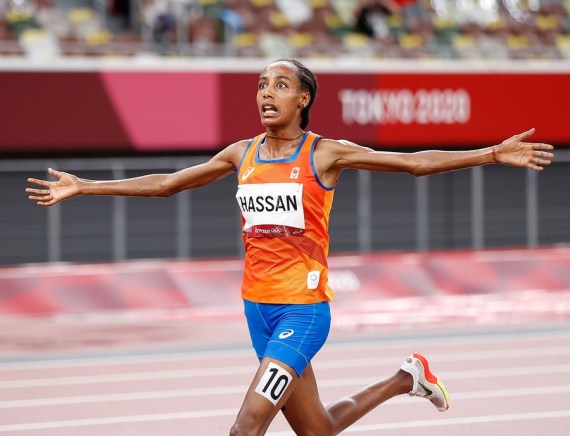
Sifan Hassan of the Netherlands started her Tokyo 2020 journey with an exciting victory in women’s 5,000 meters race, while Puerto Rican Jasmine Camacho-Quinn delivered the first Olympic athletics gold for her country by winning the women’s 100m hurdles final here on Monday.

ADVERTISEMENTx

In the morning, Hassan was tripped and fell on the ground in women’s 1,500m round 1, but she got up quickly and finished the race in four minutes and 5.17 seconds, qualifying for the semifinals as the first of the heat.

Almost 12 hours later, the Dutch stood on the starting line of women’s 5,000m final. The 28-year-old took the strategy of following the leading group. She remained in the mix with the lead pack with two laps to go, and began to sprint when the bell rang and took the lead in the last 200m, pulling clear to the finishing line to win with 14:36.79.

This was Hassan’s first Olympic gold medal. She is going to compete in 1,500m and 10,000m at Tokyo 2020.

Kenya’s Hellen Obiri settled for a silver with 14:38.36, and Gudaf Tsegay of Ethiopia finished the race in 14:38.87 to bag a bronze.

“I can’t believe it. I used all my energy this morning and I was kind of tired. I couldn’t believe what happened. It was terrible when I tripped, I felt terrible afterwards and I never thought I was going to be an Olympic champion,” said Hassan.

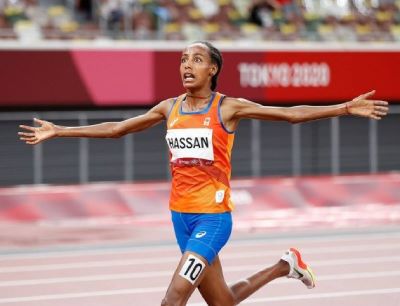
Sifan Hassan of the Netherlands reacts after the Women's 5000m Final at the Tokyo 2020 Olympic Games in Tokyo, Japan, Aug. 2, 2021.

Sifan Hassan of the Netherlands reacts after the Women’s 5000m Final at the Tokyo 2020 Olympic Games in Tokyo, Japan, Aug. 2, 2021. 

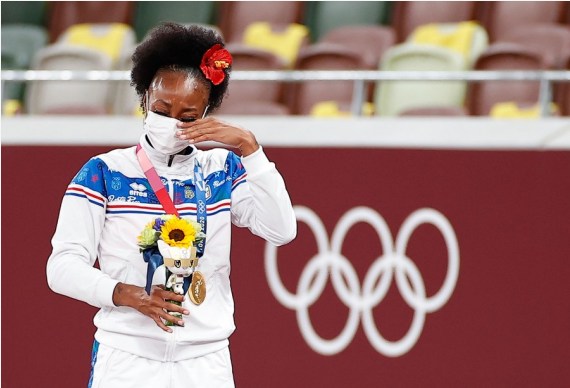
Gold medalist Jasmine Camacho-Quinn of Puerto Rico reacts on the awarding ceremony of the women's 100m hurdle at the Tokyo 2020 Olympic Games in Tokyo, Japan, Aug. 2, 2021

Gold medalist Jasmine Camacho-Quinn of Puerto Rico reacts on the awarding ceremony of the women’s 100m hurdle at the Tokyo 2020 Olympic Games in Tokyo, Japan, Aug. 2, 2021

Miltiadis Tentoglou of Greece celebrates after the Men's Long Jump Final at the Tokyo 2020 Olympic Games in Tokyo, Japan, Aug. 2, 2021.

Miltiadis Tentoglou of Greece celebrates after the Men’s Long Jump Final at the Tokyo 2020 Olympic Games in Tokyo, Japan, Aug. 2, 2021.

Valarie Allman of the United States reacts during the women's discus throw final at Tokyo 2020 Olympic Games, in Tokyo, Japan, Aug. 2, 2021.

Valarie Allman of the United States reacts during the women’s discus throw final at Tokyo 2020 Olympic Games, in Tokyo, Japan, Aug. 2, 2021. 

Published : August 03, 2021

By : xinhua

Just in: Denmarks Axelsen wins mens singles badminton gold at Tokyo Olympics #SootinClaimon.Com

#SootinClaimon.Com : ขอบคุณแหล่งข้อมูล : หนังสือพิมพ์ The Nation.

https://www.nationthailand.com/life/40004117

Just in: Denmarks Axelsen wins mens singles badminton gold at Tokyo Olympics


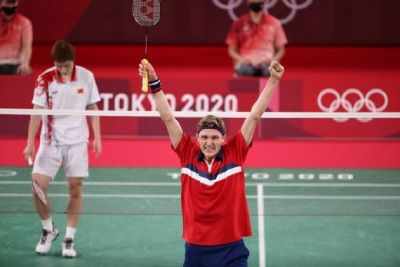
Denmarks world No. 2 Victor Axelsen outclassed Chinas defending champion Chen Long 21-15, 21-12 in the mens singles badminton final to claim the gold medal at the Tokyo Olympics here on Monday.

After tying at 9-9, Axelsen reinforced his strong smashes to take a 21-15 lead. Chen failed to come back and Axelsen wrapped up the second set 21-12.

ADVERTISEMENTx

In their previous encounter at Rio 2016, Chen routed Axelsen 21-14, 21-15 in the semifinal before he beat Malaysia’s legendary shuttler Lee Chong Wei to win his first Olympic gold.

Earlier in the day, Indonesia’s fifth seed Anthony Sinisuka Ginting needed only 38 minutes to defeat the tournament’s dark horse and world No.59 Kevin Cordon from Guatemala 21-11, 21-13 and won the bronze medal. 

Published : August 03, 2021

By : xinhua

Harry Kane fails to report back for pre-season with Tottenham as transfer saga continues #SootinClaimon.Com

#SootinClaimon.Com : ขอบคุณแหล่งข้อมูล : หนังสือพิมพ์ The Nation.

https://www.nationthailand.com/life/40004114

Harry Kane fails to report back for pre-season with Tottenham as transfer saga continues


Harry Kane seems to have deliberately avoided reporting to Tottenham Hotspur as several clubs are chasing after him.

England captain Harry Kane is seemingly increasing the pressure on his club to allow him to leave after failing to report back for pre-season training with Tottenham on Monday.

Kane should have reported to Tottenham’s training ground for tests of assessing fitness and medical check to see if he was infected by COVID-19 after leading England to the final of the European Championships this summer.
 

ADVERTISEMENTx

The move looks like an attempt by the player to force his way out of the club after saying he wanted to leave in May, explaining that he wanted to be at a club who can challenge to win major titles.

Manchester City, Manchester United and Chelsea were all thought to be interested, with Premier League Champions Manchester City thought to have had an offer of 100 million pounds (around 140 million U.S. dollars) rejected by the London based club.

Tottenham valued the 28-year-old at around 120 million pounds but president Daniel Levy is a man known for driving a hard bargain when it comes to selling the club’s main assets and with Kane having a contract with Tottenham until 2024, Levy holds most of the cards in his hands.

As the product of Tottenham’s youth system, Kane has scored an impressive 221 goals in 336 appearances for the club since his first team debut in the Europa League in August 2011.

Meanwhile, Manchester City is keen to strengthen their squad after losing last season’s Champions League final to Chelsea and the departure of veteran striker Kun Aguero after his contract expired.

The club coached by Pep Guardiola are also thought to have offered around 100 million pounds for Aston Villa’s England international midfielder, Jack Grealish. 

Published : August 03, 2021

By : xinhua

For some athletes, the Olympics arent just a chance to compete – theyre an opportunity to defect #SootinClaimon.Com

#SootinClaimon.Com : ขอบคุณแหล่งข้อมูล : หนังสือพิมพ์ The Nation.

https://www.nationthailand.com/life/40004112

For some athletes, the Olympics arent just a chance to compete – theyre an opportunity to defect


On Sunday, Belarusian Olympic sprinter Krystsina Tsimanouskaya turned up at the Polish Embassy in Tokyo – becoming the latest Olympic athlete to refuse to return to her country out of fear for her personal safety.

For some athletes, the Olympics arent just a chance to compete - theyre an opportunity to defect

The Olympics have served as sites of protest, platforms to isolate discriminatory regimes and theaters for Cold War tensions. For some athletes and coaches, the Games have also offered avenues to defect.

“The Olympics provide a very attractive opportunity for people to escape difficult situations at home, most often political repression,” said Barbara Keys, a historian at Durham University.

Tsimanouskaya says Belarusian Olympic authorities tried to force her to fly back to Belarus after she criticized the country’s Olympic officials. She sought the protection of Japanese authorities at the Tokyo airport Sunday night.

Poland has given the athlete a humanitarian visa, and she will fly to Warsaw on Wednesday to seek asylum, according to Alexander Opeikin, executive director of the Belarusian Sports Solidarity Foundation, a group that opposes the Belarusian government.

Here’s a look at several prominent Olympic defections.

ADVERTISEMENTx

1948 Summer Olympics in London

Marie Provaznikova coached the Czechoslovakia women’s gymnastics team to victory in the 1948 London Olympics. But the glimmer of a gold medal stoked little national pride in the 57-year-old president of the International Gymnastic Federation.

The coach announced on Aug. 18, 1948, that she intended to seek asylum in the United States.

Earlier that year, the Communist Party had taken control of Czechoslovakia with Soviet support. Shortly before the London Olympics, Provaznikova led 28,000 female gymnasts in a demonstration in Prague in support of former President Edvard Benes.

The Czechoslovak Embassy said the Communist-led government in Prague had approved her decision to remain abroad, according to a New York Times article at the time. But Provaznikova said she was “a political refugee and proud of it.”

ADVERTISEMENT

She became the first person to defect at the Olympics, at least in the modern era, and a tradition was born.

When Tsimanouskaya made clear her intention to seek asylum Sunday, the Czech Republic offered to welcome her.

1956 Summer Olympics in Melbourne

The 1956 Summer Olympics in Melbourne, Australia, were held just weeks after Soviet tanks and troops crushed an uprising in Hungary. Thousands were killed and wounded, and hundreds of thousands fled the country.

ADVERTISEMENT

The Hungarian Olympic team heard the news through the press after landing in Melbourne, according to the New Republic, and many resolved not to return to Hungary.

Tensions came to a head at the water polo semifinal between Hungary and the Soviet Union, which became known as the “Blood in the Water” episode. Fights broke out between players, and Hungarian water polo star Ervin Zador exited the pool with blood pouring from his head after a Soviet player hit him.

Dozens of Hungarian athletes defected from the Games that year, most to the United States.

Some eventually returned home, according to Sports Illustrated, even donning the Hungarian uniform again at the Olympics. But many remained in their adopted country.

Zador found himself working as a lifeguard in Oakland, Calif., for $6 an hour before eventually opening a restaurant and running a hotel. Despite the difficulties of adapting to life in a country where at first he didn’t speak the language, Zador said before his death in 2012 that “there hasn’t been a moment I’ve regretted it,” Sports Illustrated reported.

1972 in Munich and ’76 in Montreal

The wave of defections by athletes from the Soviet Union and allied states continued during the 1970s. More than 100 athletes may have defected at the Munich games in 1972, according to the Associated Press, though little is known about them and the exact number is still disputed.

“Defection in the Olympics during the Cold War was almost an unrecognized medal event,” Keys said. Soviet bloc officials often sent minders to prevent their athletes and coaches from stepping out of line, so defections usually required careful planning.

At the 1976 Summer Olympics in Montreal, at least four Romanians and one Russian sought asylum in Canada.

The Russian defector, Sergei Nemtsanov, was a 17-year-old diver when he disappeared from the Olympic Village during the Games. Soviet Olympic officials called it a “kidnapping” and part of an “anti-Soviet campaign” in Canada, according to news reports at the time. They threatened to withdraw from the final two days of the Games but ultimately decided to stay and compete.

For the diver, it seemed politics were not the primary factor at play: He reportedly defected out of love for the daughter of an American millionaire he had met at a diving meet in Florida the previous year.

Canada granted him a special visa allowing him to extend his stay. But a few weeks after his escape from the Olympic Village, Nemtsanov decided to return home.

2008 Summer Olympics in Beijing

In the run-up to the 2008 Olympics, after a 1-1 draw against the United States, seven members of the Cuban under-23 soccer team fled from a Tampa hotel during an Olympic qualifying tournament in March. Later that week, the Cuban team took to the field with only 10 players, ESPN reported.

The players left the hotel, bought a cellphone, contacted a lawyer and celebrated with a Cuban meal, the Miami Herald reported, according to ESPN. “We’re fine, calm, feeling hopeful about our new lives,” player Yenier Bermúdez told the Herald. “Of course, we’re nervous because we’re young, have no family here, and we don’t yet know the way of life here, but we hope the Cuban and American communities will help us get started.”

Luiz Muzzi, then-general manager of United Soccer League club Miami FC, told the Herald that he watched the Cuba-U.S. match on TV while “kind of scouting” – “because anytime a Cuban team comes to the United States, there’s a chance someone might defect,” he said.

Athlete defections from Cuba, not only during the Olympics, have been common since the 1959 Cuban revolution. According to DW, an estimated 90 Cuban baseball players have defected to the United States to play for Major League Baseball clubs.

Some of the soccer players who defected in 2008 – under the policy that allowed Cubans to obtain asylum upon reaching U.S. soil – went on to play for other teams. Midfielder Yordany Álvarez played with the Austin Aztex, Orlando City and Real Salt Lake, according to his Major League Soccer profile.

Additionally, after Cuba dominated in boxing during the 2004 Athens Games, none of Cuba’s five boxing champs returned for the 2008 Games – three defected, and a fourth was removed from the team after attempting to flee. The last one retired.

2012 Summer Olympics in London

In 2012, around a dozen African Olympians did not return to their home countries, suspected to have instead sought asylum in Britain.

Of Cameroon’s 37 competing athletes, seven went missing, some in the middle of the night from the Olympic Village – a women’s soccer team goalkeeper, a swimmer and five boxers. Four Congolese team members, including a technical athletic director and coach, also didn’t make it back to their home nation after the Olympics’ end. Several Sudanese runners also sought asylum in British police stations.

The man who carried the flag for Eritrea, steeplechaser Weynay Ghebresilasie, along with three others from the Eritrean delegation, also chose to defect, VOA News reported in 2012. The steeplechaser said that he felt conditions at home seemed to be getting worse, according to the news outlet.

Aka Amuam Joseph, a Cameroon Karate Federation member, told CNN: “Back home, they aren’t giving the proper training. They know if they are well trained, they could beat the person from another country. . . . It pains them to be here and see people beat them who they can beat if they are well taken care of.”

CNN reported that Cameroon’s boxing facility offered only one ring with a concrete floor. Its weight room offers “a limited selection and a peeling carpet,” according to CNN.

“I am positively convinced that if the government did more in this field, we would have little of this disturbance,” Joseph told CNN.

Published : August 03, 2021

By : The Washington Post · Claire Parker, Sammy Westfall