The government adopted on Monday a draft of its Next Cybersecurity Strategy, naming China, Russia and North Korea for the first time as countries that conduct cyberattacks.
Adopted at a meeting of the Cybersecurity Strategic Headquarters held in the Prime Minister’s Office, the draft sets out Japan’s policy to drastically strengthen the Self-Defense Force’s cyberdefense capabilities.
The draft is to be adopted at a Cabinet meeting soon.
“It is observed that China, Russia and North Korea are continuing to build the cyber capabilities of their military and other institutions,” says the draft, which outlines Japan’s strategy for the next three years.
Due to the need to strengthen capabilities for defense, deterrence and situational awareness against attacks on critical infrastructure, the draft stipulates a plan to strengthen cyber defense capabilities by enhancing the structure of cyber-related units.
It also includes cooperation with the United States, Australia, India and the Association of Southeast Asian Nations.
Japan’s government plans to crack down on the rampant crime utilizing cryptocurrencies, the dark web and social media. It is considering setting up a cyber command center and a working unit within police authorities.
The draft says Japan’s strategy will proceed in line with the government’s digital reforms, which have included the launch of the Digital Agency in September. The agency will present a basic policy on cybersecurity for the development of national and local information systems.
ADVERTISEMENT
“Enhancing our capabilities and the cooperation of related organizations are necessary to make effective use of limited human resources,” Chief Cabinet Secretary Katsunobu Kato, who leads the headquarters, said at the meeting.
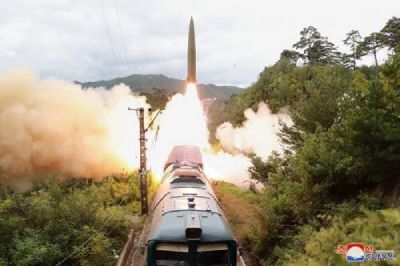
North Korea fired a short-range missile into the East Sea on Tuesday, South Korea’s Joint Chiefs of Staff said. The launch took place just minutes before North Korea’s ambassador to the UN urged the US to drop its “hostile policy” at the UN.
The JCS offered no details, saying South Korean and US intelligence are looking into the launch, while Japan’s defense minister said the projectile appeared to be a ballistic missile, without elaborating. North Korea has recently test-launched ballistic missiles, criticizing US hostile policy.
At the UN General Assembly, Kim Song, North Korea’s UN envoy, said the US has to scrap its hostile policy and stop holding joint military drills with South Korea and bringing in strategic weapons into the Korean Peninsula.
“The US should show all of that in action and not words,” Kim said, noting North Korea would be open to any offer to talks once the US makes the change. He added he believed Washington would not drop the policy right away and Pyongyang would no longer ask but watch how the situation unfolds.
The US abandoning its “hostile policy” was one of the two conditions, alongside doing away with “double standards,” that North Korea suggested last week South Korea find ways to do in order to reopen nuclear dialogue. Cheong Wa Dae said it was closely looking at the proposal.
The “double standards” mentioned were Washington’s reaction to the two Korea’s missile tests on Sept. 15, when they tested their ballistic missiles hours apart. The US condemned the North Korean test but not the South Korean launch.
Since then, Pyongyang has reached out to Seoul with overture on talks if the South drops the hostile policy and double standards.
While the Moon Jae-in administration is looking to seize the opportunity to reconnect with the regime at the last minute before Moon leaves office in less than a year, some experts consider the offer a ruse to see Seoul’s response and make it accountable for actions it takes against Pyongyang later.
South Korea cannot unilaterally make change to either of the US position and even if Seoul were to do it, Seoul risks fraying the alliance with Washington, experts said, adding that North Korea was manipulating the Moon administration, which is eager to see another Moon-Kim summit open.
Moon and Kim have met three times since April 2018, but the two Koreas have seen little progress on denuclearization.
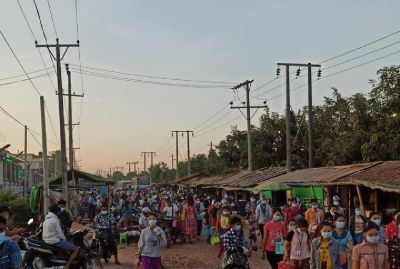
YANGON- Many of the businesses across Myanmar have stopped their operation temporarily or permanently following protests and internal political instability since February 1 takeover.
Among them are CMP (cutting, making and packing) factories and businesses. Some of them had to shut down due to a complete lack of overseas order.
Closed Down
A Chinese-owned Hanmauk (Myanmar) Garment Factory with a 1,000-strong workforce in Shwe Thanlwin Industrial Zone in Hlinethaya Township officially announced its closure on its Facebook page on June 19 as it could no longer survive amid various hardships. The administrator of the Shwe Thanlwin Industrial Zone Management Committee cited severe shortages of raw materials and lack of orders as reasons for the shutdown.
“They submitted a letter to us informing that they had to close down as they received no order from overseas. Political instability may be another reason. The main reason is they could not obtain raw materials,” he said.
On September 21, Myanmar Unique Garment Factory in Hlaing Tharyar Industrial Zone closed temporarily after operating for five years due to a lack of orders. The factory is owned by a Myanmar citizen.
“The factory operation has been suspended. It is partly due to the Covid-19 crisis. We received few orders since 2020. The political issue is also one of the reasons. We stopped operation because we received no orders. But, it is only a temporary closure,” a factory official said.
There are three industrial zones—Hlaing Tharyar , Shwe Linban and Shwe Thanlwin— in Hlaing Tharyar Township where most of the factories and businesses in Yangon Region are centered.
A lot of factories in these industrial zones have closed since February of this year, according to the zone committees.
ADVERTISEMENT
Twenty nine factories in Hlaing Tharyar Industrial Zone have closed down so far, said a zone committee official.
“In our zone, 29 have closed since February. But they said in their letters they have only closed temporarily. The factories closed after paying all compensations to the workers in accordance with the law,” he said.
Likewise, nine factories in Shwe Thanlwin Industrial Zone have closed temporarily or permanently, said an official from the zone committee. He,however, said some factories had moved to other places.
There have been 35 factories in Shwe Linban Industrial Zone which closed temporarily or permanently.
In our zone, about 30 factories have closed temporarily while about five others have shut down. They closed only after paying salaries and wages to their workers,” said a zone official.
He added that a least 10 garment factories were among the 35 closures.
Thousands of workers became unemployed after the factory and business closures.
The closure of 29 factories in Hlaing Tharyar Industrial Zone alone left about 7,000 workers unemployed, said a zone official.
Similarly, nearly 3,000 workers lost their jobs after nine factories closed down in Shwe Thanlwin Industrial Zone while around 10,000 workers became unemployed after the closure of 35 factories and businesses in Shwe Linban Industrial Zone, according to the respective zone committees.
“They will be facing hard times because they are out of work. As you know, all are in trouble. There are various hardships and difficulties including high inflation rate. Even operative factories and businesses are facing difficulties more or less. There are closed factories as well as operative ones. But, the running ones have to struggle. Things are not good anymore,” said an official from the Shwe Linban Industrial Zone Management Committee.
A female worker said most of the factory workers in Yangon came from various regions of the country. When their factories closed, they became unemployed and faced problems with their living conditions such as their hostel rents and meals.
“I came from another town to work here at a factory. I came to work despite the political situation in our country. With factory closures and the current political situation, we find it very hard to find a job. While seeking a job, we have to struggle for our cost of living,” the woman commented.
In some cases, whole families moved to Yangon to work in factories. When the factories closed, they became jobless facing a lot of problems.
With high commodity prices, even those going to work regularly have to be grappling with their day-to-day living as they are poorly paid.
“I still have to go to work. I receive my salary regularly. We also receive overtime fees. As our factory continues to operate, we can still afford our living with our salary even though we may be poorly paid. Due to high commodity prices, we have to tighten our belt. I have pay hostel rents,” said a garment factory worker in Yangon.
The garment industry, a lifeline for workers
Among other businesses, garment factories require a large number of workers. Although there are a wide range of factories in the industrial zones, garment factories have a much stronger workforce.
Garment industry plays an important role in Myanmar’s economic growth. The garment sector topped the list of exported goods in 2019. Garment businesses are also best prospects for the labour intensive industry.
Myanmar’s garment industry is based on a CMP (cutting, making and packing) system. The garment export value was US$1 billion in 2013-2014 fiscal year and jumped to US$3 billion in 2017-218 fiscal, seeing a triple increase in five years.
According to the data from the Myanmar Garment Manufacturers Association (MGMA), nearly 600 garment factories with about 500,000 workers exported garment and textile products worth US$4.37 billion in 2019.
Under its ten-year strategic plan, the MGMA has estimated the garment industry will be able create up to 1.5 million jobs and export garment products worth about US$10 billion.
Not only garment industry but also some other businesses such as shoe making and bag making are operating in Myanmar under CMP system.
However, the closure of such a large number of garment factories does not bode well for the country’s future and its economic prospects.
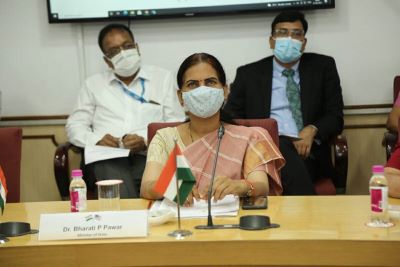
A joint India and the United States collaboration will advance scientific discovery and management of global health threats, Union Minister of State for Health Bharati Pravin Pawar said here on Monday.
Addressing an inaugural session of the 4th Indo-US Health Dialogue, being hosted by India, at the Ministry of Health, she said “Collaboration between our countries will advance scientific discovery and management of global health threats.”
Marking the beginning of the two-day dialogue, Pawar said the platform will provide an opportunity to all the participants for detailed deliberations, which may be used to broaden the scope of partnership on the health agenda with multiple agencies both in India and the US.
Multiple ongoing collaborations between the two countries in the health sector are the focus of the meet, the ministry said in the statement.
This also includes several areas of concern pertaining to strengthening of epidemiological research and surveillance, vaccine development, the “One Health” approach, zoonotic and vector-borne diseases, health systems and health policies etc., it added.
The US delegation for the dialogue is led by Loyce Pace, Director, Office of Global Affairs at the United States Department of Health and Human Services (HHS).
She lauded the way in which the two countries have enhanced collaboration in research and development, especially with respect to pharmaceuticals, therapeutics and vaccine development, which could be seen in Indian manufacturers collaborating with US-based agencies to develop Covid vaccines, the statement said.
Pawar appreciated a memorandum of understanding (MoU) signed in 2020 on mental health that enhanced cooperation and strengthened bilateral ties between India and the US in the health sector.
Another MoU between the Ministry of Health and the US Department of Health and Human Services in the health sector has been finalised, that is likely to cover issues such as health safety and security, communicable diseases and non-communicable diseases, health systems and health policy, the statement said.
ADVERTISEMENT
Pawar recapitulated the need to focus on these emerging areas to prevent and control infectious diseases, relying on well-designed and validated scientific approaches and collaboration between countries to aid in advance scientific discovery and management of global health threats, it added.
She also said the public and private sector should work together and combine their strengths in fighting the inequities of the health systems through innovations.
Shri Rajesh Bhushan, Union Health Secretary, Dr Renu Swarup, Secretary, Department of Biotechnology, Dr Balram Bhargava, Director General, Indian Council for Medical Research (ICMR) and Secretary, Health Research among other senior officials of the Ministry represented India at the event.
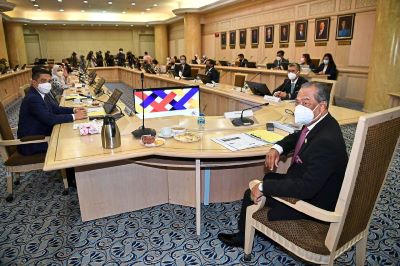
PUTRAJAYA: With interstate travel likely to resume by mid-October, the government is also looking at lifting border control, it was announced.
National Recovery Council (NRC) chairman Tan Sri Muhyiddin Yassin said the government would deliberate on whether the country was ready to reopen to tourists and business travellers.
“The reopening of the country’s borders was discussed and will be deliberated further by the related ministers this week.
“They will be looking into whether to allow fully vaccinated Malaysians to travel abroad.
“At the same time, it will also be discussed whether to allow tourists and business travellers into the country.
“I believe this will bring about a big effect to the country.
“The matter will be brought to the Prime Minister, and an announcement will be made soon,” Muhyiddin told a press conference yesterday after chairing the council meeting for the first since his recent appointment.
On interstate travel, he said the council was given a briefing by Health Minister Khairy Jamaluddin.
ADVERTISEMENT
He said people would be allowed to cross states when 90% of the adult population had been immunised.
“We were told this could be achieved by early October or at the latest by the middle of the month.
“So you can start making plans to travel around country after this. But do not forget the SOP,” Muhyiddin said.
At present, about 83% of the country’s adult population have been fully vaccinated.
He said Khairy also briefed the council on the falling numbers of Covid-19 patients in intensive care units.
“We are pleased and this shows the positive effects of the vaccination programme,” Muhyiddin added.
He said it was proposed that state-level NRCs be formed to ensure that recovery plans were implemented efficiently, adding that the respective mentris besar and chief ministers would chair it.
He said the meeting also discussed the reopening of schools and higher learning institutions.
Also present was Senior Minister (Security) Datuk Seri Hishammuddin Hussein, Senior Minister (International Trade and Industry) Datuk Seri Azmin Ali, Senior Minister (Education) Datuk Dr Radzi Jidin, Finance Minister Datuk Seri Tengku Zafrul Abdul Aziz and Health director-general Tan Sri Dr Noor Hisham Abdullah.
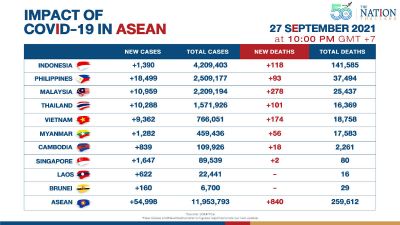
New Covid-19 cases fell sharply in Southeast Asia to its lowest in weeks, however the number of deaths were higher on Monday, collated data showed.
Asean reported 54,998 new cases on Monday, lower than Sunday’s 63,014, while deaths rose to 840 from 712 the previous day.
The number of Covid-19 cases crossed 11.95 million while the death toll in the region has gone up to 259,612.
Vietnam Prime Minister Pham Minh Chinh said the National Steering Committee for Covid-19 Prevention and Control has agreed to change the strategy policy from “Zero Covid” to “Safe and flexible adaptation and effective control of the Covid-19 pandemic”, striving to bring the country back to a new normal by the end of September. The country reported 9,362 new cases and 174 deaths on Monday, bringing cumulative cases to 766,051 patients and total 18,758 deaths.
Meanwhile, Malaysia is considering reopening theme parks by the end of November as the Ministry of Public Health estimates that by then up to 90 per cent of the adult population in the country would have been vaccinated against Covid-19. On Monday, Malaysia reported 10,959 news cases and 278 deaths, bringing cumulative cases in the country to 2,209,194 patients and deaths to 25,437.




 SootinClaimon.Com