Experts are advising investors to keep an eye on the Covid-19 pandemic, the US president’s moves before the presidential election, and the Thai Monetary Policy Committee (MPC)’s meeting, as they could affect the Stock Exchange of Thailand (SET) Index and the price of gold next week.
The SET Index on Friday (July 31) closed at 1,328.53, up 12.79 points or 0.97 per cent, while total transactions stood at Bt61.280 billion.
A stock analyst at Phillip Securities (Thailand) expected the index next week to fluctuate between 1,280 and 1,340.
“We expect the market to gain positive sentiment, but negative sentiments, such as the Covid-19 pandemic and the US president’s moves before the presidential election would pressure the index,” the analyst said.
“Besides, we expect the MPC to maintain the interest rate at a low level during the meeting next week.”
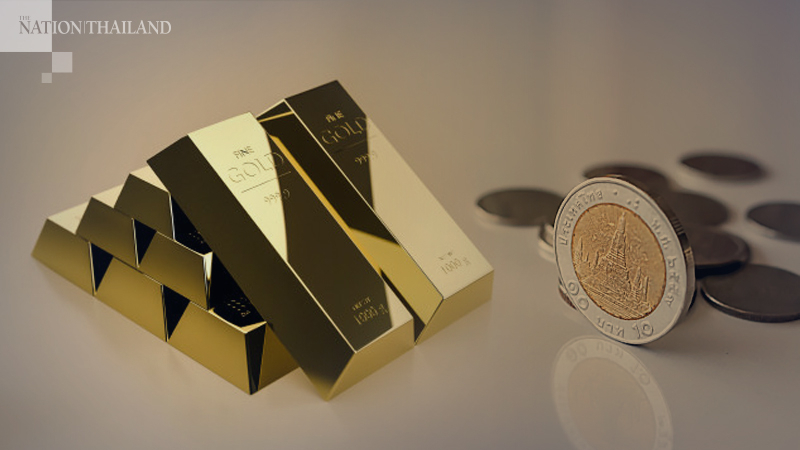
The price of gold yesterday stood at US$1,976.67 per ounce, while the price in Thailand was Bt29,100 per baht weight.
A gold analyst at YLG Bullion International said investors could buy gold for short-term speculation or sell some gold to take profits to cope with market volatility.
“If gold price does not drop below the support level between $1,954 and $1,959 per ounce, the price would rise to the resistance level between $1,984 and $2,000 per ounce,” the analyst said.
“However, investors should beware of mass sell-offs in gold if the price rises to the resistance level.”
Bank stocks have dropped an average 6.2 per cent over the past week as the virus crisis grips Thailand’s financial sector, experts reported today.
Meanwhile the Stock Exchange of Thailand (SET) fell by 4.1 per cent from 1359.65 to a low of 1,303.25 before rebounding to 1,328.53 at the close on Friday (July 31).
Pasakorn Wangvivatchareon, a research assistant at Asia Plus Securities, said the fall in banking shares was due to banks’ weak second-quarter performance, allowance for doubtful debts, and lack of positive sentiment.
“Banks’ asset quality is likely to deteriorate further after the Bank of Thailand [BOT]’s debt payment holiday expires, while market volatility and the BOT’s move to hold off payment of banks’ interim dividends would also pressure the share price,” he said.
However, he said banking stocks would not drop sharply because banks’ price-to-book value was already at a low of 0.4.
“Signs of economic recovery will lift the price of bank shares,” he said. “However, we still weigh investment in banks lower than the market due to various uncertainties.”
Meanwhile, a Tisco Securities stock analyst advised investors to monitor banks’ move to set up allowances for doubtful debts as this would affect their performance in the second half of this year.
“Banks that have set up allowances in advance are Bangkok Bank (BBL) and Kasikorn Bank [KBank], while those gradually setting up allowances are Siam Commercial Bank [SCB] and TMB Bank,” the analyst explained.
Most banks expected up to 40 per cent non-performing loans (NPL), the analyst said.
Small and medium enterprises under BOT relief measures accounted for about 40 per cent of total loans.
“We expect NPLs to reach the maximum by the second half of 2021,” the analyst added.
KBank’s board of directors recently approved the sale of 23.932 million stocks it bought back earlier this year at Bt134 apiece, paying Bt3.207 billion. The bank looks set to lose about 38 per cent on that deal, given its July 30 share price of Bt82.50, when it offers the shares from August 31 to September 16.
“If we cannot sell stocks, the bank’s capital funds are still sufficient to continue business,” Chongrak Rattanapian, KBank senior executive vice president, said. “At present, the bank’s capital funds at the end of June this year were 18.09 per cent of which 15.38 per cent was tier 1 capital. The bank’s loans to deposit ratio [LDR] was 92.15 per cent.”
EconAug 01. 2020Don Nakornthab, BOT senior director
By The Nation
The falling economy has bottomed out, but unemployment remains a serious concern, said the Bank of Thailand (BOT) today.
Don Nakornthab, a BOT senior director, said five economic engines – consumption, private investment, exports, imports, and manufacturing – showed signs of improvement in June although all remained in negative growth territory.
These indicators suggested the economy had bottomed out and, if the recovery continue, the central bank may revise upward its GDP projection, he said. The BOT’s current 2002 GDP projection is for a contraction of 8.1 per cent.
He predicted that GDP in the second quarter (April to June) may contract in a range of 12 to 13 per cent, close to the historic plunge of 12.5 per cent in the second quarter of 1998 during the Asian financial crisis.
Easing of lockdown restrictions contributed to the economic improvement in June, he said.
However, if a second wave of Covid-19 infection occurs and leads to another big lockdown, economic recovery would be further disrupted, he pointed out.
Despite some improvement last month, the economy remains deep in negative territory, with unemployment the biggest concern, he warned. The number of workers applying for unemployment benefits has been rising. Some observers estimate it could rise to 5 million, or about 10 per cent of the total workforce, said Don.
Separately, Supachai Panitchpakdi, former director-general of the World Trade Organisation (WTO), said the Thai and Asean economy are expected to recover by the end of this year, but trade may still contract. Trade in food, communication and medical equipment may recover first, said Supachai, who is also a former secretary-general of the UN Conference on Trade and Development (UNCTAD). Risk of declining trade would persist for the next one or two years, he added.
The Bank of Thailand (BOT) reports that the economy improved in June due to gradual relaxation of lockdown measures that aided resumption of economic activities. As a result, goods exports (excluding gold), private consumption and private investment indicators, and manufacturing production contracted at a lower rate than in May, said the BOT’s latest report on Economic and Monetary Conditions.
Headline inflation remained negative but edged up due to a rise in domestic retail petroleum prices.
Core inflation was slightly negative, consistent with weak domestic demand. The labour market remained vulnerable as jobless claims rose.
The current account was balanced.
Meanwhile, public spending expanded both in current and capital expenditures.
However, the tourism sector continued to contract substantially as foreign tourist arrivals stayed at zero for the third consecutive month due to Thailand’s inbound travel restrictions.
Overall economic stability remained vulnerable, according to the central bank.
The capital and financial accounts posted a surplus in both the asset position – owing to the net sell in debt securities and the withdrawal of deposits abroad by Thai investors – and the liability position, owing to the net buy in debt securities by foreign investors.
The value of goods exports fell by 24.6 per cent in June from the same period last year, slightly higher than the previous month. Excluding gold, however, the rate of contraction fell sharply to 18.4 per cent from 29.0 per cent last month. This was due to improvement in exports in almost all categories. Nevertheless, export values still shrank at a high rate, especially automotive and parts, machinery and equipment, and petroleum-related products, reflecting weakening income of trading partners.
Private consumption indicators contracted at a lower rate compared with the previous month fuelled by consumer spending coupled with government relief measures. However, private consumption indicators still fell sharply in line with weak household income and low consumer confidence. Manufacturing production contracted at a lower rate in almost all industries, consistent with the improvement of exports and private consumption.
Meanwhile, private investment indicators contracted substantially but at a slower pace than the previous month due to higher investment in machinery and equipment from domestic machinery sales, newly registered vehicles, and imports of capital goods. Meanwhile, construction investment contracted at a higher rate on reduced construction material sales.
The value of merchandise imports contracted by 18.2 per cent from the same period last year, improved from the previous month in all major categories including consumer goods, raw materials and intermediate goods, and capital goods. This was partly due to a low base effect last year.
Public spending, excluding transfers, expanded from the same period last year in both current and capital expenditures. Current expenditure rose slightly from purchases of goods and services. Capital expenditure expanded sharply due mainly to disbursement of government budget for road maintenance. However, state enterprises’ capital expenditure contracted.
The BOT reported that overall economic activity in the second quarter of 2020 substantially contracted as a result of economic disruption from Covid-19 containment measures in Thailand and abroad. External demand contracted sharply in the tourism sector and exports. Consequently, domestic economic activities were affected especially private consumption and private investment indicators as well as manufacturing production. However, public spending expanded and played an important role in supporting the Thai economy. On the stability front, headline inflation was negative mainly from a decline in energy prices, while core inflation was slightly positive. The current account posted a small deficit compared with a large surplus in the previous quarter, attributed to a drop in tourism receipts and seasonal remittance of profits and dividends by foreign businesses operating in Thailand. The capital and financial accounts registered a surplus from the asset and the liability positions.
Digitalisation of small and medium businesses (SMBs) in Thailand could add between US$35 billion and $41 billion (Bt1.01 trillion-Bt1.28 trillion) to the country’s GDP by 2024 and contribute to economic recovery post Covid-19, according to the 2020 Asia Pacific SMB Digital Maturity Study.
The study, based on a survey of SMBs from across the region conducted by International Data Corporation (IDC) and commissioned by Cisco, shows that SMBs that are more digitally mature enjoy twice as many benefits in terms of revenue and productivity compared to those that have an indifferent approach to digitalisation.
According to the Office of Small and Medium Enterprises Promotion (OSMEP), the sector accounts for 85.5 per cent of Thailand’s total workforce and contributes to 43 per cent of total GDP. As such, SMBs will play a key role in the economic recovery and growth in a post-Covid world.
The study shows that 73 per cent of SMBs in Thailand are looking to digitally transform to bring new products and services to market, while 50 per cent recognise that competition is transforming and they must keep pace, and 23 per cent are transforming due to demand from customers.
“The SMB sector has been among the hardest hit by the Covid-19 pandemic. However, they have been agile and have taken various measures to overcome the situation. One of the key trends that we have seen is that of SMBs adopting technology to ensure they can continue to serve their customers during the period,” said Vatsun Thirapatarapong, regional managing director for Thailand and Indochina at Cisco.
“As Thailand starts to ease some of the restrictions and consumer activity starts to pick pace, digital transformation of SMBs will play a pivotal role in their recovery and contribute to the country’s overall economic growth. Cisco is committed to work with SMBs to help them emerge stronger with the right digital solutions and strategy.”
The study shows that purchasing or upgrading IT software (20 per cent) is the top technology investment priority for Thai SMBs, followed by purchasing and upgrading IT hardware (15 per cent) and investing in cloud (11 per cent).
However, SMBs are also facing challenges. According to respondents, a shortage of digital skills and access to talent is the top hurdle (20 per cent) for SMBs in their digital transformation efforts. This is followed by the lack of lack of a proper digital transformation roadmap (18 per cent) and lack of necessary technologies (15 per cent).
“SMBs have an unprecedented opportunity. However, for them to derive the greatest long-term value, all stakeholders need to come together to address the key issues faced by the industry. This includes government, educational institutions, large corporations, and industry bodies. No one entity can solve these alone. At Cisco, we are proud to be playing our part. From a talent perspective, the Cisco Networking Academy has trained over 2.5 million students across Asia Pacific, Japan and China in various ICT skills since its inception. On the technology front, we have launched a series of curated products and solutions specifically for the SMB sector under the Cisco Designed portfolio,” said Bidhan Roy, Cisco’s managing director of Small Business for Asia Pacific, Japan and China.
For Asia Pacific, digitalisation of SMBs could add between $2.6 and $3.1 trillion to the region’s GDP by 2024. Asia Pacific’s GDP is expected to grow between $10.6 and $14.6 trillion, according to forecasts by IDC, with SMB digitalisation accounting for as much as 25 per cent of that growth.
The study highlights that nearly 70 per cent of SMBs in Asia Pacific are accelerating digitalisation as a result of Covid-19. Eighty-six per cent of respondents say they believe digitalisation will help in developing resilience against crises like Covid-19.
Despite the challenges, the region’s SMBs continue to make progress in digitalisation. According to the study, 16 per cent are now in the advanced digital maturity stages (3 and 4), compared to 11 per cent in 2019. Slightly more than half of SMBs have embraced digitalisation to become “Digital Observers” (stage 2). Only 31 per cent of SMBs have made hardly any efforts to transform digitally (stage 1).
Four stages of digital maturity
Stage 1 – Digital Indifferent: A company that is reactive to market changes and digital efforts do not exist
Stage 2 – Digital Observer: A company whose digital efforts have started but remain tactile and in bite-sized initiatives
Stage 3 – Digital Challenger: A company that has a strategy for the use of digital technologies and is more proactive in market responsiveness
Stage 4 – Digital Native: A company that has an integrated digitalisation strategy and is focused on driving continuous innovation
Within the region, SMBs in Singapore, Japan and New Zealand continue to lead the Digital Observer group, with no changes in their ranking compared to 2019. However, mainland China, Taiwan and Thailand surpassed South Korea, Hong Kong and Malaysia, respectively. There has been notable progress made by SMBs in Indonesia and Vietnam.
The 2020 Asia Pacific SMB Digital Maturity Study analysed data from over 1,400 SMBs across 14 markets to assess the challenges and opportunities the companies face in their digital transformation journey. The 14 markets are Australia, China, Hong Kong, India, Indonesia, Japan, Malaysia, New Zealand, Philippines, Singapore, South Korea, Thailand, Taiwan and Vietnam.
The Stock Exchange of Thailand (SET) Index closed at 1,328.53 today (July 31), up 12.79 points or 0.97 per cent. Total transactions amounted to Bt61.281 billion with an index high of 1,328.64 and a low of 1,303.25.
In the morning session, a Krungsri Securities stock analyst expected the index to fall to 1,305 in response to weak US economic data after the country’s second-quarter GDP contracted 32.9 per cent to its lowest in almost 70 years due to lockdown measures.
“In addition, US jobless claims rose to 1.4 million after 19 consecutive weeks of increases, showing that the US economy has not fully recovered,” the analyst said.
“The increasing number of US Covid-19 cases will also pressure the index.”
However, the index would rebound from mass buy-ups of stocks whose second-quarter performance shows improvement, the analyst added.
The 10 stocks with the highest trade value today were PTT, AOT, KBANK, GULF, IVL, PTTGC, CPALL, GLOBAL, CPF, and DELTA.
As of 4.30pm, the price of crude oil rose by US$0.20 or 0.5 per cent to $40.12 per barrel, while gold rose by $28.20 or 1.43 per cent, to $1,995 per ounce.
Other Asian indices were mixed:
Japan’s Nikkei Index closed at 21,710, down 629.23 points, or 2.82 per cent
China’s Shang Hai SE Composite Index closed at 3,310.01, up 23.18 points, or 0.71 per cent, while the Shenzhen SE Component Index closed at 13,637.88, up 171.03 points, or 1.27 per cent.
Hong Kong’s Hang Seng Index closed at 24,595.35, down 115.24 points, or 0.47 per cent.
South Korea’s KOSPI Index closed at 2,249.37, down 17.64 points, or 0.78 per cent.
Taiwan’s TAIEX Index closed at 12,664.80, down 58.12 points, or 0.46 per cent.
The government has assured that the ongoing projects in the much-touted Eastern Economic Corridor (EEC) will not be disrupted despite the imminent Cabinet reshuffle.
Government deputy spokeswoman Ratchada Thanadirek said on Friday that due to concerns the Cabinet reshuffle would affect continuity of EEC development, the government would like to assure that the construction of many mega infrastructure projects there have shown a lot of progress.
For an example, the related state electricity authorities and water authorities are preparing to remove utility facilities to pave the way for the construction of the high-speed train system linking three international airports.
The Charoen Pokphand-led consortium and the State Railway of Thailand last October signed a contract for the joint development of the high-speed railway linking Don Mueang Airport in Bangkok, Suvarnabhumi in Samut Prakarn and U-Tapao in Rayong.
She added that a bid document to develop Digital Park Thailand in the EEC is also being drawn up and will be put up in a public hearing soon.
She said that although the number of applications for investment in the EEC had dropped during April-June this year due to the Covid-19 pandemic outbreak, the number is expected to expand later as foreign investors are keen to relocate their production bases to other countries to avoid impacts from the US-China trade war.
The EEC covers Chachoengsao, Chonburi and Rayong provinces
The Thai Chamber of Commerce has proposed to the government to revise labour laws to allow hiring labourers on an hourly basis, chamber vice chairman Surong Bulakul said on Thursday.
He added that hiring on a daily basis with minimum wage payment rules does not fit well with the current virus-hit economic situation and the situation of the business sector.
Hiring on an hourly basis will help business operators save cost and provide more job opportunities to people and reduce their risk of being laid off. It will help business operators survive the economic crisis and they can immediately hire more employees during busy hours or during long holidays when they see rising numbers of customers, Surong said.
He said that the modern trade business needed to hire at least 5,000 people on an hourly basis but they cannot do so as they are prohibited by the law.
The price of gold was unchanged in morning trade on Friday (July 31), the Gold Traders Association reported.
As of 9.29am, the buying price of a gold bar was Bt28,900 per baht weight and selling price Bt29,000, while gold ornaments cost Bt28,379.52 and Bt29,500, respectively.
The Comex (Commodity Exchange) gold price to be delivered in December dropped by US$9.9, or 0.5 per cent, to $1,966.8 (Bt62,348.80) per ounce at yesterday’s close.
Gold closed at negative as investors sold the metal to take profit after the price rose for nine consecutive days. Meanwhile, investors responded to the US Federal Reserve’s move to maintain the interest rate and a promise that it would issue measures to help economic recovery amid the Covid-19 crisis.
The Chinese Gold and Silver Exchange Society said that the Hong Kong gold price rose by HK$70, opening at $18,120 (Bt72,984.61) per tael this morning.
The Stock Exchange of Thailand (SET) Index fell by 7.49 points, or 0.57 per cent, to 1,308.25 in the morning session on Friday (July 31).
A Krungsri Securities stock analyst expected the index to fall to 1,305 in response to weak US economic data after the country’s second-quarter gross domestic product (GDP) contracted 32.9 per cent, the lowest in almost 70 years, due to lockdown measures.
“In addition, the US initial jobless claims increased to 1.4 million positions. The number of US initial jobless claims rose over 1 million positions for 19 consecutive weeks, showing that the US economy has not fully recovered,” the analyst said.
“Moreover, the increasing number of US Covid-19 cases would pressure the index as well.”
However, the analyst said the index would rebound from mass buy-ups in stocks whose second-quarter performance will improve.
He recommended that investors buy:
▪︎ Food and electronic stocks that benefit from the weakening baht, such as CPF, GFPT, TU, TFG, ASIAN, KCE, DELTA, HANA, and SVI.
▪︎ Stocks whose second-quarter performance will improve, such as TOP, PTTGC, SPRC, BGRIM, CKP, CPF, TU, TASCO, STA, STGT, SPALI, AP, PRM, PTL, AJ, STARK, CBG, TQM, and JMT.
The SET index fell by 22.61 points, or 1.69 per cent, closing at 1,316 at yesterday’s close (July 30), while transactions amounted to Bt67 billion.
The SET and other foreign indices fell as the US Federal Reserve did not issue more economic stimulus measures, while Germany’s second-quarter GDP contracted 10.1 per cent, the lowest in their history.
In addition, mass sell-offs in stocks to reduce risks before the announcement of listed companies’ second-quarter performance caused the index to fall sharply.
Foreign investors made net sales in stocks worth Bt1.962 billion and net buys in bonds worth Bt1.060 billion. There were 9,013 net short Thailand Futures Exchanges contracts.

 Don Nakornthab, BOT senior director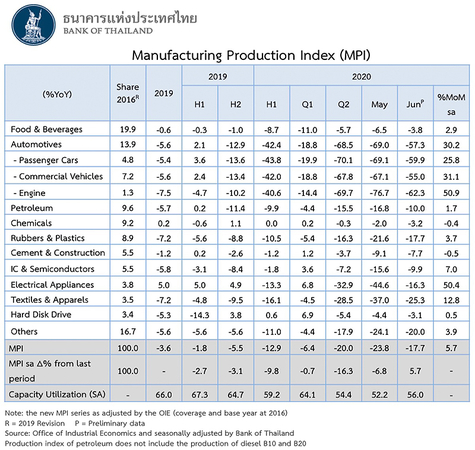

 Government deputy spokeswoman Ratchada Thanadirek