Biden immigration agenda takes shape as lawmakers unveil bill #SootinClaimon.Com

#SootinClaimon.Com : ขอบคุณแหล่งข้อมูล : หนังสือพิมพ์ The Nation.

Biden immigration agenda takes shape as lawmakers unveil bill

InternationalFeb 19. 2021Applicants for U.S. citizenship listen to a presentation during a naturalization ceremony at the Paramount Theatre in Oakland, Calif., on Feb. 13, 2019. MUST CREDIT: Bloomberg photo by David Paul MorrisApplicants for U.S. citizenship listen to a presentation during a naturalization ceremony at the Paramount Theatre in Oakland, Calif., on Feb. 13, 2019. MUST CREDIT: Bloomberg photo by David Paul Morris

By Syndication Washington Post, Bloomberg · Jordan Fabian, Steven T. Dennis

President Joe Biden’s proposed immigration overhaul was introduced in Congress on Thursday, kicking off what will likely be one of his most difficult legislative challenges.

The legislation, known as the U.S. Citizenship Act of 2021, hews closely to the outline that Biden sent to Congress on his first day in office. The proposal includes an eight-year path to citizenship for most of the roughly 11 million immigrants living illegally in the U.S., bolsters the nation’s refugee and asylum systems and calls for additional technology to be used to help secure the southern border.

The citizenship path is not conditional on the implementation of border security measures, which had been a trade-off included in past immigration bills designed to earn Republican support.

Linda Sánchez, D-Calif., sponsored the bill in the House. Robert Menendez, D-N.J., is its chief sponsor in the Senate.

Previous attempts to reform the nation’s immigration system have failed over the past two decades, and Biden’s bill could face an even more daunting path because GOP lawmakers’ opposition to legalizing undocumented immigrants, which they decry as amnesty, hardened during the Trump era.

The White House previously signaled it is open to breaking the package into pieces and presenting them separately to win over at least some Republicans. Biden said in a CNN town hall event on Tuesday that smaller measures could help fix the system “in the meantime.”

Yet his team plans to defer to leaders in the House and Senate on the best path forward, including whether to try to use a procedural maneuver known as budget reconciliation to pass it with only Democratic votes while building support for broader legislation. The Democrats are employing the reconciliation process to pass Biden’s $1.9 trillion coronavirus relief plan.

Menendez said Thursday during a virtual news conference that it’s time to go big on an immigration overhaul after calling former President Donald Trump’s immigration policies “a cornerstone of Trump’s hateful horror show.”

“It’s time to bring all 11 million undocumented out of the shadows,” he said, calling them essential workers who should not be left behind by piecemeal efforts. “We are not going to make concessions out of the gate. We are not going to start with 2 million.”

Menendez said lawmakers won’t know if they can get 60 votes in the Senate until they try, which would be necessary to vote on the bill without using the reconciliation process.

“We will never win an argument we don’t have the courage to make,” he said.

New U.S. citizens wave American flags during a naturalization ceremony at the Evo A. DeConcini U.S. Courthouse in Tucson, Ariz., on Sept. 16, 2016. MUST CREDIT: Bloomberg photo by David Paul Morris

New U.S. citizens wave American flags during a naturalization ceremony at the Evo A. DeConcini U.S. Courthouse in Tucson, Ariz., on Sept. 16, 2016. MUST CREDIT: Bloomberg photo by David Paul Morris

Menendez said some Republicans want portions of the package – like provisions for farmworkers or tech workers – but he made clear he wants a broad path to citizenship in return. It’s possible portions of the package could eventually move separately, including in a second budget reconciliation bill Democrats are planning on later this year, which would not need Republican votes, the senator said.

Menendez said there is a strong argument to be made that some provisions should be eligible because immigration has substantial budget impacts. Senate rules restrict what kinds of provisions can be included in a bill moving through reconciliation.

“We are not foreclosing any pathway,” Menendez said.

Several other bills could serve as vehicles to move parts of the Biden plan.

A bipartisan group of lawmakers has reintroduced the Dream Act, which would offer deportation protections and a citizenship path to immigrants, known as Dreamers, who were brought illegally to the U.S. as children. Democrats have also supported legislation that would offer immediate relief to farmworkers.

Biden’s proposal makes Dreamers, farmworkers and migrants with temporary protected status eligible to apply for permanent legal residence right away, which would allow them to apply for citizenship within three years. That faster path to citizenship is meant to signal that those groups are important, but it doesn’t mean the White House has decided to pursue piecemeal bills to protect them, an administration official said on Wednesday.

Only immigrants who were in the country on or before Jan. 1, 2021 would be eligible for the legalization process.

Rep. Joaquin Castro, D-Texas, is also introducing a bill that would offer permanent legal status to about 5 million undocumented immigrants who have worked in front-line jobs during the coronavirus pandemic, as well as so-called Dreamers and those with temporary protected status.

The Menendez-Sánchez legislation would also expand legal immigration for those seeking employment- and family-based visas by clearing backlogs of those waiting for green cards, lifting per-country visa caps, and exempting spouses and minor children from annual green card quotas.

It also contains provisions designed to please labor unions, which have in the past complained that certain visa programs allow companies to employ lower-paid migrant workers instead of American citizens. The bill would tie green card levels to macroeconomic conditions and establish a commission on workplace conditions composed of union officials, civil rights advocates and others, administration officials said.

Biden has already signed a number of executive actions intended to roll back Trump’s hard-line immigration policies, including reversing a travel ban on some predominantly Muslim nations, allowing certain asylum seekers to begin entering the U.S. while their cases are being processed and beginning the process of winding down Trump’s “public charge” rule, which sought to deny green cards to immigrants who used Medicaid, food stamps, housing vouchers or other forms of government assistance.

The president also ordered construction halted on Trump’s wall at the Mexican border. His proclamation rescinded the national emergency that Trump declared to secure funding for the project.

The administration is facing pressure from business groups to end Trump’s bans on most work visas, which the former president put in place shortly after the pandemic hit the U.S. The White House has put the visa bans under review but has yet to revoke them.

New unemployment claims climb to 861,000 #SootinClaimon.Com

#SootinClaimon.Com : ขอบคุณแหล่งข้อมูล : หนังสือพิมพ์ The Nation.

New unemployment claims climb to 861,000

InternationalFeb 19. 2021

By The Washington Post · Eli Rosenberg

WASHINGTON – The number of new unemployment claims filed last week rose slightly, to 861,000, according to data released by the Labor Department, as the pandemic continues to drain energy from the economy.

That was an increase of about 68,000 from a previous tally, which included an updated jobless claim figure from the previous week.

Another 516,000 claims were filed last week for Pandemic Unemployment Assistance, the program for gig and self-employed workers.

The unemployment claims have fallen sharply from record peaks in the earliest months of the pandemic, but they remain well above the highs from previous economic crises, nearly a year into the pandemic.

“It’s fair to say that with rising caseload, the job market has stalled,” said Augustine Faucher, chief economist of the PNC Financial Services Group. “The job market will get better. With a big jump in retail sales and cases falling significantly and vaccine distribution, the jobs should start to rebound in the spring. But I think things are going to be pretty dicey in the next few months.”

Jobless claims reflect a recovery that has flatlined since the end of the summer, with about 833,000 people filing for unemployment insurance in the past four weeks in adjusted data.

“We have seen claims move higher in January and February this year than November and December in 2020, a slight softening in the job market over the past couple months,” Faucher said. “That coincides with the rise in coronavirus cases. So the short answer is: ignore the weekly fluctuations but pay attention to the underlying trend, and the trend is that the job market is not as good as it was in the fall of 2020.”

The number of continuing claims for unemployment benefits at the end of January was 18.3 million, the Labor Department said. But Faucher cautioned that the numbers are still inflated by data-processing issues and fraudulent claims at state unemployment agencies.

Unemployment insurance continues to drive the discussion about a new stimulus package in Washington, as benefits are set to expire for many in mid-March. President Biden’s $1.9 trillion plan calls for the deadline to be pushed to September, although the latest version of the bill in Congress would extend benefits through August. The weekly unemployment bonus is expected to be raised to $400.

White House announces $4 billion in funding for Covax, the global vaccine effort that Trump spurned #SootinClaimon.Com

#SootinClaimon.Com : ขอบคุณแหล่งข้อมูล : หนังสือพิมพ์ The Nation.

White House announces $4 billion in funding for Covax, the global vaccine effort that Trump spurned

InternationalFeb 19. 2021

By The Washington Post · Emily Rauhala, Erin Cunningham, Adam Taylor

The White House is throwing its support behind a global push to distribute coronavirus vaccines equitably, pledging $4 billion dollars to a multilateral effort the Trump administration spurned.

At a Group of Seven meeting of leaders of the world’s largest economies on Friday, President Biden will announce an initial $2 billion in funding for GAVI, the Vaccine Alliance, to be used by the Covax Facility, senior administration officials said in a briefing.

The United States will release an additional $2 billion over two years once other donors have made good on their pledges, and will use this week’s G-7 summit to rally other countries to do more.

The money, which was appropriated by a bipartisan congressional vote last year, will give a much-needed boost to a program jointly led by GAVI, the World Health Organization and the Center for Preparedness Innovations.

Thomas Bollyky, director of the global health program at the Council on Foreign Relations, said that the money would be significant for Covax, which has struggled to raise the enough funding since it was announced last year.

“Certainly earlier funds would have been helpful to Covax,” said Bollyky. “But theres not much point in going back to that point. The question is, what can we do now? And this is a signal at least, that the U.S. intends to invest in and bolster Covax as a mechanism to meet the world’s vaccine needs.”

Covax aims to get coronavirus vaccines to low- and middle-income countries that have been cut out of a vaccine race that’s seen rich countries snap up the majority of doses, leaving everyone else to wait.

Although more than 190 countries have agreed to participate, the Trump administration opted out, in part because of the former president’s feud with the WHO. Covax has secured 1.1 billion doses so far, according to data compiled by Duke University’s Global Health Innovation Center.

But so far the initiative has not began deliveries, and it has struggled not just with funding but also competition from wealthy nations who pursued bilateral deals.

“These kinds of political commitments do matter and make a difference,” said Sema Sgaier, an assistant professor of public health at Harvard and co-founder of nonprofit Surgo Ventures, adding that confirmed funding would allow Covax to pursue new deals.

Covax plans to start distributing vaccines in the first half of this year. On Thursday, GAVI announced a memorandum of understanding with Novavax for a 1.1 billion doses of their vaccine, adding to earlier deals with Pfizer, AstraZeneca, Sanofi and Johnson and Johnson.

The White House announcement comes amid growing concern from global health experts that the inequitable distribution of vaccines could prolong the pandemic, not only leaving vulnerable people in developing countries at risk but also raising the possibility of new variants.

United Nations Secretary-General António Guterres slammed the distribution of vaccines as “wildly uneven and unfair” at a Security Council meeting on Wednesday, saying that 10 countries accounted for 75% of all vaccinations to date.

Global vaccine distribution is among the planned topics of discussions for Friday’s G-7 meeting, which is hosted by Britain and will be held remotely. A number of world leaders have made proposals ahead of the closed door meeting.

In remarks published Thursday, French President Emmanuel Macron said the United States and Europe should provide coronavirus vaccines to developing countries by donating up to 5% of the doses they have ordered.

“We are allowing the idea to take hold that hundreds of millions of vaccines are being given in rich countries and that we are not starting in poor countries,” Macron said in an interview with the Financial Times.

While Western-made vaccines are being sold to African nations at “astronomical prices,” he said, those same countries are being offered cheaper Chinese and Russian shots “of uncertain efficacy against new variants of the virus.”

Macron suggested allocating between 4 and 5% of current vaccine supplies in Europe and the United States and transferring them quickly to developing nations “so that people on the ground see it happening.”

High-income countries have so far secured over 4.6 billion doses among them – far more than all middle-income and lower-income countries combined, which had secured 2.5 million, according to Duke University.

Macron said that German Chancellor Angela Merkel supported his plan to donate doses and that he hoped it would find backing from the United States and European allies. It is not clear if other nations would back donations of doses to other countries before the majority of their country has been vaccinated.

Texas hospitals are running out of water. Some facilities are now evacuating patients for their safety. #SootinClaimon.Com

#SootinClaimon.Com : ขอบคุณแหล่งข้อมูล : หนังสือพิมพ์ The Nation.

Texas hospitals are running out of water. Some facilities are now evacuating patients for their safety.

InternationalFeb 19. 2021

By The Washington Post · Timothy Bella, Katie Shepherd, Fenit Nirappil, Frances Stead Sellers

The historic storms and power outages pummeling Texas are shutting down water and heat at hospitals across the state, forcing some facilities to turn patients away and take drastic steps to conserve resources.

Health systems are reporting hundreds of their employees sleeping overnight because of perilous road conditions. Many patients who are ready for discharge are stuck because they have no power at home. And many others are showing up at hospitals in search of a warm place to sleep or to keep lifesaving medical equipment powered.

“For Texas hospitals, this is an emergency on top of a pandemic,” Carrie Williams of the Texas Hospital Association said in an email. “They have been on the front lines now with broken pipes, dwindling supplies and water restrictions.”

Hospitals are going to great lengths to protect their water supplies, including in Austin where staff used trash bags to remove feces from toilets, a nurse told KVUE. A hospital in Houston relied on buckets of rain water from the roof to flush toilets. Elsewhere, staff are cleaning themselves with hand sanitizer instead of soap and water.

Some hospitals said the situation improved Thursday as temperatures warmed and water trucks arrived. But authorities fear more pipes will burst, heating systems will fail and water pressure will plunge at hospitals as temperatures dip below freezing for the next several nights.

In a stretch of Southeast Texas from Houston to Corpus Christi, 45 of roughly 100 hospitals declared an “internal disaster” status Wednesday night to dissuade emergency medical crews from taking patients to them. The area is home to about 8 million people. While Texas is no stranger to hurricane seasons – including Hurricane Harvey, which flooded Houston in 2017 – health care leaders say the strain on hospitals is particularly acute this year with a natural disaster impacting the entire state during a pandemic.

“For me, this is worse than Harvey because of the enormous swath of Texas that this has covered,” said Darrell Pile, chief executive of the Southeast Texas Regional Advisory Council, who oversees preparations for and management of medical crises for the 25-county region. “We have never had this many hospitals impacted simultaneously.”

Some are now moving patients to other facilities for their safety – if they can find anywhere with the ability to take them.

“No one hospital currently has the capacity to accept transport of a large number of patients,” David Huffstutler, CEO of St. David’s HealthCare, which operates four hospitals in the Austin area, said in a statement.

St. David’s hospital in Austin lost water pressure Wednesday, which also meant losing heat because water feeds the boiler. The entire city is under a boil water advisory that could last days. Patients washed their hands with jugs of water and staff emptied toilets with bags as a result. The hospital also transported about 30 of 300 patients elsewhere.

Huffstutler said the hospital restored heat after bringing in water trucks to create a closed-loop warming system. While water trucks were working to recharge water pressure, another Austin facility lost water pressure and a third continues to experience low pressure. Other hospitals in Austin, as well as hospitals in Arlington and San Antonio, also had low water pressure issues.

“One of our biggest challenges has been the inability to discharge patients due to mobility and transportation issues, as well as power and water outages at their homes, and limited access to shelters in the area,” Huffstutler wrote. “Fortunately, so far, we have been able to manage through that, and things should get better over the next couple of days.”

In Houston, which is also under a boil water notice, Mayor Sylvester Turner, a Democrat, pleaded with residents to stop running water to prevent pipes from freezing to help conserve resources for hospitals. Pipes have already burst at multiple Houston Methodist hospitals, and at least two facilities are operating without water

The lack of water forced some quick thinking, said Roberta Schwartz, executive vice president and chief innovation officer at Houston Methodist. She described a swiftly rigged system to sluice rainwater from the roof into a large laundry bin, then used to fill buckets and flush toilets.

Across the seven-hospital system, emergency rooms were inundated with patients who, in addition to typical medical emergencies, slipped on ice, needed batteries for medical appliances and sought dialysis treatments after their usual centers closed. One large emergency room treated nearly twice the usual 110 daily patients.

Ben Saldana, the medical director for the Houston Methodist’s emergency departments, said the threat of coronavirus complicated an already fraught situation. Each patient had to be evaluated to see whether they might be suffering from the virus.

“We were teasing it out,” Saldana said. “Is it also covid?”

Turner, who has already dipped into a water supply bookmarked for irrigating parks, has instructed grocery store chains to send whatever available water they can spare to hospitals. He also said the city parks and recreation department delivered water to hospitals Wednesday night. The Houston Fire Department has separately sent water to at least one facility, Lyndon B. Johnson Hospital.

Rural health care providers with far fewer resources than big-city hospitals faced especially tough challenges trying to deliver care in the storm-battered state.

“We have not had power outages at our clinics like this before that have kept us from seeing patients,” said Lynn Falcone, CEO of Cuero Regional Hospital, a rural system with five clinics based about a hundred miles south of Austin.

The clinics shut down Monday after losing power and water and are not expected to reopen until next Monday. One requires significant repair after burst pipes left two to three inches of water on the floor.

The main 49-bed hospital is still operational with staff sleeping overnight, Falcone said, but has struggled to find others willing to accept patients with more complicated cases. One patient traveled four hours to Laredo because roads were safer. A mother and her newborn stayed an extra night because they lacked water and power at home.

Ari Espinosa, 18 of San Antonio, spent about four hours trying to find a doctor after suffering an allergic reaction Wednesday morning. He had no WiFi or data on his phone to look up options.

He and his mother first drove to a nearby urgent care clinic where the lights were off and parking lot empty. They braved slippery roads with reckless drivers to try another two clinics before regaining connection to the Internet and discovering most were closed. They tried a large hospital where the parking lot was so overrun that staff allowed patients to park illegally.

“It was completely packed, and there were really really sick people,” Espinosa recalled. “Someone was vomiting and moaning in the corner. Some guy walked in and his hand was bleeding all over the place.”

He finally saw a doctor at the fifth facility they tried, capping off a treacherous search.

As routine medical care goes interrupted, ongoing coronavirus vaccine drives have ground to a halt too.

“This is as challenging of a weather situation in our area than I’ve ever seen,” said George Roberts, CEO of the Northeast Texas Public Health District, which canceled vaccinations until next week. “We have a generational weather event associated with a generational pandemic.”

U.K. gets approval to infect healthy volunteers in world’s first coronavirus ‘challenge trial’ #SootinClaimon.Com

#SootinClaimon.Com : ขอบคุณแหล่งข้อมูล : หนังสือพิมพ์ The Nation.

U.K. gets approval to infect healthy volunteers in world’s first coronavirus ‘challenge trial’

InternationalFeb 18. 2021

By The Washington Post · Karla Adam

LONDON – Britain will become the first country to deliberately infect healthy volunteers with the coronavirus, now that the country’s ethics body has approved a “human challenge trial.”

The effort, funded by the British government, aims to accelerate scientific understanding of vaccines and treatments.

The first stage will begin within the month and see up to 90 adults, aged 18 to 30, exposed to the coronavirus “in a safe and controlled environment” to gauge the smallest amount of virus needed to cause infection, the government said in a statement Wednesday.

The government has said that in subsequent stages, which will require further approval, it hopes to quickly assess vaccines and conduct head-to-head comparisons.

Infecting healthy people with a potentially deadly virus – even in small doses and controlled settings – is controversial. And some in Britain have questioned whether there’s still a need, given the rapid authorization and rollout of highly effective vaccines. More than 15 million people in the United Kingdom have already received at least one “jab,” as a vaccine shot is called here.

Clive Dix, the head of Britain’s vaccine task force, said, “We have secured a number of safe and effective vaccines for the U.K., but it is essential that we continue to develop new vaccines and treatments for covid-19.

“We expect these studies to offer unique insights into how the virus works and help us understand which promising vaccines offer the best chance of preventing the infection.”

Robert Read, a professor of infectious diseases at the University of Southampton, said the current vaccines, while very good against most of the strains circulating, “may not actually be the last vaccines that we use globally.” The human challenge trials could “give ourselves the potential to test new vaccines very quickly, and that’s really the primary purpose of this effort.”

When the trial gets underway, volunteers will be infected via droplets squirted up the nose and then monitored closely during a hospital stay. In addition to regular blood and heart rate tests, patients will be given scratch-and-sniff cards, to detect loss of smell, and cognitive tests on a tablet, leader researcher Christopher Chiu said.

Peter Openshaw, an immunologist at Imperial College London and a co-investigator on the study, said it was “important to emphasize that the aim of the initial studies are not to produce any great severity of disease.

“Indeed, if we can just demonstrate that the virus grows in the nose, that’s really the endpoint we’re looking for.

“We’re not aiming to make any of the subjects sick, and we’re doing that by very slowly escalating the dose.”

Scientists will use the version of the virus that has been in circulation since March of last year and not any of the more infectious variants.

The volunteers in the first study will receive about 4,500 pounds ($6,243) for their participation over the course of the study, which will involve 17 days of quarantining at the Royal Free Hospital in north London and follow-ups over 12 months.

The study “involves quite an imposition on a young person, 17 days in quarantine when you cannot be visited by any member of your family or friend or relative,” said Terence Stephenson, chairman of the Health Research Authority. “For the first 1,500 pounds for 17 days, we’ve got something like 88 pounds a day, which I don’t think anyone would sense was a ridiculous coercion or inducement.”

Andrew Catchpole, chief scientific officer for hVIVO, a clinical research organization that is recruiting volunteers, said that while “thousands” have offered to participate, the study is still looking for recruits who have not yet been exposed to the virus and who can pass health screening tests.

Jacob Hopkins, 23, is hoping to take part in the trials, and he is waiting to hear back about his background health checks. “I’m not ignorant to the real risks, but I’ve gone through rigorous pre-screening, and the risks are very, very minor for someone who is young, fit and healthy,” he said.

Hopkins said his biggest concern was the potential long-term effects, “but that’s still not enough to make me change my mind. I want to help bring an end to this as soon as possible.”

Myanmar’s Suu Kyi appears before court without warning #SootinClaimon.Com

#SootinClaimon.Com : ขอบคุณแหล่งข้อมูล : หนังสือพิมพ์ The Nation.

Myanmar’s Suu Kyi appears before court without warning

InternationalFeb 18. 2021

By Syndication Washington Post, Bloomberg

The first court hearing of ousted Myanmar leader Aung San Suu Kyi since the Feb. 1 coup began earlier than scheduled and without her lawyer present, further signaling the military’s intention to end her political career.

Speaking by phone on Wednesday, her lawyer Khin Maung Zaw said that Suu Kyi appeared in front of the court via video link without representation. The hearing had earlier been scheduled for Wednesday. He said the court has yet to recognize him as her attorney and he has been barred from seeing her since she was detained by the military.

Already facing as many as three years in prison for allegedly possessing illegally imported walkie-talkies, the police filed an additional charge against Suu Kyi on Tuesday under the Natural Disaster Management Law, a conviction for which carries the same penalty. Under that charge, she is accused of violating covid-19 restrictions while campaigning in last year’s election, which her National League for Democracy won in a landslide.

Detained former President Win Myint, who also appeared virtually in court on Tuesday, faces the same charge but has thus far refused legal representation, Khin Maung Zaw said.

“We will try our best to win this case as our leaders are the lifeblood of the state,” he said.

The UN Special Rapporteur on the situation of human rights in Myanmar, Tom Andrews, said in a statement that he was “terrified” of the “potential for violence on a greater scale” Wednesday with several planned protests amid reports of troops converging in Yangon.

“I am issuing an urgent call on all governments, individuals and entities that may have influence on Myanmar military authorities to use that influence to convince the junta that rallies planned for Wednesday must be allowed to proceed without detentions or violence,” he said in the statement.

Despite the concern, protesters numbering in the hundreds of thousands took to the streets of Yangon Wednesday as drivers used vehicles to block streets in defiance of the military.

Brigadier-General Zaw Min Tun, the lead spokesman for the military-run State Administration Council, said Tuesday during the first briefing since the coup that Suu Kyi was in “good health,” adding that authorities were also investigating money laundering at a foundation she runs. The next hearing for Suu Kyi and Win Myint is scheduled for March 1.

Myanmar’s junta shut down the internet for a third straight night Tuesday as part of efforts to stem nationwide protests that have ballooned across the country, according to a Twitter post by monitoring service NetBlocks. Military leaders have struggled to gain control of the streets since ousting the government led by Suu Kyi. She has urged the country’s 55 million people to oppose the army’s move, calling it “an attempt to bring the nation back under the military dictatorship.”

Suu Kyi and other political leaders are among more than 400 people detained since the coup, a number that keeps rising by the day. During the Tuesday briefing, the junta again defended its move to oust the civilian government in the face of nationwide protests, dismissing the impact of U.S. sanctions while showing no signs of a compromise with demonstrators.

“To ensure democracy and prosperity, people should cooperate with us without being emotional,” Zaw Min Tun said.

South Africa begins vaccine rollout after J&J shots arrive #SootinClaimon.Com

#SootinClaimon.Com : ขอบคุณแหล่งข้อมูล : หนังสือพิมพ์ The Nation.

South Africa begins vaccine rollout after J&J shots arrive

InternationalFeb 18. 2021

By Syndication Washington Post, Bloomberg · Felix Njini, Mike Cohen

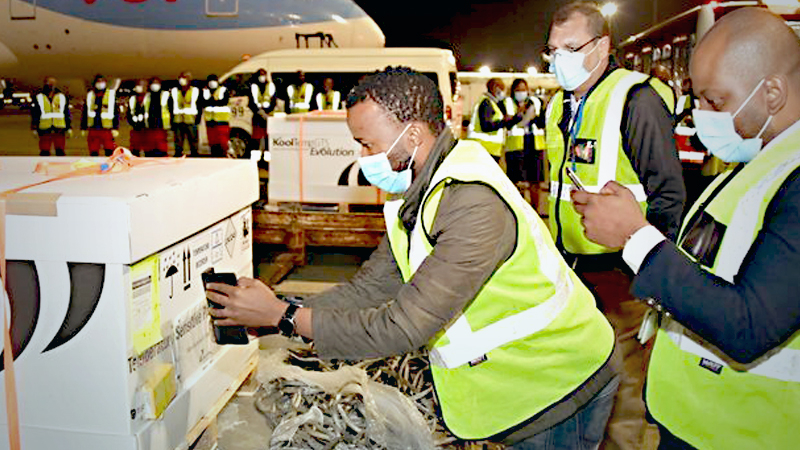
South Africa began administering its first coronavirus vaccines on Wednesday, dispensing Johnson & Johnson shots to health workers and top politicians just hours after they arrived in country from Belgium.

President Cyril Ramaphosa and Health Minister Zweli Mkhize were among those to be inoculated at a hospital in the Cape Town suburb of Khayelitsha. Their inclusion among the first group of people to be vaccinated was aimed at reassuring the public that they are safe, after surveys showed widespread hesitancy about receiving them.

“This is really a milestone for our country,” Ramaphosa said after receiving his shot. “We are going to be rolling out this vaccine throughout our country. I think it is going to be flawless.”

The government had previously faced criticism from scientists and labor unions for being slow off the mark to procure vaccines, after it lagged 79 countries in beginning their rollout. The country has secured enough doses for all those that need them, according to Mkhize.

The process of vaccinating two-thirds of the population of 60 million in order to achieve herd immunity is expected to take 12 to 18 months, said Stavros Nicolaou, head of the health-work unit at lobbying group Business for South Africa.

“Phase one is critically important,” Nicolaou, who also heads strategic trade at Aspen Pharmacare Holdings Ltd., said in an interview with radio 702 on Wednesday. “We need to vaccinate 1.3 million health workers before we get to the third wave.”

South Africa has recorded more than 1.49 million coronavirus cases since March last year, the most on the continent. A total of 48,313 people who were diagnosed with the disease have died, according to the Health Ministry.

South Africa switched to using J&J shots for its initial inoculations, after a small study showed shots developed by AstraZeneca Plc and the University of Oxford had little impact on mild infections caused by a variant of the virus first identified in the country last year. The J&J vaccines are being issued as part of a study, allowing normal regulatory approvals to be bypassed.

From vaccines to masks, Fed’s prescription for the economy ventures far beyond interest rates #SootinClaimon.Com

#SootinClaimon.Com : ขอบคุณแหล่งข้อมูล : หนังสือพิมพ์ The Nation.

From vaccines to masks, Fed’s prescription for the economy ventures far beyond interest rates

InternationalFeb 18. 2021Federal Reserve Chair Jerome PowellFederal Reserve Chair Jerome Powell

By The Washington Post · Rachel Siegel

A sprawling stimulus package may be the next shot in the arm for the economy, but the Federal Reserve is making it clear the recovery also hinges on literal shots in Americans’ arms.

Central bankers tend to talk about interest rates and asset purchases when it comes to policy. But in a downturn as unusual as the covid-19 pandemic, the Fed is increasingly leaning on a new vocabulary set – one that may seem drawn from a medical textbook instead of an economics one.

Whether talking about mask-wearing or social distancing, the Fed’s message increasingly is that healing the economy will require ending the public health crisis. And at their January policy meeting, Fed leaders discussed speedy vaccine delivery as a must-do to carry the economy through to the other side, according to meeting notes released Wednesday.

Policymakers pointed to risks tied to new covid-19 strains, possible public resistance to vaccines and issues with production and distribution of the shots. On the flip side, an effective vaccine program, mixed with aid from Congress, could improve the outlook ahead, the notes said.

“There’s nothing more important to the economy right now than people getting vaccinated,” Federal Reserve Chair Jerome Powell said at a news conference following last month’s meeting.

Powell and his colleagues are quick to leave medical advice to the experts. But their overarching point is that the economy and public health are intertwined like never before.

“Using traditional metrics to gauge or understand the path of the economy has not proven very effective,” said Tim Duy, an economist at SGH Macro Advisors and the University of Oregon. “It’s a very large change in how the Fed views its role in supporting the economy in a much more diverse and inclusive fashion.”

Powell and other Fed leaders have long argued that basic health protocols go hand-and-hand with monetary policy or more aid from Congress. But the vaccine push has been viewed by some economists as an endorsement of the stimulus package currently working its way through Congress. President Joe Biden’s $1.9 trillion stimulus proposal includes hundreds of billions of dollars toward the pandemic response, including a national vaccine program, expanded testing and funding to help schools safely reopen. The White House said last week that it will have enough vaccines for 300 million people by end of July.

“The virus is the bottleneck in the economy,” said David Beckworth, a monetary policy expert at the Mercatus Center, a libertarian think tank at George Mason University. The Fed’s focus on vaccines and other health tools is “a consistent but more focused message that ‘we’ve got to get the virus taken care of,'” Beckworth said.

At the Fed, that message mission is core to restoring the 10 million jobs still missing from the labor force and pumping momentum into a recovery that shows signs of leveling off. And Powell and others have signaled that their job doesn’t stop when the workforce is back to its pre-pandemic strength.

In a speech last week, Powell said that steady employment “improves mental health” and “increases life spans” – goals that stretch far beyond the Fed’s more traditional role.

“Our job is not to replace Dr. (Anthony) Fauci,” Powell said last week. “It really is to understand the implications for the economy, and in this particular case, the risks seem to be to the downside, from a slower rollout of the vaccination, or less successful rollout or the new strains. So we monitor all of that.”

In Texas’ blackout, everything went wrong at once #SootinClaimon.Com

#SootinClaimon.Com : ขอบคุณแหล่งข้อมูล : หนังสือพิมพ์ The Nation.

In Texas’ blackout, everything went wrong at once

InternationalFeb 18. 2021A utilities truck drives down the street during a power outage on Feb. 16, 2021, in McKinney, Texas, about 30 miles north of Dallas. MUST CREDIT: Bloomberg photo by Cooper NeillA utilities truck drives down the street during a power outage on Feb. 16, 2021, in McKinney, Texas, about 30 miles north of Dallas. MUST CREDIT: Bloomberg photo by Cooper Neill


By Syndication Washington Post, Bloomberg · Rachel Adams-Heard, Naureen S. Malik, Brian Eckhouse

The finger-pointing began immediately: It was the freezing of the wind turbines that foolishly replaced traditional sources. No, fossil fuels were at fault. No, Texas’s deregulated power market, unique in the country, had allowed companies to skimp on maintenance and upgrades.

As the hours ticked by and millions more were plunged into frozen darkness, a more sober reality emerged. The greatest forced blackout in U.S. history, as this event has almost certainly become, was the result of a systemic and multifaceted failure. There are no promises of when power will be restored and little likelihood that the episode won’t be repeated in a corner of the country hard hit by climate change.

“This feels like a technical design failure,” said Michael Webber, who founded the Webber Energy Group at the University of Texas at Austin and serves as chief science and technology officer at French utility Engie.

Power plants weren’t fully weatherized, wiping out generation capacity. The ones that were still standing struggled to get enough fuel, with shale wells experiencing so-called freeze-offs. Many wind turbines stopped spinning. Texas, with a grid notoriously isolated from the rest of the U.S., was unable to call on neighboring states for help.

Still, as the pressure dropped last week and frigid air descended from the north, some saw what was coming and felt as if they were witnessing a train crash. They lay part of the blame on ERCOT, the Electric Reliability Council of Texas, which manages the flow of power to consumers and says the extreme nature of the weather made it hard to be ready.

“We were woefully unprepared for this kind of cold,” said Texas state Rep. Ron Reynolds, D, whose own house is without power. “They got caught with their pants down and now millions of Texans have no power. This is a matter of life and death.”

ERCOT officials couldn’t say when power would be restored. “I know it’s frustrating we can’t offer a time certain, but it’s a process we’re engaged in to get the grid back in balance,” ERCOT CEO Bill Magness said during a news conference Tuesday.

Adam Sinn, owner of Aspire Commodities LLC, a power and gas trader, was one of those wondering why so little was being done. He said that a week ago, when the seven-day outlook hit, ERCOT’s own projections showed too little supply to meet soaring demand.

“We were looking at this week thinking, they are going to have to cut 10,000 megawatts of consumers,” he said. “I really think ERCOT is to blame on this one.” He said there were spare megawatts that weren’t brought online. For example, Vistra Corp., a large generator, had 4,000 megawatts offline for maintenance in four plants that could have been turned on quickly, he said, citing data from Genscape Inc.

Sinn said ERCOT either failed to order the megawatts back on or was told not to, which should have generated publicity so residents could prepare.

ERCOT and Genscape didn’t respond to requests for comment. Vistra declined to comment.

If ERCOT knew what was in store, it wasn’t apparent in its messaging to Texans. Over the weekend, recommendations from its official Twitter account included closing the blinds and unplugging unused kitchen gadgets. “Laundry on Valentine’s Day?” it said in another post. “No.”

Idle oil drilling rigs in the snow at a lot near Midland, Texas,on Feb. 13, 2021. MUST CREDIT: Bloomberg photo by Matthew Busch

Idle oil drilling rigs in the snow at a lot near Midland, Texas,on Feb. 13, 2021. MUST CREDIT: Bloomberg photo by Matthew Busch

On Tuesday, Dan Woodfin, a senior director for ERCOT, attributed the main factors to frozen instruments at natural gas, coal and nuclear plants. He and other ERCOT officials said they believed generators had prepared better for such cold.

ERCOT’s authority is somewhat limited. In 2011, the last time freezing weather caused rolling outages, it released recommendations for power generators but could not require they be followed, said Adrian Shelley, Texas office director of Public Citizen, an advocacy group.

Federal energy regulators also issued a 357-page report that recommended generators winterize their equipment, including insulating pipes.

“The financial incentive isn’t there to harden that infrastructure,” he added. “From a generator perspective, the only incentive is to bring energy to market as cheaply as possible.”

Power prices spiked on several days to the price cap in Texas — a staggering $9,000 per megawatt-hour.

A 100-megawatt wind farm in the state that might have normally made almost $40,000 over a two-day period in February could reap more than $9.5 million on Monday and Tuesday alone, Nicholas Steckler, a power-markets analyst at BloombergNEF, said. On Monday, electricity sales likely totaled $10 billion, according to Wood Mackenzie.

While some pointed to wind power as a culprit, as of early Tuesday wind shutdowns accounted for 3.6 to 4.5 gigawatts — or less than 13% — of the 30 to 35 gigawatts of total outages, ERCOT’s Woodfin said. Gas produced 35% of the power in January.

Others said Texas’s problems were wide-ranging.

“Everyone wants to blame someone, so they blame ERCOT,” Webber said. “But if the gas can’t come out of the ground, is that ERCOT’s fault? If we have sloppy building codes that don’t properly insulate homes, is that ERCOT’s fault?”

He suggests a combination of upgrades and expansions nationally at a cost of trillions of dollars over decades. Roughly 10% of that will need to take place in Texas. That’s a lot of money, which is why little was done the last time Texas saw a major test of its grid in the cold a decade ago.

A Dallas Morning News newspaper half-covered in snow on Feb. 16, 2021, in McKinney, Texas, about 30 miles north of Dallas. MUST CREDIT: Bloomberg photo by Cooper Neill

A Dallas Morning News newspaper half-covered in snow on Feb. 16, 2021, in McKinney, Texas, about 30 miles north of Dallas. MUST CREDIT: Bloomberg photo by Cooper Neill

Texas lacks the long-term planning processes that other parts of the country employ. In the east, grid operators run capacity markets that act like insurance policies. Generators are paid to guarantee that their supplies will be available on the most extreme hot and cold days. If they don’t show up, they face stiff penalties. Texas has instead left it up to prevailing prices and industry.

That deregulated and competitive nature of the markets stands to exacerbate massive price run-ups. More than 100 electric suppliers compete for customers who churn power companies like credit cards. They take big risks to attract new customers, offering incredibly low rates and allowing unlimited power use on weekends. But when the wholesale markets backfire, they bail on them.

The state also refuses to connect its grid with neighbors in part out of fear that the system will fall under federal oversight and regulation. But its politicians are coming to realize that independence has a down side.

Natural gas played an outsize role in the disaster. As early as last Thursday, Energy Transfer LP sent a warning to customers on its Transwestern natural gas pipeline: It was going to be cold, and if producers’ shipments were to deviate from their normally scheduled flows, they needed to let the operator know.

Maybe the North Dakota oil field could withstand frigid temperatures, but the infrastructure that connects the Permian Basin in West Texas and southeastern New Mexico is exposed to the elements. Drilling liquids freeze inside pipes, forcing wells and gas processing plants shut.

By Friday, temperatures had dropped to 24 degrees in Dallas. Texans were told to start conserving energy. Physical gas prices soared to more than $500 in Oklahoma from less than $4 at the start of the week. As of Tuesday, they had doubled to roughly $1,000 per million British thermal units. Texas Gov. Greg Abbott, R, asked a major gas exporter to limit their intake.

All of this is to speak nothing of the human toll.

“It’s mentally draining, the constant thought of wondering, ‘When will the power come back on, how can I get us out of this situation?'” said Alton McCarver, 30, an IT worker who led his family into his Dodge Charger for hours at a time to blast the heater and charge phones. “It’s been an uphill battle to stay warm.”

Trump casino implodes, literally, in Atlantic City #SootinClaimon.Com

#SootinClaimon.Com : ขอบคุณแหล่งข้อมูล : หนังสือพิมพ์ The Nation.

Trump casino implodes, literally, in Atlantic City

InternationalFeb 18. 2021A composite image of the Trump Plaza Hotel & Casino being imploded in Atlantic City, N.J., on Feb. 17, 2021. The demolition of the one-time jewel of former President Donald Trump's casino empire clears the way for a prime development opportunity on the middle of the boardwalk. MUST CREDIT: Bloomberg photo by Angus MordantA composite image of the Trump Plaza Hotel & Casino being imploded in Atlantic City, N.J., on Feb. 17, 2021. The demolition of the one-time jewel of former President Donald Trump’s casino empire clears the way for a prime development opportunity on the middle of the boardwalk. MUST CREDIT: Bloomberg photo by Angus Mordant

By Syndication Washington Post, Bloomberg · Tina Davis, Sophie Alexander, Christopher Palmeri

Trump Plaza, the first casino Donald Trump ever built and a faded vestige of Atlantic City’s glamorous past, came crashing to earth Wednesday morning in a cloud of dirt, dust and noise.

Carefully placed explosives imploded the 39-story white tower on the Atlantic Ocean, which stood empty for years. City officials were keen to destroy it amid complaints that chunks of concrete were falling off the building. A few hundred people in cars paid $10 to park at a former airfield less than 2 miles (3.2 kilometers) away on a freezing, winter morning to watch the Plaza’s final destruction.

While Trump’s faded name could still be seen in the outlines of giant letters that once branded the building, he hasn’t owned it in years. Carl Icahn acquired it when he bought Trump Entertainment Resorts out of bankruptcy in 2016. Icahn hasn’t disclosed plans for the property. The mayor of Atlantic City, who fought to tear down the Plaza, said he wants it replaced with a mixed-use development, perhaps something centered on family entertainment. “The last thing we need right now is another casino,” Mayor Marty Small, D, said in an interview.

Taking down the building represents “turning the page, the dawn of a new era,” Small said. “The Trump era in Atlantic City will be officially over.”

The Plaza opened in 1984, the first of three casinos Trump would eventually own in Atlantic City. All of them would end up in bankruptcy.

“I like the casino business,” Trump wrote in his 1987 book, “The Art of the Deal.” “I like the scale, which is huge, I like the glamour, and most of all, I like the cash flow.”

The Trump Plaza casino looms above the colorful facade of the Bally's Casino in Atlantic City, N.J., on Feb. 28, 2004. MUST CREDIT: Bloomberg photo by Emile Wamsteker

The Trump Plaza casino looms above the colorful facade of the Bally’s Casino in Atlantic City, N.J., on Feb. 28, 2004. MUST CREDIT: Bloomberg photo by Emile Wamsteker

Trump became interested in casinos early in his career. The idea of getting into the business first came to him in late 1975, when he heard a radio report about how a strike by hotel workers in Las Vegas had sent Hilton’s stock price sinking — even though the two casino hotels were a small portion of the company’s portfolio.

“It occurred to me that even if I finally got the hotel built and it became a major success in the greatest city in the world, it still wouldn’t be nearly as profitable as a moderately successful casino hotel in a small desert town in the Southwest,” Trump wrote in the book. “What I did shortly after I heard that radio report, was take a trip down to Atlantic City.”

He admits in the book to some bluffing to secure his future partner in Trump Plaza. Early on in the project, he invited executives from Holiday Inn to come see how much work had been done on the site. In fact, the building had barely been started, but Trump gathered “every bulldozer and dump truck” his construction manager could find to make it look like they were busy at work when the Holiday Inn reps came to visit.

“If they got some actual work accomplished, all the better, but if necessary, he should have the bulldozers dig up dirt from one side of the site and dump it on the other,” he said. Holiday Inn decided to team up with Trump on the project. The partnership didn’t last long — in 1986, Trump bought out Holiday Inn’s stake.

The initial success of Trump Plaza would spur more spending. Trump took on more debt, buying and finishing the Taj Mahal in Atlantic City after famously getting in a bidding war over the parent company, Resorts International, with Merv Griffin. At its peak, Trump’s portfolio consisted of four casinos, three in Atlantic City and one in Indiana. The expansion was costly, however, and his company’s high debt load make it difficult to compete with rivals. At one point, Trump’s New Jersey casinos lacked money to put stools in front of slot machines.

Atlantic City was the sole place to gamble legally in the eastern U.S., and it was for a time the largest gaming market after Las Vegas. Atlantic City’s casino revenue peaked at $5.2 billion in 2006. The expansion of legalized betting in neighboring states led to a collapse of traffic to the remote New Jersey beach resort, with more than half of the properties changing hands or shutting down. The city’s nine casinos generated $1.5 billion in sales last year, although online casino games and sports betting delivered another $1.4 billion in revenue statewide.

Tilman Fertitta bought the Trump Marina in Atlantic City for $38 million in 2011, rebranding it as the Golden Nugget. In a recent presentation, Fertitta said he has increased sales by 36% since acquiring the casino and generated a 15% return on investment on the once-money losing operation. Fertitta also used it to build an online betting business with a current market value of more than $800 million.

Hard Rock International bought the Trump Taj Mahal, remodeled and rebranded it. It’s now the second-highest grossing casino in the city after MGM Resorts International’s Borgata. Joe Lupo, President of Hard Rock Hotel & Casino Atlantic City, said at a news conference Feb. 2 that the company was so pleased with the financial performance they’d seen in an otherwise difficult 2020 they were paying out $1 million in employee bonuses.

In 2014 Trump sued to have his name taken off the two remaining New Jersey resorts, saying they had fallen into disrepair. The Indiana riverboat casino was also sold. Now, the Trump empire includes no casinos — not even at Trump International Hotel Las Vegas, which advertises itself as “a sophisticated, non-smoking and non-gaming” luxury hotel.

When Icahn acquired Trump Plaza, it had already been shut for two years. The building had been deemed an “imminent safety hazard,” according to the mayor. “You had chunks of concrete falling from the top floor.”

Small said that in his first state of the city address last year, “the thing that got the biggest applause when we put the slide up was a bulldozer going through Trump Plaza.” He initially proposed a charity auction, where the winner would get the chance to hit the button that would bring the building down. That was scrapped last month due to safety concerns, but Small said Icahn matched the highest bid and donated $175,000 to the Boys & Girls Club of Atlantic City.

It seems fitting the casino’s last act would be to help a city where Small said Trump had a history of “stiffing so many small businesses, mom-and-pop shops.”

In July 2016, Hillary Clinton used the hotel as a backdrop during her failed presidential campaign to give a speech highlighting Trump’s multiple bankruptcy filings.

That prompted a swift Trump response via Twitter: “I made a lot of money in Atlantic City and left 7 years ago, great timing (as all know).”