By Syndication Washington Post, Bloomberg · Arne Delfs, Raymond Colitt
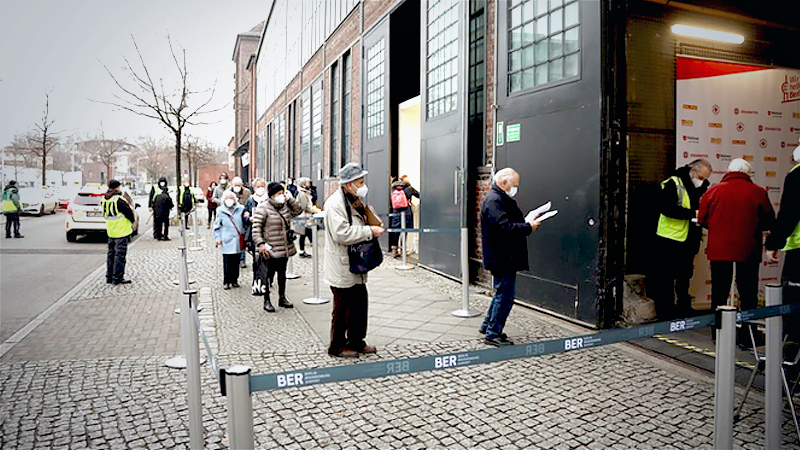
Chancellor Angela Merkel warned that Germany faces hard lockdown measures into late March if authorities fail to contain a fast-spreading variant of the coronavirus.
During a video call on Tuesday, the German leader said that a strain that surfaced in Britain could lead to a rapid increase in the country’s contagion rates and prompt a 10-week extension of virus curbs, according to a person on the call who asked not to be identified.
Germany has struggled to control the spread of the disease despite weeks of stricter measures, including the closing of schools and non-essential stores and limiting contact between people. The news was first reported by the Bild newspaper. Merkel’s chancellery declined to comment when contacted by Bloomberg.
The numbers of infections and fatalities have roughly doubled since the end of November, rising to nearly 2 million and almost 42,000, respectively. The infection rate has been climbing in recent days and was at 165 cases per 100,000 people on Tuesday, more than triple the level the government has determined to be manageable without wide-ranging contact restrictions.
German officials are on alert over a strain of the virus that could be over 50% more transmissible. Since first being detected in southeast England in mid-December, British hospitals have been swamped with covid-19 patients as infections surge despite a faster pace of vaccinations than anywhere else in Europe.
The variant has spread to other countries, notably Ireland, which now has one of the world’s highest contagion rates.
Because Germany’s labs don’t regularly examine the structure of the virus, it’s unclear how widespread the variant may already be in the country. To counter this, Merkel’s government is looking to make funds available and require labs to share data with the country’s RKI public health institute.
Authorities will meet on Jan. 25 to discuss the next steps in the fight against the pandemic. Current measures are set to run until at least the end of the month, but are widely expected to be extended.
The opposition Green party called for restrictions beyond the current lockdown, including obliging people to work from home where feasible and requiring seat reservations on commuter trains.
Germany and its European Union partners began rolling out a vaccine at the end of December, but progress has been slow and officials have said it will take months for the shots to have a tangible impact.
Misinformation is undermining Germany’s campaign, including discouraging workers in old age and nursing homes from getting the shot, Bavarian state premier Markus Soeder said on Tuesday.
He said the government should consider making vaccinations obligatory for people coming into close contact with vulnerable individuals, adding that Germany already requires inoculations for the measles, which is far less dangerous than the coronavirus.
“It’s surprising,” he told ZDF television. “It has to do with this incredible fake news that spooks around on the web.”
WASHINGTON – Federal officials will require all international travelers flying to the United States to show proof they have tested negative for the coronavirus, Centers for Disease Control and Prevention officials announced Tuesday.
The order, set to go into effect Jan. 26, would greatly expand a requirement put into place last month that mandated testing for American citizens and others flying to the U.S. from the United Kingdom. Officials say they hope expanding the mandatory testing could help to thwart the virus and a faster-spreading variant that surfaced there and is now circulating in the United States.
“Testing does not eliminate all risk,” CDC director Robert Redfield said in a statement. “But when combined with a period of staying at home and everyday precautions like wearing masks and social distancing, it can make travel safer, healthier and more responsible by reducing spread on planes, in airports and at destinations.”
More than 100 countries require visitors to show proof of a negative coronavirus test. CDC officials said about 100,000 travelers come to the U.S. daily.
Airlines long have pushed for a testing requirement in hopes that it could replace quarantine measures that many nations have used to stop the spread of the virus.
In a letter sent to the White House last week, the trade group Airlines for America endorsed testing for international travelers instead of restrictions in place for those from Europe, the United Kingdom and Brazil. Nicholas Calio, A4A’s chief executive officer, wrote that a well-planned program could ensure the safety of the traveling public while also making room for “essential economic activities on which our country relies.”
“We believe a well-planned program focused on increasing testing of travelers to the United States will further these objectives in a much more effective way than the blanket travel restrictions currently in place,” wrote Nicholas Calio, A4A’s chief executive officer.
Calio asked that airlines be given 14 days to implement a testing program.
The order mirrors one issued Dec. 24 for travelers flying to the U.S. from the United Kingdom. Under those requirements, passengers are required to be tested within three days of their flight and must provide written documentation of the results. Both PRC and antigen tests will be acceptable.
However, the CDC does not support using testing as a substitute for quarantines, which some states and countries have put into place to slow the spread of the virus. The agency’s updated guidance recommends testing in combination with quarantining, frequent hand washing, mask wearing and physical distancing.
It did not appear there were plans to drop travel restrictions the U.S. imposed in March on many foreign nationals who had been in the United Kingdom, several countries in Europe and Brazil in the previous 14 days. Most travelers from those nations are not permitted to enter the U.S.
Many airports around the world offer on-site testing with results in as little as 30 minutes. Airlines, too, have set up programs that allow customers to be tested for the virus before they board flights.
The aviation industry has pushed for countries to embrace testing in place of quarantines, while surveys show travelers are more reluctant to travel to destinations that require them to quarantine. Even so, countries have not rushed to do away with quarantine requirements as new waves of infections have swept the globe.
In the U.S., some states, including Hawaii, Connecticut and New York, are allowing visitors to reduce the amount of time they must quarantine or skip quarantines altogether if they can provide proof of a negative coronavirus test.
In a call with reporters Tuesday, Alexandre de Juniac, director general of the International Air Transport Association, expressed frustration that nations have continued to implement quarantines.
“A more balanced public policy approach is needed – one that is based on testing as a replacement for quarantines so that we can begin addressing the severe side effects of covid-19 policies,” he said. “Science tells us that travelers will not be a significant factor in community transmission if testing is used effectively. But most governments have tunnel-vision on quarantine and are not at all focused on finding ways to safely reopen borders – or alleviate the self-imposed economic and mental health hardships of the lockdowns.”
Though is it not part of the order issued by the CDC, the agency also previously recommended that people be tested three to five days after the return home.
Trump creates a crisis for his business empire just before returning to it
InternationalJan 13. 2021Signage is displayed at Trump International Hotel & Tower New York in New York on March 7, 2019. MUST CREDIT: Bloomberg photo by Michael Nagle
By Syndication Washington Post, Bloomberg · Max Abelson
It’s right there in the first few pages of “Trump University Branding 101”: “The truth is, everything you say and do is important,” he wrote in the 2008 book’s foreword. “Actions matter.”
After egging on a mob that rioted inside the U.S. Capitol last week, the brand that’s at the heart of President Donald Trump’s career and fortune is in crisis. He is being shunned by some of the political donors who fuel him, the tech companies that amplify his voice, the banks handling his finances, the American golf industry that brings business to his clubs, and even the Canadian company behind his online stores.
It took all four years of Trump’s presidency for most of those corporate allies to turn on him. Now, they’re standing up to him when their pressure can’t change much about an administration that’s in its final days. But they do have the power to hurt his return to the business world.
“As he’s walking out of the palace gates he’s torching the kingdom, but in doing so he’s permanently damaging his own brand,” said Sally Hogshead, a branding specialist. “There’s a shame factor with being associated with the Trump brand for a larger percentage of the population than before.”
The Trump Organization didn’t immediately respond to requests for comment.
In a span of a few days, Trump has been rejected by Wall Street, Silicon Valley, and Washington. Internet giants took away his social media megaphone after his posts encouraged violence, with Twitter Inc. suspending his personal account and Facebook Inc. extending a ban indefinitely. Shopify Inc. said it shut down his e-commerce stores, impacting the Trump Organization’s official store and a campaign shop. The firm “does not tolerate actions that incite violence,” a spokeswoman said.
Some of the banks that Trump and his family have worked with for years are distancing themselves.
Deutsche Bank AG has decided to refrain from further business with Trump and his company, said a person with knowledge of the matter, asking not to be identified because the deliberations were confidential. Trump owes the Frankfurt-based lender more than $300 million.
Signature Bank, the New York lender where Ivanka Trump once served on the board, said it’s cutting ties while it presses for his resignation. Signature is closing two personal accounts in which Trump held about $5.3 million, said a spokesperson for the firm. The New York Times reported the bank’s moves earlier on Monday.
Finance firms more broadly say they’ll use the power of their campaign donations to condemn the politicians whose attempt to overturn the November presidential election spurred last week’s riot. In Washington, House lawmakers are on course to try to make Trump the only president in U.S. history to be impeached twice.
Even Trump’s favorite elite bastion is taking its business from him. The PGA of America said its board voted to end an agreement to host next year’s PGA Championship at a golf course owned by Trump in New Jersey.
“It’s become clear that conducting the PGA championship at Trump Bedminster would be detrimental to the PGA of America brand,” Jim Richerson, PGA of America’s president, said in a video message. When Trump announced his presidency with a speech that said Mexican immigrants include rapists, the PGA decided not to hold its 2015 Grand Slam of Golf at Trump National in Los Angeles.
Trump’s business future isn’t bright, according to Carly Fiorina, the former CEO of Hewlett-Packard Co. who ran against Trump in the 2016 primaries.
“His brand is toxic,” Fiorina said Monday on Bloomberg Television. “That will have real consequences for his businesses, even as perhaps he continues to have support from some in the Republican Party and some in the nation.”
Even so, Trump’s career is a story of stormy falls and improbable rebounds — and his brand may be stronger than ever among the fervent fans he drew to the Capitol. Supporters said there would still be lucrative opportunities for him in right-wing media, including a possible role at a news channel, his own media venture or a book deal. Simon & Schuster has already moved to distance itself from one backer of election-fraud claims, canceling plans to publish a book by Sen. Josh Hawley, R-Mo.
“I’ll be the first to admit it’s not always easy,” Trump wrote in the university’s 2008 book on branding. Eight years later, just before moving into the White House, he agreed to pay $25 million to settle claims that the defunct school cheated thousands of students.
Rebecca Horan, a brand strategist, said it’s hard to imagine Trump’s brand “coming back from treasonous actions.” She added a caveat: “History shows us that we have short memories.”
Whistleblowing soars to record with Americans working from home
InternationalJan 13. 2021Signage is displayed outside the headquarters of the U.S. Securities and Exchange Commission in Washington, D.C., on Dec. 22, 2018. MUST CREDIT: Bloomberg photo by Zach Gibson.
By Syndication Washington Post, Bloomberg · Matt Robinson, Ben Bain
The work-from-home phenomenon has triggered a fresh frustration for U.S. corporations: Americans are blowing the whistle on their employers like never before.
The proof is in the data, with the U.S. Securities and Exchange Commission receiving 6,900 tips alleging white-collar malfeasance in the fiscal year that ended Sept. 30, a 31% jump from the previous 12-month record. Officials at the agency, which pays whistle-blowers for information that leads to successful investigations, say the surge really started gaining traction in March when Covid-19 forced millions to relocate to their sofas from office cubicles.
The isolation that comes with being separated from a communal workplace has made many employees question how dedicated they are to their employers, according to lawyers for whistle-blowers and academics. What’s more, people feel emboldened to speak out when managers and co-workers aren’t peering over their shoulders.
“You’re not being observed at the photocopy machine when you’re working from home,” said Jordan Thomas, a former SEC official who helped set up the agency’s whistle-blower program a decade ago. “It’s never been easier to record a meeting when you can do it from your dining room table,” added Thomas, who now represents tipsters as an attorney at Labaton Sucharow in Washington.
Adam Waytz, a psychologist and professor at Northwestern University’s Kellogg School of Management, agrees.
“When you feel disconnected from work, you feel more comfortable speaking up,” said Waytz, who has studied the motivations of whistle-blowers.
Intended or not, the SEC itself has played a big role in encouraging informants to come forward by showing how lucrative whistle-blowing can be. Since the pandemic hit the U.S., the agency has paid out some $330 million in awards, including an eye-popping $114 million to a single tipster in October. While the payments are tied to SEC investigations that almost certainly predate coronavirus, the amount of money going out the door is unprecedented in the decade since the regulator started its whistle-blower program.
For corporations, the rise in tips risks triggering a consequence from work from home that will last long after employees return to the office. Even if few of the tips lead to SEC enforcement cases, companies could still be dealing with years of compliance distractions as the agency launches investigations, subpoenas documents and grills senior executives.
“Corporations and their lawyers are acutely aware of the fact that tips are flooding in and that whistle-blower awards have ballooned,” said Joseph Grundfest, a former SEC commissioner who’s now a law professor at Stanford University. “You pay whistle-blowers more than $100 million, you’re going to get more whistle-blowers.”
The SEC gained authority to pay whistle-blowers as part of the 2010 Dodd-Frank Act after lawmakers assailed the agency for missing signs of corporate wrongdoing that were later found to have laid the groundwork for the 2008 financial crisis. Another massive black eye was the regulator’s failure to catch Bernard Madoff’s Ponzi scheme despite repeated warnings from whistle-blower Harry Markopolos.
Under the program, tipsters can receive financial awards if they voluntarily provide unique information that results in an enforcement action. Payouts can range from 10% to 30% of the money collected in cases where sanctions exceed $1 million. Awards are paid from a fund set up by Congress — not money owed to harmed investors.
Leveraging whistle-blowers has become one of the SEC’s most potent tools for rooting out financial crime, despite the fact that most of the tips the SEC receives don’t lead to enforcement cases. Information has come from more than 100 countries, with whistle-blowers providing evidence such as texts, emails and recorded calls.
The SEC never discloses the names of whistle-blowers and what cases were brought with their help. Agency officials sometimes don’t even know the identity of tipsters. Thomas, the whistle-blower attorney, has gone so far as to use voice-changing technology to disguise clients’ genders on conference calls with the SEC.
About $737 million has been paid to 133 individuals since the SEC issued its first payment in 2012, with most tipsters waiting months or even years after the agency wraps up its investigations to get their awards. Part of the reason payouts have quickened recently is that the SEC has streamlined its process so that enforcement lawyers who work with tipsters can actively vouch for how crucial their help was.
Discussing the dramatic jumps in tips since the start of the pandemic, then SEC Enforcement Director Stephanie Avakian said Dec. 3 that it’s too soon to assess the quality of the information the agency is receiving. She credited the huge awards that the SEC paid out last year as an important factor in encouraging whistle-blowing.
“Making more awards — certainly larger awards — all those things do go toward incentivizing whistle-blowers to come forward,” Avakian, who left the SEC last month, said at an event hosted by the American Conference Institute.
Grundfest, the Stanford Law professor, just hopes the SEC doesn’t get overwhelmed.
“The problem is that they’re being flooded with tips and don’t have a robust mechanism for separating the wheat from the chaff,” he said.
In recent months, the SEC has received reports on possible financial-disclosure violations and the mismarking of assets. The coronavirus’ impact on businesses has also triggered allegations of wrongdoing, as companies have a responsibility under SEC rules to be truthful about how the pandemic is affecting their bottom lines.
“It’s very convenient for management to blame Covid for underperformance,” said Howard Schilit, author of “Financial Shenanigans: How to Detect Accounting Gimmicks & Fraud in Financial Reports.””It becomes an alibi for a company’s problems.”
By The Washington Post · Philip Rucker, Josh Dawsey
ALAMO, Texas – President Donald Trump emerged Tuesday from six days out of public view defiant and unapologetic about his incitement of last week’s mob attack on the Capitol and warned that his impeachment could lead to more violence.
The president denied any culpability in the violent riot that killed two police officers and threatened the lives of Vice President Mike Pence and members of Congress. He said his remarks encouraging throngs of supporters last Wednesday to march to the Capitol in a show of force to pressure and intimidate lawmakers to overturn the election results were “totally appropriate.”
During a visit to a portion of newly constructed border wall here in the Rio Grande Valley, Trump warned against the effort by congressional Democrats to hold him accountable.
“The impeachment hoax is a continuation of the greatest and most vicious witch hunt in the history of our country and is causing tremendous anger and division and pain, far greater than most people will ever understand, which is very dangerous for the U.S.A., especially at this very tender time,” Trump said.
Trump for the first time addressed the calls from Democrats and even some Republicans for Pence and the Cabinet to invoke the 25th Amendment of the Constitution to remove him from office before his term expires.
“The 25th Amendment is of zero risk to me but will come back to haunt Joe Biden and the Biden administration,” Trump said. “As the expression goes, ‘Be careful what you wish for.’ “
Washington is seeing a heightened police and military presence in and around the city, and law enforcement authorities are bracing for future violence in the run-up to President-elect Joe Biden’s inauguration on Jan. 20.
Trump at first hesitated to tell his supporters to stand down when they stormed the Capitol, captivated by the spectacle playing out on live television and entranced by the notion that the rioters were fighting for him, people with knowledge of the events said. And when he issued a video last Wednesday afternoon telling them to “go home,” he also declared his support for them by saying, “We love you.”
Trump changed his tune here in Texas on Tuesday. Reading from a prepared script, the president seemed to instruct his supporters not to rise up in violence. “Now is the time for our nation to heal. And it’s time for peace and for calm. Respect for law enforcement is the foundation of the MAGA agenda,” he said, referring to his “Make America Great Again” campaign slogan.
Earlier Tuesday, Trump deflected a reporter’s question about his “personal responsibility” in the Capitol attack as he boarded Air Force One at Joint Base Andrews for the flight to Texas.
“People thought what I said was totally appropriate,” Trump said, claiming he had seen this view reflected across the media. In fact, he has been almost universally condemned for his remarks, including by many of his Republican allies.
Trump then drew a comparison to racial justice demonstrations last summer and suggested other political leaders were more culpable for violence related to those events than he was for what happened at the Capitol last week.
“If you look at what other people have said – politicians at a high level – about the riots during the summer, the horrible riots in Portland and Seattle, in various other places. That was a real problem, what they said,” Trump said. “But they’ve analyzed my speech and words and my final paragraph, my final sentence, and everybody, to the T, thought it was totally appropriate.”
On Capitol Hill, Trump’s allies differed with that assessment.
A spokesman for House Minority Leader Kevin McCarthy, R-Calif., said he disagreed with Trump that his comments were “totally appropriate.” The spokesman added that McCarthy told House members on Monday that the president bore blame.
A spokesman for Senate Majority Leader Mitch McConnell, R-Ky., declined to comment, and a spokesman for House Republican Conference Chair Liz Cheney, R-Wyo., pointed to her previous comments decrying Trump’s Jan. 6 remarks at the Ellipse.
Republican National Committee Chairwoman Ronna McDaniel said in a statement, “We all bear responsibility to reflect on the rhetoric leading up to the abhorrent violence of last week, including the president.”
Trump has resisted some entreaties to take responsibility for the mob, claiming that he did not know his supporters would literally storm the Capitol and that he did not want them to do so. He has dismissed concerns from his lawyers and other aides that he might have legal liability for his instigation, according to a senior administration official, who, like some others, spoke on the condition of anonymity to share internal details.
Trump continues to say privately that he won the election, another senior administration official said, but is no longer talking about trying to stay in office after his term has ended.
Tim O’Brien, a Trump biographer, said that Trump’s first instinct always has been to lie and attempt to bulldoze his way through any sort of turmoil in his life – and that his response to the Capitol attack has been no different.
“His father trained him to see the world only as winners and losers, and he’s never going to acknowledge he’s a loser,” O’Brien said. “He has no remorse and no regret about any of it. It’s what makes him such a damaged and damaging man. He doesn’t have any of the minimal guilt or regret that a healthy, stable individual has.”
Last Wednesday’s events have quickly made Trump a pariah. He is poised to be impeached for the second time – the first president in U.S. history to achieve that distinction – when the Democrat-led House brings an article of impeachment for a vote this Wednesday. Meanwhile, he has been silenced on social media for messages that instigated violence and shunned by much of corporate America.
A poll released Monday by Quinnipiac University found that Trump’s overall approval dipped to 33%, tied for the lowest the pollster has recorded, with majorities holding him responsible for the Capitol attack and favoring his removal from office or his resignation.
Trump sought to escape this dark reality Tuesday by flying to the U.S.-Mexico border in a bid to burnish his presidential legacy as a crusader against illegal immigration. He toured a portion of the wall on the dusty banks of the Rio Grande, with soaring steel beams forming an imposing monument to his anti-immigrant agenda. Trump brandished a Sharpie and signed his autograph on a piece of the wall.
Trump’s hope is that history remembers him not for encouraging a coup against democracy, but for erecting a physical barrier to keep foreigners out – an apostle of law and order, as he sees himself.
“He’s going to do anything and everything to leave a stamp of ‘Trump was here’ on the national body politic before he heads permanently to Mar-a-Lago,” presidential historian Douglas Brinkley said, referring to Trump’s Florida resort home.
But, Brinkley added, “anything Trump does now, he is a greatly diminished figure. He shrunk into Thumbelina size. He can act big at the wall, but he’s really tiny because of the way he publicly responded to the siege at the Capitol.”
Sen. Lindsey Graham, R-S.C., who traveled with the president Tuesday, spent four hours with him last Friday helping to orchestrate the border wall trip and other events later this week. The objective, Graham said, is to give Trump daily obligations in his final full week as president and to “not look back on the past.”
“We’ve laid out a plan for him, every day to do something,” Graham said.
The Rio Grande Valley continues to be the busiest section of the border for illegal crossings. Although U.S. Customs and Border Protection identified these sections as its top priority for border wall construction, the Trump administration ended up building relatively few miles of new barriers there.
A major impediment to construction efforts in the Rio Grande Valley has been resistance from local landowners. Most of the land the government needed to build new barriers is privately owned. In addition, some of the locations are on river levees, which adds to the expense and difficulty of construction.
Instead, the administration has built hundreds of miles of barrier on public lands farther west, where the government already controlled the land but where there are comparatively fewer migrant crossings than in the Rio Grande Valley.
David Lapan, a former senior official in Trump’s Department of Homeland Security, said the irony of Trump’s border-wall visit Tuesday was that the Capitol attack showed the more serious danger to the country comes from some of his own supporters, not from foreign migrants.
“Rather than the threat being from Mexicans and Central Americans and people that cross the southwest border, we’ve seen evidence that the threat comes from within,” Lapan said. “The only thing he’s done about that threat is encourage it.”
By Syndication Washington Post, Bloomberg · Craig Torres
It’s a bold forecast that some say borders on fantasy: Wall Street banks and Federal Reserve officials see powerful employment gains over the next three years that evade the curse of past recessions.
If they’re right, millions of Americans will leap back into the workforce as soon as vaccines against the coronavirus roll out. If they are wrong, the U.S. enters another so-called jobless recovery in which payroll gains lag a pickup in economic growth and production.
The optimists, including Federal Reserve Vice Chair Richard Clarida, say this economic crisis is different because it was caused by something more like a natural disaster than a financial shock. Once the pandemic has subsided, pent-up demand for services, entertainment, and even travel will unleash and companies will hire or rehire.
“The economy has turned out to be more resilient in adapting to the virus,” Clarida said in remarks to the Council on Foreign Relations on Jan. 8. “Most of my colleagues and I revised up our outlook for the economy over the medium term.”
The pessimists are more cautious, pointing to signs that this time around many workers may drop out of the labor force and a huge swath of the jobs lost will never come back. That will force many to learn new skills or relocate, which can take years while the transition falls hardest on those with less income and education.
Low-wage workers are particularly at risk of being left behind, especially if they live in more rural areas, says Harvard professor Raj Chetty.
“There are early signs of a potential jobless recovery from this recession that could be quite persistent geographically,” Chetty said at a conference earlier this month.
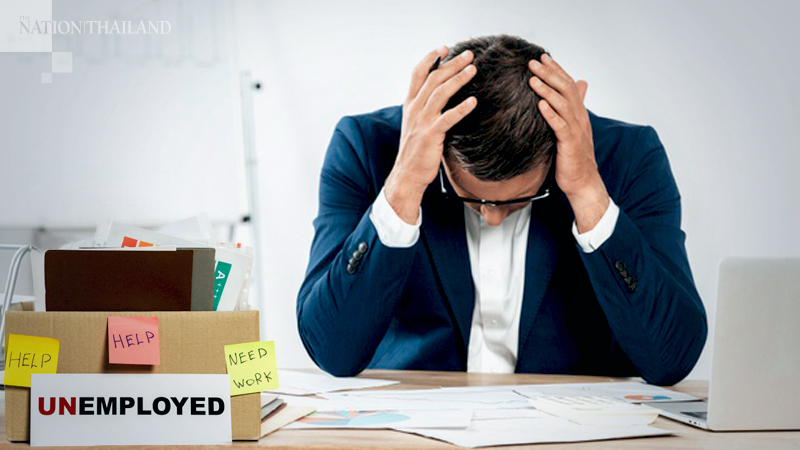
The latest jobs report Friday shows just how important controlling the virus is to future job gains. Non-farm payrolls decreased by 140,000 from the prior month, while the unemployment rate held at 6.7%.
The weakness was concentrated in restaurants, bars and other businesses hit hard by fresh pandemic restrictions. Many of the 3.9 million long-term unemployed — those out of a job for at least 27 weeks as of December — are in these industries. The leisure and hospitality industry, for instance, makes up 22.6% of total long-term unemployment.
There are reasons for hope in this grim data, said Julia Coronado, founding partner at MacroPolicy Perspectives LLC.
“There is plenty of evidence in here that if we can get the virus under control and begin reopening, many of these jobs can come back,” she said, adding that she also worries business-strategy changes could have a lasting impact on some service sector jobs. “The idea that we will flip a switch and have a frictionless recovery in the labor market seems highly unlikely.”
U.S. central bankers expect the unemployment rate to fall to 5% by the end of this year, to 4.2% in 2022, and 3.7% by the end of 2023. That would bring it in the vicinity of the jobless rate in February — of 3.5% — before the outbreak of the virus.Goldman Sachs Group Inc. economists are also positive on the jobs outlook. They expect the unemployment rate to dip to 4.8% at the end of 2021, and to be around pre-pandemic lows by the end of 2023.
One of the things they point to is the prospect for additional government support from the incoming administration of President-elect Joe Biden. He’s set to release his proposals on Thursday, and the broad outlines suggest it could provide a tail wind for employment gains.
Still, what’s unusual about these outlooks is that it just hasn’t happened that way in recent recoveries.Take the 2008-2009 financial crisis. It took about eight years for the labor market to heal. After the 2001 recession, it was nearly six years before the unemployment rate closed in on prior levels.
The unemployment rate is just one measure of labor market health and its decline may not signal a full recovery.
The pandemic has reduced labor-force participation, the share of the working-age population looking for a job or who are employed. People drop out of the labor force to take care of their family, acquire more education or because their skills don’t match the needs of employers.
Those decisions are “sticky,” notes Stephanie Aaronson, head of economic studies at the Brookings Institution, meaning they aren’t reversed quickly.
Chris Fryett is an example. He worked as a software developer for IBM Corp. for 15 years before being let go in June in a reorganization. He thought he would land a job quickly.
But “employers weren’t really talking,” he says, so he decided to go back to school to earn a four-year degree in biology.
Fryett, 51, and many Americans like him, is now out of the labor force, and one of the big questions is when will they come back?
The answer to that depends on the huge uncertainty about whether the pandemic has changed businesses temporarily — or for good. Ashok Bajaj, a well-known Washington, D.C. restaurateur, is one of those business owners who says it could take years for consumers to feel safe again, even with a vaccine.
Bajaj had to close one of his 10 restaurants and let go about 250 staff members. He doesn’t expect to put the same number of seats in his restaurants as he reopens.
“People will revert back to their old habits gradually,” he said. “Is it going to happen in 2021? No, it is not.”
Claudia Sahm, a former Fed Board forecaster who now runs her own firm, says policy should aim at a strong labor market recovery — but it won’t be easy. “You can’t have malaise this long — we are still down 10 million jobs since February — and expect it to unwind this fast,” she says. “This is very different recession and there is massive uncertainty around everybody’s forecast.”
India kicks off vaccination of its massive population
InternationalJan 13. 2021Health workers stand next to volunteers during a nationwide trial of a covid-19 vaccine delivery system at a vaccination center in New Delhi on Jan. 2, 2021. MUST CREDIT: Bloomberg photo by T. Narayan
By Syndication Washington Post, Bloomberg · Ragini Saxena, P R Sanjai, Bibhudatta Pradhan
India has kicked off one of the world’s biggest inoculation programs that will be a crucial test of how quickly developing countries, with limited health and transportation infrastructure, can protect their populations against covid-19.
Refrigerated trucks and private planes, accompanied by police officers, fanned out Tuesday from the western city of Pune to around 60 different locations across India as hundreds of thousands of medical workers are on standby to start vaccinations this weekend.
With a protracted back-and-forth over a supply deal resolved, doses that had been sitting in storage at Serum Institute of India Ltd. started going out to government depots and then beyond to hospital and health centers in cities and the hinterland.
The administration of Prime Minister Narendra Modi faces the daunting task of rolling out shots at an accelerated pace in a country of more than 1.3 billion people which has long struggled with limited health infrastructure and patchy cold-chain storage facilities. The country has so far reported nearly 10.5 million infections as of Tuesday and 151,000 deaths.
Serum, the company enlisted to manufacture a billion doses of AstraZeneca Plc’s Covid-19 vaccine has started shipments after it received orders from the Indian government for 11 million shots priced at around $2.86 (200 rupees) plus taxes a dose, Rajesh Bhushan, secretary at India’s federal health ministry told reporters at a briefing in New Delhi Tuesday.
The Pune-based company — the world’s largest vaccine manufacturer by volume — began distribution Tuesday using its own refrigerated trucks for initial batches to load it on to private airlines. The delivery of the first batch of vaccines will be completed by Thursday, Bhushan said.
The government has designated four main distribution points — Karnal, Mumbai, Chennai and Kolkata — and there are 37 state vaccine storage areas in the country but few details have been made available about where and to whom the first shots will be administered on Saturday.
Plans drawn up by India’s health ministry outline broad steps to inoculate 300 million people in the first stage through August.In a first round 30 million health care and front line workers — such as police and defense force staff — will be vaccinated, with the federal government picking up the tab, Modi said on Monday.
In the second round, about 270 million people of above 50 years of age and those at particular risk to Covid will receive shots.
There is no information on when and at what price Serum can start selling it shots privately.
New Delhi will purchase 5.5 million shots of Covaxin, the indigenous vaccine being produced by Bharat Biotech International Ltd, Bhushan said, adding that some 3.85 million doses will be purchased at around 295 rupees per dose while the rest will be provided at no cost by the company.
To transport the vaccines, Serum is using the Mumbai-based Kool-ex Cold Chain Ltd., which is moving shots from it’s manufacturing facility in Pune to the government depots equipped to handle and store vaccines, Kunal Agarwal, a director at the company, told Bloomberg.
Kool-ex, which has been transporting vaccines for a decade, deployed 400 GPS-enabled refrigerated trucks to move the shots and can add another 500 at a short notice, Agarwal said, adding that it was dispatching six to ten trucks to Serum on Tuesday. There’s a “lot of security” stationed for the trucks, he said, adding that empty trucks are being accompanied by police.
The company is informed of destination points only after the trucks have been loaded, sealed and have undergone temperature checks. Kool-ex has so far not signed new contracts with vaccine manufacturers for the distribution of Covid-19 shots and its existing long-term contracts will cover this without any changes in the pricing, Agarwal said.
It expects to start dispatching vaccines from Bharat Biotech around March or April followed by a candidate from Zydus Cadilla, another company producing an indigenous shot.
Airlines will then move the vaccines widely across the country. SpiceJet Ltd. said on Tuesday that it carried India’s first consignment of 34 boxes of Serum’s vaccine from Pune to Delhi. The private airline will be carrying multiple consignments to different Indian cities, including Guwahati, Kolkata, Hyderabad, Bhubaneswar, Bengaluru, Patna and Vijayawada through the day, the carrier’s Chairman Ajay Singh said in a statement.
More than 61,000 program managers, 200,000 vaccinators and 370,000 other vaccination team members have been trained at states to carry out the exercise, according to the government.
Mumbai, India’s financial hub which has been particularly hit by the coronavirus, will be among the first to start giving shots at around eight government hospitals. Surrounding Maharashtra state plans to vaccinate 50,000 health workers on Saturday and cover 800,000 others over the next two months with around 1.8 million doses, according to local media.
While the government is optimistic about its inoculation drive it will be held back by production constraints and the fact the program will heavily rely on state governments whose capacities and expertise vary widely, Akhil Bery, Scott Rosenstein and Peter Mumford, analysts at Eurasia Group, said in a note on Jan. 11.
A successful vaccination drive is important for Modi “who is under pressure from ongoing farmer protests,” the note added.
By Syndication Washington Post, Bloomberg · Naomi Kresge, Rudy Ruitenberg
U.K. hospitals, swamped with covid-19 patients even as the country pushes to vaccinate 200,000 people a day, hold a cautionary tale for the rest of Europe.
While the United Kingdom is way ahead on its rollout – having vaccinated almost as many people as the rest of Europe combined – its hospitals are being pushed to their limits by a surge in cases from the new, faster-spreading variant of the disease. On the continent, meanwhile, health officials are worried that the mutation will spread out of the United Kingdom more rapidly than vaccinations can keep up.
“It’s a variant that completely changes the game for this start of the year,” Arnaud Fontanet, an epidemiologist who sits on the scientific council that advises the French government on the coronavirus, said Monday on RMC radio. “It’s almost a new epidemic within the epidemic.”
Although the new variant has been spotted in about 31 countries outside the United Kingdom, including Germany and France, the extent to which it is spreading on the continent remains murky. But the rapidity with which it sent cases and deaths soaring in the United Kingdom, and the strained state-run National Health Service is prompting calls for more stringent movement restrictions.
“It’s our biggest concern that numbers don’t explode, that hospitals don’t collapse and that we get infection rates under control,” Annalena Baerbock, a member of the German parliament and co-chairwoman of the opposition Green Party, said Monday, advocating stricter rules. On Tuesday, Chancellor Angela Merkel warned that Germany faces hard lockdown measures into late March if authorities fail to contain the fast-spreading variant.
In the United Kingdom, Prime Minister Boris Johnson is banking on accelerated vaccinations, even as he warned of tightened lockdown rules. More than 2.2 million people in the United Kingdom have received the first shot of a vaccine. That’s over four doses per 100 people, which is more than five times the rate in Germany and nearly 20 times that in France.
The United Kingdom has pledged to vaccinate 15 million people by mid-February to shield its most vulnerable residents from the new variant. Even that’s a strategy not guaranteed to succeed, with the NHS already buckling under the stress, daily infections at record levels in recent days and the death toll the highest in Europe.
Meanwhile, much of the rest of the region is far behind on vaccinations, grappling with logistical or supply issues and in some cases vaccine skepticism. That’s raising additional questions about their preparedness for the new variant – should it hit the continent on a large scale. Intensifying that worry is a pickup in the number of hospitalizations.
European countries that went into lockdown in November saw hospitalization rates – and more importantly the number of people in the intensive care unit – decline. That applied to the United Kingdom, too, where the number of people in beds with ventilator capacity started dropping in late November.
The trend reversed itself in the United Kingdom in mid-December, despite stricter rules, as the new strain began to spread. The government’s scientific advisers believe new infections are running above 100,000 a day – comparable to or exceeding the first wave in the spring. ICU beds are rapidly filling up, and Johnson said on Monday that supplemental-oxygen supplies are running short in some areas.
Hospitalizations are now beginning to climb elsewhere as well. In Ireland, with its close ties to the United Kingdom, the number of covid-19 patients in the hospital has tripled since Jan. 1 to more than 1,500 cases, with about 87% of intensive-care beds occupied.
In Spain, the number of patients in ICUs has climbed 24% since Dec. 31. Italian ICUs are also seeing more patients after a drop at the end of last month. In Germany, intensive-care beds had never opened – and while hospital admissions are down 8% from a peak at the beginning of the year, officials worry that the new variant could quickly refill wards.
“The worst is to be feared,” said the Green Party’s Baerbock.
Amazon, Twitter and other tech companies confronted fresh blowback on Monday for banning President Donald Trump and taking action against a wide array of websites that had glorified the deadly riot at the U.S. Capitol last week.
Twitter’s decision to remove Trump’s account, citing the potential that his corrosive rhetoric might incite additional violence, precipitated a sharp drop in the company’s shares, which fell by more than 6% by midday Monday. Twitter also braced for a potential protest outside its San Francisco headquarters, a demonstration that the president’s supporters have sought to organize on pro-Trump forums in recent days.
Amazon, meanwhile, faced a new lawsuit from Parler, an alternative social network that had become a haven for Trump’s backers. Amazon Web Services, which provides cloud computing services, suspended its relationship with Parler starting Monday in a move that removed it from the Web – prompting Parler to allege that Amazon had acted unlawfully. Amazon shares also dipped slightly by afternoon.
(Amazon chief executive and founder Jeff Bezos owns The Washington Post.)
The flurry of activity reflected the still-intensifying clash between Washington and Silicon Valley in the days since Trump’s incendiary comments about the 2020 election helped spark a riot that forced the U.S. Capitol into lockdown and left five people dead.
Late Friday, Twitter banned Trump, citing two tweets, including one that said he is not planning to attend President-elect Joe Biden’s inauguration. Facebook earlier in the week said it was suspending Trump for at least two weeks. Sheryl Sandberg, the company’s chief operating officer, said in an interview with Reuters on Monday that there are “no plans to lift” the ban.
On Monday, Facebook announced additional policy moves, including a new crackdown against posts that reference “stop the steal” – a rallying cry for Trump and others that have sought to delegitimize the outcome of the 2020 race. Before Biden’s swearing-in ceremony, Facebook said it also would maintain its pause on political ads and aim to monitor its service more aggressively for harmful content as it seeks to “stop misinformation and content that could incite further violence during the next few weeks,” executives said in a blog post.
Other tech giants have joined Twitter and Facebook in taking action against the president and his allies in recent days amid mounting political tensions in the United States – and growing fears about deadly violence still to come. That includes Parler, which Apple and Google removed from their app stores in a move that further constrained the right-leaning service’s reach. Joining Amazon, the tech giants each say Parler has not properly policed its platform for violent threats, an accusation Parler denies.
Trump responded to the Twitter ban with a statement late Friday promising to seek an alternate social network – or build one of his own – in an attempt to get around the vast digital blockade. Trump is expected to spend the final days of his presidency attacking Silicon Valley over allegations of censorship, according to a person familiar with the matter who spoke on the condition of anonymity to describe internal White House planning.
“We will not be SILENCED!” Trump said in the statement, which he previously had tried to tweet from the president’s @POTUS account before Twitter blocked it.
Twitter and its fellow tech giants deny the charges of censorship. The White House did not immediately respond to requests for comment.
Trump’s supporters, meanwhile, took to a forum sympathetic to the president, called TheDonald.win, to express their own displeasure. Some users even called for the execution of House Speaker Nancy Pelosi, D-Calif., and other political figures, according to posts reviewed and compiled by the SITE Intelligence Group, which tracks online extremism. Others encouraged a protest at Twitter’s headquarters, though no such crowd had formed at the company’s offices by midday Monday.
“Maybe the hq should be burned down when everyone goes,” wrote one user on a widely trafficked thread.
A wide array of pro-Trump online communities, including TheDonald, had teemed with similar talk ahead of the riot at the Capitol last week – and since then they have glorified the violence that took place in Washington. The National Guard is set to deploy up to 15,000 troops during the inauguration in response to the heightened threats.
As users online lashed out, Parler filed a new lawsuit against Amazon that alleges the company acted anti-competitively, and hypocritically, in choosing to suspend it. Twitter also hosted violent threats, according to lawyers from Parler, who asked a judge to grant a temporary restraining order to prevent Amazon “from shutting down Parler’s account.”
“Doing so is the equivalent of pulling the plug on a hospital patient on life support,” the lawsuit contends. “It will kill Parler’s business – at the very time it is set to skyrocket.”
By Syndication Washington Post, Bloomberg · Naomi Kresge, Riley Griffin
Pfizer Inc. and BioNTech SE plan to produce 2 billion doses of their coronavirus vaccine this year, boosting previously expected output by more than 50% in response to surging global demand.
The companies have already agreed to deliver more than 1 billion doses in pacts with various countries, BioNTech said in a presentation at the JP Morgan Healthcare Conference on Monday. The European Union last week sealed a deal to double its supply of Pfizer-BioNTech shots to as many as 600 million, while the U.S. has locked in a total of 200 million doses.
Vaccine supply has been under scrutiny as faster-spreading virus variants emerge and the distribution effort in the U.S. faces strains. Pfizer and BioNTech’s vaccine is intended to be given in two doses 21 days apart. But some countries, including the U.K., have elected to stretch out the time between shots in an effort to immunize more people as virus cases soar.
Previously, Pfizer and BioNTech had expected to produce 1.3 billion doses this year. While the companies plan to ramp up output with the help of contract manufacturers, the new target also takes into account a label change that allows doctors to extract six doses instead of five from each vaccine vial, BioNTech said.
The change “increases the number of vaccine doses 20% overnight,” BioNTech Chief Executive Officer Ugur Sahin said at the JPMorgan conference.
Representatives for Pfizer didn’t immediately respond to a request for comment.
A new production site in Marburg, Germany, expected to become operational by the end of February, will be able to make as many as 750 million doses per year, according to the presentation. BioNTech said it’s also seeking to add suppliers and contract manufacturers and improve its production processes. Sahin expects that in years to come as the covid-19 pandemic shifts to an endemic, where the disease persists, recipients of the Pfizer-BioNTech will likely need additional boosters.
The partners had shipped 32.9 million vaccine doses as of Jan. 10, BioNTech said. Some of the 50 million shots produced in 2020 remain in deep-freeze storage because countries weren’t yet ready to receive them, a BioNTech spokeswoman said. For example, 12.5 million doses of last year’s production capacity were reserved for the EU, but since the bloc’s approval of the vaccine came late in the year, not all were shipped.
The promise for a production boost comes as U.S. President-Elect Joe Biden’s team has said he’ll distribute more of the available vaccine doses once he takes office, rather than holding back half of existing supply to guarantee the second shots needed to reach maximum potency.
The move, backed by a group of Democratic governors, represents a gamble that there will be enough supply to ensure timely second shots. Some public-health officials have said that the change could lead to gaps in dosing, or for some people to miss their second doses entirely.


 Signage is displayed at Trump International Hotel & Tower New York in New York on March 7, 2019. MUST CREDIT: Bloomberg photo by Michael Nagle
 Signage is displayed outside the headquarters of the U.S. Securities and Exchange Commission in Washington, D.C., on Dec. 22, 2018. MUST CREDIT: Bloomberg photo by Zach Gibson.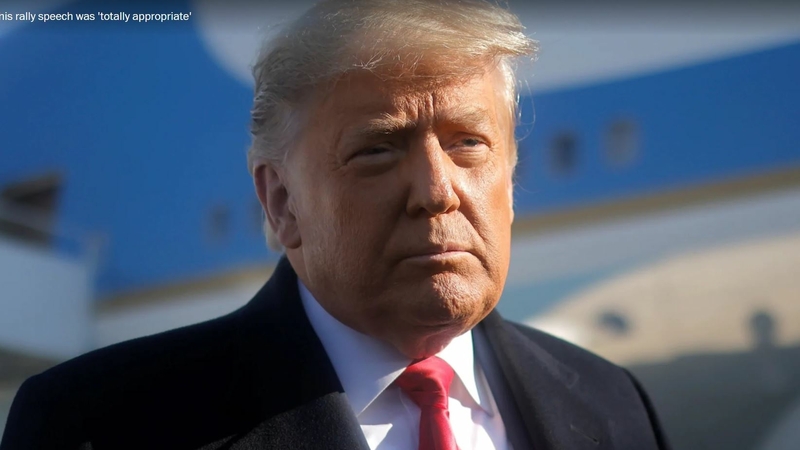
 Health workers stand next to volunteers during a nationwide trial of a covid-19 vaccine delivery system at a vaccination center in New Delhi on Jan. 2, 2021. MUST CREDIT: Bloomberg photo by T. Narayan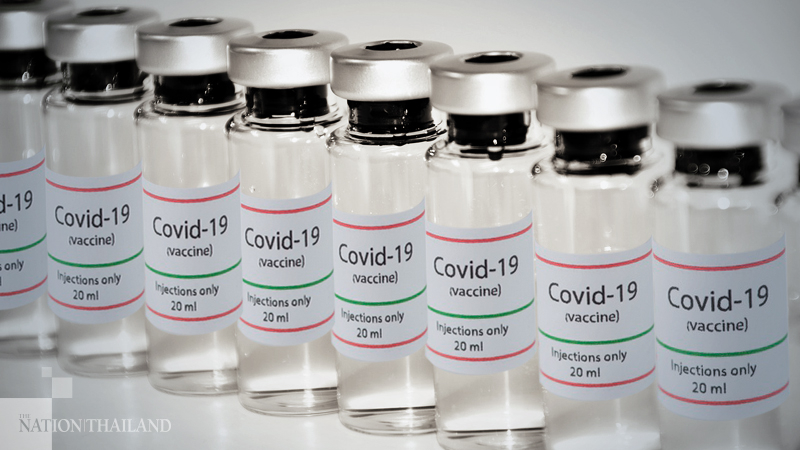
 SootinClaimon.Com