Sweden finally tightens covid measures after being slammed by virus #SootinClaimon.Com

#SootinClaimon.Com : ขอบคุณแหล่งข้อมูล : หนังสือพิมพ์ The Nation.

Sweden finally tightens covid measures after being slammed by virus

InternationalJan 14. 2021Employees wear protective face masks inside a store in Gothenburg, Sweden, on Dec 19, 2020. MUST CREDIT: Bloomberg photo by Fredrik Lerneryd.Employees wear protective face masks inside a store in Gothenburg, Sweden, on Dec 19, 2020. MUST CREDIT: Bloomberg photo by Fredrik Lerneryd.

By Syndication Washington Post, Bloomberg · Rafaela Lindeberg, Niclas Rolander, Love Liman

After taking arguably the world’s softest approach to handling the coronavirus pandemic, Sweden is tightening the screws.

As of Sunday, the government of Premier Stefan Lofven can fine and shutter businesses that fail to follow restrictions such as caps on visitors, as well as restrict private gatherings, under a new law that runs through September. It’s a departure from relying mainly on recommendations and trusting people to follow them. With the health-care system under increasing duress and deaths surging, some say it was too little too late.

“Like many places Sweden has learned about the virus the hard way,” said William Hanage, associate professor of epidemiology at Harvard’s School of Public Health in Boston, who has followed the country’s strategy closely. “Sweden was too slow. There was ample evidence from the spring, in Sweden and elsewhere, of what could be expected in the autumn and winter if the policy was not changed and these are the consequences.”

While pursuing its unusual strategy, Sweden questioned other nations’ decisions to lock down. Its path to mandatory restrictions has left the Nordic country with more than three times more virus deaths per capita than Denmark, the closest regional peer in terms of fatalities. Confidence in the government has dwindled, and been compounded by top officials — including Lofven himself — flouting their own rules. Even King Carl XVI Gustaf called the nation’s response a failure.

As in the rest of the world, the debate in the pandemic era has centered around balancing people’s health against the fallout of shutting down economies. Sweden’s economy has held up better than most, while deaths now exceed 9,600.

Top epidemiologist Anders Tegnell, who in June labeled countries that opted for strict lockdowns as “mad,” said the pandemic law shouldn’t be seen as a U-turn, but rather an extension of what’s already been done.

“We’re still mainly working with voluntary measures for individuals,” he said in an interview. “And we’re mainly working with regulating different kinds of agencies, different kinds of shops were regulations are needed for them to fulfill their obligations.”

One of Tegnell’s main detractors, Professor Bjorn Olsen of Uppsala University, said “reality has caught up with the Public Health Agency.”

“They have been extremely stubborn in holding on to the strategy without listening or doing any external analysis,” he said.

Anders Litzen lost his 71-year-old mother Agnetha in the spring, sitting by her side for her last 16 hours in full protective gear. The 42-year-old, who lost his job because of the pandemic and started working as a runner at a hospital, said the government’s communication has been too vague.

“‘My mother, and I think most Swedes, didn’t really take it seriously,” Litzen said. “I can’t say that what Sweden did is right or wrong, but from a personal perspective I think when you want to send a message, it has to be strong and clear.”

Lofven and health officials, facing early criticism including from President Donald Trump, acknowledged in April that the country hadn’t succeeded in protecting its elderly in nursing homes. A government-appointed commission recently reached a similar conclusion.

Sweden made “good decisions” in moving toward stricter measures, Mike Ryan, head of the World Health Organization’s emergencies program, told reporters on Monday.

“It’s an example of how difficult it is to sustain public health and social measures that are purely determined by the individual’s willingness or determination to carry out those measures,” Ryan said. “It somehow tells us that at the beginning of 2021 how difficult, how challenging that environment is.”

The Nordic region’s largest economy has weathered the crisis better than most Western nations, with its factories less affected by supply disruptions in the latter part of 2020.

Differences in lockdown strategies between the Nordic and Baltic countries were offset by their common dependence on manufacturing, so they’ve benefited from a recovery of global trade, according to SEB AB Chief Economist Robert Bergqvist. “When we summarize 2020, the industry has helped us to withstand some of the downturns seen in many other countries.”

Low debt levels also allowed Sweden to unleash fiscal stimulus, supported by the Riksbank’s asset purchase program. While the pandemic law may require additional stimulus measures, “in an international perspective, Sweden will still continue to have very strong central government finances,” Danske Bank said in its Nordic Outlook last week.

Lofven has seen voter confidence erode as criticism of the government’s response mounted. It didn’t help that he was spotted among Christmas shoppers in a mall, his finance minister was caught renting skis at a resort and the top official running the corona-virus response team took a Christmas trip to the Canary Islands, all of which went against official guidelines. And the opposition isn’t pulling punches.

“Infection transmission won’t be stopped by a serious tone at a press conference,” main opposition leader Ulf Kristersson told a national security conference on Monday, lambasting the government for “a lack of leadership, bad preparations and unclear division of responsibilities.”

Support for the Social Democrats fell 2 percentage points to 23%, while Kristersson’s Moderate Party edged ahead with 23.2% voter backing to become Sweden’t biggest party in the latest Aftonbladet/Demoskop poll. There’s no imminent threat to Lofven’s job given the political system.

The recent response has been “a partial turnaround” that has fallen short of what’s needed, such as mandating face masks and closing more schools, Olsen of Uppsala University said. Primary schools remain open.

“Now we should be very busy vaccinating, but a lot of effort is going into just keeping a lid on transmission so that it doesn’t boil over,” Olsen said. “It’s constantly half-hearted, limping efforts. What many other countries would have done in this situation would be to close down entirely.”

Sweden had inoculated at least 80,000 people by Jan. 10, or 0.8% of its population, health authorities said Tuesday. That’s below Denmark’s 2% tally, based on the Bloomberg Covid-19 Vaccine Tracker.

“At this stage of the crisis, I think it will be less about lockdown strategy and more a matter of vaccine strategy,” SEB’s Bergqvist said.

Litzen, who decided to help in the pandemic fight after losing his mother, says tougher restrictions should have taken the place of voluntary recommendations earlier. “When it comes to recommended regulations, it’s very naive to think that a whole country can follow through unless you make it some sort of law.”

U.S. core consumer-price gauge cooled slightly from prior month #SootinClaimon.Com

#SootinClaimon.Com : ขอบคุณแหล่งข้อมูล : หนังสือพิมพ์ The Nation.

U.S. core consumer-price gauge cooled slightly from prior month

InternationalJan 14. 2021Shoppers walk through the Easton Town Center Mall in Columbus, Ohio, on Jan. 7, 2021. MUST CREDIT: Bloomberg photo by Luke Sharrett.Shoppers walk through the Easton Town Center Mall in Columbus, Ohio, on Jan. 7, 2021. MUST CREDIT: Bloomberg photo by Luke Sharrett.

By Syndication Washington Post, Bloomberg · Reade Pickert

A key measure of prices paid by U.S. consumers cooled in December from a month earlier as slack in the labor market and muted demand helped keep inflation pressures tame.

The core consumer price index, which excludes volatile food and energy costs, increased 0.1% from the prior month after a 0.2% gain in November, a Labor Department report showed Wednesday. Compared with a year earlier, the core CPI rose 1.6%.

Buoyed by higher gasoline prices, the broader CPI advanced 0.4% from a month earlier and 1.4% from December 2019. Both the core and overall CPI month-over-month increases matched the median estimates in a Bloomberg survey of economists.

The S&P 500 was little changed in early trading, the yield on the 10-year Treasury note eased and the dollar was slightly firmer.

The report shows inflation remains well below the Federal Reserve’s goal and reflects an economy still grappling for momentum amid a resurgent pandemic. At the same time, demand is gradually picking up for some industries, while widespread vaccinations and additional fiscal stimulus have the potential of generating some pricing power in the coming months.

Most economists — and the Fed — expect inflation to remain relatively tame this year, though inflation expectations among market participants have steadily crept higher.

Proponents argue additional stimulus and pent-up consumer demand for goods and services in industries most impacted by the coronavirus will help drive up prices. Conversely, many economists argue any potential acceleration in the coming months will likely prove temporary amid a gradually recovering job market.

As for the Fed, policy makers have signaled they plan to keep interest rates near zero for quite some time. And even if price pressures build, the central bank’s new inflation target allows for periods when inflation can moderately overshoot 2% — as measured by the Commerce Department’s personal consumption expenditures price index.

However, the path of U.S. inflation metrics could have an impact on the trajectory of monetary policy.

For all of 2020, the CPI increased 1.4%, the smallest gain since 2015, while the 1.6% advance in the core measure was the smallest since 2014.

Highlights from the report:

– Gasoline prices jumped 8.4%, most since June, accounting for more than 60% of the increase in overall CPI.

– Food costs rose 0.4%, also the most since June, after a 0.1% decrease a month earlier, reflecting higher prices for groceries and meals out.

– Cost of shelter edged up 0.1%; medical-care services fell 0.1%, the third straight decline.

– Rent of primary residence rose 2.3% from December 2019, the smallest advance since September 2011.

– Prices of apparel rose 1.4%, the most since June; used-vehicle costs dropped for a third month, though were up 10% from December 2019.

– A separate report showed inflation-adjusted hourly earnings increased 3.7% from a year earlier, the largest gain since June

YouTube suspends Trump, days after Twitter and Facebook #SootinClaimon.Com

#SootinClaimon.Com : ขอบคุณแหล่งข้อมูล : หนังสือพิมพ์ The Nation.

YouTube suspends Trump, days after Twitter and Facebook

InternationalJan 14. 2021

By The Washington Post · Gerrit De Vynck, Rachel Lerman

YouTube suspended President Donald Trump from uploading new videos to his official account for at least a week, making the decision days after fellow social media giants Twitter and Facebook shut the president out of his accounts because of concerns his posts will incite violence.

The Google-owned video site was the last of the major social media networks to suspend Trump after the attack on the U.S. Capitol. It said it removed a video uploaded Tuesday for violating its policies and “in light of concerns about the ongoing potential for violence.”

YouTube wouldn’t confirm which video broke its rules, but a review of archived versions of its site suggests it was a clip from a news conference Trump gave to reporters where he said his comments to supporters before the Capitol attack were “totally appropriate.”

In the same clip, which is available on C-SPAN, Trump said social media companies were making a “catastrophic mistake” and doing a “horrible thing for our country” by penalizing him.

The White House did not respond to a request for comment.

Last Thursday, Facebook said it would cut the president off indefinitely, “for at least the next two weeks.” Facebook COO Sheryl Sandberg later told Reuters that the company had no plans to reinstate the president’s account. YouTube took down one video from the president’s account. A day later, Twitter banned him.

YouTube’s decision came after a weekend of criticism that the company hadn’t acted strongly enough against the president. The newly-formed Alphabet Workers Union, a collection of Google employees and contractors, put out a statement saying YouTube’s actions in taking down just one video were “lackluster, demonstrating a continued policy of selective and insufficient enforcement of its guidelines.”

YouTube has a three-strike process when deciding which channels to take down which directly affects the speed at which it moves. Facebook also has a strike system, but big, complex decisions often roll up directly to Sandberg and CEO Mark Zuckerberg. At Twitter, decisions are made by the company’s policy team and signed off on by CEO Jack Dorsey.

YouTube’s process can seem “frustratingly slow,” but the company actually has more of a thought-out process than Twitter and Facebook do, said Jim Steyer, CEO and founder of Common Sense Media, which advocates for safer technology for children. The suspension of Trump is a positive first step, but the ban should be made permanent, he said.

“I think all the platforms missed this one,” Steyer said, saying they should have acted earlier to crack down on misinformation Trump shared.

It’s not the first time YouTube specifically has come under fire for moving too slow.

In June 2019, gay rights activists and other progressive groups lambasted the company for not taking down videos by YouTuber Steven Crowder in which he used homophobic language against another popular YouTuber, journalist Carlos Maza. The company said Crowder’s comments were “hurtful” but did not break its rules against promoting hatred. “Opinions can be deeply offensive, but if they don’t violate our policies, they’ll remain on our site,” the company said in a statement at the time.

A day later, YouTube changed its mind, deciding to block Crowder’s ability to make money from ads on his videos, but not taking them down completely.

YouTube differs from Facebook and Twitter in sharing advertising revenue with creators. In many cases, the company has chosen to just turn off the flow of cash to videos called out as harmful. It’s also tweaked its algorithm so that those videos don’t get as much attention as others. But banning videos and creators altogether is a much more rare.

The resistance to removing videos completely has helped allow YouTube to fly under the radar as other social media sites take the heat for allowing misinformation to proliferate on their sites, said Harvard Law School Lecturer Evelyn Douek.

Twitter CEO Jack Dorsey and Facebook CEO Mark Zuckerberg have become familiar faces on Capitol Hill where they were called to testify in front of Congress about tech’s power and role in misinformation last year. Google CEO Sundar Pichai has testified as well, but YouTube CEO Susan Wojcicki escaped the grilling.

YouTube is often mentioned as an afterthought, even as social media companies have been pushed into a harsher spotlight for the lies that spread on their sites.

Researchers tend to focus on text-based Twitter and Facebook, Douek said, because video can be more time consuming and labor intensive to sift through. That doesn’t mean there is less misinformation floating around on YouTube, and in fact the company has been accused of allowing people to get radicalized on the site by promoting conspiracy theory videos, she added.

YouTube’s policy of laying out rules and using a strike-system to enforce them is better than ad hoc decision-making by executives, Douek said.

“My view of content moderation is companies should have really clear rules they set out in advance and stick to, regardless of political or public pressure,” she said. “We don’t just want these platforms to be operating as content cartels and moving in lockstep and doing what everyone else is doing.”

On Wednesday, Google also said it wouldn’t allow political ads until at least Jan. 21, the day after the inauguration of President-Elect Joe Biden. The company paused political ads in the week after the November presidential election as well, following a policy Facebook had laid out earlier.

The strike against Trump’s account means he can’t add new videos for a minimum of seven days, YouTube said in a Twitter post late Tuesday. The company will also disable comments on his channel indefinitely. A second strike within the next three months would net Trump a two-week suspension, and a third strike would result in a ban, according to YouTube’s policies.

Trump’s YouTube account is still visible and past videos can still be viewed.

The suspensions from YouTube, Facebook and Twitter effectively cut the president off from his usual social media megaphones. Niche right-wing social media platform Parler, which was growing in popularity with conservatives, was knocked offline Monday after Amazon pulled its technical support.

(Amazon founder and chief executive Jeff Bezos owns The Washington Post.)

Facebook and YouTube could allow the president to access his account again as early as next week.

Trump’s animosity toward tech companies has become particularly heated in the past year after Twitter and Facebook started labeling his posts. He has repeatedly called for Section 230, an Internet liability shield law, to be revoked, presumably to penalize the companies.

Section 230 shields tech companies from being sued over what their users post on those sites. Politicians on both sides of the aisle generally agree the law needs to be reformed, but open-Internet advocates say revoking it could have a chilling effect on free speech on the Web.

Trump administration bans imports of cotton and tomatoes from China’s Xinjiang region, citing forced labor #SootinClaimon.Com

#SootinClaimon.Com : ขอบคุณแหล่งข้อมูล : หนังสือพิมพ์ The Nation.

Trump administration bans imports of cotton and tomatoes from China’s Xinjiang region, citing forced labor

InternationalJan 14. 2021

By The Washington Post · Jeanne Whalen, Eva Dou

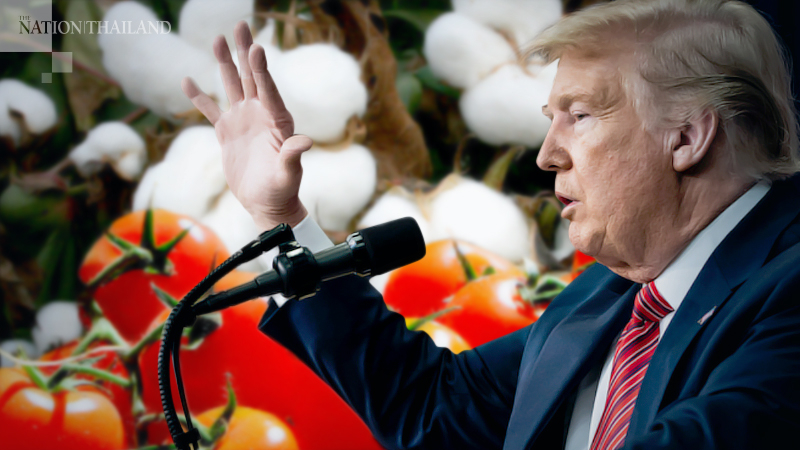
WASHINGTON – The Trump administration on Wednesday issued a sweeping ban on imports of cotton or tomato products from China’s Xinjiang region, saying it had reviewed evidence of forced labor in the region.

The move is the administration’s latest effort to punish China over what Western officials and human-rights groups call the country’s campaign of repression against the Muslim Uighur population of Xinjiang, which has included the population’s mass detention in camps.

The ban, which covers everything from cotton apparel to canned tomatoes, will affect a wide array of U.S. importers. Xinjiang accounts for almost one-fifth of global cotton production, according to official figures and calculations by The Washington Post.

U.S. Customs and Border Protection said Wednesday it would immediately start detaining cotton and tomato products produced in the region, “based on information that reasonably indicates the use of detainee or prison labor and situations of forced labor.”

The agency said it conducted an investigation that revealed working conditions including “debt bondage, restriction of movement, isolation, intimidation and threats, withholding of wages, and abusive living and working conditions.”

“DHS will not tolerate forced labor of any kind in U.S. supply chains. We will continue to protect the American people and investigate credible allegations of forced labor, we will prevent goods made by forced labor from entering our country, and we demand the Chinese close their camps and stop their human rights violations,” Ken Cuccinelli, acting deputy secretary of the Department of Homeland Security, which oversees Customs and Border Protection, said in a statement.

The ban includes textiles, tomato seeds, tomato sauce and other goods made with cotton and tomatoes. China’s embassy in Washington, D.C., didn’t immediately respond to a request for comment.

In a statement, the American Apparel & Footwear Association, the National Retail Federation and two other industry groups said they “remain outraged” by reports of forced labor in the region and “have long made eradicating forced labor in our supply chains a top operational and public policy priority.”

“We look forward to working with the U.S. Customs and Border Protection (CBP) to make sure enforcement is smart, transparent, targeted, and effective,” the groups said. “We urge CBP to share with industry the evidence gathered, and the evidentiary thresholds used, that led to today’s announcement.”

The measure follows a more targeted ban the Trump administration issued in December, against cotton products made by Xinjiang Production and Construction Corps, which CBP called “an economic and paramilitary organization subordinate to the Chinese Communist Party.”

In September, the U.S. banned the import of certain apparel and computer parts from China, saying they were made by forced laborers from the Xinjiang region.

Over the past three years, a heavy-handed Chinese anti-extremism campaign has swept an estimated 1 million Uighurs and other Muslim minorities into what the government calls “reeducation centers.” Satellite images show these high-security compounds are similar in layout to prisons, and former detainees have alleged they were subject to torture.

Many detainees were placed at textile factory jobs in Xinjiang upon their release, according to official reports. Local officials have said it is voluntary work for rehabilitated criminals, but some workers have alleged they were threatened with detention if they refused.

The U.S. actions have followed a concerted push by a coalition of more than 190 organizations urging major fashion brands to stop using Xinjiang cotton, and international auditing firms to stop working with factories in the region.

The president as pariah: Trump faces a torrent of retribution over his role in the U.S. Capitol siege #SootinClaimon.Com

#SootinClaimon.Com : ขอบคุณแหล่งข้อมูล : หนังสือพิมพ์ The Nation.

The president as pariah: Trump faces a torrent of retribution over his role in the U.S. Capitol siege

InternationalJan 14. 2021President Trump stops to talk to reporters as he walks to board Marine One and depart from the South Lawn on Tuesday. MUST CREDIT: Washington Post photo by Jabin BotsfordPresident Trump stops to talk to reporters as he walks to board Marine One and depart from the South Lawn on Tuesday. MUST CREDIT: Washington Post photo by Jabin Botsford

By The Washington Post · David Nakamura

He has been banned on social media, shunned by foreign leaders, impeached (again) in the House, threatened with censure by Republicans, deserted by Cabinet members, turned on by Senate Majority Leader Mitch McConnell, R-Ky., canceled by his hometown of New York City, dropped by the PGA golf tour and snubbed by New England Patriots Coach Bill Belichick.

And that’s just in the past few days for President Donald Trump, who after ruling Washington for nearly four years through a mix of bullying, intimidation, patronage and a sense that his willingness to spew lies and disinformation would have no consequences is suddenly facing a torrent of retribution from those who long excused his behavior or were too scared or powerless to confront it.

The fallout on Trump for his role in riling up thousands of supporters in a speech ahead of their deadly siege on the U.S. Capitol last week has intensified quickly – leaving the world’s most powerful leader as a pariah in many quarters, more isolated than ever.

Trump won 74 million votes in the November election – the second-most ever behind President-elect Joe Biden’s 81 million – but Twitter, Facebook and YouTube have cut him off from easily reaching them in the real-time stream of explosive, demeaning and sometimes dangerous missives that have defined his presidency. Three banks, two real estate companies and the 2022 PGA Championship tournament have severed ties with the Trump Organization at a time when Trump and his family are facing mounting pressure from massive financial debts.

Leaders in tiny Luxembourg canceled meetings with Secretary of State Mike Pompeo, and Belgian leaders condemned the attack on the Capitol, prompting the top U.S. diplomat to scrap a final foreign trip to Europe this week. And some Republicans – beyond Sen. Mitt Romney, R-Utah, the lone GOP lawmaker to buck Trump in January’s impeachment trial – voiced support for the second impeachment effort from Democrats on Wednesday.

“There has never been a greater betrayal by a president,” Rep. Liz Cheney, R-Wyo., the third-ranking House Republican, said in a statement ahead of the vote. House Minority Leader Kevin McCarthy, R-Calif., reportedly floated the idea of censuring Trump, though he opposed impeachment.

“The House of Trump is unraveling and it’s what happens when he’s about to lose power,” presidential historian Douglas Brinkley said. “He was a bully president and so people were fearful of him, but with only a few days left in his tenure people realize he’s about to be an ex-president with a boatload of legal suits and a brand that is no longer neon.”

Trump and his allies lashed out at the widening condemnation. In remarks Tuesday in Alamo, Texas, where he toured a section of border wall, Trump declared that “free speech is under assault like never before,” positioning himself as a victim of the “greatest and most vicious witch hunt” in the nation’s history. Before the trip, the president insisted that his 70-minute address to supporters on Jan. 6 – in which he repeated false claims that he had won the election, implored Vice President Mike Pence and McConnell to block Congress’s certification of Biden’s victory and urged supporters to march on the Capitol – was “totally appropriate.”

Trump’s son, Eric, blamed the damage to the family business on liberal “cancel culture” ahead of Democratic New York Mayor Bill de Blasio’s announcement Wednesday that the city would cut $17 million in contracts with the Trump Organization over operations of two ice rinks, a golf course and the Central Park Carousel.

“It is something that they have been doing to us and others for years,” Eric Trump told the Associated Press. “If you disagree with them, if they don’t like you, they try and cancel you.” The younger Trump then abruptly hung up the phone when asked if the president had incited the crowd, the wire service reported.

The moment has marked a dramatic turnabout for a president who had spent four years using his private resorts and golf courses – including Mar-a-Lago in South Florida and Trump International Hotel in Washington – as places of official government business, charging foreign governments and American taxpayers millions of dollars.

And despite his son’s eagerness to pin the notion of cancel culture on liberals, Trump has often governed as the canceler-in-chief, calling for boycotts of brands including Goodyear tires, Macy’s, Harley-Davidson, the National Football League and a host of media organizations.

For years, Twitter, Facebook and YouTube resisted public pressure from liberal groups to moderate or suspend Trump’s accounts. In the wake of the siege, all three have blocked his access or taken them down, citing evidence that his posts were continuing to foment potential violence.

“The platforms definitely didn’t want to be in this situation – they arrived here under unprecedented circumstances,” Daphne Keller, a former legal adviser to Google who now works at Stanford University’s Cyber Policy Center. “The cynical way to look at it is that before the election, they were afraid to antagonize Republicans too much because Republicans could really punish them politically. After the election, the Republicans did not have as much power and it became politically easier. Then, the flash point last week provided a really clear moment when the decision seemed very justified to many people.”

Keller cautioned, however, that the backlash to Trump has been limited to “an abrupt shift among elites” that has not yet been reflected in the president’s far-right base. Trump also has maintained vocal support from most conservative lawmakers, including Sen. Lindsey Graham, R-S.C., a close ally who briefly distanced himself from Trump last week but flew with him to Texas on Air Force One on Tuesday.

And though Trump clashed with Pence over his insistence that the Constitution offered him no powers to stop Congress’s certification of Biden’s victory, the vice president resisted calls from Democrats to invoke the 25th Amendment that would allow the Cabinet a path to removing Trump from office.

Still, the rejection of Trump is hitting closer to home. Belichick, the Super Bowl-winning coach who Trump views as an ally, took the extraordinary step of declining his offer for the Medal of Freedom, the nation’s highest civilian honor. Several high-ranking White House aides – including Transportation Secretary Elaine Chao, acting Homeland Security secretary Chad Wolf and deputy White House national security adviser Matthew Pottinger – have resigned in the wake of the siege.

And McConnell on Wednesday left open the possibility of voting to convict Trump in the Senate after House impeachment, saying in a statement that “I intend to listen to the legal arguments when they are presented to the Senate.”

Overseas, European leaders “will be extremely relieved to see the back end of the Trump administration,” Brookings Institution analyst Thomas Wright said. “It’s a combination of how they felt all along, but crucially the events of the last week really did shock Europe and the world. They don’t see why they ought to pretend everything is fine.”

Tim O’Brien, author of the biography “TrumpNation,” said the backlash from Republicans, especially McConnell, is likely “creating vast wells of unquenchable resentment” in the president. He predicted Trump will seek revenge on GOP leadership by continuing to hold campaign-style rallies and supporting insurgent candidates.

But O’Brien said it was the economic pain to Trump’s businesses – and the blows to his self-esteem through the loss of his social media platforms and snubs from the PGA and Belichick – that are probably more hurtful to him.

“For someone who has had his nose pressed against the glass of public approval for most of his life over things that others find silly,” O’Brien said, “Donald Trump can’t live without them.”

Brexit deal may mean less British cod for fish & chips #SootinClaimon.Com

#SootinClaimon.Com : ขอบคุณแหล่งข้อมูล : หนังสือพิมพ์ The Nation.

Brexit deal may mean less British cod for fish & chips

InternationalJan 14. 2021Fishermen from Newhaven sort their catch in the English Channel on Jan. 10. MUST CREDIT: Bloomberg photo by Jason AldenFishermen from Newhaven sort their catch in the English Channel on Jan. 10. MUST CREDIT: Bloomberg photo by Jason Alden
By Syndication Washington Post, Bloomberg · Eddie Spence

Scottish fisherman Peter Bruce hoped Brexit would allow him to catch more cod, one of Britain’s favorite fish dishes. Instead, he’s worried he’ll end up with less.

While Prime Minister Boris Johnson claimed last month’s trade deal will let the U.K. regain control of its fishing waters by taking back 25% of the European Union’s rights over five years, many fishermen feel let down. They’re upset that the share fell far below original demands and may even mean smaller amounts of some key catches.

“One of the species we are most worried about is cod,” said Bruce, who has fished the waters off northeast Scotland for decades. “We were hoping to get more quota. I’m sorry to say it’s looking like we’ll have less.”

Although a tiny part of the economy, fishing was a key issue that held up trade talks and became symbolic after membership of Europe’s single market precipitated its demise. The government says the deal will let Britain catch an extra 146 million pounds ($199 million) of fish, aiding an industry that saw a big decline since the 1970s.

The accord will allow fleets to catch more mackerel and herring, but some fisherman could be left with smaller amounts of cod and haddock — favored in the U.K.’s iconic fish and chips dish.

The U.K. landed almost 1 billion pounds of fish in 2019. Johnson originally demanded an 80% cut to EU rights in British waters, before giving up ground to get an agreement done. Britain has some of Europe’s most fertile fishing areas, though has had to share them with other nations.

The accord also means quota swapping — where rights to species are swapped between boats — may no longer be possible for U.K. fleets. That means the amount of cod they can catch in the North Sea will fall to 57%, from 63.5%, the Scottish government said. Much of the mackerel and herring caught by U.K. boats gets sold to the continent.

While quota swapping between individual countries will no longer be allowed, the U.K. and EU will hold separate talks over developing a new mechanism. In response to concerns about key fishing stocks, the Department for Environment, Food and Rural Affairs said on its website the deal will allow the U.K. to prioritize the needs of fishermen and pointed to quota transfers as part of annual negotiations.

It’s still unclear what the outcome will be, and that means more uncertainty for the industry.

“They’ve given away far too much,” said Bruce, who works from Peterhead, Britain’s biggest fishing port. “It’s taking back control in name only.”

The industry wanted Brexit to compensate for losses suffered over the past five decades, after the country traded its expansive fishing grounds for access to the common market, but that hasn’t happened, said Scottish fisherman-turned-seafood entrepreneur Jimmy Buchan. There’s also disappointment that foreign boats will still be able to catch within 12 miles of British shores.

“One of the gold nuggets we’ve just given away was not keeping foreign vessels outside of 12 miles,” said Rob Wing, who runs the Cornish Fishmonger, a wholesale merchant based in southwest England. “The bulk of our industry could have been helped so significantly.”

Merchants are also worried about sales to the continent, their top export market. New red tape is causing shipment delays, leaving perishable goods at risk of rotting at customs stations. Many hauliers are no longer taking mixed loads of seafood because of the complex paperwork involved.

“You need a PhD in exporting to fit in with this,” said Victoria Leigh-Pearson, sales director at salmon company John Ross Jr., which had a shipment to Europe delayed for six days due to customs holdups. “Food is being wasted because of this.”

Some British vessels have even resorted to landing their catch in Denmark to make the process easier, cutting out business for British processors, said James Withers, chief executive officer of industry group Scotland Food & Drink. He estimates seafood merchants are currently losing 1 million pounds of exports a day because of the customs chaos.

The increased paperwork also means added costs, which risks making U.K. businesses less competitive, especially smaller companies, said Buchan, who’s also CEO of the Scottish Seafood Association.

The deal obviously brings benefits too. It will let U.K. fleets land more overall, with those extra volumes should benefit processors — the middlemen between fishermen and retailers — going forward, Wing said. The government has pledged a 100-million pound package to help rebuild fleets, aging infrastructure and expand the processing sector’s capacity to handle the extra catch.

Many are also happy to do away with some of the restrictive regulations in the EU, such as having to bring all fish caught into land.

The key questions going forward are how quickly the industry can build new vessels and upgrade ports to take advantage of the new deal, and what the future holds in 5 1/2 years’ time.

Johnson has suggested that better terms can be sought in annual negotiations once the phasing-in period is over, though both the U.K. and EU would be able to use retaliatory tariffs if they disagree. Many in the industry doubt that the government will address the fishing industry’s concerns when new negotiations start, instead focusing on sectors with a bigger economic impact.

“Despite that high political profile, we didn’t succeed to move anything like the distance we should have moved,” said Barrie Deas, chief executive of the National Federation of Fishermen’s Organisations. “There is a great deal of skepticism now within the industry that 2025 or 2026 will be any different.”

Republicans begin to join impeachment push #SootinClaimon.Com

#SootinClaimon.Com : ขอบคุณแหล่งข้อมูล : หนังสือพิมพ์ The Nation.

Republicans begin to join impeachment push

InternationalJan 13. 2021

By The Washington Post · Mike DeBonis, Josh Dawsey

WASHINGTON – The push for an unprecedented second impeachment of President Donald Trump took a bipartisan turn Tuesday, when several senior House Republicans joined the Democratic effort to remove him for his role in inciting a mob to storm the Capitol last week. The White House braced for more defections.

https://www.washingtonpost.com/video/c/embed/a640fc21-852a-4cda-8823-1a1e48880e0a?ptvads=block&playthrough=false

Rep. Liz Cheney of Wyoming, the third-ranking House Republican, and Rep. John Katko of New York, the top Republican on the House Homeland Security Committee, said Trump was responsible for Wednesday’s violence. They were joined by Rep. Adam Kinzinger, R-Ill., a frequent Trump critic.

“The president of the United States summoned this mob, assembled the mob, and lit the flame of this attack,” Cheney said in a statement, adding, “There has never been a greater betrayal by a president of the United States of his office and his oath to the Constitution.”

Katko’s language was similarly strong. “To allow the president of the United States to incite this attack without consequences is a direct threat to the future of our democracy,” he said.

Kinzinger added, “If these actions . . . are not worthy of impeachment, then what is an impeachable offense?”

A senior administration official said the White House expects at least a dozen Republicans to support impeachment in the House vote planned for Wednesday. The White House is rudderless, unwilling or unable to mount any defense other than saying that Trump will already be leaving next week, two administration officials said, speaking on the condition of anonymity to disclose internal dynamics.

Trump, barred from Twitter, for the first time lacks the ability to aim angry tweets at those who oppose him, and White House officials conceded that he has few ways to stem the tide. He has asked Sen. Lindsey Graham, R-S.C., to urge fellow Republicans to oppose impeachment, an official said.

The Republican statements supporting impeachment – which came after Trump delivered remarks earlier Tuesday expressing no regret for his actions – represented a watershed moment. They signaled high-level GOP concern about the role of Trump and other party leaders in spreading conspiracy theories about the recent election, and reflected how much the political landscape has shifted since Trump was acquitted in his impeachment trial in February.

In another potential sign of a changing atmosphere, Sen. Charles Grassley, R-Iowa, chairman of the Senate Finance Committee, scheduled a confirmation hearing for Treasury Secretary-designate Janet Yellen after weeks of delays in setting hearings for Biden’s Cabinet picks.

Meanwhile, Senate Majority Leader Mitch McConnell, R-Ky., has been telling associates since the attack that Trump probably committed impeachable offenses, The New York Times first reported. McConnell, a close adviser said, has not decided how he will vote on impeachment and wants to hear the case first.

McConnell has not returned Trump’s calls in weeks and remains livid with him, and he will not pressure his colleagues to oppose or support convicting the president. “He’s not going to whip the vote,” said the adviser, who spoke on the condition of anonymity to discuss private conversations.

McConnell’s office declined to comment.

Meanwhile, House Minority Leader Kevin McCarthy, R-Calif., has floated a censure of Trump to his caucus members as a potential alternative to impeachment, but most Democrats – including House Speaker Nancy Pelosi, Calif. – have dismissed that penalty as insufficient because it comes with no consequences.

The White House Counsel’s Office has not drawn up a plan for combating the impeachment effort, an administration official said, and its legislative affairs team is not reaching out to lawmakers, unlike during Trump’s first impeachment.

The endorsement of impeachment by top Republicans complicates the prevailing GOP message of recent days – that it is a needlessly divisive and partisan move.

House members prepared for a preliminary step toward impeachment Tuesday evening, taking up a resolution urging Vice President Mike Pence and the Cabinet to use their powers under the 25th Amendment to remove Trump immediately. Pence has given no signal that he intends to do so, however, and Pelosi has indicated that she will then move immediately to impeach Trump.

Democratic aides said they expected the full House to vote on impeachment no later than Wednesday night – one week after the Capitol invasion and one week before Trump is scheduled to leave office.

It is unclear how many more House Republicans would support impeachment. None joined the Democrats in December 2019 when they impeached Trump for urging Ukraine to investigate Biden and his son, but the Capitol attack has shaken up the political dynamic.

The formal debate over sanctioning Trump began Tuesday morning when the House Rules Committee readied the 25th Amendment resolution for the House floor. The mood of the debate went from somber to angry as lawmakers sparred about Trump’s culpability – and one another’s – for Wednesday’s events.

“Rushing this resolution to the floor will do nothing to unify or heal the country,” said Rep. Jim Jordan, R-Ohio. “These actions, again, will only continue to divide the nation.”

In response, Rules Committee Chairman Jim McGovern, D-Mass., accused Jordan and others of having “given oxygen to the president’s conspiracy theories” and said appeals to civility were coming too late.

“We all want healing, but in order to get to healing, we need truth and we need accountability,” McGovern said.

Trump on Tuesday denied responsibility for last week’s riot, telling reporters that “what I said was totally appropriate” when he addressed supporters before the assault.

At a rally that day, Trump urged his followers to head for the Capitol and “fight much harder” to prevent Biden’s victory from being certified in Congress. “If you don’t fight like hell, you’re not going to have a country anymore,” he said.

On Tuesday, Trump called impeachment “ridiculous” and “a continuation of the greatest witch hunt in the history of politics.” He suggested that proceeding with it might spark additional violence: “I think it’s causing tremendous danger to our country, and it’s causing tremendous anger. I want no violence.”

If the House impeaches Trump on Wednesday and transmits the charge to the Senate, as seems almost certain, Senate Democrats would immediately have to figure out how to hold an impeachment trial without bogging down Biden’s agenda.

With Trump accused of “incitement of insurrection,” Republican leaders are bracing for more defections. GOP lawmakers are openly considering whether to support impeachment, and Cheney gave them space to consider their options on a Monday conference call with colleagues.

She said that in light of Wednesday’s violence, impeachment was a “vote of conscience” for lawmakers rather than a matter of party discipline.

Other GOP leaders, including McCarthy and Minority Whip Steve Scalise, R-La., have urged lawmakers to oppose impeachment, calling it needlessly divisive. And Trump’s defenders in Congress signaled that they would not stand idly by.

Jordan, who promulgated conspiracy theories about election fraud and attended a “stop the steal” rally after the election, accused Democrats of a “double standard” because they had raised objections to the electoral votes of previous Republican presidents, including Trump and George W. Bush.

Democrats noted that in those cases, the losing candidate had long since conceded and many lawmakers who protested made clear that they accepted the election results, while at no point encouraging violence.

Rep. Jamie Raskin, D-Md., cited liberals’ reaction to Trump’s election, including the massive Women’s March on Washington.

“What did the Democrats do? They put on pink winter hats, marched peacefully with a million people, joined Planned Parenthood, worked with their churches to try to reform America,” Raskin said. “Nobody was out there agitating for a violent armed insurrection against the government.”

Another Democrat, Rep. Ed Perlmutter of Colorado, pleaded with Jordan to acknowledge that the election was not stolen and that Biden had won.

“Yes, he’s going to be president,” Jordan said, but added, “There are serious problems with this election that deserve an investigation.”

The sparring came as Democrats debated how to structure their steps after impeachment passes the House. The Senate is not scheduled to return to regular business until Jan. 19, a day before Biden’s inauguration, meaning there would be virtually no chance of conducting a Senate trial and ousting Trump from office prematurely.

Senate Minority Leader Chuck Schumer, D-N.Y., called on McConnell to join him in invoking a provision that allows the Senate to convene early in cases of emergency, if both chamber leaders call for it.

“This is a time of emergency,” Schumer said. “We could come back ASAP and vote to convict Donald Trump and get him out of office now, before any further damage is done.”

Asked whether the House could delay transmission of the impeachment resolution, allowing the Senate to confirm at least some of Biden’s Cabinet nominees before plunging into an impeachment trial, Pelosi declined to comment Tuesday.

“Take it one step at a time,” she said.

Schumer also criticized Trump’s comments disclaiming responsibility for the mob violence. The senator called it “a pathological technique used by the worst of dictators.”

“Trump causes the anger, he causes the divisiveness, he foments the violence and blames others for it,” he said. “That is despicable.”

Democrats have discussed the potential for “bifurcating” Senate business so the chamber could approve nominees in the morning and hold a trial in the afternoon. But there is no modern precedent for doing that, and it would require cooperation from Republicans that they may be unlikely to grant.

Biden’s allies are increasingly fretting that an extended Senate trial of an already departed president would significantly obstruct the early Biden agenda.

AFL-CIO President Richard Trumka told reporters Tuesday that “the trial cannot be allowed to distract from or delay the critical work of providing economic relief and economic opportunity for the American working people.”

“We have to confirm a Cabinet, and we have to get economic relief to them very, very quickly,” Trumka said.

Schumer said in a letter to colleagues Tuesday that “our work on behalf of the American people must not and will not be deterred,” promising to deliver “the bold change our country demands.”

FBI report warned of ‘war’ at Capitol, contradicting claims that there was no indication of looming violence #SootinClaimon.Com

#SootinClaimon.Com : ขอบคุณแหล่งข้อมูล : หนังสือพิมพ์ The Nation.

FBI report warned of ‘war’ at Capitol, contradicting claims that there was no indication of looming violence

InternationalJan 13. 2021A mob riots at the Capitol on Wednesday, Jan. 6, 2021. MUST CREDIT: Washington Post photo by Matt McClainA mob riots at the Capitol on Wednesday, Jan. 6, 2021. MUST CREDIT: Washington Post photo by Matt McClain

By The Washington Post · Devlin Barrett, Matt Zapotosky

WASHINGTON – A day before rioters stormed Congress, an FBI office in Virginia issued an explicit internal warning that extremists were preparing to travel to Washington to commit violence and “war,” according to an internal document reviewed by The Washington Post that contradicts a senior official’s declaration the bureau had no intelligence indicating anyone at last week’s pro-Trump protest planned to do harm.

A situational information report approved for release the day before the U.S. Capitol riot painted a dire portrait of dangerous plans, including individuals sharing a map of the complex’s tunnels, and possible rally points for would-be conspirators to meet up in Kentucky, Pennsylvania, Massachusetts and South Carolina and head in groups to Washington.

“As of 5 January 2021, FBI Norfolk received information indicating calls for violence in response to ‘unlawful lockdowns’ to begin on 6 January 2021 in Washington. D.C.,” the document says. “An online thread discussed specific calls for violence to include stating ‘Be ready to fight. Congress needs to hear glass breaking, doors being kicked in, and blood from their BLM and Pantifa slave soldiers being spilled. Get violent. Stop calling this a march, or rally, or a protest. Go there ready for war. We get our President or we die. NOTHING else will achieve this goal.”

BLM is likely a reference to the Black Lives Matter movement for racial justice. Pantifa is a derogatory term for antifa, a far-left anti-fascist movement whose adherents sometimes engage in violent clashes with right-wing extremists.

Yet even with that information in hand, the report’s unidentified author expressed concern that the FBI might be encroaching on free speech rights.

The warning is the starkest evidence yet of the sizable intelligence failure that preceded the mayhem, which claimed the lives of five people, although one law enforcement official, speaking on the condition of anonymity to avoid disciplinary action, said the failure was not one of intelligence but of acting on the intelligence.

At the FBI office in Norfolk, the report was written within 45 minutes of receiving the information, officials said, and shared with counterparts in Washington.

The head of the FBI’s Washington field office, Steven D’Antuono, told reportersFriday that the agency did not have intelligence suggesting the pro-Trump rally would be anything more than a lawful protest. During a news conference Tuesday, held after The Post’s initial publication of this report, he said that the alarming Jan. 5 intelligence document was shared “with all our law enforcement partners” through the joint terrorism task force, which includes the Capitol Police, the U.S. Park Police, Washington’s D.C. police, and an variety of other federal and local agencies.

He suggested there was not a great deal for law enforcement to do with the information because the FBI at that time did not know the identity of the people who made the comments. “That was a thread on a message board that was not attributable to an individual person,” D’Antuono said Tuesday.

D’Antuono did not say what, if anything, the FBI or other agencies did differently as a result of that information. Nor did he explain why he told reporters on Friday that there had been no such intelligence.

Recently departed Capitol Police Chief Steven Sund said in an interview Tuesday that he never received nor was he made aware of the FBI’s field bulletin, insisting he and others would have taken the warning seriously had it been shared.

“I did not have that information, nor was that information taken into consideration in our security planning,” Sund said.

After the riot, agents and prosecutors feel a great sense of urgency to track down and arrest the most violent participants in the mob, in part because there is already significant online discussion of new potential clashes Sunday and again on Jan. 20 when Biden will be inaugurated.

Acting U.S. Attorney for D.C. Michael Sherwin said there would be a strike force of prosecutors looking to file charges of seditious conspiracy where the evidence merited it.

The Jan. 5 FBI report notes that the information represents the view of the FBI’s Norfolk office, is not to be shared outside law enforcement circles, that it is not “finally evaluated intelligence,” and that agencies that receive it “are requested not to take action based on this raw reporting without prior coordination with the FBI.”

Multiple law enforcement officials have said privately in recent days that the level of violence exhibited at the Capitol has led to difficult discussions within the FBI and other agencies about race, terrorism, and whether investigators failed to register the degree of danger because the overwhelming majority of the participants at the rally were White conservatives fiercely loyal to the President Donald Trump.

“Individuals/Organizations named in this [situational information report] have been identified as participating in activities that are protected by the First Amendment to the U.S. Constitution,” the document says. “Their inclusion here is not intended to associate the protected activity with criminality or a threat to national security, or to infer that such protected activity itself violates federal law.

“However,” it continues, “based on known intelligence and/or specific historical observations, it is possible the protected activity could invite a violent reaction towards the subject individual or others in retaliation or with the goal of stopping the protected activity from occurring in the first instance. In the event no violent reaction occurs, FBI policy and federal law dictates that no further record to be made of the protected activity.”

The document notes that one online comment advised, “if Antifa or BLM get violent, leave them dead in the street,” while another said they need “people on standby to provide supplies, including water and medical, to the front lines. The individual also discussed the need to evacuate noncombatants and wounded to medical care.”

On Jan. 6, a large, angry crowd of people who had attended a nearby rally marched to the Capitol, smashing windows and breaking down doors to get inside. One woman in the mob was shot and killed by a Capitol Police officer; officials said three others in the crowd died from medical emergencies. Another Capitol police officer died after suffering injuries.

The FBI said in a statement that its “standard practice is to not comment on specific intelligence products,” but added that FBI field offices “routinely share information with their local law enforcement partners to assist in protecting the communities they serve.”

For weeks leading up to the event, FBI officials discounted any suggestion that the protest of pro-Trump supporters upset about the scheduled certification of Joe Biden’s election could be a security threat on a scale with racial justice protests last summer in the wake of George Floyd’s death in Minneapolis police custody.

While the nation’s capital is one of the most heavily guarded cities on the planet, local and federal law enforcement agencies sought to take a low-key approach to last week’s event, publicly and privately expressing concerns that they did not want to repeat the ugly clashes between protesters and police last year.

Some law enforcement officials took the view that pro-Trump protesters are generally known for over-the-top rhetoric but not much violence, and therefore the event did not pose a particularly grave risk, according to people familiar with the security discussions leading up to Jan. 6.

Even so, there were warning signs, though none as stark as the one from the FBI’s Norfolk office.

FBI agents had in the weeks before the Trump rally visited suspected far-right extremists hoping to glean whether they had violent intentions, a person familiar with the matter said, though it was not immediately clear who was visited or if the FBI was specifically tracking anyone who would later be charged criminally. These visits were first reported Sunday by NBC News.

In addition, in the days leading up to the demonstration, some Capitol Hill staffers were told by supervisors to not come into work that day, if possible, because it seemed the danger level would be higher than a lot of prior protests, according to a person familiar with the warning. Capitol Police did not take the kind of extra precautions, such as frozen zones and hardened barriers, that are typically used in major events around the Capitol.

Federal agents are in a state of high-alert in the days leading up to the inauguration as authorities brace for possible violence not just in Washington, but around the country, officials said.

The FBI recently issued a different memo saying that “armed protests” were being planned “at all 50 state capitols” and in D.C. in the days leading up to the inauguration, according to an official familiar with the matter, speaking on the condition of anonymity to discuss a sensitive law enforcement matter.

The memo – first reported on by ABC News and later confirmed by The Post – is a raw intelligence product, compiling information gathered by the bureau and several other government agencies, an official said. Some of it is unverified, and the threat is likely to differ significantly from place to place, the official said.

But the data it highlights to law enforcement are nonetheless troubling – including that there was information suggesting people might storm government offices, or stage an uprising were Trump to be removed from office, the official said.

In a statement, the FBI declined to comment specifically on the memo about state capitols but said: “Our efforts are focused on identifying, investigating, and disrupting individuals that are inciting violence and engaging in criminal activity. As we do in the normal course of business, we are gathering information to identify any potential threats and are sharing that information with our partners.

“The FBI respects the rights of individuals to peacefully exercise their First Amendment rights,” it continues. “Our focus is not on peaceful protesters, but on those threatening their safety and the safety of other citizens with violence and destruction of property.”

Trump administration reverses stance, will no longer hold back second shots of coronavirus vaccine #SootinClaimon.Com

#SootinClaimon.Com : ขอบคุณแหล่งข้อมูล : หนังสือพิมพ์ The Nation.

Trump administration reverses stance, will no longer hold back second shots of coronavirus vaccine

InternationalJan 13. 2021

By The Washington Post · Lena H. Sun, Laurie McGinley, Isaac Stanley-Becker, Amy Goldstein

WASHINGTON – The Trump administration announced sweeping changes to its vaccination rollout on Tuesday, including making all of the coronavirus vaccine supply immediately available, urging states to provide shots to anyone 65 and older and warning that states with lagging inoculations will lose some of their shots to speedier places.

The steps, part of an effort to accelerate a delayed and disjointed rollout, depart from the administration’s original strategy, and come just days after President-elect Joe Biden announced plans to release nearly all the vaccine supply. Biden is expected to provide a detailed blueprint on reinvigorating the rollout later this week, including likely calling for inoculations of everyone 65 and older and expanding the number of venues where shots are administered, according to two people familiar with the deliberations who spoke on the condition of anonymity because they were not authorized to discuss them.

But it is not clear how, or even if, the outgoing administration’s plan to change state allotments of vaccines will play out. Health and Human Services Secretary Alex Azar told reporters in a briefing that in two weeks, the government would begin “redirecting” shots to states based on the size of their 65-and-older population and the pace of their vaccinations. States doing a poor job of getting shots into arms could see their allotments shifted to those performing better, he said, noting that about 10 states might be affected.The current allocation system is based on a state’s population.

Federal officials have complained the data on state immunization efforts is incomplete and that states vary significantly in how many of the shots given to people are reported within the required three days.

“This new system gives states a strong incentive to ensure that all vaccinations are being promptly reported, which they’re currently not,” Azar said. “And it gives states a strong incentive to ensure that doses are going to work protecting people rather than sitting on shelves or in freezers.”

But Azar, a Trump cabinet secretary, will be gone in a little over a week, and it is unclear whether the Biden camp endorses the idea. The president-elect’s transition team declined to comment on it. Other federal health officials expressed concern the changes would cause confusion, and questioned how they could be enforced, said one health official who spoke on the condition of anonymity to share internal discussions.

State health officials, meanwhile, denounced the plan as punitive.

“It is too early to begin to judge how well states are administering this, and a punitive approach isn’t going to help us reach our goal of vaccinating the entire population as safely and quickly as possible,” said Michael Fraser, who heads the Association of State and Territorial Health Officials.

Since the mass vaccination effort began last month,the Trump administration has held back roughly half the vaccines to ensure sufficient supply for people to get a required second shot.Under the new policy, the expectation is that people will still get their second doses about a month later, as planned. Azar and other Operation Warp Speed officials, who oversee vaccine distribution, said concerns about possible hiccups in manufacturing and distribution have been allayed by the steady ramp-up.

Over the next two weeks, Azar said, doses held in reserve will be shipped out based on states’ orders. Beyond that, he said, the available doses will be released first to cover second doses and then to provide additional first vaccinations.

Ohio Gov. Mike DeWine, a Republican, called the move to release all available doses a “welcome change.” “More details will be coming,” he said at a briefing Tuesday. “It is in fact very good news.”

Other supporters said that while releasing more vaccines could mean some people might face a small delay in getting a second shot, the risk of delayed inoculations is much greater as the pandemic claims thousands of lives daily and as a new, more contagious variant of the virus first identified in Britain spreads through the United States.

Critics, however, worry that an unforeseen and extended delay of the booster shot could undermine the efficacy of the vaccines.

Both the Pfizer-BioNTech and Moderna vaccines – the only two coronavirus vaccines that have been cleared by the Food and Drug Administration – were shown in clinical trials this year to be highly effective when administered in a two-shot regimen. The second Pfizer shot is given after 21 days, and the second Moderna shot after 28 days.

The administration’s call to states to broaden access to those 65 and older and those under 64 with high-risk medical conditions sharply increases the potential number of people seeking shots to about 184 million, intensifying demand on already stressed sign-up systems.

Under the original CDC recommendations, about 74 million people are in the first priority groups for vaccination: health-care workers; staff and residents of long-term care facilities; front-line essential workers; and adults 75 and older.

Neither Azar, nor other Warp Speed leaders, addressed how expanding the priority age groups would affect access to vaccine for front-line essential workers, from grocery store clerks to bus drivers, who had been in the next group prioritized for vaccination in many state plans. Azar noted that some states, such as Florida and Texas, already are vaccinating those 65 and older, and called it a faster way to protect many of the most vulnerable.

But Jason Schwartz, an assistant professor of health policy at the Yale School of Public Health, said on Twitter that the change could usher in “a free-for-all.”

“This seems like chaos,” he added. “Effectively telling 100 million+ people that they are eligible for vaccines now, while knowing that most will have to wait for several months actually get it” will cause rampant frustration.

Others noted that the priorityrecommendations from a Centers for Disease Control and Prevention advisory committee were a compromise between the desire to shield front-line essential workers who are disproportionately people of color and most likely to catch and transmit the virus because they cannot work from home, and to protect older people who are most prone to serious complications and death.

The change in the vaccination plans was discussed with governors in a meeting Tuesday afternoon chaired by Vice President Pence. Azar told the group the United States was on track to hit 1 million vaccinations a day within seven to 10 days, according to a Washington state readout.

The decisions to overhaul the vaccine distribution program were made this weekend in two meetings held by the leadership of Operation Warp Speed, as officials searched for ways to speed up a sluggish rollout, according to the senior administration official.

Some of the changes closely mirror options under consideration by Biden’s covid-19 response team, which is preparing the president-elect to lay out his own pandemic plan later this week. The Biden team was also looking at ways of broadening access for adults 65 and older, and getting states a clearer forecast of future vaccine supply, according to two people familiar with the deliberations who spoke on the condition of anonymity because they were not authorized to discuss the specifics.

Several state health officials and immunization managers complained Tuesday that they got no advance notice of the changes.

“I don’t think making allocations more complicated and unpredictable does anything to improve efficiency, or help states get vaccine to where it needs to go,” said Claire Hannan, executive director of the Association of Immunization Managers, whose members direct immunization programs throughout the country.

Fraser, the head of the state health officials group, added, “The root problem is a supply issue. When will we have 184 million x 2 vaccines?”

But Azar blamed the slow rollout on states that have been overly rigid in adhering to the priority list, attempting to inoculate everyone in one group before moving to the next. “There was never a reason that states needed to complete vaccinating all health-care providers before opening vaccinations to older Americans and other vulnerable populations,” he said.

He likened it to boarding an airplane. “Imagine if you fined gate agents for boarding people out of order – you’d be standing at the gate for hours.”

Nearly 40 million doses are available to states now, Azar said. The latest figures show that more than 27 million doses of the two authorized vaccines have been distributed, with more than 9 million doses administered as of Tuesday at 9 a.m., according to the Centers for Disease Control and Prevention.

Last week, he had announced the federal government was accelerating a plan to distribute vaccines through retail pharmacies, which will handle scheduling appointments and reporting vaccinations. He said officials are also planning to use federally qualified health centers that serve low-income and minority populations.

An expansion of vaccination venues is part of Biden’s plan as well. The president-elect said last week that he wants to “establish thousands of federally run and federally supported community vaccination centers of various sizes across the country located in high school gyms or NFL football stadiums.”

Biden said the effort will include mobile clinics in rural areas remote from pharmacies, as well as a storefront vaccination programs in pharmacies and other commercial spaces. But he cautioned “that will cost money,” saying that the Trump administration and Congress have not yet devoted enough effort to the unprecedented mass vacation campaign.

Biden team briefs Congress on emerging stimulus plan, aims for bipartisan deal #SootinClaimon.Com

#SootinClaimon.Com : ขอบคุณแหล่งข้อมูล : หนังสือพิมพ์ The Nation.

Biden team briefs Congress on emerging stimulus plan, aims for bipartisan deal

InternationalJan 13. 2021

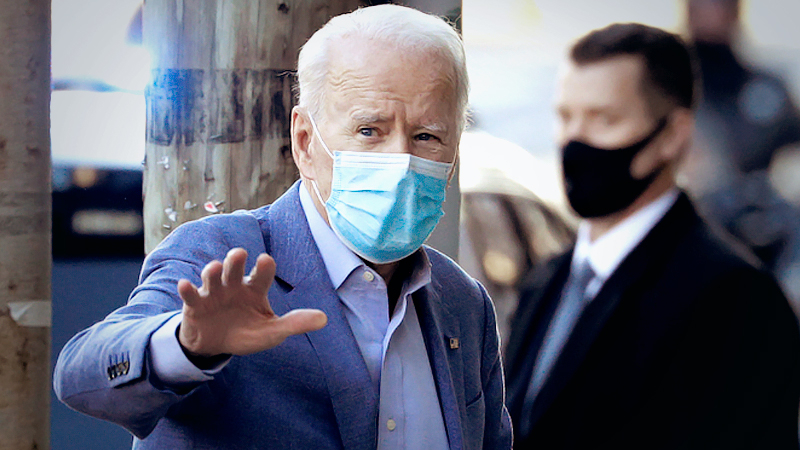
President-elect Joe Biden walks into the Queen theater in Wilmington, Del,, on Jan. 10. (Tom Brenner/ Reuters)

President-elect Joe Biden walks into the Queen theater in Wilmington, Del,, on Jan. 10. (Tom Brenner/ Reuters)

By The Washington Post · Erica Werner, Jeff Stein

WASHINGTON – President-elect Joe Biden is finalizing his coronavirus relief plan, with aides briefing congressional staffers Tuesday and indicating the measure will be tailored to get bipartisan support.

The proposal, which Biden intends to unveil on Thursday, is expected to include $2,000 stimulus payments, an extension of enhanced unemployment insurance, money for vaccine distribution and delivery, funding for cities, states, schools, child care and more.

Transition officials indicated in meetings with Democratic staffers that Biden will try to get bipartisan support for the measure, instead of using a special budgetary tool that could allow him to push legislation through Congress with only Democratic votes, according to several people with knowledge of the discussions who spoke on the condition of anonymity because the deliberations were private.

That’s led to speculation that the price tag of the package could be below $2 trillion – although Biden said last week that it could cost in the multiple trillions of dollars. Republicans are likely to balk at spending too much more after Congress has already devoted around $4 trillion to fighting the ravaging coronavirus pandemic and economic fallout.

Biden has said repeatedly that passing a coronavirus relief and economic stimulus package will be his No. 1 priority upon taking office Jan. 20. Incoming Senate Majority Leader Chuck Schumer, D-N.Y., made the same point in a letter to colleagues on Tuesday, describing a relief bill as “our first order of legislative business” once the new Senate is organized and Kamala Harris sworn in as vice president, giving Democrats control of the Chamber.

“The job of covid emergency relief is far from complete. Democrats wanted to do much more in the last bill and promised to do more, if given the opportunity, to increase direct payments to a total of $2,000 – we will get that done,” Schumer wrote. “We will also further support vaccine distribution efforts and help American families, small businesses, schools and state and local governments.”

But even as Biden makes plans to advance his agenda, the House is preparing to impeach President Donald Trump a second time over his incitement of last week’s deadly invasion of the Capitol. It’s unclear when an impeachment trial would take place in the Senate, and how that will impact Biden’s goal of quickly enacting bipartisan legislation.

A spokesperson from Biden’s transition team declined to offer details of the proposed stimulus plan.

Biden said this week that he hoped the issues could be “bifurcated” so that the Senate could simultaneously approve his Cabinet nominees and work on coronavirus economic relief legislation while also moving forward with impeachment. It’s uncertain how well that would work in practice, if that is the path the Senate takes.

Outside interest groups are cautioning that impeachment should not be allowed to draw focus from the work of passing a new economic relief bill.

“The trial cannot be allowed to distract from or delay the critical work of providing economic relief and economic opportunity for the American working people,” AFL-CIO President Richard Trumka said on a press call Tuesday. “We have to confirm a Cabinet and we have to get economic relief to them very very quickly. And I think the Senate and the House are both capable of doing those things simultaneously.”

Biden’s coronavirus relief plan would build on a $900 billion bill Congress negotiated and Trump signed in December. Democrats have repeatedly said that legislation left unfinished business as the virus continues its deadly march through the nation, vaccinations lag and the economy sheds jobs.

Biden ran on his prowess as a bipartisan dealmaker, but given the highly polarized political climate it’s unclear how much bipartisanship there will be in a Senate divided 50-50 between Democrats and Republicans. Some Democrats believe the events of last week at the Capitol may cause some Republicans to want to take a more bipartisan approach, in an effort to create more unity.

At the same time, some Democrats are warning against spending too much time trying to get a bipartisan outcome. President Barack Obama took office with both chambers of Congress controlled by Democrats, and spent months trying unsuccessfully to get GOP support for the Affordable Care Act, before ultimately passing it with only Democratic votes in the Senate.

“It would be good to have Republicans on board, but we should spend not an inordinate amount of time testing Republican willingness to come on board,” said Sen. Brian Schatz, D-Hawaii. “It would be excellent if we can get a big bipartisan vote, but if that’s Plan A we’re going to have to move to Plan B pretty quickly if we can’t get the votes.”