WASHINGTON – The number of new unemployment claims filed last week jumped by 181,000 the week before to 965,000, the largest increase since the beginning of the pandemic.
It was the largest number of new unemployment claims since August.
An additional 284,000 claims were filed for the Pandemic Unemployment Assistance, the insurance for gig and self-employed workers.
The weekly report is President Donald Trump’s last before President-elect Joe Biden is sworn in on Jan. 20. Biden will inherit a labor market badly weakened by the coronavirus pandemic and an economic recovery that appears to have stalled: 140,000 people lost their jobs in December, the first decline in months, with the U.S. still down millions of jobs since February.
The dire numbers will serve as a backdrop for Biden as he formally unveils an ambitious stimulus package proposal on Thursday, which could top $1 trillion, and is expected include an expansion of the child tax credit, a $2,000 stimulus payment, and other assistance for the economy.
Democrats were already using the weak labor to argue about the necessity of more aid.
Economists say that the economy’s struggles could be explained, in part, by the delay Congress allowed between the summer, when many fiscal aid programs expired and December, when lawmakers finally agreed on a new package after months of stalemate.
The number of new jobless claims has come down since the earliest days of the pandemic, but remains at a extremely high level week in and week out.
The total number of continuing people in any of the unemployment programs at the end of the year was 18.4 million, although officials have cautioned that the number is inflated by accounting issues and duplicate claims.
The increase in claims is not entirely unexpected. As the aid package passed by Congress in December kicks in, including a $300 a week unemployment supplement, some economists expected that to result in more workers filing claims.
Trump’s most enduring legacy could be the historic rise in the national debt
InternationalJan 15. 2021President Trump signed the Tax Cut and Jobs Act into law in December 2017. MUST CREDIT: Washington Post photo by Jabin Botsford.
By The Washington Post · Allan Sloan, Cezary Podkul
One of President Donald Trump’s lesser known but profoundly damaging legacies will be the explosive rise in the national debt that occurred on his watch.
The financial burden that he’s inflicted on our government will wreak havoc for decades, saddling our kids and grandkids with debt.
The national debt has risen by almost $7.8 trillion during Trump’s time in office. That’s nearly twice as much as what Americans owe on student loans, car loans, credit cards and every other type of debt other than mortgages, combined, according to data from the Federal Reserve Bank of New York. It amounts to about $23,500 in new federal debt for every person in the country.
The growth in the annual deficit under Trump ranks as the third-biggest increase, relative to the size of the economy, of any U.S. presidential administration, according to a calculation by Eugene Steuerle, co-founder of the Urban-Brookings Tax Policy Center. And unlike George W. Bush and Abraham Lincoln, who oversaw the larger relative increases in deficits, Trump did not launch two foreign conflicts or have to pay for a civil war.
Economists agree that we needed massive deficit spending during the covid-19 crisis to ward off an economic cataclysm, but federal finances under Trump had become dire before the pandemic. That happened even though the economy was booming and unemployment was at historically low levels. By the Trump administration’s own description, the pre-pandemic national debt level was already a “crisis” and a “grave threat.”
The combination of Trump’s 2017 tax cut and the lack of any serious spending restraint helped both the deficit and the debt soar. So when the once-in-a-lifetime viral disaster slammed our country and we threw more than $3 trillion into covid-related stimulus, there was no longer any margin for error.
Our national debt has reached immense levels relative to our economy, nearly as high as it was at the end of World War II. But unlike 75 years ago, the massive financial overhang from Medicare and Social Security will make it dramatically more difficult to dig ourselves out of the debt ditch.
Falling deeper into the red is the opposite of what Trump, the self-styled “King of Debt,” said would happen if he became president. In a March 31, 2016, interview with Bob Woodward and Robert Costa of The Washington Post, Trump said he could pay down the national debt, then about $19 trillion, “over a period of eight years” by renegotiating trade deals and spurring economic growth.
After he took office, Trump predicted that economic growth created by the 2017 tax cut, combined with the proceeds from the tariffs he imposed on a wide range of goods from numerous countries, would help eliminate the budget deficit and let the United States begin to pay down its debt. On July 27, 2018, he told Fox News’s Sean Hannity, “We have $21 trillion in debt. When [the 2017 tax cut] really kicks in, we’ll start paying off that debt like it’s water.”
Nine days later, he tweeted, “Because of Tariffs we will be able to start paying down large amounts of the $21 trillion in debt that has been accumulated, much by the Obama Administration.”
That’s not how it played out. When Trump took office in January 2017, the nonpartisan Congressional Budget Office was projecting that federal budget deficits would be 2% to 3% of our gross domestic product during Trump’s term. Instead, the deficit reached 3.8% of GDP in 2018 and 4.6% in 2019.
There were multiple culprits. Trump’s tax cuts, especially the sharp reduction in the corporate tax rate to 21% from 35%, took a big bite out of federal revenue. The CBO estimated in 2018 that the tax cut would increase deficits by about $1.9 trillion over 11 years.
Meanwhile, Trump’s claim that increased revenue from the tariffs would help eliminate (or at least reduce) our national debt hasn’t panned out. In 2018, Trump’s administration began hiking tariffs on aluminum, steel and many other products, launching what became a global trade war with China, the European Union and other countries.
The tariffs did bring in additional revenue. In fiscal 2019, they netted about $71 billion, up about $36 billion from President Barack Obama’s last year in office. But although $36 billion is a lot of money, it’s less than 1/750th of the national debt. That $36 billion could have covered a bit more than three weeks of interest on the national debt – that is, had Trump not unilaterally decided to send a chunk of the tariff revenue to farmers affected by his trade wars. Businesses that struggled as a result of the tariffs also paid fewer taxes, offsetting some of the increased tariff revenue.
By early 2019, the national debt had climbed to $22 trillion. Trump’s budget proposal for 2020 called it a “grave threat to our economic and societal prosperity” and asserted the United States was experiencing a “national debt crisis.” However, that same budget proposal included substantial growth in the national debt.
By the end of 2019, the debt had risen to $23.2 trillion and more federal officials were sounding the alarm. “Not since World War II has the country seen deficits during times of low unemployment that are as large as those that we project – nor, in the past century, has it experienced large deficits for as long as we project,” Phillip Swagel, director of the CBO, said in January 2020.
Weeks later, the coronavirus erupted and made the financial situation far worse. As of Dec. 31, 2020, the national debt had jumped to $27.75 trillion, up 39% from $19.95 trillion when Trump was sworn in. The government ended its 2020 fiscal year with the portion of the national debt owed to investors, the metric favored by the CBO, around 100% of GDP. The CBO had predicted less than a year earlier that it would take until 2030 to reach that approximate level of debt. Including the trillions owed to various governmental trust funds, the total debt is now about 130% of GDP.
Normally, this is where we’d give you Trump’s version of events. But we couldn’t get anyone from the White House to give us Trump’s side. Judd Deere, a White House spokesman, referred us to the Office of Management and Budget, which is a branch of the White House.
OMB didn’t respond to our requests. The Treasury Department directed us to comments made by OMB Director Russell Vought in October, in which he predicted that as the pandemic eases and economic growth rebounds, the “fiscal picture” will improve. The OMB blamed legislators for deficits when Trump submitted his proposed 2021 budget: “Unfortunately, the Congress continues to reject any efforts to restrain spending. Instead, they have greatly contributed to the continued ballooning of Federal debt and deficits, putting the Nation’s fiscal future at risk.”
Still, the deficit growth under Trump has been historic. Steuerle, of the Tax Policy Center, has done a comparison of every American president using a metric called the “primary deficit.” It’s defined as the deficit minus interest costs, because interest is the only budget expense that presidents and Congress can’t control unless they want to do the unthinkable and default on the debt. Steuerle examined the records of 45 presidents to see how, as of the final year of their administrations, the primary deficit had shrunk or grown relative to the size of the economy.
Trump had the third-biggest primary deficit growth, 5.2% of GDP, behind only George W. Bush (11.7%) and Abraham Lincoln (9.4%). Bush, of course, not only passed a big tax cut, as Trump has, but also launched two wars, which greatly inflated the defense budget. Lincoln had to pay for the Civil War. By contrast, Trump’s wars have been almost entirely of the political variety.
Our national debt is now at its highest level relative to our economy since the end of World War II. After the war ended, the extraordinary military expenses disappeared, a postwar recovery began and the debt began to fall rapidly relative to the size of the economy.
But that’s not going to happen this time. When World War II ended 75 years ago, Social Security was in its infancy and Medicare didn’t exist. Today, many of our biggest and most rapidly growing expenses, especially Social Security and Medicare, are baked into the budget because of our nation’s aging population. These outlays are slated to rise sharply. Steuerle recently calculated that Social Security, health-care and interest costs are projected to absorb 122% of the total growth in federal revenue from 2019 to 2030.
What’s more, our investment in the future – things like research and development, education, infrastructure and workforce training – is declining as a proportion of the budget. OMB data shows that in 1970, mandatory spending (such as Social Security and Medicare, but not including interest on the debt) and investment each made up around 30% of total federal spending. But as of 2019, the most recent available year, mandatory spending had doubled to around 61% of total federal spending, while investment fell by more than half, to around 12.5%.
Spending more and more on past promises and shrinking the proportion of spending for the future doesn’t bode well for our kids and grandkids. Had Trump done what he said he’d do and paid off part of the national debt before the coronavirus struck, rather than adding significantly to the debt, the situation would be considerably less dire. And had Trump done a better job of coping with the pandemic, the economic and human costs would’ve been greatly reduced.
In addition to forcing us to reduce the proportion of the budget spent on the future to help pay for the past, there’s a second reason huge and growing budget deficits matter: interest costs.
Bigger debt ultimately means bigger interest costs, even in an era when the Federal Reserve has forced down Treasury rates to ultralow levels. The government’s net interest cost (including interest paid to government trust funds) was around $523 billion in the 2020 fiscal year. That outstrips all spending on education, employment training, research and social services, Treasury data shows.
Interest costs are way below where they’d be if the Fed hadn’t forced rates down to try to stimulate the economy and mitigate the impact of the pandemic. One-year Treasury securities cost taxpayers a minuscule 0.10% in interest at year’s end, down from 1.59% at the end of 2019. The 10-year Treasury rate was 0.93%, down from 1.92%.
In late December, the Fed reported boosting its Treasury holdings by more than $2 trillion from a year earlier. The increase is primarily in longer-term securities. That has kept the federal government from having to raise trillions of dollars in the capital markets, and therefore has kept longer-term interest rates way below where they would otherwise be.
But unless something changes, even the Fed’s promise to keep interest rates near current levels for several years won’t fend off future problems. Most of the government’s borrowing to fund pandemic relief has been shorter-term borrowing that will have to be refinanced in the coming years. If rates rise, so will the government’s interest expense.
Even with rates where they are, interest on the debt is already going to be the fastest-growing budget category this decade, according to the Peter G. Peterson Foundation, which tracks the issue. Annual net interest costs are projected to double in 10 years and grow so large beyond 2030 that interest will become a driving factor in annual deficit growth, according to Peterson estimates.
Listen to what Swagel, the CBO director, had to say on the subject in a report to congressional Republicans in December: “Although the current low interest rates indicate that the debt is manageable for now and that the United States is not facing an immediate fiscal crisis, in which interest rates abruptly escalated or other disruptions occurred, the risk and potential budgetary consequences of such a crisis become greater over time.”
Trump was asked about this risk during a virtual discussion with the Economic Club of New York in October. “If we have another stimulus bill out of Congress, are you worried that the entire amount of federal debt will be too large for us to pay off in a sensible way?” asked David Rubenstein, a private equity executive.
Trump answered by falsely claiming that the United States was starting to pay off the national debt before the pandemic and claimed that future economic growth would let it do so. “I think you’re going to see tremendous growth, David, and the growth is going to get it done,” Trump said.
Two months later, when Congress finally approved $900 billion of economic stimulus that is being financed with debt, Trump challenged Congress to spend – and borrow – even more. Then he went golfing.
By Syndication Washington Post, Bloomberg · Nick Wadhams
U.S. officials deliberated but ultimately decided against banning American investment in Alibaba Group Holding Ltd. and Tencent Holdings Ltd., a person familiar with the discussions said, removing a cloud of uncertainty over Asia’s two biggest corporations.
The Treasury Department blocked a Pentagon effort to add the two internet firms on grounds they aided the military, the person said, asking not to be identified discussing private talks. Officials also debated blocking search leader Baidu Inc. but dropped the plan, the person added. Alibaba’s Hong Kong stock climbed as much as 3.9% while Tencent rose almost 5% on news of the reprieve, which was first reported by the Wall Street Journal. Their dollar bond spreads tightened Thursday morning.
The decision removes uncertainty hanging over Chinese social media and gaming leader Tencent and Alibaba, the e-commerce titan founded by billionaire Jack Ma that’s now under intense regulatory scrutiny by Beijing regulators. President Donald Trump has signed an amended version of his executive order banning investment in Chinese military-linked companies, the White House said in a statement Wednesday that didn’t mention any company by name.
Imposing a ban on the pair would have marked the most dramatic escalation yet by the outgoing administration, given the sheer size of the two firms and the difficulty unwinding positions. At more than $1 trillion, their combined market value is nearly twice the size of Spain’s stock market, while the firms together account for about a 10th of the weighting for MSCI Inc.’s emerging markets benchmark.
Citing national security, Trump previously signed an executive order in November requiring investors to pull out of Chinese companies linked to that nation’s military. The Defense Department will add more companies to the roster, the person said without elaborating.
That would further fray the relationship between the world’s two largest economies, which have clashed over everything from covid-19 to Hong Kong. Authorities in Washington have ramped up efforts to deprive Chinese companies of U.S. capital in the final months of the Trump administration, adding to economic tensions as President-elect Joe Biden prepares to take over this month.
“China opposes politicizing economic and trade issues and abusing state power and the concept of national security to suppress foreign companies,” Chinese Foreign Ministry spokesman Zhao Lijian said during a regular briefing Thursday. Zhao urged the U.S. to respect market economy principles and provide a fair, unbiased and transparent business environment for foreign companies.
Hasty measures have at times sown confusion in markets and prompted price swings, such as when the New York Stock Exchange reversed course twice on a decision to delist three Chinese telecommunications companies. The NYSE is now proceeding with its original delisting plan after U.S. Treasury Secretary Steven Mnuchin disagreed with its decision to give the firms a reprieve.
Trump’s order banned trading in affected securities starting Jan. 11. If Biden leaves Trump’s executive order in place, U.S. investment firms and pension funds would be required to sell their holdings in companies linked to the Chinese military by Nov. 11. And if the U.S. determines additional companies have military ties in the future, American investors will be given 60 days from that determination to divest.
WASHINGTON – The House made history Wednesday by impeaching a president for a second time, indicting President Donald Trump a week before he leaves office for inciting a riot with false claims of a stolen election that led to the storming of the Capitol and five deaths.
Unlike Trump’s first impeachment, which proceeded with almost no GOP support, Wednesday’s effort attracted 10 Republicans, including Rep. Liz Cheney, the No. 3 party leader in the House. The Senate now appears likely to hold a trial after Trump’s departure, an unprecedented scenario that could end with lawmakers barring him from holding the presidency again.
The final vote was 232-197.
One of the final dramas of a tumultuous presidency, the impeachment unfolded against the backdrop of near-chaos in the House and uncertainty about where Trump’s exit leaves the GOP. Democrats and Republicans exchanged accusations and name-calling throughout the day, while Trump loyalists were livid at fellow Republicans who broke ranks – especially Cheney – leaving the party’s leadership shaken.
But despite the emotions stirred by the Capitol assault, the great majority of Republicans stood by the president, including Minority Leader Kevin McCarthy, R-Calif.. He argued on the House floor that while Trump bears responsibility for the attack on the Capitol, the snap impeachment would only “further fan the flames of partisan division.”
McCarthy for the first time publicly endorsed a censure for Trump, but the call came too late to serve as an effective alternative to impeachment.
House Speaker Nancy Pelosi, D-Calif., and other Democrats made it clear Wednesday that censure would not suffice given the circumstances, with Trump riling up his supporters with false claims of election fraud, then urging them to march on Congress as it was certifying President-elect Joe Biden’s victory.
“He must go,” Pelosi said. “He is a clear and present danger to the nation that we all love.”
The House took its final vote Wednesday afternoon, one week after the riot and just two days after the impeachment resolution was filed. It was a stunningly swift response from a House that took nearly three months to impeach Trump in 2019 on charges of abuse of power and contempt of Congress.
But with just seven days remaining in Trump’s term, it became increasingly certain Wednesday that Trump would not be removed from office prematurely. The impeachment resolution for “incitement of insurrection,” however, also seeks Trump’s future “disqualification to hold and enjoy any office of honor, trust, or profit under the United States.”
The focus will now turn to how the trial will unfold in the Senate, which has never before held an impeachment trial for a former president.
Biden issued a statement shortly after the House vote signaling his concern that his agenda not be sidelined.
“I hope that the Senate leadership will find a way to deal with their constitutional responsibilities on impeachment while also working on the other urgent business of this nation,” Biden said.
Senate Majority Leader Mitch McConnell, R-Ky., refused a request from Minority Leader Charles Schumer, D-N.Y., to reconvene the Senate early to launch Trump’s trial. That means it can start the proceedings no sooner than Jan. 19 – a day before Biden’s inauguration.
McConnell, who signaled through advisers Tuesday that he would be open to a possible conviction, said in a memo released as the House debated that there was no chance that a trial could be fairly concluded before the inauguration, even if he agreed to Schumer’s request. Previous presidential impeachment trials, he noted, took 83, 37 and 21 days.
McConnell pointedly left open the possibility that he might vote to convict Trump.
“I have not made a final decision on how I will vote and I intend to listen to the legal arguments when they are presented to the Senate,” he said in the note, first sent to his fellow Republican senators.
Schumer, for his part, suggested determination to hold the trial even with Trump gone from the White House. “Make no mistake, there will be an impeachment trial in the United States Senate; there will be a vote on convicting the president for high crimes and misdemeanors; and if the president is convicted, there will be a vote on barring him from running again,” he said.
McCarthy called on the House floor for Trump to “quell the brewing unrest,” and with Republican votes in the balance, Trump quickly issued a brief written statement: “I urge that there must be NO violence, NO lawbreaking and NO vandalism of any kind,” he said. “That is not what I stand for, and it is not what America stands for. I call on ALL Americans to help ease tensions and calm tempers.”
Later Wednesday evening, Trump issued a five-minute video denouncing the protesters: “Mob violence goes against everything I believe in, and everything our movement stands for. No true supporter of mine could ever endorse political violence.”
But the statements came too late for the clutch of Republicans who voted to impeach. Instead, several cited his impromptu remarks the previous day claiming his actions had been “totally appropriate.”
The Republicans who broke from Trump included senior leaders such as Cheney, the Republican conference chairwoman; Rep. John Katko of New York, the top GOP member of the Homeland Security Committee; and Rep. Fred Upton of Michigan, a former chairman of the Energy and Commerce Committee. But junior members such as freshman Rep. Peter Meijer of Michigan and second-term Rep. Anthony Gonzalez of Ohio also voted for impeachment.
Some, such as Rep. Adam Kinzinger of Illinois, have been sharply critical of Trump in the past. Others, such as Rep. Tom Rice of South Carolina, have hardly ever said a cross word about him.
“I have backed this President through thick and thin for four years. I campaigned for him and voted for him twice,” Rice said in a statement. “But, this utter failure is inexcusable.”
Other Republicans voting to impeach Trump were Reps. Jaime Herrera Beutler of Washington, Dan Newhouse of Washington and David Valadao of California.
Rep. Jim Jordan, R-Ohio, one of Trump’s staunchest defenders, said the fact that only nine Republicans joined Cheney, and the dam did not break in a more dramatic way, showed that Trump retained wide support within the GOP.
Asked if Trump could still be an effective leader of the party, Jordan said, “Of course he is. Of course he is. His support is strong because the American people appreciated that over the past four years he did more of what he said he would do than any president in my lifetime.”
Several other Republicans declined to comment on Trump’s future, saying instead that the lopsided GOP vote reflected concerns about the impeachment process and the political environment.
“It actually represents a feeling among Republicans – even Republicans who are disappointed with this president – that with only seven days left to go in his term and with the toxic political environment being what it is, that there’s a real need in the country to lower the temperature,” said Rep. Garland “Andy” Barr, R-Ky. “This is viewed by a lot of Americans as an act of political vengeance.”
Many GOP members said they were struggling to reconcile their anger at last week’s events, and Trump’s culpability in them, with their fears of escalating violence and threats directed at lawmakers.
“This isn’t a fun time, that’s for sure,” said Valadao, who said he was undecided just hours before voting to impeach.
Democrats encouraged the handful of Republicans who came to the floor Wednesday in support of impeachment. When Newhouse broke publicly with Trump on the House floor, colleagues across the aisle delivered applause.
“These articles of impeachment are flawed, but I will not use process as an excuse,” he said. “There is no excuse for President Trump’s actions.”
But most Republicans speaking Wednesday put little distance between themselves and Trump. Many sidestepped the actual charge against Trump, instead arguing that the Democrats were being divisive and that impeachment was unnecessary so close to Trump’s departure.
Rep. Andy Biggs, R-Ariz., leader of the pro-Trump House Freedom Caucus who had embraced the “Stop the Steal” effort that culminated in the Jan. 6 rally, warned Democrats that they would only embolden Trump supporters.
“You believe that your hunger will be finally satiated by impeaching this president without completion of his full term of office,” Biggs said. “Instead of stopping the Trump train, his movement will grow stronger, for you will have made him a martyr.”
The scene in the Capitol highlighted how fluid the political landscape has become one week before the departure of a president who has aggressively shaken up politics for four years. Cheney and Jordan were emerging as leaders of what are roughly anti- and pro-Trump factions of the GOP, with the party’s nominal leader, McCarthy, somewhere in the middle.
Democrats, meanwhile, face what is likely to be Pelosi’s last term as speaker without a clear successor and with the narrowest congressional majority in decades – often a recipe for trouble as voters’ expectations exceed a party’s ability to deliver.
In a sign of the House GOP’s tenuous political standing, McCarthy convened a call about two hours after the vote with his top financial donors. A slew of Fortune 500 companies in recent days have sworn off donations to the Republicans who voted to overturn the electoral college results, a group that includes McCarthy.
McCarthy told the donors that he called Biden on Tuesday and “pledged to work together” with the new administration, according to a participant in the call, who spoke on the condition of anonymity to discuss the private call.
McCarthy also tried to reassure the wealthy contributors that he rejected the conspiracy theory that antifa was responsible for last week’s violence and said Trump deserved “some of the responsibility” for the attacks.
The most immediate fallout from the impeachment effort appears likely to occur inside the Republican Party, as several Trump loyalists called for Cheney to immediately resign her leadership position. A petition for her resignation circulated among GOP offices in the Capitol as hard-right members seethed over her role in backing Trump’s ouster.
Cheney on Wednesday insisted she would not resign: “I’m not going anywhere,” she told reporters. “Our nation is facing an unprecedented, since the Civil War, constitutional crisis. That’s what we need to be focused on.”
Democrats, meanwhile, prepared for a new governing reality – with Biden assuming the presidency in a week and Democrats taking the narrowest of Senate majorities, with Vice President-elect Kamala Harris poised to break 50-50 ties.
With some Democrats openly floating a delay in transmission of the impeachment measure to allow the Senate to confirm at least some of Biden’s Cabinet nominees, Pelosi on Wednesday did not respond to questions about her plans.
Some Republicans predicted that their internal bloodletting over Trump would soon be swept aside once Democrats take unified control in Washington.
“We’re going to get through this, and we’re going to be united, because Speaker Pelosi is going to bring some very dangerous policy to the House floor that’s frankly going to divide them and unite us,” said Rep. Richard Hudson, R-N.C., a junior member of the party leadership.
Emergency declaration to drag on Malaysia’s economic rebound
InternationalJan 14. 2021A sign for take-away is displayed outside a restaurant during a nationwide state of emergency in Kuala Lumpur, Malaysia, on Jan, 13, 2021. MUST CREDIT: Bloomberg photo by Samsul Said.
By Syndication Washington Post, Bloomberg · Anisah Shukry
The state of emergency declared this week allows Malaysia’s government to enact immediate laws to support the virus-battered economy, but could dent consumer confidence and scare off investors.
Greater powers under Tuesday’s decree could help the government implement concrete solutions to the country’s health crisis and economic downturn, according to analysts at CGS-CIMB. Prime Minister Muhyiddin Yassin said it would allow for ordinances to fight “economic sabotage, monopoly, and excessive price hikes.”
The emergency, which could last until Aug. 1, coincides with a two-week lockdown that led analysts to shave as much as 1.5 percentage points off their forecasts for annual economic growth. Regions placed under stay-at-home orders contribute more than two-thirds of the country’s gross domestic product.
The measures come as record numbers of covid infections stretch Malaysia’s health system to the breaking point. While less severe than the two-month lockdown enacted last March, the restrictions will mean a loss of about 3 billion ringgit ($742 million) per week in private consumption, according to an RHB Bank estimate.
“With its recovery momentum stymied, it will be even harder now for the economy to reach the 6.5-7.5% GDP growth target that the government has in mind,” Wellian Wiranto, an economist at Oversea-Chinese Banking Corp., wrote in a research note.
The emergency decree does bring a measure of political stability to Malaysia for the first time since infighting early last year toppled the coalition and lifted Muhyiddin to power. With parliament potentially suspended until August, the prime minister doesn’t have to worry about fresh elections anytime soon.
“The government may have a ‘no-holds-barred'” approach to the pandemic now, analysts at RHB Bank said. “This may include further support from the fiscal and monetary side, as well as a more unconventional approach including a return of loan moratoriums and tax breaks on big-ticket items.”
Malaysia’s economy took the brunt of the covid blow in the second quarter of 2020, and began bouncing back in the latter half of the year. The government expected the economy to contract 4.5% for the full year.
Now, its ability to galvanize activity is constrained by limited fiscal space and a relatively high debt load, according to OCBC’s Wiranto. “The government may remain reluctant to undertake a ‘bazooka’-type fiscal largesse, given the external constraints imposed by the market,” he said.
Moreover, government intervention unchecked by parliament could jeopardize market stability, analysts at BIMB Securities Research wrote. The move could send negative signals to investors, leading to the outflow or diversion of foreign investment from the country, they said.
That means monetary policy may have to do more of the heavy lifting. OCBC sees a “heightened chance” that Bank Negara Malaysia will cut its overnight policy rate by 25 basis points to a record-low 1.5% at its Jan. 20 meeting.
Analysts at Hong Leong Investment Bank and Citibank were more conservative. While both believe the odds have risen for a rate cut this year, they don’t expect one next week.
The overnight rate “is likely to stay pat until the extent and impact of renewed lockdown is known with greater clarity,” Hong Leong analysts wrote in a research note.
InternationalJan 14. 2021WASHINGTON, DC – JANUARY 13, 2021: A week after the insurrection of the U.S. Capitol, with Speaker of the House House Speaker Nancy Pelosi, D-Calif., presides over President Donald Trump’s second impeachment Wednesday Jan. 13, 2021. MUST CREDIT: Washington Post photo by Melina Mara
By The Washington Post · Amber Phillips
WASHINGTON – President Donald Trump has become the first president in American history to be impeached twice. But being impeached is not the same as being convicted and kicked out of office or barred from holding it again.
Trump will go down in history as being the first U.S. president to be impeached twice. If the Senate convicts him before he leaves office on Jan. 20, he will be removed, but Senate Majority Leader Mitch McConnell, R-Ky., said Wednesday that the chamber will not take up the matter before Trump leaves office. If it convicted him, the Senate could take another vote to bar him from holding office again.
– – –
Why a second impeachment?
Impeaching Trump in his final days in office was not on Congress’s to-do list. But then the riot at the Capitol happened Jan. 6.
Congress convened under tense circumstances after Trump’s months-long quest to undermine the 2020 presidential election, contest his loss, and interfere in the counting of electoral votes and confirming that Joe Biden will be the next president.
Congress’s role in who is president is largely a formality. But scores of Republican lawmakers, including a majority of GOP House members, planned to use an 1880s law to object to seating electors from swing states Trump lost. That’s despite the fact that all states met the legal requirements for Congress and despite the fact that none of those challenges could get the votes to succeed.
As they got started, Trump was on the Ellipse, addressing supporters whom he had invited to Washington to “be there, will be wild,” and whom he urged that day to “fight like hell” to try to overturn his loss.
As debate about the first GOP challenge got underway, hundreds of those supporters stormed the Capitol, overwhelming Capitol Police and forcing lawmakers and staff members to flee the chambers. Five people’s deaths, including a Capitol Police officer’s, were linked to the riot.
Shaken members of Congress returned hours later and confirmed Biden’s win.
Democrats and some Republicans started calling for Trump’s removal from office immediately. On Tuesday, several top House Republicans said they supported impeaching him.
“The president of the United States summoned this mob, assembled the mob, and lit the flame of this attack,” Rep. Liz Cheney of Wyoming, the No. 3 House Republican, said in a statement, adding, “There has never been a greater betrayal by a president of the United States of his office and his oath to the Constitution.”
– – –
Why not other consequences?
There were a few options besides impeachment to get Trump out before he has to leave by noon Jan. 20. He could resign. Or Vice President Mike Pence and half the Cabinet could vote to remove him based on a section of the 25th Amendment that allows them to declare him unfit to serve. Pence said removing Trump now would not be “in the best interest of our Nation or consistent with our Constitution.”
House Democrats called on Pence to remove the president this way before they moved to impeach Trump, but while there were talks in the Cabinet of doing so, there was no action. Some Cabinet members resigned over Trump’s role in the riot, removing themselves from involvement in taking this unprecedented step.
Some constitutional law experts argue that Congress could use a lesser-known provision in the 14th Amendment to bar Trump from office, by voting that he “engaged in insurrection or rebellion” and thus can’t hold office again. They say that would take only a majority vote, though it could be open to court challenges.
House Democrats, more than 300 historians, constitutional law experts and some Republicans have said Trump poses more danger the longer he stays in office after encouraging the riot.
“We cannot let this go unanswered,” Rep. David Cicilline, D-R.I., wrote in a New York Times opinion article, speaking for many in his party. “With each day, Mr. Trump grows more and more desperate. We should not allow him to menace the security of our country for a second longer.”
– – –
What’s next?
The impeachment article goes to the Senate for a trial on whether to convict or acquit the president. The Senate is in the process of changing hands, from a narrow Republican majority to a narrow Democratic majority.
The timing of the House vote, less than a week before Biden is to be sworn in, means the Senate trial will happen under a Democratic-controlled Senate. Democrats would get to outline how the trial would work.
But it could require the Senate to stop all business for a few days, including confirming Biden’s Cabinet. (Some House Democratic leaders have suggested refraining from sending the impeachment article to the Senate until Biden is more settled with his administration.) Biden asked the Senate whether it could split the day in two, confirming his nominees and holding a trial. It’s unclear whether the Senate can do that.
The consequences for Trump are unclear. A president can probably be convicted after leaving office, but to convict Trump requires support of two-thirds of the Senate, more than the Democratic majority. Democrats would need 17 Senate Republicans to join them, and they do not seem to have that support. Three Republican senators have expressed openness to impeachment or to getting Trump out of office after the Capitol riot – Lisa Murkowski of Alaska, Ben Sasse of Nebraska and Pat Toomey of Pennsylvania.
“I want him out. I want him to resign. He has caused enough damage,” Murkowski said in the days after the invasion.
Sen. Mitt Romney of Utah, the lone Senate Republican to vote to convict Trump during his first impeachment, has expressed hesitation that impeachment is the right way to go, though he also has said he thinks the president should be held accountable in some way.
McConnell has said he’s furious with Trump for what happened and does not plan to speak to him again, reported The Washington Post’s Josh Dawsey and Ashley Parker. The Post has confirmed that he told others that Trump probably committed impeachable offenses.
Barring a president from running for office again would require removal from office, then a majority vote.
– – –
What the new impeachment article says
The article the House voted on 232-197 is short but makes three main points, mainly that Trump committed “high crimes and misdemeanors” because:
1. He falsely claimed he won the election: “Shortly before the Joint Session commenced, President Trump addressed a crowd of his political supporters nearby. There, he reiterated false claims that ‘we won this election, and we won it by a landslide.’ “
2. He encouraged the riot: “He willfully made statements that encouraged – and foreseeably resulted in – imminent lawless action at the Capitol. Incited by President Trump, a mob unlawfully breached the Capitol, injured law enforcement personnel, menaced Members of Congress and the Vice President, interfered with the Joint Session’s solemn constitutional duty to certify the election results, and engaged in violent, deadly, destructive, and seditious acts.”
3. He’d been putting actions to his words to try to overturn his loss: The article mentions a recent call Trump held with Georgia’s secretary of state urging him to “find” just enough votes to overturn Biden’s win there.
– – –
What Republicans are saying
Republican lawmakers are not defending Trump’s actions, but few are publicly acknowledging his role in inciting the violent mob and trying to undermine a presidential election.
Most House Republicans have been lining up behind the argument that impeachment would be too divisive for the country, and they are trying not to acknowledge Trump’s role in the rhetoric that led to the storming of the Capitol. They have offered alternatives such as censure, a much weaker option.
The majority of Senate Republicans are silent about what they think should happen to Trump. Some argue that impeachment is a bad idea.
“I think letting the president stew in his own juices is probably the right way to go here,” Sen. Lindsey Graham, R-S.C., a Trump ally who stopped his support for Trump after the riot, told The Post on Monday after meeting with the president. “Impeachment is going to reignite the problem, and we’ve got nine days to go here. It will do more harm than good, and I’m hoping that people on our side will see it that way.”
Trump, who used his now-defunct Twitter account to defend himself throughout his first impeachment trial, on Tuesday morning called the new impeachment effort “a continuation of the greatest witch hunt in the history of politics.”
– – –
What happened in the last impeachment
After months of debate within the Democratic Party about whether to impeach Trump for his efforts to block a government Russia investigation, in the fall of 2019, Democrats moved forward with impeaching Trump for pressuring the president of Ukraine to investigate Biden. They went slowly, starting with an impeachment investigation in which they called about a dozen witnesses before having some dramatically testify, often in defiance of Trump’s orders not to.
By December 2019, Trump was impeached by the Democratic House in a mostly party-line vote for two articles: abuse of power and obstructing Congress’s inquiry. In January, the Republican-controlled Senate held a relatively quick trial without calling new witnesses and acquitted Trump. Only one Republican senator, Romney, voted to convict Trump on one of the articles.
WASHINGTON – President-elect Joe Biden is expected to include a significant new benefit for children in poor and middle-class households in the coronavirus relief package he will release this week, according to three people speaking on the condition of anonymity to share details of internal deliberations.
Biden officials are likely to include the expansion of an existing tax credit for children as part of a relief package that will also include $2,000 stimulus payments, unemployment benefits and other assistance for the ailing economy – as well as money to fight the coronavirus pandemic and increase vaccine distribution. Biden is expected to formally unveil his proposal Thursday.
Biden transition officials have not disclosed the overall price tag of the package, but it is expected to be more than $1 trillion.
While a final decision has not been made, Biden is expected to push for a proposal similar to his campaign pledge to provide $300 per month to American households for every child under 6, as well as $250 per month for every child between the ages of 6 and 17. That would amount to $3,600 per year for families with one young child and $3,000 per year for families with older children. Biden is also likely to seek to extend the existing child benefit to millions of poor families currently shut out of the program.
The United States has significantly higher rates of child poverty than much of the industrialized world, and Democratic lawmakers in the House and Senate have for years pushed for expansions in child tax benefits in response to that problem. The effort may draw opposition from Republican lawmakers who have balked at the trillions of dollars already authorized by Congress in response to the economic downturn caused by coronavirus.
The potential inclusion of the child benefit emerges as Democratic lawmakers begin to jockey over priorities for the economic relief package, which will be Biden’s first legislative effort as president. Brian Deese, incoming director of the White House National Economic Council, said at an event hosted by Reuters on Wednesday that Biden would be introducing a “robust package.”
Deese said Biden would lay out a two-track plan, starting with a recovery package focused on the coronavirus pandemic, with a larger relief effort to follow.
Democratic lawmakers will be able to advance stimulus legislation through the House and Senate without Republican votes. The incoming White House team is indicating it will pursue a bipartisan relief package first, while not ruling out approving the measure solely with Democratic support, through a budget process known as reconciliation.
Following the initial relief package, Biden’s team is likely to come back later this year for another major legislative effort centered on longer-term economic measures, such as an infrastructure or health-care bill.
Biden’s emergency relief legislation is expected to include an expansion of paid family leave benefits, funding for education and an extension of supplemental federal unemployment benefits, two people familiar with the package said.
Under current law, enhanced federal unemployment benefits of $300 per week are set to expire in the middle of March even though widespread vaccination is unlikely until the fall. Biden’s team is expected to push for the higher unemployment payment to be extended through September, the people said. The size of the weekly benefit Biden will seek remained unclear.
“Our view here, both substantively and strategically, is this is an approach that Democrats and Republicans can and should support,” Deese said of the administration’s imminent relief package.
Biden has sought to embrace proposals with widespread Democratic support, and a major expansion of the existing child tax credit has nearly universal backing among Democratic lawmakers.
House Democrats approved an expansion of the child tax credit last year, led in part by House Ways and Means Committee Chairman Richard Neal, D-Mass. Under legislation written by Sens. Michael Bennet, D-Colo., and Sherrod Brown, D-Ohio, and backed by most Senate Democrats, the child benefit would be primarily claimed by parents who use it to offset their existing tax obligations when they pay taxes. The millions of Americans who do not make enough to file income taxes would be able to claim the credit as a refund by filling out an online form with the IRS, akin to the mechanism used to deliver $1,200 stimulus payments last year.
Brown told reporters earlier this week that he spoke to Biden’s nominee for treasury secretary, Janet Yellen, about creating new bank accounts through the Federal Reserve that would make it easier for Americans to claim the child tax benefit.
“The $250 a month will go to these low-income families every month, year-round — $300 if your child is under five,” Brown said. “Why not have this directly deposited in one of these Fed accounts everybody can have? Just imagine the difference it would make for families who are struggling.”
Some policy experts said it would be better for the Biden administration to provide direct cash payments, rather than a reduction in tax liability, to American parents. Many low-income Americans will receive only a negligible amount from the new benefit once it is deducted off their existing tax burdens, a process that itself will prove more administratively difficult and complex than sending more stimulus payments, said Matt Bruenig, founder of the People’s Policy Project, a left-leaning think tank.
“Trump put his name on checks worth $1,200, and Democrats could be at risk here of appearing to offer way less help in a way, and in a way that nobody notices,” Bruenig said, citing tax cuts passed through President Barack Obama’s stimulus plan during the Great Recession that flew below the radar.
Bennet has defended his approach, citing its political traction and research suggesting it could reduce child poverty by as much as 45%. “I can think of nothing more at war with who we are as Americans than allowing kids to grow up in poverty,” Bennet said about the plan last year.
House set to impeach Trump, with some Republicans joining, but Senate plans unclear
InternationalJan 14. 2021A week after the insurrection of the U.S. Capitol, Speaker of the House Nancy Pelosi greets the National Guard troops occupying and surrounding the newly fenced-in Capitol Complex in Washington, D.C., on Wednesday. MUST CREDIT: Washington Post photo by Melina Mara
By The Washington Post · Mike DeBonis, Seung Min Kim
WASHINGTON – The House prepared to break new ground Wednesday by impeaching a president for a second time, a week before he leaves office, indicting President Donald Trump for inciting a riot with false claims of a stolen election that led to the storming of the Capitol and five deaths.
Unlike Trump’s first impeachment, which proceeded with almost no GOP support, Wednesday’s effort attracted several Republicans, including Rep. Liz Cheney, the No. 3 party leader in the House. The Senate now appears likely to hold a trial after Trump’s departure, an unprecedented scenario with uncertain consequences.
One of the final dramas of a tumultuous presidency, the impeachment unfolded against the backdrop of near-chaos in the House and uncertainty about where Trump’s exit leaves the GOP. Democrats and Republicans exchanged accusations and name-calling throughout the day, while Trump loyalists were livid at fellow Republicans who broke ranks, including Cheney, leaving the party’s leadership shaken.
Most Republicans stood by the president, including Minority Leader Kevin McCarthy, R-Calif. He argued on the House floor that while Trump bears responsibility for the attack on the Capitol, the “snap impeachment,” which came together in a matter of days following the riot, would only “further fan the flames of partisan division.”
McCarthy publicly endorsed censuring Trump for the first time, but the call came too late to serve as an effective alternative to impeachment.
House Speaker Nancy Pelosi, D-Calif., and other Democrats made it clear Wednesday that censure would not suffice in any case, given that Trump orchestrated a mob attack on Congress as it was certifying President-elect Joe Biden’s victory.
“He must go,” Pelosi said. “He is a clear and present danger to the nation that we all love.”
The House is scheduled to take a final vote Wednesday afternoon, one week after the riot and just two days after the impeachment resolution was filed. It was a stunningly swift response from a House that took nearly three months to impeach Trump in 2019 on charges of abuse of power and contempt of Congress.
But with just seven days remaining in Trump’s term, it became increasingly certain Wednesday that Trump would not be removed from office prematurely.
Senate Majority Leader Mitch McConnell, R-Ky., refused a request from Minority Leader Chuck Schumer, D-N.Y., to reconvene the Senate early to launch Trump’s trial. That means it can start the proceedings no sooner than Jan. 19 – a day before Biden’s inauguration.
McConnell, who signaled through advisers Tuesday that he would be open to a possible conviction, said in a memo released as the House debated that there was no chance that a trial could be fairly concluded before the inauguration.
“I have not made a final decision on how I will vote and I intend to listen to the legal arguments when they are presented to the Senate,” he said in the note, first sent to his fellow Republican senators.
Meanwhile, one influential Republican – Sen. Lindsey Graham, S.C. – came out strongly against it.
“It is a rushed process that, over time, will become a threat to future presidents. As to Senate leadership, I fear they are making the problem worse, not better,” he said, not specifying which party’s leaders he was critiquing. “The last thing the country needs is an impeachment trial of a president who is leaving office in one week.”
Moments after McCarthy called on Trump to “quell the brewing unrest,” Trump issued a brief statement seeking to do just that.
“In light of reports of more demonstrations, I urge that there must be NO violence, NO lawbreaking and NO vandalism of any kind,” he said. “That is not what I stand for, and it is not what America stands for. I call on ALL Americans to help ease tensions and calm tempers. Thank You.”
The statement – which was read on the floor by Trump loyalist Rep. Jim Jordan, R-Ohio – came as several Republican lawmakers struggled with their decisions, which McCarthy declined to whip as a matter of party loyalty.
Most Republicans in Wednesday’s debate, like Graham, sidestepped the specific charge against Trump, instead arguing that Democrats were being divisive and that the impeachment was hasty and unnecessary. Several referred to last summer’s racial justice demonstrations to accuse Democrats of hypocrisy, saying those protests were also unruly and violent.
House Speaker Nancy Pelosi greets the National Guard troops occupying and surrounding the newly fenced-in Capitol Complex in Washington on Wednesday. MUST CREDIT: Washington Post photo by Melina Mara
Many GOP members said they were struggling to reconcile their anger at last week’s events, and Trump’s culpability in them, with their fears of escalating violence and threats directed at lawmakers.
“This isn’t a fun time, that’s for sure,” said Rep. David Valadao, R-Calif., who said he was undecided just hours before the vote.
Cheney’s decision in particular emboldened the corps of Republicans breaking with Trump, and numerous Democrats cited her strong statement announcing her decision.
“The President of the United States summoned this mob, assembled the mob, and lit the flame of this attack,” Cheney said in declaring her support for impeachment Tuesday, adding, “There has never been a greater betrayal by a President of the United States of his office and his oath to the Constitution.”
Democrats encouraged the handful of Republicans who came to the floor Wednesday in support of impeachment. When Rep. Dan Newhouse, R-Wash., became the sixth Republican to publicly break with Trump, colleagues across the aisle delivered applause.
“These articles of impeachment are flawed, but I will not use process as an excuse,” he said. “There is no excuse for President Trump’s actions.”
Rep. Jaime Herrera Beutler, R-Wash., another defector, said, “I am not choosing a side – I’m choosing truth. It’s the only way to defeat fear.”
But the great majority of Republicans speaking Wednesday put little distance between themselves and Trump, instead accusing Democrats of embarking on a divisive second impeachment without acknowledging his crusade to overturn the November election or his actions to invite supporters to Washington on Jan. 6 and send them toward the Capitol.
“It’s always been about getting the president, no matter what,” Jordan said of Democrats in a speech on the House floor. “It’s an obsession, an obsession that has now broadened. It’s not just about impeachment anymore. It’s about … canceling the president and anyone that disagrees with them.”
Rep. Andy Biggs, R-Ariz., leader of the pro-Trump House Freedom Caucus who had embraced the “Stop the Steal” effort than culminated in the Jan. 6 rally, warned Democrats that they would only embolden Trump supporters if they vote to impeach him a second time.
“You believe that your hunger will be finally satiated by impeaching this president without completion of his full term of office,” Biggs said. “Instead of stopping the Trump train, his movement will grow stronger, for you will have made him a martyr.”
The scene in the Capitol highlighted how fluid the political landscape has become one week before the departure of a president who has aggressively shaken up politics for four years. Cheney and Jordan were emerging as leaders of what are roughly anti- and pro-Trump factions of the GOP, with the party’s nominal leader, McCarthy, somewhere in the middle.
Democrats, meanwhile, face what is likely to be Pelosi’s last term as speaker without a clear successor and with the narrowest congressional majorities in decades – often a recipe for trouble as voters’ expectations exceed a party’s ability to deliver.
The most immediate fallout from the impeachment effort appears likely to occur inside the Republican Party, as several Trump loyalists called for Cheney to immediately resign her leaderships position. A petition for her resignation circulated among GOP offices in the Capitol as hard-right members seethed over her role in backing Trump’s ouster.
Cheney on Wednesday insisted she would not resign.
“I’m not going anywhere,” she told reporters, repeating that impeachment represented a “vote of conscience” for lawmakers. “Our nation is facing an unprecedented, since the Civil War, constitutional crisis. That’s what we need to be focused on. That’s where our efforts and attention need to be.”
Democrats, meanwhile, prepared for a new governing reality – with Biden assuming the presidency in a week and Democrats taking the narrowest of Senate majorities, with Vice President-elect Kamala Harris poised to break 50-50 ties.
With some Democrats openly floating delaying transmission of the impeachment measure to allow the Senate to confirm at least some of Biden’s Cabinet nominees, Pelosi on Wednesday did not respond to questions about her plans.
Some Republicans predicted that their internal bloodletting over Trump would soon be swept aside once Democrats take unified control in Washington.
“We’re going to get through this, and we’re going to be united, because Speaker Pelosi is going to bring some very dangerous policy to the House floor that’s frankly going to divide them and unite us,” said Rep. Richard Hudson, R-N.C., a junior member of the party leadership.
Members of both parties expressed awe at how quickly the process of impeaching Trump moved over the past week. The previous Trump impeachment – rooted in his efforts to leverage foreign aid to Ukraine in an effort to dig up dirt on Biden and his son, Hunter – unfolded over months, with dozens of closed-door interviews and open committee hearings.
“Today, we don’t need a long investigation to know the president incited right-wing terrorists to attack the Congress to try to overturn constitutional government,” said Rep. Zoe Lofgren, D-Calif., who has participated in every presidential impeachment since Richard M. Nixon’s as a lawmaker or aide. “The actions were in public – plain as day. His actions are the most serious offense against our Constitution and our country. They are impeachable acts.”
For Joe Biden, life and destiny converge to offer a new challenge
InternationalJan 14. 2021Biden speaks during the Democratic National Convention, in Wilmington, Del., in August. MUST CREDIT: Washington Post photo by Salwan Georges
By The Washington Post · Matt Viser
The first time Joe Biden was sworn into federal office, he stood in a hospital chapel. His two young sons were recovering from a car accident that killed Biden’s wife and daughter and the newly elected senator had refused to leave his boys to travel to Washington. So the secretary of the Senate came to Wilmington to administer an oath that is so rarely allowed outside of the U.S. Capitol that it took a Senate vote – passed unanimously – to allow it to occur. Biden’s oldest child, almost 4-year-old Beau, was wheeled into the packed room on a stretcher, his left leg in traction and suspended in the air, to watch the ceremony.
Biden gave brief remarks in which he questioned whether he would continue serving after six months, much less run for another six-year term.
“Lord God, the whys of life and destiny are often hard,” the Rev. Justin Diny, headmaster at Biden’s high school, said that morning.
Now, more than 48 years later, the hard whys of life and destiny have rewarded Biden – and placed him in another perilous moment.
After building one of the deepest résumés in American political history, with 36 years in the Senate and eight years as vice president to Barack Obama, he will be sworn in again on Jan. 20. This time, the ceremony will take place in Washington. This time, it comes amid not a personal tragedy but a national one. This time, it will be for the office he sought two times before, and only won this time after a roller coaster campaign against two dozen Democrats and a Republican incumbent who fought for months to deny Biden the title he always wanted: president.
There are few parallels to Biden’s long record in American history. He served in the Senate for longer than all but 17 senators in American history. He has held office with 15 percent of all senators who ever served – and with one-third of the current U.S. Senate.
He discussed anti-busing legislation with Jimmy Carter, Supreme Court nominees with George H.W. Bush. He ushered in the crime bill with Bill Clinton and approved of the Iraq War under George W. Bush.
He has seen political stars rise and giants fade into the history books. And now the man who was once one of the nation’s youngest senators – turning 30, the required minimum age of a senator, a few weeks before being sworn in – enters the White House as the nation’s oldest president.
But as he achieves a lifelong goal, he faces challenges more daunting than many of his 44 predecessors. The coronavirus pandemic rages on, with tens of millions infected and hundreds of thousands dead, and will dominate the early months of Biden’s presidency as he attempts to accelerate the pace of vaccinations. The economic devastation over the past year has exacerbated the nation’s yawning gaps in income inequality, with the stock market soaring to new heights as job losses are forcing poorer Americans to miss rent payments and endure long lines at food banks.
Biden will confront an existential climate threat, a domestic racial reckoning, and renewed questions about America’s role on the world stage. The outgoing president has ensured that this transition has been among the most volatile in American history, and a mob encouraged by President Trump stormed the Capitol in an attempt to overturn the election two weeks before the inauguration.
One of his oldest friends and a longtime staffer, Ted Kaufman, likes to say of Biden, “He’s the luckiest person I have ever met in my entire life. And he’s also the unluckiest person I have ever met in my life.”
His life has been defined by overcoming obstacles. As a child, he had a debilitating stutter that left him terrified of speaking in public, working so steadily to overcome it that years later he would be described by a fellow New Castle County councilor as “the only man he knew who could give an extemporaneous 15-minute speech [about] the underside of a blade of grass.”
The car crash that killed his wife and daughter made him question his purpose and his life. He has talked, though not often, about how it led him to contemplate suicide. His son Beau’s death in 2015 from brain cancer led him to opt out of a 2016 presidential campaign, and he still grows emotional at the mention of him.
Both circumstances would cultivate in Biden a public empathy, which would prove to be a key political attribute as he sought the presidency of a nation in despair.
Still, his presidential campaign this time around seemed as doomed to failure as his first two tries. His party flirted with more liberal candidates, turning toward a deep and diverse field much fresher than the septuagenarian former vice president. The early contests and his occasional verbal miscues seemed to prove that he was out of step, with decisive losses the result.
“He was left by the side of the road after New Hampshire,” said Kate Bedingfield, one of his closest campaign advisers, who will be the White House communications director.
But while Biden never anticipated the drubbing he was dealt, he always maintained that his candidacy would take off once the contest arrived in more representative states – which is what happened after he resoundingly won South Carolina, followed by almost all of the Super Tuesday states. And then, suddenly, the nomination was his.
“Over the course of his career, he has been both personally and politically resilient,” Bedingfield said.
The key to understanding Biden is to understand his outlook on the Senate, where he spent most of his career. It’s the place where the fathers of the institution – there were no women when he arrived – draped their arms around him, helping him heal from his grief and find a new purpose. They taught him lessons about compromise, and about not questioning someone else’s motives. They operated in a world where civil consensus was the highest goal, even if that notion now seems quaint in an institution where partisanship has been weaponized.
“The United States Senate has been my life, and that is not a hyperbole,” he said during a farewell address before becoming vice president in 2009. “It literally has been my life.”
To this day, when speaking with former Senate majority leader Harry M. Reid, he almost always mentions, “We’re Senate guys.”
“It becomes who you are,” Reid said. “Like you played for the Yankees or the Dodgers. It’s who you are.”
Those lessons also are likely to inform Biden’s approach to governing. He has proclaimed his trust in institutions, and he has resisted liberal pressure to upend norms, like expanding the Supreme Court or eliminating the Senate filibuster. In his career, he has been less a leader who rallies the masses and shifts public opinion than one who identifies where public opinion is heading, stakes a middle ground, and gives it prominent voice.
“The magic of Joe Biden is that everything he does becomes the new reasonable,” former presidential candidate Andrew Yang said last year while reminiscing about their Democratic primary contest.
But one major unanswered question, one which could define his presidency, is how much room remains for any type of consensus-building. The modern-day Senate has changed dramatically, and whether Biden can still master it will have far-reaching implications for his ability to pass any of the ambitious legislation he is preparing.
For some aides the future has called to mind a bit of gallows humor Obama and Biden used to engage in as they faced an economic collapse that began during the 2008 campaign and shook the transition and administration.
“They used to joke with each other: Is it too late to get out of this thing?” said Anita Dunn, a senior adviser. “That sentiment kind of came back a little jokingly both as the depth of the crisis and what the next president is going to face, how deep the hole dug by the present administration has become.”
Biden ran as a cautious candidate in what seemed like an incautious time. He ran as an empathetic person at a time when the nation’s politics run coarse and caustic. At what seemed like a revolutionary moment, he ran as a restorative candidate. He ran as the anti-Trump, leaving in question exactly how potent his support will be once the divisive ex-president is out of office.
At moments, the candidate who has played the long game seemed dismissive of actually wanting the job he was running for.
“Could I die happily not having heard ‘Hail to the Chief’ play for me?” Biden asked in Iowa, at a time when his rivals were drawing the massive crowds that he lacked. “Yeah. I could. That’s not why I’m running. The irony is the longer I’ve been around, the less that appeals to me. I’ve watched up close and personal what eight years in the White House is like. And I watched it. And it’s not something that I can hardly wait – to move in the White House. But I tell you what: I want to make those decisions because I think I can move the country in a direction that can set us on a path for the next 30 years to lead the world.”
Biden’s self-deprecating humor and flashy smile has always masked the healthy dose of ambition that exists underneath. A nun once recalled a 7-year-old Biden writing a paper declaring he wanted to be president. It is a dream he has pursued for decades.
This time, the moment met him in a way it hadn’t during past campaigns. The man who believes in fate was right for a moment. When Trump’s allies derisively referred to Biden as “Mister Rogers” after one televised town hall, they hit at Biden’s natural appeal. After all, his campaign was about the comfort of the familiar and unthreatening, one which would return the country to tying-its-shoes basics.
“It’s a reaffirmation of his belief in America and that we are better than we have been acting,” Valerie Biden, his sister and one of his closest confidants, said in an interview shortly after the election. “In America we often get the person that we need for the moment. We had Lincoln during the Civil War and FDR after the Depression. My brother is right for these challenges we face today. He knows how to heal. And Joe’s life is about healing and recovery – and that’s what we need as a country.”
The Biden who will be inaugurated Wednesday is the father of four, two living and two dead.
He was mourning his daughter Naomi when he was sworn in for his first Senate term, and in 2015 he suffered the death of his eldest son, Beau. In life and death, Beau has become Biden’s totem for a life of integrity, and Biden has spoken often of him as the inspiration of his latest campaign.
In the two and a half months since Election Day, Biden has alluded several times to Beau, reflecting on both the grief of the past and his hopefulness for the future and intertwining his feelings with those of the wounded country he will now lead.
During his victory speech on Nov. 7, the night he was projected as the presidential winner, Biden said he had been thinking about the hymn “On Eagle’s Wings,” and the faith that sustains him. The hymn, he said, gives him solace – and he hoped it would give a suffering country solace, too.
What Biden did not say was that he and an ailing Beau used to sit on his dock and watch an eagle soar past. The night his son died, Biden watched the eagle circle several times before flying away.
Now, when Biden steps to a lectern, he will be greeted by a presidential seal. It features as its most prominent symbol a bald eagle, a reminder both of what he has accomplished and what he has lost, the whys of life and destiny.
U.S. vaccine shift stirs fresh unease as 128 million join line
InternationalJan 14. 2021Syringes with doses of the Pfizer-BioNTech covid-19 vaccine while pharmacists move through the Brooklyn Center for Rehabilitation and Healthcare nursing home to distribute them to residents in the Brooklyn borough of New York on Jan. 5, 2021. MUST CREDIT: Bloomberg photo by Eric Lee.
By Syndication Washington Post, Bloomberg · Angelica LaVito, John Tozzi
The U.S. government wants states to offer vaccines to millions more Americans as covid-19 infections continue to soar, in a bid to bolster an immunization campaign that’s off to a rocky start.
In recommending that states start immunizing all residents 65 and older, along with all those between 16 and 64 with medical conditions that make them more vulnerable to serious disease, U.S. health officials are clearing a path for about 128 million more Americans to be vaccinated.
About 10 million people have received the first dose of a covid vaccine since immunizations started in late December, according to Bloomberg’s vaccine tracker. The rapid shift in strategy has raised worries that an accelerated rollout, for which many states may not be ready, could lead to new shortfalls down the road.
“The first couple of weeks it was all: Why aren’t they all done, why aren’t you getting them out fast enough?” Maryland Gov. Larry Hogan said in a briefing Tuesday. “The next story is going to be: There’s hundreds of thousands of people waiting for the vaccines and we don’t have any.”
Expanding eligibility is intended to speed up vaccination by increasing demand and giving providers more flexibility, resulting in fewer wasted doses. Yet such a strategy with supplies still limited risks exacerbating the frustration and chaos already playing out in some states. Striking a balance between immunizing quickly and establishing confidence in the U.S. vaccination campaign will be crucial in the weeks ahead.
In a briefing Tuesday, Health and Human Services Secretary Alex Azar also urged states to open up vaccination to younger people with medical conditions that put them at higher risk of severe illness from covid-19. States can ultimately decide how to prioritize the shots they receive.
If the entire country follows the guidelines Azar recommended, another 128 million Americans would immediately become eligible for vaccinations, according to population estimates from the Centers for Disease Control and Prevention. That would expand the pool to 58% of those 16 and older in the U.S.
Demand likely will outstrip supply if states expand immunization to these groups. The U.S. has made about 25 million doses of the vaccine available so far, Azar said, enough to give the first shots to priority groups of health-care personnel and long-term care residents. Both of the vaccines currently available require two shots.
Some states have already expanded vaccination to seniors and other priority groups. Scenes of older people camped out in Florida awaiting a vaccine have become a symbol of the chaos that can ensue when large groups of people suddenly become eligible.
Hogan, the Republican governor of Maryland, said he never wants to see images like those in his state. The current system is slow, but it’s working, he said, and shouldn’t be thrown out given the limited supply.
“I don’t want to lie to people and open the floodgates,” Hogan said.
Other states are embracing expansion. In New York, Gov. Andrew Cuomo said Tuesday in a briefing that the state is opening vaccinations to those 65 and older, as well as those who have compromised immune systems. Hospitals must still prioritize health-care workers and New York City must do the same for essential workers, he said.
Colorado Gov. Jared Polis said infrastructure is already in place to make vaccine available to people ages 65 and older, and the state will start doing so in the next few weeks. “It’s not a major change for us,” Polis said during an online news briefing. “We’re already doing 70 and up. Running the numbers, that’ll add maybe 20-to-30% to that group.”
The number of doses available increases by a few million each week. The Trump administration on Tuesday also announced it will release second doses of the vaccines it had been holding back to ensure people would receive the full course.
Azar said the administration is confident in the manufacturing and quality control processes and therefore feels comfortable shipping shots as they become available. Others disagreed, citing concerns about future supplies.
The U.S. has spent billions of dollars to secure initial supplies of 200 million shots each from Moderna and Pfizer. Those doses are scheduled to arrive through June and July. Vaccines from other manufacturers still in trials may further boost supply in the months ahead. Despite the supply commitments, health systems and state officials have been frustrated with week-to-week uncertainty about how many doses they’ll receive.
“There’s nothing to make me think that we have a supply chain right now that allows us to be more aggressive in the long term,” said Marcus Plescia, chief medical officer of the Association of State and Territorial Health Officials. “We can get a few more people vaccinated because we’ve got a surplus right now, but that surplus is going to dry up.”
Officials Tuesday stressed their view that the federal government’s responsibility is to get shots and supplies to providers. Once they’re out, it’s the responsibility of the states to make sure they get into arms.
Federal leaders suggested local officials start sending shots to pharmacies and other vaccination sites where people can more easily access them than in hospitals. Louisiana, for example, has started immunizing people in pharmacies across the state.
Operation Warp Speed plans to start allocating doses to states based on their vaccination rates, in a shift from its current policy of distributing shots based on population size, Azar said. The new policy would take effect in two weeks so states have time to prepare, he said, meaning the incoming Biden administration would be in charge of implementing it.
Carlos del Rio, executive associate dean at the Emory University School of Medicine, said he supports the vaccination of those 65 and older. Yet simply making the vaccine available is not enough, he said, as states must have funding for distribution.
“That’s a little bit like saying we’re going to send the states bullets and now it’s up to the states to hire soldiers, to find rifles, to train the army and then you can fight a war. You wouldn’t like to be fighting a war like that, right?” he said. “This is the same thing. The Trump administration is releasing bullets to the states, but that’s not going to get us to winning the war.”


 President Trump signed the Tax Cut and Jobs Act into law in December 2017. MUST CREDIT: Washington Post photo by Jabin Botsford.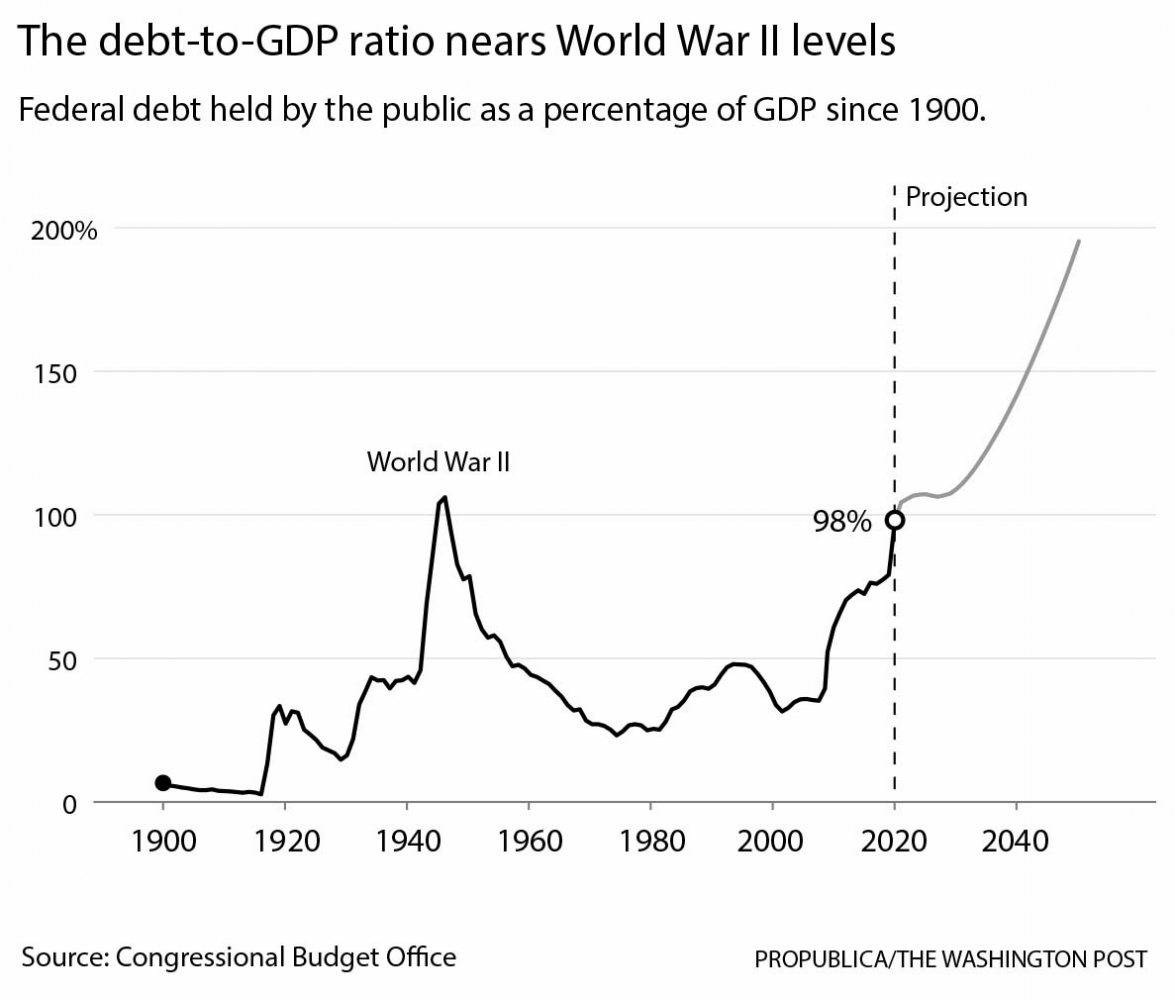
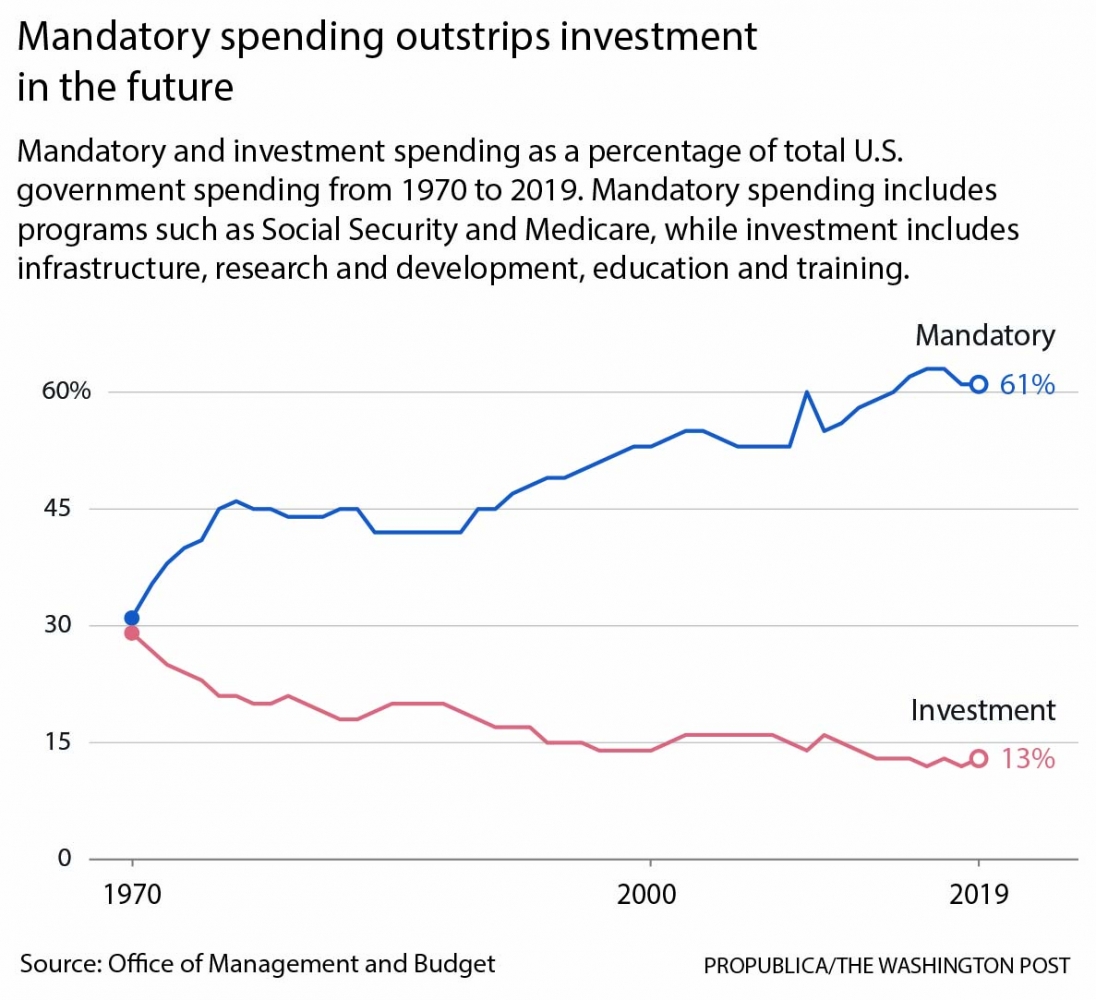
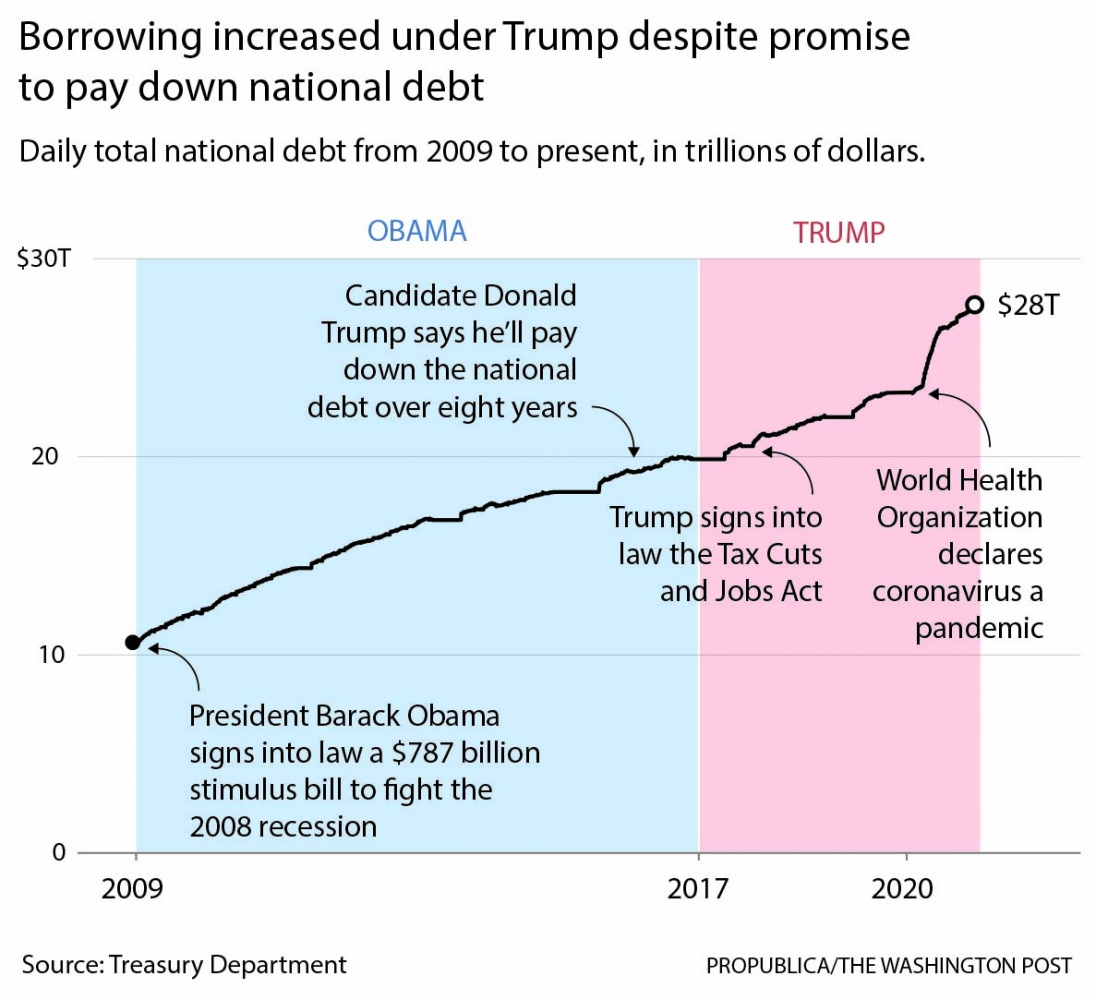

 House Speaker Nancy Pelosi, D-Calif.
 A sign for take-away is displayed outside a restaurant during a nationwide state of emergency in Kuala Lumpur, Malaysia, on Jan, 13, 2021. MUST CREDIT: Bloomberg photo by Samsul Said.
 WASHINGTON, DC – JANUARY 13, 2021: A week after the insurrection of the U.S. Capitol, with Speaker of the House House Speaker Nancy Pelosi, D-Calif., presides over President Donald Trump’s second impeachment Wednesday Jan. 13, 2021. MUST CREDIT: Washington Post photo by Melina Mara



 Joe Biden
 A week after the insurrection of the U.S. Capitol, Speaker of the House Nancy Pelosi greets the National Guard troops occupying and surrounding the newly fenced-in Capitol Complex in Washington, D.C., on Wednesday. MUST CREDIT: Washington Post photo by Melina Mara
 Biden speaks during the Democratic National Convention, in Wilmington, Del., in August. MUST CREDIT: Washington Post photo by Salwan Georges
 Syringes with doses of the Pfizer-BioNTech covid-19 vaccine while pharmacists move through the Brooklyn Center for Rehabilitation and Healthcare nursing home to distribute them to residents in the Brooklyn borough of New York on Jan. 5, 2021. MUST CREDIT: Bloomberg photo by Eric Lee.
 SootinClaimon.Com