Military quick-reaction force not deployed during storming of Capitol because of a lack of planning, defense officials say
InternationalJan 10. 2021President Trump supporters stand on the east side of the U.S. Capitol on Jan. 6 before they stormed and breached the building to support the president’s false and baseless claims that he won the election. MUST CREDIT: Washington Post photo by Michael Robinson Chavez.
By The Washington Post · Dan Lamothe
WASHINGTON – A small quick-reaction force assembled by the Defense Department to assist if needed during protests in Washington on Wednesday did not immediately respond when a pro-Trump mob stormed the Capitol because of a lack of planning with Capitol Police over how it might be deployed, Pentagon officials said.
The D.C. National Guard force of 40 troops is mentioned in a new timeline of events that the Pentagon released Friday night, after two days of questions about how security on Capitol Hill was so lax that the mob could storm the building and force its evacuation. Five people died in the chaos, including a Capitol Police officer.
The timeline states that the quick-reaction force was a few miles away at Joint Base Andrews in Maryland and authorized for use by acting defense secretary Christopher Miller “if additional support is requested by civil authorities.”
But a senior defense official, speaking on the condition of anonymity because of the sensitivity of the issue, said the Defense Department and Capitol Police hadn’t reached an agreement or settled on a concept ahead of time. The Pentagon had made plans with D.C. police, which oversees much of the city, including Black Lives Matter Plaza near the White House, the official said.
Attempts to reach Capitol Police on Friday night were not successful. Capitol Police Chief Steven Sund announced his resignation Thursday.
D.C. Democratic Mayor Muriel Bowser’s office did not respond to questions for this story.
Defense officials have said previously that with no plan in place with Capitol Police, there was concern about injecting National Guard forces into the situation abruptly. After absorbing frequent criticism about the thousands of National Guard members that Trump deployed in the city in June in response to protests spawned by the police killing of George Floyd in Minneapolis, the Pentagon sought a much narrower mission, preparing and providing only what D.C. officials specifically requested in advance.
“We receive our intelligence from law enforcement agencies, whether they’re federal or local,” Army Secretary Ryan McCarthy said. Defense Department officials, he added, didn’t in their “wildest imagination” envision the crowd breaching the Capitol grounds.
It’s not clear how the quick-reaction force could have been used to restore order once thousands of Trump’s supporters surrounded the Capitol and as some began entering the building. National Guard members at the D.C. Armory were also not deployed until Miller determined at 3 p.m. that all available D.C. National Guard forces should be sent to reinforce D.C. and Capitol police positions, according to the timeline.
The timeline states that Miller was informed that Trump’s supporters were moving to the Capitol at 1:05 p.m. Capitol Police ordered the evacuation of the building at 1:26 p.m., as the mob stormed it.
McCarthy’s office spoke with Bowser at 1:34 p.m., the Pentagon timeline said. It states she made a request for an “unspecified number of additional forces.”
Fifteen minutes later, Sund called Maj. Gen. William Walker and also asked for forces, the Pentagon said.
McCarthy spoke on the phone with Bowser again at 2:22 p.m., with D.C. police and other D.C. officials also on the line.
Eight minutes later, Miller, McCarthy and Gen. Mark A. Milley, the chairman of the Joint Chiefs of Staff, met to discuss the request for more forces. Miller approved the deployment of all available forces to assist both police forces at 3 p.m.
At 5:02 p.m., 154 members of the National Guard left the Armory. They arrived on Capitol Hill at 5:40 p.m. and were then sworn in to work with Capitol Police.
Defense officials have deflected criticism of their response to the crisis, stating that law enforcement authorities were in charge and confident that they had the city under control. Pro-Trump groups had openly suggested online for weeks that they might take action on Wednesday, as a protest of the president’s election loss was underway.
Additional members of the National Guard from nearby states were on the ground Thursday. It would have been nearly impossible for them to arrive more quickly, considering they were not put on notice that they might be needed, said Maj. Gen. Timothy Gowen, the top officer in the Maryland National Guard.
Gowen suggested that National Guard members might need to manage expectations better.
“We are not a first-response force,” he said. “We are not the fire or police.”
WASHINGTON – Twitter’s decision to ban President Donald Trump mere days before the end of his term sparked a fierce political backlash among his most fervent allies on Saturday, sending some of his supporters – and the White House itself – scrambling to find another potent tool to communicate online.
Many prominent conservatives – including Brad Parscale, Trump’s former campaign manager, and Rush Limbaugh, the leading voice in right-wing radio – reacted to Trump’s suspension by blasting Twitter, quitting the site outright or encouraging the president’s loyal following to turn to alternative services. Trump himself signaled he is in negotiations to join other social networks, and he raised the possibility he could create a new online platform on his own.
For now, the White House is considering an early push as soon as Monday against Twitter and other tech giants, blasting it for having silenced the president’s ability to reach supporters while calling for fresh regulation against Silicon Valley, according to a person familiar with the matter who spoke on the condition of anonymity. Trump, who is apoplectic about being banned, plans to spend the final days of his term in office railing against the industry, the person said.
Yet Trump’s threats also underscore his reliance on the very social-media sites he has long disparaged for perceived political biases. On Twitter, the outgoing president frequently leveraged his more than 88 million followers to savage his rivals, boost allies, and sometimes spread falsehoods on a viral scale.
This vast online reach offered Trump an online megaphone that was unparalleled in American politics. But his rhetoric was also vitriolic – the consequences of which turned deadly after a mob of his supporters seized on his baseless tweets about the 2020 election and stormed the U.S. Capitol this week.
The president and his allies now face a daunting technical and logistical challenge in relocating to a new social network or setting up their own online hub, which is likely to be much smaller than the grand audiences Trump had enjoyed until recently. A shift away from mainstream platforms would mark a retreat to more insular conservative communities and threaten to exacerbate the partisan divisions in a country that Trump already had left on edge.
“For more casual supporters of the president, I think they will receive his messages less frequently,” said Emerson Brooking, a resident senior fellow at the Atlantic Council who studies issues including disinformation.
“Obviously, he will have millions of hardcore supporters tuned into broadcast sources still carrying his messages, or [they will] go into whatever online space he occupies . . . but that is going to be a smaller, more devoted group,” Brooking said, expressing fears they may become “extremely radicalized.”
Trump’s removal from Twitter came as part of a broader reckoning late Friday across much of the mainstream web, as tech giants including Apple, Facebook and Google took unprecedented steps to discipline apps, users and accounts seen as instrumental in stoking the violence that left lawmakers under lockdown earlier in the week.
Before it banned Trump, Twitter removed a slew of users affiliated with QAnon, a prominent conspiracy theory. Google-owned YouTube suspended channels associated with Stephen Bannon, Trump’s former campaign manager. And Google also removed Parler, a pro-Trump app where users have threatened further violence, from its portal for smartphone software downloads. Apple issued a similar threat to boot Parler from its App Store unless the company improves its content-moderation practices.
The actions reflect a new vigor on the part of Silicon Valley to punish those that have peddled harmful content – from election disinformation to hate speech and violent threats. Congressional lawmakers, digital researchers and human-rights groups praised the moves this week, even as they decried them as too little, too late, coming near the end of Trump’s term.
But the bans amounted to a digital massacre in the eyes of Trump’s conservative allies, many of whom decried them as censorship.
One of Trump’s top allies, Sen. Lindsey Graham (R-S.C.), pledged he is “more determined than ever” to try to terminate legal protections for Facebook, Twitter and other social-media sites, faulting them for censorship. Limbaugh deleted his Twitter account, and fellow talk-radio host Mark Levin also announced he would leave, encouraging users to do the same. The president’s son, Donald Trump Jr., posted a widely watched video on Facebook that warned supporters it is only a matter of time until social media companies “inevitably throw us all off the platforms they so heavily censor and regulate only one way.” He solicited Trump supporters to sign up for alerts on his website.
“I’ll let you know where I end up, my father ends up, where we can direct ourselves so we can keep this going,” Trump Jr. said.
On Friday, Trump threatened to decamp to a new social-networking serving almost immediately after Twitter banned him, vowing he would “not be SILENCED!!” — and promising a “big announcement soon.” More than any other social service, the loss of Twitter seemed to strike a personal note: Trump had been obsessed with the platform, he loved to post a tweet and time how long it would take to command attention on television. He often would pull out his phone and say, “Watch this, bing bing bing,” recalled senior administration officials.
The White House on Saturday declined to comment on the president’s plans or timing.
Already, though, Trump’s team has been inundated with requests for him to join their alternate social networks – and his emissaries have entertained conversations with other companies. But Trump has told allies he prefers to launch his own services, according to two aides, who cautioned it may be infeasible and expensive. He also plans to hammer lawmakers in the coming days for failing to repeal Section 230, a provision of federal law that spares tech giants from being held liable for the content posted by their users. Such a repeal could have backfired on Trump, some experts note, resulting in his removal from Twitter sooner.
Parscale, his former campaign manager, encouraged the president on Saturday to strike out on his own. “I believe the best avenue for POTUS is to use his own app to speak to his followers,” he said. If Apple or Google block the service, Parscale added, Trump has “a clear path to a victorious lawsuit against them.”
Even before the Capitol riot led to his suspension, Trump had weighed turning to other social-media services. In the summer of 2019, aides to Trump at the White House and others on his reelection campaign discussed joining Parler, according to two people familiar with the matter who requested anonymity to describe private conversations. Trump even invited Parler’s top executive to the White House as part of a broader social-media summit that summer where he blasted Silicon Valley over unproven allegations that they censor conservatives online.
A locked, private account with the name @realDonaldTrump – the same username the president once had on Twitter – appears to have sat dormant on the site since this June. The president’s campaign – under the account Team Trump – also has had an active account on Parler dating back to 2018. On Saturday, the Team Trump account blitzed their roughly 3 million followers with posts that faulted Twitter for having censored the president. Parler did not respond to a request for comment.
Another conservative hub online, Gab, took to Twitter to reveal it had a “big call with someone very special” scheduled on Saturday. The company did not mention Trump or anyone else by name, but later tweeted a story mentioning the president’s negotiations with potentially new social services, fueling speculation.
Like other pro-Trump online communities, Gab departs from much of Silicon Valley by eschewing aggressive enforcement against content that its critics see as harmful, dangerous and violent. Asked about Gab’s tweet, the company’s chief executive, Andrew Torba, responded with an insult and otherwise declined to comment. Gab later tweeted Saturday that “threats of violence have no place” on the site, noting it has “tens of thousands of volunteer users” who monitor it.
Trump would face a daunting task in standing up his own social network. It could be an expensive endeavor that might take years to build. Social-media sites are attractive to users only insofar as they manage to capture a large number of them and their friends. Trump may struggle to incubate such an audience given the overtly political nature of his digital endeavor, some experts said.
“It’s very hard to build a new network,” said Yochai Benkler, the co-director of the Berkman Klein Center for Internet and Society at Harvard University. “Maybe he’s so big and important he could get some millions of people to join a network. The economics will make it much more insular and internal . . . Networks benefit from being an option for people to reach lots of different people.”
But Trump’s quest to rebuild his online reach – securing himself a prominent voice as he prepares to relinquish the presidency – marks only the latest effort on the part of Republicans to serve as their own information gatekeepers. The party and its allies dominated talk radio starting in the late 1980s, set their sights on cable news in the 90s and in more recent years have stood up a wide array of websites that operate under the banner of conservative news. Social-media, experts said, is simply the next frontier.
“The quote-unquote liberal bias of the media is not simply an assertion, it’s a taken-for-granted reality on the right,” said Lawrence Rosenthal, the chair of the Center for Right-Wing Studies at the University of California, adding that many conservatives now see the same bias in Silicon Valley. “It is the current incarnation of something that has been taken for granted on the right for decades and decades.”
By The Washington Post · Chico Harlan, Stefano Pitrelli
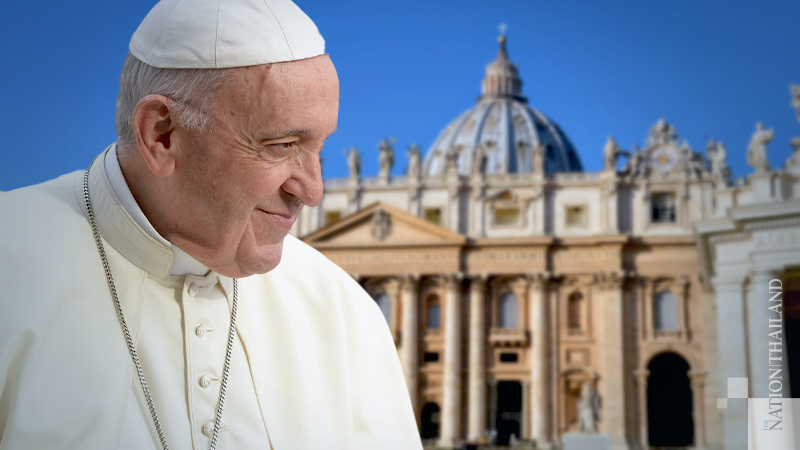
ROME – In a forthcoming television interview, Pope Francis says that he will soon receive a coronavirus vaccination, perhaps as early as next week, while calling the inoculation a duty for everyone.
“I believe that ethically everyone needs to receive the vaccine,” Francis said in an interview with Italy’s TG5 that will air Sunday.
Francis did not specify the exact timing of his inoculation, but the pontiff said the Vatican’s vaccine rollout will begin next week and that he had already booked an appointment.
Francis’s plan sends a significant pro-vaccine signal to the world’s 1.3 billion Catholics. But it also marks a crucial step in safeguarding an 84-year-old who is missing part of a lung, doesn’t like to wear a mask and relishes face-to-face interaction.
Vatican watchers had widely anticipated that Francis would be administered the jab, and he has spoken favorably for months about the international vaccine effort, calling it a light of hope “in this time of darkness.” Until now, though, the Vatican had remained vague on its vaccine plans for the pope. The Holy See only said that its campaign would first target the elderly, medical personnel, and those most in contact with the public
The Vatican’s health director said the city-state will be using the vaccines produced by Pfizer-BioNTech.
In the upcoming interview, Francis suggested his own perspective on vaccines had been shaped by childhood memories of polio, when “so many kids ended up paralyzed because of this and there was a desperation to receive the vaccine.”
“I don’t know why some will say, ‘No, the vaccine is dangerous.’ ” Francis said. “But if doctors offer it to you as something that can work, that poses no special risk, why not take it? There is a suicidal denialism that I wouldn’t know how to explain, but today you need to take the vaccine.”
The journalist who conducted the Friday interview of the pope, Fabio Marchese Ragona, shared a passage of the transcript with The Washington Post.
Almost since the beginning of the pandemic, Francis has seemed to have the vaccine on his radar. In May, he said that the search for vaccines should be “transparent and selfless.” And he has said several times that leaders must ensure that vaccines are provided to the poor, the sick and the vulnerable.
Once fully vaccinated with the two doses, Francis – and the church – will still have to behave cautiously. Medical experts say even those vaccinated should wear a mask. But the pontiff can more easily resume some of the activities that have been on hold for nearly a year, such as international travel. Francis is planning a trip in early March to Iraq, what will be his first venture outside of Italy since the start of the pandemic.
Francis, who complained of feeling “caged” during Italy’s initial spring lockdown, has made it clear that he does not want to be a Zoom-only pope. As that initial clampdown loosened, Francis tried to reclaim the parts of his papacy he seemed to miss the most, mixing to a greater degree with crowds and meeting with pilgrims. Even amid Europe’s second wave, Francis has continued to host groups and hold in-person meetings.
Francis’s resistance to mask-wearing has perplexed some inside the church, and by forgoing masks in meetings, he is bucking the Vatican’s own safety protocols. Neither he nor the Vatican has offered an explanation for his decision to generally go mask-free.
The pope’s inoculation will hardly mark the first instance of church vaccine endorsement. Last month, the Vatican’s doctrinal watchdog said it was “morally acceptable” for Catholics to receive the vaccines that have used cell lines derived from aborted fetuses. Before that guidance, several U.S. bishops had suggested such vaccines were immoral.
“From the ethical point of view,” the Vatican said, “the morality of vaccination depends not only on the duty to protect one’s own health, but also on the duty to pursue the common good.”
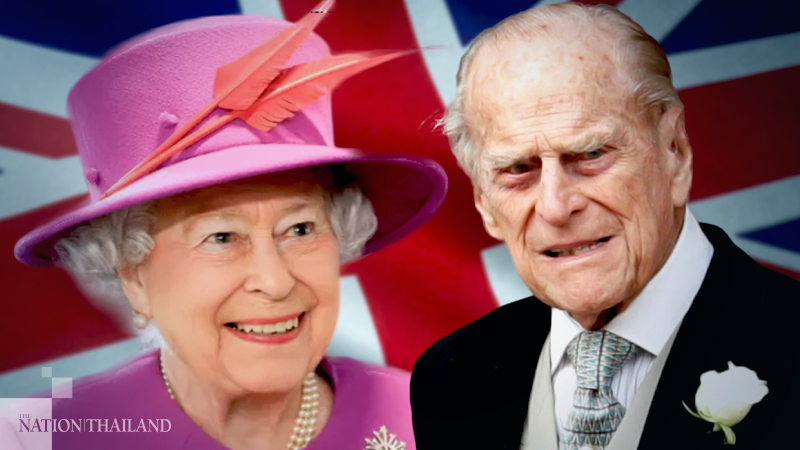
LONDON – Queen Elizabeth II and her husband Prince Philip received their first coronavirus vaccine doses on Saturday, Buckingham Palace said in a rare medical statement apparently aimed to show royal support for the vaccination effort.
The 94-year-old queen and Philip, 99, received their jabs by a royal household doctor at Windsor Castle. Their ages put them among the high-risk groups that are being prioritized during the country’s vaccine rollout, which has seen 1.5 million people receive at least one dose of a vaccine.
Buckingham Palace said in a statement: “The Queen and the Duke of Edinburgh have today received Covid-19 vaccinations.”
It is highly unusual for the palace to release private medical details, but a palace spokeswoman told The Washington Post that “a decision was taken by Her Majesty to let it be known to prevent inaccuracies and further speculation.”
Public health experts hope that such a move will persuade vaccine skeptics at a time of soaring distrust in leaders and institutions.
Penny Ward, a pharmaceutical researcher at King’s College London, previously told The Post: “I know my mother would do anything the queen did.”
Britain’s Health Secretary Matt Hancock tweeted that he was “delighted” by the news. “We are defeating this virus jab by jab,” he said.
The palace spokeswoman would not comment on which vaccine the royals received. Britain has granted approval for three vaccines, although only two are currently being administered: the Pfizer-BioNTech vaccine and the homegrown Oxford-AstraZeneca vaccine.
On Friday, Britain granted approval to a third vaccine developed by U.S.-based Moderna, but supplies won’t be available until the spring.
While the palace normally does not comment on medical matters like this, it’s also not unheard of. In the 1950s, the palace let it be known that Prince Charles and Princess Anne had received the polio vaccine.
Last year, Charles, the heir to the throne, tested positive for coronavirus. His eldest son, Prince William, also caught it around the same time, although it wasn’t publicized. The Sun tabloid, which first reported the story, said that the diagnoses was kept secret at the time because William “didn’t want to alarm the nation.”
The queen and duke are currently living at Windsor Castle amid a lockdown seeking to curb a surging outbreak. On Friday, Britain recorded 1,325 daily deaths, the highest daily figure since the pandemic began.
The day after Northern Virginia health districts announced they will move to the next phase of their coronavirus vaccination plans, the state on Saturday reported record numbers of new cases and hospitalizations, underscoring the continued severity of the pandemic.
Saturday’s new virus case totals – 5,789 in Virginia, combined with 3,758 in Maryland and 350 in the District of Columbia – fueled a daily regional caseload of 9,906 and a seven-day average of 8,157, both new highs, data show.
In Virginia, 3,302 people were hospitalized on Saturday, compared with 1,877 in Maryland. Hospitalizations in the District rose to a record 280, boosting the seven-day average to 264, data show.
The number of new coronavirus-related deaths continued to climb, with 69 in Virginia, 30 in Maryland and four in the District for a single-day regional total of 103.
The numbers of vaccinations administered in the region is climbing steadily, and officials say more people have been vaccinated than reflected by the cumbersome data reporting software.
Vaccinations began last month with health-care personnel and people living and working in long-term care facilities. Virginia, Maryland health departments and the District are prioritizing different groups based on each jurisdiction’s population, vaccine supplies and logistical capabilities.
In Virginia, at least 156,429 first doses were administered as of Saturday, followed by Maryland with at least 123,971 first doses administered, according to each state’s reporting websites. As of Monday, the last day the District updated its website, 16,989 doses were administered, which represents the 58 percent of providers who have fully reported data to the city’s health department. District providers plan to begin vaccinating residents 65 or older on Monday.
Public health districts in Arlington, Fairfax, Loudoun and Prince William counties and the city of Alexandria, as well as Southwest Virginia west of Roanoke, will move to their second phase of vaccine distribution gradually, the Virginia Department of Health said.
The category includes people age 75 and older; people living in correctional facilities, homeless shelters and migrant labor camps; and a large and varied category of front-line essential workers who cannot work remotely.
Local health departments will contact groups of essential workers in the following order: police, fire and hazardous materials response teams; corrections and homeless shelter workers; K-12 teachers and school and child-care staff; food and agriculture workers, including veterinarians; manufacturing workers; grocery store staffers; public transit workers; mail carriers, including the U.S. Postal Service and private companies; and finally those needed to maintain continuity of government.
Across the region, hospitals are administering vaccine to front-line clinicians first, followed by nonclinical and administrative staff. CVS and Walgreens pharmacies are coordinating vaccination of long-term care facility residents and staff.
In Virginia and Maryland, local health districts are responsible for other health-care professionals who live or work in their locality. Giant, Safeway and select nonprofit organizations fill that role in the District.
By Syndication Washington Post, Bloomberg · Joe Mayes
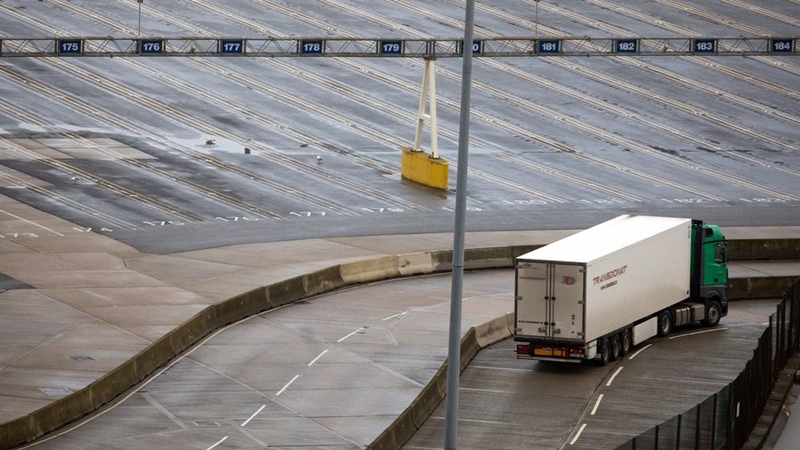
A week on from Brexit, the main road to Dover has been so quiet that officials were able to close half of it Thursday for a litter-picking operation without causing delays for drivers.
But behind such placid scenes, many truckers are still warning of chaos as they struggle to adjust to the new paperwork required by Britain’s departure from the European Union. Drivers are being held up for hours because they lack the right documents, they say.
With traffic well below its usual levels, the pain has so far manifested itself out of sight at factory gates and truckers’ depots. It’s likely to spread to the ports as activity rebounds in coming days, according to seven firms interviewed by Bloomberg.
“It’s an absolute mess,” said David Zaccheo, operations manager at Alcaline U.K. Ltd., whose fleet of 145 vehicles shuttles goods between Britain and the EU. “What’s going to happen next week? We’re not even that busy at the moment.”
Zaccheo said his firm has had vehicles stuck in Italy since Monday because of a lack of correct transit documents. In another case, a trailer destined for Milan had to wait for two days in the U.K. before it could move because it didn’t have the right paperwork, he said.
Faced with the threat of chaos at the border in the weeks after Brexit, many firms decided to stockpile goods or delay deliveries, leaving Dover eerily quiet. Traffic through the port is down 85% from its 2019 average. With the industry expecting activity to pick up in coming days, Britain faces the first major test of its Brexit readiness.
“At the moment, the border is in fact flowing and it’s flowing very smoothly,” Transport Secretary Grant Shapps told the BBC on Friday. Less than 1% of vehicles are turning up without the correct paperwork, he said. By far the bigger problem, he said, is drivers not having the Covid test necessary to get into France.
While the U.K. may have struck a trade deal with the EU avoiding tariffs and quotas, companies are facing new frictions affecting cross-border trade. Firms now have to fill in forms such as customs declarations and export health certificates that weren’t required when Britain was a member of the bloc. The problem, some logistics firms say, is many customers don’t understand what documents are required.
Ellis Blackham, an account manager at JJX Logistics, a Kingswinford, England-based firm that moves goods from the U.K. to the EU, said it took six hours — at least three times longer than usual — to load one of its trucks up with pharmaceutical products bound for Germany because the customer didn’t have the correct paperwork.
“It’s a nightmare,” Blackham said. “It starts right from the top and goes all the way down, the level of confusion.”
He said another company had sent them a pallet of manufactured goods to be shipped to France, but they had provided no accompanying documents. They were surprised when they were told it wouldn’t be possible to send it, Blackham said.
“The customers are massively confused about what’s needed,” he said. “I don’t expect it to be until March at least before people familiarize themselves.”
Bowker Group, a Preston, England-based company that moves freight into the EU, said it had a trailer of chemicals stuck on a quay in Belgium for more than two days this week because of confusion over who was responsible for obtaining the customs clearance.
“It’s fire-fighting all the time at the moment,” said Jason Tiffen, international operations manager at Bowker. “Customs clearance agents are overstretched and under-resourced.”
The industry has long been warning of a shortage of trained staff to fill out the extra 400 million customs declarations that will be required each year for goods moving between Britain and the EU at a cost of about 13 billion pounds ($18 billion).
The Customs Clearance Consortium, which is helping to run a U.K.-government-backed program to assist traders with the forms, told customers this week there is still a “huge shortage” of agents.
“The first few days of the new rules have been very tough,” according to the note by Robert Hardy, the consortium’s co-founder. “There are so many new processes and a massively steep learning curve.”
Another problem U.K. firms are confronting are the new rules of origin that determine whether goods qualify for tariff-free treatment. On Friday, retailer Marks & Spencer Group Plc warned that tariffs and “very complicated administrative processes” will significantly hit its operations in Northern Ireland, the Czech Republic, and France.
Ray Murphy, managing director at Intersped Logistics, said a customer had ordered 23 tonnes of cable but then discovered it was manufactured in Egypt, meaning it didn’t have enough U.K or EU content to qualify for zero-tariff treatment. It would have attracted a 3% tariff on arrival in Greece and the order was canceled, Murphy said.
“There’s a lot of shock among people at the moment,” Murphy said, whose 20-employee firm moves road freight into the EU. Murphy said a shipment was stuck in Italy because the U.K. importer didn’t have an EORI number, a requirement for post-Brexit trade.
“There are many disgruntled people out there,” he said, “and we’ve not even got to what would be a busy period.”
Airlines try ultra-cheap fares to get the world flying again
InternationalJan 10. 2021A member of the cabin crew wearing a protective face ask checks cabin seating ahead of the flight on-board a passenger aircraft operated by Wizz Air Holdings at Liszt Ferenc airport in Budapest, Hungary, on May 25, 2020. MUST CREDIT: Bloomberg photo by Akos Stiller.
By Syndication Washington Post, Bloomberg · Christopher Jasper, Charlotte Ryan, Justin Bachman, Will Davies
The nightmare year of 2020 brought the airline industry’s first decade of sustained profitability to a shuddering halt. The coronavirus pandemic tore through in a tumultuous, unprecedented way — leaving carriers in a deep hole, along with a constellation of aerospace manufacturers, airports and leasing firms.
2021 is shaping up to be a transition year for an enterprise that takes passengers on the equivalent of 208 million annual trips around the globe. At best, the path ahead will be bumpy, with progress toward a return to travel dependent on the pace of vaccine roll-outs, access to capital, government policies and the unpredictability of a virus that’s not yet fully understood. Still, there will be leaps, including the first commercial flights to near-space.
Travelers arrive at a Deutsche Lufthansa covid-19 testing center before boarding a flight at Munich Airport on Nov. 12, 2020. MUST CREDIT: Bloomberg photo by Michaela Handrek-Rehle.
Here are some developments to look for over the next 12 months.
– Fare wars: Airline traffic won’t see a major boost until vaccines saturate populations enough to stamp down infection rates. Even then, it may take effort to get some people back on planes. In Europe, that’ll mean fares as low as 9.99 euros ($12.33), according to Ryanair Chief Executive Officer Michael O’Leary. The Irish discounter on Thursday slashed its schedule through March, underscoring the uncertainties still clouding the industry outlook.
Other ideas being floated to entice travelers are free hotel stays, 2-for-1 deals and complimentary travel insurance. Travel-pass promotions from carriers such as China Eastern Airlines Corp., which is offering unlimited flights for a single price, have proved popular, while online agents show ultra-cheap trips in China for the Lunar New Year holiday next month. The key question is how long it’ll take to wean customers off those incentives.
An upturn in leisure and family travel should hit most regions by around midyear. More lucrative business traffic is likely to trail as companies resist sending people out on the road. John Grant, chief analyst at flight-bookings specialist OAG, says it won’t be a recovery until enticements are no longer needed and carriers can manage routes for profit.
– Cash quest; Airlines raised record amounts of money in 2020. More will be required in 2021. Stock sales and debt conversions will take on a greater importance as companies try to restore balance sheets to health. Governments, which ponied up $220 billion in state aid last year according to Moody’s, will continue to play a role. France and the Netherlands, the largest shareholders in Air France-KLM, are in negotiations to inject billions of euros more, while converting part of the 10.4 billion euros already loaned into hybrid debt.
Carriers like EasyJet are likely to raise more equity, while cash burn remains a concern, according to Daniel Roeska, an analyst at Sanford C. Bernstein. Some airlines are in more desperate straits. Norwegian Air Shuttle’s court-supervised restructuring plan relies on attracting new investment and would largely drop its well-known trans-Atlantic business to focus on regional services.
Creditors of bankrupt Thai Airways International are due to consider a rehabilitation plan in February. AirAsia X, the Malaysian long-distance carrier, and Thailand’s Nok Airlines are also due to present plans in coming months. U.S. airlines will receive $15 billion in federal aid to help pay workers through March 31, on top of $25 billion in similar help provided during 2020. The U.S. Treasury Department has made billions more available in the form of loans.
A member of flight crew sits next to social distancing signs at London’s Heathrow Airport on Dec. 19, 2020. MUST CREDIT: Bloomberg photo by Chris Ratcliffe.
– Airline shakeout: Dozens of airlines have disappeared or filed for bankruptcy since the pandemic began. More are on life support, in danger of getting swallowed by stronger players. In Germany, Deutsche Lufthansa is taking straight aim at holiday specialist Condor by adding routes to sunny spots like Zanzibar and Corfu. Condor, once a Lufthansa unit that in 2019 survived the failure of then-parent Thomas Cook, could make a tempting target.
However, natural consolidators like Lufthansa that accepted bailouts may be prevented from making purchases under terms of state aid packages. In India, Tata Sons bought out struggling partner AirAsia Group Bhd.’s stake in a local joint venture. State-owned Air India is another potential target, possibly through Vistara, Tata’s venture with Singapore Airlines. Air India’s buyer would “definitely need to make it a lot leaner,” Bloomberg Intelligence analyst James Teo says.
– Space trips: After years of work and premature predictions, the first “ordinary” space adventurers are poised to take flight in 2021 with billionaire Richard Branson inaugurating commercial suborbital rides at Virgin Galactic Holdings Inc. The company has told investors its spacecraft will carry Branson from New Mexico in the first quarter and then commence services with a group of about 600 early customers who have paid as much as $250,000 a ticket.
Branson’s venture could see competition from Jeff Bezos, who’s developing Blue Origin’s New Shepard reusable rocket for suborbital rides. In October, the company performed its seventh test flight from Van Horn, Texas. It plans “a couple” more before humans fly. A third outfit, Elon Musk’s Space Exploration Technologies Corp., is set to fly a four-person private crew for Axiom Space Inc. late in the year. The group will have a 10-day stint aboard the International Space Station as part of NASA’s efforts to spur commercial enterprise in low-earth orbit.
– Wide-body woes: While interest is starting to pick up for smaller jetliners, the market for twin-aisle aircraft from Airbus and Boeing is “beyond grim,” said aerospace consultant Richard Aboulafia. Sales were depressed before the outbreak, and a surplus of used models will crimp demand for years.
With long-distance travel on hold, Airbus and Boeing have seen higher retirement rates for their biggest planes within airline fleets and a dearth of new orders. And there’s not much sign of encouragement. Boeing is fighting to hold on to orders for the largest plane on the market, its 777-9, which is two years behind schedule. Analysts see more production-rate cuts ahead for the better-selling Boeing 787 — which is also beset by production snafus — and the Airbus A350.
Output of the less-popular A330 could go down to one a month, according to Agency Partners analyst Sash Tusa. The plane has struggled to attact orders despite a reengined version, with biggest customer AirAsia X’s financial troubles the latest blow. Still, analysts predict the program will limp on at lower rates rather than being scrapped.
– Weaker links: Major airlines packed into ever smaller destinations as the boom in air travel hit its zenith in 2019. Now, they’re dropping newly unprofitable routes to stem losses. Fewer flights, smaller planes and reduced big-city connections are eating into the economies of some tourism-dependent locations. A portion of the pullback could last indefinitely, according to OAG’s Grant.
Particularly vulnerable are longer routes that were still in their developmental phase. From late March, British Airways will permanently axe 13 long-haul destinations across North America, the Middle East, South Africa and Asia. Cathay Pacific will cease services to seven global locations as losses mount. Cities such as Manchester, England, are vulnerable to weaker links to key markets like China, while flights from Beijing to Lisbon, Barcelona and even Madrid could come under pressure as airlines re-evaluate. Large Middle Eastern carriers like Emirates and Qatar Airways, which thrive on whisking passengers across the world, aren’t likely to fill the gaps, according to Grant. He says they’re serving as many destinations as they can, given a dearth of connecting traffic. “It’s more about getting back to pre-Covid capacity and demand levels.”
– Startup hustle: While launching an airline into the teeth of the industry’s worst-ever downturn might seem reckless, there is some logic. Financing remains cheap, and the pandemic has created a huge fleet of grounded jetliners, many owned by leasing firms desperate to find new operators. Planemakers are also seeking buyers for brand-new aircraft following order cancellations — Boeing’s 737 Max in particular as the model returns from a 20-month grounding.
Incumbents have cut capacity and thousands of jobs, providing would-be rivals with a glut of experienced staff, while high debt levels limit their ability to fight back. Among projects underway, Cyrus Capital aims to revive Britain’s Flybe after buying the brand from administrators, while newly founded Emerald Airlines has won a contract to provide regional flights for Ireland’s Aer Lingus. Oslo-based Flyr, set to launch in coming months, wants to pick up traffic from Norwegian, and the founders of PT Lion Mentari Airlines are said to be planning a startup in Indonesia.
In North America, Canada’s Flair Airlines aims to expand from three jets to 50 under a new brand and management, while in Miami, Global Crossing Airlines, flying as GlobalX, plans to operate charter flights to Latin America. South African lessor Global Airways helped launch discounter Lift on Dec. 10 with its own surplus jets, indicating a possible new direction for finance firms stuck with idled planes.
– Brave new world: Just as long security lines, removing your shoes and limits on liquids have colored the post 9/11 experience of air travel, Covid is likely to herald continued use of masks, social distancing and apps for passenger records. “When we look back on this in five or 10 years, it’s going to be a catalyst for many changes,” says John Strickland of airline advisory firm JLS Consulting.
Customers are likely to demand airlines maintain their current high levels of hygiene, which could impact profitability. One major change that’s becoming part of the landscape is the introduction of pre-departure covid tests. Carriers had pushed for the step as a way to encourage travel, but had little success until the detection of a new strain of the virus in Britain forced governments into a rethink.
France and other European nations demanded screening for all U.K. passengers, while carriers including British Airways and Virgin Atlantic Airways Ltd. made checks mandatory for U.S.-bound flights – a policy the U.S. is itself considering for flights coming in from abroad. Separately, many airlines have eliminated change fees, and refunds could get easier after cash-strapped carriers held on to revenue for canceled flights, prompting an outcry. Improvements to processes for boarding and check-in are also likely to become permanent.
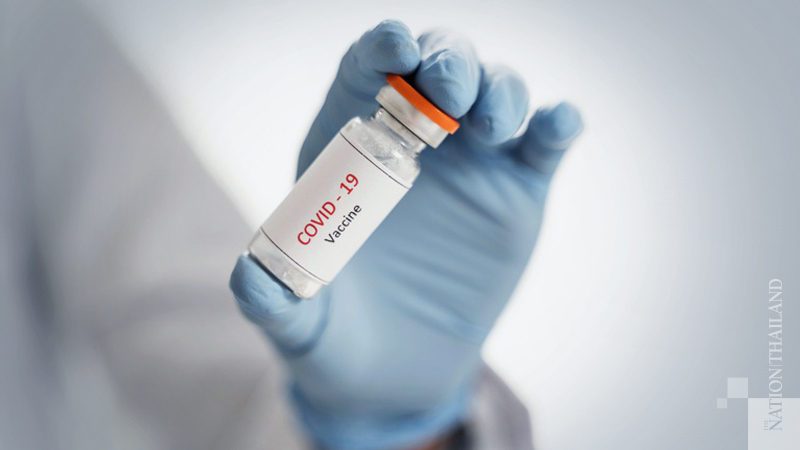
LONDON – Faced with soaring hospitalizations and deaths, Britain is launching a daring campaign to combat a ferociously infectious variant of the coronavirus by spacing the first and second doses of approved vaccines out over months instead of weeks.
The full vaccine deployment plan will be published by the government Monday, but the difficult decision to alter the recommended vaccination schedules will apply to the entire population, including the elderly and health-care workers.
Without enough doses immediately available, public health officials are betting that crucial second injections of two approved vaccines can be pushed back from their recommended waiting intervals – 21 days for Pfizer and 28 days for AstraZeneca – to 84 days for both.
The government’s science advisers say there is little choice, given the explosion in cases, even as they acknowledge that delaying the second dose involves risk. Clinical trials did not test the efficacy of the vaccines when administered on such an elongated schedule.
When Britain first proposed a three-month wait between doses, scientists in the United States, Europe and at the World Health Organization sounded dubious.
The Food and Drug Administration earlier this week said it would be “premature” and “not rooted solidly in the available evidence” to change the way the two authorized vaccines are administered.
On Friday, a spokesman for President-elect Joe Biden said the incoming administration will release nearly every available dose of vaccine in the United States after Biden takes office Jan. 20 to get supplies quickly out to the states. The move marks a switch from the current policy of holding back half to ensure second doses are available to those who have received a first dose.
The spokesman did not say the plan, to be spelled out in detail next week, will entail delays in people getting their second doses.
Limited data suggests a single shot of the Pfizer or AstraZeneca vaccines affords some protection against disease. For example, the first jab of the Pfizer vaccine was 52% effective in the three-week interval before people received the booster shot. Similar results were described for the Moderna vaccine, which British regulators approved for emergency use Friday.
But it is not known how long the protection lasts.
Britain’s health secretary, Matt Hancock, said earlier that a 12-week interval between doses will mean individuals might be less protected from the virus, but society overall will see more people vaccinated more quickly. That is the essential trade-off.
Hancock stressed that a single dose should protect most from the severe symptoms of covid-19 that send patients to overstretched hospitals and ICUs.
British scientists have largely supported the plan, acknowledging that the country faces a race between vaccines and the virus.
“It is safest and most cautious to use the vaccines in the exact conditions reflecting the trials,” said Stephen Evans, professor of pharmacoepidemiology at the London School of Hygiene and Tropical Medicine. “However, this will never be possible in the real world, and the question is how much moving outside the exact conditions is acceptable.”
On Friday, the WHO offered interim guidance that partially backed Britain’s approach, saying the period between the first and second doses of the Pfizer vaccine can be up to six weeks instead of the three weeks recommended.
WHO experts noted many countries are facing a crisis.
“Countries experiencing exceptional epidemiological circumstances may consider delaying for a short period the administration of the second dose as a pragmatic approach to maximizing the number of individuals benefiting from a first dose while vaccine supply continues to increase,” its guidance said.
Britain is being hammered by a third wave of covid-19, driven by a highly transmissible variant of the coronavirus. The country is under another national lockdown.
London Mayor Sadiq Khan on Friday said that the new variant is raging “out of control” and that hospitals are in danger of being overwhelmed.
More than 1 in 20 people in some parts of the capital city are infected, Khan said. In England overall, 1 in 50 are infected.
One respiratory physician wrote in the Guardian that London hospitals are rationing access to oxygen, with doctors having to decide who can be saved.
“This is a national challenge like nothing we’ve seen before,” said Prime Minister Boris Johnson at briefing Thursday, when he announced that the British military has been given the job of coordinating the delivery of millions of doses.
Britain has so far given 1.5 million people the Pfizer vaccine, alongside the first doses of the newly approved AstraZeneca-Oxford shot, in an early rollout Johnson hailed as the most advanced in Europe. The Moderna vaccine won’t be available in Britain until spring.
By mid-February, the government aims to have vaccinated the 15 million people in the top four priority groups, which include all those over 70 years old along with all residents of nursing homes, front-line medical and care workers, and those with extremely serious medical conditions. Health officials say 88 percent of covid deaths have occurred among the over-70 cohort.
Nilay Shah, head of the department of chemical engineering at Imperial College London, told The Washington Post, “The aim is just about achievable, but everything needs to go right every single day.”
Shah said the new campaign will require Britain to quickly ramp up to administering 300,000 doses a day, seven days a week, over 50 days.
Britons have watched in despair in past months as the government fell short of its promises: producing record numbers of emergency ventilators but after they were needed; struggling in the early months of the pandemic to get protective gear to front-line medical workers who were donning garbage bags instead; and repeatedly promising, but never delivering, a “world-beating” cellphone app to alert users when they have had close contact with an infected person.
The prime minister, too, has been accused of delaying decisions until events overtake him. On Sunday, he promised schools would reopen Monday. On Monday, he closed them again.
By the end of next week, Johnson said, the new campaign will be underway at 1,000 sites operated by general practitioners; at 223 hospitals and 200 pharmacies; and at seven mass vaccination centers located in sports stadiums and convention halls.
Simon Stevens, chief executive of the National Health Service, the country’s publicly funded health-care system, said 80,000 workers and volunteers – including doctors and nurses brought out of retirement – will be deployed.
Stevens said the NHS is also “unashamedly tapping into armed forces” to provide logistics.
Brig. Phil Prosser, who in the past was charged with getting troops and equipment onto the battlefield, said “a vaccine program of this size has not done before.”
He compared the logistical challenge to “setting up a major supermarket chain in a month.”
In Britain, much of the blame for the surge in cases has been ascribed to the new variant of the virus, which research suggests is at least 30% to 70% more infectious.
Jim Naismith, professor of structural biology at the University of Oxford, told science journalists, “It is not really possible to overstate how serious this new strain is.”
He warned, “If we fail to reduce the spread of the new strain, then we are likely to overwhelm the NHS.”
There is no evidence at this point that the mutated virus increases disease severity, nor is it anticipated that the new variant will soon affect vaccine effectiveness, though it is also true that viruses change over time and vaccines often need to be tweaked to keep up.
The Pfizer vaccine works against a key mutation found in fast-spreading coronavirus variants first discovered in the Britain and South Africa and are now spreading across the globe.
That finding bolsters many scientists’ expectations that the immune response triggered by vaccines will be broad enough to counter the highly contagious mutations. The research, led by scientists at the University of Texas Medical Branch, was published Thursday but is not yet peer-reviewed.
More experiments and direct tests of both variants in the next few weeks will bring greater clarity, scientists said. British scientists will also monitor the efficacy of the new dose regime.
Wahyudi Soeriaatmadja Indonesia Correspondent The Straits Times
JAKARTA – A Sriwijaya Air flight carrying 56 passengers and six crew members is feared to have crashed as it lost contact on Saturday (Jan 9) afternoon after taking off from the Indonesian capital of Jakarta.
The SJ-182 flight’s last contact with the aviation tower was at around 2.40pm Jakarta time (3.40pm Singapore time) as the Boeing 737-500 flew en route to Pontianak, West Kalimantan.
Sriwijaya said in a statement that it is “keeping contact with various relevant parties to get more detailed info on SJ-182 flight, Jakarta – Pontianak”.
“The management is having communications and investigating this and will immediately issue further statement when we get information,” the statement added.
“We heard a big boom around 2pm,” Jakarta-based Elshinta radio reported, citing a resident of Lancang island, part of the Thousand Islands district north of Jakarta.
“We all first thought it was thunder because rain was pouring,” the radio cited a resident identified as Mr Naki.
Mr Mustakin, another resident of the Thousand Islands district, told Elshinta radio he heard two explosions.
Indonesia’s search and rescue agency Basarnas said at a press briefing on Saturday night that the focus of the search is between Laki island and Lancang island.
It added that it has not received a distress signal transmitted from the plane’s ELT (Emergency Locator Transmitter).
“Search operations will continue 24 hours a day, focusing on the area where debris probably belonging to the plane were found. We are trying to find the exact coordinate,” Basarnas deputy chief, Major General Bambang Suyo Aji, told reporters.
Broadcaster Kompas TV quoted local fishermen as saying they had found debris near the islands, but it could not be immediately confirmed as having belonged to the missing jet.
The plane is a Boeing 737-500 series which first flew in May 1994, according to Flightradar. It is not a 737 Max, the Boeing model involved in two major crashes in recent years. A Boeing 737 MAX operated by Indonesian airline Lion Air crashed off Jakarta in late 2018, killing all 189 passengers and crew.
The Sriwijaya aircraft had lost more than 3,000m in altitude in less than a minute, according to flight-tracking website Flightradar24.com.
Among the 56 passengers are seven children and three infants. There are two pilots and four cabin crew on board.
Sriwijaya Air was established in 2003. The private airline, which had more than half of its fleet grounded, had hopes to gradually resume full operations, after it secured maintenance services from national carrier Garuda.
On Oct 1, Sriwijaya Air and national carrier Garuda renewed their management cooperation agreement that will allow the former to send its aircraft for maintenance at Garuda’s subsidiary Garuda Maintenance Facility (GMF) AeroAsia.
Sriwijaya Air operates flights within Indonesia and to China, Malaysia and Timor Leste.
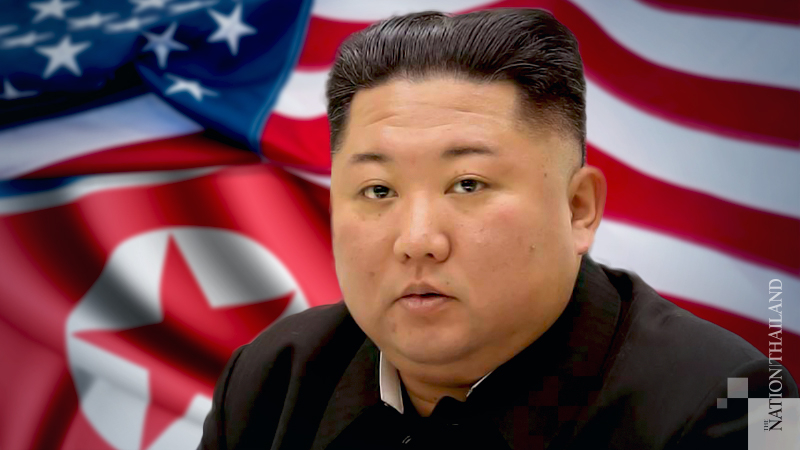
TOKYO – North Korea leader Kim Jong Un called the United States “our biggest enemy,” and said Washington’s hostile policy toward his country won’t change whoever is in the White House, state media reported on Saturday.
Kim, speaking at a rare ruling party congress, also called for North Korea to continue to expand its nuclear arsenal and long-range missile, although he said North Korea would not “misuse” its nuclear weapons unless its sovereignty was threatened, the Korea Central News Agency reported.
“Our foreign political activities ought to be focused and directed on subduing and defeating the United States, our biggest enemy, and the main obstacle to our revolutionary developments,” Kim said Friday. “No matter who is in power in the U.S., the true nature of the U.S. and its fundamental policies towards North Korea never change.”
President-elect Joe Biden called Kim a “thug” during the election campaign, and North Korean state media last year called him a “rabid dog” who needs to be put down.
In October, North Korea displayed a huge, new intercontinental ballistic missile (ICBM) at a military parade in Pyongyang, although the weapon has yet to be tested.
Some experts worry that Kim might greet the incoming U.S. leader with a long-range missile test, in order to get his attention, while others argue there could be a window of opportunity for the two sides to explore diplomacy.
But Friday’s speech is a reminder that North Korea is not about to give up its nuclear arsenal.
“There is no more foolish and dangerous act than not reinforcing our own forces while clearly seeing development of state-of-the-art weapons of our enemies,” Kim said.
“The reality is that we need to tirelessly strengthen our national defense capabilities in order to deter military threats from the U.S. and achieve peace and prosperity on the Korean Peninsula.”
Indeed, Kim called for expanding the country’s nuclear arsenal, including “preemptive” and “retaliatory” strike capabilities, so that its warheads can “accurately hit and extinguish arbitrary strategic targets” within 15,000 km (9,320 miles), a range that would comfortably include Washington.
Kim vowed to develop solid-fuel ICBMs that can be launched from land and sea. He called for more research and development into advanced military equipment, including spy satellites, hypersonic weapons and reconnaissance drones, and said research had nearly been completed on a nuclear submarine.
“We ought to augment our nuclear technology and further develop the nuclear weapons to be lighter and smaller … while continue producing tactical nuclear weapons and super-large nuclear warheads,” he said.
Kim said the key to better relations with the United States was for Washington to withdraw its hostile policy, while also stressing the need for North Korea to expand a coalition with “anti-imperialist and independent forces.”

 President Trump supporters stand on the east side of the U.S. Capitol on Jan. 6 before they stormed and breached the building to support the president’s false and baseless claims that he won the election. MUST CREDIT: Washington Post photo by Michael Robinson Chavez.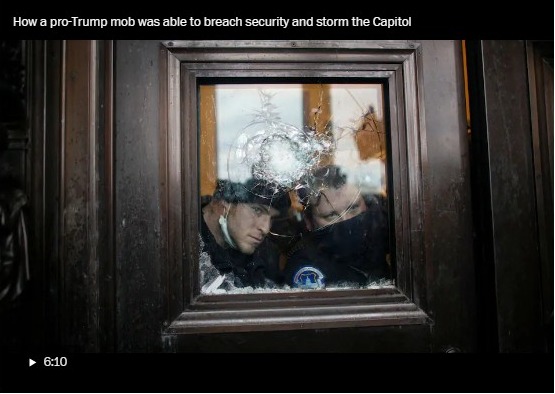


 A member of the cabin crew wearing a protective face ask checks cabin seating ahead of the flight on-board a passenger aircraft operated by Wizz Air Holdings at Liszt Ferenc airport in Budapest, Hungary, on May 25, 2020. MUST CREDIT: Bloomberg photo by Akos Stiller.

 SootinClaimon.Com