Fake drugs kill people and fund terrorism. African leaders hope to do something about it. #ศาสตร์เกษตรดินปุ๋ย

#ศาสตร์เกษตรดินปุ๋ย : ขอบคุณแหล่งข้อมูล : หนังสือพิมพ์ The Nation

https://www.nationthailand.com/lifestyle/30380776?utm_source=category&utm_medium=internal_referral

Fake drugs kill people and fund terrorism. African leaders hope to do something about it.

Jan 19. 2020
By The Washington Post · Danielle Paquette · WORLD, AFRICA

LOMÉ, Togo – The pills tend to come surreptitiously from China, India and Nigeria. They’re packaged like cures for fever and rashes. They land on street corners – sometimes in plain view – and promise to ease suffering at a fraction of the cost.

But fake drugs kill tens of thousands of people each year in a global counterfeit trade worth an estimated $200 billion, thwarting progress in the fight against malaria and other life-threatening diseases, experts say, while funding organized crime.

The scourge is particularly alarming in West Africa, where authorities say knockoffs are thought to comprise more than half of pharmaceutical sales in areas where many cannot afford prescription treatments.

“You are poor, and you are spending your money on something that is going to kill you,” Faure Gnassingbé, the president of Togo, told The Washington Post in the country’s presidential palace. “Yet it is not treated as a crime.”

The Togolese leader hosted his counterparts from Senegal and Uganda on Saturday in the capital city, Lomé, where the presidents proposed new laws to strengthen a collective crackdown on trafficking.

Representatives from Ghana, Congo, Niger and Gambia also signed a pact to ramp up intelligence sharing and security at the borders, among other efforts.

Peddling fake drugs is illegal in most countries, but enforcement is shaky. One raid on markets, shops, warehouses and factories across West Africa three years ago turned up more than 41 million counterfeit pills. About 150 people were arrested for selling a blend of toxic or useless tablets, Interpol reported.

Dignitaries flocked to Lomé this week for a summit on counterfeit medicine, including a member of the British royal family, Prince Michael of Kent.

Armed police officers in trucks patrolled the city of roughly 830,000. Helicopters whirred overhead. Yet people still hawked boxes of unverified antibiotics on the street.

Amele Louise Assogba, 49, used to visit roadside vendors for pills to soothe headaches and nagging coughs. Drugs at pharmacies, she said, cost three times more.

“I needed to save money for my children,” said the Togolese mother of four, who supports her family by cooking for neighborhood families.

Then she caught the flu, bought an informal remedy and landed in the hospital for an emergency blood transfusion.

Assogba considers herself lucky – at least she made it to a doctor on time.

About 122,000 children die each year on the continent from fake antimalarial drugs, estimates the Brazzaville Foundation, a London group focused on the issue. In some areas, as many as 60% of drugs sold are thought to be counterfeit, the nonprofit said.

“This abject trafficking generates enormous profits for criminals and terrorists, destabilizing some of the most fragile countries in the world,” said Jean-Yves Ollivier, the foundation’s president, in a statement.

Counterfeit goods have long been linked to criminal gangs, with studies tying knockoff sales to terrorist organizations that exploit child labor.

Shipments often slip through porous borders, authorities say, and encourage corruption when traffickers pay off customs agents.

Officials aim to end this income stream at a time when Islamist violence is surging across West Africa’s Sahel region, with attacks increasing fivefold since 2016.

Extremists who have professed loyalty to the Islamic State and al-Qaeda have seized remote corners of Mali, Niger and Burkina Faso.

Those militants fund the war by ambushing towns and stealing livestock, taking over artisan gold mines and kidnapping people for ransom, officials have said.

They also profit from counterfeit drugs, said Gnassingbé, the Togolese president.

“Terrorists,” he said, “are living on fake medicine traffic.”

Judge allows new liver transplant policy to take effect #ศาสตร์เกษตรดินปุ๋ย

#ศาสตร์เกษตรดินปุ๋ย : ขอบคุณแหล่งข้อมูล : หนังสือพิมพ์ The Nation

https://www.nationthailand.com/lifestyle/30380767?utm_source=category&utm_medium=internal_referral

Judge allows new liver transplant policy to take effect

Jan 19. 2020
By The Washing Post · Lenny Bernstein · NATIONAL, HEALTH

A federal judge has cleared the way for a new method of distributing livers to transplant patients, a plan that will shift more of the scarce organs to people in metropolitan areas where demand is highest and away from some rural regions where they are easier to obtain.

In a case she called “difficult and wrenching,” U.S. District Court Judge Amy Totenberg refused Thursday to permanently block new rules for allocating livers that were approved by the federal government in December 2018. In response to a lawsuit, she had temporarily halted the plan last May while she considered a request for a permanent injunction.

Totenberg, an Atlanta judge appointed by President Barack Obama, wrote that the government and the nonprofit agency that runs the U.S. transplant system had provided the plaintiffs due process and an opportunity to have their views heard, even if the new policy did not work in their favor.

Those patients and hospitals, in places such as Georgia, Kentucky, Kansas and Virginia, have said they would face the prospect of fewer available organs under the new rules, as more livers are taken by transplant centers in cities with greater demand and higher insurance payments.

Supporters of the change had argued that the current method of distributing most livers in the same regions where they are donated had created a large and arbitrary geographical disparity in availability of the organs. Recipients in some cities waited much longer, and became much sicker, before receiving a liver than patients in less populated areas, they said.

Put another way, a moderately ill patient in Kansas had a 60% chance of receiving a liver within 30 days, while a similar patient in California had just a 1% chance, they said.

The U.S. transplant system has struggled for decades to find a fair way to distribute livers, kidneys, hearts and other organs because of a severe shortage of donors. That has created a waiting list of about 113,000 people, even as the number of transplanted organs continues to grow slowly. Nearly 8,900 livers were transplanted in 2019, but about 13,000 people are waiting for one. Most people on the waiting list are seeking kidneys.

The United Network for Organ Sharing, the nonprofit agency that operates the transplant system under contract to the Department of Health and Human Services, said in a statement that Totenberg’s decision “will allow a national liver transplant policy to begin saving more lives and increasing fairness in the donor matching process.” A spokeswoman said the new rules would be implemented in coming weeks.

Motty Shulman, an attorney who sparked development of the new plan when he filed suit in 2018 over the geographic-based rules, said in a statement that “the new liver allocation policy will benefit all liver wait list candidates, and we are pleased to be a driving force in bringing equitable organ allocation to patients across the country.”

Attorneys for the plaintiffs declined to comment.

For many years, transplant centers had first shot at livers procured from deceased donors in their regions. The new plan gives patients as far as 500 nautical miles away from a donor’s hospital access to a liver, depending on how sick they are.

When they filed their lawsuit in April, the plaintiffs said they faced a loss of 256 livers as a result, which they said would cause more deaths in their regions.

A top YouTube makeup artist revealed she’s transgender. She said she was blackmailed into it. #ศาสตร์เกษตรดินปุ๋ย

#ศาสตร์เกษตรดินปุ๋ย : ขอบคุณแหล่งข้อมูล : หนังสือพิมพ์ The Nation

https://www.nationthailand.com/lifestyle/30380578?utm_source=category&utm_medium=internal_referral

A top YouTube makeup artist revealed she’s transgender. She said she was blackmailed into it.

Jan 15. 2020
By The Washington Post · Lateshia Beachum 
A top YouTube makeup artist revealed she’s transgender. She said she was blackmailed into it. Makeup-obsessed YouTube fans were rocked last night with a video from one of the most influential makeup artists on the platform – and it had nothing to do with the latest foundation launch.

Nikkie de Jager, 25, better known as NikkieTutorials to her 12 million-plus subscribers, revealed that she’s a transgender woman in a video that was trending on Twitter on Monday night and continues to be the most-watched video on YouTube on Tuesday afternoon, approaching 20 million views.

The Dutch makeup artist disclosed her gender identity after facing blackmail threats by people who wanted to take her story to the media for profit, she said. Announcing her transgender identity was a way for her to reclaim her power, she said.”It feels good to finally do it. It is time to let go and be truly free,” she said with her palms pressed together and glittery nails pointing toward the camera. “When I was younger, I was born in the wrong body – which means that I am transgender.”

Since uploading her first video nearly 12 years ago, de Jager has amassed a cultlike following of makeup enthusiasts and artists alike who watch her videos for tips about how to perfect winged eyeliner, reviews on new cosmetic releases and marvel at her makeup artistry. Her passion for makeup and knowledge of how products should perform for consumers has led to collaborations with top cosmetics brands such as Too Faced and Orfra to makeup-transforming videos with elite celebrity makeup artists on her channel.

Her accomplishments were all achieved without any questions surrounding her gender identity – an intentional choice, she told viewers.

“I always wanted to live in a world where I saw myself as me, as Nikkie, as a woman, as a girl, as a boss lady,” she said into the camera.

The YouTube star has been transitioning into the woman she is for years.

“Ever since I was born I always thought that I was a girl,” she said, explaining her affinity for toys and styles of dress associated with little girls. “All of me was girly.”

She was already dressing and styling herself as a girl by 7 or 8, she said.

De Jager was already taking hormone blockers and growth stoppers to help her transition by age 14 with support she received from her mother and schoolteachers, she said. By age 19, de Jager said she was “fully transitioned,” hinting that she possibly received gender affirmation surgery.

The Netherlands has been a global leader on LGBTQ rights and was the first country to allow transgender people to openly serve in its armed forces in 1974, CNN reported. It was also the first country to legalize same-sex marriage in 2001.

The country made it legal for transgender citizens to change their gender designation on identity documents in July 2014, removing requirements for hormone therapy, gender affirmation surgery and sterilization.

Much of de Jager’s change was documented to an unsuspecting following.

“I transitioned while on YouTube,” she said. “I have literally grown up and transformed into me.”

She said she always wanted to reveal her transgender experience, but being blackmailed forced her own personal timeline.

“It was frightening to know there are people out there who are so evil that they can’t respect someone’s true identity,” she said of her extortionists before flipping them off with a middle finger that showed off a squared, sparkling acrylic nail.

Her revelation doesn’t change anything about her, she said, before briefly expressing concerns over how people would receive her news.

The response to de Jager’s announcement has received mostly praise from the beauty influencer community.

Makeup maven Nikita Dragun, who’s documented her makeup techniques and gender transition on her channel, tweeted that de Jager’s “coming out” moved her to tears.

Julie Vu, a Canadian YouTuber better known as PrincessJules who has also detailed her transition for her subscribers, made a reaction video expressing shock and pride in de Jager’s decision to share something personal.

Vu, a lifestyle vlogger and makeup devotee, said she could relate to being outed based on her own experience of being identified as transgender in dance clubs, and admonished de Jager’s alleged blackmailers.

“Transgender people get killed all the time for being themselves,” she said. “When you out somebody, you put their life in danger and that is not okay. Someone’s life is not a joke.”

At least 22 transgender or gender-nonconforming people were killed last year in the United States, according to a report from the Human Rights Campaign, which tweeted its support of de Jager.

De Jager said she hoped that her public acknowledgment of her gender identity would help younger children who might also feel out of place or not like who they truly are, she said.

“I don’t know if people are going to hate me or accept me,” she said toward the end of her video. “All I know is that I haven’t changed. You’re still seeing the same Nikkie now.”

Five myths about diabetes #ศาสตร์เกษตรดินปุ๋ย

#ศาสตร์เกษตรดินปุ๋ย : ขอบคุณแหล่งข้อมูล : หนังสือพิมพ์ The Nation

https://www.nationthailand.com/lifestyle/30380113?utm_source=category&utm_medium=internal_referral

Five myths about diabetes

Jan 04. 2020
Heather Ferris is assistant professor of medicine at the University of Virginia. She cares for patients with diabetes and studies the impact of diabetes on the brain.

Heather Ferris is assistant professor of medicine at the University of Virginia. She cares for patients with diabetes and studies the impact of diabetes on the brain.
By Special To The Washington Post · Heather Ferris · OPINION

More than 100 million U.S. adults are living with diabetes or prediabetes, making the disease one of the most serious health risks in modern society: It is a major cause of blindness, amputation and kidney failure, as well as a contributor to heart disease and stroke.

Yet despite its prevalence and severity, misconceptions about diabetes abound. Here are five of the most persistent.

Myth No. 1: Only kids get Type 1 diabetes.

One myth is reflected (if only residually) in the name of a major advocacy group combating diabetes: The stated goal of JDRF, formerly known as the Juvenile Diabetes Research Foundation, is to help find a cure for Type 1 diabetes – which is still often called “juvenile diabetes,” pegging it as an affliction of children and teenagers. This myth persists even within the medical community. One woman who developed Type 1 diabetes in her 40s wrote on the blog of the Diabetic Journey website that her severe flulike symptoms, frequent urination and intense thirst initially led to a misdiagnosis by her doctors of Type 2 diabetes “because of my age.” The mistake led to an emergency-room visit.

But of the approximately 64,000 Type 1 cases diagnosed in the United States each year, less than half – about 27,000 – occur in people under the age of 20, typically when they’re between 10 and 14. The other 37,000 are adults between 20 and 65. And it’s not unheard of for someone in their 70s or 80s to receive a new diagnosis.

Type 1 diabetes is an autoimmune disease that causes a person’s body to attack its pancreas, destroying its ability to produce insulin, a hormone that regulates the processing of glucose. The only way to treat it is with insulin injections or an insulin pump. (With Type 2 diabetes, patients generate insulin but are resistant to its effects.) If untreated, Type 1 can cause the sometimes-fatal condition diabetic ketoacidosis: The body can’t use the sugar in the blood, so it breaks down fats for fuel, generating dangerous acid levels as a byproduct.

We still have a lot to learn about who develops Type 1 and why. Genes are an important risk factor, yet environmental influences, such as a viral or bacterial infection, probably also play a role.

Myth No. 2: ‘Walmart insulin’ is just as good as the expensive kind.

The price of the most popular types of insulin has roughly tripled in the past decade, inspiring politicians to explore policy solutions and people with diabetes to search for cheaper options. A vial of Levemir, one of the newer insulins, retails for about $380, and many people need more than one vial per month. In September, Minnesota state Rep. Jeremy Munson posted a video to Facebook showing himself purchasing a vial of insulin at Walmart for $24.88. “There’s affordable options out there,” he said. A blogger for FDAReview, a project of the libertarian Independent Institute, similarly argued that Americans should “Trust Walmart’s Insulin to Save Lives.”

But the insulins sold at Walmart are not the same as the modern insulins that people with Type 1 or Type 2 diabetes rely on. They’re not worthless, but they aren’t a feasible option for many people.

Over-the-counter insulin has been around since the 1980s, when scientists first learned to program bacteria to produce human insulin. And while they are far better than the insulins extracted from cow and pig pancreases that they replaced, using them safely requires an incredibly strict diet and exercise regimen. (Imagine planning all your meals and snacks to have the same number of calories, never missing a meal, and exercising at the same time and level of intensity every day.)

There are more than a half-dozen brands of modern insulins introduced in the 1990s and 2000s. These allow patients to eat late or skip a meal with fewer episodes of dangerous – and potentially fatal – low blood sugar. They’re infinitely more forgiving when you’re trying to live a normal life. But for reasons the pharmaceutical companies can’t adequately justify, these drugs have become fearsomely expensive.

Myth No. 3: Eating sugar gives you diabetes.

Eating lots of sugar is bad for your energy levels and weight,says a column posted on the website Best Health Guide, but “what it’s absolutely worst for, is your risk of diabetes.” Meanwhile, a writer for Healthline who has the disease wearily reported hearing a co-worker joke, “I just ate so many cupcakes, I got diabetes.”

Because monitoring sugar levels plays such an important role in managing diabetes, many people assume that sugar is also its cause. But as an autoimmune disorder, Type 1 diabetes develops as a result of genetic risk and an unclear trigger; it’s not caused by eating sugar – or anything else.

The story for Type 2 diabetes is a bit more complicated. Obesity and inactivity play huge roles in the risk for the disease, but genetics are also a factor, even more so than for Type 1. Many people eat diets laden with fat and sugar but never develop diabetes because their pancreases are able to produce large amounts of insulin on demand; others are not so lucky. Too much sugar, per se, won’t give you diabetes. But it can make you overweight, increasing your risk for Type 2.

Myth No. 4: You can’t eat sweet foods if you have diabetes.

“Avoid doughnuts, toasted pastries, and other bakery sweets,” a Health.com column advises people with diabetes – and take a pass on melons and bananas, too. “Skip sugary foods like sweets and soda,” says Everyday Health. Misconceptions about which foods are completely off limits for people with the disease – especially sweets – are so common that the website The Mighty helpfully suggests 26 snappy comebacks for when others offer uninformed “advice.”

Granted, eating too many sweets isn’t a great idea for someone with diabetes – but it isn’t good for someone without diabetes, either.

People with Type 1 or Type 2 already pay close attention to their blood sugar levels, monitoring such things as sugar intake, carbohydrate content, total calories, exercise levels and insulin administration. When you’re doing all that, the occasional large dessert is fine. If you take insulin, you’ll take a bit more to offset the chocolate cake. If you take medication, like metformin, to manage Type 2, a walk around the block might suffice.

It turns out that fat, not sugar, is what really makes blood sugars hard to control for many people with diabetes. In my clinic, when I see a high blood-sugar reading from a patient whose numbers are usually in the normal range, my first question is whether they had pizza or Chinese takeout the night before.

Both are high-fat, high-carbohydrate meals that make for a challenging combination for someone with diabetes: Fat slows the absorption of the carbohydrates and increases the body’s insulin resistance, raising blood sugars. The slow food absorption throws off normal insulin timing; the result is often low blood sugar levels (as the insulin kicks in before digestion) followed by high blood sugar levels (as the insulin wears off while the carbohydrates from the meal linger).

Myth No. 5: You can treat Type 1 diabetes without insulin.

There are endless dubious stories about people with Type 1 diabetes who manage, through some dietary trick, to avoid the need for insulin. In 2016, the website Diabetes.co.uk reported on the case of a 9-year-old Hungarian boy who supposedly avoided insulin injections for 24 months by following a “paleo” diet that “consisted only of animal meat, fat, offal and eggs.” In 2007, there were reports that Halle Berry had reversed her Type 1 diabetes with a healthy diet (“I’ve managed to wean myself off insulin,” the actress said).

But when you hear of someone with Type 1 who doesn’t need insulin, invariably they’ve either just been diagnosed – or have been misdiagnosed or are confused about which type they have.

People with newly diagnosed Type 1 diabetes can sometimes come off insulin soon after their blood sugars are brought under control. This is what’s known as a “honeymoon period,” in which patients can keep their symptoms largely in check through diet, weight loss and exercise. In some cases, the honeymoon period can last months or (rarely) years. But this isn’t a reversal of their condition: The patients have just reduced the burden placed on their weakened pancreas. Inevitably, they will end up back on insulin as their immune system continues to attack their pancreas.

The other “cured” group are the misdiagnosed. Berry, for instance, still says a keto diet helps her diabetes, but she has since clarified that, in fact, she has Type 2. Since people with Type 2 diabetes can produce insulin, it’s not surprising if they don’t need an external supply.

Traveling the loneliest road #ศาสตร์เกษตรดินปุ๋ย

#ศาสตร์เกษตรดินปุ๋ย : ขอบคุณแหล่งข้อมูล : หนังสือพิมพ์ The Nation

https://www.nationthailand.com/lifestyle/30379718?utm_source=category&utm_medium=internal_referral

Traveling the loneliest road

Dec 22. 2019
Marlene Kennedy visits her husband at Emerald Nursing & Rehab in Cozad, Neb., more than 50 miles from their home in Broken Bow. Earl Kennedy, 88, has Parkinson's disease. MUST CREDIT: Washington Post photo by Michael S. Williamson

Marlene Kennedy visits her husband at Emerald Nursing & Rehab in Cozad, Neb., more than 50 miles from their home in Broken Bow. Earl Kennedy, 88, has Parkinson’s disease. MUST CREDIT: Washington Post photo by Michael S. Williamson
By The Washington Post · Eli Saslow 


282 Viewed

BROKEN BOW, Neb. – She had been waiting more than a week for the black ice to melt and the farm roads to clear, but Marlene Kennedy, 84, was unwilling to wait any longer.
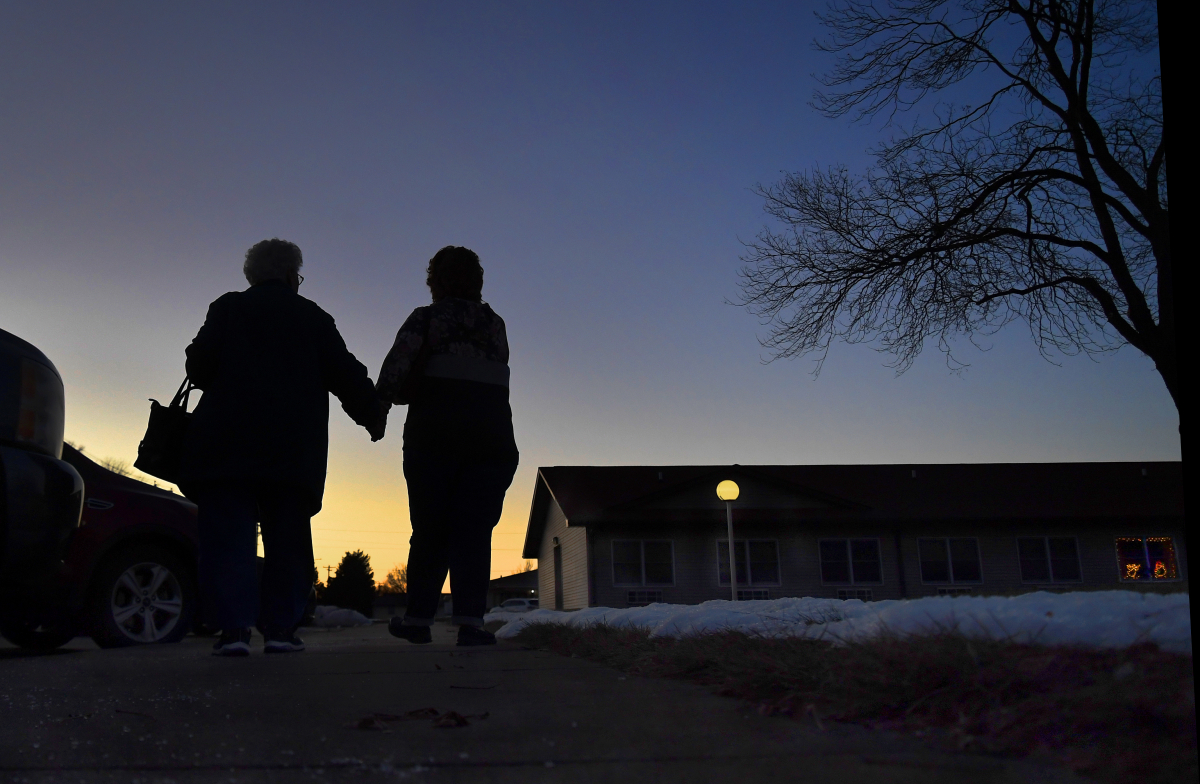
Marlene Kennedy, left, and her daughter Deb Kennedy at Emerald Nursing & Rehab in Cozad, Neb., after visiting Marlene's husband and Deb's father, Earl Kennedy, a resident there. MUST CREDIT: Washington Post photo by Michael S. Williamson

Marlene Kennedy, left, and her daughter Deb Kennedy at Emerald Nursing & Rehab in Cozad, Neb., after visiting Marlene’s husband and Deb’s father, Earl Kennedy, a resident there. MUST CREDIT: Washington Post photo by Michael S. Williamson

+++
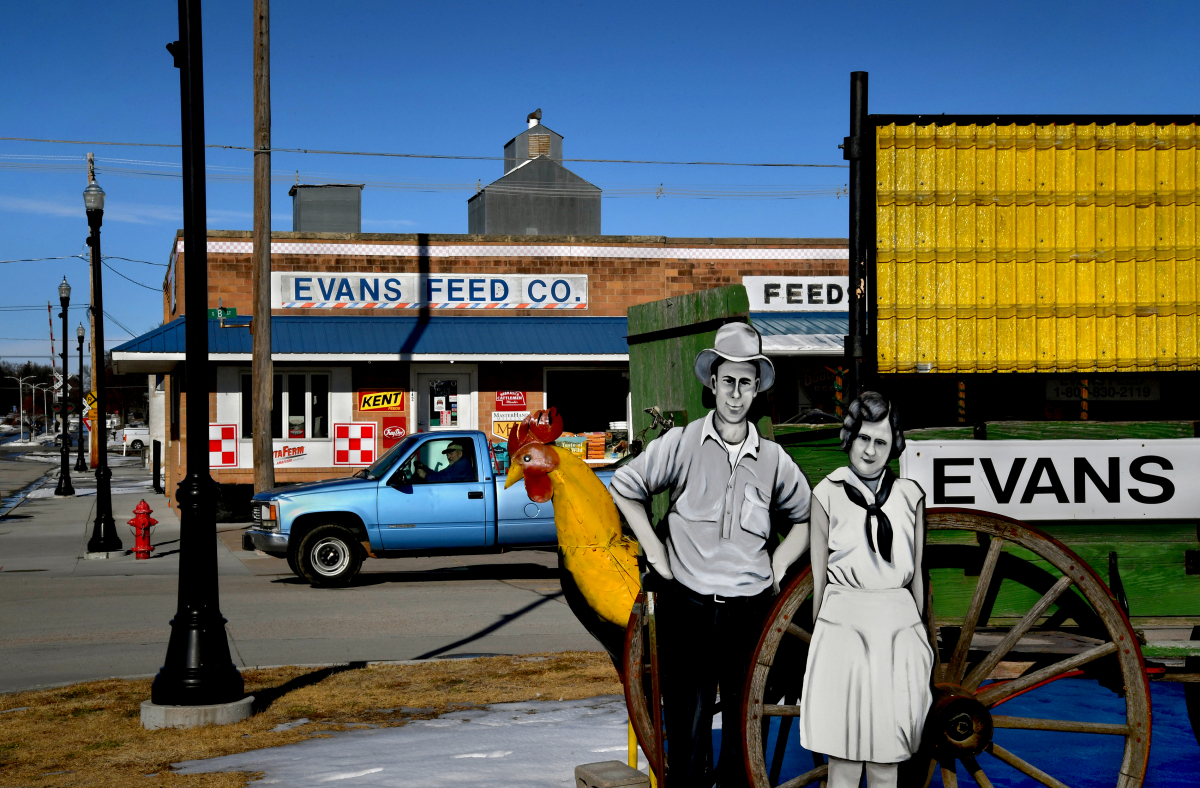
The family-owned Evans Feed in Broken Bow, Neb., is opposite the grocery store where Earl stocked shelves for 47 years. MUST CREDIT: Washington Post photo by Michael S. Williamson

The family-owned Evans Feed in Broken Bow, Neb., is opposite the grocery store where Earl stocked shelves for 47 years. MUST CREDIT: Washington Post photo by Michael S. Williamson

She changed into snow boots, tucked her heart medication into her purse, and stepped out to the porch. She held onto a railing with one hand and to her daughter with the other, inching down the frozen walkway toward her garage, trying not to think about her husband’s slip and fall, which had shattered his hip and eventually forced him into a nursing home located more than an hour away.
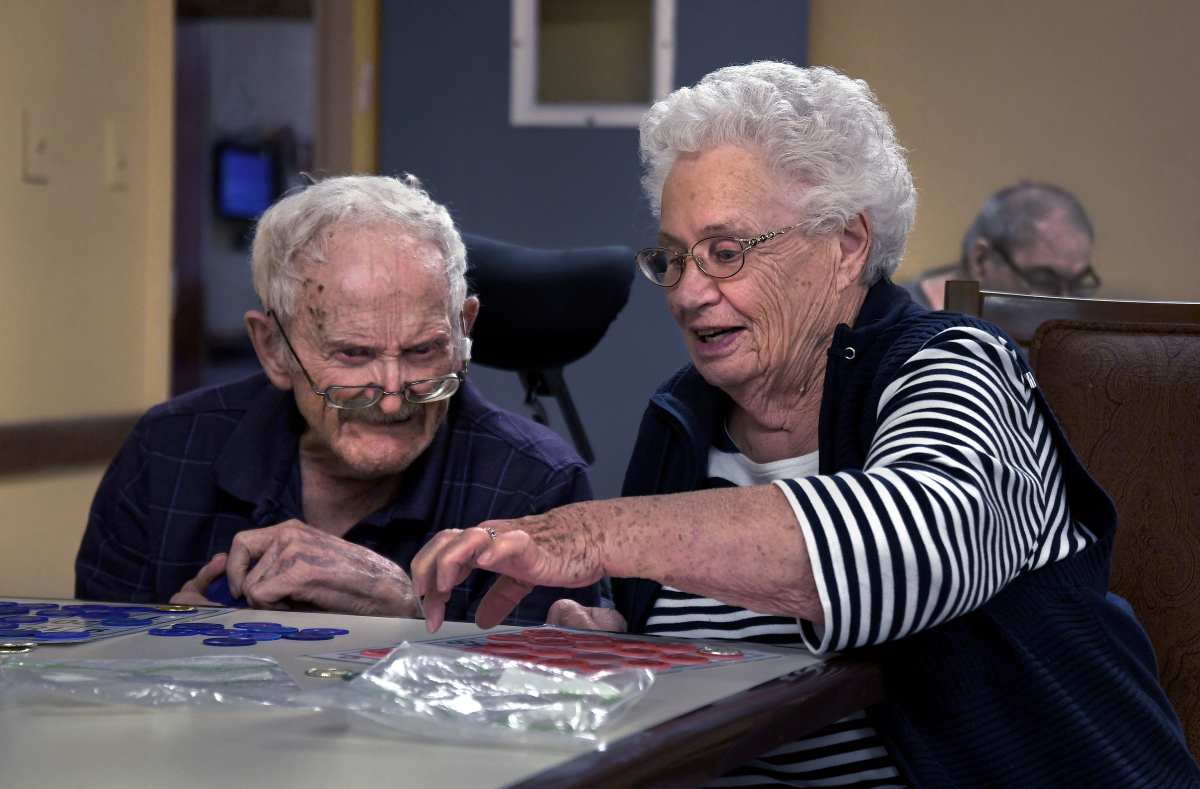
Marlene helps Earl play bingo at Emerald Nursing & Rehab, his new care home. She now faces long trips to see her husband. MUST CREDIT: Washington Post photo by Michael S. Williamson

Marlene helps Earl play bingo at Emerald Nursing & Rehab, his new care home. She now faces long trips to see her husband. MUST CREDIT: Washington Post photo by Michael S. Williamson

It had been 10 days since her last visit to see him, the longest they’d been apart in 63 years of marriage. He had Parkinson’s disease, which made it impossible for him to talk on the phone. She’d called the nursing staff for daily updates, and they said her husband seemed quiet, and he was losing his appetite.

“Why is it still so bad out here?” Marlene asked. Her feet skidded on the ice, and she wrapped her arm around her daughter’s shoulder as they moved closer to the car.

“Maybe it would be easier in a few hours, once the sun warms up,” said her daughter, Deb Kennedy, 51.

“No. I’m at the end of my rope already,” Marlene said. “Poor Earl’s probably wondering if we left him alone down there.”

In the first months after her husband’s fall, Marlene had helped Earl Kennedy move into a nursing home three minutes from their house in Broken Bow, a town of 3,000, close enough that she could visit him twice a day. But then that nursing home went bankrupt and closed in May, one of more than 260 rural nursing facilities across the country to shut down for financial reasons in the past three years, sending another family on a desperate search for the basic medical care that is disappearing from rural America.

Marlene tried to get Earl into the only other nursing home in Broken Bow, but that facility had managed to stay solvent in part by limiting the number of residents on Medicaid, as Earl was, because the federal program pays nursing homes in Nebraska about $40 less per day than the cost of providing care. The nursing homes in Ainsworth and Minden had already closed, and the one located next to a grain elevator in Callaway was running a waiting list. The best option Marlene could find was a shared room in the town of Cozad, more than 50 miles away down remote two-lane roads, and Marlene had been making the trip back and forth several times each week ever since.

This time, Deb had offered to drive her, and they rode away from the single-story house where Marlene and Earl had raised four children, and then past the grocery store where he had stocked shelves for 47 years. They continued beyond the feedlots on the outskirts of town, dense with cattle covering the hillsides. The road narrowed through a maze of cornfields. Frozen snow crunched beneath the tires and wind beat against the windows as they drove for miles without seeing another car.

“There’s a dip coming up here,” Marlene told her daughter, as the road climbed over a frozen creek.

“Where? I don’t see it.”

“Believe me. It’s there,” she said. “I’ve done this enough to know.”

She and Earl had rarely traveled outside of Nebraska, and they’d never been on an airplane. Many of their trips together in recent years had been medical trips, the escalating cost of a life spent in rural America, which in the past decade has lost at least 250 maternity wards, 115 hospitals, 3,500 primary care doctors, 2,000 medical specialists and hundreds of nursing homes. Marlene and Earl had traveled together to Lincoln for a heart operation, Kearney for an ankle, Grand Island for a hip, Omaha for corneal transplants, and then finally to Cozad in the back of a nursing home transport van for what Marlene feared would be Earl’s final trip. He was almost 88, and he could no longer walk or eat solid foods. Marlene had already paid for their adjacent cemetery plots in Broken Bow, where Earl had spent his entire adult life, but there was no place left in town where he could live safely until he died.

Deb slowed to pass a tractor. Marlene waved to the driver and then stared out the window, where rolling hills went on for miles. The prairie was empty except for hay bales and a few pieces of farming equipment left out in the snow.

“You all right?” Deb asked. “You seem quiet.”

“This drive always feels long,” Marlene said. “You spend your whole life tied up right next to somebody, and then you don’t get to be there for the hardest parts. It doesn’t seem natural.”

“You didn’t have a choice,” Deb said.

“No, but that doesn’t stop me from worrying about him,” Marlene said, because that was what she’d been doing for much of the past week and a half as she waited for the weather to improve. She’d worried that Earl’s bed was pressed too close to the window on subfreezing nights, and that the khakis she’d bought for him to wear weren’t thick enough, and that he was losing too much weight to keep himself warm, and that if he wasn’t warm he wouldn’t be able to sleep. She’d worried about what he might be doing if he wasn’t sleeping, since his eyesight made it difficult for him to read or watch TV or do much of anything except move back and forth from his bed to his wheelchair, in which case 10 days might have felt to him like forever. She’d worried he felt confused by her absence, or upset, or scared, or even abandoned.

“I’d be with him every day if I could,” Marlene said. “He knows that, right?”

“Of course. He knows we all want to be there,” Deb said. She drove by a large grain elevator and turned into the town of Cozad, parking in front of a small nursing home. She opened the passenger door and reached down to help her mother out of the car. “I bet you’ll feel better once you get a chance to visit with him,” she said.

“I don’t like being a visitor,” Marlene said. “I’m not a visitor to him.”

– – –

They walked down a tiled hallway with fluorescent lighting to a small room with an American flag taped beside the door. Marlene stepped into the front half of the room, which for the past 15 years had belonged to Earl’s new roommate, Oscar. He waved from his wheelchair, and then Marlene pulled back a curtain to reveal the back half of the room, where Earl was in the same position as she’d last seen him, 10 days earlier. He sat in his wheelchair with his body bent over to the right, wearing a baseball cap on his head and a kerchief to protect his shirt. He faced a TV that wasn’t on and a window with a view of snow-covered recycling bins. Marlene put her hand on his shoulder and leaned down to kiss his forehead.

“I missed you, Earl,” she said. “I missed you so bad I couldn’t stand it.”

He smiled at her and nodded. He reached over to his bed and picked up a holiday card he’d received from one of their great-grandchildren. He’d shown it to Marlene on her last visit, and now he handed it to her again.

“Isn’t that something,” she said, rubbing his back, pulling over a chair until it was pressed right up against his. She set the card down and rested her head against his shoulder.

“I missed you, Earl,” she said again. “Did you miss me?”

“Well,” he said. His lips tried to form more words, but they wouldn’t come. He’d been working with a speech therapist to fight back the advance of Parkinson’s and maintain his ability to eat, swallow and speak, but lately Marlene thought he had fewer good days than bad. She leaned in and tried to read his lips, smiling at him, waiting for him to talk as she rubbed his shoulders. His mind was still sharp, and some days his sentences came more easily as time went along. She believed the kind and respectful thing to do was to stay patient and wait through the silence, until after a few moments of watching Earl struggle, she decided the kinder thing was to break it.

“I wanted to come just about every day, but this weather had other ideas,” she told him. “You missed me, though, Earl. Didn’t you?”

“Well,” he said again. He smiled and reached over to wrap his arm around her shoulder.

“Yeah, I knew it,” she said. “You missed me. And what all did I miss here?”

“Well, the usual,” he said, beginning to find his voice. He pointed out toward the weekly schedule that was posted on the wall: a resident social hour at 8 a.m., three pureed meals in the cafeteria each day, bingo on Wednesdays and Fridays, Bible study on Tuesdays, “Wheel of Fortune” in the community room each night. Five residents had died in the past few weeks, and each time the nursing staff had made up the bed with a red rose and a copy of the same poem on the pillow: “I am home in heaven, dear ones; Oh so happy and so bright!”

“I suppose you didn’t miss much,” Earl said. “Life in a rest home. We rest.”

Marlene laughed. “You never were much of a complainer,” she said.

“No,” he said. “I guess not.”

They sat together holding hands as Marlene straightened Earl’s hat and smoothed the wrinkles out of his khakis. Sometimes during their visits, she took him into the cafeteria to play board games or read to him aloud from Philippians, but they spent most of their time together in silence.

“I like sitting with you like this,” Earl said.

His half of the room was barely large enough to fit a bed, a chair, and a handful of mementos. There were photos on the wall of his friends, his grandchildren, and his great-grandchildren, many of whom lived near Broken Bow and were too far away from Cozad to make regular visits. There was a prayer book from the country church where he’d met Marlene in 1954, and a few awards from the grocery store where he’d started out making $60 a week and then stayed on for nearly five decades.

“A life lived right,” read one of those employee plaques, which the store had given to him to commemorate his retirement at age 76, and Earl believed that declaration to be true. He’d raised four successful children, taught Sunday school, worked at the store six days each week, and come home most afternoons to eat lunch with Marlene. Their family had never earned more than $35,000 in a year, but somehow they had managed to send the children to college, stay out of debt, pay off their house, and even build up some savings – most of which had vanished in less than two years to pay for Earl’s nursing care in Broken Bow.

After that he was forced to rely on Medicaid, which meant that like most rural Nebraskans, he was dependent on a nursing system that was collapsing and scattering the poorest residents across the plains. Some of his friends from the home in Broken Bow had ended up in Omaha, Wyoming or North Dakota, and Earl had been moved out of a town where he knew almost everybody to a place where he knew almost nobody, and where the one constant was Marlene.

“It’s getting to be that time,” she said, as she looked out the window. They’d been sitting together for a few hours. The sun dipped down toward the cornfields, and the wind picked up and started whipping snow off the ground. Soon it would be dusk, when the roads started to refreeze and deer began to dart across the prairie.

“You should go,” Earl said. “I’m okay.”

“Another minute,” she said. She held his hand, and she thought she could feel it beginning to shake. She’d noticed that sometimes his Parkinson’s symptoms seemed to worsen at the end of their visits. “I’ll be back soon,” she said. “The weather coming up looks pretty good.”

“When you can,” he said. “I’ll be all right.”

“Soon,” she said again.

“Well,” he said. He patted her arm. He tried to say something more, but his hands were shaking harder now, and the words weren’t coming. Marlene leaned in and waited, watching his lips. “I’m okay,” he said again. “It’s okay,” he said, until finally Marlene squeezed his hand, forced herself up, and started walking out toward the car.

– – –

Earl watched out the window as the sky turned dark. His room was quiet, but in the hallway he could hear the sounds of oxygen machines and beeping call lights. Nurses wheeled residents into the cafeteria for bingo, and the food staff prepared creamy potatoes for dinner.

By all appearances, the nursing home was a place of routine and stability, but in fact it was facing the same financial pressures that had shut down 31 nursing homes in Nebraska in the past several years. A few months before, it had come within days of being the 32nd, after failing to meet payroll and making plans to transfer all 65 residents. The facility had been rescued out of bankruptcy at the last moment by a new ownership group from New York, and now the staff was trying help the nursing home save money however it could.

Lately, one strategy involved making trips to the shuttered nursing home in Broken Bow to salvage whatever supplies were left inside.

“I’ll be back in a few hours,” said Kiley Goff, the head administrator in Cozad, as she left a staff meeting and walked out to her truck to make her fourth trip to Broken Bow in the past month. Her bosses had purchased the building there, given her a key and allowed her to take whatever she needed for the nursing home in Cozad, which turned out to be almost everything. Their facility was almost 70 years old, and some of the rooms still had hand-crank medical beds. For one of her trips to Broken Bow, she’d rented a U-Haul and hired teenagers on the local high school wrestling team to help her load it with a dozen electric beds, a few couches, a washer and dryer, wooden doors, a bathtub, a fireplace, wall art and hundreds of pounds of linens.

This time she was hoping to find water pitchers, dishware and holiday decorations. “Any little thing we find is something we don’t have to buy,” she said.

She was a trained speech pathologist who had recently switched to management, and she’d spent the past year learning the difficult math of nursing home finances. The Medicaid reimbursement rate in Nebraska and most other states had stayed relatively flat for the past several years, even as medical costs rose by more than 20 percent. Her nursing home in Cozad received $152 per day for each Medicaid resident, far short of the $200-per-day cost of providing care. To make up for that loss, nursing homes typically charged much higher rates for people paying with their own money, a strategy that worked in urban areas where about half of residents could afford to pay out of pocket. But in rural Nebraska, only 35 percent of nursing home residents had money to pay for their own care, and in Cozad, it was less than 20 percent.

The result was that urban nursing homes had been able to remain relatively stable even as care disappeared from disproportionately older, poorer and rural areas of the country, where an elderly population that was projected to double in size over the next 20 years would have fewer places to go.

Goff drove by the feedlots on the edge of Broken Bow, stopped at the railroads tracks for a passing coal train, and then parked at a low-slung building across from a hardware store. Snow piled against the doorway and a broken-down medical van sat out front. She pushed open the front door and light streamed into the building. She could see down a long hallway, where medical lights flashed red against the walls and a broken fire alarm kept going off.

The nursing home had emptied out within just a few weeks in May once the closing was announced, as 46 residents and 65 staff members scrambled for places to go, but everything else had remained inside. There were wheelchairs in the front lobby, Bibles left open in the chapel, and plastic Easter eggs scattered in the hall. Goff grabbed an empty plastic bin from the front closet and started walking through the facility, opening closets and drawers to look for holiday decorations she could use in Cozad.

She found a stuffed Santa and some holiday lights in a closet. She went through the physical therapy room, the beauty parlor, and then into the secure memory care wing. “A Safe and Happy Forever Home,” read a framed cross-stitch near the entrance to what had once been the area for residents with Alzheimer’s or dementia, who tended to thrive on consistency, and who had since been uprooted to places all over Nebraska without understanding where or why.

Goff found a small Christmas tree in a closet and a package of unopened tablecloths in the cafeteria. Her phone rang, and she set down her bin to answer.

It was one of her staff members in Cozad, wanting to know when she’d be back. “I’m almost done,” she said. “It always feels weird in here.”

She pressed the phone to her ear, carried the bin of decorations out to her truck, and locked the nursing home’s front door.

“There’s still so much good stuff wasting away in here,” she told her employee. “We’ll need to come back with the trailer.”

– –

A three-minute drive away, in a house at the center of Broken Bow, Marlene was sorting through her own belongings, trying to compile the story of her last 63 years with Earl, just in case. She wanted to pick out photos for his funeral program. She wanted to be prepared with a eulogy. She needed to call their bank and switch all of their joint accounts into her name.

“You’re smart to prepare early,” a banker was telling her now, on the phone. “This way you can do some of it together.”

“Actually, he’s not here,” she said. “It’s just me.”

The walls of her living room were decorated with photos of the grandchildren whom Marlene sometimes felt guilty visiting without Earl, and mementos from the church she didn’t like attending without him, and plaques from the grocery store where she still sometimes expected to see him when she shopped. One picture showed Earl at his retirement celebration, when some former co-workers came back from out of state and the store offered free cake to the entire town. A few hundred people had come through the store that day to say goodbye. “A small town turns out to support one of its own,” read one local news story about that day, but on this day, Marlene was thinking about the things Broken Bow could no longer support, and the closed nursing home, and all of the people Earl was no longer able to see. Aside from their family, she thought he’d had two visitors in the past six months.

She turned on the TV to check the weather report. She put her heart medication into her purse. She inched down the driveway and into their 20-year-old car.

Earl had usually been the one who drove during their marriage, but Marlene had put 14,000 miles on the car in the past several months. She drove out of Broken Bow and past the feedlots on the edge of town. She turned through the cornfields. She went over the frozen creek. She slowed for the dip. She waved to a tractor. She went by the grain elevator. She looked out the front windshield at the rolling prairie and counted off the long miles, until she was parked in front of the nursing home and walking into Earl’s room.

She saw him looking out the window and waiting in his chair, where she’d left him a few days earlier and would soon have to leave him again.

“I’m here,” she said, putting her arm on his shoulder. “I’ll stay for as long as I can.”
As clear as glass: even those with dry skin can achieve a smooth, glowing look

#ศาสตร์เกษตรดินปุ๋ย : ขอบคุณแหล่งข้อมูล : หนังสือพิมพ์ The Nation

https://www.nationthailand.com/lifestyle/30379529?utm_source=category&utm_medium=internal_referral

As clear as glass: even those with dry skin can achieve a smooth, glowing look

Dec 17. 2019
By Thanisorn Thamlikitkul
Special to The Nation
228 Viewed

All the rage in South Korea and growing in popularity in Thailand, “glass skin” in the term used to describe facial skin so smooth, glowing and pore-less that it’s as “clear as glass”. The trend is likely to spread even further next year thanks to the advent of new technology in skin hydrating injectables this year. Here’s how to achieve the look.

As we age, our skin undergoes two important changes – loss of elasticity and loss of hydration. These changes cause our skin to become drier and the pores become more visible. One effective way to combat and slow these effects of ageing is to restore hyaluronic acid to the skin. Hyaluronic acid is a naturally occurring substance in skin that keeps it hydrated and youthful. With age, our hyaluronic acid decreases and that’s where treatment comes in.

Current synthesized hyaluronic acid or HA is designed to come in soft, small molecules and viscous liquidity. A dermatologist will administer tiny droplets of this hyaluronic acid into the dermis or just under the dermis using a serial puncture technique. This technique allow the HA to disperse evenly in the dermis. HA will provide hydration and stimulate new collagen, resulting in firmness, luminosity and potentially reduced pore size. It will improve overall skin quality and enhance the “glass skin” appearance as well.

A recent study published in the journal “Dermatology Times” revealed a 91-per-cent satisfaction rate among treated patients in clinical trials. It’s said that patients like the long-term result (approximately up to 9 months) as well as the idea of internal moisturizer for smoothness, hydration and texture. However, if you want to achieve smoother, dewier and more glowing skin, it is important to only visit clinics with dermatologists highly trained in this treatment.

Siriraj to produce first mite allergen vaccine in Asean

#ศาสตร์เกษตรดินปุ๋ย : ขอบคุณแหล่งข้อมูล : หนังสือพิมพ์ The Nation

https://www.nationthailand.com/lifestyle/30379303?utm_source=category&utm_medium=internal_referral

Siriraj to produce first mite allergen vaccine in Asean

Dec 11. 2019
By The Nation

1,405 Viewed

The Siriraj Dust Mite Centre for Services and Research recently said it would produce dust mite on semi-industrial scale which will further be used as the initial substance in mite allergen vaccine, after more than 20 years of research.

They were granted mite allergen vaccine certification by the Thai Food and Drug Administration on October 31. The mite centre now provides the know-how to the private sector and aims to become the central hub for R&D on dust mite allergy in the Asean region to produce more mite allergen-friendly products or suggest improvement or advice to the private sector or nongovernmental organisations, such as anti-mite mattress and air-conditioning.

Prof Dr Anchalee Tungtrongchitr, the director, said that “Another service provided here is anti-mite effectiveness in product testing, to protect consumers from pseudo-science-backed products.”

The Okura Spa goes coconuts for 2020!

#ศาสตร์เกษตรดินปุ๋ย : ขอบคุณแหล่งข้อมูล : หนังสือพิมพ์ The Nation

https://www.nationthailand.com/lifestyle/30379265?utm_source=category&utm_medium=internal_referral

The Okura Spa goes coconuts for 2020!

Dec 10. 2019
By The Nation

1,376 Viewed

Treat tired skin and start the New Year feeling great with The Okura Spa’s blissful Nourishing Coconut Retreat package, which starts with a 30-minute body scrub formulated with a therapeutic mix of young coconut pulp and virgin organic coconut oil combined with exfoliating Epsom salts and sugar.

Salt and sugar have been used for centuries in traditional therapies to heal and promote healthy skin and in this wonderfully relaxing treatment, the fine grains of the Epsom salts and sugar exfoliate skin with great results. They also have a detoxifying effect and help to balance excessive acid levels in the epidermis.

After the body scrub comes a soothing 60- or 90-minute massage also using virgin organic coconut oil extracted from the kernels of young coconuts. Coconut oil has softening and moisturizing properties and is easily absorbed. It contains lauric and caprylic acids, which have excellent anti-bacterial attributes and have been shown to have curative properties that help skin suffering from light sunburn to heal quickly. Taken in combination, this is a treatment guaranteed to repair and refresh tired skin and awaken the senses.

The Nourishing Coconut Retreat package is available daily at The Okura Spa from 10am to 10pm from January 1 to March 31 and costs at Bt3,800-plus for 90 minutes and Bt4,200-plus for 120 minutes

The Okura Spa is on the 25th floor of The Okura Prestige Bangkok

Thailand sees first case of pneumonia from e-cigarettes

#ศาสตร์เกษตรดินปุ๋ย : ขอบคุณแหล่งข้อมูล : หนังสือพิมพ์ The Nation

https://www.nationthailand.com/lifestyle/30379200?utm_source=category&utm_medium=internal_referral

Thailand sees first case of pneumonia from e-cigarettes

Dec 08. 2019
By The Nation

77 Viewed

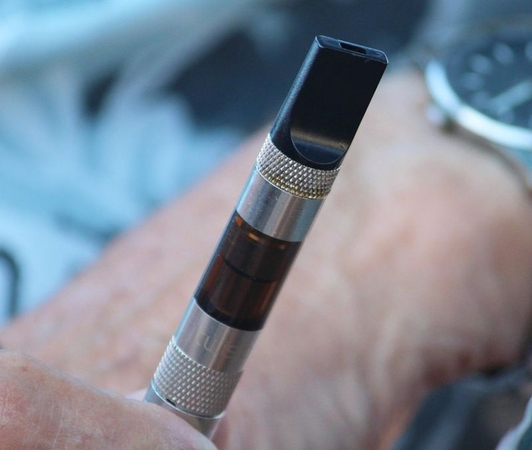
E-cigarettes have been blamed for breathing problems in a 48-year-old male patient admitted to a private hospital, Dr Asadang Ruaycharin, deputy director-general and a spokesman for the Department of Disease Control, said yesterday (December 7).

The man told doctors he had started to smoke e-cigarettes containing marijuana on November 3 and soon developed shortness of breath, fatigue, fever and chest pain. On November 15, he was admitted to a private hospital then transferred to another private hospital on November 18 after lab tests revealed no lung infection but symptoms consistent with pneumonia from electric cigarette use, according to the criteria set by the US Centres for Disease Control and Prevention. He was treated with intravenous steroid therapy and has now been sent home.

What is Jin Wellness?

#ศาสตร์เกษตรดินปุ๋ย : ขอบคุณแหล่งข้อมูล : หนังสือพิมพ์ The Nation

https://www.nationthailand.com/lifestyle/30378957?utm_source=category&utm_medium=internal_referral

What is Jin Wellness?

Dec 02. 2019
By Thonburi healthcare group.
The Nation
898 Viewed
We are at the Thonburi Bamrungmuang Hospital, the flagship of Thonburi healthcare group.

How is it different from other hospitals in the network.

Dr.Thanatip: In our health group, we have 8-9 hospitals. However, this new hospital is especially designed for medical tourism. There are many centres of excellence. Today, we are taking you for a tour of Jin Wellness

And now we are at Jin Wellness clinic. There is another doctor here who will provide us with information.

What is Jin Wellness?

Dr Om: the Jin Wellness was founded to promote health and solve health problem of patients who wants to have a well-being life. A short definition is ‘The best of what you are’. For example, if you had a chronic disease and have reviewed your life that you have to change your diet, sleep behaviour, etc, you need help, please come to us. We will provide care and advice for you by finding the best approach to help you recover.

That’s great. Who should come to wellness clinic?

Dr.Om: I would like to say everybody.

Dr.Om: everybody with a mindset for a well-being life. When I ask people to raise their hand if they see themselves as a strong person. There were many people, even when they were not sick, felt their health wasn’t that good …

Well if I were one of them, I would too.

Dr.Om: Some had chronic fatigue syndrome. Some had a negative result in blood lab test or imbalance health problem. All of these problems could be solved through wellness. This help maintains their life quality during recovery and making life better.

It means whether you were sick or still strong, you can come to this clinic

Dr Om: even when you are not sick, you can come for a health check-up. We have a six-step health analysis which is one of our wellness programmes and the highlight. Before any analysis, we have to understand the patient’s lifestyle, mental health and diet portion which would affect the blood test. We found that it took many visits before the patient is familiar with their doctor and tell the truth which helps in the analysis. Sometimes it took hours before they started to open up. This programme is a short-cut for understanding patients deeply and truly in order to solve the problems.

Like getting doctor and patient to know each other and find the same tune.

Dr Om: Yes. They have to understand each other first. Patients should tell their intention. Some want to improve their performance such as pilot or athletic who are already in good condition but want a better record. They want to enhance their ability.

Dr Thanatip : Some want to climb mountains. Some want to visit the north pole.

Dr Om: Do you believe that a senior person, aged 70, still want to go hiking more. Then, we have to design a nutrition programme including IV Nutrition and nutrition calculation, like daily proteins consumption or sleep hours to enhance their ability. Next group is people who are sick. They felt blue or sad, we will use the ‘enlight’ method. Enlighten the best of what you are. Some patients suffer from dementia and depression. Sometime, a caregiver could not find a way to help people, such as grandmother and grandfather, to have a well being or at least sleep enough at night, we will enlight them.

They will continue to get better slowly but we will help with they could do. Like a support team. After entering six analysis programmes to know their status and performance, they can step further to the wellness check-up programme. We also have a programme to take care of the brain such as brain health check-up. Since our main strategic focus is on the hospital, We’re going to teach our staff on how to properly eat and workout to change their lifestyle. More, you can invite your relatives here for a better understanding of their health problems. Another programme is the Wellness heart programme. We will coordinate with cardiologists to study heart performance since we have to be highly concerned about it. Many have sudden death syndrome even at a young age. Our patients mainly want to check for sure. Next is the Wellness check-up programme for immune system. Nobody wants to have cancer. Buy some already got one but don’t know how to deal with. We have a programme to find out White blood cells’ performance which can eliminate cancer cells. Also there is the programme we designed for allergy and intestine check-up for people allergic to something or have poor digest systems. It is designed for kids who grow slow and elderly persons who have digestion problems. This is a programme specially designed for intestine care.

So there are four health check-up packages.

Dr Om: Yes. Four health check-up packages that we have already launched. According to my experience in the field for more than 10 years, these are major care that could help many patients. Whatever package you should, it will help you to have a well being for life.

You did mention IV Nutrition. What is it?

Dr Om: IV Nutrition is the process of administering nutrients into a vein directly into the bloodstream. The one we use in the programme is verified through research and very safe. It will increase whatever is lacking in the patient such as vitamins. Some need inflammation treatment. Some need to balance their digestion systems. We use this to increase the effectiveness of treatment .

This is one of the service provided here?

Dr.Om: Yes. One of them.

Dr Om: Sure. We have a wellness check-up – the six steps analysis which is a programme to find health problems. We also have IV nutrition therapy, acupuncture, therapeutic massage, and health discussion with doctor. Sometimes we provide art and music therapy workshop.

Can we talk to Dr Om directly.

Dr Om: Sure. Let’s talk to find out what do you need. When you found the problem then we would design a personal life wellness programme for you.

Dr.Thanatip: Yes. The concept of a clinic is to diagnoses the symptom, a doctor might give you medicine and mostly talk about the problem. However, our clinic in Rangsit area, the Jin Wellness clinic, is a large facility and wellness centre. Like a big resort with many facilities. There is Hydrotherapy where the pool can change water temperature. It is large enough for a wheelchair. And cooking class, music therapy, and Fitness centre. The target group is people who want to slow down and enjoy life.

Well that is all information we need about Jin Wellness clinic. Thank you for Dr.Om and Dr.Thanatip.