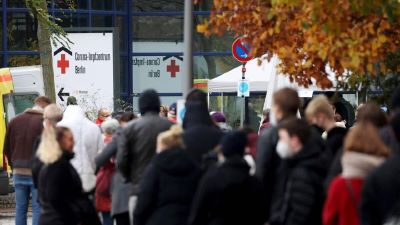
John Swinney, deputy first minister of Scotland, has confirmed there is no travel history in “some” of these cases. That suggests there has been at least a level of community transmission, which makes controlling the variant more difficult.
Another two cases of the Omicron coronavirus variant have been detected in London, bringing the total number of people with the strain identified in Britain to 11, British health authorities confirmed Monday.
The UK Health Security Agency (UKHSA) said the latest two cases in London have links to travel in southern Africa. The two people are not connected to each other and are not linked to the previously confirmed cases, it added.
It comes after authorities confirmed six cases were found in Scotland earlier Monday in addition to the three detected in England over the weekend.
However, John Swinney, deputy first minister of Scotland, has confirmed there is no travel history in “some” of these cases.
That suggests there has been at least a level of community transmission, which makes controlling the variant more difficult.
A commuter passes a sign requiring people to wear face covering while travelling on the tube in London, Britain, on Nov. 9, 2021. (Photo by Stephen Chung/Xinhua)
Meanwhile, British Health Secretary Sajid Javid confirmed Monday that he’s accepted the Joint Committee on Vaccine and Immunisation (JCVI)’s recommendation on boosters, including booster jabs for everybody over the age of 18, shortening the gap between a second jab and a booster from six months to three months and giving a second jab to children aged between 12 and 15 years old – again after no less than three months.
Britain registered 42,583 new COVID-19 infections, bringing the total number of coronavirus cases in the country to 10,146,915, according to official figures released Monday.
The country also reported a further 35 coronavirus-related deaths. The total number of coronavirus-related deaths in Britain now stands at 144,810. These figures only include the deaths of people who died within 28 days of their first positive test.
More than 88 percent of people aged 12 and over in Britain have had their first dose of vaccine and more than 80 percent have received both doses, according to the latest figures. More than 30 percent have received booster jabs, or the third dose of a coronavirus vaccine.
To bring life back to normal, countries such as Britain, China, Germany, Russia and the United States have been racing against time to roll out coronavirus vaccines.
A mask is seen discarded on the ground in London, Britain, Nov. 25, 2021. (Xinhua/Li Ying)
U.S. President Joe Biden urged Americans to get vaccinated and schedule boosters, calling the shots “the best protection against this new variant or any of the variants out there.”
All adults should get a COVID-19 booster shot following the emergence of the new Omicron variant of COVID-19, though no case has been reported yet in the United States, according to the U.S. Centers for Disease Control and Prevention (CDC) on Monday.
Previously, the CDC advised people over 50 or living in a long-term care facility “should” get a booster, while all other adults “may” get boosters at least six months after their previous shots. Now all adults should get a booster, the CDC said.
Meanwhile, U.S. President Joe Biden has expressed confidence that the United States can handle the new variant. He also urged Americans to get vaccinated and schedule boosters, calling the shots “the best protection against this new variant or any of the variants out there.”
News portal Politico reported on Tuesday that “the sudden emergence of the Omicron variant has sparked fears of another devastating wave of the virus, one that could endanger the White House’s plans to focus on Biden’s legislative agenda and efforts to battle inflation and a bottlenecked supply chain.”
People wait at a mobile COVID-19 vaccination site in the Brooklyn borough of New York, the United States, Nov. 19, 2021. (Photo by Michael Nagle/Xinhua)
“Hoping to avoid some of the toll that Delta took, the administration is moving quickly to respond. But little is yet known about the new variant, first identified just days ago in South Africa, complicating exactly what they can say or do.” it added.
On Monday, The Hill reported that “there are steps that can be taken in the meantime, ranging from getting more people vaccinated and boosted, both in the U.S. and globally, to improving surveillance to detect the new variant and distributing new antiviral treatments.”
CALM NEEDED
Pfizer and its partner BioNTech are expected to ask the Food and Drug Administration in the coming days to authorize its booster shot for 16- and 17-year-olds, and the regulators are expected to sign off quickly, The Washington Post on Monday quoted reliable sources as saying.
Currently, Americans who are 18 and older are eligible for boosters six months after receiving the second shot of the Pfizer-BioNTech or Moderna vaccines. They can receive the Johnson & Johnson booster two months after getting the single-shot vaccine.
“The move to expand eligibility among teens comes as the White House is grappling with the Omicron variant that has captured the world’s attention,” said the report. Biden has said “this variant is a cause for concern, not a cause for panic. We’ll fight this variant with scientific and knowledgeable actions.”
“Scientists were stunned (by Omicron),” said The Washington Post in another report on Tuesday. “It had an unruly swarm of mutations. Many were known to be problematic, impeding the ability of antibodies to neutralize the virus. But there had never been a variant with so many of these mutations gathered in a package.
“We have seen these mutations in other strains, in twos and threes, and each time they were a little harder to neutralize, but didn’t spread particularly well. Now, all together? It’s a complete black box,” Benjamin Neuman, a virologist at Texas A&M University, was quoted by the newspaper as saying in an email.
Biden’s chief medical adviser Anthony Fauci has asked the public not to panic while scientists around the world rush to understand the threat posed by Omicron. It’s going to take some time to “get a good handle” on the newly discovered strain, and “we should not be freaking out,” Fauci told “CBS Mornings” on Monday.
ECONOMY RATTLED
The global economy could suffer a modest blow from the Omicron variant of COVID-19, though the scale of damage will hinge on the potency of the strain itself, The Wall Street Journal on Tuesday quoted economists as saying.
“Tourism spending will likely weaken, and perhaps so too will restaurant spending and shopping at stores,” said the report. But compared with the initial wave of COVID-19 in March 2020 and the Delta variant this summer, Omicron’s threat to economies will likely be less severe, in part because each new virus strain has had a diminished economic impact.
Economists predict Omicron could slow growth this quarter and early next year, but the impact won’t lead to a contraction, according to the report. “It takes a boom into a boomlet,” Diane Swonk, chief economist at accounting and advisory firm Grant Thornton LLP, was quoted as saying. “We’ve got a lot of momentum coming in and that helps.”
On Monday, Federal Reserve Chairman Jerome Powell said that the recent rise in COVID-19 cases and the emergence of the Omicron variant pose downside risks to U.S. employment and economic activity and increased uncertainty for inflation. “Greater concerns about the virus could reduce people’s willingness to work in person, which would slow progress in the labor market and intensify supply-chain disruptions,” he said.
On Tuesday, coronavirus vaccine maker Moderna set off alarm bells in financial markets by warning that current vaccines may be less effective at combating the Omicron variant compared with previous strains. “I think it’s going to be a material drop,” Stephane Bancel, Moderna’s chief executive officer, told the Financial Times.
Tourists ride on a double decker bus on Lincoln Road in Miami-Dade County, Florida, the United States, Aug. 6, 2021. (Photo by Monica McGivern/Xinhua)
On the heels of this prediction, U.S. stock futures slumped and Asian markets retreated. Markets in Europe also fell. U.S. oil prices dropped back below 70 U.S. dollars a barrel, while gold rose and risk-sensitive currencies such as the Australian dollar weakened against the greenback. The 10-year Treasury yield also declined.
“Everyone, everywhere, must have access to COVID-19 vaccines, tests and treatment,” UN Secretary-General Antonio Guterres said, asking for support for the ACT-accelerator and the COVAX facility.
United Nations Secretary-General Antonio Guterres argued on Tuesday that “the only way out of a global pandemic and out of this unjust and immoral situation is through a global vaccination campaign.”
The secretary-general was speaking at a meeting at the UN headquarters in New York of Foreign Ministers of the Group of 77 (G77) and China, where he noted that the COVID-19 pandemic “continues to wreak havoc” on developed and developing countries alike.
He said that the UN stands behind the vaccination strategy set out by the World Health Organization, with the goal of getting vaccines into the arms of 40 percent of people in all countries by the end of this year, and 70 percent by the middle of 2022.
“Everyone, everywhere, must have access to COVID-19 vaccines, tests and treatment,” the top UN official said, asking for support for the ACT-accelerator and the COVAX facility.
A UN staff member checks a batch of COVID-19 vaccines, as part of the global COVAX initiative, at the Carthage International Airport in Tunis, Tunisia, May 16, 2021. (Photo by Adel Ezzine/Xinhua)
The world economy is expected to grow by 5.9 percent this year, but the pace of recovery is extremely uneven, Guterres said.
When developed economies invest 28 percent of their GDP in recovery, middle income countries invest 6 percent, and least developed nations invest just 1.8 percent, this does not seem surprising to him.
In Sub-Saharan Africa, for example, the International Monetary Fund (IMF) projects that cumulative economic growth per capita over the next five years will be 75 percent less than the rest of the world.
“This dangerous divergence threatens to widen as growth rates are expected to decrease in 2022. Rising inflation could also have a negative impact on the cost of borrowing and servicing debt,” he warned.
Climate change, inequality, and the development of new technologies were also addressed by the UN chief, who called for “a quantum leap in unity and solidarity” to address these global problems.
During the pandemic, the secretary-general highlighted the importance of multilateralism and the role of the United Nations.
UN country teams released socio-economic response plans for 139 countries and territories. Approximately 3 billion U.S. dollars was repurposed to prioritize immediate support, and another 2 billion dollars was mobilized.
For the secretary-general, it was recent reforms that enabled the world body to adjust and respond quickly.
“As a result, more than 90 percent of host governments have indicated that the United Nations today is more relevant to their country’s development needs when compared to three years ago,” he said.
On the 2030 Agenda and the Paris Agreement, the UN chief said that “we must intensify our efforts in this Decade of Action to deliver the Sustainable Development Goals. This is vital to achieving a fair globalization, boosting economic growth and preventing conflict.”
Noting that the outcome of COP26 in Glasgow was the bare minimum required to keep the 1.5-degree promise of Paris alive, Guterres said that he counts on the leadership of the G77 and China over the coming year “to increase ambition and push for that ambition not only on mitigation, but on adaptation — a basic need for so many countries — on finance, and on loss and damage, where we still have such a long way to go.”
“We need a quantum leap in unity and solidarity to make collective decisions on the global challenges we face, from the climate crisis to our suicidal war on nature, unsustainable levels of inequality, and the unchecked development of new technologies,” he said.
The WHO advised that persons “who are unwell, or who have not been fully vaccinated or do not have proof of previous SARS-CoV-2 infection and are at increased risk of developing severe disease and dying, including people 60 years of age or older or those with comorbidities that present increased risk of severe COVID-19 (e.g. heart disease, cancer and diabetes) should be advised to postpone travel to areas with community transmission.”
The World Health Organization (WHO) warned on Tuesday that blanket travel bans will not prevent the international spread of the COVID-19 Omicron variant, even as dozens of countries have already introduced such restrictions.
Although labeling Omicron as a “variant of concern”, the WHO said blanket travel bans will only place a heavy burden on lives and livelihoods, while also “disincentivizing countries to report and share epidemiological and sequencing data.”
The Omicron variant was first reported to the WHO by South Africa last week. So far, several countries and regions have confirmed cases of infection with Omicron.
Photo rotated 180 degrees shows a cyclist riding outside St. Pancras International Station in London, Britain, July 29, 2021. (Xinhua/Han Yan)
“It is expected that the Omicron variant will be detected in an increasing number of countries as national authorities step up their surveillance and sequencing activities,” WHO said in an updated travel advice.
As of Nov. 28, 56 countries were reportedly implementing travel measures aimed at potentially delaying the importation of the new variant, according to the WHO.
At a member states session on the Omicron variant on Tuesday, WHO Director-General Tedros Adhanom Ghebreyesus thanked Botswana and South Africa for detecting and reporting this variant so rapidly. It is deeply worrying that these countries were being penalized by others for doing the right thing, he said.
He called the “blunt, blanket measures” introduced by some member states “not evidence-based or effective on their own.” He urged countries to take “rational, proportional risk-reduction measures, in keeping with the International Health Regulations.”
Meanwhile, the WHO advised that persons “who are unwell, or who have not been fully vaccinated or do not have proof of previous SARS-CoV-2 infection and are at increased risk of developing severe disease and dying, including people 60 years of age or older or those with comorbidities that present increased risk of severe COVID-19 (e.g. heart disease, cancer and diabetes) should be advised to postpone travel to areas with community transmission.”
“Studies are ongoing to understand more about these mutations (of the Omicron variant) and their impact on transmissibility, virulence, diagnostics, therapeutics and vaccines,” it said.
Medical workers communicate with colleagues inside a ward at a hospital in Barcelona, Spain, April 8, 2021. (Photo by Francisco Avia/Xinhua)
Merck plans to study whether molnupiravir is effective against the Omicron variant that was discovered days ago.
An expert committee on Tuesday voted to narrowly recommend that the U.S. Food and Drug Administration (FDA) authorize a COVID-19 pill from Merck for high-risk adults, the first in a new class of antiviral drugs that could work against a wide range of variants, including Omicron.
The drug, known as molnupiravir, has shown efficacy to modestly reduce the risk of hospitalization and death, predominantly from the Delta, Mu and Gamma variants, reported The New York Times (NYT). Merck plans to study whether molnupiravir is effective against the Omicron variant that was discovered days ago.
The panel, known as the Antimicrobial Drugs Advisory Committee, voted 13 to 10 in support of the FDA granting its use to patients who are older or have medical conditions that make them vulnerable to severe illness. The pill could be authorized in the United States within days, and available by year’s end.
Last week, the company said that a final analysis found the drug to be about 30 percent effective at reducing the risk of hospitalization and death in high-risk people, lower than the 50 percent efficacy first announced in October after a preliminary look at the data.
In the coming weeks, the FDA may also greenlight a similar pill from Pfizer that goes by the name Paxlovid, but it hasn’t scheduled a meeting of outside advisers to discuss the drug yet. The Pfizer pill was reported to be 89 percent effective at reducing risk of hospitalization and death.
Health officials around the world have been counting on the new pills to reduce the number of severe cases and save lives. “If Omicron causes a surge in severe infections, it could make them even more important,” said NYT.
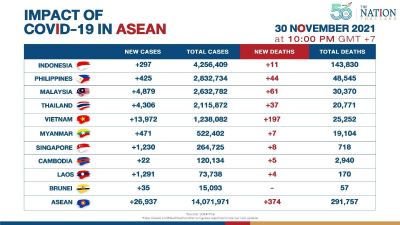
The number of Covid-19 cases crossed 14.07 million across Southeast Asia, with 26,937 new cases reported on Tuesday (November 30), higher than Monday’s tally at 25,900. New deaths are at 374, decreasing from Tuesday’s number of 410. Total Covid-19 deaths in Asean are now at 291,757.
Singapore’s Public Health Ministry announced that from December 2 onwards employees of airports and front-line border workers who may come into contact with travellers from countries or regions affected by the Omicron variant will need to undergo PCR test every week and rostered routine testing (RRT) every 14 days.
Meanwhile, Vietnam’s Public Health Ministry has urged local authorities and agencies to increase the epidemic surveillance and expand the testing scope in their areas to prevent the spreading of Omicron variant of Covid-19. It also proposed the government to ban all incoming and outgoing flights to and from countries that have reports of Omicron cases.
Modernas CEO predicted Tuesday that existing coronavirus vaccines would be much less effective at combating omicron compared with previous covid-19 variants, spooking financial markets in the United States, Europe and Asia as scientists rush to learn about the new variant.
Stéphane Bancel told the Financial Times that it would take months for pharmaceutical companies to manufacture new variant-specific doses to address omicron, as public health officials and vaccine makers worldwide examine the tangible impact of the largely unknown variant. The spread of omicron in South Africa, which was among the first countries to identify the variant and is preparing for a potential surge in infections, caused Bancel to suggest that existing vaccines might need to be modified in 2022.
“There is no world, I think, where [the effectiveness] is the same level . . . we had with delta,” Bancel said, referring to the highly contagious variant that was first detected in India in late 2020.
Even though Bancel cautioned against panic when it comes to a variant the public still does not know much about, he told the Financial Times that his initial talks with scientists indicate what could be “a material drop” in vaccine effectiveness against omicron.
“I just don’t know how much, because we need to wait for the data,” he said. “But all the scientists I’ve talked to . . . are, like, ‘This is not going to be good.'”
Bancel’s comments set off fears in financial markets, including slumps in vaccine-related stocks from Moderna and BioNTech, the German partner of Pfizer. U.S. stock futures are down, and Asian markets retreated, while markets in Europe also fell. U.S. oil prices dropped below $70 a barrel, while gold rose and risk-sensitive currencies such as the Australian dollar weakened against the greenback. The 10-year Treasury yield also declined.
The Moderna CEO’s prediction comes as many questions remain unanswered about omicron – specifically whether it’s as bad as it looks at first glance. Scientists from around the world are scrambling to answer pressing questions surrounding whether it can cause severe illness, if it’s more transmissible than the delta variant and whether it can erode or evade immunity.
The World Health Organization has said the “overall global risk” from omicron is “very high,” and it is pushing for governments worldwide to report cases of omicron and accelerate their vaccination drives. The U.S. Centers for Disease Control and Prevention significantly expanded its recommendations for booster shots, saying that all adults 18 and older should get them.
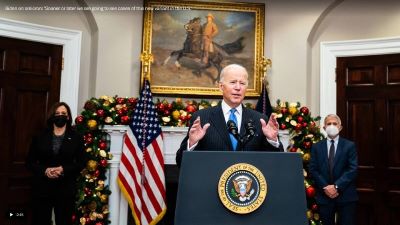
President Joe Biden on Monday expressed confidence that the United States can handle omicron, saying, “This variant is a cause for concern, not a cause for panic.”
“We’ll fight this variant with scientific and knowledgeable actions and speed, not chaos and confusion,” he said at the White House.
But omicron is threatening both the rebound and growth of the U.S. economy. The chair of the Federal Reserve, Jerome Powell, warned in remarks prepared for congressional testimony Tuesday that “the recent rise in covid-19 cases and the emergence of the omicron variant pose downside risks to employment and economic activity and increased uncertainty for inflation.” He added that “greater concerns about the virus” could exacerbate existing problems, such as labor shortages and supply-chain struggles.
Bancel said to the Financial Times that the omicron variant’s unruly swarm of mutations has worried scientists, many of whom did not expect such a highly mutative variant to emerge for another year or two. He noted that 32 of the 50 mutations in omicron have focused on the spike protein – the area where existing coronavirus vaccines help boost a person’s immune system to fight the virus.
Scientists told The Washington Post that omicron’s mutations were new and utterly enigmatic.
“We have seen these mutations in other strains, in twos and threes, and each time they were a little harder to neutralize but didn’t spread particularly well,” Benjamin Neuman, a virologist at Texas A&M University, said in an email to The Post on Tuesday. “Now, all together? It’s a complete black box.”
While it’s unclear whether existing vaccines will need to be modified next year to address omicron, Pfizer and BioNTech have said they are working to understand what level of protection their vaccines offer and how to adapt them. Chinese vaccine maker Sinovac says it is working with international partners to collect and analyze samples of omicron in an effort to determine how effective its inactivated vaccine, CoronaVac, is against the variant.
Bancel told the Financial Times that more data will be available within two weeks regarding how existing vaccines perform against omicron – and whether the variant causes severe illness. He stressed that it would take months before an omicron-specific vaccine is produced at scale for billions of doses.
“[Moderna] and Pfizer cannot get a billion doses next week. The [math] doesn’t work,” he told the outlet. “But could we get the billion doses out by the summer? Sure.”
Bancel emphasized, however, that it would be risky to shift the company’s vaccine production strategy solely toward omicron when other variants are still infecting people.
The explosive growth in Covid-19 cases in Belgium, which has one of the highest infection rates in Western Europe, appears to be easing, but government experts say some of the restrictive measures imposed recently will likely need to be extended.
“It is starting to slow down for the moment,” Steven Van Gucht, head of the viral disease division at the Sciensano national public-health institute, said in a phone interview on Tuesday. “Looking at the infections, it might stabilize this week.”
Belgium, where the daily average of new cases spiked to 17,796 over the past seven days, has seen very high per-capita case rates and hospitalizations have increased significantly.
The government last week ordered a second set of measures to combat the rise, including a closure of nightclubs and restrictions on privately organized parties. It has also confirmed a case of the new omicron variant, which has prompted the European Union to suspend air travel from South Africa and six other countries in the region.
The cases are particularly high in the Dutch-speaking area of Flanders, which has the country’s highest vaccination rate of 80%, according to Sciensano data. Those high vaccination rates, which halved the chance of people being infected, also led Belgians in those areas to double their contacts with other people, helping produce the spike in cases, Van Gucht said.
“We went a bit too fast and I think that caused an exponential increase, also with the seasonal effect,” he said. “We are starting to see the impact of the measures now, but there is still a long way to go.”
He said he hopes that tougher measures could be avoided, but wearing masks indoors should continue during the winter. Other steps, like closing bars early, may be reviewed if the situation improves.
The omicron variant needs to be studied more, he added, saying that “we still have to learn about the protection by previous vaccination or previous infection with other variants.”
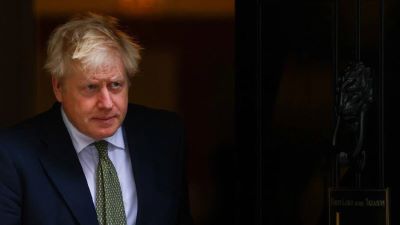
Boris Johnson insisted there are no immediate plans to ask Britons to curb socializing and work from home — even after a government adviser said doing so could help limit the spread of the omicron Covid variant.
The British government has tightened rules on face coverings, self-isolation and testing since the emergence of omicron cast doubt over the risk to public health if it was found to be able to evade current vaccines.
But after the head of the U.K. Health Security Agency, Jenny Harries, said Tuesday people should also avoid socializing when they “don’t particularly need to,” Johnson’s government declined to endorse her suggestion.
Asked if people should minimize socializing and cancel Christmas parties, Johnson told a press conference: “No. The guidance remains the same.” He also said working from home is unnecessary, and that another lockdown is “extremely unlikely” — though he declined to rule it out completely.
The mixed messaging from officials is reminiscent of the early days of the pandemic, when the government faced heavy criticism for the confusion over face coverings, social-distancing rules and work from home guidance.
On Tuesday, the U.K. Health Security Agency said it’s identified another eight omicron cases in England, bringing the total to 13, with a further nine in Scotland. In responding to the new variant, the government has said it is taking a “proportionate” approach to buy time for scientists to investigate the new strain, while also considering the impact of tougher rules on the economy.
Face coverings became mandatory again in shops and on public transport — though not in hospitality settings — from Tuesday, along with a requirement for people arriving from all countries to take a PCR test and isolate until they receive a negative result.
Johnson has stopped short of bringing in the government’s full “plan B” list of measures, which include mandatory vaccine certification for some crowded settings and advising people to work from home.
He is relying on an accelerated vaccine booster program to avoid more restrictions, after much of the country was in lockdown last Christmas. The government is expanding the program to include all adults, and is reducing the gap between second and third doses to three months from six.
The shots will be administered according to age, and ministers aim to offer everyone eligible a booster by the end of January.
Johnson said temporary vaccination centers will be “popping up like Christmas trees” and that 400 military personnel would help the effort.
The prime minister also faces pressure from lockdown-skeptic members of his ruling Conservative Party, who are urging the government not to overreact to the omicron variant.
Members of Parliament voted overwhelmingly in favor of the new rules on Tuesday, but a number of Tories criticized the government for bringing in the measures before the vote.
“If we continue to react to these fears and uncertainties by taking the authoritarian course, without impact assessments, because they’re only temporary, you know, then we are embarked on that downward course,” Conservative MP Steve Baker said. “The public are not fools. We’re not here to govern idiots. I have faith in the British public. I have faith that they can choose for themselves to do the right thing.”
Another Tory MP, Desmond Swayne, lashed out at Harries’s advice for people to curb socializing, saying it would be “to the detriment of people’s wellbeing and an industry struggling to recover from earlier lockdowns.”
Meanwhile Night Time Industries Association Chief Executive Officer Michael Kill criticized what he called the government’s “poorly-conceived communications strategy,” saying it will “severely” hurt his industry.
“It is surreal and extremely frustrating to see health-care advisers publicly telling people not to socialize, giving unnecessary uncertainty to our customers and workforce,” he said in a statement.
During an interview with BBC radio earlier on Tuesday, Harries was pressed on whether people in England — which falls under Johnson’s remit for health care purposes — should be advised to work from home as the devolved administrations have said in Scotland, Wales and Northern Ireland.
“If we all decrease our social contacts a little bit, actually that helps to keep the variant at bay,” she said.
Germanys incoming chancellor threw his support behind mandatory Covid-19 vaccinations as European leaders take a tougher line in a bid to check a brutal surge in infections.
During a video conference on Tuesday, Olaf Scholz told outgoing Chancellor Angela Merkel and state premiers that he would support a broad requirement to get shots, according to a person familiar with the discussions. The measure, which may not be approved at the talks, could come into force around February, according to the person, who asked not to be identified because the deliberations are private.
The move would be a major departure for the new administration after German leaders vowed for months that it would be up to citizens to decide if they wanted to take up the government’s offer to get inoculated against Covid. The soft tone may have contributed to the country’s relatively low vaccination rate of less than 70%.
“In order to get the upper hand and prevent a fifth wave, we must now prepare for a general vaccination requirement,” Robert Habeck, the incoming vice chancellor from the Greens, told news agency DPA.
Scholz, Merkel and the heads of Germany’s 16 states are discussing imposing new curbs, including restrictions on fans at soccer games and closing bars and nightclubs in hard-hit areas.
The latest surge in infections appears to have caught German authorities by surprise, and the transition to a new administration under Social Democrat Scholz has complicated pandemic coordination in Europe’s largest economy.
States led by Merkel’s conservative bloc, which is moving into opposition, also called for the new government to prepare for mandatory vaccinations, as well as hard contact restrictions for unvaccinated people, reduced capacity for large events and the shuttering of clubs, according to a document seen by Bloomberg.
Pressure has been growing ahead of the change in power and the gathering allowed the politicians to address a Constitutional Court ruling on Tuesday, which rejected challenges to measures such as nighttime curfews and closing schools. The decision could give leaders additional legal backing for a new round of tougher restrictions, but they’re unlikely to impose a widespread lockdown.
Alongside possible new measures in Germany, Norway extended quarantine rules for people testing positive for Covid, while Greece made Covid vaccines compulsory for people above 60, including a monthly fine of 100 euros ($114) a month for those who don’t comply. Switzerland and Finland also are considering tighter curbs to clamp down on public contact.
France is also bracing for a worsening outbreak. The country reported 47,000 new infections in the last 24 hours, the highest daily level since April. Health Minister Olivier Veran said during government questions in the National Assembly that by the end of this week daily cases could exceed the peak of the third wave of the virus eight months ago.
Authorities have been on high alert as the omicron variant spreads. The Dutch national health service confirmed that the strain, first identified in South Africa, was in the Netherlands a earlier than first thought after detecting two cases in test samples taken a week ago.
The European Center for Disease Prevention and Control has compiled reports of 44 cases of omicron in 11 European countries. So far, those cases have all been recorded with minor symptoms or they’re asymptomatic.
The European Medicines Agency said it would use expedited procedures to approve new versions of Covid vaccines to address omicron if the current ones provide insufficient protection. That would mean regulatory approval could be completed in three to four months after companies move forward.

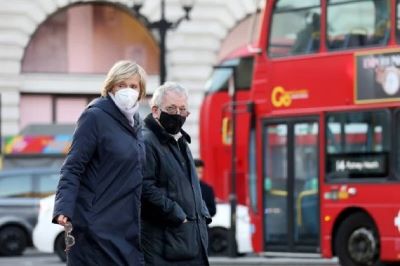
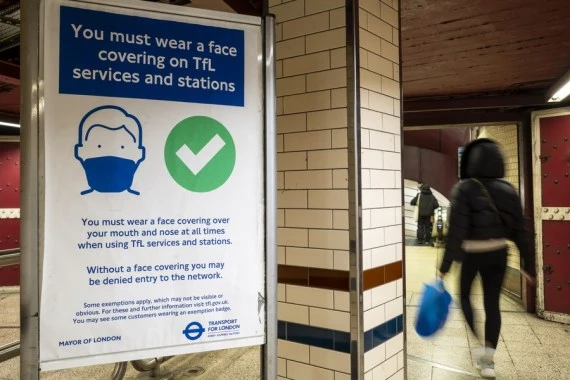 A commuter passes a sign requiring people to wear face covering while travelling on the tube in London, Britain, on Nov. 9, 2021. (Photo by Stephen Chung/Xinhua)
 A mask is seen discarded on the ground in London, Britain, Nov. 25, 2021. (Xinhua/Li Ying)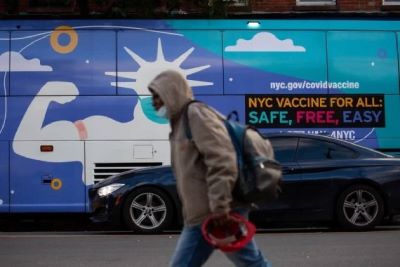
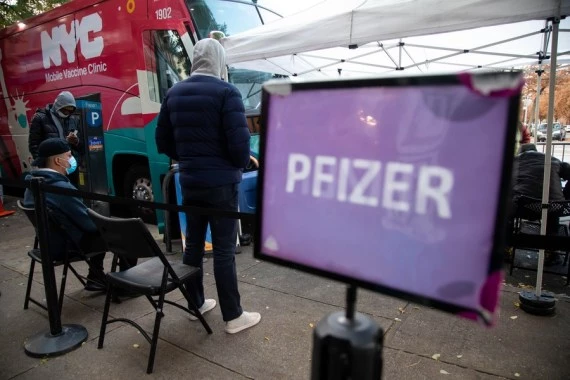 People wait at a mobile COVID-19 vaccination site in the Brooklyn borough of New York, the United States, Nov. 19, 2021. (Photo by Michael Nagle/Xinhua)
 Tourists ride on a double decker bus on Lincoln Road in Miami-Dade County, Florida, the United States, Aug. 6, 2021. (Photo by Monica McGivern/Xinhua)
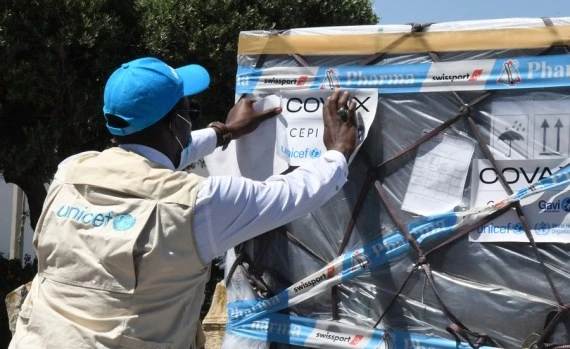 A UN staff member checks a batch of COVID-19 vaccines, as part of the global COVAX initiative, at the Carthage International Airport in Tunis, Tunisia, May 16, 2021. (Photo by Adel Ezzine/Xinhua)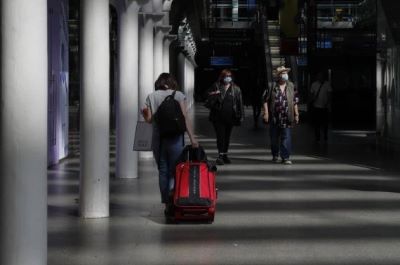
 Photo rotated 180 degrees shows a cyclist riding outside St. Pancras International Station in London, Britain, July 29, 2021. (Xinhua/Han Yan)
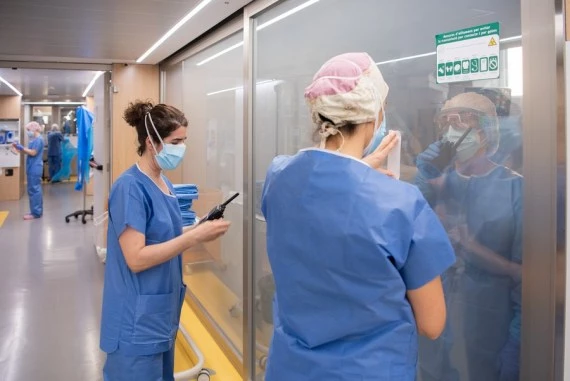 Medical workers communicate with colleagues inside a ward at a hospital in Barcelona, Spain, April 8, 2021. (Photo by Francisco Avia/Xinhua)