South China Morning Post รายงานว่า ชาวสวนส้มของจีนมียอดออร์เดอร์ทางออนไลน์เพิ่มขึ้น 150 เท่าหลังจากเขาบริจาคส้มให้นักศึกษามหาวิทยาลัยเจ้อเจียงหลายกล่องเพื่อใช้ในการวิจัย จากความต้องการในการช่วยเหลือประเทศ
This is Liverpool taxi driver David Perry who locked a Remembrance Sunday terrorist in his cab seconds before the bomber detonated an explosive device right outside a maternity hospital. David’s actions almost certainly saved many lives. He is an absolute hero. 👏👏👏👏 pic.twitter.com/qjHzGMxIUT
นี่คือ “The Golden Boy” แฮมเบอร์เกอร์จากร้าน de Daltons ซึ่งมีราคาสูงถึงชิ้นละ 5,000 ยูโร (ประมาณ 187,260 บาท) ซึ่งเจ้าของร้าน Robbert Jan de Veen หรือที่ถูกเรียกว่า “ราชาแห่งแฮมเบอร์เกอร์” เผยว่าเขามุ่งมั่นที่จะสร้างสถิติโลกใหม่ เพราะการทำลายสถิติโลกเป็นความฝันวัยเด็กของเขา และมันน่าอัศจรรย์มาก
ขณะนี้สถิติโลกสำหรับแฮมเบอร์เกอร์ที่แพงที่สุดที่ถูกบันทึกไว้ใน Guinness World Records คือแฮมเบอร์เกอร์หนัก 352.44 กิโลกรัมจาก Juicys Outlaw Grill รัฐออริกอน สหรัฐอเมริกา ราคาอยู่ที่ 4,200 ยูโร (ประมาณ 157,000 บาท) ซึ่งถูกบันทึกไว้เมื่อปี 2011
If you want to try the most expensive hamburger in the world, it would set you back $5,000.
Prepared for Juicys Outlaw Grill, based in Corvallis, Oregon, the burger weighs just over 350 kilograms and needs to be ordered 48 hours in advance. pic.twitter.com/Rw4DSJeKvV
ทั้งนี้ Robbert Jan de Veen เผยว่าเขารู้สึกแย่มากเมื่อเห็นว่าอุตสาหกรรมร้านอาหารได้รับผลกระทบอย่างหนักหน่วงจากการแพร่ระบาดของโควิด-19 จึงตัดสินใจทำแฮมเบอร์เกอร์ที่แพงที่สุดในโลก และจะนำรายได้ทั้งหมดไปบริจาคเพื่อการกุศล
ตลาดหลักทรัพย์แห่งใหม่นี้เป็นการปฏิรูปตลาดหลักทรัพย์แห่งประเทศจีน (NEEQ) หรือ ที่รู้จักกันในชื่อตลาดหุ้นแห่งที่ 3 (New Third Board) และจะมีบทบาทที่แตกต่างออกไปจากตลาดหลักทรัพย์เซี่ยงไฮ้และตลาดหลักทรัพย์เซินเจิ้น รวมถึงจะช่วยเสริมสร้างความเชื่อมโยงระหว่างตลาดหลักทรัพย์สองแห่งนี้ด้วย
A new variant of the coronavirus with a “constellation” of mutations has been identified in Botswana. Tom Peacock, a virologist at Imperial College London, branded the mutations “really awful” on Twitter.
More than 10 million coronavirus cases have been recorded in Britain since the start of the COVID-19 pandemic, according to official figures released Thursday.
The country reported another 47,240 coronavirus cases in the latest 24-hour period, bringing the total number of coronavirus cases in the country to 10,021,497.
Britain also recorded another 147 coronavirus-related deaths. The total number of coronavirus-related deaths in Britain now stands at 144,433. These figures only include the deaths of people who died within 28 days of their first positive test.
The latest data came as coronavirus cases surge across Europe, making the continent the epicentre of the pandemic again.
People walk past a sign of free rapid COVID-19 tests in Manchester, Britain, Nov. 10, 2021. (Xinhua/Jon Super)
Meanwhile, a new variant of the coronavirus with a “constellation” of mutations has been identified in Botswana.
Designated as B.1.1.529, scientists are still unclear whether existing antibodies would react well to the variant, which has 32 spike protein mutations.
Tom Peacock, a virologist at Imperial College London, branded the mutations “really awful” on Twitter.
People queue up outside a vaccination center in Manchester, Britain, Nov. 10, 2021. (Xinhua/Jon Super)
“Given the large number of mutations it has accumulated apparently in a single burst, it likely evolved during a chronic infection of an immunocompromised person, possibly in an untreated HIV/AIDS patient,” said Francois Balloux, professor of computational systems biology and director of Genetics Institute at University College London.
“For the time being, it should be closely monitored and analysed, but there is no reason to get overly concerned, unless it starts going up in frequency in the near future,” Balloux said.
Earlier this month, England’s deputy chief medical officer, Jonathan Van-Tam, said the modelling is “getting more difficult to give us any clear sense of whether things will turn up or down.”
“We’re in for potentially some difficult months over the winter,” he told reporters.
However, British Prime Minister Boris Johnson said earlier this week that there is “nothing in the data saying we need to move to Plan B” in Britain.
A man receives the second dose of the Pfizer-BioNTech COVID-19 vaccine at Hyde Leisure Centre in Greater Manchester, Britain, on Jan. 7, 2021. (Xinhua/Jon Super)
“The best single thing you can all do is get your booster. When you are called forward to get it, please do so,” Johnson said to reporters after his speech at the Confederation of British Industry (CBI) annual conference.
Plan B involves advice to work at home and requirements to wear masks in certain scenarios.
In a recent report, the National Audit Office (NAO) said that the coronavirus pandemic exposed Britain’s vulnerability to whole-system emergencies and left the British government unprepared.
The government did not act on warnings from pandemic simulations carried out prior to COVID-19 based on an influenza outbreak, said the NAO.
Gareth Davies, head of the NAO said: “This pandemic has exposed the UK’s vulnerability to whole-system emergencies, where the emergency is so broad that it engages all levels of government and society. Although government had plans for a flu pandemic, it was not prepared for a pandemic like COVID-19 and did not learn important lessons from the simulation exercises it carried out.”
In its conclusions, the NAO called on the British government to strengthens its preparations for system-wide emergencies. It suggested the Cabinet Office establish who leads and manages system-wide risks, and strengthen oversight and assurance arrangements over preparations for system-wide emergencies.
Meanwhile, a research has found the NHS is facing the “most difficult winter in its history,” with almost 90 percent of hospital trust leaders feeling “extremely concerned.”
A man wearing a face mask walks past a bus in London, Britain, on Nov. 24, 2021. (Xinhua/Li Ying)
NHS Providers, which carried out the survey, said that while cases of COVID-19 are “well below” their peak in January, some trusts are “beyond full stretch.”
It is urging the government to offer cash bonuses of about 500 pounds to stop social care staff leaving for jobs in “hospitality, supermarkets, or online firms such as Amazon.”
More than 88 percent of people aged 12 and over in Britain have had their first dose of vaccine and more than 80 percent have received both doses, according to the latest figures. More than 28 percent have received booster jabs, or the third dose of a coronavirus vaccine.
To bring life back to normal, countries such as Britain, China, Germany, Russia and the United States have been racing against time to roll out coronavirus vaccines.
People pass an ambulance outside the emergency entrance at St Thomas
“The Iraqi government is working to bring back all stranded Iraqis voluntarily,” Iraqi Prime Minister Mustafa al-Kadhimi said.
The Iraqi Foreign Ministry said Thursday that it has evacuated 617 migrants stranded in Belarus, most of whom are women, children and the elderly.
“The ministry’s efforts are continuing to evacuate the migrants voluntarily, and 617 Iraqis are now returned, in coordination with Iraqi Airways, from the Belarusian capital Minsk,” Ahmed al-Sahaf, a spokesman of Iraq’s Foreign Ministry, told the official Iraqi News Agency.
In an earlier statement, Iraqi Prime Minister Mustafa al-Kadhimi stressed the importance of taking all “necessary joint measures to preserve the security and safety of Iraqi citizens and work to avoid any Iraqis becoming a victim of human trafficking networks.”
Photo taken on Nov. 14, 2021 shows a refugee camp near the Belarusian-Polish border in Belarus. (Photo by Henadz Zhinkov/Xinhua)
“The Iraqi government is working to bring back all stranded Iraqis voluntarily,” al-Kadhimi said.
Earlier in the month, the Iraqi Foreign Ministry announced the suspension of direct flights to Belarus to protect Iraqi migrants from human trafficking gangs.
Thousands of migrants, many of them are from Iraq, Syria and Yemen, have been gathering on the Belarusian side of the border with Poland, in an attempt to enter Poland and then Germany to seek asylum in European countries.
As other industries with workers in public-facing roles, like airlines and hospitals, have moved toward requiring COVID-19 vaccines, “retailers have dug in their heels, citing concerns about a labor shortage,” reported The New York Times.
Some 92 percent of U.S. federal employees and military personnel have received at least one dose of coronavirus vaccines, far above the national level of less than 70 percent, while daily COVID-19 cases nationwide hover well above 90,000 during the holiday season.
Among them, nearly 5 percent more have asked for exemptions on religious or medical grounds, the White House said on Wednesday. At the largest federal agency, the Defense Department, 93.4 percent of military and federal personnel combined have received at least one vaccination dose, while another 5.5 percent have asked for exemptions, The Washington Post reported.
Among civil servants, vaccination percentages range from 86.1 percent at the Agriculture Department to 97.8 percent at the Agency for International Development (AID). Percentages of employees asking for exemptions also vary, from 10.2 percent at the Department of Veterans Affairs to 1.3 percent at AID and the State Department, said the report.
As of Thursday morning, 231,367,686 people have received at least one dose of COVID-19 vaccine, making up 69.7 percent of the whole U.S. population; fully vaccinated people stood at 196,168,756, accounting for 59.1 percent of the total, official data show.
An employee works at a grocery store in Washington, D.C., the United States, on Nov. 10, 2021. (Photo by Ting Shen/Xinhua)
As other industries with workers in public-facing roles, like airlines and hospitals, have moved toward requiring COVID-19 vaccines, “retailers have dug in their heels, citing concerns about a labor shortage,” reported The New York Times (NYT) on Thursday. “A portion of one of the country’s largest work forces will remain unvaccinated.”
At the heart of the retailers’ resistance is a worry about having enough people to work. In a tight labor market, retailers have been offering perks like higher wages and better hours to prospective employees in hopes of having enough people to staff their stores and distribution centers, according to the report.
The industry showed how strongly it feels about the issue this month when the (Joe) Biden administration directed companies with 100 or more workers to mandate vaccines or weekly tests by Jan. 4. “Five days after that announcement, the National Retail Federation sued to stop the effort,” said the report.
Meanwhile, according to the Centers for Disease Control and Prevention (CDC), as of Tuesday, only 13 percent, or slightly more than 3.5 million of the nation’s 28 million children from ages 5 through 11, have already received their first dose of COVID-19 vaccines, in the month since that age group was granted eligibility.
“The central goal of vaccinating children against the coronavirus has largely been for their own health and, more broadly, to ease the strain on school and day care systems that are in a perpetual cycle of shutdowns, testing and re-openings as children become infected,” said NYT in another report on Thursday.
For some families with several generations or worrying about a family member with a severe illness, the vaccine for young children is a crucial barricade of protection for the others. “It’s a hug recovery program, with giant stakes,” said the report. Immunized children have also become a force shield for families in places where overall vaccination rates are low.
Medical workers wheel a patient into the emergency room at Maimonides Medical Center in the Brooklyn borough of New York, United States, March 8, 2021. (Xinhua/Michael Nagle)
STRAINED HOSPITALS
The U.S. federal government has granted a request from Governor Gretchen Whitmer for staffing assistance to support medical personnel treating COVID-19 patients amid a surge in infections in Michigan, reported The Detroit News on Wednesday.
Under the agreement, two teams of 22 members each will help staff at Beaumont Hospital in Dearborn and Spectrum Health in Grand Rapids. The teams will include registered nurses, doctors and respiratory therapists and will arrive next week.
“Hospitals are at capacity across the state, particularly in Metro Detroit and West Michigan, and this is taking a tremendous toll on our health care workers,” Elizabeth Hertel, director of the state health department, was quoted as saying.
Hospitals in Massachusetts will cut back on non-urgent scheduled procedures starting on Monday because of staffing shortages and longer patient hospital stays, NYT on Wednesday quoted the state’s health authorities as saying.
Coronavirus cases have been rising in Massachusetts for several weeks, but hospitalizations have risen at a lower rate. The staffing shortage was largely driven by the pandemic, but the pressure on hospitals relates to other COVID-19 consequences.
The pandemic has contributed to the loss of some 500 medical, surgical and ICU hospital beds in Massachusetts, and hospitals are seeing an influx of patients who delayed visiting the doctor when COVID-19 cases were higher, according to the report.

 เจ้าของสวนส้มจีนรับออร์เดอร์มือเป็นระวิงหลังเรื่องที่บริจาคส้มให้นักศึกษาใช้ทำวิจัยกลายเป็นไวรัลในโซเชียล
 เอเชีย-ยุโรปจับตาไข้หวัดนกระบาดซ้ำเติมโควิด-19 หวั่นไวรัสกลายพันธุ์หลังจีนพบผู้ติดเชื้อพุ่ง
 กลุ่มตอลิบานจัดพิธีสวนสนามขนอาวุธของสหรัฐมาโชว์แสนยานุภาพเพียบ
 การหารือครั้งแรกระหว่างสองผู้นำเป็นไปในทิศทางที่ดี หนุนเงินหยวนพุ่งสูงสุดในรอบ 5 เดือน
 เปิดเหตุการณ์แท็กซี่ฮีโร่ เมื่อมือระเบิดฆ่าตัวตายแฝงตัวขึ้นแท็กซี่
 เพราะการทำลายสถิติโลกเป็นความฝันวัยเด็กของเขา เจ้าของร้าน de Daltons ผู้ผลิตแฮมเบอร์เกอร์ชิ้นละ 5,000 ยูโร
 จับตาจีนเปิด ‘ตลาดหุ้นแห่งใหม่’ ในปักกิ่ง มุ่งส่งเสริมธุรกิจ SMEs ลดพึ่งพาต่างชาติ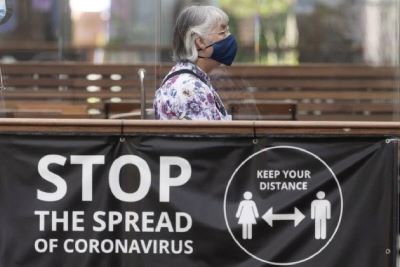
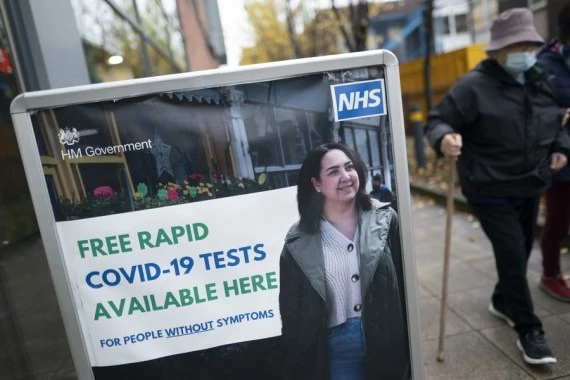 People walk past a sign of free rapid COVID-19 tests in Manchester, Britain, Nov. 10, 2021. (Xinhua/Jon Super)
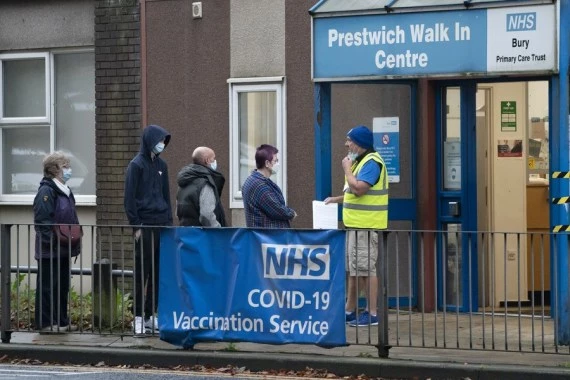 People queue up outside a vaccination center in Manchester, Britain, Nov. 10, 2021. (Xinhua/Jon Super)
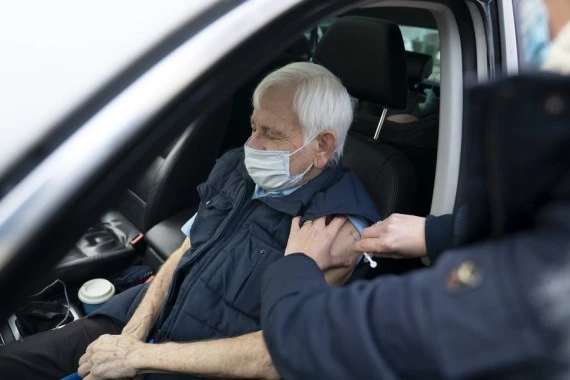 A man receives the second dose of the Pfizer-BioNTech COVID-19 vaccine at Hyde Leisure Centre in Greater Manchester, Britain, on Jan. 7, 2021. (Xinhua/Jon Super)
 A man wearing a face mask walks past a bus in London, Britain, on Nov. 24, 2021. (Xinhua/Li Ying)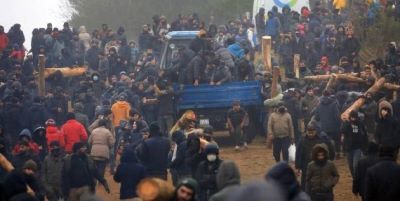
 Photo taken on Nov. 14, 2021 shows a refugee camp near the Belarusian-Polish border in Belarus. (Photo by Henadz Zhinkov/Xinhua)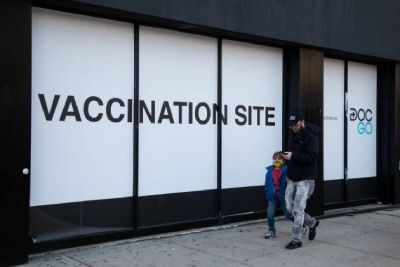
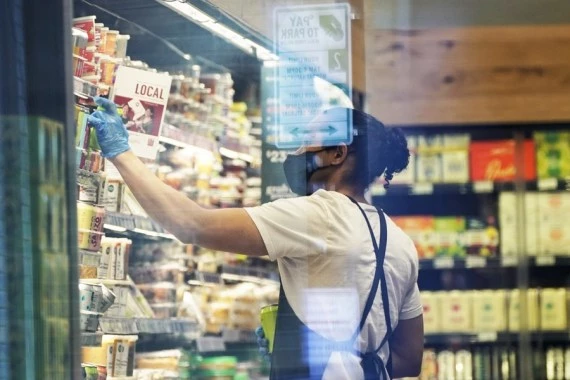 An employee works at a grocery store in Washington, D.C., the United States, on Nov. 10, 2021. (Photo by Ting Shen/Xinhua)
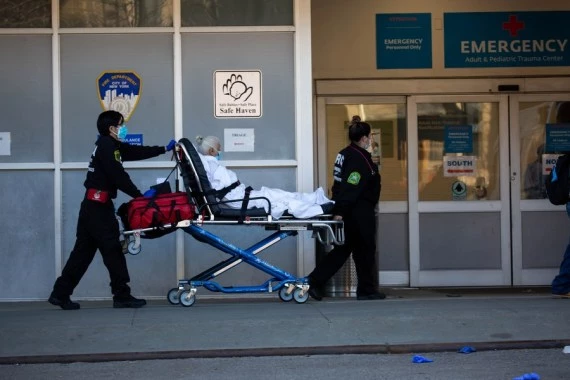 Medical workers wheel a patient into the emergency room at Maimonides Medical Center in the Brooklyn borough of New York, United States, March 8, 2021. (Xinhua/Michael Nagle)
