Skittish foreign fund inflow, increasing Covid-19 cases set to pressure SET
The Stock Exchange of Thailand (SET) Index rose by 6.92 points or 0.43 per cent to 1,598.35 on Wednesday morning.
Krungsri Securities expects the day’s index to rise to 1,600 points on strong US consumer confidence and house price indices.
It said the index also gained positive sentiment from speculation in shares to be listed on the SET50 and SET100 indices on Wednesday.
“However, the index would be under pressure due to volatile foreign fund inflows and higher Covid-19 cases in Thailand,” Krungsri Securities pointed out.
It recommended investors buy:
▪︎ Hana, KCE, TU, CPF, Asian and EPG, which benefit from a weakening baht.
▪︎ BCH, CHG, BDMS, HMPro, BEM, CKP, CBG, PSL and TTA, whose second-quarter turnover is expected to improve.
▪︎ KCE, IRPC, STA and STGT, which will be listed on the SET50 Index on Wednesday.
▪︎ AAV, Ichi, NRF, PSL, PTL, Singer, STGT, Synex and TKN, which will be listed on the SET100 Index on Wednesday.
The SET Index closed at 1,591.43 on Tuesday, up 12.26 points or 0.78 per cent. Transactions totalled THB79 billion with an index high of 1,596.08 and a low of 1,579.44.
The price of gold dropped by THB50 per baht weight in morning trade on Wednesday due to a strengthening dollar and strong US economic data.
AGold Traders Association report at 9.29am showed the buying price of a gold bar at THB26,700 per baht weight and selling price at THB26,800, while gold ornaments cost THB26,226.80 and THB27,300, respectively.
At close on Tuesday, the buying price of a gold bar was THB26,750 per baht weight and selling price THB26,850, while gold ornaments cost THB26,272.28 and THB27,350, respectively.
The spot gold price on Wednesday was US$1,765 (THB56,581) per ounce after Comex gold on Tuesday fell by $17.10 to $1,763.60 per ounce.
The Hong Kong gold price meanwhile dropped by HK$40 to $16,320 (THB67,373) per tael, the Chinese Gold and Silver Exchange Society reported.
Stimulus Pandexit is next challenge as recovery quickens
Central banks and governments were quick to buttress the world economy as the Covid-19 pandemic erupted. The bigger challenge will be weaning it off the unprecedented support theyve deployed, according to the Bank for International Settlements.
As economies rebound, officials will need to enact more targeted fiscal measures to preserve policy space, the Basel-based institution said in its annual report released Tuesday, alongside a speech entitled “Central Banks Facing Pandexit Challenges.”
In light of the pick-up in consumer price pressures — which are probably temporary — policy makers will also need to strike a balance between reassuring markets they’re willing to support growth and showing they’re prepared to fight inflation.
“Monetary policy will have to be flexible and prudent,” Agustin Carstens, general manager of the BIS and former governor of the Mexican central bank, said in the speech. “Accommodative policies are still needed, although the recovery could be fast. Careful communication will be at a premium to smooth the ride.”
Central banks around the world are starting to rein in the largess of the past 16 months as the recovery takes hold, albeit unevenly.
The Federal Reserve is gradually approaching the moment when it reduces support, with counterparts in the U.K., Canada, Norway, Sweden, South Korea and New Zealand among those charting a course toward a pullback. Mexico, Hungary and the Czech Republic raised interest rates last week, following hikes in 2021 from Brazil, Turkey and Russia.
“What is key is that central banks have to be very watchful, in particular advanced economy central banks, in looking at the performance of inflation expectations,” Carstens told Bloomberg Television’s Guy Johnson and Alix Steel in an interview.
“They should be very watchful” to ensure such expectations don’t become de-anchored, he said. “So far we haven’t seen that, and that is a good omen.”
With a record of urging policymakers to control ballooning asset prices, the BIS noted that house prices had risen more steeply during the pandemic than fundamentals would suggest, increasing the sector’s vulnerability if borrowing costs rise.
The BIS, a forum for central banks, highlighted other challenges, both short- and longer-term, including the risk of rising corporate insolvencies and the need for regulators to ensure banks keep lending to businesses without taking on too much risk.
Changing demand patterns, as more people choose to work from home permanently, as well as fine-tuning policy guidance so that investors don’t just focus on diary events, will present further challenges, the BIS said.
To prepare for future crises, officials will eventually need to restore their room to maneuver on both fiscal and monetary policy. Rising pressure on central banks to keep interest rates low to help governments manage their strained finances may complicate that task, according to the BIS.
If interest rates return to the levels of the 1990s, debt-service costs could exceed wartime highs, it said.
“Tasks for the longer term center on rebuilding safety margins and the interactions between monetary and fiscal policy,” Carstens said. “It is essential to put public finances on a sustainable path and preserve central bank independence.”
Published : June 30, 2021
By : Syndication Washington Post, Bloomberg · Catherine Bosley
For all the talk about inflated equity prices, a peak in earnings growth and the spread of a highly infectious coronavirus strain, stocks managed to close at another record.
In what some traders called a boring trading session, the S&P 500 eked out a gain of less than 0.1%. The benchmark gauge of American shares also remained on track for its fifth straight monthly advance — the longest run since August. Technology and retail companies rose, while financials underperformed even after some of the largest Wall Street banks boosted payouts to shareholders.
Investors have been weighing possible risks to the rally that drove equities up more than 90% from last year’s lows amid expectations that this quarter will mark the peak of a profit recovery from the depths of the pandemic. BlackRock Investment Institute strategists are dialing down their excitement for U.S. stocks, saying that potentially higher taxes and more regulations could pose “challenges” to the market.
“Investors are probably taking a minute to reassess their near-term outlook,” said Adam Phillips, managing director of portfolio strategy at EP Wealth Advisors. “With momentum fading, stocks likely need a meaningful catalyst from here.”
These are some of the main moves in markets:
Stocks
The S&P 500 was little changed as of 4 p.m. EDT
The Nasdaq 100 rose 0.3%
The Dow Jones industrial average was little changed
ADVERTISEMENT
The MSCI World index was little changed
Currencies
The Bloomberg Dollar Spot Index rose 0.2%
The euro fell 0.2% to $1.1900
The British pound fell 0.2% to $1.3850
ADVERTISEMENT
The Japanese yen was little changed at 110.55 per dollar
Bonds
The yield on 10-year Treasurys was little changed at 1.47%
Germany’s 10-year yield advanced two basis points to -0.17%
Britain’s 10-year yield advanced two basis points to 0.74%
Commodities
West Texas Intermediate crude rose 0.7% to $73.40 a barrel
Gold futures fell 1.1% to $1,761.40 an ounce
Published : June 30, 2021
By : Syndication Washington Post, Bloomberg News · Rita Nazareth, Vildana Hajric
Cross-border trade rose more than 29 per cent in May, increasing for the fifth consecutive month, the Commerce Ministry reported on Tuesday.
Total trade of 677.078 billion baht represented a rise of 29.15 per cent, with exports up 33.6 per cent to 408.3 billion baht and imports up 22.93 per cent to 268.777 million baht. Thailand registered a trade balance of 139.524 billion baht spurred by recovery in neighbouring economies.
Efforts to boost trade and exports would be boosted by the opening of 11 more checkpoints as early as possible, said the ministry. Currently, more than half (51) of Thailand’s 97 border checkpoints remain closed under Covid-19 restrictions.
Thailand’s direct border trade with its four neighbours – Malaysia, Myanmar, Laos and Cambodia – rose 19.85 per cent to 371.04 billion baht in May.
Meanwhile cross-border trade via neighbouring countries to important markets such as China, Singapore and Vietnam grew 42.57 per cent to 306.038 billion baht. China remained the biggest trading partner, followed by Singapore, Vietnam, the United States, Taiwan, Japan and South Korea.
The Commerce Ministry said border and cross-border trade is on course to exceed the target of 1.4 trillion baht.
The Stock Exchange of Thailand (SET) Index closed at 1,591.43 on Tuesday, up 12.26 points or 0.78 per cent. Transactions totalled THB79 billion with an index high of 1,596.08 and a low of 1,579.44.
In the morning session, Krungsri Securities forecast Tuesday’s index would fall to between 1,565 and 1,570 points due to uncertainty over the Covid-19 outbreak, especially in Asia and Britain.
It added that negative sentiment over the virus crisis had led to a drop in the oil price.
“In addition, volatile fund flows and the Thailand Futures Exchange’s move to roll over its futures contracts would pressure the index,” Krungsri Securities said.
The 10 stocks with the highest trade value today were KBANK, RCL, BANPU, SCGP, GUNKUL, SCB, HANA, PTT, PTTEP and SCC.
Other Asian indices were on the fall except in Taiwan:
Japan’s Nikkei Index closed at 28,812.61, down 235.41 points or 0.81 per cent.
China’s Shanghai SE Composite Index closed at 3,573.18, down 33.19 points or 0.92 per cent, while the Shenzhen SE Component Index closed at 14,999.80, down 150.37 points or 0.99 per cent.
Hong Kong’s Hang Seng Index closed at 28,994.10, down 274.20 points or 0.94 per cent.
South Korea’s KOSPI closed at 3,286.68, down 15.21 points or 0.46 per cent.
Taiwan’s TAIEX closed at 17,598.19, up 7.22 points or 0.041 per cent.
Thailand sows seeds for plant-based food revolution
Thailand’s plant-based food industry is tapping climate trends in a bid to become a global leader in ethical and environmentally friendly food.
Plant-based food or “fake meat” is hailed by the United Nations as one solution to climate change that is being driven by the global meat and dairy industries.
These two industries pump out 30-40 per cent of all global carbon emissions and cause biodiversity loss as small-scale farms are converted to industrial agriculture.
Krungthai Compass Research Centre estimates that profits from Thailand’s plant-based food industry could rise from the current 2-10 per cent per year to 10-35 per cent by 2024, with an estimated total market value of THB45 billion. It said the forecast is driven by strong domestic demand for plant-based meat, meal and egg products. The research house cited over $3 billion (THB95.9 billion) invested by bioengineered food start-ups in Thailand in 2019.
Thailand sows seeds for plant-based food revolution
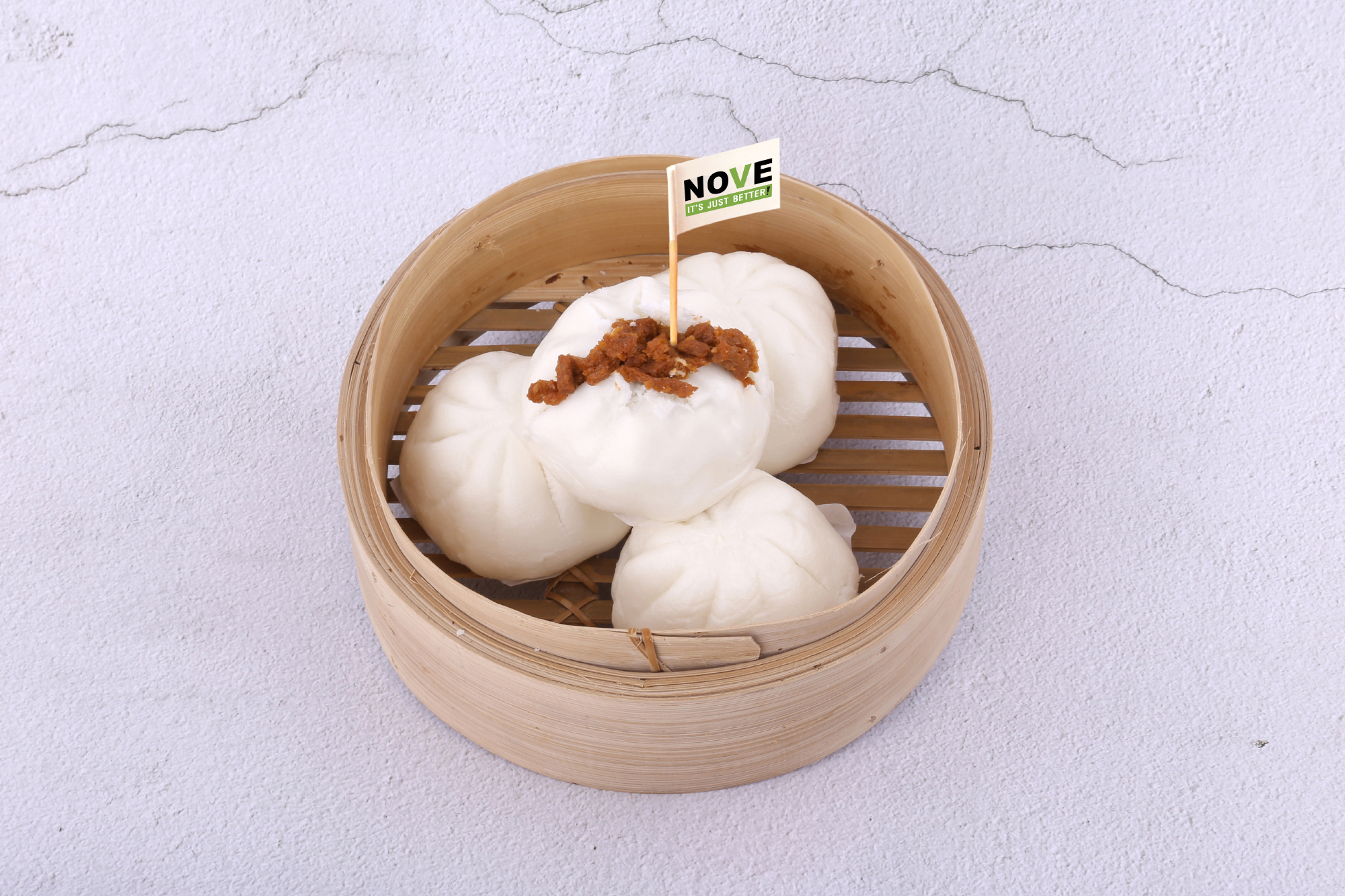
Helping drive Thailand’s global ambition for plant-based food is NR Instant Produce Plc (NRF). Under its motto “Food For Future”, NRF is a leading producer of plant-based food, seasoning, instant food and vegan dishes sold with eco-friendly packaging and the “V” logo.
Dan Pathomvanich, the company’s CEO, says NRF is fighting global warming with food that promotes sustainability thanks to a low-carbon manufacturing process.
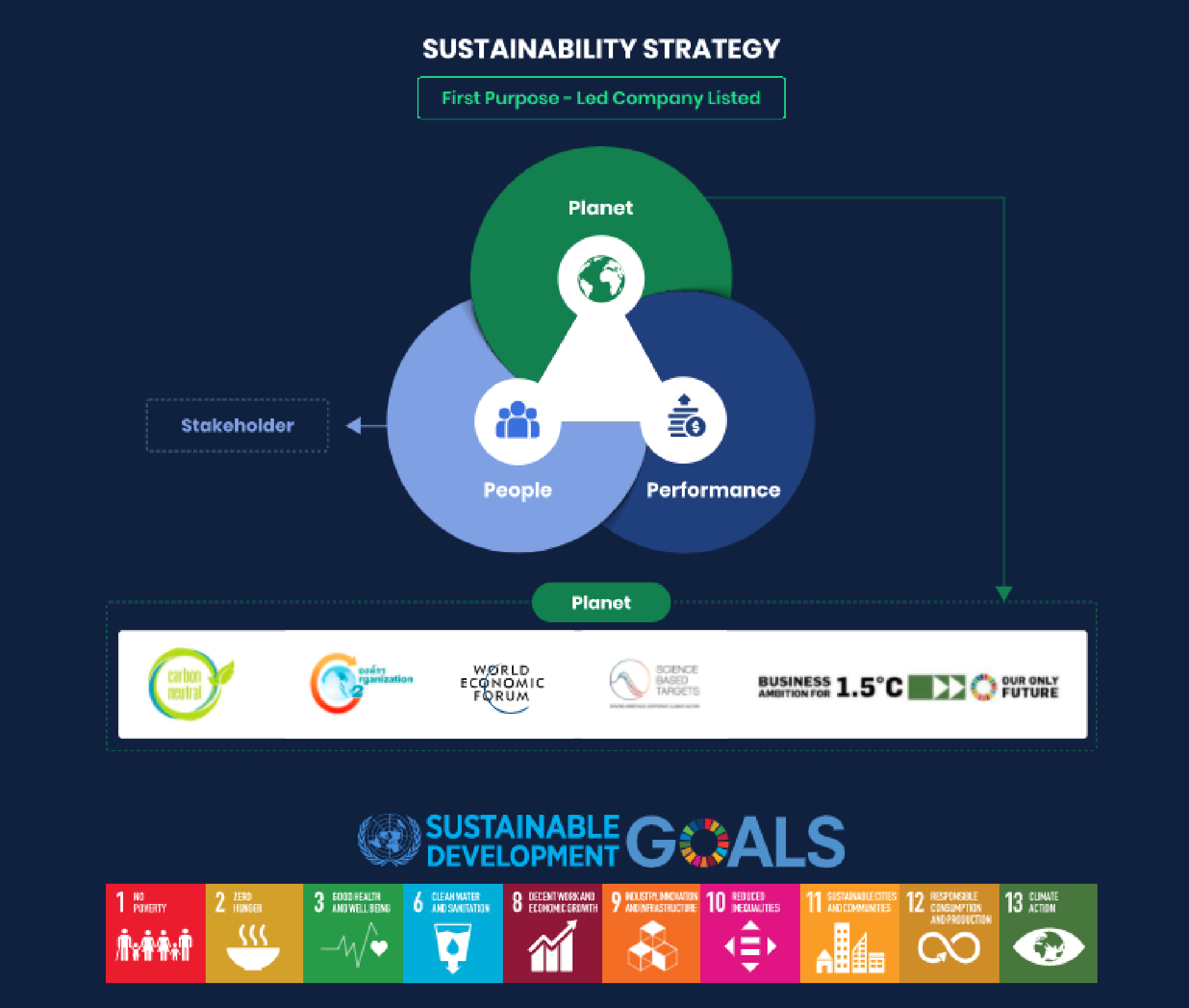
“The company has invested in technology to create the next evolution of food,” he said. “We aim to increase food processing efficiency, productivity as well as quality of raw materials and ingredients to create food products that are not only delicious but also promote consumers’ quality of life under the UN’s Sustainable Development Goals.
NRF is Thailand’s first food company to be awarded Carbon Neutral Certification for two consecutive years, said Dan. Other company initiatives to reduce carbon emissions include working with partners to install solar panels on their factories and urging farmers to cut their use of chemicals to minimise the environmental impact, he added.
NRF has also been working with the Agriculture and Cooperatives Ministry to plant 26 million rai of forest by donating 3 per cent of its dividend to the project, said Dan.
The company has a 10-year plan to build plant-based food factories in Thailand, the United States, Europe, South America and India in the next 10 years with a budget of THB5-7 billion.
“We hope that in the next three years we will be able to increase our plant-based food output by 100,000 tonnes,” said Dan.
Consuming 100,000 tonnes of plant-based meat instead of real meat would reduce carbon emissions by 330,000 tonnes, he added.
In its mission to make Thailand a manufacturing hub of alternative protein, NRF has joined the World Economic Forum and established a non-profit affiliate called “Root the Future” to persuade people to switch from meat to plant-based food. A year after launching, Root the Future now has more than 30,000 followers and content seen by 4.4 million viewers per week. NRF has also joined the Global Compact Network Thailand (GCNT), a sustainability network under the UN United Nations with more than 13,331 member organisations from 165 countries working to achieve the Sustainable Development Goals.
“The biggest challenge when introducing a change is to create awareness among stakeholders, such as chemical manufacturers and distributors,” said Dan. “After all, it is human nature to start seeking solutions only after a problem occurs.”
“Modern investors can no longer consider only the profits, they have to think about the environmental impact as well,” he added. “NRF is proud to be an agent focusing people’s minds on environmental concerns. We also hope that NRF will one day become the first carbon negative company in Thailand.”
Thailand sows seeds for plant-based food revolutionPlant-based food industry in Thailand
– Profit projected to rise from 2-10% to 10-35% by 2024
– Estimated market value in 2024 of THB45 billion
– Average annual growth forecast at 10%
Products with potential in Thai market
– Plant-based meat
– Plant-based meal
– Plant-based egg
*** Start-up companies in bio-engineered food invested more than $3 billion in Thailand in 2019.
Autobacs gunning to become Thailand’s No 1 car-servicing brand
Japan’s Autobacs is aiming to be the top car-service brand in Thailand, has been known to Thais for around 20 years since its first branch was established in Thailand.
Japan’s Autobacs is aiming to be the top car-service brand in Thailand, by increasing its branches and adding more services for customers.
Autobacs has been known to Thais for around 20 years since its first branch was established in Thailand. However, initially boasting only 10-12 branches, its fame did not spread across the whole country.
The turning point for the brand came in 2014, when PTG Energy (PTG) bought a stake in the parent company, Siam Autobacs. PTG currently owns 76.52 per cent of Siam Autobacs shares.
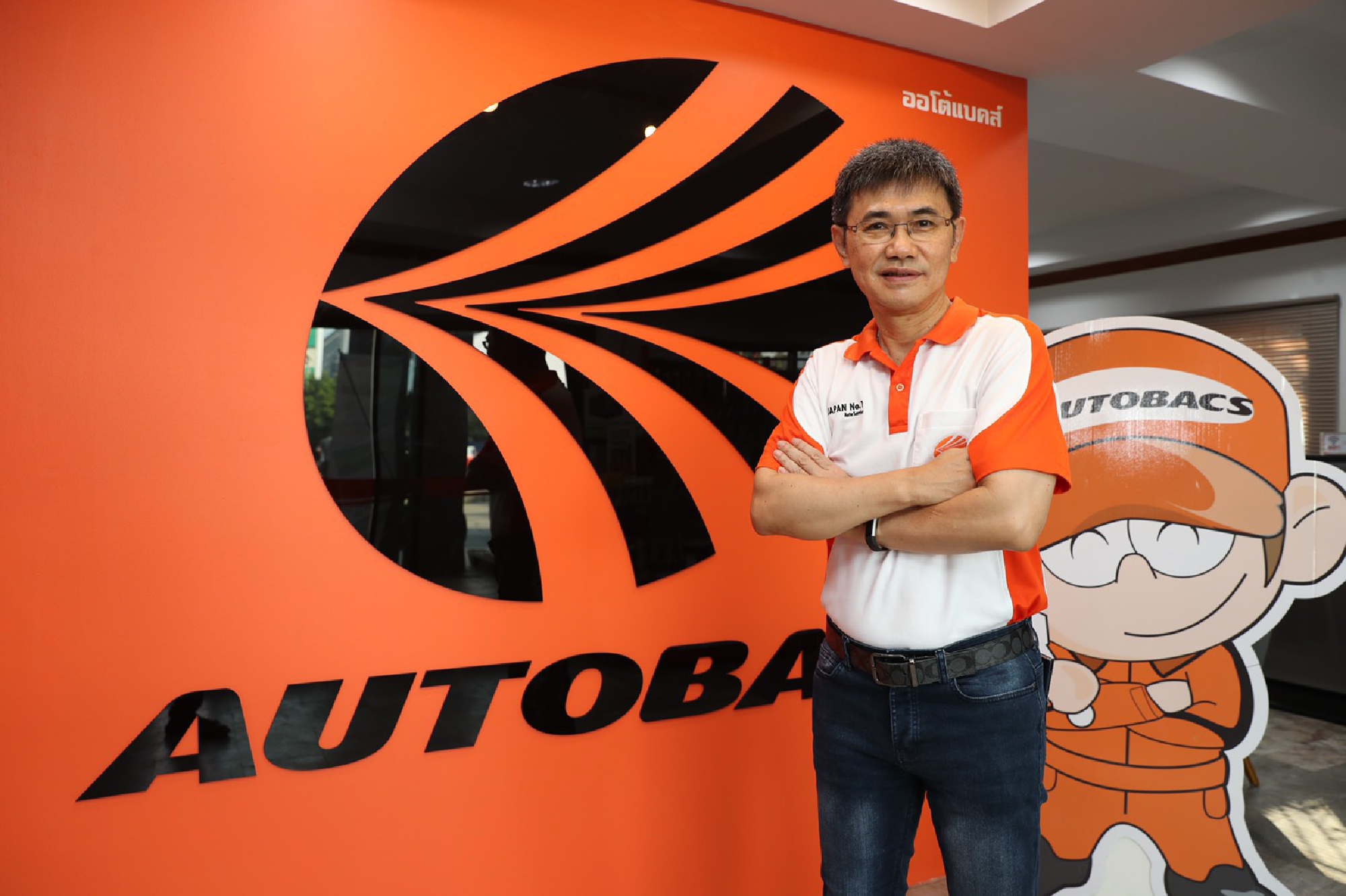
PTG executive vice-president Rangsun Puangprang said the car-service business has a long future, while Autobacs is a market leader in Japan and is also well received in Thailand.
Mr. Rangsun Puangprang Autobacs – Present Director // PTG – Executive Vice President
Rangsun added that PTG is able to improve Autobacs thanks to its strength as a big fuel retailer in Thailand. PTG also has a network of filling stations across the country, as well as reliable alliances, especially in the auto sector.
“We have a huge customer base, considering the 18 million holders of PT Max Cards [the PT filling station card]. It is advantageous for us to stage campaigns or point-collection activities” he said.
The executive vice-president also said that Autobacs’ network of branches must be extended to promote growth of the brand among competitors.
Autobacs currently has 16 branches, with another four about to open. By the end of this year, there will be 30 branches, if the Covid-19 situation in Thailand improves, Rangsun added.
Turning to the virus situation, he mentioned that the market was normalising at the end of 2020 but is now frozen by the current outbreak in 2021. “However, PTG believes in this market in the long term. The total number of Autobacs branches will reach 250 to 300 within 4 or 5 years,” he added.
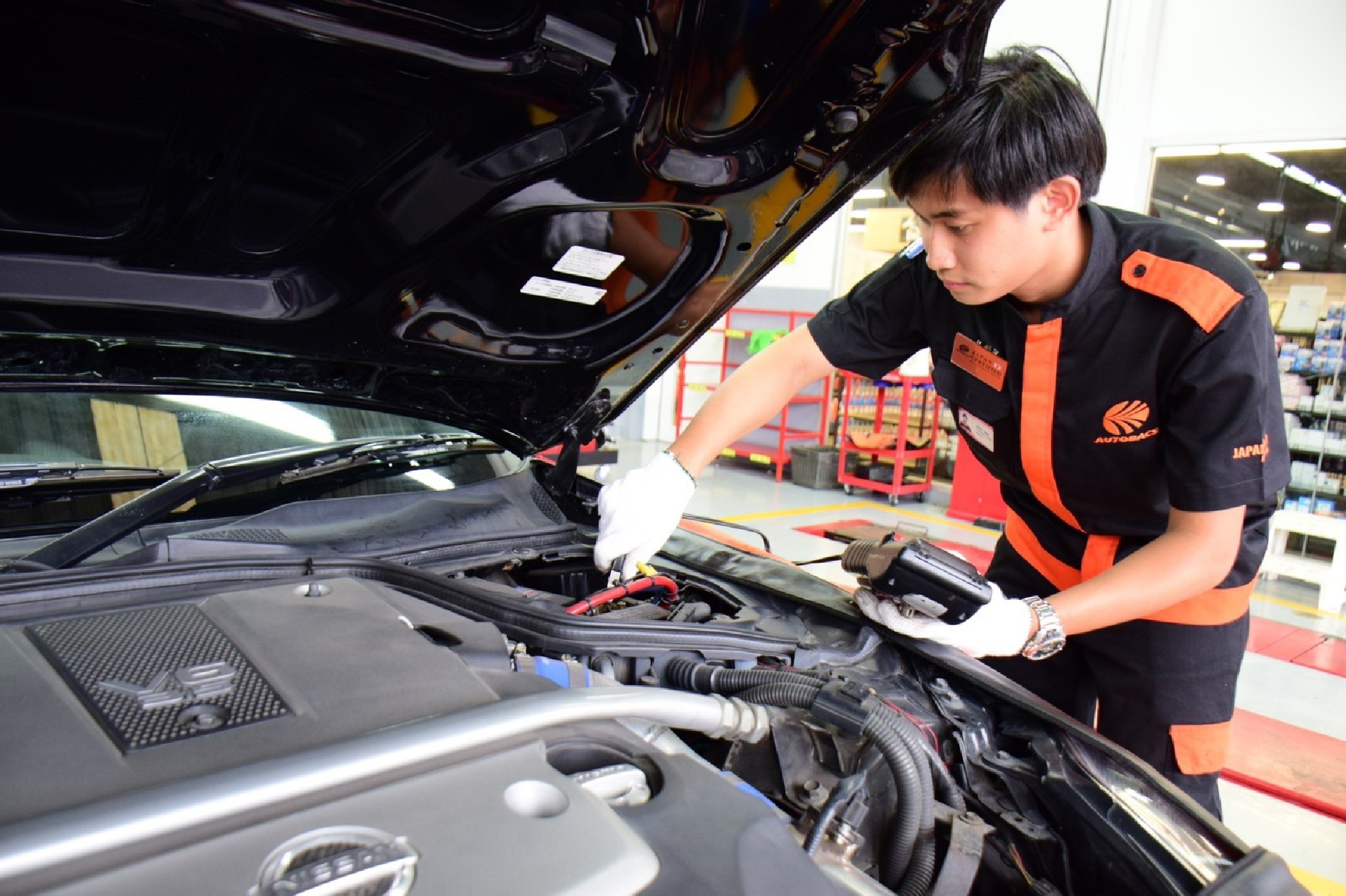
Autobacs gunning to become Thailand’s No 1 car-servicing brandRangsun said promotion of the Autobacs brand will get a boost, while service quality and variety will also be improved.
“We plan to adapt Autobacs for the changing situation. For example, people are now avoiding leaving home due to Covid-19, so we will provide mobile servicing at their home,” he explained. “Also, we plan to tap several target groups, including women, people who don’t have enough time to take care of their cars, and those who need to control their expenditure.”
Another service PTG will offer under the Autobacs brand is pre-ordering of decoration parts from Japan.
Rangsun concluded that work on expanding Autobacs will run continually, with the aim of making the brand well-known among customers and a top brand in Thailand within the next 3 or 4 years.
Scoot’s First A321neo Aircraft Takes Flight to Bangkok
Scoot’s brand new A321neo aircraft offers additional capacity and range, unlocking new network growth possibilities for Scoot while enabling us to elevate the passenger experience for Thai customers
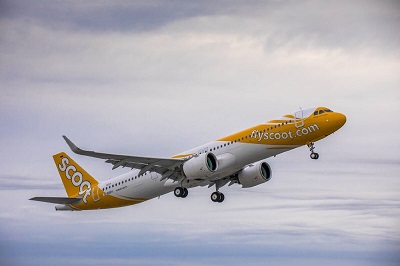
Scoot, the low-cost arm of Singapore Airlines, today welcomed the entry into service of its new single-aisle Airbus A321neo aircraft, as it made its inaugural flight from Singapore to Bangkok Suvarnabhumi as TR610.
TR610 departed Singapore at 1524hrs on 28 June 2021 and arrived in Bangkok at 1639hrs the same day, all times local. The return flight TR611 departed Bangkok at 1733hrs on 28 June 2021 and arrive in Singapore at 2129hrs the same day, all times local.
Subsequently in August, Scoot will deploy the A321neo on its Singapore-Cebu and Singapore-Ho Chi Minh City routes. Scoot’s A321neo aircraft feature 236 seats in a single-class, 3-3 configuration.
Benefits of the A321neo
Scoot’s A321neo aircraft has a range of up to 2,620 nautical miles (nm), or 4,852 km, approximately 270nm farther than the A320neo. This allows Scoot to deploy the A321neo aircraft on short to medium-haul routes with up to six hours of flight time compared to the older-generation A320 aircraft’s four-to-five hours, thereby opening up more options for new destinations.
With a larger passenger capacity of 236 seats, 50 more than the A320neo, and more fuel-efficient engines, the single-class A321neo will allow Scoot to improve its operating economics and unit costs. It will also enable Scoot to optimise its fleet utilisation to better match capacity to demand.
For instance, it can be deployed in place of the A320 during popular seasons, days of week or flight tranches, or substitute Scoot’s larger Boeing 787 aircraft in pockets of softer demand. It can also be deployed to complement some Boeing 787 routes to enable higher and more customer-convenient frequency.
The new A321neo aircraft also underscore Scoot’s commitment to offering customers a more comfortable and improved travel experience, through features such as premium black leather seats, amply-sized overhead compartment bins, ambient lighting technologies that reduce jetlag, improved air quality, and reduced noise emissions.
In the long term, the A321neo will enable Scoot to achieve more sustainable operations and reduce carbon emissions with its enhanced sharklets and fuel-efficient Pratt & Whitney PW1100G-JM engines. Based on pre-COVID levels of operations, there is an estimated 50% reduction in noise footprint and nitrogen oxide emissions, as well as a reduction of 5,000 tonnes less carbon dioxide per year per aircraft.
Campbell Wilson, Scoot’s CEO, said, “Scoot’s brand new A321neo aircraft offers additional capacity and range, unlocking new network growth possibilities for Scoot while enabling us to elevate the passenger experience for Thai customers in a commercially viable manner. Investing in new-generation aircraft and operating a young, fuel-efficient fleet is a cornerstone of Scoot’s strategy to achieve net zero carbon emissions by 2050. Combined with our recent achievement as the world’s first and only low-cost carrier to attain the highest Diamond status in the APEX Health Safety powered by SimpliFlying global audit of airlines, Scoot is on a firm footing to recover and re-establish ourselves as the low-cost carrier of choice in the region for post-pandemic travel.”
Anand Stanley, President Airbus Asia-Pacific said, “The arrival of the A321neo at Scoot marks another milestone in the close relationship we share with the Singapore Airlines Group. With the A321neo, Scoot will be able to increase capacity and open new routes across the Asian region. The aircraft will bring new levels of efficiency with significantly reduced fuel consumption, as well as lower emissions. We are confident that the A321neo will position Scoot well for the recovery in air travel. See you onboard soon!”
Scoot fleet
ADVERTISEMENT
To date, Scoot has taken delivery of three A321neo aircraft, leased from BOC Aviation, out of a firm order of 16. Of the 16, six are an upsize from Scoot’s original A320neo orders and ten are leased. Since the start of the previous financial year 2020/2021, five A320ceo aircraft had left Scoot’s operating fleet as part of an ongoing fleet renewal plan.
Scoot now has 29 single-aisle aircraft in its operating fleet – 21 A320ceo, five A320neo, and three A321neo, with 28 A320neo and 13 A321neo remaining on order. These are in addition to 20 widebody Boeing 787 aircraft in its fleet, with seven remaining on order. The average age of Scoot’s fleet is now five years and 10 months.
Scoot’s Thailand services
Currently, Scoot is operating 11-times-weekly services between Singapore and Bangkok (Suvarnabhumi). Due to the pandemic, Scoot is resuming its services in a safe and calibrated manner. Scoot plans to resume its other Thailand services – Singapore-Chiang Mai; Singapore-Hat Yai; Singapore-Krabi; and Singapore-Bangkok-Tokyo – in due time when the time and conditions are right.








 Thailand sows seeds for plant-based food revolution
 Thailand sows seeds for plant-based food revolutionPlant-based food industry in Thailand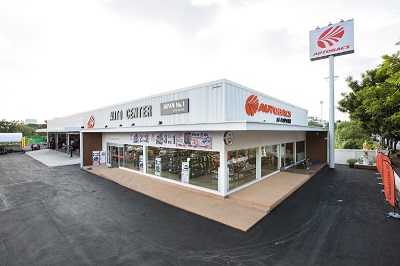
 Mr. Rangsun Puangprang Autobacs – Present Director // PTG – Executive Vice President
 Autobacs gunning to become Thailand’s No 1 car-servicing brandRangsun said promotion of the Autobacs brand will get a boost, while service quality and variety will also be improved.