Covid-19 preventive measures are likely to be increased for Valentine’s Day next week and Songkran in April as daily infections have exceeded 10,000 for several days now.
The Centre for Covid-19 Situation Administration’s (CCSA) Operation Centre on Thursday is considering proposing tougher preventive measures for Valentine’s Day and Songkran, according to a Government House source.
At the centre’s meeting on Thursday, the Public Health Ministry’s Disease Control Department reported the current Covid-19 situation in Thailand and its outlook.
The proposal for tougher measures resulted from rising concern as the county has seen more than 10,000 daily Covid cases since February 5.
The suggestion, along with other proposals by the Operation Centre, will be submitted for approval by the CCSA, which is headed by Prime Minister Prayut Chan-o-cha, at its meeting on Friday.
The centre’s meeting on Thursday was chaired by its director-general, Suphot Malaniyom, who doubles as National Security Council secretary-general.
The meeting also discussed a plan for an “air travel bubble” between Thailand and India, as well as the latest situation regarding the Test and Go programme for foreign tourists, reopening of classrooms, increased vaccination, and greater public access to Covid testing with antigen test kits.
The Royal Thai Army has dispatched 120 troops to the United States for a strategic airborne operation exercise on Friday, the Army announced.
The drill is part of the Hanuman Guardian 2022 war exercises between the Thai and US armies.
The Thai Army said the exercise would be held until February 23 at Joint Base Lewis-McChord in Washington state.
Thai troops will use a chartered plane to take part in the exercise with troops from the 4th Brigade Combat Team (Airborne) of the 25th Infantry Division.
The Thai Army has set up a special airborne company with the 120 troops from the 31st Infantry Regiment, the Special Warfare Command, the Infantry Centre, and Chulachomklao Royal Military Academy for the exercise.
The Army said all troops have been vaccinated against the Covid-19 virus and have received tests with negative results before being flown to the US base.
Travelling expenses and all training gear are being sponsored by the United States in line with US-Thai Army cooperation.
The drill will be carried out under a military training quarantine policy to prevent Thai troops from contracting the virus, the Army noted.
After the training, the next phase of Hunuman Guardian 2022 will see a parachute jump exercise at the Infantry Centre in Prachuap Khiri Khan and field training in Lop Buri from February 25 to March 8, the Army added.
The “Dr Review” Facebook page said the Covid-19 situation is worrying as children were developing more severe symptoms while the number of patients was increasing.
In a post on Wednesday, Dr Review said, “PCR [testing has found new patients of] around 13,000, ATK [likely infections discovered via antigen tests] is almost 6,000. Hospitals are crowded. There are a lot of children with severe symptoms in this wave. Let’s see if [the government] will let the number run. Who will end the game first?”
Another post on Thursday said: “PCR is almost 15,000 while ATK is almost 8,000. How can we survive? Children have severe symptoms, from high fever and vomiting to diarrhoea. If they are isolated without caution, they might [feel the] shock. Covid-19 does not love children anymore … but vaccines could help.”
Dr Teerawat Hemachuta, head of Chulalongkorn University’s Information Centre for Emerging Infectious Diseases, cited the first post on Wednesday.
He warned on Facebook about taking “caution over children’s symptoms”. He said Covid-19 might spread to the elderly and people with underlying diseases in their houses.
He also pointed out some surprising numbers on Wednesday, saying there were 52,687 people in field hospitals, 547 patients with pneumonia and 111 who needed tracheal intubation. On Thursday, he added, there were 53,694 people in field hospitals, 563 patients with pneumonia and 114 who required tracheal intubation.
German professional footballer Mats Hummel’s wife Cathy Hummels was assaulted and robbed in Phuket on Saturday.
She was reportedly hit in the head with a blunt object and her smartphone was stolen.
Cathy Hummels had come to Phuket for three weeks to film a reality show called “Battle of the Reality Stars”.
She took to Instagram on Wednesday in Dubai to post about the incident after having flown to the United Arab Emirates capital the same night of the attack.
The post in German said: “Something bad happened to me a few days ago. I was attacked. The most terrible experience in my life. I didn’t know if I would survive this.”
After the incident, her film crew reportedly called the police and she was said to have filed a complaint.
The Creative Workers Union Thailand (CUT) submitted a letter to the House of Representatives’ Labour Committee earlier this week, complaining that the recent policy change by popular online payment service PayPal Thailand has affected freelance online sellers of goods and services.
PayPal announced last Saturday that as of March 7 consumers in Thailand would no longer be able to use their PayPal wallets to shop online or make and receive payments. They would, however, be able to transfer any balance in their PayPal wallet to their bank account. Meanwhile, new account registration for consumers will not be available until further notice.
PayPal also said that from March 7, existing PayPal accounts registered by freelancers, casual sellers and entrepreneurs/sole proprietors in Thailand would have limited functionality, except to make bank withdrawals. New account registration for freelancers or casual sellers will not be available until further notice.
The company added that it has been gradually updating its services and processes to ensure they comply with all applicable Thai laws, and that it has been working closely with relevant authorities to accelerate its relaunch and minimise disruption to customers.
In its letter, CUT said the new policy lacks clear details as to how freelancers and casual sellers can continue using the PayPal service, other than register themselves as a business, which is a lengthy process and will incur an additional fee.
CUT therefore asked the committee to urge PayPal Thailand to clarify the policy for freelancers and causal sellers before the March 7 deadline, or at least extend the deadline until a more suitable policy is issued.
The union also asked the committee to coordinate with the Commerce Ministry and relevant agencies in considering adjusting the business registration process so that freelancers can register as a commercial business more easily.
Meanwhile, more than 2,500 people have signed a petition on Change.org urging PayPal Thailand to come up with a policy specifically tailored for freelancers and casual sellers before March 7. The campaign page said that sellers on some websites, such as www.etsy.com, are severely affected as the websites list PayPal as the only acceptable payment method.
Arunee Numkate, a 37-year-old online seller of baby clothes, said she had been using PayPal as a payment method for foreign customers for about eight years now, and that she has 30,000 to 80,000 baht per month of transactions via PayPal.
“After PayPal announced that freelancer accounts would not be able to receive payments after March 7, I tried to register my business as a juristic person with the Commerce Ministry so I could re-register with PayPal as a business,” she said. “However, the business registration process is taking too long and probably won’t finish in time for the March 7 deadline, which means I will lose a lot of business due to this disruption.”
Arunee urged the Finance Ministry and the Bank of Thailand to coordinate with PayPal to reconsider the limitation on freelance accounts, adding that thousands of freelance online sellers are suffering from the same problem.
It is speculated that PayPal is apparently mired in the confusion sparked by Thailand’s move to overhaul its regulatory framework to accelerate financial technology and become a digital economy.
In other words, to operate here, PayPal must adhere to Thai laws, especially its anti-money laundering and tax legislation.
The Royal Gazette website on Wednesday (February 9) published a Public Health Ministry announcement on the updated Category 5 narcotics list that featured marijuana and hemp.
The announcement, signed by Public Health Minister Anutin Charnvirakul, stipulated that the plants that are on the Category 5 narcotics list are:
1. Opium (Papaver somniferum L., Papaver bracteatum Lindl., or other plants in the same family that provide opium alkaloids)
2. Psilocybin, or magic mushroom (Psilocybe cubensis [Earle] Singer, or other plants in the same family that provide psilocybin or psilocin)
3. Cannabis (marijuana) or hemp extracts, except for:
A) Extracts from cannabis or hemp grown domestically that have tetrahydrocannabinol (THC) of less than 0.2 per cent of its weight
B) Extracts from the seeds of cannabis or hemp grown domestically.
Anutin said earlier this week that household planting of marijuana and hemp can start in the next 120 days, once marijuana’s removal from the blacklist is published in the Royal Gazette.
Individual households can grow up to six marijuana plants. However, those who have registered with the government as a community enterprise (7 people) can grow an unlimited number.
Prior to planting, growers must notify the public health office in their province of how many marijuana plants they intend to grow, where the growth will take place, and for what purpose. The office will then forward the proposal to the Food and Drug Administration (FDA). Households can start growing the plants only after the FDA gives them the green light.
Ministry of Public Health reported on Thursday (February 10) morning that in the past 24 hours there are 14,822 new patients who tested positive for Covid-19, 246 of whom have arrived in Thailand from abroad.
Death toll increased by 20, while 8,503 patients were cured and allowed to leave hospitals.
Cumulative cases in the country since January 1, 2022 are at 322,438.
The country’s total caseload from Covid-19 stands at 2,545,873 – 2,418,380 of whom have recovered, 105,129 are still in hospitals and 22,364 have died.
Separately, another 43,888 people were given their first Covid-19 shot in the last 24 hours, 48,738 their second shot and 414,976 a booster, bringing the total number of Covid-19 vaccine doses administered nationwide to 118,497,420.
According to Worldometer, confirmed cases globally had risen to 403.7 million on Thursday, 323.73 million of whom have recovered, 74.17 million are active cases (89,784 in severe condition) and 5.8 million have died (up by 11,464).
Thailand ranks 30th in the global list of most cases, which is topped by the US with 78.82 million, followed by India with 42.48 million, Brazil with 26.96 million, France with 21.04 million and the UK with 18 million.
The Disease Control Department on Wednesday urged parents to make sure their children do not exercise during the first seven days after they receive an mRNA vaccine against the Covid-19 virus.
Disease Control director-general Dr Opas Karnkawinpong said that after children 5-11 years of age receive Pfizer’s paediatric formulation dose of Covid-19 vaccine, their parents must prohibit them from exercising or doing any activity that uses a lot of strength for seven days.
The prohibition is aimed at preventing kids from developing myocarditis, which is a possible side-effect from an mRNA vaccine.
Opas said if the vaccinated children have chest pain, shortness of breath, rapid breathing, tiredness, rapid or irregular heartbeat, fainting, high fever of over 39 degrees Celsius, and or severe headache, or vomit or become unconscious, they should be taken to a doctor immediately.
Parents may also call the Emergency Medical Hotline 1669 immediately if their children develop myocarditis symptoms, Opas added.
He said the Public Health Ministry has also prepared emergency medical services in the areas where young children are being administered Pfizer paediatric dose vaccine.
Opas said if children have fever or have fatigue, they should be cured before they are given the vaccine.
He said children should be monitored for half an hour at the vaccination site before they are allowed to return home. He added the normal side-effects, such as fever, headache and painful and swollen arm could go away within a week after they are given painkillers.
The director-general said the orange cap vaccine will be first given to two target groups. The first group are children with one or more of seven types of co-morbidities and the second group are first-to-sixth graders.
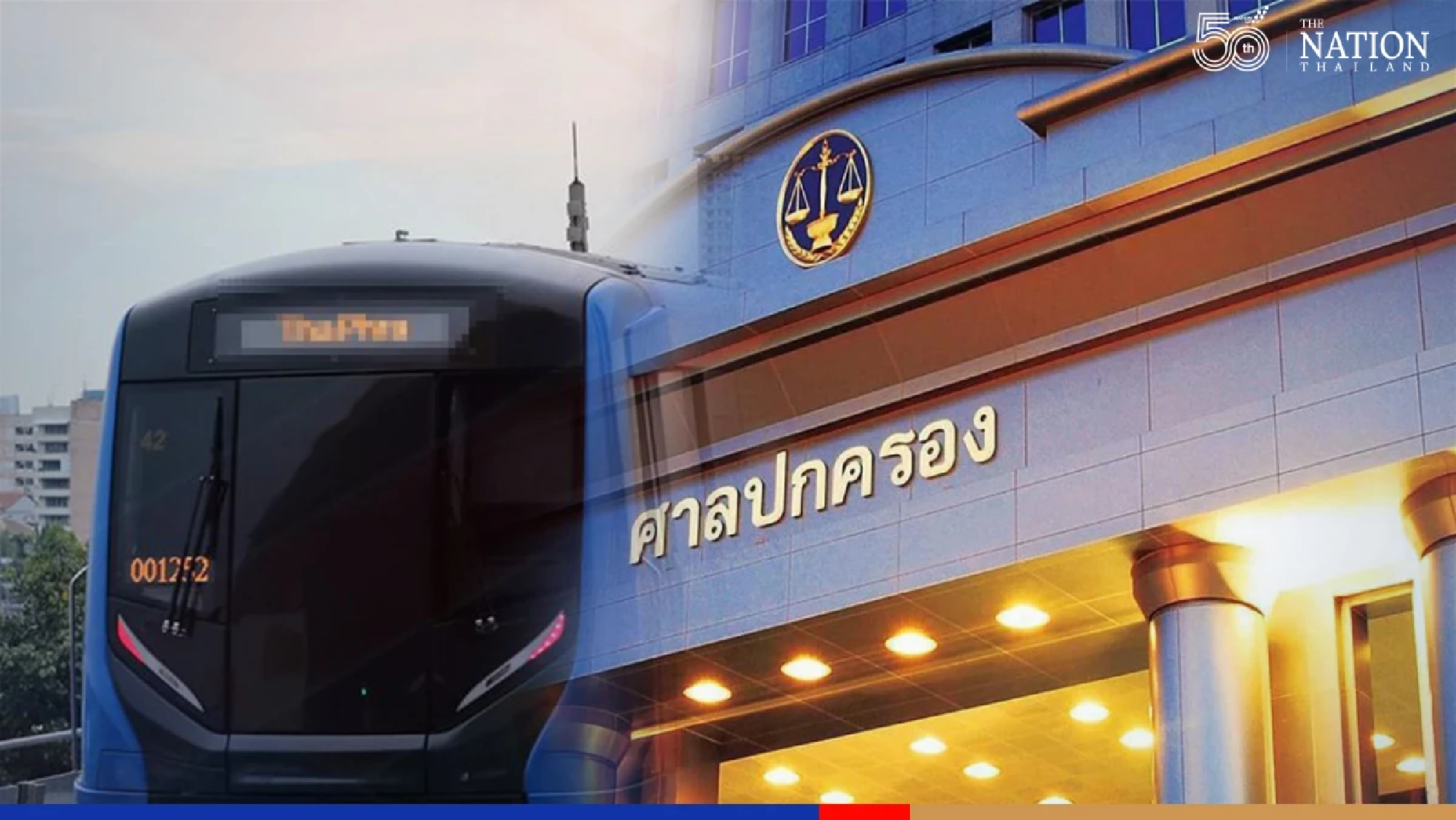
The Central Administrative Court on Wednesday rejected the Bangkok Mass Transit System (BTSC) Plc’s request for compensation related to bidding for the Orange Line railway project.
The BTSC had sued the committee in charge of selecting the winner for the project to build an elevated electric train system linking Bang Khunnon and Min Buri and demanded a compensation of Bt500,000.
The BTSC alleged that the selection committee had unlawfully changed the terms of reference (ToR) and caused the BTSC Bt500,000 damage related to the bidding process.
The court ruled that the change of the ToR for the bidding was unlawful but the court also ruled that the BTSC had failed to prove to the court how the change in the ToR had inflicted a Bt500,000 loss on the company as claimed in the lawsuit.
The court reasoned that the BTSC already had to spend the amount for hiring technical and legal advisers for participating in the bidding so the change of the ToR did not add to the BTSC’s expense.
The court reasoned that the selection committee was required by the Act of state and private joint venture of BE 2562 (2019) to protect the national interest by selecting the bidder that made the best offer to the government.
However, the committee changed the ToR to allow it to select a bidder even though the bidder had not offered the lowest price, by considering technologies and investment feasibility as well.
The court noted that the change of the ToR was required to be put to a hearing of companies concerned first instead of being unilaterally changed by the panel.
Surapong Laoha-Unya, chief operating officer of BTSC, told reporters after hearing the verdict that the court had ruled the change of the ToR was unlawful as it could increase the cost for the government.
He said the company would consult its lawyers on whether to appeal against the ruling. The company has 30 days to submit an appeal, he added.
The Health Department has said fully vaccinated couples can have normal sex this year as long as they have not exposed themselves to Covid-risk areas.
Last year, while the pandemic was spreading, the department had advised couples and sex partners to wear masks and avoid face-to-face positions to safeguard themselves against Covid-19.
Health director-general Suwannachai Wattanayingcharoenchai on Wednesday said that those who had exposed themselves to Covid-risk areas should consider taking rapid antigen tests before having normal sex.
The department advised couples to behave prudently during sex ahead of Valentine’s Day. Young couples are known to celebrate the occasion by having sex.
Last year, eyebrows were raised over the department’s Valentine’s Day advice to couples to wear masks at all times and refrain from facing each other during sex as a safety measure against contracting the Sars-CoV-2 virus. Many netizens asked how they could have sex without facing each other. It is not known how many people heeded the advice.
Suwannachai said couples should ensure their safety by receiving double vaccinations, and a booster dose if possible. He said the couples do not have to spend money on antigen test kits (ATK) if they do not visit risky places, but couples like to visit pubs and bars, which are transformed into restaurants and are often crowded.
“Lovers and couples who have immunity and who have assessed themselves to be safe or who have checked themselves with ATKs, can have mutual activities safely, like dining together and having sex,” Suwannachai said.



 The Army said all troops have been vaccinated against the Covid-19 virus and have received tests with negative results before being flown to the US base.