Songkhla prepared to host tourists for New Year #ศาสตร์เกษตรดินปุ๋ย

#ศาสตร์เกษตรดินปุ๋ย : ขอบคุณแหล่งข้อมูล : หนังสือพิมพ์ The Nation

https://www.nationthailand.com/travel/30379971?utm_source=category&utm_medium=internal_referral

Songkhla prepared to host tourists for New Year

Dec 29. 2019
Photo Credit to Charoon Thongnual

Photo Credit to Charoon Thongnual
By The Nation

Tourist attractions on Samila Beach in Songkhla province were crowded with several residents jogging on Sunday morning (December 29) and enjoying the sunlight to celebrate the coming New Year.

Songkhla Governor Jaruwat Kliangklao has surveyed the readiness of the province to support the locals and tourists who will celebrate their New Year holidays there.

Officials and private organisations together have set up check-in spots at Koh Noo and Koh Maew for tourists to take pictures and created sculptures of rats and cats, since the next year will be the Year of the Rat in the Chinese zodiac.

A trip to Thailand’s silk route #ศาสตร์เกษตรดินปุ๋ย

#ศาสตร์เกษตรดินปุ๋ย : ขอบคุณแหล่งข้อมูล : หนังสือพิมพ์ The Nation

https://www.nationthailand.com/travel/30379968?utm_source=category&utm_medium=internal_referral

A trip to Thailand’s silk route

Dec 29. 2019
By The Nation

Fashion fabrics may come and go, but “Thai traditional fabric” has an enduring quality about it.

It looks chic on its own, irrespective of whether it is mixed and matched with another fabric. With changing times, the design and cutting of Thai clothes have also been modernised to suit the tastes of teenagers and working people. In olden days, the northern cities were famous for weaving and there was weaving by tribes living on mountain tops. Today, northeastern-style woven fabrics are equally trendy too.

When did Thai people learn to weave?

There is no clear evidence of the origins of weaving in Thailand. It could be said that “weaving” is one of the oldest of arts and crafts that ancient humans seem to have had from prehistoric times.

Going back about 7,000-8,000 years in the prehistoric era, it was found that the ancient humans had decorated terracotta pots with rope marks and gauze marks at Ban Chiang in Udon Thani province. Therefore, it is assumed that humans must have known how to make ropes and nets by using fibrous plants to slit into ropes and then tied the ropes or knitted them into a net, which possibly developed into a simple technique of weaving: a rope is tied to the wood or is held up as a standing thread, then another rope is dashed against the thread of the warp until it becomes a rough sackcloth.

Another important archaeological evidence in the Ban Chiang area is the bronze bracelets. They are rusty but show evidence of a piece of cloth stuck to the rust stains. Scientists explain that rust is a corrosive metal but fabric has preservation qualities. A spindle whorl, a simple spinning device with an engraved roller, for making patterns are also seen. Therefore, it can be assumed that humans who lived in Ban Chiang around 5,000 years ago knew thread spinning, weaving, dyeing and printing patterns on the fabric as well.

Woven fabrics during the Rama VI era

Thai people traditionally knew the art of weaving cloth for making clothes at home by using simple weaving tools using the most natural technique in the world — tying a warp thread to one finger and then using the other hand knitted with other thread; some may use a needle or bone to help. This method is called finger weaving, which produces a narrow and long fabric, such as a sash that can be sewn into clothing.

Looms are found to have been used by Thai people only during the reign of King Rama VI. Chinese people who lived in the Sampeng region imported them into Thailand in order to weave more quantities for sale to the townspeople. However, many are still weaving with looms.

Later, in 1935, the Ministry of Defence established a textile factory for military use, known as the “Siam Cotton Factory”, to produce clothing and cotton wool for the military. Orders were placed with foreign suppliers for textile and cotton machinery, marking the beginning of the weaving industry. The machine produced a large quantity of fabric without patterns in traditional fabric and the textile weaving industry in Thailand expanded greatly. Thailand was able to export a large number of machine-made textiles every year, but at the same time the patterns and methods of weaving using Thai wisdom gradually faded away.

“Hand-woven fabrics” and Indigo-dyed fabrics, northeastern style

The present era is a flourishing phase for “Thai fabric”, both hand-woven cotton and hand-woven silk due to the revival of the hand-weaving method. Thai fabric patterns of the olden days have come back to life to meet the lifestyles of people of the modern people who are valuing Thai fabrics, especially in the northeastern region, where many agencies have helped to spotlight the northeastern woven fabric. People who love and admire “Thai fabric”, should not miss seeing the northeastern-style handwoven fabric that is a result of traditional wisdom and skill. Moreover, these are handmade products at almost every step, whether it be raising silk, making silk threads, dyeing them, and selling it at a good price, which can generate additional income for the villagers.

There are three places on the Khon Kaen-Udon Thani travel route we would like to recommend on the “Isaan Weaving” trail:

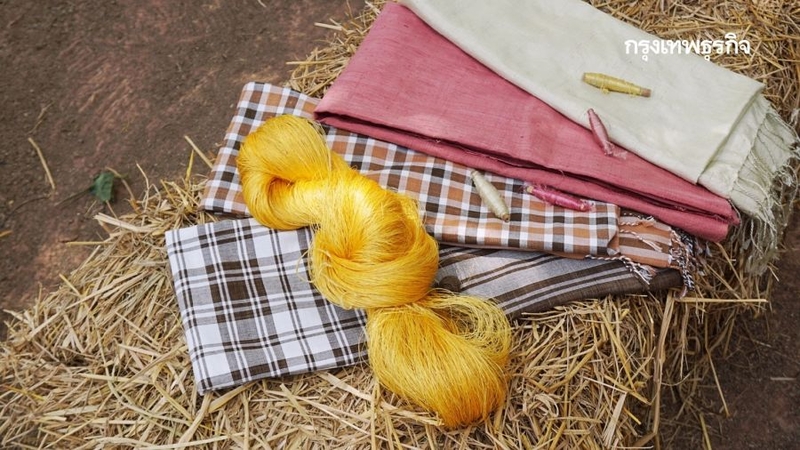
Natural-colour silk in Khon Kaen

Begin the trip at “Pure Silk Thread at Mae Tho”, Ban Na ham, in Ban Meng subdistrict, Nong Ruea district.

These are groups of villagers who engage in silk-weaving by hand, which is sold on a pre-order basis. Suthat Saen-Ong-ard said that the silkworm weaving was founded in 2015. There are 28 members and the name Mai Tah Tee Mae Tho [Pure silk of Mother Weaving] was chosen to indicate pride in the older generation who taught them to make silk. The traditional silk-mulberry cultivation methods and the high quality are still maintained.

Silk threads are produced from silkworms, which raise themselves, and can have a 100 per cent natural dyeing from fruit peels and leaves such as ebony, neem, eucalyptus, and shellac, cultivated in homes and within the community. Aside from seeing the pure silk that the villagers make, they also make silk threads, dye their own colours and weave. Tourists can walk around to see how different kinds of plants are chosen for different colours by the villagers for dyeing the silk threads as well as learn the way of folk wisdom.

This group focuses on natural plain silk. Each colour is different and depends on nature. Sometimes, even though the same bark is used for dyeing, it may acquire a different shade — the only colour of silk in the world. The unique colour of the silk here is a “sugarcane leaf” shade, which produces a light greenish-yellow colour.

Indigo-dyed woven fabric at Ban Chiang

Next, take a trip to the Ban Chiang community, located in the Ban Daeng subdistrict in the Phibun Rak district of Udon Thani province. The people in this area are of Tai Phuan descent, an ethnic group that wears unique and distinct clothing, who bring the wisdom of their ancestors to continue to create valuable workpieces. With the creation of patterns from prehistoric pottery, there are many other ancient patterns. Tai Phuan fabric patterns are different from other local tribal tapestries.

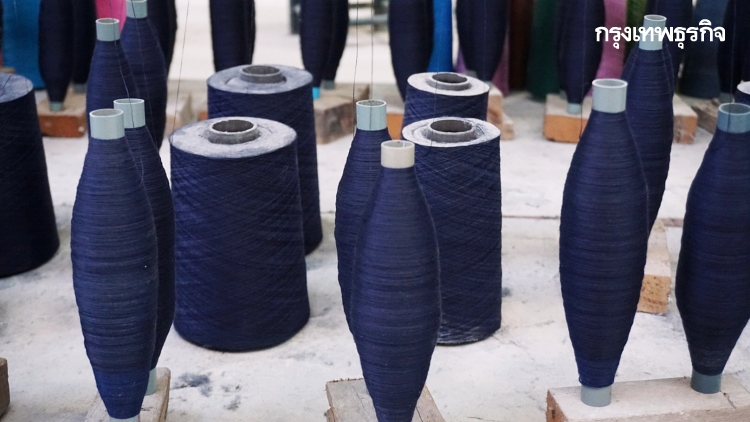
A group of Ban Chiang native women have been engaged in weaving since 1971. Some 30-50 women inherited the ancient weaving loom but changed to use modern weaving loops, which makes weaving faster and more convenient. Cotton thread is used for weaving, which is dyed in indigo to give it a bright blue colour. In the village, there are indigo dyeing workshops and a shop for selling products.

In the past, the villagers made indigo dyeing cotton clothes only to be worn within the village. Later they began to learn to make patterns with the process of Mudmee, or Ikat Fabric, in various designs using their imagination. Indigo-dyed cotton made in Ban Chiang is widely popular in Thailand, creating jobs, income and careers for villagers and also Ban Chiang’s reputation for weaving.
Lotus petals dyed woven fabric at Ban Nong Kok

Witness and shop for beautiful northeastern-woven clothes in Udon Thani province, especially the “Ban Non Kok Ancient Weaving Group [Dyed red lotus petals]” at Nong Na Kham subdistrict in Muang Udon Thani. They have their own weaving shop and dyeing factory. There is also a tourist area spacious enough to accommodate visitors and buyers of lotus-petal-dyed woven fabrics of the villagers. Travellers can sit and rest comfortably amid cool breeze.

This weaving group was established in 2013 by Apichat Poolbuakai, or Teacher Ton, a descendant of Ban Non Kok who wrote a thesis on the careers of the villagers. The weaving uses traditional wisdom of the Non Kok villagers. The village began to weave with naturally dyed threads, using local material and got more feedback from customers. Thus the idea emerged to establish a weaving group to expand the weaving work and create jobs and income for the community.

Inside the weaving shop, there is a demonstration of dyeing or silk threads with red lotus petals. The colour obtained from the red lotus flower is 100 per cent natural, without any chemical colouring as lotus petals can be boiled in water straight away. In addition, the colour works well and the quality meets required standards
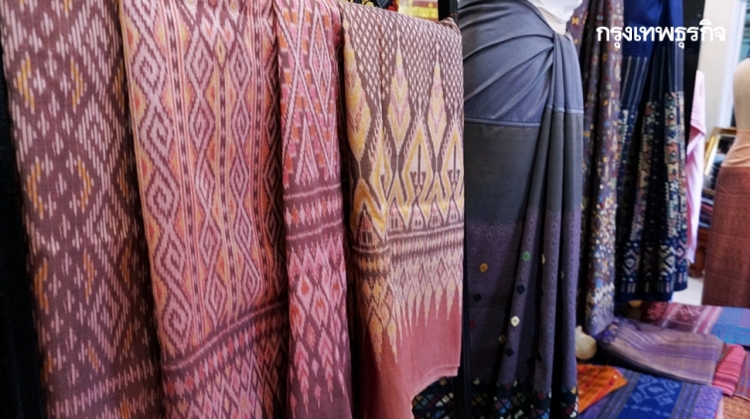
There are many types of dyeing and many colours are available. For example, when fresh lotus petals are used to dye with cold technique, you get a light pale pink and purple. When dried lotus petals are boiled and dyed using hot technique, the fabric gets a golden colour. Dried lotus stems when boiled and dyed in hot water, yield grey. All three colours produce unique woven fabrics, especially as the pattern of the fabric is unique as well. Some hand-made silk fabrics are worth up to Bt140,000.
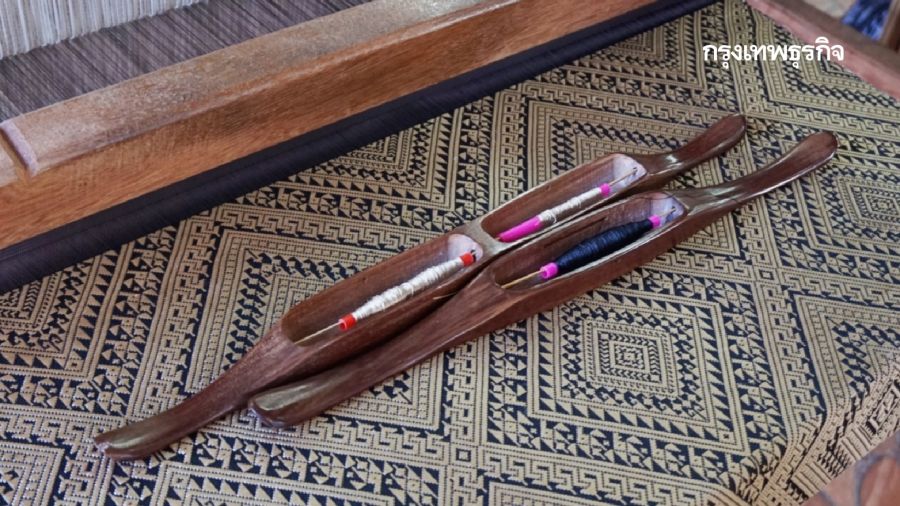

Samut Sakhon community offers rare eco-tourist attraction #ศาสตร์เกษตรดินปุ๋ย

#ศาสตร์เกษตรดินปุ๋ย : ขอบคุณแหล่งข้อมูล : หนังสือพิมพ์ The Nation

https://www.nationthailand.com/travel/30379956?utm_source=category&utm_medium=internal_referral

Samut Sakhon community offers rare eco-tourist attraction

Dec 28. 2019
By THE NATION

At merely an hour’s journey from Bangkok lies the Bang Ya Phrak community, an eco-tourist attraction in Samut Sakhon province.

This community is located near Tha Chin River, which flows through the province. Most people in this community are fishermen, earning revenue from catching aquatic animals in the river. It is a common sight to see people gathering to repair their fishing nets on holidays.

The starting point of travel to this community is Suttiwat Wararam temple. Travellers can take a boat here to travel along Ao (bay) Maha Chai, taking in the sights of a mangrove forest where white mangroves grow abundantly.

Presently, this mangrove forest is preserved and cared for by Charoen Pokphand Foods, the local people, and civil society.

If travellers visit the mangrove forest during October and November, migratory birds will be visible. Those birds, namely, are the great sandpiper, the common red-necked seabird, the small-headed sandpiper, and the black-backed bird.

In addition, those who visit this community can learn to make Thai traditional desserts at Ban Na Chaba, as well as have memorable meals from the local menu, such as fried mangrove leaves.

There are outstanding handicraft items made in the Bang Ya Phrak community such as models of fishing boats, by a former fisherman named Chatchawal Chowsamut. Meanwhile, Prannee Homthong’s salt field allows tourists to visit and see the processing procedure in making

salt.

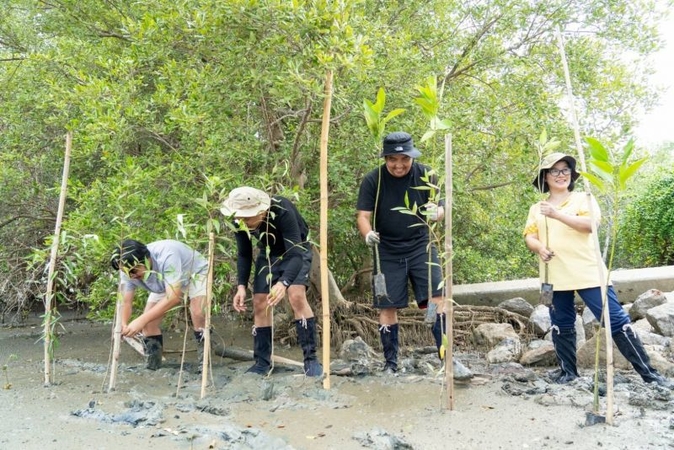
Lastly, to end this trip memorably, travellers can participate in mangrove forest planting and garbage collection activities at Ao Mahachai Mangrove Forest Natural Education Centre. These activities allow participants to see the beautiful landscape of the forest.

Malaysia: E-registration for China, India tourists isn’t for those who overstay #ศาสตร์เกษตรดินปุ๋ย

#ศาสตร์เกษตรดินปุ๋ย : ขอบคุณแหล่งข้อมูล : หนังสือพิมพ์ The Nation

https://www.nationthailand.com/travel/30379976?utm_source=category&utm_medium=internal_referral

Malaysia: E-registration for China, India tourists isn’t for those who overstay

Dec 29. 2019
In a statement, the ministry said the 45-day rule was considered a cooling-off period aimed at preventing any abuse of the visa-free requirement.

In a statement, the ministry said the 45-day rule was considered a cooling-off period aimed at preventing any abuse of the visa-free requirement.
By The Star/ANN

PETALING JAYA: Tourists from China and India can only reapply to enter Malaysia via the visa-free Electronic Travel Registration and Information (eNTRI) system 45 days after they leave the country, says the Home Ministry.

In a statement, the ministry said the 45-day rule was considered a cooling-off period aimed at preventing any abuse of the visa-free requirement.

The ministry said it was aware of a Federal Gazette dated Dec 23 on the visa-free requirement, which went viral on social media recently with some parties linking the requirement with tourists from China who overstay.

“The Immigration Department, under the ministry, has consistently conducted operations to nab illegal immigrants, including tourists who overstay.

“Stern action are taken against foreigners who break the law,” the ministry added.

“Entering the country via eNTRI is an improvement of the Visa on Arrival (VOA) mechanism, where security element is part of eNTRI’s processes and controlled fully by the Immigration Department.

“The main objective is to strengthen the country’s tourism industry with the visa-free requirement for tourists who want to visit Malaysia,” the ministry said.

It added that the ministry and the department had and would always ensure that the nation’s safety was a priority.

“We will not compromise against any parties who threaten public order and safety,” the ministry added.

It was reported on Saturday (Dec 28) that tourists from China and India would be able to visit Malaysia without a tourist visa next year.

Throughout 2020, they will be able to enter the country for up to 15 days by using the electronic travel registration and information system – either individually or through travel agencies in their respective countries.

However, the tourists must enter and exit Malaysia only through authorised airports or entry points.

Upon arrival, they must produce proof of sufficient cash for expenses, credit card or bank card, and produce their travel itinerary in Malaysia. They should also have a valid return ticket.

According to a statement from the government, these tourists would be able to travel to Malaysia three months after registration.

In addition, the 15-day period cannot be extended and these tourists cannot apply for any other passes under the Immigration Regulations 1963.

The statement was signed by Prime Minister Tun Dr Mahathir Mohamad, exercising the functions of the Home Minister.

It was reported that Malaysia aims to attract 30 million international tourist arrivals for the Visit Malaysia 2020 campaign – bringing in total tourist receipts of RM100bil.

7 science-based strategies to boost your willpower and succeed with your New Year’s resolutions #ศาสตร์เกษตรดินปุ๋ย

#ศาสตร์เกษตรดินปุ๋ย : ขอบคุณแหล่งข้อมูล : หนังสือพิมพ์ The Nation

https://www.nationthailand.com/lifestyle/30379978?utm_source=category&utm_medium=internal_referral

7 science-based strategies to boost your willpower and succeed with your New Year’s resolutions

Dec 29. 2019
How can you increase your willpower and fulfill your New Year’s promise to yourself? (Shutterstock/Melinda Nagy)

How can you increase your willpower and fulfill your New Year’s promise to yourself? (Shutterstock/Melinda Nagy)
By The Jakarta Post/ANN

It’s that time of year when people make their New Year’s resolutions – indeed, 93% of people set them, according to the American Psychological Association. The most common resolutions are related to losing weight, eating healthier, exercising regularly and saving money.

However, research shows that 45% of people fail to keep their resolutions by February, and only 19% keep them for two years. Lack of willpower or self-control is the top cited reason for not following through.

How can you increase your willpower and fulfill your New Year’s promise to yourself? These seven strategies are based on behavioral science and my clinical work with hundreds of people trying to achieve their long-term goals.

1. Clarify and honor your values

Ask yourself why this goal matters to you. Do you want to lose weight because you value getting in shape to return to a favorite pastime of hiking, or because of societal expectations and pressures? People who are guided by their authentic values are better at achieving their goals. They also don’t run out of willpower, because they perceive it as a limitless resource. Figure out what makes you tick, and choose goals consistent with those values.

2. Frame goals and your life in positive terms

Focus on what you want to accomplish, not what you don’t. Instead of planning not to drink alcohol on workdays during the new year, commit to drinking your favorite sparkling water with Sunday to Thursday evening meals. Struggling to suppress thoughts takes a lot of energy, and they have a way of returning to your mind with a vengeance.

It also helps to reflect on the aspects of yourself and your life that you are already happy with. Although you might fear that this will spur complacency and inaction, studies show that gratitude and other positive emotions lead to better self-control in the long run.

3. Change your environment to make it easier

Research suggests that people with high willpower are exceptionally good at arranging their environment to avoid temptations. So, banish all credit cards from your wallet if your goal is to save money. And don’t keep a bowl of M&M’s at your work desk if you intend to eat healthy.

If your coworkers regularly bring sweets to work, ask them to help you with your goals (they might get inspired to join in!) and bring cookies only for special occasions. Supportive friends and family can dramatically increase your chances of achieving your resolutions. Joining a group whose members practice behaviors you’d like to adopt is another great way to bolster your willpower, because having role models improves self-control.

4. Be prepared with ‘if-then’ strategies

Even the best resolution falls apart when your busy schedule and exhaustion take over. Formulate a series of plans for what to do when obstacles present themselves. These “if-then” plans are shown to improve self-control and goal attainment.

Each time you wake up in the middle of the night craving candies or chips, you can plan instead to read a guilty-pleasure magazine, or log into your online community of healthy eaters for inspiration, or eat an apple slowly and mindfully, savoring each bit. When you’re tired and about to skip that gym class you signed up for, call your supportive sister who is on standby. Anticipate as many situations as possible and make specific plans, vividly imagining the situations and what you will do in the moment.

5. Use a gradual approach

When you embark on a new goal, start small and build on early successes. Use one less spoonful of sugar in your coffee. Eventually, you might be able to forgo any sweeteners at all. If resisting that muffin initially proves to be too hard, try waiting 10 minutes. By the end of it, your urge will likely subside.

You might be surprised to realize that change in one domain of life – like abstaining from sweet processed foods – tends to spread to other areas. You might find you are able to bike longer distances, or moderate your caffeine intake more easily.

If it feels like the payoffs are in the distant future, you can plan a small gift for yourself along the way. (Shutterstock.com/shurkin_son)

If it feels like the payoffs are in the distant future, you can plan a small gift for yourself along the way. (Shutterstock.com/shurkin_son)

6. Imagine rewards and then enjoy them

Picture the feeling of endorphins circulating through your body after a run, or the sun on your skin as you approach a mountain summit. Pay attention to all your senses: smell, sight, hearing, touch and taste. Visualizing rewards improves your chances of engaging in the activity that results in them.

If it’s hard to imagine or experience these rewards in the beginning, decide on small, meaningful gifts you can give yourself until the positive effects of the new behaviors kick in. For example, imagine yourself taking a half-day off work each month after you pay down your credit card debt: visualize exactly what you would do and how you would feel. And then do it.

7. Be kind to yourself, even during setbacks

Most people believe the way to increase willpower is to “whip oneself into shape,” because being kind to oneself is indulgent and lacks self discipline. But the exact opposite is true – people who harshly blame themselves for even small willpower failures tend to do worse in accomplishing their goals in the long run.

Try self-compassion instead. Cut yourself some slack and remember that being human means being imperfect. When you fall for that doughnut, don’t despair, and don’t throw in the towel. Treat yourself with care and understanding and then recommit to your goal the following day.

Remember, you aren’t likely to achieve your New Year’s resolutions by being self-critical and hard on yourself. Instead, boost your willpower through a series of small and strategic steps that will help you succeed.

Jelena Kecmanovic, Adjunct Professor of Psychology, Georgetown University

This article is republished from The Conversation under a Creative Commons license. Read the original article.

Twice singer Tzuyu has world’s most beautiful face, BTS singer Jungkook is most handsome #ศาสตร์เกษตรดินปุ๋ย

#ศาสตร์เกษตรดินปุ๋ย : ขอบคุณแหล่งข้อมูล : หนังสือพิมพ์ The Nation

https://www.nationthailand.com/lifestyle/30379974?utm_source=category&utm_medium=internal_referral

Twice singer Tzuyu has world’s most beautiful face, BTS singer Jungkook is most handsome

Dec 29. 2019
Taiwan-born singer Tzuyu of K-pop girl group Twice and South Korean boyband BTS singer Jungkook took the top places as the world's Most Beautiful Face.PHOTOS: TWICETAGRAM/INSTAGRAM, BTS.JUNGKOOK/INSTAGRAM

Taiwan-born singer Tzuyu of K-pop girl group Twice and South Korean boyband BTS singer Jungkook took the top places as the world’s Most Beautiful Face.PHOTOS: TWICETAGRAM/INSTAGRAM, BTS.JUNGKOOK/INSTAGRAM
By The Straits Times, ANN

French model Thylane Blondeau has been dethroned as the world’s Most Beautiful Face.

The 18-year-old drops to the fourth spot in this year’s list of 100 names compiled by TC Candler, with Taiwan-born singer Tzuyu of K-pop girl group Twice sitting pretty at No. 1.

TC Candler has rated the world’s top male and female lookers since 1990.

The 20-year-old Tzuyu is followed by 18-year-old Israeli model Yael Shelbia in No. 2, and 22-year-old Thailand-born singer Lisa in No. 3.

Lisa is part of the successful Korean girl group Blackpink.

British actress Naomi Scott, 26, who stars in Aladdin (2019), completes the top 5 list.

In the Most Handsome Face ranking, actor Jason Momoa, 40, who starred in Aquaman (2018), has also lost his crown.

He is in the No. 5 spot in this year’s survey that is topped by Jungkook, 22.

He is a singer in South Korean boyband BTS.

Most beautiful face winners over the past 30 years include actresses Nicole Kidman, Keira Knightley and Natalie Portman.

The men’s list, which started only in 2013, has seen actors Michael Fassbender and Michiel Huisman named as most handsome faces.

Tzuyu has turned more heads over the years.

She was placed third in 2017 and second last year.

Jungkook scaled the peak after he was ranked second last year.

Swedish YouTuber Felix Kjellberg, 30, better-known as Pewdiepie, is in second spot while singer Shawn Mendes, 21, is in third.

Another BTS singer, 23-year-old V, is at No. 4.

Donlaphatchai reigns in weather-shortened Taifong Open #ศาสตร์เกษตรดินปุ๋ย

#ศาสตร์เกษตรดินปุ๋ย : ขอบคุณแหล่งข้อมูล : หนังสือพิมพ์ The Nation

https://www.nationthailand.com/sport/30379979?utm_source=category&utm_medium=internal_referral

Donlaphatchai reigns in weather-shortened Taifong Open

Dec 29. 2019
Donlaphatchai Niyomchon

Donlaphatchai Niyomchon
By THE NATION

Changhwa – Overnight leader Donlaphatchai Niyomchon of Thailand was declared the winner of the season-ending US$160,000 Taifong Open after officials cancelled the fourth and final round due to inclement weather.


Donlaphatchai, who carded a bogey-free four-under-par 68 in the third round, completed a wire-to-wire victory to triumph by two shots with a winning total of nine-under-par 207 and claimed his maiden Asian Development Tour (ADT) title at the Taifong Golf Club.

The 29-year-old Thai would take home a winner’s prize purse of US$28,000 and propel from 94th to third place on the final 2019 ADT Order of Merit, thereby securing his Asian Tour card for the 2020 season. He also receives six Official World Golf Ranking (OWGR) points following his win.

“I am really happy. It’s a great ending to my season. I have been working very hard on my fitness for the last two years and I’m glad it has paid off. I have waited very long for this win too and I can’t wait to play on the Asian Tour next year,” said Donlaphatchai, who turned professional in 2010 and only claimed his breakthrough win on home soil last year.

Donlaphatchai is the third Thai, following Rattanon Wannasrichan (2015) and Pannakorn Uthaipas (2017), to win the Taifong Open, which was inaugurated in 2014 as the richest event on the ADT schedule.

Chinese Taipei’s Wang Wei-lun and Tseng Tzu-hsuan settled for second place with Japan’s Daisuke Yasumoto and young Thai Atiruj Winaicharoenchai following respective closing rounds of 67, 69, 68 and 69 in the season finale.

Naoki Sekito capped a season’s haul of US$50,942 following his tied-61st place finish at the Taifong Open and became the very first Japanese to win the Order of Merit on the ADT, which was inaugurated in 2010 as a gateway to the Asian Tour.

“I can’t explain how happy I am to win the ADT Order of Merit. It’s the first time a Japanese has won the Order of Merit so I feel really honoured. I am so excited for next year,” said the 22-year-old Naoki, who has notched two wins and five top-10s on the ADT this season.

Thailand’s Pannakorn Uthaipas, Donlaphatchai and Itthipat Buranatanyarat would end the season in second (US$29,794), third (US$29,697) and fourth (US$29,672) place respectively on the final Merit rankings.

With Wang, who has already secured his Asian Tour card by finishing inside top-60 on the 2019 Asian Tour Order of Merit, finishing fifth on the money list, the remaining three Asian Tour cards will be awarded to England’s Steve Lewton, American Trevor Simsby and Seung Park of Korea, placed sixth, seventh and eighth respectively.

The leading seven players, not otherwise exempted, on the final 2019 ADT Order of Merit following the conclusion of the Taifong Open earned their Asian Tour cards for the 2020 season.

The final round, originally scheduled to start at 7.10am local time, was delayed by 30 minutes three times before officials made the decision to cancel the fourth round of the popular event, which is celebrating its sixth consecutive edition on the ADT.

“After deliberation, the organising committee has decided to cancel the final round due to continuous rain which is expected to last throughout the day and conditions were deemed unplayable due to low visibility,” said Jittisak Tamprasert, Asian Tour Director of Rules & Competitions.

“The 2019 Taifong Open has been shortened to 54 holes and overnight leader Donlaphatchai has been declared the winner of the tournament,” added Jittisak.

Leading round three scores:

207 – Donlaphatchai Niyomchon 67 72 68

209 – Wang Wei-lun 73 69 67, Daisuke Yasumoto 73 68 68, Atiruj Winaicharoenchai 71 69 69, Tseng Tzu-hsuan 71 69 69

210 – Peradol Panyathanasedh 72 69 69

211 – Brett Munson 74 68 69, Lin Wen-ko 70 72 69, Lee Chieh-po 71 71 69, Seung Park 70 71 70

212 – Chinnarat Phadungsil 71 72 69

213 – Jesse Yap 73 73 67, Gregory Foo 70 71 72

215 – Ho Yu-cheng 71 73 71, Kasidit Lepkurte 75 72 68, Kwanchai Tannin 71 73 71, Nirun Sae-Ueng 72 72 71

216 – Sattaya Supupramai 74 72 70, Yeh Wei-tze 75 70 71, Amir Nazrin 76 71 69, Wolmer Murillo 68 76 72, Huang Hsiang-hao 75 73 68

217 – Yeh Yu-chen 72 73 72, Kazuki Higa 70 75 72, Koh Deng Shan 74 70 73, Chan Shih-chang 74 74 69, David Shen 68 75 74, Lien Lu-sen 73 68 76, Itthipat Buranatanyarat 69 72 76, Suttijet Kooratanapisan 75 73 69

For final results and earnings, please click here.

All eyes on Pyongyang as Kim opens key party meeting #ศาสตร์เกษตรดินปุ๋ย

#ศาสตร์เกษตรดินปุ๋ย : ขอบคุณแหล่งข้อมูล : หนังสือพิมพ์ The Nation

https://www.nationthailand.com/ann/30379981?utm_source=category&utm_medium=internal_referral

All eyes on Pyongyang as Kim opens key party meeting

Dec 29. 2019
Image taken from Pyongyang’s KCNA`s website shows North Korean leader Kim Jong-un speaking during the fifth Plenary Meeting of the seventh Central Committee of the Workers` Party of Korea on Saturday. (Yonhap)

Image taken from Pyongyang’s KCNA`s website shows North Korean leader Kim Jong-un speaking during the fifth Plenary Meeting of the seventh Central Committee of the Workers` Party of Korea on Saturday. (Yonhap)
By The Korea Herald/ANN

North Korean leader Kim Jong-un chaired the first part of a key ruling party meeting in Pyongyang on Saturday, amid speculation that the communist state may proclaim a “new path” in the face of stalled disarmament talks with the United States.

Attended by key party and military officers, the fifth plenary session of the seventh Central Committee of the Workers’ Party discussed “details regarding building of the state and its defense,” the North’s official Korean Central News Agency said.

“In response to changed situation at home and abroad, we intend to enhance our strategic position and empower the state, while engaging in a policy of struggle to further the building of socialism,” the state-run media outlet said.

The KCNA referred to Saturday’s session as “the first day” and said the session would be “continued.” No further details about the meeting’s outcome were provided.

Not since 1990, when a meeting of the committee extended for five days, has one of its meetings lasted longer than a day.

“The extended meeting is to demonstrate Kim’s comprehensive engagement in every affair of the state,” Shin Beom-chul, a senior fellow at the Asan Institute for Policy Studies in Seoul, told The Korea Herald.

Required to be convened at least once annually, the plenary meeting of the North’s highest decision-making body has served to unveil Kim’s major policy initiatives.

It comes as Washington maintains its stony silence on Pyongyang’s demands for relief from biting UN sanctions by the year-end deadline that Kim set.

The hermit state has warned that it will pursue a “new path” if the US continues to hold to the crippling sanctions, and Kim has urged the US to offer concessions since the Hanoi summit in February ended with no agreement.

At a subsequent meeting in April this year, Kim said he would not succumb to the US sanctions.

At an earlier meeting in April 2018, Kim and his party had adopted a unanimous resolution to demolish the now-defunct Punggye-ri nuclear test site and to halt intercontinental ballistic missile tests.

Some observers say the North’s new path could be lifting that moratorium and resuming weapons development.

Urging the US to offer concessions to resolve their differences in the denuclearization talks, the North spoke of a “Christmas gift,” widely interpreted as a hint at some kind of weapons testing.

In the run-up to the holiday, Washington flew a series of surveillance aircraft over the Korean Peninsula in case of a missile launch, but Pyongyang let Christmas pass without any provocation.

Cheong Seong-chang, director of the Center for North Korean Studies at the Sejong Institute, said the fact that the ongoing party meeting is not a single-day event signals that North Korea has important issues on the table.

“Given that the meeting goes on for two days unlike previous ones, Kim and his officers appear to have a lot to talk about Pyongyang’s policies on Seoul, Beijing, Moscow and Washington, as well as its economic agendas,” according to Cheong.

Holding up Pyongyang’s hard line against Washington and the regime’s nuclear deterrence program may have been discussed, he said.

Kim Dong-yup, a professor at Kyungnam University’s Far East Institute in Seoul, said even if the North decides to resume its weapons program, it will still put the economy high on its national agenda.

“I am not saying national defense is no longer important here. But it’s more that North Korea now sees it as a means to shore up its economy and prosperity, beyond the regime’s survival.”

South Korea: Feud for helm of Hanjin Group intensifies #ศาสตร์เกษตรดินปุ๋ย

#ศาสตร์เกษตรดินปุ๋ย : ขอบคุณแหล่งข้อมูล : หนังสือพิมพ์ The Nation

https://www.nationthailand.com/ann/30379980?utm_source=category&utm_medium=internal_referral

South Korea: Feud for helm of Hanjin Group intensifies

Dec 29. 2019
Cho Hyun-ah, the former vice president of Korean Air (left) and Cho Won-tae, Hanjin Group's chairman. (Yonhap)

Cho Hyun-ah, the former vice president of Korean Air (left) and Cho Won-tae, Hanjin Group’s chairman. (Yonhap)
By The Korea Herald/ANN

The family feud for the helm of Hanjin Group, the South Korean conglomerate that owns flag carrier Korean Air, appears to be intensifying as the chairman reportedly kicked up a storm at his mother’s house on Christmas.

On Sunday, media outlets here reported that group Chairman Cho Won-tae visited the home of his mother, Lee Myung-hee, in the Jongno area of Seoul on Wednesday with his family. There, he reportedly broke a window and items in the house.

Lee Myung-hee (Yonhap)

Lee Myung-hee (Yonhap)

The incident reportedly occurred because his mother sided with his older sister, Cho Hyun-ah, in the siblings’ dispute over the management of the company. Lee reportedly took pictures of the damage and a wound to her arm, and showed them to the company’s top management officials while asking for protection.

Cho Won-tae, 44, was appointed as chairman of Hanjin Group’s holding company Hanjin KAL in April, when his father died from a chronic disease. He is also the president and CEO of Korean Air, the group’s main cash cow.

Amid rumors that the two siblings are at odds over the succession, Cho Hyun-ah, the former vice president of Korean Air, issued a statement last week via a law firm to express a complaint against her brother.

In the statement, Cho Hyun-ah said her brother had failed to heed the late chairman’s instructions to ensure the “harmonious, joint management” of the company with other family members and that he had been “insincere” in family discussions.

Cho Hyun-ah, the infamous “nut rage” heiress, has been standing back from management since last year, after a series of power abuse scandals involving her and her younger sister, Cho Hyun-min.

While she was expected to take charge of the KAL Hotel Network, she was again left out in the latest executive reshuffle last month.

The family dispute is likely to continue as Hanjin KAL’s general stockholders meeting is slated for March, when stockholders are to decide whether Cho Won-tae will serve another term as executive director. His current tenure is expected to end March 23.

As of Dec. 23, the Cho family currently holds a 24.79 percent stake in Hanjin KAL. Cho Won-tae holds 6.52 percent, Cho Hyun-ah 6.49 percent, Cho Hyun-min 6.47 percent and Lee Myung-hee 5.31 percent.

Singapore-Johor carpool service: Unlicensed vehicles cannot provide cross-border services, says LTA #ศาสตร์เกษตรดินปุ๋ย

#ศาสตร์เกษตรดินปุ๋ย : ขอบคุณแหล่งข้อมูล : หนังสือพิมพ์ The Nation

https://www.nationthailand.com/ann/30379973?utm_source=category&utm_medium=internal_referral

Singapore-Johor carpool service: Unlicensed vehicles cannot provide cross-border services, says LTA

Dec 29. 2019
Those caught providing hire-and-reward services, including cross-border carpooling service without a valid PSVL, can be jailed up to six months, fined up to $3,000 or both.PHOTO: ST FILE

Those caught providing hire-and-reward services, including cross-border carpooling service without a valid PSVL, can be jailed up to six months, fined up to $3,000 or both.PHOTO: ST FILE
By The Straits Times, ANN

SINGAPORE – Foreign-registered vehicles are not allowed to provide cross-border passenger transport services for hire or reward in Singapore without a valid public service vehicle licence (PSVL), the Land Transport Authority (LTA) said on Saturday (Dec 28).

The LTA clarified the regulation in response to queries from The Straits Times on Sameride, a carpool service due to launch a Singapore-Johor Baru carpooling service from Monday.

According to a press release on the Sameride website, more than 300 commuters have pre-registered for the service in the app over the last two weeks.

The company’s first route for commuters was established in 2016 in the Washington, DC Metro Area in the United States, its website says.

For its latest route, Sameride estimates that users will be able to significantly reduce the cost of their commute between Johor and Singapore by up to 50 per cent compared to taxi services.

The app also aims to expedite travel time by reducing traffic on the cross-border route.

The LTA said it takes a “serious view towards” foreign registered vehicles illegally providing hire-and-reward services, and said it will carry out strong enforcement action against such illegal activities.

It has advised the public not to engage cross-border hire services by individuals using unlicensed vehicles.

The LTA explained that such vehicles may not be sufficiently insured against third-party liabilities and passengers who ride such vehicles may not be able to claim insurance if they are involved in traffic accidents during their travel.

Those caught providing hire-and-reward services, including cross-border carpooling service without a valid PSVL, can be jailed up to six months, fined up to $3,000 or both.

The vehicle used may also be forfeited.

ST understands that Sameride has not sought approval from the LTA to launch the service, and has contacted the company for comment.