A look inside socialist Venezuela’s chaotic embrace of the free market #ศาสตร์เกษตรดินปุ๋ย

#ศาสตร์เกษตรดินปุ๋ย : ขอบคุณแหล่งข้อมูล : หนังสือพิมพ์ The Nation

https://www.nationthailand.com/news/30379849?utm_source=category&utm_medium=internal_referral

A look inside socialist Venezuela’s chaotic embrace of the free market

Dec 26. 2019
A saleswoman waits for customers in an imported goods store in Caracas, Venezuela, on Dec. 22, 2019. MUST CREDIT: Photo for The Washington Post by Andrea Hernandez Briceno

A saleswoman waits for customers in an imported goods store in Caracas, Venezuela, on Dec. 22, 2019. MUST CREDIT: Photo for The Washington Post by Andrea Hernandez Briceno
By The Washington Post · Anthony Faiola, Rachelle Krygier, Mariana Zuñiga

605 Viewed

CARACAS, Venezuela – Last Christmas, devastated Venezuela saw shortages of everything from tinsel to toilet paper. This year, the socialist government has given a weary nation an unexpected holiday gift.

A dose of the free market.

President Nicolás Maduro is making tentative moves away from the socialist policies that once regulated the prices of basic goods, heavily taxed imports and restricted the use of the U.S. dollar. As a result, the South American nation’s economic free fall is beginning to decelerate. The national inflation rate – still the world’s highest – has slowed from a blistering 1.5 million last year to a relatively breezy annualized rate of 15,000%.

A woman checks out a shop window in a mall in Caracas, Venezuela, on Dec. 18, 2019.MUST CREDIT: Photo for The Washington Post by Andrea Hernandez Briceno

A woman checks out a shop window in a mall in Caracas, Venezuela, on Dec. 18, 2019.MUST CREDIT: Photo for The Washington Post by Andrea Hernandez Briceno

The changes might be temporary, and amount largely to an economic Band-Aid. There are no signs, for instance, of a larger strategy to reverse the agricultural land grabs and company seizures that helped lay the groundwork for one of the worst economic implosions of modern times.

But as the new measures take hold, once-empty store shelves have overflowed this holiday season with beef, chicken, milk and bread – albeit at prices so high that a significant segment of the population is actually worse off. More moneyed Venezuelans, however, are flocking to dozens of newly opened specialty stores – including at least one fake Walmart – brimming with stacks of Cheerios, slabs of Italian ham, and crates of Kirkland Signature Olive Oils, much of it bought and shipped in containers to Venezuela from Costco and other bulk retailers in Miami.

Mannequins modeling Santeria Iyawo attires tower over a child sized mannequin at El Cementerio market in Caracas, Venezuela, on Dec. 19, 2019. MUST CREDIT: Photo for The Washington Post by Andrea Hernandez Briceno

Mannequins modeling Santeria Iyawo attires tower over a child sized mannequin at El Cementerio market in Caracas, Venezuela, on Dec. 19, 2019. MUST CREDIT: Photo for The Washington Post by Andrea Hernandez Briceno

Maduro remains deadlocked in a political standoff with opposition leader Juan Guaidó and his backers in Washington, who have ratcheted up pressure to force his ouster. But U.S. sanctions against Venezuela do not appear to have crimped surging imports – mostly because they prevent Americans from doing business only with the government, not private Venezuelans.

“The government had been unable to restart the economy any other way, so it’s doing what the people want” by giving in to the free market, said Ricardo Cusano, president of Fedecamaras, Venezuela’s chamber of commerce. The socialists are still in power, he said, but “they have lost the ideological war.”

Plagued by hyperinflation and economic collapse, depressed Venezuelans dubbed last Dec. 25 the “Christmas without lights” – a day largely bereft of the traditional holiday bunting and toys for children. But as the economy begins to show modest signs of life – particularly in the relative bubble of Caracas, the capital – there have been visible changes on the streets.

Meager Christmas markets opened to peddle baubles to a slightly more optimistic populace. More holiday decorations popped up inside stores, along with, proprietors say, more parents buying toys and clothing for children. The capital is suffering its worst traffic jams in years as car owners with greater access to imported spare parts drag long out-of-commission vehicles back onto clogged roads.

The eased restrictions have made the holiday season merrier for a small minority of rich Venezuelans, many of whom live in mansions behind high walls in Eastern Caracas.

“There were things you just couldn’t get – dishes you just couldn’t make,” said Pablo Gianni, manager of Anonimo, a lavish new Caracas eatery that opened this month complete with a glass-walled wine cellar stocked with shelves of four-figure vintages of Dom Pérignon.

“But now, it’s like legal contraband,” he said. “They’re letting everything in.”

The changes taking shape here are the product of a combination of factors. For years, the government strictly limited the use of the U.S. dollar, long portrayed as an instrument of Yanqui imperialism. But last year, the government freed the exchange rate and more broadly legalized dollar transactions. It also eliminated massive import taxes on a host of goods.

But those measures have begun to work through the economy really only in recent months, as the government has taken the further step of abandoning attempts to control retail prices. Stocks of bread, chicken and beef that once sold for nearly nothing are now being sold at market rates, at least partly normalizing farm production and sales through supply chains.

Just as importantly, there are simply far more dollars in the Venezuelan economy now. About 4.5 million Venezuelans have fled starvation and poverty in recent years, creating a global diaspora that collectively sent $3.5 billion in remittances this year – more than triple the amount two years ago, according to Ecoanalitica, a Caracas-based economic analysis firm. In addition, economists say, the economy is awash in dollars from illegal mining, drug trafficking and other illicit activities.

By some estimates, there are three times as many dollars in circulation as bolivars, creating a de facto dollarization of the economy that is stabilizing inflation. Last month, even Maduro seemed to hail the almighty dollar.

“I don’t see the process they call dollarization as bad,” he said in nationally televised comments. “It can aid the recovery of the productive areas of the country and the functioning of the economy.”

Across Venezuela, mechanics and electricians, engineers and architects are increasingly charging in greenbacks. More companies are supplementing their employees’ salaries with U.S. currency. Collectively, economists say, 60 to 70% of families here are now regularly receiving some dollars – buying even some Venezuelans of more modest means a merrier Christmas this year.

“Last year was very hard for us. There was practically no Christmas,” Yelitza Mineros, 33, said as she eyed the prices in dollars at a Caracas toy store with her 7-year old son and 3-year old daughter.

Her husband, a mechanic, began earning in dollars a few months ago, she said, giving them the extra money they needed to buy new clothes for their children.

Her son, Rodrigo, held up a Spider-Man action figure with a big grin as she spoke.

“This year, we’re doing better, and we can get them their toys,” she said. “That gives me a lot of joy.”

Venezuela remains deeply mired in the worst economic crisis in modern Latin American history. Years of chronic mismanagement and, to a lesser extent, U.S. sanctions including an oil embargo have severely damaged the lifeblood of the economy: petroleum production. Venezuelans, including residents of the relatively shielded capital, are struggling with worsening gasoline shortages, lingering blackouts and broken state hospitals.

And more food on store shelves doesn’t mean everyone can eat. In western Caracas, for instance, a grocery store that last year sold price-controlled products and suffered from shortages was now well now stocked with goods ranging from imported motorcycle helmets to Diet Coke. But with two chicken thighs at $1.70 and butter at $2 in a nation with a minimum wage of $6 a month, the aisles were mostly devoid of shoppers.

For the poorest Venezuelans with no access to dollars, life is harder. Mariutka Oropeza, a 54-year-old woman who lives with her three adult children in a small apartment in eastern Caracas, has struggled to afford medicines and treatment for her arthritis, hypertension and uterine cancer. She was shocked recently to discover that one of her new prescriptions was going for $70 a box – well out of reach for a family with a household income of $30 a month.

Her family once survived by waiting in hours-long lines for regulated goods. But now that the government has stopped enforcing fixed prices, a bag of cornmeal that once cost her 25 cents now costs four times that amount.

“It’s painful,” Oropeza said. “People say, ‘Oh, we are doing a little better’ because many of them receive remittances from their families abroad. But oh, my God, we are not doing better at all.”

“I remember when this government started ruling, and called the dollar the big enemy. Look where they have brought us now,” she said. “The dollarization of the country.

“What they’re really doing is killing us.”

Undocumented woman marks a year inside Maryland church #ศาสตร์เกษตรดินปุ๋ย

#ศาสตร์เกษตรดินปุ๋ย : ขอบคุณแหล่งข้อมูล : หนังสือพิมพ์ The Nation

https://www.nationthailand.com/news/30379848?utm_source=category&utm_medium=internal_referral

Undocumented woman marks a year inside Maryland church

Dec 26. 2019
Rosa Gutierez greets her children, John Tojin Gutierrez, 7, left and Maria Salome Guitierrez, after they arrive home at Cedar Lane Unitarian Universalist Church, where they have been seeking sanctuary for the past year. Gutierrez fled to the Bethesda, Maryland, church when she feared she would be deported and separated from her children. MUST CREDIT: Washington Post photo by Michael Robinson Chavez

Rosa Gutierez greets her children, John Tojin Gutierrez, 7, left and Maria Salome Guitierrez, after they arrive home at Cedar Lane Unitarian Universalist Church, where they have been seeking sanctuary for the past year. Gutierrez fled to the Bethesda, Maryland, church when she feared she would be deported and separated from her children. MUST CREDIT: Washington Post photo by Michael Robinson Chavez
By The Washington Post · Rebecca Tan

599 Viewed

Next to Rock Creek in Bethesda, Maryland, sits a six-acre church campus shrouded by old cedar trees. For a year and two weeks, this has been Rosa Gutierrez Lopez’s home, sanctuary and site of confinement. This year, for the second time, it is where she will spend Christmas.

Gutierrez Lopez, 41, was the first undocumented immigrant in the Washington area to seek protection from deportation at a house of worship – one of the “sensitive location” categories where Immigration and Customs Enforcement agents are discouraged from conducting enforcement activities.

Rosa Gutierrez Lopez, right, dons an apron and talks with the Rev. Katie Romano Griffin in the kitchen of Cedar Lane Unitarian Universalist Church in Bethesda, Maryland, where Gutierrez Lopez has been seeking sanctuary for the past year in fear of being deported. MUST CREDIT: Washington Post photo by Michael Robinson Chavez

Rosa Gutierrez Lopez, right, dons an apron and talks with the Rev. Katie Romano Griffin in the kitchen of Cedar Lane Unitarian Universalist Church in Bethesda, Maryland, where Gutierrez Lopez has been seeking sanctuary for the past year in fear of being deported. MUST CREDIT: Washington Post photo by Michael Robinson Chavez

According to the nonprofit Church World Service, there are 49 residents in the United States taking refuge in faith communities. Hundreds of these institutions have designated themselves sanctuaries – a form of protest on the Trump administration’s increasing crackdown on undocumented immigrants.

Congregants at Cedar Lane Unitarian Universalist Church had not met Gutierrez Lopez, a Fredericksburg, Virginia, resident, before she arrived at their doorstep one early morning in 2018. And she had not heard of Cedar Lane – had not even known about sanctuary – until several days before her scheduled deportation date: Dec. 10, 2018.

Since then, Lopez has not left the premises, fearful of being arrested and sent back to El Salvador, where she says her relatives have been killed by gang members.

Meanwhile, the church’s 1,000 or so members have learned to practice what the Rev. Abhi Janamanchi, the senior minister, calls “the fragile art of hospitality.” More than 200 volunteers, from Cedar Lane and 26 other D.C.-area congregations, help facilitate the day-to-day lives and logistics of Gutierrez Lopez and her family.

“It has been an adjustment – both for Rosa and for the community,” Janamanchi said. “We can talk about these issues, intellectualize, but to see, actually see . . .”

“It does change us,” he continued. “It has changed us.”

Over the summer, Gutierrez Lopez’s U.S.-born children, ages 12, 10 and 7, moved into the church with her, transferring to schools in the area. Church officials say they asked ICE multiple times to defer her deportation order, and each time, they have received the same response: She needs to submit the application in person, meaning that she needs to leave the church. Lawyers advised against doing so. They recently filed an appeal to reopen her asylum case but have not heard back.

In the new year, Gutierrez Lopez will probably continue relying on the volunteers who help pick up groceries, attend parent-teacher meetings and take the kids out on weekends. There are also others who take on 24-hour “companion” shifts, staying near the family at all times to keep watch and respond to emergencies.

On Christmas Eve, when Gutierrez Lopez goes to sing in the church choir, a volunteer will probably be tasked with looking after her youngest child, John, who has Down syndrome. When John and his siblings, Juan Pablo and Maria Salome, tear open their presents at midnight – a tradition in Latin America – an overnight companion will be nearby.

“People don’t understand,” said Bilal Askaryar, a senior associate at Church World Service, which monitors sanctuary cases across the country. “Going into sanctuary isn’t the end of the story. It’s the beginning of a really, really long one.”

– – –

At weekly video conferences with other immigrants in sanctuary, Gutierrez Lopez has heard stories of those who have been issued $300,000 to $500,000 fines for dodging deportation. Some cry while reading out the letter from ICE, she said. Her advice to them is always the same: “Forget it.”

“Please, who has that kind of money?” she said in Spanish during a recent lunch with church staffers. “If I had that money, I’d move to another country.”

Those at the table laughed. The comment, they said, is reflective of Gutierrez Lopez’s broader attitude toward her situation. Janamanchi calls it “chutzpah,” a Yiddish word for “moxie.” Gail Schmidt, 72, who tutors Gutierrez Lopez in English, says its her “force of personality.”

When the children are at school, Gutierrez Lopez busies herself with yoga, classes, and meetings with activists and lawyers. Recently, when a volunteer pointed out that she had not been in a car for several months, Gutierrez Lopez suggested a joyride – up and down the church’s parking lot.

“At the end of the day, this is still confinement, and she knows that more than anyone,” Janamanchi said. “But somehow, she manages to find these real moments of joy.”

Gutierrez Lopez still has an electronic bracelet from ICE shackled around her ankle. She knows that she may one day receive a notice or, worse, a visit from federal agents, but she is not scared, she said. She is frustrated that her confinement prevents her from speaking out more publicly and helping others at more imminent risk of deportation. At mealtimes, she prays for these immigrants – and for President Donald Trump.

“May he find the compassion he needs . . . to stop the discrimination,” she said at lunch.

– – –

Cedar Lane congregants voted overwhelmingly in 2017 to designate the church as a sanctuary. When Gutierrez Lopez called a year later, the church had an apartment and bed ready – but little else.

“We built the plane as we were flying it,” Janamanchi said. Many of the church’s members had long-standing interests in social justice, but these were mostly “theoretical,” he added, until this year.

Church leaders decided to take Gutierrez Lopez less than 24 hours after they heard about her case. A day after she arrived, Kathie Bryant, a 72-year-old retiree, joined a five-member core team to figure out how to make it work. Her role is to coordinate the daytime companion shifts that span 8 a.m. to 8 p.m., and in the initial months, she filled many herself.

“This is a brand-new experience for me,” Bryant said. “I’ve taken care of children, grandchildren, my husband – but to have a stranger suddenly in our midst, someone with very real needs. . . . It’s brand-new.”

Bryant has formed a close relationship with Gutierrez Lopez and her family – the kids greet her with hugs – but a vibrant community has also formed among the volunteers. Most come from the Congregation Action Network, a group of religious institutions that banded together in 2017 to resist the Trump administration’s increased immigration enforcement.

“Faithful resistance,” observed Charlene Belsom Zellmer, 71, another member of the core team. “It’s contagious.”

One recent evening, Gutierrez Lopez stood over an industrial-size stove in the church kitchen, placing handmade pastelitos – a small Salvadoran turnover – into sizzling oil. The kids were back from school: John lay sprawled out on a piece of cardboard, talking softly at a video game console; Maria and Juan Pablo stood by the large metal refrigerator, looking for soda.

Zellmer, Bryant, Janamanchi and a handful of other volunteers were also around, talking in English and Spanish.

When she moved in, Gutierrez Lopez promised to cook everyone traditional Salvadoran food. She has, Janamanchi said, multiple times. Several weeks ago, she made guacamole and salsa at an event for volunteers. On Christmas, she planned to cook as well.

“Thank you for help me,” she said at the volunteer event, giving her first-ever public speech in English. “Thank you for bringing my house here. This, all of us, is my new family.”

A homeless man longs to see his daughter on Christmas. Can he find $27 for a bus ticket? #ศาสตร์เกษตรดินปุ๋ย

#ศาสตร์เกษตรดินปุ๋ย : ขอบคุณแหล่งข้อมูล : หนังสือพิมพ์ The Nation

https://www.nationthailand.com/news/30379847?utm_source=category&utm_medium=internal_referral

A homeless man longs to see his daughter on Christmas. Can he find $27 for a bus ticket?

Dec 25. 2019
Robert Fox, 70 and homeless, hoped to find enough money for a bus ticket to see his daughter in Virginia for Christmas. MUST CREDIT: Washington Post photo by Michael S. Williamson

Robert Fox, 70 and homeless, hoped to find enough money for a bus ticket to see his daughter in Virginia for Christmas. MUST CREDIT: Washington Post photo by Michael S. Williamson
By The Washington Post · John Woodrow Cox

595 Viewed

WASHINGTON – Robert Fox knew where he should spend Christmas. With his daughter, who would welcome him with a hug and a kiss. He would tell her he loved her, and thank God for bringing them together.

He would reminisce about happy memories over butter pecan ice cream and lemon cake with chocolate frosting. He would shave and shower and sleep in a warm bed, and when he woke up, he’d begin his new life.

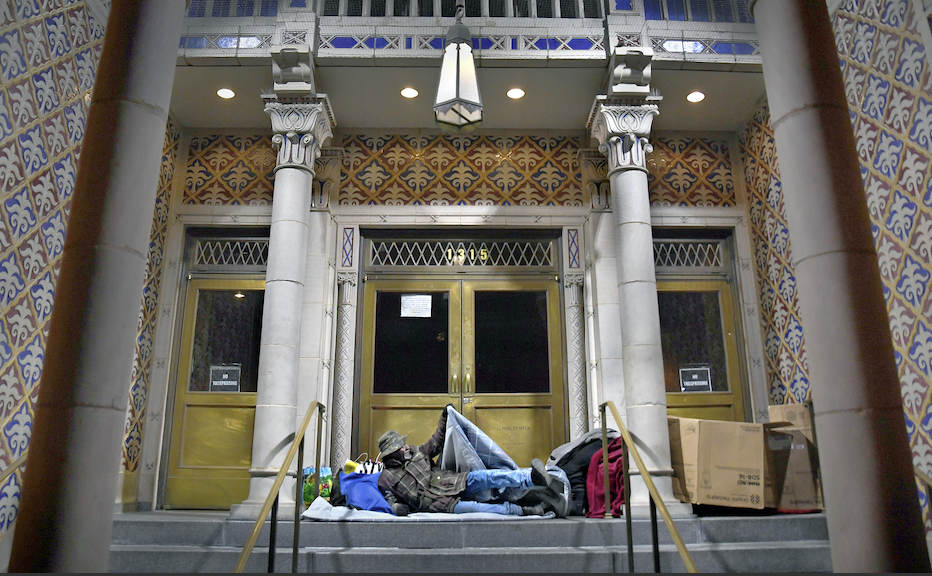
Robert Fox spent the night opposite Franklin Square park on the steps of the Sphinx Club at Almas Temple in Washington, D.C. MUST CREDIT: Washington Post photo by Michael S. Williamson

Robert Fox spent the night opposite Franklin Square park on the steps of the Sphinx Club at Almas Temple in Washington, D.C. MUST CREDIT: Washington Post photo by Michael S. Williamson

What he didn’t know was how any of that could happen.

Fox, 70, imagined all this as he sat on a bench in downtown Washington, D.C.’s Franklin Square, surrounded by makeshift tents patched together by people who, with Christmas less than 48 hours away, had already given up on finding a special place to spend the holiday. The temperature had climbed into the 50s, so he unbuttoned his wool coat and tipped back his full-brim camouflage hat, allowing the sunlight to cascade across the creases of his worried face.

His daughter lived 61 miles south, in a small town just outside Fredericksburg, Virginia. He has a cellphone but can’t afford to pay for service. He didn’t know his daughter’s number or even the number of anyone who did. He hadn’t seen her since a relative’s funeral five, maybe six years ago, and they hadn’t talked in four. He didn’t own a car, and in his pocket was all the money he had left in the world: 62 cents.

“I’m going through some things,” he said, but what that really meant was that he’d been living on the streets of the nation’s capital for nearly a year. That’s what had brought him to Franklin Square, an unofficial refuge for the city’s homeless. The District of Columbia has spent millions of dollars to reduce their numbers, and the city has been taking more families off the streets, but the number of single adults has continued to grow.

Fox acknowledged that he’s made some bad choices. He loves his five children, even if he hasn’t been around all the time. He’s struggled with drugs, off and on, he said, and been arrested a number of times through the years, once serving a year in prison on a cocaine conviction.

He had always found a way to earn a living, though, ever since he left home in Ruther Glen, Virginia, at age 14 to live with an aunt in the District of Columbia. Back then, he worked in the basement of the Saks Fifth Avenue in Chevy Chase, Maryland, draping clothes he could never afford on hangars. He has since held dozens of other jobs, as a roofer and painter and construction worker. In the 1970s, he lugged bags for travelers as a skycap at Washington National Airport, where Fox said he saw celebrities including James Brown and the Pointer Sisters pass by.

For a long time, he renovated houses and worked on cars, often with his oldest son, and that was enough to fill the fridge and pay the rent.

His life started to come undone about 15 years ago, when he came home to find his fiancee sprawled on their bed. An aneurysm had taken her life.

The cost of the funeral, he said, wiped out his savings, and from there, things just got harder. About four years ago, he was evicted from his place in Washington. For three years, he bounced from home to home, but his family and friends have their own problems, and most can’t afford to let him stay free. He understood.

He still spends some nights on their couches but many more on the streets, atop sheets of cardboard. When the drivers let him, Fox prefers to ride the public buses all night, because he feels safer on them. He said he’s always refused to beg for money.

His daughter, though – he knows she’d help him. That last time they talked was on a Thanksgiving, before he lost his home. He called her as he put the turkey in the oven and, as it happened, she had just done the same. They were both so happy to talk to each other, Fox said, that he cried, and she did, too.

Now there he was, on the bench in Franklin Square, hoping to find a way to her.

Fox figured he should take a Greyhound bus from Union Station to Fredericksburg, where he planned to call her. She would be angry, he said, because they hadn’t talked in so long, but he was certain she would forgive him.

“I know she’s going to say, ‘Dad, I’m on my way to get you,’ ” he said. “I know it.”

The bus ticket cost only $27, but he hadn’t learned that yet. He kept all that he owned – snacks, a jug of lemonade, extra socks – in three bags, and on Monday afternoon, he spent his last 62 cents on a Newport cigarette that he smoked down to the filter.

He was a newcomer to Franklin Square, where a historic school building facing the park once served as a shelter. He’d heard the homeless were taken care of there and, too, that they took care of each other.

Patrick Hill, who had lived on the streets for years, suggested Fox try the Georgetown Ministry Center or maybe a church up the street or maybe a pastor friend he knew.

“Hopefully we can get you that ticket,” Hill, 54, told him.

Lisa Smith, homeless for more than a decade after two strokes, offered Fox her cellphone so he could call his oldest son.

“We all help each other,” Smith told him, and she meant it. This park was her home. Every piece of clothing she wore that day – the blue jeans, camo shoes, maroon cap and leather jacket with the fur-lined hoodie – had come from donors who pulled up in cars and vans every day of the week.

She worried about what would become of Franklin Square, and all of them, as the city begins a massive renovation project in the coming months. The empty Franklin School is being transformed into a reading museum called Planet Word.

Smith understood the juxtaposition – the city’s least-powerful residents had claimed a five-acre home at the center of its most powerful neighborhood, just three blocks from the White House. Every day, attorneys, lobbyists and journalists with six-figure incomes peered down at them from the surrounding office buildings (including The Washington Post) or hurried past on their way to work, skirting the panhandlers, avoiding eye contact.

For Smith, though, Franklin Square is all she has.

“It’s like the outside world don’t even exist,” she said.

And what mattered most in this world, as the sun faded and the air cooled, was how to get Fox to his daughter.

Over the phone, his son had said Fox could work with him on a job in the District the next day, and that offered some comfort. Maybe he’d get lucky, he thought, and make enough to buy his bus ticket.

As the park’s lamps clicked on and night arrived, so, too, did the stream of altruists. A church group handed out toiletries and club sandwiches before a man dressed as Santa brought thick blankets and black backpacks, each one packed with more food and clothing.

Fox picked through the pack, hoping a gift card that could cover his ticket might be tucked in a pocket.

“I still don’t see no financing, but I ain’t giving up,” he told Hill.

Fox had collected too much stuff to ride the city bus all night, so, in two trips, he lugged all of it across the street and up the steps of the Sphinx Club at Almas Temple. He unfurled one of his new blankets, laid himself down and pulled a second one on top of him.

When he woke, just past 5 a.m. on Christmas Eve, he was no closer to Virginia than he had been the day before. Still, Fox remained hopeful.

He didn’t make it to the job with his son, but he did learn how much a bus ticket to Virginia cost and had come up with a new plan. He would go to Union Station and sell whatever he could – maybe the new coat he’d just been given, still labeled with the $100 price tag, or maybe the thick blanket or the backpack. If that didn’t work, Fox told himself, he would break his rule and, at last, beg people he didn’t know for money. Because Christmas was coming soon, and he just needed to make it to his daughter.

Industrial estates to see more investments next year: IEAT #ศาสตร์เกษตรดินปุ๋ย

#ศาสตร์เกษตรดินปุ๋ย : ขอบคุณแหล่งข้อมูล : หนังสือพิมพ์ The Nation

https://www.nationthailand.com/news/30379842?utm_source=category&utm_medium=internal_referral

Industrial estates to see more investments next year: IEAT

Dec 26. 2019
IEAT governor, Somjin Piluek

IEAT governor, Somjin Piluek
By The Nation

252 Viewed

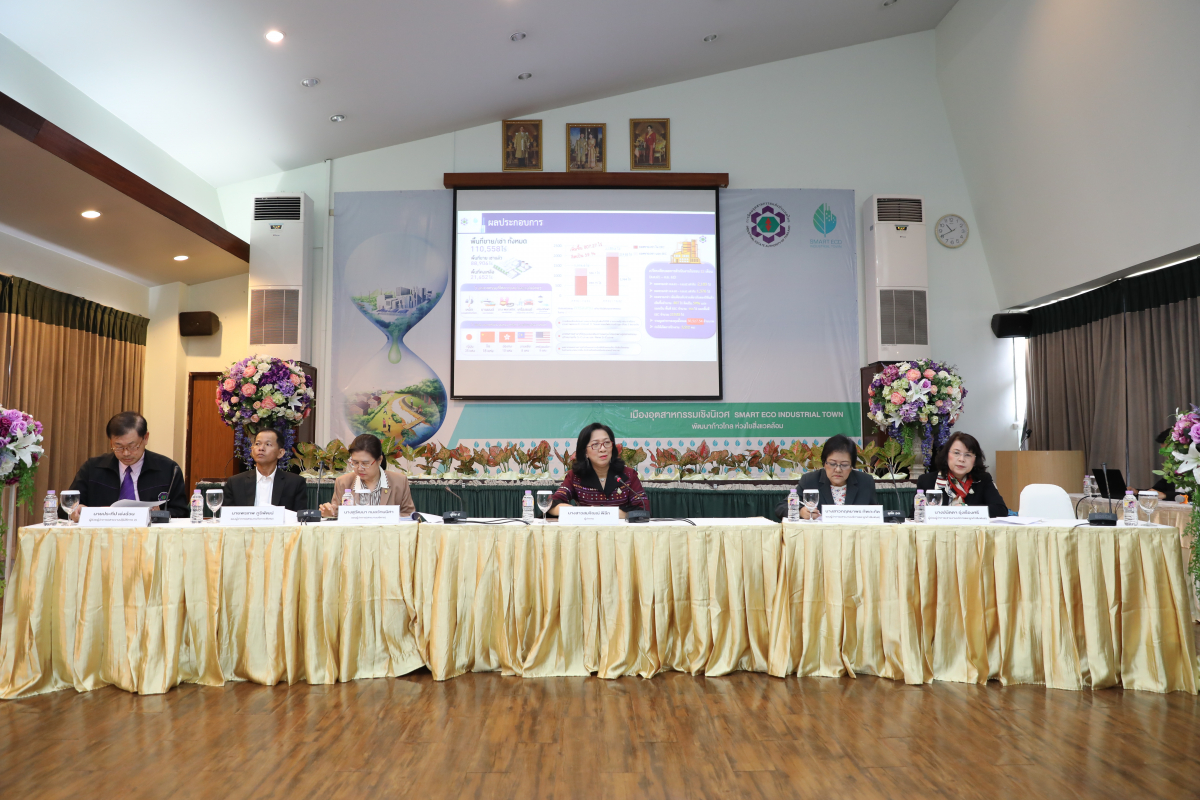
The Industrial Estate Authority of Thailand (IEAT) expected more industrial estate investments in fiscal year 2020, especially in the Eastern Economic Corridor (EEC) and Special Economic Zones (SEZs), said governor Somjin Piluek on Wednesday (December 25).

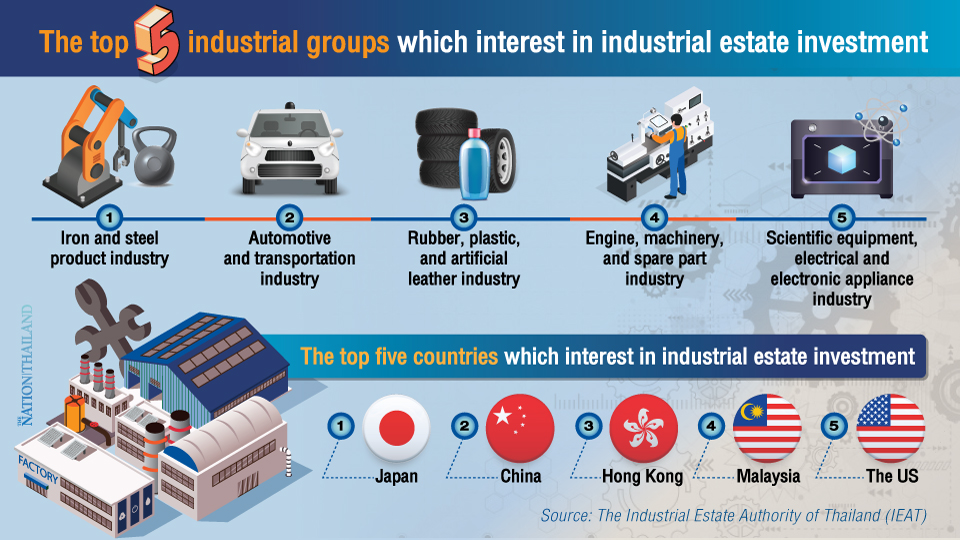
The positive factors for foreign investment, especially from Japan and China, include the government’s offer of both tax and non-tax privileges, and acceleration of the EEC mega project, such as Phase III of Map Ta Phut Port, the High-Speed Railway Airport Link system, development of U-Tapao International Airport and the establishment of the Aerotropolis, she said.

“The global economic slowdown, the baht appreciation, the US’s suspension of Thai’s Generalised System of Preferences (GSP) rights, and the prolonged US-China trade war prompting investors to move their production base to Thailand, have all affected existing investors in business expansion,” she said.

The IEAT’s performance in fiscal year 2019 from October 2018 to September this year showed a total investment of Bt30.52 billion, creating 5,512 jobs, up by 60 per cent from 3,446 in FY2018,

Sales/rental areas amounted to 2,183 rai, up by 807 rai or 59 per cent year on year from 1,376 rai, divided into 1,964 rai inside the EEC area and 219.85 rai outside the area. For the land inside the EEC, the sales/rental area increased 98 per cent year on year.

“The industrial estate areas under the supervision of IEAT and jointly operating with the private sectors in 16 provinces nationwide consist of 59 industrial estates and one industrial port. The industrial estate which IEAT signed a contract on was Rojana Chonburi 2 Industrial Estate (Khao Khansong),” Somjin said.

“The overall industrial estate area amounted to approximately 175,939 rai, divided into sales/rent of 110,558 rai, cumulative sales/rental area 88,906 rai, and remaining area 21,652 rai. The accumulated investment was approximately Bt4 trillion for 5,875 factories and employment of approximately 500,000 people”.

“The industrial estates under IEAT have the potential to fully support investors with various infrastructures and public utilities,” Somjin added.

“The authority also prioritised one-stop services to provide flexibility in contacting related government authorities, such as requesting approval and licence through the IEAT’s Total Solution Centre (TSC) to strengthen the competitive ability of entrepreneurs”.

Fare of MRT Purple Line to be set at a maximum Bt20 #ศาสตร์เกษตรดินปุ๋ย

#ศาสตร์เกษตรดินปุ๋ย : ขอบคุณแหล่งข้อมูล : หนังสือพิมพ์ The Nation

https://www.nationthailand.com/news/30379851?utm_source=category&utm_medium=internal_referral

Fare of MRT Purple Line to be set at a maximum Bt20

Dec 26. 2019
By THE NATION

698 Viewed

The Rapid Transit Authority of Thailand (MRTA) governor Pakapong Sirikantaramas said on Wednesday (December 25) that the Cabinet has approved the Ministry of Transport’s proposal to reduce the fare of Metropolitan Rapid Transit Chalong Ratchadham Line (MRT Purple Line) from Bt14-Bt42 to Bt14-Bt20.

“The new fare will be applicable for both holders of general public pass and buyers of tokens at station kiosks from 5.30am to midnight,” he said. “The fare for going onto the platform is Bt14, for travelling to the first station Bt17, then Bt20 for the next station to the terminus.”

Holders of the children pass (aged not over 14 years and between 91-120 cm tall) and senior citizens aged over 60 years will receive a 50-per-cent discount on all fares while holders of the student pass (aged over 14 years but not over 23 years) will receive a 10-per-cent discount. “For passengers changing from the MRT Blue Line to Purple Line, the maximum fare will be Bt48 per trip.”

According to the governor, the new price scheme will have a trial period of 3 months and run through March 31. “After the trial ends, MRTA will evaluate the suitability of the price again,” he said. “In this pilot phase, we estimate that the Purple Line will attract 17.8 per cent more customers or am additional 282,500 persons per month.”

Pakapong added that the fare reduction measure is in accordance with the government’s policy to reduce the cost of living while promoting use of the MRT system, which will help reduce the use of personal cars and decrease emissions, traffic congestion and road accidents in Bangkok.

The Mall Korat hosts first out-patient unit in a department store #ศาสตร์เกษตรดินปุ๋ย

#ศาสตร์เกษตรดินปุ๋ย : ขอบคุณแหล่งข้อมูล : หนังสือพิมพ์ The Nation

https://www.nationthailand.com/news/30379845?utm_source=category&utm_medium=internal_referral

The Mall Korat hosts first out-patient unit in a department store

Dec 25. 2019
By The Nation

946 Viewed

Suranaree University of Technology Hospital (SUTH) today (December 25) opened the country’s first out-patient unit at a department store, in collaboration with The Mall Korat.

Located on the second floor of the store, in the centre of the province, the new facility offers a more accessible channel for healthcare service.

The unit, under the concept of medical edutainment, provides information on health issues. There are two physicians working on two shifts, treating a wide range of health problems as well as preforming minor surgeries and prescribing special medicines.

Patient in need of surgeries will be sent to the main hospital.

There are two examination rooms, two operation rooms, fitted with modern medical equipment and a world-standard information system for speed and convenience.

The Mall Korat Department Store has waived rental fee of the facility for three years.

The OPD is open daily from 8 am – 8 pm including public holidays. Adjustments will be made, if the number of patients exceeds the current capacity for 150.

Christmas cheer #ศาสตร์เกษตรดินปุ๋ย

#ศาสตร์เกษตรดินปุ๋ย : ขอบคุณแหล่งข้อมูล : หนังสือพิมพ์ The Nation

https://www.nationthailand.com/news/30379844?utm_source=category&utm_medium=internal_referral

Christmas cheer

Dec 25. 2019
By The Nation

1,365 Viewed

Tourists celebrate Christmas at Khao Lak beach in Phang-nga province where many had lost their lives during the devastating tsunami that hit the Andaman Sea coast on December 26, 2004.

Tourists are enjoying swimming and sunbathing during the high-season tourism in the southern provinces of Thailand. Photos taken by Charoon Thongnual.

+++

+++

+++

+++

OIC launches ‘Seven Baht Plus’ micro insurance policy #ศาสตร์เกษตรดินปุ๋ย

#ศาสตร์เกษตรดินปุ๋ย : ขอบคุณแหล่งข้อมูล : หนังสือพิมพ์ The Nation

https://www.nationthailand.com/news/30379841?utm_source=category&utm_medium=internal_referral

OIC launches ‘Seven Baht Plus’ micro insurance policy

Dec 25. 2019
By THE NATION

913 Viewed

The Office of Insurance Commission (OIC) officially launched its ‘Seven Baht Plus’ micro insurance policy on Wednesday (December 25), led by secretary general Sutthipol Thaweechaikan.

The micro insurance, he said, specifies that buyers must be entrepreneurs buying it for the protection of workers or customers, or people purchasing it as a group.

The micro insurance is available at Government Savings Bank and on Shopee, the e-commerce website, from December 15 2019 to January 2020.

Eligible buyers must be twenty to seventy years old. Protection period of the insurance is set for thirty days, beginning from the date of purchase, at a premium of Bt7.

The policy covers covers four cases:

First, an insured person will get Bt100,000 of coverage if he/she loses his/her life, hand, foot, vision, or being disabled permanently from an accident. The coverage does not cover an insured person’s loss in cases of murder, assassination, and/or motorcycle accident.

Second, an insured person will get Bt50,000 if he/she dies or being disabled permanently in a murder, assassination, and/or motorcycle accident.

Third, an insured persons will get Bt5,000 of coverage for their funeral. This benefit does not cover death caused by illness in the first fifteen days of the protecting period.

Fourth, an insured person will get Bt150 per day for compensation if they are injured in an accident and is admitted as an in-patient to a hospital.

Monthly allowance for special needs people to be increased #ศาสตร์เกษตรดินปุ๋ย

#ศาสตร์เกษตรดินปุ๋ย : ขอบคุณแหล่งข้อมูล : หนังสือพิมพ์ The Nation

https://www.nationthailand.com/news/30379840?utm_source=category&utm_medium=internal_referral

Monthly allowance for special needs people to be increased

Dec 25. 2019
By The Nation

777 Viewed

The monthly allowance for those with special needs will be raised from Bt800 to Bt1,000, the Department of Empowerment of Persons With Disabilities’ committee decided at a meeting.

Deputy Prime Minister and Commerce Minister Jurin Laksanawisit chaired the meeting and said the resolution would soon be forwarded for approval to the Cabinet.

Some 2 million Thai citizens with special needs are expected to benefit from the allowance hike.

Budgetary allocation is expected to increase by Bt4.8 billion a year, which needs to be injected in the middle of 2020 or the beginning of 2021.

Durian smashing highlights alleged irresponsibility of Harley-Davidson #ศาสตร์เกษตรดินปุ๋ย

#ศาสตร์เกษตรดินปุ๋ย : ขอบคุณแหล่งข้อมูล : หนังสือพิมพ์ The Nation

https://www.nationthailand.com/news/30379836?utm_source=category&utm_medium=internal_referral

Durian smashing highlights alleged irresponsibility of Harley-Davidson

Dec 25. 2019
By The Nation

2,349 Viewed

Uthen Luangsangthong, the Thai impersonator of North Korean leader Kim Jong-un and the manager of “Rich Neon Light”, a commercial sign company, today (December 25) smashed a durian on the Haley Davidson motorbike he bought from AAS Harley-Davidson on June 2018, at the Ratchaprasong Intersection after encountering mechanical problems.

Earlier, the motorcycle was sent for inspection at the showroom after Uthen detected a problem. The showroom manager then contacted Uthen to pick up the motorcycle within three days, saying that the bike was in perfect conditions after a test-run from Chiang Mai to Bangkok.

However, Uthen claimed that he still saw water leaking from the motor and took a picture to prove it.

After discussing with the showroom manager and Harley Davidson’s representative in Thailand, it was agreed that Uthen should add Bt150,000 to the bike’s full price of Bt2.86 million in exchange for a new one.

Surprisingly, the showroom manager later went back on his word, arguing that the motorbike was still fixable and it was not necessary for a change to a new one,

Uthen decided to stage the incident in public as a protest against the lack of responsibility on part of AAS Harley-Davidson/Thailand.