Health & BeautyDec 27. 2020CDC Director Robert Redfield speaks during a briefing by President Trump’s coronavirus task force on Jan. 31 at the White House. MUST CREDIT: Washington Post photo by Jabin Botsford.
By The Washington Post · David Willman
A new virus was exploding in Wuhan, a Chinese city with 11 million people connected by its airport to destinations around the world. In the United States, doctors and hospitals were waiting for the federal Centers for Disease Control and Prevention to develop a test to detect the threat.
On Jan. 13, the World Health Organization had made public a recipe for how to configure such a test, and several countries wasted no time getting started: Within hours, scientists in Thailand used the instructions to deploy a new test.
The CDC would not roll out one that worked for 46 more days.
Inside the 15-acre campus of the CDC in northeast Atlanta, the senior scientists developing the coronavirus test were fighting and losing the battle against time.
The agency squandered weeks as it pursued a test design far more complicated than the WHO version and as its scientists wrestled with failures that regulators would later trace to a contaminated lab.
The Washington Post reviewed internal documents and interviewed more than 30 government scientists and others with knowledge of the events to understand more fully the missteps in those early weeks as the coronavirus began to spread unchecked across the nation. Most spoke anonymously because they were not authorized to do so publicly.
This account reveals new details about how an overly ambitious test design and laboratory contamination caused the CDC’s delay, and describes previously unreported challenges that confronted the agency scientists assigned to carry out the work.
CDC leaders underestimated the threat posed by the new virus – and overestimated the agency’s ability to design and rapidly manufacture a test. Quality-control measures failed to prevent the shipping of compromised kits to dozens of state and local public health labs.
The CDC’s response to what became the nation’s deadliest pandemic in a century marked a low point in its 74-year history. More than 329,000 Americans have died of the virus. In an agency long known for its competence, hubris became the nemesis that could not be overcome.
The CDC has quietly removed or shifted to other duties several scientists who were involved in developing the coronavirus test, according to those familiar with the matter. Those displaced included a longtime division director, a supervising branch chief and a respiratory virus specialist who led the design of the test.
The problems with the CDC’s test kits are the subject of ongoing inquiries by the Department of Health and Human Services’ inspector general and the U.S. Government Accountability Office.
“We missed the game,” a senior CDC disease-transmission specialist said in an interview. “Many people here wish we had done things differently.”
Nearly all of those in charge at the highest levels of the CDC lacked hands-on lab expertise and for weeks deferred to subordinates – scientists who were logging grueling, high-pressure hours on the highly technical work.
Stephen A. Morse, a retired agency microbiologist who had helped establish a formal affiliation with the public health labs to ensure rapid responses to outbreaks caused by nature or biological terrorism, said the CDC’s approach was simply too narrow.
It would have been prudent, he said, “to use the WHO test that was already available. At the same time, get a better understanding of the performance of that test – see if you could improve on it with a second-generation test, as opposed to trying to develop your own test, independent of what’s out there.”
Without tests to identify the early cases, health authorities nationwide were unable to isolate the infected and trace the rapid spread among their close contacts. Those who were asymptomatic, yet contagious, went undetected.
CDC Director Robert Redfield, an appointee of President Donald Trump, took a hands-off approach while the in-house manufacturing efforts foundered and agency scientists clashed over whether to alter the design of the problem-plagued test, according to CDC and other federal officials.
James Le Duc, who as the director of the Galveston National Laboratory in Texas oversees development of diagnostics for rare pathogens, said he is perplexed by the CDC’s decision-making.
“The test that the WHO used early on was quite successful,” said Le Duc, a former senior CDC official who still serves as an adviser to the agency. “I frankly don’t know why CDC didn’t accept it.”
Redfield and other CDC leaders declined to be interviewed or to respond to written questions about the agency’s handling of the test.
“Appreciate the opportunity, but we are going to pass,” said CDC spokesman Benjamin N. Haynes.
The struggles with the test kits had far-reaching consequences.
“If we would have put [tests] out there quicker, could we have saved lives? Well sure,” said Peter C. Iwen, director of the Nebraska Public Health Laboratory in Omaha. “If we would have diagnosed quicker, we would have saved people.”
– – –
Since its founding in 1946, the CDC has grown from a regional bulwark against malaria in the southern United States to a world leader in fighting diseases of all kinds.
Nowhere has the CDC’s presence abroad been larger than in Thailand, where the agency maintains offices and a staff of about 170 epidemiologists, laboratory specialists and others. In 1980, the CDC established its first overseas epidemiology program in a suburb of Bangkok, training a new cadre of disease detectives.
In early January, Thai doctors in Bangkok were worried by the outbreak in Wuhan, less than seven hours away by airliner. They strategized at length about the threat with their local CDC counterparts. They also learned from scientists enough about the genetic makeup of the new coronavirus to begin developing a molecular test for in-hospital use.
That initial test would use real-time polymerase chain reaction, or RT-PCR, to examine sputum samples in search of unique genetic material from the virus.
On Jan. 12, using their new test, the Thais became the first country to confirm a coronavirus case outside China, a sickened traveler from Wuhan.
The same day, the Chinese posted on the Internet what public health authorities worldwide had been waiting for: the complete genetic sequence of this previously unseen strain of the coronavirus, the cause of the disease soon to be named covid-19.
Another breakthrough came the next day, Jan. 13, when the WHO publicly shared a protocol, essentially a recipe, specifying the materials needed to build a molecular test.
The Thais used that protocol to make a second test to detect the virus. This redundancy would eventually become the model for developing a vaccine against the virus.
“Multiple shots on goal,” as Anthony Fauci, the U.S. infectious-disease expert, often said of the approach. That way, said Fauci, if one attempt stalled or failed, another might score.
The approach paid off immediately for the Thais.
“We have not relied only on one testing technique from one laboratory,” Krit Pongpirul, a researcher and clinical epidemiologist at Bangkok’s Bumrungrad International Hospital, said in an email exchange with The Post.
Using their version of the WHO test, Thai health officials within days found other cases, including a taxi driver. He had not been to Wuhan, but Pongpirul and a colleague suspected he had become infected by Chinese travelers. Thai officials traced and tested close contacts of the cabbie and others who were found to be infected. The contacts were persuaded to isolate themselves to prevent the virus from spreading.
One of the infected, the Thais found, was asymptomatic – an early warning that the coronavirus was being spread by those not overtly sick.
“Patient 4 had detectable [virus] for 4 consecutive days, but we were only able to follow her for 7 days before she returned to China,” the Thai doctors and others wrote in a subsequent scientific journal article. “Her case is an example of a person without reported symptoms but with radiologic evidence of disease and detectable virus over several days.”
By the end of January, the Thais had diagnosed 11 patients with covid-19, according to Pongpirul, who described the details in the email correspondence and in the journal Emerging Infectious Diseases, published by the CDC.
Four of Pongpirul’s 11 co-authors were CDC specialists – three of them based in Bangkok and the other in Atlanta.
“The early availability of the RT-PCR testing definitely helped to reduce transmission and save lives,” Pongpirul told The Post by email.
The Thai scientists shared their success and insights in a Jan. 13 conference call that included CDC personnel in Bangkok and at headquarters in Atlanta.
“This was the first indication of international spread,” said an Atlanta-based official who described the call as riveting. ” ‘Why Thailand?’ We found out there was a direct flight from Wuhan.”
John R. MacArthur, a physician who had led the CDC’s Thailand operations since 2013, said that when PCR testing confirmed the first case there, “I immediately contacted CDC leadership in Atlanta to let them know what was happening.”
“Seeing the first case outside of China, I thought, was a big moment,” MacArthur said in a phone interview.
MacArthur, one of the co-authors of the journal article, said the CDC’s lab training in Thailand gave officials there “the tools that they needed to respond very quickly and effectively.”
At CDC headquarters, officials did not adopt the strategy that proved successful in Thailand.
Instead, the agency planned to design and manufacture its own test in-house and ship 300 of those kits to 120 public health labs throughout the United States.
At the time, CDC officials in Atlanta expected that the strain emanating from Wuhan, while worrisome, would be no worse than two earlier coronaviruses that spurred dread before fizzling out, those familiar with the matter said.
One of those viruses, severe acute respiratory syndrome, or SARS, originated in China in late 2002 and killed 774 people worldwide, but none in the United States. Middle East respiratory syndrome, or MERS, emerged in 2012 and over the next seven years killed 866 people, but resulted in only two U.S. infections and no deaths.
Neither SARS nor MERS was known to be widely spread by people who had no symptoms.
“It was being treated as a MERS situation or a SARS situation,” said a CDC scientist who had helped confront the new threat in January and who declined to speak on the record because he was not authorized to do so. “At that point we thought it was going to be a limited activity.”
– – –
In the first week of January, Nancy Messonnier, a physician and director of the CDC’s National Center for Immunization and Respiratory Diseases at the Atlanta campus, spoke to Stephen Lindstrom, an accomplished respiratory virus specialist. She wanted to know if, and how soon, he could get a coronavirus test up and running.
“Can you make this happen?” she asked, according to a person familiar with the exchange.
Lindstrom, co-inventor of seven earlier CDC tests for strains of the flu, had transitioned in 2018 to lead a respiratory virus lab that focused on diseases other than influenza.
Before saying yes to Messonnier, Lindstrom had an ask that she would promptly grant: He needed to pull in at least 20 people to supplement his staff of eight lab specialists.
On Jan. 9, Lindstrom outlined his plans to Messonnier, as well as the director of the viral diseases division, Mark A. Pallansch, and the respiratory viruses branch chief, Susan Gerber, among others. In a conference room near Messonnier’s eighth-floor office, Lindstrom narrated a slide show that spelled out how the test manufacturing and other tasks would be divided up.
That same week, Lindstrom recruited Julie M. Villanueva, who was also a PhD scientist and with whom he had collaborated on anti-flu efforts over the previous decade. In 2016, she had led the CDC’s Emergency Operations Center during an outbreak of the Zika virus.
Over the next few days, Lindstrom, who had not previously designed a coronavirus test, set about researching what materials were necessary as well as a recipe for combining them to detect the virus with PCR.
All of the CDC scientists and officials involved with the test’s development and named in this report – including Messonnier, Lindstrom, Pallansch, Gerber and Villanueva – declined to comment or referred questions to the agency’s public affairs office.
Invented in 1983, PCR is a multi-step test to detect infectious agents, including viruses in humans, using a sample of sputum or other genetic material. A machine extracts nucleic acids from the sample, placing them into a small tube with various chemical reagents, including an enzyme that converts viral RNA, which is present in coronaviruses, into DNA.
Some of the solution is then transferred to tiny plastic wells containing additional reagents to help detect whether the virus is present. The wells are placed into a PCR machine, resembling a midsize office photocopier.
The process seeks to copy and amplify targeted regions of the coronavirus genome. If the virus is present in the original sample, a detectable, fluorescent dye is released.
Two components that Lindstrom designed for the CDC’s test, called N1 and N2, focused on separate regions of the virus’s genome, a conventional approach.
But Lindstrom, aided by a lab colleague with coronavirus experience, Xiaoyan Lu, chose to add a third component that distinguished the CDC’s test design from others: This component would identify a wider family of coronaviruses, including SARS and bat-carried strains not known to have infected humans. They called it N3, and Lindstrom told colleagues it would help detect the novel coronavirus if it began to mutate, according to interviews with those familiar with the matter.
Villanueva’s chief role was to ensure that each step of development and production was properly documented and communicated to the public health labs and to regulators at the Food and Drug Administration. CDC officials expected the FDA to expedite emergency authorization of the test, and scientists said Lindstrom and Villanueva worked so seamlessly that colleagues took to calling them what sounded like one name, “Steve-and-Julie.”
On Jan. 17, just days after the Chinese made public the virus’s genetic sequence, Messonnier announced at a news briefing that health authorities in Thailand and Japan had already used molecular testing to detect coronavirus cases. Testing was beginning as well in South Korea and Taiwan.
“We at the CDC also have the ability to do that today, but we are working on a more specific diagnostic,” Messonnier said, indicating that the agency was seeking a more sophisticated test.
To provide reliable detection, a PCR test must be sensitive enough to identify microscopic levels of a pathogen – and able to distinguish them from genetic neighbors.
During the same briefing, Messonnier gave a low-key forecast of what to expect from the new coronavirus.
“It’s highly plausible that there will be at least a case in the United States,” she said.
Nationwide, the stakes were magnified because the 120 public health labs were without a government-approved test of their own and, with few exceptions, depended wholly on getting the CDC’s kits. Based on Messonnier’s forecast, companies had no incentive to navigate regulatory hurdles and mass-produce kits.
Representatives from the public health labs listened to Messonnier’s remarks on Jan. 17 and heard no grounds for concern.
Scott J. Becker, chief executive of the Association of Public Health Laboratories, recalled thinking: “We’ll get 100 labs up and running really quickly. We’ll be on top of this.”
Confidence remained high over the next few days. Messonnier said in another briefing that, as of Jan. 19, the CDC had “finalized development” of its test. The CDC used it in Atlanta, she said, to quickly confirm the first known U.S. coronavirus case, a man in Washington state who had just returned from Wuhan.
“Right now, testing for this virus must take place at CDC, but in coming weeks, we anticipate sharing these tests with domestic and international partners,” Messonnier said, adding, “We continue to believe the risk of this novel coronavirus to the American public at large remains low.”
On Jan. 30, the New England Journal of Medicine published an account from German doctors describing a worrisome twist with the virus.
They documented the case of a 33-year-old “otherwise healthy” businessman who took ill on Jan. 24 with a sore throat, chills and body aches from what turned out to be covid-19. Three days before, he had met extensively in Munich with a Chinese counterpart. At the time they interacted, she had shown no signs of sickness. But the woman became ill on her return flight to China, where she tested positive for the virus on Jan. 26.
It was “notable,” the doctors wrote, that the woman’s “infection appears to have been transmitted during the incubation period,” before she showed symptoms.
– – –
Lindstrom had seen no significant trouble with his nascent test when he confirmed the diagnosis of the first U.S. patient on Jan. 19, those involved said. As February approached, he was collaborating with Villanueva and their team to work through the remaining technical details.
They had to ensure proper manufacturing of the test so it could be distributed to the labs nationwide, and also secure the FDA’s swift authorization.
Lindstrom, who grew up in the Canadian prairie province of Saskatchewan, was known to colleagues as diligent, accessible and, at times, bluntly spoken. A self-described lab geek, he had worked at the CDC since July 2000.
Now he was conducting a burgeoning scientific orchestra.
Lindstrom turned to the Biotechnology Core Facility Branch on the CDC’s Atlanta campus to make detection-enabling “probes” and “primers.” These were synthetic nucleic acids to be added to the mixture of other reagents. As the core lab commenced production on Building 23’s top floor, it sent Lindstrom a portion of each batch for quality-control vetting.
He still saw nothing of undue concern, according to those involved. With help from a third lab, the Reagent and Diagnostic Services branch, also in Building 23, the materials were poured into vials and readied for shipment to the states. On Feb. 4, the FDA granted the emergency authorization.
The state labs started vetting the kits, using samples that contained no virus. Then calls and emails began coming in to Atlanta describing a consistent problem: false-positive results – confined to Lindstrom’s signature N3 component.
Lindstrom tried to grasp the underlying cause. Were the labs doing something wrong? Could his design or protocol for conducting the tests be revised to eliminate the false positives and ensure reliable detection? Did something go wrong with the CDC’s manufacturing?
The troubleshooting dragged on for weeks, but the false positives persisted. The CDC halted further shipment of the kits.
Soon the state labs and the Association of Public Health Laboratories were pressing the CDC: What about streamlining the test to get it up and working? Lindstrom and Villanueva opposed doing so.
“We had a conversation with Steve and Julie and asked, specifically: ‘Lots of members are asking if we can drop N3 and just keep N1 and N2,’ ” recalled Kelly Wroblewski, director of infectious diseases for the professional association, based in Silver Spring, Md.
“And their response at that point was: ‘FDA isn’t going to go for that.’ Both of them were like, it’s a non-starter.”
Government officials later told The Post that the FDA would have considered proposals to remove N3.
Some CDC scientists also were questioning among themselves the need for N3.
“Why are we trying so hard? . . . We know there’s a problem with it,” one of them recalled asking.
Instead of dropping N3, the CDC set about trying to manufacture a new batch of reagents in hopes of eradicating possible contamination that had caused the false positives. On Feb. 11, Villanueva informed directors of the state and local labs about the development.
“Thank you for your patience as CDC investigates reported sporadic aberrant reactivity in the N3 assay,” Villanueva wrote in an email. “After consultation and agreement with FDA, CDC is currently manufacturing and quality control testing a new N3 primer/probe set. . . . We hope to provide this replacement component as soon as possible.”
Lindstrom contacted industry sources, seeking private vendors that could promptly make more reagents, officials said. Scientists said he complained to colleagues about what he saw as a lack of urgency within the CDC to expedite the paperwork necessary for the contracts.
The public health labs remained in limbo as the virus continued to spread.
On Feb. 15, the labs’ newly formed task force on coronavirus testing circulated a bulletin, noting that “an overwhelming number of labs” had reported problems with the N3 component, adding in boldface, “The Task Force does not recommend that any PHL proceed with testing until CDC issues the new primer/probe set for the N3.”
The same bulletin advised that several of the labs had also reported “similar, although less frequent issues” with the N1 component.
A Feb. 17 email from a CDC supervisor, Darin Carroll, to six agency scientists, including Lindstrom, described concern about lab-induced contamination.
Referring to Jan Pohl, the core lab’s director, the email said, “Jan’s thoughts are that if the production facility is found to be free from contamination today it may be possible to have a small production run ready for drying/assembly by late this week.”
That same week, officials from a unit of the CDC responsible for monitoring lab safety and quality, led by associate agency director Stephan Monroe, traveled to the FDA’s offices in Silver Spring to confer about the false positives. Lindstrom also spoke with Monroe’s staff and opened his team’s lab records for review.
Meanwhile, the CDC tasked Lindstrom’s team with overseeing prompt PCR analyses of a growing number of samples arriving from the state labs, which remained unable to conduct tests themselves because the kits were unreliable.
Travelers returning from virus-besieged cruise ships were escalating demands for rapid test results in Atlanta. Lindstrom and Villanueva were also ordered by agency administrators to document their work in a separate information-management system, a time-consuming chore.
In mid-February, Lindstrom sought to clarify priorities at a meeting he attended that was led by the CDC’s coronavirus incident manager, influenza specialist Daniel B. Jernigan, and others in charge. “Tell me what the f— you want me to do,” Lindstrom said, a person who heard the remark recalled.
Though pressure mounted from the public health labs and from within the CDC, Lindstrom and Villanueva defended the test’s design.
Lindstrom warned superiors that dropping N3 might lead to missed cases of infection, false negatives. Villanueva told colleagues that the design was of “Nobel quality,” according to those familiar with the matter.
Lindstrom also conferred with Pohl, the chief of the core lab. A chemist, Pohl initiated rigorous measures to eliminate any contamination that might be causing the false positives, which were not confined to N3, records show.
Nine public health labs, including facilities serving the city and state of New York, the District of Columbia and Minnesota, reported difficulty with N1, lab officials said. The FDA would later conclude that N1 was probably contaminated during work in Lindstrom’s lab in Building 18, a view shared by CDC leaders.
In an email on Feb. 19, a scientist at the core lab, Nicky Sulaiman, told Lindstrom that Pohl had agreed to also decontaminate “all . . . areas and instruments” to be used in further manufacturing of the reagents.
On Feb. 23, a diagnostic-test expert from the FDA, Timothy Stenzel, entered the CDC to examine how the test kits were developed. He concluded that lab conditions for making the kits were substandard and that contamination was the most likely cause of the many N3 false positives, federal officials told The Post. It was likely, Stenzel later told HHS lawyers, that the contamination occurred during quality-control checks made in Lindstrom’s lab.
Stenzel saw nothing wrong with Lindstrom’s design, including N3 – but he flatly advised the CDC to shift any additional manufacturing of the kits to outside contractors.
Lindstrom believed that the contamination with both N1 and N3 stemmed from the core lab, those familiar with the matter said. He continued to say that the kits should include N3.
Meanwhile, the delays had become a national crisis.
By the third week of February, Fauci, the director of the National Institute of Allergy and Infectious Diseases, who was leading the government’s quest for a coronavirus vaccine, ducked into the office of Brian Harrison, chief of staff to HHS Secretary Alex Azar, about the stalemate with testing.
“Brian – you’ve got to do something,” Fauci said. According to officials familiar with the conversation, Harrison replied, “I share your concern.”
Azar urged Redfield and FDA Commissioner Stephen Hahn to intervene and take steps to end the impasse, a department official said. On Feb. 26, the FDA told the CDC by email that public health labs could use the test, without N3.
Two days later – 46 days after the World Health Organization publicly shared its protocol for coronavirus testing – Messonnier announced that the labs “can start testing.”
– – –
Throughout the CDC’s struggle to deliver a reliable test, Director Redfield repeatedly assured officials that a solution was close at hand, according to interviews with those involved.
When members of the White House coronavirus task force pressed him, Redfield, a physician and longtime HIV researcher, signaled complete faith in the CDC’s scientists. One task force member recalled that Redfield “kept on saying, ‘We got this covered, don’t worry.’ He made it seem that the fix was quick, a minor thing.”
Another official, who was privy to Azar’s regular phone calls with Redfield, said the low-key CDC director consistently defended the agency’s approach with the test kits.
“This was kind of the theme for about a month,” said the official, who spoke anonymously because he was not authorized to comment.
Messonnier has told colleagues that, not being a virologist or laboratory specialist, she relied on subordinates with greater subject-matter expertise.
Starting in spring and over the next few months, CDC leaders removed or shifted several of the people who worked on or supervised the original test, officials said.
Lindstrom was shifted to an advisory role and no longer leads the respiratory virus lab.
Gerber, Lindstrom’s boss and an epidemiologist experienced with coronaviruses, was excluded from supervisory decisions and accepted a scientific position elsewhere in the agency.
Pallansch, who oversaw Gerber and Lindstrom, was removed by Messonnier from his job as director of the viral diseases division and now holds a title of special adviser, officials said.
A polio virus expert and 36-year CDC employee, Pallansch told colleagues that if he had known about the N3 component when the test was designed, he would have challenged its inclusion as unnecessary. A person familiar with Pallansch’s thinking also said he regretted not having initially sought out the information.
In a June 19 report on the testing problems, the HHS lawyers said that “time pressure to ship test kits out quickly” may have caused the CDC to shortchange proper quality control and to miss “anomalies in data” and “likely” contamination before the kits were released.
What happened at the CDC remains under scrutiny by the HHS inspector general and by the GAO, according to their representatives. The department lawyers also have recently questioned Messonnier and staffers involved with making the kits, officials said.
Global mortality from the disease has varied dramatically: Thailand, South Korea, Japan and Taiwan, all of which jump-started coronavirus testing in January, have experienced death rates of less than 2 per 100,000 people. In the United States, the rate is 91 deaths per 100,000 people, according to lab-confirmed cases archived by Johns Hopkins University. Experts hesitate to quantify how many lives were saved by the early testing in Asia.
But Michael V. Callahan, a Massachusetts General Hospital infectious-disease physician who was detailed in February by HHS to help repatriate Americans from cruise ships hit by the coronavirus, said the CDC and the White House should have seen the gravity of the threat.
“We had a fast-moving outbreak with a solution at hand,” said Callahan, referring to the tests used immediately in Thailand and elsewhere. “Yes, CDC should make its own super-special test. But until then, they should make the test that will help us curb the problem.”
In recent weeks, senior CDC officials, including Jernigan and Monroe, have been drafting a review of the testing struggles that attributes the test failures with N3 to Lindstrom’s design, and with N1, to contamination in his lab. Officials said the summary is envisioned for public release, possibly in a scientific journal.
The GAO’s chief scientist, Timothy M. Persons, said that lessons to be learned from the CDC’s mishandling of coronavirus testing should shape policy for future outbreaks.
“The whole thing is a race,” Persons said. “You have to get the testing right as soon as possible, because if you don’t, you don’t know the size of the problem.”
The highly transmissible variant of the coronavirus first detected in England had by Saturday been documented in several European countries, as well as Canada, Japan, Australia and Lebanon, despite efforts to curb its spread through massive global disruptions in travel and movement.
Fears over the fast-spreading form of the virus that causes covid-19 come in sharp contrast to a wave of hope sweeping some countries and communities as vaccination programs begin to be rolled out. Scientists do not think the British variant is more deadly or resistant to the current coronavirus vaccines.
The variant has also been detected in France, Denmark, Spain, Sweden, the Netherlands, Germany and Italy.
In Canada, Ontario’s Chief Medical Officer announced Saturday that they had confirmed two cases, the first detection of the variant in North America. The patient, a couple, had no known travel history, meaning it was likely a case of community spread.
While the United States has not yet reported a case, experts say it is probably due to the nation’s very low rate of genetic sequencing of the virus to check for such changes, despite Americans leading the world in coronavirus infections and deaths.
Beginning Monday, the U.S. government will require all travelers flying in from Britain to show proof of a negative coronavirus test taken within 72 hours of the plane’s departure. Early in the pandemic, the United States banned travelers from China and the European Union, among others, though by that point the novel coronavirus had already been widely spreading undetected due to limited U.S. testing.
Japan on Saturday temporarily banned all foreign nationals except those with residency from entering the country starting Dec. 28 through the end of January. Japan reported its first case of the British variant on Friday amid a new surge of coronavirus cases in the capital, Tokyo. Japan said five patients detected with the variant had all traveled from the United Kingdom, from which Japan had curbed travel last week.
Countries across Europe and other continents began to block or restrict travelers from the U.K. last week in reaction to the variant’s outbreak. Some, like France, have since walked back near total border closures amid widespread disruptions in trade and travel.
France initially closed its border to all travelers from the United Kingdom on Sunday, but on Wednesday began allowing E.U. citizens to pass through. The border closure, however, led to a massive backlog in freight trucks, leading thousands of drivers stuck Christmas Day near the border waiting for coronavirus test results to be able to cross the English Channel back to France.
Elsewhere, hopes are tentatively rising. Hungary on Saturday became the first European Union member to begin vaccinations, a day ahead of France, Germany and Spain, among others, who will kick off vaccinating high-risk populations on Sunday.
Scientists, however, are additionally closely following news of another variant of the novel coronavirus first detected in South Africa that experts say also appears to be highly transmissible. British health officials have already documented cases of the South African variant in the United Kingdom.
Dec 27. 2020Jamal “Kherow” Yusupov of Russia and Samy “AK47” Sana of France
By THE NATION
ONE Championship returned to the Singapore Indoor Stadium for the promotion’s final event of 2020.
Jamal “Kherow” Yusupov of Russia
ONE: Collision Course, a previously recorded event broadcast globally on Friday, featured a series of impressive performances in the Circle from the world’s top mixed martial artists and Muay Thai stars.
In the main event, No. 2-ranked featherweight Muay Thai contender Jamal “Kherow” Yusupov of Russia was sharp and powerful across three rounds, overwhelming No. 4-ranked contender Samy “AK47” Sana of France and Algeria en route to a unanimous decision victory.
Yusupov employed a laser-like straight left that hammered Sana’s chin throughout the action-packed bout. In the second round, one of those explosive left hands sent Sana crashing to the canvas as the referee administered the mandatory count. The French-Algerian tried to turn up the pressure in the third stanza and swing the momentum in his favour, but Yusupov kept his composure and continued his unrelenting onslaught.
In the end, all three judges scored the bout for Yusupov, who earned the nod behind an impressive display of power and technique.
In the co-main event, former ONE flyweight world champion Kairat “The Kazakh” Akhmetov of Kazakhstan turned in a masterful performance, dominating “Ottogi” Dae Hwan Kim of South Korea across three rounds to earn a convincing unanimous decision. Akhmetov put on a striking clinic, pouncing on his opponent with a healthy dose of looping hooks and debilitating kicks that connected with power and precision. Kim tried his best to counter, but he lagged behind throughout the bout. In the end, Akhmetov’s complete showcase of skills was more than enough to clinch the victory on the scorecards.
A ONE Super Series Muay Thai showdown between WBC Muay Thai champion Momotaro of Japan and former ONE world title challenger Walter Goncalves of Brazil ended abruptly when Goncalves suffered a leg injury in the second round that forced him to bow out of the contest. In round one, Goncalves attacked with a steady torrent of thudding kicks that kept the Japanese fighter on the defensive. In round two, however, the Brazlian appeared to tweak his knee when a kick made contact with Momotaro, who earned the TKO.
In a heated three-round battle between talented lightweight mixed martial artists, South Korea’s “Crazy Dog” Dae Sung Park edged out Singapore’s Amir Khan to earn a narrow split decision on the scorecards. Khan played the role of aggressor for the duration of the bout, connecting on pinpoint striking combinations from range, while Park owned the wrestling and grappling exchanges. A strong third round from Park turned the tide, and in the end, the South Korean’s success on the mat was enough to convince the judges.
Highly regarded Russian welterweight Raimond Magomedaliev made quick work of Brazil’s Edson Marques to win a devastating knockout in the first round. Magomedaliev began the contest attacking Marques’s legs with low kicks and feints to slow his movements. Once Magomedaliev had Marques backed up against the Circle Wall, a thunderous right cross sent the previously undefeated Brazilian to the canvas for good, as the referee called a halt to the contest.
It was an action-packed affair between Japan’s Senzo Ikeda and China’s “The Little Monster” Liang Hui to start the evening. Both men tested each other’s chins with explosive strikes, with neither wanting to back down. Liang brandished a tremendous overhand right paired with a sharp left hook that had Ikeda reeling throughout the contest. Meanwhile, Ikeda employed a piston-like left jab that nearly shut Liang’s right eye, as well as a robust ground game that undoubtedly swayed the decision in his favour. In the end, all three judges scored the bout for Ikeda.
Official results
Muay Thai – featherweight: Jamal Yusupov bt Samy Sana via unanimous decision
Mixed Martial Arts – catch weight (62.2kg): Kairat Akhmetov bt Dae Hwan Kim via unanimous decision
Muay Thai – flyweight: Momotaro bt Walter Goncalves via TKO at 0:30 of round two
Mixed Martial Arts – lightweight: Dae Sung Park bt Amir Khan via split decision
Mixed Martial Arts – welterweight: Raimond Magomedaliev bt Edson Marques via knockout at 1:52 of round one
Mixed Martial Arts – catch weight (60kg): Senzo Ikeda bt Liang Hui via unanimous decision










.jpg)




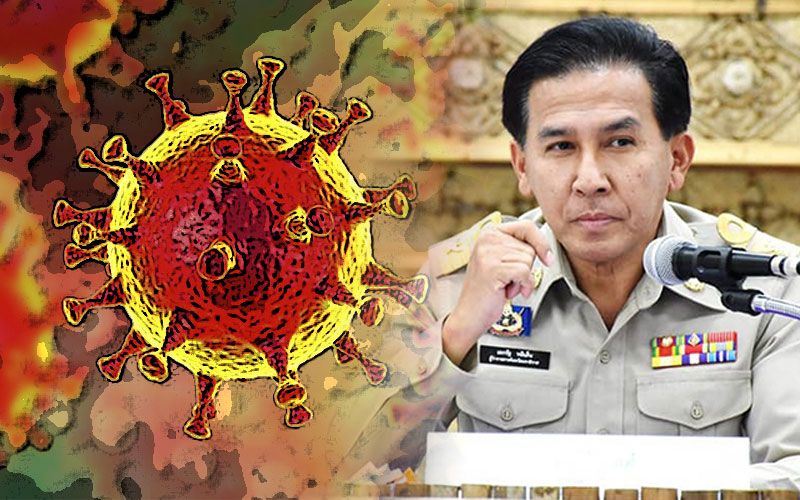
 CDC Director Robert Redfield speaks during a briefing by President Trump’s coronavirus task force on Jan. 31 at the White House. MUST CREDIT: Washington Post photo by Jabin Botsford.
 Jamal “Kherow” Yusupov of Russia and Samy “AK47” Sana of France