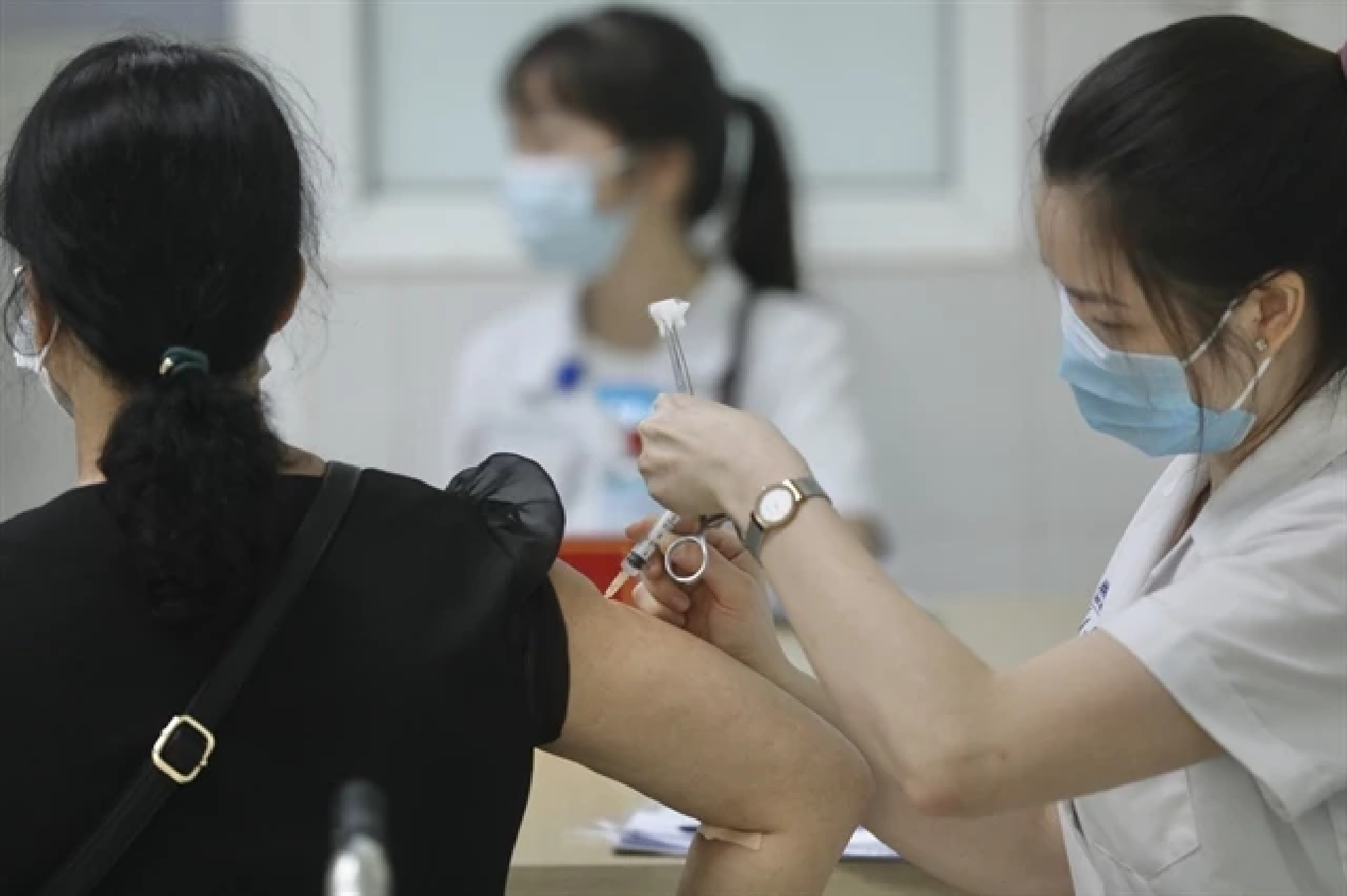
HÀ NỘI — The National Ethics Committee in Biomedical Research has said more data about the efficacy of the homegrown COVID-19 vaccine Nano Covax is needed.
The Ministry of Health on Monday announced the conclusion of the committee meeting on December 16 to look into updated reports on mid-term phase 3 trial results of the vaccine.
The data available for review was until November 30, 2011. The report was submitted to the committee on December 9.
Nano Covax meets the requirements regarding vaccine safety and immunogenicity, according to the committee’s conclusion.
However, regarding the efficacy or the ability of a vaccine to prevent infection or symptomatic infections (based on the number of people infected with COVID-19 after getting the shots), the committee said more data was still needed to evaluate it fully.
The committee approved the Việt Nam Military Medical University and the Pasteur Institute in HCM City, which are in charge of the trial, and Nanogen Pharmaceutical Biotechnology JSC in HCM City as the donor, to identify those who took part in the trial and were infected with COVID-19 as of December 13 to have more data for analysing and assessing the vaccine efficacy.
They were required to complete the report and submit it to the Committee before 3pm, December 22, for evaluation.
Under the latest guidelines from the health ministry, domestically developed COVID-19 vaccines could be authorised for emergency use if they prove to be safe and effective in mid-term phase 3 findings, with further monitoring required even after obtaining such approval. — VNS
65 technologies from chip, battery and vaccine sectors to be developed as national strategy in 2022
SEJONG — South Korea has publicized its goals of attaining full-fledged normalization of the economy beyond the pandemic crisis in 2022, alongside taking the lead in global competition to occupy future businesses.
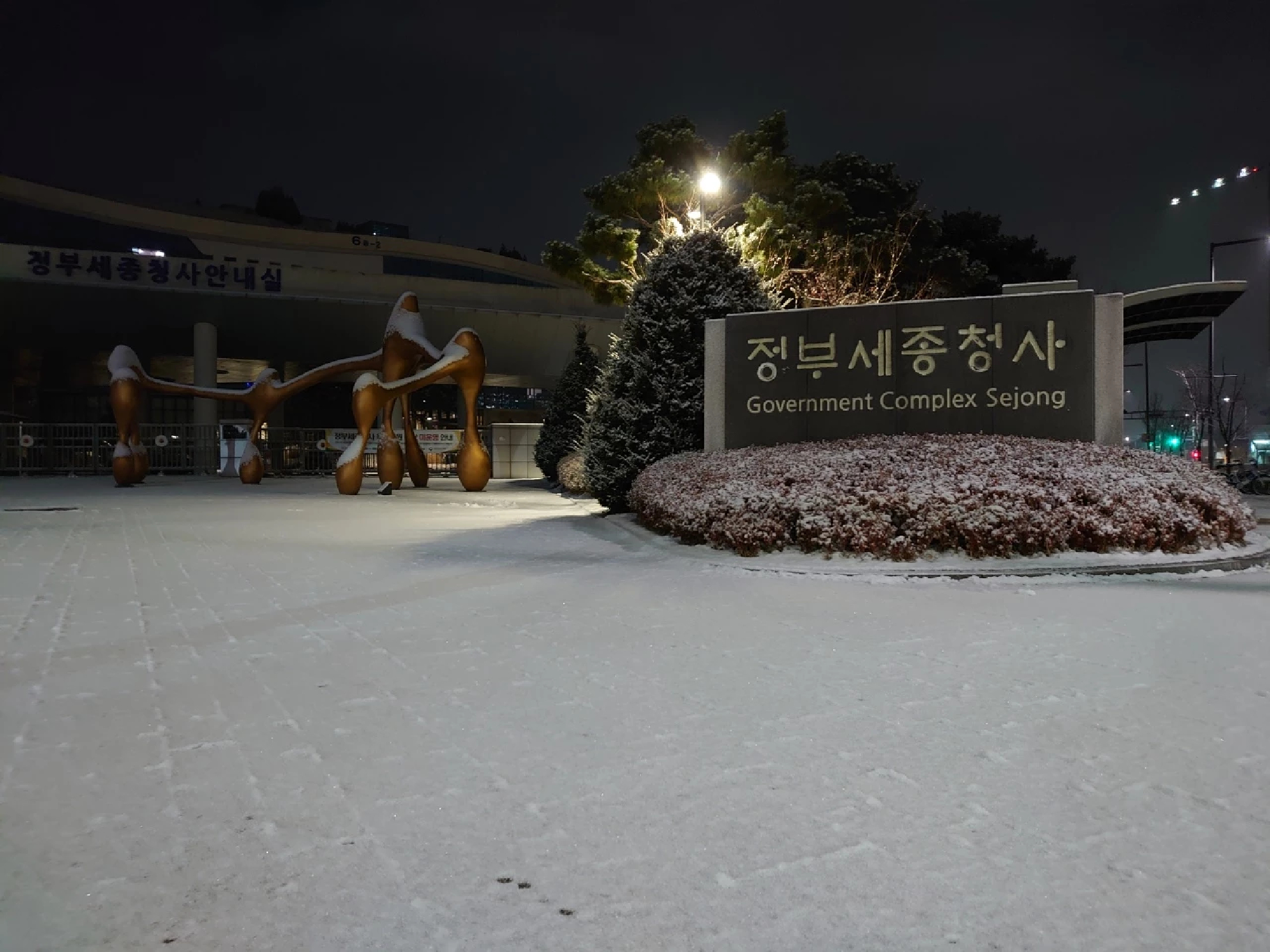
Deputy Prime Minister and Finance Minister Hong Nam-ki highlighted these dual goals during the government’s unveiling of economic policy directions for next year at the Government Complex in Seoul on Monday.
In a bid to maximize the economic normalization, the Ministry of Economy and Finance has decided to carry out policies to boost private consumption — particularly promoting the tourism sector, which was severely hit by COVID-19.
The ministry told a briefing that the government will offer a variety of benefits to outbound travelers, which will certainly be sought in connection with the future situation of the pandemic involving quarantine.
A noteworthy benefit is the plan for abolishing the upper ceiling of $5,000 (5.9 million won) in purchase of goods at duty-free stores nationwide. Formerly, the price ceiling for outbound tourists (Koreans) was elevated from $3,000, allowed since 2006, to $5,000 in 2019.
In addition, the operation period of nonlanding flight tour products will be extended from “until the end of 2021” to “June 2022.”
The number of international flight routes will also be actively increased or restored from the current 70 routes to 31 countries, which is operations of 330 flights a week. Before the pandemic, 4,712 flights were in operation for 255 routes to 45 countries.
Development of nationwide tour products will also be vitalized in coordination with local governments.
The ministry also said it would expand tax benefits for inbound tourists when they purchase goods in the nation. In addition, five cities — Busan, Gangneung, Jeonju, Mokpo and Andong — will be fostered as the pioneer model for regional city tours for foreign visitors, starting from February 2022.
Finance Minister Hong clarified that the tour promotions will be pushed, on the basis of continuously stabilizing consumer prices and supporting those, involving micro-business owners, who were hit hard by the pandemic.
Hong said the government “is not considering drawing a supplementary budget at the current stage,” adding it prioritizes fast implementation of support packages for operating loss-ridden microbusiness owners. Earlier in the day, lawmakers demanded allocation of an extra budget during early next year.
To find new growth engines, the government will designate 65 technologies in three segments — semiconductor, battery and vaccine — as “national strategic technologies” in February, which will mark the first of its case in terms of government policy.
Under the scheme, enterprises conducting future businesses will enjoy full-scale incentives in investment.
“Finances totaling 6.3 trillion won ($5.2 billion) will be injected to the three segments in 2022, up 43 percent from 4.4 trillion won a year earlier,” said the Finance Ministry. “Tax deductions for them will be expanded up to 10 percentage points.”
Core technologies for carbon neutrality will also be managed independently, said the ministry.
For the demographic sector, the government unveiled a plan to carry out policy packages to overcome low fertility rates. “We would generate the method of increasing the (portion) of working age population,” said the ministry.
The government also said it would accelerate the supply of homes, by actively conducting groundbreakings next year, to stabilize the real estate market, and push for soft-landing of the all-time high outstanding household debt.
The Finance Ministry forecasted that the economy will expand 4 percent in 2021 and 3.1 percent in 2022. This is higher than growth estimates among some private research institutes, which suggested under-4 percent this year and a 2-percent range next year.
Exports are projected to post record highs for the second consecutive year — in 2021 and 2022. It also predicted the number of employed is estimated to have increased by 350,000 on-year this year and will grow 280,000 next year, under which the employment rate for those aged 15-64 is expected to rise from 66.5 percent in 2021 to 66.9 percent in 2022.
Most of the policy directions have been focused on the first quarter of 2022, given the March 9 presidential election and the next administration taking office, slated for May 10.
SINGAPORE – There will be no fireworks at this years New Years Eve countdown celebration at Marina Bay to minimise crowds and to prevent the spread of Covid-19.
Instead, the public can stay home and enjoy fireworks that will be set off from various heartland locations.
More information on the heartland fireworks will be provided in due course, said the Urban Redevelopment Authority (URA).
This is the second consecutive year the countdown will be marked without fireworks since the annual event began in 2005.
“The public can tune in to Mediacorp’s Let’s Celebrate 2022 annual countdown special on television or online, where selected heartland fireworks and scenes from Marina Bay will be featured,” a URA spokesman told The Straits Times on Monday (Dec 20).
The public can still enjoy highlights of the Marina Bay Singapore Countdown 2022, with the return of a light show which made its debut last year.
Shine a Light features 60 moving beams of light mounted on the floor of The Promontory, and will take place nightly till Dec 31. It began on Dec 1.
There will also be a light projection show called Share The Moment, which will transform the facades of The Fullerton Hotel Singapore, the ArtScience Museum and the Merlion, featuring original artworks by local students.
It will be presented nightly from Dec 26 to 31.
A URA spokesman said the features and shows have been planned throughout this month to allow the public to visit at their own time and minimise crowds in the precinct.
URA chief executive Lim Eng Hwee said: “This year’s countdown pays tribute to the partnerships that Singaporeans have forged through these challenging times, and signals a better 2022 for Singapore and Singaporeans all together.
“As public health and safety remain a priority, we welcome visitors to the bay throughout the month of December and encourage all to enjoy the countdown from the comfort of their home this New Year’s Eve.”
SHAH ALAM: At least seven deaths have been recorded as of 3pm yesterday by the Selangor Fire and Rescue Department since floods ravaged areas within the Klang Valley over the weekend.
At the Taman Sri Muda flood command point here, Selangor Fire and Rescue Department director Norazam Khamis said the latest victim was found early yesterday.
“The body (of a woman in her forties) was found in the living room,” he said.
The victim is an Indonesian who was found alone at home.
Two more bodies were found in Sepang, he added.
Fire and Rescue Department director (operations and rescue division) Datuk Nor Hisham Mohammad, when met at the same command point, said that rescue teams were forced to make return trips with specialised equipment for several victims after assessing the situation.
“We have to mark those houses and come back with the required equipment to cut the grilles,” he said.
Rescuers also faced difficulty evacuating some victims during the start of the floods.
Nor Hisham said that several victims had opted to stay home, believing that the floods would soon subside.
He added that of the seven reported dead in the state, four were from the Taman Sri Muda area alone.
National Disaster Management Agency director-general Datuk Dr Aminuddin Hassim, during a press conference here, said that volunteers are welcomed to assist but they are urged to register with the authorities before doing so.
“We ask all who want to help to register so that efforts can be more coordinated and so their safety can be assured.
“This is important. We want to save people but we also have to ensure our own safety while doing so,” he said.
Earlier in the day, Housing and Local Government Minister Datuk Seri Reezal Merican Naina Merican spoke to firefighters and victims.
When asked on the current level of readiness, he said 41 boats have been stationed at the Taman Sri Muda area.
More boats are also provided by volunteers and NGOs.
“From my side, I’m getting help from places that have not been affected by the floods to assist.
“The early alert system must be shared.
“If information is received by one department, it must then be passed on to other agencies responsible for dealing with these types of disasters,” he said.
On the possibility of a second round of floods, he said the department is in a state of readiness.
Observations by The Star yesterday found that roads heading towards Taman Sri Muda were still heavily flooded.
Many cars and trucks heading towards the command point were told to use other routes due to the high water at certain areas.
Water at certain areas heading to Taman Sri Muda was still at least waist-high.
Many flood victims could be seen collecting essentials and being sent to nearby evacuation centres.
A volunteer who wishes to remain anonymous said that he arrived yesterday to help in rescue efforts.
“I even bought a new boat just to help out.
“The situation here is very bad,” he said briefly before heading back towards the flooded area.
After days without electricity and with food and water supplies either running low or already gone, residents in parts of the Visayas and Mindanao that were battered by Typhoon “Odette” (international name: Rai) have appealed for help as the death toll from the most powerful storm to hit the country this year continues to rise.
Surigao Bishop Antonieto Cabajog on Monday asked for food and water for victims in the city, saying he had never experienced such a destructive typhoon before.
“Blinding torrential rains and howling winds no man could take standing up hammered us for more than three hours” on the afternoon of Dec. 16, he said in a text message to the Catholic Bishops’ Conference of the Philippines.
“Not only were trees uprooted and rooftops ripped from homes battered like dollhouses, electric power and all forms of communication were cut off, literally isolating us from the rest of the world,” he added.
At Surigao National High School in Surigao City, where 7,233 people took refuge at the height of Odette, people waited for days for aid that never came, according to Allan Beniga, a security guard at the school.
“All people here need aid. First of all, we need water, but we also need food, rice, clothes, milk for the children,” he said.
Those who continued to stay at the evacuation site had nowhere else to go as they had lost their houses and belongings to rampaging floodwaters. One of them was Leonides Higamon, 42, who said he needed help or his family would go hungry.
“The typhoon destroyed our home, nothing was left, we don’t even have clothes to wear,” he added. “Those who went home still have something left. They decided to go or face hunger here because no help is coming.”
Mayor Ernesto Matugas Jr. said they did not expect the damage to the city to be so massive. He appealed for understanding from residents as the local government works “to restore essential services soonest” and asked for help from areas not affected by the typhoon.
$500-M World Bank loan
Finance Secretary Carlos Dominguez III said the quick-disbursing loan extended by the World Bank to the country for postdisaster response could be used to rehabilitate provinces hit hard by Odette.
“Funding for rehabilitation after the typhoon is assured from the recently signed $500-million loan from the World Bank. Upon declaration of a state of national calamity, required funds will be immediately drawn,” he said.
According to Dominguez, he had been informed by Defense Secretary Delfin Lorenzana that the National Disaster Risk Reduction and Management Council (NDRRMC), after an emergency meeting on Monday, recommended the declaration of a state of calamity after the typhoon left scores dead and caused billions of pesos worth of damage in Visayas and Mindanao. Lorenzana is also NDRRMC chair.
Dominguez said the declaration of a state of calamity would also give the Department of Finance and Bureau of Internal Revenue legal basis to extend tax deadlines, a form of relief to affected taxpayers.
In her official Facebook page, Vice President Leni Robredo sought assistance for residents of Dinagat Islands, another province hit hard by Odette.
“Almost everything was destroyed, including the provincial capitol. Food supply is dwindling and there is nothing to buy throughout the province,” said Robredo who visited areas affected by the typhoon on Sunday.
Massive devastation
A rapid damage assessment and needs analysis done by nongovernment group Balay Mindanaw and key Dinagat provincial officials, including Gov. Arlene “Kaka” Bag-ao, showed the massive devastation left by the storm, aside from the 15 deaths reported. Of some 22,000 houses in the entire province, about 20,000 were damaged, including Bag-ao’s.
Dinagat Islands has a population of 128,117 based on the 2020 census.
Residents were badly in need of rice, potable water, medicine, and tarps and tents for temporary shelter.
Amid the scarcity of essential supplies, prices have gone up to exorbitant levels with vegetables being sold at P300 per kilo and diesel at P100 per liter.
In Puerto Princesa which is now under a state of calamity after most of the city was flattened by Odette, at least 7,000 families from 48 out of 66 villages are now staying in evacuation centers after their houses were destroyed, according to the social welfare office.
Long lines have formed around the two big supermarkets that remain open because they have their own power generators. But only those carrying cash were able to buy supplies since all online systems were down due to the lack of electricity.
Banks, however, were closed and no automated teller machines were operating.
More deaths reported
In the Visayas region, the death toll has doubled overnight from 147 to over 200 as reports from local governments on casualties and damage to towns and cities have started to come in.
As of Monday, the fatalities due to the typhoon, the worst to hit the region since Supertyphoon “Yolanda” (international name: Haiyan) in 2013, have reached 262, including 72 in Bohol, 46 in Cebu province, 15 in Cebu City, 7 in Lapu-Lapu City, 8 in Mandaue City, 51 in Negros Oriental, 38 in Negros Occidental, 21 in Southern Leyte, 2 in Guimaras and one each in Iloilo City and Iloilo province.
At least 26 were reported missing in Negros Oriental.
The Philippine National Police, on the other hand, reported 375 deaths, mostly in Central Visayas, although the figures were still subject to continuing validation.
It also said that 56 persons were missing, 47 of them in Central Visayas, eight in Caraga and one in Eastern Visayas.
Lorenzana, as NDRRMC chair, assured typhoon victims that “everyone will be served in due time.”
“I have directed the Armed Forces of the Philippines to deploy all available assets to bring relief goods to the stricken areas. I have also directed the AFP to deploy more troops if necessary,” he said.
The Navy has repurposed the BRP Ang Pangulo into a 10-bed floating hospital for typhoon victims in Mindanao. It has left for Siargao Island to deliver relief items to disaster-stricken areas. BRP Iwak also brought relief goods to Surigao City. —WITH REPORTS FROM ERWIN M. MASCARIÑAS, GERMELINA LACORTE, RYAN D. ROSAURO, DALE G. ISRAEL, CARLA P. GOMEZ, CONNIE FERNANDEZ-BROJAN, NESTOR P. BURGOS, ALEX PAL, JOEY A. GABIETA, ROMAR MIRANDA, DONA Z. PAZZIBUGAN, JEANNETTE I. ANDRADE, BEN O. DE VERA AND KRIXIA SUBINGSUBING







![[Malaysia] Floods: Seven deaths in Klang Valley](https://media.nationthailand.com/default.jpg?x-image-process=style/lg)
![[Philippines] Victims plead for food; state of calamity pushed](https://media.nationthailand.com/uploads/images/md/2021/12/u0DOGqxgd8uXFqVirgAt.webp?x-image-process=style/lg)

