With the Cambodian population heading towards Covid-19 herd immunity, on the back of successful primary and booster vaccination campaigns that have driven down serious illness and death, Prime Minister Hun Sen recently announced that the Kingdom would reopen in all areas.
Domestic tourism has also witnessed a gradual recovery, which was especially evident during last month’s Water Festival, when holidaymakers made more than 1.2 million domestic trips across Cambodia during four days, seemingly without causing a Covid-19 outbreak.
In addition, Cambodia has stopped requiring quarantine for fully-vaccinated arrivals that meet certain conditions. However, mutations of the novel coronavirus threaten to erode or reverse some of the recent gains seen in the industry, and there are still many questions surrounding Omicron, the latest variant of concern first reported on November 24.
Nonetheless, Angkor Archaeological Park has been unusually quiet with only a few domestic visitors during the pandemic, in stark contrast from a typical year that would see millions of national and international sightseers throng the various temples at the Kingdom’s quintessential cultural and historical tourist destination which stretches over some 40,000ha in Siem Reap province.
During the Covid-19 crisis, the Apsara National Authority (ANA) and provincial authorities have taken the opportunity to revamp infrastructure in the Angkor area and throughout the province to prepare to welcome back visitors once the Covid-19 situation improves. Chief among these undertakings is the $150 million 38-road project.
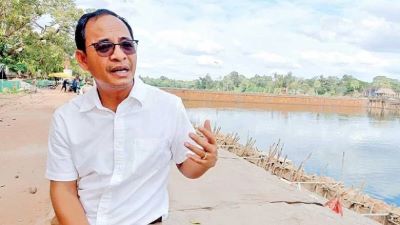
The Post reporter Hom Phanet sat down with ANA spokesman Long Kosal to discuss the conservation and development works underway to entice travellers back, when the world is free from the health crisis and travel settles into a “new normal”.
What has the ANA done during the nearly two years of Covid? Our main motto has for the longest while been “conservation for development and development for conservation”, for everything involved in the maintenance and development of the park. If at any time we fail to maintain a balance between conservation and sustainable development, we’d face problems. This means that these two processes must be kept in equilibrium. To see why, we need to understand that our heritage is one of the core considerations today for the development of tourism. Tourism development thus provides other benefits beyond the industry – it is part of efforts to directly and indirectly create jobs and improve the livelihoods of the people.
How has the ANA managed the areas around the temples? In the interest of beautification and infrastructure improvements in the area of Angkor Wat temple, we’ve set up an automatic grass irrigation system, and pay special attention to the one inside the complex. The grass turns red in the dry season, which may be a bit hard on the eyes, so we hope the temple surroundings will look nice in both wet and dry seasons. In addition, the area across from Angkor Wat gets muddy in the wet season and dusty in the dry season, but we’ve planted seedlings to spruce it up into an attractive wide green field. We’ve also rearranged the chaotic jumble of food stalls into a more aesthetically pleasing backdrop.
How is the ANA responding to news of Omicron and its possible effects on international tourism? Obviously we are worried, but we must look for a remedy. We understand that the government is striving to procure jabs through all available channels to vaccinate the people. We are also working to avoid issues for visitors to Angkor park, and have taken it upon ourselves to strictly adhere to the recommended Ministry of Health guidelines, particularly the “three do’s and don’ts” measures, knowing full well that the novel coronavirus evolves quickly and is highly transmissible. Organising tour routes through the park is essential, given that the coronavirus lingers and that we may have to learn to live with it. We’ve set paths from site to site, and will disallow tourists from roaming as they had before, to make it easier for us to manage things. Armed with the Ministry of Tourism standard operating procedure (SOP), the ANA will train travel guides on dealing with people who do not comply with the relevant Covid-19 preventive measures.
How does the ANA plan to attract foreign tourists after two years of virtually exclusively domestic visitors? Domestic tourists have played an important role in reviving the national economy. We cannot depend solely on foreign tourists as we enter the “new normal”. We’ve seen that people travel across the Kingdom during major national festivals, showing us that the Covid-19 issue is under our control and that the transition is underway. The ANA will join hands with the private sector on promotion strategies, the most recent example being the “Angkor Thanksgiving” extravaganza, which offers an ideal chance to lure in travellers. The area is very attractive, all we have to do is prevent Covid from spreading. We will also work with the Ministry of Tourism to revive the industry in the post-Covid era and the government on other economic recovery efforts.
What does the ANA think of the decision to allow jabbed tourists quarantine-free entry into the Kingdom? It’s a good strategy, and we are ready. When the Covid situation is under control, we can take further positive steps. At the Angkor park, we are ready, we’ve put up tourist amenities, set up temple tour routes, and have brought our officials, travel guides and other staff up to speed on Covid-19 – we are just waiting for tourists to return. However, things won’t be as they were before in the immediate aftermath, for a number of reasons, one of them being that travellers to the Kingdom must pass through other countries first.
What do you make of the recent wave of infrastructure projects in the province? An critical thing that we must look at is creating a seamless merging between heritage sites and Siem Reap town. Everything we organise must tune in with that harmony, which means to make the best of both worlds. Siem Reap town infrastructure is to undergird the national economy, and a nice and clean locality with dust-free asphalt concrete (AC) roads will be most conducive to the satisfaction of tourists. At the heart of tourism is memories, and this is vital to reinforcing the confidence of foreign visitors to Cambodia.
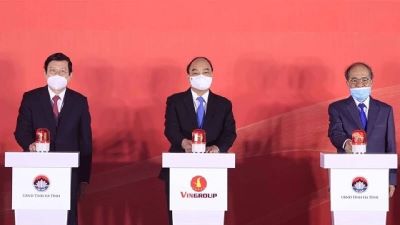
HÀ TĨNH — Construction of VinES battery manufacturing factory costing VNĐ4 trillion (nearly US$173.7 million) began on Sunday in central Hà Tĩnh Provinces Vũng Áng Economic Zone with the presence of President Nguyễn Xuân Phúc.
Financed by local conglomerate Vingroup, the factory will be developed on 8ha in its initial phase, providing lithium batteries for VinFast’s electric cars and buses.
A spokesperson for Vingroup said in a statement: “It marks a significant step in implementing Vingroup’s ‘three-pillars’ battery strategy, including procuring batteries from the world’s top manufacturers, collaborating with partners to produce the world’s best batteries, and conducting in-house research and development for battery production.
“This is very first and most advanced battery plant in Việt Nam to be equipped with European and American-standard technologies that boast an astounding workflow automation rate of 80 per cent. Vingroup is also working with strategic partners, including the world’s leading companies in pioneering technologies for the production of electric vehicle batteries.”
The entire infrastructure of the factory, including a casting shop, a welding shop, and a packaging (battery pack) shop, is designed to produce 100,000 battery packs per year. The second phase of the factory will expand production to include battery cells manufacturing and upgrade capacity to one million battery packs per year.
During the factory’s groundbreaking ceremony, President Phúc spoke highly on Vingroup’s operational strategy adjustment, that has shifted from the field of real estate investment and trading to hi-tech and services industries. The timely adjustment also demonstrated Vingroup’s significant participation in the process of restructuring and modernising the nation’s economy.
The president said the success of Vingroup is gradually becoming an industrial and technological group that would not only create inspiration for other economic groups in Việt Nam but also play an important role in creating the “Make-in-Việt Nam” eco-system on producing, recycling, and reusing renewable energy batteries.
He added that proactively capturing and developing battery technology was a key component to help VinFast quickly realise its strategic goal of becoming a global smart electric vehicle company. Self battery production would ensure the supply of diverse and suitable batteries for each line of VinFast electric vehicles while better meeting the battery needs of the domestic and international electric vehicle market, contributing to the global electric vehicle revolution.
Nguyễn Việt Quang, Vice President cum CEO of Vingroup said the construction of this factory reflected his firm’s efforts to establish a clean energy ecosystem that contributes to the localisation of VinFast’s supply.
He added: “Furthermore, we have been promoting collaboration with many prestigious partners around the world, including firms in the US, Israel, Taiwan, and mainland China, to research, develop and apply cutting-edge battery technologies such as super-fast charging, 100 per cent solid-state batteries and highly advanced battery materials,” he said.
Võ Trọng Hải, Chairman of Hà Tĩnh People’s Committee praised Vingroup’s important contributions to the provincial socio-economic development in the past. — VNS
Economic stability will be the top priority of Chinas policymakers next year, as they are expected to roll out supportive measures ahead of schedule to shore up growth against strong headwinds and will likely set 5 percent as the bottom line for GDP growth for 2022, experts said on Sunday.
Policymakers will intensify fiscal spending to boost domestic demand and increase infrastructure investment and are likely to fine-tune regulatory measures in the energy sector to stabilize production and growth, they said.
China’s top leadership acknowledged that the country is facing threefold pressure from contraction of demand, supply shocks and weaker expectations, and it pledged to safeguard economic stability amid rising domestic and external challenges at the tone-setting annual Central Economic Work Conference, which concluded on Friday.
Top policymakers at the meeting decided that supportive policies should be implemented ahead of schedule, and all regions and departments should actively roll out policies conducive to economic stability, according to a statement released after the meeting.
Experts said that the emphasis on economic stability signals that China will pursue a more pro-growth policy to avoid deep economic slowdown, as the world’s second-largest economy is likely to face strong downward pressure in the first half of next year before rebounding in the second half.
Most economists agreed that setting a reasonable growth target for next year is important for the government to better anchor the weakened market expectations. Policy support needs to be further intensified, because the Chinese economy may continue to be threatened by weaker growth of consumption and investment, disruptions of the supply chain, resurgence of the COVID-19 pandemic and the negative spillover effect of developed economies exiting their ultra-loose policies, they said.
Zhang Lianqi, a member of the Standing Committee of the 13th National Committee of the Chinese People’s Political Consultative Conference, China’s top political advisory body, said China may set next year’s GDP growth target at around 5.5 percent year-on-year, with 5 percent growth expected to be the bottom line.
“Stability will be the top focus of economic policies in 2022,” Zhang said.
The key economic meeting also stressed the importance of strengthening policy coordination, sticking with a systemic approach and improving policy effectiveness, which were seen as signs that policymakers will work to avoid any negative effect of its regulatory policies that could weigh on economic growth, experts said.
Han Wenxiu, a senior official with the Central Committee for Financial and Economic Affairs, said on Saturday that the government should be cautious about unveiling policies that could trigger economic contraction. The government should also avoid launching policies that are reasonable separately but could have negative effects as a whole, he added.
Wu Chaoming, chief economist at Chasing Securities, said that the country is expected to fine-tune regulations in areas such as the property market and capital expansion in certain sectors to foster well-regulated and healthy development, instead of launching stern regulatory moves that could trigger contractions of economic activities.
It is necessary to prevent industrial regulations from diluting macro policy support and aggravating economic downside risks, Wu said.
Looking forward, a more proactive fiscal policy can be expected as the government will launch additional tax and fee cuts to alleviate financial burdens on smaller enterprises and ensure stable employment. Public spending and the issuance of local government bonds will also be accelerated to boost infrastructure investment, said Wen Bin, chief researcher at China Minsheng Bank.
China’s monetary policy will maintain a flexible stance to ensure ample liquidity, and additional reduction of banks’ reserve requirement ratio and interest rate cuts remain viable options of the Chinese central bank if the economy further decelerates in the first half of next year, Wen said.
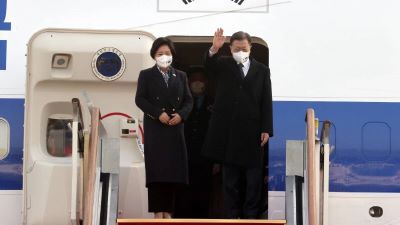
President Moon Jae-in left for Australia on Sunday for a four-day state visit at the invitation of Australian Prime Minister Scott Morrison. The two nations are expected to discuss economic, technology and defense cooperation.
It is the first time since 2009 that a South Korean leader has visited Australia as a state guest. Moon is the first foreign leader to visit the country since the pandemic started in March last year.
On Monday, Moon and Morrison are expected to host a summit in Canberra. They are to talk about strategic and practical cooperation in various fields such as political affairs, national defense, the economy, energy and technology. The two leaders will also have a joint press conference.
The following day, Moon will move on to Sydney to meet with Anthony Norman Albanese, a leader of the opposition Australian Labor Party, and with Australian businesspeople to discuss how to establish a stable mineral supply chain.
During President Moon’s visit, the two nations are expected to strengthen cooperation in future high-tech fields such as carbon-neutral technology, the hydrogen economy, space, cyber technologies and core minerals, Cheong Wa Dae said.
Moon will discuss cooperation with Australia, Korea’s No. 1 source of mineral resource imports, to establish a stable supply chain for raw materials and core minerals, including urea.
When Korea, which relies on China for 97 percent of its urea imports, struggled in November as a power shortage in China caused urea production to plunge, Korea imported 27,000 liters of urea from Australia.
“With the demand expected for key minerals such as lithium, cobalt, nickel and rare earth, which are raw materials for electric vehicles and secondary batteries, Australia is a country with high strategic cooperation value due to its abundant reserves of various key minerals,” said an official with the presidential office.
Australia is also determined to shift from traditional items such as iron ore, bituminous coal and natural gas to key materials for future industries, the official said.
“As Korea has abundant demand for core minerals as a powerhouse in producing electric vehicles and secondary batteries, the two nations are expected to expand exchanges and cooperation significantly in the future,” the official said.
In October, the two leaders agreed to forge a technology partnership to bolster cooperation in hydrogen use, solar energy and other low-carbon technologies with the goal of achieving carbon neutrality, in a joint statement announced after a bilateral summit on the sidelines of the G-20 summit.
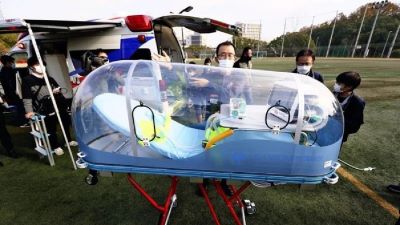
A transparent capsule for moving coronavirus patients, developed by Osaka University, has been shown to the press.
When patients at Osaka University Hospital are transferred to another facility because their condition has stabilized, the bed they are lying in is covered with plastic bags to prevent spreading the virus. However, this method has been too confining for patients and made it difficult for doctors to check on their condition.
Doctors at the hospital’s Trauma and Acute Critical Care Center therefore decided to develop a transparent, airtight isolation capsule. The university raised about ¥18 million through crowd-funding from March to May this year, exceeding its target of ¥10 million.
The capsule is 200 centimeters long, 60 centimeters wide and 70 centimeters high. Its rounded cover is made of a highly transparent resin with a mount for a ventilator inside, and the bed can be adjusted to four different angles.
It cost ¥5 million to develop. The surplus funds will be used to manufacture spare covers.
“[The capsule] makes it easy to watch the patient inside, and it can be readily cleaned after use. Even if infections with the omicron variant spread, we can transport patients in thorough safety,” said Taro Irisawa, a doctor at the center.
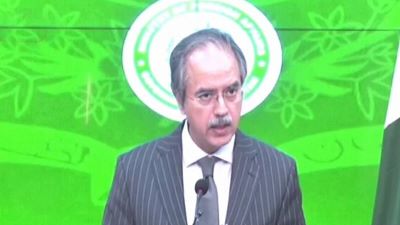
ISLAMABAD: The Foreign Office has criticised the planned diplomatic boycott of the 2022 Winter Olympics in Beijing by the United States and some other countries and called for keeping politics out of sports.
“Pakistan opposes any form of politicisation of sports and hopes that all nations would come together in Beijing and afford their athletes the opportunity to compete against the best and showcase their skills,” FO spokesman Asim Iftikhar said at a weekly media briefing here on Friday.
He was commenting on reports that the US, Canada, the United Kingdom and Australia would not send their officials to Beijing in protest against the host country’s human rights violations as well as crackdown in Hong Kong. These countries would, however, not stop their athletes from participating in the games.
The Winter Olympics are being held in Beijing and towns in the neighbouring Hebei province from February 4 to 20 next year.
China had reacted strongly to the boycott announcements. Chinese foreign ministry’s spokesman Zhao Lijian warned of “resolute counter-measures”, but did not specify what actions could be taken. He had also accused the US of violating the principle of “political neutrality in sport”.
Mr Iftikhar wished China success in hosting Beijing Olympics. “We are confident that despite limitations imposed by Covid-19, the Beijing Winter Olympics would offer a spectacular and colourful gala to sports enthusiasts around the world, including in Pakistan,” he said
Pakistan’s criticism of the boycott moves closely follows its decision about not attending the ‘Summit for Democracy’ being hosted by the US.
Many believed Pakistan decided to skip the event because China had not been invited, while Taiwan was on the guest list. This impression was further strengthened when Zhao Lijian, in a Twitter posting, hailed Pakistani decision to stay out by saying: “A real iron brother.”
Although Prime Minister Imran Khan, while speaking at the Institute of Strategic Studies on Thursday, said Pakistan would not become part of any bloc in the feared new cold war, Islamabad’s moves show it’s getting increasingly aligned with Beijing.
There have also been speculations of Pakistan breaking up with the West.
The FO spokesman rejected such an impression. “Some of the opinions and impressions that I gather from your questions, I think, are unfounded,” he maintained.
He said Pakistan was closely engaged with the US on a range of issues. “We value our partnership with the US and we wish to expand it bilaterally as well as in terms of regional and international cooperation,” he noted.
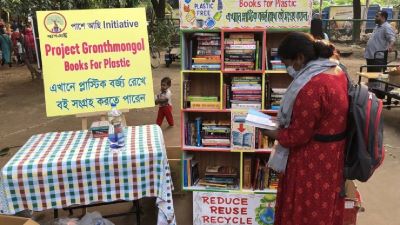
In the latest initiative of Gronthomongol, a project aimed at rescuing the Nilkhet book market from the economic blows brought by the pandemic, youth organisation Pashe Achi Initiative are distributing books among readers in exchange for plastic waste.
The first event was conducted on November 19 at Rabindra Sarobar in the capital. The 350 books distributed that day included second hand copies collected from donations as well as new titles bought from booksellers under project Gronthomongol.
The event witnessed the active participation of street children, who wanted to read books but had no money to purchase them. These children deposited plastic waste from around the venue and collected their favourite books in return.
“The primary goal of this campaign is to raise awareness among people about the alarming rise of plastic waste which negatively affects our environment. At the same time, we wanted to promote the habit of reading,” shared Tahmid Hasan, founder of the organisation. The campaign also promotes an opportunity to explain the importance of reducing, reusing, and recycling for a sustainable environment.
The response they received at the first event has been overwhelming. “There was a person who was visiting the venue and came by our campaign stall. He later went to his home and brought almost 5 kilograms of recyclable materials to support the campaign,” Tahmid said.
Pashe Achi Initiative intends to expand this campaign by arranging events in different schools, colleges, universities and restaurants. Since the first event was based on impromptu participation, they will be promoting the upcoming ones through social media platforms in an attempt to engage more people. They urge people to support this initiative by donating new and old books.
The second event took place on December 4, drawing in around 150 people. The organisers specified a cap of 250 grams of reusable materials and collected over 30 kilograms of plastic waste from the visitors.
The third event will be held next weekend at the same venue.
With the rise of more sober-curious young people taking to an alcohol-free lifestyle, it has become obvious that the de-alcoholization of social activities will be a key factor in upcoming beverage market trends.
To meet this change, beverage companies, restaurants and bars are making efforts to provide nonalcoholic alternatives.
■ 20s to 40s age bracket
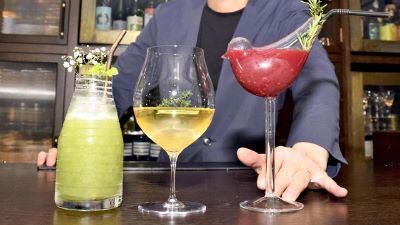
At the Low-Non-Bar in Chiyoda Ward, Tokyo, colorful cocktails are being served to customers. The Kanda district bar is unique in that it offers about 40 types of cocktails, all of which can be served nonalcoholic.
Low-Non-Bar opened in July and mainly serves up nonalcoholic beverages. Hiroaki Takahashi, the manager of the bar, said that many of the customers are in their 20s to 40s.
“I don’t drink alcohol, but I am interested in bars because of their stylish image,” said a female company employee in her 20s who came to the bar with a friend from her school days. “It’s easy to enter if you can order nonalcoholic beverages.”
■ Drinking parties ‘unnecessary’
According to the Health, Labor and Welfare Ministry’s 2019 national health and nutrition survey, about 30% of people in their 20s said they don’t drink much.
Gatherings centered on drinking alcohol, also known as “nominication” — a mashup of nomi (drink) and communication — were considered to be settings that bring people closer together, whether they be from the workplace or business partners.
However, in a survey conducted with about 7,800 people by Nippon Life Insurance Co. in October, 61.9% responded that workplace drinking parties were “unnecessary” or “somewhat unnecessary.”
People also have become more health-conscious and many want to avoid the potential health risks associated with alcohol. It is becoming increasingly common for people to think that alcohol should be consumed only when they want to.
■ More than just ‘mocktails’
There has been a growing number of related products and services that are trying to capture this nonalcoholic beverage trend.
From April this year, Il Teatro, an Italian restaurant at Hotel Chinzanso Tokyo in Bunkyo Ward, has offered nonalcoholic wines carefully selected by a sommelier to match its course meals.
In June, Mercian Corp. launched its nonalcoholic sangria, Mock Bar, which uses the flavor of spices as a secret ingredient and is being well received.
Suntory Beer Ltd. estimates that the volume of shipments of nonalcoholic beverages in 2020 increased 3% from the previous year, the sixth consecutive year of growth since 2015. The market is expected to continue to expand.
“In order to increase profits, it will be essential to offer products with higher added value,” said Naoko Kuga, a senior researcher at NLI Research Institute.
In view of the challenging humanitarian situation in Afghanistan, India on Saturday dispatched the first consignment of humanitarian assistance consisting of medical supplies to the war-torn country.
“These medicines will be handed over to the representatives of the World Health Organisation (WHO) in Kabul and will be administered at the Indira Gandhi Children Hospital, Kabul,” the Ministry of External Affairs (MEA) said.
The assistance was dispatched on a special flight that last night brought to Delhi from Kabul ten Indians and 94 Afghans, including members of the Afghan minority community. The minority community members carried with them 2 Swaroops of Guru Granth Sahib and some ancient Hindu manuscripts.
Under “Operation Devi Shakti”, a total of 669 people have now been evacuated from Afghanistan. They comprise 448 Indians and 206 Afghans, who include members of the Afghan Hindu/Sikh minority community. Some 565 people, including 438 Indians, were evacuated from Afghanistan earlier in the month of August.
This is the first time India has sent humanitarian aid to Afghanistan after the Taliban took over in Kabul in August, dislodging the Ashraf Ghani government. The step is significant since it comes despite the fact that India has not recognised the Taliban regime. It is likely to be followed by sending a huge consignment of wheat to the embattled nation for the Afghan people.

 SootinClaimon.Com