The Thai economy is entering a “parallel universe” marked by deglobalisation, geopolitical conflict, high inflation, and rising interest rates, KKP Research said on Wednesday.
KKP Research chief economist Pipat Luengnaruemitchai said these factors are a challenge to the global and Thai economies both in the short and long terms.
He said the economy will gradually recover from a low base, adding that the global gross domestic product is expected to grow at 3.3 per cent as domestic consumption and investment start to return to normal.
However, inflationary pressures and rising cost of living are worries for recovery of the Thai economy, he said.
“Interest rates are on the way up as a result of inflationary pressures, and central banks around the world are raising interest rates,” he said.
“A possible global economic slowdown or recession in the near future may also affect the pace of recovery of the Thai economy,” he warned.
He expected the Bank of Thailand’s Monetary Policy Committee to raise the interest rate by 25 to 50 basis points during its meeting on August 10.
He pointed out that many sectors were yet to return to their pre-Covid levels, as households and businesses are still affected and have trouble paying back their debts.
In addition to short-term factors, he said the Thai economy is facing several structural challenges that hold back economic growth and place the country at risk of losing competitiveness.
He added that environmental factors such as technological development are changing rapidly.
“Therefore, a solution for the Thai economy in this new world is economic restructuring to increase competitiveness,” he said.
He added that the country will also need to support investments, promote research and development, upgrade the quality of education and labour skills, liberalise labour and services, reduce monopoly, and improve economic and political institutions to reduce the opportunity gap.
Geopolitical tensions and inflation could boost Thailand’s gold demand in the short term, as a safe haven for investors and a means of wealth preservation for consumers, the World Gold Council said.
Andrew Naylor, regional CEO, Asia Pacific (ex-China) of the council, said during an online press conference on Wednesday morning that due to the economic slowdown and uncertainty factors, gold remains a preferable alternative for Thai people.
He said consumer demand for gold during the second quarter this year had already increased 14 per cent, from 7.5 tons in the same quarter last year to 8.5 tons this year.
The council pointed out that the demand was supported by a 10 per cent year-on-year increase in demand for jewellery from 1.7 tons in the second quarter of 2021 to 1.9 tons in the second quarter of this year and a 15 per cent year-on-year increase in bar and coin demand. Jewellery consumption has been supported by the economic recovery, emergence from Covid restrictions and a rebound in tourism.
“This is the sixth consecutive quarter that we’ve seen a year-on-year rise in jewellery consumption in Thailand, owing to lower gold prices as well as higher safe-haven demand for gold amid a weaker local currency and inflationary concerns,” Naylor said
However, global jewellery fabrication outperformed consumption as demand remains well below pre-pandemic levels, he added.
The latest Gold Demand Trends report reveals that the overall global gold demand (excluding over-the-counter) in the second quarter was down 8 per cent year on year to 948 tons. However, thanks to strong exchange-traded funds (ETF) inflows in the first quarter, gold demand for the first half of 2022 is up 12 per cent compared to the first half of 2021 at 2,189 tons.
In terms of global demand, gold price fell in the second quarter of 2022 after an initial rally in April on geopolitical risks and rising inflationary pressure, as investors shifted their focus to rapidly rising interest rates and a strikingly strong US dollar, the council said.
The 6 per cent drop in gold prices over the quarter impacted gold ETFs, which saw 39-ton outflows in the second quarter. The first half of this year has seen net inflows totalling 234 trillion, compared to 127 trillion in outflows in the same period last year, the council said.
However, given a potentially softening inflation outlook amid continued rate hikes, the second quarter decline is likely to set a weaker tone for ETFs in the second half of 2022, the council added.
In the second quarter, demand for gold bars and coins remained stable year on year at 245 tons. Demand increased significantly from India, the Middle East, and Turkey, helping to offset weakness in China, caused in part by ongoing coronavirus lockdowns. As a result, global bar and coin demand fell 12 per cent year on year to 526 tons in the first half of this year.
In the jewellery sector, gold demand in the second quarter increased 4 per cent year on year to 453 tons, aided by a 49 per cent increase in Indian demand compared to the second quarter of 2021, Naylor said.
The strong performance in India has compensated for a significant drop of 29 per cent in mainland China, where the market was hampered by coronavirus lockdowns that slowed economic activity and reduced consumer spending.
Meanwhile, central banks were net buyers in the second quarter, adding 180 tons to global official reserves, the council said. Net purchases reached 270 tons in the first half of the year, matching the findings of the council’s recent central bank survey, in which 25 per cent of respondents stated that they planned to increase their gold reserves in the next 12 months.
In the technology sector, gold demand was down 2 per cent from the second quarter of 2021 at 78 tons, resulting in the demand being marginally lower year on year at 159 tons in the first six months of this year, the council said.
The electronics industry has continued to face supply chain disruption, as well as diminished consumer appetite for electronics as the cost-of-living crisis takes hold; both of these factors contributed to the slight drop in demand.
According to the council’s Gold Demand Trends data series, mine production for the first half of the year reached a new high of 1,764 tons, up 3 per cent from the first half of 2021.
Some projects mined higher-grade deposits, and the Chinese mining industry returned to normal output levels after safety stoppages last year, boosting output. Gold price increases in the first quarter and increased economic hardship and uncertainty led to an increase in recycling activity, with total recycling reaching 592 tons in the first half of the year, an increase of 8 per cent year on year, the council said.
Louise Street, senior analyst Europe, Middle East and Africa at the council, said there are both threats and opportunities for gold in the second half of 2022. Safe-haven demand will likely continue to support gold investment, but further monetary tightening and continued dollar strength may pose headwinds.
“As many countries face economic weakness and the cost-of-living crises continue to squeeze spending, consumer-driven demand will likely soften, although there should be pockets of strength,” said Street.
Fortune announced the Fortune Global 500 list for 2022, ranking the world’s largest corporations by revenue for fiscal 2021. and Walmart claims the top spot for the ninth consecutive year,
Fortune announced the Fortune Global 500TM list for 2022, ranking the world’s largest corporations by revenue for fiscal 2021. Walmart claims the top spot for the ninth consecutive year, and for the 17th time since 1995. Saudi Aramco (No. 6) reclaims its title as the world’s most profitable company, with $105 billion in earnings.
Mainland China (including Hong Kong), with 136, once again has the most companies on the list, up one from last year. Adding Taiwan, the total for Greater China is 145. The US, with 124, is up two; in third place, Japan lost six, for a total of 47.
For the first time, the aggregate revenue of Fortune Global 500 companies based in Greater China (including Taiwan) exceeded the revenue of US companies on the list, accounting for 31% of the total.
Of the 2022 rankings, Fortune List Editor Scott DeCarlo says, “A rebound from the worst depths of the pandemic created a huge tailwind for the world’s largest companies by revenue. Aggregate sales and profits hit record levels in the fiscal year 2021 for the Fortune Global 500. The Global 500 is the ultimate scorecard for business success and the companies face another big test navigating several global economic headwinds in 2022.”
Fortune Global 500 companies generated revenues totalling $37.8 trillion—more than one-third of the world’s GDP—for an increase of 19% over last year, marking the highest annual growth rate in the list’s 33-year history. Cumulative profits were up 88% over last year, for a record $3.1 trillion. Companies on the 2022 list employ 69.6 million people worldwide and are based in 229 cities and 33 countries and regions around the world. The number of women CEOs of Fortune Global 500 companies rose to 24 this year, from 23 last year.
The 2022 Fortune Global 500 Top 10 LIST: 1. Walmart (U.S.) 2. Amazon.com (U.S.) 3. State Grid (China) 4. China National Petroleum (China) 5. Sinopec (China) 6. Saudi Aramco (Saudi Arabia) 7. Apple (U.S.) 8. Volkswagen (Germany) 9. China State Construction Engineering (China) 10. CVS Health (U.S.)
In her foreword to the magazine’s August/September 2022 issue, Fortune Editor-in-Chief Alyson Shontell writes, “Here’s the catch: [These] numbers reflect financials from 2021 when the world was starting to bounce back from COVID-19. This year has brought a whole new truckload of challenges… For businesses of every size, the real test will be who can survive and thrive in tough conditions like these, especially if—or when—a recession of unknown length and depth settles in.”
Companies are ranked by total revenues for their respective fiscal years ended on or before March 31, 2022. All companies on the list must publish financial data and report part or all of their figures to a government agency. Figures are as reported, and comparisons are with the prior year’s figures as originally reported for that year. Fortune does not restate the prior year’s figures for changes in accounting.
The Tourism Authority of Thailand will seek a budget of 1 million baht to boost foreign arrivals so the country achieves its targeted tourism revenue of 1.5 trillion baht this year.
The first seven months of the year have seen 3.33 million foreign tourists visit the country.
TAT governor Yuthasak Supasorn said he would wait for the economic situation administration centre to hold its meeting, during which he would raise the budget request.
Yuthasak said TAT would need precisely 1.035 million baht to carry out its so-called “booster shot” measure to stimulate the entire tourism industry, so that the 1.5 trillion baht revenue target this year could be reached.
The target would be 50 per cent of pre-Covid levels in 2019, when the country gained 3 trillion baht in tourism revenue, Yuthasak noted.
TAT hopes to lure 10 million foreign tourists, who are expected to generate 844 billion baht in income, and encourage Thais to make 160 million trips to create extra revenue of 656 billion baht, he said.
The number of foreign tourists has significantly increased following the easing of Covid travel restrictions, Yutthasak pointed out.
He said 3,334,326 foreign tourists visited Thailand from January 1 to July 31 from the following top ten nations:
– Malaysia: 420,660
– India: 337,282
– Singapore: 183,836
– UK: 167,232
– Laos: 157,831
– United States: 152,635
– Cambodia: 148,897
– Vietnam: 131,770
– Germany: 124,930
– South Korea: 120,321.
Yuthasak said the top five entry points for foreigners were Suvarnabhumi Airport (1.92 million arrivals), Phuket International Airport (603,974), Don Mueang International Airport (191,893), Sadao border checkpoint (141,337) and Nong Khai border checkpoint (77,401).
He noted that after the government cancelled the Test & Go measure on May 1, the number of tourists that month jumped to 532,177, compared to 297,365 in April.
When the government cancelled quarantine for foreign arrivals on June 1, the number of visitors soared to 788,258 that month.
And after the government scrapped Thailand Pass in July, the number of foreign arrivals last month rose to 1.21 million, the TAT governor said.
“After Thailand Pass was abolished, about 33,000 to 49,000 foreign tourists arrived each day in July, raising the total number for the month to 1.21 million,” Yuthasak added.
Tourism in Songkhla bounced back strongly last month after the government cancelled the Thailand Pass system, with about 100,000 foreign arrivals recorded last month.
The rebound has prompted Malaysian investors to buy hotels and bars in the border town of Sadao in anticipation of a boom, said Tourism Council of Songkhla president Somphon Chiwawatthanaphong.
The number of tourists visiting the province had jumped since the Thailand Pass was scrapped on July 1 – especially via the Sadao border crossings and Ban Prakorb in neighbouring Na Thawi district.
He added that official July figures had not been released but he expected them to show at least 100,000 arrivals, jumping from 40,000 in May and 60,000 in June.
Somphon said Thais are also returning in large numbers to Songkhla’s tourism hub of Hat Yai city. Many are flying in before travelling on to Yala’s Betong district, he added.
About 80 per cent of Songkhla’s 40,000 rooms in both registered and unregistered hotels have reopened, he said, adding the rate would rise to 90 per cent late this year.
His council expects about 800,000 foreign tourists to visit Songkhla this year, mostly from Malaysia and Singapore.
Pre-Covid, Songkhla received about 2 million foreign tourists per year, according to Somphon.
Pre-pandemic, most hotels and bars in Sadao were owned by Malaysian investors but they sold them following the outbreak, he said. However, many have now returned to buy back the businesses, he said.
Somphon said most hotels in Hat Yai did not change hands as banks had been lenient with them during the Covid crisis.
“Banks did not want to seize their assets and now that hotels have resumed business, they have started to repay debts,” he said, adding that occupancy rates during last week’s long weekend rose as high as 70-80 per cent in Hat Yai.
However, he said Covid-19 had shown the need to restructure tourism in Songkhla.
Among other things, tourism businesses were diversifying to lure customers from different groups and markets.
The council is trying to attract tourists from Europe by asking Bangkok Airways to open new routes to Hat Yai from Koh Samui and Bangkok.
It will also promote Songkhla Lake as a tourist destination while campaigning for Songkhla to be awarded Unesco world heritage status along with places like Penang in Malaysia. The city is among several destinations that the Thai government has selected for nomination to Unesco.
The council is also encouraging Thais to travel to Songkhla by train. Trains are running again twice daily on the 60km route from Hat Yai to Padang Besar. He said tourists could also take the Butterworth train from Padang Besar to Kuala Lumpur and Singapore.
The council also plans to collaborate with Prince of Songkla University to draw international sports events to the city, Somphon said.
With K PAY LATER, KBank becomes Thailand’s first bank to help “unbanked” and “underbanked” Thais have access to buy-now-pay-later services without requiring a salary slip.
KASIKORNBANK has launched K PAY LATER – Thailand’s first-of-its-kind loan that allows customers to spend for their daily lives under the “buy-now-pay-later” concept.
The initiative aims to assist cash-strapped unbanked – underbanked Thais in having credit line for the purchase of necessary consumer goods while also providing them equitable access to loan in the system.
The target group includes freelancers, small merchants and wage earners who lack proof of income.
Application can be made easily by users via K PLUS. As soon as the loan is approved, customers can use it to spend at more than 100,000 participating stores nationwide.
K PAY LATER is a personal loan for purchases of consumer products that are daily necessities, based on the “buy-now-pay-later” concept, to help ease the burdens of who are short on cash.
Application is easy, as income-related documents and collateral are not required. The maximum loan limit is 20,000 Baht.
It is a revolving credit, with no limit to the number of drawdowns, although the drawdown amount must not exceed the set limit.
There is no interest payment if the loan is not used.
The minimum purchase amount is 50 Baht, and it can be repaid in installments starting at only 11 Baht per month.
The maximum installment period is 5 months. The loan can neither be withdrawn nor exchanged for cash.
Additionally, if customers use the credit limit regularly and make payments on time, KBank shall consider increasing the loan limit and offering other services to such customers in the future.
K PAY LATER customers can easily use the credit limit to purchase goods and services by scanning, tapping and paying via K PLUS at participating stores.
They can also choose a payment period of either 1 month, 3 months or 5 months.
Presently, there are more than 100,000 participating merchants nationwide covering multiple categories, including department stores, supermarkets, convenience stores, petrol stations, restaurants, home product stores, and mobile phone and IT accessory shops.
These include Tops, MaxValu, Big C, Makro, Central Department Store, Lawson, Family Mart, CJ Express, IKEA, Dohome, Boonthavorn, Jaymart, IT City, Banana IT, as well as other shops having KBank’s electronic data capture (EDC) device.
Interested persons can apply for K PAY LATER easily by themselves via the K PLUS application and get an approval result instantly with just three screen taps.
For more information, please call the K-Contact Center at 02-8888888 or visit https://kbank.co/3SdRtJd.
About eight in 10 Thai consumers have experienced mental health issues in the past six months, with stress (46%), insomnia (32%) and anxiety (28%)* among the top three conditions, according to new research by global market intelligence firm Mintel.
Thais’ mental state has been exacerbated by the prolonged effects of COVID-19, which contribute to feelings of frustration and helplessness. Furthermore, the research finds that consumers at different life stages and genders face different mental health challenges.
Gen Z is the loneliest generation
Work/study (48%) particularly affected Gen-Z consumers aged 18-24, who are found to be the loneliest (38%) compared to other generations** like Older Millennials (26%) and Gen X (15%). Peer pressure (33%) and social media (25%) are among the factors that contribute to their mental health challenges.
“Over one-third of young Thai consumers say they lack self-confidence according to our research. The portrayals of a ‘perfect’ life on social media, seeing their role models, influencers or acquaintances possess things they do not have, and the pressure to live up to other peoples’ standards can lead to mental conditions like low self-esteem, depression and anxiety. Brands can support this younger population through campaigns that encourage positive self-satisfaction,” said Wilasinee (Kaimook) Siriboonpipattana, Senior Lifestyle Research Analyst, Mintel Reports Thailand.
Women are more stressed than men
Nearly one-third (31%) of Thai women aged 18-34 say they are burnt out compared to 17% of men of the same age group. Women attribute work/study, uncertainty in future planning and financial situation/responsibilities to be among the top factors that impact their mental health.
“Women aged 18-34 are likely to juggle household responsibilities, job stability, and their marriage. As noted in our new research on lifestyles of women, they want to stay balanced and healthy, both mentally and physically. Brands can target this group — particularly those with busy lifestyles — by offering products and services that reduce mental health stressors and help them commit to healthy activities,” continued Kaimook.
Sleep deprivation affects all generations
Mintel’s research reveals that sleep affects Thais regardless of age, which can be linked to stressful life events. Across generations, about 35% of Gen Z and Millennials have experienced insomnia compared to 28% of Gen X.
In contrast to popular belief, insomnia affects people of all ages, not just the elderly. For instance, stay-at-home measures have blurred personal and professional life/study boundaries, leading to more stress and sleeplessness. Given that Thais struggle to sleep, brands can leverage new technologies to offer products or services that can detect sleep patterns and offer other health benefits.
Consumers look to brands to de-stigmatize mental health
Despite the increasing number of Thais experiencing mental health issues, consumers still lack access to mental health services and information.Over three-fourths (76%) of Thais agree that mental health should be discussed in public more often than before.
“Due to social constraints and stigma around mental health, we see high consumer expectations of brands in terms of mental health support. Considering its sensitive nature, brands need to show genuine empathy and understanding of consumers’ mental health journey.
Social media is growing in importance, with over three-fourths of consumers agreeing that it is a suitable channel for promoting mental products/services. As a result, brands that take a more active role in educating consumers, de-stigmatising mental health issues, and encouraging people to seek professional help will win over consumers,” Kaimook said.
Notes: *In the last six months prior to February 2022; 2,000 Thai internet users aged 18+ **Older Millennials aged 32-40; Gen X aged 41-56
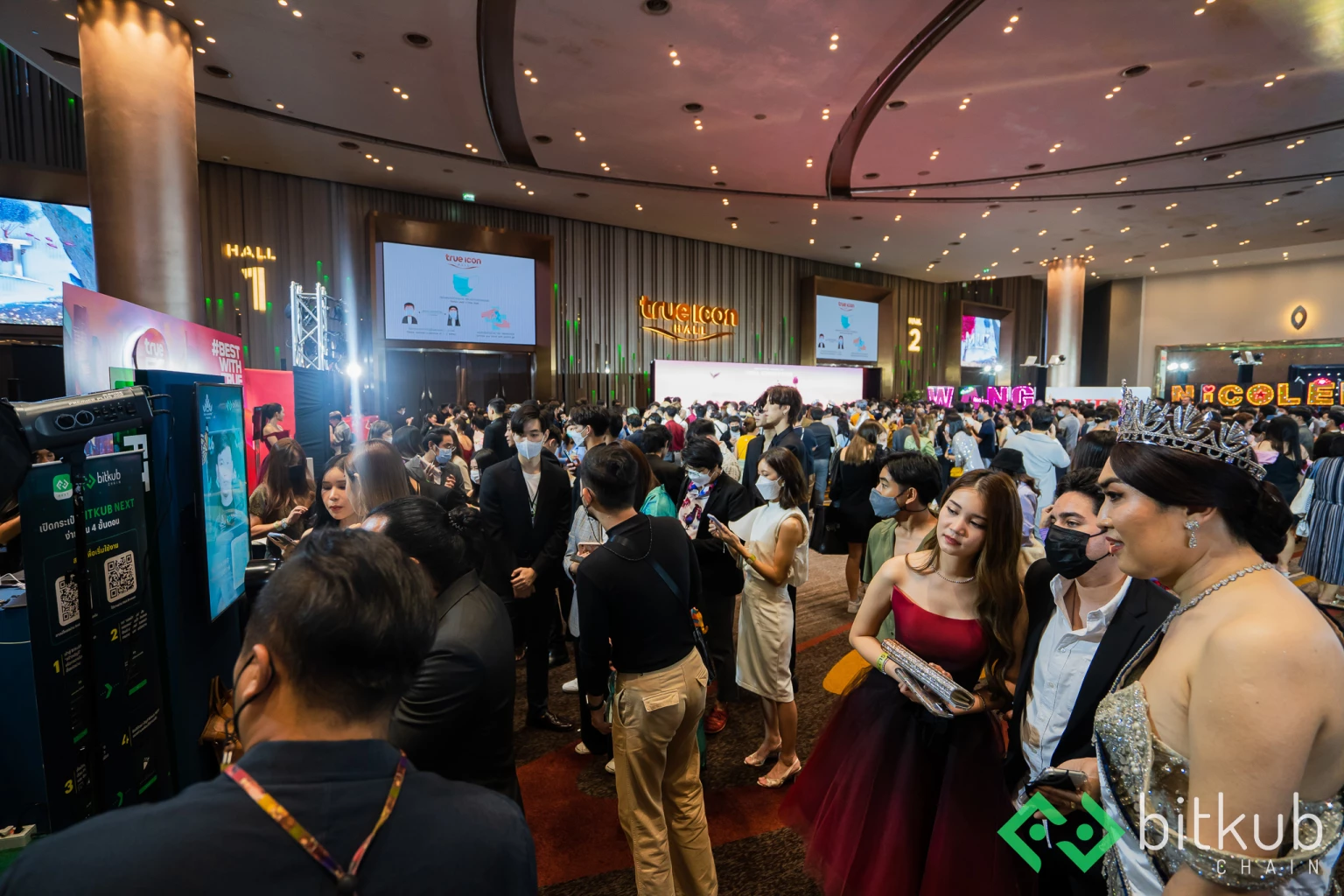
Bangkok, August 1, 2022 – Bitkub Blockchain Technology, Bitkub Chain and Blockchain Total Solution Provider and Miss Universe Thailand, a beauty pageant with a history of 20 years, together revolutionize the digital experience on the final round’s stage for another year.
On October 7, 2021, MUT NFTs collection was officially announced under the cooperation between Bitkub Blockchain Technology and Miss Universe Thailand. The collection regard to Miss Universe Thailand 2021 pageant with a special value given to main collectors and fans. Miss Universe Thailand NFTs collection was developed by Bitkub Blockchain Technology under decentralized network protocol called “blockchain”. Collectors and fans can feel a sense of the value and a story along with getting closer to the beauty pageant. Moreover, not only MUT NFTs collection was minted but the MUT crown item was specially introduced in Morning Moon Village game as a special collection item.
With the 2nd year cooperation between Bitkub and Miss Universe Thailand, the special NFT collection was introduced and will be airdropped to the participants of Miss Universe Thailand 2022’s final round. In addition, the participants will also have a chance to create their own NFT via “Creator Studio” feature. To open the new experience of watching the contest, there are several reasons that the participants should not miss:
The first Rock Stage in history
Swimsuit and evening gown competition with special guests
The new stage design inspired by the idea of metaverse and constellation
A chance of getting close to all 30 beauty contestants in every dimension
Both stations will be an extension into Muang Thong Thani and Muang Thong Thani Lake for a total distance of approximately 3 kilometres.
Bangkok Land Public Company Limited holds a signing ceremony with Northern Bangkok Monorail Co., Ltd. (NBM), a subsidiary of BSR JV Consortium, and a joint venture between the BTS Group Holdings Public Company Limited (BTSG), Sino-Thai Engineering and Construction Public Company Limited (STEC), and Ratch Group Public Company Limited for the “MRT Pink Line Extension to Muang Thong Thani” project with an investment of THB 4 billion for adding two more stations: IMPACT Muang Thong Thani Station (Challenger 1) and Muang Thong Thani Lake Station.
The construction is expected to be completed and operational in 2025.
Peter Kanjanapas, Chairman of Bangkok Land Public Company Limited, said, “ With this project, the Company will be able to contribute to the general public by helping more than 300,000 residents and workers in Muang Thong Thani, including over 10 million visitors and participants attending the exhibitions and conferences each year.In terms of business opportunities, the “MRT Pink Line Extension to Muang Thong Thani” project will also support various businesses in Muang Thong Thani, such as IMPACT Exhibition and Convention Center, hotels, Cosmo Bazaar, Cosmo Walk, Outlet Square, Beehive Lifestyle Mall and Cosmo Office Park to achieve an additional business growth of 10-20%. In addition, it will increase the potential and the value of the existing 600 rai of land in Muang Thong Thani.
The Company also invested THB 1 billion in constructing a skywalk connecting the project to IMPACT Exhibition and Convention Centers, hotels, retail stores, and department stores to accommodate the growing number of visitors and provide them maximum convenience.
It will also serve as a prime location for upcoming projects such as Mori Condominium, a 1,040-unit residential building, and Lenôtre Culinary Arts School.”
Kavin Kanjanapas, Executive Director of Northern Bangkok Monorail Company Limited (NBM), said, “The project signing between NBM and BLAND consists of two agreements:
1. The Construction Support Agreement for the “MRT Pink Line Extension to Muang Thong Thani” project
2. The Skywalk Connection Agreement for the skywalk project connecting the MRT Pink Line Extension to Muang Thong Thani buildings
Under the agreements, Bangkok Land Public Company Limited (BLAND) has approved about THB1.2 billion (inclusive of VAT) in contributions and loyalty funds to NBM for the construction and development of the extension to the Muang Thong Thani project and for the rights to BLAND and BLAND affiliates in the construction of the skywalk connecting MRT Pink Line stations to buildings or other construction located in Muang Thong Thani, which are the properties of BLAND Groups.
This is effective from the day of signing the agreement to the termination date of the rights for operating the MRT Pink Line Extension to Muang Thong Thani project in compliance with the MRT Pink Line joint venture agreement between NBM and the Metropolitan Rapid Transit Authority (MRTA).
In addition, BLAND has approved an annual THB 10.35 million contribution (inclusive of VAT) for the maintenance fund, starting from the operation date of the MRT Pink Line Extension to Muang Thong Thani.
The MRT Pink Line Extension to Muang Thong Thani project is among the significant projects of BTSG’s MOVE business, which aims to provide safe and convenient daily door-to-door transportation to passengers across multiple modes of travel.
The project is part of the main MRT Pink Line (Khae Rai to Minburi), linking four mass transit lines, namely the Purple Line (Bang Yai to Bang Sue), the SRT Dark Red Line (Bang Sue to Rangsit), the Green Line (Mo Chit to Saphan Mai to Khu Khot), and the Orange Line (Thailand Cultural Center to Minburi).
The estimated construction period of the MRT Pink Line Extension to Muang Thong Thani project is 37 months. It is scheduled to be fully open in 2025 with an expected number of 13,785 passengers/ride/day.
Upon completion, the project will help ease traffic entering the Muang Thong Thani area, a large community with many daily commuters.
For the entire monorail Pink Line, consisting of 30 stations (exclusive of the extension to Muang Thong Thani and Muang Thong Thani Lake), the construction progress is 89.43% complete (civil construction: 91.01% and electrical system 87.90%). It is scheduled to partly open for service by early 2023.
Zipmex Thailand has announced that it would gradually return three types of crypto coins to its customers whose ZipUp+ accounts have been frozen, starting with SOL.
Zipmex Thailand said all of its clients, who have deposited in the ZipUp+ product of Zipmex Global in Singapore, would get their SOL, XRP and ADA coins back in full but one type at a time.
On Tuesday, Zipmex Thailand clients will receive all of their SOL coins frozen in ZipUp+.
The XRP coins will be returned on Thursday and ADA coins on August 9, Zipmex Thailand said.
It said the balance of the coins of its clients will be credited to their Trade Wallet.
On July 20, Zipmex Thailand paused trading for two hours to disable ZipUP+ product from its platform due to problems faced by its partners.
Zipmex Thailand had earlier announced it was looking for investors so that it could return frozen coins in ZipUp+ accounts to its clients.