The Department of International Trade Promotion (DITP) is calling on Thai manufacturers of toys and sports equipment to consider expanding to the US market, where demand for these products has been rising since the Covid-19 pandemic.
Last year, toy sales in the US rose 16 per cent to $25.1 billion, with demand rising for merchandise such as skates, skateboards, scooters, dolls and accessories as well as toys for development such as Lego.
Somdet Suchomboon, DITP director-general, said each DITP office overseas has been tasked with exploring opportunities for Thai products. This is in line with Commerce Minister Jurin Laksanawisit’s policy, he said.
The New York DITP office recently reported that the consumption of toys and sports equipment in the United States has been rising because people are stuck at home due to the Covid-19 pandemic.
“From January to November 2020, the US was Thailand’s sixth biggest buyer of toys and sports equipment, worth $98 million or about Bt2.94 billion. Though Thailand’s main competitors are China, Vietnam and Taiwan, it has an advantage because tax is waived on several products,” Somdet said.
Thailand is not charged import duty on golf equipment, golf clubs, golf balls, exercise equipment, balls, aqua equipment, tennis balls, inflatable balls, outdoor recreation equipment and games, various ice-skating equipment, roller skates, sailboat and equipment, while its competitors are subject to 4.4 to 15 per cent tax.
Noppadon Thongmee, director of DITP office in New York, said the US is an attractive market because consumers have high purchasing power and find products from Thailand satisfactory, which will contribute to high market growth.
Since Thailand manufactures many famous brands and can ensure quality, it is eyed by many importers. However, Thailand’s competitiveness is affected by some limitations such as high labour costs.
Thailand’s GDP contracted 6.1 per cent in 2020 due to Covid-19: NESDC
EconFeb 15. 2021Danucha Pichayanan, secretary-general of NESDC
By The Nation
Thailand’s gross domestic products (GDP) shrank 6.1 per cent in 2020 due to widespread impact of the Covid-19 pandemic, the National Economic and Social Development Council (NESDC) said on Monday.
Danucha Pichayanan, secretary-general of NESDC, said at a conference that GDP in the fourth quarter of 2020 rose by 1.3 per cent compared to the previous quarter, but contracted 4.2 per cent year on year.
The economy expanded in the fourth quarter as consumption rose, while the government and private sectors continued to expand well.
The NESDC lowered the GDP growth forecast for 2021 to 2.5 to 3.5 per cent with a median of 3 per cent from the previously estimated 3.5. to 4.5 per cent.
The economic outlook in 2021 is brighter due to positive factors from global economic expansion, as large economies have pushed large stimulus packages for economic recovery and budget disbursement from both fixed budget and loans.
Speciallly priced eggs on sale at PTT petrol stations
Feb 13. 2021
By THE NATION
PTT Oil and Retail Business Pcl (OR) has joined hand with the Department of Internal Trade and Ministry of Commerce to sell eggs from the ministry’s Blue Flag shops at 400 PTT gas station nationwide at a special price in a bid to help egg farmers maximise sales channels.
“Egg farmers are facing oversupply problem which in turn has lowered the egg price in the market,” said the company. “OR therefore will serve as a sales channel for them by helping consumers buy eggs more conveniently. We will sell 4.5 million eggs at only Bt70 per tray [each tray contains 30 eggs of M size, or 55-65 grams] at 400 petrol stations until February 28.”
For names of participating gas stations, contact call centre 1365 or visit www.pttor.com.
King Power Group broadens new campaign to tap sales talent of its staff
Feb 13. 2021
By THE NATION
King Power Group has developed a special business strategy “to deliver an exclusively superior experience and valuable benefits through merchandises and services of affiliated members for both on-ground and online platforms through the usage of employee’s SV Code”, the company said.
Under the concept “Life Beyond Boundaries”, the “SV Team Challenge” campaign has been initiated to boost the retail and tourism industry and it opened to the public from February 12.
Aiyawatt Srivaddhanaprabha, chief executive officer of King Power Group, said: “The pandemic, which has been going on for more than a year, has had an extreme impact on society and on almost every business and King Power Group has inevitably been affected by this crisis.
“Previously, we had adapted our merchandise services to counter the situation by kicking off a campaign called ‘King Power Team Power’, which allows all staff members to participate in sales activities as an online salesperson to raise brand awareness. SV codes were given out to all employees for them to provide their customers with exclusive discounts.
“The campaign was very successful. The number of online-platform users on Kingpower.com and King Power mobile application increased considerably. Thus, it helped expand our customer base; simultaneously, not only does this generate extra income for our staff, but our customers are also able to confidently purchase merchandise from leading iconic global brands at reasonable discount.”
To further enhance the good feedback from Thai customers for the “King Power Team Power” business model, King Power continued to offer an exceptional shopping experience and more benefits provided by affiliated companies within King Power Group to our customers through this latest campaign “SV Team Challenge”, the synergy that opens a brand new portal for customers to experience the exclusivity not only of products but also of the services of affiliated tourism businesses, such as Pullman Bangkok King Power (Hotel) and King Power Mahanakhon, he added.
The “SV Team Challenge” encourages staff to work collaboratively as a team determining their shared goals and strategy to earn extra income.
Aiyawatt added that the “SV Team Challenge” was an unconventional business strategy necessary in this time of crisis amidst the pandemic.
King Power has provided all staff with the necessary knowledge to enhance their learning and keep them motivated to promote sales activities.
All staff will be giving out discounts through their SV Codes starting from February 12.
For the upcoming SV Team Challenge, customers with and without flight itinerary can use the SV Code to purchase both duty-free and non-duty-free merchandise through the website www.kingpower.com and the King Power application.
The SV Code can be used as a discount for other King Power dining services at King Power Mahanakhon, Pullman Bangkok King Power, and ‘Thai Taste Hub’, King Power’s Thai street food court.
11 Thai firms get ‘gold-class’ stamp in S&P’s 2021 sustainability assessment
EconFeb 11. 2021SET President Pakorn Peetathawatchai
By The Nation
As many as 11 Thailand-based firms were named “gold class” in this year’s S&P Global Sustainability Yearbook, the Stock Exchange of Thailand (SET) revealed on Thursday.
The 11 firms are Banpu, BTS Group Holdings, IRPC, PT, PTT Exploration and Production, PTT Global Chemical, Siam Cement, Thai Oil, True Corporation, Thai Union Group and Thai Beverage.
SET President Pakorn Peetathawatchai said 29 companies made it to the rankings this year among more than 7,000 firms in 40 countries, including the US, Japan, South Korea, UK, France and Taiwan.
PTT Exploration and Production Public Company Limited (PTTEP) has made its largest-ever gas discovery in Malaysia, the company announced in a press release on Wednesday.
PTTEP made the discovery through its wholly owned subsidiary, PTTEP HK Offshore Limited (Malaysia), which successfully completed drilling the Lang Lebah-2 appraisal well under the Sarawak SK 410B Project.
PTTEP Chief Executive Officer Phongsthorn Thavisin said the appraisal drilling at Lang Lebah followed the discovery of gas at its first exploration well, Lang Lebah-1RDR2, in 2019.
The Lang Lebah-2 well was completed in mid-January 2021. It was drilled to a total depth of 4,320 metres, with more than 600 metres of proven net gas pay, indicating a larger reservoir than initially estimated. The well test shows a flow rate of 50 million cubic feet of gas per day and this result will accelerate the development plan for the project, the company statement said.
“We are delighted to confirm the largest-ever gas discovery by PTTEP. The experience and expertise from our operations in the Gulf of Thailand and overseas have contributed to this achievement. The Lang Lebah gas discovery strengthens PTTEP’s investment base in Malaysia and demonstrates that our ‘execute strategy’ has translated into an increase of reserves for the company’s long-term growth,” Phongsthorn said.
The Sarawak Project is located approximately 90 kilometers offshore of Sarawak. PTTEP HKO is the operator, with 42.5 per cent of participating interest, while KUFPEC Malaysia Limited and Petronas Carigali hold 42.5 per cent and 15 per cent, respectively.
Apart from the Sarawak project, PTTEP’s portfolio in Malaysia comprises Block K, SK 309 and SK 311, and the Malaysia-Thailand Joint Development Area, which are production projects; Block H, which is a development project; and SK 417, SK 314A, SK 438, SK 405B, PM 407 and PM 415, which are exploration projects.
PTTEP has also undertaken joint investment with PTT in the MLNG Train 9 Project, an LNG liquefaction plant, through PTT Global LNG Company.
By Benchamaporn Piyakulvorawat Special to Nation Thailand
Many sectors will need to reinvent themselves in order to thrive, and M&A activities will have a strong influence in shaping the “next normal” environment and creating new business narratives for many companies.
Deloitte Southeast Asia was recently honoured to welcome Professor Aswath Damodaran, a professor of finance at the Stern School of Business, NYU, and the author of several textbooks on valuation, corporate finance and investment management, to be our distinguished guest speaker on the topic “Crisis as a crucible: a Jedi guide to investment serenity”. Professor Damodaran shared his views on ways to approach business valuations in this time of innovation and uncertainty. The webinar was valuable and could inspire business leaders and companies planning mergers and acquisitions (M&A) to rethink and design their strategies in the new world post-Covid-19.
Those who have been following Professor Damodaran’s valuation practices would be familiar with his statement about “the narrative as valuation”, which cites that “narrative without numbers is storytelling and numbers without stories to back them up are just financial modelling”. In the webinar, Professor Damodaran described a 5-step valuation, starting from developing the narrative for the business to be valued, testing the narrative to see if it is possible, plausible and probable, converting the narrative to value drivers, connecting the value drivers to valuation, and keeping the feedback loop to improve and modify the narrative.
There are implications for both business leaders and investors. For businesses to attract capital, they need to develop a rational narrative about their business, convey the narrative to investors effectively, and act consistently. Businesses also need to identify their value drivers and measure how the narrative is unfolding and changing in response to unforeseen events. Investors need to find companies that have convincing narratives, convert these narratives into value to justify the investment value. They must also be open to changes in narratives and numbers, especially during times of uncertainties and new phenomena.
The concept of narrative and numbers becomes clearer during current conditions as crises can affect a company’s “story”, favourably or unfavourably, and consequently expectations of its business value. During the time of a typical crisis, resilient business leaders have to:
• Respond – deal with the present situation and manage continuity;
• Recover – learn and emerge stronger, and
• Thrive – prepare for and shape the “next normal”.
The post-Covid world will unleash structural and systematic changes and it is expected that recovery will be highly asymmetric across regions and sectors. Many sectors will need to reinvent themselves in order to thrive and M&A activities will have a strong influence in shaping the “next normal” environment and creating new business stories for many companies.
In a Deloitte publication on M&A amid Covid-19, it is anticipated that a combination of defensive and offensive M&A strategies will emerge as companies strive to safeguard core markets, accelerate transformation and position themselves to capture market leadership. Redefining M&A post-Covid in terms of rebound scenarios and strategic choices will bring clarity of purpose while confronting uncertainties. Inorganic growth strategies such as partnerships with peers, co-investments with private equity, investment in disruptive technologies, or cross-sector alliances could be alternative strategies beyond traditional M&A in a post-Covid world.
Companies in disadvantaged sectors such as aviation, hospitality and real estate may turn to M&A to safeguard their future. The defensive M&A strategies include:
• M&A to salvage value: companies that have been severely impacted and are in a financially vulnerable position will need to take decisive measures to secure their survival. Some will pursue M&A activities such as portfolio optimisation and divestment of non-core assets to increase capital efficiency, or wind down underperforming businesses or loss-making divisions to preserve the viable core business. Rapid turnaround strategies and speed of execution are crucial to maximise value.
• M&A to safeguard markets and maintain competitive parity: companies where the impact has been less severe, but remain in a financially vulnerable position, could use M&A to safeguard their markets and core businesses, and maintain parity with their competitors. Companies that have capital constraints should consider alliances and pursue co-investment opportunities to reduce risk and capital outlay.
Companies in sectors that are more resilient such as digital health, remote working technologies, enterprise security and media streaming may pursue acquisitions to capture their market leadership. The offensive M&A strategies include:
• M&A to transform the business and safeguard the future: companies that have strong balance sheets but expect a significant degree of structural disruption to their sector could use M&A to safeguard their customer bases and supply chains and accelerate transformation of their business models. They may pursue opportunistic acquisitions to prepare for “next normal” conditions or disruptive acquisitions to accelerate the adoption of digital technology in their businesses, and explore acquisition opportunities by actively scanning the market for underperforming peers and high-growth start-ups that are struggling under funding constraints.
• M&A to change the game: companies that are resilient could use M&A to capture market leadership. The next normal is likely to accelerate sector convergence from new customer behaviours and spending patterns. Companies should ally with both large specialist partners as well as start-ups from the innovation ecosystem to collaborate and shape new market offerings.
These M&A strategies will affect companies’ future business directions, their stories and expected business values. Business leaders need to be ready to redefine their strategies and develop new stories under the next-normal world with supporting fundamentals and commitments to achieve and create value for their investors.
As emphasised by Professor Damodaran, when a crisis hits, a company’s story matters more than ever before since numbers can no longer be used as a crutch.
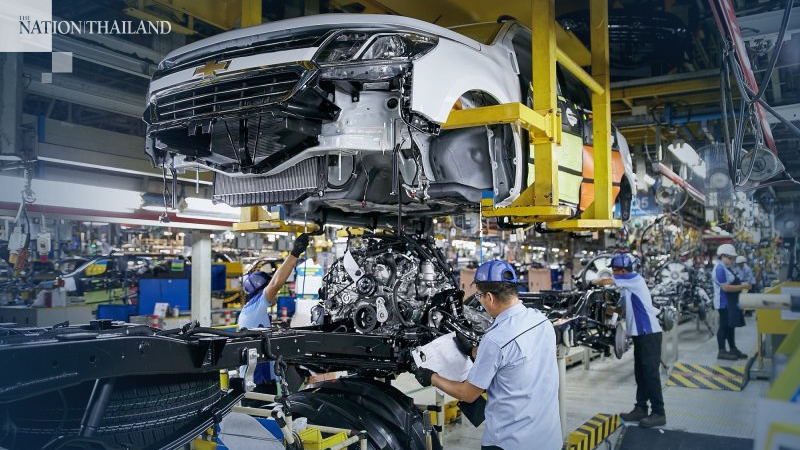
Thailand’s Outsourcing Employment Association revealed that even though the country has been hit by a Covid-19 outbreak twice, the demand for blue-collar workers has not fallen.
Visuth Panthavuthiyanont, the association’s chairman, said on Tuesday that Thailand’s labour market was badly affected by the nationwide lockdown between March and July 2020. However, demand for labour in some industries, especially automobile and electronics, gradually returned to normal from late October. He said this was because demand for these products had returned, and with new orders, workers had to be called back to their workplaces.
However, he said, though the market is showing positive signs, the employment market will not be the same as pre-Covid times.
He said the outbreak has shaken several businesses and increased the rate of unemployment in Thailand and several other countries. Also, severance pay packets were an added burden on employers.
Visuth added that in a bid to avoid having to pay a lump sum to employees in case of unpredictable circumstances, in the future both blue and white-collar workers will be hired under short-term contracts.
The workforce will also be kept flexible because orders are not expected to be as stable as before.
However, Visuth said, Thailand currently lacks blue-collar workers, who are key to several industries.
Thailand’s domestic workforce, or workers aged between 18 and 60, stands at about 12 million, comprising 10 million blue-collar workers and 2 million white-collar workers.
He said the blue-collar workforce of 10 million was not sufficient to meet Thailand’s needs and put the shortage down to a drop in births and the unpopularity of vocational degrees.
Visuth added that migrant workers cover the labour shortage, and regulations should be amended to make it easier for them to work in Thailand.
The Stock Exchange of Thailand (SET) Index closed at 1,516.94 on Wednesday, down 1.33 points or 0.09 per cent. Total transactions amounted to Bt74.89 billion with an index high of 1,527.88 and a low of 1,513.13.
In the morning session, a Krungsri Securities analyst expected the SET to fluctuate between 1,510 and 1,530 points despite hopes of fresh US economic relief and the rising oil price.
“The SET will be under pressure from its tight valuation at price-to-earnings of 30 times,” he added.
The 10 stocks with the highest trade value today were BAM, GPSC, PTT, GULF, KBANK, BBL, KTC, SCB, MINT and THCOM.
As of 4.30pm, the price of oil rose by US$0.19 or 0.33 per cent to $58.55 per barrel, while gold rose by $7.70 or 0.42 per cent to $1,845.20 per ounce.
Other Asian indices were on the rise:
Japan’s Nikkei Index closed at 29,562.93, up 57.00 points or 0.19 per cent.
China’s Shang Hai SE Composite Index closed at 3,655.09, up 51.60 points or 1.43 per cent, while the Shenzhen SE Component Index closed at 15,962.25, up 331.68 points or 2.12 per cent.
Hong Kong’s Hang Seng Index closed at 30,038.72, up 562.53 points or 1.91 per cent.
South Korea’s KOSPI closed at 3,100.58, up 15.91 points or 0.52 per cent.
Taiwan’s TAIEX Index was closed for Lunar New Year.
The Stock Exchange of Thailand (SET) Index rose by 8.12 points, or 0.53 per cent, to 1,526.39 in the morning session on Wednesday.
The SET is expected to fluctuate between 1,510 and 1,530 points despite hopes of a fresh US economic relief package and the rise in the oil price, a Krungsri Securities analyst said.
“The SET would be under pressure due to its tight valuation,” he predicted, adding that the index’s price-to-earnings ratio was 30 times.
▪︎ CBG, ICHI, OSP, SAPPE, RBF, DOD and PTG, which benefit from positive news on hemp production and its general use.
The SET Index closed at 1,518.27 on Tuesday, up 1.84 points, or 0.12 per cent. Total transactions amounted to Bt92.88 billion, with an index high of 1,529.49 points and a low of 1,516.50.



 Danucha Pichayanan, secretary-general of NESDC

 SET President Pakorn Peetathawatchai