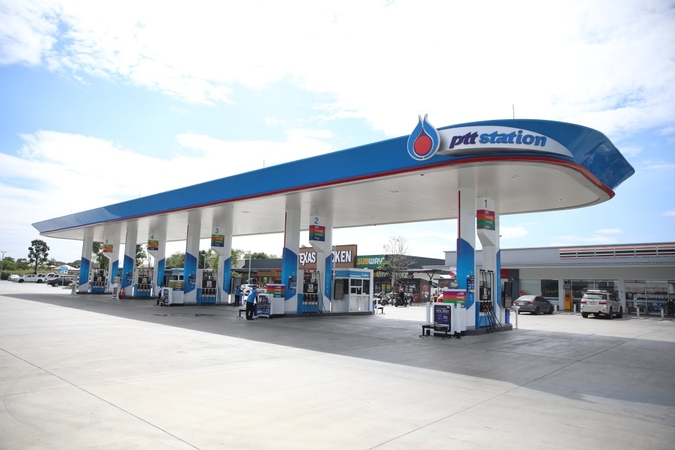
PTT Oil and Retail Business has set aside a budget of Bt74.6 billion for the 2021-2025 expansion of its three core businesses, said acting CEO Jiraphon Kawswat.
Of the total budget, 34.6 per cent will be invested in its oil business, 28.6 per cent in its non-oil business and 21.8 per cent in international business. The remaining 15 per cent will be spent on other businesses and on exploring new business opportunities.
For its oil business, the company aims to increase the number of PTT filling stations in Thailand from the current 1,986 to 3,100 by 2025, Jiraphon said.
For its non-oil business, the firm has targeted expansion of its Cafe Amazon chain in Thailand from 3,186 to 5,800 outlets by 2025.
For its international business, it will focus on expansion of filling stations and Cafe Amazon branches in Cambodia, Laos, Myanmar, and Vietnam (CLMV), plus the Philippines. It will also open more Cafe Amazon branches in China.
PTT currently has 329 petrol stations in overseas markets.
Jiraphon said the company would also open more charging stations for electric vehicles on main routes throughout Thailand. It is currently piloting the service in 25 PTT filling stations.
Reinsurance broker TQR Co Ltd is expected to launch an initial public offering (IPO) in the Market for Alternative Investment (Mai) in this first quarter, according to its financial adviser, Jay Capital Advisory Ltd.
Jay Capital president Jirayong Anuman-Rajadhon said that the Securities and Exchange Commission has already accepted the TQR filing to launch the IPO of 60 million shares.
TQR chief executive officer Chanaphan Piriyaphan said that part of the funds raised from the IPO would be invested in an information and communications technology system to boost the company’s operating efficiency.
KBank’s Beacon invests in Robowealth, targets total AuM of Bt30 billion in 2021
CorporateJan 20. 2021Thanapong Na Ranong, right, managing director, Beacon Venture Capital and Chonladet Khemarattana, left, group chief executive officer of Robowealth Group.
By The Nation
Kasikornbank’s corporate venture capital arm Beacon Venture Capital has announced Series A investment in wealth tech start-up Robowealth.
The investment aims to leverage business strengths of both KBank and Robowealth to drive inclusiveness in the capital market by solving three primary issues that prevent Thais from investing – the lack of time, lack of knowledge and lack of capital – aiming for a total Bt30 billion of assets under management (AuM) in 2021, the firms said in a press release.
Managing director Thanapong Na Ranong said Beacon VC focuses on investing in high-potential start-ups, whose innovations and services can deliver real value to KBank customers through the creation of new financial products or services.
“While we would normally scout for new investments and find collaboration potential with business units, this is the first time we are investing in a start-up that already has a working relationship with KBank,” he said.
KBank and Robowealth, together with Lu International, launched the FinVest application in late 2020.
Robowealth provides complete solutions for robo-advisory and mutual fund investment.
“Robowealth Group aims to liberalise the Thai financial industry by providing the public with efficient investment opportunities. Currently, only 5 per cent of Thais invest through mutual funds and the stock exchange,” Group CEO Chonladet Khemarattana said.
“Robowealth’s vision lies within the cooperation to build a stable financial ecosystem under the concept of ‘Empower Future Financial Ecosystem’ through the business to consumer [B2C] and business to business [B2B] schemes. This ecosystem will ultimately help Thais achieve financial freedom sustainably,” he said.
Robowealth currently plays an integral part in developing and offering two prominent investment applications under Robowealth Mutual Fund Brokerage Securities. Both can help investors gain access to mutual fund portfolios with only a miminum Bt1,000 investment.
Each focuses on different target groups with distinctive and unique product positionings, the press release said.
The first robo-adviser “odini”, which debuted in 2018, targets ordinary people looking for a simple way to invest through automated ready-made mutual fund portfolios. The customer can either make lump-sum investment or pre-specify the monthly contributions. Two years after the launch, Robowealth has enhanced the odini “with a more premium service under the odini Black sub-brand integrated into the existing application to serve the mass affluent segment better”.
The second application FinVest debuted in late 2020 as Thailand’s first curated mutual funds investment application. The investment committee, which consists of fund managers and investment analysts, has the primary responsibility of selecting a set of suitable mutual funds from both the domestic and global investment universe based on a thematic investment framework. Then, these featured funds will be directly served to the customer with precise and digestible content to make the final investment decision on his/her own.
“The robo-adviser could provide a decent return by allocating Chinese and US equities as many tech stocks have greatly benefited from the Covid-19 lockdown,” Chonladet said.
Thanapong added that one of the main interesting characteristics of successful Thai fintech companies is that their business and models don’t aim to disrupt financial institutions, but instead aim to collaborate with those institutions by bringing together each parties’ unique strength to add value to customers and grow synergistically.
Data and technology transformation underpin the path to global recovery from the Covid-19 catastrophe.
So says tech company Oracle (Thailand), which said it is committed to helping overcome the public health crisis both here and abroad.
Taveesak Saengthong, managing director for Oracle (Thailand), remarked that collaboration between the public and private sector, and across industries, will be crucial to this effort.
In Thailand, where the technology company is marking 30 years in the market, Taveesak said that Oracle is constantly innovating to offer a solution for every piece of the puzzle.
He shared that Oracle can contribute towards Thailand’s recovery in two ways – addressing the healthcare sector requirements and economic recovery through support for businesses.
Oracle said its National Electronic Health Records (EHR) Database and Oracle Public Health Management System, two solutions which were built by Oracle teams around the world when Covid-19 became a global pandemic, have been instrumental in helping government efforts in collecting, processing and analysing health updates from patients and healthcare providers.
In Africa, Oracle is also working with Tony Blair Institute to support a yellow fever vaccination program in Ghana, Rwanda and Sierra Leone, with a modern, cloud-based, electronic health records system to help manage their large-scale vaccination programmes.
To get the vaccine to people on the ground, it said governments need to put the processes and infrastructure in place to adequately and effectively manage the vaccine development ecosystem.
“Compounding the issue, cold chain logistics are particularly difficult in warmer climates, and with most parts of Southeast Asia being in the tropics, this could pose a significant obstacle. To address this challenge, Oracle offers its Supply Chain Management [SCM] Cloud to help customers maintain a resilient supply chain to keep the economy going,” said Taveesak.
Meanwhile with Covid-19 impacting the economy, governments and businesses would also need to look at boosting morale of people by enabling upskilling for digital talents and also how businesses manage their workforce, Oracle said.
Said Taveesak: “With the demands for remote working, there is increased demand for more digital, including the need for digital talents. Oracle is also contributing to the upskilling of talents through our Oracle Academy programme.” In Thailand, Oracle Academy partners with 89 institutions and support 178 educators, to train students on core as well as up-and-coming technical skills, enabling them employment in the technology sector.
Oracle said it is also working with Thai customers to ensure their business continuity during the pandemic.
Ngern Tid Lor, a microfinance leader in Thailand, decided to migrate to Oracle Fusion Cloud Enterprise Resource Planning (Oracle Cloud ERP). This move offers them an array of improved features with richer data intelligence in a single management platform that brings about an overall reduction in cost. Minor Hotels has moved its use of Oracle E-business Suite, Hyperion and BI for its food business to Oracle Cloud Infrastructure (OCI).
Bitcoin slides below $35,000 as crypto mania loses momentum
EconJan 21. 2021A crane arm lifts a bitcoin sculpture made from scrap metal in Norilsk, Russia, on Dec. 20, 2020. MUST CREDIT: Bloomberg photo by Andrey Rudakov.
By Syndication Washington Post, Bloomberg · Lynn Thomasson
The bitcoin fever is starting to break as worries about a market bubble discourages investors from buying in.
Prices for the largest cryptocurrency dipped as much as 8.4% on Wednesday and traded below $34,000. Ever since the market shot through all-time highs in early January, bitcoin has been beset by volatility and skepticism that the run-up has been excessive.
Analysts have pointed to $40,000 as the key level that bitcoin needs to surpass in order to draw fresh money from investors riding cryptocurrency momentum. They argue that recent gains could prove fleeting if the rally stalls and traders looking for quick returns shift their money elsewhere.
“Many cryptocurrency traders are diversifying into other coins in fear that bitcoin could see another collapse if $41,500 is not reached sometime soon,” said Edward Moya, senior market analyst at Oanda Corp.
There are also fears from Wall Street pros that bitcoin’s 400% rally in the past year makes it too dangerous for them to jump in. In Bank of America’s monthly survey, fund managers called bitcoin the world’s most crowded trade — the first time it’s held that title since 2017.
By Syndication Washington Post, Bloomberg · Adam Haigh, Vildana Hajric · BUSINESS, US-GLOBAL-MARKETS
U.S. stocks rallied to all-time highs as investors grew optimistic that recent federal spending will revive growth and bolster corporate earnings. Treasuries were little changed while the dollar weakened.
The Nasdaq 100 Index jumped more than 2% and the S&P 500 Index posted the best first-day reaction to a newly elected president’s inauguration since Jan. 20 became the official start in 1937. Netflix Inc. surged more than 17% after a jump in subscribers. Chipmaker ASML Holding NV rallied on solid results. Morgan Stanley gained after reporting record full-year results.
Investors looked past a fresh stumble in the rollout of vaccines and elevated infection rates, and eyed the promise of more stimulus and an expanded federal effort to get shots to more Americans quickly under President Joe Biden.
“If stimulus happens at the same time that people get vaccinated, the optimism can’t help but build,” said Keith Buchanan, a portfolio manager for GLOBALT Investments in Atlanta. “It’s a fairly safe bet there will be another stimulus package with more direct payments to consumers and individuals and more help for small businesses..”
Investors are counting on more spending to help propel economic growth under Biden, who is planning a flurry of executive orders on his first day. Still, it won’t be all smooth sailing, with Janet Yellen encountering early Republican resistance to Biden’s relief plan in her confirmation hearing to become treasury secretary.
On the virus front, Germany suffered record daily deaths and a study on the South African variant raised concern about the efficacy of vaccines.
Elsewhere, crude oil edged higher and gold traded touched an almost two-week high. In Asia, Chinese firms trading in Hong Kong saw the bulk of gains, and the Hang Seng Index approached the 30,000 level. Alibaba Group Holding Ltd. rallied after billionaire Jack Ma resurfaced from months out of public view amid escalating scrutiny over his internet empire.
Here are the main moves in markets:
Stocks
The S&P 500 Index increased 1.4% as of 4 p.m. EST, the highest on record with the largest climb in almost two weeks.
The Nasdaq Composite Index gained 2% to the highest on record.
The Nasdaq 100 Index rose 2.3% to an all-time high.
The Stoxx Europe 600 Index increased 0.7% to 410.78.
Currencies
The Bloomberg Dollar Spot Index declined 0.2%.
The euro fell 0.2% to $1.2101.
The British pound rose 0.1% to $1.3644.
The Japanese yen appreciated 0.3% to 103.57 per dollar, the strongest in two weeks on the largest gain in more than a week.
Bonds
The yield on 10-year Treasurys lost one basis point to 1.085%.
The two-year rate fell to 0.13%.
Germany’s 10-year yield dipped less than one basis point to -0.53%.
Commodities
West Texas Intermediate crude gained 0.6% to $53.29 a barrel.
Gold strengthened 1.4% to $1,865.95 an ounce, the highest in almost two weeks on the biggest jump in more than two weeks.
Thai govt keen to push Dawei SEZ development despite Italian-Thai setback
EconJan 21. 2021NESDC secretary general Danucha Pichayanan
By The Nation
Prime Minister Prayut Chan-o-cha has been handed a detailed summary of Myanmar’s cancellation of contracts with the Italian-Thai Development Company and partners to develop the first phase of the country’s Dawei special economic zone (SEZ) and deep-sea port.
The National Economic and Social Economic Council (NESDC)’s summary includes details of infrastructure projects in the zone, said NESDC secretary general Danucha Pichayanan.
He added that the Thai government would seek mechanisms to help Italian-Thai, and was keen to push forward Dawei’s development. The Dawei SEZ and seaport will open a trade route to the Indian Ocean for Thai exports.
Stock market regulators in Hong Kong and Thailand on Wednesday clinched a memorandum of understanding (MoU) on Mutual Recognition of Funds (MRF), to allow distribution of funds in each other’s market through a streamlined process.
The MoU between Hong Kong’s Securities and Futures Commission (SFC) and the Securities and Exchange Commission of Thailand (SEC) establishes a framework for exchange of information, regular dialogue as well as regulatory cooperation for the cross-border offering of eligible Hong Kong and Thai funds.
The two regulators also agreed to speed up the approval process of a local feeder fund investing in an MRF-eligible Thai or Hong Kong master fund, and to clarify how they can operate in a streamlined manner.
“This new cooperation framework signifies a major expansion of our MRF network in Asia. It opens up new business opportunities for fund management firms and broadens cross-border investment channels and choices for investors,” said Ashley Alder, CEO of the Hong Kong regulator.
SEC secretary-general Ruenvadee Suwanmongkol hailed the bilateral agreement as another milestone in Hong Kong-Thailand cooperation, following the MoU on Strengthening of Economic Relations signed in 2019.
“The Mutual Recognition of Funds initiative will deepen economic cooperation between Hong Kong and Thailand. More importantly, it will promote the competitiveness of local intermediaries in the international arena while enriching the types of fund products offered to investors,” Ruenvadee said.
The cooperation arrangements set out in the MoU come into effect on Wednesday (January 20), save for the mutual recognition of funds scheme which the regulators said should be implemented within six to 12 months.
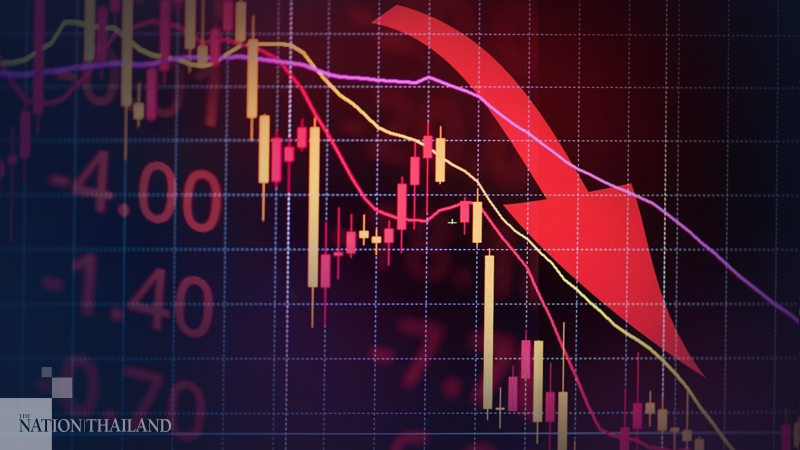
The Stock Exchange of Thailand (SET) Index closed at 1,515.72 on Wednesday, down 6.87 points or 0.45 per cent. Total transactions amounted to Bt93.55 billion with an index high of 1,529.50 and a low of 1,511.41.
In the morning session, an analyst at Krungsri Securities forecast the index would fluctuate between 1,515 and 1,535 points amid the incoming US administration’s $1.9-trillion stimulus package and mass buy-ups of shares in Thai companies whose fourth-quarter turnover is expected to improve.
“However, the SET will be under pressure from its tight valuation and decline in foreign fund inflows,” he said.
The 10 stocks with the highest trade value today were PTT, CBG, KTC, GPSC, BANPU, PTTEP, CPF, SCGP, KBANK and CPALL.
As of 4.30pm, the price of oil rose by US$0.51 or 0.96 per cent to $53.49 per barrel, while gold rose by $16.40 or 0.89 per cent to $1,856.60 per ounce.
Other Asian indices were mixed:
Japan’s Nikkei Index closed at 28,523.26, down 110.20 points or 0.38 per cent.
China’s Shang Hai SE Composite Index closed at 3,583.09, up 16.71 points or 0.47 per cent, while Shenzhen SE Component Index closed at 15,223.36, up 219.37 points or 1.46 per cent.
Hong Kong’s Hang Seng Index closed at 29,962.47, up 320.19 points or 1.08 per cent.
South Korea’s KOSPI Index closed at 3,114.55, up 21.89 points or 0.71 per cent.
Taiwan’s TAIEX Index closed at 15,806.18, down 71.19 points or 0.45 per cent.
Export-Import Bank tasked with relieving credit crunch on 7 Thai airlines
EconJan 20. 2021Finance Minister Arkhom Termpittayapaisith
By The Nation
Finance Minister Arkhom Termpittayapaisith has asked the Export-Import Bank of Thailand to find ways of providing credit to local airlines to help them counter the Covid-19 impact on the aviation sector.
Arkhom said the ministry would find a solution as soon as possible, insisting that the government was not ignoring local airlines’ problems.
He said the government wanted to provide financial assistance to all business groups that were struggling amid the impact of the outbreak, but had to consider each case carefully.
Seven local airlines are now seeking credit to boost their liquidity after their requests for soft loans from the government were turned down. The airlines have held several rounds of talks with state agencies and ministries for soft loans to counter the impact of Covid-19.

 TQR chief executive officer Chanaphan Piriyaphan
 Thanapong Na Ranong, right, managing director, Beacon Venture Capital and Chonladet Khemarattana, left, group chief executive officer of Robowealth Group.
 Taveesak Saengthong
 A crane arm lifts a bitcoin sculpture made from scrap metal in Norilsk, Russia, on Dec. 20, 2020. MUST CREDIT: Bloomberg photo by Andrey Rudakov.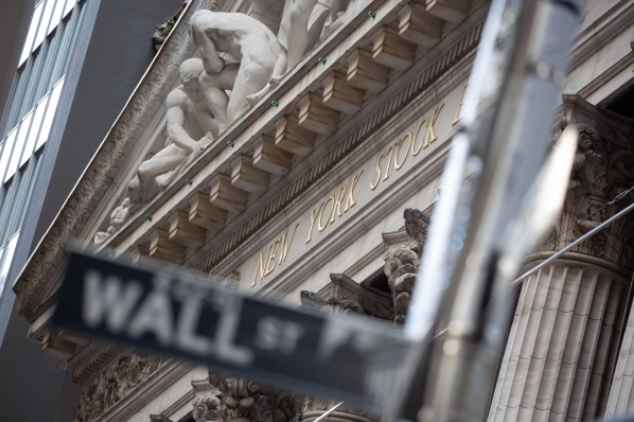
 NESDC secretary general Danucha Pichayanan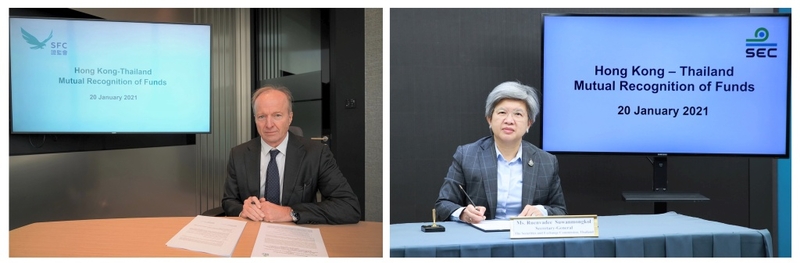
 Finance Minister Arkhom Termpittayapaisith
