
Russia slows down Twitter over ‘banned content’ #SootinClaimon.Com

#SootinClaimon.Com : ขอบคุณแหล่งข้อมูล : หนังสือพิมพ์ The Nation.

https://www.nationthailand.com/news/30403560

Russia slows down Twitter over ‘banned content’

InternationalMar 11. 2021

By The Washington Post · Hamza Shaban

Russia slowed down Twitter for hundreds of thousands of users on Wednesday after regulators accused the platform of failing to remove illegal content. It’s the latest escalation between a government entity and an American social media company over ongoing debates shaping the boundaries of global communications.

The nation’s communications watchdog, Roskomnadzor, said Twitter has not removed content that encourages suicide among young people, as well as posts and links tied to child pornography and drug use. Thousands of tweets fall into these categories, Russian officials said.

Should Twitter continue to host the prohibited content, the regulator warned that it could move to block the site entirely. For now, though, agency officials said they would throttle Twitter access on all mobile devices, and on half of the users who log on through their computers.

The company has more than 690,000 active users in the country, according to a recent report from the research agency Brand Analytics. In Russia’s messaging battle, the opposition lights up social media. Putin’s allies plod along on state TV.

In a TV appearance Wednesday, the deputy chief of Roskomnadzor, Vadim Subbotin, said that Twitter stands out as the only social network that has “openly ignored the Russian authorities’ demand to remove the banned content.”

Twitter’s content policies ban a host of illegal and abusive behavior, including child exploitation, the encouragement of self-harm and suicide, and facilitating drug transactions.

“We are aware of reports that Twitter is being intentionally slowed down broadly and indiscriminately in Russia due to apparent content removal concerns,” Twitter said in a statement Wednesday, adding that it has a “zero-tolerance policy” regarding the illicit content. “We remain committed to advocating for the Open Internet around the world and deeply concerned by increased attempts to block and throttle online public conversation,” the company said.

Moscow’s move highlights the government’s ongoing hostility toward social media platforms, which have helped galvanize young Russians protesting against President Vladimir Putin. In recent months, dissidents and anti-corruption activists have fueled waves of demonstrations across the country, powered in part by social networks including YouTube, TikTok and Instagram that provide a messaging alternative to state-backed Russian media.

Earlier this year, in a video address to the World Economic Forum, Putin took aim at social media companies in an implicit acknowledgment of the threat they pose to his grip on power. “These are no longer just economic giants – in some areas they are already de facto competing with states,” he said.

Opposition leader Alexei Navalny and his political allies have relied on social media platforms to amplify their criticisms of the government and to rally support for street protests.

Navalny, an outspoken Kremlin critic who was nearly killed in a nerve agent attack last year, was sentenced to more than two and a half years in prison for allegations that have drawn widespread condemnation from human rights groups for being politically motivated. Earlier this month, the Biden administration announced punitive sanctions against Russian government figures in connection with Navalny’s poisoning.

The antagonism between authoritarian governments and social media also reflects generational differences in news consumption, experts say. Young people in Russia watch far less TV than older generations, and are less likely to adopt the views espoused on state television, challenging the portrayals of a self-reliant, trustworthy Russian government.

On a technical level, the Twitter slowdown appears to have interfered with broader Internet traffic in Russia, according to Doug Madory, the director of Internet analysis at Kentik, a network analytics company.

Over a roughly two-hour span Wednesday morning, Madory observed a 24% drop in Internet traffic volume to the Russian state telecom Rostelecom. “This disruption was caused by a flawed attempt to block Twitter’s link-shortening service,” Madory said.

But the blocking attempt interfered with Web traffic destined for other sites, including Reddit and Microsoft, Madory said.

On Twitter, Rostelecom apologized for the outages and said they were caused by a “global accident.”

Maria Kolomychenko, technology editor of Meduza, an independent investigative news site, said that Russia’s moves against Twitter were prompted by tweets about Navalny, and of posts containing detailed information about opposition actions and protests. Observers are interpreting the throttling as a test of Moscow’s ability to block internet access, Kolomychenko said in an interview, with Twitter serving as an early target.

Andrei Soldatov, a fellow with the Center for European Policy Analysis and a Russian investigative journalist, said on Twitter that Russia’s slowdown was “partly a warning to global platforms,” and a nationwide test of the government’s censoring infrastructure. But the throttling also caused an outage of government websites, he said, and “failed on all fronts.”
E.U. denies coronavirus vaccine nationalism charge, says U.S. and U.K. are not sharing #SootinClaimon.Com

#SootinClaimon.Com : ขอบคุณแหล่งข้อมูล : หนังสือพิมพ์ The Nation.

https://www.nationthailand.com/news/30403559

E.U. denies coronavirus vaccine nationalism charge, says U.S. and U.K. are not sharing

InternationalMar 11. 2021

By The Washington Post · Rick Noack, Quentin Ariès, Loveday Morris

BERLIN – The European Union is defending itself against accusations of vaccine nationalism, highlighting its role in producing coronavirus vaccines for export and calling out the United States and Britain for not similarly sharing with the world.

The E.U. came under heavy criticism after member Italy blocked the export of 250,000 AstraZeneca doses to Australia last week, citing coronavirus vaccine shortages and delayed supplies to the bloc.

But now the E.U. is emphasizing that just one shipment was held back, while 257 others have gone out.

A European official, speaking on the condition of anonymity because he was not authorized to share the information publicly, said Wednesday that the bloc had approved the export of more than 34 million coronavirus vaccine doses since late January. Britain was the biggest recipient of those exports, with more than 9 million doses, followed by Canada, which got nearly 4 million, and Mexico, which received more than 3 million. The bloc approved the export of more than 950,000 doses to the United States.

European Council President Charles Michel also noted on Tuesday that most of the doses deployed in Israel’s world-leading vaccination program came from Belgium.

He contrasted the European approach with that in the United States and Britain, which he singled out for having “imposed an outright ban on the export of vaccines or vaccine components produced on their territory.”

Michel’s comments drew a fierce response from the British government on Wednesday.

“Let me be clear: We have not blocked the export of a single covid-19 vaccine or vaccine components,” said Prime Minister Boris Johnson, adding that “we oppose vaccine nationalism in all its forms.”

Britain’s Foreign Ministry summoned a top E.U. official over the spat on Wednesday.

The E.U., the United States and Britain have all invested heavily in coronavirus vaccine research and development. They are also key backers of Covax, a program co-led by the World Health Organization that primarily aims to secure equitable access to vaccines for poorer nations. President Joe Biden last month pledged $4 billion to the program over the next years – more than any other nation has vowed to donate.

Still, high-income countries have so far bought up the majority of available vaccine doses, purchasing 55% of coronavirus vaccine supplies worldwide, even though they represent only 16% of the global population, according to data collected by Duke University.

Some poorer nations may still have to wait years for sufficient supplies.

White House press secretary Jen Psaki said last week that Biden “has made clear that he is focused on ensuring that vaccines are accessible to every American” and is not considering sharing vaccines with Mexico at this point.

Neither of the two U.S. neighbors have so far been able to secure deliveries from U.S.-based facilities. In addition to what they have received from Europe, Mexico has ordered vaccines developed in Russia and China, whereas Canada purchased AstraZeneca doses produced in India and requested doses from the Covax program.

The Italian block on the Australia shipment reflected concerns that British-Swedish company AstraZeneca is shortchanging the E.U. to fulfill its contracts with other nations. It was the first time an E.U. member made use of new rules introduced in January that require manufacturers to ask permission before exporting doses outside of the bloc – a rule imposed as AstraZeneca and other suppliers said they would not meet their pledges for the first part of the year.

The tense exchanges between London and Brussels this week are a sign of the stakes involved in vaccine diplomacy around the globe. But they are also an indication of strained relations between Britain and the 27-nation bloc it was formerly part of. On both sides, the vaccine rollout is being seen as a critical post-Brexit test, pitting Britain’s go-it-alone approach against the E.U.’s communal model.

In Britain, the latest European remarks have been widely perceived as an E.U. effort to distract from the bloc’s woes. Even as Brussels and European capitals cry foul over bearing the brunt of supply chain issues from manufacturers and point to continued exports, sluggish vaccination programs in many European countries mean millions of delivered doses haven’t been used.

The E.U.’s most populous member state, Germany, has administered just over 8 million vaccine doses but still has a backlog of 4.3 million doses in storage, according to government figures.

While officials have said that some are being saved for second doses, vaccination rollouts in a number of areas have been mired by confusion. Some vaccination centers have said they have been forced to turn away some people with appointments because they weren’t eligible. Others who are eligible say they’ve been unable to secure them.

Not helping matters was an initial decision by several European countries to not recommend the use of AstraZeneca’s vaccine – which doesn’t require hyper-cold storage and can be administered through doctor’s offices – for people older than 65. Even after the reversal of that decision in Germany, millions of elderly people in the highest-risk group are still to be vaccinated, according to media reports.

Germany will only roll out vaccines in doctor’s offices nationwide in April, whereas Britain started offering AstraZeneca jabs through its general practitioners in January.

BioNTech sees potential to supply 3 billion doses in 2022 #SootinClaimon.Com

#SootinClaimon.Com : ขอบคุณแหล่งข้อมูล : หนังสือพิมพ์ The Nation.

https://www.nationthailand.com/news/30403558

BioNTech sees potential to supply 3 billion doses in 2022

InternationalMar 11. 2021The BioNTech covid-19 production facility in Marburg, Germany, on Dec. 2, 2020. MUST CREDIT: Bloomberg photo by Alex Kraus.The BioNTech covid-19 production facility in Marburg, Germany, on Dec. 2, 2020. MUST CREDIT: Bloomberg photo by Alex Kraus.

By Syndication Washington Post, Bloomberg · Naomi Kresge, Matthew Miller

BioNTech could have capacity to make 3 billion doses of covid-19 vaccine with U.S. partner Pfizer next year, the German company’s chief executive officer said, making their pioneering shot far more widely available around the world.

“In principle, we could further increase manufacturing capacity,” Ugur Sahin said Tuesday in an interview with Bloomberg TV. “It depends on demand, it depends on factors such as if an additional boost to vaccinations is required.”

Demand is growing around the world for Covid vaccines that countries desperately need to breathe back life into economies, return children to schools and get people back into offices and shops. Both the U.S. and Europe have sought to accelerate vaccine deliveries this year as new, more aggressive variants of the virus spread.

“We have an order book of already 1.3 billion orders, which is already fixed,” Sahin said. “We are discussing additional doses — hundreds of millions of doses as options — with government organizations.”

BioNTech shares rose as much as 1.3% early Wednesday in Frankfurt.

The two companies have committed to make 2 billion doses of their two-shot vaccine this year. Pfizer promised to ship two-thirds of the U.S.’s 300 million-dose order by the end of May. In the European Union, the partners have promised to ship at least 500 million doses this year, with an option for an additional 100 million doses.

Pfizer has projected about $15 billion in revenue this year from Covid vaccine sales, and CEO Albert Bourla said the price of the shot may increase.

Concerns about mutated versions of the virus may also drive demand if new variants evolve with the ability to evade current inoculations. BioNTech is already discussing potential orders for boosters, Sahin said.

BioNTech and Pfizer have begun laying the groundwork for a booster shot of their vaccine, which uses a new technology called messenger RNA. One trial, begun in February, is examining the safety and immune response of a third dose of the vaccine in people who took part in an early study of the shot last year. The partners have also said they’re planning a human test of a new vaccine that’s specific to a particularly problematic vaccine variant that emerged late last year in South Africa.

“We now understand the evolution of the virus can result in new variants that come with new biological and medical features,” Sahin said. “The whole world was not prepared for this pandemic, and we now understand that this could happen again.”

In lab studies using blood of people who’ve been inoculated, the existing form of the vaccine seems to be less effective against the South Africa strain than against other mutant versions of the coronavirus. While the vaccine still appears to offer some protection, the implications of the variants remain unclear.

The companies will gain more data on the South Africa variant within six to eight weeks, Sahin said.

The Pfizer-BioNTech vaccine is cleared in more than 50 countries. Aside from the EU and the U.S., other major orders have come from Japan, Canada and the U.K.

The BioNTech chief called for continued solidarity among EU countries, despite concerns in countries like Germany that tethering vaccine purchasing and distribution to the bloc has slowed the immunization push. In the U.K., more than a third of the population has received a shot, compared with 6% in Germany, according to Bloomberg’s vaccination tracker.

“At the end of the day we have to see that Germany is not an isolated state,” Sahin said. “It’s part of Europe, and Europe decides and has to come to a common solution.”

As vaccine campaigns pick up, Sahin said he’s optimistic that inoculations will become more widespread this year and next.

“I’m pretty confident that we will be able to provide vaccines in Europe and the U.S. and that everyone who requires a vaccine gets a vaccine by the end of summer,” Sahin said, provided there are no production glitches. “Within 2022, we hope to have enough to vaccinate around the world.”

Congress sends $1.9 trillion stimulus to Biden, his first major win #SootinClaimon.Com

#SootinClaimon.Com : ขอบคุณแหล่งข้อมูล : หนังสือพิมพ์ The Nation.

https://www.nationthailand.com/news/30403557

Congress sends $1.9 trillion stimulus to Biden, his first major win

InternationalMar 11. 2021Speaker of the House Nancy Pelosi, D-Ca., talks with her staff inside the House Chamber before announcing the final votes on the $1.9 trillion Covid-19 relief plan on Wednesday, March 10, 2021. MUST CREDIT: Washington Post photo by Salwan GeorgesSpeaker of the House Nancy Pelosi, D-Ca., talks with her staff inside the House Chamber before announcing the final votes on the $1.9 trillion Covid-19 relief plan on Wednesday, March 10, 2021. MUST CREDIT: Washington Post photo by Salwan Georges

By The Washington Post · Tony Romm

WASHINGTON – Congress approved a sweeping $1.9 trillion coronavirus relief package on Wednesday, authorizing a flurry of new federal spending and a temporary yet dramatic increase in anti-poverty programs to help millions of families still struggling amid the pandemic.

The 220-to-211 vote in the House of Representatives almost entirely along party lines sends to President Joe Biden’s desk one of the largest economic rescue packages in U.S. history, which Democrats had promised to pass as one of their first acts of governance after securing narrow but potent majorities in Washington during the 2020 presidential election.

The bill, dubbed the American Rescue Plan, authorizes another round of stimulus payments up to $1,400 for most Americans; extends additional, enhanced unemployment aid to millions still out of work; and makes major changes to the tax code to benefit families with children. It couples the new pandemic relief with what Democrats have come to describe as one of the most robust legislative responses to poverty in a generation, seeking to assist low-income families who struggled financially long before the coronavirus took root.

Lawmakers also set aside tens of billions of dollars to fund coronavirus testing, contact tracing and vaccine deployment, as they aim to deliver on Biden’s recent promise to produce enough inoculations for “every adult in America” by the end of May. The stimulus bill approves additional money to help schools reopen, allow restaurants and businesses to stay afloat, and assist state and local governments trying to meet their financial needs.

“The Biden American Rescue Plan is about the children, their health, their education, [and] the economic security of their families,” said House Speaker Nancy Pelosi, D-Calif., just before lawmakers gave the bill a final green light, prompting cheers among Democrats in the chamber. “This legislation is one of the most transformative and historic bills any of us will ever have an opportunity to support.”

Republicans banded together in opposition on Wednesday, much as they had against an earlier version of the proposal in the House last month and the Senate bill’s over the weekend. The GOP approach evinced the tough political climate that Biden is likely to face even after preaching political unity upon taking office. Partisan tensions threaten to overshadow his expected work in the coming months to shepherd major new investments in infrastructure, overhaul the immigration system and rethink other elements of the U.S. tax code.

“This isn’t a rescue bill; it isn’t a relief bill; it is a laundry list of left-wing priorities that predate the pandemic and do not meet the needs of American families,” House Minority Leader Kevin McCarthy, R-Calif., said earlier in the debate.

The bill now heads to Biden, who is expected to sign it Friday, White House press secretary Jen Psaki said. The signing comes a day after the president is set to deliver his first prime-time television address on the country’s response to the pandemic. Wall Street appeared to acknowledge the news, as the Dow Jones industrial average continued to climb and was about 529 points by the early afternoon.

“For weeks now, an overwhelming percentage of Americans – Democrats, Independents, and Republicans – have made it clear they support the American Rescue Plan. Today, with final passage in the House of Representatives, their voice has been heard,” Biden said in a statement.

“This legislation is about giving the backbone of this nation – the essential workers, the working people who built this country, the people who keep this country going – a fighting chance,” he added.

With the American Rescue Plan, lawmakers adopted their sixth major coronavirus relief package since the pandemic first encroached on the country roughly a year ago.The sheer vastness of aid Congress has adopted to date reflects the contagion’s toll, with 29 million cases, more than 527,000 deaths, and deep economic scars, including 10 million fewer jobs than at the start of the crisis.

The situation appeared especially grim in January, prompting Biden to put forward the first details of his nearly $2 trillion stimulus before he officially entered the White House. Since then, though, infections have ticked downward, and vaccines have reached Americans more efficiently. More workers have returned to their jobs, sparking concern among some lawmakers and economists that the new stimulus may be mismatched for the moment.

Still, Democrats say the rate of recovery has not been fast or robust enough, and they stress that the $1.9 trillion package given a final green light in the House on Wednesday will prevent the economy from backsliding. In doing so, some party leaders have sought to shift their messaging, seizing on the fact that the stimulus doubles as an attempt to help Americans who were struggling long before the coronavirus took hold.

“We promised relief, the president promised relief, and now help is on the way,” said Rep. John Yarmuth, D-Ky., the chairman of the House Budget Committee, as the House debate began Wednesday.

The newly adopted legislation includes another round of $1,400 stimulus checks, which Biden and his top aides have said should reach a large number of Americans by the end of the month. Democratic leaders pledged to authorize the payments in the final days of the 2020 campaign, seizing on the highly popular idea to give them an electoral boost in Georgia, where they later picked up two Senate seats and ultimately took control of the chamber.

Millions of Americans who were set to lose unemployment benefits in a matter of days now will received continued, enhanced federal payments of an extra $300 each week until early September. Many workers who collect unemployment also are set to receive a tax break on those benefits.

The new stimulus also includes a dramatic expansion of the child tax credit, for the first time seeking to send out periodic, perhaps monthly, payments to families with kids. Biden and his congressional Democratic allies have estimated the changes could cut child poverty by up to half.

The bill authorizes a wide variety of additional aid, including a $5 billion expansion to federal programs that help Americans afford food in the pandemic and a $7 billion effort to help students obtain Internet access. In total, it includes $1.8 billion in federal spending and is expected to add $1.85 billion to the deficit over the next 10 years, according to a congressional estimate.

In High Point, N.C., Sonya Roper said she’s eager to start seeing some of the help show up in her bank account. The 51-year-old home health aide has seen her hours slashed, and her bills rise, while caring for four grandchildren who have been learning from home during the pandemic.

Roper said the forthcoming aid, including a $1,400 stimulus check, would help her cover much-needed car repairs. Her Honda Pilot has broken down twice and needs new tires, brakes and an oil change, forcing her to rely on her daughter’s car. And she said the new child tax changes could prove instrumental once they’re in place, allowing her to receive periodic payments because she claims her grandchildren as dependents.

Yet Roper fears all of the new money still might not be enough. “The $1,400 check comes months after the last stimulus, so all that check is going to do is help people catch up,” she said, adding that she needs “something ongoing.”

Democrats did not get everything they initially sought. An earlier version of the stimulus, which passed the House last month, coupled the aid with the first increase in the federal minimum wage in decades. The idea died in the Senate, where moderate Democrats proved unwilling to support the aggressive procedural maneuvering that would have been required to raise the hourly rate.

The changes at the time rankled some party lawmakers in the House, as liberals felt they had a broad mandate from voters in the 2020 election to enact sweeping economic overhauls. But Democrats soon lined up behind the bill anyway, stressing it still contained significant relief that promises to help families amid the pandemic.

“Today, we are putting money in the pockets of ordinary people, of poor people, of the middle class, and they will be an engine that creates a healthy, prosperous future for all of us,” Rep. Jan Schakowsky, D-Ill., said during a speech on the House floor.

Only one Democrat voted against the measure: Rep. Jared Golden of Maine, who has said the party should have focused on a narrower measure targeting vaccine funding. In a statement describing his vote, he said that the Senate’s changes did not assuage his concerns while removing elements he did support, including the increase to the minimum wage.

Republicans, meanwhile, sought to portray the bill as wasteful and unnecessary. They cited the fact that sums still remain from past congressional packages, including a nearly $1 trillion law adopted in December. And party leaders faulted Democrats for focusing relief on aid programs they say are not immediately related to the pandemic.

“Democrats made a choice: a choice to put their own partisan political ambitions ahead of the needs of the working class, ahead of the needs of the American people,” said Rep. Jason Smith of Missouri, the top Republican on the House’s budget panel, ahead of the vote. “When our Democratic colleagues speak of unity, they mean keeping their party together, not keeping this country together.”

But Democrats countered that the absence of GOP support – after lawmakers crossed the aisle to approve prior stimulus packages – reflected the party’s own political calculations.

“There’s only one thing that’s changed since we passed those first five bills,” said House Majority Leader Steny Hoyer, D-Md. “The need is there, the virus is still with us, the economy is struggle, but now we have a Democratic president.”

Oshkosh admitted weakness on EVs before shock win in postal deal #SootinClaimon.Com

#SootinClaimon.Com : ขอบคุณแหล่งข้อมูล : หนังสือพิมพ์ The Nation.

https://www.nationthailand.com/news/30403556

Oshkosh admitted weakness on EVs before shock win in postal deal

InternationalMar 11. 2021A U.S. Postal Service truck drives in Crockett, Calif., on Aug. 17, 2020. MUST CREDIT: Bloomberg photo by David Paul Morris.A U.S. Postal Service truck drives in Crockett, Calif., on Aug. 17, 2020. MUST CREDIT: Bloomberg photo by David Paul Morris.

By Syndication Washington Post, Bloomberg · Todd Shields, Ari Natter ·

Oshkosh Corp. executives cautioned investors that they lacked expertise in building electric vehicles several months before the company won a lucrative U.S. Postal Service contract to build next-generation mail-delivery vans with batteries or internal-combustion engines.

Oshkosh in a November securities filing said it “may not have the expertise or resources” to compete as vehicle manufacturers turn increasingly to EVs. But in a January investors’ call and again after winning the 10-year, $6 billion postal contract last month, the company said its vehicle could use either type of engine and could be retrofitted to batteries “as that technology evolves.”

The earlier admission to regulators in an annual report may add to criticism of the Postal Service’s Feb. 23 choice of Oshkosh to build tens of thousands of trucks. The agency bypassed electric-vehicle specialist Workhorse Group Inc. in awarding the contract, even after President Joe Biden ordered a clean-energy federal fleet.

Postmaster General Louis DeJoy told Congress after the contract was awarded that just 10% of the mail-delivery fleet is expected to be electric — a proportion he said could rise if an extra $3 billion to $4 billion could be found to pay for them. DeJoy told lawmakers Feb. 24 that with additional funding “every vehicle could be converted to electric.”

DeJoy is scheduled to testify Thursday before House appropriators.

The contract calls for 50,000 to 165,000 vehicles over 10 years. It offers an initial $482 million to complete the design and prepare a factory, the Postal Service said.

“We imagined an electric vehicle future,” Kimberly Frum, a spokeswoman for the Postal Service, said in an email. “The challenge remains the Postal Service’s billions in annual operating losses.”

“With the right level of support, the majority of the Postal Service’s fleet can be electric by the end of the decade,” Frum said.

Supporters of the Postal Service move say it’s urgent to replace older mail vehicles with mounting repair costs. The award favored a veteran manufacturer over Loveland, Ohio-based upstart Workhorse, they say.

Wisconsin-based Oshkosh, with 14,000 workers, has a history dating to 1917 and is an established maker of military gear, fire trucks and concrete mixers. Workhorse, with 130 employees, traces its past to a vehicle-electrification company in 2007 and says it has delivered about 370 trucks to date. It also offers truck-mounted drones.

“Oshkosh is a real company. They can deliver vehicles,” said Greg Lewis, an analyst with BTIG. “They’re not going to be the electric vehicles like some people wanted.”

Oshkosh declined to comment for this article. In a Feb. 24th interview, Chief Operating Office John Pfeifer said that “our proposal includes zero-emission battery-electric vehicle, absolutely and it also includes a low-emission internal combustion vehicle. We submitted both.”

“You have the ability to change compulsion systems as technology develops,” Pfeifer said. “This perfectly dovetails with what” Biden has ordered “because we provide a very cost-effective electric vehicle for the Postal Service.”

Oshkosh told investors in November that “many manufacturers” foresee increasing importance of electric-powered vehicles.

“We may not have the expertise or resources to successfully address these pressures on a cost-effective basis or at all,” the company said in listing “risk factors” in an annual filing with the U.S. Securities and Exchange Commission.

Advocates of clean energy were critical of the contract award, saying the mail-delivery trucks will stay on the streets spewing pollution for decades.

The 10% electric goal “wouldn’t cut it,” said James O’Dea, senior vehicles analyst with the Union of Concerned Scientists. Postal vehicles last decades and “we don’t have another 27 years to spare in the transition from combustion to zero-emission vehicles,” he said.

Oshkosh’s surprise win boosted its shares almost 8% over its pre-award price. Over the same time Workhorse has surrendered almost 50% of its value.

“We are raising hell to figure out what happened here,” Representative Tim Ryan, an Ohio Democrat who is supporting the Workhorse bid, said in an interview. “It just doesn’t make any sense. Why we wouldn’t we want to go all in to go all electric? We are going to look very closely at it.”

Other critics have proposed legislation to overturn the award, or provide the Postal Service with enough money to get electric vehicles.

Workhorse declined to comment. The company earlier said it had hired attorneys and was considering what to do about losing the contract. It faces a prolonged process if it challenges the decision.

Stanley Elliott, an analyst at Stifel Nicolaus & Co., said he isn’t skeptical of Oshkosh’s ability to produce electric-powered mail trucks.

“Historically they’ve done a very good job of delivering large contracts to the government,” Elliott said in an interview. “They’ve got some experience. This isn’t just out of the blue.”

Saudi Arabia Vows to Protect Oil Facilities After Drone Strike #SootinClaimon.Com

#SootinClaimon.Com : ขอบคุณแหล่งข้อมูล : หนังสือพิมพ์ The Nation.

https://www.nationthailand.com/news/30403554

Saudi Arabia Vows to Protect Oil Facilities After Drone Strike

InternationalMar 11. 2021A flame burns off waste gas at Saudi Aramco's Ras Tanura oil refinery and terminal in Ras Tanura, Saudi Arabia, on Oct. 1, 2018. MUST CREDIT: Bloomberg photo by Simon Dawson.A flame burns off waste gas at Saudi Aramco’s Ras Tanura oil refinery and terminal in Ras Tanura, Saudi Arabia, on Oct. 1, 2018. MUST CREDIT: Bloomberg photo by Simon Dawson.

By Syndication Washington Post, Bloomberg · Vivian Nereim, Dana Khraiche

Saudi Arabia said it would guarantee global energy security and deter further attacks on its infrastructure days after a missile and drone assault on the world’s largest oil-export terminal.

The attack on the kingdom’s Ras Tanura port on Sunday caused a brief spike in oil prices and was claimed by Iran-backed Houthi fighters in neighboring Yemen, who are battling a Saudi-led coalition. The missiles were intercepted but the incident marked a serious escalation and has further stirred regional tensions at a time when U.S. President Joe Biden is aiming to re-start nuclear diplomacy with Tehran.

“The kingdom will take necessary and deterrent measures to protect its national resources,” Foreign Minister Prince Faisal bin Farhan said in Riyadh, alongside visiting Russian counterpart Sergei Lavrov. “The failed attempts to target the port of Ras Tanura do not only target the security of the economy and Saudi Arabia. They target the global economy and its oil supplies.”

The international community needs to take a strong stance to prevent such attacks, Prince Faisal said, blaming Iran for supplying the Houthis with ballistic weapons. Shrapnel from one projectile landed close to a residential compound for employees of Saudi Aramco, which operates Ras Tanura on the kingdom’s east coast.

Benchmark Brent crude has surged 75% since early November to $68 a barrel as the OPEC+ cartel restricts supplies and major economies roll out coronavirus vaccines. It briefly topped $71 on Monday in the wake of the attacks and after the alliance — comprising members of the Organization of Petroleum Exporting Countries and others including Russia and Mexico — surprised markets last week by deciding against raising output in April.

Moscow had tried earlier this year to convince Riyadh to increase production, fearing that higher prices would lead rival shale companies in the U.S. to pump more and boost their market share.

Yet Lavrov said on Wednesday that Russia and Saudi Arabia, the two de facto leaders of OPEC+, were still aligned on energy policy.

“We do not see any events that will negatively impact our will to continue cooperating,” he said. “This is the reality and it will remain so for the long-term.”

The Saudi coalition intervened in Yemen’s civil war on the side of the United Nations-recognized government six years ago. The UN says the conflict has caused the world’s worst humanitarian crisis.

The Houthis have claimed regular attacks on Saudi cities and ports in recent years. The Shia group said it was responsible for striking Aramco’s Abqaiq oil-processing plant and Khurais field in September 2019. Armed drones temporarily knocked out about half of Saudi Arabia’s production capacity. The UN concluded those missiles were probably of Iranian origin.

Houthis have stepped up their attacks this year. Last week, they said they bombed an air base in southwestern Saudi Arabia and hit an Aramco fuel depot in Jeddah, the kingdom’s second-biggest city. They targeted Riyadh, the capital, late last month with drones and missiles.

Former U.S. president Donald Trump classified the Houthis as a terrorist organization last year, shortly after a number of attacks on oil tankers in the Red Sea. Biden rescinded that designation, saying it was hindering the efforts of aid workers to provide food and shelter to Yemenis living under Houthi control.

“The kingdom is committed to ending the war in Yemen through a political resolution, but on the other side of this conflict is a group driven by the extremist ideology of the Iranian regime,” Saudi Arabia’s ambassador to the U.S., Princess Reema bint Bandar, said in a statement Tuesday. “We are exercising extreme restraint in the face of a daily barrage of weaponized drones and ballistic missiles.”

On Lake Baikal, Russia’s hockey greats play ‘last game’ for threatened environment #SootinClaimon.Com

#SootinClaimon.Com : ขอบคุณแหล่งข้อมูล : หนังสือพิมพ์ The Nation.

https://www.nationthailand.com/news/30403518

On Lake Baikal, Russia’s hockey greats play ‘last game’ for threatened environment

InternationalMar 10. 2021Lake Baikal provides the setting for a friendly game of hockey stars, a benefit event to raise environmental awareness. MUST CREDIT: Photo for The Washington Post by Elena AnosovaLake Baikal provides the setting for a friendly game of hockey stars, a benefit event to raise environmental awareness. MUST CREDIT: Photo for The Washington Post by Elena Anosova

By The Washington Post · Isabelle Khurshudyan

LAKE BAIKAL, Russia – The Lake Baikal ice was the real star even among a gathering of some of Russia’s hockey greats.

The ice in the Siberian UNESCO World Heritage site is famously clear, with cracks weaving through the deep blue depths like white veins. Small air bubbles below its surface are visible. During Russia’s winter months, cars can safely drive on it for hours.

On Monday, Baikal hosted a hockey match, called the “Last Game” intended to bring awareness to climate change and also how to safeguard the lake itself with its unique ecosystem.

Weekends draw throngs of visitors to the clear ice of Russia's Lake Baikal. MUST CREDIT: Photo for The Washington Post by Elena Anosova

Weekends draw throngs of visitors to the clear ice of Russia’s Lake Baikal. MUST CREDIT: Photo for The Washington Post by Elena Anosova

But the event was met with some eye rolling from local environmental activists. The Russian government – which backed the hockey event – also has rolled back regulations this year protecting the lake. Now allowed are development projects that pose a risk to previously untouched areas among other actions.

“People in our country have woken up, and they’re worried about [the environment],” said Viacheslav Fetisov, a Hockey Hall of Famer and the Russian ambassador to the U.N. Environment Programme. “But what we don’t need is to engage in extremism either.” | Along with Fetisov, the Baikal game featured former Russian hockey stars Valeri Kamensky and Alexei Kasatonov. Other notable guests included British and Portuguese diplomats as well as local government officials. Fetisov’s team won.

“I think this was the best game of my career,” he said with a chuckle. “Most importantly, the rink was made with love.”

Russian hockey stars take to the ice on Lake Baikal for the "Last Game" It was intended to bring awareness to climate change and also how to safeguard the lake itself with its unique ecosystem. MUST CREDIT: Photo for The Washington Post by Elena Anosova

Russian hockey stars take to the ice on Lake Baikal for the “Last Game” It was intended to bring awareness to climate change and also how to safeguard the lake itself with its unique ecosystem. MUST CREDIT: Photo for The Washington Post by Elena Anosova

The playing surface was outlined with a clear ice wall. Like many days on Lake Baikal – about 2,700 miles east of Moscow – it was sunny, but the wind made it feel like 14 degrees. The ice occasionally crackled under the weight of a crowd that had the afternoon off for International Women’s Day, a national holiday in Russia.

“The ice is speaking,” said Alyona Trubnyakova, a volunteer who works as a tour guide in the region.

Once the game was over, people frolicked far across the frozen. Some set up picnics of hot tea and snacks while others took their dogs for a walk across the ice.

Tourists all over the region wonder at the lake’s clarity. Some camp on it. Others take long walks or bike rides. Wagons, called bukhankas, transport up to eight passengers at a time along a makeshift road on the ice, stopping to peek inside the many ice caves on the way.

Monday’s game was a mostly local crowd, the very audience that cares most about the lake’s future.

“Everyone today has to work on the very important issue of preserving this great Lake Baikal,” Fetisov said before the game.

Million-dollar showrooms in malls are the new battleground for China EVs #SootinClaimon.Com

#SootinClaimon.Com : ขอบคุณแหล่งข้อมูล : หนังสือพิมพ์ The Nation.

https://www.nationthailand.com/news/30403516

Million-dollar showrooms in malls are the new battleground for China EVs

InternationalMar 10. 2021Shoppers stand in front of the Tesla Inc. showroom at the Chamtime Plaza in Shanghai on March 8, 2021. MUST CREDIT: Bloomberg photo by Qilai ShenShoppers stand in front of the Tesla Inc. showroom at the Chamtime Plaza in Shanghai on March 8, 2021. MUST CREDIT: Bloomberg photo by Qilai Shen
By Syndication Washington Post, Bloomberg

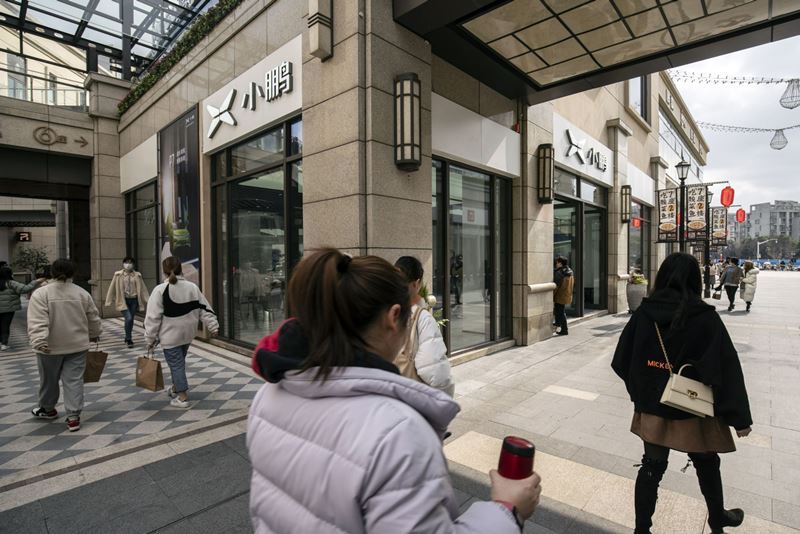
China’s electric-car makers are paying top-dollar rents to open showrooms in luxury malls as they seek an edge in the hypercompetitive market.

More than half the malls in Shanghai have at least one electric-vehicle showroom and more are planned, according to real-estate service provider Jones Lang LaSalle Inc. They are now part of the “standard configuration” of shopping centers in medium-to-large cities, the firm said in a recent report.

With dozens of EV makers in various stages of development jockeying for a slice of what is the world’s largest EV market, upstart brands like Nio Inc. and Xpeng Inc., and the new-energy arms of SAIC Motor Corp. and Geely Automobile Holdings Ltd., are staking out ground in malls to burnish their image as premium goods for the middle class and differentiate themselves from more established automakers. Rents for a 2,150- to 3,230-square-foot (200- to 300-square-meter) showroom in prime areas of China’s biggest cities run to around $1 million a year, according to JLL.

“They pay big rent because they want to be seen,” said Zino Helmlinger, head of retail in eastern China at real estate firm CBRE Global Inc. “In China, you have many EV brands competing for a still very small market share, and every two to three months there’s a new car released. It’s crazy.”

The influx of EV makers to shopping centers is also a boon for mall owners who are looking for a new breed of tenants as sales of shopping center drawcards like clothes, shoes and electronics increasingly shift online. EV makers tend to want space on the first floor — which is also usually the most expensive — to attract passing shoppers, and also for ease of access for display cars and test drives.

“There’s an overlap between the target consumer groups of electric vehicles and premium commercial developers,” said Vivian Zhu, director of retail at JLL Shanghai. “Those middle-class visitors who tend to shop for cosmetics or luxuries on the ground floor are also regarded as potential buyers for a Tesla or Nio.”

Shoppers pass the XPeng Inc. showroom at the Chamtime Plaza in Shanghai on March 8, 2021. MUST CREDIT: Bloomberg photo by Qilai Shen

Shoppers pass the XPeng Inc. showroom at the Chamtime Plaza in Shanghai on March 8, 2021. MUST CREDIT: Bloomberg photo by Qilai Shen

Electric-vehicle demand in the world’s biggest car market is forecast to soar in coming years as consumers embrace cleaner automobiles and the cost of EVs tumbles. Research firm Canalys said in a report last month that EV sales in China may climb more than 50% in 2021.

Read more: Xpeng Posts Shrinking Losses as EV Deliveries Rise

To be sure, the likes of Nio are stepping back from the splashy club-style “Nio House” showrooms that sought to embed the carmaker into a customer’s life, after burning through cash. Its flagship Shanghai outlet, opened in the upscale HKRI Taikoo Hui mall in 2017 before it even started mass production, included a library, art gallery and open kitchen to entice customers with a high-end lifestyle that would come from buying one of its cars.

It signed a five-year lease, with monthly rent starting at 1.1 million yuan ($170,000) and rising to 1.7 million yuan in 2021, according to a public court document.

Read more: EVs Could Make Dealerships a Thing of the Past

It has since focused on opening smaller Nio Spaces, which are about a tenth of the size of the Nio Houses and more akin to a typical showroom, without the added lifestyle benefits. It plans to open about 120 this year. Having temporarily suspended developing more Nio Houses during a cash crunch that threatened to sink the company, it now plans to open 20 more this year.

“We have significantly lowered the operating cost of Nio Houses,” Chief Finance Officer Steven Feng said on an earnings call last week, when the company reported a wider-than-expected loss. “It’s only about 40% of the original cost.”

The expansion of showrooms into malls “is in line with automakers’ product development,” said JLL’s Zhu. Those that have missed their original targets for product launches or mass production have faded from key city areas. What was once the Shanghai display room for Byton Ltd., which has delayed production plans several times, now houses the flagship store for Xpeng, which delivered more than 27,000 vehicles last year.

“EV companies are now way more cautious with the location they open,” said CBRE’s Helmlinger. “Three years ago they were trying to break the market. Now, they’re very selective with the mall. It’s quality over quantity.”

Haunted by 2008, China and U.S. diverge on stimulus plans #SootinClaimon.Com

#SootinClaimon.Com : ขอบคุณแหล่งข้อมูล : หนังสือพิมพ์ The Nation.

https://www.nationthailand.com/news/30403515

Haunted by 2008, China and U.S. diverge on stimulus plans

InternationalMar 10. 2021The U.S. and Chinese national flags. MUST CREDIT: Bloomberg photo by Tomohiro OhsumiThe U.S. and Chinese national flags. MUST CREDIT: Bloomberg photo by Tomohiro Ohsumi

By Syndication Washington Post, Bloomberg · Christopher Anstey, Enda Curran, Rich Miller

The U.S. and China are pursuing divergent economic policies in the aftermath of the coronavirus recession in a role reversal from last time the world economy was recovering from a shock.

One of the takeaways from the annual National People’s Congress underway in Beijing is a conservative growth goal, with a tighter fiscal-deficit target and restrained monetary settings. That’s a big contrast with Washington, where President Biden is preparing a second major fiscal package after he gets final approval for his $1.9 trillion stimulus.

The widening policy divergence is putting strains on exchange rates and could potentially reshape global capital flows. It stems, in part, from different policy lessons from the 2007-09 crisis.

A stunted and choppy U.S. recovery left key Democrats concluding it’s vital to “go big” on stimulus and keep it flowing. For monetary policy the moral was: “Don’t hold back” and “don’t stop until the job is done,” Federal Reserve Chair Jerome Powell said last week.

China’s leaders have a different take. A massive unleashing of credit growth back then led to unused infrastructure, ghost towns, excess industrial capacity and an overhang of debt. While rapid containment of the pandemic meant the economy didn’t need as much help in 2020, President Xi Jinping and his team are now winding things back to refocus on longer-term initiatives to strengthen the technology sector and tamp down debt risks.

“Each learned a lesson from the previous episode, and so it is kind of a swap of positions,” said Nathan Sheets, head of global economic research at PGIM Fixed Income and a former U.S. Treasury undersecretary for international affairs. The policy mix now makes “a compelling case for renminbi appreciation,” Sheets said.

That’s a view that’s widely shared: the median forecast in a Bloomberg survey is for a strengthening to 6.35 against the dollar by the end of the year, from 6.5114 in Shanghai late Tuesday.

One of China’s financial regulators, Guo Shuqing, highlighted in a briefing just days before the opening of the annual legislative gathering that high leverage within the financial system must continue to be addressed. Guo pointed to worries about inflated property prices and the risk of overseas money pouring in to take advantage of the premiums China’s assets offer. He also indicated the nation’s lending rates will likely go up this year.

While U.S. Treasury yields have surged recently, 10-year rates remain less than half those in China, where the central bank has forsworn Western-style zero interest rates or quantitative easing.

“Unlike many of its peers, including the Fed, China’s central bank has continued to calibrate its policy partially with a view to prevent an excessive rise in asset prices,” said Frederic Neumann, co-head of Asian economics research at HSBC Holdings Plc in Hong Kong. Confronted with currency-appreciation risks, China will be hoping for a “well-timed exit from the Fed’s ultra-ease stance.”

That’s unlikely to come soon. In three appearances in the past two weeks, Powell has made clear the Fed is going to keep policy rates near zero until well into the economic recovery, when most jobless Americans are brought back into employment. He also gave no indication asset purchases will be tapered as Biden’s fiscal stimulus kicks in in coming months.

As China contends with capital inflows, the U.S. is likely to be pumping out a greater supply of dollars into the global economy — via a widening current-account deficit — as its growth revs up, supercharged by Biden’s stimulus and the Fed’s easy stance.

“There’s been a regime break,” in the U.S. with the outsize Biden relief bill and a planned longer-term follow-up, said Robin Brooks, chief economist at the Institute of International Finance. As growth soars past 6% this year, a wider current-account deficit will be “the pressure valve” given domestic production constraints, he said.

Brooks projects that deficit will hit 4% of gross domestic product this year. That would be the highest since large shortfalls during the 2002-08 period, when a broad measure of the dollar tumbled as much as 27%.

“As our fiscal support goes into uncharted territory, it puts enormous pressure on our budget deficits — and by inference our domestic saving rate and the current account and trade deficit, with the consequences primarily falling on the currency,” said Stephen Roach, a Yale University senior fellow and former chairman of Morgan Stanley Asia.

China’s reluctance toward the kind of “go big” message of Treasury Secretary Janet Yellen dates back many years. After unleashing a fiscal package of $586 billion at the time (4 trillion yuan) and an unprecedented surge in broader credit after the 2008 crisis, Beijing by 2012 was saying it wouldn’t do that again.

Reticence toward across-the-board stimulus later turned into a concerted push to rein in leverage. A May 2016 front-page treatise in the People’s Daily — the Communist Party’s mouthpiece — blasted excessive debt as the “original sin” sowing risks across financial and real-estate markets. The anonymous article — widely said to have been written by Vice Premier Liu He, Xi’s top economic adviser — called stimulating the economy through easy monetary policy a “fantasy.” So with the country’s success in applying draconian restrictions to contain the coronavirus, it should come as little surprise that Beijing is returning toward its pre-pandemic focus on building domestic tech capabilities and managing down debt risks.

After ditching an annual growth target for 2020 given the turmoil caused by Covid-19, China’s leadership set a goal of a GDP increase of more than 6% this year — conservative since it’s well below economists’ projections for this year’s expansion.

In the meantime, surging American GDP gains are set to lift China’s prospects as well. Exports to the U.S. soared more than 87% in the first two months of this year compared with the pandemic-hit period a year before, faster than China’s overall rise of just under 61%.

“The U.S. locomotive is back on track,” said Catherine Mann, global chief economist at Citigroup Inc.

Russia secures Sputnik production in Italy for vaccine push #SootinClaimon.Com

#SootinClaimon.Com : ขอบคุณแหล่งข้อมูล : หนังสือพิมพ์ The Nation.

https://www.nationthailand.com/news/30403512

Russia secures Sputnik production in Italy for vaccine push

InternationalMar 10. 2021Vials of the Russian Sputnik V Covid-19 vaccine sit at a Comprehensive Diagnostic Center in Caracas, Venezuela, on Feb. 25, 2021. MUST CREDIT: Bloomberg photo by Carolina Cabral.Vials of the Russian Sputnik V Covid-19 vaccine sit at a Comprehensive Diagnostic Center in Caracas, Venezuela, on Feb. 25, 2021. MUST CREDIT: Bloomberg photo by Carolina Cabral.

By Syndication Washington Post, Bloomberg · Alessandro Speciale

Russia is pushing ahead with plans to make its Covid-19 vaccine in Europe, securing a deal to produce the Sputnik V shot in Italy and discussing production in Germany and France.

Adienne Pharma & Biotech signed an agreement to manufacture the vaccine at its production site in the Milan region, founder and President Antonio Francesco Di Naro told Bloomberg in an interview.

The Lugano, Switzerland-based company’s deal with the Russian Direct Investment Fund is the first European production agreement for the vaccine. While Russia was first to approve a shot for the general public and promoted it as a way to help end the pandemic globally, it has been slower than some rivals to scale up output.

Sputnik is more complicated to manufacture than some other vaccines because it’s based on two different adenoviruses for its two doses. Developers taking a similar approach, such as the University of Oxford and AstraZeneca, have used only one virus.

The vaccine is under review by authorities in the European Union, which has struggled to ramp up inoculations amid a lack of supply. The sluggish rollout has prodded some countries to consider their own purchasing deals in a challenge to the bloc’s solidarity.

“There are many Italian regions which are enthusiastic about having Sputnik, they would also want to produce it,” Kirill Dmitriev, CEO of RDIF, a sovereign wealth fund, told Italian Rai3 television on Sunday. “We have a partnership in Germany. We’re talking to several French companies.”

Sputnik’s developers have had contact with German vaccine maker IDT Biologika, according to IDT spokesman Ulrich Gartner, who confirmed a report by German broadcaster MDR. He said that the company cannot comment on the details of ongoing talks with potential customers.

IDT, based in the state of Saxony-Anhalt, signed a letter of intent last month to help Astra boost supply of its vaccine.

Dmitriev, who is in charge of Sputnik’s international rollout and backed its development, said in the Italian TV interview that production in the country could start in June. The timing depends on approval from Italian regulators, and Di Naro said he couldn’t set production targets as of now.

EU officials are skeptical about the impact of these deals, according to a person with knowledge of their thinking. Supply in Russia is so low that the EU is expecting to donate or sell large quantities of Western vaccines to the Russians in due course to make up the shortfall, said the person, who didn’t want to be identified because the discussions are private.

The deal comes as Prime Minister Mario Draghi pledged to speed up Italy’s fledgling vaccination campaign amid a new rise in infections from the disease that’s led to more than 100,000 fatalities in the country.

Draghi blocked the export of Astra’s vaccine earlier this month after the company sharply reduced planned deliveries to the EU. He was the first European leader to use the recently-introduced powers, highlighting the sensitivity in the region over the supply of Covid-19 shots.

European Commission President Ursula von der Leyen on Monday lashed out at manufacturers for failing to uphold their commitments as countries in Europe struggle to step up the pace of inoculations.

Officials are also bracing for delays in the delivery of a new vaccine from Johnson & Johnson, according to two people with knowledge of the process.

The shots, which are due to be approved by the European Medicines Agency this week, were due to start arriving at the beginning of April but now aren’t expected until the middle of the month at the earliest, one of the officials said.

The EU has administered 9.35 doses per 100 people, compared with nearly 28 for the U.S. and more than 35 for the U.K., according to Bloomberg’s Coronavirus Vaccine Tracker.

The European Medicines Agency said March 4 that it started a rolling review of Sputnik V to test compliance with safety and quality standards, the first major step in gaining approval for use in the European Union. The Russian vaccine started to gain broader international recognition after The Lancet medical journal published peer-reviewed results of interim trials showing 91.6% efficacy.

Despite the progress, it’s unclear what role political tension would play in the distribution of the Sputnik vaccine in Europe. Tensions between Russia and the EU have deteriorated further in recent months, especially after the jailing of opposition leader Alexey Navalny.

In a sign of the tensions, the shot’s developer took to Twitter to demand an apology from an EMA official over comments that “raise serious questions about possible political interference” in the agency’s review.

Christa Wirthumer-Hoche, EMA’s management board chairwoman, told Austrian broadcaster ORF late Sunday that national emergency authorizations are like “Russian roulette.”