
Hong Kong minister warns against ‘oblivious’ criticism of China #SootinClaimon.Com

#SootinClaimon.Com : ขอบคุณแหล่งข้อมูล : หนังสือพิมพ์ The Nation.

https://www.nationthailand.com/news/30403511

Hong Kong minister warns against ‘oblivious’ criticism of China

InternationalMar 10. 2021Teresa Cheng, Hong Kong's secretary for justice, during an interview in Hong Kong on March 9, 2021. MUST CREDIT: Bloomberg photo by Paul YeungTeresa Cheng, Hong Kong’s secretary for justice, during an interview in Hong Kong on March 9, 2021. MUST CREDIT: Bloomberg photo by Paul Yeung

By Syndication Washington Post, Bloomberg · Iain Marlow, Stephen Engle

Hong Kong’s top legal official warned residents to steer clear of criticisms of the government that stray too far from the facts as officials defend Beijing’s plan to overhaul the city’s elections.

Hong Kong Justice Secretary Teresa Cheng said in an interview Tuesday that opinions were “no more than an utterance of no value” if the facts weren’t established. Cheng was answering a question about what kind of criticism would be legal in the former British colony as Beijing implements a range of legal changes including a national security law and the electoral overhaul.

“Some of the statements that are sometimes uttered, that we hear, are actually not based on facts, or perhaps oblivious of the facts that exist,” Cheng told Bloomberg Television. “And I think that is what one has to be very careful not to embark upon.”

Officials in Beijing and Hong Kong are fanning out to defend the most significant changes to the city’s political system since its return to Chinese rule in 1997. Chinese lawmakers are expected to approve a sweeping electoral overhaul later this week that will require future candidates for elected office to be “patriots” and secure nominations from a pro-Beijing committee.

An official in China’s Foreign Ministry office in Hong Kong provided the clearest definition yet of what that quality entails, saying, “Patriots should respect the Chinese Communist Party.”

“Anyone who challenges the fundamental system of the state and undermines Hong Kong’s constitutional order does not count as a true patriot,” said Song Ru’an, a deputy commissioner in the office.

Beijing’s moves, including its imposition of a national security law on Hong Kong outlawing speech deemed subversive or secessionist, have been criticized by the U.S. and U.K. as a violation of China’s treaty commitment to maintain the city’s “high degree of autonomy.” On Monday, a bipartisan group of U.S. lawmakers, including Senators Ed Markey and Mitt Romney, called on the Biden administration to work with allies and partners to support the people of Hong Kong.

Cheng, who was among senior officials sanctioned by the U.S. Treasury in August on allegations of “undermining Hong Kong’s autonomy,” on Tuesday reiterated the government’s argument that the security law had restored stability. “Please look at the actual facts and then see what’s happening in Hong Kong,” she said in response to the lawmakers’ statement.

Hong Kong authorities have so far arrested 100 people on allegations of violating the security law, with most accused of participating in some form of political activity, such as displaying banners or posting in support of the city’s independence. The total includes 47 opposition figures charged last week with “conspiracy to commit subversion” over their aborted “35-plus” election campaign last year to win a majority on the Legislative Council and force Chief Executive Carrie Lam to resign by voting down her budget.

The electoral overhaul would go further by making it harder to for such opposition politicians to seek and win office, effectively ending the only open elections under Beijing’s rule. Lam said Monday that the proposal being drafted behind closed doors in Beijing would be locally enacted without the usual public consultation process.

“The political structure is no longer ensuring the governance of the — the efficacy of — of the whole administration into a proper efficient way that serves the people in Hong Kong,” Cheng said. “And it is for that reason that the National People’s Congress sees the pressing need for that to be taken.”

Cheng, who sits on the security committee established by the law, declined to explain why “35-plus” campaign constituted subversion, saying she couldn’t comment on specific cases. “We should move away from this topic and talk about other things, because we cannot talk about a case,” Cheng said.

She also rejected as “totally absurd” criticism that the national security law had undermined the independence of Hong Kong’s judiciary. “There is no threat on the judicial independence — and I say it loud and clear and with confidence,” Cheng said.

In December, the Communist Party’s People Daily newspaper published a commentary warning that the government could transfer media tycoon Jimmy Lai’s foreign collusion case to mainland courts after a decision to grant him bail. Lai was later sent back to jail after Hong Kong’s highest court affirmed a higher standards for releasing security law suspects before trial.

The security law lets Cheng issue certificates requiring some cases to be tried without a jury, a power that local media including the South China Morning Post say she exercised to prosecute an activist accused of driving a motorcycle into a group of police officers in July. Cheng said the power would be “exercised independently and fairly and without any interference” and that a three-judge panel would uphold defendants’ rights.

“One talks about ‘no jury’ as if it’s something that is such a big, worrying thing,” Cheng said. “We’re going to write down the reasons, and the, and the findings of fact and the legal basis upon which the conclusion of the verdict — be it convict or acquit — is going to be.”

How Africa can save the world from a never-ending pandemic #SootinClaimon.Com

#SootinClaimon.Com : ขอบคุณแหล่งข้อมูล : หนังสือพิมพ์ The Nation.

https://www.nationthailand.com/news/30403510

How Africa can save the world from a never-ending pandemic

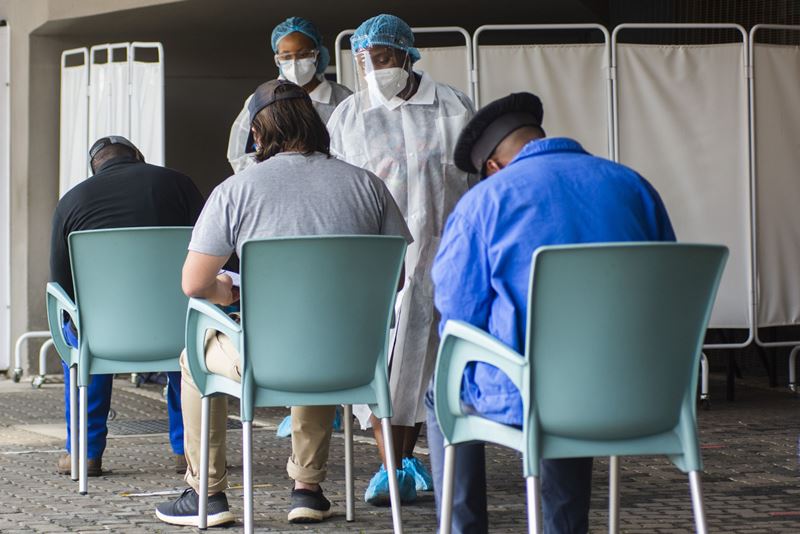
InternationalMar 10. 2021A coronavirus testing unit sign is displayed outside Groote Schuur hospital in Cape Town, South Africa, on Jan. 11, 2021. MUST CREDIT: Bloomberg photo by Dwayne Senior.A coronavirus testing unit sign is displayed outside Groote Schuur hospital in Cape Town, South Africa, on Jan. 11, 2021. MUST CREDIT: Bloomberg photo by Dwayne Senior.

By Syndication Washington Post, Bloomberg · Antony Sguazzin

As the rest of the world prepares for a vaccine-driven return to normal over the next few months, at her community health center in a poor, working class neighborhood of Cape Town, Andrea Mendelsohn is dreading the arrival of April and May – that’s when the weather will get cooler in the southern hemisphere and bring a surge in coronavirus cases.

Few people in South Africa – aside from medical staff like Mendelsohn – will be vaccinated by then. Elsewhere on the continent even health workers won’t be inoculated, making Africa a large reservoir of the virus that has infected almost 117 million people across the globe and killed more than 2.5 million.

“The arrival of vaccines is going to have zero impact on the third wave but at least I can be confident that when I go to work I won’t die,” Mendelsohn, a senior medical officer in the Western Cape Province’s Department of Health, said in an interview. “I am sure health workers in Malawi and Tanzania want to have the same relief.”

Most countries in Africa have yet to start inoculating their citizens. While developed countries have rushed to vaccinate their populations against Covid-19, fewer than half a million people have received shots in Sub-Saharan Africa, a region of 1.1 billion people. In contrast, the U.S., with a population of about 330 million, has administered over 90 million vaccine doses, while more than a third of the U.K.’s 67 million people have gotten at least one shot.

But anyone in the developed world who thinks they are unaffected by large swaths of un-vaccinated people in Africa needs to think again, says Phionah Atuhebwe, the New Vaccines Introduction Medical Officer on the continent for the World Health Organization. As long as the pandemic continues to rage among un-vaccinated populations, spawning new, more virulent, vaccine-resistant strains, no one is safe, she said.

“The virus will definitely mutate and will keep mutating; the longer we keep the virus around the more mutations we’ll see,” Atuhebwe said in an interview from Brazzaville, in the Republic of Congo. “If Africa is not vaccinated and we are a source of mutations, we put the whole world at risk.”

Already the vaccine developed by AstraZeneca and the University of Oxford has proved largely ineffective in preventing mild disease from infections with a strain of the virus first identified in South Africa. That mutation has spread to at least 48 countries, including the U.K. and the U.S.

Rich nations pre-paid for their vaccines and also got organized quicker and earlier, leaving countries in Africa scrambling for scraps. The affluent world’s vaccine grab was characterized in January by WHO Director-General Tedros Adhanom Ghebreyesus as a “catastrophic moral failure.” Just 10 countries administered 75% of all vaccinations, United Nations Secretary-General Antonio Guterres said in February, calling it “wildly uneven and unfair.”

A report by anti-poverty group One said last month that the world’s richest countries are on track to accumulate over 1 billion more doses than they need to fully vaccinate their populations, adding that the excess shots alone would be sufficient to inoculate the entire adult population of Africa.

“It’ll be a fatal mistake if the developed world sees this as a case where we’ll vaccinate our people and then people in other parts of the world take care of their own business,” said John Nkengasong, director of the Africa Center for Disease Control and Prevention. “Covid won’t be defeated until it’s defeated everywhere.”

The mad dash to corner vaccines shows rich countries have learned little from the global swine flu pandemic in 2009, when poor nations were left high and dry, says Helen Rees, chairwoman of the South African Health Products Regulatory Authority. Despite the heightened risk of the virus spreading with increased interconnectedness, “there was not a thought about what would happen to the rest of the world,” she said.

Countries from Nigeria to Ethiopia and Zimbabwe have large numbers of their citizens living and working in Europe, North America and even Asia, and regular flights mean that just as easily as the virus arrived in Africa from Europe, mutated strains could be spread into the developed world by returning travelers.

In addition, a slow vaccine rollout could further delay the economic recovery in Africa, which contracted for the first time in 25 years last year. Already, Zambia has defaulted on its debt and Ethiopia and Chad are seeking debt relief. The developed world relies on the continent’s natural resources for much of the raw materials it needs. West Africa accounts for 60% of the world’s cocoa supply, the Democratic Republic of Congo is the key source of cobalt needed for electric vehicles and tantalum used in mobile phones. South Africa is the world’s biggest source of platinum.

Health workers register patients at a Covid-19 testing station in Johannesburg, South Africa, on Feb. 10, 2021. MUST CREDIT: Bloomberg photo by Waldo Swiegers.

Health workers register patients at a Covid-19 testing station in Johannesburg, South Africa, on Feb. 10, 2021. MUST CREDIT: Bloomberg photo by Waldo Swiegers.

Vaccines are slowly trickling into Africa. The African Union has secured some supplies, China has provided vaccines to Zimbabwe and other African nations and countries such as Israel are beginning to donate excess supplies. Still, most African countries are almost entirely reliant on Covax – the initiative backed by the WHO, the vaccine alliance Gavi and the Coalition for Epidemic Preparedness Innovations that offers vaccines cheaply to developing countries. Covax began distributing vaccines to countries such as Ghana and the Ivory Coast last month.

But the program will only cover 20% of the populations of its members by year-end. Of the 304 million doses administered worldwide so far, fewer than 0.2% have been in Sub-Saharan Africa, home to 14% of the world’s population.

Richer nations are beginning to acknowledge that poorer countries need better access to vaccines. In an interview with the Financial Times in February, French President Emmanuel Macron called the vaccine gap “an unprecedented acceleration of global inequality.” At their meeting last month, leaders of the G7 countries pledged $7.5 billion to Covax and also called on countries to donate surplus supplies.

Granted, African governments haven’t helped themselves. Few made attempts to secure supplies directly from pharmaceutical companies, with South Africa – which has a wealth of medical expertise and is the site of five coronavirus vaccine trials – only signing deals this year.

“The bulk of the blame should be placed on African leaders for being somewhat nonchalant and non-proactive,” said Ifeoluwapu Asekun-Olarinmoye, an epidemiologist at Nigeria’s Babcock University.

That’s in part because the official Covid-related death toll across Africa is just under 106,000 with almost 4 million cases reported, small compared to the rest of the world. But testing has been sparse and many infections and deaths have gone unrecorded. At times over the last few months hospitals from Cape Town to Harare and Lagos have groaned under the strain. Doctors and oxygen have been in short supply and people have taken to social media to search for beds for their afflicted relatives.

With vaccines beginning to arrive, other challenges are coming to the fore. The continent is plagued by poor health infrastructure, a shortage of trained personnel and inadequate data on the people who need to be vaccinated.

Take Nigeria, for instance. Africa’s most populous nation has about 214 million people, most living in areas that are hard to reach. Fewer than a third of the country’s 195,000 kilometer (121,170-mile) road network is paved; power supply – even in the biggest cities – is unreliable, making it a challenge to keep vaccines refrigerated; and a 15-year gap since the last census means the government has little idea about the whereabouts of vulnerable groups like the elderly. The same applies to many African countries.

“We don’t know where they live, we don’t know how many there are, we don’t know how to find them,” Atuhebwe said in a webinar.

In countries like Tanzania virus denial is holding back attempts to immunize the population. President John Magufuli has declared his country Covid-free even as people continue to die from it. Vaccine skepticism runs high in some countries, with 15 high school students taken to hospital in south-west Cameroon last month after leaping from the second floor to escape what they thought was a team of medics arriving to vaccinate them.

Meanwhile, some shots – like Russia’s Sputnik V and vaccines from China’s CanSino Biologics – have sparked concern. They use a cold germ to carry the genetic material of the Covid virus into patients’ cells to trigger an immune response. A trial in South Africa of an HIV vaccine using the same vector more than a decade ago was tied to an increase in HIV infections. South Africa has the world’s biggest AIDS epidemic and many of its neighbors have similar infection rates.

Even when vaccines are suitable, some African countries can’t afford shots outside the Covax system. Since African countries didn’t contribute to the development of the shots and didn’t pre-order, they don’t get the discounts offered to richer countries. In January, Anban Pillay, a deputy director general in South Africa’s Department of Health, said the country would pay $5.25 per dose of AstraZeneca’s shot compared with about $3 the European Union was paying.

All that has meant a very slow pace of vaccination. South Africa, the continent’s most developed country, is inoculating at most about 11,000 people a day with the single-dose Johnson & Johnson shot, a pace that would take a decade to cover the 40 million people the government wants to vaccinate. Most vaccines available to African nations require two shots. If a double-dose regime is followed and 780 million Africans inoculated over 12 months to attain herd immunity, there would need to be 7 million vaccinations a day, according to Ernest Darkoh, founder of Cape Town-based Broadreach Group, which works with governments on healthcare.

That’s unlikely to happen without a lot of help.

“The whole world needs to walk this journey together,” said Mmboneni Muofhe, a deputy director general at South Africa’s Department of Science and Technology. “We are going to find ourselves sitting with a variant that defies all the vaccines. We are sitting on a ticking time bomb.”

Night raid on Myanmar protesters draws international alarm #SootinClaimon.Com

#SootinClaimon.Com : ขอบคุณแหล่งข้อมูล : หนังสือพิมพ์ The Nation.

https://www.nationthailand.com/news/30403509

Night raid on Myanmar protesters draws international alarm

InternationalMar 10. 2021

By Syndication Washington Post, Bloomberg

Myanmar authorities cordoned off part of the commercial capital of Yangon on Monday night while searching for student protesters, drawing international condemnation as crowds defied a curfew to resist the crackdown.

Embassies of the U.S., U.K., Canada, Germany and others sent tweets late Monday warning that security forces had surrounded a group of young people in the Sanchaung neighborhood of Yangon. People in surrounding areas swarmed the streets as videos of the situation spread on social media.

By midnight, there were no reports of deaths from the standoff, the Associated Press reported. Security forces chased crowds, fired stun grenades and harassed residents watching from their windows, it said. Myanmar has regularly shut down the internet in the early-morning hours, making it difficult to get information.

Residents said security forces used sound bombs, slingshots, tear gas shells and fired warning shots to disperse several hundred peaceful protesters in the Sanchaung area.

“They blocked all the four main roads so these protesters had nowhere to go but to run into nearby apartments and hide inside the apartments with the support of house owners,” resident Zaw Moe Aung said. “They were raising their voices very peacefully, chanting to release detained leaders and immediately end the military dictatorship.”

The troops, who stayed in the neighborhood late into the night, also threatened to enter home and buildings to search for the demonstrators, according to Myo Win Maung, who witnessed the scenes but eventually left after locals and people from other Yangon neighborhoods poured into the streets to protect the protesters.

Aung San Suu Kyi’s National League for Democracy issued a statement in support of the protesters and decried the violence, saying, “We warn against such efforts which must end soonest.”

“The Embassy is very concerned about reports of many young people being trapped in Sanchaung and other parts of Yangon,” the German Embassy in Yangon said. “We urgently appeal to the security forces to abstain from the use of force and detentions against residents and others, and to let all peaceful protesters return to their homes immediately.”

The military government of Myanmar, also known as Burma, also moved to close five local media outlets reporting on the protests. An order from the junta-appointed information minister revoked the licenses of Mizzima, DVB, 7Day News, Myanmar Now and Khit Thit Media, banning them from publishing any content.

Junta chief Min Aung Hlaing accused media outlets of misleading the international community, saying that security authorities used minimal force against protesters. He put the death toll at 34, about half of the figures reported by local media outlets, according to a broadcast on state-run MRTV.

The general also said the detention of Sean Turnell, an Australian economic adviser to detained former leader Aung San Suu Kyi, had revealed some state economic secrets. “We managed to detain Sean Turnell in time when he’s about to leave the country,” Min Aung Hlaing was quoted as saying.

Australia, which suspended defense cooperation with Myanmar after the coup, has demanded Turnell’s release.

U.S. prepares to send checks, but big stimulus challenges loom #SootinClaimon.Com

#SootinClaimon.Com : ขอบคุณแหล่งข้อมูล : หนังสือพิมพ์ The Nation.

https://www.nationthailand.com/news/30403508

U.S. prepares to send checks, but big stimulus challenges loom

InternationalMar 10. 2021Joe BidenJoe Biden

By The Washington Post · Tony Romm, Jeff Stein, Rachel Siegel

WASHINGTON – Congress is set to give the final green light to a $1.9 trillion coronavirus stimulus package Wednesday, setting in motion a Washington-wide effort to administer one of the largest economic relief packages in U.S. history.

Over the coming weeks, the Biden administration may send another round of one-time checks to millions of families, rethink vast portions of the U.S. tax code and dole out sums to help cash-strapped Americans, seeking to swiftly blunt an economic crisis that has left millions without jobs and falling further behind financially.

Biden and his aides have promised that a large number of Americans could receive their $1,400 stimulus payments before the end of March. But some of the other ambitious elements of the soon-to-be law – including new child tax support, aid to local governments and money to help families pay rent – could take much longer to disburse. The sheer volume of new programs threatens to swamp federal agencies, including the Internal Revenue Service, leaving some lawmakers fearful about early delays.

Congressional aid packages that became law over the past year have proved instrumental in helping the country rebound from one of the worst economic crises since the Great Depression. But the federal bureaucracy at times has strained to deliver some of that support in a tight time frame. Few Americans have benefited so far from the $25 billion in rental and utility assistance that lawmakers approved in December, housing experts said, and other programs to help workers and businesses pay their bills have not yet fully come online.

“Implementation is the ballgame. You can have the best priorities in the world, whether it’s the well-being of children [or] the needs of those who have been laid off of no fault of their own,” said Sen. Ron Wyden, D-Ore., the chairman of the Senate Finance Committee. “It doesn’t mean a whole lot if you can’t get the benefits out so people can make ends meet.”

The White House did not respond to a request for comment.

The challenges ahead reflect the high stakes facing Biden as he prepares to sign his first major legislative accomplishment into law this week. The president’s economic agenda and political legacy – and the trajectory of the country’s recovery from the pandemic – will depend on the ability of the federal government to get the next few months right.

Dubbed the American Rescue Plan, the $1.9 trillion package marks the sixth major stimulus adopted by Congress since the coronavirus arrived in the United States last year. Democrats this week have hailed it as the largest anti-poverty measure in a generation, and top White House officials in recent days have fanned out to tout its potential – and the party’s early efforts to meet its 2020 campaign promises to deliver economic relief.

The president on Tuesday toured a local hardware store that had benefited from a loan under a prior stimulus initiative, the nearly $1 trillion Paycheck Protection Program, adopted last year. Bharat Ramamurti, the deputy director of the National Economic Council, later said at a White House briefing that the administration’s efforts alone had helped almost 200,000 first-time borrowers obtain loans. He said the new stimulus would serve as a “big step” toward recovering some of the roughly 10 million jobs still lost as a result of the pandemic.

“We promised to send people back to work by helping to revive and supercharge the economy – mission accomplished,” said Rep. Hakeem Jeffries, D-N.Y., heralding the stimulus on Capitol Hill for delivering on commitments made to voters last year to provide swift, robust relief. “We promised to help small businesses – mission accomplished.”

Republicans criticized the bill, days after every GOP senator voted against the measure this weekend. Many noted that significant sums from past stimulus measures remain unspent, making the new injection of federal aid set to be authorized by the House on Wednesday morning unnecessary in their eyes.

“We can’t just keep borrowing money; that’s why we wanted a narrower approach to covid relief, including using the existing hundreds of billions of dollars that haven’t been spent before you go borrow money that do things that have nothing to do with covid,” said Rep. Steve Scalise, R-La., the House minority whip.

But the extent of the help – and the speed at which it reaches Americans – may depend on the critical months ahead.

Some of the most ambitious new programs hinge on the IRS, an agency tasked under the stimulus law with vast responsibilities to disburse payments to millions of Americans and process significant changes to the tax code. The IRS has grown familiar with the one-time payments, having dispatched two rounds of such aid since the pandemic began, and White House press secretary Jen Psaki said Tuesday that the agency is working “tirelessly to make that happen.” But the agency for the first time will begin distributing regular support to families with children as part of a massive change in the way the government assists families in need.

The IRS would need to craft rules for new advance payments of the expanded child tax credits; stand up a system to pay them out, perhaps on a monthly basis; and process other changes under the rescue plan, including fresh help to unemployed Americans. The sheer volume of work that would need to be done – all while managing tax filing season this spring – has led even staunch supporters of the stimulus to raise early red flags about its implementation.

“I think struggle is inevitable,” said Rep. Gerald Connolly, D-Va., who chairs a key House committee overseeing government operations, when asked about the IRS.

Connolly cited years of budget cuts under Republicans – and outdated computer systems at the IRS – as potential threats to the agency’s ability to administer the new stimulus programs. The $1.9 trillion package includes money to help the IRS fix some of these deficiencies.

“It’s a very critical public policy program to be implemented,” he said. “But I think they’re going to be struggling with it, not because of intrinsic flaws of the IRS but because we’re paying a price for the disinvestment in the IRS over the past decade.”

The IRS did not respond to a request for comment.

Wyden said he hopes to see tax aid made available “this summer,” pledging close oversight of the agency – and others implementing the stimulus – in the months ahead.

“We’re going to be watchdogging this every single step of the way,” he said.

For those still out of work, meanwhile, the relief package authorizes another round of $300 in additional weekly benefits, a major boon to millions who would have lost those checks without congressional action by March 14.

But the extension may take time for states to implement, once again resulting in potential disruptions to jobless aid. The delays may feel familiar to Americans who repeatedly have been left without checks because of technical glitches – and congressional quarreling – dating back to the beginning of the pandemic.

“We expect there will be some lapse in benefits for probably a matter of weeks before payments start going out the door again to those who will exhaust their benefits this week,” said Julia Simon-Mishel, a top lawyer at Philadelphia Legal Assistance.

Lawmakers also allowed some recipients of weekly jobless aid to obtain new relief on their taxes. Yet the Biden administration ultimately must decide how to implement the change in the midst of tax season, possibly creating headaches for jobless Americans who filed their 2020 returns before the stimulus bill passed.

Other funds may prove easier to disburse, building on coronavirus relief programs approved last year. The package includes $5 billion in new pandemic food benefits, for example, which augments aid Congress passed in 2020 to help people struggling to eat. Another tranche of support, $30 billion to help renters catch up on their past-due housing costs, roughly doubles the size of a fund lawmakers approved as part of a smaller stimulus package in December.

Andrew Olmem, who served as deputy director of the White House National Economic Council under President Donald Trump, said the approach could make implementation of some of the new stimulus “easier than for the prior bills,” including the $2 trillion Cares Act adopted at the height of the crisis last March.

“But the bill’s new funding programs will take time to set up as the personnel, financial, legal and organizational requirements for establishing a new program need to be completed,” Olmem added. “Every new program invariably runs into unexpected obstacles and challenges.”

With rental relief, for example, the U.S. government started working to deliver the money to cash-strapped tenants and landlords after lawmakers voted last year. But confusing government rules, a paucity of local infrastructure to disburse the money and a changeover from the Trump to the Biden administration meant that most of the $25 billion in aid has not helped families in need, roughly three months after Trump signed it into law.

“Very little of the $25 billion has reached low-income renters and landlords yet,” said Diane Yentel, president of the National Low Income Housing Coalition. She predicted that recent changes under Biden – and the new aid approved by Congress this week – will help speed money to renters in great need. “I expect the numbers to increase significantly in the coming days and weeks.”

A slew of other efforts to help struggling businesses similarly have been trapped in the federal bureaucracy. In December, for example, Congress approved $15 billion in emergency assistance for independent entertainment venues affected by the pandemic. Initially dubbed the Save Our Stages Act, the initiative enabled the Small Business Administration to issue grants as a financial life raft for concert and theater venues that have had little to no business for almost an entire year.

But Audrey Fix Schaefer, a board member of the National Independent Venue Association, said none of the $15 billion has been disbursed. The SBA has not even issued grant applications, Schaefer said, leaving businesses unaware of when they might see a check. Many of those businesses passed on the Paycheck Protection Program, hoping they would be able to get more money from this entertainment-specific aid.

“We imagine that isn’t easy to administer, but we were always hoping the money would start to flow by the middle of February,” Schaefer said.

The new stimulus would task the SBA with another round of responsibilities, including the administration of a $25 billion-plus fund for restaurants that have seen precipitous drops in dining because of coronavirus restrictions. The restaurant fund is similar to the one set aside for theaters, leading Sean Kennedy, the executive vice president for public affairs for the National Restaurant Association, to say this week that it will probably be “months and not weeks” before the money starts to flow.

The Biden administration also faces particularly steep challenges in the disbursal of approximately $350 billion in new stimulus aid for states, cities, tribes and territories. At the core are logistical questions about how and when that money gets sent, as Washington manages tens of billions in grants to local governments for other programs, such as education and vaccine deployment, all of which must be sorted quickly.

“It’s just a logistical nightmare,” said Bill Hoagland, a senior vice president at the Bipartisan Policy Center and former Republican staff director for the Senate Budget Committee. “It becomes a real management problem and management issue.”

Biden’s dogs to return to White House after younger pet causes a ‘minor injury’ to an ‘unfamiliar person’ #SootinClaimon.Com

#SootinClaimon.Com : ขอบคุณแหล่งข้อมูล : หนังสือพิมพ์ The Nation.

https://www.nationthailand.com/news/30403507

Biden’s dogs to return to White House after younger pet causes a ‘minor injury’ to an ‘unfamiliar person’

InternationalMar 10. 2021Major, a dog of President Joe Biden and first lady Jill Biden, explores the White House grounds in January 2021. MUST CREDIT: White House photo by Adam SchultzMajor, a dog of President Joe Biden and first lady Jill Biden, explores the White House grounds in January 2021. MUST CREDIT: White House photo by Adam Schultz

By The Washington Post · Sean Sullivan, John Wagner

WASHINGTON – President Joe Biden and first lady Jill Biden’s two dogs will return to the White House from Delaware, the White House press secretary said Tuesday after confirming that the younger dog, Major, had caused a “minor injury” to an “unfamiliar person.”

“Champ and Major, the president and first lady’s dogs, are members of the family and still getting acclimated and accustomed to their new surroundings and new people,” Jen Psaki said during a briefing for reporters. “And on Monday, the first family’s younger dog, Major, was surprised by an unfamiliar person and reacted in a way that resulted in a minor injury to the individual, which was handled by the White House medical unit with no further treatment needed.”

She added that plans had already been in place for the dogs to be cared for by family friends as the first lady travels to the West Coast this week.

“She has a three-day trip this week, and the dogs will return to the White House soon,” Psaki said.

Asked by a reporter whether Major could be euthanized as a result of the episode, Psaki said that would not be the case.

“Major Biden is a member of the family, so I can assure you of that,” she said.

Earlier Tuesday, the White House released a statement saying the dogs had been sent to Delaware that made no mention of a report about the aggressive behavior of the younger dog.

“With the First Lady traveling for three days, Champ and Major went to Delaware to stay with family friends,” Michael LaRosa, a spokesman for Jill Biden, said in a statement.

CNN reported that Major had a “biting incident” with a member of the White House security staff and has been known to display agitated behavior, including jumping, barking and “charging” at staffers.

The CNN report was attributed to “two sources with knowledge” and did not include on-the-record comments from the White House.

The dogs made their debut on the White House grounds in late January.

Jill Biden is visiting military bases this week as part of her initiative to hear from military families about the challenges they face, particularly during the pandemic.

On Tuesday, she was scheduled to visit Joint Base Lewis-McChord in Washington state. Her travels will also take her to Naval Air Station Whidbey Island in Washington state and Marine Corps Air Ground Combat Center in California, according to the White House.

Online funerals, Zen apps keep Japan’s Buddhist temples afloat #SootinClaimon.Com

#SootinClaimon.Com : ขอบคุณแหล่งข้อมูล : หนังสือพิมพ์ The Nation.

https://www.nationthailand.com/news/30403465

Online funerals, Zen apps keep Japan’s Buddhist temples afloat

InternationalMar 09. 2021Tsukiji Hongwanji is a four-century-old temple near Tokyo's old fish market. MUST CREDIT: Bloomberg photo by Noriko HayashiTsukiji Hongwanji is a four-century-old temple near Tokyo’s old fish market. MUST CREDIT: Bloomberg photo by Noriko Hayashi


By Syndication Washington Post, Bloomberg · Ayai Tomisawa

Memorial services held online. Zen meditation apps. Buddhist temple-led matchmaking services.

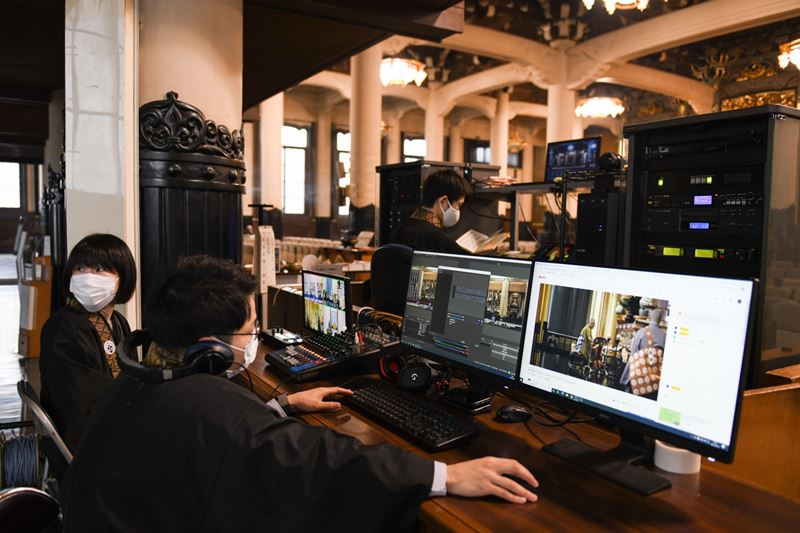
Staff operate computers during a live broadcast of an online memorial service at Tsukiji Hongwanji temple in Tokyo. MUST CREDIT: Bloomberg photo by Noriko Hayashi

Staff operate computers during a live broadcast of an online memorial service at Tsukiji Hongwanji temple in Tokyo. MUST CREDIT: Bloomberg photo by Noriko Hayashi

As the coronavirus pandemic forces institutions around the world to change the way they do things, those new endeavors are some of the ways that Buddhist groups in Japan are trying to survive. Their temples are part of the landscape: there are about 77,000, more than the number of Japan’s ubiquitous convenience stores.

covid-19 has caused further pain for Buddhist organizations already struggling in recent years due to Japan’s shrinking population and sagging interest in religion among the young. One estimate is that temples’ total income has halved in the five years to 2020. And now the virus has kept believers at home, reducing donations they make for services such as memorials for the deceased.

Buddhist temples have thrived in Japan for more than a millennium. But they need money to operate, and the pandemic has prompted some priests and monks to think of new ways to generate income. It’s a reflection of the way that industries worldwide from travel to dining and retail are having to improvise as covid-19 restrictions batter their usual business.

Ryosokuin, a Zen temple with more than 660 years of history in Kyoto, is one such innovator. Faced with a drop-off in services such as memorials and a plunge in tourism, the organization boosted its online operations. It developed a meditation app that’s been downloaded more than 15,000 times that it expects to eventually monetize, and it’s organized an online Zen meditation community called UnXe, meaning “cloud-sitting.”

“When we lost visitors and donations fell, we realized that our conventional way of supporting our operations no longer works,” said Toryo Ito, deputy chief priest at the temple. “We need to adapt to a management style which meets with the times.”

Tsukiji Hongwanji in Tokyo is venturing into areas that staid temples aren't traditionally known for, like a cafe, matchmaking services and yoga classes. MUST CREDIT: Bloomberg photo by Noriko Hayashi

Tsukiji Hongwanji in Tokyo is venturing into areas that staid temples aren’t traditionally known for, like a cafe, matchmaking services and yoga classes. MUST CREDIT: Bloomberg photo by Noriko Hayashi

Buddhism has a history stretching back to the sixth century in Japan, but few periods have brought such challenges. Over a third of temples may disappear by 2040 as the population ages, according to Kenji Ishii, a religious studies professor at Kokugakuin University in Tokyo.

Temple income is falling, too. The total figure likely dropped about 51% since 2015 to $2.4 billion (263 billion yen) in 2020, according to estimates by Hidenori Ukai, the chief priest at the Shokakuji temple in Kyoto and a freelance journalist.

The pandemic is adding to financial troubles across a broad swath of Japanese society. While the economy is recovering, a state of emergency in major cities has continued to weigh on consumer spending. And businesses that serve customers face-to-face such as retailers have been hit especially hard, resulting in a spate of bankruptcies for restaurants and hotels.

A priest offers a prayer at Tsukiji Hongwanji temple in Tokyo. MUST CREDIT: Bloomberg photo by Noriko Hayashi

A priest offers a prayer at Tsukiji Hongwanji temple in Tokyo. MUST CREDIT: Bloomberg photo by Noriko Hayashi

Tsukiji Hongwanji, a four-century-old temple near Tokyo’s old fish market, is another organization trying to make the best of the virus period. It started online memorial services last May for families that don’t want gatherings for the deceased, and has done about 70 such events, according to Yugen Yasunaga, a representative director and priest at the temple.

The organization is also venturing into areas that staid temples aren’t traditionally known for, like matchmaking services, a cafe and yoga classes, said Yasunaga, who worked in a major Japanese bank for more than two decades before starting his career at Tsukiji Hongwanji.

“Just like Amazon.com responds to the various needs of customers online, a temple can do the same,” he said.

Another area that Japanese religious institutions are increasingly exploring is environmental, social and governance investing. Tokuunin, a Zen Buddhist temple in central Tokyo, bought 40-year social bonds sold by the University of Tokyo.

“At a time when we can barely get any returns from long-term savings, we’re happy that we can contribute to helping society while earning enough returns to cover inflation,” said Yuzan Yamamoto, its chief priest.

Meghan and Harry’s interview with Oprah stunned. But it’s unlikely to change the British monarchy. #SootinClaimon.Com

#SootinClaimon.Com : ขอบคุณแหล่งข้อมูล : หนังสือพิมพ์ The Nation.

https://www.nationthailand.com/news/30403464

Meghan and Harry’s interview with Oprah stunned. But it’s unlikely to change the British monarchy.

InternationalMar 09. 2021

By The Washington Post · William Booth

LONDON – Harry and Meghan, the Duke and Duchess of Sussex, described the British royal family in their sensational interview with Oprah Winfrey as frozen, distant, enfeebled and dysfunctional – in other words, everything the monarchy is portrayed to be on Netflix’s “The Crown.”

But perhaps what made the interview so surprising was the suggestion that the monarchy hasn’t learned from its mistakes, and that it remains especially out-of-touch on issues such as mental health and racism.

There had been hope in Britain that Meg and Haz would be change agents – that the addition of an American, biracial, self-proclaimed feminist to the royal family would shake things up in a good way. And when the couple announced last year that they were giving up their roles as “senior royals,” there was disappointment among fans of a more modern monarchy that they had given up on that mission.

Yet in the interview that aired Sunday night in the United States and Monday night in Britain, the couple suggested that the palace and the royal family just didn’t get it – the depth of the racism in the British press and on social media, or the potential for Meghan to connect with the multiracial British Commonwealth.

The televised conversation had echoes of the famous 1995 BBC interview with Harry’s mother, Princess Diana. In that exchange, Diana told journalist Martin Bashir about her bulimia and not getting support from the palace or her husband, Prince Charles, who was having an affair. Nearly two years later, Diana died in a car crash, chased by paparazzi.

Meghan suggested she had Harry’s full support. But she told Winfrey she felt abandoned by the palace while she was hounded by tabloids and death threats, to the point where life in the gilded bubble felt “unsurvivable” and she considered suicide as the best way out.

Meghan claimed she was rebuffed each time she begged for help – for the palace’s PR apparatus to come to her defense, for professional psychological support, for a continued security detail.

The runaway royals mostly blamed the press and the palace operators – a kind of royal “deep state” of flacks and spinners – for their decision to flee to America.

Though they also pointed fingers at family members. Meghan said a female royal relative advised she lay low because she was oversaturated in the media, though she’d only been out twice in four months. Harry revealed that his father, heir-to-the-throne Prince Charles, at one point stopped taking his calls and played a role in cutting off Harry’s financial support and security protection. There is “a lot of hurt that happened,” said the son.

And then there was the biggest headline grabber: Meghan’s account that, when she was pregnant with her first child, a family member prompted “concerns and conversations about how dark his skin might be when he’s born.”

That claim may be particularly difficult for the royal family’s reputation, both in America and in Britain, which has its own version of a Black Lives Matter movement.

Meghan declined to identify the family member, saying, “I think that would be very damaging to them.” Harry wouldn’t say, either.

On Monday, Oprah relayed that the prince would only tell her that it is not his grandmother, Queen Elizabeth II, or his grandfather, Prince Philip – which turned eyes toward Charles or Harry’s brother, William, as the culprit.

As of Monday night, the palace had not responded to the interview. Meghan’s estranged father, Thomas Markle, is scheduled to give an interview to ITV’s “Good Morning Britain” with Piers Morgan on Tuesday.

In shielding the popular queen and her husband, who is currently hospitalized, Harry and Meghan may have been shielding themselves from criticism, too.

“If they had dared attack the Queen, they would have forfeited an enormous amount of sympathy,” royal historian Robert Lacey told the Guardian newspaper.

Charles, however, is relatively unpopular, and Lacey said the interview could have implications for his eventual kingship.

The interview represented “an enormous clash of cultures and values, a clash of generations, a psychological clash between the stiff upper lip and the wobbly lower chin,” Lacey told the Guardian. “Will young Australians, or Canadians, for example, want a King Charles III who refused to take calls from his son when he was in emotional distress?”

Meghan said the reality of being a royal isn’t like the fairy tales she grew up with as an American. But later in the interview, she compared herself to a fairy-tale character, Ariel, the rebellious little mermaid who falls in love with a human prince but must give up her voice for a chance to be with him.

Meghan said she was not silent, but silenced by the crown.

“I just wish that we would all learn from the past,” Harry said, suggesting a parallel between his wife and his mother, in their ability to connect with people around the world – and the resentment that caused within the family.

Harry suggested that Meghan would have been an especially potent implement of soft power in British Commonwealth countries – some of which have majority-Black, Brown and Asian populations, from the centuries when England ruled the waves and was a dominant slave-trading empire.

“Here you have one the greatest assets to the Commonwealth the family could have ever wished for,” he said. But the palace never learned how to use her.

Among their fans and in some media accounts, Harry and Meghan had gotten credit for doing things their own way – for orchestrating a more private birth for their son, for declining titles for him, for staking out their own financial independence.

But in their Winfrey interview, the couple suggested that those and most other decisions were imposed on them. Archie wasn’t offered the title of prince, and the family cut them off financially.

The couple stressed they mostly just wanted to get along, to do their job, to be protected from negative press and to cut ribbons and endorse charities in peace. Perhaps it was us on the outside that saw them as crusaders and outliers, when the couple wanted more ordinary roles, as they said to Winfrey.

Meghan said when the couple smiled at events, they were just being “good at their jobs,” playing for the cameras, even as they were hurting inside.

Early reaction in Britain focused on Meghan’s confession that she felt suicidal – though the tabloids themselves were not accepting any blame.

Criticizing the press is usually a good play by politicians and celebrities, and the couple excoriated the tabloids. But there was a tricky bit here.

The British popular press give British readers what they want, which is saucy, catty, royal news – and a lot of it. Their readers are seen as patriotic, nationalist, flag-waving and pro-monarch. The very same people who lined up and wept at Princess Diana’s funeral procession were the very same people who bought the Daily Mail every day – and bathed in the salacious palace travails.

Harry tried to make a distinction. In an outtake that aired Monday morning, the prince told Winfrey, “The U.K. is not bigoted, the U.K. press is very bigoted.”

But it is hard to decouple the two: Could a racist tabloid press exist without a willing readership?

Harry said the royal family – even his father and brother – live in constant fear of the British tabloids and newspapers, some owned by powerful media moguls such as Rupert Murdoch.

And although he has been able to escape the confines of the monarchy, his father and brother don’t have that luxury.

“They are trapped, they don’t get to leave,” Harry said. “And I have huge compassion for that.”

Microsoft attack blamed on China morphs into global crisis #SootinClaimon.Com

#SootinClaimon.Com : ขอบคุณแหล่งข้อมูล : หนังสือพิมพ์ The Nation.

https://www.nationthailand.com/news/30403462

Microsoft attack blamed on China morphs into global crisis

InternationalMar 09. 2021A Microsoft office in Mountain View, Calif., on Jan. 22, 2021. MUST CREDIT: Bloomberg photo by David Paul Morris.A Microsoft office in Mountain View, Calif., on Jan. 22, 2021. MUST CREDIT: Bloomberg photo by David Paul Morris.

By Syndication Washington Post, Bloomberg · William Turton, Jordan Robertson

A sophisticated attack on Microsoft’s widely used business email software is morphing into a global cybersecurity crisis, as hackers race to infect as many victims as possible before companies can secure their computer systems. The attack, which Microsoft has said started with a Chinese government-backed hacking group, has so far claimed at least 60,000 known victims globally, according to a former senior U.S. official with knowledge of the investigation. Many of them appear to be businesses caught in a wide net the attackers cast as Microsoft worked to shut down the hack.

The European Banking Authority became one of the latest victims as it said Sunday that access to personal data through emails held on the Microsoft server may have been compromised. Others identified so far include banks and electricity providers, as well as senior citizen homes and an ice cream company, according to Huntress, a Ellicott City, Maryland-based firm that monitors the security of customers, in a blog post Friday. One U.S. cybersecurity company which asked not to be named said its experts alone were working with at least 50 victims, trying to quickly determine what data the hackers may have taken while also trying to eject them. The rapidly escalating attack came months after the SolarWinds breaches by suspected Russian cyberattackers, and drew the concern of U.S. national security officials in part because the latest hackers were able to hit so many victims so quickly. Researchers say in the final phases of the attack, the perpetrators appeared to have automated the process, scooping up tens of thousands of new victims around the world in a matter of days.

Washington is preparing its first major moves in retaliation against foreign intrusions over the next three weeks, the New York Times reported, citing unidentified officials. It plans a series of clandestine actions across Russian networks — intended to send a message to Vladimir Putin and his intelligence services — combined with economic sanctions. President Joe Biden could issue an executive order to shore up federal agencies against Russian hacking, the newspaper reported. “We are undertaking a whole of government response to assess and address the impact,” a White House official wrote in an email on Saturday. “This is an active threat still developing and we urge network operators to take it very seriously.”

The Chinese hacking group, which Microsoft calls Hafnium, appears to have been breaking into private and government computer networks through the company’s popular Exchange email software for a number of months, initially targeting only a small number of victims, according to Steven Adair, head of the northern Virginia-based Volexity. The cybersecurity company helped Microsoft identify the flaws being used by the hackers for which the software giant issued a fix on Tuesday.

The result is a second cybersecurity crisis coming just months after suspected Russian hackers breached nine federal agencies and at least 100 companies through tampered updates from IT management software maker SolarWinds. Cybersecurity experts that defend the world’s computer systems expressed a growing sense of frustration and exhaustion.

“The good guys are getting tired,” said Charles Carmakal, a senior vice president at FireEye, the Milpitas, California-based cybersecurity company.

Asked about Microsoft’s attribution of the attack to China, a Chinese foreign ministry spokesman said Wednesday that the country “firmly opposes and combats cyber attacks and cyber theft in all forms” and suggested that blaming a particular nation was a “highly sensitive political issue.”

Both the most recent incident and the SolarWinds attack show the fragility of modern networks and sophistication of state-sponsored hackers to identify hard-to-find vulnerabilities or even create them to conduct espionage. They also involve complex cyberattacks, with an initial blast radius of large numbers of computers which is then narrowed as the attackers focus their efforts, which can take affected organizations weeks or months to resolve.

In the case of the Microsoft bugs, simply applying the company-provided updates won’t remove the attackers from a network. A review of affected systems is required, Carmakal said. And the White House emphasized the same thing, including tweets from the National Security Council urging the growing list of victims to carefully comb through their computers for signs of the attackers. Initially, the Chinese hackers appeared to be targeting high value intelligence targets in the U.S., Adair said. About a week ago, everything changed. Other unidentified hacking groups began hitting thousands of victims over a short period, inserting hidden software that could give them access later, he said.

“They went to town and started doing mass exploitation — indiscriminate attacks compromising exchange servers, literally around the world, with no regard to purpose or size or industry,” Adair said. “They were hitting any and every server that they could.”

Adair said that other hacking groups may have found the same flaws and began their own attacks — or that China may have wanted to capture as many victims as possible, then sort out which had intelligence value.

Either way, the attacks were so successful — and so rapid — that the hackers appear to have found a way to automate the process. “If you are running an Exchange server, you most likely are a victim,” he said.

Data from other security companies suggest that the scope of the attacks may not end up being quite that bad. Researchers from Huntress examined about 3,000 vulnerable servers on its partners’ networks and found about 350 infections — or just over 10%. While the SolarWinds hackers infected organizations of all sizes, many of the latest batch of victims are small-to medium-sized business and local government agencies. Organizations that could be most impacted are those that have an email server that’s running the vulnerable software and exposed directly to the internet, a risky setup that larger ones usually avoid.

Smaller organizations are “struggling already due to Covid shutdowns — this exacerbates an already bad situation,” said Jim McMurry, founder of Milton Security Group, a cybersecurity monitoring service in Southern California. “I know from working with a few customers that this is consuming a great deal of time to track down, clean and ensure they were not affected outside of the initial attack vector.”

McMurry said the issue is “very bad” but added that the damage should be mitigated somewhat by the fact that “this was patchable, it was fixable.”

Microsoft said customers that use its cloud-based email system are not affected. The use of automation to launch very sophisticated attacks may mark a new, frightening era in cybersecurity, one that could overwhelm the limited resources of defenders, several experts said.

Some of the initial infections appear to have been the result of automated scanning and installation of malware, said Alex Stamos, a cybersecurity consultant. Investigators will be looking for infections that led to hackers taking the next step and stealing data — such as e-mail archives — and searching them for any valuable information later, he said.

“If I was running one of these teams, I would be pulling down email as quickly as possible indiscriminately and then mining them for gold,” Stamos said.

Yellen says stimulus unlikely to cause inflation problem #SootinClaimon.Com

#SootinClaimon.Com : ขอบคุณแหล่งข้อมูล : หนังสือพิมพ์ The Nation.

https://www.nationthailand.com/news/30403460

Yellen says stimulus unlikely to cause inflation problem

InternationalMar 09. 2021

Treasury Secretary Janet Yellen

Treasury Secretary Janet Yellen

By Syndication Washington Post, Bloomberg · Saleha Mohsin

Treasury Secretary Janet Yellen dismissed fears that President Joe Biden’s $1.9 trillion pandemic-relief bill is so big that it will cause an inflation problem as she seeks to push the recovery deeper into the U.S. labor market to address long-standing economic disparities.

Yellen called the impact on women and minorities from covid-19 “absolutely tragic.” She repeatedly has rejected concerns that Biden’s stimulus is excessive given the economy’s signs of recovery, and that runaway inflation could damage the economy.

“I really don’t think that’s going to happen,” she said Monday on MSNBC. Inflation before the pandemic “was too low rather than too high,” she noted. “If it turns out to be inflationary, there are tools to deal with that,” she said of the stimulus package.

Treasury yields have soared over the past month as investors built into their outlook a faster trajectory for economic growth and prices in the wake of the bigger-than-expected spending bill.

Yellen said the most urgent action is the House’s vote Tuesday on passing the Senate’s revisions to pandemic-relief bill. Speaker Nancy Pelosi, D-Calif., has predicted approval.

That legislation includes enhanced unemployment benefits until Sept. 6 and stimulus checks for those earning $80,000 or less, and it makes student-loan relief tax-free.

“We have a K-shaped recovery going on, in which high-income people are doing much better than those at the bottom of the economic ladder — low-wage workers and minorities,” Yellen said. The problem predates the coronavirus but was “made immeasurably worse by the pandemic.”

The unemployment rate for Blacks, who have a disproportionate share of lower-wage jobs and of union membership, was double that of Whites during much of the past 50 years in part because policymakers pulled back support just as the benefits of growth started reaching lower-income workers, to avoid runaway inflation.

Federal Reserve Chair Jerome Powell has pledged not to allow the same mistake to be repeated, while his predecessor, Yellen, is preparing to turn from crisis-relief efforts to jobs creation through what the administration calls a “build back better” program that includes infrastructure spending.

U.S. payrolls remain down by more than 9 million compared with the peak before covid-19 struck. The Black unemployment rate climbed to 9.9% in February even as the overall rate fell to 6.2%.

Yellen reiterated her expectation for the relief plan to return the U.S. to “full employment” next year.

Kristalina Georgieva, who heads the International Monetary Fund, during an event with Yellen on Monday applauded what she called the U.S.’s “very progressive” policies.

Speaking on International Women’s Day, Yellen and Georgieva highlighted the importance of addressing inequalities faced by women — and of bringing more of them into the field of economics.

Women “have to take care of children who can’t be at school. We’re really concerned about permanent scarring from this crisis,” Yellen said.

Booming furniture sales mean ‘unprecedented’ delays for sofas and desks #SootinClaimon.Com

#SootinClaimon.Com : ขอบคุณแหล่งข้อมูล : หนังสือพิมพ์ The Nation.

https://www.nationthailand.com/news/30403459

Booming furniture sales mean ‘unprecedented’ delays for sofas and desks

InternationalMar 09. 2021

By The Washington Post · Abha Bhattarai

Alexis Serrano’s new couch was supposed to arrive two weeks ago. But shipping delays have pushed back delivery to her downtown Miami condo to April 1 – at the earliest.

Serrano, who ordered the couch in January and promptly sold her old one, says she’s wondering whether other recent purchases for her new home – a living room table, two beds, nightstands and bar stools – will have similar fates.

“I have no idea when anything is going to arrive; they said it could be eight months from now,” the 26-year-old property manager said. “If I had known, I would’ve just waited to buy furniture.”

Across the country, furniture retailers are reporting months-long delays in every step of the supply chain – from overwhelmed factories to clogged ports – amid surging demand for desks, chairs and sofas during a pandemic that has kept millions of families largely stuck at home for nearly a year. Companies say shortages of shipping containers as well as materials such as steel and acrylic have made it nearly impossible to keep stores and warehouses properly stocked.

Meanwhile, the furniture business is booming, driven by big jumps in work-from-home arrangements and home sales, making it an unexpected bright spot in the otherwise flagging retail sector. Americans last month spent an estimated $11.3 billion at furniture and home furnishing stores, up 12% from a year earlier, according to Commerce Department data. Monthly sales in the sector have soared 181% since April, while overall retail sales have grown 34%.

“You have two problems: High demand and a broken supply chain,” said Greg Portell, a partner in the consumer and retail practice at consulting firm A.T. Kearney. “All of the places where this stuff gets manufactured, whether internationally or domestically, have been disrupted by covid and are under enormous strain.”

La-Z-Boy customers are now waiting an “unprecedented” five to nine months on their orders, chief executive Kurt Darrow said in an earnings call last month, adding that manufacturing disruptions and shipping delays amounted to $30 million in lost business in the latest quarter. Factories also have been short-staffed, he said, because so many manufacturing workers were infected with covid-19 or needed to quarantine following the holidays.

“Individually, any one of [those hurdles] is not that significant and could be overcome,” Darrow said. “But when you get them coming at you from six or seven different directions, the magnitude of it adds up.”

La-Z-Boy has added weekend and overnight shifts at its U.S. plants, and expanded production facilities in Mexico. Even so, executives say, consumer demand is so high that the company can’t make enough sectionals and other big-ticket items to keep up.

“The amount of demand we’re getting . . . is keeping the backlog out a lot farther than we’d like,” he said. “But that is the state of the industry. It’s not just a La-Z-Boy problem, it is for everybody.”

– – –

Dan Flickinger, the chief executive of Kasala, which has four stores in the Seattle area, said furniture that normally would take about three months to arrive from China can now take upward of nine. Orders placed this month won’t arrive until December, he said. Even then, there’s no guarantee they won’t spend several more weeks languishing at the port.

“A lot of our furniture is handmade and requires a tremendous amount of components, so one missing piece can really mess up a whole lot of production,” he said. “Our warehouse is so close to the port that we can pretty much see the containers, but we can’t get to them.”

Analysts said the furniture industry, which imports the bulk of its products, has been particularly hard hit by manufacturing and shipping challenges. In the past year, ocean freight shipping fees from Asia to the United States have quadrupled in some cases, from about $1,500 per container to $6,000, according to Mark Yeager, chief executive of Redwood Logistics. In addition, he and others said, capacity has dropped because it uses storage space in international flights, which are down sharply due to pandemic-related restrictions. And within the United States, weather-related railroad disruptions and a shortage of truck drivers have only added to the scramble.

Initially, manufacturing overseas was the bottleneck, said Jonathan Johnson, chief executive of Overstock.com, “now it’s the shipping that’s the slowdown.” The online retailer’s sales surged 75% last year, to $2.5 billion, boosted by demand for patio furniture, trampolines, sofas, rugs and other home furnishings. “If you look at the Pacific Ocean outside of the Los Angeles and Long Beach ports, it’s like the [Interstate] 405 in rush hour. Shipping lanes are jam-packed.”

Retailers are also having to adapt to an era of increased online shopping for bulky, big-ticket purchases like sofas, beds and dining tables. Many chains are rapidly building up mobile apps and websites, and adding curbside pickup options to accommodate the crush of e-commerce purchases. At Ikea, for example, online sales now make up 25% of all orders, up from 15% before the pandemic. The company recently created a new mobile app and has expanded staffing at its call centers.

Stores are increasingly rethinking layouts, too, to make it easier for shoppers to quickly test out sofas or mattresses before committing.

“The customer is coming into stores at a different point in their journey,” said Debbie Propst, president of Herman Miller Retail, which owns the high-end modernist furniture chain Design Within Reach. “They used to come at the beginning, when they were just starting to look. Now they’ve done all of their research and are coming in to sit on a particular chair, to see if it’s right for them.”

The company quickly redesigned its website at the beginning of the pandemic, and its newest store, opening in Southampton this week, is an attempt to get closer to the wealthy New Yorkers who have relocated to their summer houses during the pandemic. It has also added a number of Herman Miller seating stores in cities such as Austin, Los Angles and New York, to keep pace with a 300% increase in sales of ergonomic desk chairs.

Retail orders climbed 41% in the most recent quarter, driven by demand for upholstered seating, outdoor furniture and home-office staples such as desks and filing cabinets. Consumers are also increasingly looking for furniture with multiple uses, Propst said. Sectionals and ottomans with built-in storage have been popular, as has the Stamford, Conn.-based brand’s recently-launched Edel Table, which starts at $1,800 and doubles as a dining table and office desk.

– – –

Many furniture shops say pandemic sales have followed an unpredictable but clear pattern: Revenue dropped precipitously in March and April when much of the country went into lockdown. But by May, when Americans realized they’d be stuck at home long-term, they started snapping up desks and patio furniture, then upholstered chairs, couches, dining tables and just about everything else – and demand has remained at elevated levels since.

“It’s been such an extreme roller coaster,” said Bruce Champeau, president and chief operating officer of Minneapolis-based furniture chain Room & Board. “We went from being closed to having record sales months, one after another.”

Annual sales are up 30% from a year ago, to nearly $500 million, he said, adding that it expects to break $600 million this year. Demand, he said, has “kept evolving, as people look around and say, ‘You know what, maybe we’ll update our sofa. Maybe we’ll replace this and that.'”

After moving from California to Athens, Tenn., in December, Stephanie Campisi stopped by a local mattress store to buy a bed. Everything was sold out, and she was told it would take upward of two months for the next delivery.

She ended up driving to Walmart and buying a $150 foam mattress-topper for her family – which includes a toddler and dog – to sleep on while they waited for movers to deliver their belongings.

“We were really surprised,” said the 35-year-old children’s book author. “We thought you would just go into a shop and buy a mattress that was in stock. But the pandemic has changed even the simplest things.”

Bed sales have skyrocketed during the pandemic, according to retailers, as well as mattress makers such as Tempur Sealy International, Casper Sleep and Purple Innovation, which reported annual sales growth between about 20% and 50% last year.

“Once people realized they were going to be in their homes a long time, they started looking at the stuff that was frustrating them,” said Stephen Oblak, chief merchandising officer for Wayfair. “That’s led to a lot of furniture and textile sales.”

Tasha Belikove, who has been working from her Los Angeles apartment for nearly a year, says she’s constantly looking for ways to upgrade the two-bedroom she shares with a roommate. So far she’s purchased a desk, bed frame, living room rug and Peloton exercise bike, and is considering buying a dining table and upholstered chairs.

Furniture, she says, has been one of the few areas where she’s splurging, since she’s saving on Uber rides, dining out and traveling.

“I’ve definitely been looking around my apartment and just realizing I hate everything,” the 27-year-old social media coordinator said. “Being in a pandemic and seeing literally nothing else other than the inside of my apartment has me wanting to spend all my money on new furniture.”