Female artists struggle to make gains in music, study finds #SootinClaimon.Com

#SootinClaimon.Com : ขอบคุณแหล่งข้อมูล : หนังสือพิมพ์ The Nation.

https://www.nationthailand.com/news/30403458

Female artists struggle to make gains in music, study finds

InternationalMar 09. 2021The Spotify logo is displayed on a smartphone on Oct. 7, 2020. MUST CREDIT: Bloomberg photo by Gabby Jones.The Spotify logo is displayed on a smartphone on Oct. 7, 2020. MUST CREDIT: Bloomberg photo by Gabby Jones.

By Syndication Washington Post, Bloomberg · Lucas Shaw

Women are songwriters or producers on only a small portion of the most popular songs released each year — and have made no significant gains in representation over the past nine years — even as the industry grows more diverse in other ways.

That’s the finding of a report by Dr. Stacy L. Smith, a University of Southern California professor who studies representation in the entertainment industry. Female artists made just 22% of the top 100 songs released each year between 2012 and 2020, and a far smaller percentage of women served as producers and writers, according to the study released Monday, which was funded by Spotify Technology.

The report was timed to coincide with International Women’s Day and comes just days before the Grammy Awards, the industry’s biggest night of the year. The Grammys have been criticized in the past for failing to nominate or showcase a diverse field. Though the awards have made progress in the past decade, 28% of nominees in five key categories are women this year, the USC report noted.

“It is International Women’s Day everywhere, except for women in music, where women’s voices remain muted,” Smith, who oversees USC’s Annenberg Inclusion Initiative, said in a statement.

Smith, who used Billboard’s year-end chart of the 100 most popular songs as a gauge, found the music industry is more diverse than the population when it comes to race and ethnicity. Artists of color received 59% of the credits on top songs released in 2020, and 47% between 2012 and 2020. Most of that is due to the prominence of Black musicians in R&B and hip-hop, which is the most popular musical genre.

But while people of color have boosted their share of top hits by about 20% over the last nine years, women have made smaller gains — and in some cases, lost ground. They received production credits on about 2% of the top 100 songs for the past nine years, a number that has remained unchanged. For every woman who got a producing credit, there were 38 men.

Women account for around 13% of songwriting credits, a number that has increased over the years. But 57% of songs measured by the study had no female writers, and less than 1% had only female writers.

“Each song on the popular charts represents an opportunity to include women,” Smith wrote in the report, co-authored by Dr. Katherine Pieper, Marc Choueiti, Karla Hernandez and Kevin Yao. “For artists starting work on new music, consider working with women in songwriting and producing roles. While it may seem easier to work with prior collaborators, the process of discovering new partners and opening up the potential for innovation is the path toward greater inclusion.”

U.S., South Korea reach military cost-sharing agreement after deadlock under Trump #SootinClaimon.Com

#SootinClaimon.Com : ขอบคุณแหล่งข้อมูล : หนังสือพิมพ์ The Nation.

https://www.nationthailand.com/news/30403457

U.S., South Korea reach military cost-sharing agreement after deadlock under Trump

InternationalMar 09. 2021

By The Washington Post · Michelle Ye Hee Lee, Dan Lamothe

WASHINGTON – The United States and South Korea have reached a cost-sharing agreement that will include a “meaningful increase” in payments for U.S. troops on the Korean Peninsula and launched annual joint military exercises, in a partial reset between the two nations.

Negotiations over how to share the costs of the military alliance came to an impasse in March 2020 when the Trump administration demanded that Seoul increase its contribution fivefold. Officials have not provided details on the new deal, which is being finalized.

The nine-day joint military exercise set to begin this week will mostly be conducted as computer simulations, rather than in the field, because of the coronavirus pandemic, according to a statement from South Korea’s Joint Chiefs of Staff.

The moves mark a shift from the previous administration as President Joe Biden seeks to show that the United States is committed to its allies and military defense agreements.

As president, Donald Trump criticized allies for not paying enough toward the cost of U.S. military defense in their countries, including the Korean Peninsula, where about 28,500 U.S. troops are stationed. His demands led to increased tensions and sparked concerns in South Korea that the United States could reduce its troop presence if it did not meet the request.

Trump also questioned the need for large-scale military exercises each spring with South Korea, calling them expensive and complaining that the United States was not being “reimbursed.” The drills were reduced in size and scope, and incorporated more computer simulations, as Trump tried to engage with North Korea leader Kim Jong Un.

North Korea views the exercises as preparation for an attack, while U.S. and South Korean officials say they are defensive in nature.

With another year of reduced exercises, experts have raised concerns about the prolonged lack of field trainings.

“I don’t care what the military says in terms of workarounds, it’s not helping readiness,” said Victor Cha, an expert on Korean relations who served in the administration of President George W. Bush. “Militaries have to exercise to be ready. So, I’m sure there is some erosion of readiness because they have not been able to exercise.”

U.S. military officials have sought to cast their commitment to South Korea as enduring.

“The United States’ security commitment to the Republic of Korea is unshakable, consistent with the Mutual Defense Treaty, and U.S. forces in Korea are specifically postured to ‘fight tonight,’ if needed,” said Army Lt. Col. Martin Meiners, a Pentagon spokesman.

During the presidential campaign, Biden pledged to take a more measured approach toward U.S. relations with South Korea.

“As President, I’ll stand with South Korea, strengthening our alliance to safeguard peace in East Asia and beyond, rather than extorting Seoul with reckless threats to remove our troops,” he wrote in an October 2020 opinion article for South Korea’s Yonhap News Agency.

A State Department spokesman said Sunday that the cost-sharing agreement “reflects the Biden-Harris administration’s commitment to reinvigorating and modernizing our democratic alliances around the world to advance our shared security and prosperity.”

In a statement, the South Korean Ministry of Foreign Affairs said the two sides had decided to “resolve the gap in the agreement that has lasted for more than a year through prompt signing of the agreement, and will contribute to strengthening” the alliance between the countries.

The countries considered a roughly 13% increase to Seoul’s payments, or about $1 billion per year, according to two officials, who spoke before the Sunday announcement on the condition of anonymity to discuss ongoing negotiations. Trump had rejected that proposed amount in 2019, instead demanding up to $5 billion.

“These negotiations have always been contentious between Washington and Seoul in every administration, but Trump’s election defeat has helped a lot this time,” said Duyeon Kim, a Korea expert at the Center for a New American Security. “Concluding them will remove a big irritant and show that the allies are restoring a part of the alliance, but it’s comparatively easier to resolve, because Seoul already had an offer on the table.”

Cha said the Biden administration is walking a line in its relationship with South Korea, seeking greater payments while showing that the alliance is strong.

But there was room for compromise after Trump made “extreme demands that were not really realistic,” Cha said.

The deal with South Korea is crucial to U.S. efforts to counter China’s rise with a coalition of like-minded allies, said James Kim, a research fellow at the Asan Institute for Policy Studies in Seoul.

If the Americans doubled down on Trump’s pressure on Seoul to pay more, “that could actually push the Koreans further away from them and toward Beijing if they’re not careful,” James Kim said. “Biden wants to forge a better relationship with the allies.”

The joint military exercises send a message to the South Korean public and North Korea that the Biden administration is committed to its alliances with South Korea and Japan and defending them, Duyeon Kim said.

“Halting joint drills will only embolden Pyongyang, and it would be like dropping your shield before a drawn sword,” she said.

The exercises this year will mostly involve computer simulations, rather than tens of thousands of troops training in the field with aircraft, ships and other equipment. In addition to addressing concerns about the coronavirus, the setup also lowers their profile as South Korean President Moon Jae-in seeks to maintain peaceful relations with North Korea.

Army Col. Lee Peters, a U.S. military spokesman in South Korea, said before the announcements that it is U.S. policy not to comment “on planned or executed training,” and he called it something that professional militaries do to “maintain readiness, proficiency, credibility, and trust.”

The training, he said in an email, “ensures we maintain a robust combined defense posture” and enhance the ability of the U.S. and South Korean militaries to work together.

North Korea has not signaled how it plans to engage with the United States, but the exercises could prompt action, experts say.

In a speech to the party Congress in January, the North Korean leader called on Washington to end the joint exercises and other alliance activities on the peninsula.

“We will have to see how Pyongyang protests the drills, especially when it’s preoccupied with domestic challenges. It would be a big mistake to provoke the Biden administration with a weapons or satellite test, especially before his team and policy are in place,” Duyeon Kim said. “Whatever action or inaction Pyongyang takes will foreshadow what the U.S.-North Korea and inter-Korean relationships will look like in the foreseeable future.”

Biden signs executive order promoting voting rights on 56th anniversary of ‘Bloody Sunday’ #SootinClaimon.Com

#SootinClaimon.Com : ขอบคุณแหล่งข้อมูล : หนังสือพิมพ์ The Nation.

https://www.nationthailand.com/news/30403418

Biden signs executive order promoting voting rights on 56th anniversary of ‘Bloody Sunday’

InternationalMar 08. 2021President Joe BidenPresident Joe Biden

By The Washington Post · Felicia Sonmez, Amy Gardner

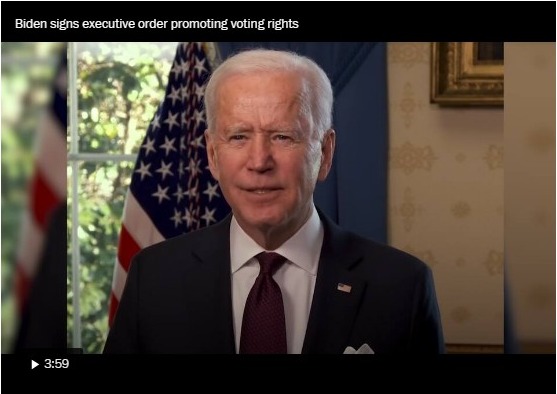
WASHINGTON – President Joe Biden on Sunday signed an executive order aimed at promoting voting rights amid a push by Republican-led state legislatures to roll back voting access in the wake of former president Donald Trump’s 2020 loss and his baseless effort to cast doubt on the integrity of U.S. elections.

The order comes on the 56th anniversary of “Bloody Sunday,” the day on which state troopers violently beat hundreds of marchers, including John Lewis, the late civil rights icon and Democratic congressman from Georgia, on the Edmund Pettus Bridge in Selma, Ala.

“Today, on the anniversary of Bloody Sunday, I am signing an executive order to make it easier for eligible voters to register to vote and improve access to voting,” Biden said Sunday in a videotaped address to the Martin and Coretta Scott King Unity Breakfast. “Every eligible voter should be able to vote and have that vote counted. If you have the best ideas, you have nothing to hide. Let the people vote.”

The order directs federal agencies to develop a strategic plan for promoting voter registration and participation, including potentially applying to be a state-designated voter registration agency and providing recommendations on leave for federal employees to vote or to serve as poll workers.

Some states have programs to automatically register eligible Americans to vote, unless they opt out, when they interact with DMVs as well as state agencies that administer federal programs such as military recruitment, Medicaid and food stamps. Under the Trump administration, however, some federal agencies refused to share the data that would allow states to automatically register voters this way, citing concerns about the privacy of health data. Biden’s executive order instructs federal agencies to relax that policy.

The order also aims to expand access to voting among active-duty members of the military as well as to all eligible federally incarcerated people.

And it establishes a steering group on Native American voting rights tasked with producing recommendations by next year on expanding voter outreach and turnout among Native American communities.

Biden’s move comes days after the House passed expansive legislation to create uniform national voting standards, overhaul campaign finance laws and outlaw partisan redistricting. The measure, H.R. 1, largely mirrors a bill passed by the chamber two years ago. But it has faced fierce Republican attacks that threaten to stop it cold in the Senate.

The bill’s voting provisions would guarantee no-excuse mail voting and at least 15 days of early voting for federal elections; require states to use their government records to automatically register citizens to vote; restore voting rights to felons who have completed their prison sentences; and mandate the use of paper ballots.

During his remarks at the Conservative Political Action Conference last month, Trump blasted H.R. 1, accusing Democrats of wanting to register all welfare recipients to vote.

No Republicans voted for the bill in 2019 or last week, when it was approved 220 to 210.

John Ratcliffe, Trump’s former director of national intelligence, quickly accused Biden and Democrats of “trying to fix a problem that didn’t exist.”

“For all the complaints that you heard about the election in 2020, the complaint that no one said was, ‘It was too difficult to vote,'” Ratcliffe said on Fox News Channel’s “Sunday Morning Futures.” “And yet, what (House Speaker) Nancy Pelosi and President Biden say is, ‘Well, we have got to remove obstacles from people voting,’ when, in fact, that really was not a problem.”

Dozens of Republican-controlled state legislatures, meanwhile, are considering sweeping new laws that would restrict voting options ahead of the 2022 midterms.

Some of the measures would restrict absentee balloting, while others would limit early voting and other aspects of election administration.

One bill in Georgia would block early voting on Sundays, which critics consider a flagrant attempt to thwart Souls to the Polls, the Democratic turnout effort focused on Black churchgoers on the final Sunday before an election.

In his remarks Sunday, Biden noted that in 2020, even with the obstacles presented by the coronavirus pandemic, “more Americans voted than ever before.”

But he also warned that the country is witnessing a “never-before-seen effort to ignore, undermine and undo the will of the people.” He cited both the Jan. 6 attack on the Capitol by a pro-Trump mob as well as the 250 bills introduced by lawmakers in 43 states this legislative session aimed at making it more difficult to vote.

“We cannot let them succeed,” he said.

Biden’s $1.9 trillion relief plan reflects seismic shifts in U.S. politics #SootinClaimon.Com

#SootinClaimon.Com : ขอบคุณแหล่งข้อมูล : หนังสือพิมพ์ The Nation.

https://www.nationthailand.com/news/30403417

Biden’s $1.9 trillion relief plan reflects seismic shifts in U.S. politics

InternationalMar 08. 2021President Joe Biden and first lady Jill Biden walk to Marine One on the South Lawn of the White House on Feb. 26. MUST CREDIT: Washington Post photo by Demetrius FreemanPresident Joe Biden and first lady Jill Biden walk to Marine One on the South Lawn of the White House on Feb. 26. MUST CREDIT: Washington Post photo by Demetrius Freeman

By The Washington Post · Jeff Stein

WASHINGTON – A new Democratic administration facing down a massive economic crisis pushes a $800 billion stimulus package. A bloc of centrist Democrats balk at the price-tag, and Republicans are thrown into a frenzy warning about the impact to the federal deficit.

A little more than a decade later, another new Democratic administration takes office facing a different economic crisis. This time, it proposes spending an additional $1.9 trillion in spending, even though the federal deficit last year was $3.1 trillion – much larger than during the last crisis. Centrist Democrats unify behind passing the measure, and the GOP rejects it but in a more muted fashion.

The disparity between the reception to President Barack Obama’s 2009 stimulus plan and President Joe Biden’s is the result of several seismic shifts in American politics – the most dramatic of which may be the apparent impact of the pandemic on attitudes about the role of government in helping the economy.

Since the outset of the coronavirus, polling has found substantial support among Americans for providing more government aid for those in need. That is partially due to the nature of the current crisis, which for a time opened a deeper economic hole than even the Great Recession. But the shift is also the result of a reorientation on economic policy – both on the left and on the right – that has transformed the political landscape.

On the right, congressional Republican lawmakers may still fret about higher deficits – but the most popular politician among their voters does not. Both as a candidate and as president, Donald Trump blew past Republican concerns about the deficit, pushing for trillions in additional spending and tax cuts and running unprecedented peacetime debt levels.

And on the left, Democratic lawmakers have increasingly learned to ignore fears about spending too much. Party leaders have said they suffered crippling political defeats in the 2010s precisely because they did not deliver enough meaningful economic relief under Obama – a mistake that they see an opportunity to correct under Biden. Democrats also repeatedly tout the 2017 Republican tax cut, which is expected to add approximately $2 trillion to the national deficit, as a reason to be skeptical of GOP concerns about fiscal restraint.

“It’s been a major shift. People have gone from being anti-government, to beyond being even neutral on it, to thinking: ‘We need the government; it has to help us,’ ” said former congressman Barney Frank, D-Mass., who helped craft Congress’ response to the financial crisis and Great Recession.

“You have a new consensus in America – that the government has an important role, and that Ronald Reagan was wrong. For the first time in my lifetime, people are saying that the government has done too little rather than doing too much.”

The upshot is that Americans overall have appeared largely supportive of Biden’s stimulus blitz, which would push the total national debt beyond $23 trillion. This change has helped speed Biden’s massive relief package through Congress with relative ease, despite unified Republican opposition and last-minute changes pushed by moderate Democrats. Centrist Senate Democrats trimmed unemployment benefits but did not significantly reduce the overall size of Biden’s legislation.

A Monmouth University poll taken in late February found more than 60 percent of Americans supported the $1.9 trillion measure. More than two-thirds of Americans also said they would rather the relief package include $1,400 stimulus checks than see bipartisan support for the effort, Monmouth found. Quinnipiac University found in a poll released in February that Americans supported $1,400 stimulus payments, with 78 percent in favor and only 18 percent opposed.

“What happened in 2009 and ’10 is, we tried to work with the Republicans, the package ended up being much too small, and the recession lasted for five years,” Senate Majority Leader Chuck Schumer, D-N.Y., said in an interview. “People got sour; we lost the election.”

This emerging consensus is not without its detractors. Congressional Republicans widely panned Biden’s relief bill as providing far more funding than is necessary, arguing much of it goes to waste. A number of leading economists, influential Washington groups, and Wall Street analysts have said key parts of Biden’s bill are poorly targeted to the specific needs of the current crisis – particularly given some encouraging signs related to the vaccine and job market.

Although the bill is popular right now, congressional Republicans have also projected confidence that will change once its provisions become more widely known and they have a chance to campaign against it.

Every Republican in both the House and Senate voted against the bill, undermining Biden’s campaign promises to work across the aisle and find common ground. The president’s difficulty at points securing the support of centrist Senate Democrats – a process that led to a nine-hour standoff with Sen. Joe Manchin III, D-W.Va., on Friday – also suggests the challenges he is likely to face securing support for his next legislative effort. Moderate lawmakers of Biden’s party may be less likely to back a narrowly partisan effort the next time, if not responsive to an economic emergency.

“I think it’s important for the American people and our Democratic colleagues to recognize that when they’re going to propose spending money that’s not needed and that’s wasteful – and they lard up a piece of legislation – that we’re not going to just sit back and take it,” Sen. Mitt Romney, R-Utah, told reporters on Thursday. “We’re going to fight back.”

The bill’s $1.9 trillion cost – budget experts say the ultimate price-tag may be $1.8 trillion – makes it one of the most expensive pieces of legislation in terms of its single-year impact, particularly when considered in tandem with the approximately $900 billion bill approved in December. An analysis from the Committee for a Responsible Federal Budget, which argues for lower deficits, found the package could ultimately cost $4 trillion if key provisions are extended.

Democrats are blowing past these concerns. Democratic lawmakers and aides say they have heard very few complaints from constituents about concerns the relief plan will drive up the deficit. Even senators representing states that Trump won by huge margins, such as Jon Tester, D-Mont., have gone along with the bill’s price tag.

The White House has pointed to a range of economic analyses showing that without dramatic federal intervention it could take as long as two years for employment to fully recover. Economists have also pointed to low interest rates as enabling historic borrowing at relatively low costs. The U.S. jobs report showed the economy added close to 400,000 jobs in February, but the number of Americans out of work is still over 9 million more than it was pre-pandemic.

Biden is in some ways the ideal messenger for their spending blitz. A septuagenarian who spent four decades in Congress, the president is hard to portray as a socialist or radical leftist – even as he advances some ambitious expansions of government spending, including a major new child tax benefit.

“Biden’s style and his persona have allowed him to be heard as pragmatic on policies that if articulated by other people would sound ideological,” said Celinda Lake, a Democratic pollster who advised Biden’s 2020 presidential campaign. “Just by temperament and culture and background, Joe Biden seems less ideological and more pragmatic.”

That has also appeared to contribute to a more muted reaction to Biden’s spending plans than Obama’s. Reports from the Conservative Political Action Conference, held this year in Florida, indicated that the debt and deficits were not major themes energizing the conservative base.

The shift has been accelerated by the party’s leader. Trump has so far largely avoided critiquing Biden’s stimulus plan. He did recently blast Senate Minority Leader Mitch McConnell, R-Ky., for refusing to support his and Democrats’ push for $2,000 stimulus payments in December, a decision that Trump said cost the GOP the Georgia runoff elections that determined control of the Senate.

“In the background leading to the Obama era, $300 billion deficits were considered a crisis, and in that context an $800 billion stimulus was an enormous sticker shock even among Democrats,” said Brian Riedl, a former aide to Sen. Rob Portman, R-Ohio, now at the libertarian-leaning Manhattan Institute. “It has been a massive shift toward the view (that) almost no level of borrowing will have negative consequences. Billions just became trillions.”

Dave Hopkins, a professor of political science at Boston College who studies the Democratic Party, said the Republican base is no longer “stoked” by criticisms of overspending.

“Moderate vulnerable Democrats feel a lot more freedom to vote for a big spending bill in the current moment – because the polls suggest it’s popular, and because the case against Democrats is being made on Dr. Seuss and Mr. Potato Head, not the debt,” Hopkins said.

Beyond the shifting politics, Democratic lawmakers have themselves shifted in their beliefs.

In the 1990s, Rep. Don Beyer, D-Va., now vice-chair of the House’s Joint Economic Committee, supported the Democratic presidential candidates who most seriously campaigned on closing the national deficit.

Beyer’s thinking has changed. He cited conversations with a range of economists on wonky issues such as the relationship between employment and inflation, as well as watching the impact of covid relief aid as it was sprayed across the American economy.

Beyer sits on the House Ways and Means Committee, which writes the nation’s tax laws.

“We’re always doing things like the Employee Retention Tax Credit,” he said of a refundable credit to reimburse businesses hit by covid for keeping employees on payroll. “I don’t want to diminish those kinds of things, but they don’t feel real to people the way the $600 check does.”

Beyer added: “I was knocking doors for Joe Biden in Pennsylvania (last fall), and the most memorable conversation I had was with a guy who said, ‘I just want to know who will send me the checks.’ … Covid has given us the opportunity to provide very meaningful benefits to these folks.”

Democrats were not always so concerned with the marketing of their plans.

In 2009, Pennsylvania Gov. Ed Rendell, a Democrat, went to the White House and begged Obama officials to have the treasury secretary send letters to millions of American households explaining how they would benefit from a $1,000 tax cut in Obama’s stimulus. The administration refused.

“If you went to the streets of Philadelphia in 2010 and asked every man and woman if they got a tax cut from Obama’s stimulus, they would have said no,” Rendell said.

The White House is now aiming for the opposite. In remarks on Saturday, Biden emphasized the direct cash that the plan will send to millions of Americans – in direct stimulus payments, new child benefits, and unemployment assistance, among other provisions.

White House spokeswoman Jen Psaki said Friday the administration would aim to do a much better job than the Obama administration had in ensuring people saw how they were being helped by the government.

“Quite frankly, without the overwhelming, bipartisan support of the American people, this would not have happened,” Biden said after the Senate passed the measure. Biden touted the “real, tangible results” delivered by the package. Americans, he said, “will be able to see and know and feel the changes in their own lives.”

Disney’s ‘Raya’ gets lackluster debut in theaters amid streaming #SootinClaimon.Com

#SootinClaimon.Com : ขอบคุณแหล่งข้อมูล : หนังสือพิมพ์ The Nation.

https://www.nationthailand.com/news/30403416

Disney’s ‘Raya’ gets lackluster debut in theaters amid streaming

InternationalMar 08. 2021Kelly Marie Tran stars as a Southeast Asian princess on a quest, center, in Kelly Marie Tran stars as a Southeast Asian princess on a quest, center, in “Raya and the Last Dragon.” MUST CREDIT: Disney

By Syndication Washington Post, Bloomberg · Yueqi Yang ·

Walt Disney Co.’s “Raya and the Last Dragon” brought in lower-than-expected box office sales of $8.6 million in North America during its opening weekend, failing to draw audiences back to theaters in large numbers instead of streaming at home.

The animated film about a young warrior girl, featuring the voices of Kelly Marie Tran and Awkwafina, was simultaneously launched on the Disney+ streaming platform for an extra $30 and will become free to subscribers on June 4. The film had been projected to generate about $12 million in ticket sales, according to an estimate from Boxoffice Pro.

Globally, “Raya” debuted to an estimated $26.2 million this weekend, with China its second-largest market. Disney didn’t disclose sales of the movie on the streaming platform.

Warner Bros.’s “Tom & Jerry,” also simultaneously released on HBO Max, came in second this weekend, making $6.6 million, according to industry researcher Comscore Inc.

At least one major chain, Cinemark Holdings Inc., said it won’t show “Raya,” amid disputes between theaters and studios over when and how releases can be made available on streaming platforms during the pandemic. Disney Chief Executive Officer Bob Chapek said at a conference last week that theaters need to get used to movies being released in different ways, since customers have grown accustomed to having more viewing options.

With New York City reopening theaters on Friday after a yearlong hiatus, about 45% of all North American theaters are now currently open, up from 42% last weekend, according to Comscore. Disney said “Raya” will have extended play through spring-break periods in March and April as more markets and theaters re-open then.

Explosions rock Equatorial Guinea’s largest city; 17 dead, hundreds injured #SootinClaimon.Com

#SootinClaimon.Com : ขอบคุณแหล่งข้อมูล : หนังสือพิมพ์ The Nation.

https://www.nationthailand.com/news/30403415

Explosions rock Equatorial Guinea’s largest city; 17 dead, hundreds injured

InternationalMar 08. 2021President Teodoro Obiang NguemaPresident Teodoro Obiang Nguema

By The Washington Post · Max Bearak

KHARTOUM, Sudan – At least 17 people were killed and hundreds injured Sunday as four massive explosions at a military camp shook Equatorial Guinea’s largest city, authorities said.

The blasts Sunday afternoon in the port city of Bata sent giant plumes of smoke into the air and destroyed dozens of buildings. Images broadcast on state-run television showed injured residents fleeing. Some seemed to be carrying bodies of the dead.

The Health Ministry said it had confirmed 17 dead and 420 injured. A doctor in Bata, a former capital, told the state-run TVGE television network that at least 20 were dead.

In a statement read by TVGE’s broadcasters, President Teodoro Obiang Nguema called the incident an “accident” and blamed it on the “negligence” of those tasked with guarding stores of dynamite and munitions. He ordered an investigation and asked the international community for help in rebuilding parts of the city that had been destroyed.

Televised footage showed patients streaming into hospitals and rescue crews pulling survivors out of rubble. A news anchor pleaded with viewers to donate blood.

Equatorial Guinea is a small and impoverished country wedged between Gabon and Cameroon on Africa’s Atlantic coast. It’s divided into two parts: the mainland, home to Bata, and an island called Bioko, about 150 miles to the northwest, where the capital, Malabo, is located.

Obiang has been in power since a coup in 1979, and is known for his repressive rule, a vast network of corruption and lavish vanity projects. The world’s longest serving president, he secured a sixth term in 2016, claiming 99% of the vote.

While the country is rich in oil and timber, the majority of its million and a half citizens are poor. By some measures the rate of extreme poverty is 40%.

Numerous coup attempts have been staged against Obiang over his decades in power, and in those instances, news coverage has been heavily curtailed. On Sunday, state-run TV showed uninterrupted coverage of the blasts throughout the afternoon and evening.

Blasts at arms depots have been seen in central Africa. Nine years ago, about 250 people were killed in similar blasts on the outskirts of Brazzaville, the capital of the Republic of Congo.

Equatorial Guinea and the Republic of Congo are both ruled by leaders who have spent decades in power, and who often use their militaries’ might against their own people to suppress dissent.

Greece thinks ‘vaccine passports’ could save summer holidays, while others in Europe see inequalities #SootinClaimon.Com

#SootinClaimon.Com : ขอบคุณแหล่งข้อมูล : หนังสือพิมพ์ The Nation.

https://www.nationthailand.com/news/30403414

Greece thinks ‘vaccine passports’ could save summer holidays, while others in Europe see inequalities

InternationalMar 08. 2021

By The Washington Post · Rick Noack

BERLIN – Ahead of Europe’s summer holiday season, some top destinations such as Greece and Spain are pushing the European Union to introduce digital “vaccine passports” to ease entry for visitors – and their tourism cash.

But what some countries see as a path toward reopening has been viewed by others, led by France and Germany, as a path toward a two-tier system that could leave the unvaccinated as outsiders in places such as gyms, restaurants and cinemas.

“Immunity passports could reinforce inequalities both within and between countries,” said Emilian Kavalski, a professor at the University of Nottingham’s campus in Ningbo, China.

Some countries have already taken steps in that direction.

In Britain, now outside the European Union, Foreign Secretary Dominic Raab said vaccine certificates are “under consideration” even as other British officials dismissed the idea. Israel recently launched digital vaccination certificates to allow access to gyms or restaurants.

Israel also agreed to trial a travel bubble with E.U. members Greece and Cyprus to open the door for vaccinated travelers. Meanwhile, Cyprus has also said it will begin in May to welcome vaccinated visitors from Britain.

The European Commission is expected to submit a proposal on how to bridge the divides with the bloc later this month, which could lay out a joint plan for digital vaccination certificates that would work across the European Union and potentially beyond.

Compromise proposals could include exceptions for individuals who have recovered from covid-19 or those who can provide a recent negative test result.

It is unclear what a digital vaccine certificate would look like. Personalized QR codes – used in Israel and difficult to forge – would be one possible option.

But finding common ground across the Europe Union will not be easy. Vaccination rates vary widely. So does the political will to put the vaccinated in the fast lane for travel – with countries most dependent on tourism cash leading the way.

“Those who are vaccinated should have full freedom,” said Austria’s Chancellor Sebastian Kurz, who has joined Greece and Spain in support of vaccination documents.

“Some countries are very much preoccupied with now,” Greece’s tourism minister, Harry Theocharis, told the Financial Times last month, in an apparent reference of German and French hesitancy.

Tourism accounts for about 20 percent of Greece’s GDP, which declined by 10 percent last year.

“People will gradually realize that there is not much of an alternative,” said Andreas Papatheodorou, a Greek tourism researcher. If no E.U.-wide solution can be found, Greece and other countries may opt for bilateral deals, he said.

German Chancellor Angela Merkel has signaled openness to study possible vaccination certificates later this year. But she has insisted that treating vaccinated travelers preferentially now “isn’t on the agenda, given the low vaccination coverage at this point.”

French officials have made the same argument. They also appear worried about how a proposed pass would be received by the large number of vaccine skeptics in the country. Only around half the population was willing to get vaccinated when the rollout began two months ago.

French vaccine approval has recently inched upward. Some officials still fear a “vaccination passport” would risk undoing that progress.

Some groups – including members of ethnic minorities or pregnant women – would be disproportionately impacted, because covid vaccination rates among them are lower than in the general population, according to recent studies. Young people who are last in line to receive vaccines or older people with no smartphones would also be disadvantaged.

There is also still no scientific consensus on the extent to which vaccines reduce transmission of the virus, raising the possibility that vaccinated travelers may spread the virus even if they do not get sick themselves, said Melinda Mills, director of the Leverhulme Centre for Demographic Science at Oxford University.

President Joe Biden said this week that there will be enough vaccines for all U.S. adults by May. The European Commission hopes to vaccinate 70 percent of the European Union’s adult population by the end of the summer, which would still leave more than 100 million Europeans without immunization in late September.

“If you introduce this right away, you’d be excluding a huge group just on age-based discrimination,” Mills said of possible “vaccine passports,” adding that court challenges would likely follow.

Other questions are piling up, too.

Would E.U. citizens qualify for a certificate if they receive vaccines not approved by the E.U. drug regulator, such as Russia’s Sputnik V and Chinese vaccines? What happens if variants spread that reduce some vaccines’ efficacy?

Then there are privacy concerns. For decades, paper certificates have been used for travel to show vaccinations against yellow fever and other diseases.

But a digital certification, potentially with QR-codes, raises worries about whether the data could be used to track travelers’ movements.

Some global companies have already vowed to make use of their right to ban customers. Alan Joyce, the head of Australia’s carrier Qantas, said last year that proof of vaccination would soon become a prerequisite for flying.

“I think that’s going to be a common thing talking to my colleagues in other airlines around the globe,” he said. Similar requirements could be introduced for people entering sports stadiums or workplaces.

The idea of requiring travelers to carry health certificates is a relatively modern concept, said Kavalski, who has researched the historical evolution of passports.

Passports were widely introduced during World War I in what some saw as a temporary measure. But the 1918 flu pandemic helped shape international travel with “the practice of allowing only ‘healthy’ bodies to cross borders,” said Kavalski.

“I would say the (current) pandemic will have a lasting impact on the practices and experience of border crossing,” said Kavalski.

How travel brought two coronavirus variants to the U.S., the CDC says

We could be traveling again by summer. Here’s what you need to know to plan.

The argument against ‘vaccine passports’ is growing

Senate passes Biden’s $1.9 trillion coronavirus relief bill after voting overnight on amendments, sends measure back to House #SootinClaimon.Com

#SootinClaimon.Com : ขอบคุณแหล่งข้อมูล : หนังสือพิมพ์ The Nation.

https://www.nationthailand.com/news/30403391

Senate passes Biden’s $1.9 trillion coronavirus relief bill after voting overnight on amendments, sends measure back to House

InternationalMar 07. 2021Senate Majority Leader Charles Schumer, D-N,Y., prepares his floor speech before walking to the Senate floor on Jan. 22. MUST CREDIT: Washington Post photo by Melina Mara.Senate Majority Leader Charles Schumer, D-N,Y., prepares his floor speech before walking to the Senate floor on Jan. 22. MUST CREDIT: Washington Post photo by Melina Mara.


By The Washington Post · Tony Romm, Jeff Stein, Erica Werner

WASHINGTON – The Senate approved a sweeping $1.9 trillion coronavirus relief plan on Saturday, putting Congress one step closer to fulfilling an electoral promise from President Joe Biden and his Democratic allies to shepherd a swift, equal recovery to the worst economic crisis since the Great Depression.

With its massive price tag, and major expansion of federal social safety net programs, the package is set to count among one of the largest rescue measures in U.S. history, reflecting Democrats’ pledges to erase disparities that long predate the deadly pandemic.

The bill authorizes $1,400 checks to millions of low- and middle-income Americans, bolsters families by providing new yearly child tax benefits, boosts unemployment payments for workers still out of a job, and invests heavily in the country’s attempt to climb back from a public-health emergency that has devastated families, workers, students and businesses alike.

Senate Democrats adopted the measure entirely on party lines, muscling through a marathon, 25-hour debate that forced them to confront dissent from within the party’s own ranks. The House is set to vote on the Senate’s version of the stimulus on Tuesday, teeing up checks and other financial assistance to start to reach Americans as soon as this month.

“I promised the American people help was on the way,” Biden said Saturday, celebrating the first legislative victory of his administration. “Today, I can say we’ve taken one more giant step of delivering on that promise.”

The Senate passage of the measure, known as the “American Rescue Plan,” provided a fresh burst of positive news for the White House. In recent weeks, the Biden administration has presided over an improving job market – even though there are still 9.5 million more unemployed workers than there were before the pandemic. The country also has witnessed a decline in coronavirus infections and an acceleration in a nationwide effort to vaccinate millions of Americans in need.

But the Senate’s vote illustrated the harsh political realities facing Biden and his ambitious economic agenda. The president’s early pledges for unity and bipartisanship collided with the reality of Capitol Hill, where Democrats opted against scaling back the stimulus significantly in order to attract GOP support. It also foreshadowed the difficulties Democratic leaders may face holding together their disparate caucus of progressive and moderate lawmakers during the even tougher fights on the horizon.

Ebullient party leaders still celebrated the stimulus bill’s passage on Saturday, which they said showed Democrats can overcome obstacles – and advance other major priorities still to come.

“We promised them checks; they’re going to get checks. We promised they were going to get a better availability and distribution of vaccines; that will happen,” said Senate Majority Leader Charles Schumer, D-N.Y., in an interview.

“All of that is going to happen, and that’s going to change people’s outlook . . . not just to be more Democratic, which I think it will, but to see government can work for them,” he said.

Along with new stimulus checks and unemployment aid, the bill that passed the Senate includes a bevy of programs to lessen businesses’ tax bills, improve city and state governments’ finances, assist Americans in paying for child care and invest in transit and other infrastructure reforms. The aid for families and children could cut poverty by a third, analysts estimate, while making it easier for them to pay their rents or mortgages and purchase necessities including food.

Schools and hospitals are set to receive a major financial boost as the U.S. government labors to respond to the coronavirus while simultaneously preparing to return to regular life more than a year after the pandemic first arrived.

Senate lawmakers began considering the $1.9 trillion stimulus on Friday, embarking on a debate that quickly exposed the fissures in the Democratic caucus – between progressive-minded lawmakers, who are willing to spend big and act aggressively to achieve sweeping economic reforms, and their fellow party moderates, who have preached political unity and fiscal restraint.

Leading up to the vote, some moderate Democrats had secured changes to the coronavirus aid package that narrowed the number of Americans who receive one-time stimulus checks and rethought how some state and local aid might be distributed. An effort to raise the minimum wage to $15 per hour ultimately faltered as well, after some centrist Democrats opposed an effort to override the Senate’s parliamentarian, who had determined it was incompatible with the arcane rules lawmakers used to advance the legislation.

Yet tempers flared most around unemployment benefits, as one of the chamber’s most influential centrist lawmakers, Sen. Joe Manchin III of West Virginia, sought to lessen the weekly benefits that had been approved by House lawmakers earlier in the month.

Democratic leaders at one point Friday thought they had brokered a deal to address his concerns only to discover Manchin prepared to side with Republican Sen. Rob Portman of Ohio on an even more aggressive amendment to scale back the jobless aid.

Manchin’s dissatisfaction around the unemployment payments soon left the Senate locked in a nine-hour standoff. The tense discussions spilled out onto the Senate floor Friday, as Portman sparred with Senate Finance Committee Chairman Ron Wyden, D-Ore., over the need for some of the unemployment relief in the first place.

“Suddenly, if you’re on unemployment insurance you don’t have to pay taxes. But if you’re working, you do have to pay taxes. How does that work?” Portman charged.

Wyden responded that the tax forgiveness only included modest relief for jobless Americans, adding of the GOP’s opposition: “The party that claims to want to help workers on their taxes won’t lift a finger.”

Democrats ultimately resolved the stalemate with a deal that authorized the extra unemployment payments at $300 per week, a lower amount than the House approved, while extending the aid until early September. From there, party lawmakers banded together to jettison dozens of Republican amendments that would have dramatically slashed spending, struck funds set aside for transit systems and local governments or otherwise poisoned the bill.

In doing so, GOP lawmakers repeatedly faulted Democrats for failing to negotiate in good faith over the size and scope of the stimulus package – and for breaking Biden’s promise for political unity in a post-Trump Washington.

“The Senate has never spent $2 trillion in a more haphazard way, or through a less rigorous process,” said Senate Minority Leader Mitch McConnell, R-Ky., in a speech before the chamber adopted the measure.

“Voters gave Senate Democrats the slimmest possible majority. Voters picked a president who promised unity and bipartisanship,” he continued, noting Democrats instead had opted to “ram through” their stimulus bill.

The relief plan nevertheless remained intact as it cleared the chamber on a 50-49 vote, with every Democrat backing it – and every Republican opposing the measure. Schumer, reflecting on the outcome, said the GOP had failed to support a law that many conservative-leaning voters appear to find popular, leaving Democrats no choice but to act on their own.

“The hope is Republicans see now we meant it,” the Democratic leader said. “You don’t work with us then we’ll do it on our own.”

Emboldened, Schumer pledged to return to lingering issues in the coronavirus aid debate, including raising the minimum wage. And he and his fellow Democrats soon are set to start considering new investments in the country’s infrastructure, reforms to immigration laws and rewrites of the U.S. tax code – debates that touch on deep political divides within the caucus about the role of government to tax, regulate and spend.

Schumer, however said he had reason for optimism: “Democrats have more confidence we can get things done if we stay unified.”

A decade after Fukushima nuclear disaster, contaminated water symbolizes Japan’s struggles #SootinClaimon.Com

#SootinClaimon.Com : ขอบคุณแหล่งข้อมูล : หนังสือพิมพ์ The Nation.

https://www.nationthailand.com/news/30403390

A decade after Fukushima nuclear disaster, contaminated water symbolizes Japan’s struggles

InternationalMar 07. 2021

By The Washington Post · Simon Denyer

TOKYO – Beside the ruins of the Fukushima Daiichi nuclear plant, more than 1,000 huge metal tanks loom in silent testament to one of the worst nuclear disasters in history, the meltdown of three nuclear reactors 10 years ago this month.

The tanks contain nearly 1.25 million tons of cooling-system water from the 2011 disaster and groundwater seepage over the years – equivalent to around 500 Olympic-size swimming pools – most of it still dangerously radioactive.

Running out of space to build more tanks, the government wants to gradually release the water into the sea – after it has been decontaminated and diluted – over the next three decades or more.

Even though a formal decision has yet to be announced, the government and the Tokyo Electric Power Co. (TEPCO) have insisted that an ocean release is their preferred solution and that it is perfectly safe.

The only thing holding them back appears to be the Olympics and the bad publicity it could generate before the Games begin in July, experts say.

The idea of releasing the water has infuriated Fukushima’s fishing community, only now getting back on its feet after taking a battering in the wake of the 2011 disaster and the subsequent ocean contamination. Also angry is South Korea, even though it is more than 600 miles away on the other side of Japan.

“Recovery is the most important thing for us, and releasing the water will pull back the recovery process” said Takayuki Yanai, head of the trawler fisheries cooperative association in the port of Onahama. The local fisheries industry is still only half as big as it was before the 2011 earthquake and tsunami, he said. “I really want them to stop. There must be other options.”

Rows of storage tanks holding treated but still contaminated water stand near the Fukushima Daiichi nuclear plant's No. 3 reactor building on Feb. 4, 2021. MUST CREDIT: Japan News/Yomiuri.

Rows of storage tanks holding treated but still contaminated water stand near the Fukushima Daiichi nuclear plant’s No. 3 reactor building on Feb. 4, 2021. MUST CREDIT: Japan News/Yomiuri.

When it comes to the science, the Japanese government and TEPCO say it’s on their side.

The water has already been or will be cleaned with an advanced treatment system, known as ALPS, that is capable of removing almost all radionuclides present in the water, including the really dangerous ones such as strontium and cesium.

What would be left is tritium, a naturally occurring isotope of hydrogen that is considered less dangerous to human health and is routinely released into the ocean by nuclear power plants around the globe. Along with tritium would be tiny traces of carbon-14, a radioactive isotope of carbon.

If all the treated water was released into the sea over the course of just one year – as opposed to three decades – the radiation impact for local people would be no more than one-thousandth of the exposure impact of natural radiation in Japan, said Yumiko Hata of the Ministry of Economy, Trade and Industry (METI).

The International Atomic Energy Agency said the release of the water is “technically feasible” and has offered to provide independent radiation monitoring to reassure the public that it would comply with international standards.

But when it comes to public trust, the Japanese government and TEPCO are on shakier ground.

Right from the first weeks of the disaster, when they were extremely slow to admit that three of the reactor cores had undergone meltdowns, there has been a tendency to downplay bad news.

For years, TEPCO claimed that the treated water stored at the plant contained only tritium, but data deep on its website showed that the treatment process had failed to remove many dangerous radionuclides.

Finally, in 2018, it was forced to acknowledge that 70% of the water is still contaminated with dangerous radioactive elements – including strontium-90, a bone-seeking radionuclide that can cause cancer – and will have to be treated again before release.

TEPCO explains the contamination by saying it rushed the treatment process after the accident because it needed to quickly reduce radiation in the water to manageable levels. Further tests show that ALPS, when carefully and repeatedly implemented, can reduce the concentration of radionuclides to well within international standards, it said.

Ryounosuke Takanori, manager of TEPCO’s global communications, admitted that some of the data on its website had not been presented “in a form that is easily understood” but said that the company was working hard to “proactively engage in communication initiatives to accurately and quickly convey information.”

Ken Buesseler,a senior marine radiochemist at the Woods Hole Oceanographic Institution in Massachusetts, said he would prefer to see all the water treated properly before any is released.

Radioactive elements such as cesium and strontium are many times more dangerous to human health than tritium and are many times more likely to accumulate inside fish and on the sea floor, he said.

“After you’ve cleaned it up, then make a decision on what to do,” he said. “They spent eight years without telling us about it, and now they are saying: ‘Trust us, we’re going to take care of it.’ “

In Onahama port, about 40 miles south of the wrecked nuclear power plant in northeast Japan, samples of fish from every ocean catch are analyzed for radiation. Tests routinely come back clear, although last month a solitary black rockfish was found to have cesium levels five times the national standard, the first fish to fail the test in 16 months.

Yanai of the fisheries cooperative says he does worry about releasing more tritium into the sea, but his main concern is “irrational fear from consumers” causing “reputational damage” to his produce.

Shaun Burnie, senior nuclear specialist at Greenpeace Germany, said that there are risks involved in releasing tritium and carbon-14 into the sea and would like to see the release delayed at least until 2035, giving more of the tritium time to decay into hydrogen.

But he ties the decision to the government’s much bigger pledge – to remove all the extremely radioactive corium from the wrecked reactors by 2041 or 2051, even though the technology to do so doesn’t yet exist, along with millions of tons of contaminated topsoil removed from local fields.

In a new report, Greenpeace calls that pledge a “delusion.”

“That’s just not going to happen, but it’s a sort of mantra,” Burnie said. “The water is a symbol. If they can get rid of it, they are meeting that commitment to remove the problem, and that’s why they’ll discharge it into the Pacific.”

Biden administration moving to address a global compromise by Chinese and other hackers of Microsoft email servers #SootinClaimon.Com

#SootinClaimon.Com : ขอบคุณแหล่งข้อมูล : หนังสือพิมพ์ The Nation.

https://www.nationthailand.com/news/30403389

Biden administration moving to address a global compromise by Chinese and other hackers of Microsoft email servers

InternationalMar 07. 2021

By The Washington Post · Ellen Nakashima

WASHINGTON – The Biden administration is moving to address a global compromise by Chinese government-sponsored hackers of Microsoft email servers affecting at least 30,000 public and private entities in the United States alone, according to U.S. officials and people familiar with the matter.

So far, U.S. officials say there is no sign that federal agencies or major defense contractors have been hacked in the campaign that researchers believe began as far back as January, but they fear it could spiral into a crisis crippling many small and midsize businesses and state and local government agencies – those least able to afford it.

The broad, indiscriminate nature of the compromise and the difficulty in containing the infections has caused concern among officials at the White House, National Security Agency, Pentagon and Department of Homeland Security.

National security adviser Jake Sullivan issued an unusual late night tweet Thursday urging organizations using Microsoft Exchange servers to apply “ASAP” a patch the tech giant rushed out this past week to prevent new infections. On Friday, the firm added additional workarounds for companies that had not installed the first patch.

Microsoft Exchange is one of the most commonly used non-Cloud services for companies and government agencies operating their own email servers. The figure of 30,000 was first reported by blogger Brian Krebs.

The White House is looking at convening an emergency group of government agencies to address the issue, according to the officials, who spoke on the condition of anonymity to discuss internal deliberations. Officials are expected to hold a meeting this coming week to consider the creation of a cyber “Unified Coordination Group,” which would review the scope and severity of the situation and determine what responses would be appropriate.

The matter arises as the Biden administration is preparing a series of measures to respond to Russia’s SolarWinds hack of federal agencies and private companies. A key component of that response will be shoring up federal cybersecurity.

Microsoft has been coordinating with the government in both investigations.

The situation is “very, very serious,” said one U.S. official.

Microsoft on Tuesday disclosed that its exchange servers had security flaws that were being exploited by a group of Chinese government hackers it dubbed “Hafnium.” The group has targeted infectious-disease researchers, law firms, universities and think tanks, among others, for data theft, Microsoft said.

State and local government agencies also have been compromised, which could be significant if agencies that handle critical local services such as policing and health services are offline, U.S. officials said.

Hafnium built hacking tools or “exploits” taking advantage of four security holes in Microsoft software to gain access to a victim’s email server. Once inside, the hackers deposited “webshell” malware – a back door – that allowed them to control the server remotely and to return later to steal data.

Of the tens of thousands of organizations that have been infected by the webshell, it’s not clear how many victims have had emails siphoned. Several “high value” targets have seen such losses, said Steven Adair, president of Volexity, a cybersecurity firm that tipped Microsoft to two of the four exploits.

Adair said his firm tracked the malicious activity back to early January, though researchers in Taiwan identified Exchange software bugs as far back as December.

For much of January and February, the Chinese theft of email seemed stealthy and targeted, Adair said. Then suddenly about a week ago, shortly before Microsoft issued its patch, the activity exploded. The hackers seemed to be dropping webshells on anyone running an Exchange server, he said. It was, he said, almost as if they suspected a patch was forthcoming. Although Microsoft issued a fix Tuesday, it does not neutralize a webshell already placed on a victim’s server, which enables the hackers to sneak back in. “So there were a significant number of organizations that are safe from new exploitation but not safe from a ticking time bomb that was left behind,” Adair said.

What’s concerning U.S. officials and cybersecurity firms alike is that more than one hacking group now appears to be taking advantage of the webshells.

There “definitely appears to be multiple Chinese [government] groups and at least one Russian-language cybercriminal group” active, said Allan Liska, intelligence analyst at Recorded Future, a cyber threat research firm.

Even U.S. government personnel are struggling to sort out which hacker groups are doing what, and so far there is no firm attribution.

“It’s like a free-for-all now,” Adair said.

Researchers who scan the Internet for the presence of the malware are finding indications that up to 250,000 servers might be infected globally, said one person familiar with the matter.

Network administrators can remove the webshell, but the real challenge is that the vast majority of victims are organizations that lack the resources of the federal government or big companies to handle the patching and incident response needed, some experts said.

Once the hackers have control of a victim’s email server, they can more easily compromise entire networks. One fear that some U.S. officials have is that criminal hackers might use that access to install ransomware on massive numbers of businesses and government agencies. That could be more disruptive to average consumers than email theft, one official said.