By Syndication Washington Post, Bloomberg · Rita Nazareth, Vildana Hajric
Stocks extended their rally into a fourth day as traders parsed through a flurry of corporate results amid signs the U.S. labor market may be gradually improving. The dollar rose.
The S&P 500 climbed to a record, led by banks and tech shares, as the Russell 2000 Index jumped 2%. EBay Inc. and PayPal Holdings Inc. surged on upbeat forecasts, while Netflix Inc. gained after raising the price of its service in Japan. Meanwhile, GameStop Corp. plunged as day traders flocked to other stocks like drug developers, and Nordstrom Inc. slid after announcing plans to win back customers — a sign that Wall Street may have expected a more comprehensive overhaul. A widely watched segment of the Treasury yield curve steepened to levels last seen in 2015.
The bull market in U.S. stocks remains on “solid footing” as the rebound in activity and corporate profits alongside an accommodative Federal Reserve create a supportive environment for equities, according to UBS Group AG. A report Thursday showed jobless claims fell to the lowest since November, and the next major update on the economy comes on Friday — with analysts forecasting the labor market added about 100,000 jobs in January after a 140,000 drop in December. Selected high-frequency data, such as weekly consumer-confidence readings, also point to some strengthening.
“We certainly seem to have shifted our focus back to fundamentals,” said Arthur Hogan, chief market strategist at National Securities Corp. “The virus news is getting incrementally better at the very same time that the earnings season and economic data seem to be showing some improvement. Markets are actually focusing on what we’re supposed to be focused on and less concerned about the machinations of getting fiscal policy out and what’s going on in Reddit-land.”
The Reddit-fueled rumble in the U.S. stock market may have heightened fears of another burst of volatility, according to options data tracked by Bloomberg. Over the last two weeks, the Cboe Volatility Index’s futures curve has shifted markedly higher, showing a pronounced peak in April before a gradual decline. The move suggests investors expect more volatility in the short-term amid concerns about extended valuations, the pace of the vaccine rollout and the impact of retail-trading activity.
These are some of the main moves in markets:
Stocks
– The S&P 500 increased 1.1% as of 4 p.m. New York time.
– The Stoxx Europe 600 Index rose 0.6%.
– The MSCI Asia Pacific Index decreased 0.7%.
Currencies
– The Bloomberg Dollar Spot Index rose 0.4%.
– The euro dipped 0.6% to $1.1965.
– The Japanese yen depreciated 0.5% to 105.55 per dollar.
Bonds
– The yield on 10-year Treasurys fell less than one basis point to 1.14%.
– Germany’s 10-year yield climbed one basis point to -0.45%.
– Britain’s 10-year yield jumped seven basis points to 0.44%.
Commodities
– West Texas Intermediate crude rose 1% to $56.26 a barrel.
The economies of emerging markets in Asia have slowed down significantly and these countries will face significant challenges through 2021, the OECD Development Centre said in its latest report.
The “Economic Outlook for Southeast Asia, China and India 2021: Reallocating Resources for Digitalisation” was released on Thursday.
The report said real GDP in Emerging Asian countries, namely Asean, China and India, is projected to drop by 1.7 per cent on average in 2020 before rebounding by 7.4 per cent in 2021 from a low base.
In Asean, average real GDP is projected to contract by 3.4 per cent in 2020 and grow by 5.1 per cent 2021, the report said.
The economy fallout in 202 is particularly pronounced in India (minus-9.9 per cent) and the Philippines (minus-9 per cent). At the other extreme, Vietnam will post the strongest output growth rate in 2020, forecast at 2.6 per cent.
The anticipated near-term rebound stems from improved financial conditions as well as monetary and fiscal policy measures put in place by governments. Yet several factors are expected to restrain demand and investment. Labour-market conditions will remain weak, while contribution of the external sector to recovery is jeopardised by an uncertain global economic situation. Public and private debt levels are also expected to rise. Moreover, if the quality of assets in the banking sector deteriorates, banks may not be able to provide sufficient support to the recovery. Finally, inflationary pressures should remain low due to the ongoing slack in the economy.
Each country’s pandemic management strategies and their ability to maintain policy support will shape the 2021 recovery. Countries with superior pandemic management, including the distribution of Covid-19 vaccines, will fare better. When concerns about the virus recede, continued policy support to households and businesses will facilitate a faster rebound. With narrowing monetary and fiscal room of manoeuvre, policy makers in Emerging Asia will need to devote their attention to improving monetary policy transmission and increasing fiscal policy effectiveness.
The pandemic has accelerated the Fourth Industrial Revolution. Industry 4.0 technologies have allowed firms to stay responsive to market needs. Several countries in Emerging Asia have taken decisive steps to support digitalisation during the pandemic, most commonly by providing incentives to encourage e-commerce and the digitalisation of operations and trade channels. Varying levels of readiness and differing economic structures influence countries’ capacities to adopt Industry 4.0 technologies. The most frequently cited bottlenecks include lack of adequate infrastructure and awareness, as well as financial limitations, notably for smaller firms. Greater co-operation is necessary to respond to increasingly sophisticated cyber threats and to strengthen cyber resilience in Emerging Asia.
Social-media platforms, including Facebook, Instagram, messenger and WhatsApp were blocked in Myanmar on Thursday, just days after the military seized power earlier this week.
The authorities said Facebook would be blocked at least until Sunday.
Myanmar’s Communications and Information Ministry said social media is being blocked because people are affecting the country’s stability by spreading fake news and misinformation, especially through Facebook.
People have been using social media to voice opposition to the coup as well as to share ideas on how they can rise up against the military. Facebook is used by half of Myanmar’s 54 million people.
Unfazed by the ban, many people have either switched using a new VPN or moved to another platform.
They say the civil disobedience movement will continue.
Meanwhile, many medical groups and government officials have also joined the movement by participating in strikes and expressing their opposition to the military by raising three fingers. The three-finger salute was made famous by the “Hunger Games” films and has also been used in Thailand by the anti-establishment movement. Many celebrities and actors have also joined the campaign in Myanmar.
Tokyo Olympics organizers unveil their pandemic playbook
InternationalFeb 04. 2021A man wearing a protective mask, left, stands in front of Olympic rings installed in Tokyo on March 11, 2020. MUST CREDIT: Bloomberg photo by Kiyoshi Ota.
By Syndication Washington Post, Bloomberg · Ayai Tomisawa, Yuki Hagiwara
The organizers of the delayed Tokyo Olympics unveiled a set of rules governing how teams move about and interact in order to avoid the spread of the covid-19 pathogen, assuming that the games will go ahead this summer as planned.
Coronavirus tests will be conducted before and after arrival in Japan and then at least every four days, with movements in the country limited to a pre-determined plan, according to the first version of the “Playbook” unveiled on Wednesday. The document was prepared by the Tokyo Organizing Committee, the International Olympic Committee and the International Paralympic Committee.
The protocols outlined in the playbook are aimed at holding a successful games even as countries across the globe struggle to bring the pandemic under control. Japan implemented stricter measures last month seeking to reduce infections and pave the way for the Olympics, which were postponed last year.
While questions linger over whether the games can be held at all, the playbook is an important step in clarifying the conditions under which they can take place. The document was light on many details, however, including how and on what schedule participants, athletes and other staff would be tested for coronavirus.
Organizers said they will decide those specifics in an update in April, in order to make use of the latest technology. Participants will need to submit a negative test before departure for Japan and may be tested on arrival.
One thing was clear: vaccinations won’t be mandatory. The organizers won’t require athletes and teams to be inoculated in order to take part, but said instead that they’ll work with each national Olympic committee to “encourage and assist their athletes, officials and stakeholders to get vaccinated in their home countries, in line with national immunisation guidelines, before they go to Japan.”
That also means that the participants will have to comply with the rules in the playbook, whether they have been vaccinated or not, they added.
Teams were told not to join events as spectators, and not to use public transport. They will also have to download Japan’s smartphone app for contact tracing. They will not have to quarantine when they arrive in the country, but they will be housed in the Olympic Village rather than being dispersed around hotels in Tokyo.
“Tokyo is the best prepared city we have ever seen,” Christophe Dubi, IOC Olympic Games Executive Director, said on video conference.
Despite speculation over the future of the games, the organizers continued to insist Wednesday that they would go ahead. They cited the knowledge gained on how the virus spreads since the decision last March to postpone the Games, as well as the successful resumption of thousands of other sports worldwide among reasons for their optimism.
The playbook made no specific mention of how spectators would be handled. Decisions on that question, including the number allowed and the prospects for overseas spectators, will be made within the next few weeks, Dubi said.
The Tokyo 2020 Committee has already indicated that it will need to decide on whether to impose limits on attendance or restrict spectators from entering the country by this spring, due to the ticketing process.
The playbook will also be updated as the pandemic situation changes ahead of the games, which are set to kick off on July 23, a year after they were originally due to start.
The next version of the playbook will be released in April, when test events are carried out, Games Delivery Officer Hidemasa Nakamura of the Tokyo 2020 organizing committee said at the conference. More details on protocols for people working in close proximity to athletes will be forthcoming, Nakamura said.
How billionaire Robert Smith avoided indictment in a multimillion-dollar tax case
InternationalFeb 04. 2021Robert Smith, chairman and chief executive officer of Vista Equity Partners LLC, speaks during the Milken Institute Global Conference in Beverly Hills, Calif., on May 1, 2019. MUST CREDIT: Bloomberg photo by Patrick T. Fallon.
By Syndication Washington Post, Bloomberg · Neil Weinberg, David Voreacos
U.S. prosecutors and Internal Revenue Service agents spent four years piercing the veil of secrecy that billionaire money manager Robert F. Smith wove to hide more than $200 million in income. Last year, according to people familiar with the matter, a team led by the Justice Department’s top tax prosecutor argued to then-Attorney General William Barr that the evidence warranted indicting Smith, who had made headlines for pledging to pay the student debt of a Morehouse College graduating class.
But rather than expose a man worth about $7 billion to a possible prison term and potentially force him to give up control of his private equity firm, Vista Equity Partners, Barr signed off on a non-prosecution agreement. It required Smith to admit he had committed crimes, pay $139 million and cooperate against a close business associate indicted in the largest tax-evasion case in U.S. history-Texas software mogul Robert T. Brockman.
Smith, the richest Black person in the U.S. according to the Bloomberg Billionaires Index, agreed to cooperate after spending years raising his public profile as a philanthropist and advocate for racial justice. He praised the Trump administration’s efforts to provide economic assistance to minority business owners amid the covid-19 pandemic. As his wealth tripled over the past five years, he also gave away more than he had hidden abroad. All that complicated the possible prosecution of a defendant whom jurors may have viewed sympathetically.
This account of what went on behind the scenes leading up to the non-prosecution agreement is based on interviews with a dozen people involved in the negotiations or briefed on them. All requested anonymity because they aren’t authorized to talk about the case. They tell a story about a man who spent freely on his defense and worked all the angles.
Smith began assembling a team of prominent attorneys after his tax problems surfaced in 2013. They included former Acting Attorney General Mark Filip and former Obama White House Counsel W. Neil Eggleston at Kirkland & Ellis, where Barr had worked before going to the Justice Department. Charles Rettig, then in private practice and now IRS commissioner, was engaged, as were former Commissioner Fred Goldberg and Mark Matthews, a former deputy commissioner.
As Justice Department tax prosecutors pushed closer to an indictment in late 2019, another issue came into play-Smith’s connection to a national security matter-according to people who heard about the discussions. The people, who don’t have security clearances, said they didn’t know the specifics, whether it involved Vista or how Smith might have been of assistance to the government.
A schism between tax prosecutors and national security officials led to months of wrangling. Twice the matter went up to Barr, once at the end of 2019 and again in July. Late in the game, facing an imminent indictment, Smith agreed to cooperate against Brockman, whose $1 billion investment launched his private equity career two decades earlier.
In the end, Barr intervened to settle the dispute, two of the people said. The decision to refrain from charging Smith was conveyed in a July 21 email to Filip from top tax prosecutor Richard Zuckerman reviewed by Bloomberg News. Smith’s team would get what they wanted: a stay-out-of-jail card.
It would take weeks to negotiate the details of the agreement, which allowed Smith, 58, to remain at the helm of a firm that manages more than $73 billion for public pension funds and other wealthy investors. He’s free to carry on with a lifestyle that has included homes in France, New York City, Colorado, California wine country, Austin, Texas, and North Palm Beach, Florida. And he can keep playing starring roles at institutions such as Cornell University, which named an engineering school after him in 2016, and Carnegie Hall, where he became chairman that year.
The agreement came at a cost. In a six-page statement of facts, Smith acknowledged evading more than $43 million in taxes over a decade and repeatedly filing false tax forms. He agreed to pay a penalty, forsake tax-deduction claims for $182 million of charitable contributions and cooperate for five years with prosecutors on investigations, including their case against Brockman, whose web of opaque Caribbean entities was allegedly used to hide $2 billion in income earned from Vista.
The Justice Department got an attention-grabbing fine and a cooperation agreement without having to risk losing at trial. But the decision to let Smith walk away unscathed by criminal charges doesn’t sit well with some former prosecutors, who said it illustrates how the richest Americans can maneuver the justice system in their favor. “This case sends a message that wealthy people will be treated differently than not-so-wealthy people,” said Paul Pelletier, a former Justice Department fraud section supervisor now in private practice who wasn’t involved in the case. “People of lesser economic means normally don’t avoid getting charged when they cooperate. The magnitude of the tax fraud here is enormous.”
Smith, his lawyers and his company all declined to comment. So did Barr and spokespersons for the Justice Department. An IRS spokesperson said of Rettig: “Without acknowledging whether the commissioner represented any particular client in any particular matter while he was in private practice, the commissioner recused himself from all such matters upon taking office.” Brockman has pleaded not guilty and denies wrongdoing in his case.
– – –
In the months leading up to the agreement, as his legal fate hung in the balance, Smith told Vista insiders his tax dispute was strictly a personal matter, people familiar with the conversations said. He hosted lavish holiday celebrations in December 2019 for clients and employees, including a New York-themed party celebrating his firm’s 20th anniversary at an airport hangar in Smith’s hometown of Austin.
But things weren’t looking good. Around that time, prosecutors told Smith’s lawyers they had enough evidence to bring criminal tax charges, two people with knowledge of the discussions said.It’s also when some people close to Vista say they first heard talk of a national security matter that might help Smith avoid tax charges. Smith’s legal team, which had been working its way up the tax division hierarchy, swung into high gear, arguing for a civil settlement.
Vista had long counted on Kirkland, one of the world’s largest law practices, as its main legal adviser. The private equity firm, which buys and sells enterprise software companies, generates annual billings for Kirkland of about $80 million, according to people with knowledge of the matter. Its chief operating officer, David Breach, who’s also the firm’s top lawyer, had been a partner at Kirkland. The firm represents some of the biggest corporations and private equity companies, including Blackstone, Carlyle Group and KKR. Filip, who works out of the Chicago office, has helped negotiate settlements for BP and Boeing. Another partner, Norm Champ, a former head of the Securities and Exchange Commission’s investment management division, was involved in discussions about whether Smith could remain at Vista given the serious nature of the findings, two people familiar with the matter said.
In addition to attorneys from Kirkland, there were lawyers from Caplin & Drysdale, a leading U.S. tax shop, and Skadden, Arps, Slate, Meagher & Flom. Smith also retained Kenneth Wainstein, who previously led the Justice Department’s national security division. Reid Weingarten, one of the country’s top white-collar trial attorneys, was prepared to try the case if Smith were indicted.
By the end of 2019, Smith’s lawyers secured a meeting with the department’s top tax officials to make their case. It then went to Barr, who also considered the national security matter, people familiar with the discussions said. Assistant Attorney General for National Security John Demers got involved, and Barr eventually weighed in, telling tax and national security officials to resolve the dispute between their divisions, according to the people. Barr also made it clear that for Smith to avoid indictment, he would have to cooperate against Brockman and pay a hefty penalty.
Over the next few months, as the covid-19 pandemic swept across the U.S., Smith raised his public profile. He joined President Donald Trump and Vice President Mike Pence in March to discuss the economy with fellow billionaire financiers Ken Griffin, Dan Loeb and Stephen Schwarzman. And he praised White House efforts to get Cares Act assistance to minority communities.
In a May 10 appearance on Meet the Press, Smith said Treasury Secretary Steven Mnuchin and Ivanka Trump were “very engaged” in the effort. He started having daily calls with Mnuchin and weekly ones with the president’s daughter, the Washington Post reported in June, quoting her saying she’d had “very substantive discussions” with Smith about supporting businesses in minority communities. Smith “didn’t have a particular agenda” and was “legitimately interested in helping the program,” Mnuchin told the paper. “You know, the dynamic I’ve been focused on is working with the administration, with Ivanka and Secretary Mnuchin in particular, as well as on both sides of the aisle,” Smith said on Fox Business on June 17.
Smith’s open support of the Trump administration didn’t seem to influence the Justice Department. In June, prosecutors told his lawyers they were still planning to indict Smith on charges of conspiracy and filing false tax returns, three of the people familiar with the discussions said.
Smith’s lawyers continued to push for a non-prosecution agreement, and the case went to Barr a second time, people with knowledge of the matter said. Again, the attorney general drew a line: He told Zuckerman, the top tax prosecutor, that he would green-light an indictment if Smith didn’t agree to cooperate fully against Brockman and pay a sizable penalty, one person said.
In July, Smith’s team made a direct appeal to Barr, according to people with knowledge of the matter. It isn’t known what was said in that meeting, or whether the national security matter came into play. But on July 21, Zuckerman reached out to Filip to set up a conference call, saying the Justice Department’s tax division “will not be presenting the indictment of Mr. Smith to a grand jury at this time,” according to an email reviewed by Bloomberg.
The call two days later was the first step in negotiations that would lead to the agreement Smith signed in early October and that the Justice Department announced later that month, along with Brockman’s indictment. Barr approved the deal after tax prosecutors assured him they were satisfied with Smith’s offer, according to a person familiar with the discussions. The agreement also had the advantage of keeping the national security matter under wraps.
In the weeks leading up to the announcement, Smith had pressed his legal team to obtain an assurance that the government wouldn’t publicly disclose his misconduct, people familiar with the matter said. The request was denied.”Smith committed serious crimes, but he also agreed to cooperate,” David Anderson, the U.S. attorney in San Francisco, said at an Oct. 15 press conference. “Smith’s agreement to cooperate has put him on a path away from indictment.” Jim Lee, chief of criminal investigation for the IRS, made it clear that the alleged tax evasion by Smith and Brockman was a serious matter. “I have not seen this pattern of greed or concealment and cover-up in my 25-plus years as a special agent,” he said.
– – –
The son of two Denver educators, Smith earned a degree in chemical engineering at Cornell and an MBA at Columbia University. He went to work as an investment banker at Goldman Sachs Group Inc. in 1994 and moved to Silicon Valley as part of its push into tech. A few years later he tried to arrange a buyout for Brockman, whose company, now known as Reynolds & Reynolds, was emerging as a leading provider of software used to manage auto dealerships.
On the surface, the men had little in common. Brockman, a generation older than Smith, is a former Marine Corps reservist who early in his career sold software for IBM. But both men live in Texas, have homes in Colorado and brought an engineer’s eye to technology. They saw an opportunity in what became Vista’s trademark-buying business software ventures and increasing their value by managing them more efficiently.
A few years after they met, Brockman offered to put up $300 million to launch Smith into the private equity business. There would be at least $700 million more. But the money came with some take-it-or-leave-it conditions. Smith had to locate his first fund in the Cayman Islands, agree to settle any disputes outside U.S. courts and set aside some of the carried interest he earned from it to protect Brockman against losses, according to the statement of facts Smith signed as part of the settlement.
Smith concluded that Brockman was structuring the deal to prevent the IRS from learning about his investment. But he saw the proposal as a unique opportunity and went along, according to the statement. He even worked with one of Brockman’s lawyers to set up entities to help him dodge his own U.S. tax bill, he admitted.
Smith proved to be a private equity wizard. Vista’s first fund earned a net internal rate of return of 29% over its lifetime, according to Bloomberg data. Starting around 2005, some of Smith’s earnings from that fund went to a bank account in the name of Flash Holdings that Brockman’s lawyer had advised him to set up in the British Virgin Islands and that Smith controlled, according to the statement. He paid the lawyer $800,000 over 15 years to create a false paper trail, Smith admitted.
Also in 2005, Smith and his wife, Suzanne McFayden, whom he met at Cornell, purchased a $2.5 million home in California’s Sonoma County with untaxed income from a Caribbean bank account. A few years later they bought two ski properties and a commercial one in Megeve, France, with Smith directing that they be paid for with 13 million euros ($16 million) of untaxed funds from a Swiss bank account.
Smith filed a Report of Foreign Bank and Financial Accounts, or FBAR, for that year which didn’t disclose his financial interest in accounts in the British Virgin Islands and Switzerland. Although American citizens with foreign holdings are required to file such reports annually, Smith failed to do so in 2011, and his 2012 submission again didn’t list his interest in the Caribbean and Swiss accounts.
The following year McFayden filed for divorce, listing several homes and a private jet among the marital assets. Except for her original petition, the filings in that case are sealed. But during the contentious proceedings that followed, McFayden asserted that Smith’s assets included substantial foreign holdings, according to a person familiar with the matter. It was the divorce that piqued the government’s interest in Smith, two people said.
The prospect that Smith’s divorce could stir up unwanted scrutiny doesn’t appear to have surprised Brockman. Two years earlier Evatt Tamine, a Bermuda-based lawyer managing his offshore entities, received an email from a colleague. It said Brockman had “called concerned about the Robert Smith situation and what effect a nasty divorce might have on us,” according to a 2011 email the government filed in court. Tamine, who wasn’t charged with a crime and is cooperating with prosecutors, declined to comment.
Soon, pressure was building on Smith’s Swiss bank, Banque Bonhote & Cie SA. It was one of dozens of Swiss banks the U.S cracked down on over accounts hidden from the IRS. Banks could reduce their financial penalties if they convinced American clients to enter an IRS amnesty program that let taxpayers avoid prosecution.
Smith applied for the amnesty program but was rejected. Typically, the IRS turns down taxpayers if it already knows about their undeclared assets. Later, Smith filed a false FBAR for 2013, again not disclosing his financial interest in the BVI and Swiss accounts.
In 2014, the same year his divorce was finalized, Smith turned to Brockman for a $75 million loan, according to prosecutors. The following year he married Hope Dworaczyk, Playboy’s 2010 Playmate of the Year and a Celebrity Apprentice participant. The couple’s seven-month-old son floated down the aisle on an artificial cloud created for their wedding at a hotel on Italy’s Amalfi Coast. John Legend entertained.
Around that time, Smith directed a Belize-based entity he controlled to transfer $182 million in assets to a new charitable foundation. One of its first donations was $15 million for a music education program operated by the Carnegie Hall Society. In its 2015 tax year, the foundation gave at least $149 million to the United Negro College Fund, the National Park Foundation, Cornell and other organizations, according to an IRS filing.
Smith tried to get right with tax authorities by amending past returns, but prosecutors were undeterred. In 2016, a San Francisco grand jury began investigating. It issued subpoenas to some Vista limited partners, according to a person familiar with the matter. In 2018, Brian Sheth, Vista’s co-founder and president, and Tamine were asked to testify. Sheth, who wasn’t a target of the investigation, declined to comment.
That August, federal authorities raided the home in Texas of the attorney who’d set up offshore entities for Smith and Brockman. A few weeks later, IRS agents and Bermudian police seized documents and encrypted electronic devices from Tamine’s home.
In a letter to Vista investors after the settlement was announced, Smith wrote that “the essence of this case involves an offshore structure I created twenty years ago at the insistence of my only investor in my first private equity fund.” It was, he said, a “personal tax matter,” and “the Department of Justice never claimed that Vista or any Vista funds were involved or under investigation.”
Justice Department legal filings tell a more complicated story. The Brockman indictment mentions Vista more than 80 times. In one filing, the government wrote that his scheme included “a machine built of two components.” One, it said, involved the offshore entities Brockman had used to conceal his income and assets. The other was “an investment vehicle through which Defendant secretly funded his offshore structure. That vehicle was Vista Equity Partners.”
The two components were intertwined and “involved continuous contacts with Vista employees,” the government alleges. In one 2010 transaction, Brockman directed that a $799 million distribution from Vista be deposited in a Swiss bank account in the name of Point Investments, the entity he’d set up in the British Virgin Islands a decade earlier to invest in Vista. Two years after that transfer, Tamine, Brockman’s trust manager, wrote to his boss: “My relationship with Robert and his team at Vista is going very well,” according to a court filing.
Smith has continued to put a positive spin on events, carrying on much as before. Shortly after the settlement was announced, he pledged $50 million to programs at historically Black colleges and universities. He also bought a pair of North Palm Beach mansions for $48 million, the Wall Street Journal reported. In December, Vista closed on $2.7 billion in capital commitments, according to a company presentation reviewed by Bloomberg. But Smith will have to move forward without his co-founder, Sheth, whose resignation was announced on Thanksgiving Day.
In his letter to Vista investors, Smith said the government’s criminal investigation into his finances left him humbled but unbowed. “I am as committed as ever to moving forward as a CEO, an investor, a community leader, and a philanthropist-in order to continue to be a productive person trying to leave the world better than I found it,” Smith wrote.
That effort may not include taking the witness stand against Brockman, who stepped down as chief executive officer of Reynolds & Reynolds in November. His lawyers said in court that the 79-year-old is suffering from dementia. They said the case should be dismissed because he’s unable to assist in his own defense.
Prosecutors characterized the timing of the claim as suspicious and urged the court to regard it with “healthy skepticism.” A federal judge in Houston will decide if he’s competent to stand trial in the coming months.
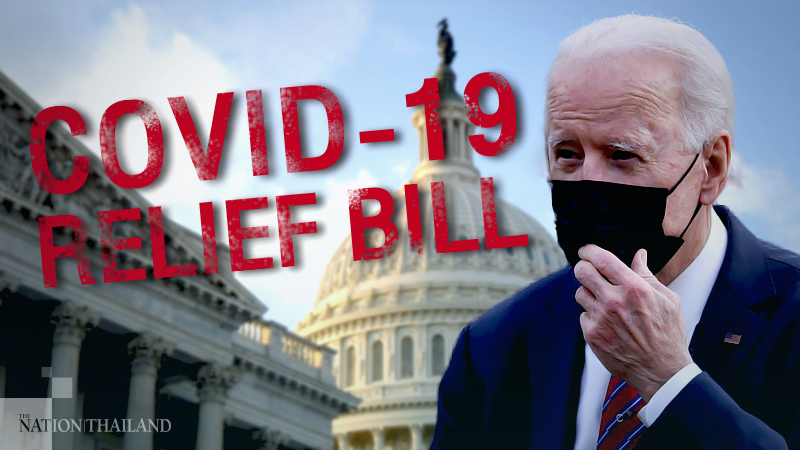
WASHINGTON – House Democrats voted Wednesday to set the stage for party-line approval of President Joe Biden’s $1.9 trillion coronavirus relief bill, heeding the president’s calls for swift action on his first big agenda item – but without the bipartisan unity he promised.
The 218 to 212 nearly party-line House vote Wednesday evening approved a budget bill that would unlock special rules in the Senate allowing Biden’s relief package to pass with a simple majority, instead of the 60 votes usually needed. The Senate is expected to take action on the same legislation later in the week
With the budget resolutions in place, Democrats would be able to get to work in earnest on writing Biden’s $1.9 trillion proposed relief bill into law – and ultimately pass it without any Republican votes if necessary, though they continued to insist that is not their preference.
Biden himself said Wednesday that “I think we’ll get some Republicans.” Biden made the remark as he met in the Oval Office with Senate Majority Leader Charles Schumer, D-N.Y., and the Senate committee chairs who will be responsible for writing the actual relief legislation.
Biden has courted Senate Republicans, and repeatedly expressed the desire to get their support. But he and his advisers have made increasingly clear that any such agreement must be on Biden’s terms, and that he will not compromise on the price tag or major components of his relief legislation, which comes at a moment of economic need for the nation and with Democrats in control of both chambers of Congress and the White House.
Earlier Wednesday Biden told House Democrats on a conference call: “We need to act … We need to act fast,” according to two people on the call who spoke on condition of anonymity to relay his comments.
“It’s about who the hell we are as a country,” Biden said on the call.
Biden’s approach is informed by his experience as vice president during the Obama administration, including helping to negotiate a $787 billion rescue package for the financial crisis that many economists later concluded should have been bigger. White House press secretary Jen Psaki has said repeatedly that Biden is more concerned about his relief bill being too small than being too big.
But most Republicans are opposed to spending nearly another $2 trillion after devoting some $4 trillion to fighting the pandemic through a series of five bipartisan bills last year, including a $900 billion measure passed in December.
The so-called “budget reconciliation” bills passing this week simply set spending levels for committees and instruct them to report back with legislation, so the real fights over the contents of the package are still to come. Those are likely to be fierce, even if it’s just Democrats fighting among themselves, because Democrats have a very narrow majority in the House and the Senate is split 50-50 between the parties, with Vice President Kamala Harris’s tiebreaking vote giving Democrats the majority.
If Republicans stay united against Biden’s proposal, as is looking likely, any individual Democratic senator will have outsized influence to make demands. Already, the Biden team has been working with aides to Sen. Joe Manchin, D-W.Va., the most conservative Senate Democrat, who has questioned whether the relief package could be more targeted.
Biden’s plan includes an array of proposals including $1,400 stimulus checks, an increase and extension of unemployment benefits that are set to expire in mid-March, an increase in the federal minimum wage to $15 an hour, some $350 billion for cities and states, around $130 billion for schools, and $160 billion for vaccines, testing and other help for the health care system.
In debate on the House floor, Republicans took turns criticizing Democrats and Biden for choosing to go down a partisan path after Biden campaigned on promises to make bipartisan deals and unify the nation. They criticized his relief package as a wish list of liberal packages disguised as a covid relief bill.
“Democrats in Washington are setting up a partisan process to have the vice president cast the decisive vote in the Senate on an array of radical policies,” said Rep. Jason Smith, R-Mo., top Republican on the House Budget Committee. “Their plans are to try to use this pandemic to seize more government control of your life.”
Democrats countered that Republicans have not offered solutions to meet the needs of the country at a time of continued high unemployment, with more funding for vaccines urgently needed as variants of the coronavirus emerge.
“We cannot afford to slow down our response to these urgent crises while Republicans decide if they want to help or not,” said House Budget Chairman John Yarmuth, D-Ky.
The intensifying debate over the stimulus comes amid weeks of elevated jobless claims and fears that the more transmissible form of the coronavirus could cause further economic pain. The monthly jobs report for January will be released on Friday, providing a snapshot of the American economy that could bolster or deflate Biden’s push for a large stimulus package.
Biden earlier this week met with a group of 10 Senate Republicans who offered a $620 billion counter-proposal to his $1.9 trillion plan. Democrats have panned the GOP plan as inadequate, and Jen Psaki started the White House briefing on Wednesday by emphasizing the differences between the Republican plan and Biden’s. She pointed out that Biden’s plan would offer significantly larger stimulus payments, and unemployment benefits that would last through the fall instead of expiring during the summer like under the GOP plan, among other differences.
Psaki also criticized a new study by The Wharton School of the University of Pennsylvania that found more than 70% of the stimulus payments would be saved rather than spent. Psaki called that analysis “way out of step with the majority of studies,” citing research from the Brookings Institution and JP Morgan.
Psaki said Biden’s stimulus had bipartisan support because it was backed by most Republican voters, despite appearing to be rejected by all congressional Republicans.
Pressed on whether the amount of state and local aid in the bill was up for negotiation, Psaki said the White House would welcome an offer from Senate Republicans, noting the plan from 10 GOP lawmakers included no additional state relief.
Psaki said the income threshold for the $1,400 stimulus payments remains “under discussion” and had not been finalized. “Further targeting means not the size of the check — it means the income level of people who receive the check.”
Despite the GOP criticism of the partisan “budget reconciliation” approach, it’s a tool both parties have used. Republicans used budget reconciliation to pass their big tax cut bill after President Trump took office. And Obama used it for key legislation to amend the Affordable Care Act, after months of fruitless negotiations with Republicans yielded no GOP support for the ACA – another lesson for Biden from the Obama years.
By The Washington Post · Tory Newmyer, David J. Lynch
Long before an army of small investors buying shares of GameStop shocked Wall Street, regulators saw the need for a clearer, real-time view of the trillions of dollars that sloshed through the markets each day.
In May 2010, a trader in London using an algorithm to manipulate a futures market helped trigger a chain reaction that wiped 9% off the Dow Jones industrial average in minutes. The market quickly recovered. But that “flash crash” underscored regulators’ urgent need for a tool that would allow them to pinpoint who was buying and selling what securities down to the millisecond, equipping them to monitor a business already transformed by the explosion of computerized trading.
More than a decade later, industry resistance and bureaucratic snags have conspired to leave that database – known as the Consolidated Audit Trail or CAT – years behind schedule and a shell of what regulators originally envisioned, advocates of stronger financial oversight say.
Now the system’s limitations will make it harder for Wall Street’s Washington minders to make quick sense of the turmoil still rocking the markets. Amid the GameStop furor, regulators face a growing list of questions over the potential use of social media to manipulate stock trading, the adequacy of online brokers’ capital reserves, and the need for hedge funds to disclose more about their holdings.
“Understanding the sequence of events will be very hard to do, and it would have been relatively easy if the CAT [consolidated audit trail] was up and running,” says Tyler Gellasch, founder of the nonprofit Healthy Markets Association and a former Securities and Exchange Commission counsel. He said it points to the agency’s disappointing track record. “The smart bet on the SEC historically has been: Name the issue, and the response will be muted.”
The SEC and the Financial Industry Regulatory Authority, Wall Street’s self-regulator that controls the database, declined to comment.
Regulators are not waiting for an authoritative timeline of the market frenzy apparently initiated by amateur traders organizing on the Reddit forum WallStreetBets. As soon as Thursday, Treasury Secretary Janet Yellen is convening leaders of the SEC, the Federal Reserve, the Federal Reserve Bank of New York and the Commodity Futures Trading Commission to review the matter.
Yellen requested a “discussion of recent volatility in financial markets and whether recent activities are consistent with investor protection and fair and efficient markets,” Treasury spokeswoman Alexandra LaManna said in a statement.
Regulators face questions about whether the apparently amateur trading crowd’s activities amounted to illegal market manipulation and whether sophisticated professionals used the cloak of online anonymity to stoke the frenzy. The SEC already is sifting through social media and message boards for evidence of such efforts, Bloomberg News reported Wednesday.
Beyond nabbing any wrongdoers, those who set and enforce market rules are considering a wide array of issues raised by the emergence of retail traders as a powerful force. Possible responses range from the practical – barring online brokers from selling their customers’ orders to giant Wall Street firms – to the philosophical. Some are calling for a wholesale rethinking of a system they say operates more like a casino than an efficient machine for redistributing capital.
“The best mathematicians in America are trying to beat the other best mathematicians to a stock trade by a millionth of a second,” said Rep. Brad Sherman, D-Calif., chair of the House Financial Services subcommittee on investor protection, entrepreneurship and capital markets. “I’d like to see our capital markets be a place for investing because you think a company is going to do well, and where companies can raise the capital they need to create jobs. Instead you have high-frequency trading, whose social utility is hard to identify, consuming enormous intellectual resources, and I don’t know with what purpose.”
The full House committee will consider the issue at a Feb. 18 hearing. The Senate Banking Committee has announced its own hearing, though no date has been set. And its as-yet unscheduled confirmation hearing for Gary Gensler, President Joe Biden’s pick to head the SEC, will focus at least in part on how he intends to address the matter.
Allison Herren Lee, the agency’s acting chair, said her first priority is to look into the decision-making by Robinhood and other online trading platforms, which caused an uproar last week when they limited trading in GameStop and other stocks that retail investors had sent soaring. In a Monday interview with NPR, Lee said the SEC wants to ensure that those decisions are “compliant with regulations, that they’re transparent to their customers and that they’re consistently and fairly applied.”
Hedge funds – a number of which suffered billions of dollars in losses from taking short positions against stocks that retail traders bought up – also face greater scrutiny. House Financial Services Committee Chair Maxine Waters, D-Calif., said in a statement their “unethical conduct directly led to the recent market volatility.” And Sherman and others have called for more disclosures from hedge funds, including their short positions, and potentially higher capital requirements.
The industry is primed to fight back. “Short sellers conduct in-depth research and analysis that can expose financial fraud and corruption,” said Bryan Corbett, who leads the Managed Funds Association, the industry’s lobbying group. “This is a highly regulated activity through both the SEC and [the Commodity Futures Trading Commission], and existing frameworks provide abundant protection for the markets and all investors.”
The GameStop mania is not the first time the SEC has probed the link between the Internet and securities fraud. But the market watchdog has lagged in policing the use of social media and other new technologies in the financial markets, a position that could hamper efforts to unravel the GameStop episode, according to Joshua Mitts, an associate professor at Columbia University’s law school.
“They’re really behind the curve,” he said. “The SEC isn’t really stepping in and saying ‘these are the rules of the road on social media.’ “
The commission in recent years has made greater use of advanced data analytics to detect cases of insider trading and accounting and disclosure violations. But the SEC’s enforcement division remains heavily populated by securities law experts and lacks the data-science specialists needed to fight market manipulation on social media, Mitts said.
“The average SEC enforcement person is a lawyer who probably hasn’t done much with data,” Mitts said. “They need data scientists.”
More than two decades ago, as the 1990s tech bubble was drawing to a close, the commission pursued several cases involving alleged securities fraud involving the use of digital tools.
Any GameStop investigation probably will share similarities with these earlier Internet-era cases, according to John Stark, the first head of the SEC’s Office of Internet Enforcement. Many involved scammers posting false or misleading information on websites to drive up the price of selected stocks.
In the GameStop case, which has seen an army of retail investors enthusiastically posting about the video game retailer’s shares, individuals who were paid to post about the stock and had not disclosed that fact could be vulnerable to manipulation charges, Stark said. But given the volume of postings on WallStreetBets, which has 8.4 million members, sifting the evidence will be a daunting task.
Along with countless Reddit postings, investigators also will confront a potential avalanche of tips submitted by members of the public through an online SEC form.
“I’m confident the SEC enforcement staff will get to the bottom of it if manipulation occurred. But it will be difficult to prove,” said Stark.
After the tech bubble burst in 2000, with the Nasdaq index losing more than half its value, SEC officials pursued a number of fraud cases involving the use of the Internet to goose stock prices.
In 2002, the SEC reached a settlement of civil charges with Cole Bartiromo, a high school student who had engaged in an Internet “pump-and-dump scheme.” Bartiromo, 17, manipulated the stock prices of 15 companies by buying large numbers of shares and then posting “false and misleading information” about them on Yahoo! Finance and Raging Bull message boards, the commission alleged.
Over less than two months, Bartiromo posted more than 6,000 messages claiming news of imminent merger deals or buyouts, which he falsely attributed to sources such as Bloomberg and JP Morgan. In the case of one over-the-counter stock that Bartiromo claimed was headed to $10 per share, he sold his entire stake for less 25 cents, the SEC told a federal district judge in Manhattan.
The settlement required Bartiromo to disgorge $93,731 in the illicit gains and interest.
Two years earlier, the commission settled civil fraud charges against an even younger Internet tout. Jonathan Lebed, 15, a high school sophomore, without admitting or denying the charges, agreed to pay the government $285,000 in ill-gotten gains and interest, the commission said.
On 11 occasions, Lebed purchased shares in thinly traded small companies, then used phony names to post “baseless price predictions and other false and/or misleading statements,” the SEC said.
Lebed posted claims that a $2 stock would soon trade for $20 or that a stock would be the next “to gain 1000 percent,” the commission said. He often set automatic sell orders with his broker to “ensure that he would not miss the price increase of the stock while he was in school the next day,” the commission said.
“I implore investors to be highly skeptical of any advice they receive from the Internet,” Ronald Long, administrator of the SEC’s regional office in Philadelphia, who led the probe, said at the time. “People should do thorough research before making investment decisions and verify all information before acting on it.”
In 1999, the SEC filed a civil complaint alleging that four Southern California men had joined in a scheme to manipulate the stock of a bankrupt commercial printer company by spreading phony takeover rumors on the Web.
Over a November weekend, working in a library at the University of California at Los Angeles, the three created numerous accounts on Internet message boards and posted messages falsely claiming that NEI Webworld would be acquired by LGC Wireless, a privately held telecommunications company.
The rumors, which were fabricated, drove NEIP’s share price from 13 cents on a Friday to more than $15 by Monday, according to the SEC complaint, giving the men a profit of about $364,000.
Two of the men, who had done the same thing with several other thinly traded stocks, pleaded guilty to one criminal charge of securities fraud and were sentenced to short prison terms. Courts eventually ordered the four men to pay roughly $1 million in disgorged profits and fines.
By Syndication Washington Post, Bloomberg · Rita Nazareth, Vildana Hajric
Stocks rose for a third straight day, with investors assessing corporate earnings. Treasurys retreated. Oil climbed.
The S&P 500 advanced at a slower pace relative to the surge of the past two sessions, with energy and financial shares outpacing tech even after Google’s parent Alphabet Inc. hit a record on stellar results. The Nasdaq 100 fell, led by Amazon.com Inc. Banks climbed as JPMorgan Chase & Co. and Morgan Stanley issued bullish calls on the industry. GameStop Corp., the poster child for Redditors looking to squeeze short sellers, and movie-theater chain AMC Entertainment Holdings Inc. rebounded following Tuesday’s plunge. Drugmaker Biogen Inc. slumped after disappointing forecasts.
Bonds fell as the U.S. Treasury held steady its planned issuance of longer-dated securities at a quarterly debt auction next week, with officials awaiting the result of the government’s push for a fresh coronavirus relief package. Data showed companies added more jobs than forecast in January, while growth at service providers accelerated. The scattered signs of a pickup in activity come as President Joe Biden tries to win congressional passage of a $1.9 trillion stimulus proposal. Federal Reserve Bank of St. Louis President James Bullard said stock prices reflect optimism about the economic recovery.
“There has been a ton of noise in the stock market these past few weeks, so it’s encouraging to see solid economic reads,” said Mike Loewengart, managing director of investment strategy at E*Trade Financial Corp. “There may be signs of overextension when it comes to single stocks, but under the surface there is an economy regaining serious momentum.”
Normalcy has yet to return to the Cboe Volatility Index even after its biggest two-day decline in about three years. Tuesday’s close was 31% higher than the average since VIX calculations began in 1990, according to data compiled by Bloomberg. There hasn’t been a below-average close in about a year. VIX futures are indicating that “volatility will remain elevated for many months,” Nicholas Colas, co-founder of DataTrek Research LLC, wrote Tuesday in a report.
Elsewhere, crude climbed as OPEC+ said it will keep pushing to quickly clear the oil surplus left behind by the pandemic — a bullish signal for prices that have already surged to a one-year high.
These are some of the main moves in markets:
Stocks
– The S&P 500 advanced 0.1% at 4 p.m. EST.
– The Stoxx Europe 600 Index climbed 0.3%.
– The MSCI Asia Pacific Index increased 1.1%.
Currencies
– The Bloomberg Dollar Spot Index was little changed.
– The euro dipped 0.1% to $1.2035.
– The Japanese yen was little changed at 105.02 per dollar.
Bonds
– The yield on 10-year Treasurys rose three basis points to 1.13%.
– Germany’s 10-year yield climbed three basis points to -0.46%.
– Britain’s 10-year yield jumped two basis points to 0.371%.
Commodities
– West Texas Intermediate crude increased 2% to $55.85 a barrel.
By Syndication Washington Post, Bloomberg · Alexander Weber
The European Union is facing a cost of tens of billions of euros for the slow and chaotic rollout of coronavirus vaccinations compared to countries such as the United Kingdom and the United States.
Lockdowns mean the bloc’s economy is operating at about 95% of its prepandemic level, equating to about 12 billion euros ($14 billion) a week of lost output, according to calculations by Bloomberg Economics. It’s also weeks behind its peers in vaccinations, and progressing at a slower pace.
Unless it can make up ground, the European Union will be forced to keep lockdowns or similar restrictions in place even as other major economies get fully back to work. A delay of 1-2 months would amount to a 50 billion-100 billion euro blow.
The numbers highlight the massive stakes for the European Commission, which became embroiled in a public standoff with drugmaker AstraZeneca over supply curbs before imposing export restrictions for coronavirus vaccines. That turned into a U-turn for President Ursula von der Leyen over shipments to Northern Ireland.
“Every week that the lockdown has to be extended because the population isn’t vaccinated and vulnerable means substantial economic costs,” said Guntram Wolff, director of the Bruegel think tank in Brussels. “Those costs are a lot higher than the costs of the vaccinations themselves.”
The European Union has administered 3 doses per 100 people, far behind the 15 in the United Kingdom and 10 in the United States, according to the Bloomberg Vaccine Tracker. In the meantime, more-contagious strains of the coronavirus are spreading, forcing governments to extend lockdowns.
“The U.K.’s early progress means we expect a vigorous economic recovery to take root sooner than in mainland Europe,” said Jamie Rush, chief European economist at Bloomberg Economics. “The higher transmissibility of new covid-19 strains is prompting tougher containment measures in much of Europe, raising the cost of vaccine delays.”
The European Union predicts a surge in vaccine supply in the second quarter, and it plans to have 70% of the adult population vaccinated by the summer. That’s a level that should allow governments to lift many of the current restrictions that have shut down shops, restaurants and travel.
Yet Allianz estimates that countries are five weeks behind with respect to meeting that target, and that vaccinations need to happen at six times the current pace to catch up. It puts the cost at 90 billion euros.
“In vaccine economics there is only black or white: Economies that finish the race first will be rewarded with strong positive multiplier effects supercharging consumption and investment activity in the second half of 2021,” economists led by Ludovic Subran said in a report. “Vaccination laggards will remain stuck in crisis mode and face substantial costs – economic as well as political.”
Southern countries including Spain and Italy – already the most harmed by the pandemic – will suffer most from a delay if it hits international tourism. Even a partial opening around the Easter holidays at the beginning of April would bring much-needed revenue, according to Reinhard Cluse, an economist at UBS Group.
“With the slow progress on vaccinations, it’s not clear we’ll have a good Easter season,” he said, adding that the summer is also under threat, as many travelers books their holidays in the spring and may opt to stay closer to home for another year.
Each extra week the economy is subject to restrictions also increases the risk that companies that ate into their financial buffers for the last year will be pushed over the edge and file for insolvency. That would raise unemployment and undermine the prospect of rapid rebound.
The European Union could still catch up with its peers, or all nations could plunge into another crisis, for example if further coronavirus mutations emerge that are resistant to the current vaccines.
On current form, though, the likelihood is that continental Europe is headed for a painful reckoning.
“To the extent that we don’t get the necessary run rates in the coming weeks and months, our concerns will rise on a daily basis,” said Cluse.
By Syndication Washington Post, Bloomberg · Verity Ratcliffe
The U.S. has gone to court to seize 2 million barrels of oil that it claims came from Iran, as Joe Biden’s administration shows little sign of taking a softer line on Tehran.
The Department of Justice filed a case in a U.S. district court, seeking to seize the cargo on the Greek-owned Achilleas tanker, according to a statement on Tuesday. The U.S. alleges that Iran’s Islamic Revolutionary Guard Corps and the IRGC-Qods Force covertly shipped the oil abroad.
They “attempted to disguise the origin of the oil using ship-to-ship transfers, falsified documents, and other means, and provided a fraudulent bill of lading to deceive the owners of the Achilleas,” the department said.
While President Joe Biden has signaled he wants to reengage with Iran, his Secretary of State Antony Blinken said last week the Islamic Republic must first rein in its nuclear activities. Biden’s predecessor, Donald Trump, tightened sanctions on Iran in an effort to halt its oil sales, reduce its nuclear program and stop it interfering in other Middle Eastern countries.
The IRGC and the IRGC-QF, both designated as terrorist organizations by the U.S., use oil money to buy weapons of mass destruction and carry out human rights abuses, according to the DOJ.
The Achilleas’ owner, Capital Ship Management Corp., alerted U.S. authorities to the possibility that it had unknowingly taken on Iranian crude, after initially thinking it came from Iraq, Bloomberg reported last month.
Washington ordered the Liberia-flagged ship to sail to the U.S. before Biden came to power on Jan. 20, according to people familiar with the matter.
The vessel is known as a Very Large Crude Carrier and is fully loaded, according to shipping documents. It’s heading to the U.S. and is currently sailing close to the South American coast, according to tracking data compiled by Bloomberg.
Iranian oil production has almost halved since mid-2018, when Trump pulled out of a nuclear accord with Iran and tightened sanctions. Tehran has increased energy exports in recent months, according to several firms that monitor its output, in what may be an attempt to test Biden’s resolve.
The bulk of the oil that is shipped out of Iran ends up in China. Most traders are avoiding buying Iranian petroleum as long as the sanctions are in place.
Iran seized a South Korean tanker last month in the Strait of Hormuz amid a spat over $7 billion of oil sales it says is trapped in the Asian country due to the sanctions. Crew members were released this week, but the ship hasn’t been.
Tehran is pushing Seoul to release the money. South Korean officials are finalizing talks with the U.S. about unfreezing some of it, Yonhap news agency reported on Wednesday.
The U.S. will need to prove its allegations about the Achilleas’s oil in court proceedings, said Tuesday’s statement. If it wins the case, it may send proceeds from the oil to a government fund for victims of terrorism.
“The U.S. Attorney’s Office for the District of Columbia will continue working with our law enforcement partners to stem the flow of illicit oil from Iran’s Islamic Revolutionary Guard Corps and Qods Force,” Acting U.S. Attorney Michael R. Sherwin said in the statement.



 Photo credit: @HninWai11414823
 A man wearing a protective mask, left, stands in front of Olympic rings installed in Tokyo on March 11, 2020. MUST CREDIT: Bloomberg photo by Kiyoshi Ota.
 Robert Smith, chairman and chief executive officer of Vista Equity Partners LLC, speaks during the Milken Institute Global Conference in Beverly Hills, Calif., on May 1, 2019. MUST CREDIT: Bloomberg photo by Patrick T. Fallon.