By Syndication Washington Post, Bloomberg · Fiona MacDonald
Kuwait’s government has transferred the last of its performing assets to the country’s sovereign wealth fund in exchange for cash to plug its budget deficit after a political dispute over borrowing left one of the world’s richest nations short of cash and prompted Fitch to cut its outlook to negative.
Fitch affirmed Kuwait’s AA rating but said “the imminent depletion of liquid assets” and “absence of parliamentary authorization for the government to borrow” was creating uncertainty. Its report follows S&P Global Ratings’ recent warning that it would consider downgrading Kuwait in the next six to 12 months if politicians do not overcome the impasse.
Though it’s a high-income country, years of lower oil prices have forced Kuwait to burn through its reserves. Desperate to generate liquidity, the government last year began swapping its best assets for cash with the $600 billion Future Generations Fund, which is meant to safeguard the Gulf Arab nation’s wealth for a time after oil. With those now gone, it’s not clear how the government will cover its eighth consecutive budget deficit, projected at 12 billion dinars for the fiscal year beginning April.
The assets include stakes in Kuwait Finance House and telecoms company Zain, a person familiar with the matter said, asking not to be named because the information is private. State-owned Kuwait Petroleum, which has a nominal value of 2.5 billion dinars ($8.3 billion), was also transferred from the government’s treasury in January, the person said.
The Finance Ministry declined to give details about the swaps. Responding to Fitch, however, Finance Minister Khalifa Hamada said Kuwait’s financial position remained “robust” because of the cushion provided by the FGF. The government’s priority would be to replenish the treasury, he said without specifying how.
“It’s a very immediate crisis now, not a long-term one like it was before,” said Nawaf Alabduljader, a business management professor at Kuwait University. “The Future Generations Fund is our life jacket, but we don’t have a boat to take us to shore, we have no vision. We need to restructure our economy and move away from the welfare state.”
Like its neighbors, Kuwait is contending with the twin pressures of the coronavirus pandemic and lower oil prices. Unlike Saudi Arabia and others, however, Kuwaiti lawmakers have blocked proposals to borrow on international markets to cover the fiscal shortfall. Kuwait has not returned to the market since its debut Eurobond issuance in 2017.
Although nearly three-quarters of the budget is dedicated to public-sector salaries and subsidies, parliamentarians have opposed any hint of spending cuts, saying the government must reduce waste and corruption before passing the burden on to the public or resorting to debt.
The FGF, meanwhile, cannot be touched without legislation, and the idea of dipping into the national savings pot is deeply unpopular. Parliament already passed a law last year exempting the government from transferring the usual 10% of revenue into the FGF during years of deficit.
The swaps have bought the government a few months to push through its borrowing law. If that fails, it could still take a loan from the FGF or a debt plan could be issued by decree, though both scenarios are unlikely.
“They’re just buying time,” said Jassim Al-Saadoun, head of Al-Shall Economic Consultants.
With 80% of government income based on oil, Kuwait needs crude to be $90 to balance the new budget. But benchmark Brent was trading at about $58 a barrel Wednesday while spending is projected to rise 7%.
Parliament’s finance committee began reviewing the borrowing bill again Tuesday, raising expectations of a thaw, but the brinkmanship has prompted warnings that repeated delays could carry long-term costs.
Kuwait would be looking at “the imposition of high taxes,” said Talal Fahad Alghanim, former CEO of Boursa Kuwait. “Or, if the government fails to convince parliament, the central bank will have to resort to devaluing the dinar.”
By The Washington Post · Karla Adam, William Booth, Carolyn Y. Johnson
LONDON – The developers of the Oxford-AstraZeneca coronavirus vaccine report that it may help keep people from spreading the virus, offering a hopeful but uncertain answer to one of the great remaining questions of the pandemic.
Vaccines have produced evidence that they are effective at reducing the number of people who experience symptoms or suffer severe illness or die, but much less is known about whether any of the available vaccines can prevent asymptomatic infections that can pass from one person to another – thereby reducing the need for social distancing and allowing a return to more normal life.
In a preprint of an article under review at the Lancet medical journal, the Oxford University vaccine developers report that based on follow-up studies of their clinical trials, which found the vaccine safe and effective, there is also “the potential for the vaccine to reduce transmission of the virus.”
The study found that after people received two doses of the vaccine, they were 54% less likely to have an infection confirmed by a nasal swab, regardless of whether they had symptoms.
In addition, the researchers said a single dose of the vaccine was 76% effective against symptomatic virus infection, for up to three months.
Independent scientists who were not involved in the Oxford study called the data intriguing but incomplete. They warned that results were preliminary, that the sample size was too small to make bold claims, and that there could be alternative explanations for the findings, such as that the group receiving a single dose included more women, younger people and health workers.
But British officials on Wednesday hailed the report on the homegrown vaccine. They promoted the findings as a vindication for their controversial decision to delay second doses – from four weeks to 12 weeks – while trying to get first shots to as many people as possible.
British Health Secretary Matt Hancock said the research results were “absolutely superb.”
“It categorically supports the strategy we’ve been taking on having a 12-week gap between the doses,” Hancock told Sky News.
Pfizer-BioNTech scientists have warned that they do not have evidence to support the British dosing strategy for their vaccine, also in wide use in Britain.
Paul Hunter, a professor of medicine at the University of East Anglia, said the report by the Oxford researchers seemed to support the idea that efficacy of the vaccine was improved by having a long stretch between first and second doses.
“Taking all this evidence together, the 12-week gap between first and second dose is clearly the better strategy, as more people can be protected more quickly and the ultimate protective effect is greater,” Hunter said.
Hunter noted, however, that the Oxford vaccine seemed “quite poor at preventing asymptomatic infection.”
Andrew Pollard, the chief investigator of the Oxford vaccine trial, said the results support the British government’s decision to give one dose followed by a second booster shot 12 weeks later. Pollard called it “an optimal approach” that “reassures us that people are protected from 22 days after a single dose of the vaccine.”
Pollard also told the BBC on Wednesday: “We found that there was a big reduction in people being infected with coronavirus and, because they were not infected, they can’t go on and transmit to other people. That is really important in potentially curbing the pandemic.”
Natalie Dean, a biostatistics expert at the University of Florida, said: “If you think about the way that vaccines work, they can work in two major ways: one is by preventing infection entirely and the other by taking someone who is infected and preventing them from getting symptoms.”
The data suggest that “there were some infections that were prevented, but there were some that were bumped down in severity,” Dean said.
Oxford is eager to further establish the credibility of its vaccine after inconsistent dosing in its clinical trials muddied assessments of its effectiveness and a lack of data on the efficacy in people 65 and older has given some public health officials pause.
The European Union’s regulator of medicines has authorized the vaccine for use in all adults, but officials in France, Germany, Italy, Poland, Sweden and Belgium have cautioned against using it in older populations. Switzerland on Wednesday rejected the vaccine, saying it wanted to see more data. The United States, too, is waiting for more clinical trial data before an authorization decision.
French President Emmanuel Macron last week criticized the Oxford vaccine for use among those older than 65. Macron told the news media that the British vaccine “doesn’t work the way we were expecting to.”
European Commission President Ursula von der Leyen, defending the European Union’s regulatory approach, implied that Britain may have cut corners in its coronavirus vaccine rollout.
She told Le Monde that the bloc “agreed not to compromise with the safety and efficacy requirements linked to the authorization of a vaccine.”
Britain, von der Leyen said, was able to start its mass inoculation program earlier because it had taken “emergency, 24-hour marketing authorization procedures.”
A spokesman for the British prime minister’s office responded that all of the vaccines approved for use in the United Kingdom – Oxford-AstraZeneca, Pfizer-BioNTech and Moderna – are “safe and effective.”
Britain has one of the highest per capita coronavirus death tolls in the world. More than 108,000 people have died after being diagnosed with virus, with a more contagious variant propelling the latest wave.
The vaccine manufacturers have said their formulas are effective against the variant.
By The Washington Post · Shibani Mahtani, Andrew Nachemson
HONG KONG – Lynn Nu, an assistant surgeon at a government hospital in northern Myanmar, did not show up to work on Wednesday. Neither did 36 other assistant surgeons, almost the entire medical staff at the 500-bed facility, leaving one nurse to tend to patients.
The “military says they rule Myanmar, and are in charge of the government now,” he said. “But we are refusing to work under them and their dictatorship.”
Across Myanmar, a campaign of civil disobedience is swelling in response to this week’s military coup, which ousted the civilian government led by Aung San Suu Kyi and her National League for Democracy (NLD). Unlike past resistance movements, notably the 1988 pro-democracy uprising that made Suu Kyi a national icon, Myanmar’s new dissenters are keeping their activism off the streets – finding safer, digitally driven ways to reject military rule.
“We want to make our feelings heard, but at the same time to do what we could without being rash and demonstrating on the streets,” Lynn Nu, 32, added. “We thought this movement was the safest bet.”
The campaigns have targeted institutions directly run by the military and government-run hospitals. Staffers at 70 hospitals and medical departments across 30 towns and cities in Myanmar are refusing to go into work at government-run hospitals, treating patients in private facilities instead. Others quit their jobs at Mytel, a telecommunications company run by the military. And some are calling for a boycott of goods made by military-linked companies, which include Myanmar Beer and Red Ruby cigarettes, ubiquitous in the country’s tea shops.
Earlier this week, Myanmar’s military, led by commander in chief Min Aung Hlaing, detained Suu Kyi and her ministers and declared they had taken over the government. NLD lawmakers were barricaded inside their guesthouses in the capital, Naypyidaw.
On Wednesday, Suu Kyi was charged with possessing electronic equipment allegedly imported illegally, while ousted civilian president Win Myint was charged with breaching coronavirus rules that ban gatherings – allowing the military to keep the pair detained for another two weeks.
The spark for the coup was the military and its proxy party’s refusal to accept the results of November elections that Suu Kyi’s party won in a landslide. But tensions between Suu Kyi’s civilian government and the generals had been building over five years of a fragile power-sharing agreement.
Since the coup on Monday, some level of normalcy has returned to Myanmar. Communications are functioning. Chief ministers and NLD lawmakers have returned to their homes.
But public anger appears to be growing.
It started with the faint, tinny sound of tapping around 8 p.m. Tuesday, as residents in Yangon, the largest city, began to bang on pots and pans from their balconies to register their disgust with the military’s actions.
Whole streets and neighborhoods joined in, following a local tradition to ward off evil spirits with drums, eventually reaching a crescendo as people made noise any way they could. Some whooped and cheered, banging on tables and the roofs of their cars, while taxi drivers sounded their horns.
The campaign is gaining momentum; more honking and banging again erupted on Wednesday night, this time even louder and more sustained than before, with more people out on the streets. Some also sung a revolutionary anthem from 1988 after lyrics circulated earlier in the day.
Doctors, celebrities and NLD politicians are also raising the three-finger salute of defiance popularized by the Hunger Games trilogy, also a symbol of resistance in neighboring Thailand against the monarchy and the army-backed government
Kyaw Thu Win, of the punk band Rebel Riot, said the group is recording a new song called “One Day” in solidarity with the growing resistance. Similarly, their fight for injustice will be kept off the streets for now, in fear of what might come next.
“Right now we are showing solidarity online, from home,” he said. “No one is going out yet, so we are showing we do not agree with the new law and new system.”
Despite their caution, pushback from the authorities has already begun. A 35-year old resident of South Okkalapa, a neighborhood in east Yangon, said soldiers and community leaders visited their houses Tuesday night, complaining about the pot-and-pan protest.
“They said, ‘this is none of your business, do you all want to be captured?’ ” said the resident, who declined to give her name for safety reasons. Soldiers, she added, warned them that they would patrol the streets and arrest anyone who participated.
The military ruled Myanmar for half a century until a quasi-democratic transition began in 2010. Its brutal reign was defined by its brutality: arbitrary arrests, torture and ill-treatment. There was no free speech or free assembly, and residents who lived through those times describe a police state, where neighbors would snitch on each other and where fear was prevalent.
Even under the NLD-led civilian government, which took power in 2015, the military remained powerful. The army has continued to wage wars against ethnic militias and minorities – most notably, the Rohingya, more of a million of whom were driven from their homes in a scorched-earth campaign in 2017.
The military’s record is on the minds of resistance campaigners and organizers, worried that a wrong move could herald a wider crackdown.
“We don’t want to give them any excuse to crack down on us more, and say there is instability,” said Lynn Nu, the assistant surgeon. “We have fear, because they have guns, and we have no guns. But we will do our best.”
Democrats describe Trump’s actions as ‘betrayal of historic proportions’
InternationalFeb 03. 2021House Speaker Nancy Pelosi, D-Calif., after the House voted to impeach President Donald Trump on Jan. 13. MUST CREDIT: Washington Post photo by Bill O’Leary.
By The Washington Post · Amy Gardner, , Karoun Demirjian, Colby ItkowitzWASHINGTON – House Democrats made their case to convict former president Donald Trump of inciting the Jan. 6 riot at the U.S. Capitol in a sweeping impeachment brief filed with the Senate on Tuesday, accusing Trump of jeopardizing the foundations of American democracy by whipping his supporters into a “frenzy” for the sole purpose of retaining his hold on the presidency.
In the brief, the House’s nine impeachment managers made a case that Trump was “singularly responsible” for the mayhem, accusing him of “a betrayal of historic proportions.” They argued that he is guilty of high crimes and misdemeanors, the threshold for conviction laid out in the Constitution, primarily because he used the powers of his office to advance his personal political interests at the expense of the nation.
To bolster their case, the managers turned to the words and actions of the country’s founders, citing passages from the Federalist Papers and contrasting Trump’s efforts to stay in office despite his electoral loss with George Washington’s insistence upon relinquishing the presidency after two terms in the interest of preserving democracy.
“The Framers of the Constitution feared a President who would corrupt his office by sparing ‘no efforts or means whatever to get himself re-elected,’ ” the House Democrats wrote, adding: “They were well aware of the danger posed by opportunists who incited mobs to violence for political gain. They drafted the Constitution to avoid such thuggery, which they associated with ‘the threat of civil disorder and the early assumption of power by a dictator.’ “
“If provoking an insurrectionary riot against a Joint Session of Congress after losing an election is not an impeachable offense,” they wrote, “it is hard to imagine what would be.”
Hours later, Trump’s new defense attorneys filed a 14-page response to the House article of impeachment, denying that Trump incited the crowd at his Jan. 6 rally to storm the Capitol and “engage in destructive behavior.”
While the former president’s attorneys stopped short of embracing his baseless claims that the election was rigged, they defended his right to argue that massive fraud led to his defeat, a false claim echoed by his supporters as they ransacked the Capitol that day.
Democrats drew a direct line between Trump’s rhetoric and the violence. But Trump’s defense team argued that free-speech protections allowed him to make such allegations without penalty.
“The 45th President exercised his First Amendment right under the Constitution to express his belief that the election results were suspect,” the brief states.
“Insufficient evidence exists upon which a reasonable jurist could conclude that the 45th President’s statements were accurate or not, and he therefore denies they were false,” his attorneys added.
The twin filings offer a preview of how the two sides will present their cases when the Senate trial begins Feb. 9. A majority of GOP senators have signaled their plans to acquit Trump. But House Democrats made clear that they intend to force Republicans to contemplate the terror of the Jan. 6 attack, which led to the deaths of one Capitol Police officer and four rioters. In addition, two officers, one with District of Columbia police, have since died by suicide.
The impeachment managers argued that Trump laid the groundwork for the insurrection in the preceding weeks with his relentless attacks on the integrity of the election and attempts to subvert the results through pressure on state officials.
Trump’s defense team rejected that claim, addressing an episode cited in the House impeachment article in which he called Georgia Secretary of State Brad Raffensperger, a Republican, early this year to discuss that state’s election results.
They argued that Trump’s exhortation during the Jan. 2 phone call that Raffensperger “find” the votes to overturn Joe Biden’s victory was simply an expression of the president’s belief that a careful examination of the evidence would produce a more accurate vote count that favored Trump.
David Schoen, one of Trump’s new attorneys, told The Washington Post in interviews this week that he did not plan to put forward a defense based on allegations of election fraud, a strategy Trump was said to be pushing his previous legal team to embrace.
On Tuesday, Democrats seized on the defense filing’s references to Trump’s fraud claims, with Senate Majority Leader Chuck Schumer, D-N.Y., saying that by citing baseless allegations Trump’s attorneys proved that “they have no argument against the charges.”
Senate Minority Leader Mitch McConnell, R-Ky., meanwhile, said he plans to listen to the arguments next week. Although McConnell voted last week with most Republicans on an unsuccessful motion to declare an impeachment of a former president unconstitutional, on Tuesday he said, “I think that is an interesting constitutional question.”
In their brief, the Democratic managers cited Trump’s behavior during the insurrection, when he initially did nothing to quell the rioters. They cited Sen. Ben Sasse, R-Neb., who said senior White House aides told him Trump was “delighted” at the mayhem he was watching on television.
There is no evidence, the brief added, that Trump called Vice President Mike Pence or any legislative leaders “to check on their safety during the attack.”
In fact, lawmakers and other allies called, texted or tweeted at Trump to implore him to step in and help restore order, the Democrats noted – evidence that they believed Trump was responsible for the violence and had the power to stop it.
In their response, Trump’s attorneys insisted that he never attempted to interfere with the counting of the electoral college votes in a joint session of Congress that day.
When Trump encouraged the rallygoers to go to the Capitol and “fight like hell,” the attorneys wrote, it had nothing to do with “the action at the Capitol” but “was clearly about the need to fight for election security in general.”
As Trump concluded his speech that day, he told the crowd, “We’re going to the Capitol,” adding: “We’re going to try and give them the kind of pride and boldness that they need to take back our country.”
Democrats noted in their brief that one call Trump did make to the Capitol during the unrest was intended for a close ally, Sen. Tommy Tuberville, R-Ala. – not to check on his well-being but to “try to persuade him to delay and further obstruct” the count.
Trump’s attorneys did not dwell on the mayhem itself, whereas the Democratic managers used dramatic imagery captured by cellphone footage and media reports of “terrified” lawmakers trapped inside the building who “prayed and tried to build makeshift defenses while rioters smashed the entryway.’ “
In their brief, managers compiled what had unfolded inside the Capitol that day: members donning gas masks and calling loved ones for fear that they would not survive the assault; Capitol Police officers dragging furniture to barricade the House chamber; the staff of House Speaker Nancy Pelosi, D-Calif., hiding under a table with the lights out for hours as they listened to the rioters just outside the door.
“One Member asked his chief of staff to protect his visiting daughter and son-in-law ‘with her life’ – which she did by standing guard at the door clutching a fire iron while his family hid under a table,” the brief stated, in a reference to Rep. Jamie Raskin, D-Md., the lead impeachment manager.
House managers are hoping to call witnesses in next week’s trial, including possibly police officers who fought to fend off the attackers. The prospect of injured police officers describing the brutality of pro-Trump rioters to Republicans who regularly present themselves as advocates of law enforcement could make for an extraordinary nationally televised scene. The mob injured more than 140 police officers, many seriously.
However, Senate Democrats and Republicans alike are reluctant to allow witnesses because it would extend the trial’s length, possibly by weeks. Democrats have said they are eager to focus their attention on President Biden’s agenda, while Republicans are ready to change the subject from Trump’s role in the Jan. 6 riot, which has divided the GOP ranks.
Tuesday’s brief methodically laid out the Democrats’ legal argument for conviction. In addition to asserting that Trump is guilty of high crimes and misdemeanors, the impeachment managers argued that Trump is not protected by the First Amendment’s freedom-of-speech provision, which was never intended, they wrote, to allow a president to “provoke lawless action if he loses at the polls.”
Democrats also rejected the claim embraced by many Republicans that it is unconstitutional to convict a president after he has left office – an argument that Trump’s attorneys made reference to multiple times in their brief.
“There is no ‘January Exception’ to impeachment or any other provision of the Constitution,” the House Democrats wrote. “A president must answer comprehensively for his conduct in office from his first day in office through his last.”
To bolster their case, the managers cited examples in which the Senate had tried officials who had already left office – albeit none of them presidents – and a lineup of conservative officials and scholars to make the point that departing or resigning is not a way of escaping culpability.
Plus, they argued, “because President Trump was in office at the time he was impeached,” the Senate has no choice but to proceed.
The managers pointed to Article I, Section 3, Clause 6 of the Constitution, which reads that “the Senate shall have the sole Power to try all Impeachments.”
They quoted Michael McConnell, a former appeals court judge appointed by President George W. Bush: “The key word is ‘all.’ . . . It does not say ‘the Senate has power to try impeachment against sitting officers.’ “
The argument probably will be a pivotal one after 45 of the 50 Republican senators voted last week to support a resolution from Sen. Rand Paul, R-Ky., that sought to declare that the impeachment trial is unconstitutional because Trump is no longer in office.
Trump’s attorneys and his supporters in the Senate are expected to further drill at the argument that the trial is invalid. Such an argument is expected to be embraced by many GOP senators who are loath to weigh in on the question of whether Trump incited the riot.
The managers’ brief warns that the consequences of taking such a procedural exception to the case before them would be dire.
“If the Senate does not try President Trump (and convict him) it risks declaring to all future Presidents that there will be no consequences, no accountability, indeed no Congressional response at all if they violate their Oath to ‘preserve, protect and defend the Constitution’ in their final weeks,” the managers wrote.
House Democrats said Trump’s embrace of baseless accusations that the 2020 election was stolen from him helped foment his supporters’ attack on the Capitol. When those false assertions failed to overturn the election, the Democrats wrote, Trump “summoned a mob to Washington, exhorted them into a frenzy, and aimed them like a loaded cannon down Pennsylvania Avenue.”
They added, “The Framers themselves would not have hesitated to convict on these facts.”
The House impeachment managers urged senators to bar Trump from serving again in elected office: “This is not a case where elections alone are a sufficient safeguard against future abuse; it is the electoral process itself that President Trump attacked and that must be protected from him and anyone else who would seek to mimic his behavior. Indeed, it is difficult to imagine a case that more clearly evokes the reasons why the Framers wrote a disqualification power into the Constitution.”
New York snow enters record books as city starts digging out
InternationalFeb 03. 2021A food delivery worker rides a bicycle during a snowstorm in New York on Feb. 1, 2021. MUST CREDIT: Bloomberg photo by Jeenah Moon
By Syndication Washington Post, Bloomberg · Brian K. Sullivan
The nor’easter that paralyzed New York and blanketed the East and Midwest with heavy snow will edge its way along the coast as a blast of Arctic air sweeps behind it, sending temperatures tumbling across the central U.S.
New York’s Central Park received 19.3 inches (49 centimeters) since Sunday, which makes the storm the city’s ninth heaviest since 1869, said Rob Carolan, owner of Hometown Forecast Services Inc. The bulk of the snow fell Monday, setting a record for the date, according to the National Weather Service.
“The setup was perfect for the tri-state area to get buried,” said Carolan, who provides forecasts for Bloomberg Radio. “The radar looked like a fire hose coming off the Atlantic.”
The storm closed covid vaccination sites across the region and tied up road and rail traffic, with trains and subways being suspended in New York on Monday. While school buildings were closed, many students were still required to log on for remote learning.
Gov. Andrew Cuomo, D, declared a state of emergency in 44 counties, and New York Mayor Bill de Blasio, D, enacted a travel ban in the city. More than 3,100 flights in the U.S. have been canceled since Sunday, according to Flight Aware, an airline tracking service.
There will be some light snowfall Tuesday, “but it will be more of a digging out and cleaning up,” Cuomo said on 1010 WINS radio.
With the worst of the storm over in the Mid-Atlantic, Metro North trains resumed regular service, while the Long Island Rail Road is operating on a weekend schedule. Amtrak is operating on a modified schedule. New York schools are still closed through Tuesday, with students learning from home. New York subways began operating above ground at 5 a.m.
New York has ordered all vaccine sites to honor appointments. “It will be honored, and that is a state order,” Cuomo said Tuesday.
The storm will linger off the East Coast with snow showers continuing across large cities along the Interstate 95 corridor, but the heaviest amounts will fall in interior New York and New England, said Lara Pagano, a meteorologist with the U.S. Weather Prediction Center. The highest total from the storm so far was Nazareth, Penn., about 80 miles (129 kilometers) west of New York, which received 31 inches.
Along the Massachusetts coast, Boston’s Logan International Airport got 1.2 inches, while suburbs just to the north and west got between 17 to 20 inches, Carolan said.
As the snow heads off to Canada, frigid, Arctic air is set to rip into the Great Plains and Midwest, sending temperatures 10 to 20 degrees Fahrenheit (6 to 11 Celsius), or more, below normal later this week, Pagano said. Lows will reach 3 degrees Fahrenheit in Milwaukee Friday and 6 in Chicago. Minneapolis will be minus 2.By early next week, some of that cold will arrive in the East, she said.
Throughout the season, winter has been relatively mild across the U.S. with few major snowstorms and above-normal temperatures. Meteorologists have been predicting a blast of cold after a sudden stratospheric warming event occurred over the Arctic earlier this year, which usually precedes a breakdown of the polar vortex and allows frigid air to spill southward into Asia, Europe and North America.
The cold could mean temperatures dropping 5 to 8 degrees below normal across the eastern half of the U.S. from Feb. 7 to 16, according to Matt Rogers, president of the Commodity Weather Group LLC. That will drive up energy demand, and possibly shore up natural gas prices. “A significant pattern change favoring a two-week period of very cold air appears,” said Jim Rouiller, lead meteorologist with the Energy Weather Group. “The full wrath of winter arrives in the East in a week.”
But the cold will likely prove short-lived, with temperatures becoming milder again in March, he added.
By The Washington Post · Hamza Shaban, Hannah Denham
GameStop losses piled up, with shares tumbling 60%, Tuesday while the broader market got a bounce from promising corporate earnings and ongoing coronavirus stimulus talks.
The video game retailer’s improbable rise – shares jumped 400% last week – was sparked by individual traders and goaded on by a Reddit forum and other online trading communities who wanted to defy the hedge funds that had bet that the stock would lose value. The pushback shook the institutional powers of Wall Street, provoking fresh scrutiny of the financial services industry and a new ecosystem of social-media-powered retail stock trading.
The party is winding down: GameStop closed Tuesday at $90.21, meaning it’s lost 70% of its value this week.
U.S. stocks climbed in anticipation of robust earnings reports from Amazon and Alphabet and continued to claw back from a chaotic January. The Dow Jones industrial average closed up Tuesday nearly 476 points, or nearly 1.6%, at 30,687.81. The S&P 500 climbed more than 52 points, or nearly 1.4%, to 3,826.31, while the tech-heavy Nasdaq added 209 points, or nearly 1.6%, to settle at 13,612.78.
The broader market seems to have moved past the collective “shaking in the boots” about the systemic risks fueling the frenzied trading of GameStop and other shorted stocks, said Michael Mussio, president of FBB Capital Partners. He noted investors’ hopeful attitudes about vaccine distribution and corporate earnings from Amazon, Google and Chipotle, companies he called “growth drivers of the economy.”
Other assets and securities that had attracted intense investor interest in recent days, including AMC Entertainment, and BlackBerry, also lost ground Tuesday, sliding 41%, 21% and nearly 9%, respectively. Some posters on the Reddit message board WallStreetBets blamed those declines on the brokerage firms that have placed restrictions on buying shares of certain shorted companies.
Silver also retreated, falling more than 9.6%, a day after retail investors powered up the price of the precious metal more than 7%. Some investors appeared to adapt their GameStop playbook to the commodity, while others within the WallStreetBets community warned against the investment as a distraction that would benefit hedge fund managers.
Mussio expressed doubts last week that the rally propelling GameStop and AMC would be long; now he says it will run its course soon.
“There’s certainly a sentiment of buying GameStop is my way of sticking it to the man and that’s fine, but that’s maybe not the best investment strategy,” he said. “The sheer volume, the price action, would lead us to believe it’s not just individual investors but institutions moving around that money, as well.”
But many WallStreetBets investors are determined to hold on to their GameStop shares and positions in other shorted companies that have largely tumbled since last week’s rally.
Jake Graham, 25, a mobile diesel technician in Lubbock, Texas, started investing to help pay off his student loans. When he first joined the subreddit in July, he was hesitant to follow the advice of investor members – but when the GameStop rally started in January, he realized there was merit to the online forum’s predictions.
Graham now holds nearly 47 shares of GameStop and seven shares of AMC, which he said he plans to hold on to for as long as he can despite today’s declines.
During the 2008 financial crisis, “you see videos of Wall Street just up in their buildings and laughing at people protesting. Billions of dollars were lost, and they didn’t care. They were sipping their champagne and laughing,” he said, explaining why it is worth it to him to see how long retail investors can prevail. “I’m not that worried now.”
As of Tuesday afternoon, the popular trading platform Robinhood maintained a list of five restricted stocks: GameStop, AMC, Nokia, Naked and Express. The app limits customers who already own those brands in sufficient numbers from purchasing more, and it bars new customers from buying those stocks above a certain number of shares.
Robinhood has played a central role in the Wall Street drama as a key facilitator for an army of retail trailers and, conversely, for acting as a chokepoint in the middle of the speculative frenzy. Like other stock trading apps, Robinhood temporarily froze customers’ ability to buy GameStop and other highly sought-after shares, prompting a wave of selling and a vocal backlash from customers, lawmakers and business leaders.
The company has since announced that it has taken in $3.4 billion in investments to secure its own financials. And the trading app, in a flurry of crisis management public relations, has stated in tweets and blog posts that it limited stock buying in volatile securities to ensure that it met rules on capital requirements.
On Tuesday, Robinhood issued a statement calling for financial regulators to allow for real-time settlement of U.S. equities, meaning the brokerage firm could settle investor trades immediately rather than two days later.
“Last week we saw the impact the two-day trade settlement period has on investors and ultimately the entire American financial system. Clearinghouse deposit requirements skyrocketed overnight. People were unable to buy some of the securities they wanted. Investors were angry and concerned, an unintended byproduct of the antiquated settlement process,” the company said in a blog post. “The existing two-day period to settle trades exposes investors and the industry to unnecessary risk and is ripe for change.”
Biden urges Senate Democrats to go big on his relief package, warns against smaller plan
InternationalFeb 03. 2021White House press secretary Jen Psaki participates in a briefing at the White House on Feb 1, 2021, in Washington. MUST CREDIT: Washington Post photo by Jabin Botsford.
By The Washington Post · Erica Werner, Jeff Stein, Seung Min Kim
WASHINGTON – President Joe Biden urged Senate Democrats on Tuesday to go big on coronavirus relief, making an aggressive case in favor of his $1.9 trillion rescue package as Democrats took the first steps to advance the legislation.
Biden’s comments, on a private lunchtime call with the Senate Democratic caucus, were confirmed by several people familiar with his remarks who spoke on the condition of anonymity because they were private.
Biden addressed Senate Democrats a day after meeting with a group of Republican senators who are pushing a much narrower, $618 billion bill.
The president made clear to Senate Democrats that he viewed a proposal of that size as inadequate and that the risks of going small outweighed the risks of going big, the people said. Press secretary Jen Psaki emphasized in a press briefing shortly thereafter that the White House stood by the $1.9 trillion top-line figure of its plan.
The Senate took an initial vote Tuesday to advance a budget bill that would pave the way to pass Biden’s relief package with a simple majority in the Senate, leaving Republicans out if necessary. The procedural vote to advance to debate on the budget bill was 50-49, with all Democrats voting in favor and one Republican not voting.
The Senate is evenly split between the two parties, with Democrats in the majority because Vice President Harris can break ties.
“President Biden spoke about the need for Congress to act boldly and quickly. He was very strong in emphasizing the need for a big, bold package. He said that he told Senate Republicans that the $600 billion that they proposed was way too small,” Senate Majority Leader Charles Schumer, D-N.Y., told reporters after the conversation with the president.
Treasury Secretary Janet Yellen also joined the call and emphasized the need for a robust relief package at an unsettled moment for the economy, which has begun shedding more jobs – and for the pandemic, as new coronavirus variants emerge.
“I think it is his belief, it is Secretary Yellen’s belief, it is our belief, that if we did a package that small, we’d be mired in the covid crisis for years,” Schumer said of the GOP plan.
In the House, Democrats will also take an initial procedural vote Tuesday evening to move forward on the budget resolution setting up party-line passage of the coronavirus relief bill in the Senate.
On the call with Senate Democrats, Biden walked through the various elements of his plan, which includes $1,400 stimulus checks, extended unemployment aid, increased child tax credits, and hundreds of billions of dollars for schools, vaccinations, the health-care system and more.
The president joined the call with Senate Democrats by phone, leaving it without taking questions. He cautioned against demands for overly “targeting” the aid in the package, as Republicans and some Democrats have suggested, giving an example of “nurses and pipe fitters” who are in the middle class but still might be in need of assistance.
Biden also spoke of the need to learn the lessons of previous recessions, when Congress didn’t approve enough relief. As vice president under President Barack Obama a decade ago, Biden was involved in crafting a $787 billion relief bill to help the country climb out of the Great Recession. In retrospect, many Democrats and economists say the country would have recovered faster had they passed a larger relief package, but at the time, Republicans balked at a bigger figure.
Biden also spoke during the call about the many people still hurting in the nation, particularly women. He acknowledged Democrats’ majority is small but said they will succeed together, according to the people familiar with the call.
“The president’s commitment is to urgently deliver relief to the American people, and that’s what he’s conveyed in every meeting he’s had or engagement he’s had with Democrats and Republicans,” Psaki said.
Psaki emphasized, as did congressional Democrats, that proceeding along the “budget reconciliation” route did not preclude Republican support.
Democrats said they are open to Republican ideas but not to watering down Biden’s proposal, a point Psaki has also made.
Multiple Republicans, however, argued that proceeding via reconciliation would undercut Biden’s campaign claims that he would govern as a bipartisan unifier.
“It’s not a good signal that [Schumer] is adopting a take-it-or-leave-it approach right after his president delivers an inaugural address based on unity,” said Sen. Todd C. Young, R-Ind., who was among the Republicans who met with Biden at the White House on Monday evening.
Republicans used the partisan budget reconciliation process after President Donald Trump took office to attempt unsuccessfully to overturn the Affordable Care Act and to pass a massive tax cut bill.
By Syndication Washington Post, Bloomberg · Rita Nazareth, Claire Ballentine
Stocks were poised for their biggest rally in three months as the trading frenzy that fueled a surge in heavily shorted shares crumbled. Investors also sifted through a batch of corporate earnings ahead of results from giants Amazon.com Inc. and Alphabet Inc.
All major groups in the S&P 500 rose, with financial, industrial and retail companies leading gains on Tuesday. Twenty-seven out of the 30 blue chips in the Dow Jones industrial average advanced. United Parcel Service Inc. climbed as the courier reported a surge in profit, while Exxon Mobil Corp. was up on a pledge to safeguard dividends following its first annual loss in at least 40 years. Meanwhile, the speculative trades popular with Reddit crowds crumbled, with GameStop Corp. and AMC Entertainment Holdings Inc. tumbling at least 39% as silver sank from an eight-year high.
The collapse of those trades that roiled the stock market last month has coincided with a sharp reduction in short interest after bearish investors appeared to cover their positions. While some indicators show the battle between Redditors and hedge funds may not be over, analysts cited a sense of more stability and diminished concern over contagion from any retail bubble as reasons for the equity rebound.
“There’s optimism brewing underneath,” said Megan Horneman, director of portfolio strategy at Verdence Capital Advisors. “The fact that markets have cooled down a bit with the retail-trading frenzy, that’s giving a little bit of optimism. Anytime there’s more stability to markets, there’s a breath of relief of all investors.”
She also cited prospects for more fiscal stimulus as another reason for the positive mood. The Senate on Tuesday will begin a process that would let Democrats pass President Joe Biden’s $1.9 trillion proposal without Republican votes, Majority Leader Chuck Schumer said.
As stocks continued to push higher, Bank of America Corp. strategists came out with a warning about rising bullishness, saying that a sentiment indicator is close to hitting a “sell” signal — a mark last reached shortly before the financial crisis. Meanwhile, Citigroup Inc. is growing concerned with elevated earnings expectations, noting that share prices may be ahead of themselves by about 10%.
These are the main moves in markets:
Stocks
– The S&P 500 climbed 1.7% as of 3:38 p.m. EST.
– The Stoxx Europe 600 Index increased 1.3%.
– The MSCI Asia Pacific Index rose 1.2%.
Currencies
– The Bloomberg Dollar Spot Index was little changed.
– The euro dipped 0.3% to $1.2019.
– The Japanese yen depreciated 0.2% to 105.10 per dollar.
Bonds
– The yield on 10-year Treasurys rose two basis points to 1.10%.
– Germany’s 10-year yield gained three basis points to -0.49%.
– Britain’s 10-year yield increased three basis points to 0.349%.
Commodities
– West Texas Intermediate crude climbed 2.3% to $54.78 a barrel.
Automakers withdraw support for Trump-era emissions rule
InternationalFeb 03. 2021John Bozzella, president of the Alliance for Automotive Innovation, in 2020. MUST CREDIT: Bloomberg photo by Andrew Harrer
By Syndication Washington Post, Bloomberg · Jennifer A. Dlouhy, Keith Laing
Automakers have abandoned their legal fight for a Trump-era rule blocking California from setting emissions standards as the industry pushes President Joe Biden to accept a compromise with weaker fuel economy requirements than Biden helped chart almost a decade ago.
A final group of automakers said on Tuesday it is dropping legal support for the emissions rule imposed under former President Donald Trump, calling it “a gesture of good faith” meant to help “find a constructive path forward.” The withdrawal includes Fiat Chrysler parent Stellantis NV and Toyota Motor Corp. General Motors Co. and Nissan Motor Co. had already backed out after Biden’s presidential win.
The Coalition for Sustainable Automotive Regulation said in a statement it was “aligned with the Biden administration’s goals to achieve year-over-year improvements in fuel economy standards that provide meaningful climate and national energy security benefits, reduce GHG emissions and promote advanced technologies.”
The withdrawal comes as automakers try to influence the Biden administration’s rewrite of fuel-economy and tailpipe-emission standards for cars, trucks and sport utility vehicles through the 2026 model year. Hours after being sworn in, Biden gave a July 2021 deadline for the EPA and Transportation Department to decide whether to suspend, revise or rescind a Trump administration regulation that eased the standards Biden helped develop as vice president in 2012.
While automakers are pitching an industry-friendly agreement negotiated with California, environmentalists are lobbying for the revival of a tougher plan imposed by the Obama administration. The issue is shaping up to be an early test of the new president’s commitment to fighting climate change through ambitious greenhouse gas controls, even when opposed by industry.
The auto emissions initiative is just one piece of Biden’s broader climate agenda, as the president last week set in motion broad plans for pausing federal oil leasing and replacing the government’s 645,000-vehicle fleet with zero-emission models.
The Alliance for Automotive Innovation, the leading automaker trade group, is urging Biden to adopt an emissions plan that falls “roughly midway between current standards and those of the former Obama administration.” The group argues that is the best way to quickly benefit consumers, create jobs and protect the environment.
“Our desire is to work collaboratively on a new national framework that includes California,” Alliance President John Bozzella said in an interview. “A midpoint allows us to get beyond current standards now, but also allows a shift to elements that would encourage electrification.”
Carmakers are casting the compromise approach as a possible peace plan after years of fighting about auto emissions under Trump.
Several automakers backed the Trump administration in the legal battle that could have neutered California’s long-standing right to set its own more stringent carbon-emission rules.
About two weeks after Trump lost, GM withdrew from that fight, and last week it pledged to meet California’s goal of selling only electric vehicles starting in 2035 — with an aim to make the change nationwide.
White House National Climate Adviser Gina McCarthy embraced automakers’ legal retreat as a chance to “restart and build a sustainable future, grow domestic manufacturing and deliver clean cars for America.”
Sen. Tom Carper, D-Del., who heads the Environment and Public Works Committee, celebrated the legal withdrawal as “great news.”
“For over a year, I have been telling automakers that staying stuck in neutral or reverse is no longer an option,” Carper said on Twitter. “It’s time to embrace the clean cars of the future.”
In Biden’s emissions rule rewrite, the industry’s preferred model is a compromise California regulators brokered with five automakers last year to boost the average fuel economy of their fleets from 2021 levels by 3.7% annually, toward an average of almost 50 miles per gallon by 2026. That fuel economy target is estimated to translate to about 33 mpg under real-world conditions, in part because the agreement included eased limits on a technology credit program, double-counting of some electric vehicle sales and other changes over a plan brokered under former President Barack Obama.
The tougher Obama plan, developed in the shadow of the auto industry bailout, required annual stringency gains of about 5%, with the fleetwide requirement targeting almost 50 mpg in 2025. It translated to about 36 mpg under real driving conditions.
Both approaches are more stringent than the standards imposed under Trump last year, which require 1.5% annual improvements in fuel economy and target an average fleetwide fuel economy of roughly 40 mpg for 2026 model-year cars, trucks and SUVs (or about 30 mpg under real conditions).
“The California deal is certainly weaker than the Obama standards and stronger than the Trump standards,” said David Cooke, a senior vehicles analyst with the Union of Concerned Scientists. But “we’re in a climate crisis. A middle-of-the-road approach isn’t where we need to be.”
If the California compromise were applied to the entire auto industry, it would yield about 25% fewer emission reductions from vehicles sold through 2025 than the Obama-era alternative, according to an analysis by the Union of Concerned Scientists.
Environmentalists say there’s no time to wait in setting ambitious standards that help fulfill Biden’s pledge of reaching net-zero emissions across the U.S. economy by 2050. To satisfy that goal — and allow for a turnover of the nationwide fleet beforehand — automakers need to stop selling conventional gasoline-powered vehicles by 2030, said Dan Becker, director of the Center for Biological Diversity’s Safe Climate Transport Campaign.
“That will be good for consumers, it’ll be good for the environment, obviously, and it’ll be good for reducing our reliance on the oil and the countries that produce it,” Becker said. “Biden’s basically got to say, ‘All right, I know the auto companies want something a lot weaker, but I’m not going to negotiate with them.'”
On the campaign trail, Biden promised “to develop a new fuel economy standard that goes beyond what the Obama-Biden administration put in place.” Environmentalists argue that whatever happens to requirements through the 2026 model year, it’s essential Biden develop tough standards for the rest of the decade and beyond.
The Transportation Department declined to comment.
In an emailed statement, the Environmental Protection Agency pledged to “follow the science and the law” as it reviews agency actions under Trump “to ensure that they protect public health and the environment.”
Automakers have gone back and forth on auto emission rules amid changes in the White House. In 2012, they embraced Obama’s rules in the wake of a federal bailout of Chrysler and General Motors Co. that resulted in critics labeling the venerable Detroit automaker as “Government Motors.”
However, four years later, after Trump’s election, automakers pressed the new administration to halt an Obama administration plan to finalize mileage rules for 2022-2025 model years ahead of schedule.
That history should weigh heavily on Biden, Becker said.
“How do you negotiate with someone who repudiated the last deal you negotiated with them?” Becker said. “Biden has to look at them with a clear eye and say ‘I’ve got to do what is right for the country and right for the climate.’ “
Automakers have a different perspective after working with different administrations that embraced competing priorities.
“Our hope was that we would have had the federal agencies working together with everybody,” Bozzella said. “We have an opportunity to do that now.”
Tensions are high in Myanmar after the military ousted the elected government and put the country’s top civilian leader, Aung San Suu Kyi, back under house arrest on Sunday.
The developments are also being watched with particular alarm across the border in Bangladesh, where more than 1 million Rohingya Muslims have sought refuge since 2017 after fleeing a military-led crackdown on their communities in Myanmar.
Among the Rohingya, there is trepidation that a Myanmar led by the military would be worse than the ousted civilian-led government, Tun Khin, president of the Burmese Rohingya Organization United Kingdom, told The Washington Post.
“This military is very brutal, and Rohingya worry that the military may commit more violence against Rohingya,” Khin said. “We worry more may flee.”
Until Sunday, the past decade was one of a rocky transition to democracy in Myanmar. The military junta, installed in 1962, began ceding power and in 2016 formed an uneasy alliance with Suu Kyi, whom it had held under house arrest for 15 years.
But alongside these political changes came a violent military-led campaign against the Rohingya in 2017, which United Nation investigators concluded in 2018 had “genocidal intent.” The military rejected the findings, claiming instead that it has faced a Rohingya insurgency.
Kaamil Ahmed, a journalist previously based in Bangladesh who is writing a history of Rohingya refugees, said the United States and others in the international community had initially sought to tread softly around majority-Buddhist Myanmar’s treatment of the majority-Muslim Rohingya to protect what they hoped would be the country’s democratic transition.
That calculus, he said, could change in the wake of the coup.
“If that facade (of a democratic transition) has been destroyed, then there’s a question about whether the international community, and especially the new Biden administration, is going to be more forthright,” Ahmed said.
“The Rohingya are begging for a more serious international intervention, one that actually acknowledges what is happening,” he continued. “It hasn’t come, it seems, because they have seemed so invested in a democratic transition in Myanmar. And now the question is: Is that going to change?”
In recent years, Suu Kyi – who won the 1991 Nobel Peace Prize for her struggle for democracy in Myanmar – began to lose her global standing as she became a public defender of the military’s campaigns.
In 2019, Suu Kyi appeared before the International Court of Justice to answer questions about the 2017 razing of Rohingya communities, during which she refused to even say the word “Rohingya” and defended the government against accusations of genocide. She has also appeared to support the military’s claim that members of the long-persecuted minority are illegal immigrants from Bangladesh.
But rather than gloating at Suu Kyi’s fall, Ahmed said, many Rohingya are feeling further disappointment that conditions in Myanmar are not improving.
That sentiment is clashing with messaging from Bangladesh, which has been ramping up pressure on Rohingya refugees to return to Myanmar.
More than 1 million Rohingya live in overcrowded refugee camps in the town of Cox’s Bazar in Bangladesh. They are forbidden from opening schools, and economic and mental and physical health conditions in the camps continue to worsen amid the coronavirus pandemic. The massive influx of people in 2017 was the largest yet in the waves of Rohingya who have crossed into Bangladesh since 1978 to escape spikes in persecution at home. Since the 1990s, Bangladesh has periodically forced some Rohingya to return to Myanmar, though others kept coming.
Bangladesh has long warned that it can’t handle the refugees on its own. In December, it began implementing a strategy first floated in 2015: relocating Rohingya to the remote Bhasan Char island in the Bay of Bengal, despite complaints from human rights groups that the island is ill-suited to host people and that relocations are being conducted without informed consent.
On Saturday, the government sent its fourth group of Rohingya – numbering about 1,460 – to the island, where it has built the infrastructure to accommodate about 100,000 people.
None of this bodes well for the Rohingya, Ahmed said.
“In terms of the Rohingya, there’s been no real international action,” he said. “There’s been no pressure to make sure Myanmar creates safer conditions.”




 House Speaker Nancy Pelosi, D-Calif., after the House voted to impeach President Donald Trump on Jan. 13. MUST CREDIT: Washington Post photo by Bill O’Leary.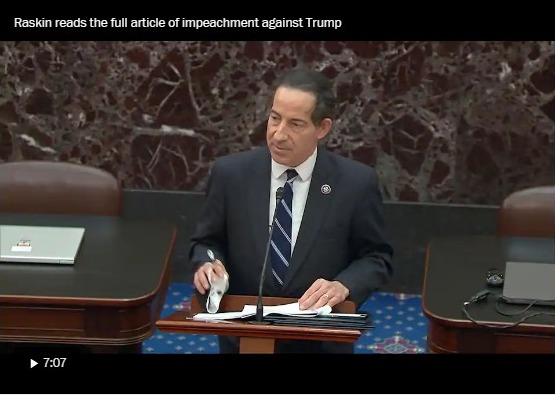
 A food delivery worker rides a bicycle during a snowstorm in New York on Feb. 1, 2021. MUST CREDIT: Bloomberg photo by Jeenah Moon
 White House press secretary Jen Psaki participates in a briefing at the White House on Feb 1, 2021, in Washington. MUST CREDIT: Washington Post photo by Jabin Botsford.
 John Bozzella, president of the Alliance for Automotive Innovation, in 2020. MUST CREDIT: Bloomberg photo by Andrew Harrer