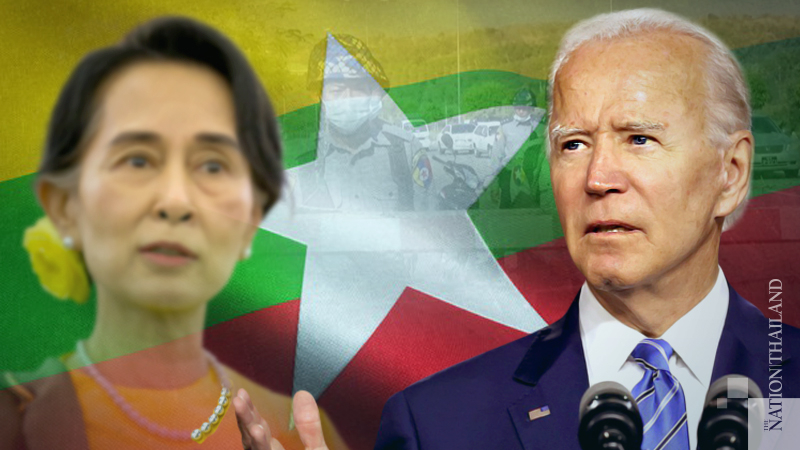
WASHINGTON – The Biden administration concluded Tuesday that the military seizure of power in Myanmar and detainment of civilian leader Aung San Suu Kyi constituted a military coup d’etat, triggering a review of U.S. assistance to the country, according to State Department officials.
The legal determination represents the strongest move President Joe Biden has taken since the military rolled through Myanmar’s capital on Monday, rounding up elected leaders of the National League for Democracy and cutting off phone lines and the Internet.
“We have denounced in the strongest possible terms Burma’s military leaders for seeking to reject the will of the people,” said a senior State Department official on a call with reporters, using another name for the country. “This assessment triggers certain restrictions on foreign assistance to the government of Burma, as it should, and in addition we will undertake a broader review of our assistance programs to ensure that they align with recent events.”
The coup unseated a fragile civilian government following elections in November and posed a challenge for Biden, who has pledged to return the United States to a leadership role in condemning anti-democratic actions worldwide.
On Monday, the president issued a statement saying the reversal of democratic gains in Myanmar, a major foreign policy project of the Obama administration, would “necessitate an immediate review of our sanction laws and authorities.”
“In a democracy, force should never seek to overrule the will of the people or attempt to erase the outcome of a credible election,” he said.
Biden warned that the United States was “taking note” of who was standing up for the people of Myanmar as democratic nations around the world denounced the military seizure. Chinese state media have deployed euphemisms for the putsch, calling it a “major cabinet reshuffle.”
U.S. officials, who spoke on the condition of anonymity to discuss a sensitive policy issue, said the determination would not impact humanitarian assistance, such as the millions of dollars that goes to assisting the country’s persecuted Rohingya Muslims. The officials did not provide a dollar figure for how much U.S. assistance is at stake.
Senate Minority Leader Mitch McConnell, R-Ky., said Tuesday that he had spoken to Biden and Secretary of State Antony Blinken about the coup and expressed support for sanctions.
McConnell credited the new administration for its bipartisan effort and outreach to Congress after the conversations Monday.
“This is a military coup and an attack on democracy, plain and simple,” McConnell, a longtime champion of democracy in Myanmar, said in remarks on the Senate floor. “There are two paths before Burma. It can continue to grow into a modern democratic country, connected to the global economy, or remain a corrupt, impoverished authoritarian backwater in the shadow of the People’s Republic of China.”
Monday’s seizure was the culmination of weeks of political tensions as the military and its proxy political party had been alleging widespread fraud in the November vote, which saw a landslide election victory for Suu Kyi’s party. The international community and Myanmar’s election commission have dismissed the military’s fraud claims as baseless.
The military has declared a state of emergency for a year and said it would hold fresh elections after that.
On Tuesday, Suu Kyi was still under house arrest in Naypyidaw. Suu Kyi’s ministers, also detained in the military takeover, were slowly being released, replaced by former generals and army loyalists.
China helps European ally Serbia get ahead on vaccines
InternationalFeb 03. 2021Health care workers outside vaccination booths in the Belgrade Fair exhibition center on Jan. 19, 2021. MUST CREDIT: Bloomberg photo by Oliver Bunic
By Syndication Washington Post, Bloomberg · Misha Savic, Andrea Dudik
Serbian President Aleksandar Vucic puts his country’s status as continental Europe’s front-runner in getting vaccines into people down to one thing: looking east as well as west.
The Balkan country may look like an unlikely success story as the neighboring European Union gets mired in a fiasco over vaccinations. Yet Serbia’s history of balancing its geopolitical interests is paying off at a critical time.
Serbia has been an important bridge for China to gain a foothold in Europe, while the country is also a traditional ally of Russia and is aspiring to join the EU. Those relationships have allowed it to diversify vaccine sources and inoculate a bigger proportion of its population than any other nation in Europe after the U.K. Serbia has injected 6.8% of its 7 million people, more than twice the ratio in the EU.
Most of the 1.1 million doses imported by the government in Belgrade so far have come from China’s state-backed Sinopharm. Vucic says his refusal to join a chorus of leaders criticizing China at a security conference in Germany helped him establish good relations with Foreign Minister Wang Yi.
“I was the only one who didn’t accuse China of anything so we had a brotherly meeting-the foreign minister and me-and since then the Chinese support began for us, concerning the coronavirus and everything else,” Vucic said in a televised address to the nation last week.
The speedy rollout of injections to combat covid-19 relative to the EU underscores the tension across the continent, and also the potential geopolitical consequences in its most volatile region. Already, the Serbian approach has its followers within the EU: neighboring Hungary became the first member of the bloc to approve shots made by Russia and China.
The Sinopharm is vaccine delivered at Nikola Tesla Airport in Belgrade, Serbia, on Jan. 16, 2021. MUST CREDIT: Bloomberg photo by Oliver Bunic
Serbia’s goal is to join the EU, though with an electorate already divided over membership, the pandemic risks pushing the country into the orbit of rival powers. Meanwhile, Belgrade has promised vaccine donations to Kosovo and Bosnia-Herzegovina, exposing the divisions again in former Yugoslavia that fueled the bloody wars of the 1990s.
The EU has pledged to give six prospective members in the western Balkans-including Serbia- $85 million (70 million euros) to buy covid shots, but deliveries are facing delays. Instead of waiting for the EU’s help, Belgrade secured vaccine from China, Russia and the U.S. directly.
French President Emmanuel Macron acknowledged the problems Europe is having with rolling out vaccine programs before a lunch with Vucic in Paris on Monday. “I would have wished that France, Europe could have been more present on your side on the topic of vaccines,” Macron told Vucic and a group of reporters. “We Europeans must be even more efficient on this.”
The former information minister to the late strongman Slobodan Milosevic, Vucic called in favors when the covid-19 crunch began, securing ventilators and protective equipment in the early stages of the contagion. He then ordered vaccines from three suppliers: Sinopharm, Russia’s Gamaleya and Pfizer-BioNTech.
Details on the Chinese and Russian vaccines are less transparent than the western ones, though health authorities in Serbia have sought to assure citizens that all the shots in use are safe and effective.
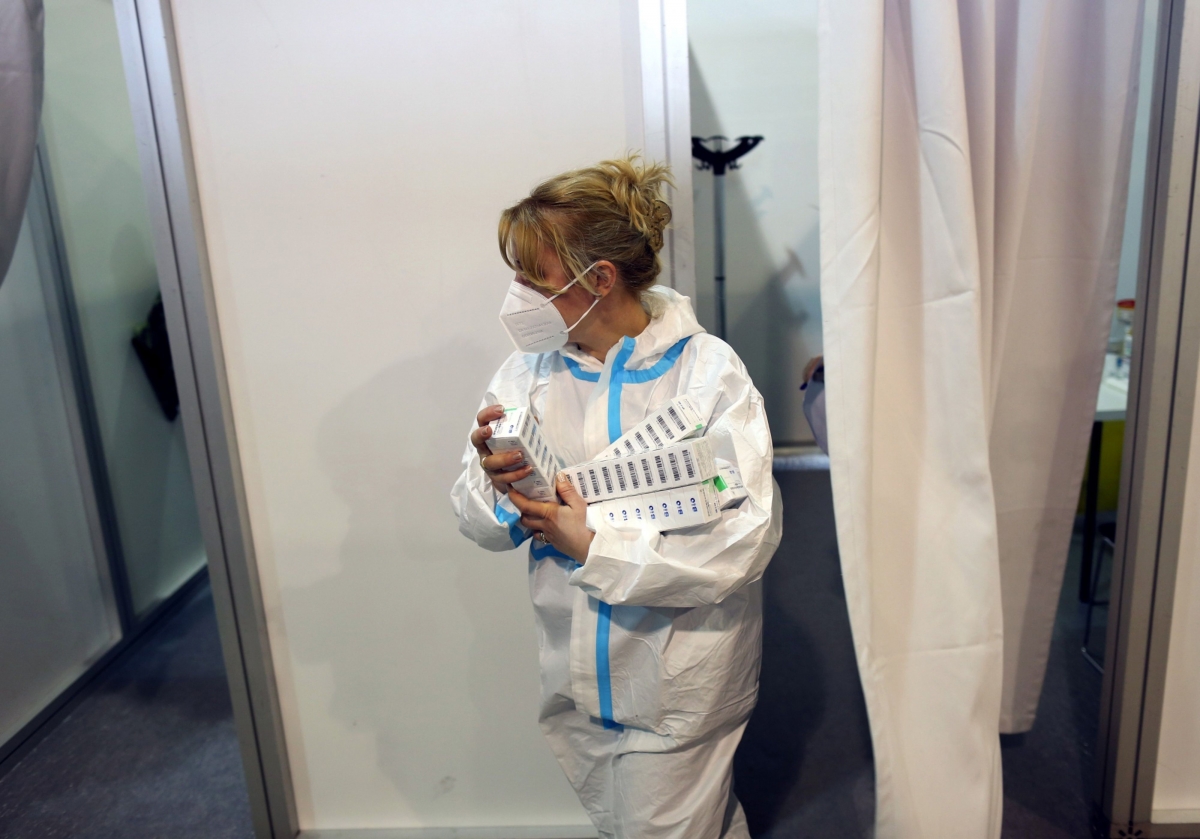
A health care worker carries boxes of the Sinopharm vaccine in the Belgrade Fair exhibition center on Jan. 19, 2021. MUST CREDIT: Bloomberg photo by Oliver Bunic
A week ago, Vucic said he met with China’s ambassador and “literally begged her,” for more deliveries. “Knowing President Xi, I believe that before May or June we’ll receive significant quantities of new vaccines from China.” Serbia is also now looking to start local production of the Russian vaccine.
The Serb leader controls the government and has tightened his grip on power in 2020 elections with a landslide victory, amid a boycott by some opposition parties that accuse him of autocracy. His pitch to voters, though, includes his ability to forge relationships across the geopolitical spectrum, with little regard to the feathers he might ruffle along the way.
In June, Vucic drew condemnation from pro-EU politicians for kissing the Chinese flag when an airplane delivered medical gear from Beijing to Belgrade. At the time he described the promise of solidarity from the EU, by far the biggest contributor of aid and investment to Serbia, as “a fairytale on paper.”
Providing vaccines to Serbia gives an important geopolitical win for China as it faces up to a less fractious and more Sino-skeptic West under U.S. President Joe Biden. In recent years, China has focused investment on infrastructure in the Balkans through its Belt and Road Initiative, including a rail link between Belgrade and Budapest in Hungary.
There is a perception of China being more prepared to help than the EU, said Faris Kocan, a foreign policy researcher at the University of Ljubljana. “It started with mask diplomacy and the narrative continues with vaccines, despite the fact that Balkan nations are strategically dependent on EU,” he said.
Serbia started to vaccinate on Dec. 24, days before the EU. It has contracts for 6.5 million vaccines, but the global scramble for jabs is hurting confidence that the deals will be honored, Vucic said. No vaccines have come through the multinational Covax initiative, which the Balkan state also joined early on.
German Chancellor Angela Merkel held crisis talks on Monday with pharmaceutical executives and European Commission officials as part of efforts to speed up the stuttering vaccination push. The EU’s 27 states collectively have inoculated 2.9% of the population compared with 14.7% in the U.K. and 10% in the U.S., according to Bloomberg’s Vaccine Tracker.
“People in the EU are good people, but luckily I had enough experience and knowledge to assume that it would turn out like this,” Vucic said. “This is a war for people’s lives but also for the future of every country.”
By Syndication Washington Post, Bloomberg · Arne Delfs, Raymond Colitt
Chancellor Angela Merkel promised all Germans a first shot of Covid-19 vaccine by the end of September, as long as drugmakers stick to their delivery commitments.
Even if new shots aren’t approved, Europe’s largest economy will have sufficient supplies despite earlier delays, the German leader said late Monday in Berlin after crisis talks with pharmaceutical executives, cabinet ministers, the country’s 16 state premiers and European Commission officials.
“There will be no shortage of money or commitment” to meet the target, she said, adding that current production plans don’t allow for a more aggressive rollout.
Health Minister Jens Spahn warned of “tough weeks of shortage in this first quarter and into April” and said that throwing cash at the problem would not make much of a difference at this stage of the program.
“Money, which we would make available very rapidly, is not the limiting factor,” Spahn said in an interview with ARD television after the talks. “There will be an appreciable increase in the amount of vaccine only in the second quarter.”
Merkel has come under fire after pushing for the European Union to take the lead on vaccine purchasing, prompting criticism that delegating responsibility to Brussels slowed down national inoculation programs.
Germany has vaccinated about 3 out of every 100 people, compared with 10 in the U.S. and almost 15 in the U.K., according to data compiled by Bloomberg. While Britain and America began immunizing several weeks earlier thanks to quicker approval, Germany’s rollout has been hampered by supply issues.
Some relief is on the way. Bayer AG agreed on Monday to produce CureVac NV’s experimental shots. While the move won’t have an immediate effect, it’s at least some good news after a week of chaos surrounding Europe’s program.
Bayer’s production effort extends its current pact with CureVac — a German startup that got investment from Merkel’s government last year — on regulatory clearance and global distribution. Delivery will start at the end of the year.
The effort follows commitments from fellow European pharma giants Sanofi and Novartis AG to put their manufacturing capacities behind scaling up Pfizer Inc. and BioNTech SE’s Covid-19 injection, as authorities push for more capacity to ease the crisis.
“Maybe other countries and regions get vaccinated more quickly, but that doesn’t help us,” said Bavarian Premier Markus Soeder, a leading contender to succeed Merkel after September elections, adding that the next six months will be a “stress test” for the German people.
While the country’s contagion rate has been declining, it is still nearly double the level that the government has said would allow it to ease curbs. The measures, which have been gradually tightened since early November, include closing schools, non-essential stores and limiting movement in hard-hit areas until at least mid-February.
The video call in Berlin was held amid growing pressure on Merkel over the stumbling vaccine rollout.
The Social Democrats, her junior coalition partner, suggested that the government may need to take stronger action to ensure there are enough supplies, a step Spahn dismissed, saying companies are already cooperating.
If the government can’t ensure adequate vaccine supply, then an alternative strategy must be found, Carsten Schneider, a deputy head of the SPD caucus in parliament, said Monday on Twitter. “This includes the use of all available production capacity and patents,” he said. Authorities have all but ruled out forced licensing.
Tensions flared after AstraZeneca Plc announced on Jan. 22 that problems at a plant in Belgium meant deliveries this quarter would be significantly curtailed.
The episode deteriorated into a bruising blame game that pitted the 27-nation EU against the pharmaceutical industry, and triggered fears about a wave of vaccine nationalism that could hinder efforts to fight the pandemic and delay economic recoveries.
Merkel showed understanding for drugmakers, saying that a shortage of materials such as lipid nanoparticles is holding back production. Meanwhile, new variants add urgency to the rampup.
“If we have a mutation that the vaccine doesn’t work against, we will have to start all over again,” she said.
By The Washington Post · Jennifer Hassan, William Booth
LONDON – Capt. Sir Tom Moore, the centarian who raised $45 million for Britain’s National Health Service by shuffling laps across his garden with the aid of a walker during the nationwide coronavirus lockdown last year, has died at the age of 100, his family announced Tuesday.
The medal-bedecked veteran, who was knighted last year by Queen Elizabeth II for his jaw-dropping charitable campaign, had spent the past few weeks being treated for pneumonia and tested positive for the coronavirus last week.
Moore was not believed to have been vaccinated against the virus because of the medication he was receiving for the pneumonia, British media reported.
“Captain Tom,” as he was known to all, stole the hearts of the English, who saw in him a can-do, big-hearted living link to yesteryear, the embodiment of the “keep calm and carry on” spirit that got the Brits through the Blitz in the early days of World War II.
During his slow-motion fundraising marathon, he would urge his patrons to always remember, “Tomorrow will be a good day.”
Moore was also a willing performer and a great quote for the newspapers and TV cameras.
“One small soul like me won’t make much difference,” he said in his first television interview. But that didn’t prove to be so.
The morning he was to be knighted by the queen at Windsor Castle, Moore wrote on his Twitter account, “Ready and raring to go for what is a very special day.”
A few hours later, he joked with a camera crew he would not, alas, kneel before the queen – “because if I did I’ll never get up again.”
His family said they were grateful to be with him at the hospital at the end. In Britain, as elsewhere, coronavirus patients have tended to be isolated from their families and support networks, to limit the spread of the virus.
“The last year of our father’s life was nothing short of remarkable,” the Moore family wrote in a statement. “He was rejuvenated and experienced things he’d only ever dreamed of.”
They also thanked the NHS: “They have been unfalteringly professional, kind and compassionate and have given us many more years with him than we ever would have imagined.”
It is a myth that the British are a nation of stiff-upper lips. They embraced Captain Tom as they embrace nostalgia. He appeared on the scene right when needed most, as the country – alongside the rest of the world – faced a scary new virus that shuttered shops, schools and pubs. The highest death toll from the pandemic was Moore’s generation.
“At times of crisis, a nation needs hope and heroes,” the BBC reported.
The Queen was one of the first to publicly mourn his death.
“Her Majesty very much enjoyed meeting Captain Sir Tom and his family at Windsor last year. Her thoughts and those of the Royal Family are with them,” the royal family’s official Twitter account tweeted.
Prince William, her grandson, earlier called Captain Tom “a one-man fundraising machine.”
Prime Minister Boris Johnson said Moore “was a hero in the truest sense of the word. In the dark days of the Second World War, he fought for freedom, and in the face of the country’s deepest postwar crisis, he united us all, he cheered us all up, and he embodied the triumph of the human spirit.”
Downing Street lowered its flag to half-mast.
The NHS applauded the veteran for his contribution.
Some have pointed out that Moore’s private campaign was so important because the health service had been starved for public funds over the past decade. At the outset of the pandemic, hospitals faced a crippling lack of supplies. Some health workers wore trash bags, because there wasn’t enough personal protective equipment to go around.
“They’re all being so brave. Every day, they’re putting themselves in danger of this unseen enemy that we’ve got at the moment,” Moore said of doctors and nurses in an interview with Sky News Australia last year.
Moore served as a young officer in 146th Royal Armoured Corps, first in India and then Burma, joining what the BBC called “the bruised and bloodied forgotten army, which was suffering from disease and low morale, fighting in the world’s least hospitable terrain, with impenetrable jungle, poisonous snakes, and hot lashing rain for six months of every year.”
The broadcaster reported, “Much of the fighting was done hand-to-hand, with no quarter given on either side.”
Moore survived the war, served in British peacetime army, retired, and then worked as a salesman for a roofing company.
His garden odyssey – and unexpected rise to stardom – began in April, when he sought to raise 1,000 pounds (about $1,370) for the NHS by walking his 82-foot long garden path back and forth 100 times, using his walker for support.
He wanted to complete the journey, which he broke down into short ambles, ahead of his 100th birthday on April 30.
As public interest in his fundraiser grew, so did the pot of donations.
Just 24 hours after Moore started walking, he had raised the equivalent of $8,750. As funds poured in, Moore’s fundraising page crashed repeatedly.
He completed his final lap two weeks ahead of schedule – an event that was live-streamed by the BBC as the figure reached $15 million. Afterward, donations continued to climb.
Moore was treated on his 100th birthday with a Royal Air Force flyby above his home in Bedfordshire, 50 miles north of London, as street art of his face began appearing around the country.
Children and fans sent him more than 150,000 birthday cards and a tribute flashed on the big screen in Piccadilly Circus.
By The Washington Post · Isabelle Khurshudyan, Robyn Dixon
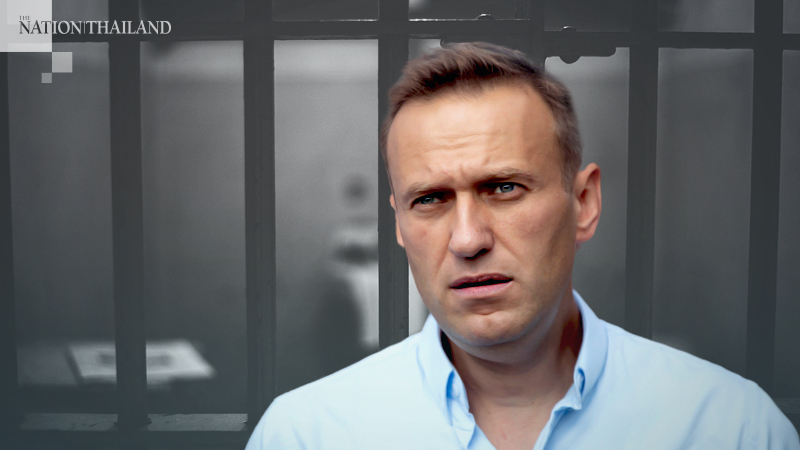
MOSCOW – Russian opposition leader Alexei Navalny was ordered to spend the next 32 months in prison Tuesday as he defiantly denounced President Vladimir Putin and said his supporters will not be intimidated by widening Kremlin crackdowns.
Hours after the verdict, protesters heeded Navalny’s call. Several thousand people marched through central Moscow and St. Petersburg, chanting “Russia without Putin” and “Freedom.” Riot police detained hundreds of people and beat some in the crowd with batons, according to video posted on social media.
Navalny again accused Putin of ordering the nerve agent attack that nearly killed him in August and rejected the case against him – for alleged probation violations – as political retribution less than three weeks after he returned to Russia.
Navalny, in court in a glass-enclosed pen, thanked the tens of thousands of supporters who have taken to the streets to call for his freedom in recent weeks. In another swipe at authorities, he paid tribute to members of his team targeted by authorities in arrest sweeps of opposition activists.
As his wife, Yulia, cried during the verdict – two years and about eight months in a penal colony – he drew a heart for her on the glass wall of his court cage.
She waited in the front row of the courtroom seating area until he was released from the cell, ripping off her black mask and lifting an arm to wave to him as police led him off in handcuffs.
“Bye. Don’t be sad,” he yelled to her. “Everything is going to be all right.”
In an emotional address to the court, Navalny said Putin would be remembered in history as “Vladimir the poisoner.”
“I’m guarded here by the police. Half of Moscow is blocked off because we proved that he issued orders to steal underwear from his opponent and smear it with chemical weapons,” Navalny said, referring to the poisoning attack in the Siberian city of Tomsk.
He said the “show trial” was a scare tactic that would not work.
“This is not a demonstration of strength,” he told the court. “It is a demonstration of weakness.”
To stem planned protests in the aftermath of Navalny’s conviction, four metro stations were closed in central Moscow as scores of riot police began detaining people, local media reported. Pushkin Square, also in the city center, was cordoned off with metal barricades.
More than 1,000 people were detained Tuesday, according to rights group OVD-Info. It followed the detention of more than 5,000 Sunday and more than 4,000 the previous weekend – both ominous single-day records since the organization began counting arrests in 2011.
“The current situation is a pivotal moment for Putin’s regime,” Tatiana Stanovaya, the head of the R. Politik think tank, said on Twitter. “For the first time in 20 years, it faces a completely new situation. This is the first time the Kremlin is unable to channel public discontent in a controllable direction.”
Speaking to the court earlier, Navalny demanded his freedom, saying that Russia was trying to jail him over a 2014 case in which the European Court of Human Rights had already cleared him.
“Someone did not want me to take a single step on the territory of Russia as a free man,” he said, referring to his return to Russia on Jan. 17 from Germany, where he recovered from the poisoning.
He called on Russians not to be afraid because “they can’t arrest the entire country.”
In what sounded like a campaign speech, Navalny referenced the “20 million people living below the poverty line” in Russia and “tens of millions living without the slightest prospects for the future” while “the only thing growing is the number of billionaires.”
Both the judge and the prosecutor attempted to silence him, imploring him to discuss just this case. Navalny talked over them, insisting it was all related, and continued his remarks, which lasted more than 16 minutes.
He vowed to continue his fight, “despite the fact that I am under the control of people who like to smear everything with chemical weapons, and no one will give three kopecks for my life.”
Moments after the verdict, a statement by Secretary of State Antony Blinken said the “United States is deeply concerned by Russia’s actions toward” Navalny.
“We reiterate our call for his immediate and unconditional release as well as the release of all those wrongfully detained for exercising their rights,” the statement added.
British Foreign Minister Dominic Raab called for Navalny to be freed along with “all of the peaceful protesters and journalists arrested over the last two weeks.”
At least 10 diplomats observed the hearing.
Navalny’s lawyers said they would appeal the verdict and complain to the Council of Europe.
The Kremlin has dismissed the alarm among U.S. and European leaders over the August poisoning with a nerve agent similar to the Soviet-era Novichok. Russia refused to open a criminal case, and it has suggested that if Navalny was poisoned, it could have happened in Germany.
Navalny said the penal service was “deceiving everybody” in its claims that he failed to meet his probation obligations, stating that he was in a coma after his poisoning, then was being treated in Germany. He said he sent documents to the penal service informing it of his whereabouts.
At one point, he questioned the Federal Penitentiary Service official himself, smirking as he asked him: “Comrade captain, do you respect President Vladimir Vladimirovich Putin?”
“Putin said on live television that thanks to him, I’d been sent to Germany for treatment, so how did you not know where I was?”
Because Navalny previously spent roughly 10 months under house arrest connected to this case, that counts as time served toward the court’s three-year, six-month sentence – as does Navalny’s past two weeks in a Moscow pretrial detention center.
At times during the hearing, Navalny glanced over to his wife and smiled. When the court dismissed for a two-hour lunch break, he jokingly asked whether someone could bring him McDonald’s takeout.
Outside the court, hundreds of Navalny’s supporters crowded the sidewalks.
“What’s happening to Alexei now is beyond all limits,” said Eduard Mikhalevich, 37, a social worker who never participated in any protest until Jan. 23, when he joined tens of thousands of Russians in more than 100 cities calling for Navalny’s freedom.
The Kremlin has said that the crackdown was appropriate and that the protests were led by “hooligans and provocateurs.”
But a new protest generation – largely young people, many of whom have never protested before – appears to have shaken the government.
Navalny has been exposing government corruption for more than a decade, but his latest effort, a viral video “Putin’s Palace: History of the World’s Largest Bribe,” which has garnered more than 106 million views on YouTube, appears to have struck a nerve with the Kremlin. Its allegation that a vast palace was built for Putin on the Black Sea undercuts the president’s image as a conservative traditionalist with the nation’s interests at heart.
Arkady Rotenberg, an oligarch under U.S. sanctions as a member of Putin’s inner circle, says that he has owned the palace for two years and that it will become a hotel.
Navalny’s national network of 40 regional headquarters and his ability to communicate directly with Russians through his popular YouTube channel make him a potent threat. His decision to fly home to Russia after being poisoned, knowing that he probably faced imprisonment, has captured the imaginations of many young Russians and drawn an outpouring of support from celebrities, actors, writers, sports figures and bloggers.
Navalny is scheduled for release in October 2023, less than six months before Russia will have its next presidential election.
By The Washington Post · Adam Taylor, Carolyn Y. Johnson
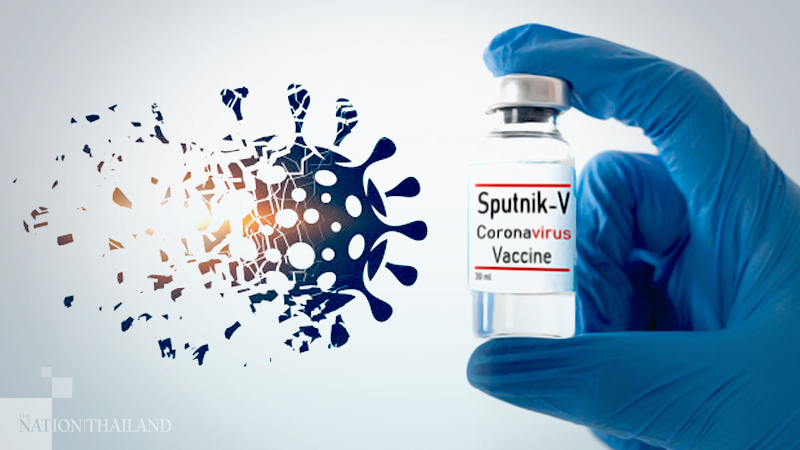
The Russian coronavirus vaccine, Sputnik V, was 92% effective at preventing symptomatic illness in a large clinical trial, robust protection that puts it in line with top vaccines developed in the United States and Europe, according to results published in a peer-reviewed journal Tuesday.
The Russian vaccine effort has been criticized for being too rushed, elevating nationalistic competition over scientific evidence. The publication in the Lancet, a British medical journal, marks the first large-scale, peer-reviewed results to be published showing the performance of Sputnik V – despite the fact that the vaccine has been in broad use in Russia and is being rolled out to other countries.
Outside experts said the data convincingly shows the vaccine works. But because the trial was conducted in Russia in the fall, before the spread of virus variants that have shown signs of eroding vaccine effectiveness, questions loom about how protective the vaccine will be in the face of emerging threats.
“Results are great,” Hildegund C.J. Ertl, a vaccine scientist at the Wistar Institute, said in an email. “Good safety profile, more than 90% efficacy across all age groups, 100% efficacy against severe disease or death, can be stored in the fridge and low cost. What more would we want?”
Kirill Dmitriev, chief of the Russian Direct Investment Fund, a state fund that had backed the vaccine, said the results proved that criticism of the vaccine was unfounded.
“All our critics are keeping quiet at the moment because they are running out of arguments. We have addressed all of their concerns. Sputnik V has proven itself to be one of the most effective and safest vaccines in the world,” he said at a news conference.
The news was also a relief to foreign officials who had been relying on the Russian-made vaccine to fill gaps left in their supplies. Mexico’s deputy health minister, Hugo López-Gatell, had flown to Argentina last month to follow the country’s Phase 3 testing of Sputnik V. López-Gatell said Tuesday the public had felt “a concern, a worry that is totally legitimate about whether the [Russian] vaccine is effective.”
He said he hoped the results published in the Lancet put those anxieties to rest.
“This gives us an enormous opportunity to accelerate the pace of vaccination against covid in Mexico,” he said. Mexican authorities are expected to formally approve emergency use of the Russian vaccine Tuesday.
Almost 20,000 participants took part in the Phase 3 trial, with roughly three-quarters receiving the vaccine, while the remainder received a placebo.
The results appear to make Sputnik V the third coronavirus vaccine to have an efficacy of more than 90%, along with the Pfizer-BioNTech and Moderna vaccines. But experts have repeatedly cautioned that it can be misleading to compare performance in different vaccine trials, because of differences in how the trials are designed and when and where they were conducted.
Vaccines that have been tested more recently, in areas of the world where variants have become dominant, such as vaccine candidates from Johnson & Johnson and Novavax, appear less efficacious against a form of the virus that is rapidly becoming dominant.
Peter Jay Hotez, a vaccine scientist at Baylor College of Medicine, said he was concerned that antibody levels sparked by the Russian vaccine appeared relatively modest. While the vaccine may have offered robust protection against the form of the virus circulating in Russia in September and November, laboratory tests have demonstrated that antibodies triggered by other vaccines are less effective against the variants, particularly one that originated in South Africa and is rapidly spreading globally.
“The worry is that when you’re starting out low like this . . . as the South African variant comes through, this [vaccine] may no longer protect,” Hotez said. “I think that’s what’s probably going to happen, and the Russians are going to look at recasting this vaccine in some way.”
In the trial, participants who received Sputnik V were administered two shots 21 days apart. The regimen uses two different harmless cold viruses, called adenoviruses, to infect cells with a gene that carries the blueprint for the spike protein found on the surface of the coronavirus. By using two different viruses to deliver the gene, the vaccine regimen avoids one possible problem with such an approach – that the body may build an immune response to the cold virus that delivers the gene, blocking the booster shot’s ability to rev up the immune system.
The technology is similar to that used by the single-shot Johnson & Johnson vaccine, which reported 66% efficacy overall at preventing moderate and severe disease four weeks after the shot, and the vaccine developed by AstraZeneca and Oxford University, which EU regulators have judged to be about 60% effective. AstraZeneca and Gamaleya, the Russian research institute that developed Sputnik V, announced in December that they are working together to explore whether combinations of their vaccines might be beneficial.
The Russian vaccine, like those others, appeared to be most effective at preventing serious cases of disease. In the Johnson & Johnson trial, there were no cases of hospitalization or death related to covid-19, the illness caused by the virus, in people receiving the vaccine. In the Russian trial, there were no cases of moderate or severe covid-19 cases among vaccinated people, while there were 20 cases among those who received placebo. In the AstraZeneca-Oxford trial, there were 10 covid-19-related hospitalizations, all among people who received placebo.
“The vaccine appears to induce decent protection, consistent with their previous press releases,” said Konstantin Chumakov, a member of the Global Virus Network, an international coalition working on viral threats. “It confirms the expectations that adenovirus-based vaccines can be effective, at least in the short run. Now, it remains to be seen how long the immunity will last, and whether it will protect against the variant strains.”
There were 62 confirmed cases of covid-19 in the placebo group, compared with 16 infected people found in the vaccine group, none of whom had severe symptoms.
The trial included more than 2,000 volunteers who were older than 60. Results did not differ statistically for this older group.
There were limited side effects in those who received Sputnik V, the developers said, with 94% of adverse effects described as mild, including flu-like symptoms and reactions at the injection site.
After receiving approval Aug. 11 in Russia, the vaccine’s developers marketed Sputnik V aggressively, setting up a website that dubbed the vaccine the “first registered vaccine against COVID-19” and using a Twitter account to not only promote it but cast doubt upon rivals.
Sputnik V’s developers say the vaccine is already registered in 12 countries. It remains the only vaccine to be used in a low-income country, after being used on a trial basis in the West African nation of Guinea.
In mid-January, Moscow said it was “open to immediate cooperation” with Egypt and could provide the Sputnik V vaccine within days, adding more supply throughout 2021, the Russian Embassy in Cairo said in a statement last month.
Russia was also “ready to transfer technology to produce this vaccine” in Egypt, which the embassy said had “an adequate production base.”
The statement made clear that Moscow viewed the Sputnik V vaccine as an opportunity to solidify its burgeoning relationship with the government of Egyptian President Abdel-Fattah el-Sissi and gain influence in Africa and the Middle East.
“This will not only allow for the widest possible vaccination campaign, but it will also help develop the economic and trade capabilities of our Egyptian friends,” the embassy said.
Russia would like Egypt to become an export hub for the Sputnik V vaccine in Africa, Egypt’s ambassador to Moscow told Egypt’s El Watan newspaper.
Last month, Egyptian health specialists performed clinical trials of the Sputnik V vaccine, according to El Watan, which quoted an Egyptian health ministry aide saying that “the Russian vaccine is currently a priority for research.”
The Sputnik V vaccine has not been approved or registered in Egypt.
The Sissi government received its first shipment of the Chinese Sinopharm vaccine in December to vaccinate front-line medical workers.
This week, Egypt received its first 50,000-dose shipment of the AstraZeneca vaccine, also to vaccinate health workers, the country’s cabinet announced Tuesday. The government has ordered 20 million AstraZeneca doses from India, according to Al Ahram, a state-run newspaper.
On Tuesday, Algerian officials said that they will start producing the Sputnik V vaccine in coming weeks and that the first batch of 50,000 doses arrived in Algeria last Thursday. Kamel Mansouri, head of Algeria’s national agency for pharmaceuticals, said on national television Tuesday that Algeria and Russia were in advanced discussions to manufacture the vaccine at a government-owned facility.
The Super Bowl is coming. And we’re running out of chicken wings.
InternationalFeb 03. 2021We’re running out of delicious chicken wings right before the Super Bowl. MUST CREDIT: Photo for The Washington Post by Deb Lindsey
By The Washington Post · Jacob Bogage
America, we have another crisis. We’re running out of chicken wings.
Days before the Super Bowl, a veritable annual chicken wing holiday, food service providers are scrambling to get their hands on these delectable morsels of poultry – and paying top dollar for them, too.
The U.S. chicken wing market is dominated by the sports calendar. Consumption and sales peak right before the Super Bowl in February and a month and a half later before the NCAA men’s basketball tournament. Prices generally ebb and flow with that schedule, spiking before the competitions and coming back down to earth steadily through the rest of the year.
But wing prices have been flying high for months now during the coronavirus pandemic. Experts say there are a number of drivers of the increase, but chief among them is that we’re all eating a ton of chicken, including wings. The shortage isn’t so much that producers aren’t making enough wings, it’s that consumers want more and more (and more) of them to scarf down.
“What’s been really strange about this year is it’s actually been really strong since late summer, the demand for wings,” said Christine McCracken, executive director of animal protein at Rabobank. “And that’s made it a bit harder for people who didn’t have a plan going into [the Super Bowl] or are trying to catch up with demand.”
FAT Brands, the company behind wing chains Buffalo’s, Hurricane Grill & Wings, Ponderosa Steakhouse and six other restaurant franchises, began planning for the 2021 Super Bowl a year ago, said Andy Wiederhorn, the company’s president and chief executive.
He said the company is well-stocked, but is still making last-minute arrangements to shore up supplies. It expects to sell 500,000 wings (that’s 250,000 chickens’ worth) over Super Bowl weekend. The entire chicken industry will go through close to 1.4 billion wings, according to the National Chicken Council, up 2 percent from last year.
Even with restaurant trips down 11 percent in 2020 because of the pandemic, wing sales jumped 7 percent, the council reported in its annual “Wing Report.”
“If you think about it, restaurants like wing joints and pizza places were built around takeout and delivery, so they didn’t have to change their business model that much during the pandemic,” council spokesman Tom Super wrote in the report. “Wings travel well and hold up during delivery conditions. Plus, they align with consumer desire for comfort food during the pandemic. Chicken production remained steady in 2020, and as long as people are sitting around watching TV and maybe drinking a beer, wings will remain in the game.”
Wiederhorn said sales at Buffalo’s and Hurricane, FAT’s two wing-specific brands, are well above their 2019 mark.
By all accounts, 2020 was a weird year for wings. Prices and production jumped right around the Super Bowl, according to the Department of Agriculture, as they usually do. Then the pandemic hit. Sports shut down, including the NCAA men’s college basketball tournament. Restaurants shuttered and consumers rushed to grocery stores to stock up. They bought a whole lot of chicken, but not so much wings, which are more popular at restaurants rather than for home meals.
Wing prices plummeted, down to less than $1 per pound. Production fell too, as all of a sudden, the market was flooded with millions of excess wings.
And then, within months, the market rebounded. Stay-at-home orders meant more backyard barbecues over the summer. With nothing to do, football Saturdays and Sundays turned into de facto holidays – perfect for wings. New “ghost kitchens,” or delivery-only restaurants capitalizing on the rise of Grubhub and UberEats, popped up, many specializing in wings.
In normal years, McCracken said, there are things the food service industry can do to ease the strain on its wing supply. The best example, she said, is “boneless wings” (about which a great debate exists as to whether they are really “wings” or just chicken nuggets), which eateries can promote as a tasty (if controversial) alternative.
“Nobody switched to boneless wings this year,” she said. “I think it just caught people off guard.”
Consumers are also price sensitive when it comes to wings, said Sean McBride, the founder of DSM Strategic Communications and a food industry expert. Demand isn’t the only thing inflating wing prices. The pandemic comes with its own bevy of production expenses: more protective and sanitation equipment, worker shortages, transportation costs. Those all get baked into the price of a wing, and companies have to decide whether to swallow that cost, or pass it along to wholesalers, distributors, restaurants and grocery stores.
And with those increased production costs, McBride said, some producers may decide to allocate fewer resources to breaking down birds on the assembly line, and choose instead to sell more whole chickens and half chickens rather than chicken parts.
That contributes to the wing availability crunch, because restaurants have to spend more for a now-smaller supply of processed wings, and supermarket meat counters have to spend more time butchering birds to package wings, thigh, breasts and legs separately.
The results of the wing shortage are twofold, experts say. First, depending on where consumers buy wings, they can expect to pay more. There may not be a noticeable price bump on menus or at the grocery stores, but companies may look to be more stingy with discounts or promotions.
Second, the kind of wings you’re eating could be different. Chicken producers are letting their birds grow bigger to cut down on the cost of new hatchlings. At the grocery store or in restaurants where wings are sold by the pound, that means fewer wings per order. Wiederhorn said FAT Brands is struggling to find more small wings, which some customers prefer. As a last resort, McBride said, some eateries are also pulling wings out of frozen storage to supplement their fresh supply.
By Syndication Washington Post, Bloomberg · Khine Lin Kyaw, Philip J. Heijmans
Supporters of Myanmar’s military rallied in the nation’s largest city as it moved to suspend all flights through April, raising fresh concerns about the army’s crackdown a day after it seized power in a coup and detained senior government officials and activists.
The rally in the commercial capital Yangon is the first since de facto leader Aung San Suu Kyi and her colleagues were taken in early morning raids on Monday. “It is not a coup, but just an act of retaining the power to prevent others from misusing it,” a monk, Tipitaka Thitsar Pwintlin, told the pro-military crowd, urging them to thank the army for protecting the nation and its majority Buddhist religion.
The military on Tuesday instructed airlines to suspend all flights until April 30 — an extension of travel restrictions put in place by the previous government to contain the spread of covid-19 — and reopened the country’s stock exchange for trading from Wednesday.
President Joe Biden said the U.S. could reinstate sanctions if the military doesn’t “immediately relinquish the power they have seized” and release activists and officials.
“The United States removed sanctions on Burma over the past decade based on progress toward democracy,” Biden said Monday in a statement that called on the generals to release activists and officials, lift restrictions on telecommunications and refrain from violence. “The reversal of that progress will necessitate an immediate review of our sanction laws and authorities, followed by appropriate action.”
Broader sanctions like those imposed before the country’s shift to democracy more than a decade ago are likely to hit Myanmar’s 55 million citizens, many of whom overwhelmingly voted for Suu Kyi’s party.
The Southeast Asian nation’s economy was already struggling under the impact of the pandemic. The International Monetary Fund expects Myanmar’s economic growth to fall to 0.5% this fiscal year, as virus cases take a toll on the country’s key economic drivers, including exports, remittances and tourism.
The first wave of the pandemic “forced many poor households to adopt risky and unsustainable mechanisms to buffer the shock, including reducing their daily food consumption,” the World Bank said. “Even before the second wave hit in late August, many households were struggling to repay their debts. The ongoing restrictions under the second wave put more households at risk of entering poverty.”
Myanmar’s growth outlook now depends on a pipeline of key infrastructure projects and foreign direct investment, which could be delayed or canceled altogether if sanctions are implemented and if foreign entities decide to pull the plug amid elevated political risks, Fitch Solutions noted Monday.
“Infrastructure projects, both public and private, even if not canceled, also face high risks of stalling over the near term due to a combination of lack of funds, social unrest, and further lockdowns due to a renewed outbreak of covid-19 following mass protests,” it said in a statement.
The World Bank on Tuesday said it was “gravely concerned” about events in Myanmar, also known as Burma, calling the military’s actions a “major setback to the country’s transition and its development prospects.” The institution has funded projects ranging from electrification to education to covid-19 relief.
The military pledged to hold elections after a 12-month state of emergency and formally replaced Suu Kyi as foreign minister when it installed 11 new ministers to cabinet posts late Monday. A state-run television broadcast announced the new foreign minister as Suu Kyi’s predecessor, Wunna Maung Lwin, while Win Shein, who previously held the post of finance and planning minister, was reappointed to the position.
Suu Kyi on Monday urged her supporters to oppose the army’s move, calling it “an attempt to bring the nation back under the military dictatorship without any care for the covid-19 pandemic people are facing.” The election commission last week labeled the vote transparent and fair, and in 2015 the military had accepted her party’s landslide election win.
Asean on Monday called for the return to dialogue and reconciliation in Myanmar after the military staged a coup on Monday morning.
According to China’s Xinhua news agency, Myanmar’s State Counsellor Aung San Suu Kyi, President U Win Myint and other senior officials were detained by the military early on Monday. Myanmar military TV declared on Monday a state of emergency in the country for one year after the government leaders were detained.
The Asean chairman’s statement read:
“Asean member states have been closely following the current developments in the Republic of the Union of Myanmar.
“We recall the purposes and the principles enshrined in the Asean Charter, including the adherence to the principles of democracy, the rule of law and good governance, respect for and protection of human rights and fundamental freedoms.
“We reiterate that political stability in Asean member states is essential to achieving a peaceful, stable and prosperous Asean Community.
“We encourage the pursuance of dialogue, reconciliation and the return to normalcy in accordance with the will and interests of the people of Myanmar.”
Brunei Darussalam takes over the Asean chairmanship in 2021 from Vietnam.
Meanwhile, Stéphane Dujarric, the spokesman for the United Nations Secretary-General, issued a statement strongly condemning the situation in Myanmar.
“The Secretary-General strongly condemns the detention of State Counsellor Daw Aung San Suu Kyi, President U Win Myint and other political leaders on the eve of the opening session of Myanmar’s new Parliament. He expresses his grave concern regarding the declaration of the transfer of all legislative, executive and judicial powers to the military. These developments represent a serious blow to democratic reforms in Myanmar.
“The November 8, 2020 general elections provide a strong mandate to the National League for Democracy, reflecting the clear will of the people of Myanmar to continue on the hard-won path of democratic reform. The Secretary-General urges the military leadership to respect the will of the people of Myanmar and adhere to democratic norms, with any differences to be resolved through peaceful dialogue. All leaders must act in the greater interest of Myanmar’s democratic reform, engaging in meaningful dialogue, refraining from violence and fully respecting human rights and fundamental freedoms.
“The Secretary-General reaffirms the unwavering support of the United Nations to the people of Myanmar in their pursuit of democracy, peace, human rights and the rule of law.”
Merkel’s hand prints are all over Germany’s vaccine failings
InternationalFeb 02. 2021It wasn’t until Nov. 20 that an EU agreement with BioNTech was finalized. MUST CREDIT: Bloomberg photo by Alex Kraus.
By Syndication Washington Post, Bloomberg · Arne Delfs, Naomi Kresge
Angela Merkel is starting to crack under the pressure of Germany’s faltering coronavirus vaccine program.
With the chancellor under fire publicly for a lack of covid-19 shots and her strategy of delegating responsibility to the European Union looking misguided, she snapped when pressed for answers by German state premiers during a closed-door meeting in early January.
Getting angrier than those involved had ever seen, she threatened to retaliate and make the officials’ mistakes public, shocking the participants into silence. On other occasions, she’s come close to tears in public in recent weeks.
“It’s breaking my heart when I see how many people have died in senior homes in loneliness,” she said in a recent speech.
Such emotion is highly unusual for the sober physicist, who has unflappably confronted one crisis after another in her 15 years at the helm of Europe’s largest economy. But, as she prepares to hand over the chancellorship after September’s election, the pandemic seems to be getting away from her. An opinion poll released last week bears that out. Only 11% of respondents thought Germany’s vaccine program is going well, while 61% saw major shortcomings with the rollout.
A reconstruction of events for this story, which is based on information from government officials who asked not to be identified discussing the private conversations inside the chancellery, shows that the country’s vaccine stumbles bear Merkel’s hand print. Her European focus sparked conflicts within the German government, while relying on an overburdened European Commission hampered the rollout. A government spokesman declined to comment on the internal deliberations.
The tension has sparked a high stakes power play in Brussels. The EU is taking on AstraZeneca and other pharmaceutical companies, and imposing export controls in an all-or-nothing response to its perceived failings.
Germany’s effort started out well enough. Merkel’s government supported early-stage vaccine development, getting a jump on other countries.
In April, Health Minister Jens Spahn — Merkel’s longtime adversary — contacted BioNTech and offered financial help. In September, the German start-up received 375 million euros ($450 million) in research funding, about three times what its public listing raised in late 2019. In June, Germany invested 300 million euros in another German start-up, CureVac, acquiring a stake and fending off an approach by the Trump administration.
But behind the scenes, a political struggle festered.
Spahn had long been a thorn in the chancellor’s side. The ambitious 40-year-old conservative was an outspoken critic of her refugee policy and was offered a seat in her cabinet in 2018 only reluctantly. The coronavirus crisis offered him a chance to raise his profile, and he planned to take it.
During the first weeks of the pandemic, Spahn gave press conferences almost daily, until the chancellery told him to step out of the limelight. In mid-March, Merkel put the crisis under her wing, and Germany’s relatively mild lockdown contained the spread. The impression was that Merkel had saved the day again.
Flushed with that success, she looked toward Germany’s EU presidency in the second half of 2020. There were big issues to tackle like the testy Brexit negotiations and the landmark recovery fund.
But Spahn kept active. In June, he forged a vaccine alliance with France, Italy and the Netherlands. The goal was to secure as many doses as possible, and on June 13, the group signed a preliminary contract with AstraZeneca for 400 million shots. What could have been good news raised alarm bells in Berlin and Brussels.
European Commission President Ursula von der Leyen asked the chancellery to stop Spahn’s alliance. Merkel’s former defense minister made it clear to the chancellor that Spahn’s effort could overshadow Germany’s EU presidency.
As a committed multilateralist, she didn’t want to be remembered saving Germans at the expense of the rest of the EU. Shortly thereafter, Spahn effectively apologized for the initiative.
“We think it makes sense if the commission takes the leadership in this process,” Spahn and his three counterparts said in the letter — which was leaked to the media in January as part of a pressure campaign on Merkel.
Meanwhile, the U.S. was throwing money around as part of Operation Warp Speed. In May, the Trump administration pledged as much as $1.2 billion in funding for AstraZeneca’s vaccine project. In July, the U.S. agreed to pay $1.95 billion for 100 million doses of the BioNTech vaccine, with an option to acquire an additional 500 million.
Nearly simultaneously with the U.S. deal, the U.K. also agreed to buy 30 million doses from BioNTech and its partner Pfizer.
Little was happening in Brussels. In July, the Commission flubbed a BioNTech offer for 500 million doses amid dithering on price and concerns about supercold storage for the shots.
By the end of the summer, the chancellery was increasingly alarmed about the slow progress, and Merkel asked von der Leyen to speed things up. At the end of August, the Commission signed a deal with AstraZeneca.
It wasn’t until Nov. 20 that an EU agreement with BioNTech was finalized, 11 days after the company announced that its vaccine candidate was more than 90% effective in clinical trials.
Even that was a struggle. Germany had to guarantee it would take up to 100 million doses and added 192 million euros to EU’s pot of money for virus deals. But as more studies underlined the shot’s benefits, other member states lined up, and Germany’s allotment was more than halved.
Meanwhile, a bilateral agreement that Spahn signed with BioNTech on Sept. 8 for 30 million doses exclusively for Germany was mired in red tape.
“The process in Europe certainly didn’t proceed as quickly and straightforwardly as with other countries,” BioNTech Chief Executive Officer Ugur Sahin told Spiegel magazine, blaming the EU’s cumbersome bureaucracy and a careless approach. “There was apparently an attitude of: We’ll get enough, it won’t be that bad, we have everything under control.”
While the EU’s procurement process was sputtering, Merkel was busy presenting herself as the advocate for vaccine fairness. In June, she announced Germany would give 600 million euros to the Gavi alliance, plus 100 million euros for developing countries.
The global approach makes sense from a scientific point of view, and to be sure, there’s still a long road ahead that could allow Germany — still better off than many other countries — to recover.
But politically, it was making her allies squirm, especially as they looked ahead to elections in September. Bavarian state leader Markus Soeder — a leading contender to succeed her as chancellor — has supported Merkel’s European course, but noted: “It’s also not wrong to care about your own country.”
To ease tensions, Merkel will hold a German vaccine summit on Monday, but the pressure remains palpable. When asked recently whether she would be willing to apologize for the missteps, she deflected and instead responded with a lecture about the complex production process, including the role of saline solution.
“Of course we could have ordered more earlier,” Spahn said on Friday, refusing to point the finger publicly at Merkel or anyone else. “It’s the virus that’s our opponent, and not the pharma industry and not each other.”
 Health care workers outside vaccination booths in the Belgrade Fair exhibition center on Jan. 19, 2021. MUST CREDIT: Bloomberg photo by Oliver Bunic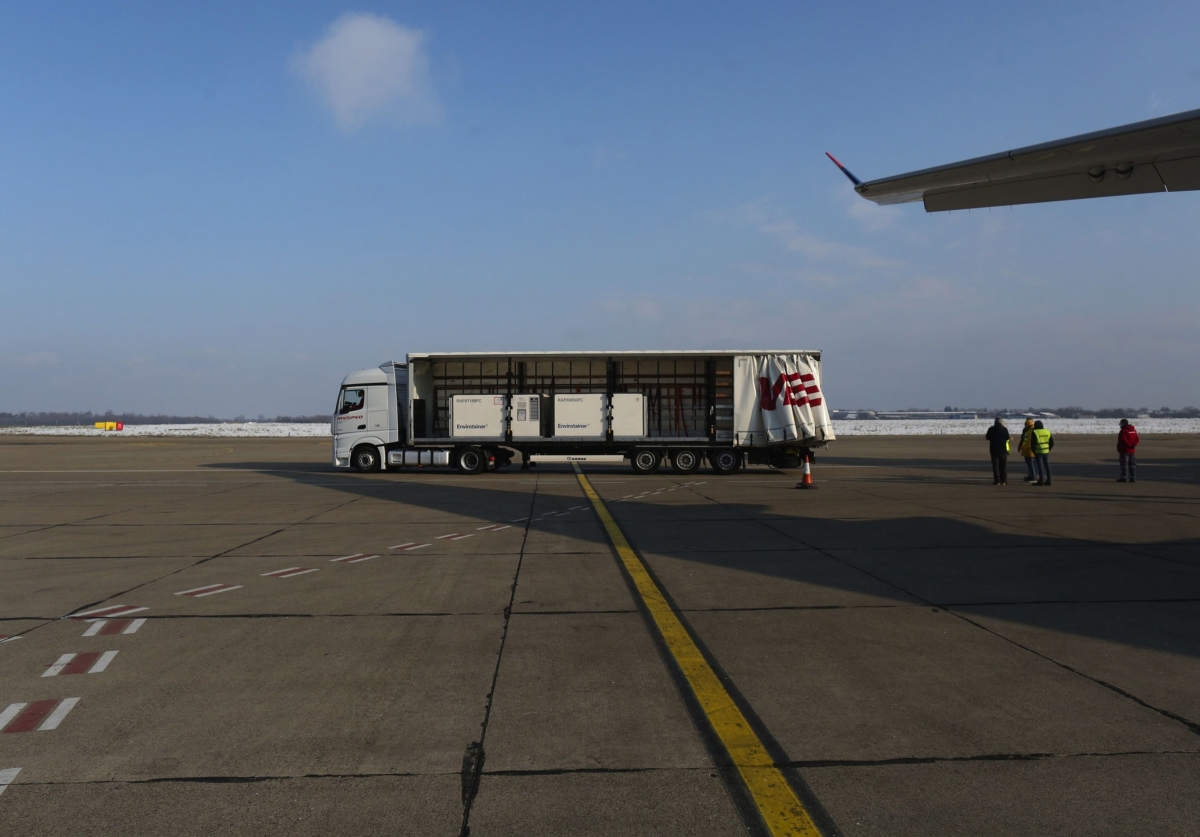
 Chancellor Angela Merkel
 Capt. Sir Tom Moore
 Alexei Navalny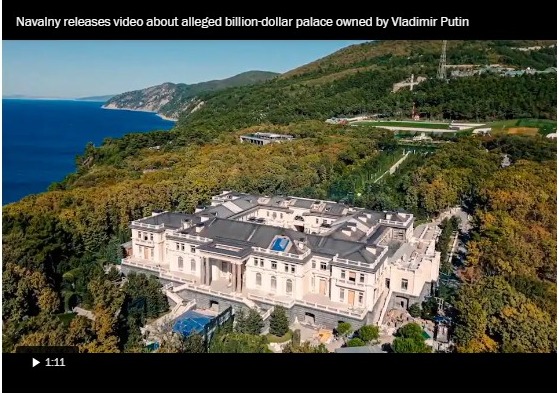
 We’re running out of delicious chicken wings right before the Super Bowl. MUST CREDIT: Photo for The Washington Post by Deb Lindsey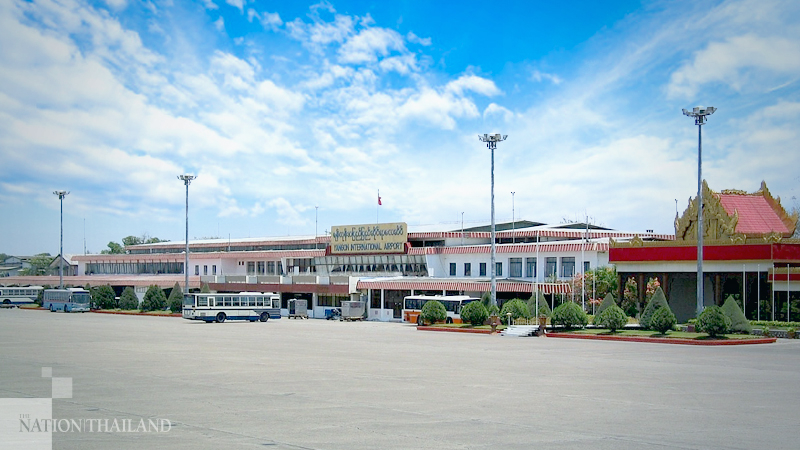
 It wasn’t until Nov. 20 that an EU agreement with BioNTech was finalized. MUST CREDIT: Bloomberg photo by Alex Kraus.
