Russia cracks down on Navalny protests, locking down city centers and arresting thousands #SootinClaimon.Com

#SootinClaimon.Com : ขอบคุณแหล่งข้อมูล : หนังสือพิมพ์ The Nation.

Russia cracks down on Navalny protests, locking down city centers and arresting thousands

InternationalFeb 01. 2021Alexei NavalnyAlexei Navalny

By The Washington Post · Isabelle Khurshudyan, Robyn Dixon

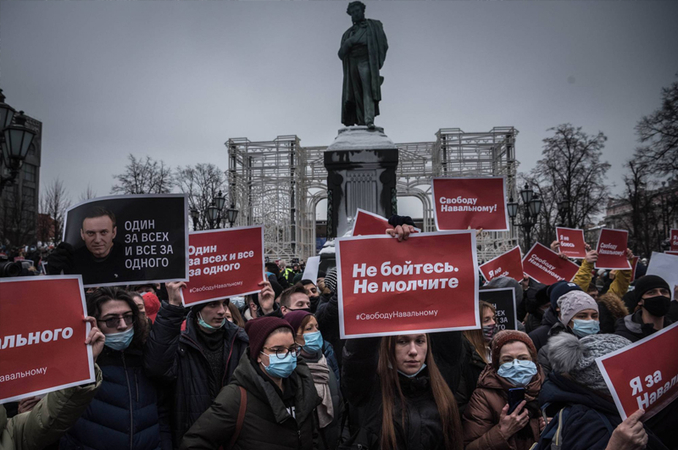
MOSCOW – The Kremlin responded to a second straight weekend of protests on Sunday with a violent crackdown, arresting thousands in a show of Moscow’s unease at the growing unrest triggered by the treatment of jailed opposition leader Alexei Navalny.

A week after tens of thousands of Russians joined demonstrations in more than 100 cities throughout the country, authorities moved to stem Sunday’s rallies before they started, using more aggressive tactics.

But thousands came out despite the threat of arrest – the turnout in some Russian cities was believed to be higher than a week ago – boosting the opposition’s hope of a sustained movement.

Hours after protests began in Russia’s two largest cities, Moscow and St. Petersburg, the monitoring group OVD-Info reported that more than 5,000 people had been detained throughout the country, more than were arrested last Sunday. Navalny’s wife, Yulia, was arrested again.

To head off an afternoon protest planned for Moscow, the city shut down seven Metro stations four hours in advance, told stores and restaurants to close and blocked several roads around the Kremlin, sealing off much the capital’s center.

Police with black helmets and batons were posted along side streets, and they set up checkpoints and restricted people from passing. Large vehicles belonging to Russia’s National Guard parked in front of the famed Bolshoi Theatre; police trucks lined up outside of Moscow’s luxury department store, Tsum.

In an effort to defeat the authorities’ blockade, Navalny’s team announced a new meeting point, about a mile from the original location of Lubyanka Square.

The choice of Lubyanka had been symbolic: It’s in front of the headquarters of the Federal Security Service, the agency that Navalny has said was ordered by President Vladimir Putin to poison him. Navalny took ill during a trip to Siberia in August; Putin has denied involvement. “Who needs him, anyway?” Putin asked a news conference last month. “If we had really wanted, we’d have finished the job.”

Navalny was flown to Germany to recover; he returned to Russia this month and was arrested soon after his arrival.

With movement around Moscow heavily restricted Sunday, turnout was smaller than last week’s estimated 40,000. Those who did come out weren’t exclusively Navalny supporters; some said they wanted to express their unhappiness with the Russian government.

“I’m worried about my future,” said 18-year-old Masha Ulyanova. “They don’t allow people to just walk. They don’t allow people to express their opinion. It’s very sad that our authorities have reached the stage where they have resorted to such strict measures.

“They are afraid that they’ll lose power and they will have to live in this poor country that they have robbed.”

Security forces using megaphones to threaten arrests competed with the honking support of passing cars. As people were detained, the demonstration simply moved to a new location – with police buses right behind them.

Protesters steadily made their way to Matrosskaya Tishina, the pretrial detention center where Navalny is being held. Some traced “Svoboda” – the Russian word for “Freedom” – into snow-covered parked cars.

In a repeat of last week’s events, Yulia Navalnaya was again detained. A squad of heavily armored riot police snatched her out of the crowd and bundled her into an unmarked black van with tinted windows that then sped off.

In St. Petersburg, police used stun guns and batons to corral and detain protesters. Journalists, identifiable in neon yellow press vests, were among those knocked down and forcefully carried off. As riot police formed a wall before protesters and banged on their shields, the demonstrators clapped defiantly in response, videos posted to social media showed.

In Chelyabinsk, more than 1,000 miles east of Moscow, one man shouted that he “can’t breathe” as security forces pinned him to the ground.

“The U.S. condemns the persistent use of harsh tactics against peaceful protesters and journalists by Russian authorities for a second week straight,” Secretary of State Antony Blinken tweeted Sunday. “We renew our call for Russia to release those detained for exercising their human rights, including Aleksey Navalny.”

Seven thousand people turned out in Yekaterinburg, near the Ural Mountains, which was more than last week’s turnout. Protesters in the Far East city of Vladivostok danced in a large circle over the frozen Amur Bay and chanted: “My Russia is in prison.”

Protesters were again undeterred by the bitter cold. The temperature was 45 degrees below zero Sunday in Yakutsk, considered the world’s coldest city; a small group walked around the snow-covered main square. In Siberia’s Krasnoyarsk, where it was 22 below, protesters held hands and sang the Russian national anthem. Later, riot police surrounded the crowd on all sides, according to a photo posted on Twitter.

In Novosibirsk, Russia’s third-largest city, the reported turnout of 5,000 exceeded last week’s. Protesters marched toward the main government building, chanting: “Putin is a thief.”

After about 4,000 people were detained in connection with the Jan. 23 rallies, the turnout in most cities on Sunday appeared to be lower.

A Moscow court last week denied Navalny’s appeal for release from pretrial detention. In an apparent effort to quiet protest organizers, five of his allies were detained for allegedly violating coronavirus regulations at last weekend’s demonstrations and were placed under house arrest until March 23.

Sergey Smirnov, the editor in chief of Russia’s independent Mediazona news outlet, was detained on Saturday while out with his young son. He was accused of breaking protest regulations with a retweet. He was released Saturday evening amid a rising backlash on social media; he’s scheduled to appear before a court Wednesday.

In a message posted on Navalny’s website Thursday, he said the state television channels to which he has access to in jail described the protests as “a couple small rallies held in a couple cities.”

“It seems to me it was not at all like that,” Navalny said. He said people are afraid, but they also know “you can’t put everyone in prison.”

“Come on out, don’t be afraid of anything,” he said. “Nobody wants to live in a country where tyranny and corruption reign. The majority is on our side.”

Navalny will have another opportunity to galvanize support on Tuesday, when he is scheduled to appear in court for allegedly violating the terms of his probation from a 2014 embezzlement case while he was recovering from his near-fatal poisoning abroad. He returned to Russia on Jan. 17 but was arrested before passing border control at the airport.

Navalny has managed to rattle the Kremlin even from behind bars. His recent “Putin’s Palace” video investigation into a palatial billion-dollar Black Sea estate allegedly built for Putin through a complex slush fund has eclipsed 100 million views on YouTube.

As an indication of the video’s impact – owning an opulent mansion was an especially bad look in a week when the state statistics agency reported that nearly 20 percent of Russians live below the poverty line – Putin took the unusual step last week of personally denying that he or his close relatives own the property.

Some protesters on Sunday held up toilet brushes, a reference to the golden ones worth $850 allegedly purchased for the palace.

On Saturday, oligarch Arkady Rotenberg, Putin’s longtime friend and former judo sparring partner, told the pro-Kremlin Mash Telegram channel that he owns the property.

Navalny aide Leonid Volkov said the Russian people were not fooled. “Putin and the Kremlin consider Russian citizens a bunch of manipulated imbeciles,” he tweeted. “We don’t think so.”

Katya Volobuyeva, a 20-year-old university student, said Sunday’s protest in Moscow was the first unsanctioned one she had ever attended, “because it’s impossible to live the way we do in this country, because they tried to murder a person because of what he said, and because they build huge palaces with our taxes.

“They are so afraid of us that they blocked the whole city off,” she said. “My mom knows that I’m here and agrees with it, but she’s worried about me.”

Immigrant families separated at border, reunited, separated again #SootinClaimon.Com

#SootinClaimon.Com : ขอบคุณแหล่งข้อมูล : หนังสือพิมพ์ The Nation.

Immigrant families separated at border, reunited, separated again

InternationalFeb 01. 2021Antonio, Carolina and their daughter Mariel stand in front of the home of Carolina's parents in western Honduras. MUST CREDIT: Washington Post photo by Kevin SieffAntonio, Carolina and their daughter Mariel stand in front of the home of Carolina’s parents in western Honduras. MUST CREDIT: Washington Post photo by Kevin Sieff

By The Washington Post · Kevin Sieff

EL PROGRESO, Honduras – Thirty days after they were separated at the U.S.-Mexico border, held on opposite sides of the United States, Antonio and Maily were reunited at midnight in the parking lot of a South Texas detention center.

Antonio looked at his 7-year-old daughter and thought: “They are returning all of my happiness in a single moment.”

Attorneys and volunteers watched as they hugged. It was July 2018 – days after the Trump administration’s family separations policy was halted. The reunion seemed permanent, a bookend to the most controversial U.S. immigration directive in decades.

But six months later, they were separated again. Antonio went to a scheduled check-in at an Immigration and Customs Enforcement office in central California. He was handcuffed by ICE agents while Maily was in her second-grade class. They have not been together since.

A federal court ordered the government to reunite the thousands of families separated under Trump’s zero-tolerance policy. But many of those parents were released from detention without any legal status in the United States. They were back with their children, but immediately subject to deportation and reseparation.

Antonio, a part-time mechanic, landed in Honduras alone on Jan. 16, 2019. He was not allowed to say goodbye to his daughter. Their second separation has so far lasted two years. Maily is now a fourth grader in New Orleans.

“Separating us once was horrible enough,” he said between sobs at his home in rural Honduras. “Now it feels like I’ve died twice.” He spoke on the condition that his last name be withheld for fear of reprisals in Honduras.

Two and a half years after President Donald Trump ordered an end to family separations, immigration attorneys and advocates are growing increasingly concerned about reseparations. The policy of taking children from their parents at the border provoked global outrage, but far less attention has been paid to those families – or their legal cases – afterward.

Parents and children emerged with separate immigration cases – often with pending removal orders and no attorneys. In hundreds of those cases, parents have been ordered deported while their children’s asylum or visa applications were being processed.

– – –

The American Civil Liberties Union announced in November that it had been unable to locate 666 parents who were separated from their children at the border. Since then, attorneys have learned that some of them were reseparated and deported alone. In recent weeks, advocates have located more than a dozen reseparated parents in Central America.

“Even after families were reunited by the court, the Trump administration tried to reseparate them by deporting the parent,” said Lee Gelernt, the lead ACLU attorney on family separation. “Incredibly, one separation was not enough for the Trump administration.”

As the Biden administration prepares to launch a task force to potentially reunite hundreds of Central American families, cases such as Antonio’s are a reminder of the complicated legal path beyond reunification. It remains unclear what legal status the administration will offer to reunified families and whether it will protect them from deportation. There’s no guarantee that reseparated parents will be allowed to return to the United States.

Images of separated children in makeshift detention centers in 2018 prompted an outpouring of anger and activism. The Trump administration said it had separated at least 5,500 migrant children from their parents.

After Trump signed an executive order ending the policy, new images showed tearful reunions. It might have seemed as if the crisis had ended.

But hundreds of parents had been deported without their children; hundreds more were reunited, but issued deportation orders that meant they could be reseparated at any moment. Often parents were unaware of their removal orders, assuming that reunification implied a path to legal status. It did not.

“The government failed to give these parents basic information about their cases,” when they were released to be reunited with their children,” said Conchita Cruz, co-executive director of the Asylum Seeker Advocacy Project.

According to an analysis of roughly two thousand cases of parents and children separated at the border, about 13% have removal orders, said to the National Reunited Families Assistance Project, a legal cooperative. It’s unclear how many of them have been deported.

– – –

Weeks after Antonio was reunited with his daughter, an ICE agent put a tracking monitor around his ankle and directed him to check in at the agency’s office in Santa Maria, Calif., every 15 days. It was at one of those check-ins, he said, where an agent told him: You don’t have anything here. You’re going back to your country.

He asked whether Maily could return with him to Honduras. He said he was told to give up custody to a relative in the United States or she would be put up for adoption.

The Department of Homeland Security did not respond to requests for comment.

Antonio, who had fled repeated threats of violence in Honduras, was put on a charter flight back to his country. On his return, he relocated to a new area with his wife, Carolina, and another daughter. Their new home lay in a flood plain. When Hurricanes Iota and Eta blew through in November, it was destroyed. He shared a video that shows him up to his shoulders in water, searching for his possessions.

For a while, Maily stayed with an uncle in California. She would burst into tears without warning, often in her classroom. She explained to her teachers that she had been separated – twice – from her father. She is scheduled to begin therapy in the coming weeks.

“I just don’t understand why they did this,” Maily, now 10, said by phone.

Antonio and Maily speak on video calls a few nights a week. Antonio asks Maily how her English is progressing. Maily asks Antonio whether he’s safe. Her first court date is scheduled for December 2022.

During their years apart, she had tried to come up with ideas of how to get her father back to the United States. Last month, in her latest effort to reunite the family, she scribbled a letter to President-elect Joe Biden.

“Congratulations on your new job as president,” she wrote in Spanish. “My reason for writing is to ask you to please help bring my dad and mom and sister to the United States. If you’re able to do this I’ll be the happiest girl in the world.”

She drew a picture of her family, a wide space between herself and everyone else.

Child welfare advocates warn of the trauma inflicted on children who have been separated twice.

“Each time you do this you’re just multiplying by an exponent the level of terror,” said Ken Berrick, founder of Seneca Family of Agencies, which has been charged with linking separated families to mental health providers. “When this is your only experience as a child it becomes a part of who you are – it has lifelong impacts.”

– – –

Reunited families were released into legal peril for a range of reasons, each a reflection of a complex immigration system.

Parents were issued notices to appear in courts, but without dates; they unknowingly missed their hearings and were ordered removed in absentia. Some were never given notices to appear in court at all. Others were ordered deported while in detention, but they were inexplicably released and reunited with their children. For hundreds of reunited parents, deportation orders mean they cannot promise their children that they will not be separated again.

Henry, a 47-year-old Guatemalan man, was separated from his 7-year-old son, Brandon, in 2018. When they were reunited three months later, Henry already had a deportation order.

He says his son panics every time they see a police officer. A few months ago, when Henry had a scheduled check-in with ICE, his son called him frantically: Are they going to send you back to Guatemala?

“He’s always so scared that I’m going to be deported. But I told him, ‘No, they gave me another chance,’ ” Henry said. “Maybe the U.S. immigration officials want to watch me for a while, to see what kind of a person I am.”

Families have discussed what to do in the case of a reseparation. If a parent is deported, he or she can typically choose whether the child should return as well. But because of the conditions the families fled in Central America, those decisions are not straightforward.

“The fact that they don’t have any kind of security that they can remain here with their child – that they can be deported at any moment – it just adds to the extraordinary amount of trauma that families have gone through,” said Ann Garcia, a staff attorney with Catholic Legal Immigration Network.

Young people spreading covid a concern in rapidly aging Japan #SootinClaimon.Com

#SootinClaimon.Com : ขอบคุณแหล่งข้อมูล : หนังสือพิมพ์ The Nation.

Young people spreading covid a concern in rapidly aging Japan

InternationalFeb 01. 2021Visitors on the Kawaramachi shopping street in Kyoto, Japanb, on Jan. 14, 2021. MUST CREDIT: Bloomberg photo by Kosuke Okahara.Visitors on the Kawaramachi shopping street in Kyoto, Japanb, on Jan. 14, 2021. MUST CREDIT: Bloomberg photo by Kosuke Okahara.
By Syndication Washington Post, Bloomberg · Shiho Takezawa, Marika Katanuma

The world’s most rapidly aging society has long struggled to talk to its youth. That’s a disconnect that’s turning deadly in the pandemic.

The difficulty in persuading young adults to upend their lifestyles to prevent covid-19’s spread has challenged countries across the globe. Yet nowhere are the stakes higher than in Japan, where nearly a third of residents are over the age of 65, and the virus response depends on voluntary cooperation.

The nation has so far relied on people changing their behavior in its largely successful fight against the virus, as authorities lack the legal ability to enforce lockdowns. But while calling for cooperation worked in the early days of fighting an unknown pathogen, like their global peers younger Japanese are increasingly hit with virus fatigue. That’s left officials struggling to persuade a demographic that’s least likely to be struck by a harsh bout of Covid, but most likely to pass the virus on.

Government officials and health experts have been exasperated at their inability to communicate with younger people — and sometimes expressed incredulity at the fact that they don’t read newspapers or watch TV, the methods typically used by the government in Japan to reach wide audiences.

Younger people are “one of the key factors in controlling the virus spread,” said Hitoshi Oshitani, a professor of virology at Tohoku University and a member of the expert panel advising the government, “but these are the most difficult people to send a public health message to.”

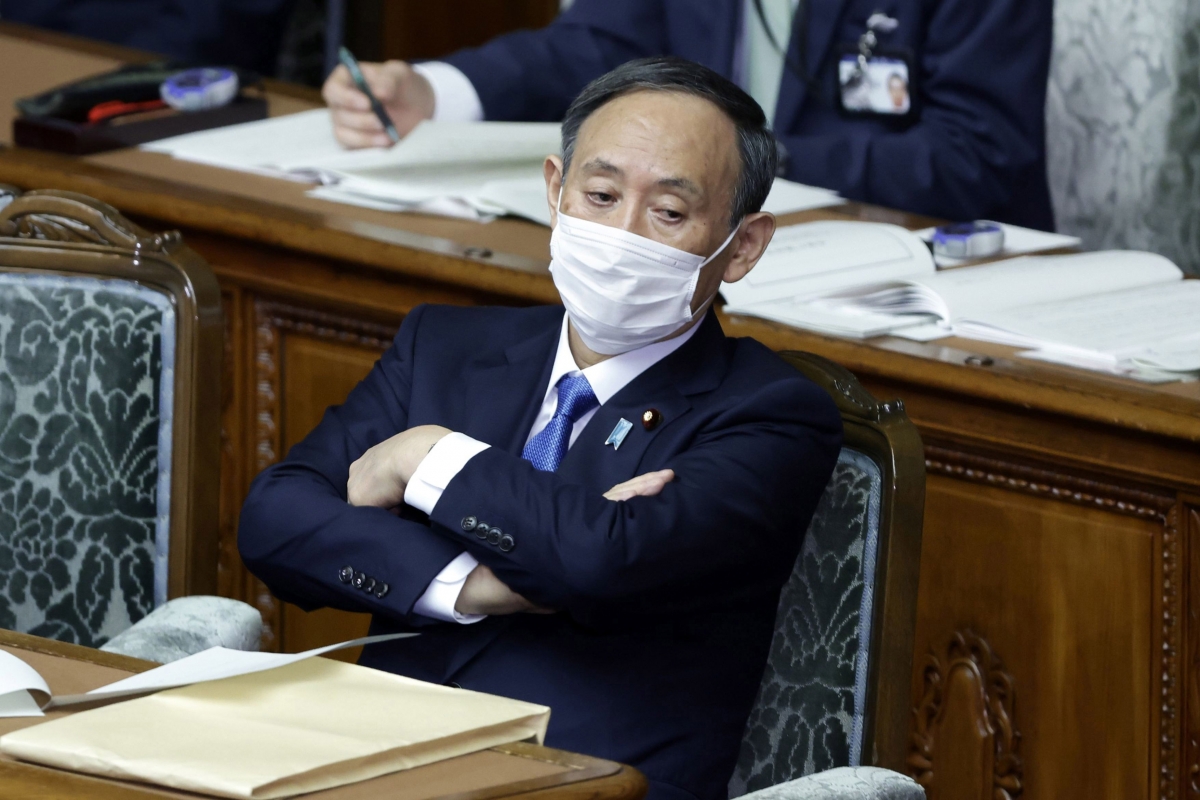
Prime Minister Yoshihide Suga attends an ordinary session at the lower house of parliament on Jan. 18. MUST CREDIT: Bloomberg photo by Kiyoshi Ota.

Prime Minister Yoshihide Suga attends an ordinary session at the lower house of parliament on Jan. 18. MUST CREDIT: Bloomberg photo by Kiyoshi Ota.

Authorities have tried various approaches to get the youth on board, as winter tests Japan’s less restrictive strategy and cases spike. Prime Minister Yoshihide Suga has appealed to their emotions, pleading with them to think about the lives of their grandparents. Japan’s virus czar Yasutoshi Nishimura invoked self-interest, raising the specter of a tougher job-hunting environment should the pandemic drag on and continue to impact the economy.

Other attempts have fallen flat. In August, Tokyo Governor Yuriko Koike released a video with popular YouTuber Fuwa-chan, where the two discussed lifestyle changes to help combat the virus. The video garnered around 370,000 views. A separate behind-the-scenes episode, where Fuwa-chan told jokes as she applied makeup and fretted about how to act with the governor, but said little about the virus, got over a million.

Suga himself, who is struggling with collapsing approval ratings during the latest virus surge, sought advice last week on how to use social media to better communicate his policies, according to a report.

In interviews with Bloomberg News, multiple students and young professionals say the government’s communication has failed to be empathetic to their situation and is unconvincing.

“During the prime minister’s press conferences, there’s no words of comfort or gratitude for the young — instead he just says the youth are infecting the elderly and need to stop. It’s not right,” said Koki Ozora, a 22-year-old college student who runs a mental health hotline for young people. He criticized politicians’ habit of holding dinners even as virus cases spread, and called for authorities to show more sympathy with young people.

“People in government tend to be more conventional and like to rely on methods that’s been used before,” said Makoto Shimoaraiso, a member of the coronavirus strategy office at the Cabinet Secretariat. “This is something I think many countries are struggling with.”

In Canada, Hollywood actor Ryan Reynolds recorded a message in August telling young people to act more responsibly. A German commercial that hailed a young couple being couch potatoes as heroes went viral in November. Yet these measures also appeared to have limited impact amid spiking virus cases.

About a fifth of the more than 300,000 confirmed infections in Japan are among people in their 20s – the largest proportion of any age group. Because they are younger and more mobile, that age demographic is also the most likely to pass on the virus and be part of super-spreader events.

While Japan’s youth are interested in social issues such as climate change and gender equality, most youth don’t see politics as a way to bring about change, said Kazuma Ito, the 22-year-old founder of PoliPoli, a website that helps communicate concerns among younger generations to politicians.

“It’s very difficult for young people to have a voice in politics,” he said.

One way to appeal to youth on covid-19 is by placing the wellbeing of their social group on their shoulders, said Dominique Brossard, a professor specializing in science communication at University of Wisconsin at Madison.

She pointed to the decades-old “Friends don’t let friends drink and drive” slogan in the U.S. as one successful campaign that helped lower incidence of youth drunk-driving. Simply relaying information about the virus may have limited effectiveness with the younger generation, who are accustomed to being bombarded with a constant stream of content.

The pandemic has also robbed young people of economic opportunities as jobs disappear. Many of Japan’s most coveted jobs at big companies start with being hired right out of college, but the jobs-per-applicant ratio for those openings was at a six-year low in 2020 — with 122,000 fewer spots anticipated compared to the year earlier.

“Even if the young make a big effort to stay home, there’s little benefit we can receive in the future,” said 19-year-old college student Lily Yoshida.

Egyptian charity is an oasis of care amid misery of the pandemic #SootinClaimon.Com

#SootinClaimon.Com : ขอบคุณแหล่งข้อมูล : หนังสือพิมพ์ The Nation.

Egyptian charity is an oasis of care amid misery of the pandemic

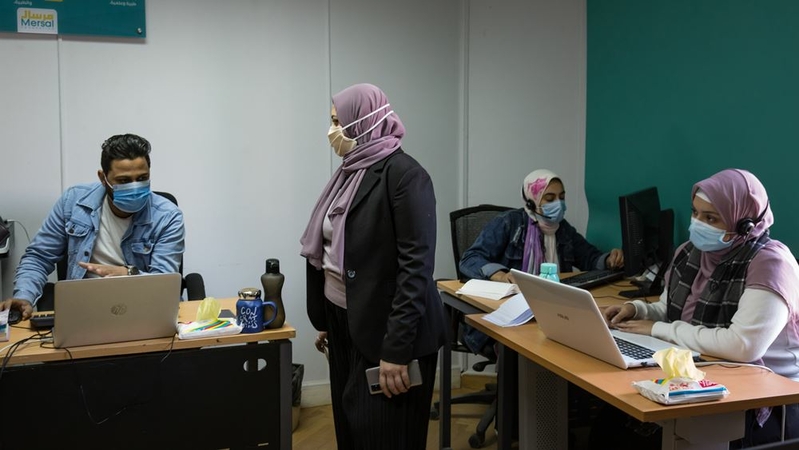
InternationalFeb 01. 2021Heba Rashed, 40, founder and CEO of the Mersal Foundation, on Jan. 21 in the group's emergency call center in Cairo. MUST CREDIT: Photo for The Washington Post by Sima DiabHeba Rashed, 40, founder and CEO of the Mersal Foundation, on Jan. 21 in the group’s emergency call center in Cairo. MUST CREDIT: Photo for The Washington Post by Sima Diab

By The Washington Post · Sudarsan Raghavan

CAIRO – The pleas for help were flooding in. By 2 p.m., Raba Mokhtar was picking up the 131st call of the day to the Mersal Foundation’s 24-hour hotline. Like the vast majority, it was related to the coronavirus pandemic.

On the other end of the line, a woman was frantically describing the condition of a relative, a 67-year-old man who had tested positive for the virus. He had a 100-degree fever and could hardly breathe. They had first tried the Health Ministry’s hotline to look for a bed in a government hospital, with no luck.

“So, you called them and they placed him on a waiting list?” Mokhtar confirmed, peppering the woman with questions and jotting down answers. “And he needs an intensive care unit?”

In a country where government health resources can be either stretched or inadequate and where most people cannot afford hospitalization, a once little-known charity has become a lifeline for thousands of Egyptians. For the past year, and especially during the latest coronavirus wave, the Mersal Foundation has contracted and paid for beds in private hospitals or provided oxygen tanks to people in need.

Mersal and its founder, Heba Rashed, have become so trusted that more than a quarter-million people now follow her social media accounts to learn the true impact of the pandemic in Egypt. Her posts have become an antidote to a widely criticized lack of transparency in the government’s response to the crisis. Today, many Egyptians cling to Rashed’s every assessment.

“Founder and CEO of the NGO @Mersalcharity, one of the most trusted voices on Covid19 in Egypt, stating that there is a slight decline in the number of cases,” tweeted the Big Pharaoh, a well-known blogger, on Jan. 13. “A similar report of her during wave 1 preceded a decline. Situation is still very serious, but let’s hope.”

Egypt has reported about 165,000 infections and 9,100 deaths since the start of the outbreak. Medical experts and even government ministers have publicly said the real numbers are far higher.

President Abdel Fatah al-Sissi’s government has sought to suppress critics who contradict official accounts of the pandemic. At least 15 people have been arrested for spreading “false news” about the virus, U.N. officials said. Doctors have been jailed or reprimanded for complaining about a lack of protective equipment, and a Western journalist was expelled for publishing data that questioned the official toll.

The lack of public confidence deepened in January when a video went viral online claiming that coronavirus patients at a government hospital had died because of a lack of oxygen. The government denied the report, but a week later Sissi ordered a doubling of oxygen production to meet increased demand.

Against this backdrop, the Mersal Foundation has emerged as a trusted oasis of care.

And every day, Rashed has become a covid-19 prognosticator for her legions of followers. “It makes me feel very responsible for every word I utter,” said Rashed, 40. “People get affected by everything I say.”

The entrance to Mersal Foundation offices in Cairo. MUST CREDIT: Photo for The Washington Post by Sima Diab

The entrance to Mersal Foundation offices in Cairo. MUST CREDIT: Photo for The Washington Post by Sima Diab

Growing up in Jordan and the Egyptian desert town of Fayoum, Rashed never intended to start a charity. In college, she studied Spanish and Arabic and later earned a master’s degree in linguistics and several diplomas in other fields. She later worked as a linguist and as a project manager. In her spare time, she volunteered at a local charity.

Soon, Rashed said, she found she had “no passion” for her job and found her charitable work more fulfilling. She also noticed there were few nonprofit groups in Egypt specializing in health issues. So with two other friends, she launched Mersal five years ago.

“It was truly hard at the start,” Rashed recalled. “We had no connections.”

Eventually, they found a sympathetic donor. He gave roughly $1,300, and they set up the charity in Rashed’s apartment. Slowly they grew, soliciting donations mostly on social media. They began to get noticed by some larger donors.

Today, the foundation has four offices in Cairo and one in the northern city of Alexandria, with roughly 200 employees, according to Rashed. She is often hooked, like an IV, to her phone, fielding scores of calls daily with the energy of a teenager.

On a recent afternoon, Rashed was at the foundation’s office on a quiet tree-lined street in Cairo’s affluent Maadi enclave, in a large, multilevel house with a green gate. At the reception area, several people were seeking financial help to address various medical ailments.

The nerve center is a small room with eight desks and a rotating shift of employees answering the hotline round-the-clock. The past few weeks, in particular, have been busy, averaging 60 to 70 coronavirus emergencies per day.

“The second wave is much more vicious than the first one, in terms of the intensity of the infection,” Rashed said. “The number of infections is bigger than the last wave. The symptoms are much more.”

She was infected. So were more than half of her 100 employees in the office, forcing mass isolations.

“It made it very hard to do our work,” Rashed said matter-of-factly.

Still, the foundation kept operating.

The case of the 67-year-old man who had been struggling to breathe was typical. His oxygen levels were extremely low, though he was using a tank. He was also suffering from diabetes and a heart condition, exacerbating the effects of the coronavirus.

Mokhtar, the employee who took the call, asked the man’s relative to send a complete medical report, X-rays of his lungs and any bloodwork. Mokhtar gave her the WhatsApp number.

“We will show them to the medical department, and we will get you a bed when one becomes available,” Mokhtar said. “Peace be with you.”

Finding a bed usually takes a few hours but can stretch into a day or two, employees said. During the earlier wave in the summer, few private hospitals accepted covid-19 cases, and the government hospitals were less prepared, creating huge shortages of beds.

Now, the foundation has contracted with more than 30 private hospitals. In some cases, patients who need help getting care can pay some or all costs. Mostly, though, the charity pays as much as $1,300 per day for hospital beds in intensive care units, money obtained in large part through online appeals for donations. In many instances, beds in government hospitals eventually become available, allowing the foundation to save its funds for the neediest cases.

“The government has prepared more hospitals to treat the virus, and the private sector has started to deal with it as well,” Rashed said.

Nearly 90 percent of patients hail from urban areas, and they often contact to the foundation when the symptoms become unbearable, said Magdy Eissa, the foundation’s medical director. The charity also has helped 22 infected refugees, largely from sub-Saharan Africa, since December.

The foundation’s Facebook page is filled with grateful notes from patients and their relatives, urging people to donate. There are also searing descriptions of the toll the virus has taken.

Hossam Elagamy wrote about his family’s struggle last year to save an aging, diabetic relative infected with the virus who fell ill and started to vomit. The ambulance arrived three hours later, but the paramedics refused to transport the man, because he had not taken a coronavirus test. Finally, an hour later another ambulance came and took him to a hospital.

At the hospital, the staff refused to give him an ICU bed, saying they were not equipped to treat covid-19 cases. An hour later, an ambulance took him to another hospital. It, too, was full.

“We called everyone we know who might help and it was in vain,” Elagamy wrote.

He finally went online to search for options for hospitals. He spotted a Facebook post from a woman applauding the Mersal Foundation’s efforts. Elagamy called the hotline and was asked to send his relative’s medical report.

Fifteen minutes later, the foundation had found a hospital bed, he wrote. But his relative’s condition deteriorated at the facility. He later died, Elagamy said.

“May God remove this crisis,” Elagamy wrote. “May God end this epidemic.”

Trump names new impeachment attorneys after parting with team #SootinClaimon.Com

#SootinClaimon.Com : ขอบคุณแหล่งข้อมูล : หนังสือพิมพ์ The Nation.

Trump names new impeachment attorneys after parting with team

InternationalFeb 01. 2021Donald TrumpDonald Trump

By Syndication Washington Post, Bloomberg · Mark Niquette

Former president Donald Trump announced that two trial lawyers will take over representing him at his upcoming impeachment trial after parting ways with his previous defense team.

Attorneys David Schoen and Bruce Castor will head his impeachment defense, the former president announced Sunday evening. His previous attorneys, including Butch Bowers of South Carolina, departed this weekend, leaving the president without representation just over a week before his trial is to start.

Schoen has been working with Trump and other advisers to prepare for the trial, and Schoen and Castor agree that the impeachment is unconstitutional, Trump said in the release.

Former White House lawyers Pat Cipollone and Eric Herschmann are still in touch with Trump but will not be taking an official role in his defense, said two people familiar with the matter.

Schoen previously represented Trump adviser Roger Stone and victims of terrorism under the Anti-Terrorism Act, according to Trump’s office. He practices across the U.S., focusing on civil rights litigation in Alabama and federal criminal defense work, including white collar cases, in New York, the release said. Schoen has appeared on Fox News, including to discuss the case of accused child sex trafficker Jeffrey Epstein.

Castor was district attorney of Montgomery County, Pa., from 2000 to 2008 and twice was elected Montgomery County commissioner, according to the release. Castor also served as solicitor general and acting attorney general of Pennsylvania.

The move comes as the former president faces a Tuesday deadline to file an initial response to the impeachment charge, and the trial is expected to begin Feb. 9.

Citing sources it did not identify, CNN reported on Saturday that Bowers and the other attorneys representing Trump parted ways after the former president wanted the lawyers to argue that the Nov. 3 election had been stolen from him by massive fraud, an argument he’s already lost in court challenges. The lawyers prefer to focus on the constitutionality of impeaching a president who’s already left office.

The House impeached Trump on one charge of incitement of insurrection after he encouraged supporters who went on to riot at the U.S. Capitol on Jan. 6 in an effort to stop the counting of electoral college votes for President-elect Joe Biden. Five people died in the mayhem, including one police officer.

– – –

Democrats were joined by 10 Republicans, including No. 3 House Republican Liz Cheney of Wyoming, in supporting impeachment.

Trump’s allies have argued that a president who’s no longer in office cannot be impeached, and 45 Republican senators voted last week for a measure to declare the attempt unconstitutional, suggesting that it is improbable that at least 17 would vote to convict.

Sen. Rob Portman, R-Ohio, said on CNN’s “State of the Union” on Sunday that while Trump’s actions were “inexcusable,” he’s keeping an open mind as a juror and the constitutionality of impeaching a former president must be considered.

“If the argument is not going to be made on issues like constitutionality, which are real issues and need to be addressed, I think it will not benefit the president,” said Portman, who announced last week that he’s not seeking reelection in 2022.

On “Fox News Sunday,” Sen. Bill Cassidy, R-La., said that if the evidence presented is that Trump “contributed to an atmosphere to have people charge the Capitol” and threaten members of Congress, “I would hope that whatever defense is put up refutes that charge.”

Blockbuster snowstorm to strike New York, Philadelphia #SootinClaimon.Com

#SootinClaimon.Com : ขอบคุณแหล่งข้อมูล : หนังสือพิมพ์ The Nation.

Blockbuster snowstorm to strike New York, Philadelphia

InternationalFeb 01. 2021Travis Fondow, right, and a friend, prepare to ski near the Washington Monument in Washington on Sunday, Jan. 31, 2021. MUST CREDIT: Photo for The Washington Post by Oliver ContrerasTravis Fondow, right, and a friend, prepare to ski near the Washington Monument in Washington on Sunday, Jan. 31, 2021. MUST CREDIT: Photo for The Washington Post by Oliver Contreras

By The Washington Post · Matthew Cappucci, Andrew Freedman

A high-impact winter storm is set to take aim at the Northeast beginning late Sunday, with the heaviest snow likely from Philadelphia to New York northward to the Boston metro area.

Widespread snow totals nearing or exceeding a foot are possible from Philadelphia to Boston, with 18 inches or more not out of the question in New York, depending on any influx of relatively mild air from the Atlantic Ocean.

The same storm system has already brought eight inches of snow in Chicago and will drop a healthy dose of snow all the way to the Canadian border on Sunday.

The low-pressure area that will bring the heavy snow, strong winds and potential for coastal flooding to the Northeast will spend Sunday getting organized in the Mid-Atlantic region, where snow was falling in the nation’s capital. Washington was poised to receive more snow in one day than the city has seen in two winters.

The winter storm has a history of spawning wild weather across the Lower 48, first driving an atmospheric river ashore in California last week with extreme snow totals topping 100 inches in the Sierra Nevada. From there, it brought severe thunderstorms to the Desert Southwest and tornado activity to Oklahoma, while a dust storm in its wake caused visibility to plummet Saturday in parts of Texas.

Now the main low-pressure area is transferring its energy offshore into a coastal system, also known as a nor’easter, that will intensify and move northward up the coast.

Winter storm warnings for heavy snow were in effect from the mountains of North Carolina through southwestern Connecticut, while watches extend all the way to extreme-northern Maine.

Snow is likely to move into Philadelphia by 4 or 5 p.m. Sunday, with snowfall rates increasing rapidly as the offshore low-pressure system begins to strengthen. Moderate to heavy snow is likely there by late evening, with numerous computer models showing a band of extremely heavy snow forming between Philadelphia and Rhode Island from Sunday night into Monday.

There is a chance that milder marine air drawn inland by the counterclockwise winds around the low-pressure center may flip Philadelphia over to mixed precipitation, including sleet or freezing rain, during the wee hours of Monday morning, before precipitation changes to rain and temporarily ends. Snow will fall heaviest immediately before that changeover, with snowfall rates of at least an inch per hour.

In New York, snow will arrive by late evening Sunday, with heavy snow and possible thundersnow during the morning hours on Monday. Significant uncertainty exists regarding a potential changeover to a wintry mix or rain around noontime, however.

If that transition does occur, snowfall amounts would stack up to a bit more than a foot. But if the changeover doesn’t occur, more significant accumulations would be likely in the Big Apple – perhaps on the order of 18 inches or even a few inches more.

The National Weather Service included New York in the level 5 out of 5 “extreme impact” zone on their outlook map, citing the potential for “extreme disruptions to daily life.”

Most of the surrounding Tri-State area can anticipate “major impacts” from the storm system, which looks to produce potentially blockbuster snowfall totals. In Boston, it’s shaping up to be a more moderate event.

One particular high-resolution computer model, known as the North American Model (NAM), suggests that cold air would remain entrenched in New York for the duration of the event. While this simulation is a bit of an outlier, if that outcome were to come to fruition, this would wind up being a top-tier blockbuster storm for the city itself.

Such heavy snowfall could shut down city streets and cancel flights at the region’s major airports.

“Despite the fact that we are forecasting up to 18 inches of snow, these numbers are conservative if you trust the NAM,” wrote the National Weather Service in New York. “The NAM suggests that 2 ft is reasonable for this event where the heaviest band sets up and where it remains mostly snow.”

If New York were to pick up 19.8 inches or more in 48 hours, it would qualify as one of the top 10 heaviest snowfalls on record in the city.

The top spot of 27.5 inches is held by the Jan. 22-23, 2016, storm.

Regardless, snowfall amounts will vary significantly depending on where the narrow corridors of heaviest snowfall, known as snow bands, set up and stall. In the heaviest bands, snowfall rates of one to two inches per hour or more are possible. Eastern Pennsylvania is also likely to see very heavy snowfall, including in such places as Harrisburg and Allentown, in the east and onto the western Philadelphia suburbs.

There’s the possibility that places in northern New Jersey could see more than two feet of snow, as moisture from the Atlantic Ocean is drawn westward, directly into much colder air.

Snow will ease overnight Monday into Tuesday, but light snow is still likely most of Tuesday morning into the afternoon.

The jackpot of snow may occur in New York City proper, while also encompassing the southern Hudson Valley and most of central and eastern Pennsylvania.

In Hartford, Conn., the snow should stack up to six to 12 inches, with the potential for higher totals.

Farther northeast, in the Providence-to-Boston corridor, meteorologists were grappling with predicting the finicky rain-snow line. Snow will arrive there Monday midmorning, with the steadiest and heaviest precipitation occurring overnight before winding down midmorning Tuesday.

During the storm, the rain-snow line may wiggle back-and-forth near Interstate 95, with a touch of mixing possible in Boston and Providence, R.I., despite predominantly snow falling. For the South Shore, Upper Cape and Plymouth and Bristol counties in Massachusetts, a quick burst of snow will give way to mainly rain.

Storm totals of 10 to 14 inches are expected just west of Boston, with the biggest wild card being the amounts in Boston itself and along the immediate coastline.

The storm is even expected to spread snow into northern New England, benefiting ski areas in Vermont, New Hampshire and Maine.

Conditions will improve Wednesday before milder weather late in the week.

Experts urge faster vaccinations and efforts to curb spread in response to virus variants #SootinClaimon.Com

#SootinClaimon.Com : ขอบคุณแหล่งข้อมูล : หนังสือพิมพ์ The Nation.

Experts urge faster vaccinations and efforts to curb spread in response to virus variants

InternationalFeb 01. 2021

By The Washington Post · Paulina Firozi

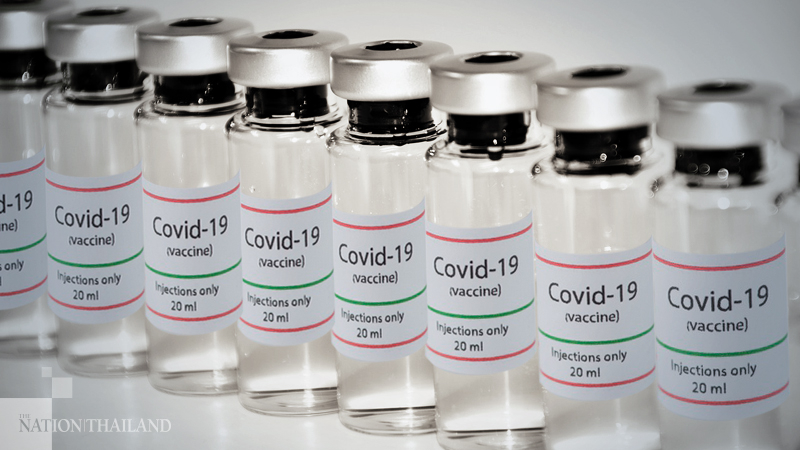
The pace of vaccinations appears to be slowly ticking up amid concerns about how the emergence of more transmissible coronavirus variants will affect U.S. efforts to crush the pandemic.

Saturday marked the third day in a row that more than 1.5 million coronavirus vaccine doses were given in the United States, according to a Washington Post tracker, and the 12th straight day that more than 1 million shots were given.

Meanwhile, experts are calling for dual efforts to address the emergence of the variants by ramping up vaccinations and by continuing to underline the need for safety protocols to curb transmission.

Maryland became the second state to report a case of the new coronavirus variant that was first found in South Africa.

The mass vaccination site at Dodger Stadium, one of the largest in the nation, was shuttered briefly Saturday because of maskless, anti-vaccine protesters.

A group of 10 Senate Republicans announced plans to release a compromise covid relief package and have requested a meeting with President Joe Biden.

Tom Inglesby, director of the Center for Health Security at the Johns Hopkins Bloomberg School of Public Health, said the variants signal that “this virus is going to continue to mutate as long as it’s allowed to thrive in the world.”

“It’s important for us to really do what we can to contain this virus,” Inglesby said in an interview on “Fox News Sunday.”

“Wear masks, avoid social gatherings, decrease social interaction until we get this under control,” he said. “And, certainly, if you have a chance to get vaccinated, if you’re eligible for vaccine, you should get vaccinated.”

Biden has signaled an accelerated goal for vaccinations as his administration continues to tackle the complex mass vaccination campaign. After touting a goal of 100 million shots in 100 days, Biden suggested that he hoped for a figure closer to 1.5 million coronavirus shots in arms per day.

“I think, with the grace of God, and the goodwill of the neighbor, and the creek not rising, as the old saying goes, I think we may be able to get that to 1.5 million a day, rather than 1 million a day,” Biden said Monday. “But we have to meet that goal of a million a day.”

Experts say a faster pace for vaccinations will be key.

Michael Osterholm, director of the Center for Infectious Disease Research and Policy at the University of Minnesota and an adviser to Biden’s coronavirus task force, said it may be time to “call an audible” on vaccine distribution in response to the growing risk from variants. He called for prioritizing first vaccine doses ahead of a variant-fueled surge in cases.

Osterholm said he expects to see a surge of cases in the next “six to 14 weeks,” from variants, such as the strain first found in Britain.

“If we see that happen, which my 45 years in the trenches tells us we will, we are going to see something like we have not seen yet in this country,” he said in an interview Sunday on NBC News’s “Meet the Press.”

“We still want to get two doses in everyone,” Osterholm added, but that in advance of a surge, “we need to get as many one doses in as many people over 65 as we possibly can to reduce the serious illness and deaths that are going to occur over the weeks ahead.”

Florida has the largest number of cases from virus variants, with 125 as of Saturday, according to Washington Post data, followed closely by California with 113 cases from variants.

Scott Gottlieb, a former director of the Food and Drug Administration, warned that Miami and parts of Southern California are at the “highest risk” of becoming overrun by variants, specifically pointing to the variant first found in Britain.

“What we’re likely to see is regionalized epidemics with this new variant, and the two places in the country right now that are the biggest hot spots are Southern California and southern Florida, Miami. Those cities need to be very mindful of the spread of these variants,” Gottlieb said Sunday on CBS News’s “Face the Nation.”

He said vaccinations could help curb that spread.

“As we immunize more of the population, and if people continue to wear masks and be vigilant in these parts of the country, we can keep this at bay. It’s not too late, but it’s a real risk to those regions of the country right now,” he said.

Tom Frieden, former director of the Centers for Disease Control and Prevention, warned in a tweet that the virus could eventually evolve to a point where vaccines may not be protective.

“The Covid variants identified so far are an early warning that the virus could evolve to escape vaccine protection,” Frieden wrote. “The way to prevent that is to BOTH ramp up vaccinations and control spread.”

Richard Besser, the president and chief executive of the Robert Wood Johnson Foundation and a former acting director of the CDC, said discussions on increasing vaccinations should include deliberations on getting vaccines to the most vulnerable individuals.

“The more important question to me is, can we get vaccines to those people who are at the greatest risk, being infected, being hospitalized and dying?” Besser said Sunday on ABC News’s “This Week.”

He suggested more data was needed to understand whom the vaccines are reaching.

Few states are accurately tracking coronavirus vaccinations by race. Some aren’t at all.

“If we don’t do a better job at getting vaccines to those people who are working, who are out there face-to-face every day to put food on the table and to pay the rent, people who are going to work to keep our economy going,” Besser said, “… we could see the same kind of disparities that we’re currently seeing and this same incredible toll in terms of death.”

As health experts call for continued adherence to pandemic protocols, Osterholm also said it’s especially important that people wear face masks properly.

“We see up to 25 percent of people wear it under their nose. You know that’s like fixing three of the five screen doors in your submarine,” he said on “Meet the Press.” “What’s going on there? We’ve got to get people to start using these right.”

Coronavirus mutations add urgency to vaccination effort as experts warn of long battle ahead #SootinClaimon.Com

#SootinClaimon.Com : ขอบคุณแหล่งข้อมูล : หนังสือพิมพ์ The Nation.

Coronavirus mutations add urgency to vaccination effort as experts warn of long battle ahead

InternationalJan 31. 2021

By The Washington Post · Joel Achenbach, Ariana Eunjung Cha

The road to herd immunity from the coronavirus suddenly looks longer. The emergence of more transmissible, potentially vaccine-evading variants threatens to extend the global health disaster and make 2021 feel too much like 2020. A complicated mix of good news and bad news makes any forecast for the coming months fuzzy, but scientists have one clear and sobering message: The pandemic is a long way from over.

Research findings published in recent days have shown that vaccines will still likely work against mutated variants of the coronavirus. But they may not work as well, as the slippery virus continues to adapt to its new host, the human species. Scientists are ramping up genomic surveillance of the virus and vaccine makers are retooling their formulas in an attempt to keep pace with this morphing pathogen.

“We’re very worried,” said Francis Collins, director of the National Institutes of Health. “All it’s going to take is a couple more mutations on top of that, and you’re really going to have to start worrying.”

There is also the issue of reinfection. Collins said Friday that he is troubled by information from the biotech company Novavax, maker of a vaccine that proved effective in clinical trials, that the new variant circulating in South Africa showed signs of eluding natural immunity among volunteers who had previously survived an infection with the more common coronavirus strain. The Novavax vaccine was strikingly less effective against that variant, called B.1.351, than against other strains.

“That is something I had not seen before,” Collins said of the reinfection claim. “It is very tentative, and the numbers are not huge, but I would be alarmed if natural infection . . . is not sufficient to provide immunity.”

All three of the most-scrutinized “variants of concern” – first identified in the United Kingdom, South Africa and Brazil – have arrived in the United States. As of midday Saturday there were more than 430 reported cases involving the U.K. variant, B.1.1.7, and one case, in Minnesota, of the Brazil variant, known as P.1., announced by authorities there Monday.

On Thursday, officials in South Carolina announced the detection of the South Africa variant in two people with no travel history or connection to one another. Maryland Gov. Larry Hogan, a Republican, announced Saturday that this variant had infected an adult who resides in the Baltimore area. The person also had no travel history, which is evidence of community transmission.

The coronavirus mutations have complicated and likely extended the timeline for crushing the pandemic. A truism among epidemiologists is that herd immunity from a more transmissible virus requires a higher percentage of immunized people. Early in the pandemic, scientists estimated that around 70% of people would need to be vaccinated or have developed natural immunity to reach the threshold at which the virus would not freely circulate. That number now seems too low.

If a more transmissible strain becomes dominant, “that level of coverage needed for herd immunity would become higher, in the 80 to 85 percent range,” Jay Butler, deputy director for infectious diseases at the Centers for Disease Control and Prevention, said Friday.

The latest bulletins about variants and the Novavax results in South Africa “really does make the prospect of herd immunity, at least before next winter, much less likely,” said Christopher Murray, director of the University of Washington’s Institute for Health Metrics and Evaluation.

The worrisome comments from experts come despite several positive developments on the vaccine front. Johnson & Johnson reported Friday that its one-dose vaccine was 66% effective in a large clinical trial in preventing moderate and severe disease. That vaccine is relatively easy to handle and, if authorized in coming weeks, will be another weapon to fight the pandemic.

Moreover, vaccines appear to work well against the B.1.1.7 variant that has spread explosively in southern England and led to drastic lockdowns.

But the good results come with asterisks. The J&J vaccine did not appear to prevent disease quite as well in South Africa and Latin America – places where problematic variants are spreading. And the Novavax data showed a dramatic drop in effectiveness against the B.1.351 variant circulating in South Africa.

The mutations have not changed the basic nature of the virus. The new variants spread from person to person and sicken people in the same manner as the more common coronavirus. Their spread can be inhibited by the same common-sense measures, like social distancing and mask-wearing.

So far there is limited evidence of changes in disease severity from these variants. The exception is the variant spreading in the United Kingdom, which may be roughly 30% more lethal, British scientists said recently, acknowledging their evidence is preliminary. There is no strong scientific evidence that B.1.351 or P.1, the variants identified in South Africa and Brazil, respectively, cause more severe disease.

Alessandro Sette, an immunologist at the La Jolla Institute for Immunology, also sees hopeful signs of lasting immunity to the virus. A paper he and colleagues published this month showed that post-infection immunity remained robust at eight months. Preliminary results suggest a large fraction of the immune response is mediated by T-cells that are not affected by the variants, he said, and both natural infection and vaccination induce this response.

“They would still be able to modulate disease severity,” Sette said, suggesting that people infected a second time would likely have a milder disease.

That said, many scientists are convinced that the variants are more transmissible. They contain mutations that appear to enhance the virus’s ability to bind to human receptor cells. One mutation, called E484K, which emerged independently in the variants seen in South Africa and Brazil, has shown signs of eluding antibodies produced either through the natural immune system or therapeutic drugs.

But there are limits to how much a virus can mutate without defanging itself, said Stanley Perlman, a virologist at the University of Iowa.

“It can’t keep mutating because it’s going to lose the properties of being an all-around transmissible and pathogenic virus,” Perlman said. “You don’t have an infinite number of ways to make yourself better.”

Some scientists expect the punch of the virus will grow weaker over time. That has happened with other viruses, including the influenza virus that killed millions worldwide in 1918.

“We will not be for decades dealing with a pandemic,” said epidemiologist Marc Lipsitch, of the Harvard T.H. Chan School of Public Health. “The concern is whether it will be a year or three years until we can make enough vaccines against enough strains to get this under control.”

Paul Offit, a virologist and pediatrician at Children’s Hospital of Philadelphia, said when he first saw the news about the efficacy of the Johnson & Johnson vaccine against the South African variant, it appeared “grim.” But as he dug into the data, he saw that it was much more effective at preventing severe disease.

“If you can keep people out of the hospitals and out of morgues, that is of tremendous value,” he said.

No vaccine is 100% effective, and even the flu vaccines are often just 50 to 60% effective, he noted, which is good enough to save countless lives.

The big question is whether SARS-CoV2 will mutate more like measles, also a single strand RNA virus, which has not drifted very far from when the first vaccine was introduced in 1963. Or will it be more like flu, another single-strand RNA virus, which changes so much that the vaccine has to be updated every year.

The mRNA vaccines in general, he said, are relatively easily reconstructed to battle new variants. The holdup is more likely to be the manufacturing and distributionof the retooled vaccines, Offit said.

Peter Marks, the head of the Food and Drug Administration division that oversees vaccines, said Friday that the agency will do what it can to speed the process. It won’t require big clinical trials, for instance. Ratherthan studies of tens of thousands of people, the agency will mandate much smaller studies of a few hundred. The goal would be to ensure that the vaccines produce the desired immune response and to see whether the products cover just the new variants or the original virus as well as the new variation, he said.

“We would intend to be pretty nimble with this . . . so that we can get these variants covered as quickly as possible,” Marks said on an American Medical Association webinar.

Another issue that could undermine plans to achieve herd immunity is vaccine hesitancy. New polls show that up to a third of the population in the United States is either unsure about getting vaccinated or firmly against it.

Numerous medical centers and first-responder groups have reported that only about half of employees eligible for vaccines have chosen to take them. The 1199 SEIU, the union that represents workers at hospitals, nursing homes and other care facilities in Maryland and the District of Columbia, said that only about 20% of those who work in nursing homes had agreed to get the vaccine. Maryland’s acting health secretary said last week that it was a “surprise” that in the first few weeks the uptake in health care and nursing homes was 35 to 50% – rather than the 80 to 90% they expected.

The greater the unvaccinated pool, the greater the playing field for the virus to replicate and mutate, Anthony Fauci, director of the National Institute of Allergy and Infectious Diseases, said at a briefing Friday. “If you stop . . . the replication, viruses cannot mutate,” he said, adding that this is the reason “to vaccinate as many people as possible, as quickly as possible.”

The urgency of vaccination applies to everyone on the planet, disease experts point out. A mutation in any location will likely spread everywhere – something that happened earlier in the pandemic with a mutation called D614G that appears to have enhanced transmission.

“Vaccine nationalism is very clearly a problem,” said Maria Sundaram, an epidemiologist at the University of Toronto. “The allure of being vaccinated and getting to normal is not quite reality because of the new variants and the underserved communities of the world not getting them.”

But the alarms come at a time when the public may not be receptive to more dire warnings. As the number of infections and hospitalizations in the United States have dipped since the second week of January, governors and mayors have begun easing restrictions. People are eating indoors in restaurants in places formerly shuttered.

Infectious-disease experts warn that this is not a time to let down our guard.

“We have to understand we are going to live with this virus. That’s the new normal,” said Karin Michels, an epidemiologist at the University of California at Los Angeles. “I’m never going to sit on a plane for the next few years without being concerned.”

She said she remains optimistic that the pandemic will be under greater controlbylate summer or fall if vaccinations continue increasing and community spread of the virus is drastically reduced.

Collins, the NIH director, said he sees best-case and worst-case scenarios.

Best case, he said, is that “people roll up their sleeves as quickly as possible to get to that 80 to 85 percent [vaccination rate] and no other strains emerge that are more resistant.”

The worst case is that if people “continue to be irresponsible,” more transmissible variants will rip across the country and potentially escape vaccines, treatments and naturally acquired immunity.

And then, he said, “we’d have to redesign a completely new vaccine all over again.”

Navalny ally urges Biden to sanction Putin associates #SootinClaimon.Com

#SootinClaimon.Com : ขอบคุณแหล่งข้อมูล : หนังสือพิมพ์ The Nation.

Navalny ally urges Biden to sanction Putin associates

InternationalJan 31. 2021

By Syndication Washington Post, Bloomberg · Ilya Arkhipov

A close ally of jailed Russian opposition leader Alexei Navalny urged U.S. President Joe Biden to take punitive action against a wider group of associates of President Vladimir Putin, saying current sanctions aren’t sufficient to stop the Kremlin from cracking down on political opponents and violating human rights.

“Existing sanctions don’t reach enough of the right people,” Vladimir Ashurkov wrote in a letter to Biden posted on his Facebook page on Saturday. He listed 35 people, including billionaires Roman Abramovich and Alisher Usmanov, senior staffers of Putin’s administration, and the heads of several state companies who Navalny says should be targeted.

“Anything less will fail to make the regime change its behavior,” Ashurkov wrote. “The West must sanction the decision makers who have made it national policy to rig elections, steal from the budget, and poison.” Navalny and his allies also want the U.S. to sanction those who hold their money.

The list includes two billionaires, VTB Bank Chief Executive Officer Andrey Kostin, Health Minister Mikhail Murashko and the prominent adult children of Putin allies. Some of those have already been sanctioned by the U.S. Kremlin spokesman Dmitry Peskov, who is also listed, didn’t respond to a request for a comment.

A spokesman for Usmanov declined to comment. Usmanov got into a video spat with Navalny from his 156-meter (512-foot) yacht in 2017 over an investigation into donations to a fund benefiting then-Prime Minister Dmitry Medvedev. The billionaire later won a defamation suit against Navalny.

A spokeswoman for Abramovich said there is no basis for the claims, “which are entirely without foundation.” A VTB spokesperson couldn’t immediately comment.

Navalny was arrested on Jan. 17 upon his return from Germany, where he’d been recovering from a nerve-agent attack in August that he and Western governments blamed on the Kremlin. It denies any involvement. A Russian court put him in custody for 30 days.

He faces as long as 3 1/2 years in prison at a hearing set for Feb. 2 on charges he breached the terms of a suspended sentence. He may also face separate charges of embezzlement punishable by as many as 10 years in prison.

Biden pressed Putin on the poisoning of Navalny in his first phone call with the Russian president on Jan. 26 after taking office. The Kremlin said Putin answered all Biden’s questions in their conversation. It has rejected calls from Western leaders to release the Putin critic. The Russian leader has repeatedly criticized Western sanctions as illegitimate and has sworn never to alter his course because of external pressure.

Tens of thousands of people in cities across Russia took part in mass protests last weekend to demand Navalny be freed. More protests are planned for tomorrow.

Public anger was sparked, in part, by a video by Navalny claiming Putin has built a $1.35 billion palace on the Black Sea, a clip that has drawn more than 100 million views since it was published last week. On Saturday, Putin ally Arkady Rotenberg said he bought the luxury estate to turn it into hotel, according to his press service.

Astra-EU fight opens new rift in global bid to end pandemic #SootinClaimon.Com

#SootinClaimon.Com : ขอบคุณแหล่งข้อมูล : หนังสือพิมพ์ The Nation.

Astra-EU fight opens new rift in global bid to end pandemic

InternationalJan 31. 2021The AstraZeneca and the University of Oxford Covid-19 vaccine in a refrigerator at the Royal Health & Wellbeing Centre in Oldham, England, on Jan. 21, 2021. MUST CREDIT: Bloomberg photo by Anthony Devlin.The AstraZeneca and the University of Oxford Covid-19 vaccine in a refrigerator at the Royal Health & Wellbeing Centre in Oldham, England, on Jan. 21, 2021. MUST CREDIT: Bloomberg photo by Anthony Devlin.

By Syndication Washington Post, Bloomberg · James Paton, John Lauerman

A European dispute over supply of covid-19 vaccines is threatening to unleash a wider political and economic conflict that could stymie global collaboration needed to end the pandemic.

After accusing U.K. vaccine maker AstraZeneca of favoring deliveries to its home country, the European Union announced a drastic plan to control exports of covid shots. The retaliatory move may encourage more governments to use economic might — or other means — to protect their interests.

The European Commission’s restrictions “open Pandora’s box,” said Simon Evenett, a professor of international trade at the University of St. Gallen in Switzerland. If others respond in similar fashion, “it really would be every man for himself.”

The squabble is opening a new rift in the global effort to slow a pathogen that’s killed 2.2 million people and inflamed Brexit tensions between the U.K. and the EU. The bloc is already under pressure to speed up an immunization campaign that’s trailing those in Britain and the U.S.

In a sign of how fraught tensions have become, the bloc also announced Friday that it was seeking to limit exports to Northern Ireland, before retreating from the plan hours later. Introducing restrictions between the Republic of Ireland, which is part of the EU, and Northern Ireland would contravene one of the key principles of the Brexit deal, which sought to avoid border controls after decades of violence.

The EU move prompted a rare show of unity from traditional political enemies in Northern Ireland, who uniformly decried the initial decision. Even with the Northern Ireland issue resolved, the bloc’s actions remain hugely controversial and have been criticized by the World Health Organization, businesses and governments.

The likelihood of such vaccine disputes multiplying looms large after dozens of countries imposed export restrictions on masks, personal protective equipment and medical supplies earlier in the pandemic. Governments and companies have tussled in the past over access to drugs like new, life-saving HIV medications that were too costly for some hard-hit countries to purchase, said Thomas Bollyky, director of the global health program at the Council on Foreign Relations.

“This is not just a fanciful parade of horribles,” he said. “You could see this escalating.”

If governments do take aggressive steps, others could hold back shipments of key ingredients required to make vaccines, or invoke rights to try to produce shots themselves, though that would be very difficult to achieve without support from the manufacturers, according to Evenett.

The situation could set off “chain reactions that go to unexpected places,” said Richard Hatchett, chief executive officer of the Coalition for Epidemic Preparedness Innovations, the organization that’s worked to accelerate development of Covid vaccines. “It’s really important for countries not to overreact.”

In a show of unity, most European countries started vaccinations around the same time in late December. U.S. re-engagement with the World Health Organization under President Joe Biden also spurred hopes of global cooperation. But maintaining that isn’t easy in an environment of increasing infections and vaccine supply constraints.

As political pressure rises, “that feeling of solidarity fades,” said Klaus Stohr, a former WHO official who helped mobilize governments and drugmakers to prepare for pandemics.

The stakes of getting economies back on track have also grown. Access to vaccines has become a matter of national security, said J. Stephen Morrison, director of the Center for Strategic and International Studies’ Global Health Policy Center. That accounts for the U.S. Department of Defense’s important role in developing and distributing shots.

“Vaccines are an indispensable element of getting out from under this scourge that’s destroying economies,” he said. “If you can’t get to herd immunity fast, that inevitably provokes a security crisis.”

Biden has said he’d use the Defense Production Act, a Cold War-era law, to boost the manufacturing of vaccines and the supplies required to administer them, such as vials and needles. Parts of the act could help increase supply, though other pieces could have a ripple effect for global supply chains, Hatchett said.

If the U.S. were to combine that expanded production with export restrictions, other governments would be tempted to follow, Evenett said.

AstraZeneca now has found itself in the middle of a public row over contract terms, accusations of blame and threats to impose limits on vaccine exports. The EU’s drug regulator cleared the company’s covid shot Friday, paving the way for a conditional marketing authorization, and potentially easing supply concerns. Still, frustrations are running especially high across Europe as more contagious versions of the virus emerge, and every step of Covid vaccine production and distribution is under scrutiny.

For months, the EU has faced concerns that it might lag the U.S. and Britain, raising its vulnerability as the virus advanced. Britain in early December became the first Western country to clear a shot, while the U.S. plowed as much as $18 billion into Operation Warp Speed, adding to the pressure on the bloc.

The EU may secure enough supplies to vaccinate three-quarters of its population by late October, hitting that level more than two months after the U.S. and three months behind the U.K., according to the latest analysis by London-based research firm Airfinity Ltd. The estimates are based on the supplies governments have secured per capita, production capacity in each region and the expected efficacy of the shots.

While there are few restrictions on using export bans in trade law, nations could try to tamp down on vaccine-related retaliation via the G-7 or the G-20, as has been suggested by the Ottawa Group, Bollyky said. Those nations in November called for restraint in using any export restrictions as part of wider measures in response to the pandemic, and discouraged WTO members from putting tariffs on essential medical products.

Companies could also help defuse the tension by providing more details about their production plans, Evenett said. Bowing to pressure, AstraZeneca published its contract for the delivery of doses to the region. Still, any effort at resolution would need support from governments that are under extreme pressure to provide vaccines to their populations.

“Guidelines would be a way of preparing — they won’t help you in an ongoing dispute,” said Harvey Fineberg, former president of the U.S. National Academy of Medicine. Attempts to set rules for sharing vaccines “would only be interpreted in light of who it would advantage now.”