Eleven soldiers were hospitalized at Fort Bliss in Texas after they drank antifreeze mistaken for alcohol, Army officials said Friday, as two service members remained in critical condition.
The soldiers were on the last day of a 10-day field training exercise when the incident occurred Thursday, Lt. Col. Allie Payne, a spokesperson for the 1st Armored Division and Fort Bliss, said during a news conference. Some soldiers may be released from the hospital later Friday, she said, noting that the two most serious cases required intensive care.
The substance detected in lab results – ethylene glycol – is commonly referred to as antifreeze, Payne said.
“The soldiers fell ill after consuming a substance acquired outside of authorized food supply distribution channels,” she said in an earlier statement. All but one of the soldiers were enlisted personnel, with one warrant officer among those injured.
Law enforcement is investigating the incident, Payne said.
Ingesting antifreeze can cause kidney damage, which could lead to organ failure, Col. Shawna Scully, deputy commander for medical services at the William Beaumont Army Medical Center at Fort Bliss, said during the news conference.
Army regulations prohibit soldiers from drinking alcohol while in the field. Payne did not indicate whether the soldiers confused the antifreeze with alcohol, or if it was deliberately mixed together to form a toxic cocktail. Bowls of alcohol with several spirits mixed together, known as grog, are mainstays at military social functions and sometimes include less-than-appetizing ingredients, such as hot sauce.
The soldiers all belonged to the 11th Air Defense Artillery Brigade, Payne said, which uses air artillery like the Patriot system to shoot down enemy rockets and missiles.
Fort Bliss has been scrutinized in recent weeks after the death of Pfc. Asia Graham, who was found unresponsive in a barracks on New Year’s Eve. She had previously reported another soldier for sexual assault. That soldier is facing a court-martial on the sex assault charge, CNN reported.
smoke flls the walkway outside the Senate chamber of the Capitol as supporters of President Donald Trump are confronted by U.S. Capitol Police officers on Jan. 6. (Manuel Balce Ceneta/ AP)
By The Washington Post, Meryl Kornfield
WASHINGTON – Federal authorities arrested two women in Pennsylvania on Friday on charges related to the storming of the U.S. Capitol building after the FBI said one of the women expressed an intent to shoot House Speaker Nancy Pelosi, D-Calif.
Dawn Bancroft and Diana Santos-Smith were identified by law enforcement after the FBI said it received a tip on Jan. 12 with a video purportedly capturing the two women as they left the U.S. Capitol on Jan. 6 amid a large mob of people, according to a criminal complaint.
“We broke into the Capitol. . . . We got inside, we did our part,” Bancroft said in the video she sent to her children, according to the FBI. “We were looking for Nancy to shoot her in the friggin’ brain, but we didn’t find her.”
The women – who the FBI said initially lied to authorities – face three federal charges, including knowingly entering a restricted building or grounds without lawful authority and impeding in government business by engaging in disorderly or disruptive conduct in a restricted building or grounds.
Information about their initial appearances in the U.S. District Court for the Eastern District of Pennsylvania was not immediately available. The women could not be reached Friday evening.
News of their arrest and alleged threats come amid heightened security for U.S. lawmakers. Capitol Police asked members of Congress to report travel plans, while the agency beefed up protection for traveling lawmakers in major airports in the region, as well as Washington’s Union Station, The Post reported Friday. Pelosi said on Thursday that part of the threat is an “enemy” within the chamber, referencing colleagues who “want to bring guns on the floor and have threatened violence on other members of Congress.”
Rep. Cori Bush, a freshman Democrat from Missouri, said Friday she requested to move her Capitol office away from Rep. Marjorie Taylor Greene, claiming the Georgia Republican “berated” her in the hallway without a mask.
Bancroft and Santos-Smith, both donning red Make America Great Again hats, were among countless Trump supporters who entered the Capitol in a violent, chaotic scene meant to halt election certification proceedings, according to prosecutors. At least 160 people have been charged in federal court with crimes related to the riot.
Around Inauguration Day, Santos-Smith first told the FBI she attended Trump’s rally but did not enter the Capitol building, according to the complaint. When FBI agents showed her the video in which Bancroft remarks about Pelosi, Santos-Smith admitted she lied and said she was in the Capitol to protest but had not planned it, the FBI said.
Santos-Smith told the FBI that, before entering the building, she heard people in the crowd saying “they’re letting us in” to the Capitol. She then admitted to climbing over a wall, going under or through scaffolding and entering the building through a broken window, according to the FBI.
Both Bancroft and Santos-Smith told authorities that they were in the building for no more than a minute and denied entering offices. They said they deleted the videos they took from inside the Capitol, according to authorities, and Bancroft, who sent the footage to her children, instructed them to also delete what she shared.
Santos-Smith told the FBI she tried to get rid of the videos she took to prevent law enforcement from discovering it.
Videos and photos captured by those in the Capitol, as well as their own cellular data, have been used against them in criminal cases stemming from the attack.
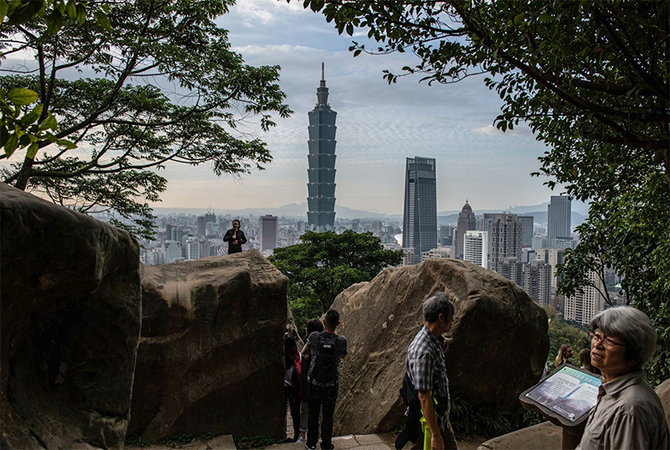
With a few exceptions, Taiwanese businesses, offices and schools stayed open throughout the year.
By Syndication Washington Post, Bloomberg · Samson Ellis
Taiwan’s economic growth outpaced that of China’s for the first time in 30 years, helped by its early control of the virus and stellar export performance.
Gross domestic product expanded 2.98% last year, official data showed Friday, compared with China’s 2.3% rise. Growth was also faster than the 2.55% median estimate in a Bloomberg survey of economists.
In 1990, Taiwan was a $166 billion economy dominated by exports of consumer electronics and plastic goods, while China had just opened its first McDonald’s restaurant, an early milestone in its reform and opening up that led to a generational shift in global economic power. That was also the last year that Taiwan’s economic growth outpaced that of its giant neighbor.
Taiwan was able to avoid the strict lockdowns last year that brought most other economies to a halt. With a few exceptions, Taiwanese businesses, offices and schools stayed open throughout the year and there was something of a boom in domestic travel as people opted to vacation at home rather than head overseas.
The island’s largest technology companies, such as Taiwan Semiconductor Manufacturing Co. and Hon Hai Precision Industry Co., have also soared alongside a global demand boom for semiconductors, 5G smartphones, electric vehicles and high-performance server equipment. Taiwan’s eight largest tech companies are on track to announce record or near-record earnings for last year.
Exports contributed about 60% of GDP growth in 2020, according to Natixis SA Economist Gary Ng in Hong Kong. And judging from TSMC’s ambitious capital expenditure plans, there’s little sign of a slowdown any time soon.
“There will always be demand for semiconductors and no-one can replace TSMC,” he said in a recent interview before the data was released.
The expansion in overseas shipments came despite the currency strengthening more than 5% against the U.S. dollar last year, its biggest gain since 2017.
Still, Taiwan’s out-performance of China is likely to be short-lived. Growth in the world’s second-largest economy roared back to pre-pandemic levels in the fourth quarter after Beijing managed to get Covid-19 under control and deployed fiscal and monetary stimulus to boost investment.
Taiwan’s GDP growth also sped up in the fourth quarter, growing 4.94% compared to a year ago, the fastest pace of expansion since 2011.
China’s GDP will likely rebound to 8.4% this year, according to a survey of economists, its fastest rate of growth since 2011. Taiwan’s is forecast to grow 3.7%.
Weak diesel demand signals a slow rebound for industrial India
InternationalJan 30. 2021Trucks are parked near a wholesale market in Delhi, India, on Sept. 4, 2020. MUST CREDIT: Bloomberg photo by Anindito Mukherjee.
By Syndication Washington Post, Bloomberg · Saket Sundria, Debjit Chakraborty
It’s set to be a slow crawl back to pre-virus levels for Indian energy demand with diesel, the most-used fuel, holding back the recovery.
While demand for diesel, which accounts for around 40% of Indian fuel use in a normal year, rebounded quickly after the the world’s biggest lockdown was imposed in March, the recovery has since slowed. The annual growth rate for diesel consumption won’t get back to pre-virus levels until the year ended March 2022, said Mukesh Kumar Surana, chairman of Hindustan Petroleum Corp.
Used in factories, construction and agriculture as well as powering the truck and bus fleets, diesel is a bellwether of industrial activity in India and its tepid recovery reflects an economy still struggling to shake off the crippling effects of the pandemic. Gasoline demand, by contrast, is being buoyed by people opting to use private cars and motorcycles to avoid being exposed to covid-19.
“The recovery in diesel demand is lagging behind gasoline, and the trend is likely to persist through most of the first half of 2021,” said Senthil Kumaran, head of South Asia oil at industry consultant FGE. “Demand for diesel will average about 5% lower than year-ago levels in the coming months.”
Consumption of diesel in the first quarter will be only 3.9% higher from a year earlier, when the national lockdown was imposed, according to FGE. Motor fuel demand will climb 12.5% over the same period.
The year got off to a shaky start with fuel sales falling in the first two weeks of January from a month earlier and diesel showing the biggest drop. Farmer protests have affected the movement of vehicles in some states and damped consumption, while record high fuel prices have also dented demand.
Only around three-quarters of India’s trucking fleet is operational, according to Naveen Gupta, secretary general of the All India Motor Transport Congress that represents about 10 million truckers. “Operating costs are at an all-time high because of high diesel prices, but freight has not increased,” he said.
There are signs, however, that the economy of India — the world’s third-biggest oil importer — is starting to perk up after shrinking by a forecast 7.7% last year. Seven of the eight high-frequency indicators tracked by Bloomberg News held steady in December and one deteriorated.
Finance Minister Nirmala Sitharaman is expected to announce generous public spending and measures to put more money into the hands of average Indians when she unveils the federal budget on Monday. Diesel demand should also improve a bit during crop harvesting in March and April, HPCL’s Surana said.
After slumping around 15% last year, full-year diesel consumption will exceed that of 2019 by 3.3%, according to Bloomberg calculations based on figures from FGE and the oil ministry. Gasoline demand, meanwhile, will be about 11% higher this year than in 2019.
Oil consumption is already close to pre-virus levels and should be higher this quarter than the same period last year, Indian Oil Corp. Chairman Shrikant Madhav Vaidya said on Friday. Overall, demand for major fuels — diesel, gasoline, jet fuel, liquefied petroleum gas, naphtha and fuel oil — should rise by around 14% this year from 2020, FGE’s Kumaran said. Oil demand will “definitely”recover to 2019 levels by the fourth quarter, he said.
However, R. Ramachandran, the former refineries director at Bharat Petroleum Corp., said that greater use of fuels like liquefied natural gas and compressed natural gas in transport means diesel is unlikely to be as dominant in the Indian energy mix as it was before Covid-19.
“We are witnessing exceptionally good demand for gasoline,” said Ramachandran, who has almost four decades of experience in the Indian oil industry. “But don’t expect diesel to recover to the growth rates of the past.”
By Syndication Washington Post, Bloomberg · Eric Lam
Hong Kong’s economy shrank by a record in 2020, with the global pandemic dragging down output in a city already reeling from massive political upheaval.
Gross domestic product fell 3% in the fourth quarter from a year earlier, resulting in a full-year decline of 6.1%, according to advance estimates from the Hong Kong Census and Statistics Department Friday. The median estimate in a Bloomberg survey of economists was for a 2.1% contraction in the fourth quarter and 6% for the whole of 2020.
Hong Kong hasn’t posted back-to-back annual contractions in data going back to at least 1962. And the biggest contraction in GDP over that period was a 5.9% decline in 1998, when the city’s economy was affected by both the Asian Financial Crisis and the handover to China.
Consumption and tourism-related sectors were particularly hard-hit by the pandemic last year while financial market activity “stayed robust,” the government said in the GDP report.
“The Hong Kong economy is expected to see positive growth for 2021 as a whole, but the economic situation in the first half of the year will remain challenging,” the report said. “Locally, the prospect of domestic economic activities depends critically on how fast the local epidemic situation can be contained.”
Even before the coronavirus hit, the city’s economy was under stress following months of disruptive pro-democracy protests in 2019 that curbed spending and investment. Once the virus began spreading, travel bans brought tourism to a halt and social distancing restrictions put a further dent in spending. By the end of 2020, unemployment had surged to a 16-year high of 6.6%.
Virus outbreaks continue to weigh on the recovery, with the economy losing momentum in the fourth quarter after the government reimposed strict measures to control the spread of infections. GDP growth slowed to 0.2% last quarter compared with the previous three months.
“The next 18 months for me will be full of challenges,” Hong Kong’s Chief Executive Carrie Lam said an interview with Bloomberg Thursday. “I need to deal with this pandemic, and then I need to stimulate the economy to create more jobs for the people of Hong Kong.”
Lam said the economy has a very good chance of achieving positive growth this year, subject to the course of the pandemic. She pointed to an improvement in exports and imports in the latter half of last year as signs of a recovery and said spending at retailers and restaurants will pick up once virus restrictions are lifted.
Revised fourth-quarter and full-year figures as well as growth forecasts for 2021 will be released with the upcoming budget on Feb. 24.
By The Washington Post · Lily Kuo, Shibani Mahtani
TAIPEI, Taiwan – China on Friday accused Britain of turning Hong Kong residents into “second-rate” citizens as the country prepares to welcome tens of thousands of people fleeing Beijing’s crackdown in the Asian financial center.
In a gesture set to inflame tensions between China and the U.K., Beijing said that starting on Sunday it would no longer recognize British National (Overseas), or BN(O) passports – a type of British nationality granted to residents of the former colony born before its 1997 handover to Chinese control.
The U.K. on Sunday begins accepting applications for a program that expands the rights of BN(O) holders, allowing them and their families to live and work in Britain and eventually seek citizenship. Some 5.4 million of Hong Kong’s 7.5 million people are eligible, raising the prospect of a mass exodus.
Britain moved to open its doors after China imposed a sweeping national security law on Hong Kong, sharply curtailing political rights, which London said was a clear breach of the handover agreement. Human rights advocates say authorities are using the new powers to target democracy activists and government critics.
On Friday, British Prime Minister Boris Johnson said he was “immensely proud” of his country’s “commitment to the people of Hong Kong.”
“We have stood up for freedom and autonomy – values both the U.K. and Hong Kong hold dear,” he said.
Chinese Foreign Ministry spokesman Zhao Lijian responded by saying China would no longer recognize the BN(O) as a travel document or proof of identification – a step it has been threatening for months. Criticizing the U.K. for “disregarding the fact that Hong Kong has been returned to China for 24 years,” Zhao said Beijing reserved the right to take further action.
“The U.K. is plotting to turn a large number of Hong Kong people into second-rate U.K. citizens,” he said, accusing Johnson’s government of “violently” interfering in China’s affairs.
While the comments were among China’s harshest against Britain, it was unclear how much effect the change would have or whether it could be used to stop Hong Kong residents from fleeing. Residents can leave Hong Kong with a government-issued identity card or Hong Kong passport and later use the BN(O) document to enter the U.K.
Activists helping Hong Kongers settle in Britain saw Beijing’s move as largely symbolic, noting that it would be difficult for Chinese authorities to know who had settled in the U.K. through the BN(O) program.
“Not recognizing the BN(O) as a valid travel document is the mildest action Beijing can take, so it is well expected and even a relief,” said Simon Cheng, who was granted asylum in the U.K. last year and now helps newly arrived Hong Kongers with immigration advice, legal aid and other assistance. Cheng, a former British consulate worker, was snatched and detained in China during a business trip there in 2019, and said he was tortured.
China promised Hong Kong a high degree of autonomy and pledged to preserve the city’s way of life, including a measure of freedom, for 50 years after the handover. But its tightening control of the city, especially after anti-government protests in 2019, has prompted widespread alarm.
Further measures by Beijing could be a concern. Rights groups say Chinese authorities have previously used travel documents as a way to control or pressure citizens it deems troublesome, by confiscating passports or preventing dissidents, as well as Tibetans, Uighurs and other minorities from obtaining passports.
In the months since Beijing imposed the national security law on Hong Kong, residents have sought ways to escape the city.
Britain’s BN(O) offer has been of particular focus. Since July 15 last year, some 7, 000 Hong Kong people have resettled in the U.K., which granted them special permission to stay even though the BN(O) program doesn’t take effect until this weekend. Others have also arrived in the U.K. hoping to seek residency through asylum.
In October, the British government estimated that between 123,000 and 153,700 BN(O) passport holders and their dependents could arrive in the first year of the migration offer, and up to 320,000 over five years. Civil society groups say that estimate is conservative, and expect up to 600,000 Hong Kongers to relocate to the U.K.
Activists say Hong Kong authorities could impose further controls, such as pressuring airlines not to recognize the special passports or even restricting dual nationality.
“The worst-case scenario would definitely be the Chinese government urging all Hong Kong [people] to renounce the BN(O) otherwise there will be consequences,” said Nathan Law, an activist who left Hong Kong for Britain. “This is something we ultimately worry about.”
HUD nominee Fudge to push for rental assistance, affordable housing amid coronavirus crisis
InternationalJan 29. 2021Rep. Marcia Fudge, D-Ohio, speaks in December after being formally nominated by President-elect Joe Biden to lead the Department of Housing and Urban Development. MUST CREDIT: Washington Post photo by Joshua Lott.
By The Washington Post · Tracy Jan
WASHINGTON – If confirmed as secretary of housing and urban development, Rep. Marcia Fudge, D-Ohio, will confront the immediate challenge of keeping millions of Americans from losing their homes during the coronavirus pandemic while ending discriminatory housing policies as part of President Joe Biden’s push to dismantle systemic racism.
Fudge, 68, appeared remotely before the Senate Committee on Banking, Housing and Urban Affairs for her confirmation hearing Thursday, from Cuyahoga Community College in Cleveland with her family, including her 89-year-old mother, behind her.
During the 75-minute hearing, Republican senators chastised Fudge on what they called her past “intemperate” comments about race and the GOP over policy disagreements, accusing her of dismissing the party’s concern for Black Americans and other communities of color.
Sen. Tom Cotton, R-Ark., mentioned the Biden administration’s focus on examining domestic policy through the lens of racial equity, asking Fudge to define the difference between racial equity and racial equality,
“From my own perspective, the difference is one just means you treat everybody the same. Sometimes the same is not equitable,” Fudge said. “Equity means making the playing field level. . . . The same is not always fair.”
The long history of discriminatory housing policies – such as “redlining,” a policy under which the federal government and banks denied mortgages to people in minority neighborhoods or charged those borrowers more – have directly contributed to the gap between White and Black Americans in wealth, income, homeownership and other economic measures.
The government should directly address the racial wealth gap by offering down payment assistance to residents of previously redlined neighborhoods, given that coming up with cash for down payments is the biggest impediment for Black homeownership, Fudge said. “It’s like us being in a race with people who already have a head start.”
Fudge said she expects to make homeownership – and the wealth creation that comes along with it – a reality for more Americans. Forty-six percent of Black families owned homes, compared with 75% of White families in 2020. That homeownership gap has widened since 1976, according to Pew Research Center.
Boosting Black homeownership, she said, “will require us to end discriminatory practices in the housing market, and ensure that our fair housing rules are doing what they are supposed to do: opening the door for families, especially families of color who have been systematically kept out in the cold across generations, to buy homes and punch their ticket to the middle class.”
Fudge, the former chairwoman of the Congressional Black Caucus who served as Warrensville Heights’s first African American and first female mayor, said that in addition to bolstering fair housing protections and expanding access to affordable housing, her most urgent task is providing rental assistance to households at risk of eviction.
“My first priority as secretary would be to alleviate that crisis and get people the support they need to come back from the edge,” Fudge told committee members.
Tens of millions of Americans are behind on rent, according to Fudge, and almost 3 million homeowners are in forbearance; another 800,000 borrowers are delinquent. Fudge said the $25 billion that Congress has provided in rental assistance and the government’s extension of the eviction moratorium are not enough. Latinos and Black Americans are more likely than White people to have reported job losses during the recession induced by the coronavirus pandemic, and people struggling to pay rent continue to be served with eviction notices despite moratoriums.
Cecilia Rouse, Biden’s nominee to head the Council of Economic Advisers, appeared jointly with Fudge during Thursday’s confirmation hearing,
Sen. Pat Toomey, R-Pa., the acting committee chairman who presided over the hearing, said he hopes Congress will be able to work with Fudge and Rouse to develop appropriate responses to help those suffering the most from the pandemic-induced economic crisis.
“We are in a different place in our economy than we were back in March,” he said, adding that it’s become clear “targeted” groups are being hit much harder by the recession than the “universal catastrophe” in the spring.
Toomey expressed concern about Fudge’s intent to undo HUD regulations put in place by the Trump administration that Republicans said addressed costly and time-consuming Obama-era fair-housing requirements and that Toomey said also discouraged the construction of much-needed affordable housing.
Biden, in executive orders pertaining to racial equity this week, sought to strengthen these anti-discrimination housing policies that the Trump administration had rolled back.
Fudge, as HUD secretary, would be expected to reinstate a 2013 rule aimed at barring the housing industry from enacting policies that, while seemingly race-neutral, have an adverse effect on Black and Latino Americans. The rule had codified a decades-old legal standard known as “disparate impact,” but the Trump administration issued a new rule in September that housing advocates said would make it harder to prove such forms of bias.
Biden is also pushing for the reinstatement of another Obama administration regulation that required communities to identify and address barriers to racial integration and disparities in access to transportation, jobs and good schools – or risk losing federal funds.
Housing advocates say they expect Fudge to do more than reverse the Trump administration’s evisceration of President Barack Obama’s housing policies.
Julián Castro – the housing secretary under Obama who recently helped prepare the “New Deal for Housing Justice,” a playbook for federal policy change focused around racial equity – said in an interview that the new administration should invest in boosting the agency’s fair-housing staff and funding local housing and civil rights nonprofit organizations so reports of housing discrimination can be investigated and fair-housing laws better enforced.
Black homeownership and net wealth were devastated during the Great Recession of 2007-2009, in part because of predatory lending practices, and have yet to recover.
“If we can create greater homeownership for everybody, but particularly for people of color that have lagged behind, then we can close that wealth gap,” Castro said. “I’m confident that it is more realistic today than it was 10 years ago to get big things done on housing, because more people are feeling the pinch right now.”
Other recommendations for the first 200 days of the Biden administration include reinstating protections for transgender homeless people, solidifying the right of families of mixed immigration status to access federally subsidized housing, expanding access to housing vouchers, considering the treatment of people with criminal records who seek federal housing assistance, creating a refundable renter’s tax credit, and establishing a presidential commission on reparations to Black Americans for the legacy of discriminatory federal housing policy.
The spread of covid-19 led to a surge in orders for factory robots
InternationalJan 29. 2021A robot assembles a string trimmer power tool at the Stihl Inc. manufacturing facility in Virginia Beach, Va., on Jan. 11, 2018. MUST CREDIT: Bloomberg photo by Luke Sharrett.
By Syndication Washington Post, Bloomberg · Thomas Black
Orders for robots soared in North America at year-end as manufacturers attempted to grapple with the rising toll of covid-19 and avoid putting employees at risk.
Companies ordered 9,972 robots in the fourth quarter, up 64% from a year earlier. That lifted the annual total to 31,044 units, up 3.5%, the Association for Advancing Automation reported Thursday. And for the first time, automakers didn’t lead demand.
“The pandemic has created a sense of urgency for manufacturing companies to invest in automation like never before,” said Mike Cicco, chief executive officer of the Americas unit of Fanuc Corp., a Japanese robot maker.
The need for automation became apparent outside the auto industry as workforces were hobbled by coronavirus infections, making it difficult to keep up with demand. Sales rose in some industries as household income that would have been spent on restaurants and entertainment went instead to consumer goods. Robot orders in food and consumer goods, life sciences, and plastics and rubber industries all rose more than 50% last year.
Technological advances — such as improved vision, mobility and end-of-arm tools for grabbing objects — have expanded the uses for automation. Machine learning, meanwhile, has made it much easier to program robots for complex tasks that couldn’t be done before, such as preparing food.
It wasn’t long ago that almost all robots were fenced in to keep humans safe. Now, with sensors that stop the machines when people approach, more robots are working alongside employees.
“The automation competence level in general industry has grown, and that matured into greater demand,” said John Bubnikovich, chief regional officer for North America at Germany’s Kuka.
Most of last year’s gain in orders came in the second half. In the first, North American robot orders dropped 18% as companies struggled to understand the impact of the lockdowns. Then demand accelerated, with the final three months of the year registering the second strongest quarter ever, behind the fourth quarter of 2016.
FedEx Corp. in March installed four robots in a pilot program at its Express unit in Memphis, Tennessee, to pick small packages of different sizes and shapes from a bin and put them on a conveyor for sorting.
With the robots handling as many as 1,300 packages an hour, FedEx workers are freed up to do more complex work, such as correcting addresses and dealing with delays, Aaron Prather, senior technical adviser at FedEx Express, said in an October presentation. FedEx plans to add more robots this year, he said.
U.S. new-home sales rose in December for first time since July
InternationalJan 29. 2021New homes under construction by Pardee Construction in the Pacific Highlands Ranch master planned community in San Diego on Aug. 31, 2020. MUST CREDIT: Bloomberg photo by Bing Guan.
By Syndication Washington Post, Bloomberg · Olivia Rockeman
U.S. new-home sales rose in December for the first time in five months, capping the best year since 2006 and signaling that record-low mortgage rates continue to drive demand for a sector that’s been a bright spot in the economy.
Purchases of new single-family houses increased 1.6% to an 842,000 annualized pace in December from a downwardly revised 829,000 rate in the prior month, government data showed Thursday. The median projection in a Bloomberg survey called for 870,000. The median price rose 8% from a year earlier to $355,900.
Housing has helped drive the U.S. economic recovery, fueled by cheap borrowing and buyers looking for more space during the pandemic. While the strength continued in December, a lack of affordable homes and a sluggish job market may be starting to limit the strength in the sector.
For the full year, sales climbed to 811,000, the best level in more than a decade, according to the report, which is released jointly by the Census Bureau and Department of Housing and Urban Development.
Other data in recent weeks show the housing market strengthened in December. Housing starts recently rose to the best pace since late 2006, while existing homes saw unexpected strength.
Federal Reserve Chair Jerome Powell on Wednesday cited real estate as a bright spot in the economy even as other sectors have cooled. “The housing sector has more than fully recovered from the downturn, supported in part by low mortgage interest rates,” he said in a briefing after the latest gathering of policy makers.
The report showed the number of properties sold for which construction hadn’t yet started increased to 277,000 from 256,000 in the prior month, while the number of homes for sale rose to 302,000, the most since May.
At the current sales pace, it would take 4.3 months to exhaust the supply of new homes, up from 4.2 months.
Across regions, sales climbed in the West and Midwest, while the South, the biggest region, fell to the lowest since May.
Samsung net profit misses estimates after 5G iPhone’s debut
InternationalJan 29. 2021Samsung Galaxy S21 smartphones in Phantom Black, Phantom White, Phantom Violet, and Phantom Pink at the Samsung Unpacked product launch event in New York on Wednesday, Jan. 13, 2021. MUST CREDIT: Bloomberg photo by Nina Westervelt
By Syndication Washington Post, Bloomberg · Sohee Kim
Samsung Electronics missed analyst estimates for the fourth quarter and warned profitability will likely decline this quarter, citing weakness in its memory chip business and challenges with currency fluctuations.
South Korea’s biggest company reported net income in the three months ended December of 6.45 trillion won ($5.84 billion), missing the 7.3 trillion won average of estimates compiled by Bloomberg. Shares fell 2.2% in Seoul on Thursday.
Samsung, the world’s largest maker of memory chips and displays, struck a cautious tone that stood in contrast to that of many technology companies benefiting during the coronavirus lockdowns. Just hours earlier, Apple and Facebook reported financial results that handily exceed estimates.
“In the first quarter, we expect overall profitability to decline due to relative weakness in the memory and display businesses,” said Ben Suh, executive vice president of investor relations, during a call with investors. In the memory business, Samsung’s most important profit engine, “results are likely to weaken due to currency effects and continued costs associated with new fab ramp up.”
Operating profit for the semiconductor unit was 3.85 trillion won in the fourth quarter, short of the 4.62 trillion estimate from analysts. The company said it expects a recovery in the business in the first half.
Samsung said it’s tracking whether chip shortages that have hit the global auto industry could spill over to other sectors, including tech products.
“This is a global issue,” said Han Jinman, executive vice president of the memory business. “There is a possibility that the shortage of other semiconductor parts may impact mobile demand and so, we are carefully watching how that plays out.”
In the smartphone business, Samsung struggled in the holiday period as Apple introduced its first 5G-capable iPhones and Chinese rivals put up fierce competition. The Cupertino, Calif.-based company took over the No. 1 position in the fourth quarter, ahead of Samsung and China’s Xiaomi, market research firms said on Thursday.
With a lot of good devices on the market, “there is only so much that Samsung can grab out of it,” said Kiranjeet Kaur, research manager at IDC.
Investors had anticipated Samsung could increase its dividend payout substantially, in part because the founding Lee family faces an enormous inheritance tax bill. Instead, the company said it would continue to return 50% of free cash flow to shareholders between 2021 and 2023, although its annual dividend payout will increase slightly to 9.8 trillion won.
The results come just days after Samsung’s de-facto leader, billionaire heir Jay Y. Lee, was sent back to prison on bribery charges. Although professional managers lead the company’s operating units, Lee has played a central role in major strategic decisions.
The company signaled it will continue to press ahead with critical deals and investments. Samsung will use its capital to expand the capacity of its foundry business, which fabricates chips for clients like Nvidia, to meet demand and overcome current supply shortages. It will also invest in facility expansions and “meaningful” acquisitions, the company said.
“For the last few years, we have been evaluating possible M&A opportunities very carefully and have made significant progress in terms of preparation,” Choi Yoon-ho, chief financial officer of Samsung, said during the earnings call. “Although it is difficult to pinpoint a specific timing due to uncertainties in the internal and external business environment … we are optimistic of carrying out meaningful M&A activities during this term.”
Analysts including Yungsan Choi of Ebest Investment & Securities have been anticipating a long-awaited rebound in memory chip prices due to demand for servers and more powerful 5G smartphones. Component supplier Murata Manufacturing and chipmaker MediaTek both anticipate more than half a billion 5G handsets to be shipped this year.
Chipmakers Intel and Micron Technology gave a bullish forecast for the first quarter of this year on continued demand for computers and phones that enable working and studying from home. Taiwan Semiconductor Manufacturing is planning another record-breaking year of investment with as much as $28 billion set aside to expand and improve its production capacity at a time of silicon supply shortages affecting everyone from global automakers to mobile tech giants like Apple and Qualcomm.
Samsung’s contract chip manufacturing is expected to expand with the addition of Intel as a customer. The two companies have discussed development and production of Intel’s mainboard chipsets over the last two years and Samsung will produce the chipset at its Austin, Texas, plant starting from this quarter, Meritz Securities said in a note.
The existing Austin fab is capable of operating on a 14-nanometer process. With rising expectations of growth in the foundry market, Samsung is considering building a cutting-edge logic chipmaking plant in the region that would be capable of fabricating chips as advanced as 3nm in the future, Bloomberg News reported earlier.
“Regarding investments including building a fab in the U.S., we haven’t made a decision yet,” said Shawn Han, senior vice president. “Due to the nature of foundry business that requires timely and efficient responses to customers’ demand, we routinely review capacity expansions. We continue to study ways to optimize operations at fabs in all regions from Giheung, Hwaseong to Austin.”



 Trucks are parked near a wholesale market in Delhi, India, on Sept. 4, 2020. MUST CREDIT: Bloomberg photo by Anindito Mukherjee.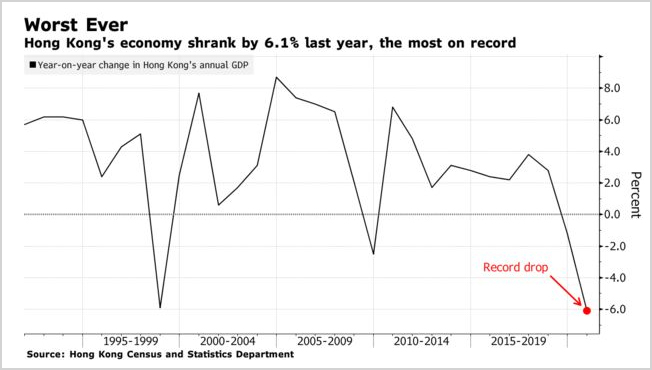

 Rep. Marcia Fudge, D-Ohio, speaks in December after being formally nominated by President-elect Joe Biden to lead the Department of Housing and Urban Development. MUST CREDIT: Washington Post photo by Joshua Lott.
 A robot assembles a string trimmer power tool at the Stihl Inc. manufacturing facility in Virginia Beach, Va., on Jan. 11, 2018. MUST CREDIT: Bloomberg photo by Luke Sharrett.
 New homes under construction by Pardee Construction in the Pacific Highlands Ranch master planned community in San Diego on Aug. 31, 2020. MUST CREDIT: Bloomberg photo by Bing Guan.
 Samsung Galaxy S21 smartphones in Phantom Black, Phantom White, Phantom Violet, and Phantom Pink at the Samsung Unpacked product launch event in New York on Wednesday, Jan. 13, 2021. MUST CREDIT: Bloomberg photo by Nina Westervelt
