By Syndication Washington Post, Bloomberg · Robert Langreth
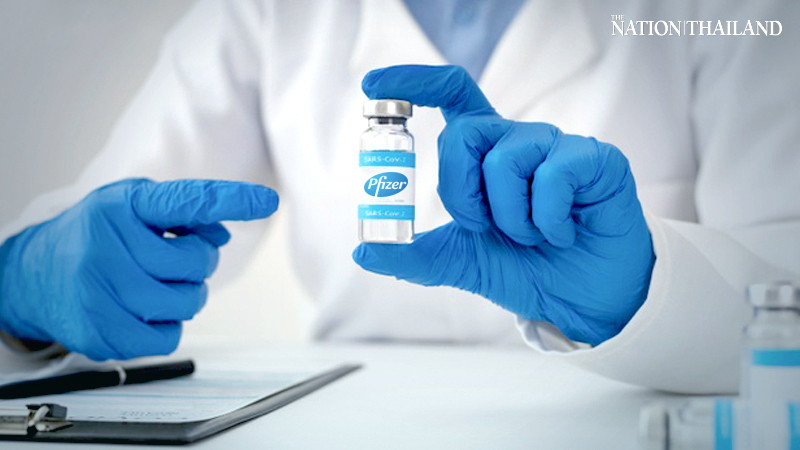
Pfizer Inc. said it has begun human safety testing of a new pill to treat the coronavirus that could be used at the first sign of illness.
If it succeeds in trials, the pill could be prescribed early in an infection to block viral replication before patients get very sick. The drug binds to an enzyme called a protease to keep the virus from replicating. Protease-inhibiting medicines have been successful in treating other types of viruses, include HIV and Hepatitis C.
“Given the way that SARS-CoV-2 is mutating and the continued global impact of Covid-19, it appears likely that it will be critical to have access to therapeutic options both now and beyond the pandemic,” said Mikael Dolsten, Pfizer’s Chief Scientific Officer, in a statement.
In an interview, Dolsten said no unexpected problems had been seen in the study so far and that it could generate results within weeks.
The new protease inhibitor is the second such medicine Pfizer has brought into human trials to treat Covid-19. Pfizer is testing another given intravenously to hospitalized virus patients.
Shares of Pfizer were down 1.3% to $35.52 at 11:32 a.m. in New York. Over the past year, the stock has climbed 32%.
Easy-to-use treatments are lacking for early-stage Covid-19 patients. While antibody therapies from Eli Lilly & Co. and Regeneron Pharmaceuticals Inc. are authorized in the U.S. for Covid patients who haven’t yet been hospitalized but are at high risk of developing severe symptoms, they must be infused in the hospital or at a doctor’s office.
That has created logistical challenges that have limited their use. Other therapies are intended for sicker people: Gilead Sciences Inc.’s antiviral drug remdesivir must be infused over several days and is approved only for hospitalized patients.
Among major drugmakers, Merck & Co. has one of the few coronavirus pills that is far along in human testing. Its experimental antiviral drug molnupiravir works by a different mechanism than the Pfizer drug and is in late-stage human trials.
If everything continues to go well, Pfizer could begin a much larger combined phase 2-phase 3 trial early in the second quarter, Dolsten said, potentially allowing it to apply for emergency-use authorization from the Food and Drug Administration by the end of this year, depending on how the pandemic evolves.
The drug is likely to be given twice a day for about five days, he said.
“This is really a potential game changer,” Dolsten said.
While initial efficacy testing will focus on people with early infections, Pfizer also plans to explore whether the drug works to protect healthy people who have been exposed to the coronavirus, such as family members or roommates who live with someone who got sick.
Dolsten said Pfizer’s oral protease inhibitor, code-named PF-07321332, had a number of potential advantages. In lab tests, it worked against many coronaviruses, including the original SARS virus and MERS. Additionally, the coronavirus protease doesn’t mutate much, which means the therapy is likely to work equally well against numerous variant strains, he said.
In theory, the protease inhibitor could also be combined with other antiviral drugs, such as the one Merck is developing, Dolsten said.
Pfizer said it plans to share more data on the compound at the American Chemical Society meeting on April 6.
By Syndication Washington Post, Bloomberg · James Paton, Suzi Ring
AstraZeneca Plc’s coronavirus vaccine fared better than expected in a U.S. clinical trial, providing reassurance about its safety and efficacy.
The shot developed with the University of Oxford was 79% effective in preventing covid-19, and an independent monitoring board found no safety concerns, the company said Monday. All those immunized were protected from severe disease and death in a study of more than 30,000 volunteers.
The findings should bolster confidence in the vaccine after confusion over its efficacy and the best dosing regimen slowed takeup. The product is at the center of a supply showdown with the European Union just days after concerns about blood clots prompted a dozen member states to suspend immunizations. Even after the European Medicines Agency declared it safe last Thursday, not all EU countries have resumed vaccinations.
“Efficacy is better than we had expected,” said Peter Welford, an analyst at Jefferies in London. “Importantly, after recent largely unfounded safety concerns in Europe, the study confirms the safety profile.”
The company said it plans to submit the trial data to U.S. regulators in coming weeks, seeking clearance for emergency-use authorization.
A shortfall in deliveries to the EU has put Astra at odds with the bloc and led officials to oppose exports of the shot from the region as they seek to hold the company to account.
The new data offer more clarity than the first study results released last November. Those clinical trials, conducted in the U.K. and Brazil, produced a range of readings due to different dosing amounts and regimens used. At least 10 EU countries only approved the shot for under-65s initially as early trials lacked older participants. Many have since reversed course after more data from real-world use showed the vaccine was effective for everyone.
Older adults made up about a fifth of the U.S. trial, which showed efficacy of 80% in that age group. The results “offer confidence that adults of all ages can benefit from protection against the virus,” Ann Falsey, a professor at the University of Rochester’s School of Medicine and one of the trial’s lead investigators, said in a statement.
A number of cases involving rare but serious blood clots also damaged the vaccine’s image. The EMA and U.K.’s regulator said Thursday that no definitive link could be established between the clots and the vaccine, and that the benefits continued to outweigh the risks. The U.S. trial review that found no safety concerns looked specifically at blood clots.
Skepticism over the vaccine started last year when Astra and Oxford first reported initial data. At the time, they offered two different efficacy readings of 62% and 90%. Because of a manufacturing error, one group of participants had received a lower first dose, which produced the higher reading, compared with those getting two standard doses. Further analysis suggested it was the greater dosing gap rather than amount that had created the difference.
More than 70 countries globally have approved the Astra-Oxford shot for use and the partners plan to produce up to three billion doses of the vaccine this year.
The vaccine is key to the global effort to end the pandemic because it’s easy to store and transport and the company is providing it at no profit during the crisis. Unlike vaccines from Pfizer Inc. and partner BioNTech SE, and Moderna Inc., which have to be kept frozen, the Astra shot can be held at fridge temperature.
“ความยั่งยืน” ถือเป็นความสำคัญอันดับแรกของเรา มันเป็นแรงผลักดันให้เราเฟ้นหาวัตถุดิบที่มีคุณภาพ รวมถึงกระบวนการผลิตที่ไม่ทำลายสิ่งแวดล้อม มันเป็นหัวใจสำคัญที่เราใช้สร้างสรรค์สไตล์เดนิมให้คู่ไปกับความยั่งยืน“ กล่าวโดย Jill Guenza Levis Vice President of Women’s Design





















 ถึงเวลาเริงร่าไปกับเหล่าดอกไม้และผีเสื้อในช่วงสปริงซีซั่นนี้ กับคอลเลคชั่นใหม่จาก Armitron ที่รับรองว่าแค่เห็นก็ต้องตกหลุมรัก!


 ลีวายส์ ผู้นำแห่งแฟชั่นยั่งยืน เผยคอลเลคชั่นยีนส์รักษ์โลกอย่างต่อเนื่อง ล่าสุดกับสไตล์วินเทจยุค 90 ใน Levi’s 551TM Z สำหรับผู้ชาย และ Levi’s Loose Fit สำหรับผู้หญิง


 ฟิลิปส์เผยสถิติใหม่ วิกฤติโควิด-19 ส่งผลกระทบต่อการนอนหลับ แนะคนไทยใส่ใจการนอนอย่างมีคุณภาพเนื่องในวันนอนหลับโลก


 จัดเต็มความเท่แบบสตรีทแฟชั่น กับ Lee X-Line เปิดตัวครั้งแรกในประเทศไทย และ SouthEast Asia! เท่ ล้ำสไตล์ไปอีกขั้น กับเสื้อผ้าทรง Oversized สุดฮิต และเทคนิคการตัดเย็บแบบใหม่ พร้อมให้คุณดูโดดเด่นไม่ซ้ำใคร


