Doctors withhold some details of Trump’s recovery, say they remain ‘on guard’
Health & BeautyOct 06. 2020President Donald Trump returns to the White House on Marine One after being treated for covid-19 at Walter Reed National Military Medical Center on Monday, Oct. 5, 2020. MUST CREDIT: Washington Post photo by Matt McClain
By The Washington Post · Frances Stead Sellers, Laurie McGinley, Ariana Eunjung Cha, Amy Goldstein · NATIONAL, HEALTH, HEALTH-NEWS WASHINGTON – President Donald Trump left an elite medical center Monday evening as his doctors acknowledged that they were entering “uncharted territory” and – citing privacy laws – continued to withhold information that could illuminate the president’s prognosis for recovering from covid-19.
Trump’s determination to appear in control in the waning weeks of the presidential race left unclear whether he or his doctors were calling the shots, especially because members of his medical team at Walter Reed National Military Medical Center continued to cherry-pick what they shared with the public. They said that his oxygen levels were normal and that he had no fever, but they refused to answer questions about results from lung scans, his last negative test for the coronavirus or why he is receiving the steroid dexamethasone, typically reserved for patients with severe illness.
The president returns to the White House at a fraught moment in his recovery – before he has seemingly escaped a period when some patients are known to crash.
“The problem with covid-19 is that people’s condition can deteriorate rapidly, even after days of stability,” said Harlan Krumholz, a cardiologist and health-care researcher at Yale University and Yale New Haven Hospital. “And so we are more accustomed to be cautious with people with high risk.”
The president has received care accessible to few other Americans. He was given a brew of laboratory-made antibodies that fewer than 10 other patients have received outside of clinical trials. And for him, returning home means arriving at a place that can be adapted to cater to his needs, Krumholz and others said.
Jonathan Reiner, a George Washington University Hospital cardiologist, said that in an emergency, the White House medical unit “can do what an emergency room can do in the first 15 minutes” – someone could be resuscitated and stabilized during a heart attack, for example, and then transferred to a hospital. For ongoing treatment, he said, it would be wise for Trump to remain hospitalized.
“It makes zero sense to move him from Walter Reed,” Reiner said.
At a Monday news conference, White House physician Sean Conley said doctors were “cautiously optimistic and on guard” about Trump’s discharge. But he said the benefits of returning to the White House outweighed the risks.
“Every day a patient stays in the hospital unnecessarily is a risk to themselves,” Conley said. “And right now there’s nothing that’s being done upstairs here that we can’t safely conduct down home.”
But Conley acknowledged that the medical team is in “uncharted territory” with the mix of medications the president has been given and that the dangerous period for the infection is not over. He’s “looking to this weekend” for assurance that Trump has cleared rough waters.
“If we can get through to Monday” of next week, he said, doctors will “take that final deep sigh of relief.”
Conley declined for the third briefing in a row to answer additional questions about X-rays and other images taken of Trump’s lungs, and about other key data, such as when he last received a negative coronavirus test before falling ill. Instead, Conley emphasized symptoms the president was not experiencing: A “slight cough” was gone. There were never complaints of muscle aches. And fever-reducing drugs had not been deployed for at least 72 hours.
“He’s up and back to his old self, predominantly,” Conley said.
In the White House, Trump’s doctors will be vigilant for sudden changes, specialists predicted.
“You would want to be prepared to take care of any sudden unanticipated or very concerning event,” said Jeanne Marrazzo, an infectious-diseases expert at the University of Alabama at Birmingham. The biggest risk, she said, would be the sudden onset of acute respiratory distress syndrome, which sometimes occurs with covid-19, the illness caused by the novel coronavirus. Patients’ lungs fill with fluid, and they cannot breathe on their own.
While Trump could get supplemental oxygen at the White House, “if I were that sick, I would want to be at Walter Reed,” she said.
Marrazzo said she would also be on the lookout for cardiac abnormalities, especially given Trump’s age and lack of exercise. She said covid-19 causes heart problems including myocarditis, heart failure and clotting. While Trump could be whisked back to Walter Reed in the Maryland suburbs if problems developed, she said, “lots of things can happen in 20 minutes, lots of things can happen in five minutes.”
Daniel Kaul, an infectious-diseases expert at the University of Michigan, said people of Trump’s age and with similar severity of illness – to the extent that is known – “usually have a pretty slow recovery, with weeks and sometimes months of cognitive difficulties, shortness of breath, severe fatigue.”
Like other experts, Kaul said it is highly probable that Trump had pneumonia.
At the briefing, Conley selectively invoked health privacy laws known as HIPAA – the Health Insurance Portability and Accountability Act – when questions arose about the president’s respiratory-system scans or whether he remained infectious.
Asked when Trump last tested negative for the coronavirus, Conley replied, “HIPAA precludes me from going into too much depth.”
When asked about imaging tests of the president’s lungs, Conley responded, “So there are HIPAA rules and regulations that restrict me in sharing certain things for his safety and his own health.”
The president’s doctors showed no such hesitancy in disclosing details about his temperature, blood pressure, heart rate and blood oxygen level – all of which they said were normal.
Trump minimized in a tweet Monday the dangers presented by the virus that has felled at least 209,000 people in the United States.
“Don’t be afraid of Covid. Don’t let it dominate your life,” he tweeted. “We have developed, under the Trump Administration, some really great drugs & knowledge. I feel better than I did 20 years ago!”
Trump returns to a White House complex with two medical clinics, according to people familiar with the facilities: a small one on the ground floor available to the first family and others working in the building, and a larger one in the Executive Office Building. The latter unit is equipped to stabilize patients needing urgent care after incidents ranging from an accident to a heart attack or stroke. The goal is to stabilize patients before transferring them to a hospital.
For a scheduled procedure, presidents typically go to Walter Reed; for trauma, they go to George Washington University Hospital, where Ronald Reagan was treated after being shot almost four decades ago.
Health officials from current and past administrations agreed that the White House medical unit can bulk up on staffing and equipment to ensure that it can care for and at least stabilize a patient who takes a turn for the worse.
“But it’s really inefficient and risky compared to being on site in a hospital” with Walter Reed’s capability, said a health official from a previous administration who spoke on the condition of anonymity to freely discuss the topic.
Greg Martin, a pulmonary critical-care specialist at Emory University, said Trump’s blood oxygen levels could be tracked constantly through a finger monitor available at drugstores. The president would be watched for changes in mental status as a side effect of medications, especially the steroid dexamethasone, which might include difficulty with attention, depression or mania.
His blood would probably be tested several times a day for changes in coagulation or inflammation – those might indicate a higher risk of clotting or that his body may be heading into a dangerous “cytokine storm,” which would require more serious interventions. Doctors may run an echocardiogram on his heart once a day to look for signs of a hardening of the walls, which is a known and relatively common issue with covid-19.
But Martin cautioned that there are complications of covid-19 for which there is often no warning or advance notice: strokes or heart failure due to microclots, or a pulmonary embolism from a clot in the legs or other part of the body suddenly moving to the lungs.
“These are things you wouldn’t know are going to happen until they do,” Martin said.
The White House did not respond to questions Monday afternoon about whether new equipment or personnel had been brought in to treat Trump.
The degree of monitoring available from a staff of physicians, nurses and physician assistants could be important for a patient such as Trump, whose risk factors include his age and weight, and who may be contagious for days to come.
“I think he has to be assumed to be infectious,” said William Schaffner, a professor of infectious diseases at Vanderbilt University’s medical school.
“We need to know some details – how closely is he going to be monitored?” Schaffner said. “That’s very important. The concern is, though he’s feeling rather chipper, he could still crash.”
In particular, he said, the president faces a potential hazard of developing cardiac problems that could disrupt his heart rhythm or breathing difficulty that could damage his lungs.
Schaffner said one of the metrics of improving health highlighted by the president’s physician Monday – Trump’s lack of a fever for more than 72 hours – could be a byproduct of the fever-suppressing qualities of dexamethasone.
One significant question Trump’s doctors have not addressed is how long they plan to continue giving him the steroid and a combination of disease-fighting antibodies, said John Mellors, chief of the division of infectious diseases at the University of Pittsburgh school of medicine.
Mellors said some patients with symptoms similar to those described by the president’s doctors achieve a full recovery. Others feel unwell for weeks or months, with symptoms that can include fatigue, body aches, shortness of breath, low-grade fever and mental fogginess.
In other cases, the virus can be suppressed temporarily but come back to cause major damage in the lungs or the heart, or by developing blood clots. Which trajectory any given patient takes “is all emerging” in terms of medical research findings.
The president probably is still contagious, experts said. Conley said doctors were using “advanced diagnostics” to determine “when it’s safe to get around and be around people.”
The real question, Marrazzo said, is why Trump returned.
“Is it a continued theatrical effort to assure us he is well enough to be discharged, or is it that they think he truly improved that quickly and can recover in the comfort of his own home?”
Russia ramps up rhetoric to defend vaccine efforts
Health & BeautyOct 05. 2020The Washington Post · Isabelle Khurshudyan · WORLD, HEALTH, EUROPE, HEALTH-NEWS · Oct 04, 2020 – 8:34 PM
By The Washington Post · Isabelle Khurshudyan · WORLD, HEALTH, EUROPE, HEALTH-NEWS
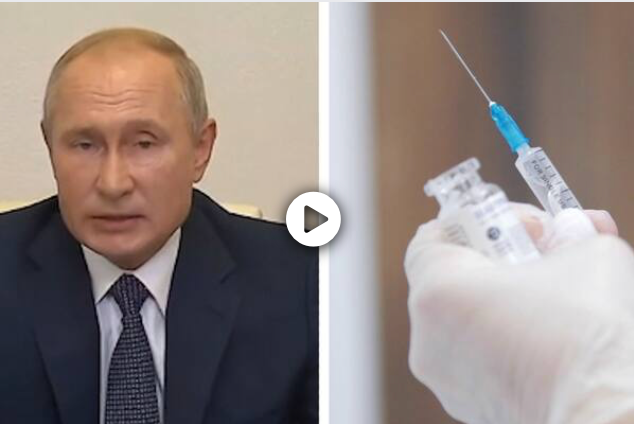
MOSCOW – Included in Russian President Vladimir Putin’s speech at the United Nations last month was an offer: All U.N. staff could receive Russia’s Sputnik V coronavirus vaccine, free of charge.
Russia’s race to be first with a credible vaccine is also an exercise in the science of state-run spin.
Nationalism has inevitably crept into the breakneck vaccine stakes. President Donald Trump used Tuesday’s debate to tout U.S. pharmaceutical companies in the vaccine hunt and British Prime Minister Boris Johnson donned a white lab coat during a mid-September tour of an Oxford lab seeking a vaccine.
Russia, too, had turned up the patriotic volume along with the vaccine push. In a promotional video that was part of the rollout for Sputnik V – whose name itself taps into the pride of the Soviet Union being first out of the blocks in the Cold War’s space race with a satellite in 1957 – the vaccine is portrayed circling a coronavirus-infected earth, wiping out the disease as it goes.
Now that the global competition is heating up – 10 possible vaccines are undergoing Phase 3 testing, according to the World Health Organization – Russia has further amped up its rhetoric around Sputnik V.
Russia is now going on the offensive.
The Kremlin-directed campaign to promote Sputnik V has largely dismissed any criticism – especially claims that Russia is cutting corners on safety – as anti-Russian smears. Meanwhile, Russian officials are attempting to cast doubt on rival vaccine hunters with unsupported assertions, such as making claims that Western approaches to find a vaccine are less effective and riskier.
In August, Putin announced that Russia registered the world’s first coronavirus vaccine, even before the start of Phase 3 large-scale clinical trials. That day, he said one of his two daughters received the prospective vaccine and experienced only mild symptoms – a startling disclosure since he rarely mentions his children in public.
On Wednesday, Kremlin spokesman Dmitry Peskov said Putin “is thinking” about getting vaccinated himself.
“This is not a gentlemanly stroll in the park by a bunch of people who all agree that there’s some common public good we all need to strive for,” said J. Stephen Morrison, director of the Center on Global Health Policy at the Center for Strategic and International Studies in Washington. “This has become a geopolitical race, and it’s one that’s seen as tied to domestic stability and support amid lots of adversity.”
The Russian Direct Investment Fund, which bankrolled the country’s vaccination effort, has frequently hailed Sputnik V’s delivery system: two doses to carry different, harmless cold viruses, or human adenoviruses. They have been engineered in hopes of carrying cells of the gene for the coronavirus.
The investment fund’s head, Kirill Dmitriev, has taken aim at other labs seeking a vaccine using adenoviruses from monkeys or messenger RNA.
After Oxford University and pharmaceutical company AstraZeneca resumed their coronavirus vaccine trial following a week-long pause because of an unexplained illness in a trial participant, Dmitriev issued a comment that he was “delighted” trials resumed. Unlike Sputnik V, their vaccine uses a cold virus from a monkey rather than a human.
“At the same time, the suspension of trials clearly showed the fallacy of the approach, when entire countries exclusively rely on novel and untested platforms when choosing a vaccine for widespread use,” Dmitriev’s statement continued.
Morrison said Dmitriev’s comments “sound like propaganda.”
“Trying to bad-mouth other competitors’ vaccines seems like a little bit of rowdy behavior,” Morrison said.
Sputnik V is undergoing Phase 3 testing with 40,000 volunteers, but the production rights for millions of doses have already been sold to several countries, including India, Brazil and Mexico.
In another move to show confidence in the potential vaccine, Russia will shoulder some of the legal risks should anything go awry, Dmitriev said, rather than seeking full indemnity as many other vaccine-makers have sought.
That could be an international selling point for Russia compared to vaccine candidates that use a similar technology, such as ones from pharmaceutical giant Johnson & Johnson and the Chinese company CanSino Biologics.
“Countries have a choice to make, and we think they’ll focus on a portfolio of different vaccines,” Dmitriev said. “But we’re absolutely sure that a human adenovirus vaccine will be in the portfolio of most countries.”
But for all of Russia’s efforts to convince its international skeptics, Sputnik V doesn’t have strong domestic support yet.
An August poll found that 54 percent of the more than 1,600 respondents said they were not ready to volunteer for vaccination, according to the independent Levada Center.
Russian Health Minister Mikhail Murashko told the state-run Tass news agency in September that Sputnik V will be more widely available to the general population in late November or December.
Alexey Kuznetsov, an aide to Murashko, said in a statement that “voluntary vaccination of citizens at risk has begun: first of all, medical workers and teachers.” But the Health Ministry has declined to say how many teachers and front-line health-care workers have so far volunteered to receive Sputnik V.
Leonid Perlov, a 66-year-old who teaches geography in Moscow, said he was offered the potential vaccine but declined because it “has not passed all of the necessary stages of testing.”
“This is all premature,” he added.
But not for everyone. He noticed a divide among his colleagues – perhaps influenced by the Kremlin’s heavy emphasis on the possible vaccine as a symbol of national pride.
“The biology teachers are not in a hurry to get vaccinated,” Perlov noted. “They’re more cautious. But the history teachers are the ones who are ready to volunteer.”
After Russia’s daily ticker of confirmed new coronavirus cases showed steady decline over the summer, infections have started rising again to more than 8,000 per day, sparking local fear that another nationwide lockdown could soon follow.
The economy suffered from the closures in April and May, and Putin’s approval ratings consequently slumped. Russia may point to its vaccine as justification for avoiding a second round of strict restrictions.
Olga Demicheva, an endocrinologist in Moscow, said she volunteered to be a Phase 3 clinical trial participant for Sputnik V, but doesn’t believe that the possible vaccine should be available even for high-risk groups before that large-scale testing is completed.
Semyon Galperin, head of the Doctors’ Defense League rights group, opted for a similar compromise.
“My volunteering is to hopefully prevent a situation where there is some pressure on our (medical) colleagues to get vaccinated,” Galperin said. “Before the clinical trials are complete, we shouldn’t tell anyone to get vaccinated or not.”
By The Washington Post · Josh Dawsey, Carol D. Leonnig, Hannah Knowles · NATIONAL, HEALTH, POLITICS, HEALTH-NEWS WASHINGTON – Secret Service agents and medical professionals were aghast Sunday night at President Donald Trump’s Sunday evening trip outside the hospital where he is being treated for the coronavirus, saying the president endangered those inside his SUV for a publicity stunt.
As the backlash grew, aides who were not authorized to speak publicly also called Trump’s outing to wave at supportive crowds an unnecessary risk, but said the move was not surprising. Trump had said he was bored in the hospital, advisers said. He wanted to show strength after his chief of staff offered a grimmer assessment of his health than doctors, according to campaign and White House officials.
A growing number of Secret Service agents have been concerned about the president’s seeming indifference to the health risks they face when traveling with him in public, and a few reacted with outrage to the trip, asking how Trump’s desire to be seen outside of his hospital suite justified the jeopardy to agents protecting the president. The president’s coronavirus diagnosis has already brought new scrutiny to his lax approach to social distancing, as public health officials scramble to trace those he may have exposed at large in-person events.
“He’s not even pretending to care now,” said one agent after the president’s jaunt outside Walter Reed National Military Medical Center.
“Where are the adults?” said a former Secret Service member.
They spoke on the condition of anonymity out of fear of retribution.
White House spokesman Judd Deere defended the outing, telling reporters that “appropriate precautions were taken in the execution of this movement to protect the president and all those supporting it.” Deere said precautions included personal protective equipment, without providing further details, and added that the trip “was cleared by the medical team as safe to do.”
The White House did not immediately respond to questions from The Washington Post on Sunday night.
Trump wore a mask as he waved to a crowd from the back of his vehicle, after announcing that he would “pay a little surprise to some of the great patriots that we have out on the street.” But the face covering was little comfort to doctors, who took to Twitter to criticize the trip as irresponsible. Masks “help, but they are not an impenetrable force field,” tweeted Saad Omer, director of the Yale Institute for Global Health.
Among critics was a doctor affiliated with Walter Reed.
“Every single person in the vehicle during that completely unnecessary Presidential ‘drive-by’ just now has to be quarantined for 14 days,” tweeted James Phillips, who is also a professor at George Washington University. “They might get sick. They may die. For political theater. Commanded by Trump to put their lives at risk for theater. This is insanity.”
Phillips said the risk of viral transmission inside the car is “as high as it gets outside of medical procedures.” Jonathan Reiner, a professor of medicine and surgery at George Washington University, noted that people inside a hospital wear extensive protective gear — gowns, gloves, N95 masks and more – when they will be in close contact with a coronavirus patient such as Trump.
“By taking a joy ride outside Walter Reed the president is placing his Secret Service detail at grave risk,” he tweeted.
Trump had been irked that White House Chief of Staff Mark Meadows suggested that he was not doing well as he fought the virus, according to campaign and White House officials.
“The president’s vitals over the last 24 hours were very concerning, and the next 48 hours will be critical in terms of his care,” Meadows said Saturday afternoon, in sharp contrast to doctors who offered rosy assessments at an earlier news conference. “We’re still not on a clear path to a full recovery.”
Later that day, Meadows said Trump’s condition had improved significantly but maintained that the president was “not out of the woods,” echoing Trump’s doctor.
Trump’s outing Sunday came as White House officials acknowledged that the president’s health deteriorated to the point where he received supplemental oxygen, something they previously refused to disclose. Trump’s doctor Sean Conley said Sunday that he was “trying to reflect the upbeat attitude that the team, the president, over his course of illness, has had.”
“Optics matter right now,” said one senior aide close to Meadows, adding: “Shows of strength and resilience are crucial. For the American public, but also those watching abroad.”
วันที่ 04 ต.ค. 2563 เวลา 17:55 น.เปิดมุมมองการเลือกชุดแต่งงานที่ตอบรับกับยุค New Normal ความเปลี่ยนแปลงที่ก่อเกิดเป็นวัฒนธรรมใหม่ ผ่านสายตาของ ‘ฌอน-ชวนล ไคสิริ’ ครีเอทีฟไดเร็คเตอร์ฝีมือเฉียบจากแบรนด์เครื่องแต่งกาย ‘โพเอม’ (POEM)
ในยุคของการเปลี่ยนแปลงแบบ New Normal ที่ทุกคนต้องปรับตัวในช่วงสถานการณ์โควิด-19 ไลฟ์สไตล์การใช้ชีวิตของหลายคนได้เปลี่ยนไป คนส่วนใหญ่หันมาปลูกต้นไม้ เลี้ยงสัตว์ ทำอาหาร มีความสุขกับสิ่งเล็กน้อยรอบตัว รวมไปถึงแนวความคิดเกี่ยวกับการจัดงานแต่งงานด้วยเช่นกัน


 5 ตุลาคม 2563 – 13:38 น.


 President Donald Trump returns to the White House on Marine One after being treated for covid-19 at Walter Reed National Military Medical Center on Monday, Oct. 5, 2020. MUST CREDIT: Washington Post photo by Matt McClain
  The Washington Post · Isabelle Khurshudyan · WORLD, HEALTH, EUROPE, HEALTH-NEWS · Oct 04, 2020 – 8:34 PM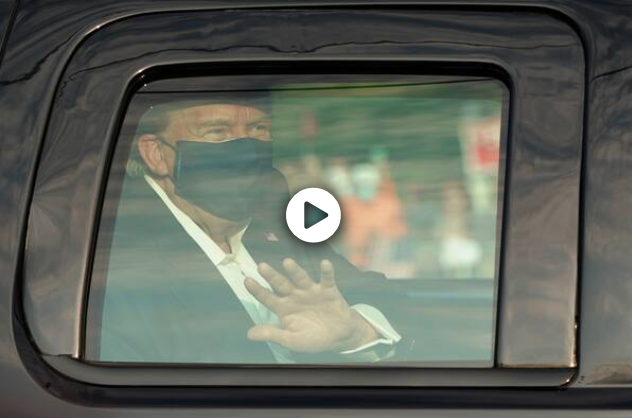
 เปิดมุมมองการเลือกชุดแต่งงานที่ตอบรับกับยุค New Normal ความเปลี่ยนแปลงที่ก่อเกิดเป็นวัฒนธรรมใหม่ ผ่านสายตาของ ‘ฌอน-ชวนล ไคสิริ’ ครีเอทีฟไดเร็คเตอร์ฝีมือเฉียบจากแบรนด์เครื่องแต่งกาย ‘โพเอม’ (POEM)


 “Noกองดอง” งานใหญ่แห่งปีที่จะไปพาเหล่านักอ่านไปพบกับความคิดสร้างสรรค์ผ่านตัวหนังสือในรูปแบบต่างๆ


 “ลา บูทีคส์” (La Boutique) ชวนเหล่าหญิงสาวต้อนรับฤดูกาลออทั่ม/วินเทอร์ 2020 ในคอลเลคชั่น “สปาย เกม” (SPY GAME) แรงบันดาลใจจากภาพยนตร์ชื่อดังในยุค 90’s “นิกิต้า” (La Femme Nikita)


 เริ่มแล้วสำหรับงาน “มหกรรมหนังสือระดับชาติ ครั้งที่ 25” (Book Expo Thailand 2020) ที่มาในคอนเซ็ปต์ “Noกองดอง”


 ส่องที่มาของคำว่า “สนีกเกอร์” พร้อมติดตามการปัดฝุ่นใหม่ของ Keds Autumn/Winter 2020 ตอกย้ำความเป็นแบรนด์ที่ยังคงสนับสนุนให้ผู้หญิงมีคุณค่าในแบบของตัวเอง ในชื่อธีมที่ว่า “PROGRESS”


